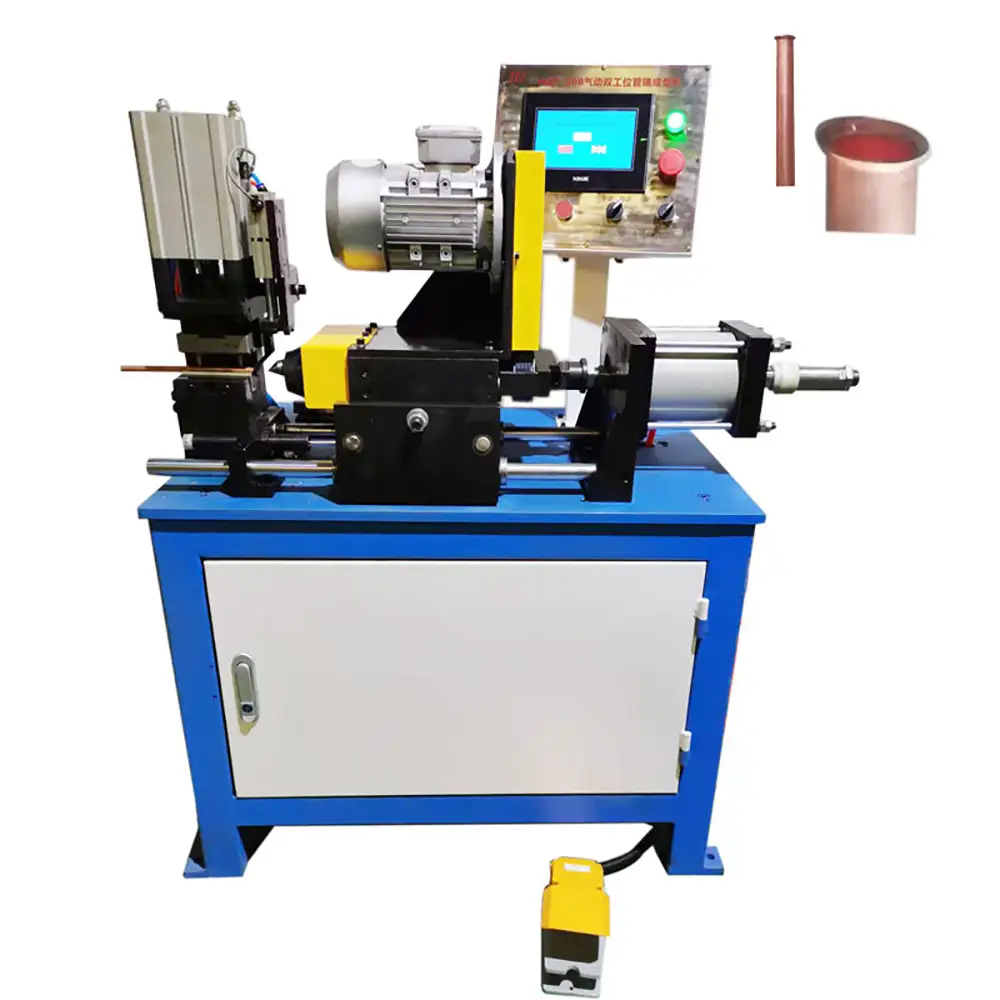
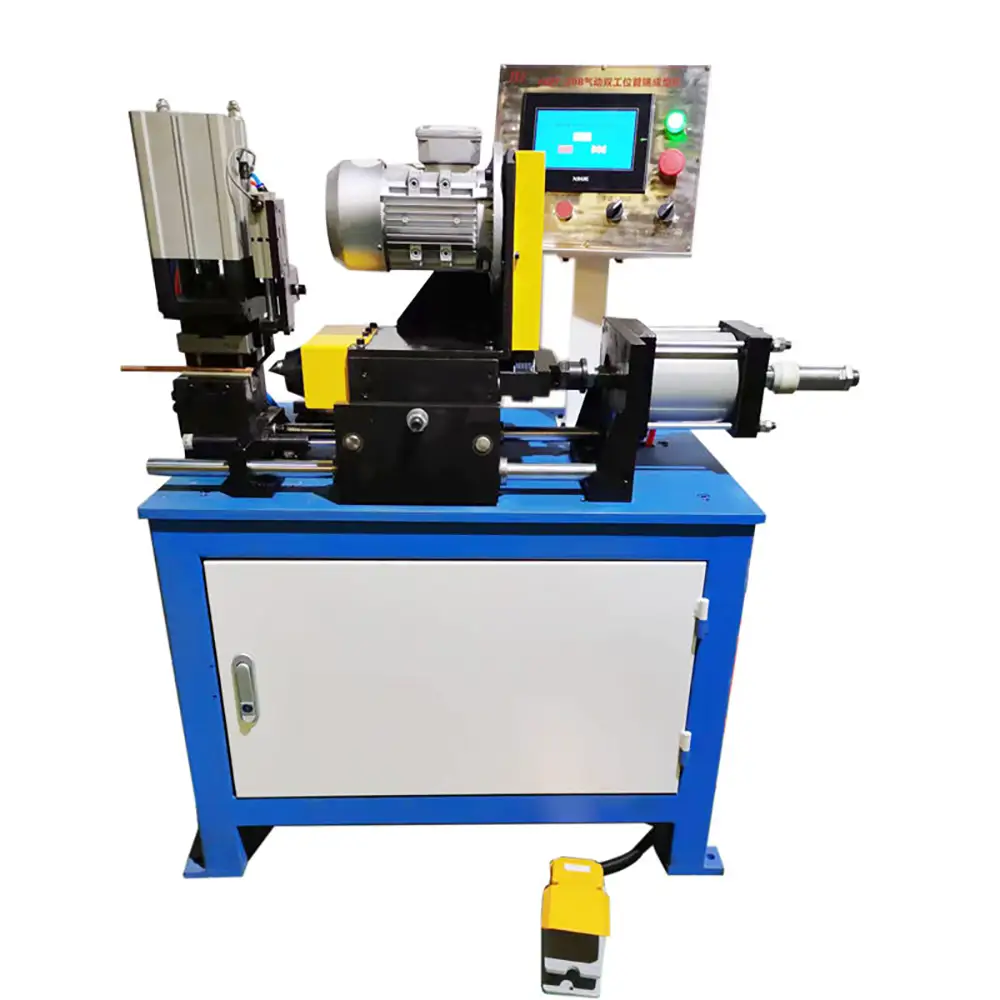
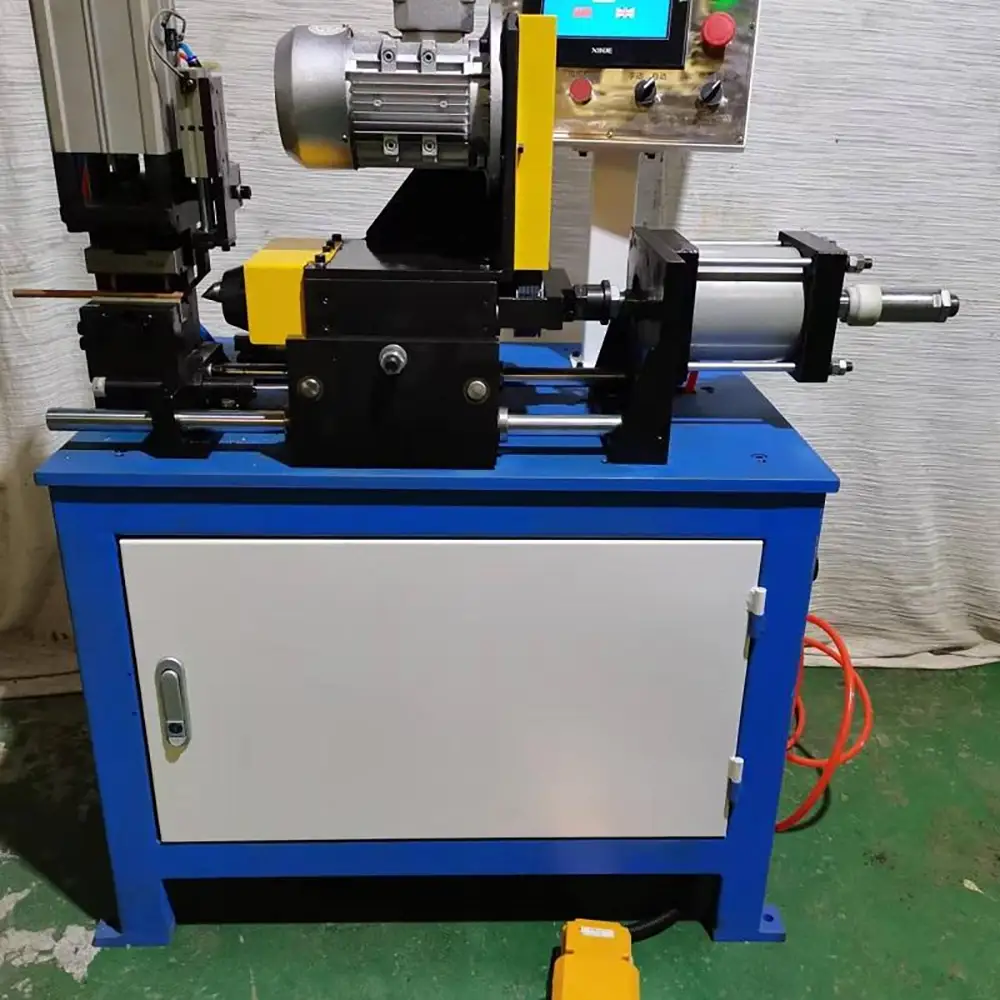
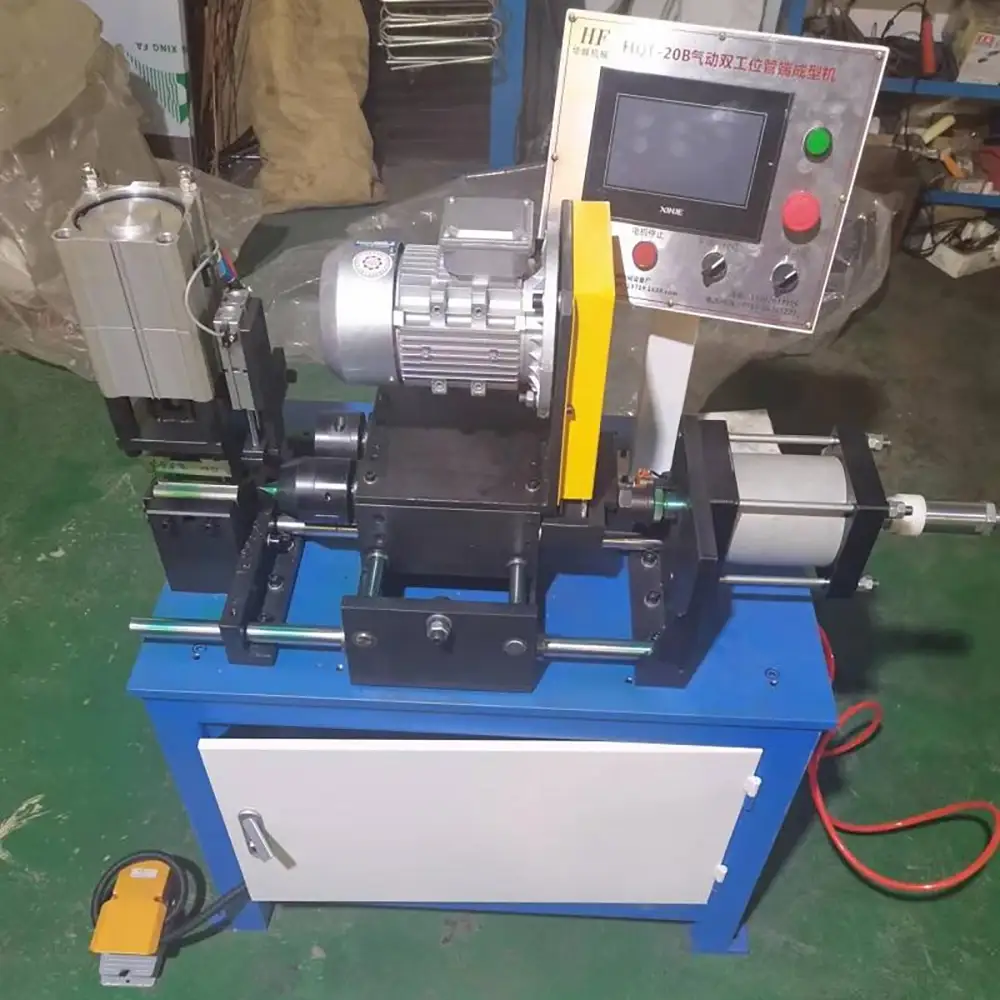
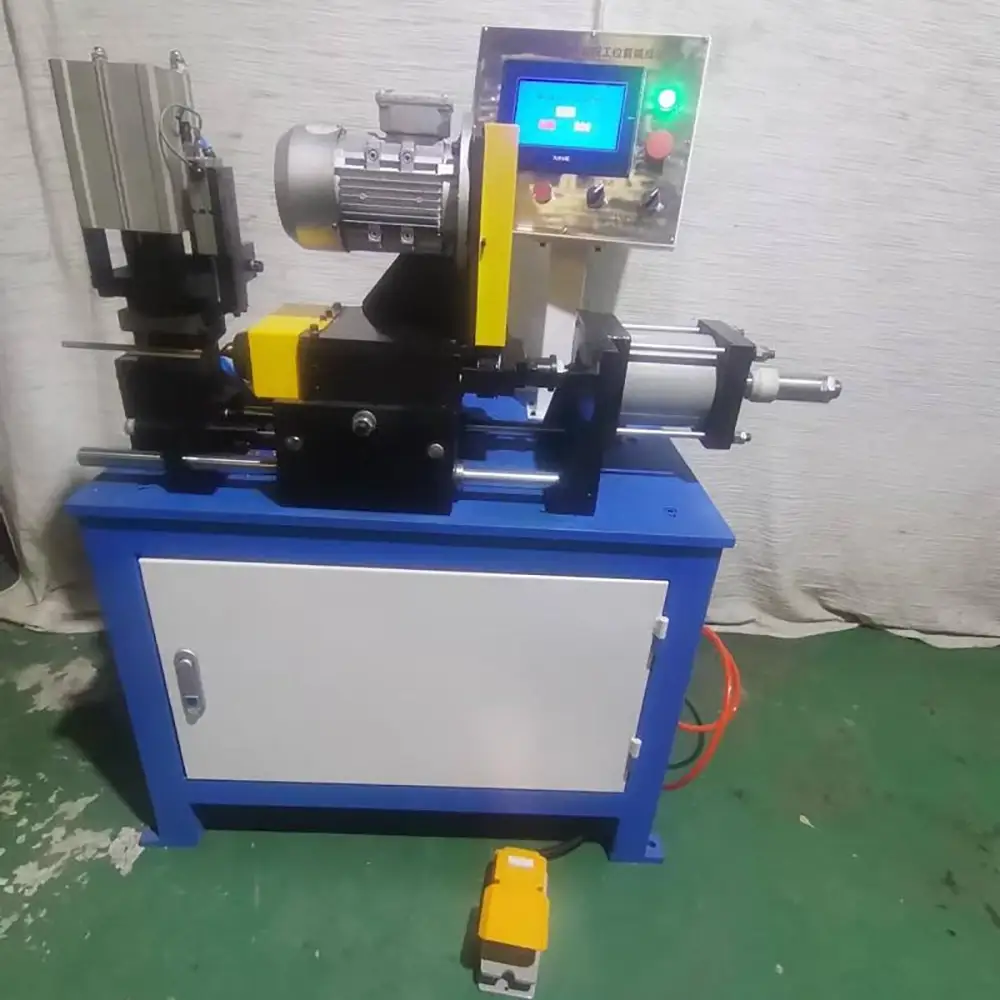
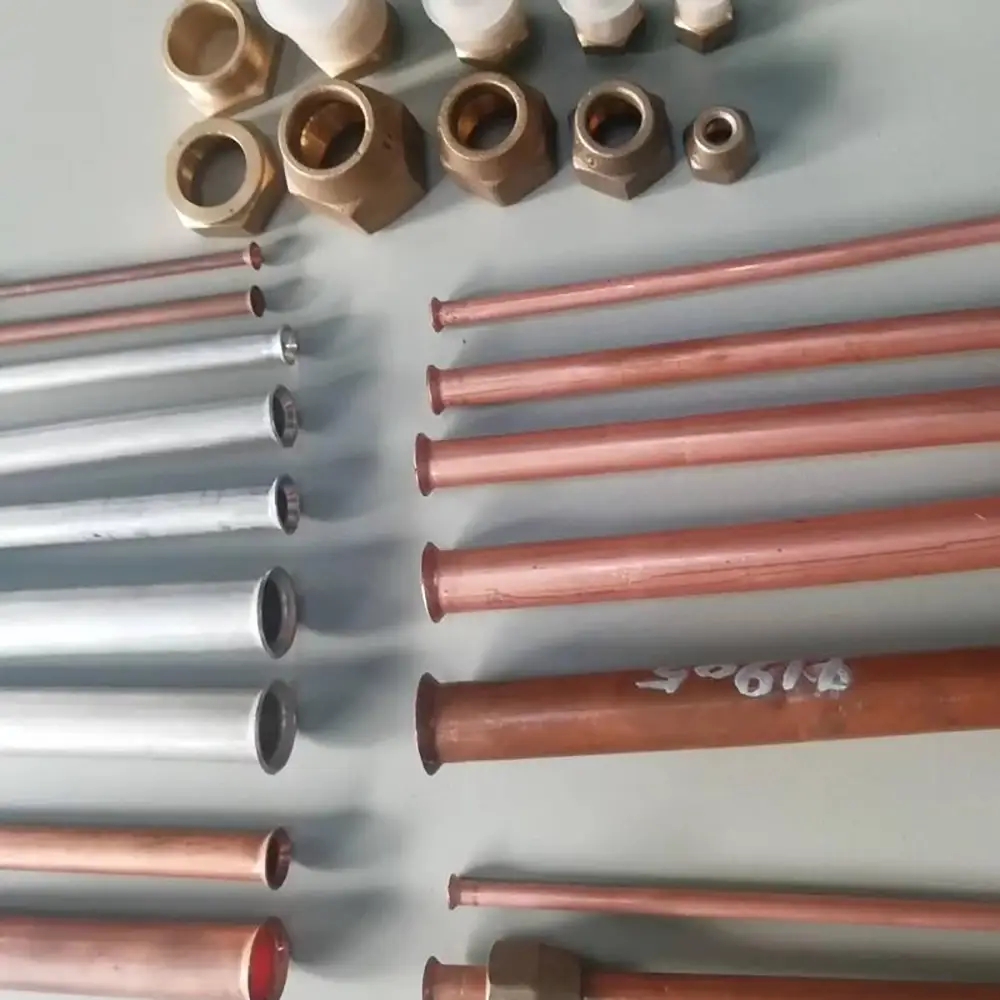
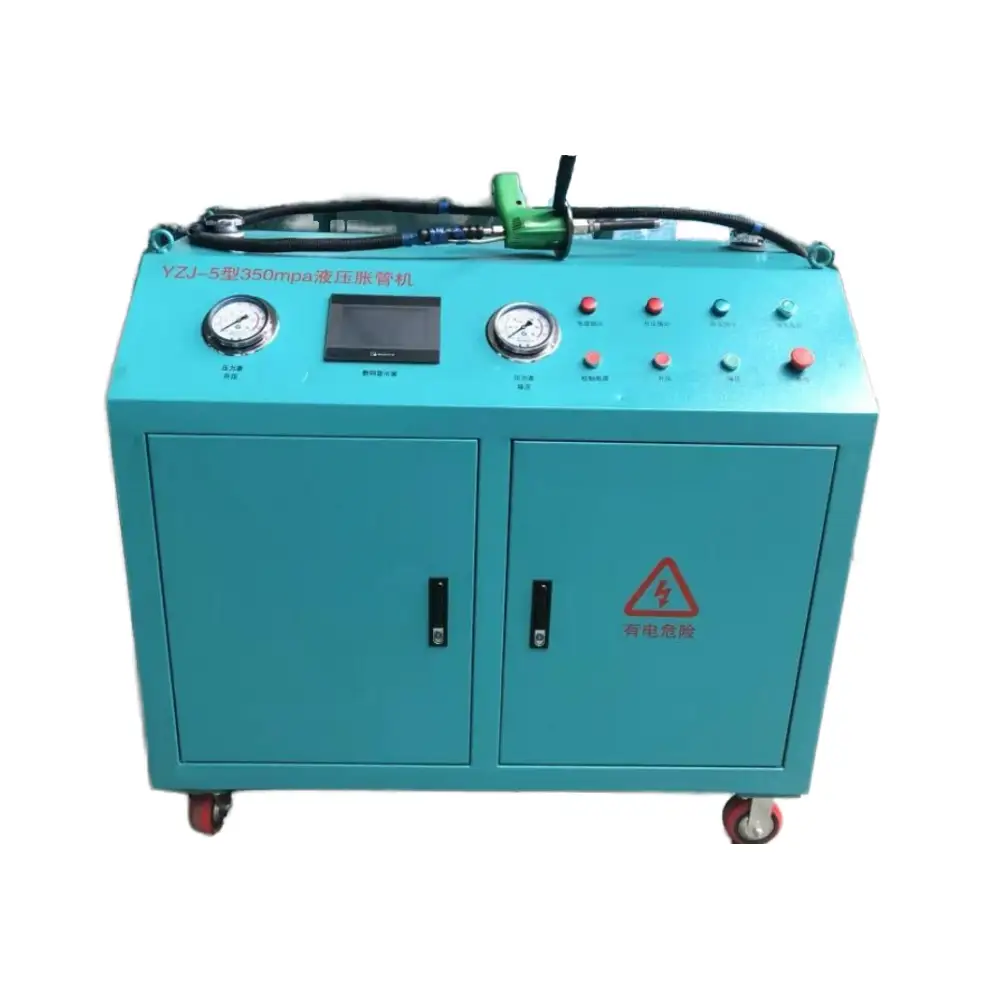
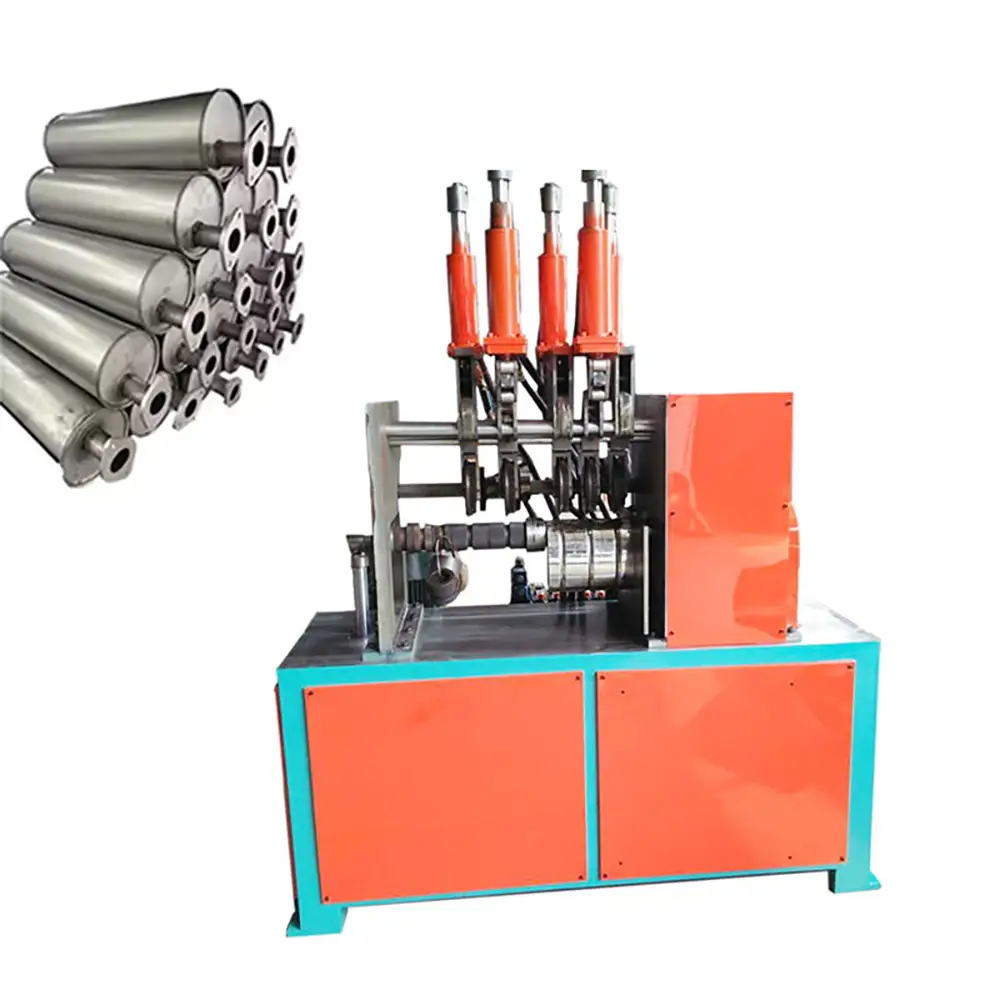
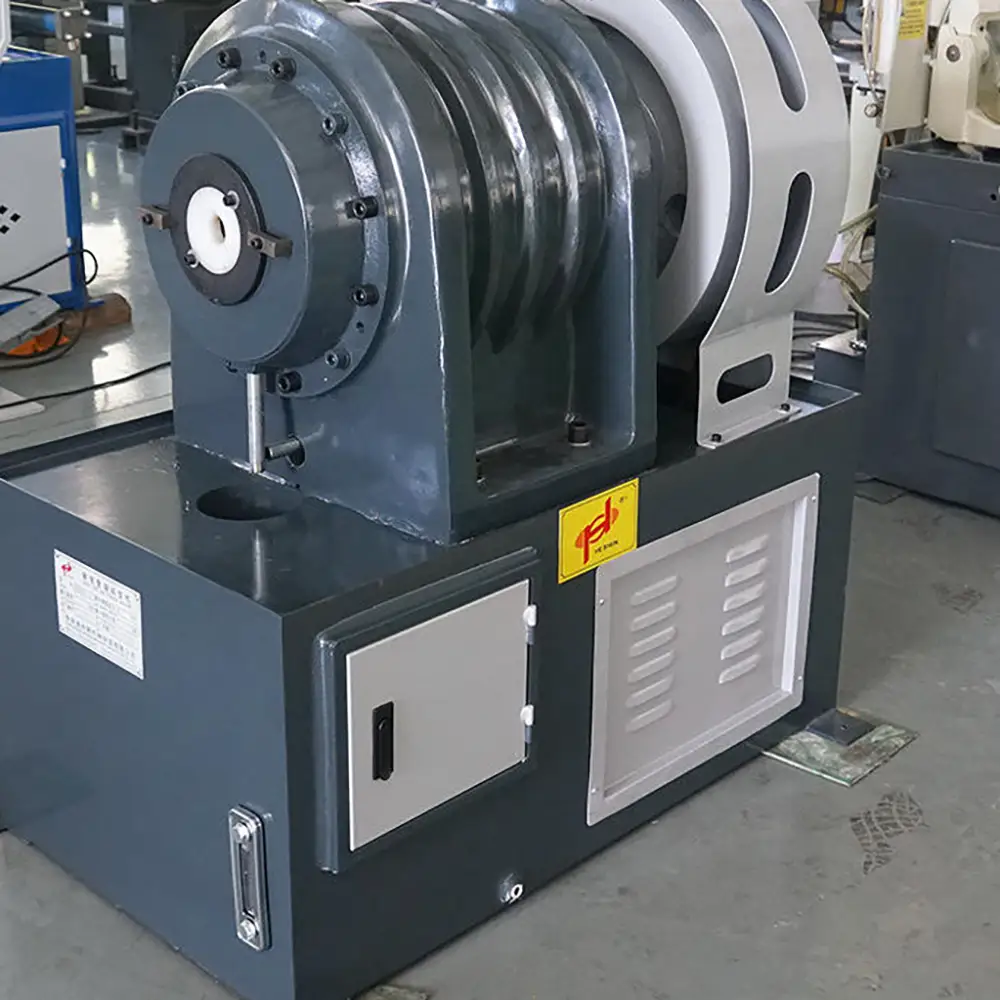
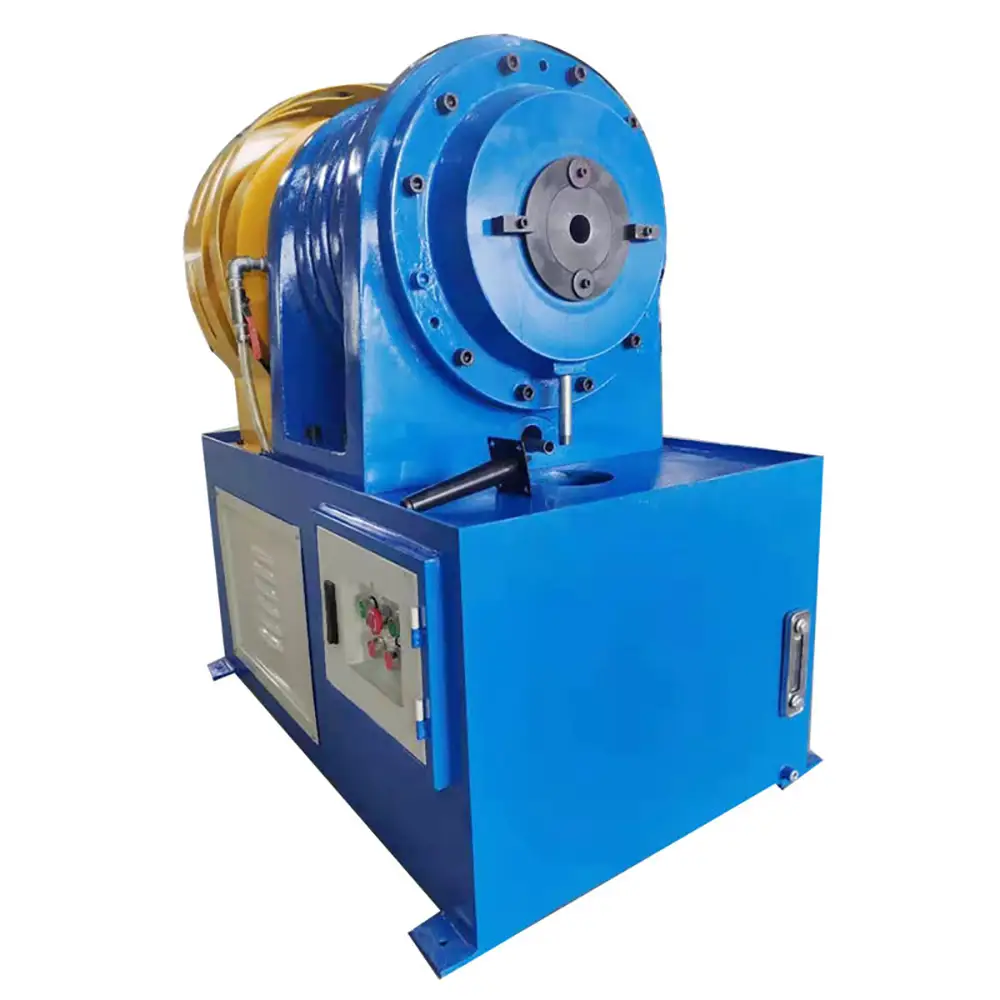
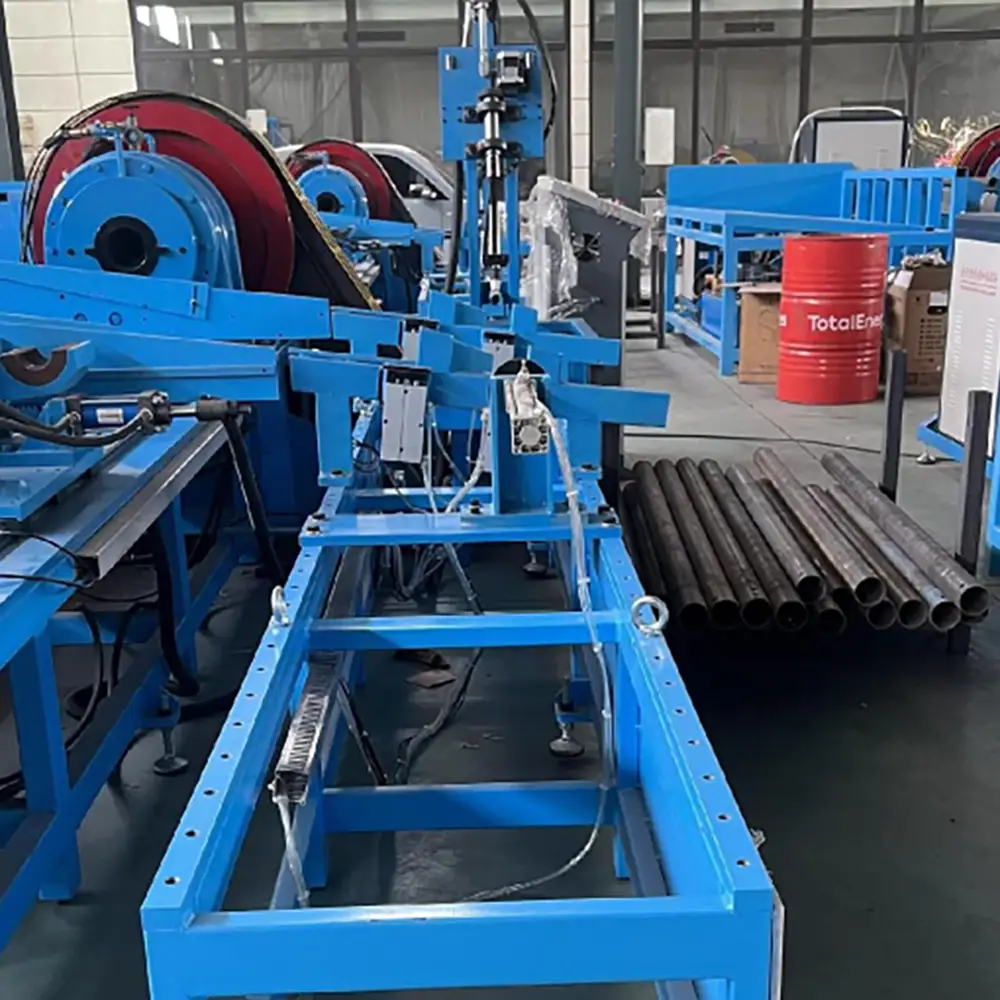
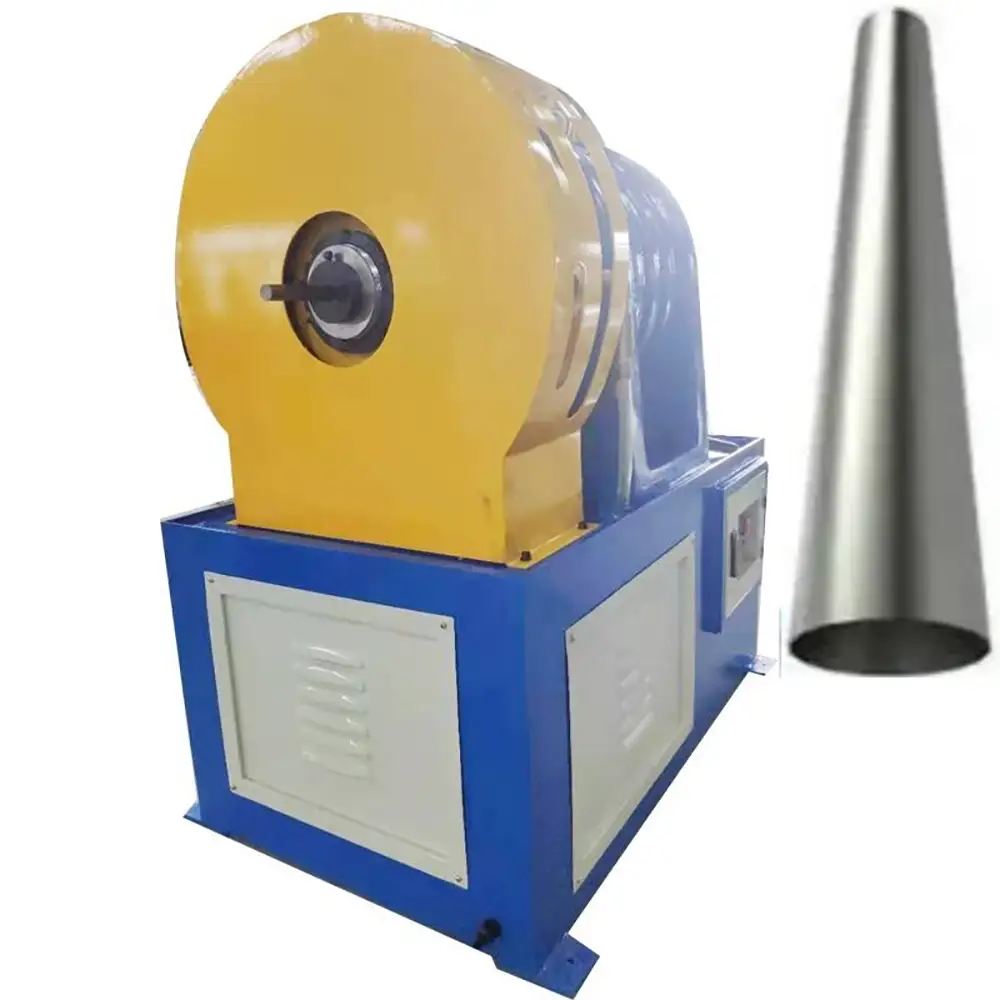
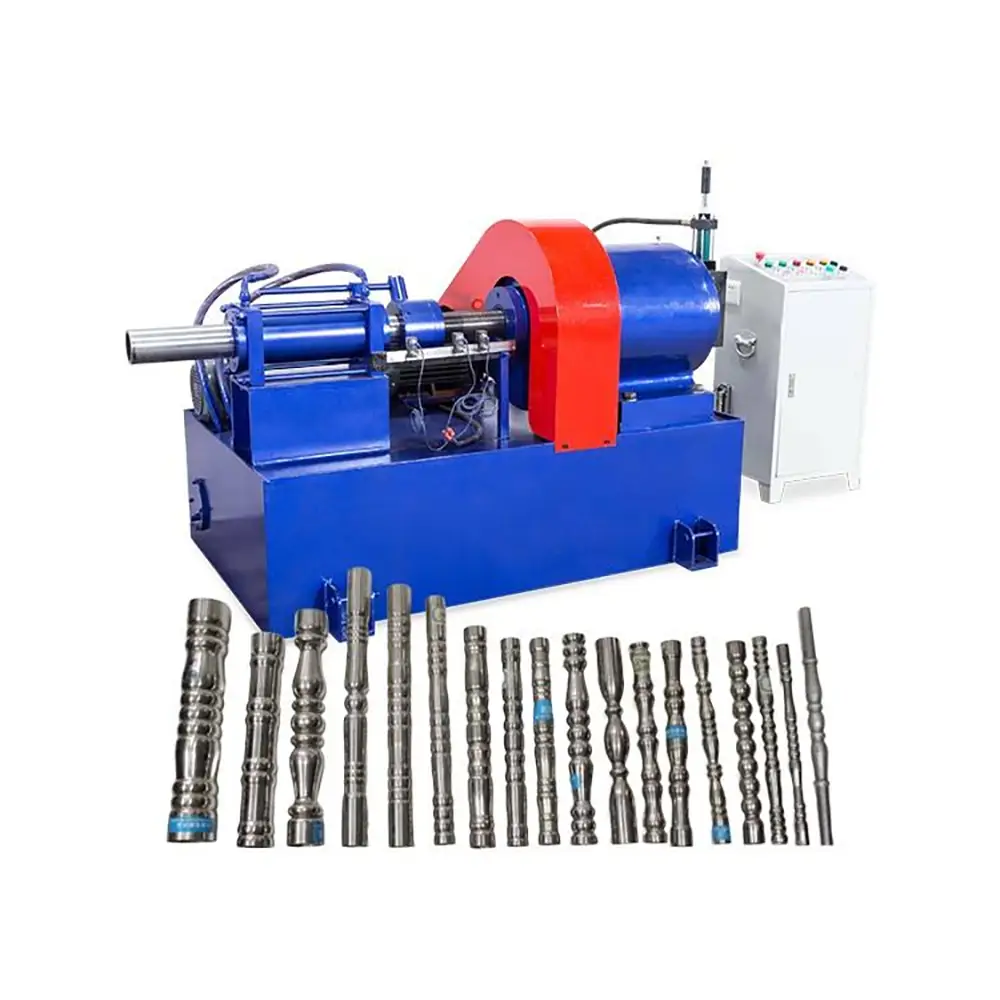
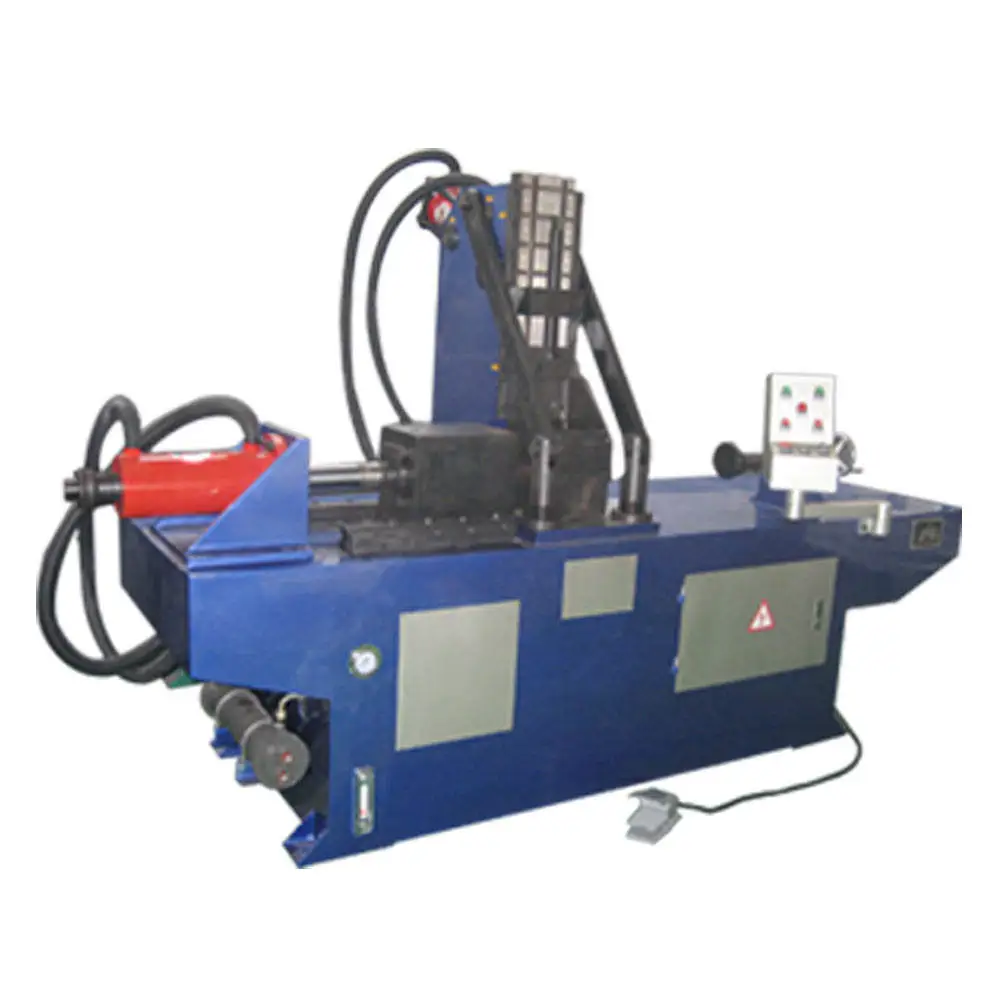
It is mainly composed of steel body, pneumatic tube clamping mechanism, linear guide mechanism rotary whole mouth + rotary flaring, positioning mechanism, pneumatic shifting mechanism, pneumatic flaring mechanism, mould, pneumatic components, electric cabinet and operation panel, etc.
Firstly, carry out manual debugging and confirm the workpiece is qualified. Manually put on the tube, put the tube into the clamping die and push it to the positioning block, the foot switch will automatically complete the automatic action and take the tube manually.
|
model |
HQT-20b |
|
Working air pressure |
0.4-0.8mPa |
|
Using power |
380V/50Hz |
|
Processing Tubes |
copper tube |
|
Processing pipe diameter |
belowΦ19.05 |
|
Flare shape |
Horn shape |
|
Moulds |
Customizable |
|
Dimension |
1000mm*580mm*1250mm |
|
Package Size |
1100mm*650mm*1350mm |
|
Machine weight |
250kg |
Automatic Pneumatic Rotary Pipe Expander for Thin Pipe
The Automatic Pneumatic Rotary Pipe Expander is a specialized tube end-forming machine designed for controlled expansion of thin-wall pipes,tubes,and other suitable metal tubular components. Combining pneumatic actuation with rotary expansion tooling,the machine can enlarge or reshape a selected tube end to prepare it for connection,assembly,or subsequent forming operations.
This type of equipment is particularly useful for manufacturers processing thin metal pipes,tubes,furniture components,automotive parts,exhaust tubing,air conditioning lines,and general fabricated tubular products.
The automatic operating concept can help standardize repetitive expansion cycles while reducing manual forming work. Pneumatic actuation provides controlled movement of the forming mechanism,while rotary tooling can distribute the forming action around the tube circumference.
Actual expansion capacity depends on tube material,outside diameter,wall thickness,forming length,required expansion ratio,tooling,and machine configuration.
Pneumatic Tube Expansion
Pneumatic tube expansion uses compressed air to actuate the machine's forming mechanism. Compared with purely manual tube expansion,the pneumatic system can provide more consistent operating force and repeatable machine movement.
The actual pneumatic pressure required depends on the tube dimensions and forming process. Thin-wall tubing generally requires careful control because excessive forming force can cause deformation,wrinkling,or damage.
The machine can be configured with suitable expansion tooling according to the required tube dimensions.
For production applications,customers should provide the tube material,diameter,wall thickness,and finished expansion dimensions when selecting the machine.
Rotary Pipe Expanding Process
The rotary expansion process uses forming elements that work around the tube circumference to gradually reshape the selected tube section.
This type of forming can help produce a more uniform expanded end when the machine is correctly adjusted and the tooling is properly matched to the workpiece.
Potential applications include:
Pipe connection preparation
Tube end expansion
Exhaust tube processing
Furniture tube forming
HVAC tube processing
Metal component assembly
Custom tube end forming
The final result depends on tooling geometry,rotational movement,forming pressure,workpiece alignment,and material properties.
Thin Pipe and Thin-Wall Tube Applications
Thin-wall tubes require controlled forming because their walls can be more susceptible to deformation during expansion.
The machine can be considered for suitable thin pipes and tubes used in applications such as:
Furniture tubing
Decorative metal tubes
Automotive tubing
Exhaust components
HVAC tubing
Refrigeration tubing
Light structural tubing
General fabricated tubes
The term thin pipe does not represent one universal wall-thickness range. Actual compatibility should be evaluated according to the tube material,diameter,wall thickness,and required expansion.
Sample testing can be useful when the finished component has strict dimensional or appearance requirements.
Pipe End Forming
Pipe end forming modifies the geometry of a tube end to create a specific connection or assembly profile.
Expansion is one type of tube end-forming process. Depending on the tooling and machine design,other operations may also be possible,including reducing,tapering,swaging,necking,or custom profile forming.
For manufacturers,the ability to integrate tube expansion into an end-forming process can simplify production and reduce the need for manual tube preparation.
The machine's actual forming functions should be confirmed according to the selected model and tooling configuration.
Automatic Production Operation
An automatic or machine-assisted operating cycle can help improve consistency when processing repeated tube components.
A typical production sequence may include loading the tube,positioning it in the fixture,clamping the workpiece,activating the pneumatic forming cycle,completing the rotary expansion,and removing the finished component.
The level of automation varies between machine models. Some configurations may automate the forming cycle while still requiring manual loading and unloading.
For higher-volume production,additional feeding,material handling,or unloading systems may be considered if supported by the machine design.
Materials
The pneumatic rotary pipe expander can be configured for suitable metal tube materials according to its forming capacity and tooling.
Potential materials include:
Carbon steel
Mild steel
Stainless steel
Aluminum
Copper
Galvanized steel
Other compatible metal tubing
Material ductility,strength,hardness,and work-hardening characteristics all influence the expansion process.
Stainless steel may require different forming parameters from mild steel,while aluminum and copper can require different tooling and pressure settings because of their material characteristics.
Customers should provide the material grade when requesting a machine recommendation.
Automotive and Exhaust Tube Processing
Tube expansion is commonly used in exhaust-related manufacturing and fabrication. An expanded tube end can be used to create a connection section between exhaust components.
Potential applications include:
Automotive exhaust tubes
Motorcycle exhaust pipes
Muffler connections
Resonator tubes
Exhaust connectors
Custom exhaust components
For exhaust applications,the required expansion diameter and length depend on the mating components and final assembly design.
The machine should be configured according to the tube material,diameter,wall thickness,and required finished connection.
Furniture and Decorative Tube Applications
The machine can also be used in furniture manufacturing where metal tubes require formed ends for assembly or connection.
Potential products include:
Chair legs
Table legs
Furniture frames
Decorative tubes
Metal railings
Display stands
Shelving components
Tube expansion can create a larger or specially shaped end that may simplify component assembly.
For decorative applications,the tooling should be designed to minimize unwanted surface marks and maintain the required appearance.
Tooling and Expansion Dies
Tooling determines the final shape and dimensions of the expanded tube end. Expansion dies should be selected according to the original tube size and required finished dimensions.
Tooling may be designed for:
Round tube expansion
Thin-wall tube expansion
Pipe end expansion
Connection preparation
Custom expansion profiles
Multi-stage forming
For OEM projects,customers can provide tube drawings,samples,finished dimensions,and production requirements.
Custom tooling can then be evaluated according to the required tube geometry and material.
Production Efficiency and Repeatability
A pneumatic rotary tube expander can provide a more repeatable forming process than manual expansion when properly configured.
Once the workholding,tooling,and machine parameters are established,operators can process similar tubes using a standardized cycle.
Actual production capacity depends on tube dimensions,forming depth,cycle time,loading method,tool changes,and operator workflow.
For high-volume production,the machine can be evaluated as part of a larger automated tube-processing line.
Quality Control
Finished tube ends should be inspected to ensure they meet the required dimensions.
Important inspection points may include:
Expanded diameter
Original tube diameter
Expansion length
Wall deformation
Roundness
Concentricity
Surface condition
Overall dimensional consistency
For production requiring repeatable dimensions,first-piece inspection can help establish suitable pneumatic pressure,tool position,and forming parameters.
Periodic inspection can also help identify tooling wear or process deviations.
Maintenance and Safety
Regular maintenance is important for reliable machine operation. Operators should inspect pneumatic lines,fittings,valves,forming dies,rotary components,fixtures,and other moving parts according to the manufacturer's recommendations.
Compressed-air systems should be checked for leaks and maintained at the appropriate operating pressure.
The forming area contains moving components and pinch points. Operators should keep hands away from the tooling during operation and use appropriate protective equipment.
Guards,emergency-stop systems,and other protective functions depend on the machine configuration. Operators should follow the manufacturer's instructions and applicable workplace safety requirements.
OEM and Custom Tube Expansion Solutions
The Automatic Pneumatic Rotary Pipe Expander can be customized for different tube processing requirements.
Potential options may include:
Custom expansion dies
Different tube fixtures
Pneumatic system configuration
Rotary forming tooling
Automatic feeding
Tube positioning systems
PLC controls
Custom workholding
Special end-forming profiles
Customers should provide tube material,outside diameter,wall thickness,required expansion diameter,forming length,production volume,and drawings or samples.
These details help determine the appropriate machine configuration and tooling.
Why Choose Us
Automatic Tube Expansion — Supports repeatable tube expansion cycles for suitable production applications.
Pneumatic Forming System — Uses controlled pneumatic actuation for machine-assisted tube end forming.
Rotary Expansion Process — Designed to form suitable tube ends around the circumference with dedicated rotary tooling.
Thin-Wall Tube Applications — Suitable configurations can be developed for selected thin pipes and thin-wall tubes.
Multiple Material Options — Can be configured for suitable carbon steel,stainless steel,aluminum,copper,and other metal tubing.
Flexible End Forming — Suitable for tube expansion,connection preparation,and selected custom end-forming applications.
Custom Tooling Support — Expansion dies,fixtures,and workholding systems can be developed according to customer requirements.
OEM & B2B Manufacturing Service — Suitable for manufacturers,distributors,wholesalers,and international buyers sourcing tube end-forming equipment.
FAQs
1. What is a pneumatic pipe expander?
A pneumatic pipe expander is a machine that uses compressed air to actuate forming tooling for expanding or reshaping a suitable pipe or tube end.
2. Can this machine expand thin-wall pipes?
Yes. It can be configured for suitable thin-wall pipes and tubes,but the actual range depends on material,diameter,wall thickness,tooling,and expansion requirements.
3. What is rotary pipe expansion?
Rotary pipe expansion uses rotating or circumferential forming tooling to reshape the tube end around its circumference.
4. What materials can be processed?
Depending on machine capacity,the equipment may process carbon steel,mild steel,stainless steel,aluminum,copper,galvanized steel,and other compatible tubing.
5. Can it process stainless steel tubes?
Yes,provided that the machine and expansion tooling are suitable for the stainless steel grade,diameter,and wall thickness.
6. Can it be used for exhaust pipes?
Yes. Suitable automotive,motorcycle,muffler,resonator,and exhaust connector tubes can be processed within the machine's rated forming range.
7. What is the purpose of tube expansion?
Tube expansion can create a larger connection section or prepare the tube end for assembly with another component.
8. Is the machine fully automatic?
The exact automation level depends on the machine configuration. Some models automate the forming cycle while still requiring manual loading and unloading.
9. Can custom expansion dies be supplied?
Yes. Custom expansion dies and fixtures can be designed according to the tube dimensions and required finished profile.
10. What affects expansion quality?
Material properties,tube diameter,wall thickness,expansion ratio,tooling geometry,pneumatic pressure,alignment,and machine rigidity can all affect the finished result.
11. Can the machine expand copper or aluminum tubes?
Potentially yes,provided the tooling and forming parameters are suitable for the specific material and tube dimensions.
Prev:
Manual Hydraulic Hand Pallet Truck Forklift Stacker for Material Handling Equipment
Next:
Multifunction Cone square Taper Pipe Tube End Swaging Forming Machine
TAG:
Automatic Tube End Forming Machine,
Exhaust Tube Expanding Machine,
Metal Pipe Forming Machine,
Metal Tube Forming Machine,
Tube End Forming Equipment,
Pipe End Forming Equipment,
Hydraulic Tube Expander,
Pipe Tapering Machine,
Pipe End Reducing Machine,
Tube Swaging Machine,
Pipe Swaging Machine,
Pipe Necking Machine,
Tube Necking Machine,
Tube End Tapering Machine,
Pipe End Tapering Machine,
Tube Tapering Machine,
Tube End Reducing Machine,
Pipe Reducing Machine,
Pipe End Expanding Machine,
Pipe Shrinking Machine,
Tube Shrinking Machine,
Tube Reducing Machine,
Tube End Forming Machine,
Pipe End Forming Machine,
Tube End Expanding Machine,
Pipe Expanding Machine,
Tube Expanding Machine,
Industrial Tube Forming Machine,
Industrial Pipe Forming Machine,
Metal Tube Processing Machine,
Related Category:
Automatic Pneumatic Rotary Pipe Expander,Thin Pipe Expanding Machine,Pneumatic Pipe Expander,Rotary Pipe Expander China, suppliers, manufacturers, factory, customized, wholesale, quotation, made in China