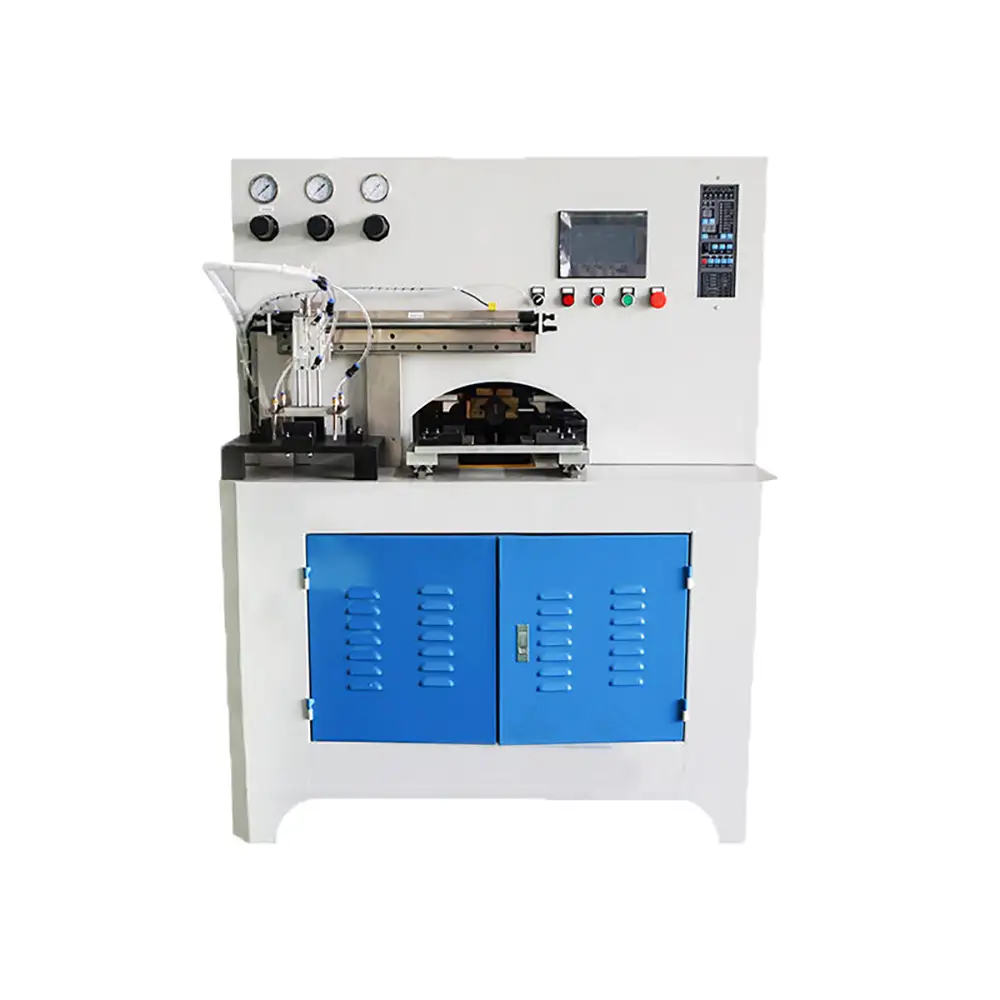
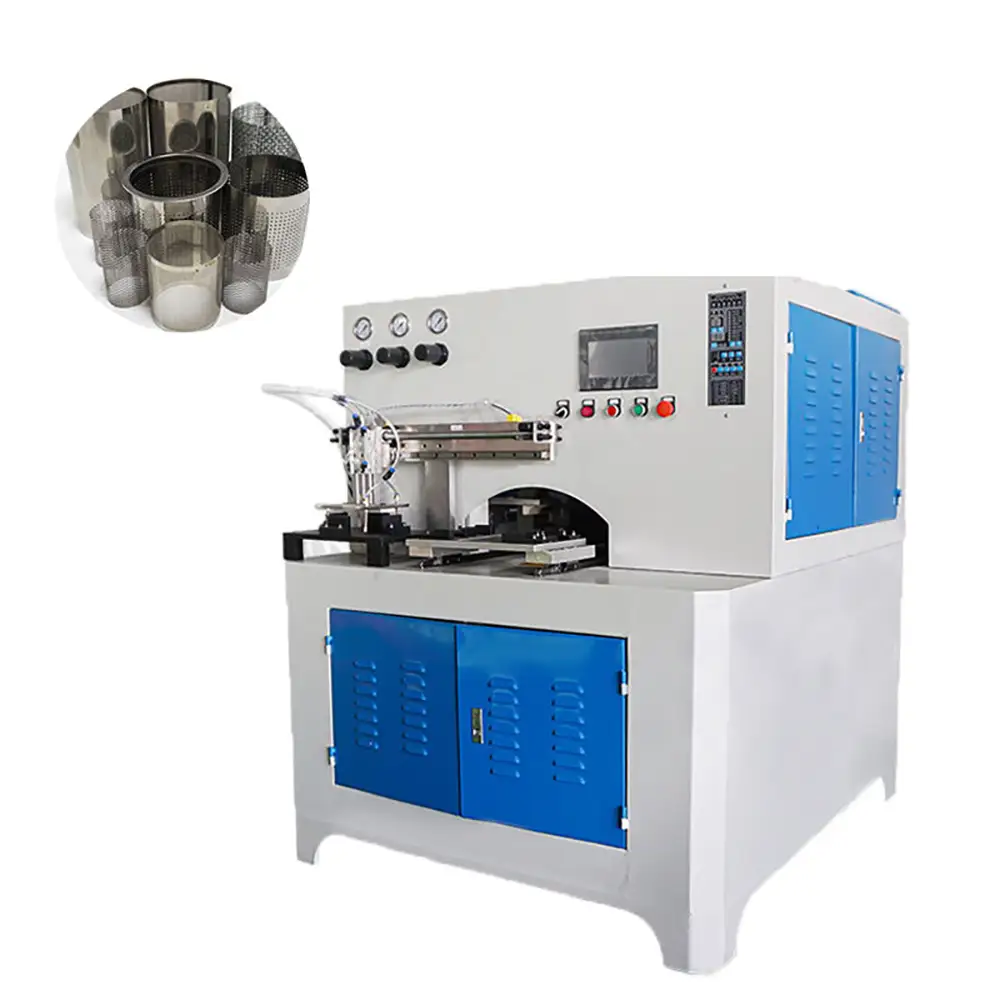
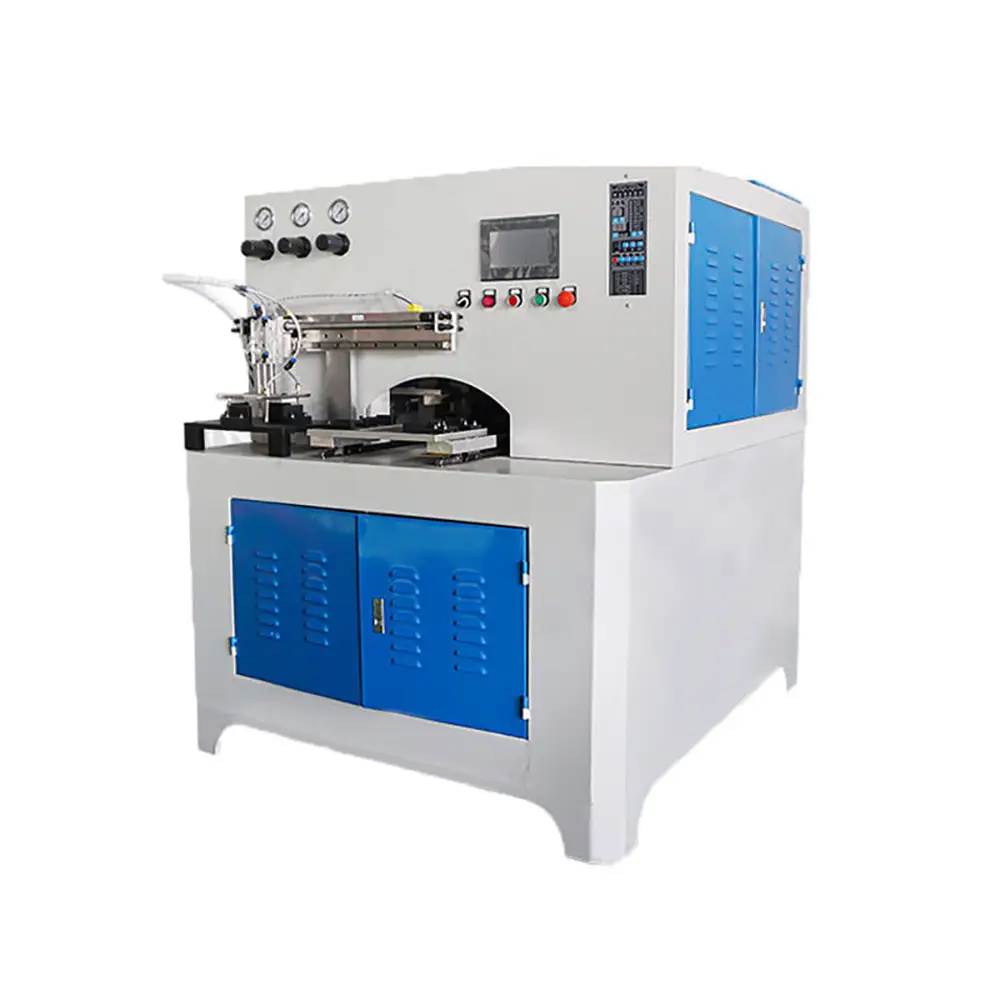
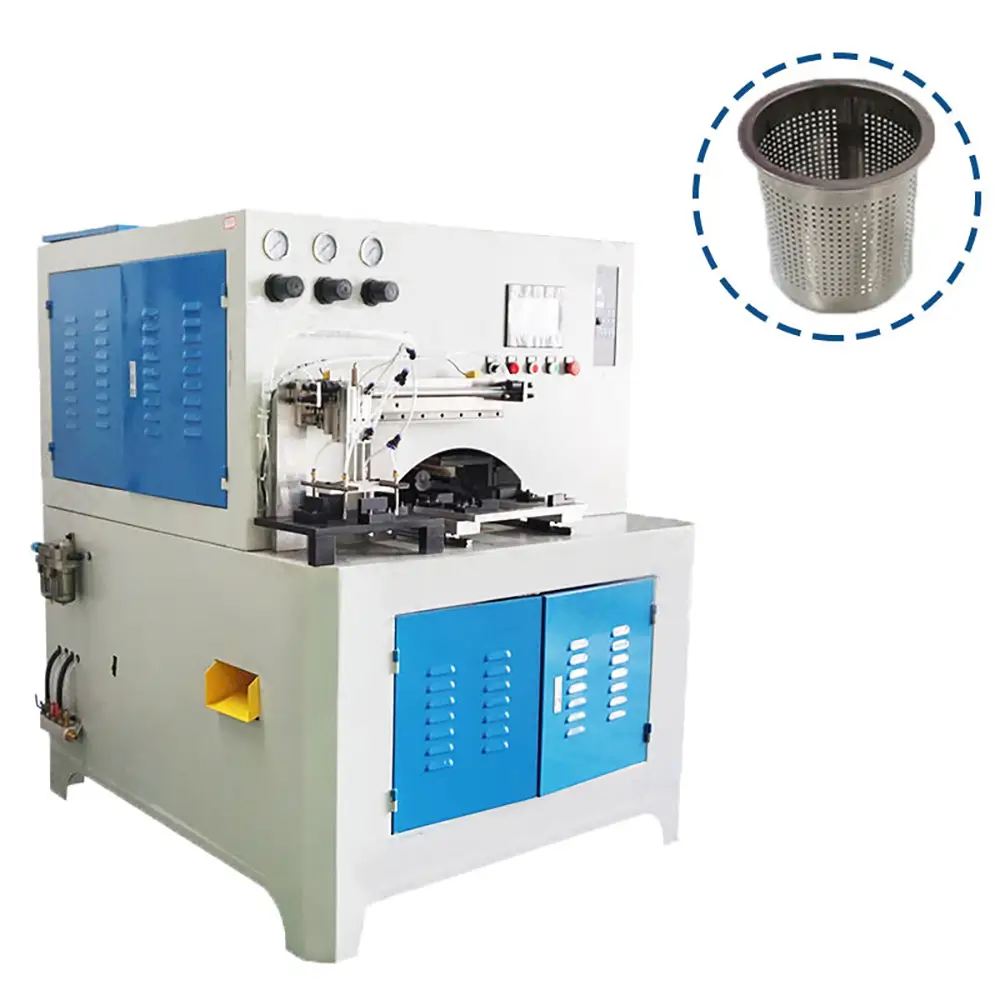
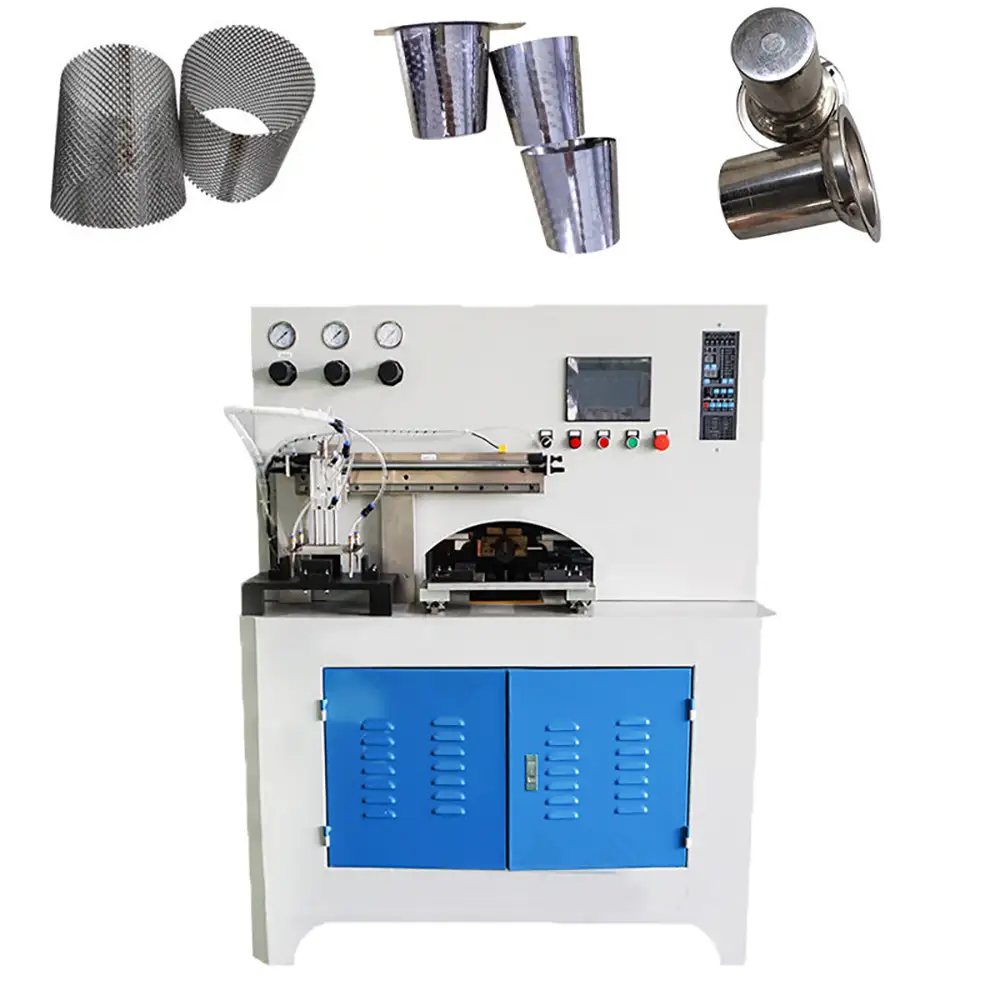
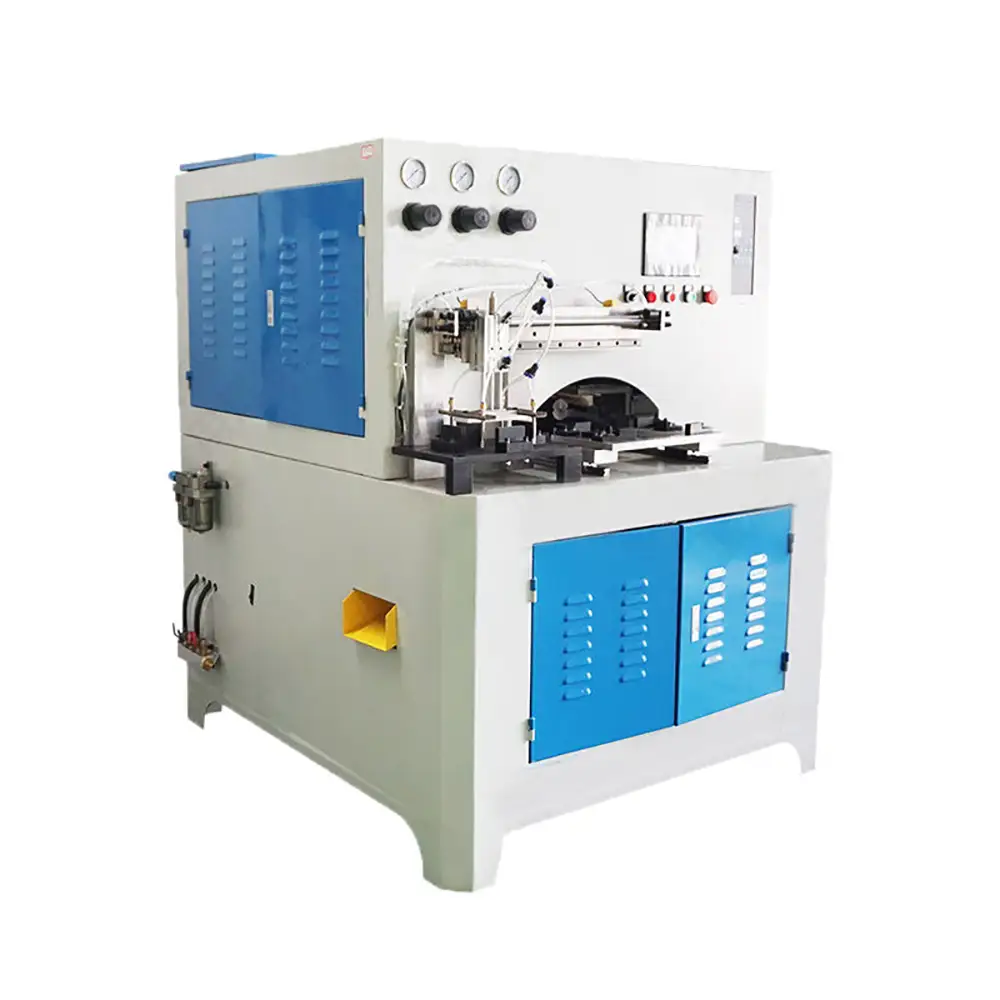
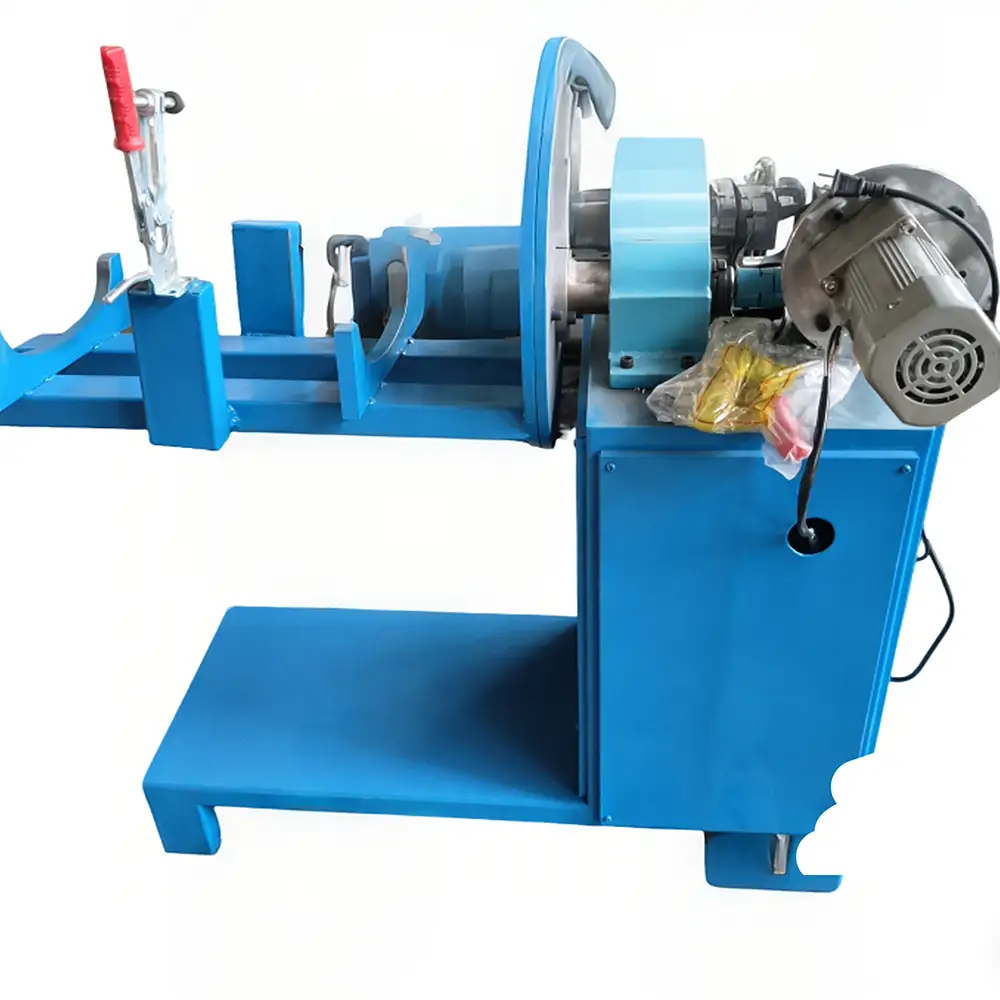
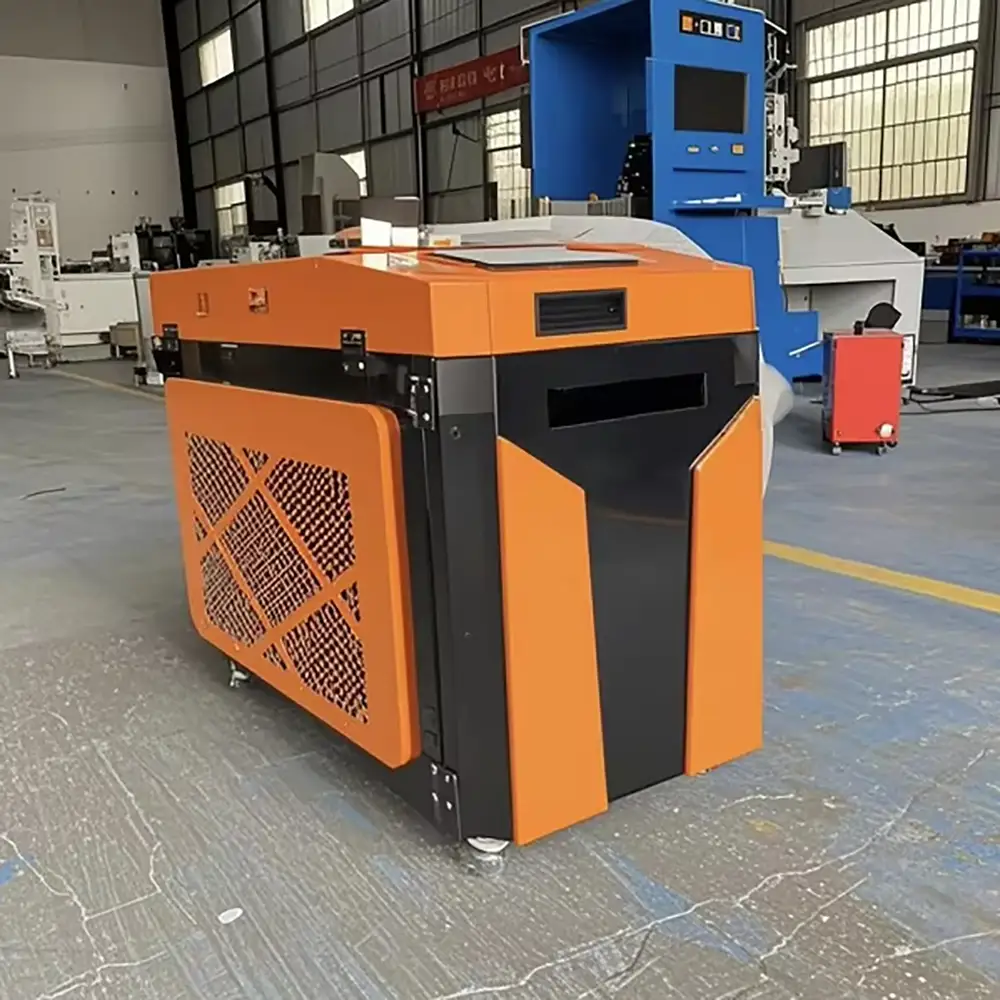
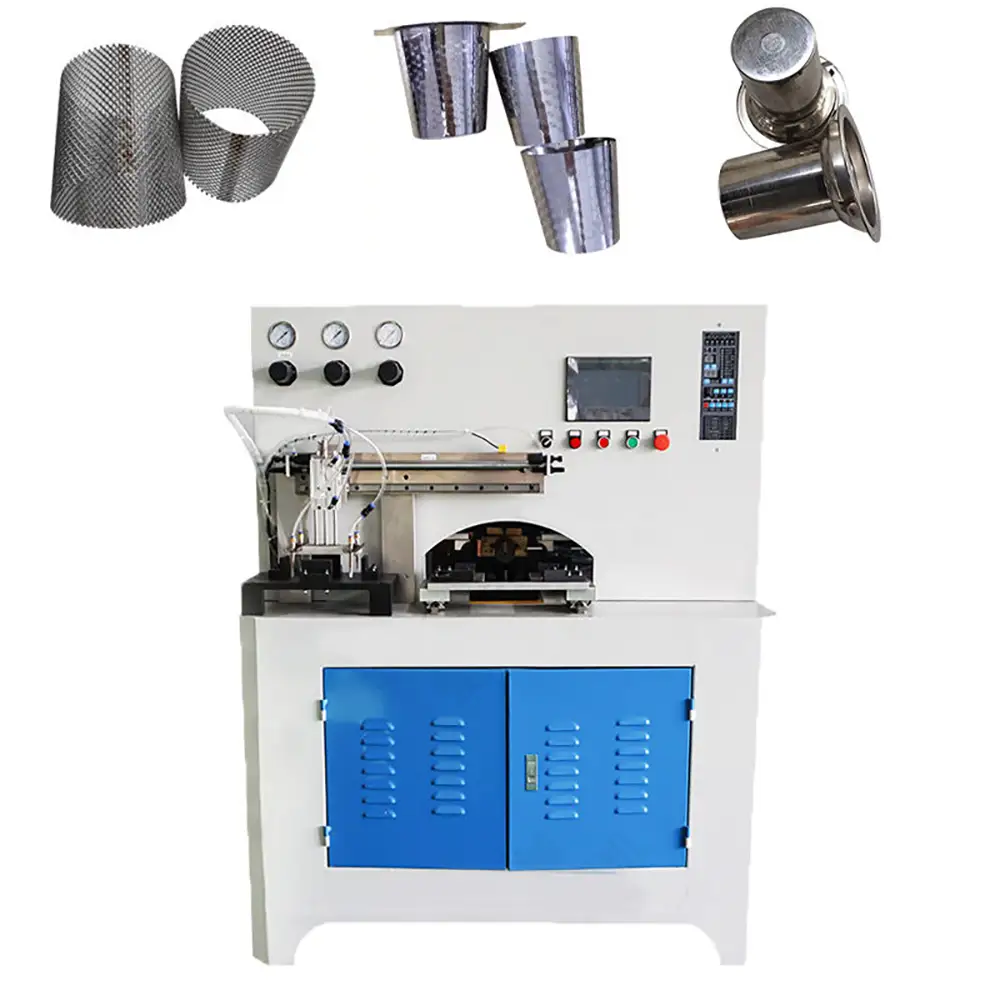
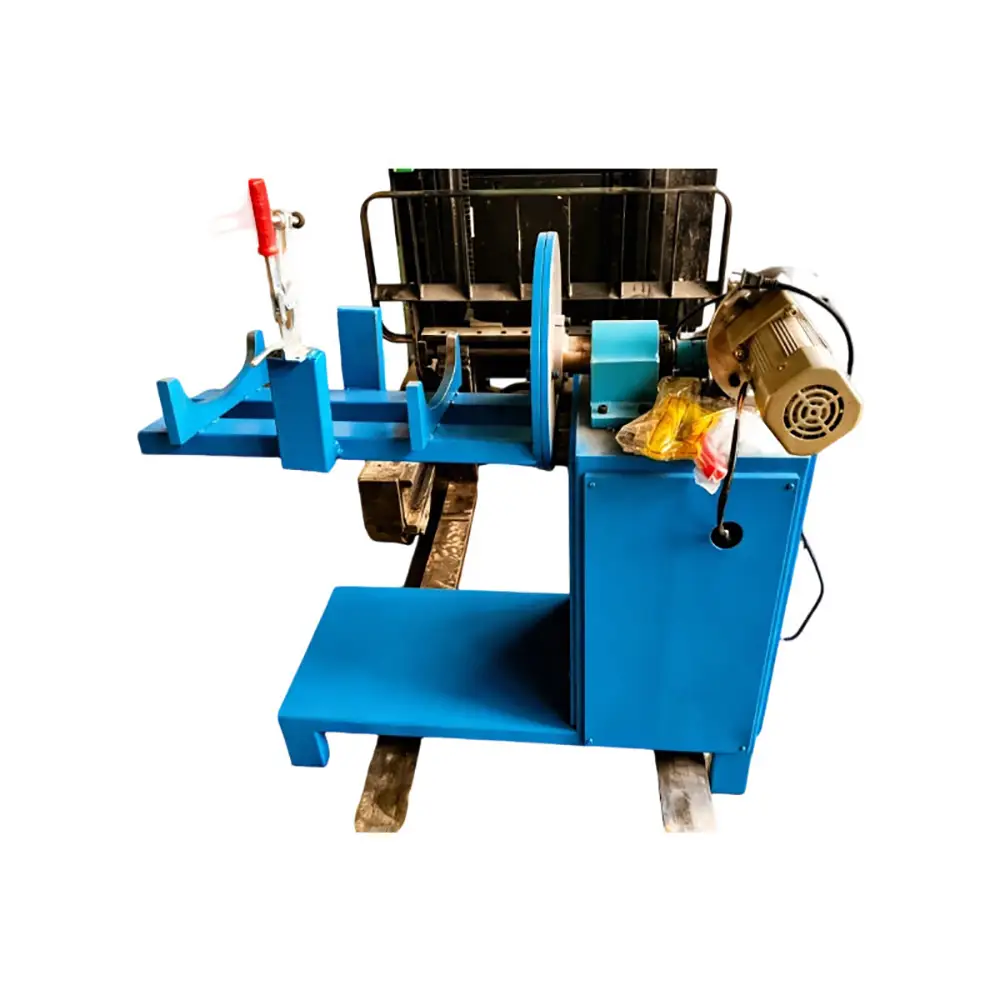
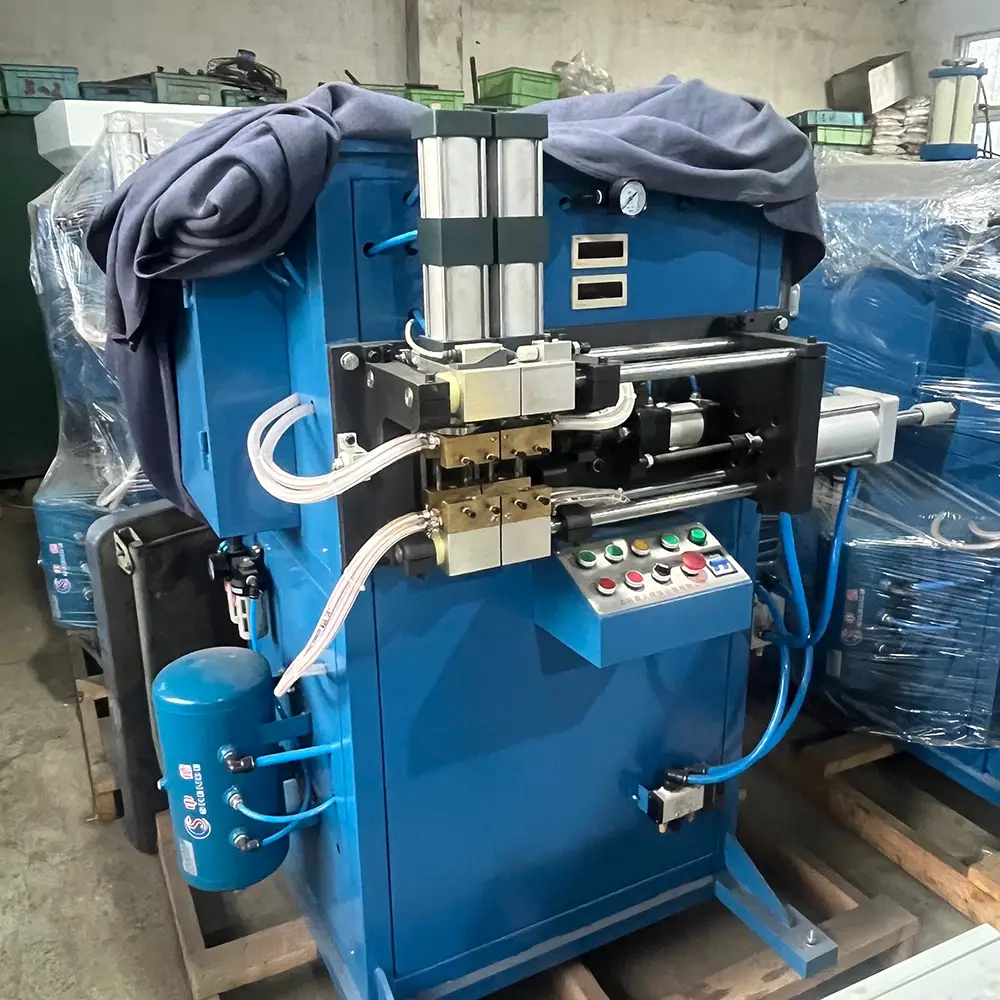
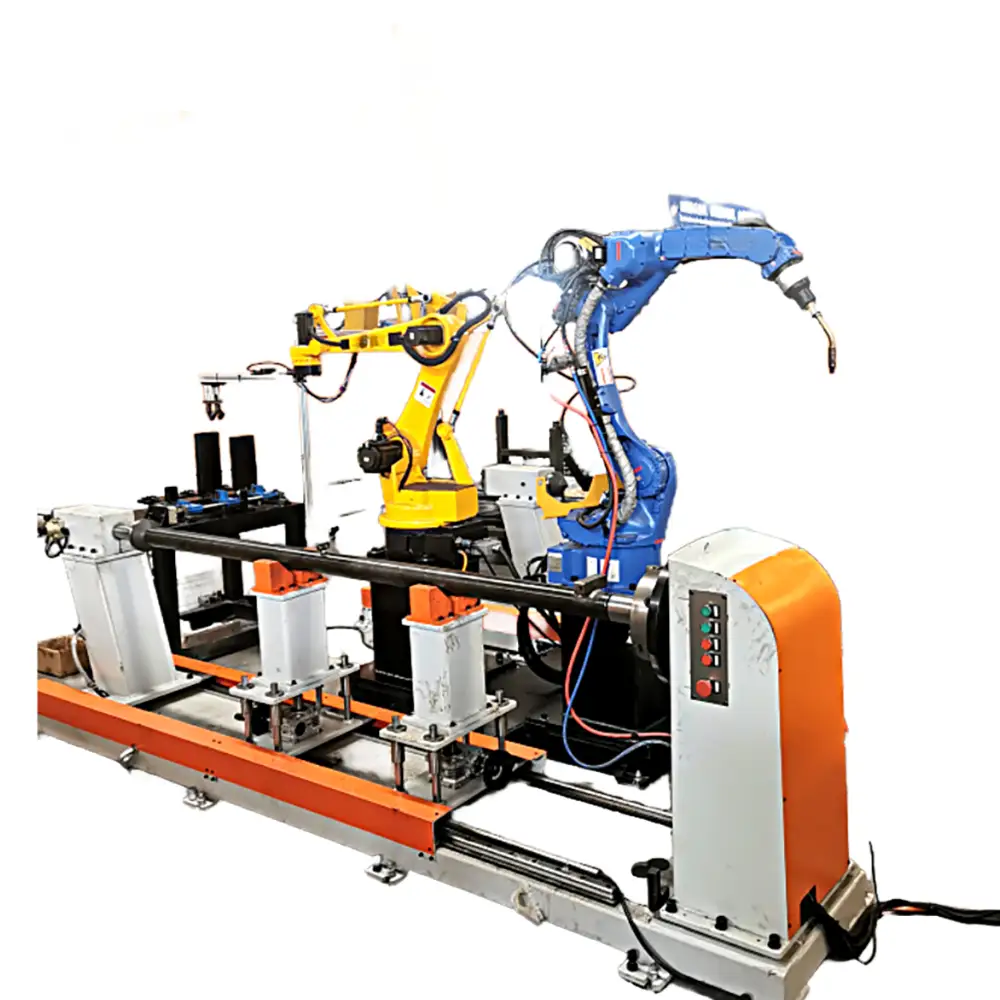
1. Tea strainer/filter cartridge/filter screen automatic welding machine
2. Automatic loading, automatic rolling, automatic welding, automatic stripping.
3. Fully automatic design, realizing unmanned operation.
4. Multiple processes are completed at one time, replacing manual operations to reduce production time and save costs
5. Suitable for copper, aluminum, nickel, platinum, silver, titanium, alloy, galvanized, stainless steel, hot-formed steel,high-strength steel, low-carbon steel, coated steel and other metal materials.
6. Acceptable butt welding between different materials PRODUCT SPECIFICATIONS
|
Name |
Automatic Filter Welding Machine |
|
Drive mode |
Pneumatic |
|
Power input |
380V 50Hz |
|
Air source working pressure |
0.6MPa |
|
Cooling water capacity |
10L/min |
|
Insulation class |
E |
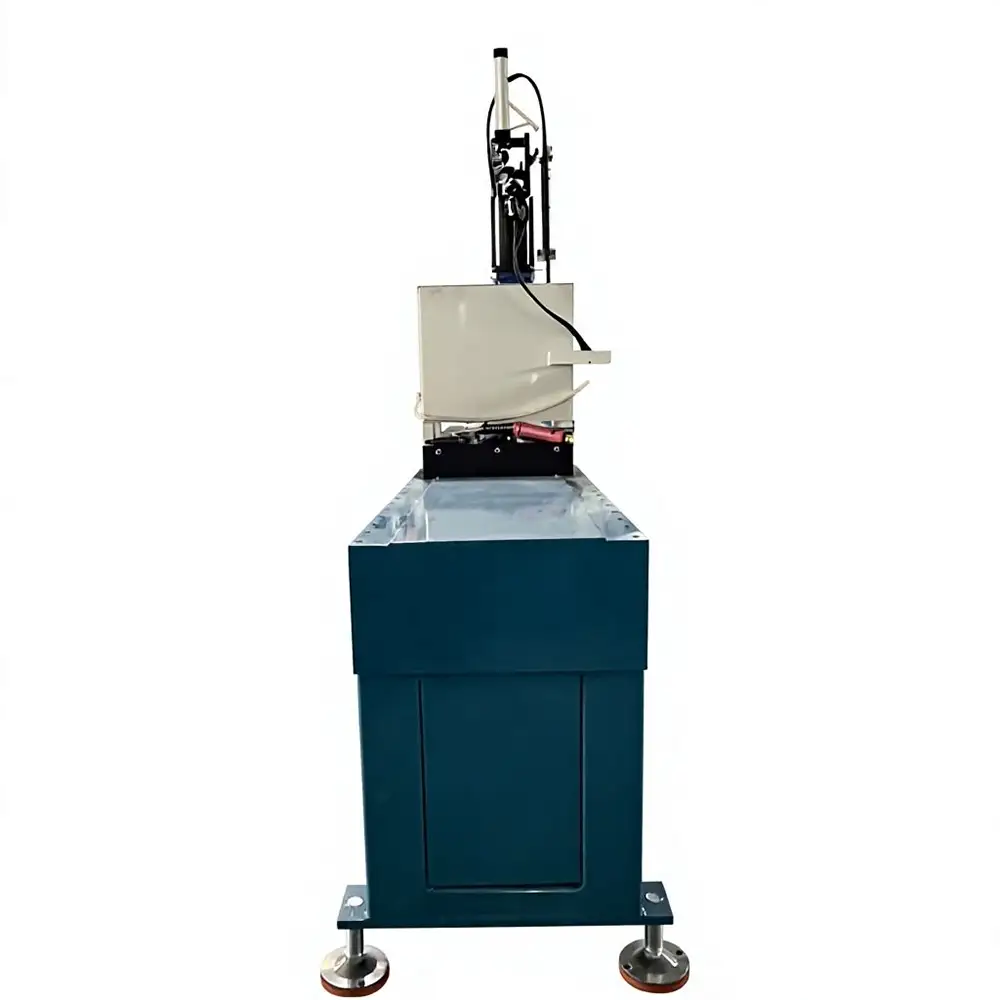
Automatic CNC Filter Mesh Welding Machine for Tea Strainer Industrial Grade
The Automatic CNC Filter Mesh Welding Machine is an industrial-grade production solution designed for welding and forming filter mesh components used in tea strainers, tea infusers, filter baskets, fine-mesh screens, and other small metal filtration products. Combining CNC control, automated operation, and precision mesh welding technology, this machine is designed to help manufacturers improve production consistency, reduce repetitive manual work, and achieve stable output.
Tea strainers and filter products commonly use stainless steel wire mesh because it offers corrosion resistance, durability, and a clean appearance. However, producing large quantities of small mesh filter components requires accurate positioning, stable welding, and repeatable production processes. Manual welding can require significant labor and may produce variations between individual products.
An Automatic CNC Filter Mesh Welding Machine provides a more standardized approach. Depending on the machine configuration, it can be adapted to different mesh materials, wire diameters, product shapes, dimensions, and welding requirements. The CNC control system helps coordinate machine movement and operating parameters, while dedicated fixtures can hold the mesh or workpiece in the required position.
What Is a Filter Mesh Welding Machine?
A filter mesh welding machine is specialized industrial equipment used to join metal mesh, wire mesh, or mesh assemblies through a controlled welding process. For tea strainer production, the machine can be used as part of a manufacturing process for joining or forming fine stainless steel mesh components.
The exact machine configuration depends on the product structure. A tea strainer may consist of a mesh basket, supporting frame, handle, ring, cap, or other components. Therefore, fixture design and welding configuration should be selected according to the actual product.
The CNC-controlled design is particularly useful when manufacturers need repeatable positioning and consistent production across a large number of components.
Applications
The machine can be considered for various fine-mesh and filtration product applications, including:
Tea strainer manufacturing
Tea infuser production
Stainless steel tea filter production
Reusable tea filter baskets
Fine mesh filter components
Small wire mesh assemblies
Stainless steel filter screens
Kitchen filtration products
Food and beverage filter components
Industrial mesh filter parts
Small precision mesh products
Custom metal mesh assemblies
For factories producing multiple product sizes, dedicated tooling and programmable CNC parameters can help support different production requirements.
Key Features
1. Automatic CNC Operation
CNC control allows machine movements and production sequences to be coordinated according to programmed parameters. This can reduce repetitive manual positioning and improve production repeatability.
2. Designed for Fine Metal Mesh
The equipment is suitable for applications involving fine metal mesh where accurate positioning and controlled welding are important. Stainless steel mesh is commonly used in tea strainers and food-related filtration products.
3. Precision Positioning
Accurate positioning is essential when welding small mesh components. A properly designed fixture can help maintain consistent workpiece alignment during the welding cycle.
4. Industrial-Grade Construction
The machine is intended for production environments where stable operation and continuous manufacturing are important. Machine construction and component selection can be configured according to the expected production workload.
5. Flexible Product Configuration
Different tea strainers and filter products have different shapes and dimensions. Appropriate tooling, fixtures, electrodes, and CNC programs can be selected according to the product design.
6. Improved Production Efficiency
Automation can reduce repetitive manual operations and allow operators to focus on loading, unloading, inspection, and production monitoring.
Benefits for Tea Strainer Manufacturers
For companies manufacturing tea strainers and infusers, production consistency is an important consideration. Every finished product needs to maintain its intended shape, mesh position, and weld structure.
An automated welding machine can help establish a standardized manufacturing process. Once suitable tooling and welding parameters have been established, repeated products can be processed using the same basic production sequence.
This can help reduce operator-dependent variation and improve manufacturing efficiency.
The machine can also be valuable for OEM manufacturers producing private-label tea accessories. When product specifications change, different tooling or CNC programs may be developed to accommodate different product models, depending on machine capability.
Stainless Steel Mesh Welding
Stainless steel is frequently selected for tea strainers because of its corrosion resistance and suitability for reusable kitchen and food-related products. Fine stainless steel mesh, however, requires careful handling during welding.
The mesh should be properly positioned before welding, and the welding process should be selected according to wire diameter, mesh specification, material grade, and joint design.
Excessive heat can potentially deform fine mesh, while insufficient welding energy may result in inadequate joints. Therefore, manufacturers should establish appropriate parameters through sample testing before full-scale production.
Mesh cleanliness is also important. Oil, dirt, oxide contamination, or foreign particles can affect the welding process and finished appearance.
CNC Control and Production Repeatability
One of the primary advantages of CNC-controlled equipment is repeatability.
For example, a manufacturer may need to produce thousands of identical filter components. Instead of manually determining the welding position for every workpiece, CNC programming and dedicated tooling can help maintain a consistent production sequence.
Depending on the machine design, production parameters may include welding position, welding sequence, movement speed, timing, and other process settings.
The actual parameters should be determined through testing based on the material and product design.
Custom Tooling for Tea Strainers
Tea strainers are available in many designs, including cylindrical baskets, hemispherical baskets, flat filters, cup-shaped strainers, and custom mesh assemblies.
Because of these differences, tooling is an important part of an automated production solution.
Custom fixtures can be developed according to the dimensions and shape of the customer's tea strainer. Proper tooling can help hold the mesh securely while providing consistent positioning during welding.
For OEM production, customers should provide drawings, samples, photographs, dimensions, mesh specifications, and expected production quantities whenever possible.
Production Workflow
A typical manufacturing workflow may include several stages:
Step 1: Material Preparation
Stainless steel mesh and other metal components are prepared according to the product specifications.
Step 2: Mesh Cutting and Forming
The mesh is cut or formed into the required shape using suitable upstream equipment.
Step 3: Fixture Loading
The prepared mesh is positioned in the dedicated fixture.
Step 4: CNC Welding
The programmed welding sequence is performed according to established parameters.
Step 5: Inspection
The welded component is inspected for alignment, appearance, joint quality, and dimensional accuracy.
Step 6: Subsequent Assembly
Additional components such as handles, rings, covers, or chains may be assembled depending on the finished product.
This workflow can be integrated with other equipment to create a more efficient tea strainer production line.
Why Choose Us?
1. Industrial B2B Equipment Focus
We provide production-oriented machinery solutions for manufacturers, distributors, and OEM customers rather than focusing only on small workshop applications.
2. Application-Based Machine Configuration
Machine configuration can be evaluated according to the customer's actual mesh material, wire diameter, product dimensions, welding points, production volume, and automation requirements.
3. Custom Fixtures and Tooling
Tea strainers and filter mesh products come in many shapes. Dedicated tooling can be considered to match specific product designs and production requirements.
4. CNC and Automation Solutions
For repetitive production, CNC control and automated operation can help improve process consistency and reduce manual positioning work.
5. OEM Manufacturing Support
Customers can provide samples, drawings, product specifications, and production targets so the equipment configuration can be evaluated for OEM manufacturing projects.
6. Production Efficiency
The goal of an automated mesh welding solution is to create a repeatable manufacturing workflow that can support higher production efficiency while maintaining controlled welding conditions.
7. Export-Oriented Service
We support international B2B customers with machine configuration discussions, technical communication, documentation, packaging coordination, and other equipment purchasing requirements.
How to Choose the Right Tea Strainer Welding Machine
Before selecting an Automatic Tea Strainer Welding Machine, buyers should consider several factors.
Mesh Material: Stainless steel is common, but the actual material grade should be confirmed.
Wire Diameter: Fine mesh and heavier mesh may require different welding parameters and tooling.
Mesh Opening: The mesh specification affects product handling and welding requirements.
Product Shape: Cylindrical, round, flat, basket-shaped, and custom components may require different fixtures.
Welding Points: The number and location of welding points should be evaluated.
Production Capacity: Daily or monthly output requirements can determine the appropriate automation level.
Product Drawings: Detailed drawings or samples can help equipment suppliers determine suitable tooling and machine configuration.
Maintenance and Quality Control
Routine maintenance is important for stable production. Operators should regularly inspect welding electrodes, fixtures, cables, pneumatic components, mechanical moving parts, and control-system components according to the equipment manufacturer's recommendations.
The welding area should be kept clean, especially when processing fine stainless steel mesh.
Production samples should also be inspected regularly. Visual inspection can identify issues such as incomplete joints, excessive deformation, incorrect alignment, or inconsistent weld appearance.
For products intended for food or beverage applications, manufacturers should also establish appropriate material, surface-finish, cleaning, and quality-control procedures according to their target market and applicable regulations.
Conclusion
The Automatic CNC Filter Mesh Welding Machine is designed to provide a controlled and repeatable production solution for tea strainers, tea infusers, stainless steel filter baskets, fine mesh screens, and related metal mesh products.
By combining CNC control, automated operation, precision fixtures, and application-specific welding parameters, the equipment can help manufacturers establish a more standardized production process.
For companies producing tea strainers in high quantities or developing OEM filtration products, the right machine configuration should be selected according to mesh material, wire diameter, product shape, welding requirements, production volume, and automation level.
A properly configured Industrial Tea Strainer Mesh Welding Machine can become an important part of an efficient manufacturing workflow, helping manufacturers reduce repetitive manual operations and improve production consistency.
Frequently Asked Questions
1. What products can this machine weld?
It can be configured for applications such as tea strainers, tea infusers, stainless steel filter baskets, fine mesh screens, and other small metal mesh assemblies.
2. Is the machine suitable for stainless steel mesh?
Yes, stainless steel mesh is a common application for tea strainer and filter products. Final compatibility depends on mesh specifications and the machine configuration.
3. Can it produce different tea strainer sizes?
Different product sizes may require different fixtures or tooling. Custom tooling can be considered according to the product design.
4. Is the machine fully automatic?
The level of automation depends on the selected configuration. CNC-controlled automatic production solutions can be designed for repetitive manufacturing applications.
5. Can the welding parameters be adjusted?
Parameters can generally be adjusted according to the machine design and the material, mesh specification, and product requirements.
6. Can you provide custom fixtures?
Custom fixtures can be considered for specific tea strainer shapes, dimensions, welding positions, and production requirements.
7. What information is needed for a quotation?
Customers should provide product drawings or samples, mesh material, wire diameter, mesh opening, product dimensions, welding requirements, and expected production capacity.
8. Can this machine be used for OEM production?
Yes. The machine can be evaluated for OEM manufacturing projects where customized tooling, CNC programs, or production configurations may be required.
9. How should fine mesh be prepared before welding?
The mesh should be correctly cut, formed, aligned, and cleaned before welding. Proper preparation helps establish more consistent welding conditions.
10. How is finished weld quality inspected?
Inspection may include visual checks, dimensional measurements, joint-strength testing, and other quality-control procedures appropriate to the final product.
Prev:
Precision-Controlled Spiral Conveyor Blade Welding Machine for Ground Pile, Mixing, Conveying Rail
Next:
Copper-Aluminum Pipe Butt Welder - Air Conditioning Refrigerant Line Specialized Welding Machine
TAG:
Wire Mesh Welding Machine,
Automatic Mesh Welding Machine,
Filter Mesh Welding Machine,
Stainless Steel Mesh Welding Machine,
Tea Strainer Welding Machine,
Automatic Filter Welding Machine,
Tea Strainer Making Machine,
Tea Infuser Making Machine,
Mesh Welding Machine,
Metal Mesh Welding Machine,
CNC Mesh Welding Machine,
Tea Filter Welding Machine,
Tea Infuser Welding Machine,
Tea Strainer Mesh Welder,
Filter Screen Welding Machine,
Filter Mesh Welder,
Stainless Steel Filter Welder,
Fine Mesh Welding Machine,
Mesh Filter Welding Equipment,
Industrial Mesh Welding Machine,
CNC Filter Welding Machine,
Tea Filter Manufacturing Machine,
Filter Basket Welding Machine,
Stainless Steel Filter Mesh Machine,
Industrial Filter Mesh Welding Equipment,
Related Category:
Automatic CNC Filter Mesh Welding Machine,Filter Mesh Welding Machine,Tea Strainer Welding Machine China, suppliers, manufacturers, factory, customized, wholesale, quotation, made in China