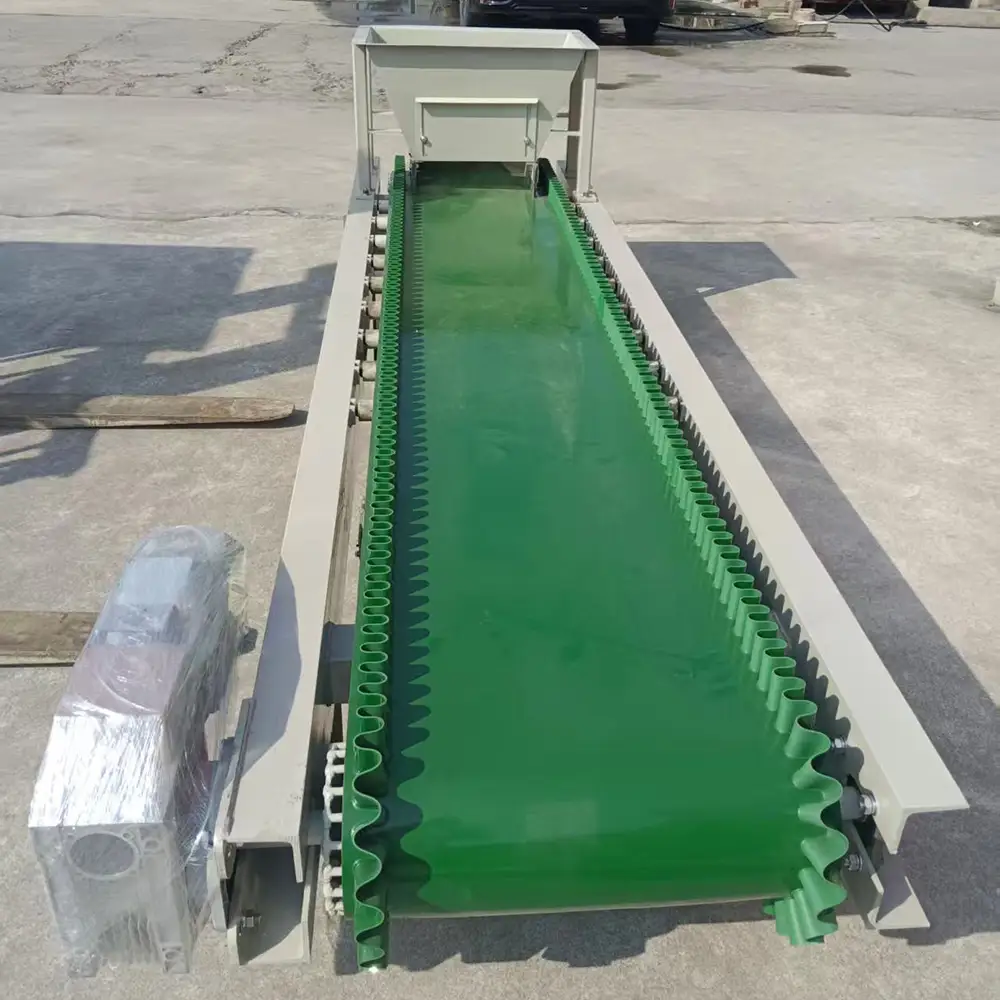
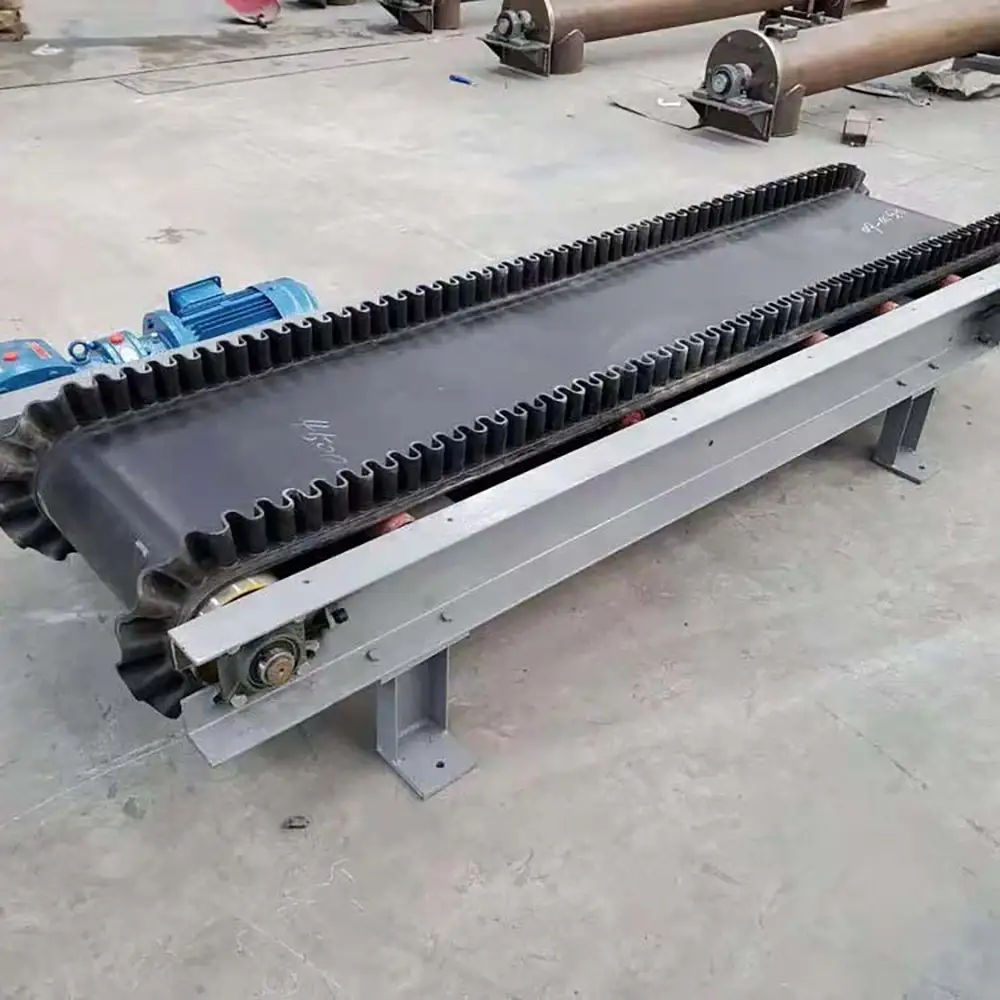
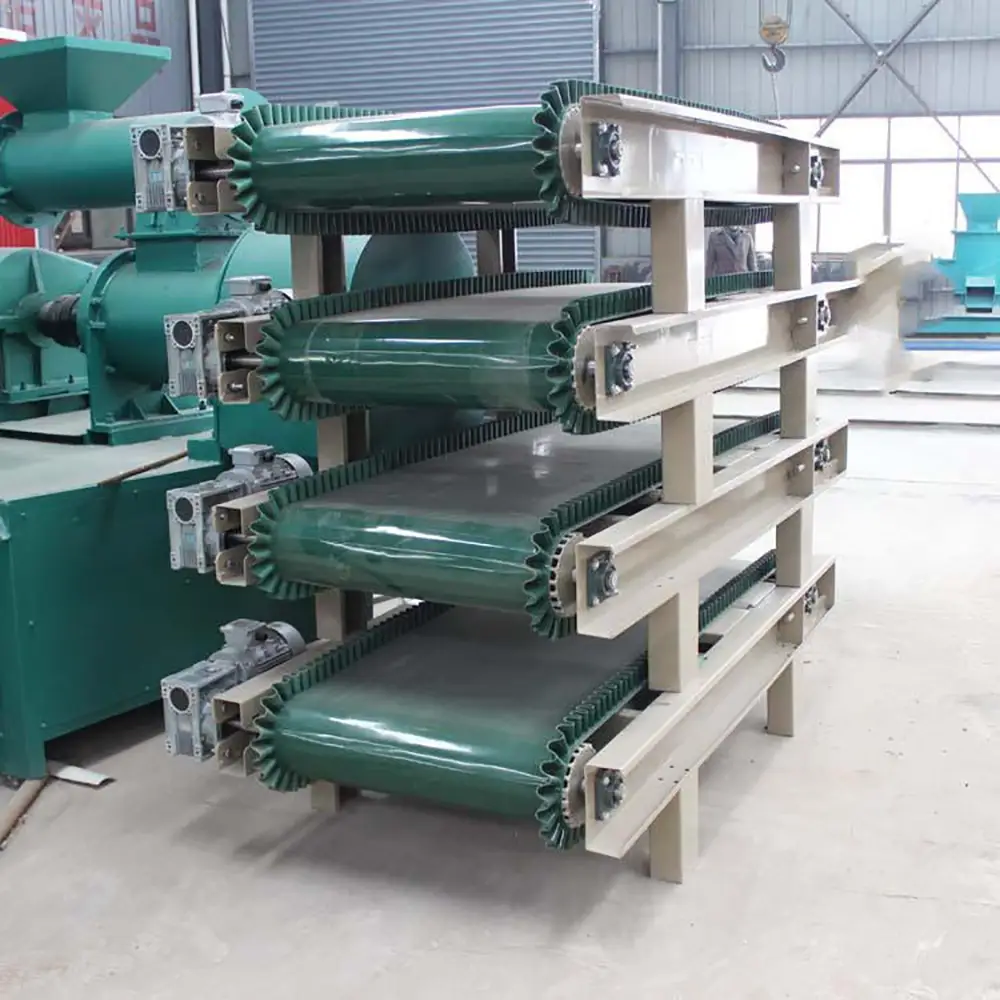
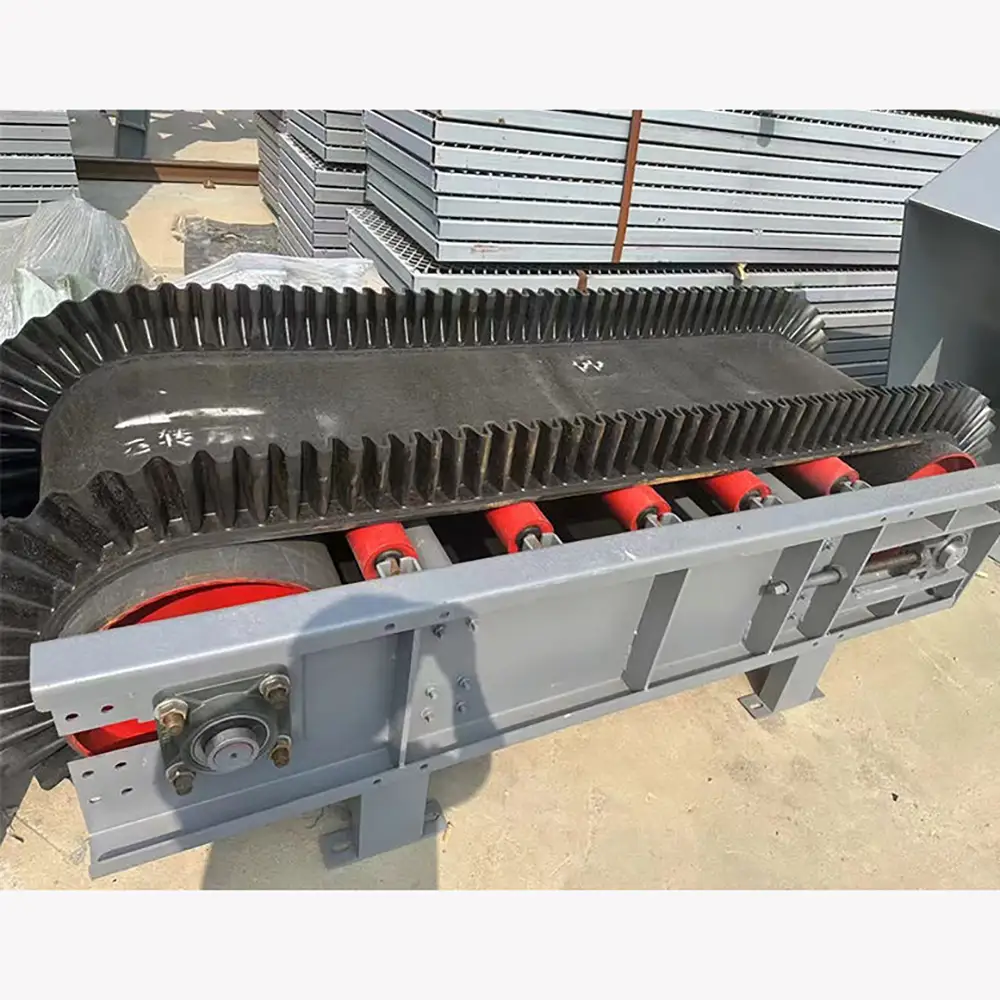
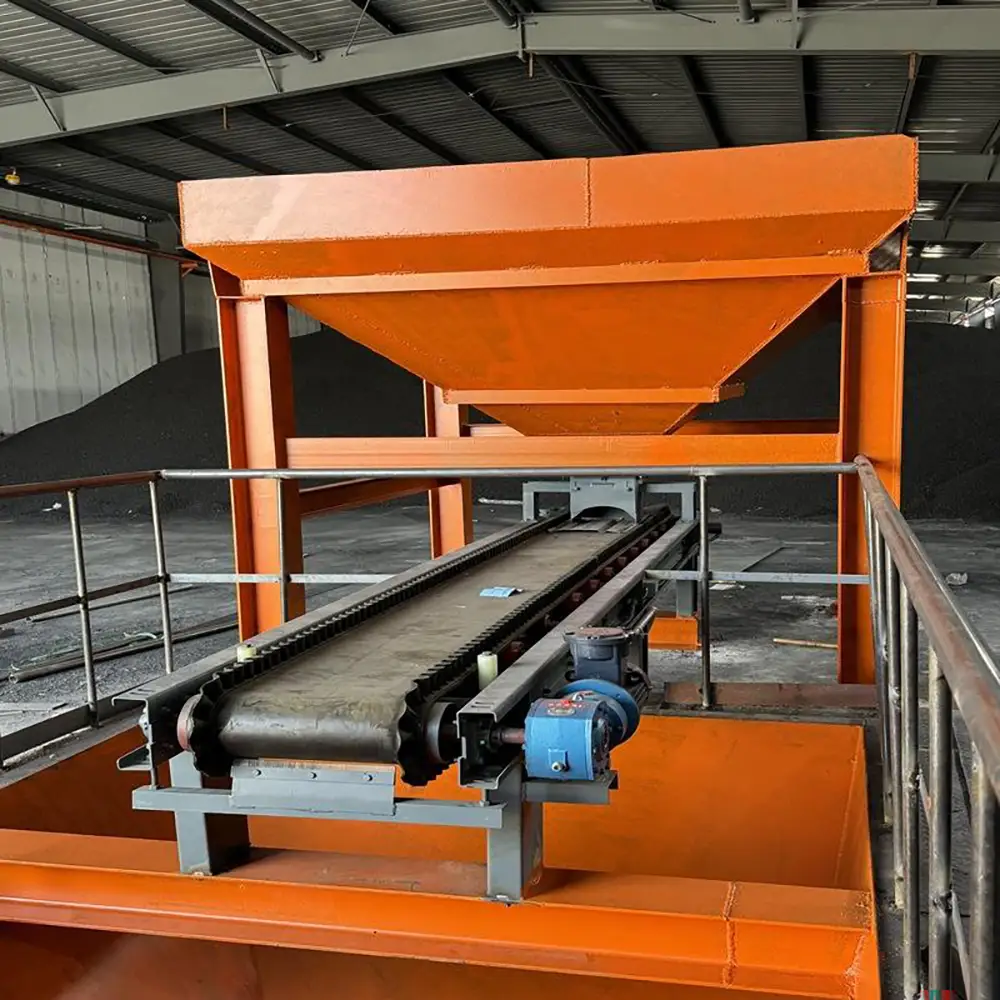
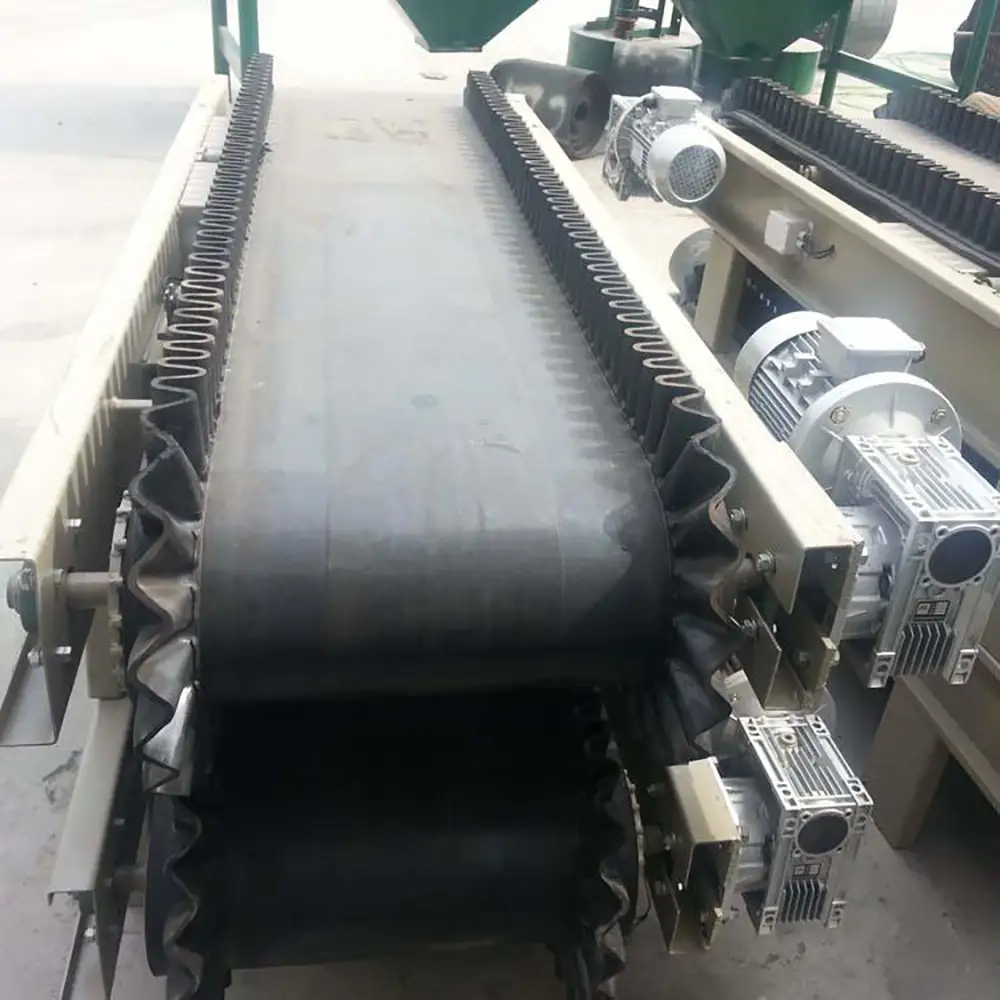
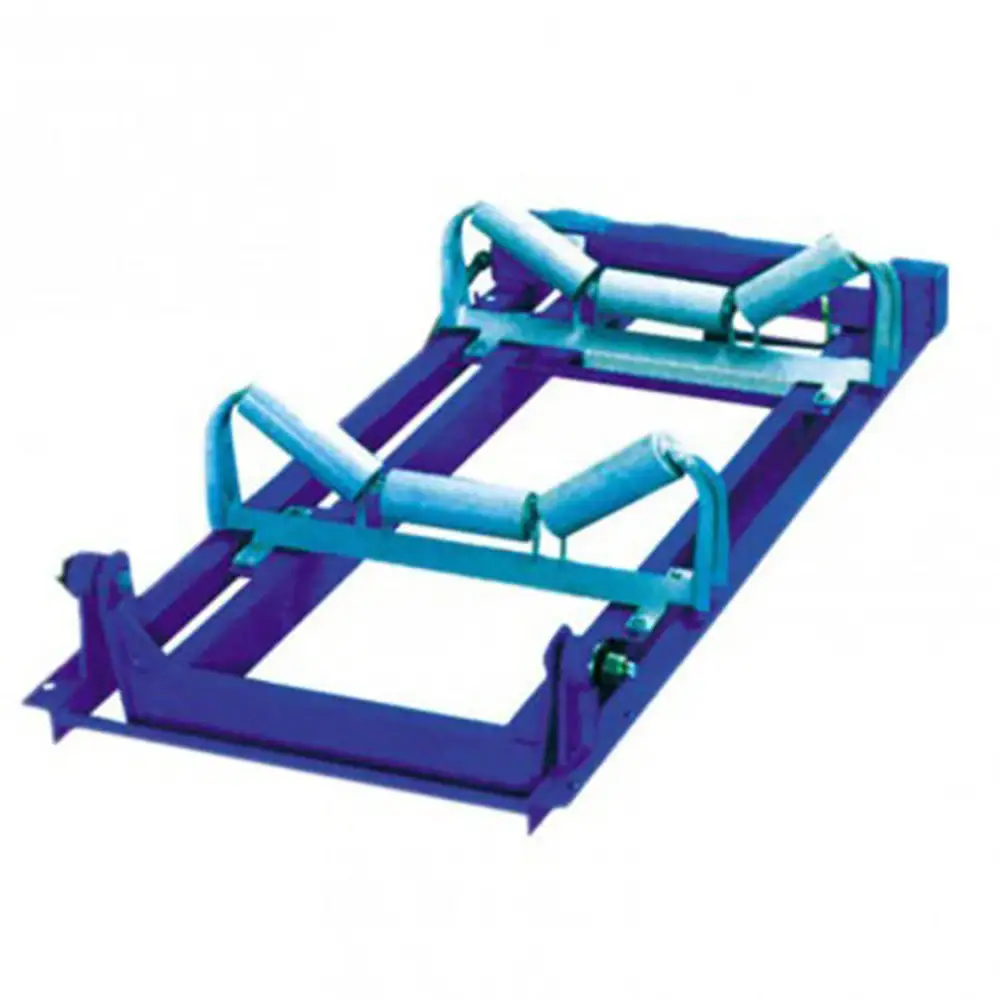
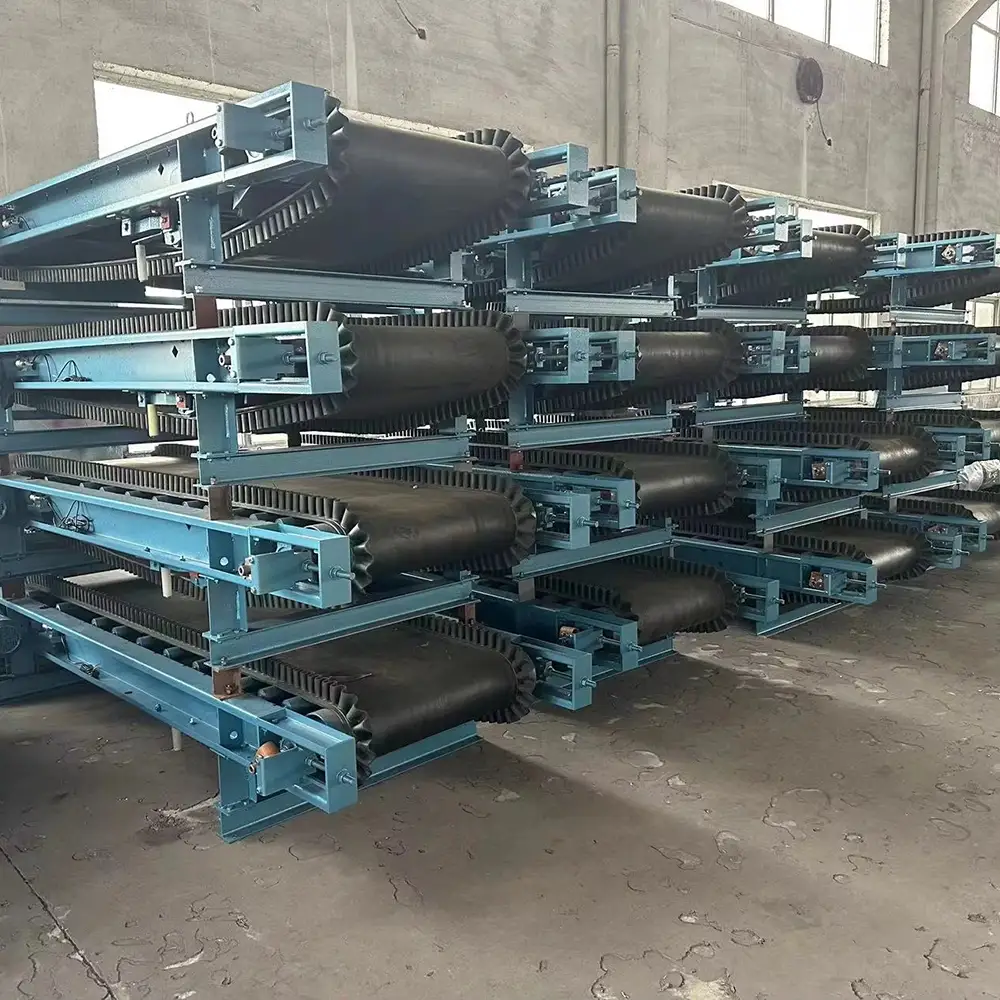
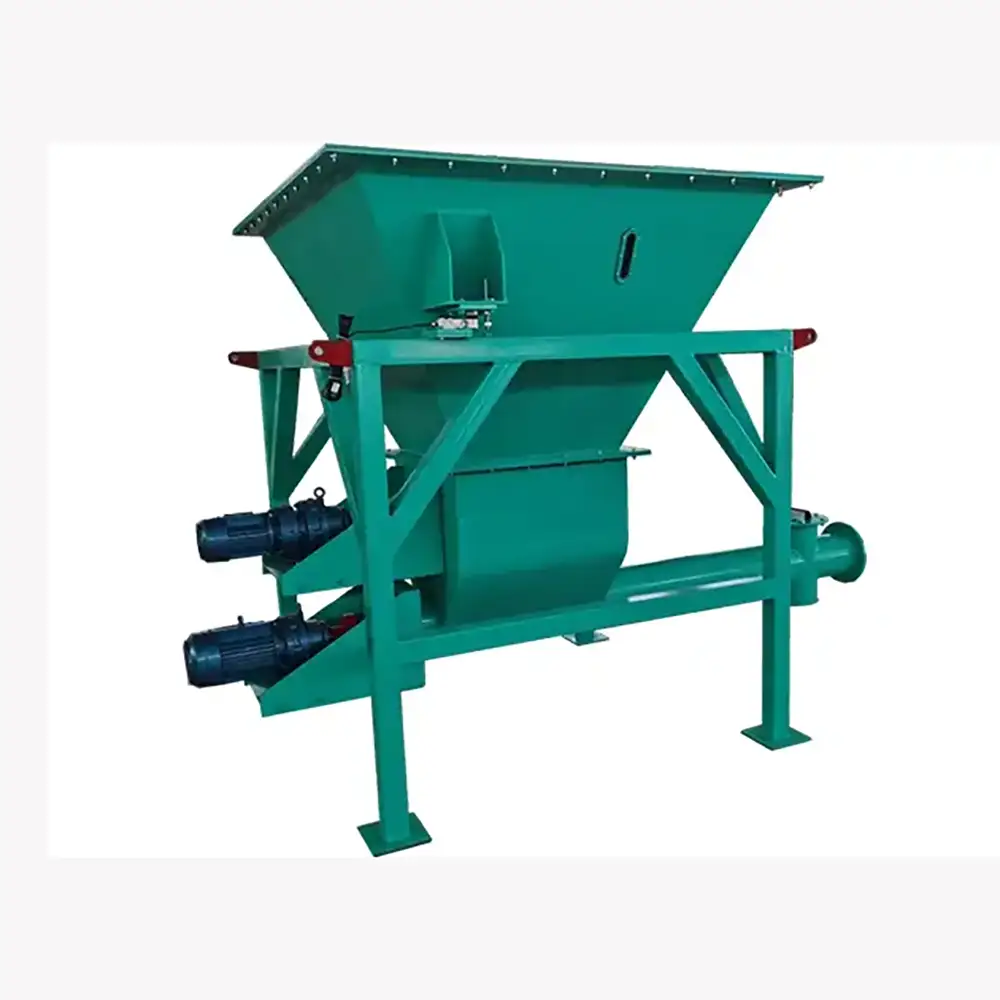
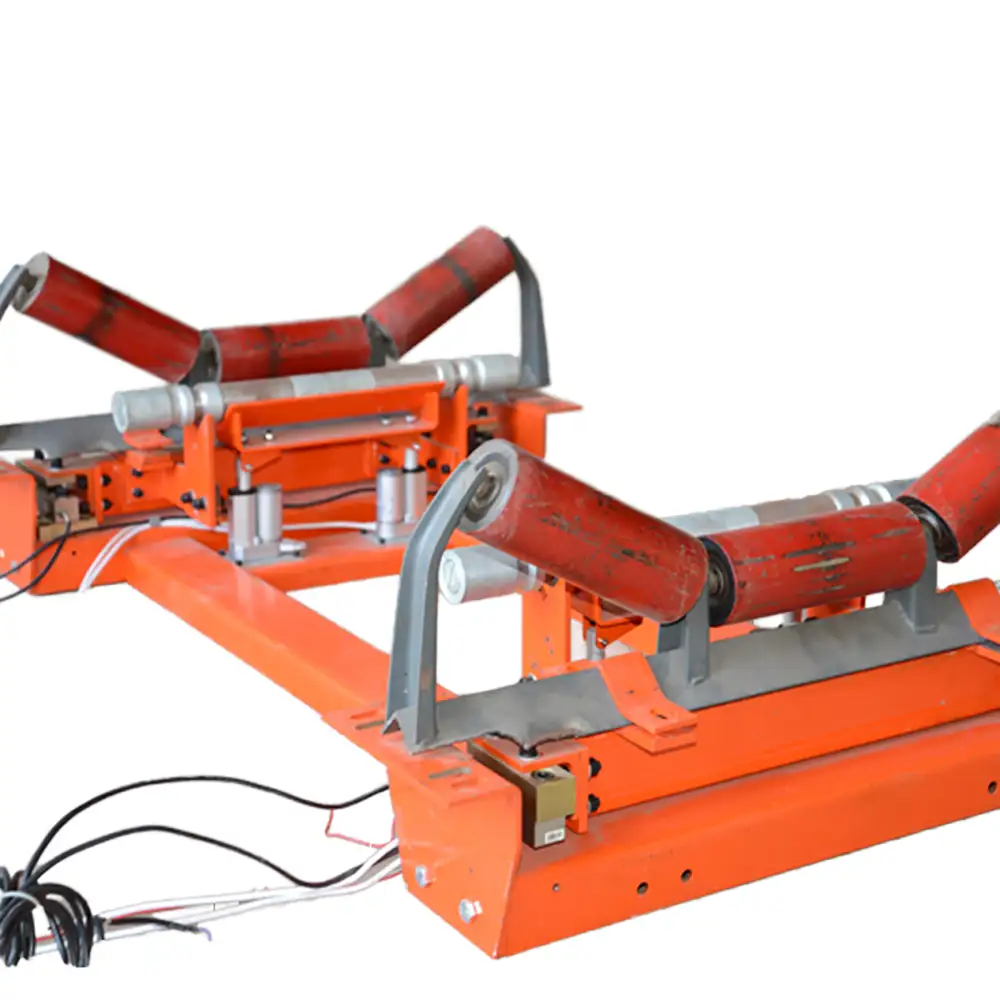
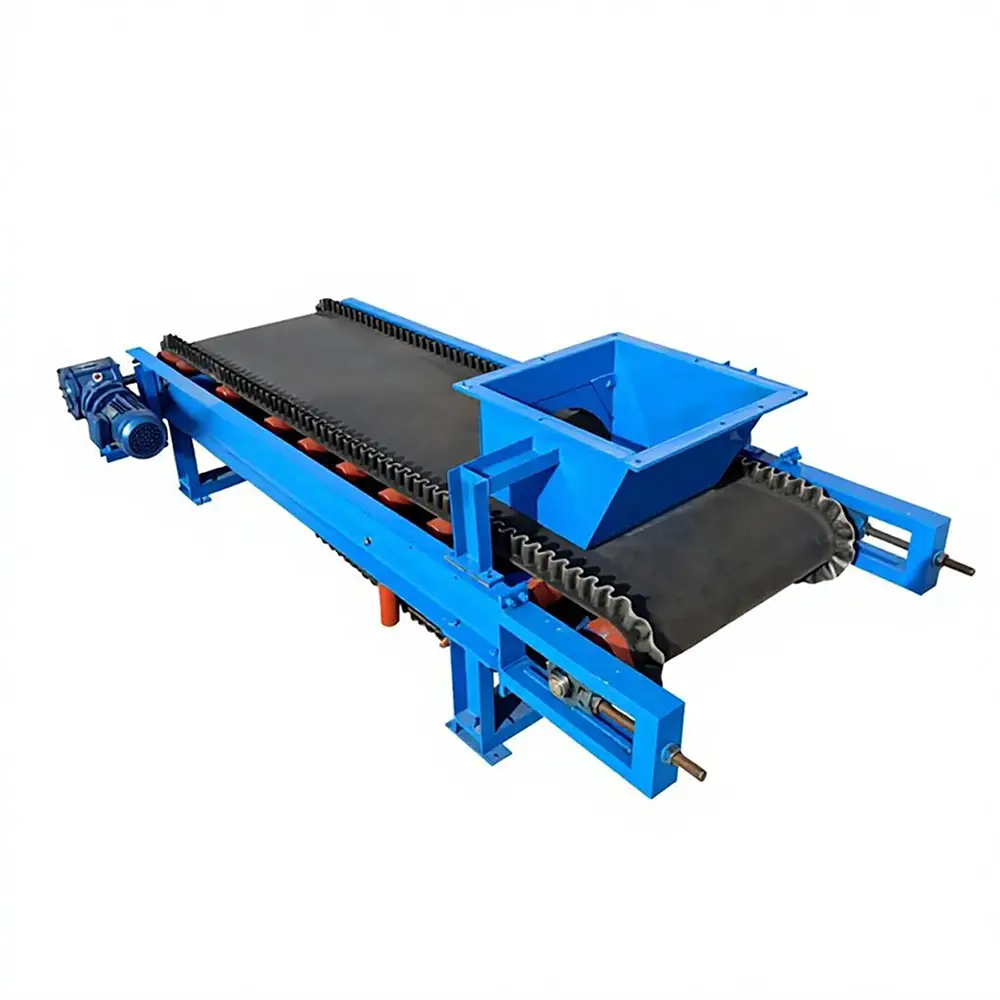
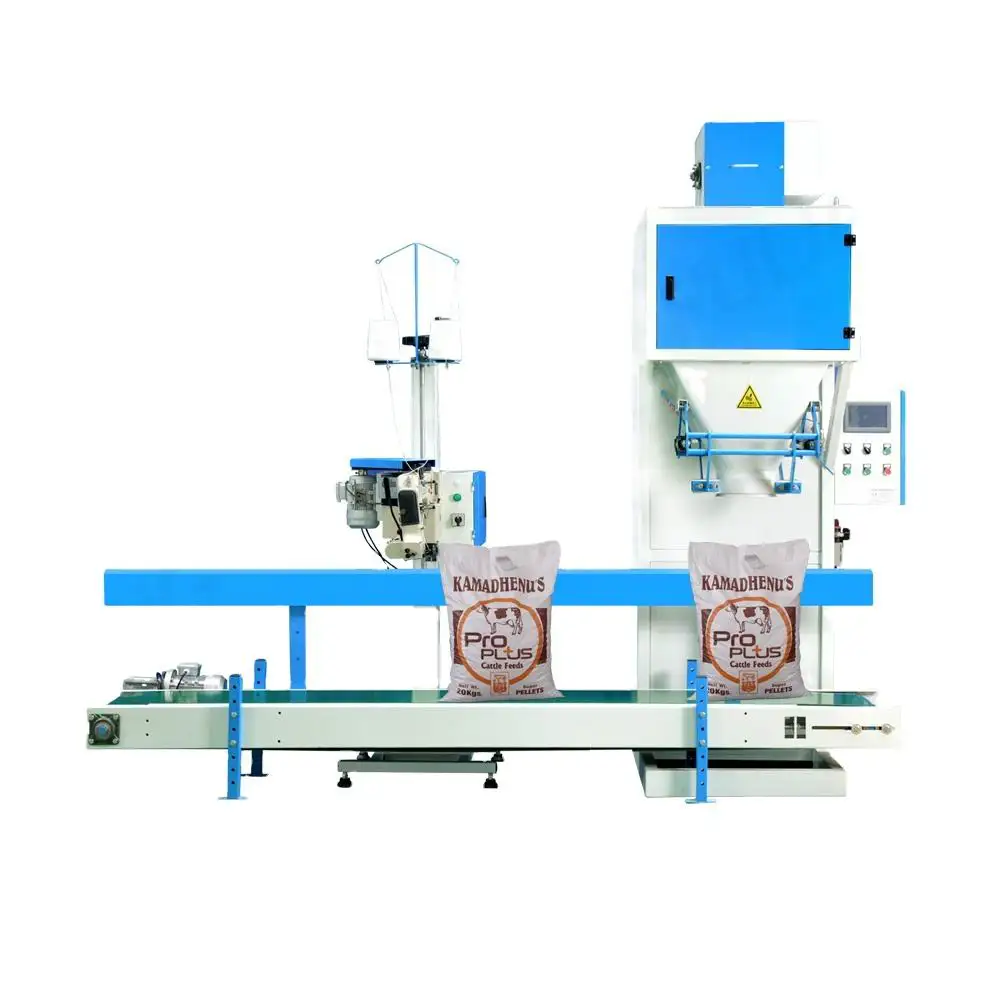
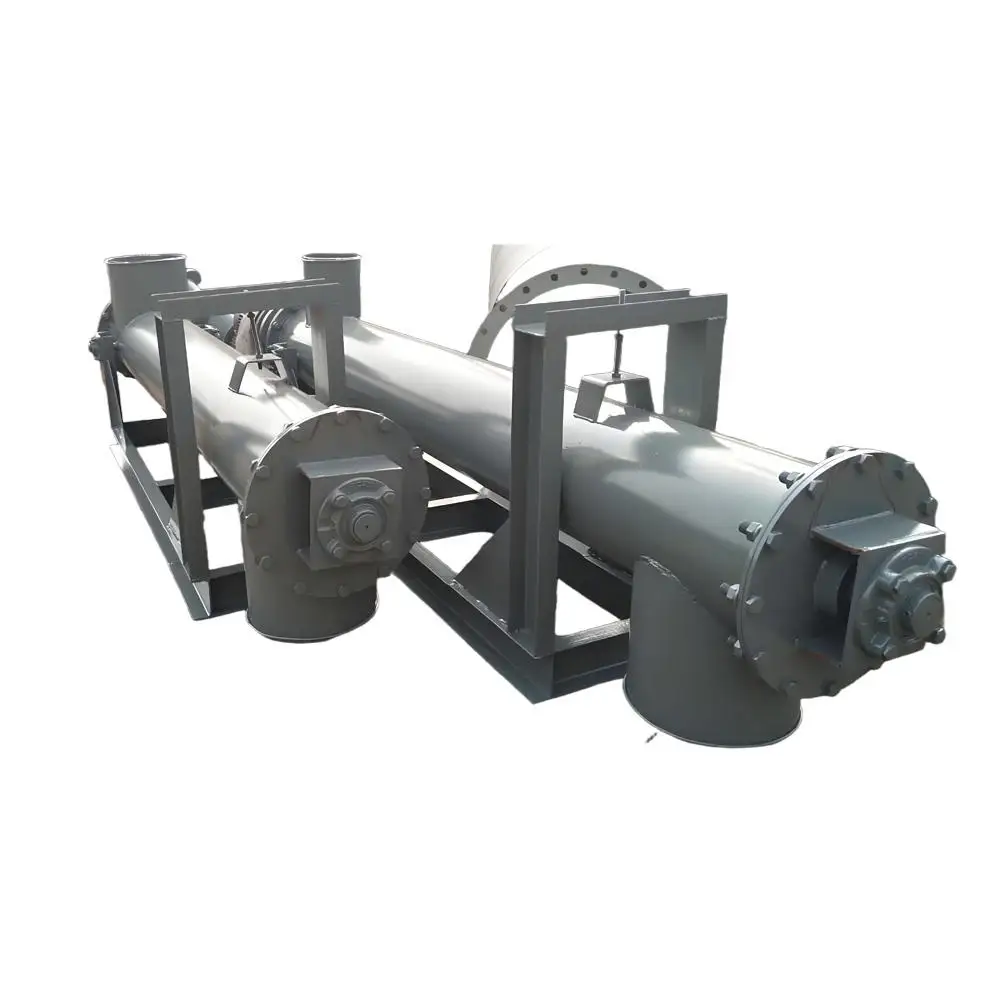
TSC dosing machine is adopted with dynamic feeding measurement and computer frequency conversion control technique, and equipped with prestressed tension device, deviation alarm protection and field control switch, which has advantages of stable operation, high reliability and high precision measurement, as well as working properly in the relatively bad environment. It is suitable for dosing and measurement of bulk materials in building materials, metallurgy, chemicals and food industries, which is an ideal equipment to achieve automatic control and stable quality.
Main technical parameters:
|
Type
parameters |
Belt
Width(mm) |
Measuring
Accuracy |
Maximum
Belt Speed(m/s) |
Maximum
Delivery
Capacity (m³/h) |
Motor Power
(kw) |
|
TSC500 |
500 |
±0.5% |
0.126 |
28 |
0.75 |
|
TSC650 |
650 |
0.126 |
40 |
0.75 |
|
TSC800 |
800 |
0.132 |
55 |
1.1 |
|
TSC1000 |
1000 |
0.132 |
85 |
1.5 |
|
TSC1200 |
1200 |
0.132 |
110 |
2.2 |
TSC High Reliability Dosing Machine
The TSC High Reliability Dosing Machine is an industrial feeding and material dosing system designed to deliver powders, granules, and other bulk materials at a controlled and consistent rate. Dosing equipment plays an important role in automated production lines where raw materials must be supplied according to a specified quantity, flow rate, or production recipe.
The TSC dosing machine can be integrated into material handling, batching, blending, mixing, chemical processing, mineral processing, food processing, building materials, cement, fertilizer, and other industrial systems. By combining controlled feeding with a suitable weighing or metering mechanism, the system can help maintain stable material flow and improve process consistency.
Its high-reliability design is intended for continuous industrial operation, where stable feeding performance and reduced interruptions are important.
What Is a Dosing Machine?
A dosing machine is equipment used to measure and deliver a material at a predetermined rate or quantity. Depending on the application, dosing may be based on weight, volume, time, or a combination of these parameters.
Industrial dosing systems are commonly used when raw materials need to be added accurately to a production process. For example, a cement plant may need to continuously feed limestone or other raw materials, while a chemical production line may require controlled addition of powders or granular ingredients.
The exact dosing method depends on the material characteristics and the required production accuracy.
How Does the TSC Dosing Machine Work?
Material is normally stored in a hopper, bin, or upstream storage system. The dosing mechanism extracts material from the storage area and transports it toward the discharge point at a controlled rate.
Depending on the machine configuration, the feeding mechanism may use a belt, screw, rotary device, vibrating mechanism, or another metering system.
A control system monitors the operating parameters and can adjust the feeding speed according to the target dosing rate. In a weighing-based system, load cells or other weighing components can provide feedback for closed-loop control.
This allows the TSC High Reliability Dosing Machine to maintain a stable material supply during continuous production.
Main Components
A typical industrial dosing machine may include:
Material storage hopper
Dosing or feeding mechanism
Drive motor
Gear reducer
Variable-speed control
Weighing or metering components
Discharge chute
Electronic controller
Control cabinet
Level detection system
Safety protection components
Support frame
The exact configuration can be adapted to the material and production process.
Automatic Dosing and Quantitative Feeding
Modern production lines often require more than simple material transportation. Raw materials may need to be supplied at a controlled rate to maintain product quality and production efficiency.
An Automatic Dosing Machine can regulate material delivery according to preset parameters. When connected to a PLC or centralized control system, the equipment can become part of an automated material handling and process control network.
For applications requiring multiple materials, several dosing machines can be installed together to provide controlled feeding of different components.
This configuration is useful for batching, blending, formulation, mixing, and continuous production processes.
Materials Suitable for Dosing
The TSC High Reliability Dosing Machine can be configured for various bulk materials, depending on their physical properties and the selected feeding mechanism.
Potential materials include:
Powdered minerals
Limestone
Cement materials
Coal
Fly ash
Fertilizer
Chemical powders
Granular materials
Sand
Fine aggregates
Industrial additives
Dry raw materials
Material flowability, moisture content, particle size, density, temperature, and abrasiveness should be considered when selecting the dosing configuration.
Industrial Applications
Cement and Building Materials
Dosing machines can feed limestone, cement raw materials, additives, and other bulk materials into production systems. Controlled dosing helps maintain stable material proportions.
Mining and Mineral Processing
Mining plants can use dosing equipment for controlled feeding of crushed minerals, powders, additives, and other process materials.
Chemical Processing
Chemical production often requires controlled addition of powders and granular materials. A suitable dosing system can provide consistent material delivery.
Fertilizer Production
Fertilizer manufacturing may require precise proportioning and continuous feeding of different raw materials. Multiple dosing machines can be integrated into automated batching systems.
Food and Agricultural Processing
For suitable dry and free-flowing materials, dosing systems can provide controlled feeding of powders and granules into mixing and processing equipment.
Power Plants
Dosing equipment can be used in selected bulk material handling and auxiliary feeding processes involving coal, ash, limestone, and other materials.
Key Advantages
High Reliability
The TSC High Reliability Dosing Machine is designed for stable operation in continuous industrial environments.
Controlled Material Flow
The dosing system helps maintain a consistent material feeding rate, which is important for downstream processing.
Adjustable Feeding
The feeding rate can be adjusted according to production requirements and material characteristics.
Automatic Operation
The machine can be integrated with electronic control systems, PLCs, and centralized process automation.
Continuous Dosing
For appropriate applications, the machine can provide continuous material dosing without frequent manual intervention.
Wide Application Range
The equipment can be configured for powders, granules, and other bulk materials with suitable flow characteristics.
Reduced Manual Handling
Automated dosing reduces the need for repetitive manual material measurement and feeding.
Flexible System Integration
The dosing machine can be combined with hoppers, conveyors, mixers, crushers, mills, classifiers, dust collectors, and other process equipment.
How to Select a Dosing Machine
Choosing the correct dosing machine requires understanding the material and production requirements.
Material Type: Specify the exact material and its physical properties.
Feed Rate: Provide the required minimum, normal, and maximum dosing capacity.
Particle Size: Particle distribution can influence material flow and dosing performance.
Bulk Density: Density affects the amount of material delivered per unit of time.
Moisture: Sticky or high-moisture materials may require a different feeding mechanism.
Dosing Accuracy: Determine the required accuracy based on the production process.
Continuous or Batch Dosing: Decide whether the machine will operate continuously or dose predetermined batches.
Control System: Specify whether local controls, PLC integration, remote monitoring, or automatic feedback control is required.
Installation Conditions: Available space, hopper dimensions, discharge height, and upstream/downstream equipment should also be considered.
Installation and Maintenance
Before installation, verify that the foundation, support structure, electrical supply, and material feeding system meet the equipment requirements.
During commissioning, check the drive system, feeding mechanism, weighing components, sensors, and control parameters. Calibration should be performed according to the manufacturer's recommended procedures when the system uses weighing components.
Routine maintenance should include inspection of bearings, motors, reducers, belts or screws, sensors, fasteners, and electrical connections.
Material buildup should be removed regularly, particularly around the hopper and discharge area. Operators should also monitor abnormal vibration, unusual noise, inconsistent feeding, or changes in motor load.
A preventive maintenance program can help maintain dosing stability and reduce unexpected downtime.
OEM and Custom Dosing Solutions
Every production process has different dosing requirements. We provide OEM and customized TSC High Reliability Dosing Machine solutions according to material characteristics, feeding capacity, installation conditions, control requirements, and production process.
Customization can include hopper size, dosing mechanism, motor power, speed range, weighing system, sensors, control cabinet, PLC interface, discharge configuration, and system integration.
Customized dosing systems are suitable for industrial manufacturers, engineering contractors, process plants, equipment distributors, and international B2B customers.
Why Choose Us?
We provide industrial dosing and feeding equipment designed for continuous and automated material handling applications.
The TSC High Reliability Dosing Machine focuses on stable material delivery, adjustable feeding, reliable construction, and flexible integration with industrial production systems. We can help customers select an appropriate dosing configuration according to material properties, required capacity, dosing method, and automation requirements.
OEM and custom manufacturing are available for distributors, engineering companies, system integrators, and industrial end users.
Our goal is to provide practical dosing equipment that supports consistent material flow, automated operation, and dependable long-term service.
FAQs
1. What is the TSC High Reliability Dosing Machine used for?
It is used to continuously or batch-dose powders, granules, and other suitable bulk materials at a controlled feeding rate.
2. What materials can a dosing machine handle?
Depending on the feeding mechanism, it can handle limestone, cement materials, coal, fly ash, fertilizer, chemical powders, granules, additives, and other suitable bulk materials.
3. Is the TSC dosing machine automatic?
Yes. It can be configured with an electronic control system for automatic feeding and dosing regulation.
4. Can the dosing rate be adjusted?
Yes. The feeding speed and dosing rate can be configured and adjusted according to the production requirements.
5. Can the dosing machine use a weighing system?
Yes. A weighing-based configuration can use load cells and electronic controls to monitor material flow and support quantitative dosing.
6. Can it operate continuously?
Yes. The system can be configured for continuous dosing applications where stable material flow is required.
7. Can multiple dosing machines work together?
Yes. Multiple dosing units can be integrated into a production system for proportioning and controlled feeding of different materials.
8. Can the machine connect to a PLC?
Yes. PLC and centralized automation integration can be provided according to the required control architecture.
9. Can you customize the TSC dosing machine?
Yes. Hopper size, feeding mechanism, capacity, drive system, weighing components, controls, and other specifications can be customized.
10. What information is needed for equipment selection?
Provide the material name, particle size, bulk density, moisture content, required dosing rate, accuracy requirements, continuous or batch operation, installation conditions, and control requirements.
Prev:
ICS Electronic Conveyor Belt Scale, ICS Electronic dual idler roller Conveyor Belt Scale
Next:
TDG Speed Adjustable Conveyor Belt Scale, Speed Adjustable Quantitative Feeder Conveyor Belt Scale
TAG:
Digital Dosing System,
Industrial Dosing System,
Automatic Dosing System,
Dosing Machine,
Dosing Equipment,
Dosing System,
Chemical Dosing Machine,
Bulk Material Feeder,
Mining Feeder,
Powder Feeder,
Granular Material Feeder,
Cement Feeder,
Automatic Material Feeder,
Quantitative Feeder,
Bulk Material Feeding Machine,
Automatic Feeding Machine,
Industrial Feeding Machine,
Material Flow Control,
Weigh Feeder,
Weighing Feeder,
Automatic Weigh Feeder,
Industrial Dosing Feeder,
Automatic Dosing Feeder,
Material Dosing Equipment,
Industrial Dosing Machine,
Powder Dosing Machine,
Powder Feeding Machine,
Material Dosing System,
Continuous Dosing Feeder,
Continuous Material Feeder,
Related Category:
TSC High Reliability Dosing Machine,Dosing Machine,Automatic Dosing Machine,Industrial Dosing Machine,Dosing Feeder China, suppliers, manufacturers, factory, customized, wholesale, quotation, made in China