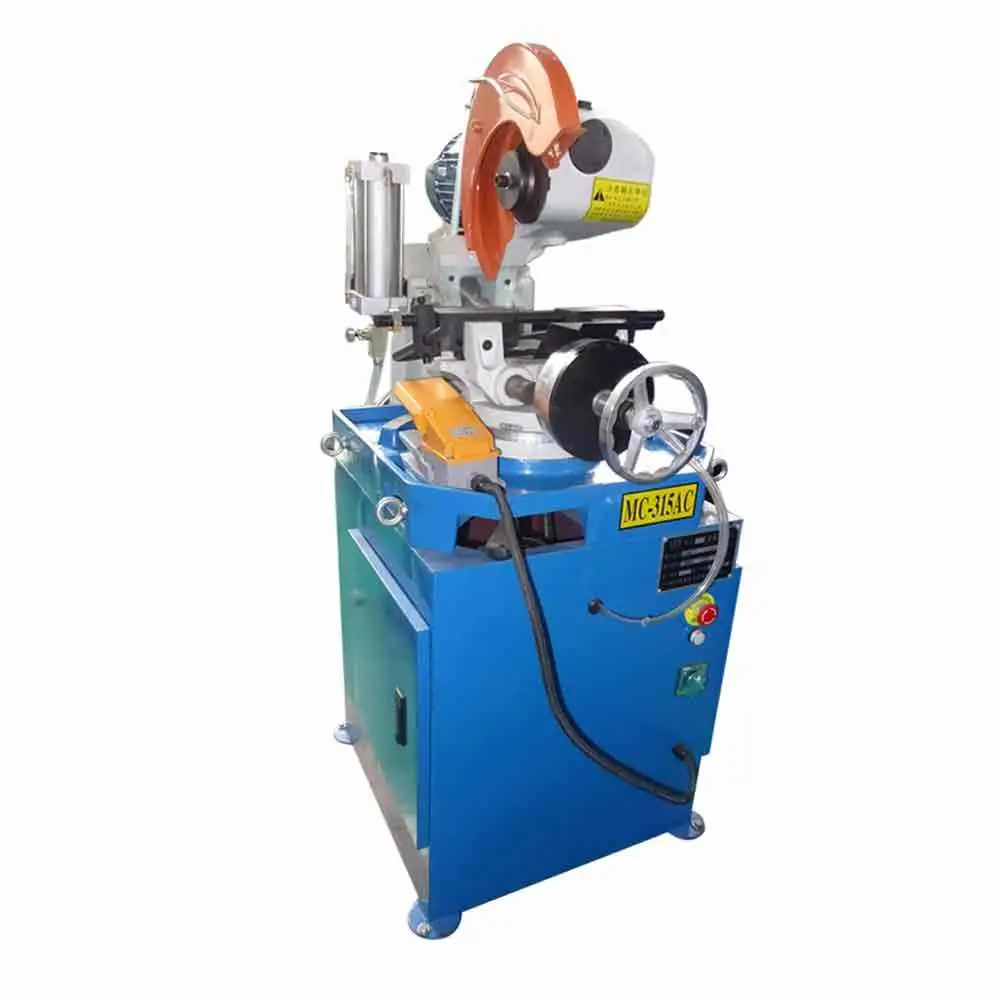
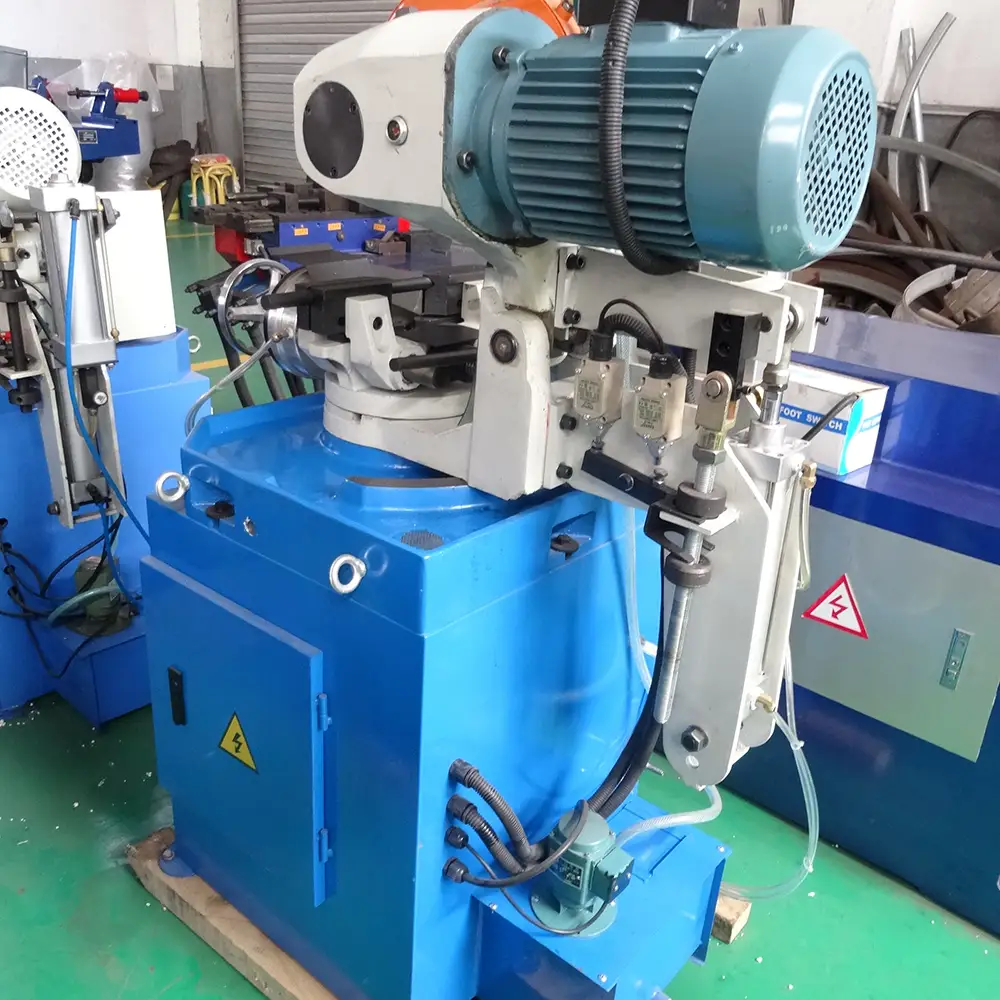
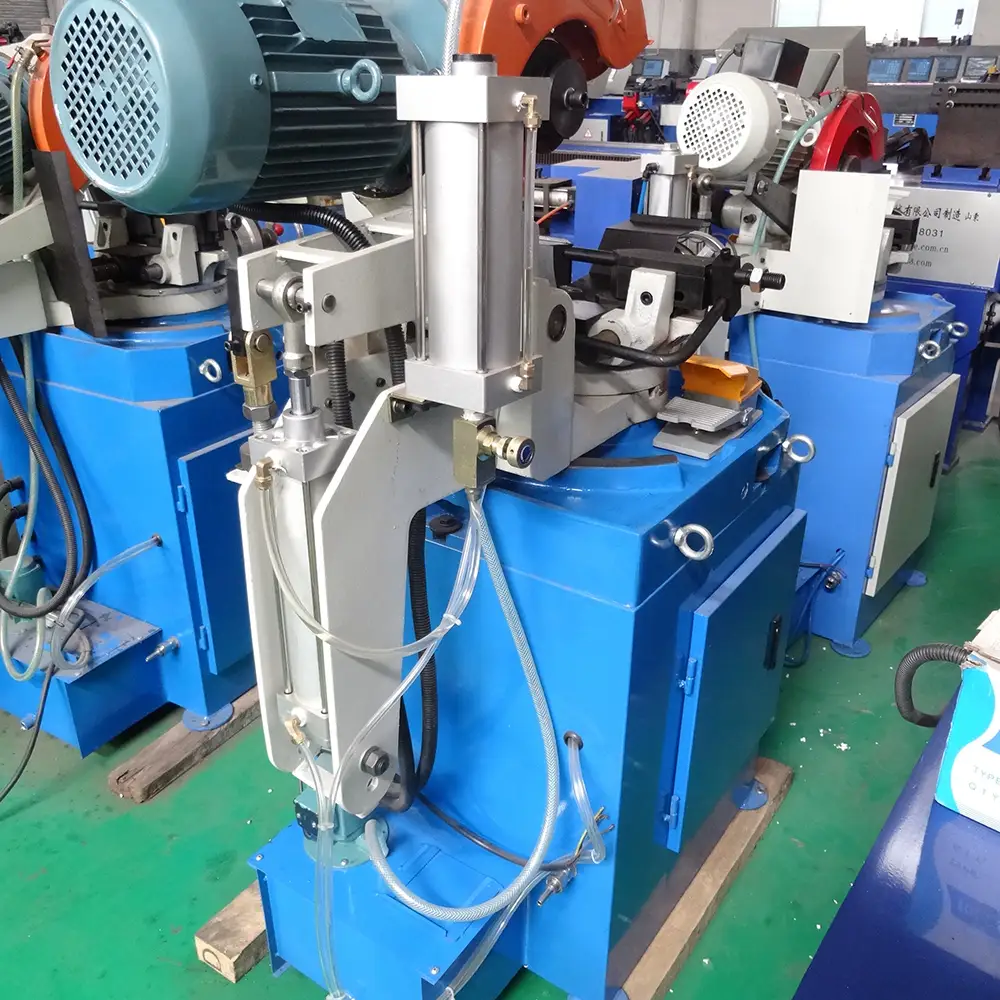
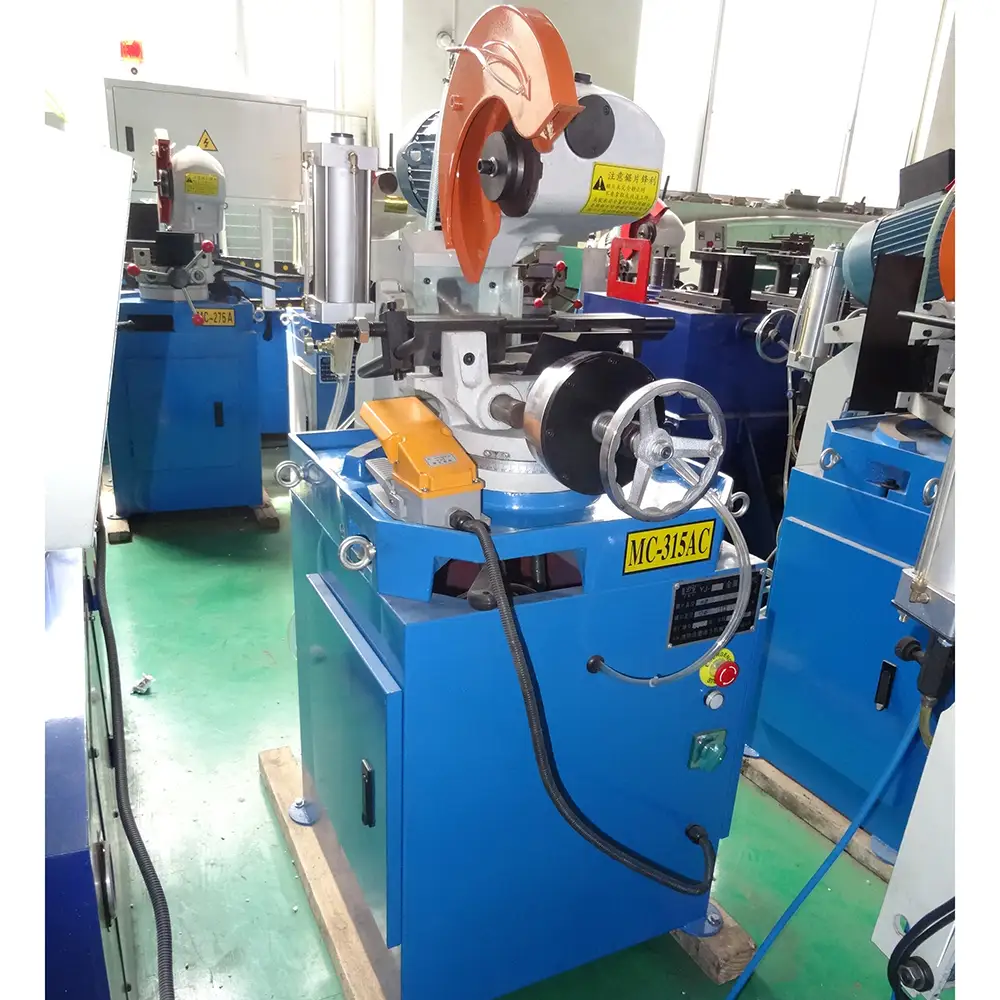
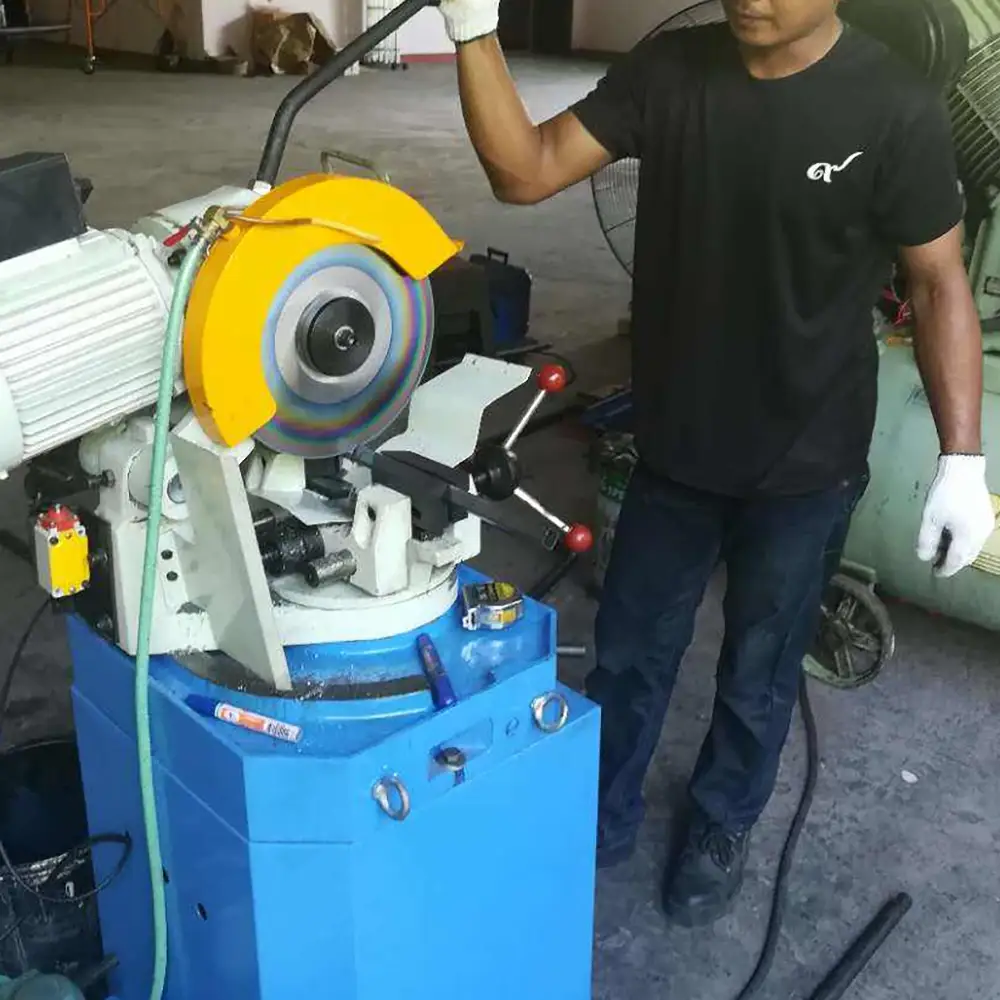
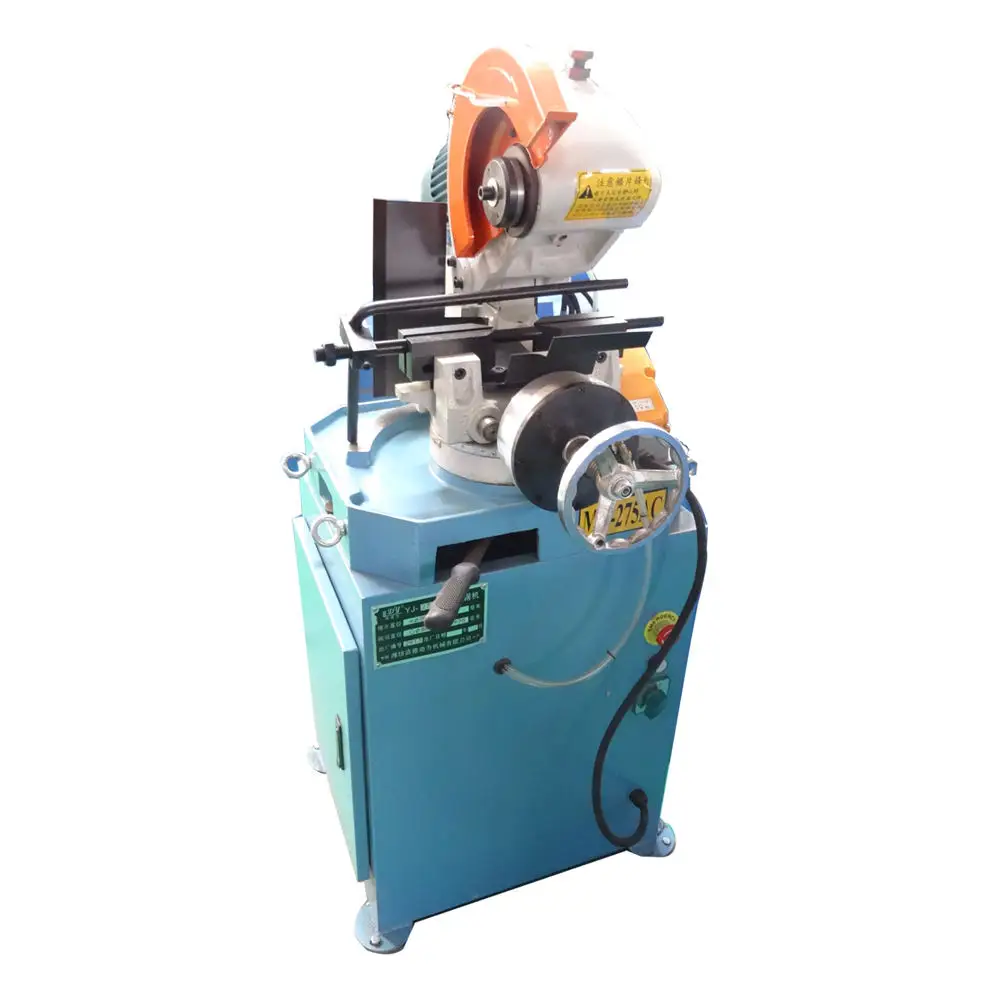
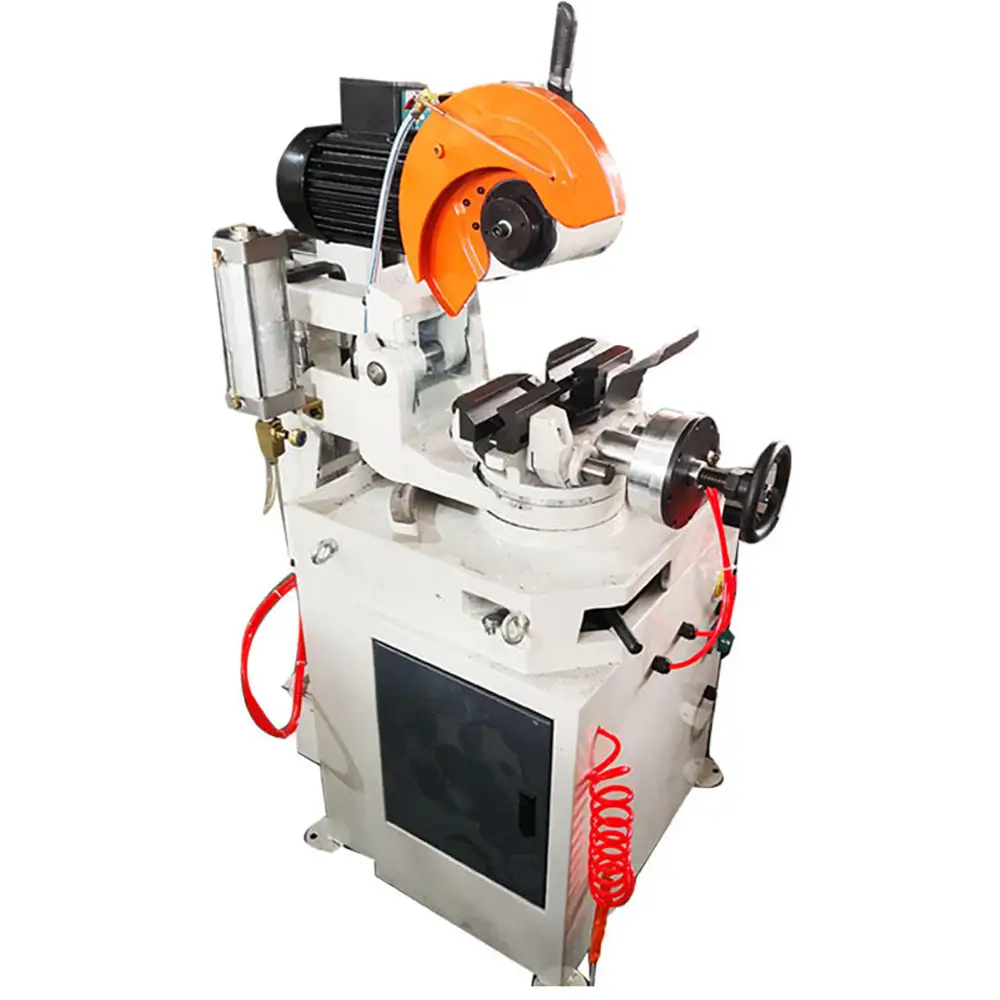
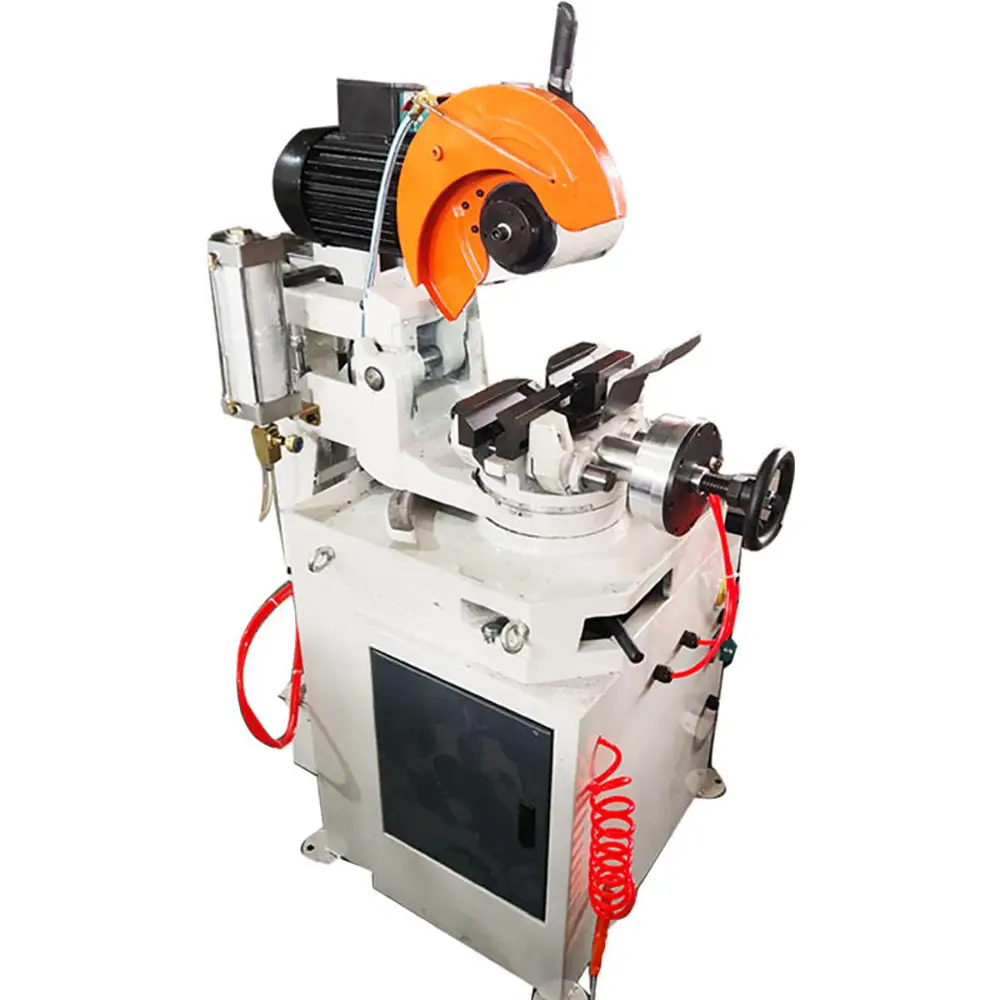
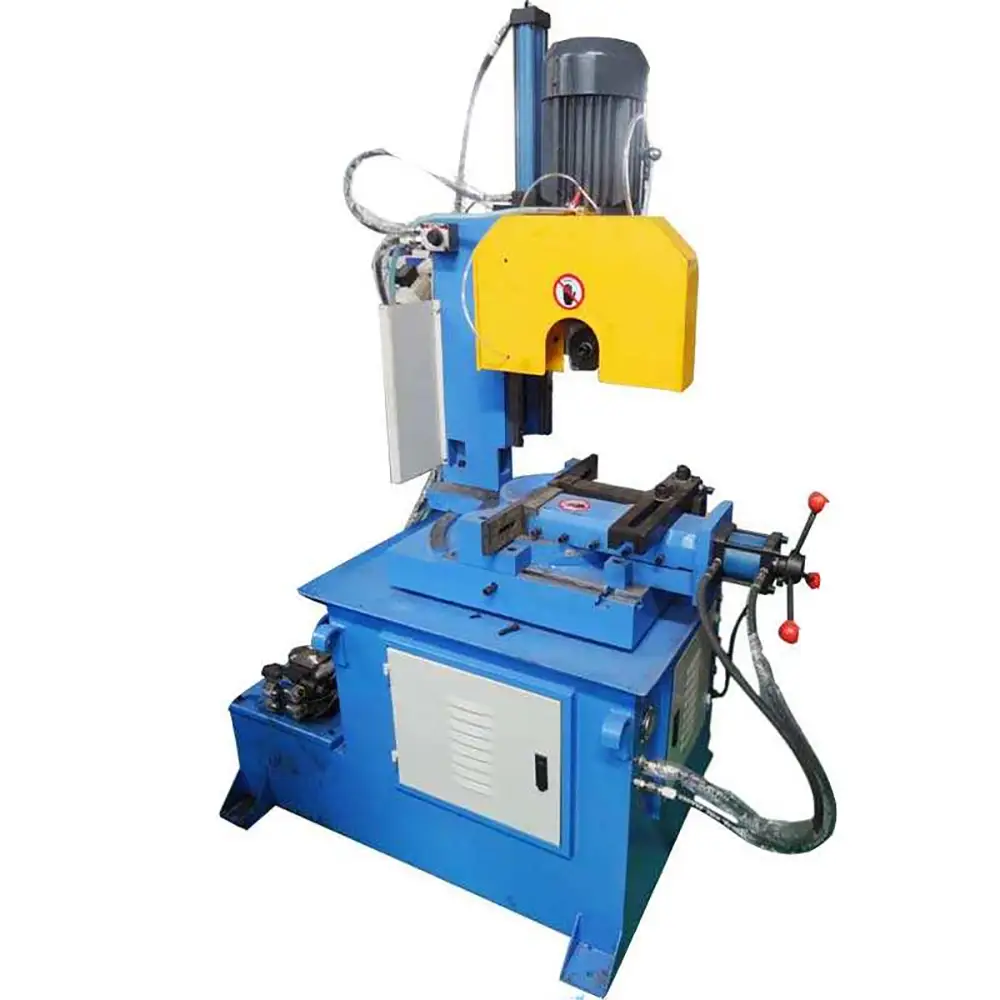
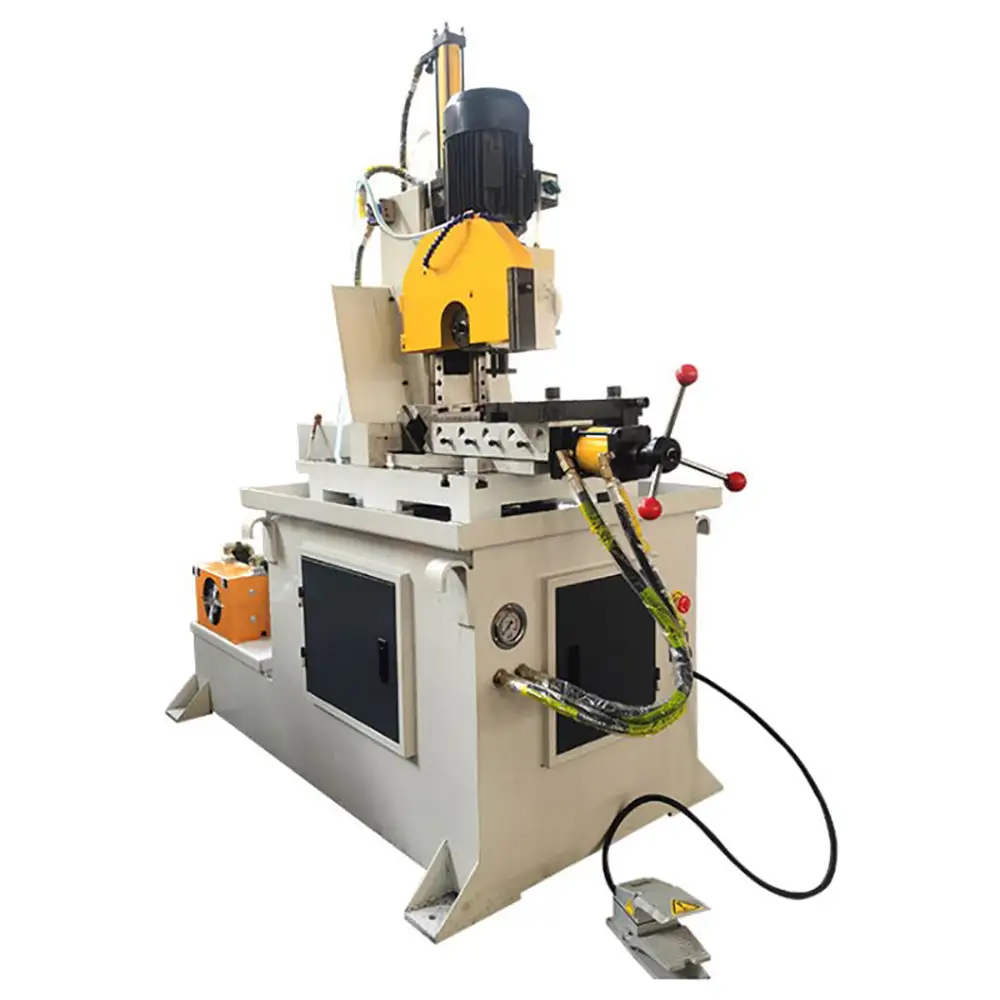
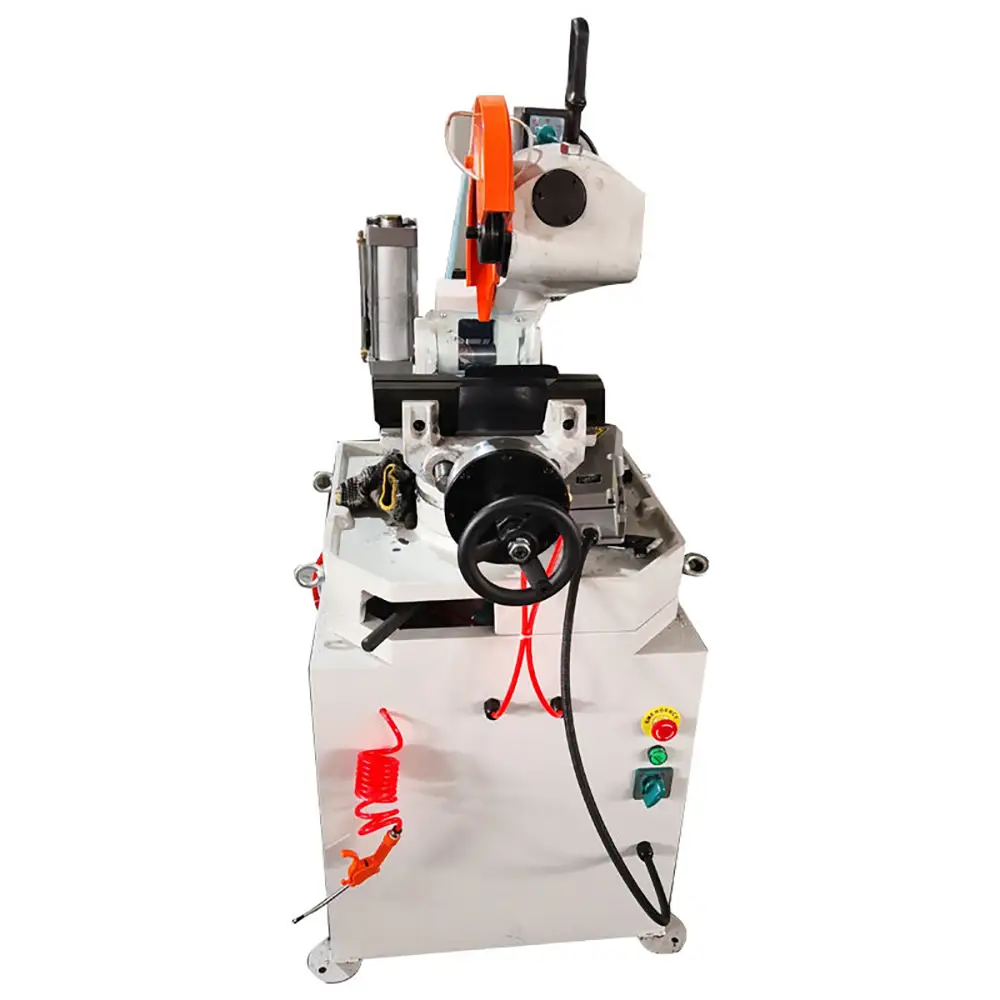
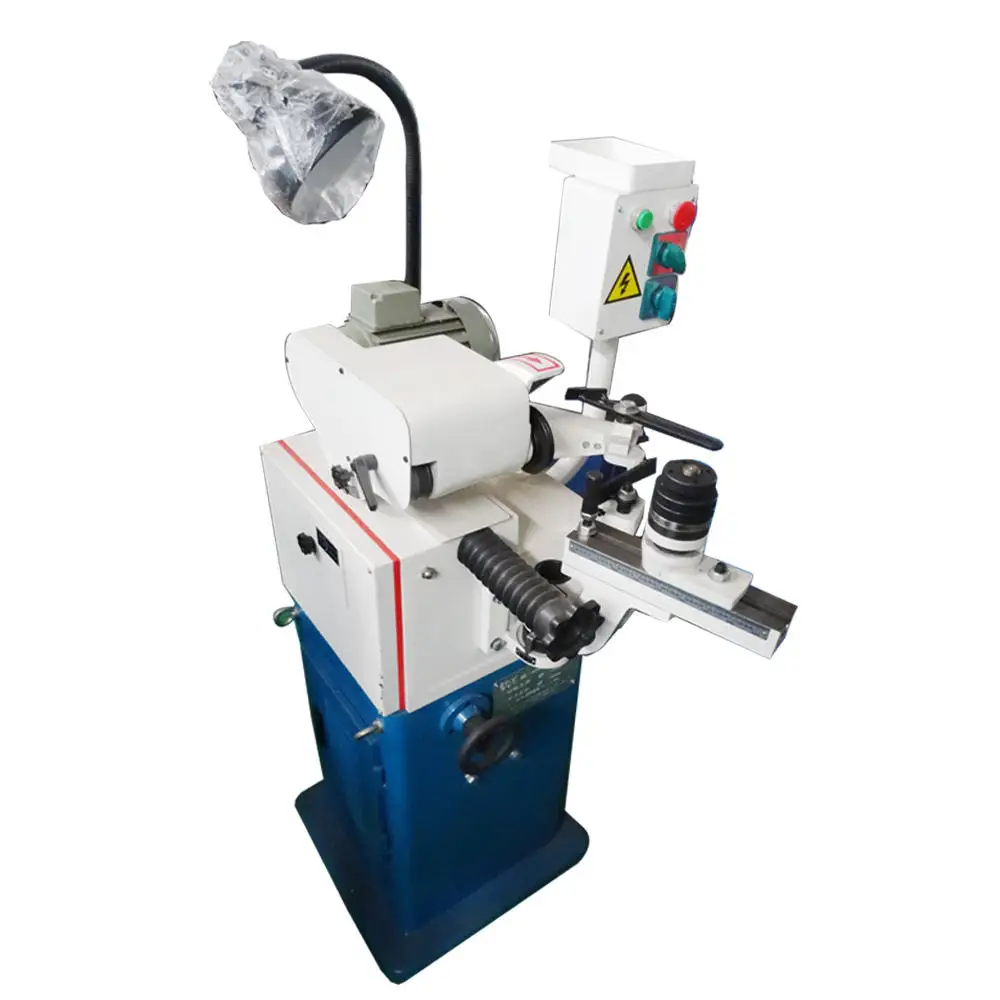
1 Pneumatically controlled saw blade up and down 2 Cutting fluid circulation cooling
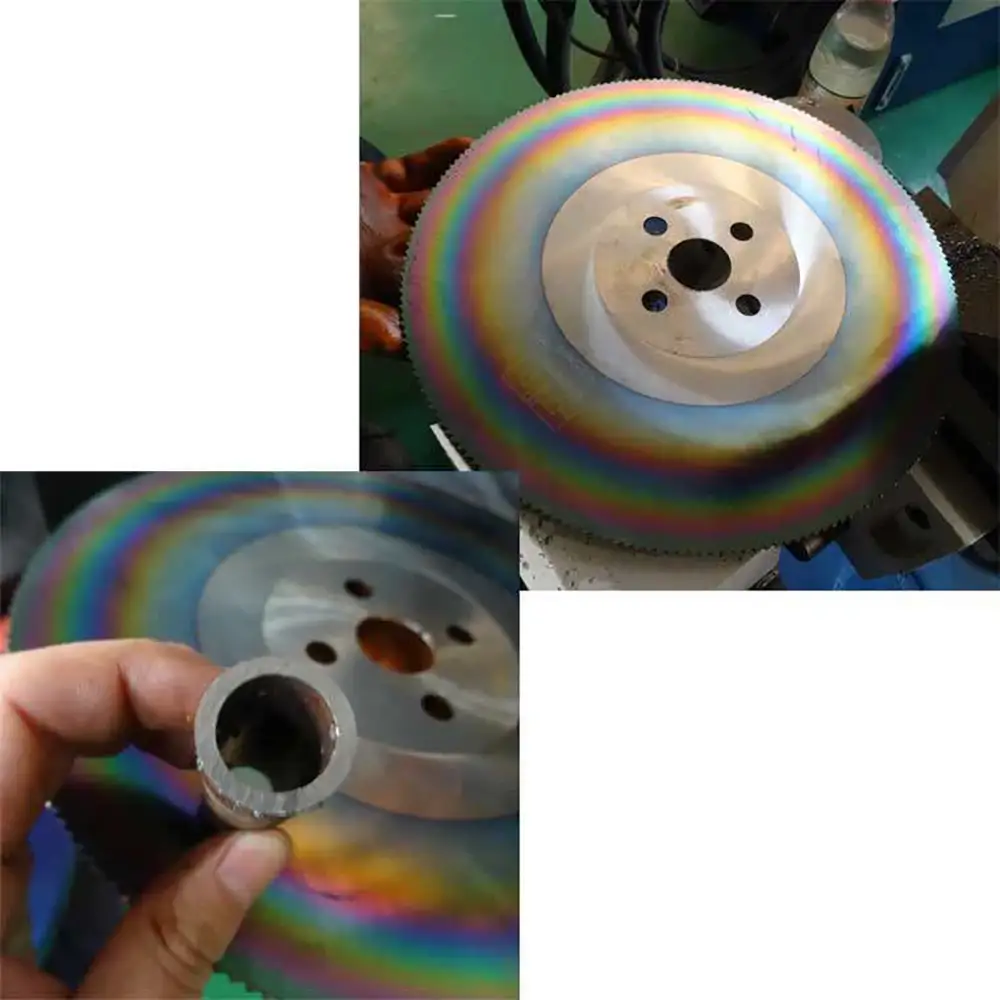
3 Metal tube cutting without burrs
4 Easy to replace the saw blade
|
Model |
275A/B |
315A/B |
350A/B |
|
Sawing& cutting capacity |
Round tube |
Φ82 |
φ95 |
Φ115 |
|
Square tube |
75×75 |
85×85 |
110×110 |
|
Profiles |
75×75 |
85×85 |
110×110 |
|
Rectangular tube |
75×35 |
110×75 |
150×90 |
|
Round bar |
Φ38 |
φ55 |
Φ60 |
|
Square solid bars |
38×38 |
50×50 |
60×60 |
|
Max gap of clamp(MM) |
85 |
110 |
150 |
|
Max feeding length once |
700(The extra- length can be feed by another time) |
|
Suitable size for saw blade(mm) |
250-275 |
250- 315 |
250-350 |
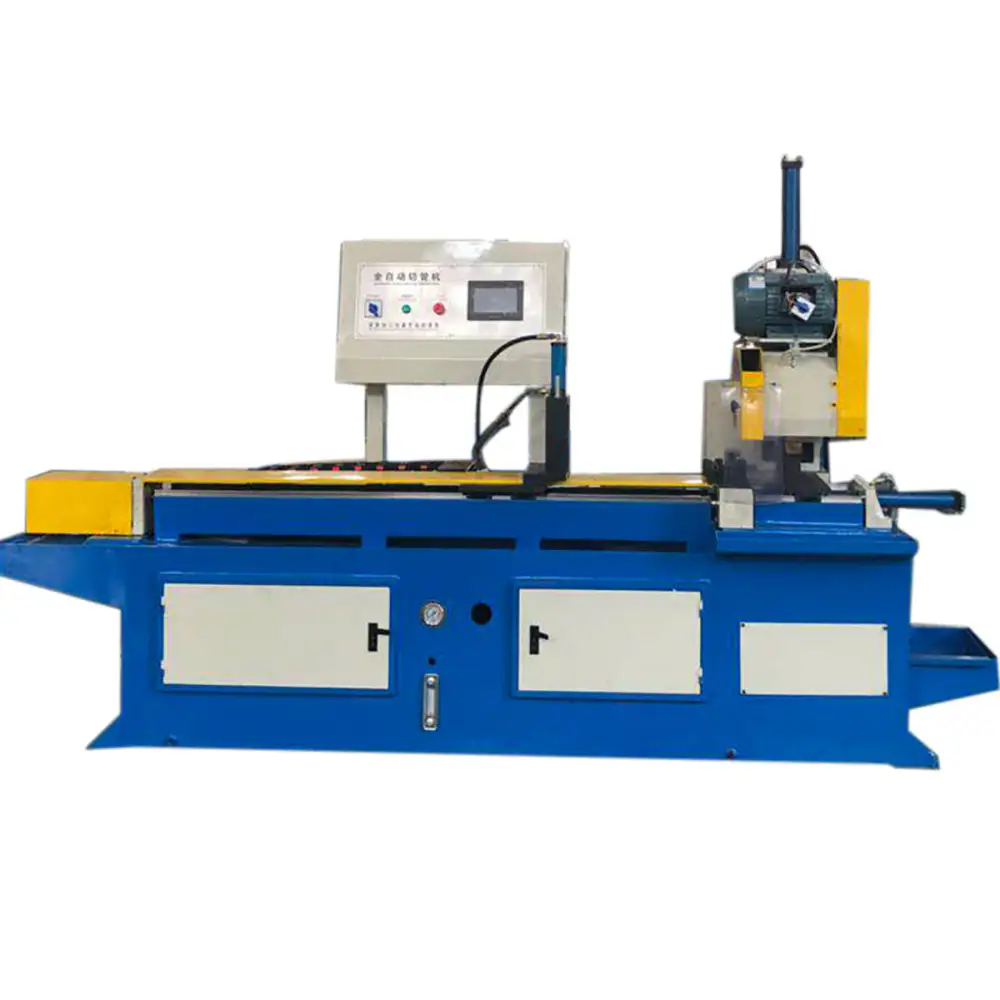
The Stainless Steel Pipe Tube Cold Cutting Machine is designed for accurate, efficient, and repeatable cutting of stainless steel pipes and tubes in industrial metalworking applications. Using a cold cutting or cold saw cutting principle, the machine is suitable for manufacturers that require consistent cut lengths, controlled workpiece clamping, and clean tube ends for downstream fabrication.
Stainless steel pipe and tube are widely used in construction, automotive components, food processing equipment, chemical systems, architectural structures, furniture, heat exchangers, and general industrial fabrication. Because stainless steel can be sensitive to heat, work hardening, vibration, and deformation during machining, selecting an appropriate cutting process is important. A properly configured cold cutting machine can help control heat generation while producing accurate and repeatable cuts.
Precision Stainless Steel Pipe and Tube Cutting
The machine is developed specifically for stainless steel pipe and tube processing. Depending on the configuration, it can be used for round tubes, pipes, and other compatible stainless steel profiles. The actual cutting range depends on the machine model, saw blade, material grade, tube diameter, wall thickness, and tooling configuration.
Cold cutting is especially useful when manufacturers need controlled cutting performance and consistent workpiece dimensions. The cutting system uses a suitable saw blade and controlled feed movement to separate the material without relying on thermal cutting methods such as plasma or oxy-fuel cutting.
For production environments, stable clamping is equally important. The workpiece should be securely supported before cutting to reduce vibration and movement. Proper clamping can contribute to better dimensional consistency, improved surface quality, and longer blade life.
Cold Saw Cutting Technology
Cold saw cutting uses a circular saw blade designed for metal cutting. Compared with thermal cutting methods, mechanical cold cutting does not create a heat-affected zone in the same way as plasma or flame cutting. This makes it suitable for applications where the condition of the tube edge and surrounding material is important.
The correct blade selection is essential. Stainless steel grades, tube dimensions, wall thicknesses, production requirements, and desired edge quality can influence the appropriate blade type and tooth configuration. For demanding applications, the cutting parameters should be matched to the material and workpiece specifications.
Depending on the machine design, automatic or semi-automatic feeding can also be integrated. Automated feeding and positioning help reduce repetitive manual operations and can improve consistency during batch production.
Suitable Stainless Steel Tube Applications
The Stainless Steel Pipe Tube Cold Cutting Machine can be used in many industries where stainless steel tubing must be cut to specific lengths. Typical applications include:
Stainless steel pipe fabrication
Stainless steel tube production
Food processing equipment
Pharmaceutical equipment
Chemical processing systems
Automotive components
Exhaust and structural tubing
Heat exchanger components
Stainless steel furniture
Architectural metalwork
Industrial equipment manufacturing
General metal fabrication
For manufacturers producing multiple tube lengths, the machine can support repeatable cut-to-length processing. When combined with measuring, feeding, sorting, or downstream deburring equipment, it can become part of a broader tube processing workflow.
Clean and Consistent Cutting
One important advantage of mechanical cold cutting is the ability to produce a controlled cut edge when the machine, blade, workholding, and cutting parameters are correctly matched. This can reduce the amount of additional preparation required before welding, assembly, forming, or other downstream operations.
However, cut quality depends on several factors. Stainless steel grade, tube diameter, wall thickness, blade condition, tooth geometry, cutting speed, feed rate, clamping pressure, and machine alignment all influence the final result.
For thin-wall stainless steel tubes, special attention should be given to workpiece support and clamping. Excessive clamping force can deform the tube, while insufficient support may allow vibration during cutting. Proper setup is therefore important for maintaining tube geometry and dimensional accuracy.
Automatic and Semi-Automatic Production
The machine can be configured for different production requirements. A semi-automatic configuration may allow an operator to load the tube, position the material, initiate the cutting cycle, and remove the finished piece. An automatic configuration can incorporate controlled feeding and positioning functions to reduce repetitive manual handling.
The level of automation should be selected according to production volume, tube specifications, required cutting length, and factory workflow. Automatic operation does not necessarily mean completely unmanned production; loading, unloading, inspection, material handling, and other processes may still require operator involvement depending on the complete line configuration.
Material Compatibility
The primary application is stainless steel pipe and tube cutting. Depending on the machine and blade configuration, compatible metal materials may also include carbon steel, alloy steel, aluminum, copper, or other metal profiles.
Because different metals have different cutting characteristics, the same blade and parameters should not automatically be used for every material. Material grade, hardness, diameter, wall thickness, and required cut quality should be considered when selecting the machine configuration.
For stainless steel production, manufacturers should provide the tube material grade, outside diameter, wall thickness, cut length, production volume, and desired tolerance when requesting a machine recommendation.
Production Efficiency
For batch production, repeatable cutting is essential. A suitable tube cutting machine can help standardize cut lengths and reduce time spent on manual measuring and cutting. Controlled feeding and positioning can also improve workflow consistency.
The machine can be used as an independent cutting station or integrated with other production equipment. Depending on the production line, possible supporting equipment may include tube straighteners, automatic feeders, conveyors, deburring machines, chamfering machines, washing systems, inspection equipment, and packaging systems.
Quality Control
Consistent machine performance depends on regular inspection and proper process control. Operators should check blade condition, workpiece clamping, feed accuracy, machine alignment, lubrication or cooling requirements, and finished tube dimensions.
Finished pieces can be inspected for cut length, squareness, burr condition, surface appearance, and dimensional consistency. Establishing a standard inspection procedure helps identify blade wear or machine setup problems before they affect a large production batch.
Maintenance and Operation
Routine maintenance helps maintain stable cutting performance. Operators should keep the cutting area clean, inspect the saw blade regularly, check clamping components, verify lubrication or cooling systems where applicable, and follow the machine manufacturer's maintenance schedule.
The saw blade is a critical consumable component. A worn, damaged, or incorrectly selected blade may increase cutting resistance, vibration, burr formation, and processing time. Replacing or maintaining the blade at the appropriate interval can help preserve cutting quality.
Proper operator training is also important. Stainless steel pipe cutting involves rotating machinery and sharp cutting tools, so appropriate guards, emergency stops, personal protective equipment, and operating procedures should be used according to the machine configuration and applicable workplace requirements.
OEM and Custom Solutions
Different factories have different stainless steel tube specifications and production requirements. Therefore, the Stainless Steel Pipe Tube Cold Cutting Machine can be supplied with customized configurations depending on the project.
Customers can provide tube diameter, wall thickness, material grade, cut length, production volume, required tolerance, automation level, and downstream processing requirements. Based on these parameters, the machine configuration, feeding system, clamping method, saw blade specification, and optional automation can be evaluated.
For OEM and ODM projects, customized feeding systems, machine dimensions, electrical configurations, conveyors, measurement systems, and production-line integration can also be discussed according to the project requirements.
FAQs
1. What is a stainless steel pipe tube cold cutting machine?
It is a mechanical cutting machine designed to cut stainless steel pipes and tubes using a cold cutting or circular saw cutting process.
2. What stainless steel tubes can it cut?
The machine can process compatible stainless steel round pipes and tubes. The actual diameter and wall-thickness range depends on the machine configuration.
3. What does cold cutting mean?
Cold cutting refers to mechanical cutting processes that separate the material without using thermal cutting as the primary cutting method.
4. Can it cut thin-wall stainless steel tubes?
Yes, when the machine and tooling are properly configured. Thin-wall tubes require suitable clamping and support to reduce deformation and vibration.
5. Can the machine cut other metals?
Depending on the configuration and saw blade, some models can process carbon steel, alloy steel, aluminum, copper, and other compatible metals.
6. Is the machine automatic?
Automatic or semi-automatic operation can be configured depending on the model and production requirements. The actual automation functions should be confirmed before ordering.
7. Can it produce fixed-length stainless steel tubes?
Yes. With suitable feeding and positioning equipment, the machine can be used for repeatable cut-to-length production.
8. How should I select the correct saw blade?
Blade selection depends on stainless steel grade, tube diameter, wall thickness, cutting speed, production volume, and required edge quality.
9. Can the machine be integrated into a production line?
Yes. It can be combined with feeding systems, conveyors, deburring equipment, chamfering machines, inspection systems, and other tube processing equipment.
10. What information should I provide when requesting a quotation?
Provide the stainless steel grade, tube diameter, wall thickness, cut length, production volume, desired tolerance, automation requirements, and application details.
11. Does cold cutting eliminate all burrs?
Not necessarily. Proper tooling and cutting parameters can help control burr formation, but the final edge condition depends on the material, blade, machine setup, and application. Additional deburring may be required.
12. Can you provide OEM or customized machines?
Yes. Machine configuration, feeding, clamping, electrical system, dimensions, automation, and production-line integration can be customized according to project requirements.
Why Choose Us
Stainless Steel Processing Focus – Designed around the requirements of stainless steel pipe and tube cutting applications.
Cold Cutting Technology – Mechanical cutting provides a controlled alternative to thermal pipe cutting methods.
Repeatable Cutting – Suitable for batch production where consistent tube lengths and processing results are required.
Flexible Configuration – Machine specifications can be evaluated according to tube diameter, wall thickness, material, and production volume.
Stable Workholding – Proper clamping and support help reduce tube movement and vibration during cutting.
Production Line Integration – Can be combined with feeding, conveying, deburring, chamfering, inspection, and other tube processing equipment.
Industrial B2B Applications – Suitable for stainless steel fabrication, automotive, architectural, equipment manufacturing, and general industrial production.
OEM & ODM Support – Customized machine configurations and production solutions can be developed according to customer requirements.
Prev:Sorry, no information
Next:
Semi Automatic Hydraulic Pipe bar square Tube Cutting Machine
TAG:
Stainless Steel Tube Processing Machine,
Stainless Steel Pipe Processing Machine,
Stainless Steel Tube Processing Equipment,
Stainless Steel Pipe Processing Equipment,
Pipe Cutting Machine,
Tube Cutting Machine,
Tube Cutting Equipment,
Pipe Cutting Equipment,
Stainless Steel Pipe Cutting Machine,
Metal Tube Cutting Machine,
Stainless Steel Tube Cutting Machine,
Metal Pipe Cutting Machine,
Automatic Tube Cutting Machine,
Automatic Pipe Cutting Machine,
CNC Tube Cutting Machine,
Precision Tube Cutting Machine,
Automatic Metal Tube Cutter,
Industrial Tube Cutting Machine,
CNC Pipe Cutting Machine,
Industrial Pipe Cutting Machine,
Pipe Cutting Machinery,
Metal Cutting Machinery,
Stainless Steel Cutting Machine,
Industrial Metal Cutting Equipment,
Precision Pipe Cutting Machine,
Tube Cutting Machinery,
Stainless Steel Tube Cutter,
Circular Saw Pipe Cutting Machine,
Metal Circular Saw Machine,
Circular Saw Tube Cutting Machine,
Related Category:
Stainless Steel Pipe Cutting Machine,Stainless Steel Tube Cutting Machine,Stainless Steel Cold Cutting Machine,Stainless China, suppliers, manufacturers, factory, customized, wholesale, quotation, made in China