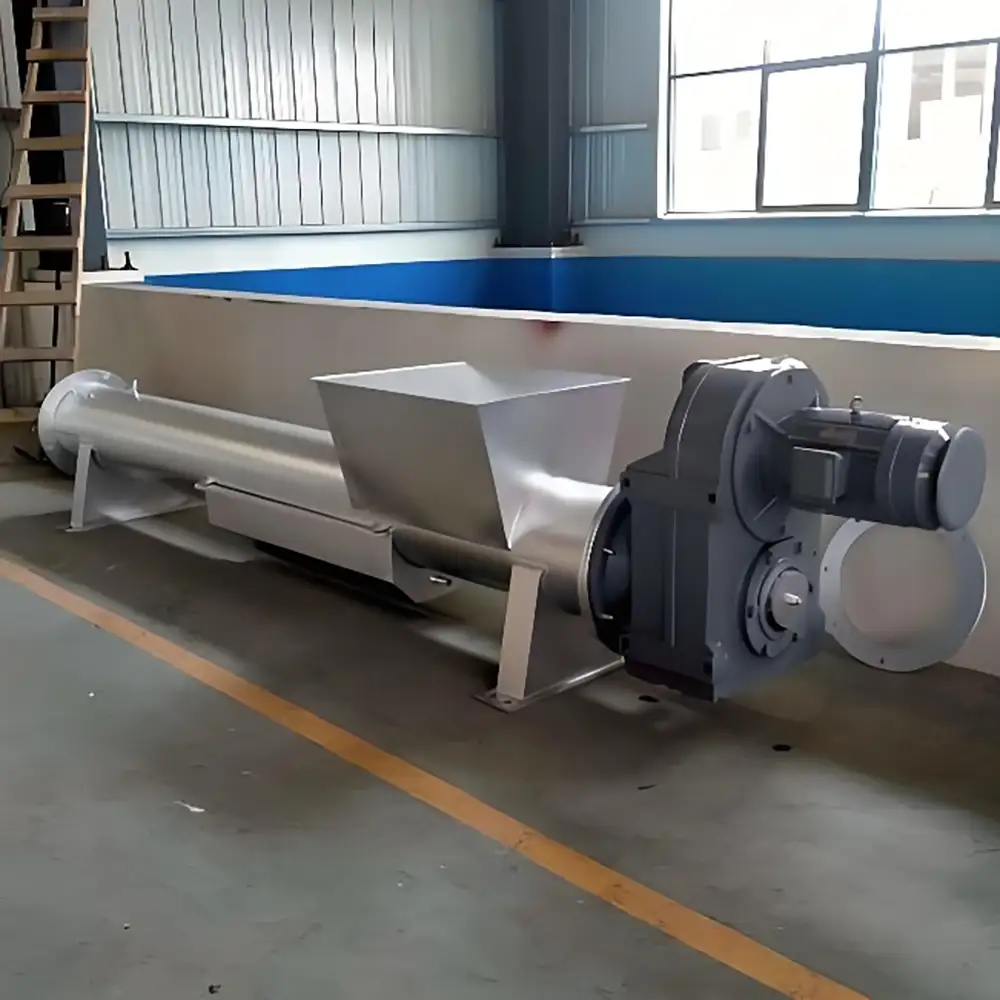
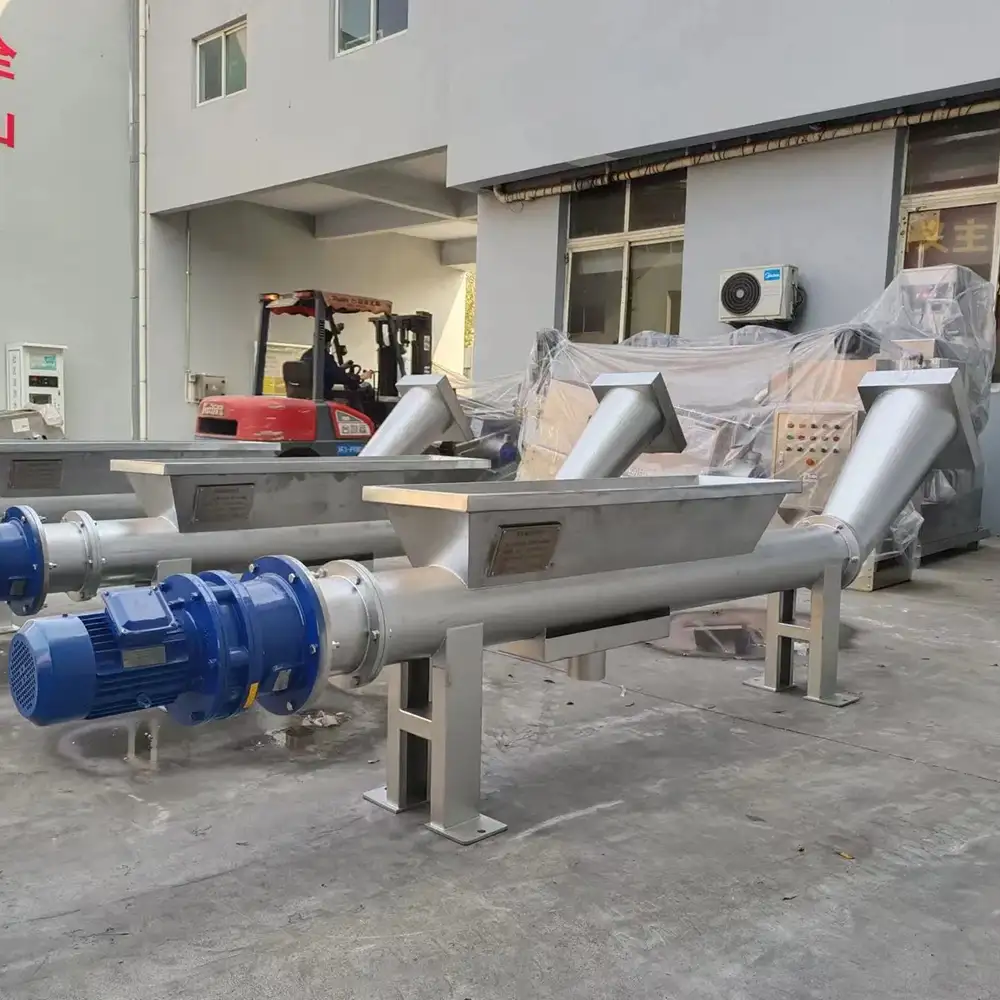
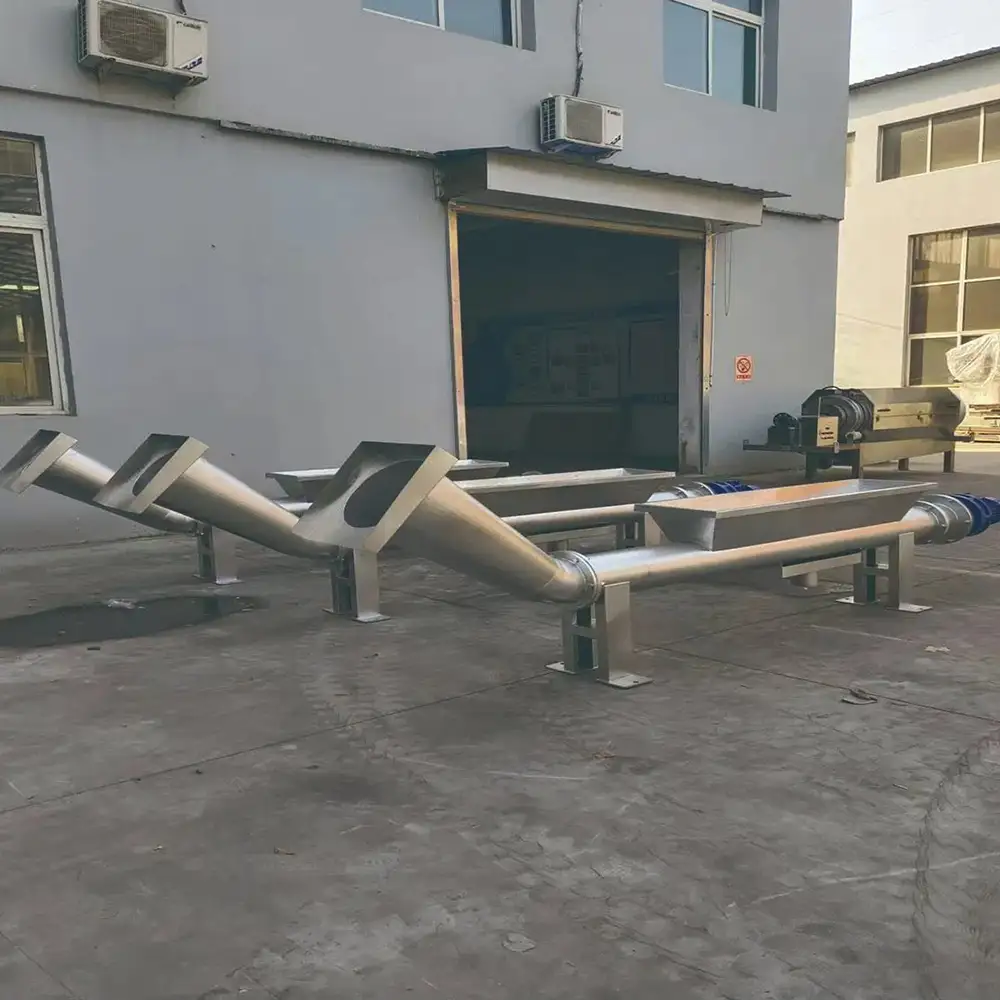
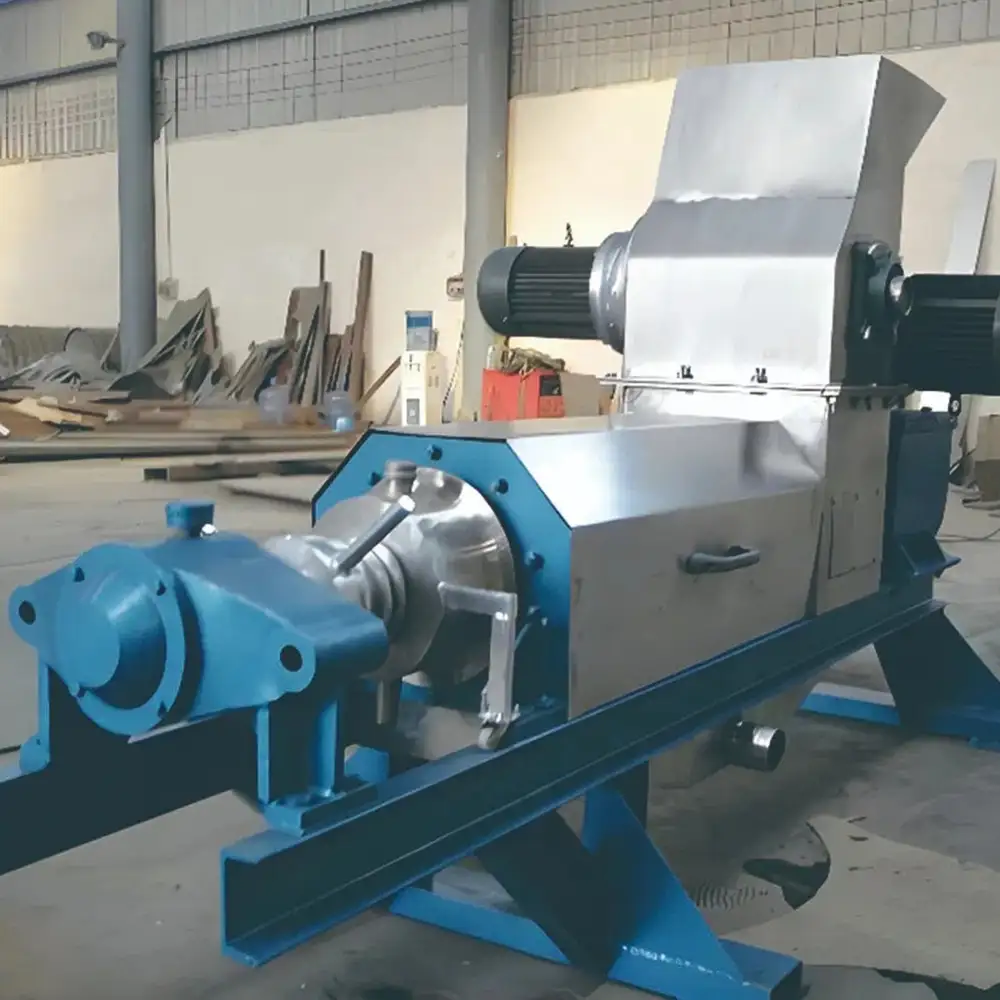
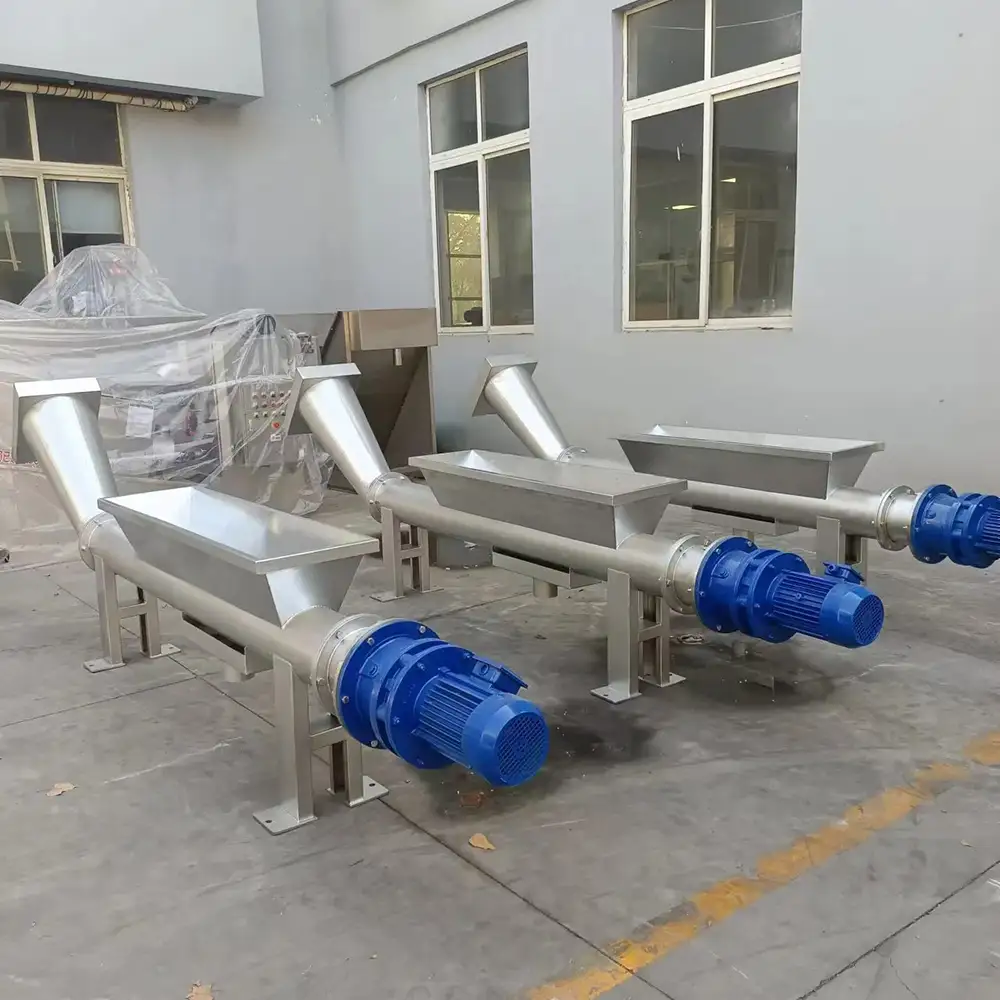
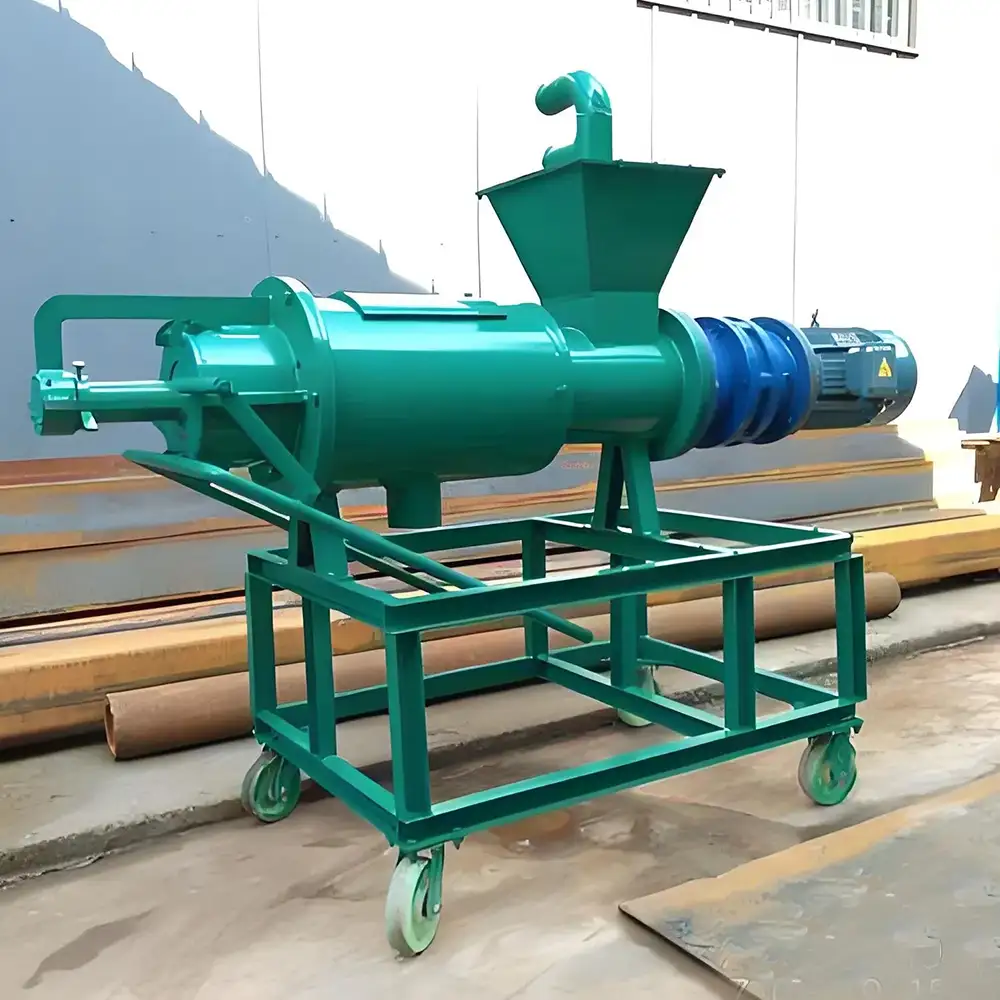
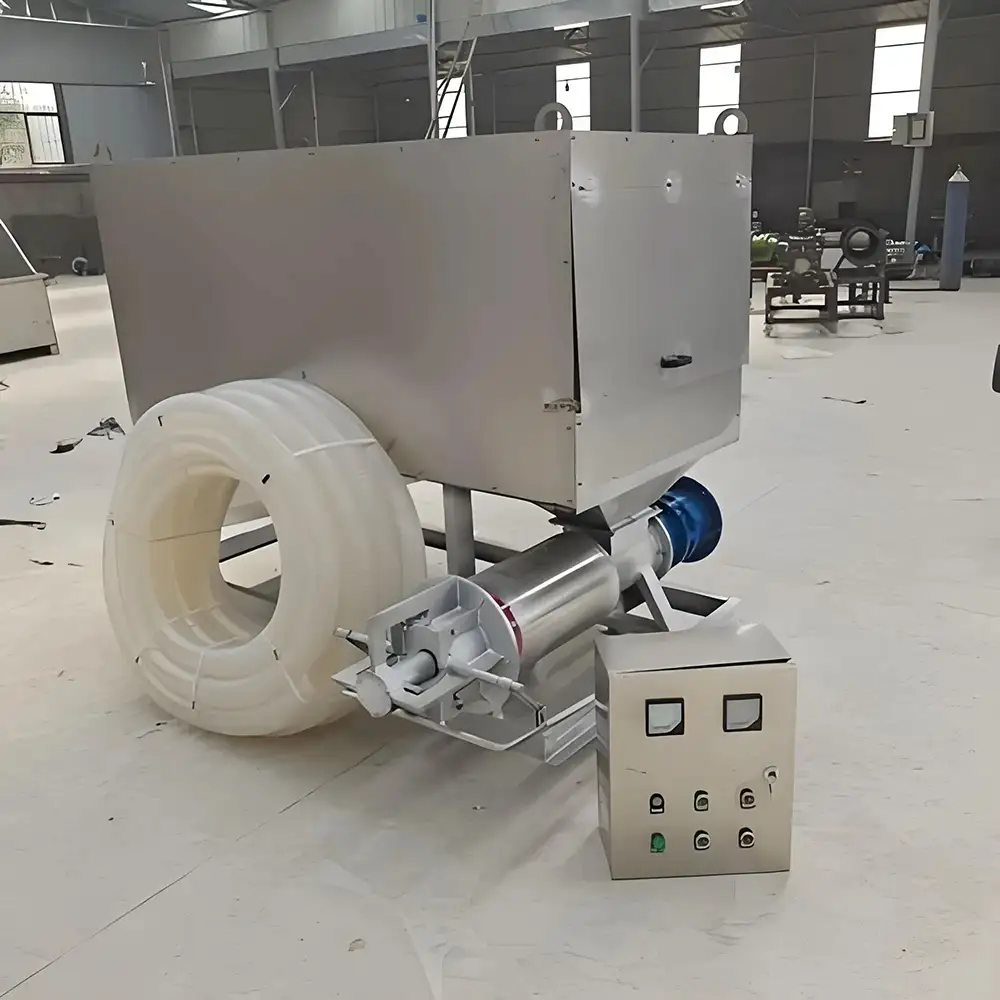
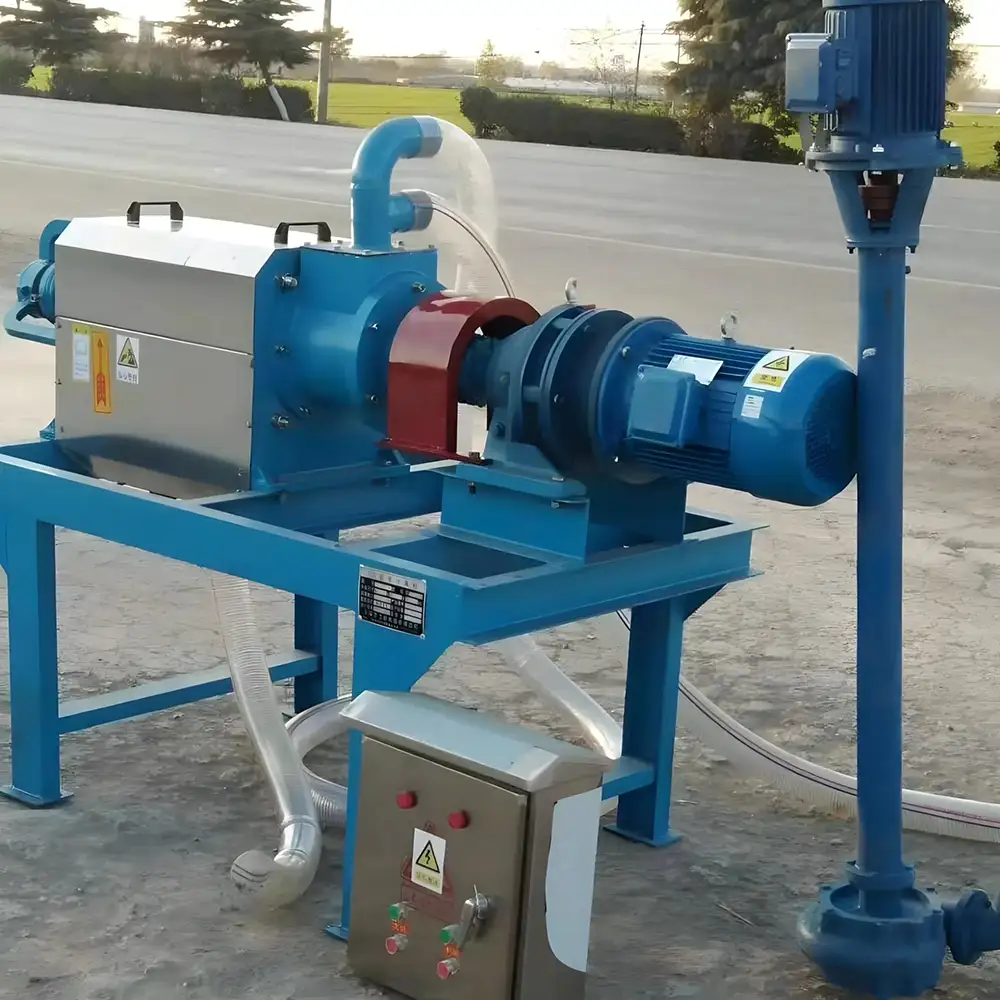
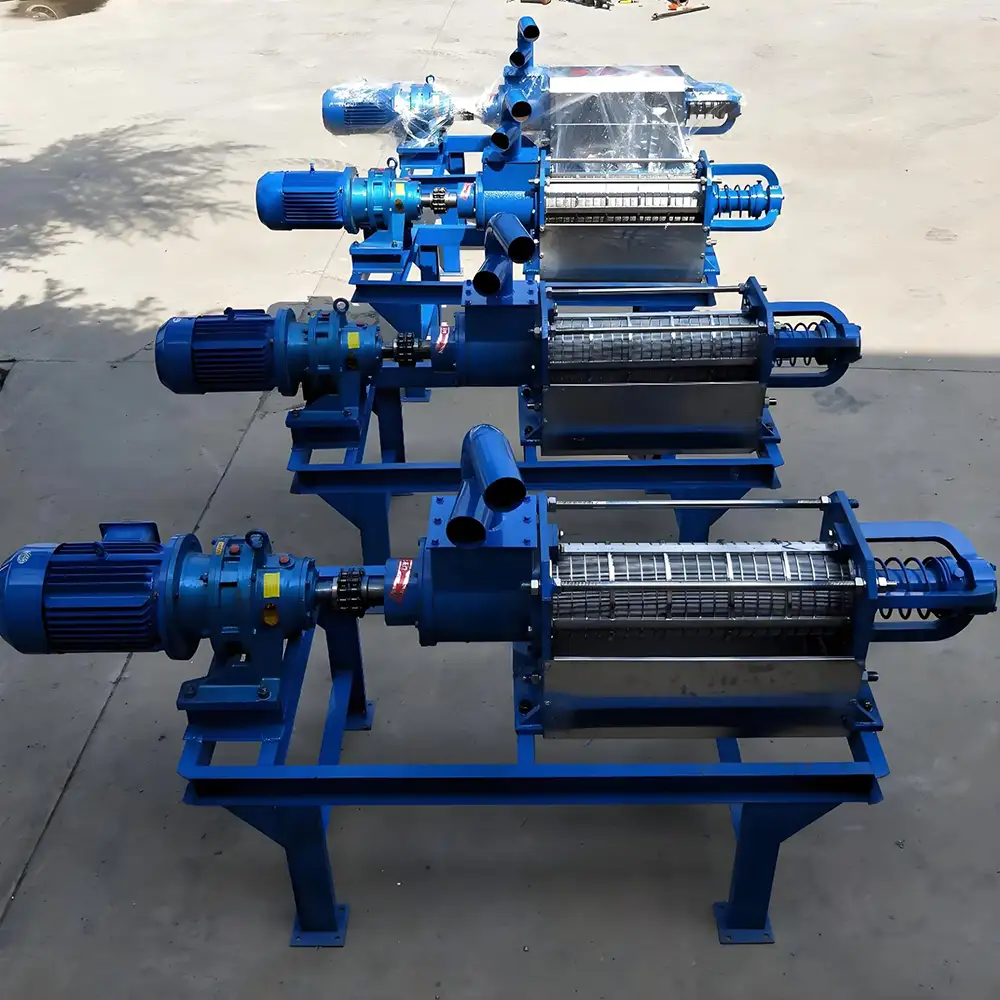
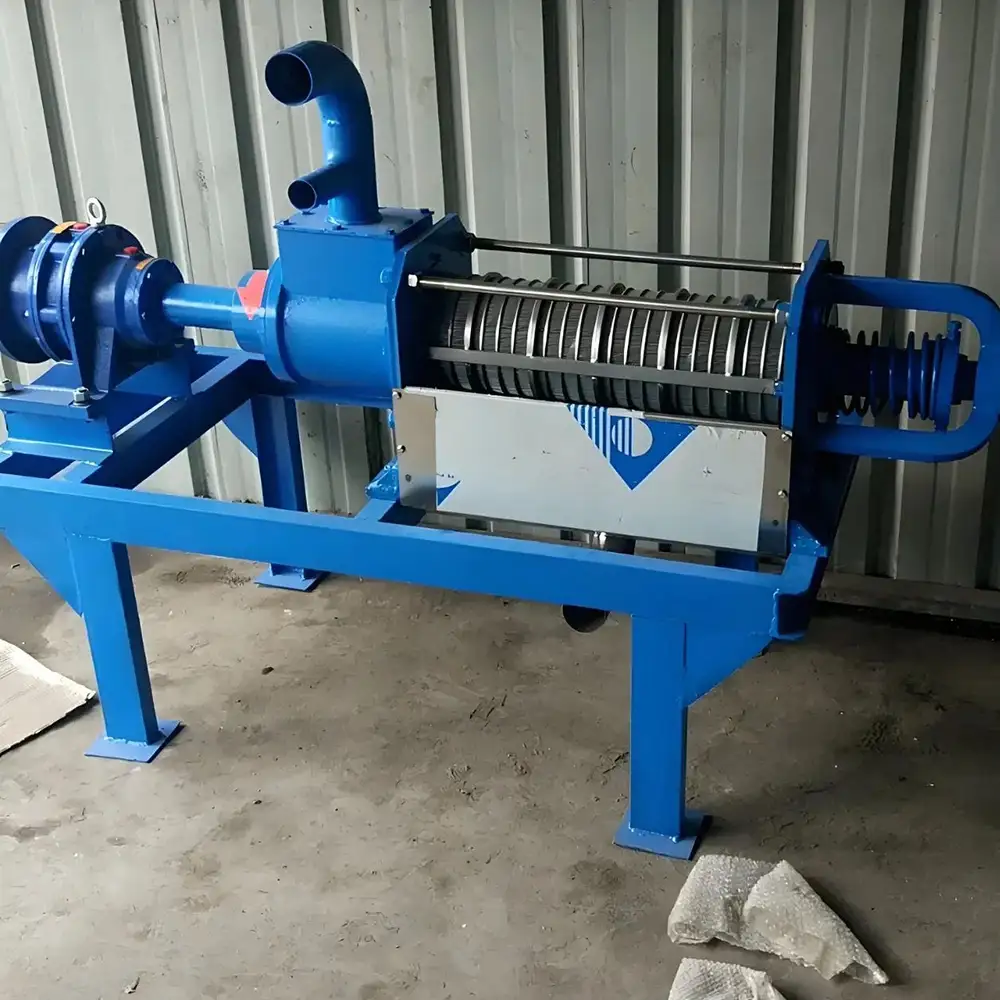
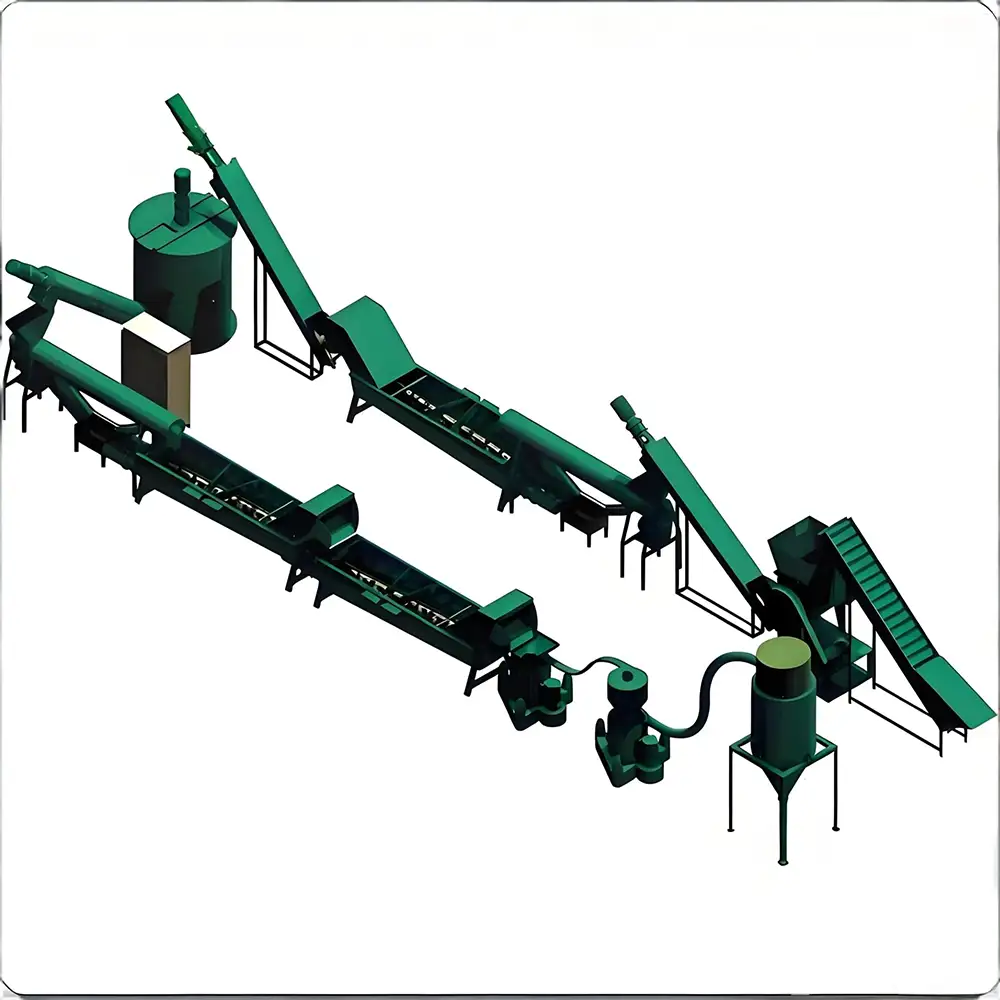
The Spiral Solid-Liquid Separation Press / Environmentally Friendly Pressing and Dehydration Machinery is a continuous mechanical dewatering system designed to separate liquid from solid materials through controlled conveying, filtration, compression, and discharge. It is suitable for wastewater treatment, livestock manure processing, agricultural waste management, food processing, organic waste treatment, and various industrial solid-liquid separation applications.
The machine uses a spiral screw structure to transport wet material through a filtration and compression chamber. As the material moves forward, liquid is separated through the filtration section while the solid fraction becomes progressively concentrated. The dewatered material is then discharged through the outlet for further processing, storage, transportation, composting, drying, or disposal.
Compared with labor-intensive manual pressing and batch separation methods, continuous spiral pressing can provide a more organized material flow and reduce repetitive handling. Its relatively compact design also makes it suitable for facilities where installation space and operational simplicity are important considerations.
Spiral Solid-Liquid Separation Principle
The core working principle of the machine is based on spiral conveying and mechanical compression.
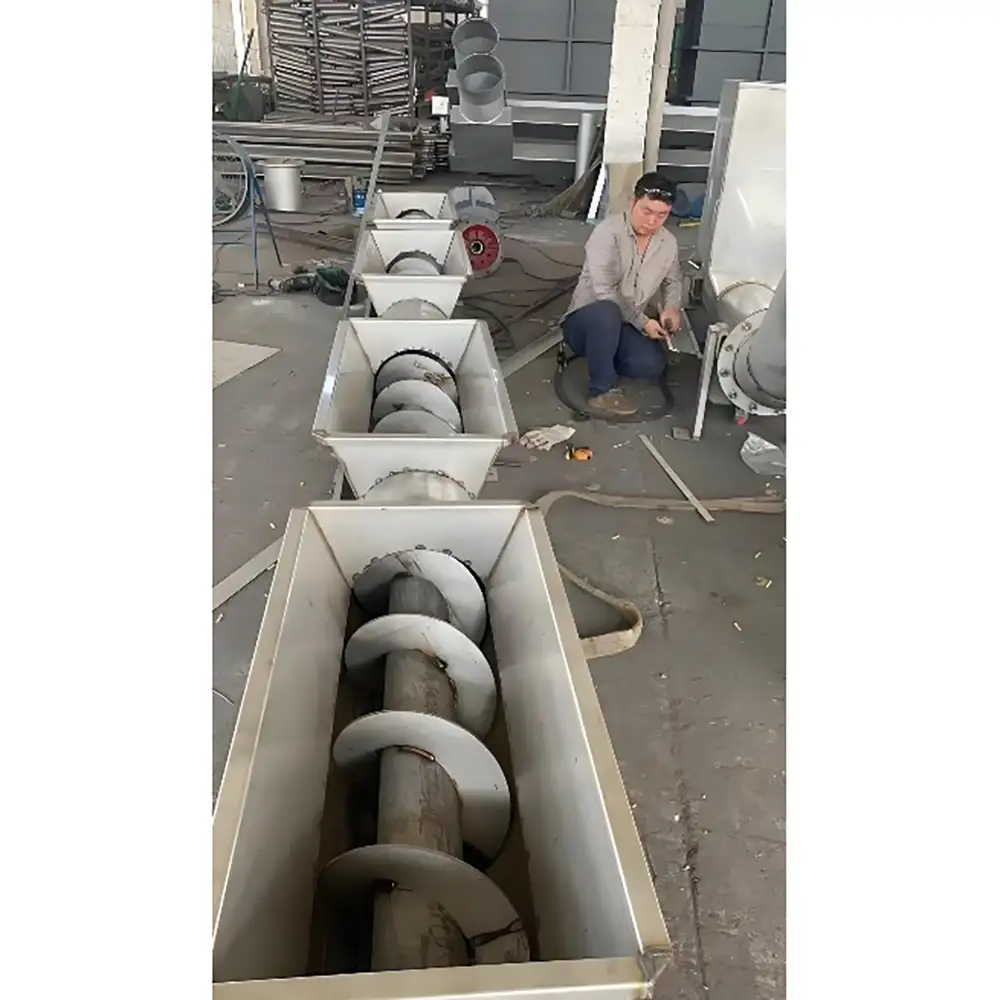
Wet material enters the feeding section and is captured by the rotating spiral screw. The screw gradually moves the material toward the discharge end while the surrounding filtration structure allows liquid to escape.
As the material advances through the pressing section, the available space becomes progressively restricted. This creates controlled compression that encourages additional liquid to separate from the solids.
The concentrated solid fraction continues toward the discharge outlet, while the separated liquid is collected below the filtration section and directed to the next stage of the treatment process.
Continuous Pressing And Dehydration
The Solid-Liquid Separation Press is designed for continuous operation.
Material can be continuously fed into the machine while separated liquid and concentrated solids are discharged through their respective outlets. This eliminates the repeated filling and unloading cycles associated with many traditional batch systems.
Continuous processing can be particularly useful for farms, wastewater treatment plants, food processing facilities, and industrial operations that generate wet materials on a regular basis.
Actual processing capacity and dewatering performance depend on material characteristics, feed concentration, moisture content, particle size, fiber content, and machine configuration.
Efficient Solid-Liquid Separation
The spiral pressing system combines material conveying, filtration, thickening, compression, and discharge in one integrated machine.
During operation, free water and liquid are separated from the solid fraction through the filtration structure. Progressive compression then helps reduce the amount of free water remaining in the discharged material.
The final moisture condition depends on the characteristics of the incoming material and operating parameters. Materials with different compositions may require different screw configurations, filtration openings, feed rates, or conditioning methods.
Environmentally Friendly Dewatering Process
Mechanical dewatering can help reduce the volume of water transported together with wet solids.
By separating liquid from solid material at an early stage, the system can make subsequent handling and treatment more manageable. Reduced wet-material volume may also simplify transportation, storage, composting, drying, or other downstream processes.
The machine does not rely on a fixed chemical treatment process. Where chemical conditioning is required, such as polymer addition for certain wastewater sludges, it can be incorporated into the overall treatment system according to process requirements.
Sludge Dewatering Applications
The Spiral Solid-Liquid Separation Press can be used for suitable municipal and industrial sludge.
Wastewater treatment processes generate sludge containing water and concentrated suspended solids. Mechanical dewatering can reduce the volume of this wet sludge before further treatment or disposal.
Suitable applications may include municipal wastewater sludge, food processing sludge, industrial wastewater sludge, paper-related sludge, textile process sludge, and other compatible materials.
Before selecting the equipment, sludge characteristics should be evaluated because viscosity, fiber content, particle size, chemical composition, and solids concentration can significantly affect dewatering performance.
Livestock Manure Separation
Livestock manure is another important application for spiral screw separation equipment.
Pig manure, cattle manure, dairy manure, and other suitable livestock waste streams often contain a mixture of liquid and solid organic matter. A spiral separator can mechanically separate a more concentrated solid fraction from the liquid fraction.
The solid fraction can be easier to transport and may be suitable for composting, organic fertilizer processing, bedding management, or other agricultural applications where appropriate.
The liquid fraction can be directed to a farm wastewater treatment, storage, anaerobic digestion, or other suitable process.
Agricultural Waste Processing
Agricultural operations generate many types of wet organic waste, including manure, crop residues, vegetable processing waste, and other biodegradable materials.
The pressing and dehydration machine can be configured for compatible materials that require mechanical water removal.
For agricultural waste processing, the equipment can be integrated with conveyors, storage systems, composting equipment, fermentation systems, biogas facilities, or organic fertilizer production lines.
The exact configuration depends on the type, size, moisture level, and processing requirements of the agricultural waste.
Food Processing Applications
Food processing plants may generate wet organic residues and wastewater solids that require separation before further treatment.
A screw press can help separate liquid from suitable food processing residues, vegetable waste, fruit residues, and other compatible organic materials.
Dewatering can make the solid fraction easier to collect and transport and may prepare it for composting, anaerobic digestion, or other resource recovery processes.
For food-related applications, appropriate material selection and hygiene requirements should be considered when specifying the machine.
Industrial Wastewater Treatment
Industrial wastewater can contain suspended solids, sludge, fibers, and other materials requiring solid-liquid separation.
The spiral press can be incorporated into wastewater treatment systems as a mechanical dewatering stage.
Potential industrial applications include food and beverage processing, paper production, textile processing, agricultural processing, and other industries producing suitable wet solids.
For corrosive or abrasive materials, stainless steel or other suitable wear- and corrosion-resistant components can be selected according to the actual operating environment.
Screw Press Dewatering Structure
The machine generally consists of a feeding section, spiral screw, filtration chamber, compression section, drive system, liquid collection area, and solid discharge section.
The screw performs both conveying and compression functions, allowing multiple separation stages to be combined into a compact machine.
The filtration structure is selected according to the material being processed. Different filtration openings and structural configurations may be suitable for different particle sizes and sludge characteristics.
The discharge section can also be adjusted or configured to provide the required degree of compression for the application.
Low-Speed Spiral Operation
The spiral screw operates at a controlled speed to gradually transport the wet material through the separation chamber.
Slow and controlled conveying can provide sufficient residence time for liquid drainage and mechanical compression.
It can also help reduce unnecessary mechanical agitation and support stable material handling.
Actual screw speed depends on machine design, material properties, required capacity, and process conditions.
Automatic Operation
The spiral separation press can be integrated with automatic feeding, pump systems, conveyors, sensors, control cabinets, and other auxiliary equipment.
Automatic operation can coordinate feeding, pressing, cleaning, discharge, and other functions according to the selected system configuration.
Automation helps reduce repetitive manual handling and allows operators to focus on process monitoring and routine maintenance.
For larger treatment facilities, the equipment can be incorporated into an integrated wastewater or waste-processing control system.
Compact Equipment Design
A major advantage of spiral pressing equipment is the integration of multiple mechanical functions within a relatively compact structure.
Conveying, filtration, thickening, compression, and discharge can be performed within the same machine.
This can reduce the amount of floor space required compared with systems using multiple independent dewatering units.
The machine layout can also be adapted to connect with existing sludge tanks, pumps, conveyors, storage areas, and downstream treatment equipment.
Durable And Corrosion-Resistant Construction
Dewatering equipment may be exposed to moisture, organic materials, chemicals, salts, abrasive particles, and other challenging conditions.
Suitable stainless steel components, reinforced structures, wear-resistant screw components, and corrosion-resistant materials can be selected according to the application.
The appropriate material selection depends on the chemical and mechanical characteristics of the feed material.
Regular inspection of the screw, filtration structure, bearings, seals, motor, and discharge system is recommended to maintain reliable operation.
Easy Maintenance
The machine is designed for practical industrial operation and routine maintenance.
Operators should regularly inspect the filtration section and remove accumulated material when necessary. Bearings, seals, drive components, and wear parts should also be checked according to the operating schedule.
Cleaning requirements depend on the processed material. Sticky, fibrous, or high-grease materials may require more frequent attention than relatively clean industrial solids.
Proper maintenance helps maintain stable separation performance and extend the service life of the equipment.
Customized Dehydration Solutions
Different materials require different separation conditions.
Before selecting a spiral solid-liquid separation press, customers should provide information such as material type, moisture content, solids concentration, feed rate, particle size, fiber content, temperature, and required output condition.
For wastewater sludge, additional information such as pH, viscosity, organic content, and chemical characteristics may be useful.
Based on this information, the appropriate screw configuration, filtration structure, motor, feeding system, discharge arrangement, and auxiliary equipment can be selected.
Integration With Complete Treatment Systems
The spiral press can operate as an independent dewatering machine or as part of a complete waste and wastewater treatment system.
Upstream equipment may include collection tanks, pumps, screens, shredders, mixers, or separation units. Downstream equipment can include conveyors, storage systems, dryers, composting equipment, anaerobic digesters, or fertilizer processing equipment.
This flexible integration allows the machine to serve different production and environmental treatment processes.
Wide Range Of Applications
The Environmentally Friendly Pressing And Dehydration Machinery is suitable for wastewater treatment plants, livestock farms, agricultural facilities, food processing plants, organic waste treatment facilities, and various industrial operations.
Its continuous spiral conveying, mechanical pressing, solid-liquid separation, and compact structure provide a practical solution for reducing excess liquid in compatible wet materials.
Key Features
Spiral Solid-Liquid Separation
Continuous Mechanical Dewatering
Efficient Pressing And Dehydration
Integrated Conveying And Compression
Low-Speed Spiral Operation
Continuous Solid Discharge
Automatic Operation Available
Compact Equipment Structure
Reduced Manual Material Handling
Suitable For Sludge And Manure
Corrosion-Resistant Material Options
Customized Filtration And Screw Configuration
FAQs
1. What Is A Spiral Solid-Liquid Separation Press?
It is a continuous mechanical separation machine that uses a rotating spiral screw and filtration structure to separate liquid from suitable wet solids through conveying, compression, and dewatering.
2. What Materials Can Be Processed?
Suitable applications may include wastewater sludge, livestock manure, agricultural waste, food processing residues, organic waste, and other compatible wet solid materials.
3. How Does The Spiral Press Separate Liquid And Solids?
Wet material is transported by the rotating screw through a filtration and compression chamber. Liquid passes through the filtration structure while concentrated solids are conveyed toward the discharge outlet.
4. Is The Machine Suitable For Sludge Dewatering?
Yes. It can be configured for suitable municipal and industrial sludge dewatering applications, depending on sludge characteristics and required treatment capacity.
5. Can It Process Pig And Cow Manure?
Yes. Suitable pig, cattle, and dairy manure can be processed for continuous solid-liquid separation and dewatering.
6. Is The Process Environmentally Friendly?
Mechanical dewatering can help reduce the amount of liquid associated with wet solids and simplify subsequent handling. The overall environmental performance depends on the complete treatment and waste management process.
7. Does The Machine Need Chemicals?
Not necessarily. Mechanical separation can operate without chemical conditioning for many materials. Certain wastewater sludges may benefit from polymer or other conditioning depending on their characteristics.
8. Can The Machine Be Automated?
Yes. Automatic feeding, conveying, cleaning, discharge, sensors, and control systems can be integrated according to the application and required automation level.
9. Can The Dewatered Material Be Dried Further?
Yes. The spiral press can serve as a mechanical dewatering pretreatment stage before thermal drying, air drying, solar drying, composting, or other downstream processes.
10. How Do I Select The Right Spiral Separation Press?
Provide the material type, moisture content, solids concentration, feed rate, particle characteristics, required output condition, and downstream process. Material samples or laboratory test data can help determine the appropriate configuration.
Why Choose Us
Specialized Solid-Liquid Separation Equipment
We provide spiral screw press, sludge dewatering, manure separation, and related solid-liquid separation equipment for environmental and industrial applications.
Application-Based Configuration
We evaluate the customer's material characteristics and process requirements to recommend suitable screw, filtration, feeding, discharge, and auxiliary equipment configurations.
Environmentally Focused Processing
Mechanical dewatering can reduce excess liquid in wet waste streams and help prepare concentrated solids for subsequent treatment, recycling, composting, or resource recovery.
Durable Industrial Construction
Suitable stainless steel, wear-resistant, and corrosion-resistant components can be selected according to the material and operating environment.
Flexible System Integration
The spiral press can be integrated with pumps, conveyors, tanks, wastewater treatment equipment, dryers, composting systems, and other downstream processing equipment.
|
Parameter categories |
Parameter name |
Core Definition |
Common range/specifications |
|
Basic performance parameters |
Processing volume |
Material volume/mass that can be processed per unit time |
0.5-50 m³/h (volume); 0.2-20 t/h (mass) |
|
Filter cake moisture content |
Moisture content of solid filter cake after dehydration |
60%-85% (Environmental Protection Sector); 40%-70% (Food Sector) |
This directly impacts subsequent solid waste treatment costs; for example, a 5% decrease in moisture content reduces sludge transportation costs by 8%-10%. |
|
Filtrate recovery rate |
The proportion of recoverable liquid after separation to the total feed liquid |
75%-95% |
Regarding resource utilization rates, food processing (such as fruit and vegetable juicing) needs to achieve ≥90%, and chemical waste treatment needs to achieve ≥85%. |
|
Structural design parameters |
Screw shaft specifications |
Diameter, pitch gradient range, material |
Diameter: 150-800 mm; Pitch gradient: 200-50 mm (feed end → discharge end); Material: 304/316L stainless steel |
|
Filter media specifications |
Type, aperture, material |
Type: Stainless steel woven mesh/perforated mesh; Aperture: 50-500 μm; Material: 304 stainless steel/nylon |
The smaller the pore size, the clearer the filtrate (e.g., ≤100 μm for food applications). Stainless steel mesh is suitable for high-temperature/high-pressure applications. |
|
Filter chamber diameter |
Inner diameter of the core filtration area of the equipment |
200-1000 mm |
The throughput is positively correlated with the processing capacity; for every 100 mm increase in diameter, the processing capacity increases by approximately 15%-20%. |
|
Power and control parameters |
motor power |
Rated power of the motor driving the screw shaft |
0.75-37 kW |
|
Screw speed |
Rated rotational speed of the screw shaft |
5-30 r/min |
Lower rotation speed results in more thorough compression (lower moisture content in the filter cake), while higher rotation speed leads to greater throughput. A balance needs to be struck based on the material characteristics. |
|
Control method |
Equipment operation control mode |
Manual control / PLC automatic control (including feed rate and speed linkage adjustment) |
Automated control is suitable for continuous production lines (such as food factories), while manual control is suitable for small-scale intermittent operations (such as laboratories). |
|
Adaptability parameters |
Feed solids content |
The equipment can stably process feed materials with a high solids content. |
5%-30% |
|
Applicable material temperature |
The range of material temperatures that the equipment can withstand during normal operation |
-5-120℃ (standard); 120-200℃ (custom high-temperature model) |
The standard version is suitable for municipal sewage sludge/room temperature food products, while the high-temperature version is suitable for high-temperature chemical slurries. |
|
Corrosion resistance |
The equipment's ability to withstand corrosive materials such as acids and alkalis |
pH resistance: 2-12 (standard stainless steel); |
For highly corrosive applications such as chemical processing and electroplating wastewater treatment, custom-made corrosion-resistant models are required to prevent equipment corrosion. |
|
Appearance and Installation Parameters |
Equipment dimensions (length × width × height) |
Overall dimensions of the equipment |
custom made |
|
Equipment weight |
Overall net weight of equipment |
300-5000 kg |
Related transportation costs (such as foreign trade sea freight) and installation foundation bearing capacity requirements |
|
Installation method |
Fixed installation method of equipment |
Floor-standing (standard), wall-mounted (customized) |
Floor-standing units are suitable for most scenarios, while suspended units are used in production lines where space is limited. |
Prev:
Auto Screw Filter Press - Intelligent - Sludge Drying Machine
Next:
Waste Pet Bottle Flakes Washing Recycling Machine, Waste Plastic Dry Washing Friction Cleaning Machine Unit
TAG:
Industrial Sludge Dewatering,
Continuous Sludge Dewatering,
Sludge Filtration Equipment,
Mechanical Sludge Dewatering,
Municipal Sludge Dewatering,
Sludge Dewatering System,
Sludge Dewatering Equipment,
Wastewater Sludge Dewatering,
Automatic Sludge Dewatering Machine,
Screw Press Dewatering Equipment,
Sludge Press Machine,
Sludge Solid Liquid Separator,
Environmental Dewatering Equipment,
Sludge Treatment Equipment,
Sewage Sludge Dewatering,
Sewage Sludge Dewatering Machine,
Solid Liquid Separator,
Solid Liquid Separation Equipment,
Solid Liquid Separation Machine,
Sludge Separation Machine,
Sludge Dewatering Separator,
Sludge Press Dewatering,
Sludge Dewatering Machine,
Screw Press Dewatering Machine,
Screw Press Sludge Dewatering,
Sludge Management Equipment,
Sludge Thickening Equipment,
Sludge Processing Equipment,
Organic Waste Separator,
Organic Sludge Dewatering,
Related Category:
Spiral Solid-Liquid Separation Press, Solid-Liquid Separation Press, Spiral Separation Press, Screw Press Dewatering Mac China, suppliers, manufacturers, factory, customized, wholesale, quotation, made in China