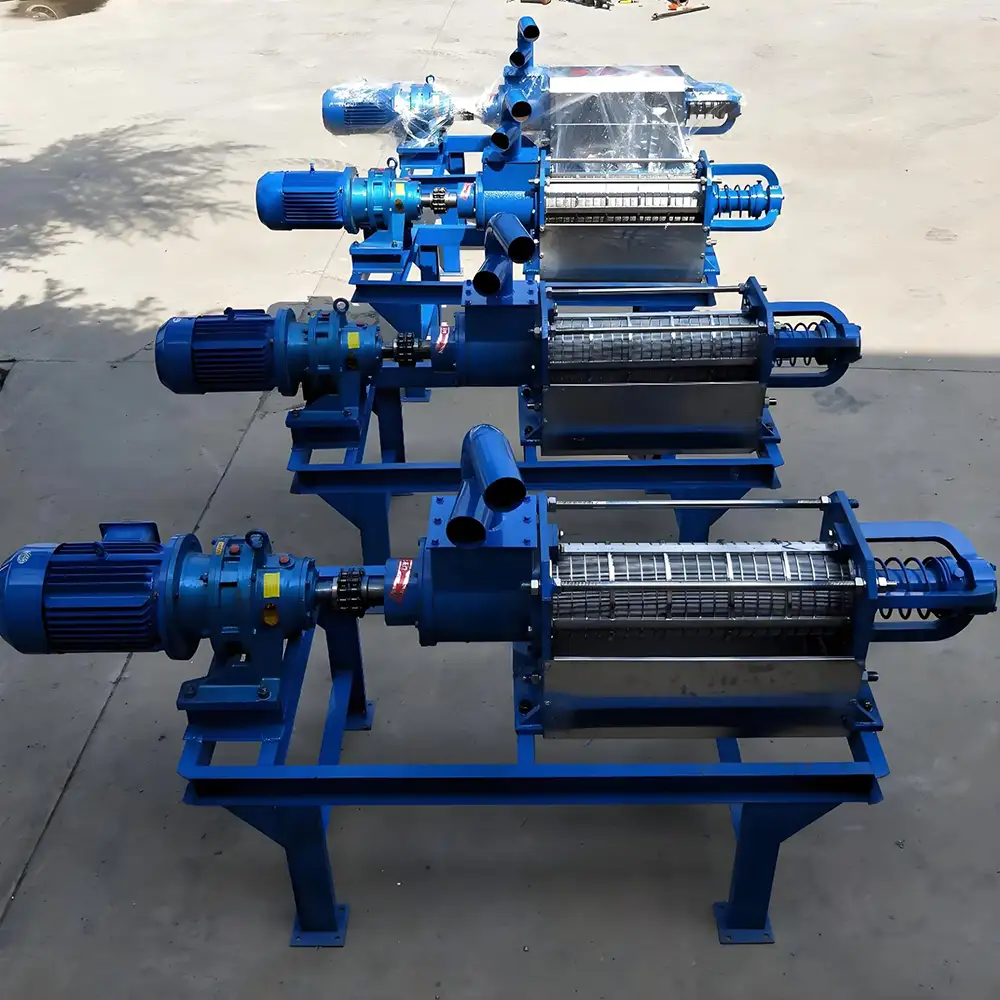
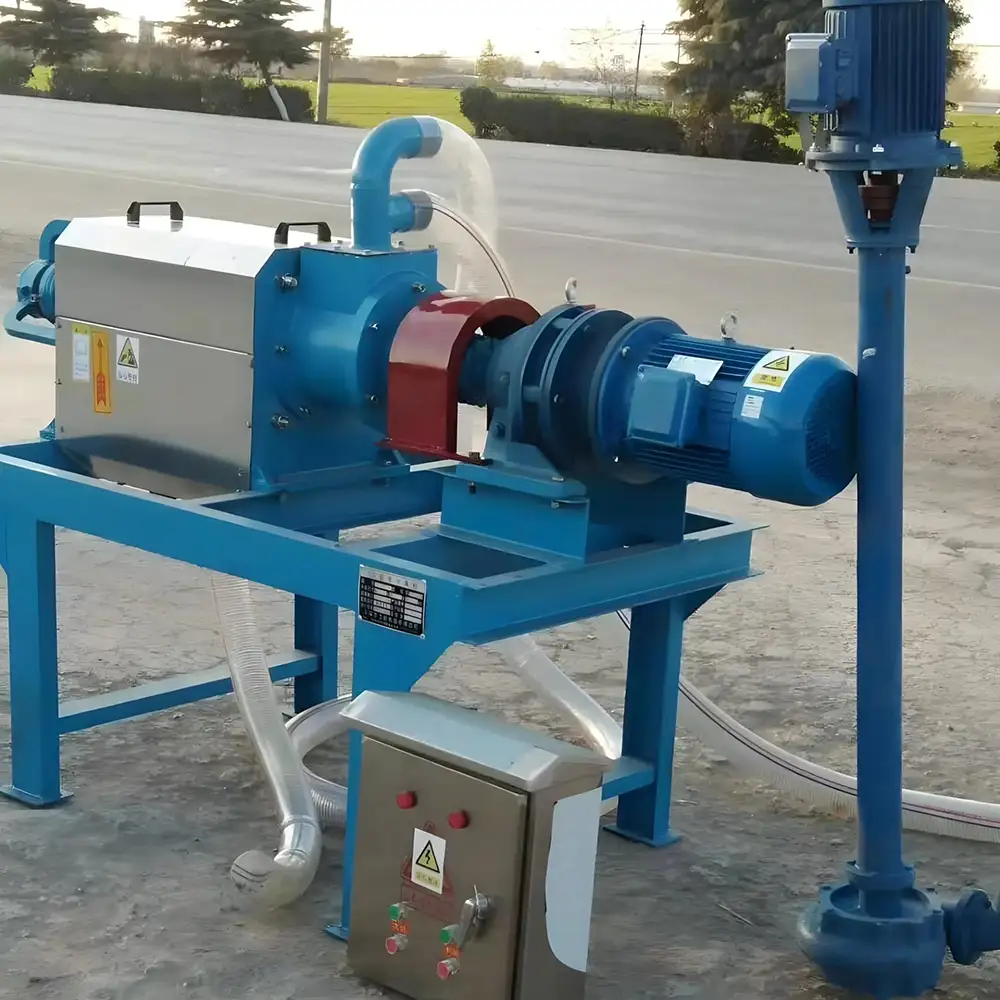
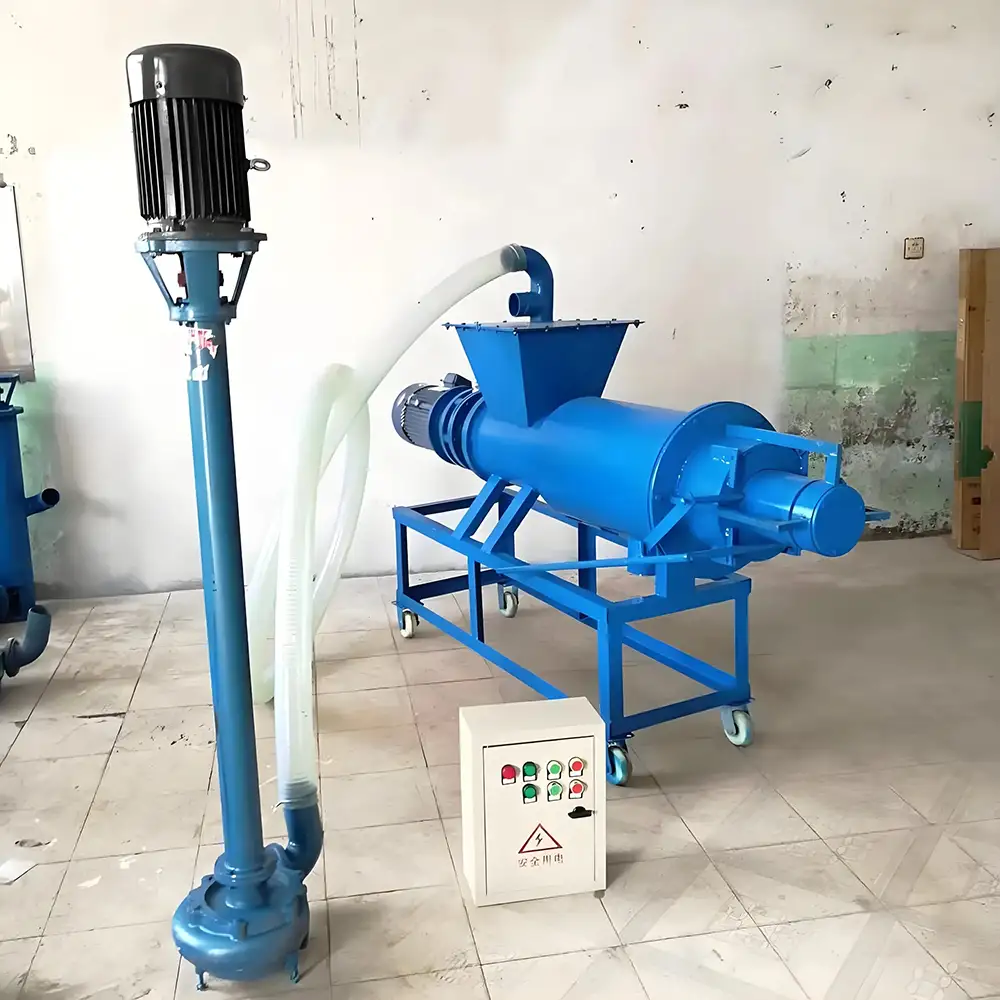
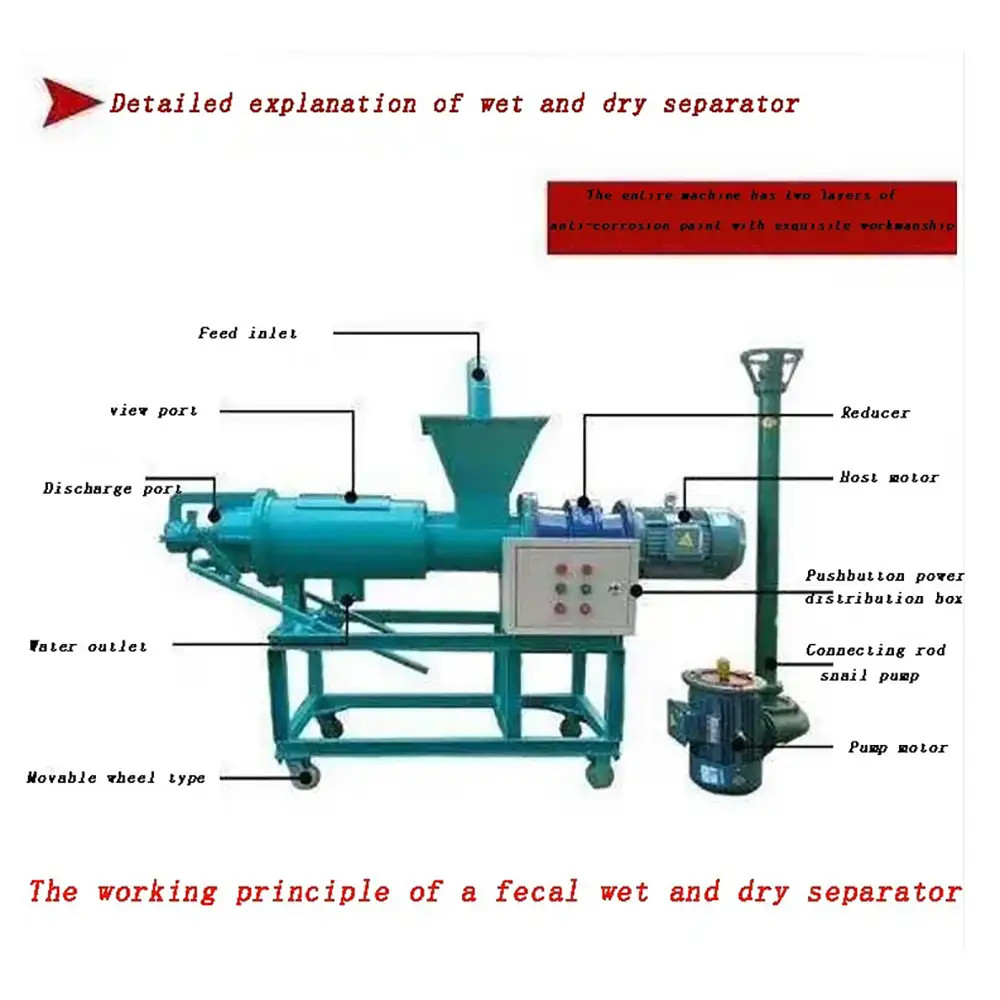
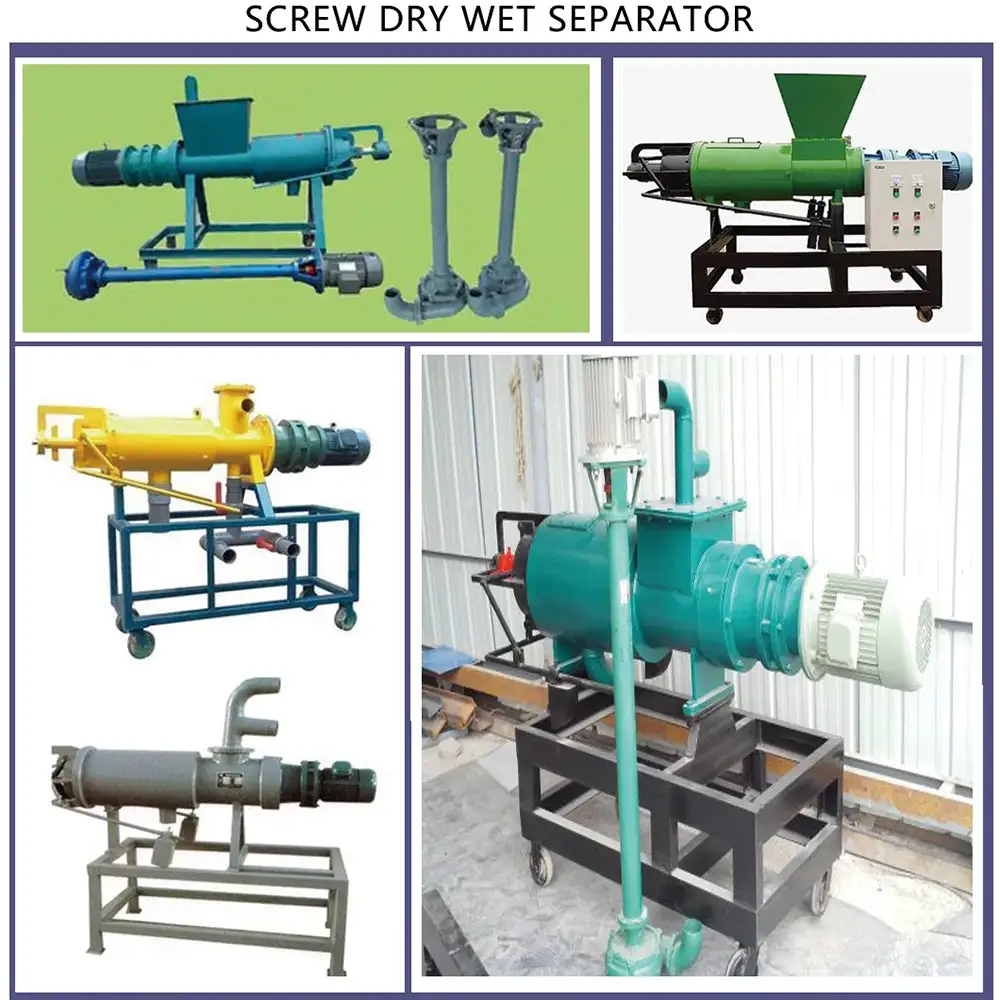
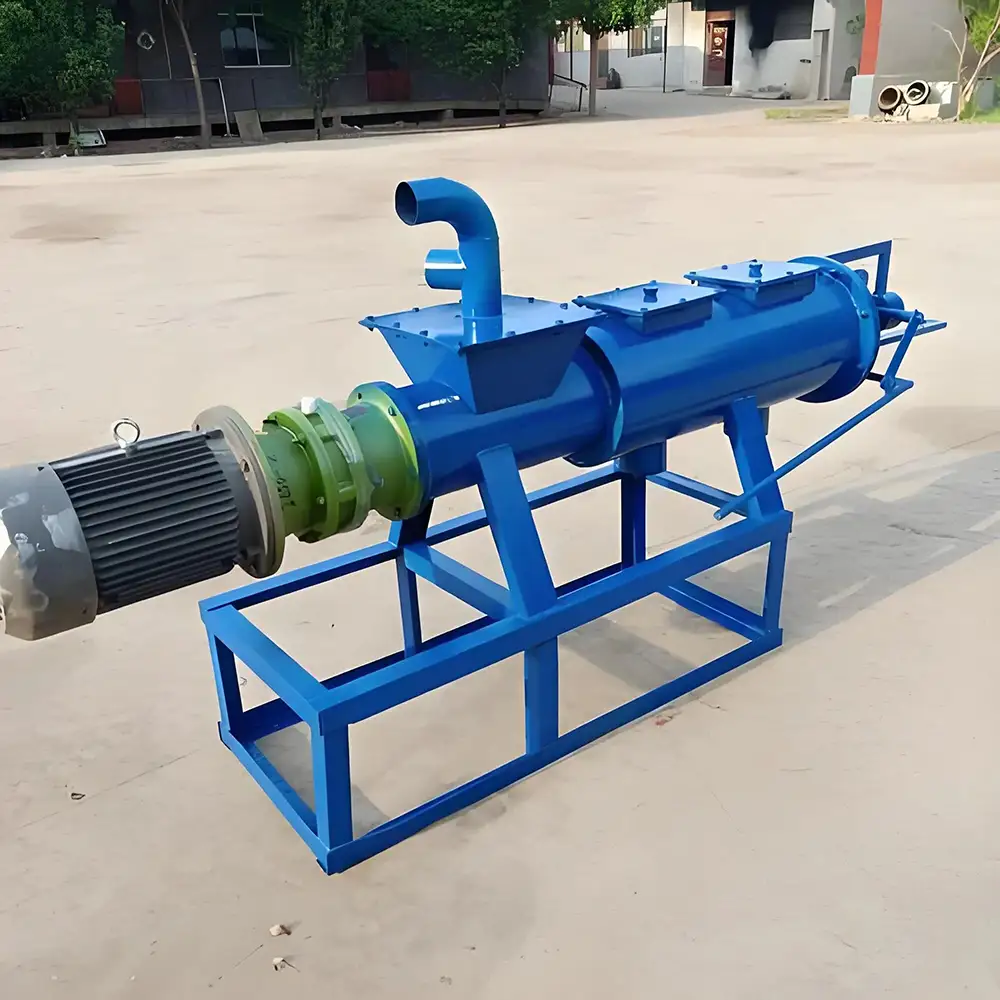
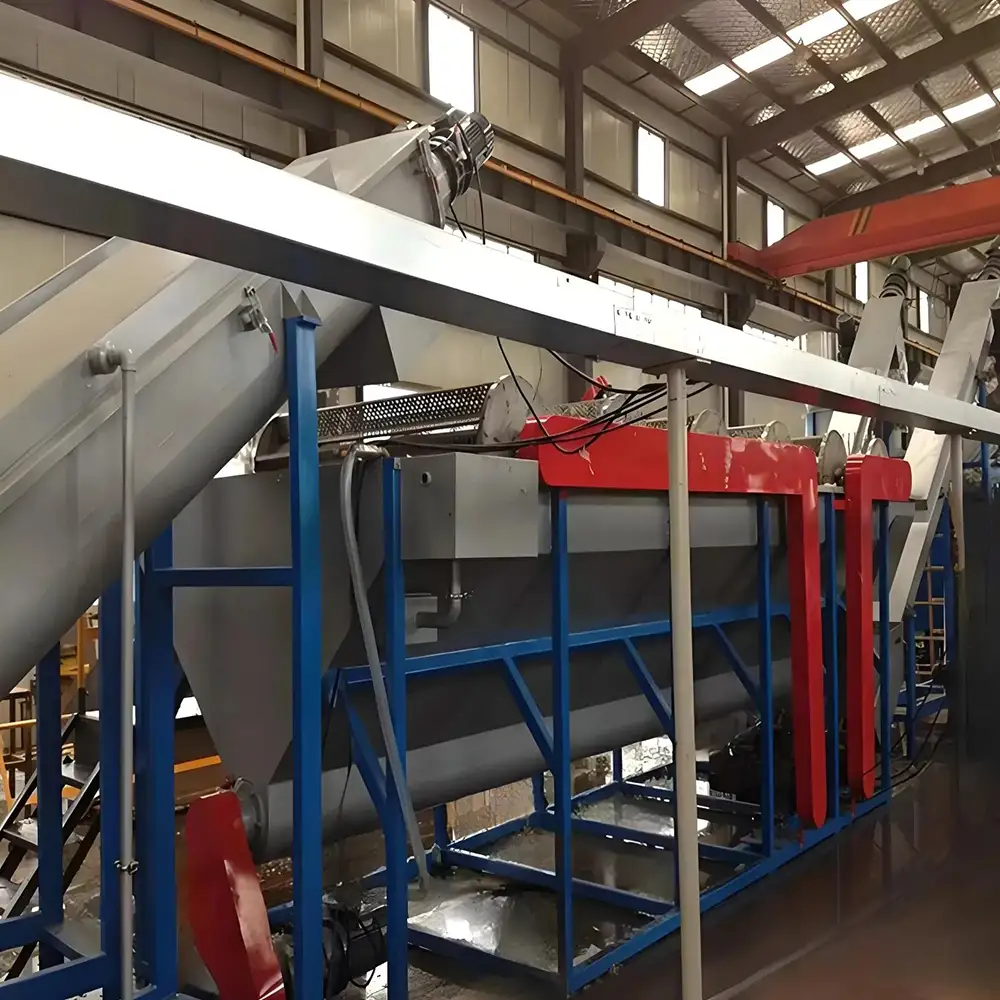
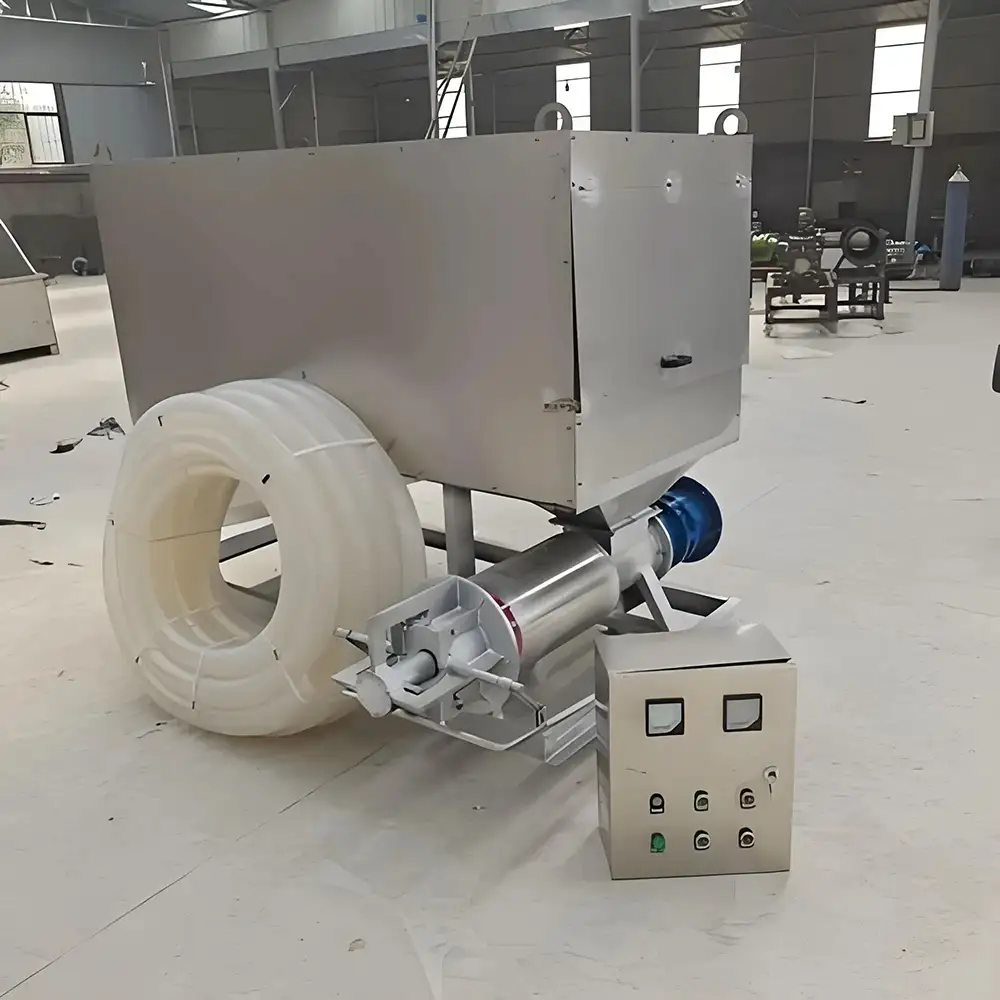
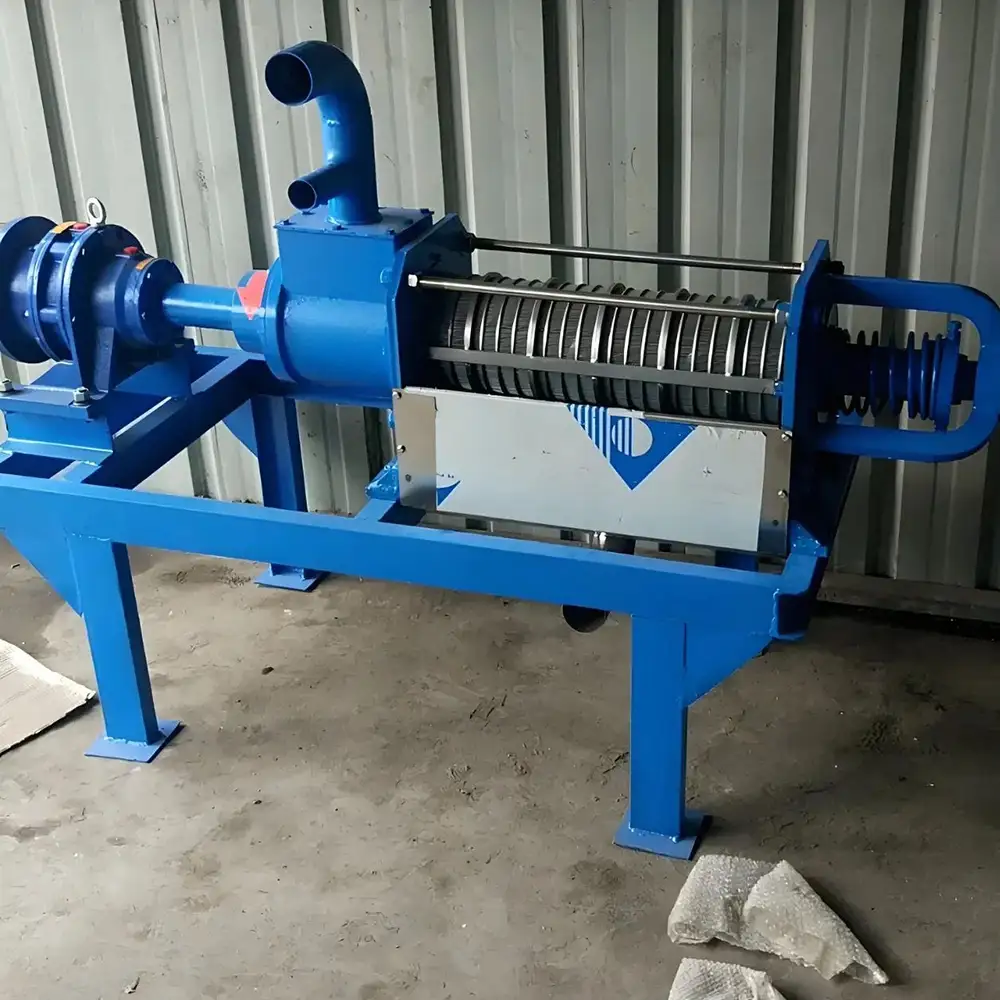
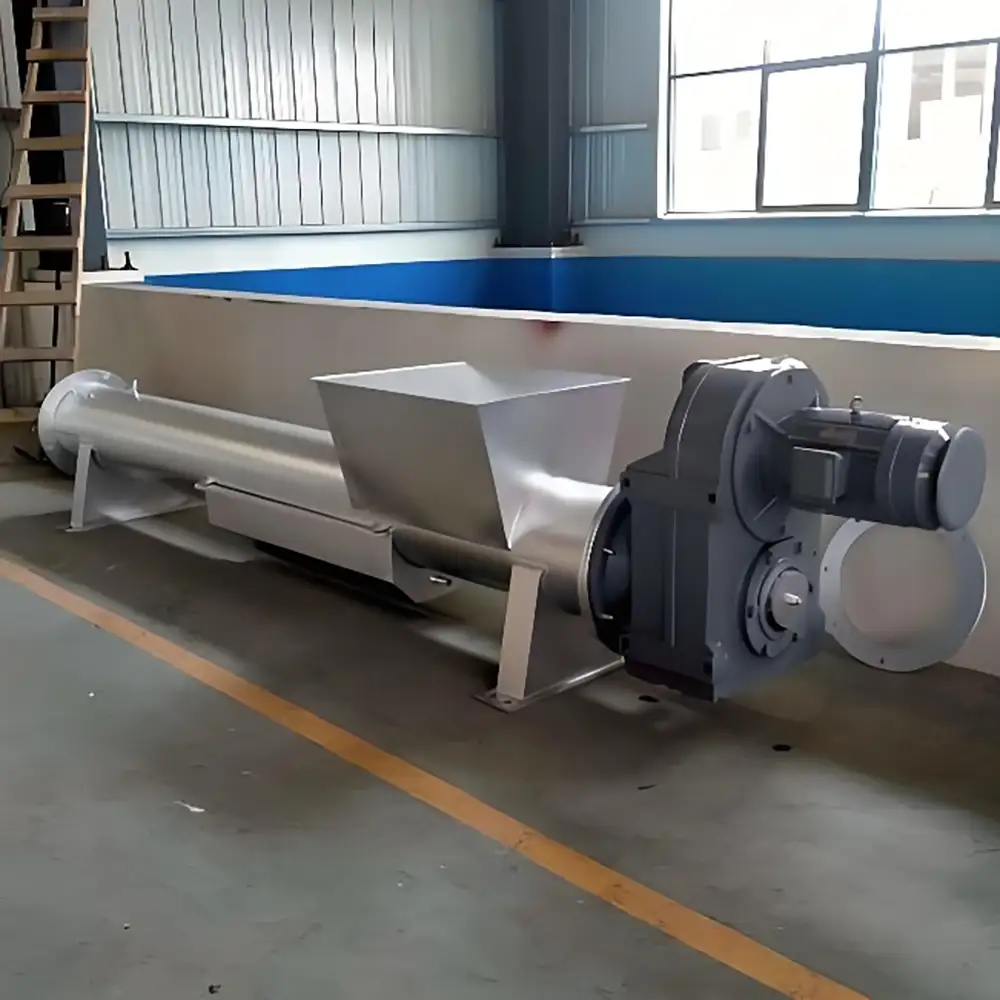
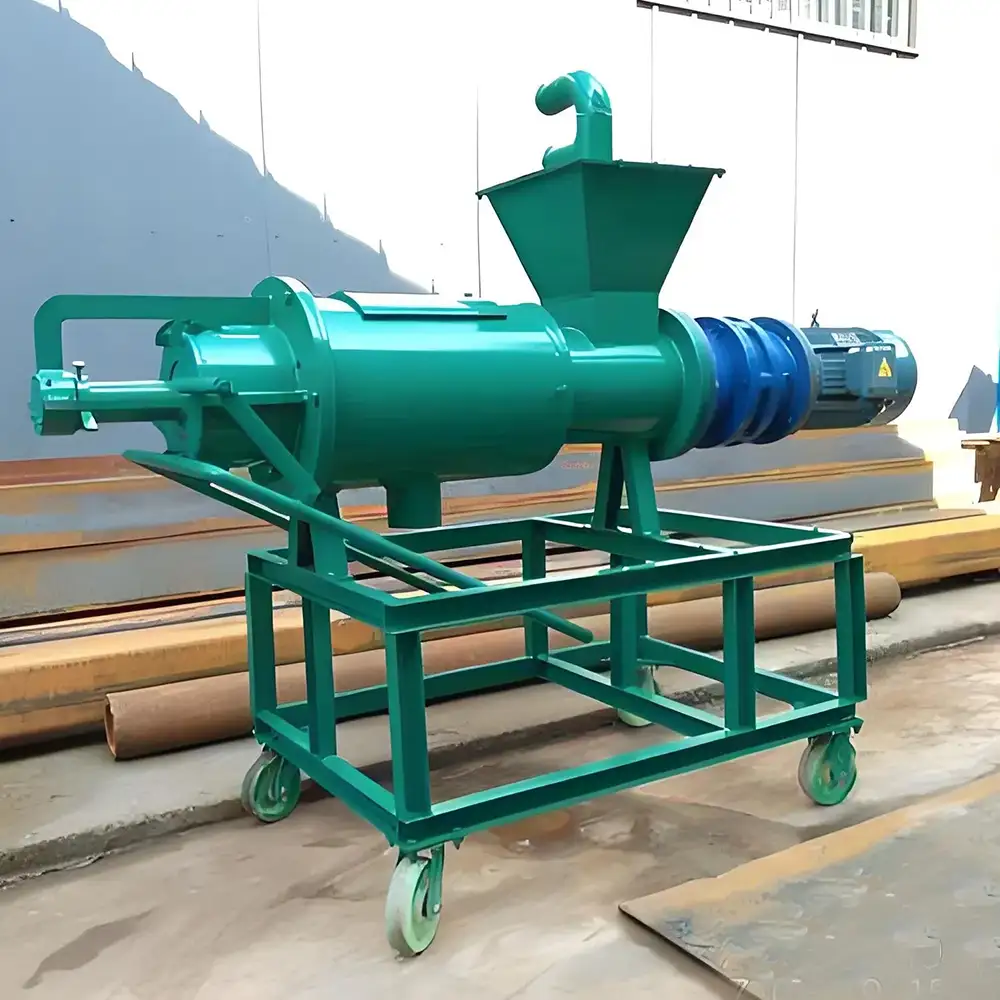
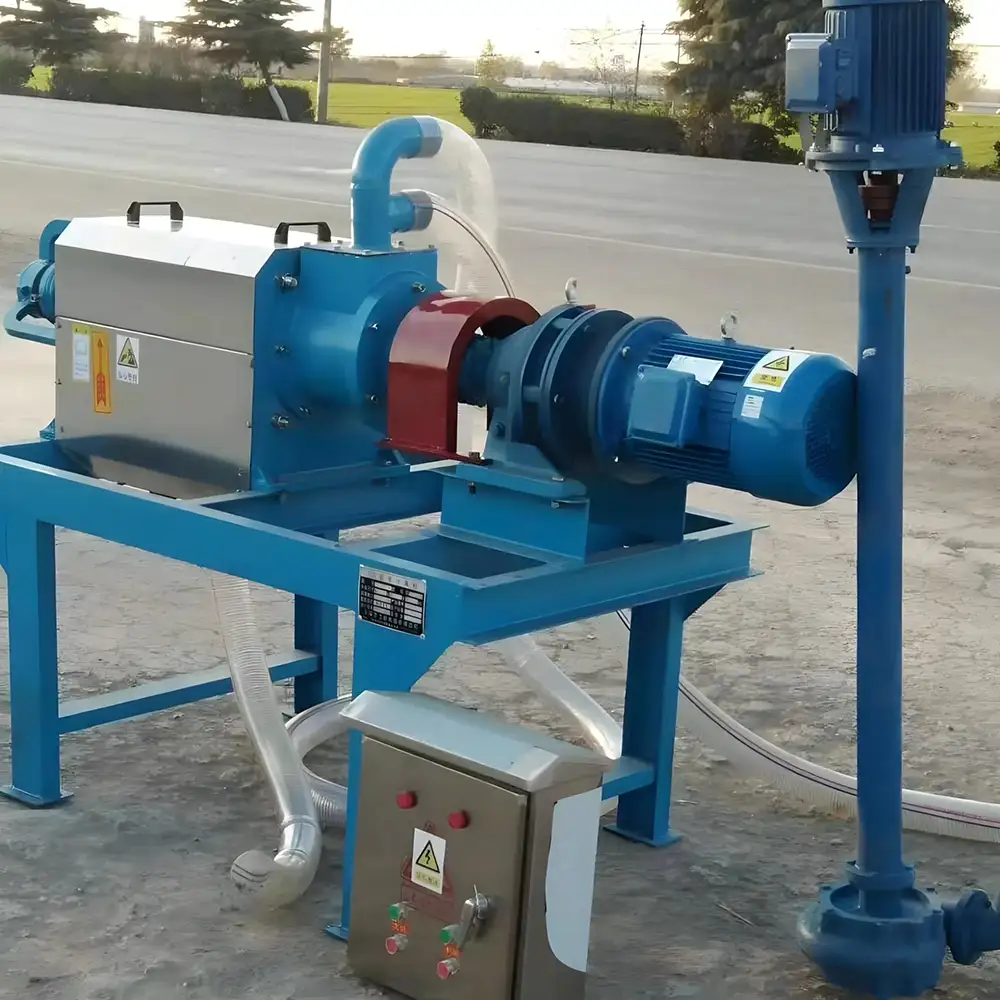
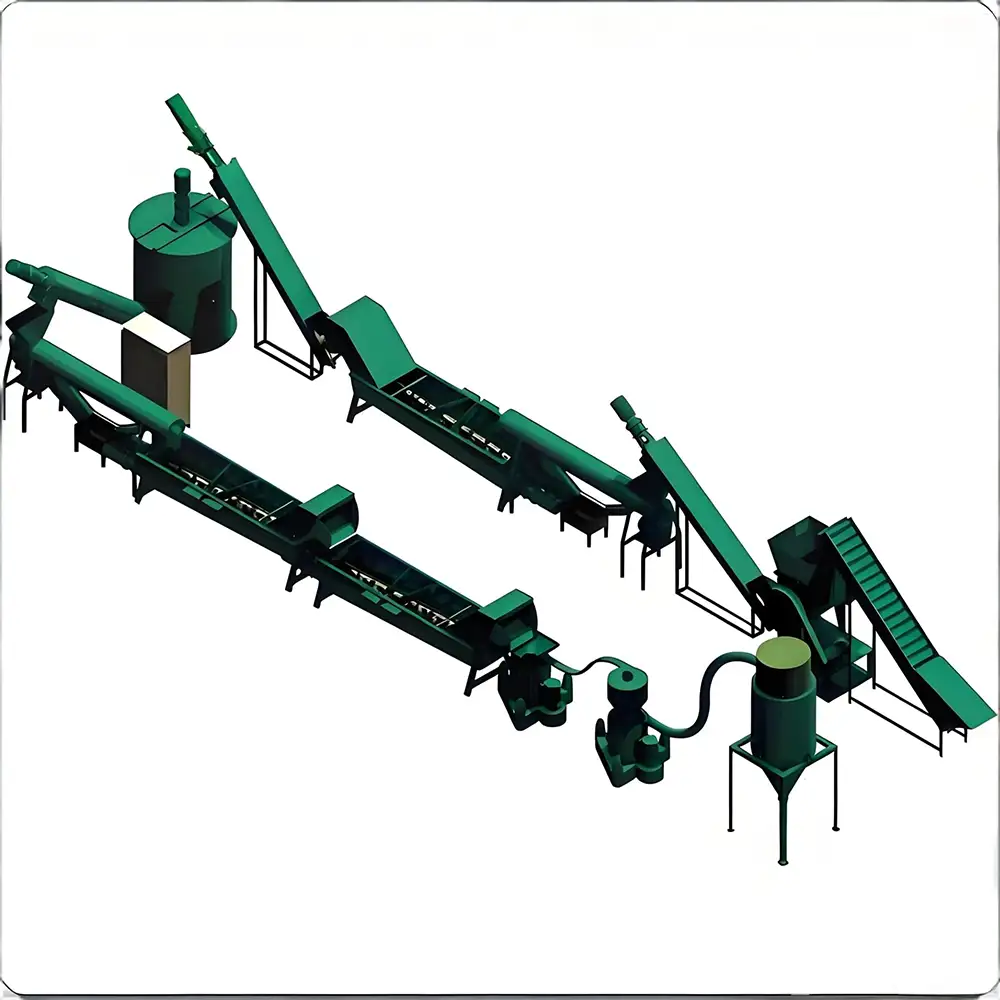
The spiral dry wet separator can be widely used for the separation of high concentration wastewater such as animal manure, distiller's grains, pharmaceutical residue, starch residue, sauce residue, slaughterhouses, etc. in chickens, cows, horses, and various intensive breeding farms. This wet and dry separator can adapt to the treatment of various livestock and poultry manure, with a large daily processing capacity and low power consumption, making it suitable for continuous operation.
Characteristics of solid-liquid separator:
1. High degree of automation: High level of automation, easy to operate, just press the start stop button for easy maintenance, large daily processing capacity, low power consumption, low price, very suitable for continuous operation.
2. Excellent material: The main shaft is made of standard steel, equipped with multiple bearings, and the lower end is supported by thrust ball bearings to reduce wear and save power; The rack, screen frame, screen mesh, etc. are supported by stainless steel and anti-corrosion treatment, with high corrosion resistance and long service life of the machine.
3. Twisted dragon part: The stressed part of the twisted dragon adopts manganese alloy wear-resistant treatment technology to improve its service life. The filter screen is made of stainless steel wedge-shaped mesh, which is efficient, not easy to block, and easy to rinse.
For the fecal water itself, the solid substance extruded after treatment is almost odorless and has low viscosity. It is convenient for transportation and can be directly used as Manure. Fruit nutrient is a good feed for pigs, ducks and fish. Direct sales of Manure can obtain additional economic benefits.
The High Efficiency Oil Sludge Dewatering Separator Machine Horizontal Screw Decanter is an industrial separation system designed for continuous treatment of oil-containing sludge, oily wastewater residues, and other complex mixtures containing liquids and suspended solids. Using horizontal screw decanter centrifuge technology, the machine separates solid particles from liquid phases through controlled centrifugal force and continuous screw conveying.
Oil sludge generated by petroleum processing, oil storage, transportation, machinery maintenance, drilling, and related industrial processes can contain a mixture of oil, water, fine solids, and other suspended contaminants. Because these components have different physical properties, an appropriately configured decanter centrifuge can be used as part of a treatment process to concentrate solids and separate liquid fractions.
The actual separation performance depends on sludge composition, oil and water characteristics, particle size, solids concentration, viscosity, temperature, feed rate, and centrifuge configuration. Application testing is recommended when precise separation targets are required.
Horizontal Screw Decanter Technology
The core of the equipment is a horizontally arranged rotating bowl combined with a screw conveyor. Feed material enters the centrifuge and is accelerated to high rotational speed.
Under centrifugal force, components with different densities move toward different zones within the rotating bowl. Heavier solid particles tend to migrate toward the bowl wall, while lighter liquid phases remain closer to the central liquid layer.
The internal screw conveyor continuously transports the separated solids toward the solids discharge end. This allows the machine to perform separation and solids discharge continuously.
Oil Sludge Dewatering
Oil sludge often contains a substantial amount of water and fine solid particles. Reducing the liquid content of the solid fraction can improve subsequent handling, storage, transportation, and treatment.
The decanter centrifuge provides mechanical dewatering by applying centrifugal force to the sludge. Separated solids are continuously conveyed toward the discharge outlet while the liquid phase is discharged through the liquid outlet.
The achievable dewatering level varies according to sludge properties and operating conditions. Polymer conditioning or other pretreatment may be used for selected sludge types to improve separation.
Oil Sludge Separation
The Oil Sludge Separator is suitable for applications where oil-containing sludge needs to be separated into different phases or concentrated before further treatment.
Depending on the process configuration, the centrifuge can contribute to the separation of suspended solids from liquid phases and can be incorporated into a broader oil-water-solid treatment system.
For difficult emulsified oil mixtures, additional chemical, thermal, flotation, or other pretreatment may be required because centrifugation alone may not fully break stable emulsions.
Three-Phase Separation Applications
Certain horizontal screw decanter centrifuges can be configured for three-phase separation when the process requires separation of solids, heavier liquid, and lighter liquid phases.
For suitable oil sludge applications, this may involve separating solids from water and oil fractions. The exact configuration depends on density differences, emulsion stability, viscosity, solids loading, temperature, and other feed characteristics.
A technical assessment is important before selecting a two-phase or three-phase decanter configuration.
Continuous Solid-Liquid Separation
Continuous operation is one of the main advantages of a horizontal screw decanter. Unlike batch filtration systems, the centrifuge can continuously receive feed material and discharge separated solids and liquid streams.
This design can be valuable for industrial facilities with stable sludge production. Continuous processing can reduce manual intervention and provide a more consistent treatment cycle.
Feed flow and centrifuge operating conditions should be controlled according to the characteristics of the sludge to maintain stable separation performance.
High Centrifugal Separation Force
The rotating bowl generates centrifugal force that is significantly higher than ordinary gravitational settling. This allows suitable fine suspended particles to be separated more effectively than by simple sedimentation in applications where the density difference is sufficient.
The actual centrifugal conditions depend on bowl diameter, rotational speed, differential screw speed, and machine configuration.
These operating parameters can be adjusted within the equipment's design range to match different sludge processing requirements.
Differential Screw Speed
The screw conveyor rotates at a controlled differential speed relative to the bowl. This differential speed determines how quickly the separated solids move through the centrifuge.
A suitable differential speed can help balance solids transport, residence time, torque, and separation performance. The optimal setting depends on solids concentration, particle characteristics, viscosity, and required dewatering results.
Oilfield And Petroleum Applications
Oil sludge can be generated during crude oil storage, tank cleaning, oil-water separation, petroleum processing, drilling-related operations, and other industrial activities.
The decanter centrifuge can be incorporated into suitable oilfield and petroleum waste treatment systems to separate and concentrate solids and liquid phases.
The exact equipment configuration should be selected according to the composition of the oil sludge, operating temperature, oil viscosity, chemical characteristics, and environmental treatment requirements.
Oily Wastewater Treatment
Industrial facilities may produce wastewater containing suspended solids, oil droplets, and other contaminants. A horizontal screw decanter can serve as one mechanical separation stage in an appropriate treatment process.
It may be used upstream or downstream of other treatment technologies such as oil-water separation, dissolved air flotation, chemical conditioning, filtration, or biological treatment.
The complete process should be designed according to the characteristics of the wastewater rather than relying on centrifugation as a universal treatment method.
Sludge Concentration And Volume Reduction
Separating water from sludge can reduce the volume of material requiring further handling. Concentrated solids are generally easier to transport and process than highly diluted sludge.
The screw decanter continuously conveys the concentrated solids to the discharge end, where they can be collected by a conveyor, hopper, container, or downstream treatment system.
This can help streamline sludge handling operations in industrial treatment facilities.
Wear-Resistant Construction
Oil sludge may contain sand, mineral particles, metal fragments, or other abrasive materials. These particles can cause wear to internal components during continuous operation.
Depending on the application, wear-resistant materials or protective components can be incorporated into areas exposed to abrasive solids. Material selection should consider solids characteristics, corrosion conditions, operating temperature, and expected service requirements.
Corrosion-Resistant Options
Oil sludge and industrial wastewater may contain salts, chemicals, acids, alkalis, or other corrosive components. Suitable stainless steel and corrosion-resistant materials can be considered according to the feed composition.
The appropriate material grade should be evaluated based on pH, chloride content, temperature, chemical exposure, and cleaning procedures.
Automatic Operation
The oil sludge dewatering separator can be integrated with automatic feeding, polymer dosing, differential speed control, torque monitoring, vibration monitoring, liquid discharge, and solids conveying systems depending on the machine configuration.
Automation can help operators monitor important operating parameters and maintain stable process conditions.
For complete industrial treatment plants, the centrifuge can also be integrated with centralized control systems where required.
Compact Horizontal Design
The horizontal bowl and screw arrangement provides a compact continuous separation solution for many industrial applications. Because solids separation, conveying, and discharge occur inside the centrifuge, the equipment can combine multiple processing functions in one machine.
This can simplify process layouts and reduce the need for several separate mechanical separation units.
Easy Maintenance
Routine maintenance is important for maintaining stable centrifuge performance. Typical inspection points include bearings, seals, screw conveyor components, bowl surfaces, wear protection, drive components, lubrication systems, and discharge areas.
The centrifuge should be operated according to the manufacturer's recommended procedures. Regular inspection is particularly important when processing abrasive or corrosive oil sludge.
Customized Oil Sludge Treatment Solutions
Oil sludge composition can vary significantly between different facilities. Sludge from crude oil storage tanks may have different characteristics from refinery sludge, drilling waste, or machinery-related oily residues.
Important parameters include oil content, water content, solids concentration, particle size, viscosity, density, temperature, salinity, and chemical composition.
Customers can provide representative sludge samples or laboratory analysis for technical evaluation. This information helps determine suitable centrifuge configuration, pretreatment requirements, material selection, and operating parameters.
Integration With Complete Treatment Systems
The Horizontal Screw Decanter can be integrated into complete oil sludge and industrial wastewater treatment systems. Supporting equipment may include sludge pumps, feed tanks, mixers, polymer preparation units, oil-water separators, dissolved air flotation systems, filters, conveyors, and sludge storage systems.
This allows the decanter centrifuge to function as part of a coordinated treatment process rather than as an isolated piece of equipment.
Key Features
High Efficiency Oil Sludge Dewatering
Horizontal Screw Decanter Design
Continuous Solid Liquid Separation
Oil Sludge Separation
Centrifugal Dewatering
Continuous Solids Discharge
Adjustable Differential Screw Speed
High Centrifugal Separation Force
Two Phase Separation Options
Three Phase Separation Options
Wear Resistant Components Available
Corrosion Resistant Material Options
Automatic Control Available
Compact Industrial Design
Main Applications
Oil Sludge Dewatering
Oil Sludge Separation
Petroleum Waste Treatment
Oilfield Sludge Treatment
Refinery Sludge Treatment
Crude Oil Tank Sludge
Oily Wastewater Treatment
Industrial Wastewater Treatment
Solid Liquid Separation
Sludge Concentration
Industrial Sludge Dewatering
Oil Water Solid Separation
Drilling Waste Treatment
Petroleum Processing Waste Treatment
FAQs
1. What Is A Horizontal Screw Decanter?
A horizontal screw decanter is a continuous centrifuge that uses a rotating bowl and internal screw conveyor to separate solids from liquid phases through centrifugal force and continuously discharge the separated solids.
2. Can It Be Used For Oil Sludge?
Yes. It can be used for suitable oil sludge applications involving mixtures of solids and liquid phases. The actual separation performance depends on oil, water, solids, viscosity, density, and other feed characteristics.
3. Can It Separate Oil, Water, And Solids?
A suitable three-phase decanter configuration may be used for separating solids from two immiscible liquid phases when the density differences and process conditions are appropriate.
4. Does Oil Sludge Need Pretreatment?
Some oil sludge may benefit from heating, chemical conditioning, mixing, dilution, or other pretreatment. Stable emulsions may require additional treatment before effective phase separation can be achieved.
5. How Does The Machine Dewater Sludge?
The rotating bowl generates centrifugal force that moves heavier solids toward the bowl wall. The internal screw then transports the solids toward the discharge end while separated liquid is discharged separately.
6. Can The Machine Operate Continuously?
Yes. The horizontal screw decanter is designed for continuous feeding, separation, and solids discharge when properly configured and operated.
7. What Types Of Oil Sludge Can Be Processed?
Potential applications include petroleum sludge, tank-bottom sludge, refinery sludge, oilfield sludge, oily wastewater solids, and other compatible oil-containing sludge. Feed testing is recommended before final selection.
8. What Materials Are Used For The Machine?
Suitable stainless steel and wear-resistant materials can be selected according to the corrosive and abrasive characteristics of the feed. Material selection depends on the specific application.
9. Can The Decanter Be Integrated Into A Complete Treatment System?
Yes. It can be integrated with feed tanks, sludge pumps, polymer dosing systems, oil-water separators, flotation units, conveyors, filters, and other treatment equipment.
10. How Do I Select The Right Oil Sludge Decanter?
Provide feed flow rate, oil content, water content, solids concentration, particle size, viscosity, temperature, density, desired separation result, and operating conditions. These parameters help determine the appropriate decanter configuration.
Why Choose Us
Professional Decanter Separation Equipment
We provide horizontal screw decanter centrifuges and industrial separation solutions for oil sludge, wastewater sludge, solid-liquid separation, and other demanding industrial applications.
Oil Sludge Application Support
Different oil sludge sources have different compositions. We evaluate oil, water, solids, viscosity, temperature, and other characteristics when recommending a suitable separation configuration.
Customized Centrifuge Configuration
Bowl configuration, differential speed, materials, wear protection, liquid discharge, solids discharge, automation, and auxiliary equipment can be evaluated according to the application.
Sample-Based Technical Evaluation
Customers can provide representative oil sludge samples or laboratory analysis for separation testing and technical evaluation before final equipment selection.
Factory Direct Supply
We support international customers with equipment configuration, technical documentation, export packaging, shipping coordination, installation guidance, and after-sales service.
Complete Treatment System Integration
The decanter can be integrated with sludge feeding, chemical conditioning, oil-water separation, flotation, filtration, conveying, and other upstream or downstream equipment for complete industrial treatment solutions.
Prev:
Gravity Spiral Chute Mineral Process Chrome Wash Screw Separating Equipment
Next:
Filtration - Based Solid - Liquid Separation Machine Water Purifier
TAG:
Industrial Wastewater Sludge Treatment,
Industrial Sludge Dewatering,
Continuous Sludge Dewatering,
Sludge Dewatering Equipment,
Industrial Sludge Dewatering Equipment,
Oil Sludge Dewatering Machine,
Sludge Separation Equipment,
Sludge Solid Liquid Separator,
Solid Liquid Separation Equipment,
Solid Liquid Separation Machine,
Sludge Dewatering Machine,
Decanter Centrifuge,
Sludge Dewatering Centrifuge,
Industrial Solid Liquid Separator,
Oily Sludge Treatment Equipment,
Petroleum Sludge Treatment,
Petroleum Sludge Dewatering,
Oilfield Sludge Treatment,
Oilfield Sludge Dewatering,
Refinery Sludge Treatment,
Refinery Sludge Dewatering,
Crude Oil Sludge Treatment,
Tank Bottom Sludge Treatment,
Oil Tank Sludge Separator,
Oil Water Separation Equipment,
Oily Wastewater Treatment Equipment,
Three Phase Decanter Centrifuge,
Three Phase Separator Centrifuge,
Two Phase Decanter Centrifuge,
Oil Water Solid Separator,
Related Category:
High Efficiency Oil Sludge Dewatering Separator Machine Horizontal Screw Decanter, Oil Sludge Dewatering Machine, Oil Sl China, suppliers, manufacturers, factory, customized, wholesale, quotation, made in China