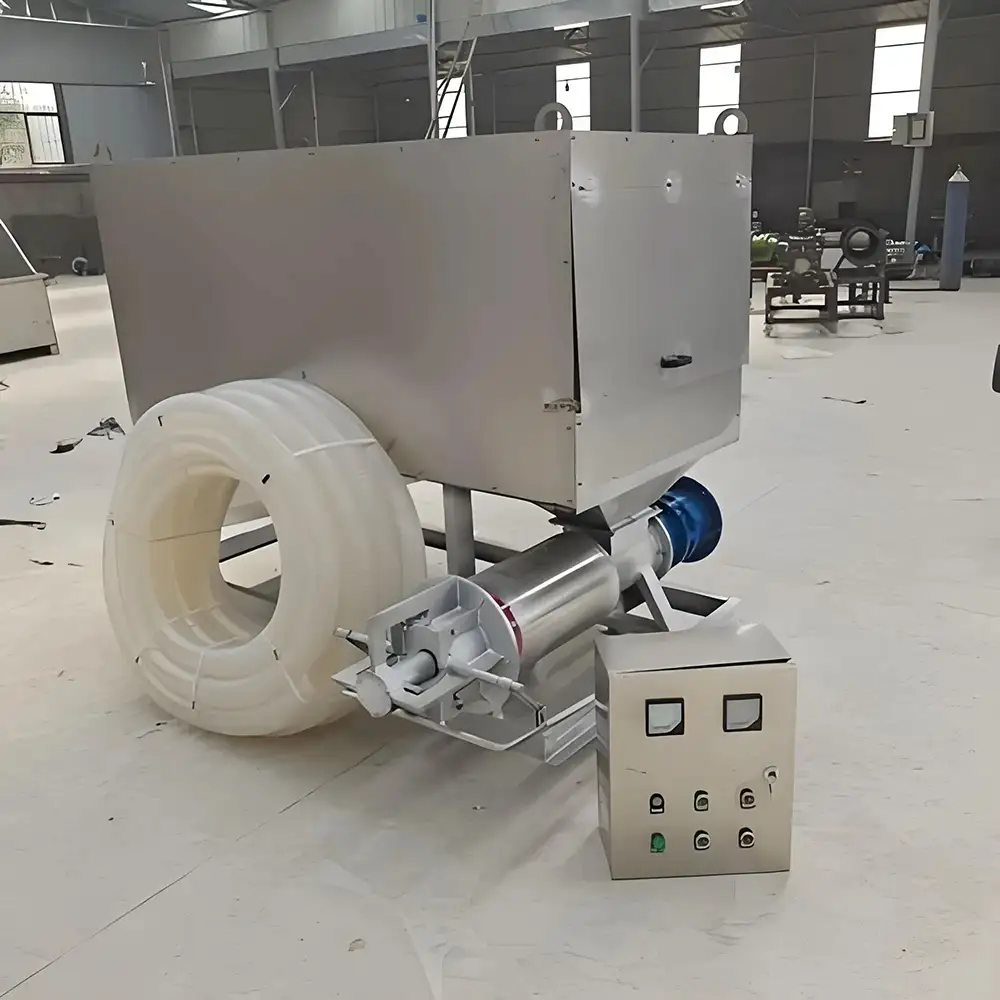
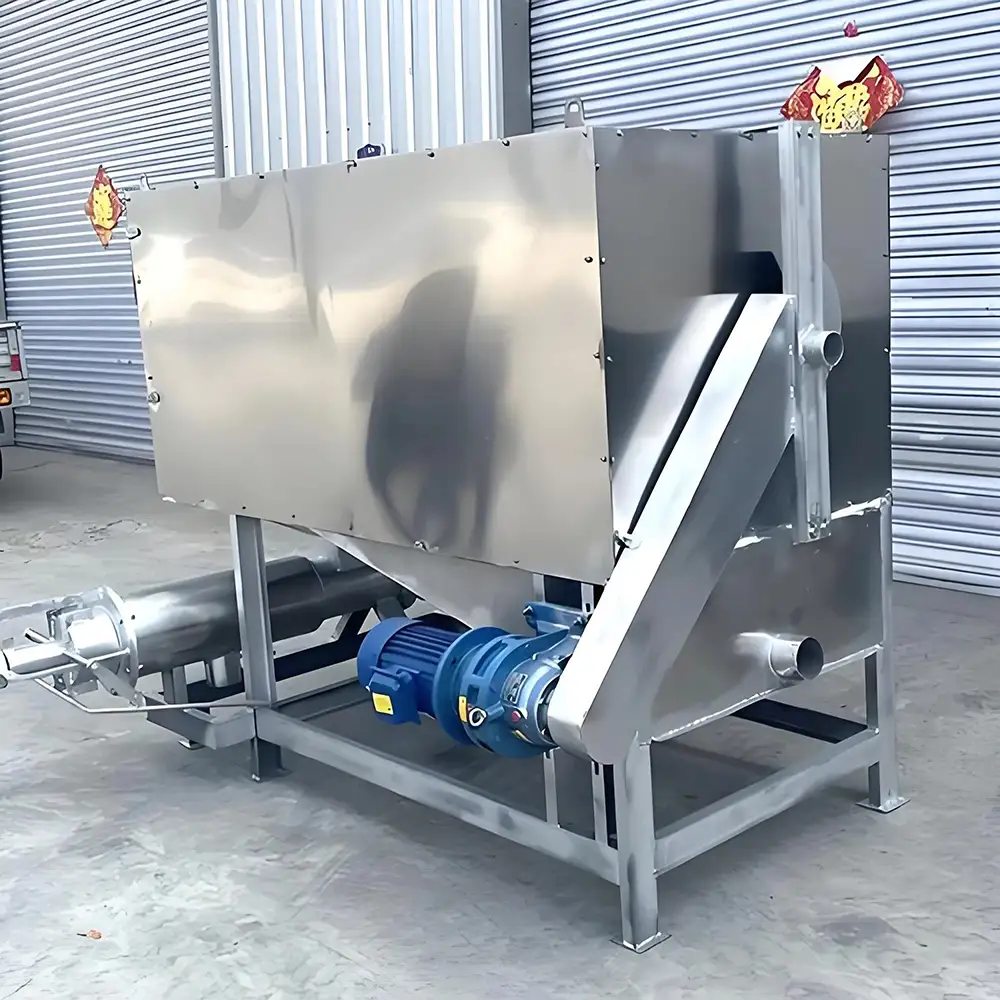
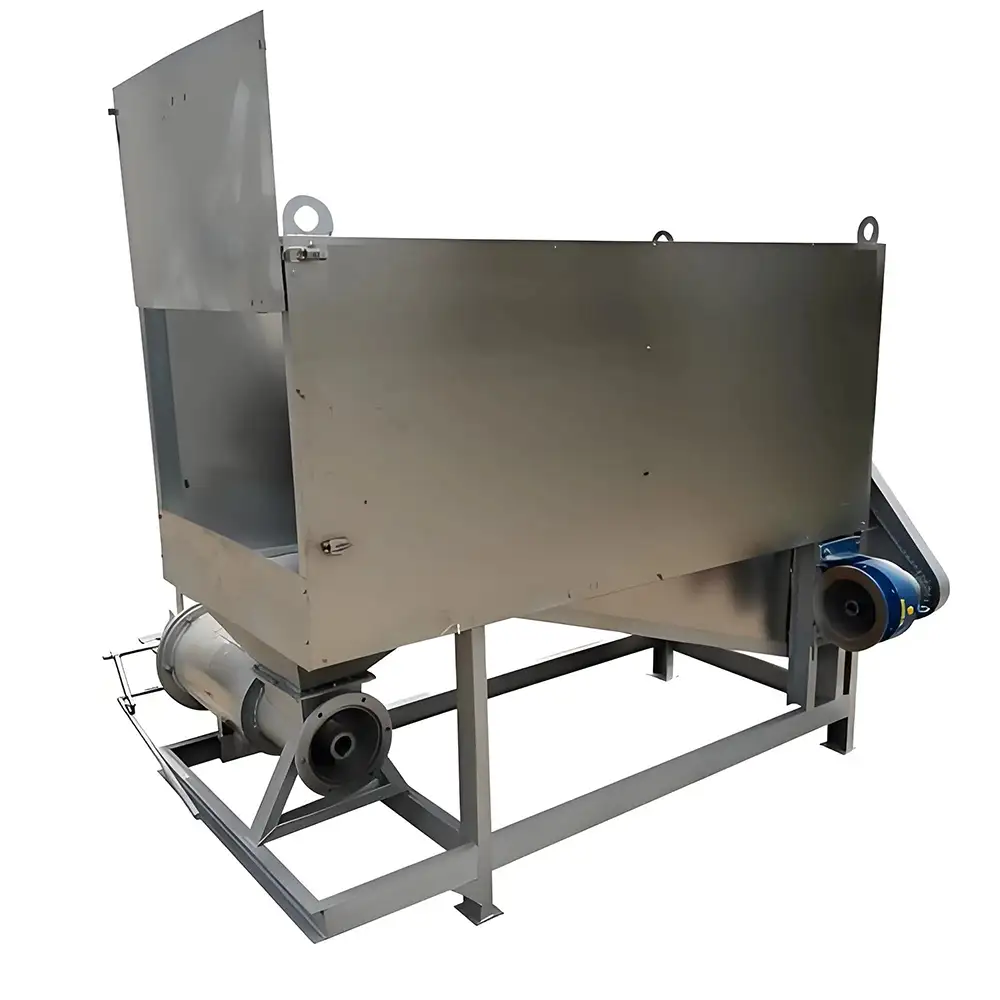
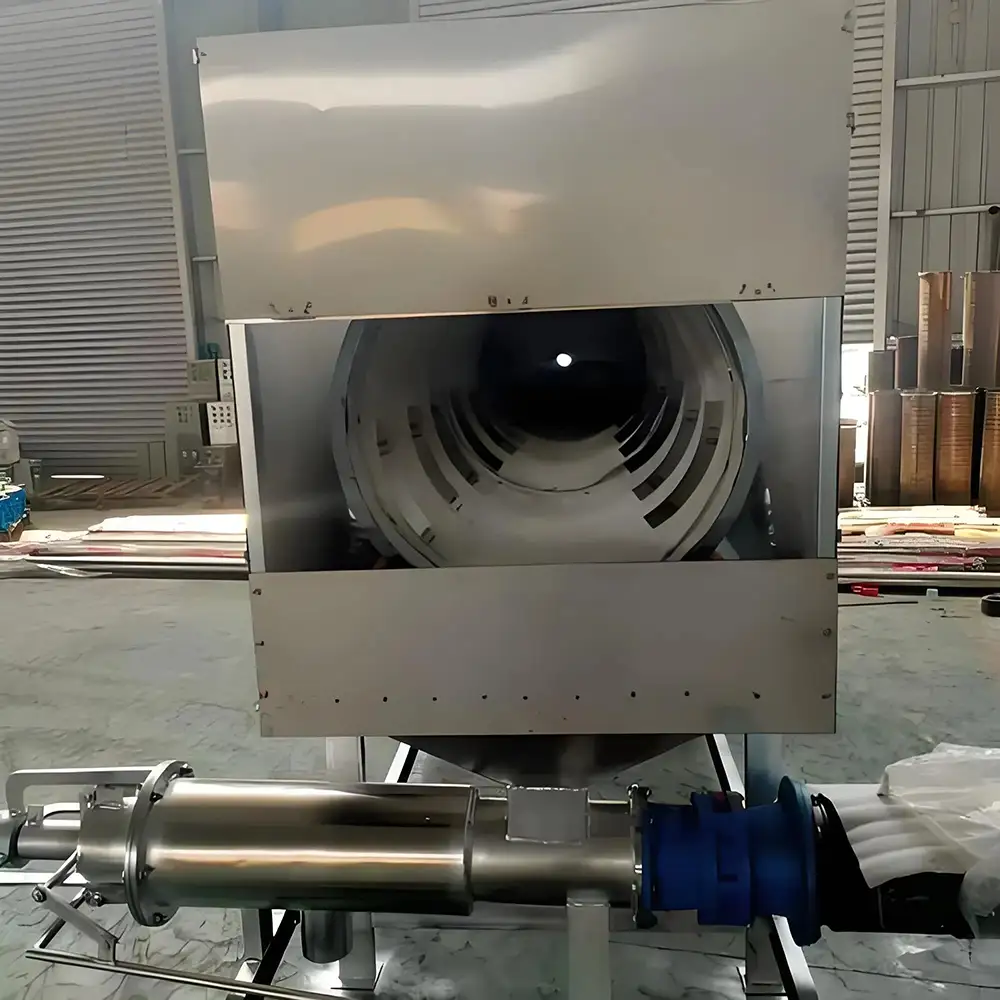
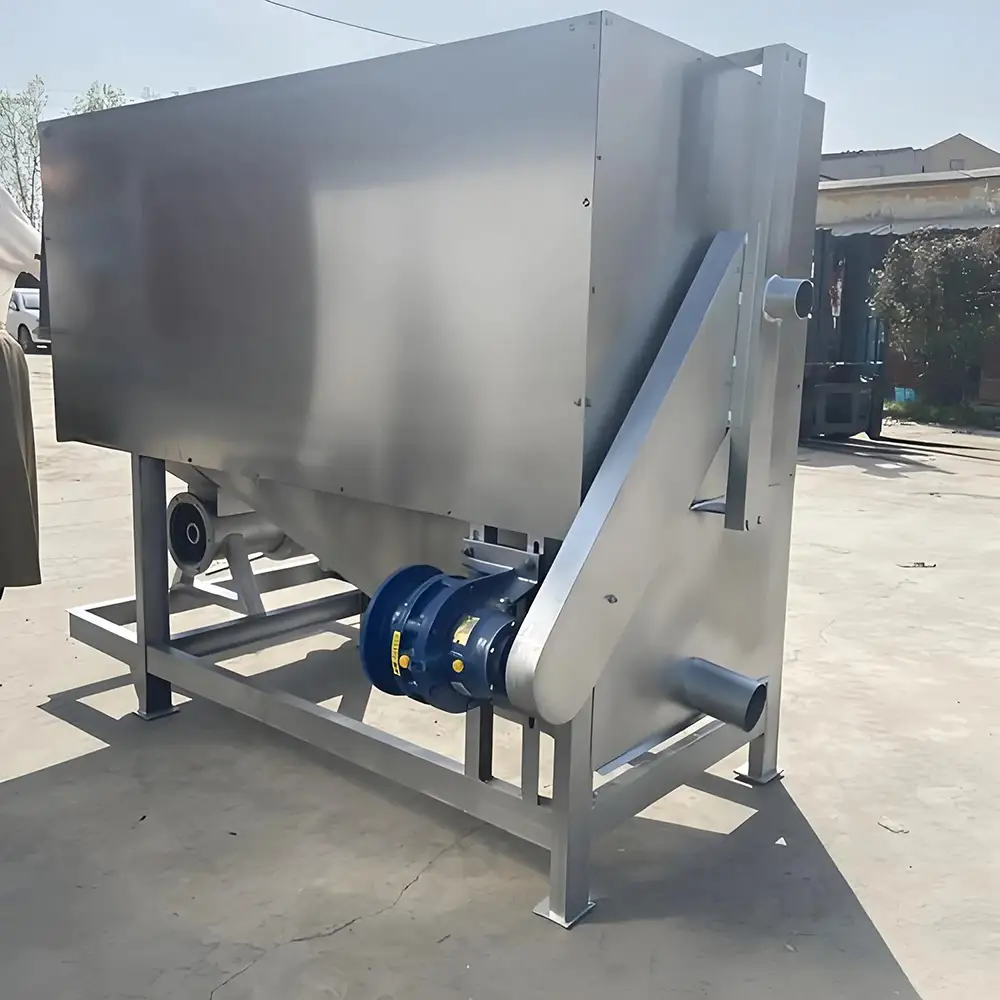
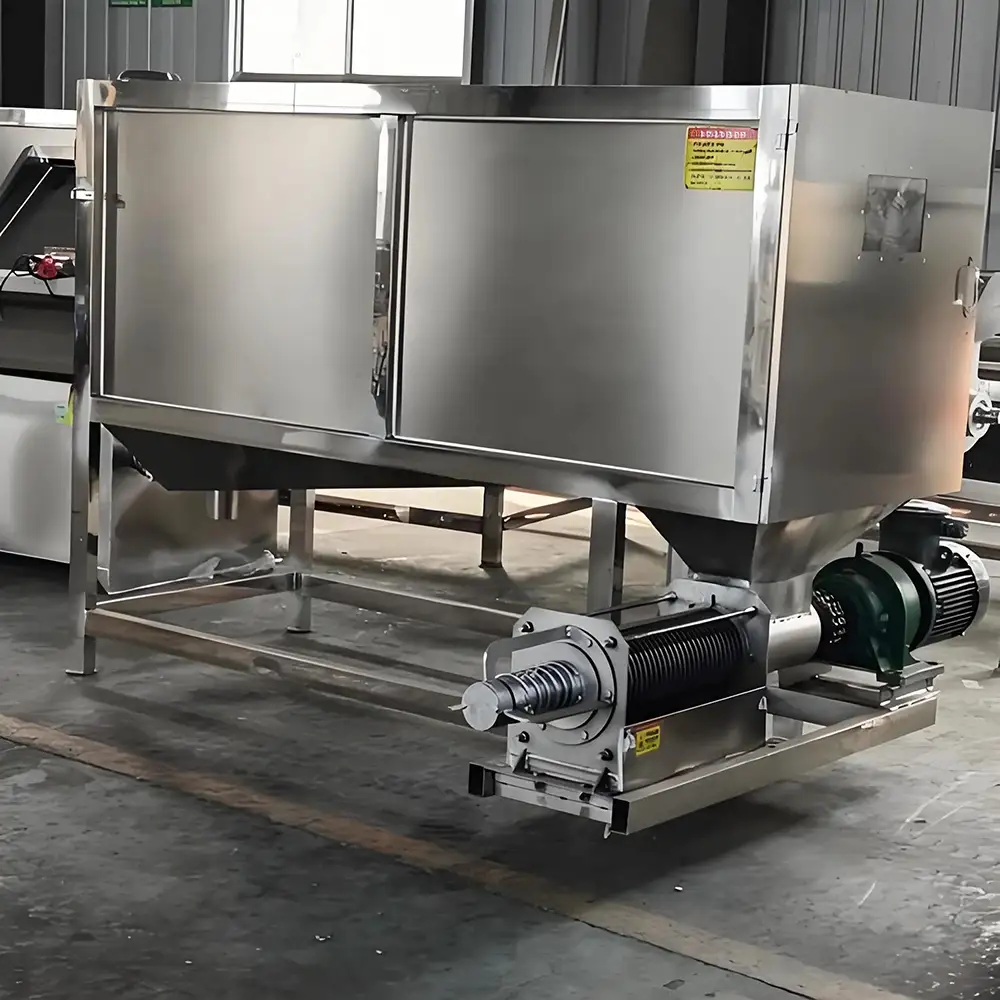
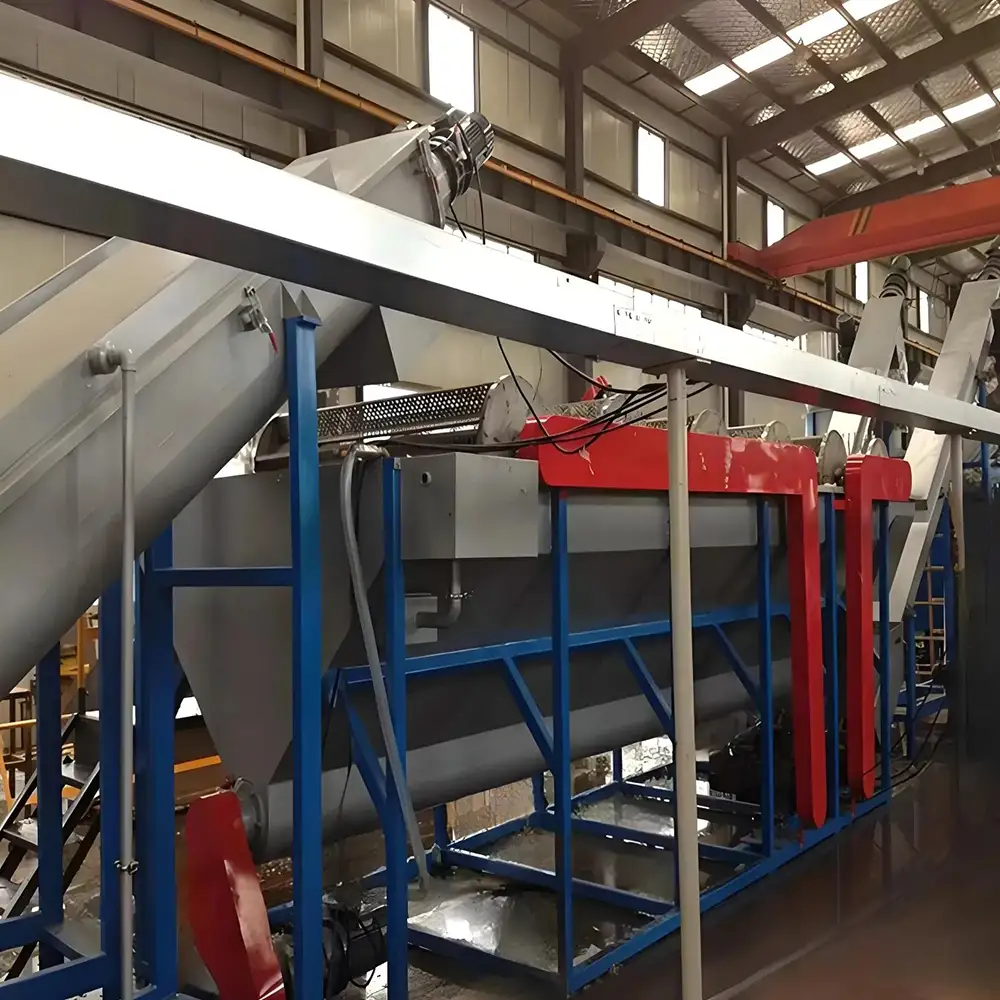
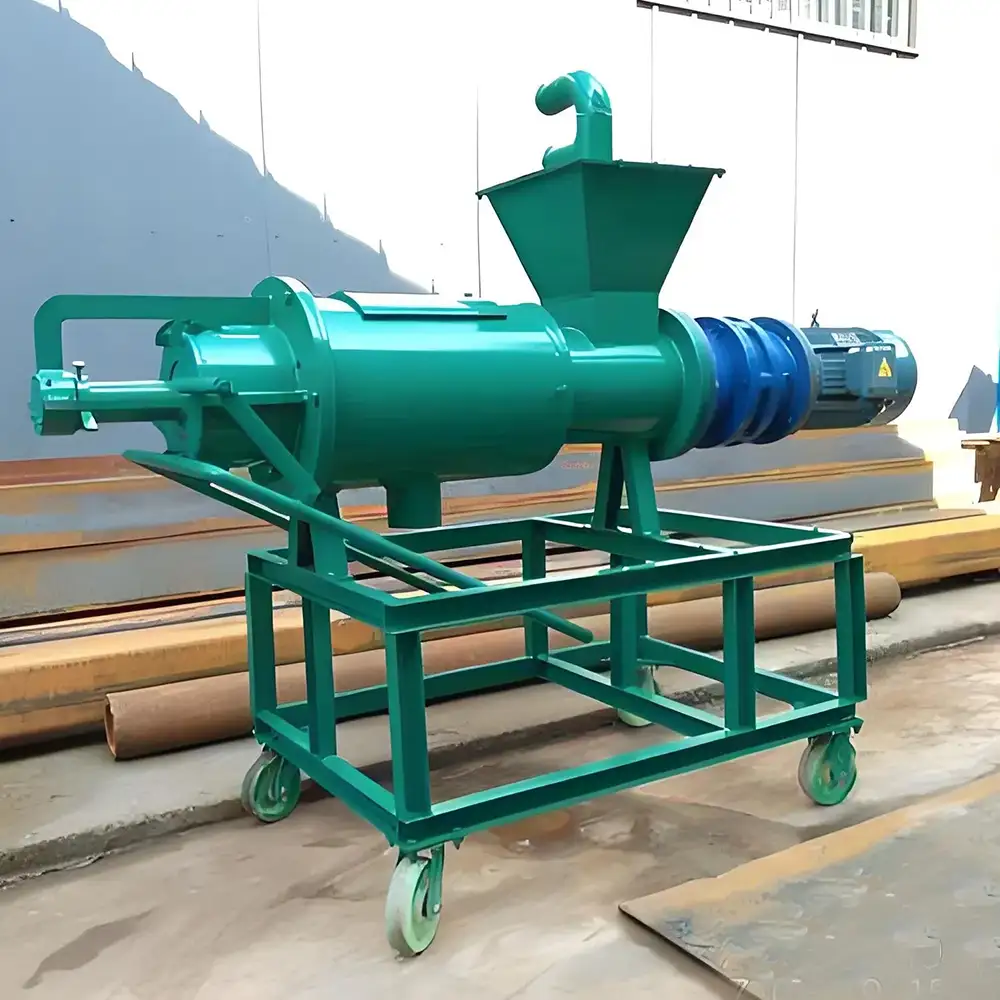
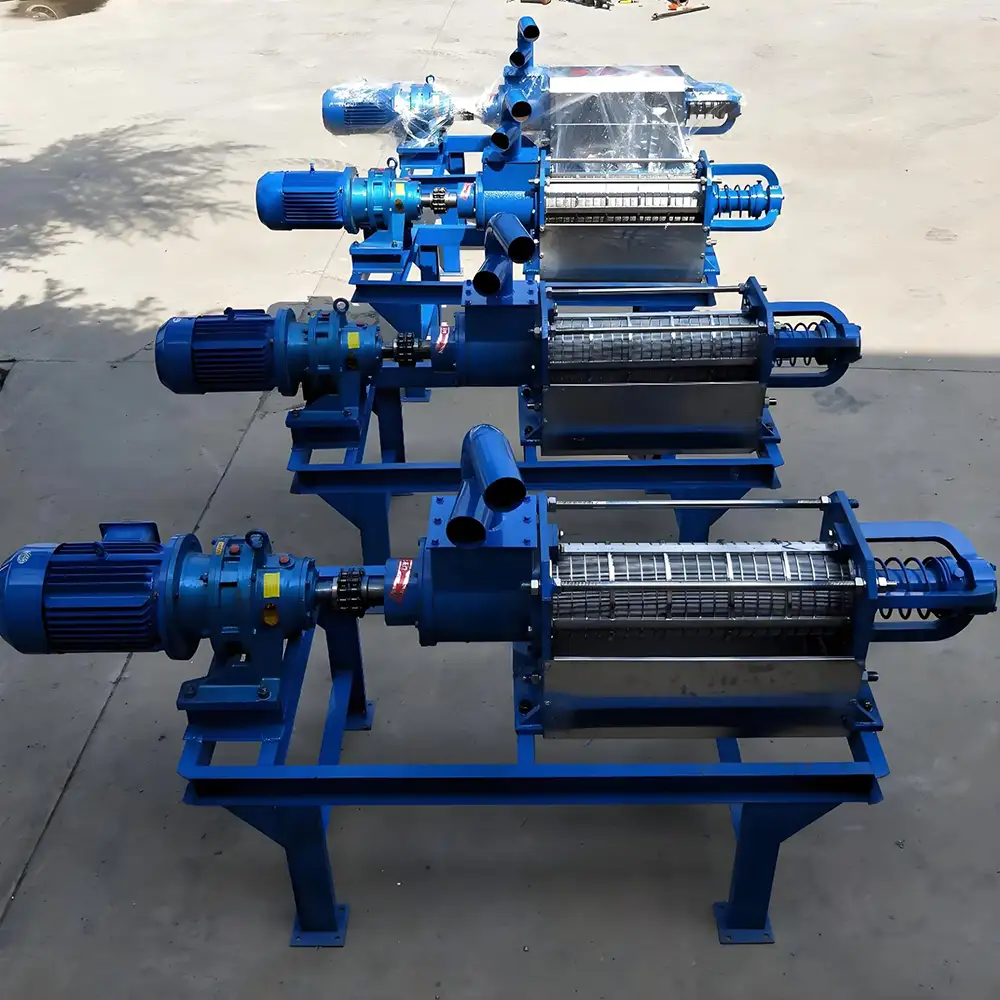
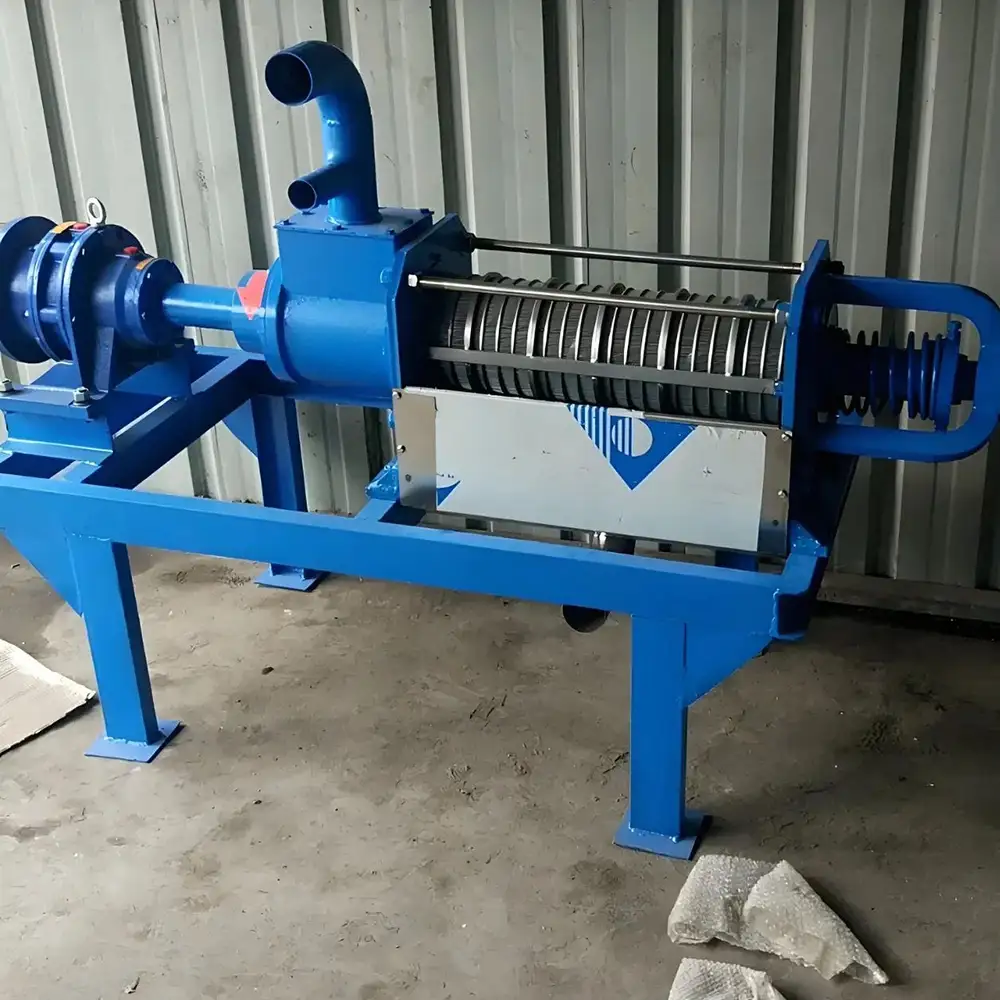
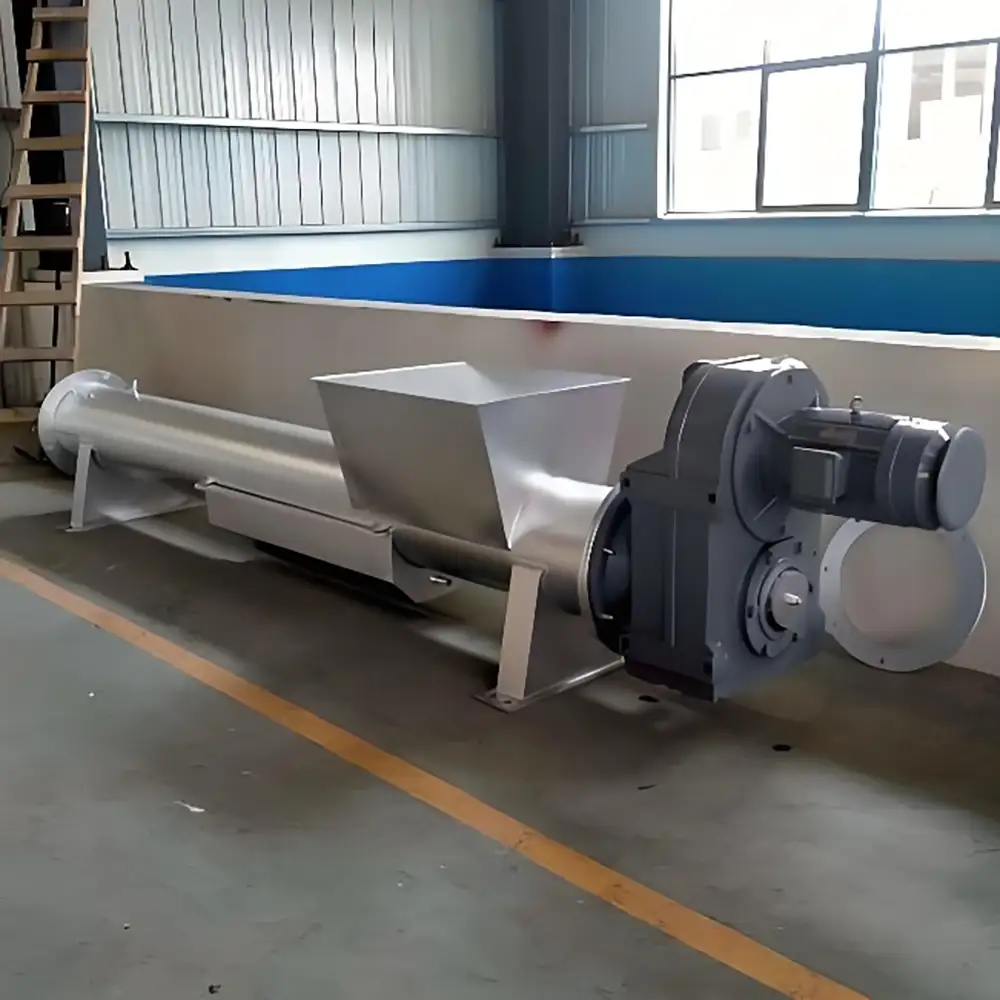
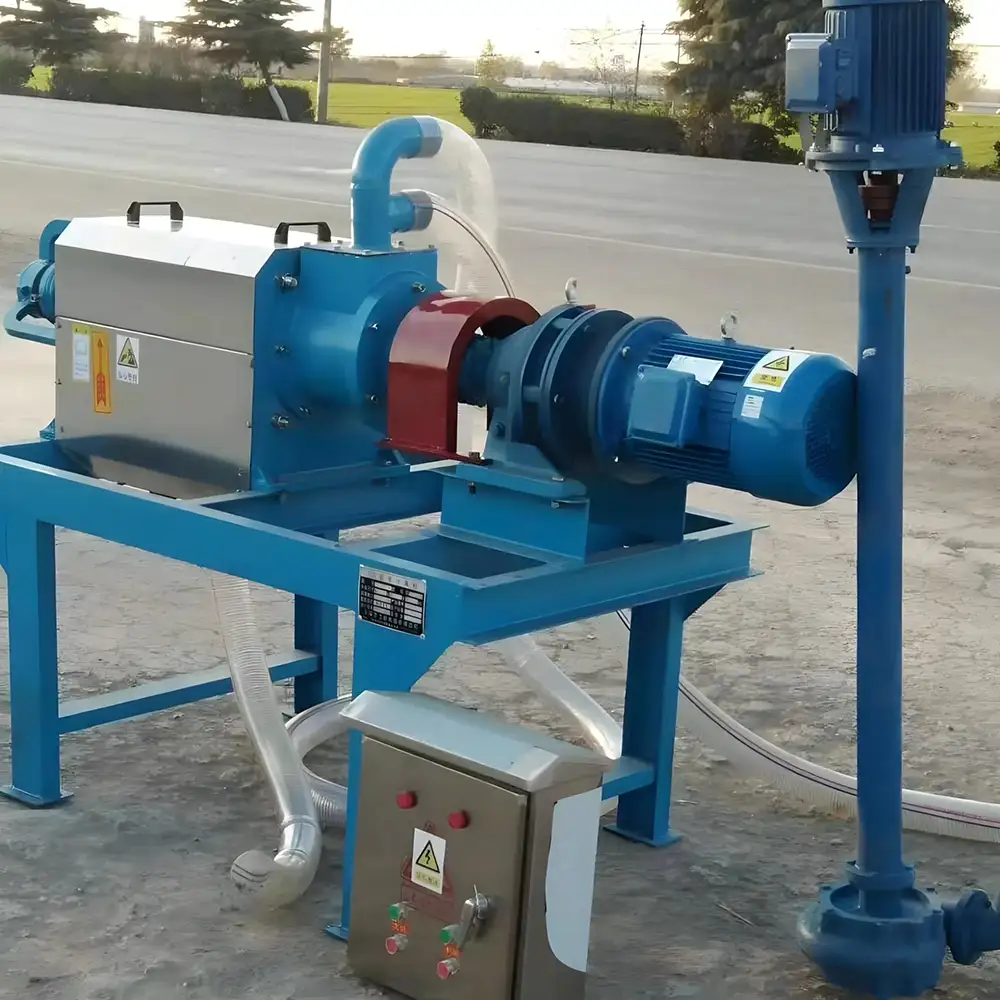
The Farm Manure Processing Machine Solid-Liquid Separator is designed for efficient handling, separation, and dewatering of livestock manure and other high-moisture agricultural organic waste. It provides a practical mechanical solution for farms, livestock operations, agricultural enterprises, composting facilities, organic fertilizer plants, and manure treatment projects that need to separate solid and liquid fractions before further processing.
Fresh manure and farm slurry can contain a high proportion of water along with organic solids, fibers, suspended particles, and nutrients. Direct storage, transportation, or processing of untreated manure can be difficult because of its high moisture content. A solid-liquid separator can mechanically remove part of the liquid fraction and produce a more manageable solid material.
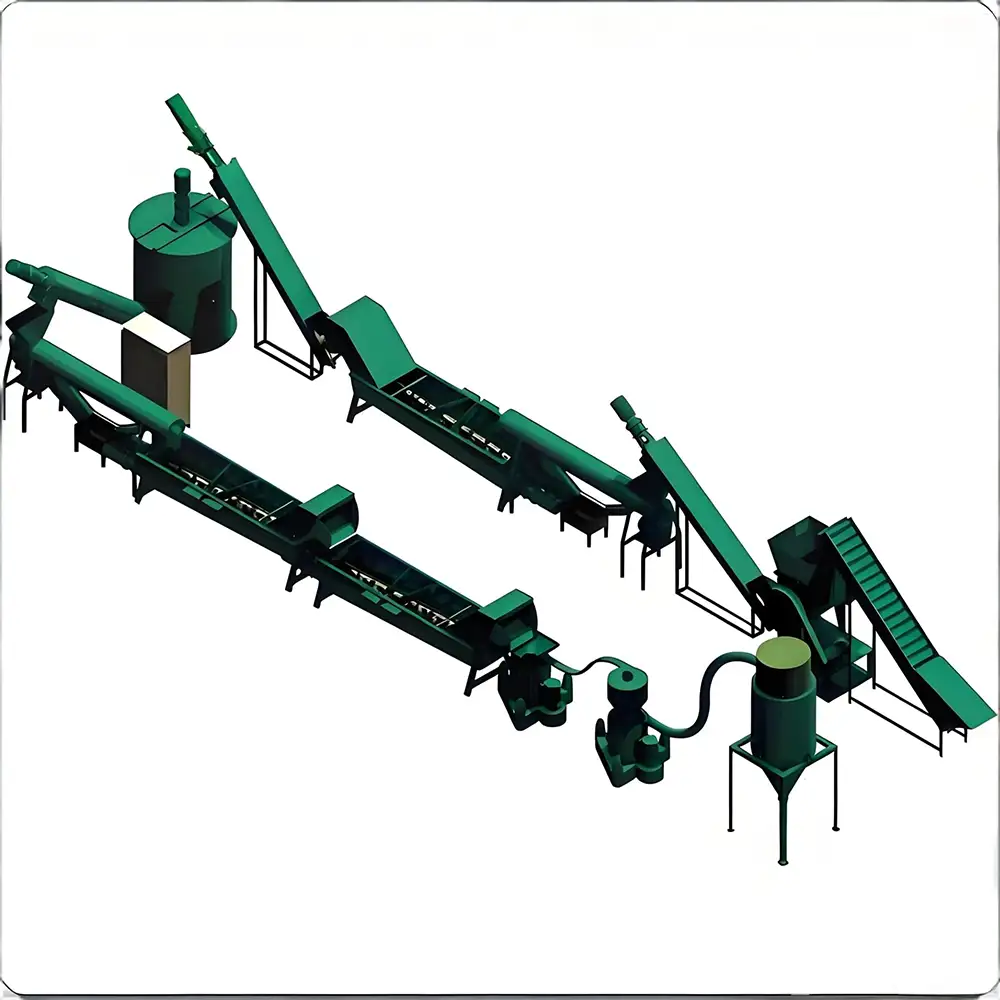
The machine can be installed as a standalone manure processing unit or integrated into a complete agricultural waste treatment system. Depending on the application, the separated solid fraction can be directed toward composting, fermentation, organic fertilizer production, bedding management, or other suitable uses, while the liquid fraction can be sent to storage, wastewater treatment, anaerobic digestion, or another downstream process.
Efficient Farm Manure Processing
The main function of the farm manure processing machine is to provide continuous mechanical separation of manure into solid and liquid fractions. Suitable feed materials may include pig manure, cattle manure, dairy manure, livestock slurry, and other agricultural organic waste.
The incoming material is conveyed into the separation chamber, where mechanical movement and pressure assist in removing liquid through a screen. The solid fraction is transported toward the discharge outlet while the separated liquid is collected independently.
The actual separation performance depends on manure composition, moisture content, solid concentration, fiber content, particle size, screen specifications, and machine configuration.
Manure Solid-Liquid Separation
Solid-liquid separation is an important step in many modern manure management systems. Instead of treating the entire manure stream as one material, separation creates two different streams that can be managed according to their physical properties.
The solid fraction generally contains more organic solids and can be easier to stack, transport, compost, or process further. The liquid fraction can be directed to an appropriate liquid manure storage or wastewater treatment system.
This approach can help improve material handling and provide greater flexibility for downstream agricultural waste processing.
Manure Dewatering Function
The machine also serves as a manure dewatering system. Mechanical pressing removes a portion of free liquid from the manure and reduces the moisture level of the discharged solid fraction.
The achievable moisture level varies according to the characteristics of the incoming material and machine configuration. It should not be assumed that the machine completely dries manure.
Where a very low moisture content is required, additional mechanical or thermal drying equipment may be incorporated after separation.
Screw Press Separation Principle
A screw press separator is commonly used for continuous manure dewatering. The manure enters the feeding section and is transported by a rotating screw through a perforated or slotted separation screen.
As the material moves through the chamber, mechanical pressure assists liquid removal. The liquid passes through the screen and is discharged separately, while the solid material is conveyed toward the outlet.
The discharge arrangement can be configured according to the characteristics of the processed manure and the requirements of the downstream process.
Suitable for Pig Manure
Pig farms can generate significant volumes of manure slurry containing water, organic solids, and suspended particles. The Farm Manure Separator can be integrated into a pig farm manure management system to separate suitable slurry into solid and liquid fractions.
The separated solids may be transferred to composting or fertilizer processing, while the liquid can be managed through storage, biological treatment, anaerobic digestion, or other appropriate processes.
Actual machine selection should be based on the concentration and physical properties of the pig manure.
Suitable for Cattle and Dairy Manure
Cattle and dairy manure can contain substantial fibrous material, especially where bedding is present. A suitable solid-liquid separator can help recover and concentrate the solid portion from manure slurry.
Separated cattle or dairy manure solids may be used for composting or other agricultural applications where appropriate. Material properties should be tested when manure contains large amounts of bedding, long fibers, sand, or other foreign matter.
Livestock Farm Waste Management
The machine can be used as part of a broader livestock waste management system. A typical process may include manure collection, slurry storage, pumping, solid-liquid separation, solid discharge, liquid treatment, and final utilization or disposal.
Depending on the farm layout, the separator can be connected to collection tanks, manure pumps, pipelines, conveyors, storage areas, composting systems, or wastewater treatment equipment.
This modular approach allows farms to select equipment according to their specific processing flow.
Organic Fertilizer Production
Farm manure is an important raw material for many organic fertilizer production processes. However, manure may require moisture adjustment and preliminary treatment before fermentation, composting, or fertilizer production.
The solid-liquid separator can be installed as a pretreatment unit to prepare suitable manure solids for further processing.
The separated material can then enter fermentation or composting systems before being processed by crushers, mixers, granulators, dryers, coolers, screening machines, and packaging equipment.
The complete fertilizer process depends on the raw material, fertilizer formula, desired moisture level, production capacity, and final product requirements.
Composting Preparation
Proper moisture management is important for efficient composting. Excessively wet manure can be difficult to aerate and handle.
Mechanical separation can remove part of the free liquid and provide a more manageable solid feedstock for subsequent composting or aerobic fermentation.
Additional dry materials may still be required to achieve the appropriate moisture and carbon-to-nitrogen balance for the specific composting process.
Reduced Material Handling
High-moisture manure is heavy and can be difficult to transport. Separating part of the liquid fraction at the farm can reduce the amount of wet material that needs to be handled as a single stream.
The solid output can be conveyed to a designated storage, composting, or fertilizer processing area. Meanwhile, the liquid fraction can be transferred through a separate pipeline or treatment system.
This separation can help organize the overall manure handling process and simplify downstream material management.
Continuous Processing
The screw press design allows continuous feeding and separation when the machine is correctly integrated with the upstream manure collection and feeding system.
A pump or feeding hopper can deliver manure to the separator, while conveyors or other equipment can transport the discharged solids.
Continuous operation can be useful for commercial livestock farms and agricultural facilities with regular manure production.
Durable Agricultural Equipment
Farm manure processing equipment operates in wet and potentially corrosive environments. Manure may contain organic acids, suspended solids, fibers, sand, and other materials that can affect machine components.
Depending on the application, stainless steel contact parts, corrosion-resistant materials, reinforced screens, wear-resistant screw components, and other construction options can be considered.
Regular cleaning, inspection, lubrication where applicable, and replacement of wear components can help maintain stable operation.
Flexible Configuration
Different farms have different manure characteristics and processing requirements. For this reason, machine configuration should be based on actual feedstock rather than relying solely on nominal specifications.
Important selection factors can include manure type, daily processing volume, moisture content, solid concentration, fiber content, feeding method, installation space, and intended use of the separated solids and liquid.
Customers can provide these details for application-based equipment recommendations.
Integration with Biogas Systems
The separator can also be incorporated into suitable anaerobic digestion or biogas projects. Depending on the process design, solid and liquid manure fractions may be directed to different stages of the treatment system.
Separation can help create more manageable material streams, but the optimal process depends on the feedstock composition, digester design, solids handling requirements, and overall plant configuration.
Easy Integration into Farm Systems
The Farm Manure Processing Machine can be installed as an independent separator or integrated with existing manure collection and treatment infrastructure.
Possible upstream equipment includes manure collection tanks, slurry pumps, pipelines, screens, and feeding hoppers. Downstream equipment may include conveyors, composting systems, fermentation tanks, biogas equipment, drying systems, or wastewater treatment units.
The complete configuration can be designed according to the farm's material flow and site conditions.
B2B Manure Processing Solution
For agricultural enterprises, livestock farms, organic fertilizer companies, equipment distributors, and engineering contractors, the Farm Manure Processing Machine Solid-Liquid Separator provides a practical solution for mechanical manure separation and dewatering.
Customers can provide manure samples, photos, videos, processing capacity, moisture information, and intended downstream application. This information can be used to evaluate suitable machine specifications, screens, feeding systems, materials, and auxiliary equipment.
Key Features
Farm Manure Processing
Solid-Liquid Separation
Manure Dewatering
Livestock Waste Separation
Screw Press Separation
Continuous Manure Processing
Pig Manure Separation
Cattle Manure Separation
Dairy Manure Separation
Agricultural Waste Processing
Organic Fertilizer Preparation
Composting Pretreatment
Corrosion-Resistant Options
Flexible Machine Configuration
Easy System Integration
Main Applications
Pig Farms
Cattle Farms
Dairy Farms
Livestock Farms
Agricultural Enterprises
Manure Treatment Facilities
Organic Fertilizer Plants
Composting Facilities
Biogas Projects
Agricultural Waste Treatment
Farm Wastewater Management
Organic Waste Processing
FAQs
1. What Is a Farm Manure Processing Machine?
It is equipment designed to mechanically process and separate livestock manure and other suitable agricultural organic waste into solid and liquid fractions for easier handling and further treatment.
2. What Types of Manure Can Be Processed?
Suitable applications may include pig manure, cattle manure, dairy manure, livestock slurry, and other manure streams with appropriate physical characteristics.
3. How Does the Solid-Liquid Separator Work?
Manure is fed into the separation chamber and conveyed through a screen by a mechanical screw. Pressure helps liquid pass through the screen while the solid fraction moves toward the discharge outlet.
4. Does the Separator Completely Dry Manure?
No. It is primarily a mechanical solid-liquid separation and dewatering machine. The final moisture content depends on the feedstock and equipment configuration. Additional drying may be required for specific applications.
5. Can It Be Used on a Pig Farm?
Yes. The machine can be integrated into suitable pig manure collection and treatment systems for continuous solid-liquid separation.
6. Can It Process Cattle or Dairy Manure?
Yes. Cattle and dairy manure can be processed when the machine is properly configured. Fibers, bedding, sand, and other materials should be considered during equipment selection.
7. What Can the Separated Solid Manure Be Used For?
Depending on its characteristics and local requirements, the solid fraction may be used as feedstock for composting, organic fertilizer production, fermentation, or other agricultural applications.
8. What Happens to the Separated Liquid?
The liquid fraction can be collected and directed to storage, wastewater treatment, anaerobic digestion, or another suitable downstream process.
9. Can the Machine Be Integrated into an Existing Farm System?
Yes. It can be connected with manure pumps, collection tanks, pipelines, conveyors, composting systems, fertilizer equipment, and wastewater treatment systems.
10. How Do I Select the Right Manure Separator?
Provide the manure type, daily processing volume, moisture content, solid concentration, fiber characteristics, feeding method, installation conditions, and intended use of the separated solids and liquid. Sample testing can also be considered.
Why Choose Us
Professional Manure Separation Equipment
We provide equipment solutions for farm manure processing, solid-liquid separation, manure dewatering, agricultural waste treatment, and organic fertilizer preparation.
Application-Based Machine Configuration
Different livestock manure types have different moisture, fiber, and solids characteristics. We evaluate the actual application when recommending screens, screws, feeding systems, and machine materials.
Sample-Based Technical Support
Customers can provide manure samples, material photos, processing capacity, moisture information, and application requirements for technical evaluation before equipment selection.
Complete Farm Waste Solutions
The separator can operate independently or be integrated with manure pumps, collection tanks, conveyors, composting systems, biogas equipment, organic fertilizer production lines, and wastewater treatment systems.
Durable Construction Options
Machine materials and wear components can be selected according to the moisture, corrosion, abrasion, fiber content, and operating environment of the intended application.
Prev:
Manure and Vegetable Residue Screw Press Separator, Solid-Liquid Separator
Next:
Drum Dry and Wet Separator for Pig Cow Duck Manure
TAG:
Agricultural Waste Treatment Equipment,
Organic Fertilizer Production Equipment,
Animal Waste Treatment Equipment,
Organic Fertilizer Processing Equipment,
Livestock Waste Treatment Equipment,
Manure Treatment Equipment,
Solid Liquid Separation Equipment,
Solid Liquid Separation Machine,
Screw Press Dewatering Machine,
Organic Waste Separator,
Animal Waste Separator,
Agricultural Waste Dewatering,
Organic Waste Dewatering,
Pig Manure Separator,
Dairy Manure Separator,
Dairy Manure Dewatering,
Pig Manure Dewatering,
Manure Solid Liquid Separator,
Manure Dewatering Machine,
Manure Dewatering Equipment,
Manure Screw Press,
Manure Screw Separator,
Livestock Manure Separator,
Livestock Manure Dewatering,
Manure Management Equipment,
Farm Waste Treatment Equipment,
Dewatering Screw Press,
Organic Fertilizer Separator,
Organic Waste Separation Machine,
Agricultural Waste Separator,
Related Category:
Farm Manure Processing Machine, Farm Manure Solid-Liquid Separator, Manure Solid-Liquid Separator, Manure Processing Mac China, suppliers, manufacturers, factory, customized, wholesale, quotation, made in China