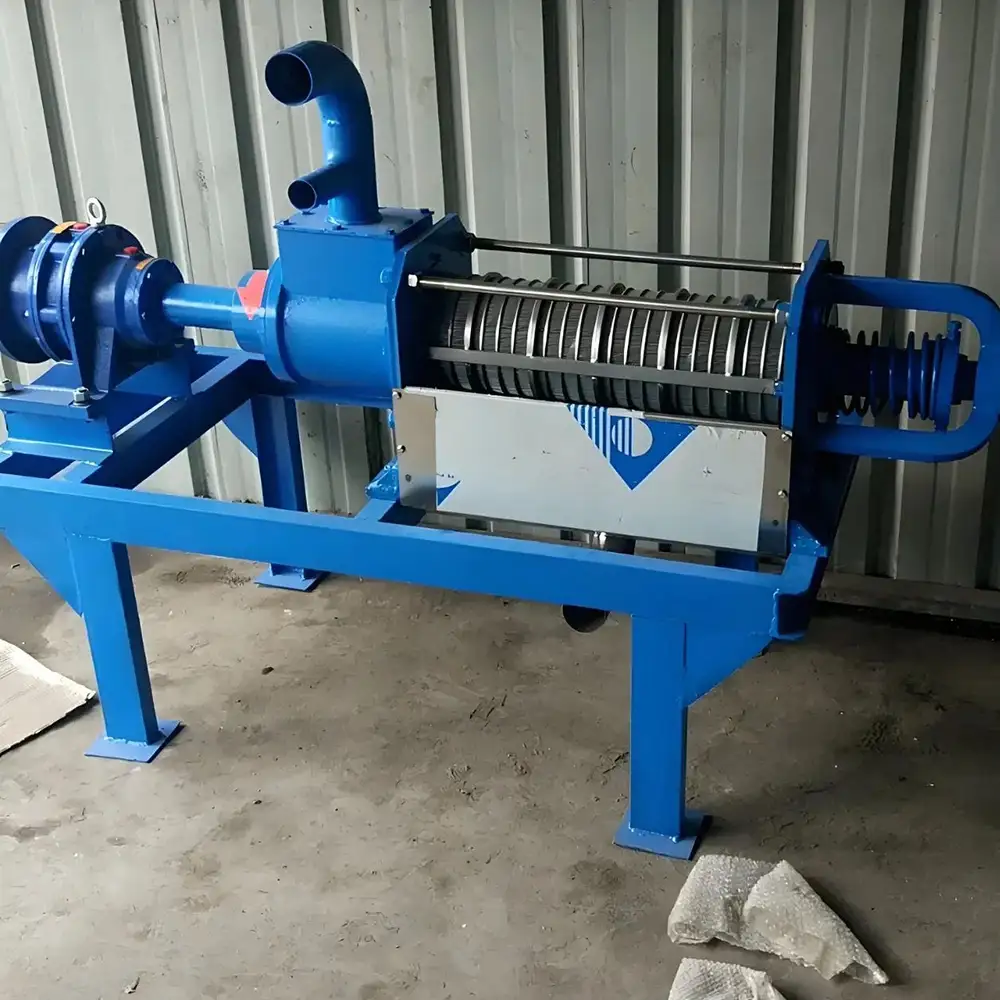
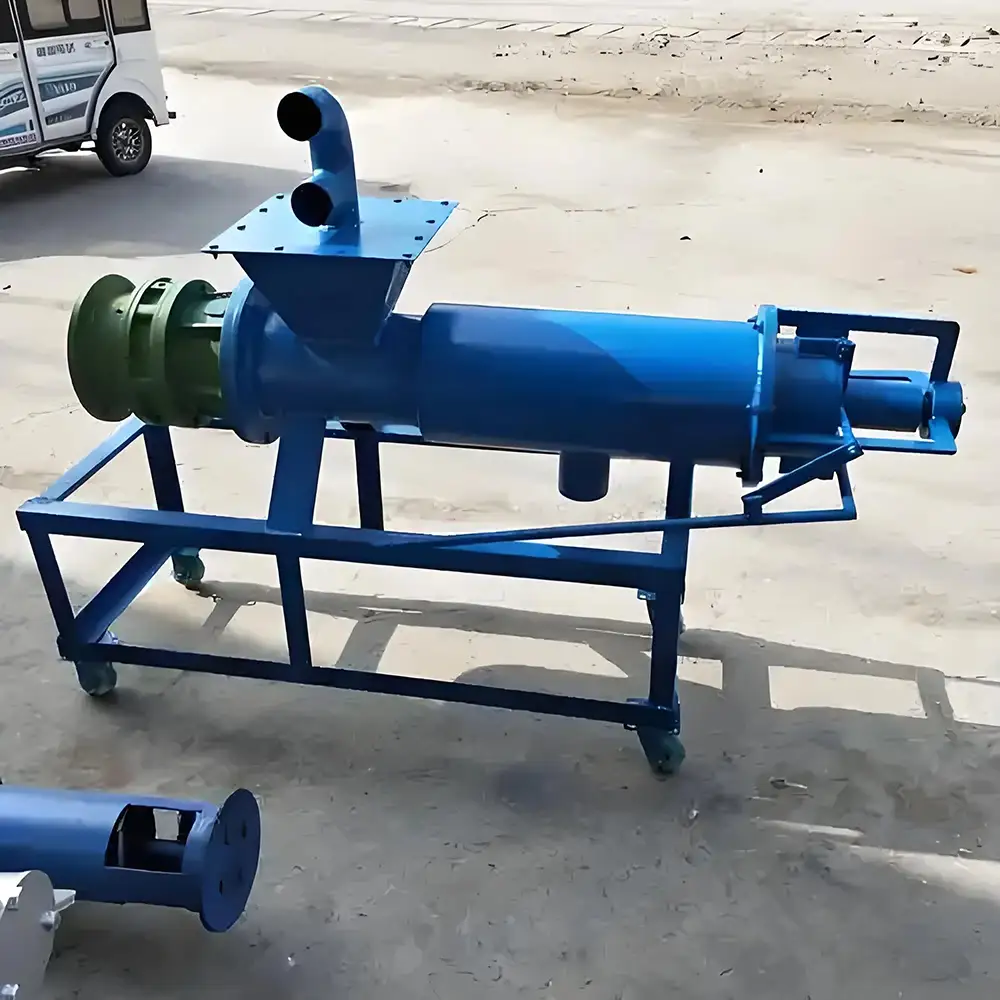
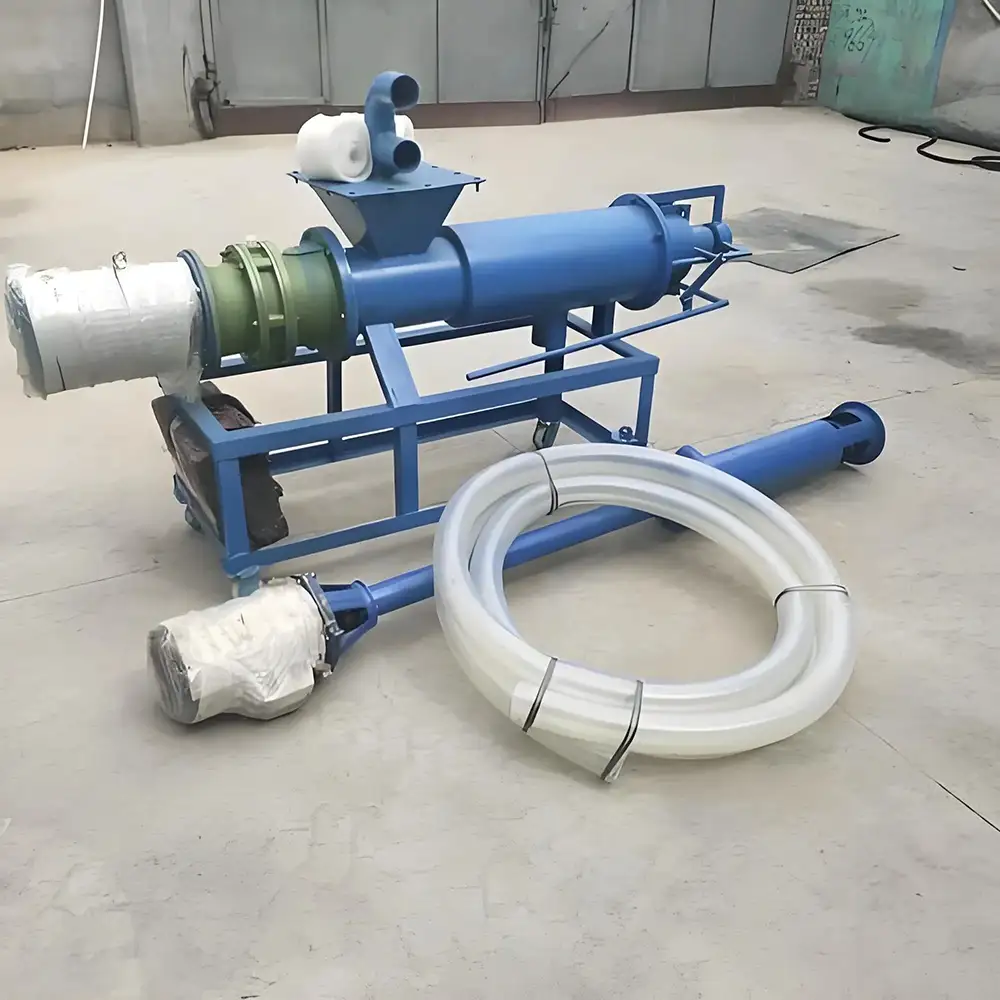
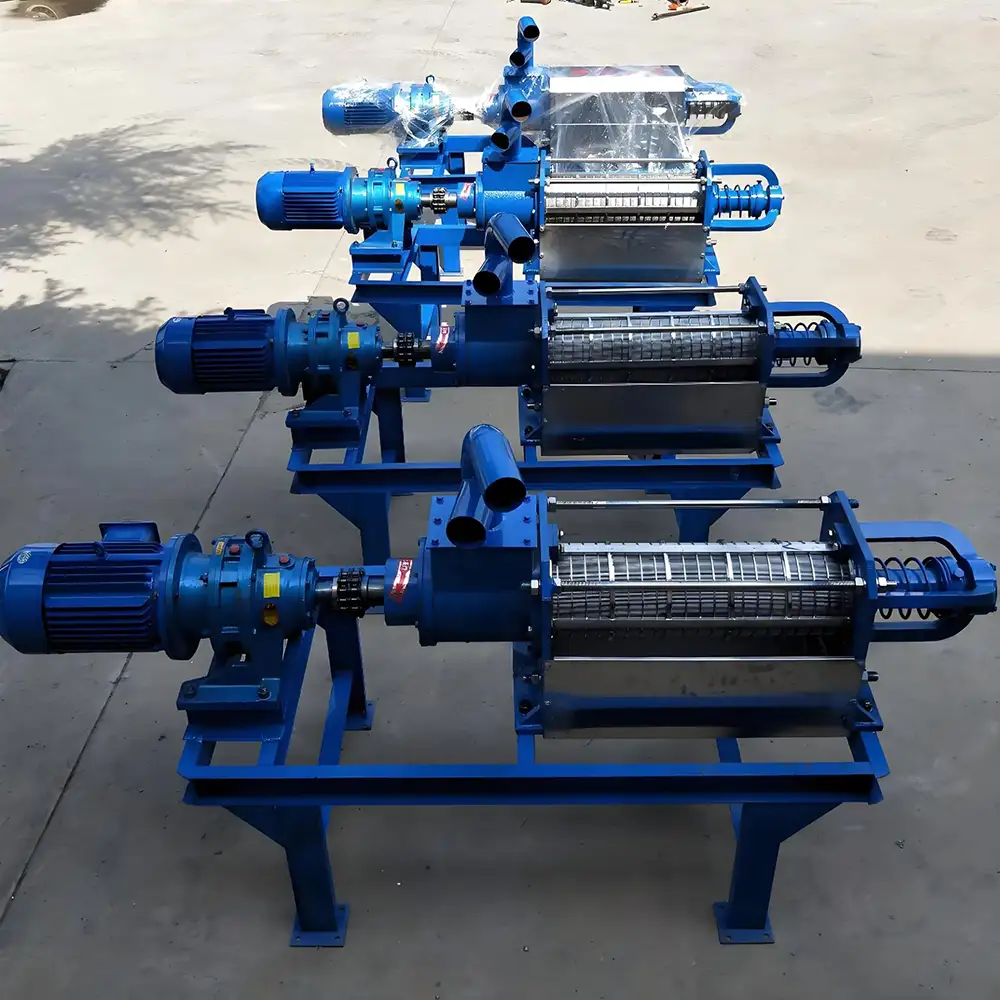
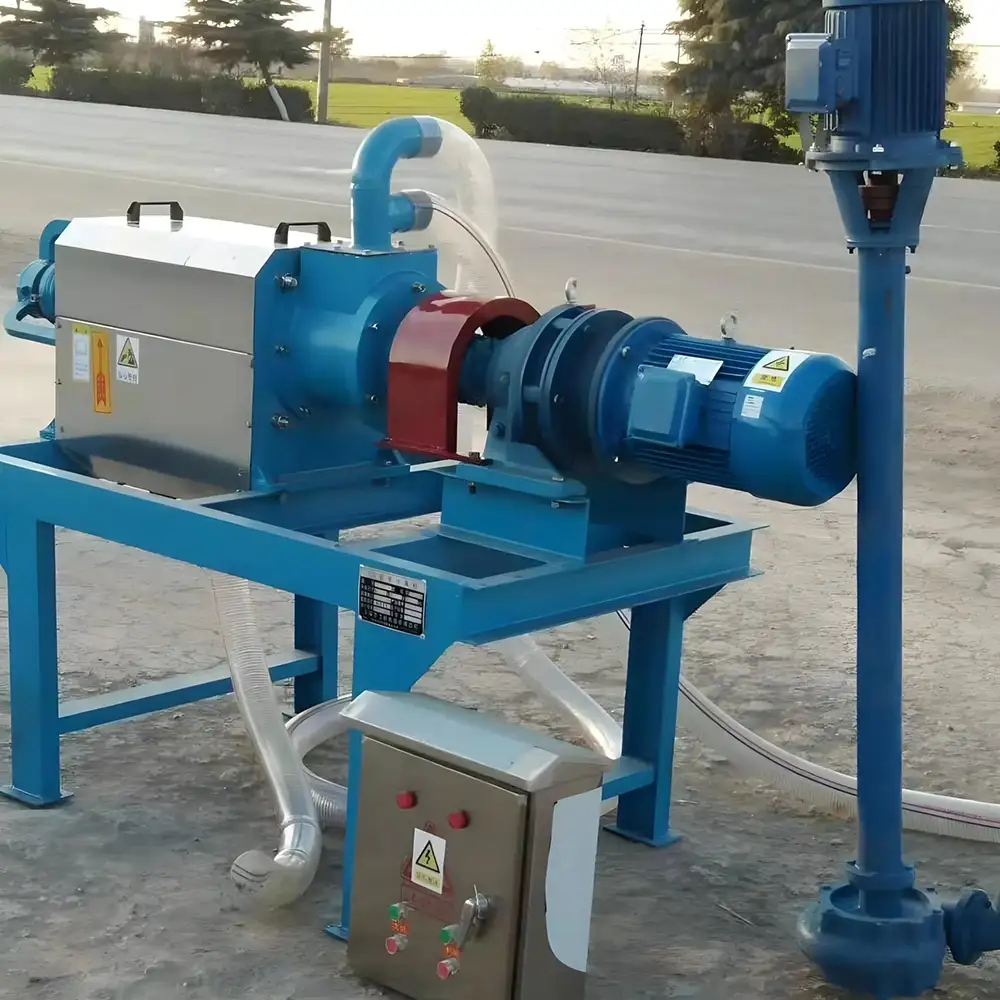
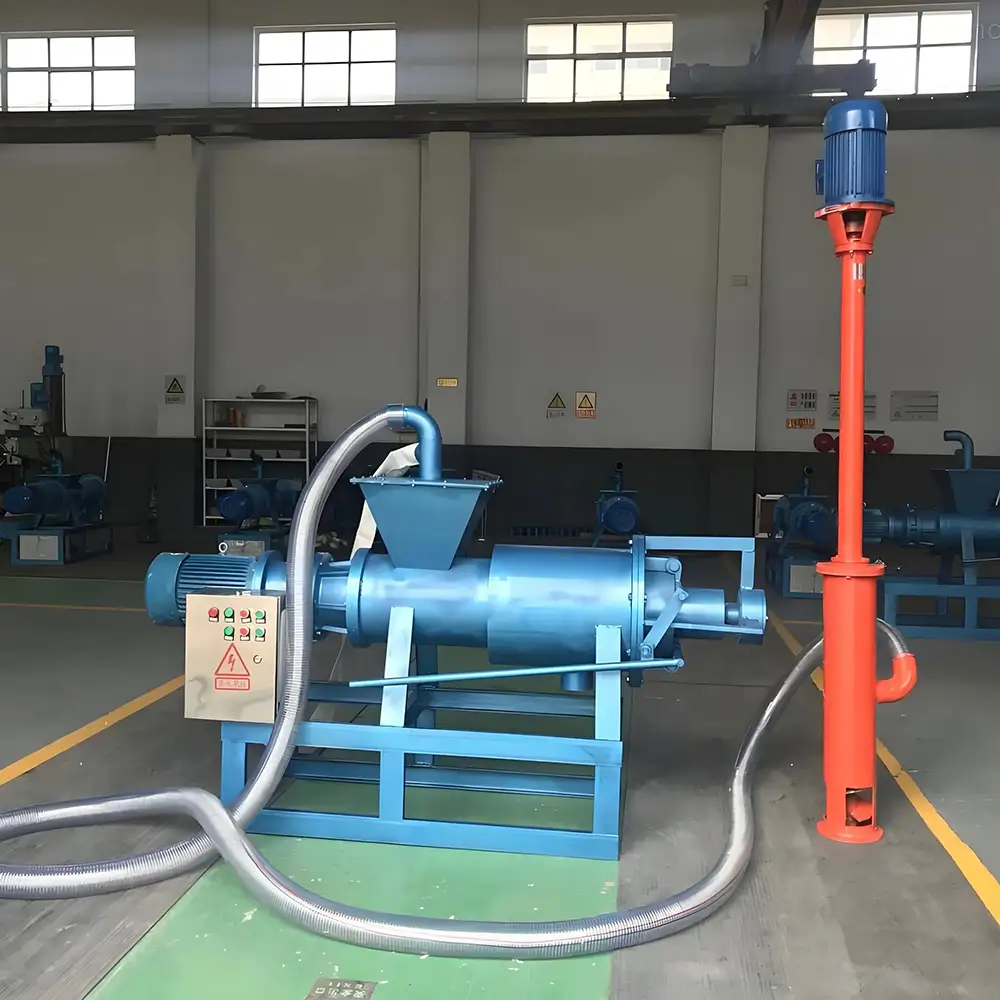
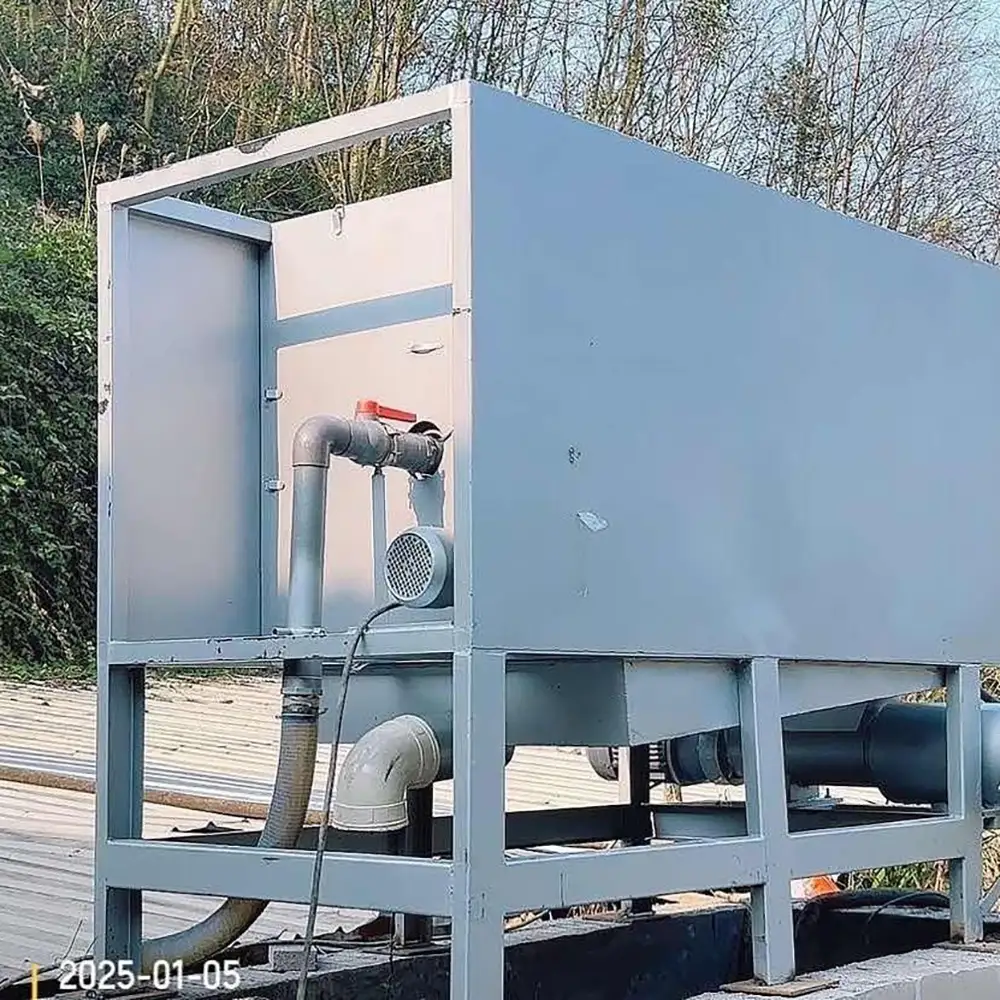
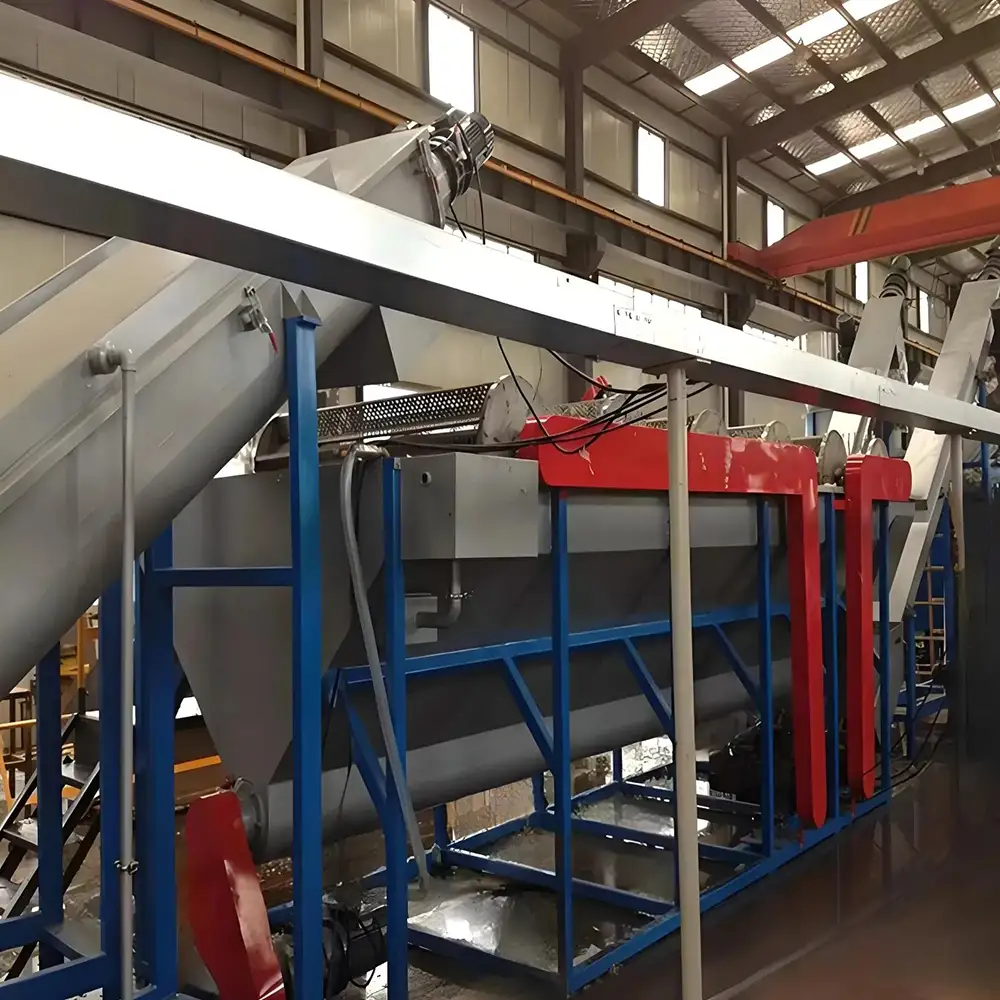
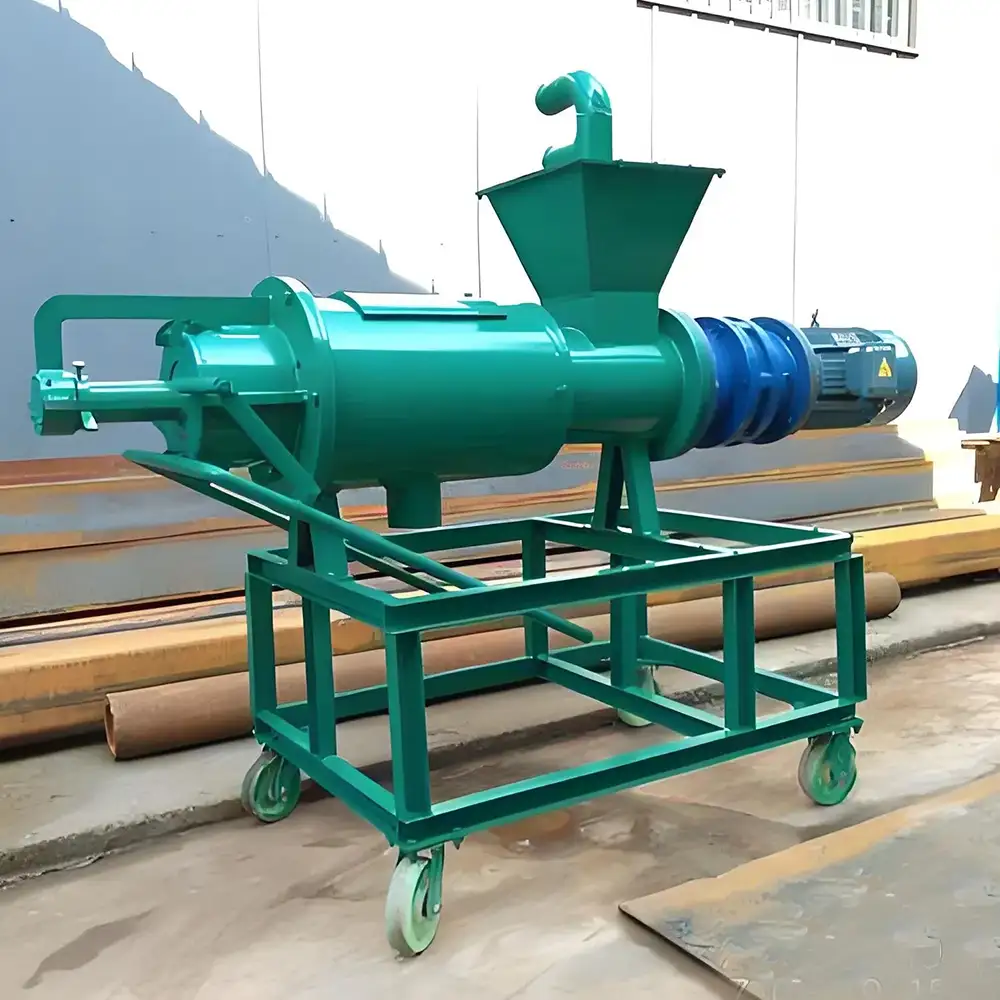
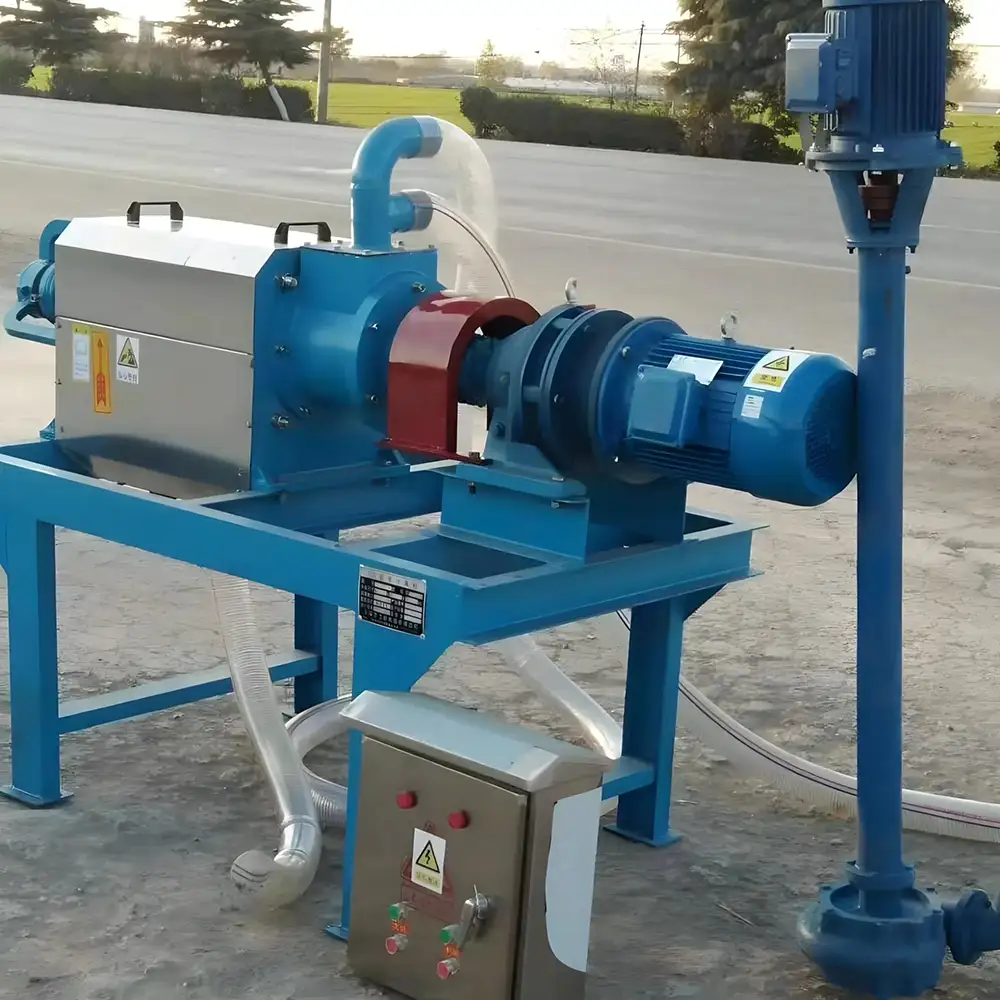
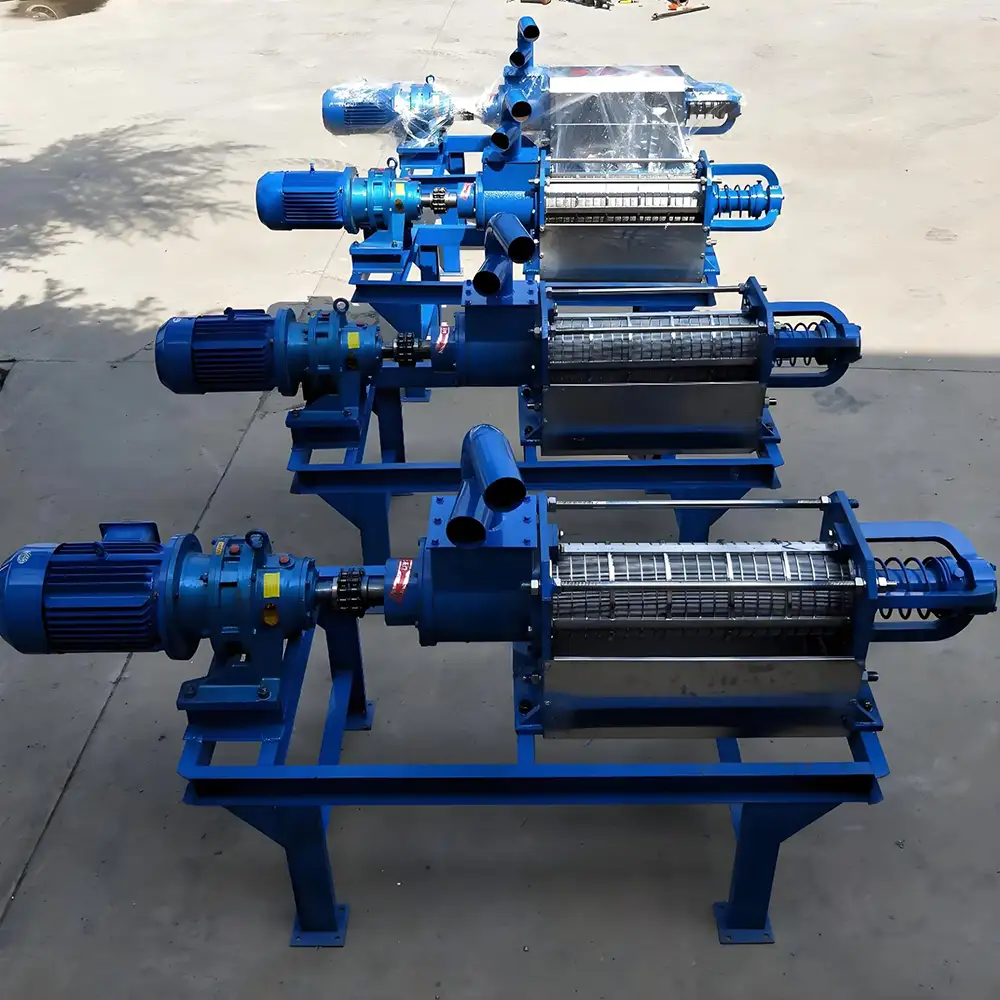
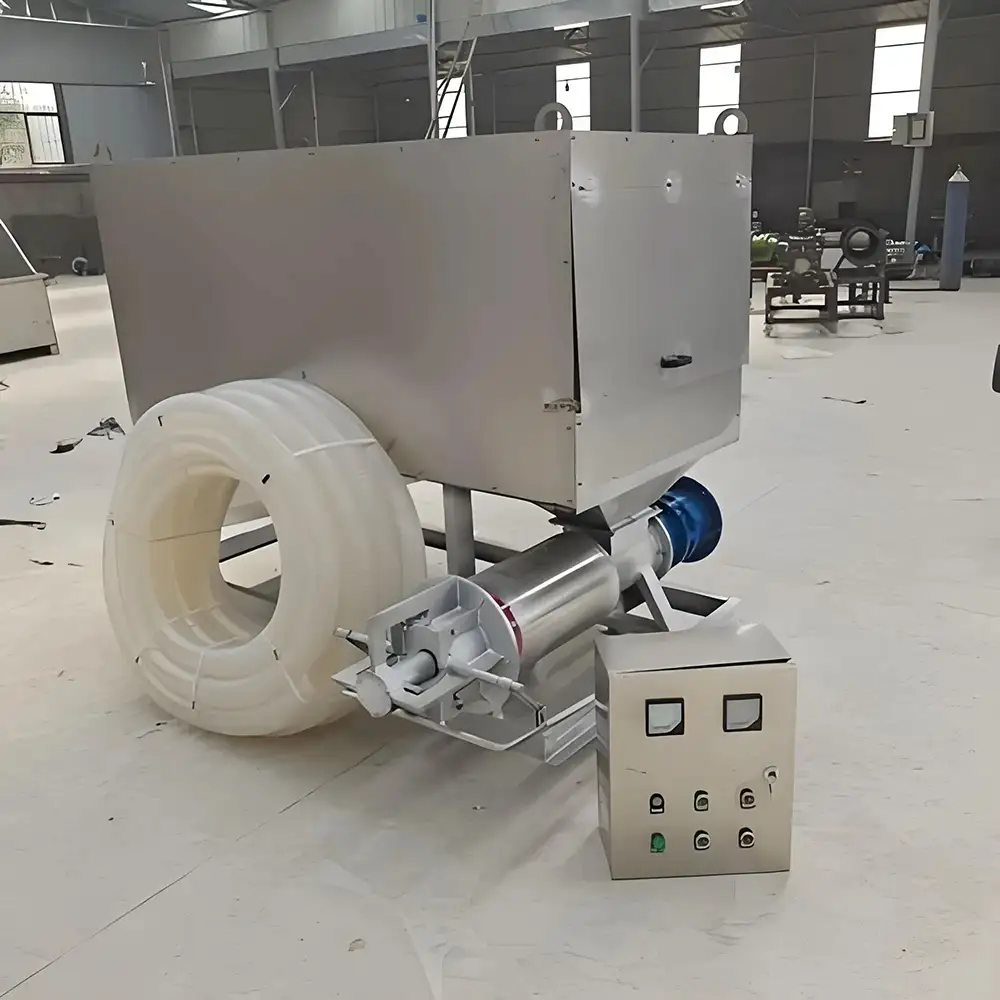
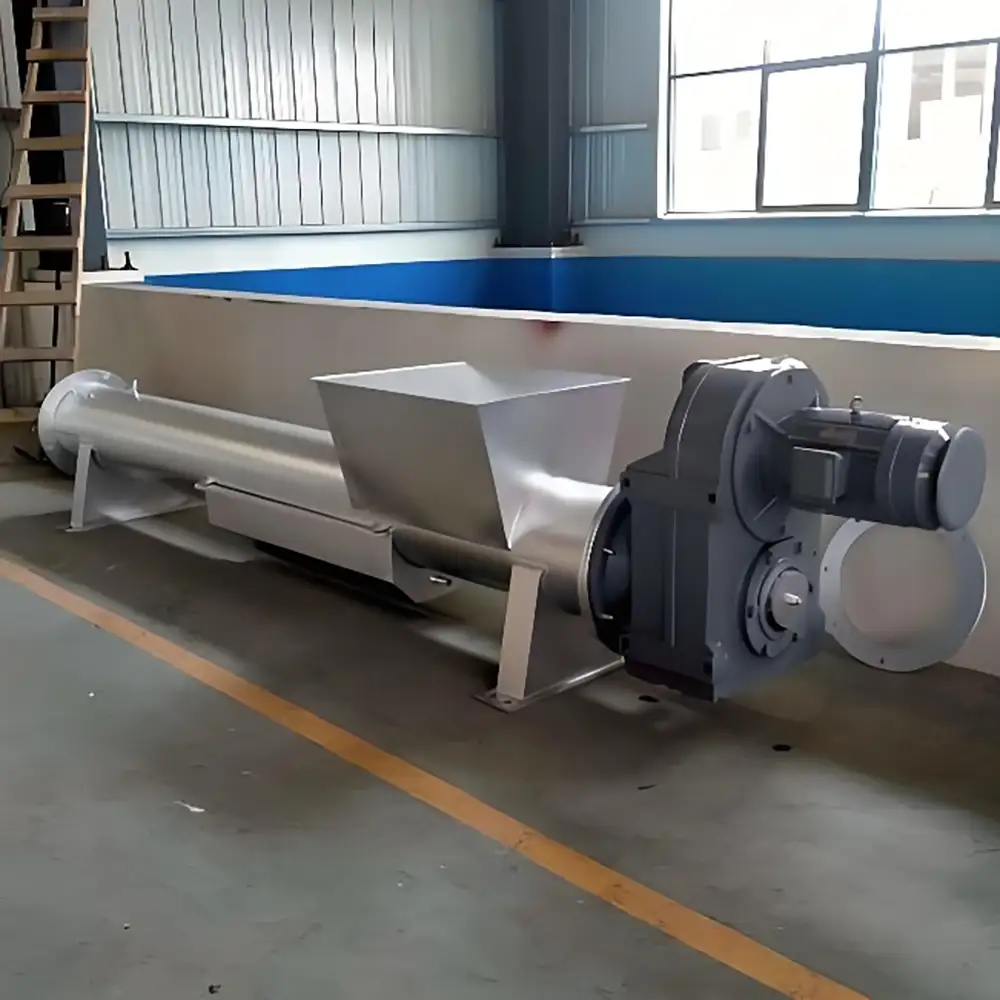
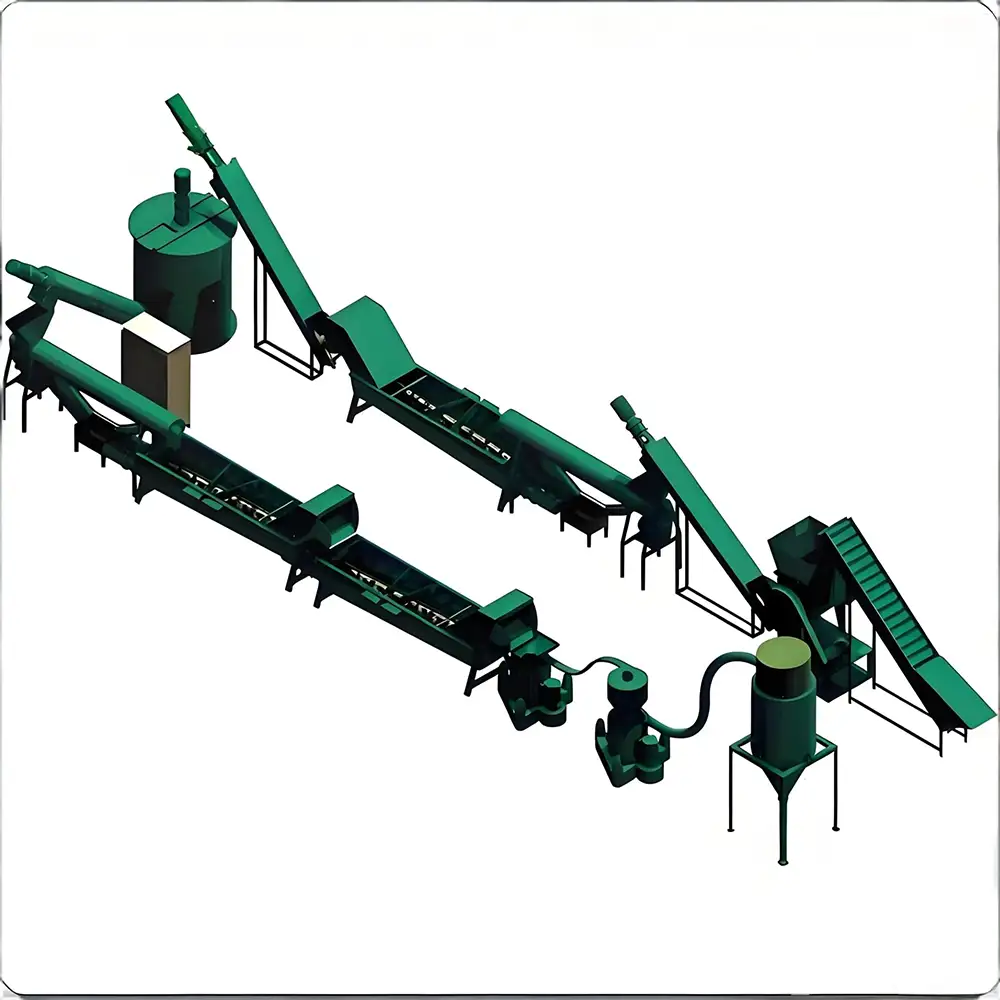
The spiral dry wet separator can be widely used for the separation of high concentration wastewater such as animal manure, distiller's grains, pharmaceutical residue, starch residue, sauce residue, slaughterhouses, etc. in chickens, cows, horses, and various intensive breeding farms. This wet and dry separator can adapt to the treatment of various livestock and poultry manure, with a large daily processing capacity and low power consumption, making it suitable for continuous operation.
Characteristics of solid-liquid separator:
1. High degree of automation: High level of automation, easy to operate, just press the start stop button for easy maintenance, large daily processing capacity, low power consumption, low price, very suitable for continuous operation.
2. Excellent material: The main shaft is made of standard steel, equipped with multiple bearings, and the lower end is supported by thrust ball bearings to reduce wear and save power; The rack, screen frame, screen mesh, etc. are supported by stainless steel and anti-corrosion treatment, with high corrosion resistance and long service life of the machine.
3. Twisted dragon part: The stressed part of the twisted dragon adopts manganese alloy wear-resistant treatment technology to improve its service life. The filter screen is made of stainless steel wedge-shaped mesh, which is efficient, not easy to block, and easy to rinse.
For the fecal water itself, the solid substance extruded after treatment is almost odorless and has low viscosity. It is convenient for transportation and can be directly used as Manure. Fruit nutrient is a good feed for pigs, ducks and fish. Direct sales of Manure can obtain additional economic benefits.
The Screw Press Separator Dewatering Equipment is an industrial solid-liquid separation machine designed for continuous sludge thickening, dewatering, and separation of water from various types of sludge and high-moisture materials. Using a slowly rotating screw shaft and specially designed dewatering sections, the equipment gradually transports and compresses sludge while allowing separated liquid to drain through the screening surface.
The screw press dewatering principle provides a practical solution for wastewater treatment plants, industrial wastewater systems, livestock farms, food processing facilities, municipal treatment applications, aquaculture operations, and other industries that need to reduce sludge moisture and handling volume.
Compared with batch-type dewatering equipment, a screw press system can provide continuous operation with relatively low mechanical complexity. Its compact design and controlled sludge transport make it suitable for both standalone applications and integration into complete wastewater treatment lines.
Screw Press Separation Technology
The core component of the machine is a rotating screw shaft installed inside a cylindrical screening or dewatering section. Sludge enters the inlet and is gradually conveyed forward by the rotating screw.
As the sludge moves through the dewatering zone, free water and part of the interstitial liquid pass through the screen while the solid fraction continues toward the discharge end. The screw structure and internal pressure gradually increase the dewatering effect as material approaches the outlet.
The actual separation performance depends on sludge characteristics, solids concentration, polymer conditioning, screen opening, screw configuration, rotation speed, and operating conditions.
Continuous Sludge Dewatering
The Screw Press Dewatering Machine is designed for continuous sludge processing. Once the feeding, conditioning, and discharge systems are properly configured, sludge can continuously enter the machine while separated liquid and dewatered solids are discharged through separate outlets.
Continuous operation can help reduce manual handling and provide a more stable sludge management process. It is particularly useful for facilities that generate sludge on a regular basis and need a reliable method of reducing its water content before transportation, disposal, composting, drying, or further processing.
Efficient Solid-Liquid Separation
Solid-liquid separation is a key stage in many wastewater treatment processes. Sludge may contain a high percentage of water, which increases storage, transportation, and disposal requirements.
The screw press separator gradually removes liquid from the sludge while conveying the concentrated solids toward the discharge section. By reducing the volume of water associated with sludge, the equipment can help improve downstream handling efficiency.
Actual dewatering performance varies according to sludge type and process conditions and should be evaluated through application testing when precise results are required.
Low-Speed Screw Operation
The screw shaft typically operates at a controlled low speed. This allows sludge to move progressively through the dewatering chamber rather than being subjected to rapid mechanical movement.
Low-speed operation can contribute to gentle sludge transport and reduced mechanical wear. It can also make the equipment suitable for applications where excessive mechanical shear should be avoided.
The appropriate screw speed depends on sludge concentration, viscosity, particle characteristics, screen specifications, and required dewatering performance.
Sludge Thickening And Compression
Before final discharge, the sludge can pass through progressively more restrictive dewatering sections. As the available free volume decreases, pressure builds within the discharge zone and helps release additional liquid through the screen.
This gradual thickening and compression process allows the machine to handle sludge continuously without requiring a separate batch pressing cycle.
For difficult sludge types, upstream conditioning with polymer or other suitable treatment methods may improve floc formation and liquid release.
Automatic Sludge Feeding
The screw press can be connected to sludge pumps, mixing tanks, polymer preparation systems, flocculation units, or other upstream treatment equipment.
A controlled feeding system helps maintain a stable material flow into the separator. Depending on the complete system configuration, sensors, pumps, valves, and automatic controls can be integrated to regulate feeding and operating conditions.
Stable feeding is important because excessive flow or large variations in solids concentration may affect dewatering performance.
Wide Range Of Sludge Applications
The Screw Press Separator Dewatering Equipment can be used for different sludge types, including municipal wastewater sludge, industrial wastewater sludge, food processing sludge, livestock manure, aquaculture sludge, agricultural waste, and other compatible high-moisture materials.
Different sludge characteristics require different screen and screw configurations. Sludge containing fibers, grease, inorganic particles, or difficult-to-dewater materials should be evaluated before final equipment selection.
Municipal Wastewater Treatment
Municipal wastewater treatment plants generate primary sludge, secondary biological sludge, and mixed sludge that require concentration and dewatering before further treatment or disposal.
A screw press dewatering machine can be installed after sludge collection and conditioning to reduce water content and produce a more manageable solid fraction.
The dewatered sludge can then be directed to composting, drying, transportation, disposal, digestion, or other downstream processes according to the treatment plant design.
Industrial Wastewater Treatment
Industrial wastewater treatment processes can generate sludge with varying levels of organic matter, inorganic particles, suspended solids, and other contaminants.
The screw press system can be used in suitable industrial applications including food processing, beverage production, agricultural processing, chemical-related wastewater treatment, paper processing, and other industries.
Material compatibility, corrosion resistance, sludge composition, and local treatment requirements should be considered when configuring the equipment.
Livestock And Agricultural Applications
Livestock manure and agricultural waste often contain substantial amounts of water. Screw press separation equipment can separate liquid and solid fractions from suitable manure or agricultural materials.
The solid fraction may be directed toward composting or organic fertilizer processing, while the liquid fraction can be treated or managed separately.
This type of separation can help improve material handling and reduce the volume of wet solids requiring transportation.
Food Processing And Organic Waste
Food processing facilities may generate high-moisture organic residues, wastewater sludge, and fibrous materials. A screw press separator can be configured for suitable applications where continuous solid-liquid separation is required.
Stainless steel construction options can be considered for environments with frequent washing, moisture exposure, or hygiene requirements.
The appropriate configuration depends on the material composition and the specific production process.
Compact Equipment Design
Compared with some conventional sludge dewatering systems, screw press equipment can provide a relatively compact solution. The integrated conveying, thickening, and dewatering functions help reduce the number of separate mechanical components required.
Its compact footprint can be beneficial where installation space is limited or where the machine needs to be integrated into an existing wastewater treatment facility.
Reduced Water Consumption
Depending on the machine configuration and sludge characteristics, screw press systems can operate with limited screen-cleaning water compared with some alternative mechanical dewatering technologies.
An automatic washing system can be installed to clean the screen surface and maintain filtration performance. Cleaning frequency and water requirements depend on the sludge characteristics and equipment design.
Easy Operation And Maintenance
The screw press separator is designed for practical industrial operation. Routine maintenance typically focuses on the screw shaft, screening components, bearings, seals, drive system, spray cleaning system, and sludge discharge section.
Regular inspection and cleaning can help prevent material buildup and maintain stable operation. Wear components should be inspected according to operating conditions and replaced when necessary.
Automated Control
The machine can be integrated with automatic controls for sludge feeding, polymer dosing, screw operation, washing, discharge, and other process functions.
Automation can reduce operator intervention and help maintain consistent operating conditions. For larger treatment plants, the equipment can also be integrated into centralized process control systems depending on project requirements.
Customized Dewatering Configuration
Sludge characteristics can vary significantly between industries and treatment plants. Factors such as moisture content, total suspended solids, organic content, particle size, viscosity, temperature, and chemical characteristics can affect the dewatering process.
Customers can provide sludge analysis, flow rate, solids concentration, treatment objectives, and installation conditions. These details can be used to evaluate suitable screw press size, screen configuration, drive system, feeding equipment, and auxiliary components.
Integration Into Complete Treatment Systems
The Screw Press Separator Dewatering Equipment can work as part of a complete sludge treatment line. Typical supporting equipment may include sludge pumps, flocculation tanks, polymer dosing systems, sludge mixers, conveyors, filtrate collection systems, and control cabinets.
This modular approach allows the machine to be incorporated into new treatment plants or upgraded wastewater treatment systems.
Key Features
Continuous Screw Press Dewatering
Efficient Solid Liquid Separation
Sludge Thickening And Compression
Low Speed Screw Operation
Automatic Sludge Conveying
Continuous Dewatered Sludge Discharge
Optional Automatic Screen Washing
Compact Equipment Design
Low Mechanical Complexity
Automatic Control Available
Flexible Screen Configuration
Suitable For Multiple Sludge Types
Industrial And Municipal Applications
Customized Dewatering Solutions
Main Applications
Municipal Wastewater Treatment
Industrial Wastewater Treatment
Sludge Dewatering
Sludge Thickening
Livestock Manure Separation
Agricultural Waste Separation
Food Processing Wastewater
Aquaculture Sludge Treatment
Organic Waste Separation
Industrial Sludge Treatment
Solid Liquid Separation
Wastewater Treatment Plants
Organic Fertilizer Processing
High Moisture Material Separation
FAQs
1. What Is A Screw Press Separator Dewatering Machine?
It is a continuous solid-liquid separation machine that uses a rotating screw and screening section to transport, thicken, compress, and dewater sludge or other compatible high-moisture materials.
2. How Does A Screw Press Dewatering Machine Work?
Sludge enters the machine and is conveyed forward by the rotating screw. Liquid passes through the screening surface while the solids are progressively thickened and compressed toward the discharge outlet.
3. What Types Of Sludge Can Be Processed?
Suitable applications may include municipal sludge, industrial wastewater sludge, food processing sludge, livestock manure, aquaculture sludge, agricultural waste, and other compatible high-moisture materials.
4. Does The Machine Require Polymer?
Some sludge types may benefit from polymer conditioning to improve flocculation and liquid release. Whether polymer is required depends on sludge characteristics and the desired dewatering result.
5. Can The Machine Operate Continuously?
Yes. The screw press design supports continuous sludge feeding, separation, and dewatered solids discharge when properly configured and operated.
6. Can It Be Used For Industrial Wastewater?
Yes. It can be used for suitable industrial wastewater sludge applications. Material compatibility and sludge characteristics should be evaluated before equipment selection.
7. How Is The Screen Cleaned?
An automatic washing system can be incorporated to spray and clean the screening surface. The cleaning arrangement depends on the machine design and sludge characteristics.
8. Is The Screw Press Easy To Maintain?
The equipment is designed for practical maintenance. Regular inspection of the screw, screen, bearings, seals, drive system, and cleaning system is recommended.
9. Can The Machine Be Integrated With Other Equipment?
Yes. It can be integrated with sludge pumps, polymer dosing systems, flocculation tanks, conveyors, filtrate collection systems, and centralized control systems.
10. How Do I Select The Right Screw Press Separator?
Provide sludge type, treatment capacity, moisture content, solids concentration, flow rate, material characteristics, required dewatering result, and installation conditions. These parameters help determine the appropriate machine configuration.
Why Choose Us
Professional Sludge Dewatering Equipment
We provide industrial screw press separation and dewatering solutions for wastewater treatment, sludge management, agricultural waste, aquaculture, food processing, and other solid-liquid separation applications.
Customized Screw And Screen Configuration
Different sludge types require different dewatering conditions. We can evaluate screw configuration, screen specifications, drive systems, feeding arrangements, and discharge systems according to the application.
Application-Based Technical Support
Customers can provide sludge samples, laboratory analysis, flow rate, solids concentration, and process information for technical evaluation before selecting the equipment.
Factory Direct B2B Supply
We support international customers with equipment configuration, technical documentation, export packaging, shipping coordination, installation guidance, and after-sales support.
Complete System Integration
The screw press separator can be integrated with pumps, polymer dosing systems, flocculation equipment, conveyors, wastewater treatment equipment, and other upstream or downstream systems.
Stable Continuous Operation
The continuous screw conveying and dewatering process helps reduce repetitive manual handling and provides a practical solution for facilities requiring regular sludge processing.
Prev:
Drum Microfiltration Dry and Wet Separator Machine
Next:
Gravity Spiral Chute Mineral Process Chrome Wash Screw Separating Equipment
TAG:
Wastewater Treatment Equipment,
Industrial Wastewater Sludge Treatment,
Sludge Solid Liquid Separation,
Industrial Sludge Dewatering,
Continuous Sludge Dewatering,
Sludge Filtration Equipment,
Mechanical Sludge Dewatering,
Sludge Dewatering System,
Food Processing Sludge Dewatering,
Sludge Dewatering Equipment,
Wastewater Sludge Dewatering,
Industrial Sludge Dewatering Equipment,
Screw Press Sludge Dewatering Machine,
Sludge Press Machine,
Sludge Separation Equipment,
Sludge Treatment Equipment,
Solid Liquid Separator,
Solid Liquid Separation Equipment,
Solid Liquid Separation Machine,
Sludge Dewatering Press,
Sludge Filter Press,
Sludge Dewatering Machine,
Wastewater Sludge Treatment,
Screw Press Dewatering Machine,
Sludge Thickening Equipment,
Agricultural Waste Dewatering,
Organic Waste Dewatering,
Manure Solid Liquid Separator,
Manure Dewatering Machine,
Manure Screw Press,
Related Category:
Screw Press Separator Dewatering Equipment, Screw Press Separator, Screw Press Dewatering Machine China, suppliers, manufacturers, factory, customized, wholesale, quotation, made in China