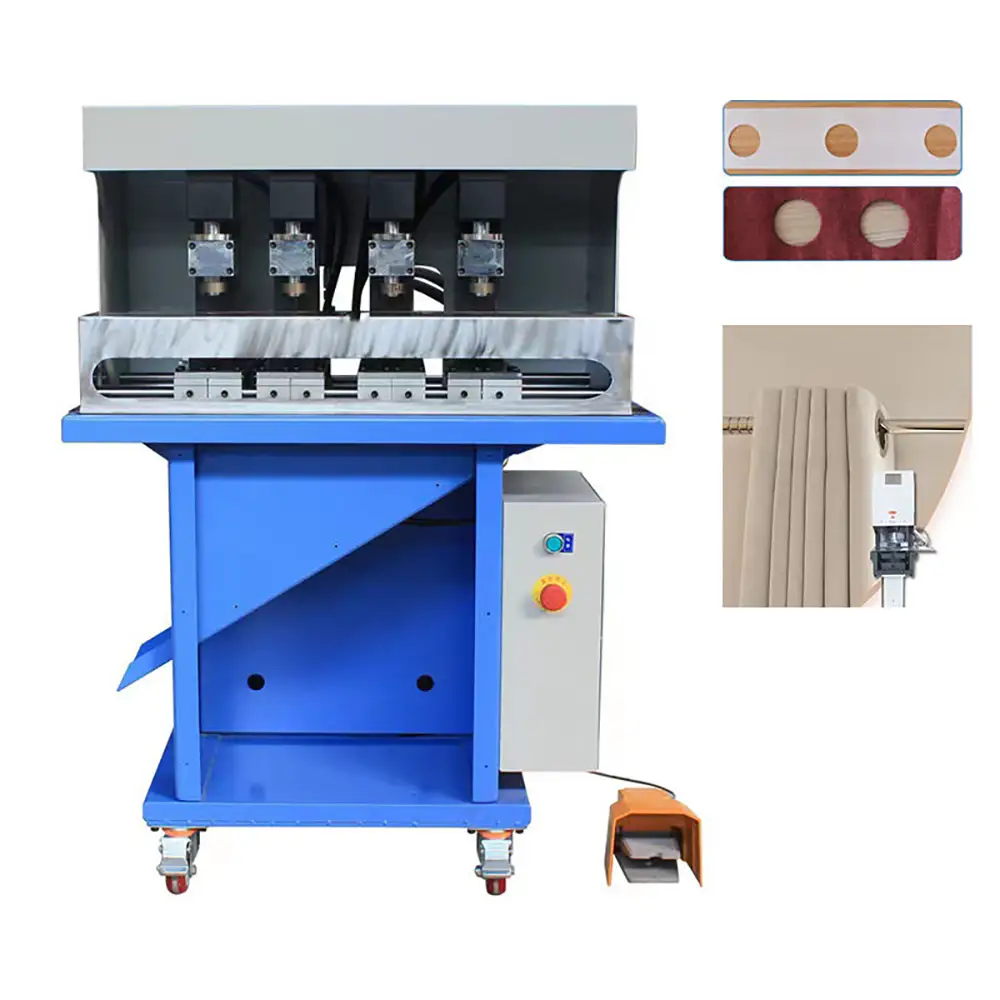
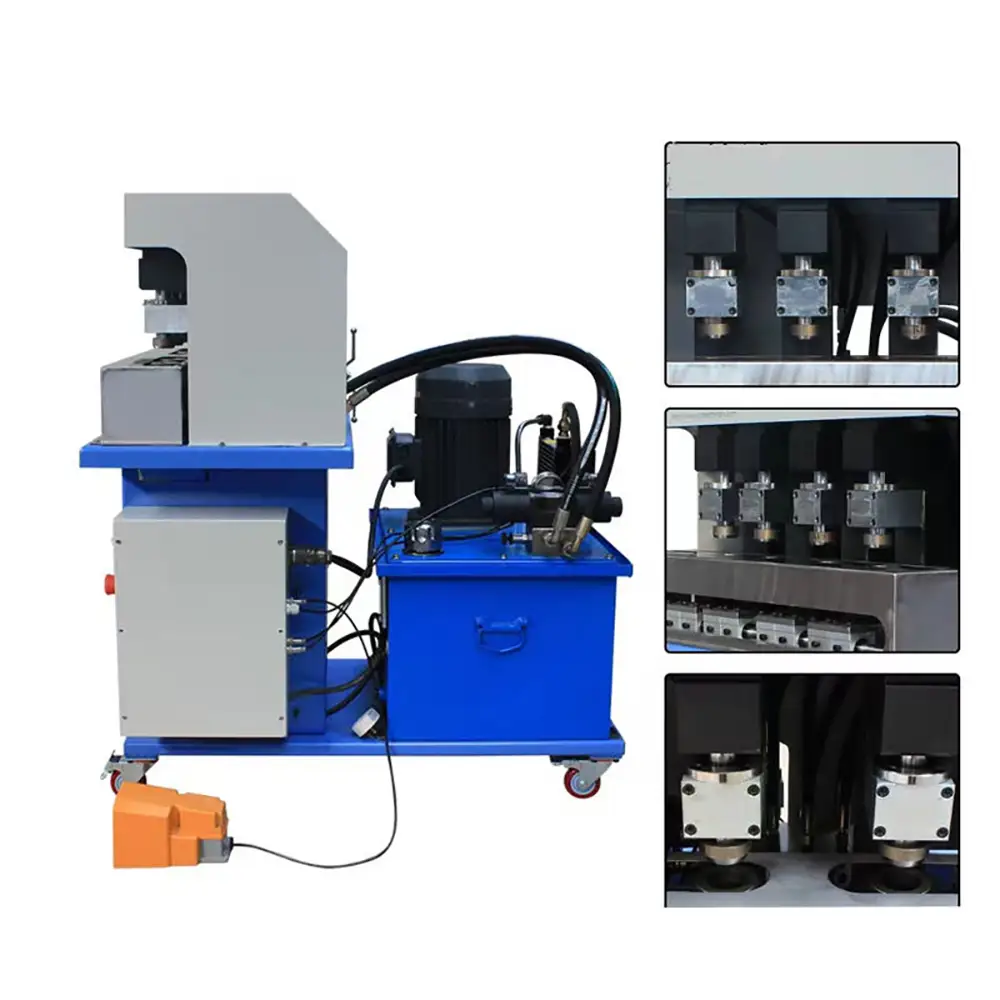
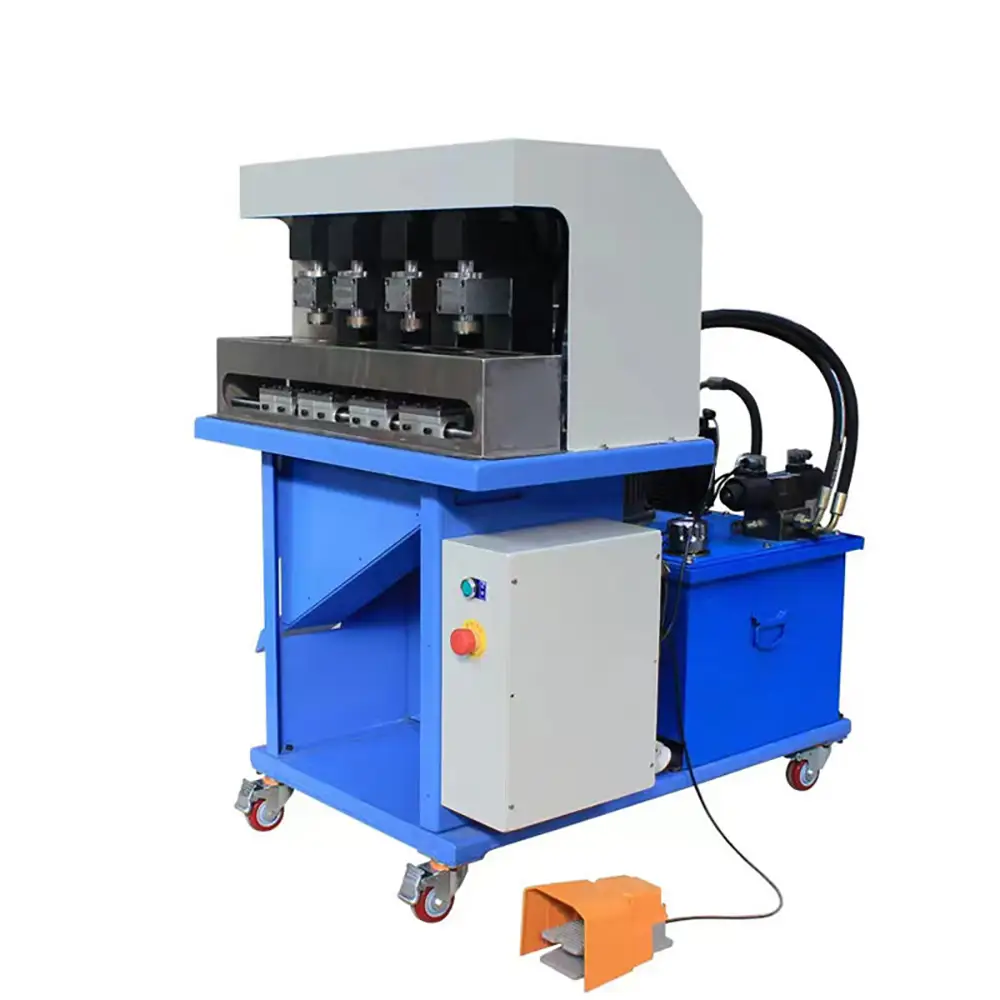
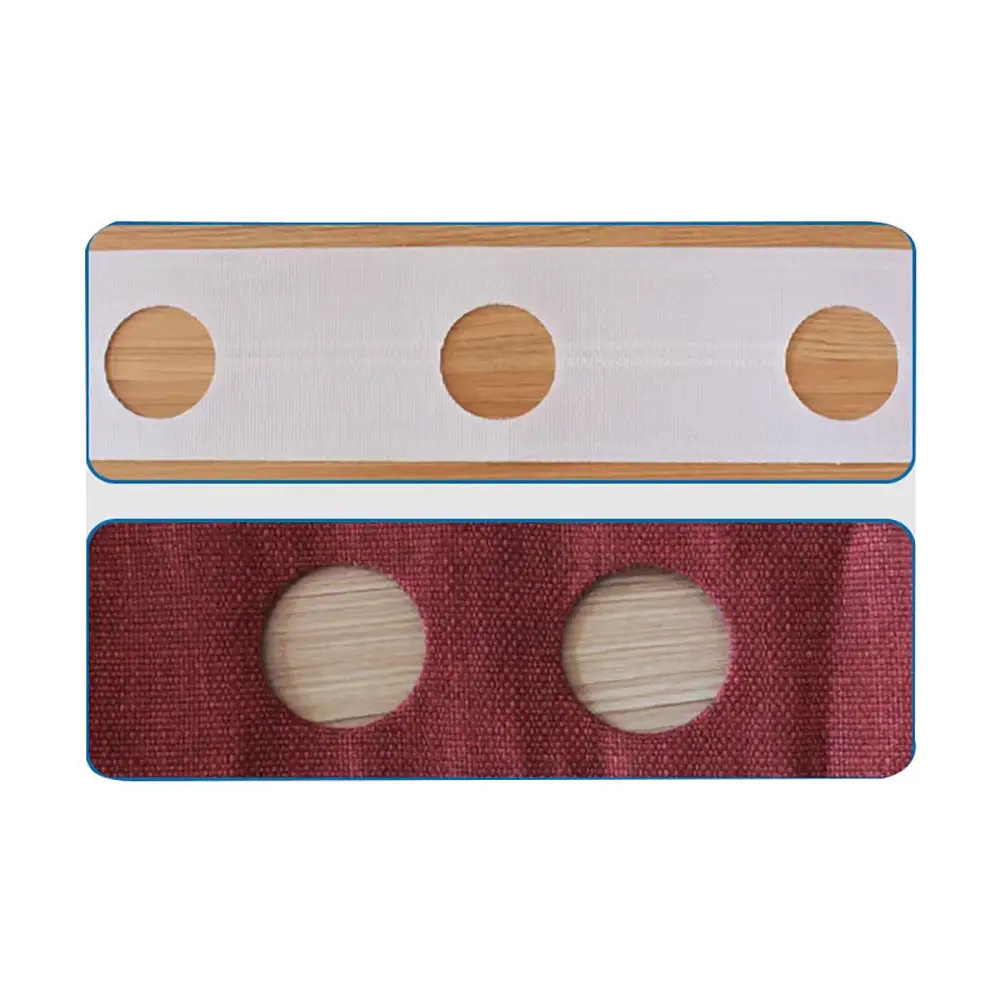
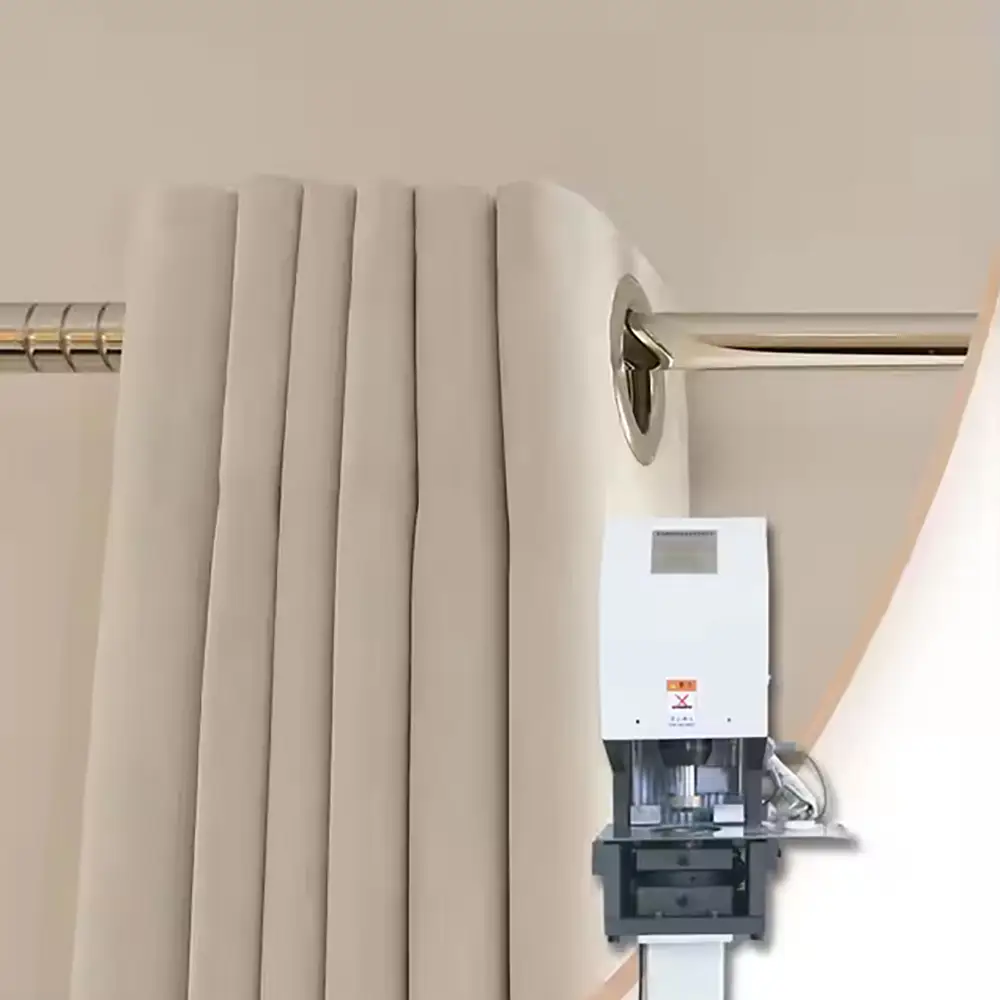
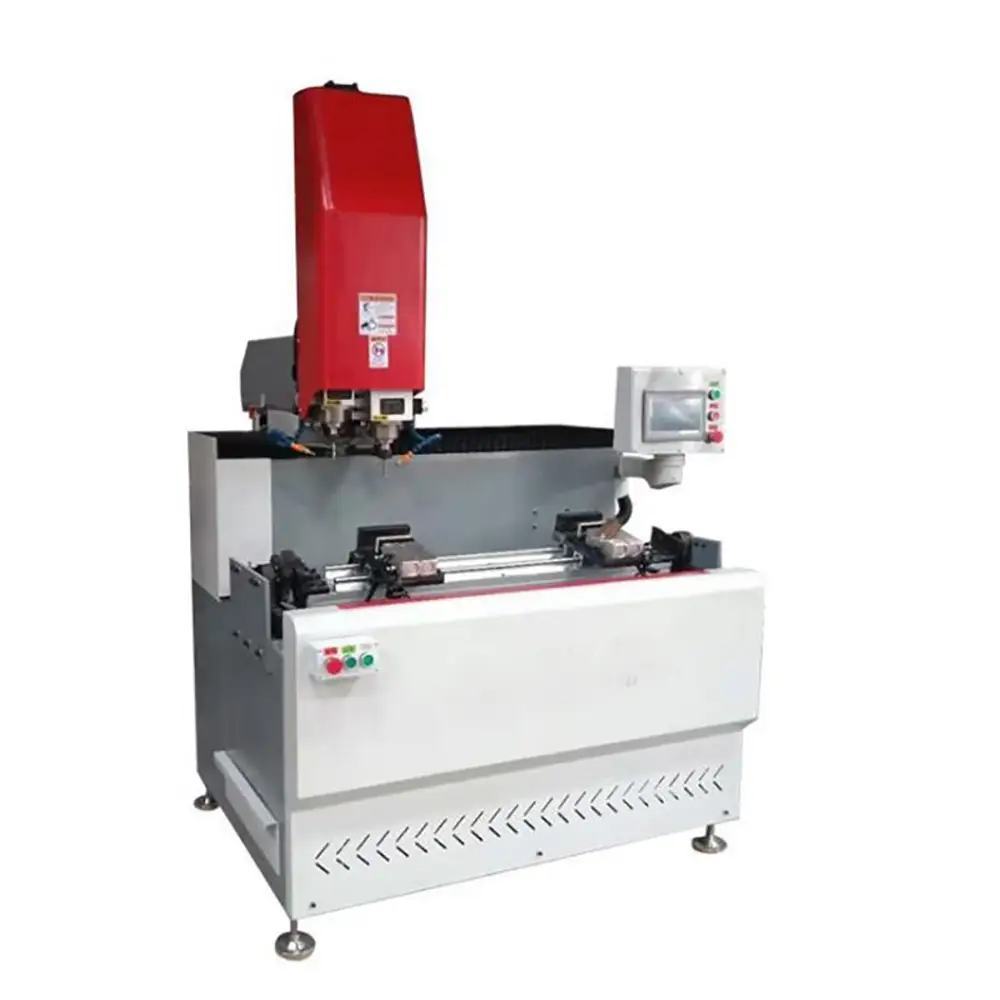
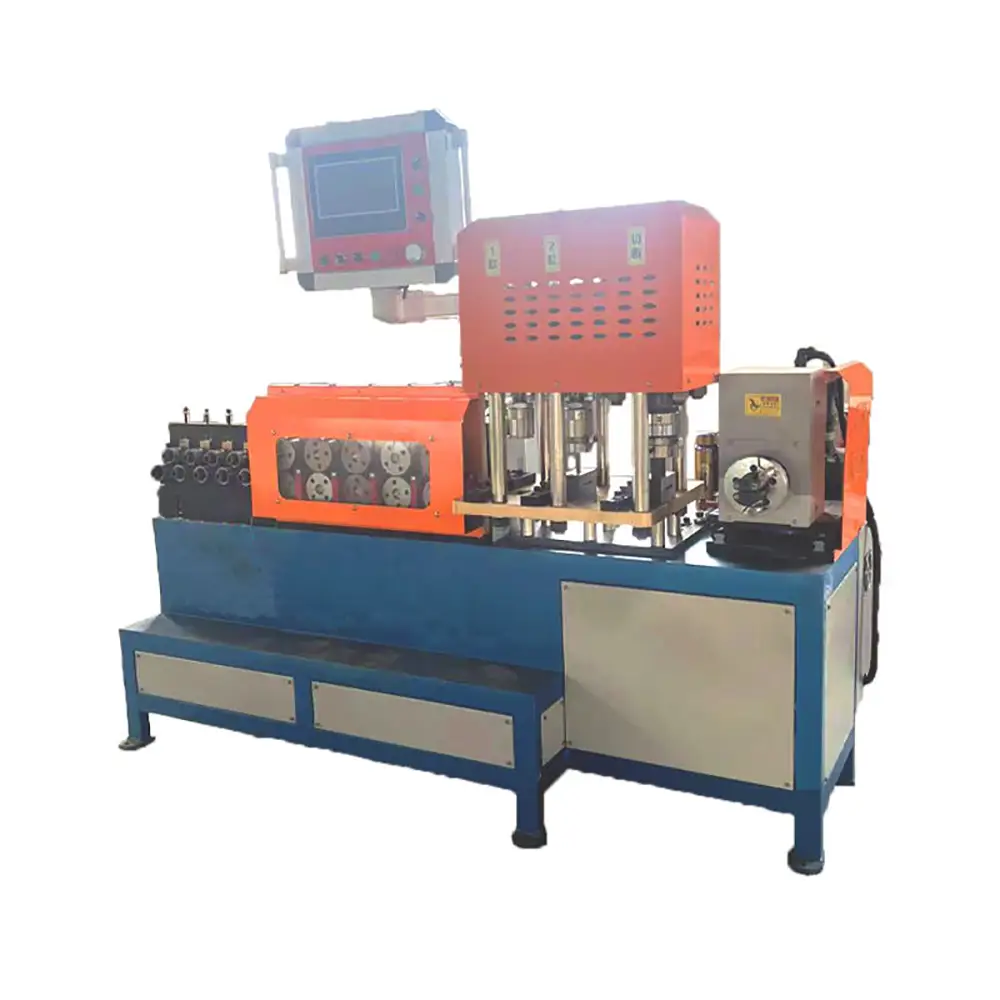
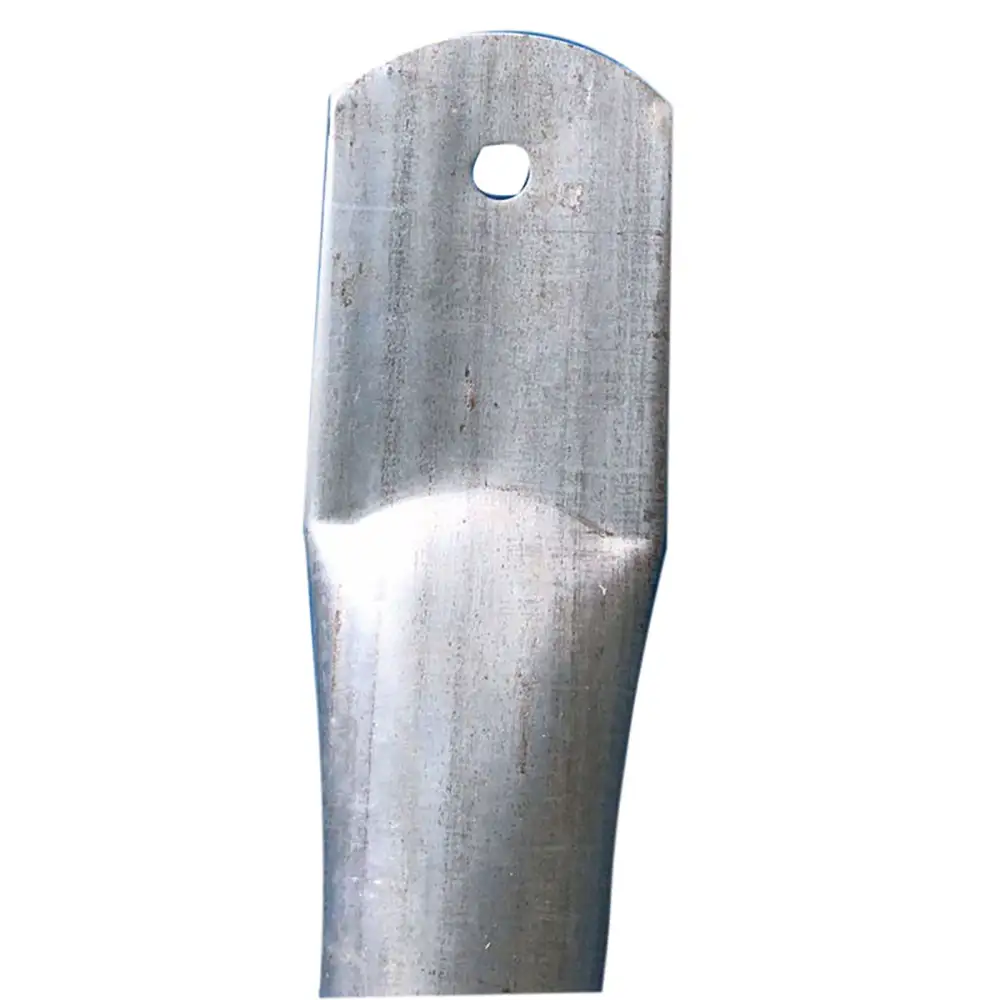
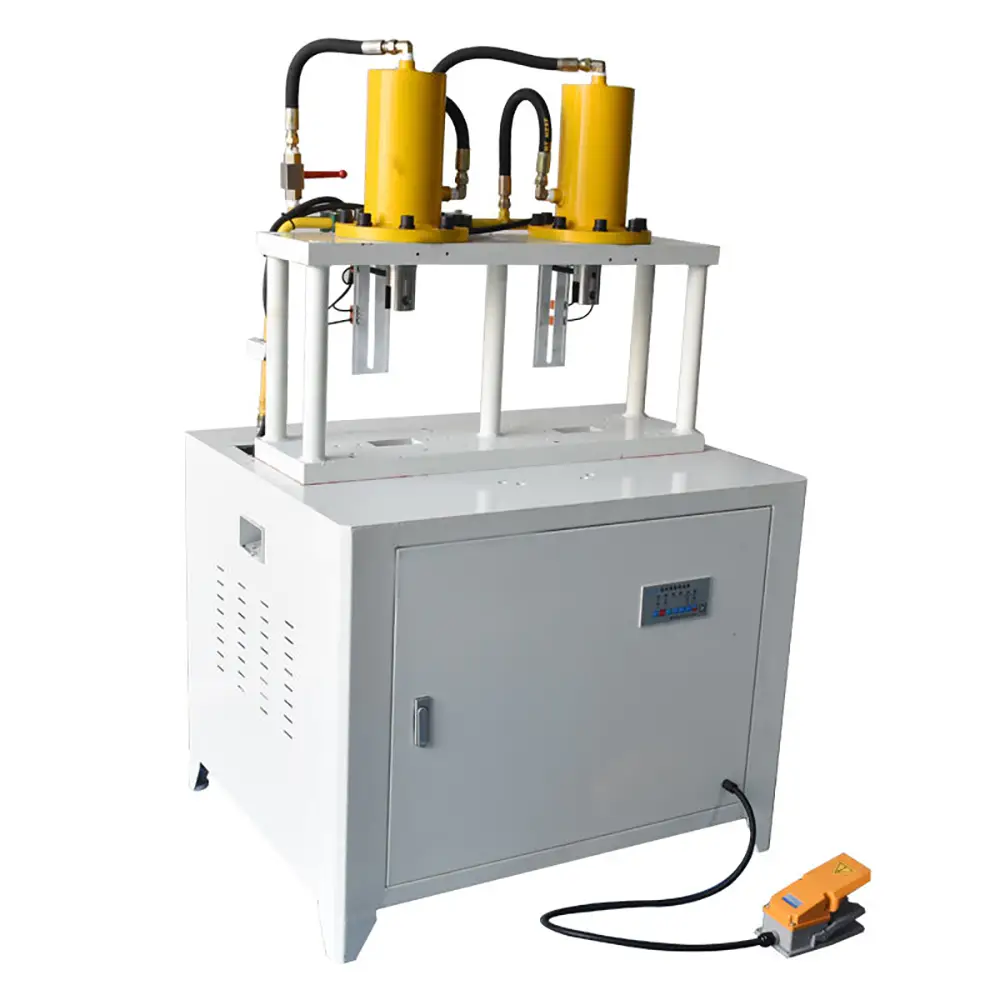
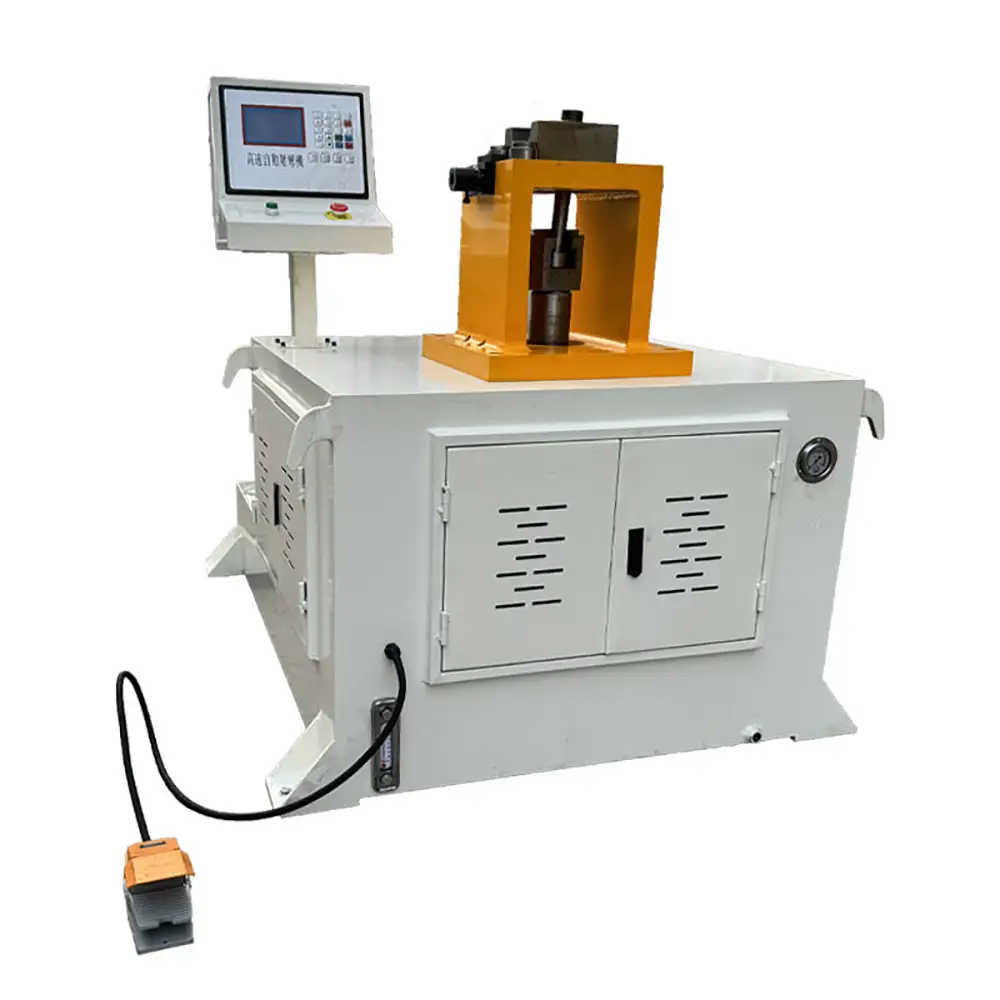
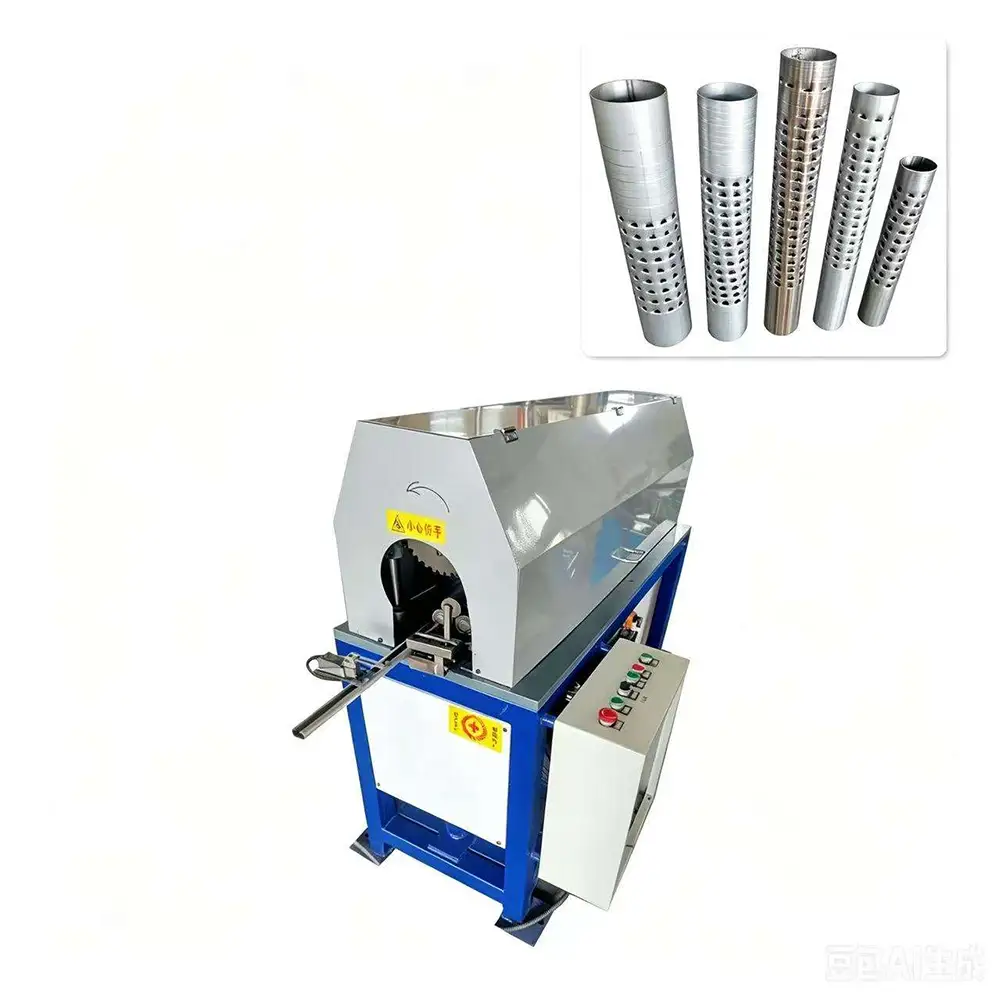
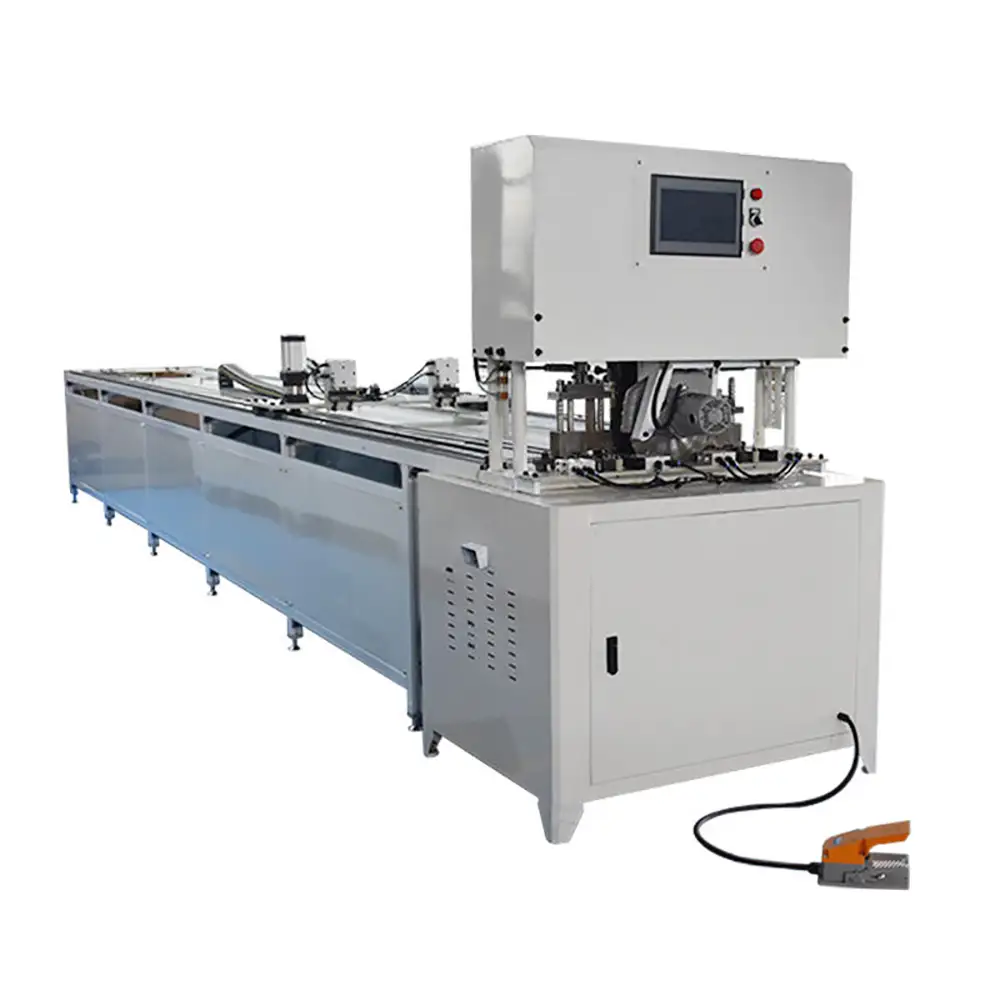
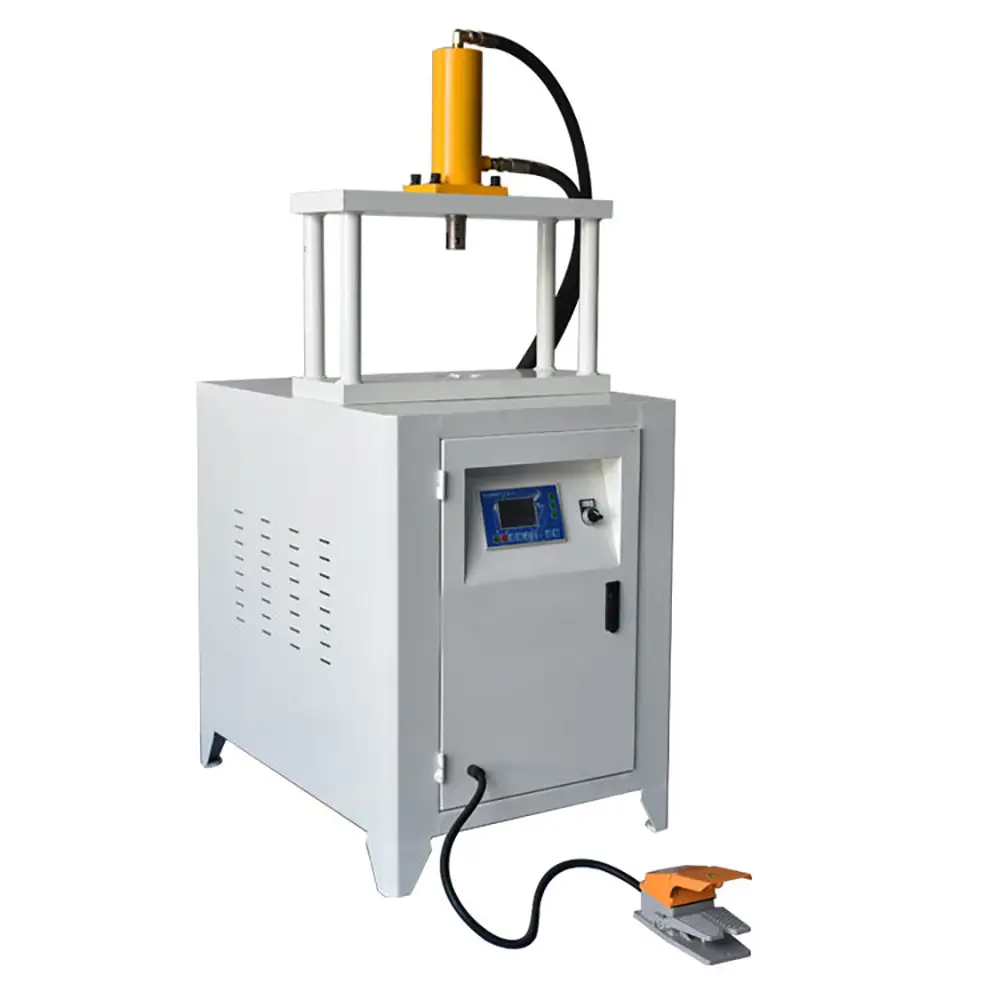
This machine is a professional curtain hydraulic punching machine. It can automatically punch four or more holes at a time on curtains and other textile fabrics. With its high efficiency, it can lift the productivity of punching to the highest level. It reduces your needs of manpower dramatically and therefore can reduce your costs in the long run.
Products Description
|
Machine name |
Curtain Punching Machine |
|
Punching distance |
100-200mm |
|
Punching diameter |
within 42mm |
|
Motor power |
4.0kw |
|
Overall power |
4.5kw |
|
Net weight of equipment |
200KG |
|
Product size(L*W*H) |
1100*850*1250mm |
Multi-Function Automatic Hydraulic Four-Hole Curtain Eyelet Punching Machine
The Multi-Function Automatic Hydraulic Four-Hole Curtain Eyelet Punching Machine is designed for efficient punching and eyelet preparation in curtains, fabrics, textiles, tarpaulins, decorative materials, and other flexible sheet products. By combining hydraulic punching force with an automatic multi-hole processing concept, the machine provides a practical solution for manufacturers that require repeatable hole positioning and efficient production.
Curtain manufacturing often requires multiple evenly positioned holes along the upper section of the fabric. These holes can be used for curtain rods, hooks, rings, tracks, or other installation systems. Manual hole punching and measuring can be time-consuming and may create inconsistent spacing between products. A dedicated curtain eyelet punching machine helps standardize the process and improve production workflow.
The four-hole configuration is designed to support multiple hole-processing operations according to the machine's specific tooling and working arrangement. The exact number of holes processed per cycle, hole dimensions, material compatibility, production speed, and automation level should be confirmed according to the machine configuration.
Automatic Curtain Eyelet Punching
Automatic operation can reduce repetitive manual positioning and punching work. After the fabric or material is correctly positioned and the required parameters are established, the machine can perform the programmed punching sequence.
For high-volume curtain production, repeatable punching can help maintain consistent hole locations across multiple pieces. This is particularly important when curtains must be installed on standardized rods, tracks, hooks, or other hardware.
The actual automatic functions depend on the equipment configuration. Some models may include automatic feeding, positioning, punching, indexing, or other production-assistance functions.
Four-Hole Punching System
The four-hole design provides a multi-hole processing concept for curtain and textile applications. Multiple punching positions can help improve production efficiency when the product requires repeated hole patterns.
The exact hole arrangement depends on the tooling and machine structure. Hole diameter, spacing, edge distance, and pattern should be determined according to the finished curtain design and the selected eyelet hardware.
For customized applications, special punches, dies, guides, and fixtures can be developed according to customer requirements.
Hydraulic Punching Technology
Hydraulic punching provides controlled forming force for creating holes in compatible materials. Compared with simple manual punching tools, hydraulic equipment can provide a more consistent production process for repetitive industrial applications.
The required punching force depends on material type, material thickness, hole diameter, tooling geometry, and other processing conditions.
The hydraulic system should be properly matched with the selected punch and die. For different fabrics, coated materials, or layered products, sample testing is recommended to confirm the appropriate tooling and process parameters.
Curtain and Textile Applications
Curtain eyelet punching is one of the primary applications of this machine. It can be used for different types of curtains and textile products when the material and tooling are compatible.
Potential applications include:
Window curtains
Decorative curtains
Shower curtains
Stage curtains
Hotel curtains
Room dividers
Fabric panels
Textile banners
Tarpaulins
PVC-coated fabrics
Advertising fabrics
Customized textile products
The machine can also be adapted to other flexible materials when suitable punches, dies, and fixtures are available.
Eyelet Preparation and Installation
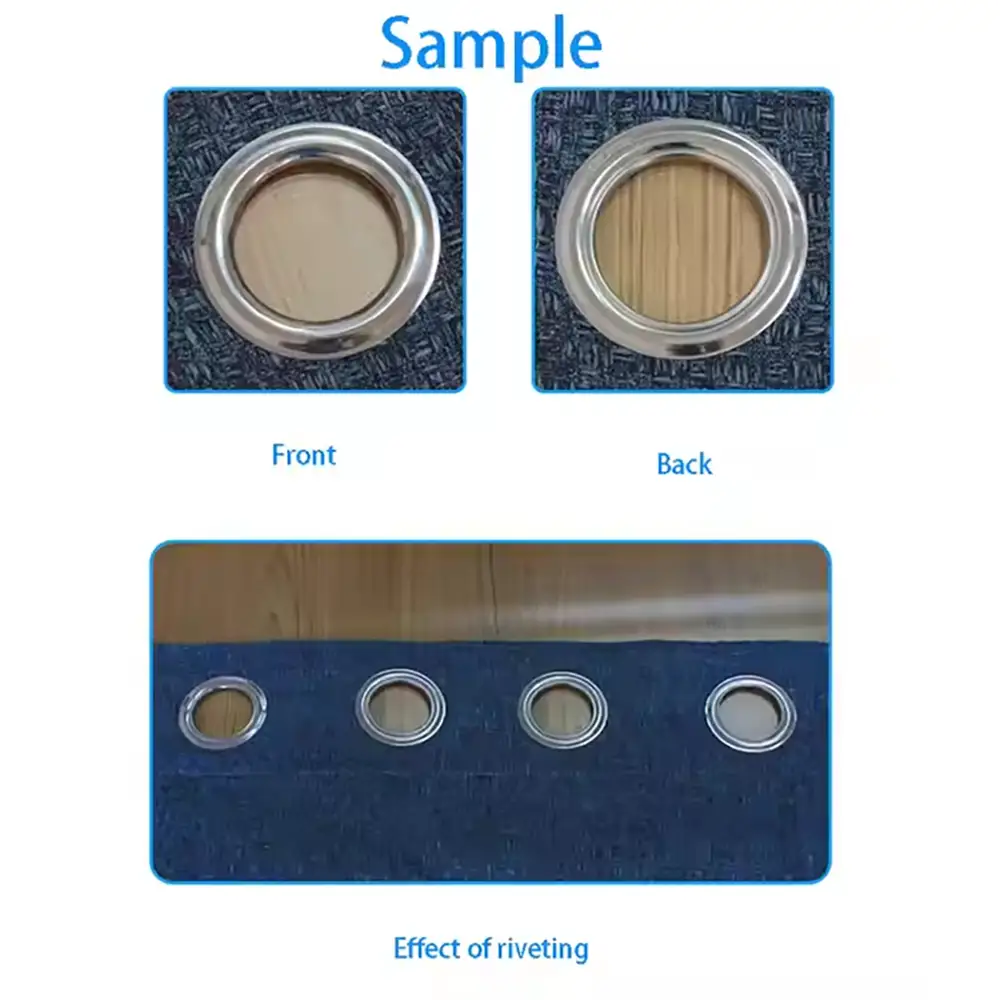
Eyelet systems are commonly used to reinforce punched holes and provide a durable opening for curtain rods, hooks, ropes, cables, or other installation components.
The punching operation creates the required opening before or as part of an eyelet installation process, depending on the machine configuration.
Buyers should distinguish between a hole punching machine and a complete eyelet inserting or riveting machine. If the equipment is required to automatically install metal eyelets after punching, the specific eyelet insertion function should be confirmed with the manufacturer.
Material Compatibility
Depending on the machine configuration and tooling, the equipment may process a variety of flexible materials, including:
Polyester fabric
Cotton fabric
Canvas
PVC-coated fabric
Tarpaulin
Synthetic textile
Decorative fabric
Laminated materials
Other compatible flexible sheet materials
Material thickness, flexibility, coating, tensile strength, and surface characteristics can influence punching quality.
Before production, testing should be performed with the actual material to determine the appropriate punch, die, pressure, and processing settings.
Production Efficiency
Automatic hydraulic punching can help manufacturers reduce repetitive manual operations. Instead of individually measuring and punching each curtain hole, operators can establish the required positioning process and repeat the same operation across multiple products.
Production efficiency depends on the number of holes, material size, feeding method, hole spacing, machine cycle, loading and unloading process, and operator workflow.
For large-volume production, standardized fixtures and feeding arrangements can further improve consistency.
Hole Positioning and Repeatability
Accurate hole positioning is important for curtain installation. Uneven spacing can cause curtains to hang incorrectly or make installation more difficult.
A suitable positioning system, guide, fixture, or indexing mechanism can help maintain consistent spacing during repeated production.
Actual positioning accuracy depends on the machine structure, tooling, material feeding method, fabric characteristics, and operator procedure.
For high-precision applications, customers should provide drawings or samples showing the required hole diameter, spacing, edge distance, and overall curtain dimensions.
Custom Tooling and Functions
Different curtain products may require different hole sizes and patterns. Custom tooling can therefore be developed for special applications.
Customization may include:
Punch and die sets
Hole diameter
Hole spacing
Four-hole arrangement
Fabric fixtures
Material guides
Feeding systems
Eyelet tooling
Control functions
Product-specific positioning systems
For OEM projects, customers can provide product samples, drawings, fabric specifications, eyelet dimensions, and expected production quantities.
Quality Control
Quality control should include inspection of hole diameter, hole position, hole spacing, edge condition, material deformation, and overall appearance.
For curtain and decorative textile products, visual quality can be particularly important. The punching process should minimize unnecessary tearing, fraying, cracking, or deformation of the material.
Tool wear should also be monitored regularly. A worn punch or die can affect hole quality and increase the risk of inconsistent processing.
Sample inspection before mass production can help establish suitable machine settings and tooling.
Maintenance and Safety
Regular maintenance helps maintain stable machine performance. Operators should inspect hydraulic oil, hoses, fittings, cylinders, punches, dies, guides, fixtures, electrical components, and other wear parts according to the manufacturer's recommendations.
Punches and dies should remain clean and properly aligned. Accumulated textile fibers or material residue should be removed from the working area.
Operators should receive appropriate training before using the machine. Emergency stops, guards, electrical protection, and other safety functions should be checked according to the actual configuration and applicable local requirements.
Custom & OEM Solutions
The Multi-Function Automatic Hydraulic Four-Hole Curtain Eyelet Punching Machine can be customized for specific textile and curtain production requirements.
OEM solutions may include customized punching tools, four-hole arrangements, fabric fixtures, automatic feeding systems, positioning mechanisms, eyelet-related tooling, and control configurations.
Customers can provide drawings, samples, material specifications, eyelet sizes, hole patterns, and production requirements for evaluation.
This makes the machine suitable for curtain manufacturers, textile factories, home furnishing suppliers, wholesalers, distributors, purchasing agents, and international B2B buyers seeking an efficient curtain punching solution.
Why Choose Us
Automatic Hydraulic Punching — Supports efficient and repeatable punching for curtain and textile production.
Four-Hole Processing — Designed around a multi-hole punching concept for repeated curtain hole patterns.
Multi-Function Design — Can be configured with suitable tooling and fixtures for different flexible materials and applications.
Consistent Hole Positioning — Proper guides, fixtures, and positioning systems help improve repeatability.
Wide Material Compatibility — Suitable for compatible fabrics, canvas, tarpaulin, PVC-coated materials, and other flexible sheet products.
Custom Tooling — Punches, dies, fixtures, guides, and other components can be customized.
OEM & ODM Support — Machine configurations can be developed according to customer drawings, samples, and production requirements.
B2B Textile Solution — Suitable for curtain manufacturers, textile factories, wholesalers, distributors, and international buyers.
FAQs
1. What is a curtain eyelet punching machine?
It is a machine designed to create reinforced or installation holes in curtains, fabrics, textiles, tarpaulins, and similar flexible materials for curtain hardware or other applications.
2. What does four-hole mean?
Four-hole refers to the machine's multi-hole processing arrangement. The exact number and layout of holes produced per cycle depend on the specific tooling and machine configuration.
3. Is the machine fully automatic?
The equipment is described as automatic, but the exact automation functions depend on the configuration. Feeding, positioning, punching, indexing, and other functions should be confirmed according to the selected model.
4. Can it punch curtain fabric?
Yes. It is designed for compatible curtain and textile materials. Actual material compatibility should be confirmed through sample testing.
5. Can it process PVC-coated fabric?
It may be configured for compatible PVC-coated fabrics and tarpaulins. The correct punch, die, pressure, and processing parameters should be selected according to the material.
6. Does the machine install metal eyelets?
Not necessarily. A punching machine creates the required hole, while eyelet insertion requires dedicated eyelet installation or riveting tooling. The exact machine configuration should be confirmed.
7. Can the hole diameter be customized?
Yes. Punches and dies can be customized according to the required hole diameter and material characteristics.
8. Can hole spacing be customized?
Yes. The positioning system, guides, fixtures, or tooling can be configured according to the required hole spacing and curtain design.
9. What materials can the machine process?
Depending on the configuration, materials may include polyester, cotton, canvas, synthetic textiles, PVC-coated fabric, tarpaulin, laminated materials, and other compatible flexible materials.
10. How can fabric tearing be reduced?
Proper punch and die selection, suitable clearance, correct punching pressure, accurate positioning, and sample testing can help improve hole quality and reduce unnecessary material damage.
11. Can custom fixtures be supplied?
Yes. Fabric fixtures, guides, positioning systems, punch and die sets, and other tooling can be customized for specific curtain products.
12. Can you provide OEM solutions?
Yes. OEM solutions can include customized tooling, hole patterns, four-hole arrangements, feeding systems, fixtures, positioning functions, and other machine configurations based on customer requirements.
Prev:
Automatic Feeding Aluminum Profile Punching Machine Shutter Punching Machine
Next:
Exhaust Muffler Perforation Machine High Quality Hole Punching Machinery
TAG:
Eyelet Punching Equipment,
Automatic Fabric Punching Machine,
Industrial Curtain Punching Machine,
Hydraulic Fabric Punching Machine,
Curtain Fabric Punching Machine,
Automatic Textile Punching Machine,
Eyelet Hole Punching Machine,
Eyelet Punch Machine,
Multi-Function Eyelet Punching Machine,
Commercial Curtain Eyelet Machine,
Canvas Eyelet Punching Machine,
Tarpaulin Eyelet Punching Machine,
Automatic Eyelet Punching Machine,
Curtain Hole Punching Machine,
Curtain Eyelet Punching Machine,
Textile Eyelet Punching Machine,
Automatic Curtain Punching Machine,
Textile Hole Punching Machine,
Automatic Curtain Eyelet Punching Machine,
Hydraulic Curtain Eyelet Punch Machine,
Four-Hole Curtain Eyelet Punching Machine,
Four-Hole Eyelet Punch Machine,
Hydraulic Eyelet Punching Machine,
Curtain Eyelet Punching Equipment,
Fabric Eyelet Punching Machine,
Related Category:
Automatic Curtain Eyelet Punching Machine,Hydraulic Curtain Eyelet Punch Machine,Four-Hole Curtain Eyelet Punching Machi China, suppliers, manufacturers, factory, customized, wholesale, quotation, made in China