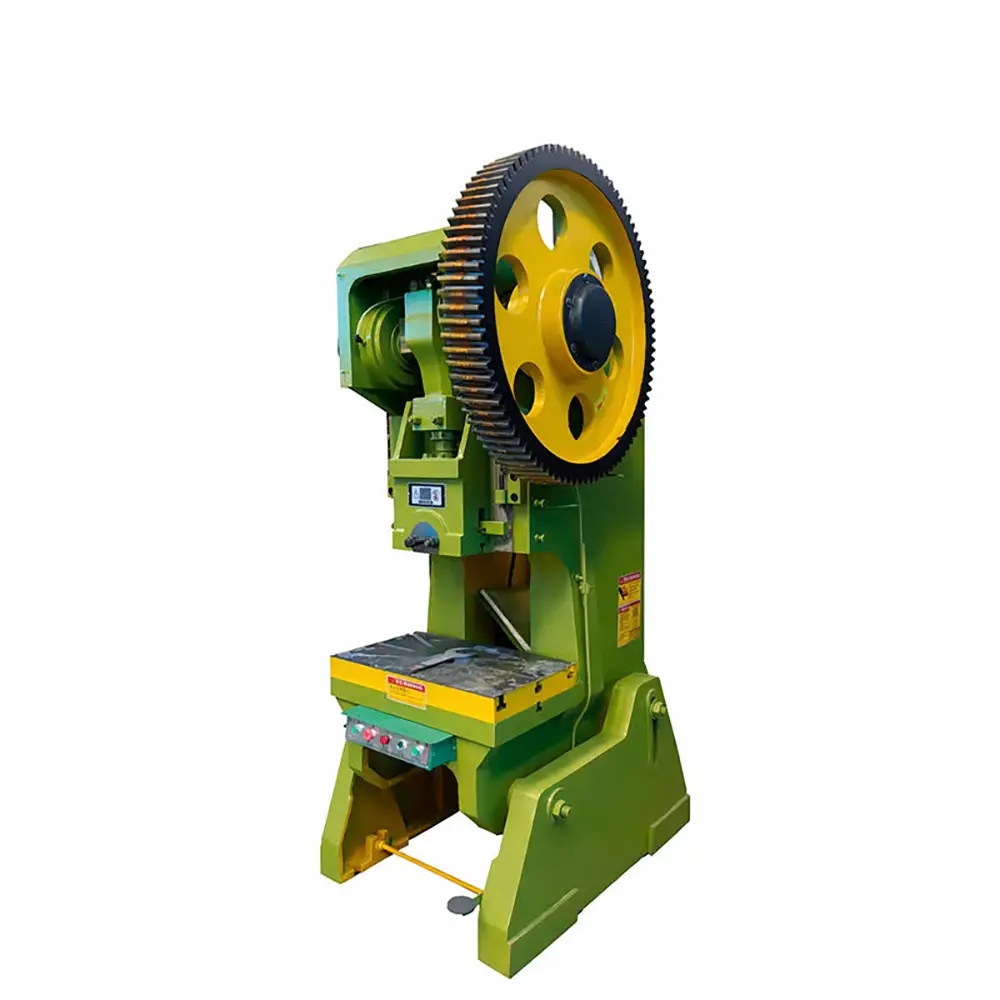
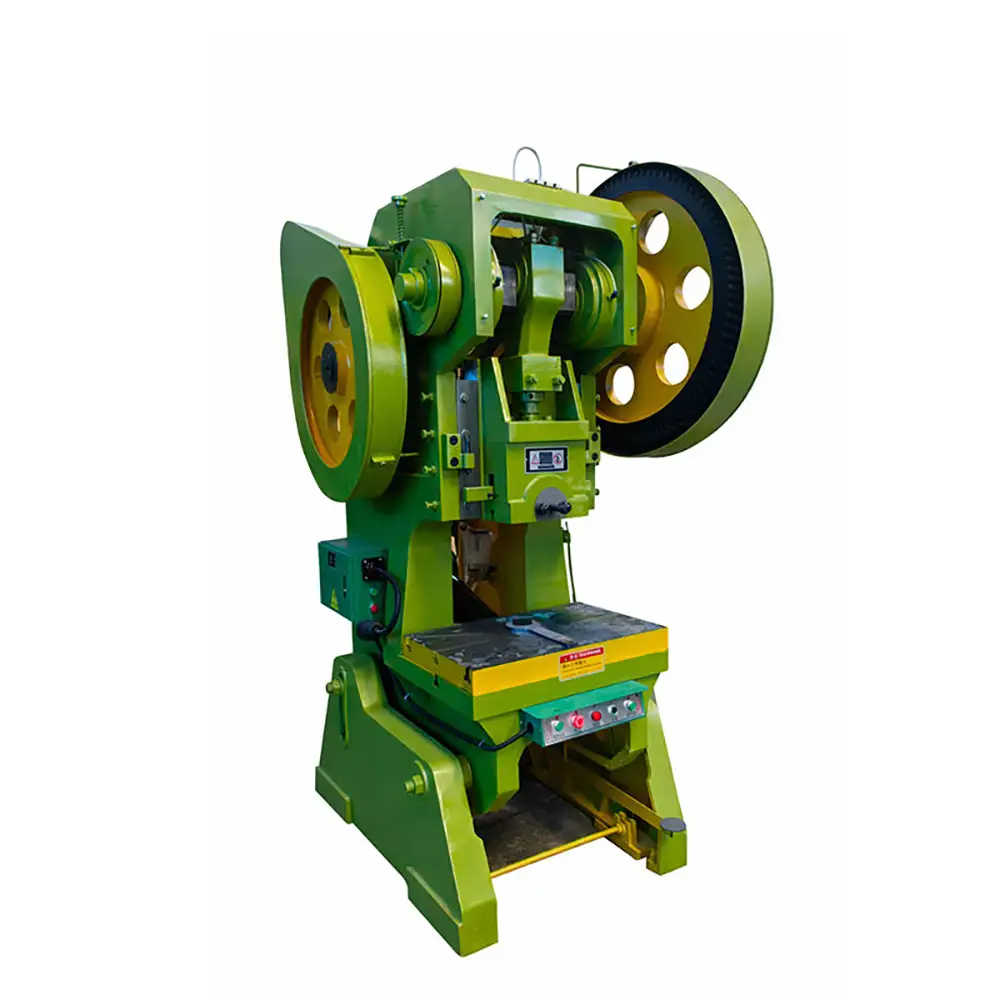
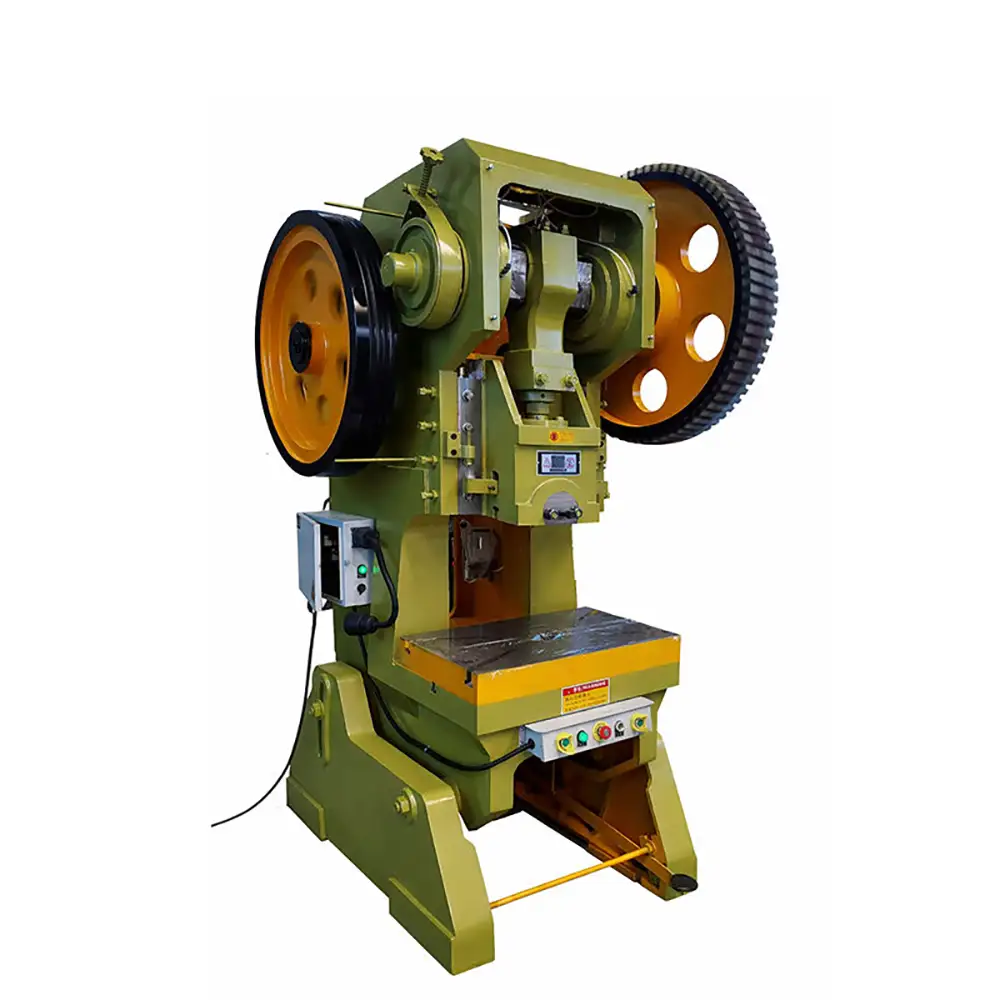
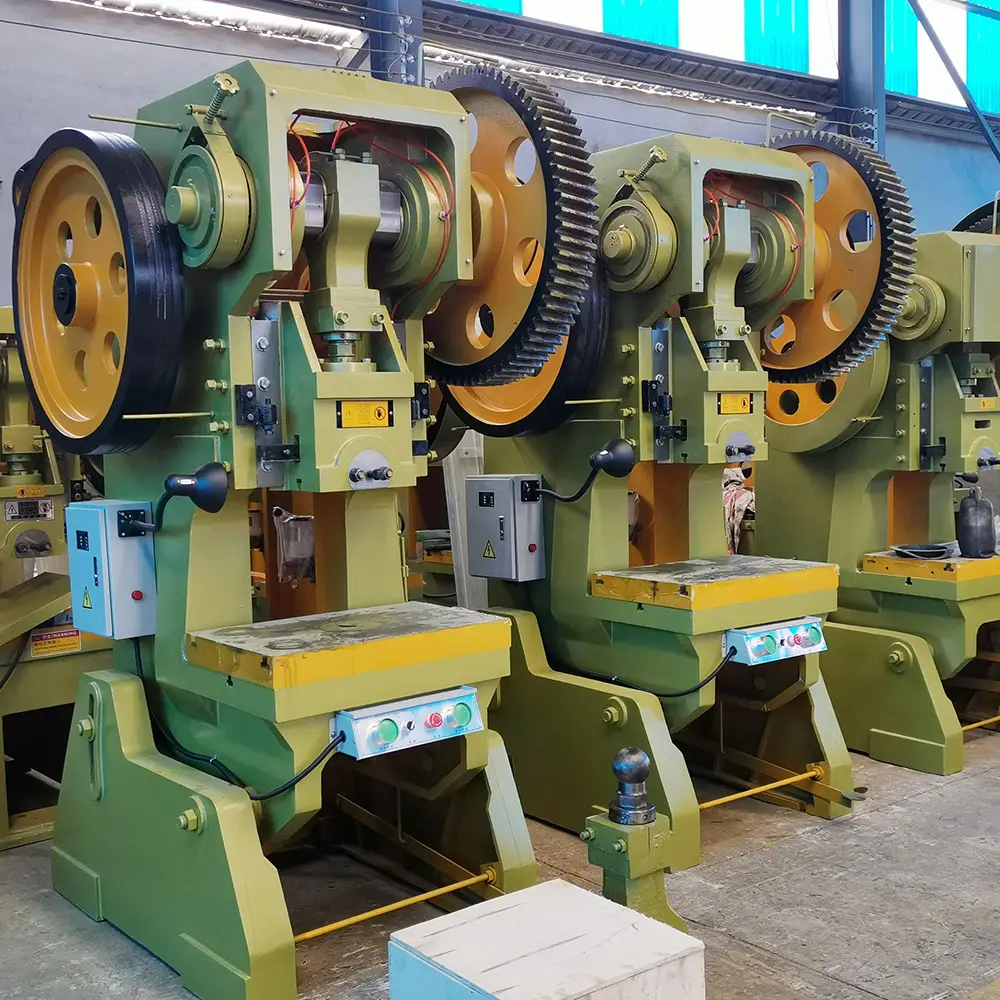
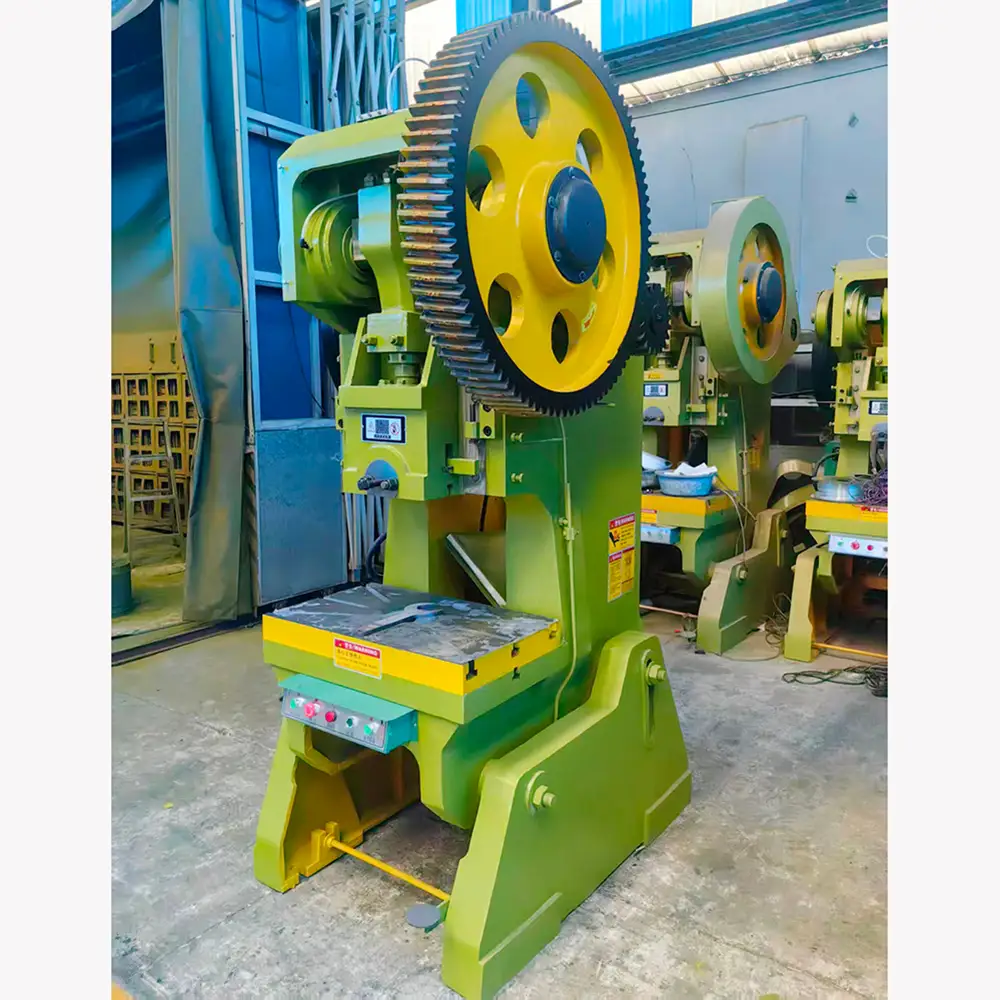
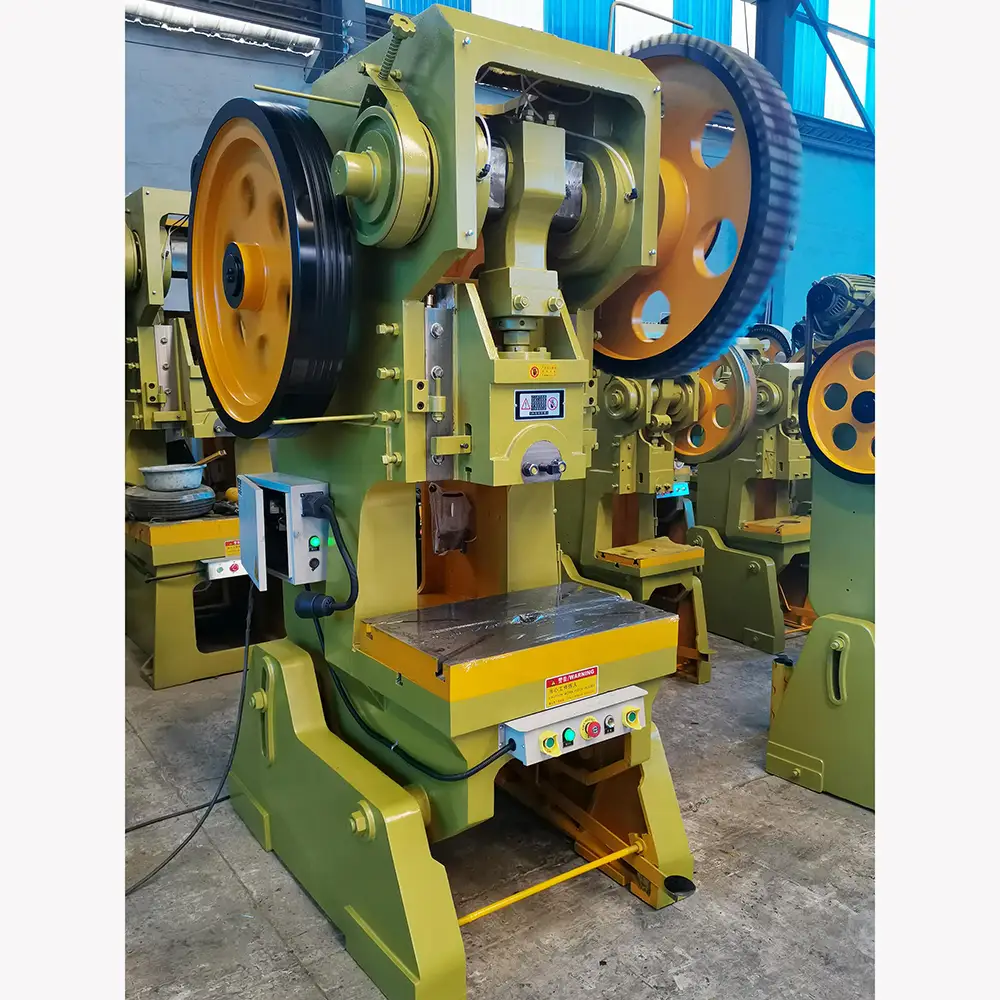
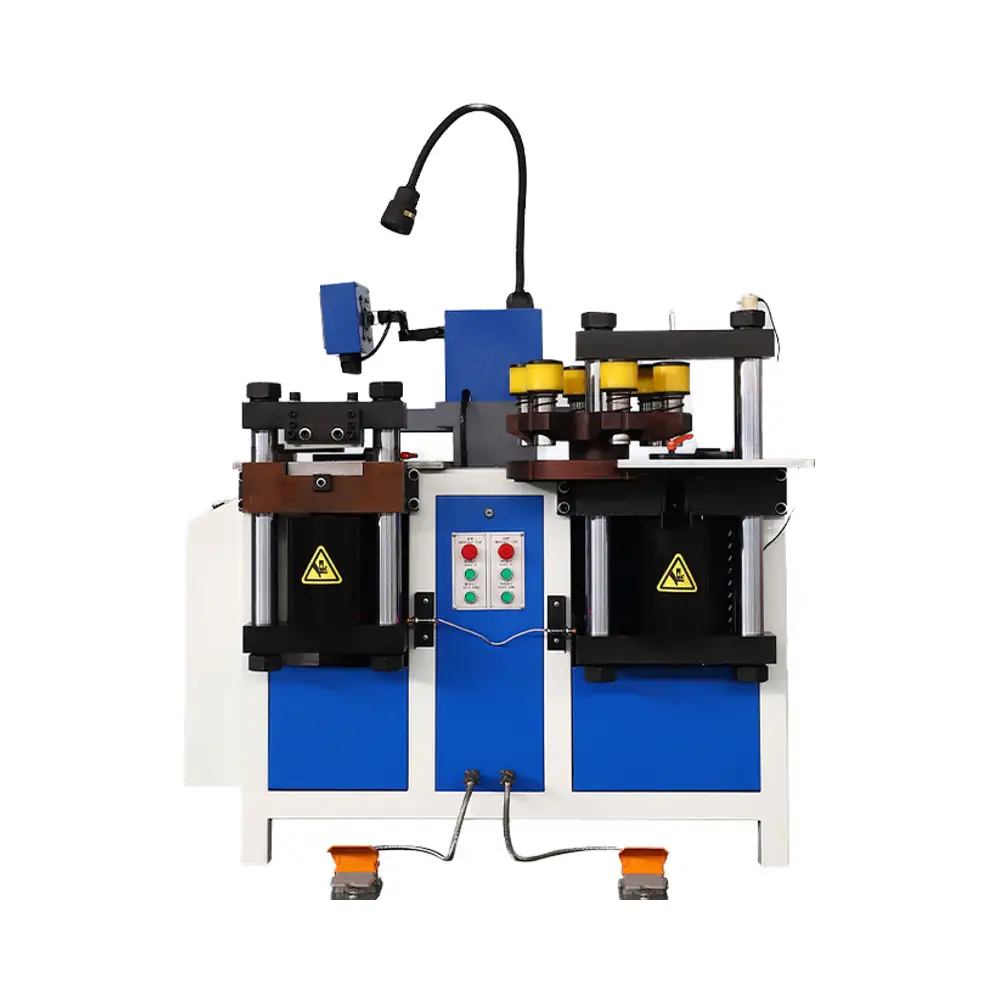
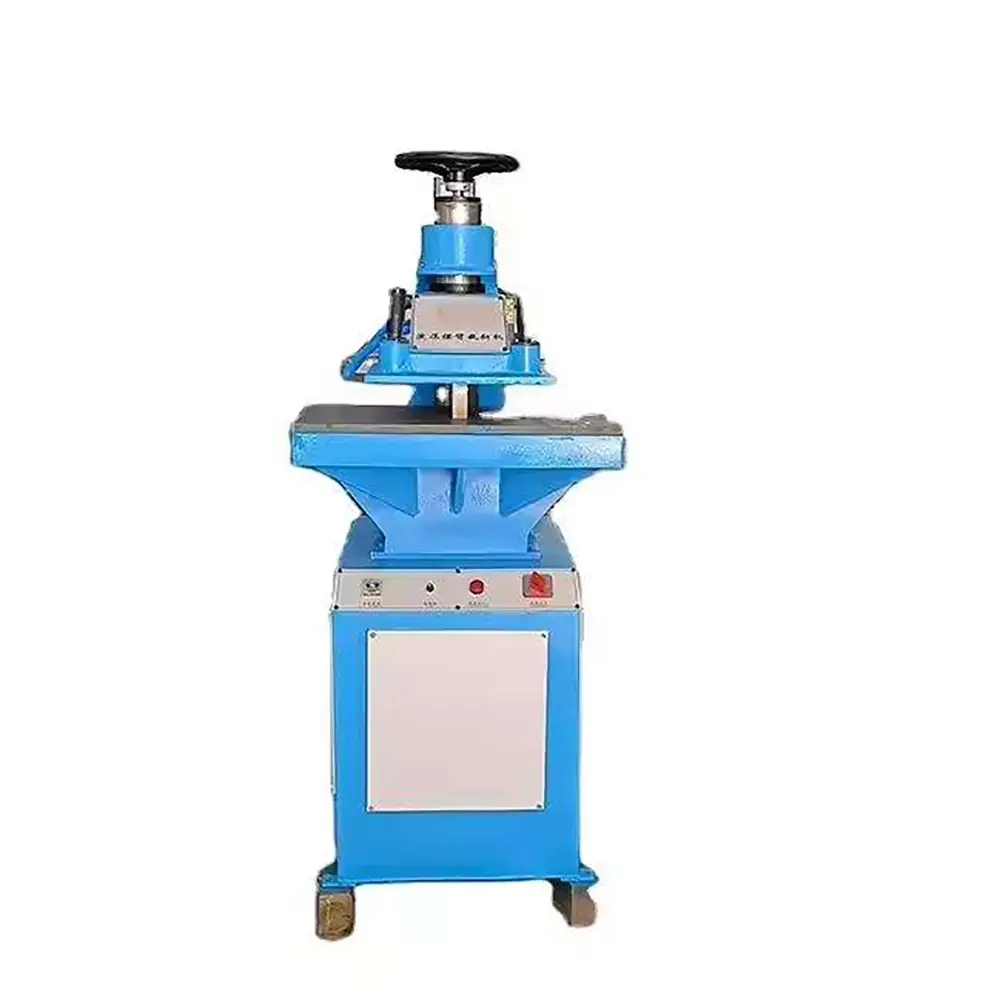
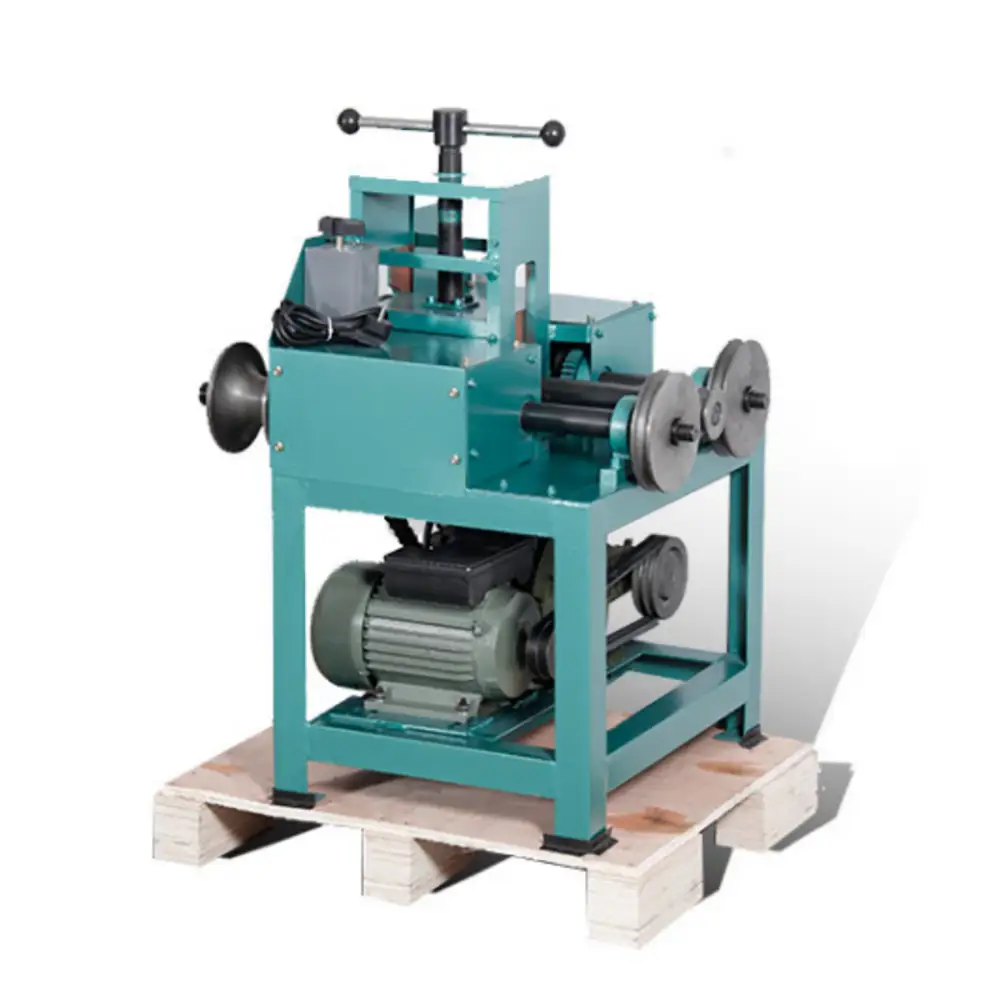
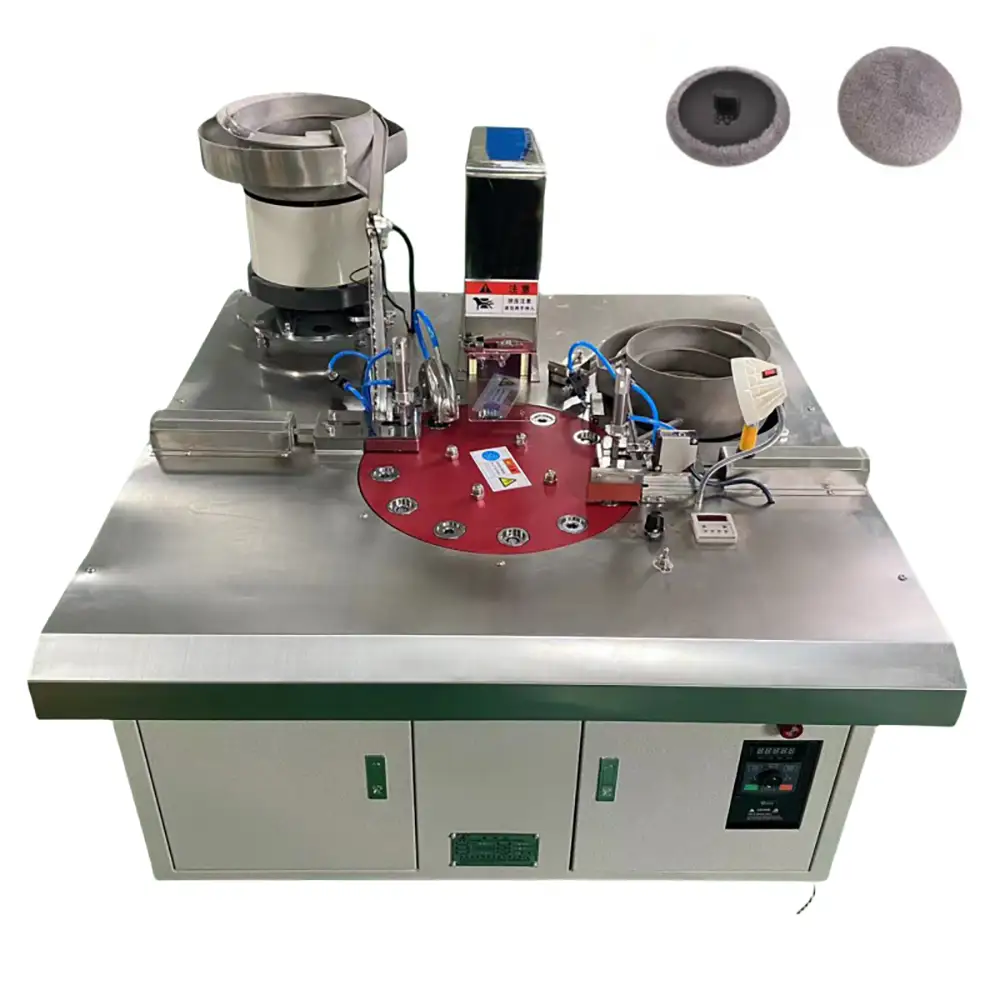
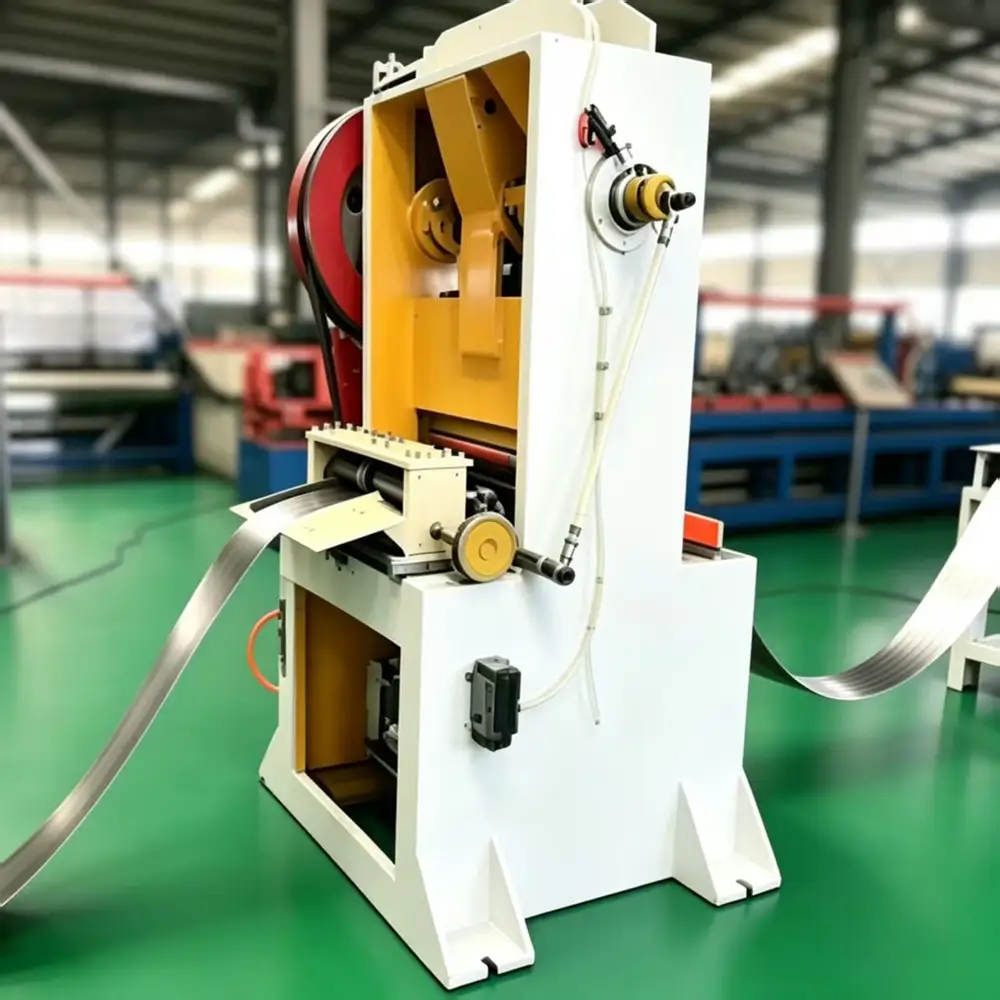
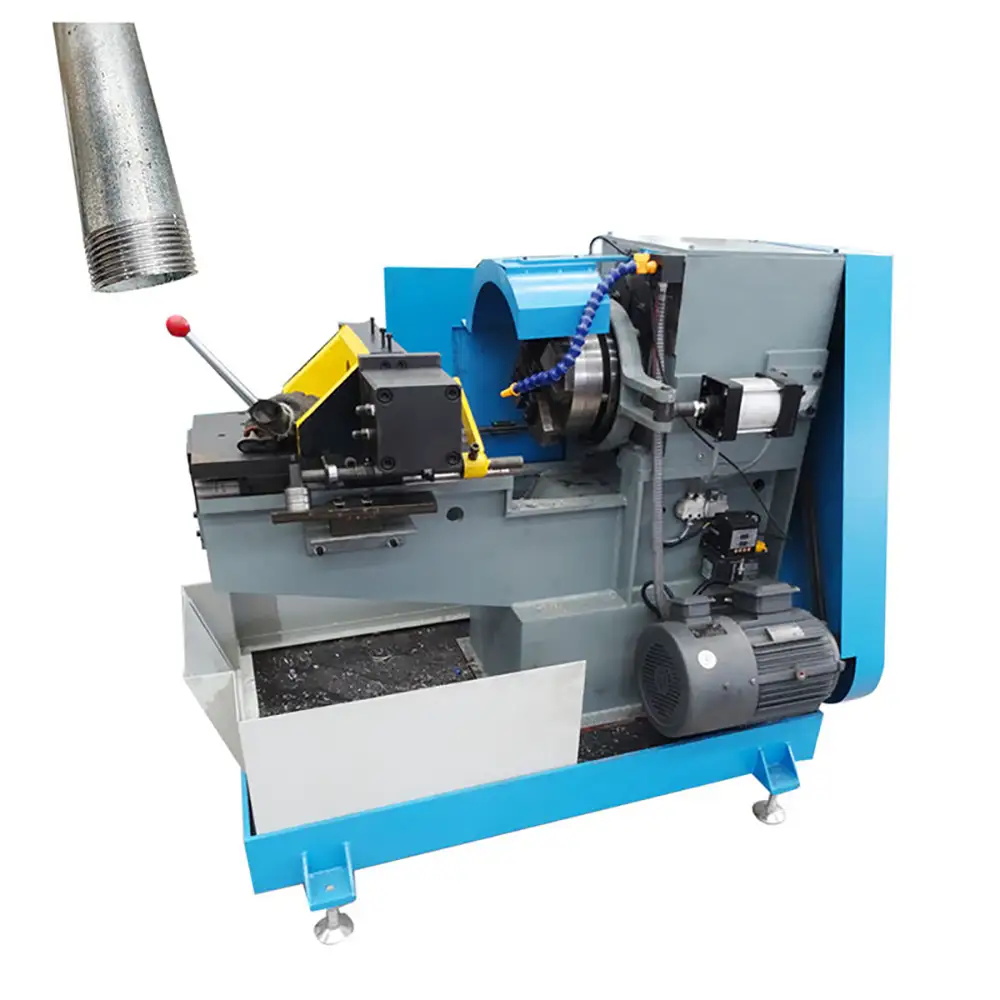
High Precision Metal Stamping Power Press Mechanical Punch Press Machine for Sheet Metal Forming and FabricationHigh Strength & Precision: The 80T mechanical power press machine adopts a solid cast iron body and high-precision transmission system, ensuring stable operation, strong impact force, and long service life.
Powerful 80 Ton Capacity: Delivers up to 80 tons of punching force, suitable for various metal sheet forming processes such as punching, cutting, blanking, and embossing.
Wide Application: Ideal for processing carbon steel, stainless steel, aluminum, copper, and other metal materials. Perfect for hardware, auto parts, and metal fabrication workshops.
Easy Operation & Safety Design: Equipped with convenient control buttons, foot pedal, and double safety switches for secure and efficient operation.
Customizable Solutions: Optional automatic feeding system and mold customization available to improve production efficiency and reduce labor cost.
mechanical punch press, metal sheet punching machine, stamping press machine, heavy duty power press, 80T punching press, sheet metal cutting machine, workshop punching machine, industrial press machine, mechanical stamping press
Metal Stamping Power Press Machine for Sheet Metal Forming
The Metal Stamping Power Press Mechanical Punch Press Machine is designed for efficient sheet metal punching, stamping, forming, bending, blanking, and fabrication operations. It provides a practical solution for manufacturers that need repeatable mechanical forming of metal sheets and components in industrial production.
Mechanical power presses are widely used in automotive parts, electrical cabinets, appliances, hardware, lighting components, construction hardware, machinery components, and general metal fabrication. By applying controlled mechanical force through a press mechanism and suitable tooling, the machine can transform flat sheet metal into accurately formed parts.
The machine can be configured with appropriate dies, punches, worktables, controls, and feeding systems according to the customer's production requirements. The actual press capacity, stroke, speed, working area, and compatible material thickness depend on the selected model.
Mechanical Power Press Working Principle
A mechanical power press converts rotational energy from a motor and drive system into reciprocating motion of the slide or ram. The ram moves the upper die toward the lower die to perform the required forming operation.
Depending on the tooling, the same basic press platform can support different operations, including:
Blanking
Punching
Piercing
Bending
Embossing
Coining
Shallow forming
Sheet metal stamping
Component forming
The correct die design is essential because the machine itself does not determine the final shape of the component. The tooling, material characteristics, press capacity, and process parameters must be matched to the specific application.
Metal Stamping Applications
Metal stamping is a manufacturing process used to produce large quantities of sheet metal components with consistent dimensions and repeatable shapes.
A mechanical stamping press can be used for both simple and relatively complex operations when the appropriate dies and process sequence are selected.
Typical stamped components include:
Brackets
Covers
Panels
Clips
Mounting plates
Electrical components
Hardware parts
Automotive components
Appliance parts
Lighting components
For progressive or multi-stage production, the press can potentially be integrated with specialized dies and automatic feeding equipment.
Sheet Metal Punching and Piercing
Punching and piercing are common applications for mechanical punch presses. A punch moves through the sheet material and works against a die to create a hole or remove a section of material.
Applications can include holes, slots, openings, mounting points, ventilation patterns, and other geometric features.
The correct clearance between the punch and die is important for achieving suitable results and reducing unnecessary tool wear.
Material thickness, hardness, hole diameter, and production volume should all be considered when selecting tooling.
Sheet Metal Forming and Bending
In addition to punching, a mechanical power press can be used for selected sheet metal forming and bending operations.
With appropriate tooling, the press can create angles, channels, ribs, embossments, flanges, and other formed features.
The forming process should be designed around the material's mechanical characteristics and the required finished geometry.
For complex components, multiple forming stages may be used. The required number of operations depends on the component design, material, dimensional requirements, and production method.
High-Efficiency Production
One of the main advantages of a mechanical punch press is its suitability for repetitive production.
After the appropriate die is installed and the production process is correctly established, the press can perform repeated forming cycles at a controlled operating rate.
For high-volume manufacturing, automatic or semi-automatic feeding can be added to reduce manual sheet handling.
Production output depends on press speed, stroke, material handling, die design, part geometry, operator workflow, and other production factors. Actual output should therefore be evaluated using the customer's specific component and process requirements.
Suitable Sheet Metal Materials
The machine can be used for suitable sheet metal materials within its specified operating range. Depending on the model and application, these may include:
Carbon steel
Stainless steel
Galvanized steel
Aluminum
Copper
Brass
Other compatible sheet metals
Material thickness and mechanical properties directly affect the required pressing force.
A material that is relatively soft and thin may require less forming force than a thicker or higher-strength material. Customers should provide material grade and thickness when selecting the machine.
Press Capacity and Die Selection
Press capacity is one of the most important factors in machine selection.
The required tonnage depends on the material, thickness, part geometry, cutting perimeter, forming method, die configuration, and production process.
Choosing a press solely by the machine's nominal tonnage may not be sufficient. The actual forming or punching force should be calculated based on the specific application.
Tooling must also be compatible with the press dimensions, slide, bolster, stroke, shut height, and other machine specifications.
Precision and Repeatability
Consistent positioning and stable press operation are important for producing repeatable sheet metal components.
A rigid machine structure combined with appropriate tooling and properly controlled operating parameters can help maintain consistent forming conditions.
Quality control may include inspection of:
Part dimensions
Hole diameter
Hole position
Bend angle
Forming height
Material thickness
Surface condition
Overall component geometry
The final achievable tolerance depends on the machine, tooling, material, process design, and inspection method.
Industrial Applications
Mechanical power presses are used across many manufacturing sectors.
Potential applications include:
Automotive parts manufacturing
Electrical cabinet production
Appliance manufacturing
Hardware production
Construction components
Agricultural machinery
HVAC components
Lighting fixtures
Furniture hardware
Metal enclosures
General fabrication
Industrial equipment manufacturing
For manufacturers producing large quantities of similar parts, a properly configured mechanical press can become a central part of the stamping workflow.
Automatic Feeding and Production Lines
For higher-volume applications, the press can be integrated with an automatic sheet or coil feeding system.
Depending on the production process, auxiliary equipment may include:
Decoilers
Straighteners
Servo feeders
Roll feeders
Transfer systems
Scrap collection systems
Part conveyors
Automatic lubrication systems
An integrated system can reduce manual loading and unloading while improving material-flow consistency.
The appropriate automation level depends on production volume, material format, part geometry, die design, and factory layout.
Die and Tooling Compatibility
The die is the primary component responsible for forming the finished part. A high-quality press still requires correctly designed and manufactured tooling.
Different applications may require:
Single-operation dies
Compound dies
Progressive dies
Forming dies
Bending dies
Punching dies
Blanking dies
Embossing dies
Before purchasing the machine, customers should provide part drawings, material specifications, production volume, and existing die information if available.
This allows the supplier to evaluate press size and compatibility more accurately.
Machine Structure and Operation
A mechanical power press typically includes a frame, motor, transmission mechanism, flywheel, crankshaft or eccentric mechanism, slide, bolster, control system, and associated safety components.
The structure is designed to withstand repeated forming loads during normal operation.
Operators should receive appropriate training before using the machine. Setup procedures, die installation, material positioning, machine adjustment, and safety systems should be understood before production begins.
Safety Considerations
Mechanical punch presses involve high forces and moving components, so appropriate safety procedures are essential.
Depending on the machine configuration, safety provisions may include guarding, emergency stops, control interlocks, two-hand controls, light curtains, or other protective devices.
The exact safety configuration should be confirmed according to the machine model and applicable workplace regulations.
Operators should never bypass or disable safety equipment and should follow the manufacturer's operating instructions and local workplace safety requirements.
Maintenance and Service
Regular maintenance helps support reliable press operation.
Typical maintenance activities may include inspection and lubrication of moving components, checking fasteners, monitoring transmission components, inspecting tooling, and maintaining electrical and control systems.
The flywheel, clutch or brake system, crank mechanism, bearings, slide guides, and other components should be inspected according to the manufacturer's maintenance schedule.
Tooling should also be maintained separately because worn punches and dies can negatively affect product quality and increase production costs.
OEM and Custom Power Press Solutions
Different industries require different press configurations. Customers may need specialized working-table dimensions, stroke characteristics, automation systems, feeder arrangements, electrical standards, or custom tooling.
As a Mechanical Power Press Manufacturer and Supplier, we can support OEM and ODM projects according to customer requirements.
Customization may include:
Press capacity
Working area
Stroke configuration
Speed requirements
Feeding system
Control system
Electrical specifications
Safety configuration
Auxiliary equipment
Die and tooling solutions
Customers can provide component drawings, material information, production volume, and process requirements for technical evaluation.
B2B Sheet Metal Stamping Equipment
The Metal Stamping Power Press Machine provides a versatile platform for manufacturers requiring reliable mechanical sheet metal forming and fabrication equipment.
Whether used for punching, blanking, bending, embossing, stamping, or other suitable forming processes, the machine can be configured around the specific production application.
For manufacturers, wholesalers, distributors, and international buyers, selecting the correct press capacity and tooling combination is essential. A complete evaluation should consider material, thickness, part geometry, production volume, die requirements, automation, and factory conditions.
FAQs
1. What is a mechanical power press?
A mechanical power press is a machine that uses a motor-driven mechanical mechanism to move a slide or ram and apply force through a punch and die for sheet metal forming operations.
2. What can this power press machine do?
Depending on the tooling, it can perform punching, blanking, piercing, bending, embossing, stamping, and other suitable sheet metal forming operations.
3. What materials can be stamped?
Suitable carbon steel, stainless steel, galvanized steel, aluminum, copper, brass, and other compatible sheet metals may be processed within the machine's specified capacity.
4. How do I select the correct press tonnage?
Press tonnage should be determined according to material type, thickness, part geometry, cutting perimeter, forming process, die design, and required safety margin.
5. Can the machine perform automatic production?
Yes. Automatic or semi-automatic feeding and material-handling systems can be integrated for suitable high-volume production applications.
6. Can it be used for punching holes?
Yes. With suitable punching dies, the press can create holes, slots, openings, and other features in sheet metal.
7. Can it be used for sheet metal bending?
Yes, selected bending and forming operations can be performed when suitable dies are installed and the press has the required capacity and stroke.
8. Can progressive dies be used?
Progressive die applications may be supported by suitable press configurations. Die dimensions, pitch, tonnage, stroke, shut height, and feeding requirements should be confirmed.
9. What information is needed for a machine quotation?
Provide material type and thickness, part drawings, dimensions, production volume, required operation, existing die information, and preferred automation level.
10. Do you provide OEM and ODM service?
Yes. Customized press configurations, feeding systems, electrical specifications, safety options, tooling, and auxiliary equipment can be discussed for specific production projects.
Why Choose Us
Mechanical Press Expertise – We provide equipment solutions for sheet metal stamping, punching, blanking, bending, and forming applications.
Flexible Press Configuration – Machine capacity, working area, stroke, feeding, and automation can be evaluated according to production requirements.
Multiple Metal Applications – Suitable configurations can support carbon steel, stainless steel, galvanized steel, aluminum, copper, and other compatible sheet metals.
High-Volume Production – Mechanical power presses are suitable for repetitive manufacturing and can be integrated with automatic feeding systems.
Tooling Compatibility Support – Press dimensions and operating parameters can be evaluated according to customer dies and component drawings.
OEM & ODM Service – Customized machines and production-line configurations can be discussed for specialized manufacturing requirements.
B2B Technical Support – We work with manufacturers, distributors, wholesalers, fabricators, and international industrial buyers.
Export Project Support – We support equipment production, inspection, packaging, documentation, and shipment preparation for overseas customers.
Prev:
Aluminum Alloy Material Handling Lifts Vertical Lifter Elevator Portable Lifting Machine
Next:
Automatic Solid & Hollow Nut Bolt Screw Making Machine with PLC Core Components Rivet Nail Manufacturing Machine
TAG:
Metal Fabrication Machine,
Sheet Metal Fabrication Machine,
Sheet Metal Processing Machine,
Sheet Metal Forming Machine,
Industrial Metal Forming Machine,
Sheet Metal Forming Equipment,
Sheet Metal Fabrication Equipment,
Metal Forming Equipment,
Metal Forming Machine,
Metal Fabrication Equipment,
Metal Punch Press,
Metal Punching Machine,
Sheet Metal Punching Machine,
Metal Pressing Machine,
Sheet Metal Bending Machine,
Sheet Metal Processing Equipment,
Industrial Sheet Metal Machine,
Metal Press Machine,
Metal Forming Press,
Metal Fabrication Press,
Industrial Sheet Metal Forming Equipment,
Metal Punching Press,
Industrial Punch Press,
Mechanical Press Machine,
Industrial Power Press,
Mechanical Stamping Press,
Automatic Punching Machine,
Industrial Punch Press Machine,
Industrial Power Press Machine,
Industrial Stamping Press,
Related Category:
Metal Stamping Power Press,Mechanical Punch Press Machine,Power Press Machine China, suppliers, manufacturers, factory, customized, wholesale, quotation, made in China