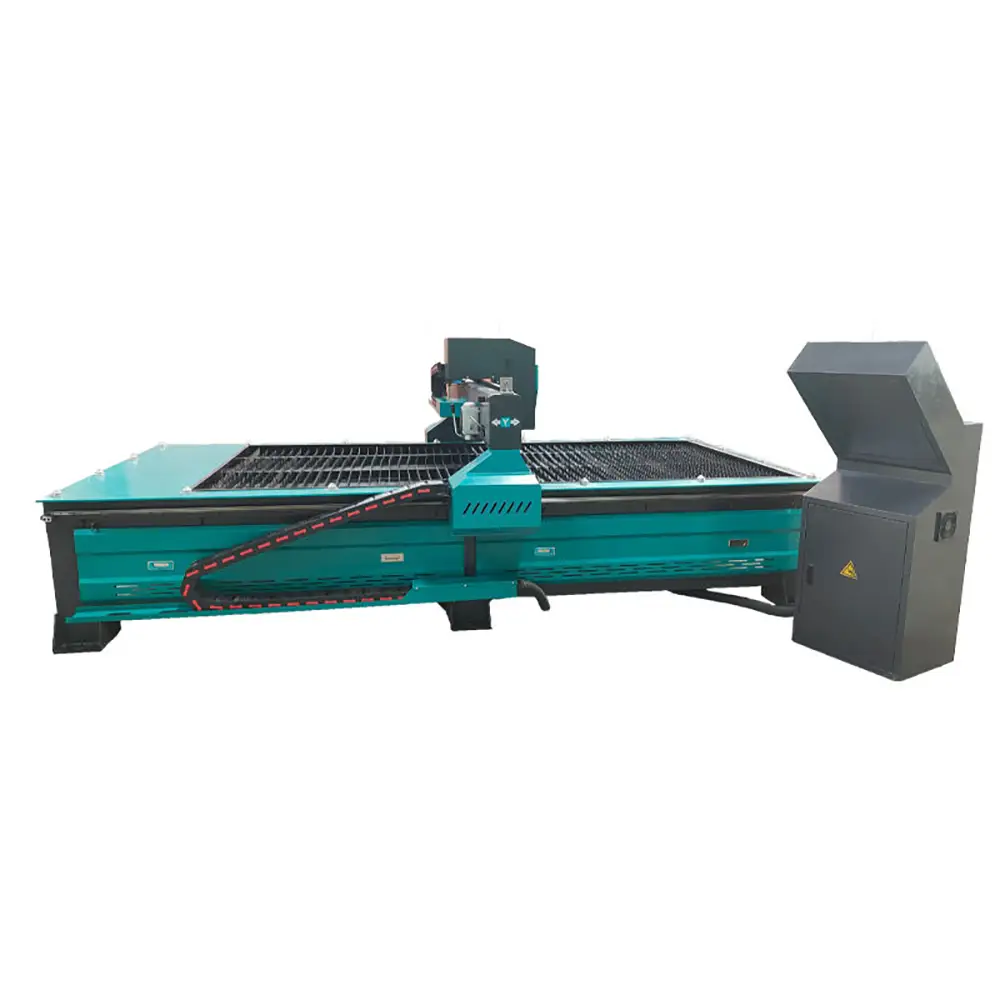
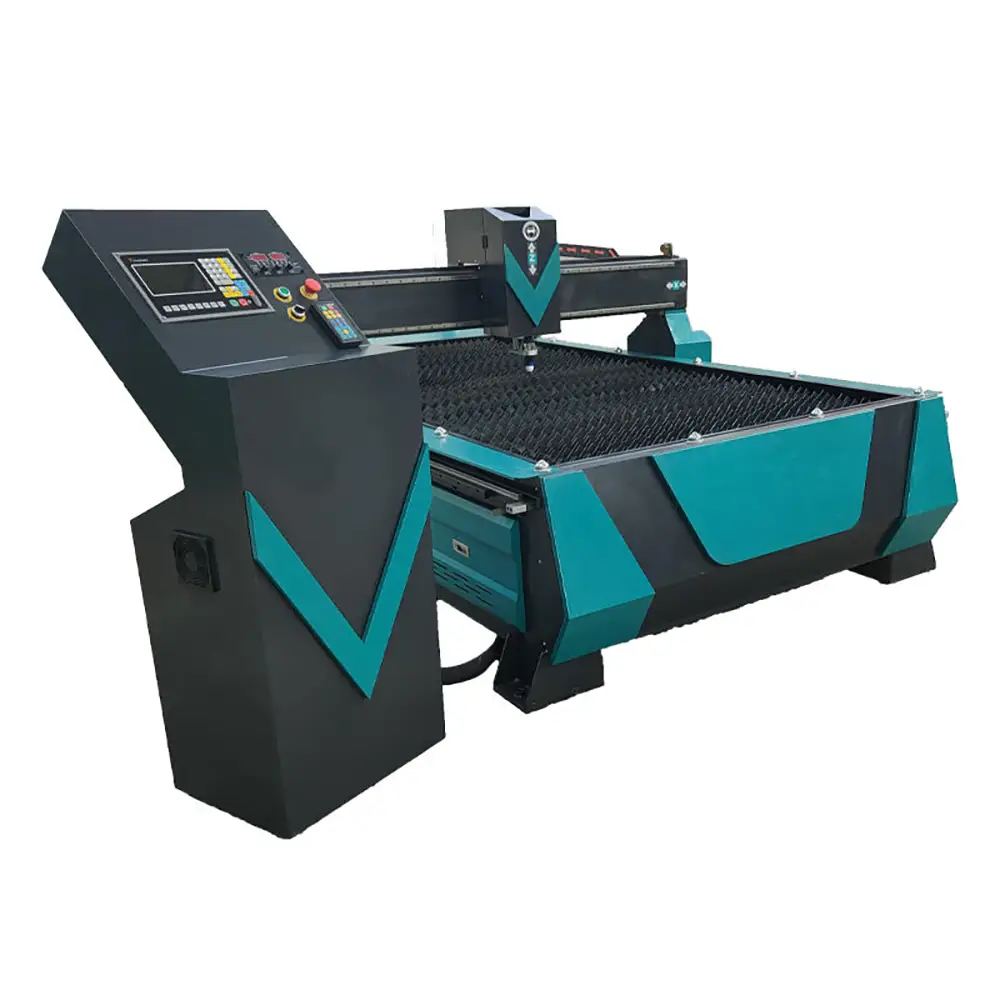
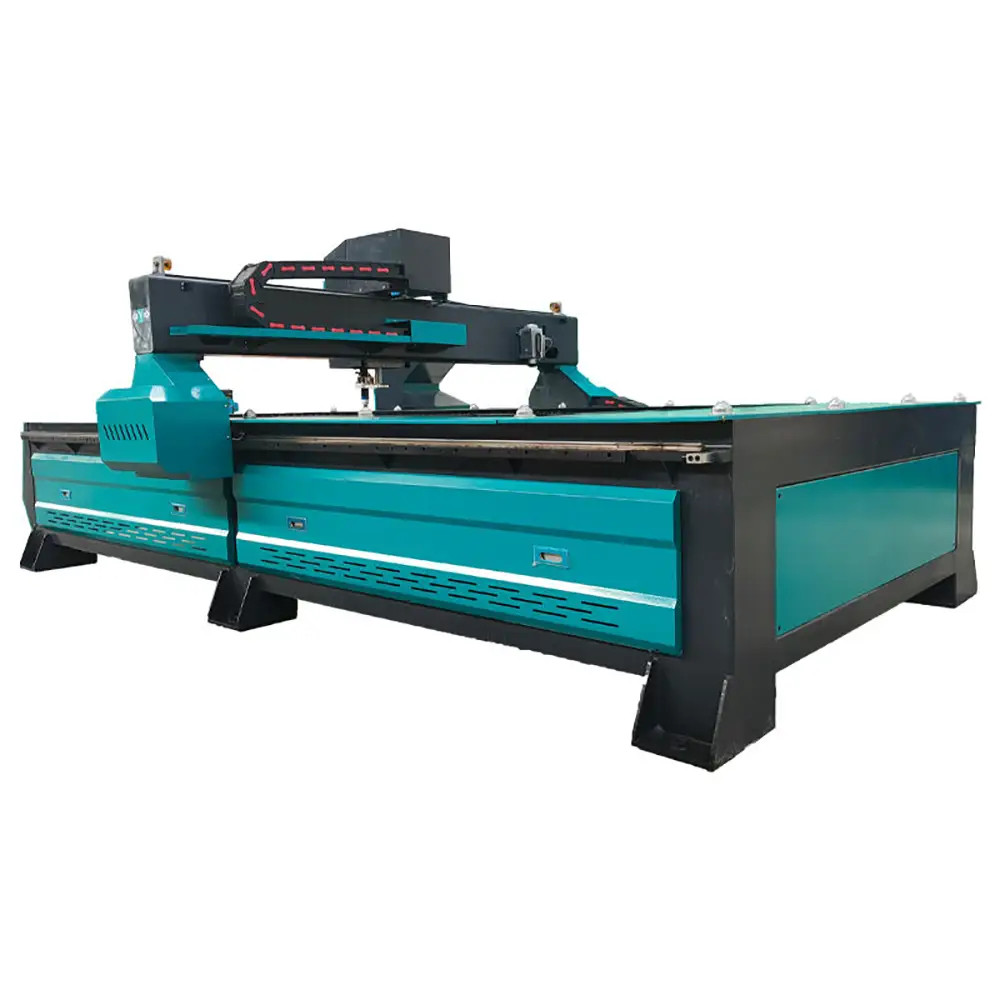
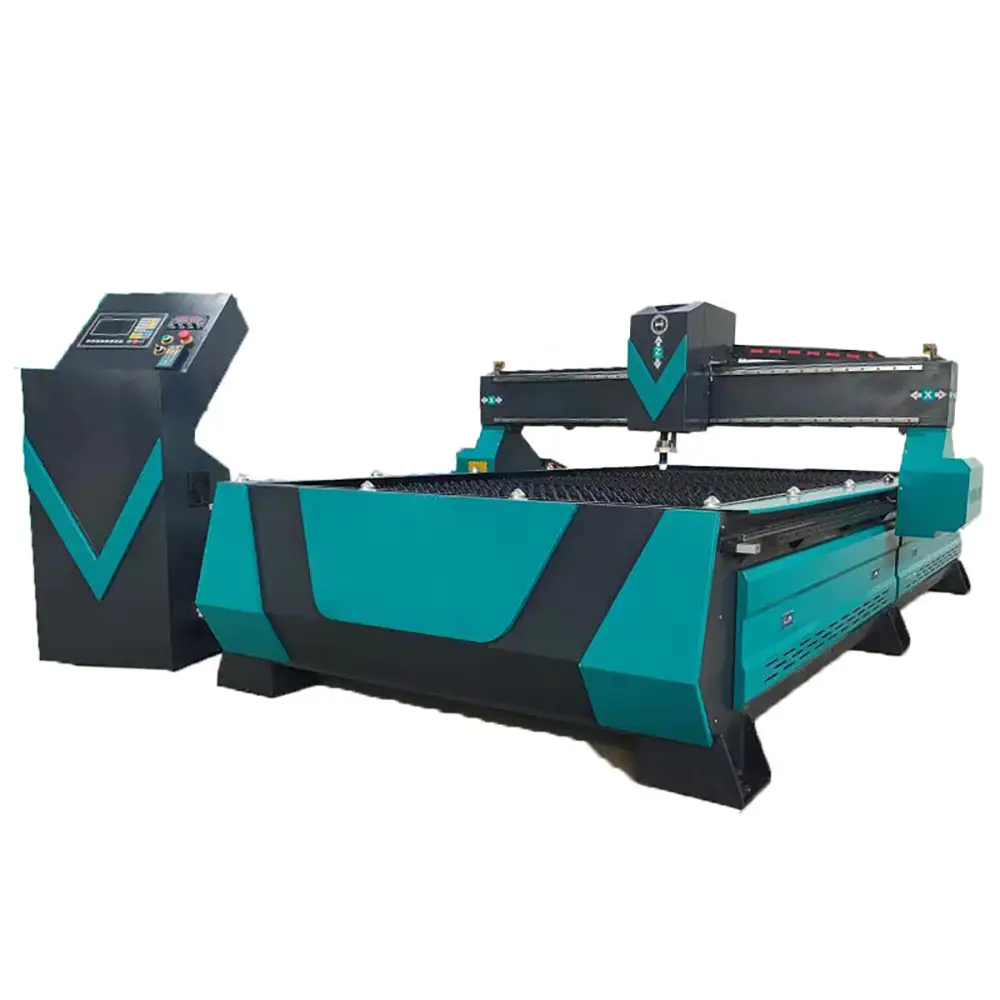
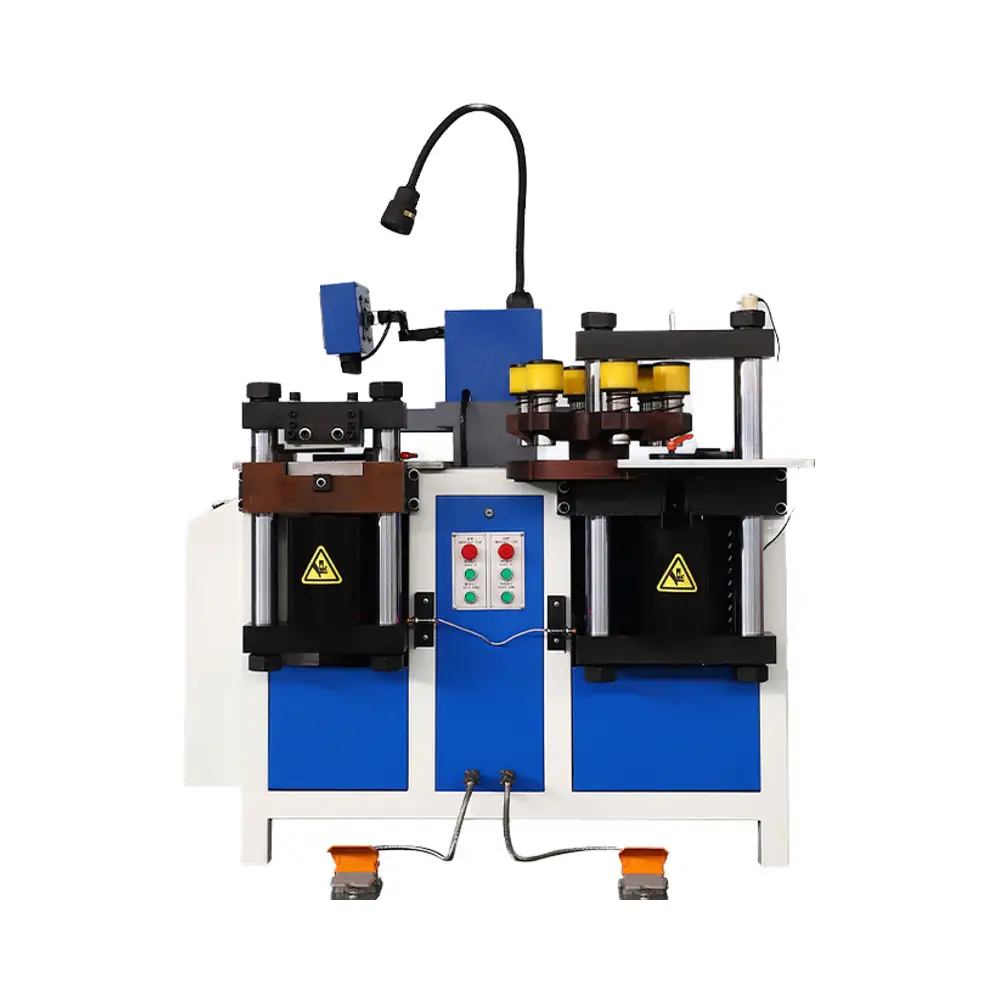
|
Model |
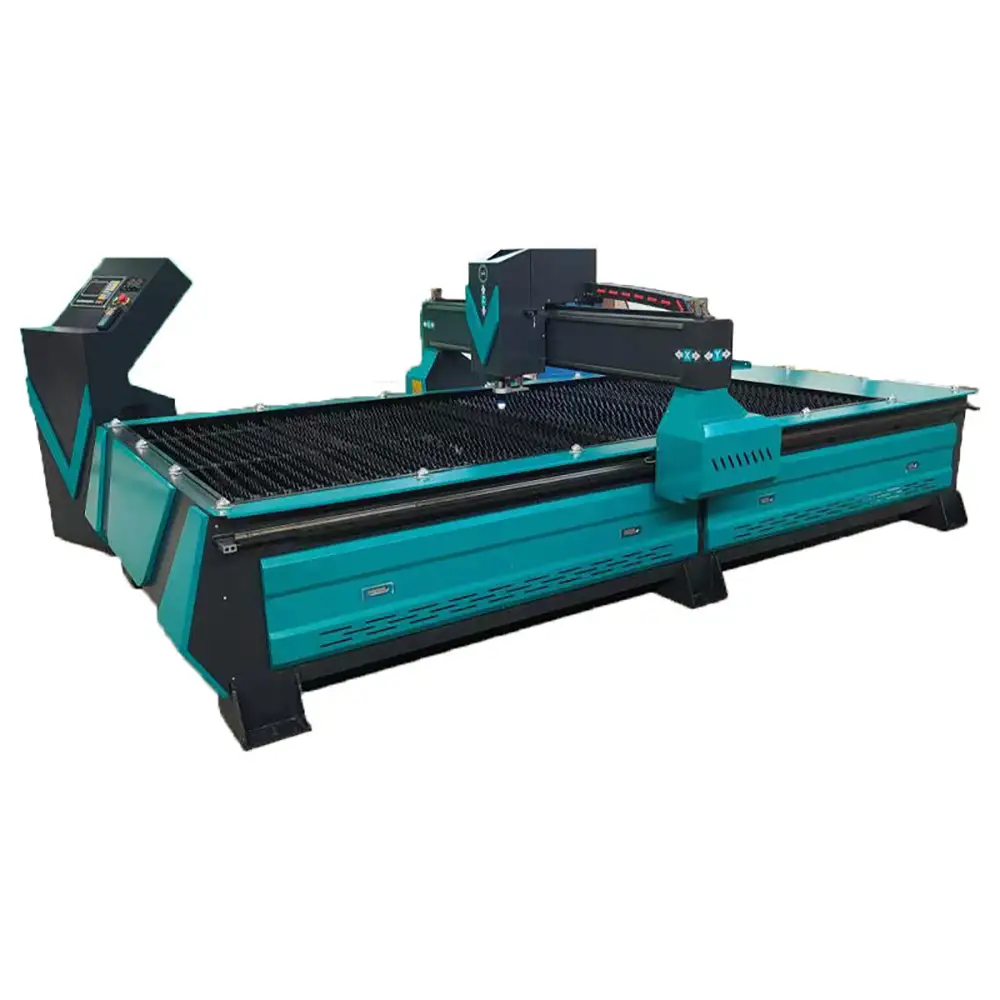
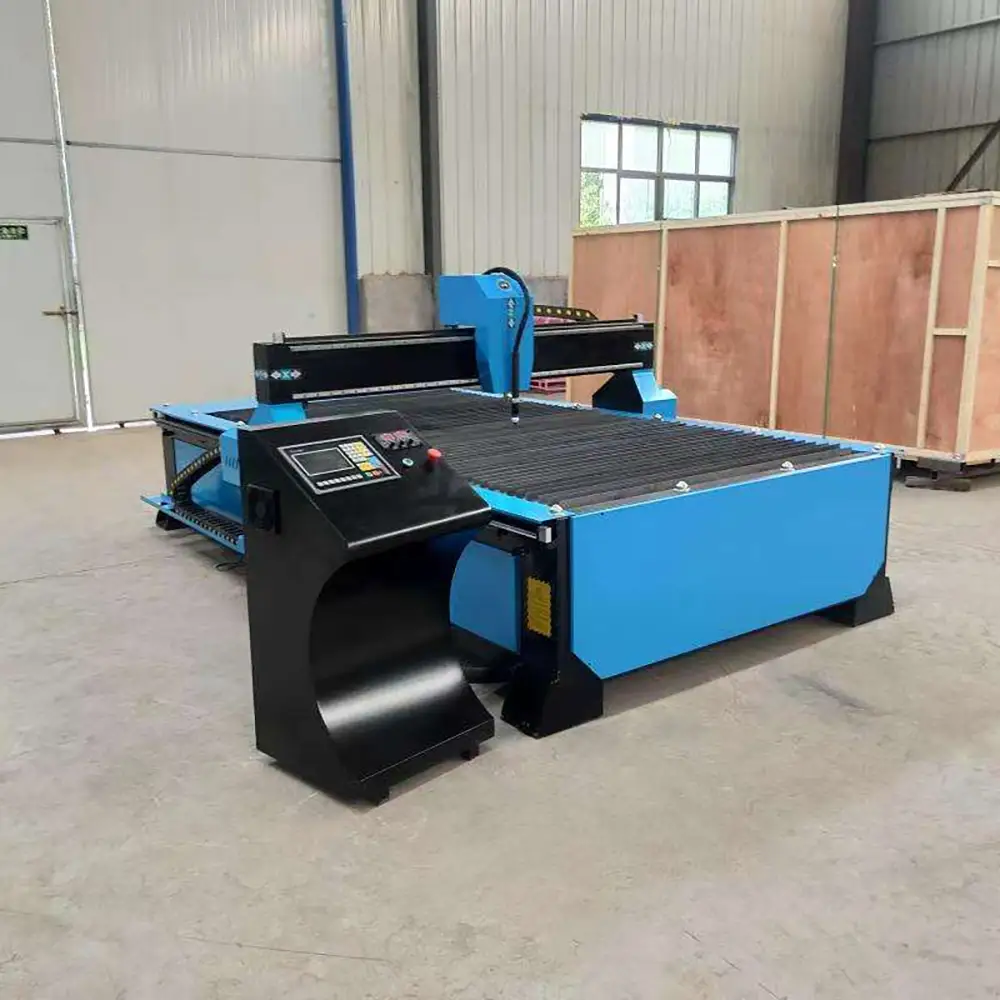
1530 160A Plasma cutting machine (high configuration) |
|
X,Y working area |
1500*3000mm |
|
Z working area |
150mm |
|
Packing dimension |
4000mm*2280mm*1850mm |
|
Lathe bed |
Very thick steel structure |
|
Machine Power |
8.5kw |
|
Working voltage |
380V three phase 60hz |
|
Reposition precision |
0.02mm |
|
Processing precision |
0.1mm |
|
Maximum cutting speed |
12000mm/min |
|
Torch Height control mode |
Automatic |
|
Cutting thickness |
Max 35mm carbon steel |
|
Plasma power supply |
LGK160A |
|
Control system |
STARfire |
|
Motors |
Stepper motor |
|
Software |
Starcam |
|
Weight |
1400KG |
|
Plasma Air Pressure |
Max.0.8Mpa |
|
Working Temperature |
-10°C-60°C. Relative Humidity, 0-95%. |
|
LCD Display Dimension |
7 Inches |
CNC Plasma Cutter Plasma Cutting Machine for Plate Cutting
The CNC Plasma Cutter Plasma Cutting Machine is an efficient metal cutting solution designed for processing steel plates, metal sheets, and other electrically conductive materials. Combining CNC motion control with a plasma power source, the machine provides a practical method for cutting straight lines, curves, holes, slots, and customized contours according to digital cutting programs.
CNC plasma cutting is widely used in metal fabrication because it can process a broad range of conductive metals with high cutting speed and relatively simple operation. Compared with manual cutting methods, a CNC plasma machine can automate torch movement and reproduce programmed cutting patterns, making it suitable for both customized fabrication and repetitive production.
The machine is designed for customers looking for a plasma machine for plate cutting, including metalworking companies, steel fabricators, machinery manufacturers, construction contractors, agricultural equipment producers, and industrial workshops.
CNC Plasma Cutting Technology
Plasma cutting uses a high-temperature plasma arc to melt and remove electrically conductive metal along a programmed cutting path. The CNC system controls the movement of the plasma torch according to the cutting file.
A typical CNC plasma cutting process includes importing or creating a cutting drawing, positioning the metal plate, setting the appropriate cutting parameters, and starting the cutting cycle.
The actual cutting performance depends on plasma power, material type, material thickness, cutting speed, consumables, gas selection, torch height, and machine configuration.
For this reason, selecting the appropriate plasma power source according to the intended material range is important.
Plasma Power Source
The plasma power source is a central component of the plasma cutting system. It provides the electrical energy required to generate the plasma arc for cutting conductive metals.
Different power levels are suitable for different cutting requirements. When selecting a machine, customers should consider the typical material type and thickness they need to cut rather than choosing a power source based only on maximum advertised capacity.
Carbon steel, stainless steel, and aluminum are common materials for plasma cutting, although the actual cutting range depends on the selected plasma system and machine configuration.
Customers should provide their material specifications and required cutting thickness so the appropriate power source can be evaluated.
Metal Plate Cutting
The CNC plasma cutter is designed for plate and sheet metal processing. It can create a wide variety of programmed shapes without requiring a dedicated mechanical die for every design.
Typical cutting operations include:
Straight Plate Cutting
Contour Cutting
Shape Cutting
Hole Cutting
Slot Cutting
Bracket Cutting
Flange Cutting
Structural Plate Cutting
Customized Metal Parts
This flexibility makes plasma cutting suitable for both standard components and customized fabrication projects.
CNC Control System
The CNC control system coordinates the movement of the cutting torch along the programmed cutting path. Digital cutting files can be prepared using compatible CAD/CAM software and transferred to the machine controller.
Once the cutting program is loaded, the operator can position the material and initiate the cutting process according to the machine's operating procedure.
For repetitive production, cutting programs can be reused for similar components. This can reduce repeated manual measuring and marking while improving production consistency.
The exact controller, software compatibility, file formats, nesting functions, and automatic features depend on the selected configuration.
High-Speed Metal Cutting
Plasma cutting is widely recognized for its ability to process conductive metal efficiently, especially in applications involving medium and thicker metal plates where other cutting technologies may not be the most practical choice.
Cutting speed depends on several variables, including material thickness, material grade, plasma power, gas pressure, torch condition, cutting parameters, and desired edge quality.
For production environments, the appropriate combination of cutting speed and quality should be selected according to the finished component requirements.
Applications Across Multiple Industries
The CNC Plasma Cutting Machine can be used in many industries that require metal plate fabrication.
Steel Fabrication
Fabricators can use the machine for cutting structural plates, brackets, base plates, support components, and customized steel parts.
Machinery Manufacturing
The machine can produce machine frames, mounting plates, covers, brackets, and other components used in industrial equipment.
Agricultural Machinery
Plasma cutting is suitable for selected tractor components, farm machinery parts, implements, brackets, and structural assemblies.
Construction Equipment
Construction equipment manufacturers can use CNC plasma cutting for plates and fabricated structural components.
Metal Furniture
The machine can process metal plates and sheets used in frames, supports, brackets, tables, shelving systems, and other fabricated furniture.
General Metalworking
Job shops and workshops can use a CNC plasma cutter for custom metal parts, repair components, prototypes, and small-batch production.
Flexible Cutting Shapes
A major advantage of CNC plasma cutting is the ability to produce customized shapes directly from digital drawings.
Instead of manually measuring and cutting every part, the operator can prepare a digital cutting file and allow the CNC system to control the torch movement.
This is especially useful for businesses that manufacture products with different dimensions or frequently receive customized orders.
The machine can be used for straight cuts as well as programmed contours, depending on the CNC system and cutting head configuration.
Plate Preparation and Material Handling
Before cutting, the metal plate should be properly positioned on the cutting table. The material should be supported adequately and placed within the machine's working area.
For long or heavy plates, an appropriate loading and support method can improve handling efficiency.
The plate surface should also be reasonably clean and free from excessive contamination that could interfere with cutting performance.
For automated production lines, additional loading, unloading, fume extraction, or material handling equipment can be considered depending on the customer's requirements.
Cutting Accuracy and Edge Quality
Cutting accuracy is affected by the CNC mechanical structure, drive system, torch positioning, plasma power source, material condition, consumables, cutting parameters, and operator setup.
Proper torch height and cutting speed are particularly important for maintaining consistent results.
Edge quality requirements should be discussed before selecting the machine. Applications requiring highly precise or finely finished edges may require a different cutting technology or additional secondary processing.
Consumables and Maintenance
Plasma cutting systems use consumable components such as electrodes and nozzles. These parts gradually wear during operation and should be inspected and replaced when necessary.
Operators should regularly inspect the plasma torch, cables, air or gas supply, electrical connections, cutting table, and CNC drive components.
Removing accumulated metal slag and keeping the cutting area clean can help maintain a stable working environment.
Following the manufacturer's maintenance schedule can help extend component life and reduce unexpected downtime.
Safety Considerations
Plasma cutting involves high temperatures, electrical energy, bright arc light, fumes, and sparks. Operators should use appropriate personal protective equipment and follow applicable workplace safety procedures.
Adequate ventilation or a suitable fume extraction system should be used according to the material and cutting process.
The machine should be installed and operated according to the manufacturer's instructions and applicable local safety requirements.
OEM, ODM, and B2B Supply
The CNC Plasma Cutter is suitable for manufacturers, metal fabricators, machinery distributors, wholesalers, contractors, and industrial equipment buyers.
OEM and ODM cooperation can be discussed according to application requirements. Potential configuration options may include plasma power source, working table dimensions, CNC controller, cutting torch, drive system, fume extraction, material support, electrical specifications, labeling, packaging, and documentation.
Customers can provide material type, maximum plate thickness, plate dimensions, required cutting accuracy, production volume, and preferred automation level for machine evaluation.
FAQ
1. What is a CNC plasma cutter?
A CNC plasma cutter is a computer-controlled cutting machine that uses a plasma arc to cut electrically conductive metals according to programmed cutting paths.
2. What materials can a plasma cutting machine cut?
Common materials include carbon steel, stainless steel, and aluminum. Actual material and thickness capability depends on the selected plasma power source and machine configuration.
3. Is this machine suitable for metal plate cutting?
Yes. The machine is designed for CNC plate cutting applications and can produce straight cuts, contours, holes, slots, and other programmed shapes.
4. What is the plasma power source?
The plasma power source supplies the electrical energy needed to generate the plasma arc. Its power level should be selected according to the materials and thicknesses being processed.
5. Can the machine cut customized shapes?
Yes. CNC control allows programmed cutting paths to be used for customized contours and component designs within the machine's working range.
6. Can it cut thick steel plate?
The applicable thickness depends on the plasma power source, material type, cutting speed, consumables, and machine configuration. Customers should provide their required thickness for evaluation.
7. Is CAD software required?
A compatible CAD/CAM workflow is normally used to create or prepare digital cutting files. Exact software and file format compatibility depends on the selected CNC controller.
8. What consumables does a plasma cutter use?
Common plasma torch consumables include electrodes and nozzles. Their service life depends on cutting parameters, material, thickness, duty cycle, and operating conditions.
9. Can the CNC plasma cutter be customized?
Depending on the project, working table size, plasma power, CNC controller, torch, drive system, fume extraction, and other machine configurations can be customized.
10. What information is needed for a quotation?
Provide material type, maximum and typical thickness, plate dimensions, required cutting shapes, production volume, desired working area, and preferred plasma power if known.
Why Choose Us
1. CNC-Controlled Cutting
The CNC system provides programmable torch movement for repeatable metal plate cutting.
2. Dedicated Plasma Power Source
The plasma power system can be selected according to the customer's material and thickness requirements.
3. Flexible Plate Processing
The machine can cut straight lines, curves, holes, slots, brackets, and customized metal contours.
4. Wide Industrial Applications
Suitable for steel fabrication, machinery manufacturing, agriculture, construction equipment, metal furniture, and general metalworking.
5. Efficient Metal Cutting
Plasma technology provides an efficient solution for many conductive metal cutting applications.
6. Flexible Production
Digital cutting programs make the machine suitable for customized orders, prototypes, small batches, and repetitive production.
7. OEM & ODM Support
Working dimensions, plasma power, CNC system, torch configuration, electrical requirements, labeling, packaging, and other options can be discussed.
8. Professional B2B Machinery Supply
We support manufacturers, fabricators, distributors, wholesalers, contractors, and industrial buyers with application-focused plasma cutting solutions.
Prev:
High Precision Copper Busbar Bending Punching Machine for Electrical Industry
Next:
Automatic Multi - Functional Milling and Drilling Machine
TAG:
Metal Fabrication Equipment,
CNC Metal Cutting Machine,
Industrial Plasma Cutting Machine,
CNC Plasma Cutting Equipment,
Steel Fabrication Cutting Machine,
Automatic Plasma Cutting Machine,
Metal Fabrication Plasma Cutter,
CNC Plate Cutting Machine,
Heavy Duty Plasma Cutting Machine,
Plasma Plate Cutting Machine,
CNC Plasma Cutting Machine,
Metal Plate Cutting Machine,
CNC Steel Plate Cutting Machine,
Steel Plate Plasma Cutter,
Carbon Steel Plasma Cutter,
CNC Plasma Cutter,
CNC Steel Cutting Machine,
Steel Plate Cutting Machine,
Sheet Metal Cutting Machine,
Metal Cutting Equipment,
Industrial Plasma Cutter,
Metalworking Cutting Machine,
Precision Plasma Cutting Machine,
Metal Plate Plasma Cutter,
Steel Sheet Plasma Cutter,
Plasma Cutting Equipment,
Stainless Steel Plasma Cutter,
Aluminum Plasma Cutter,
CNC Metal Cutting Equipment,
Sheet Metal Plasma Cutter,
Related Category:
CNC Plasma Cutter,CNC Plasma Cutting Machine,Plasma Cutting Machine,Plasma Cutter Machine China, suppliers, manufacturers, factory, customized, wholesale, quotation, made in China