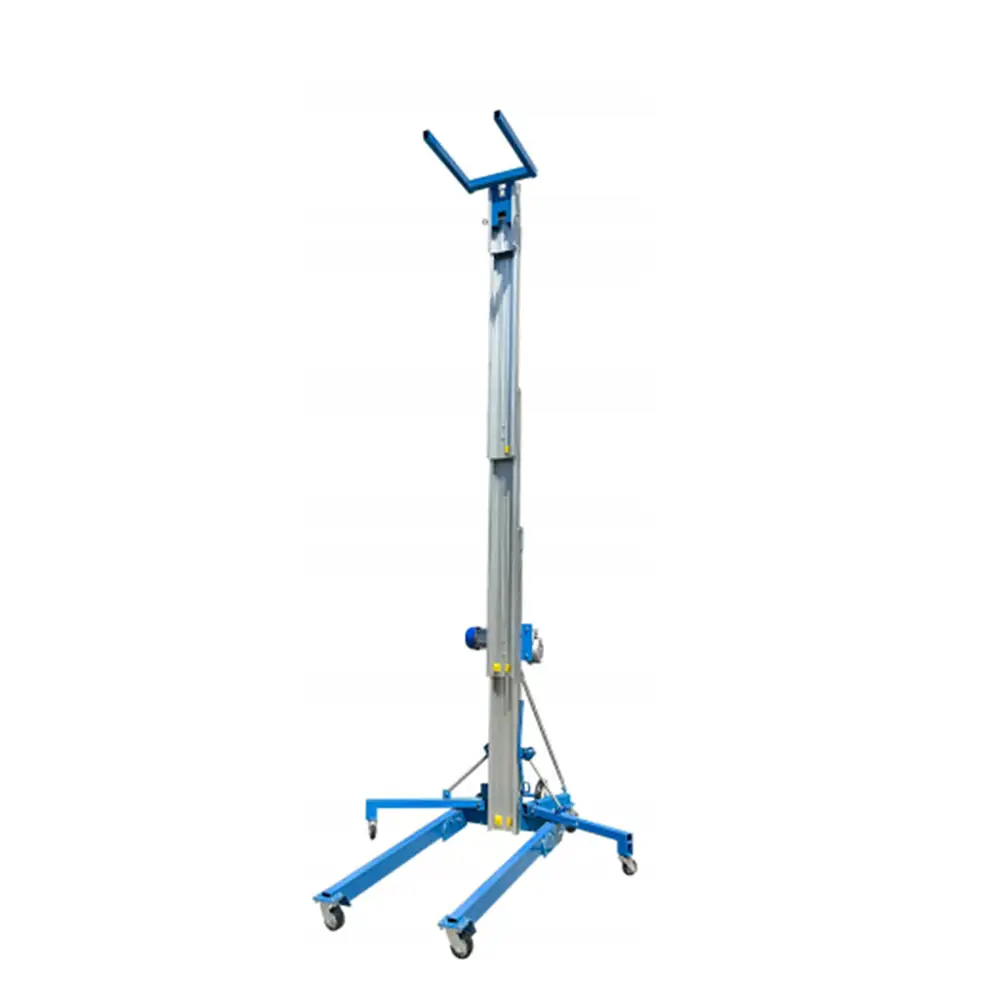
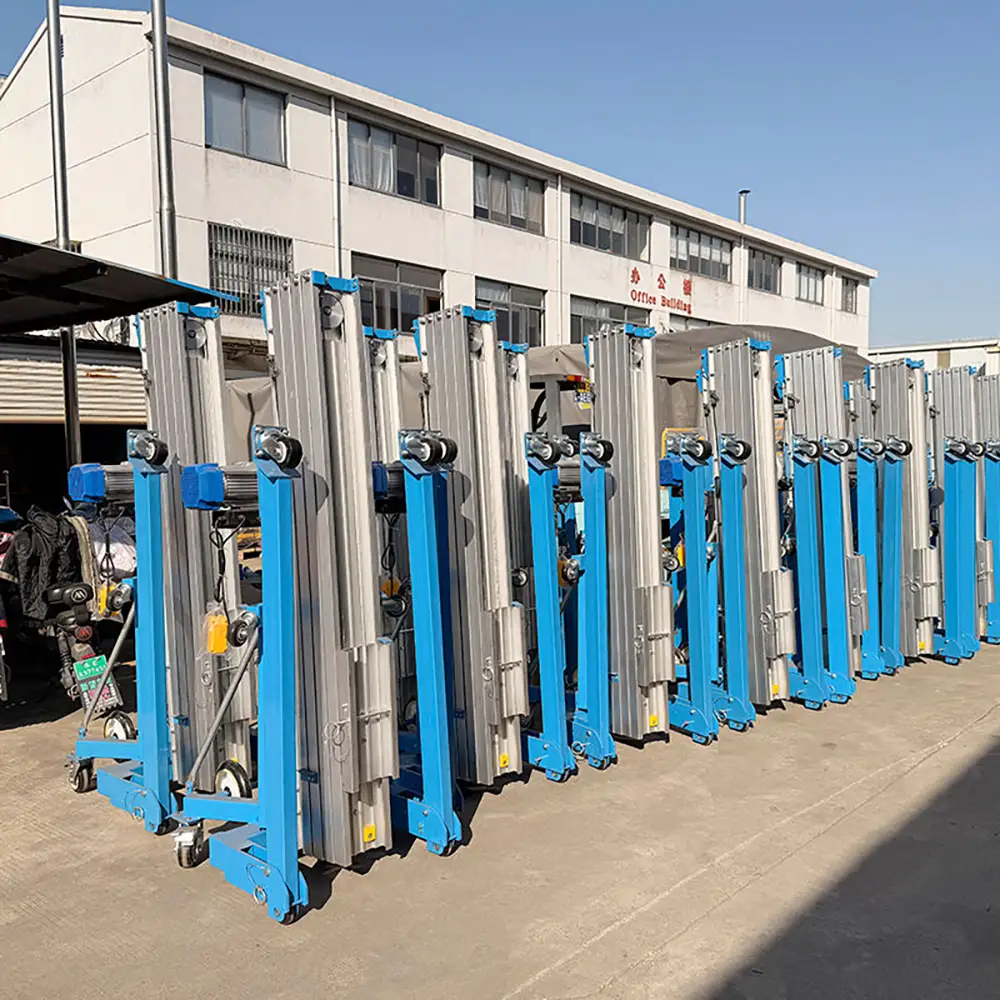
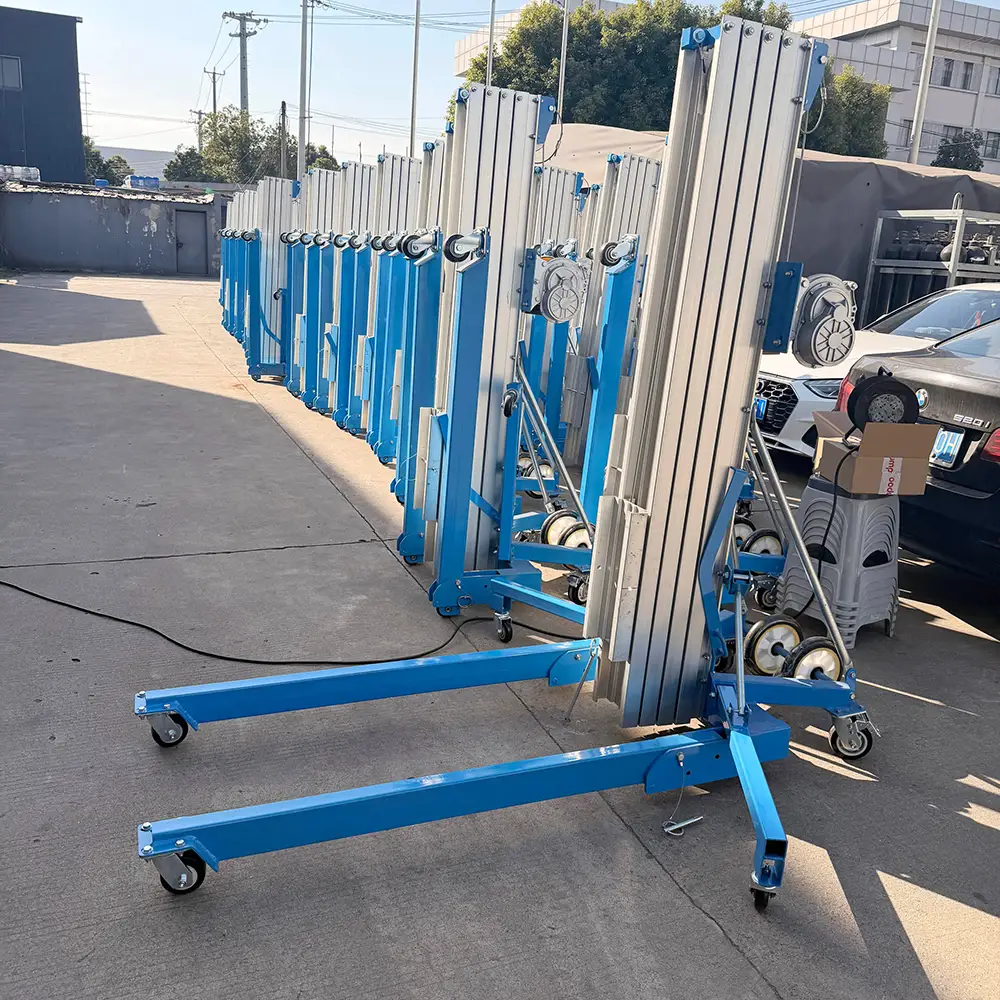
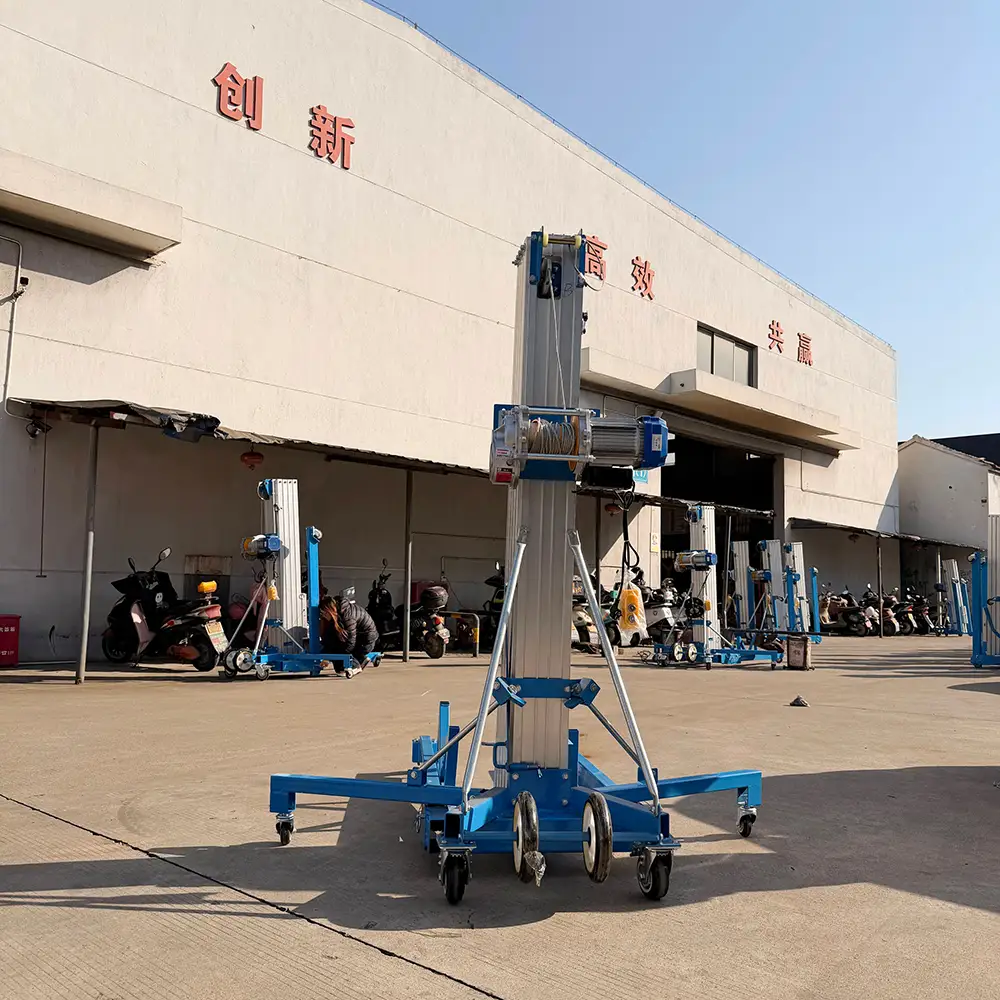
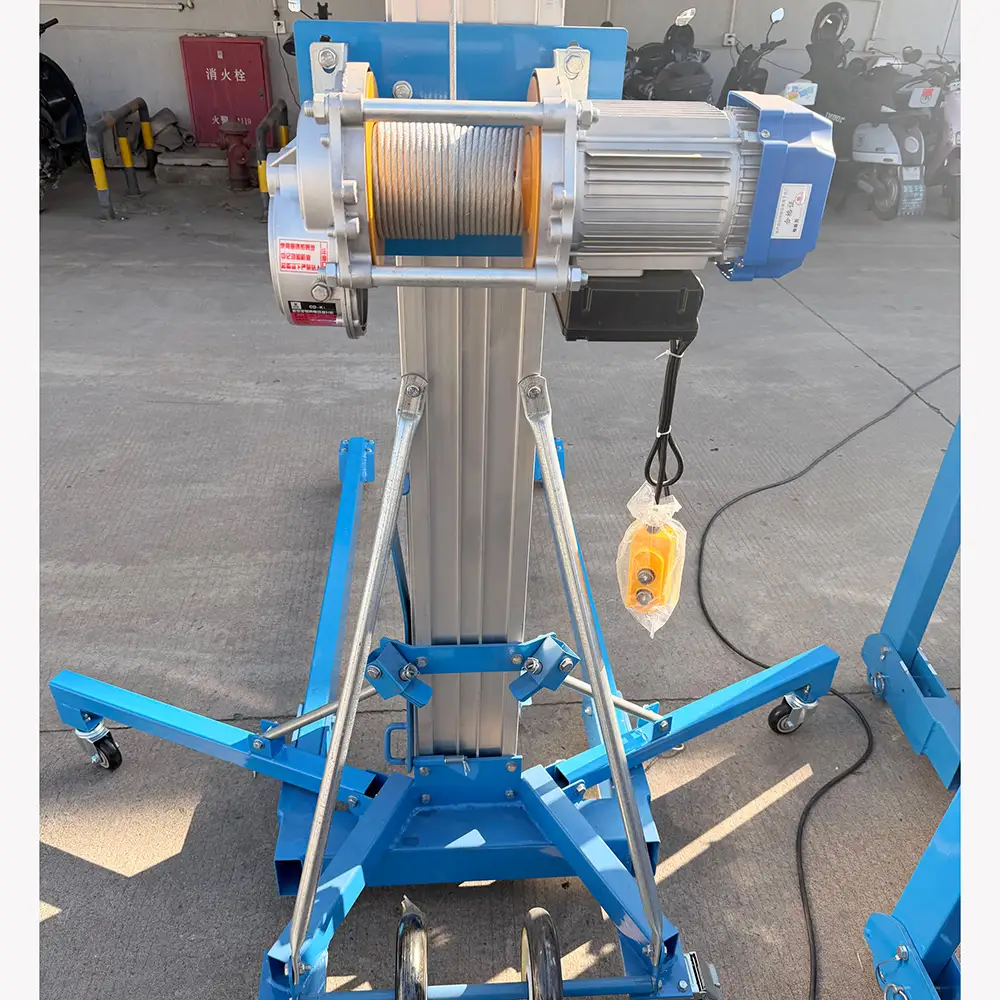
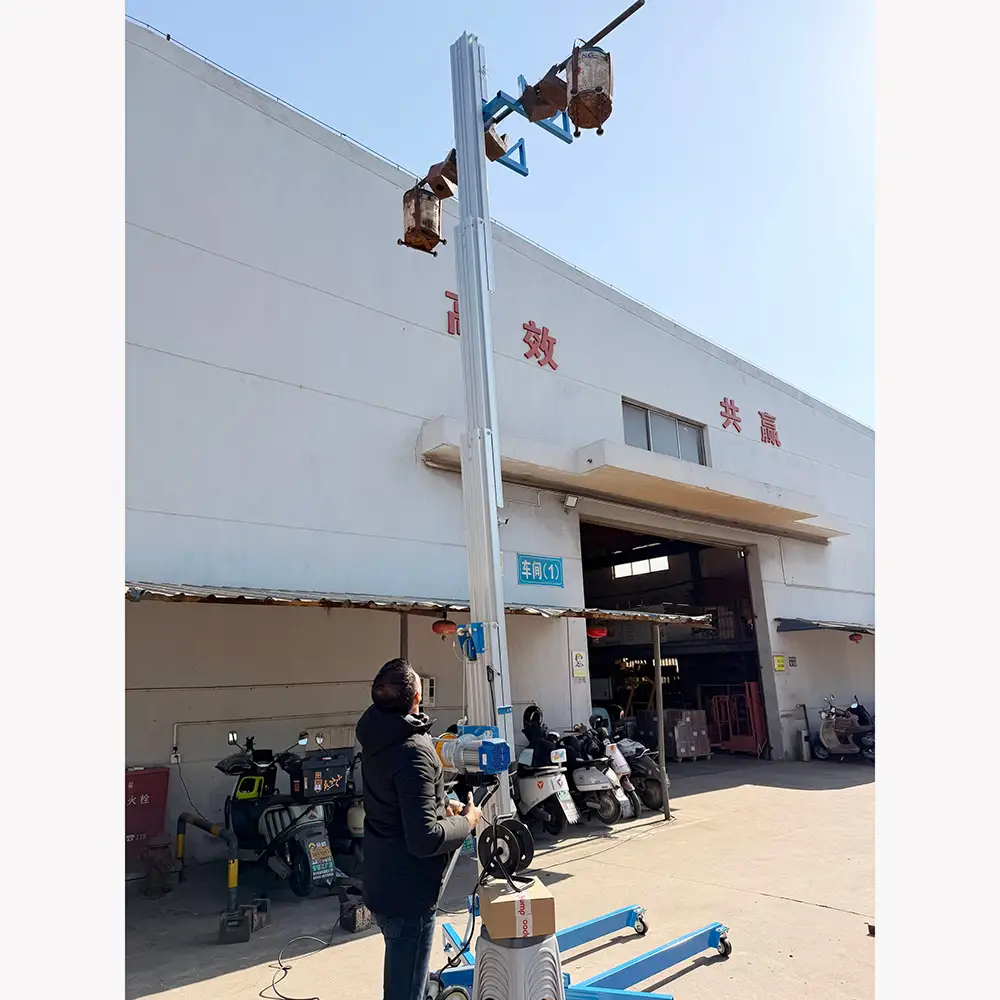
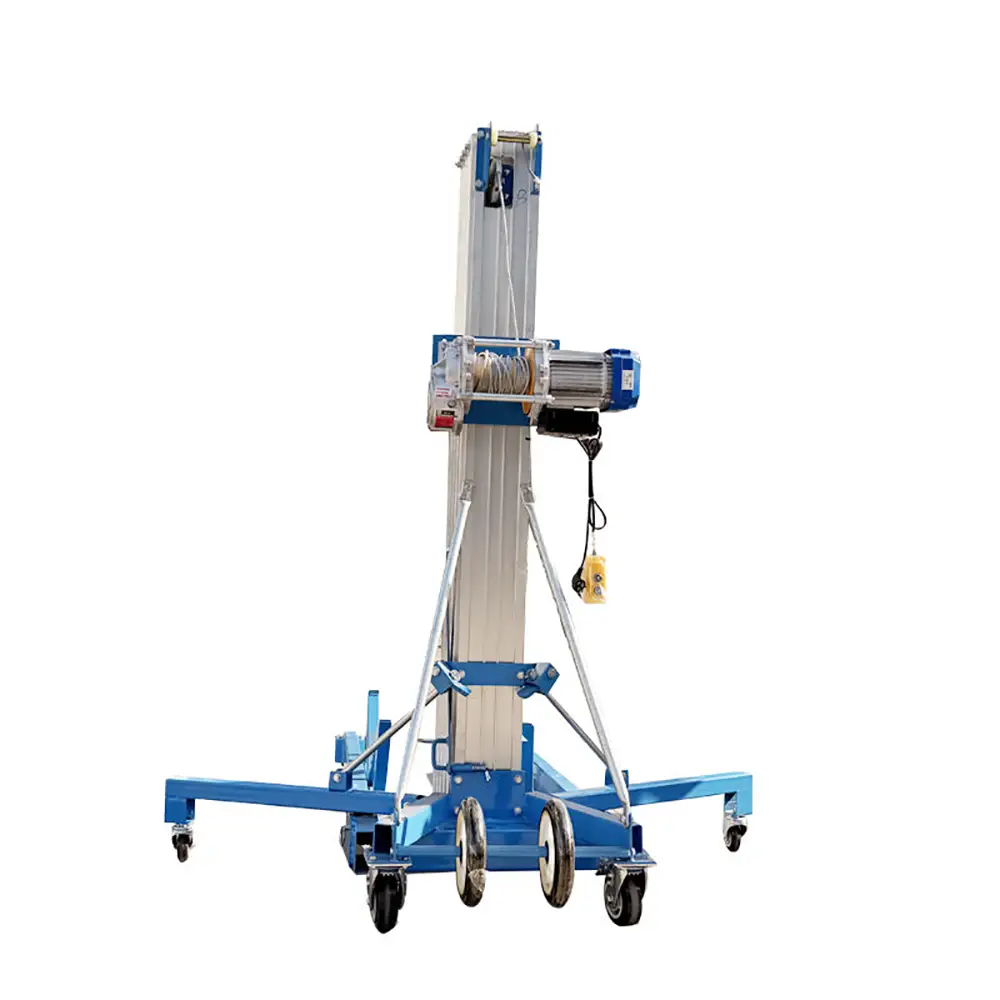
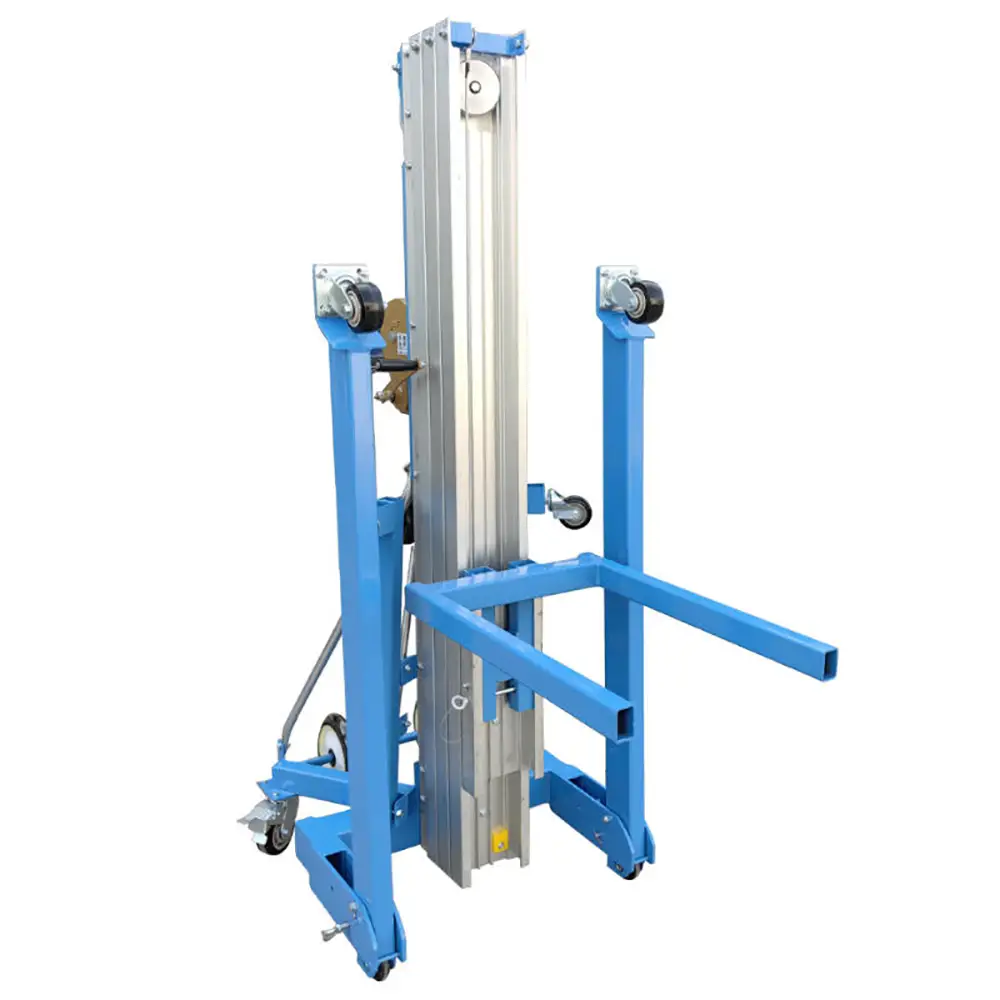
Aluminum Alloy Material Handling Lift – Portable Vertical Lifter Elevator Machine
The Aluminum Alloy Material Handling Lift is a practical vertical lifting solution designed to move, raise, position, and handle materials efficiently in industrial, commercial, warehouse, workshop, construction, and maintenance environments. Combining an aluminum alloy structure with a portable vertical lifting design, this type of Portable Lifting Machine helps reduce manual handling while improving workflow efficiency and operator convenience.
Material handling often requires lifting loads between different working heights, loading platforms, shelves, production stations, vehicles, or service areas. A properly configured vertical lifter can provide controlled movement and help operators complete these tasks with less physical effort. Compared with permanently installed lifting equipment, a portable material lift can offer greater flexibility for facilities where lifting points or work locations change frequently.
|
Model Type |
soar-3.5A |
soar-5A |
soar-6.5A |
soar-7.9A |
|
Lifting Height(mm) |
3500 |
5000 |
6500 |
7900 |
|
Load Capacity(kg) |
400 |
350 |
300 |
250 |
|
Net Weight(kg) |
180 |
200 |
220 |
240 |
|
Move method |
manual |
manual |
manual |
manual |
|
Motor power (kw) |
2.2 |
2.2 |
2.2 |
2.2 |
Aluminum Alloy Construction for Portable Handling
One of the key features of this material handling lift is its aluminum alloy construction. Aluminum alloy can provide a useful combination of structural strength, portability, and corrosion resistance for applications where equipment needs to be moved between different working areas.
The lightweight design can make transportation and positioning more convenient compared with some heavier steel lifting equipment. Depending on the machine configuration, the frame, mast, platform, forks, wheels, or other components can be designed for specific material-handling requirements.
For B2B applications, the exact aluminum alloy grade, structural design, lifting capacity, platform dimensions, and component configuration should be confirmed according to the intended application.
Vertical Lifter for Efficient Material Handling
The Vertical Lifter is designed to provide controlled vertical movement. Instead of relying entirely on manual lifting, workers can use the lifting mechanism to raise materials to an appropriate working height.
This can be useful for:
Moving materials between floor and elevated positions
Loading and unloading equipment
Supplying parts to production lines
Positioning components at workstations
Warehouse material handling
Workshop lifting operations
Maintenance and service applications
Stockroom and inventory handling
Commercial facility operations
The vertical lifting concept also allows the machine to be integrated into workflows where materials repeatedly need to be moved to similar working heights.
Portable Lifting Machine for Flexible Applications
Portability is particularly valuable in workshops, warehouses, maintenance departments, construction sites, and production facilities where one lifting machine may need to serve multiple locations.
A Portable Lifting Machine can be moved to the required operating area instead of installing separate fixed lifting equipment at every workstation. Depending on the design, the machine may incorporate wheels or casters, a compact frame, lifting controls, and a suitable load-supporting attachment.
Before selecting a portable lift, buyers should consider the required rated capacity, lifting height, load dimensions, operating frequency, floor conditions, and movement requirements. These factors help determine the appropriate machine configuration.
Material Handling Elevator Design
The term Material Handling Elevator describes equipment designed to raise materials vertically rather than transporting people. Depending on the configuration, the lifting platform or attachment can be adapted for different products and handling tasks.
Common loads may include boxes, cartons, components, tools, containers, equipment parts, production materials, and other industrial goods. The actual load type and dimensions should be evaluated before ordering to ensure that the lifting attachment and supporting structure are suitable.
For specialized applications, manufacturers can develop customized platforms, forks, brackets, baskets, or other load-supporting solutions according to customer requirements.
Improving Workplace Efficiency
Manual material handling can consume considerable time when products need to be repeatedly lifted from one height to another. A vertical lifting machine can help streamline these repetitive operations.
For example, in a production workshop, operators may need to transfer components from floor-level storage to a workbench. In a warehouse, cartons may need to be raised to a loading position. In a maintenance facility, tools or components may need to be positioned at a suitable service height.
A portable vertical lifter can help create a more organized material flow while reducing unnecessary manual lifting effort.
Applications in Warehouses and Workshops
The aluminum alloy material handling lift can be used in a variety of B2B environments.
Warehouse Material Handling
Warehouses can use portable vertical lifts for moving cartons, containers, parts, and packaged products between different working heights. The machine can support loading, unloading, order preparation, and internal material movement depending on its configuration.
Manufacturing Facilities
Production facilities can use vertical lifting equipment to supply components to assembly stations, move parts between processes, and position materials at ergonomic working heights.
Maintenance and Service
Maintenance teams may use portable lifting equipment to position tools, replacement parts, or components during repair and service operations.
Construction and Installation
For selected construction and installation tasks, a portable material lift can help raise tools, components, and materials to elevated working positions. The suitability of the machine depends on load characteristics, lifting height, ground conditions, and applicable site requirements.
Commercial Facilities
Retail stores, commercial warehouses, laboratories, workshops, and other facilities may also benefit from compact material lifting equipment when goods need to be moved vertically.
Lifting Capacity and Working Height
When purchasing a vertical lifter, two of the most important specifications are rated lifting capacity and maximum lifting height.
The rated capacity should not be confused with the maximum physical load that may be possible under certain conditions. Safe operation must always follow the manufacturer's rated capacity and operating instructions.
Working height should also be selected according to the actual application. Buyers should consider the starting height, required final height, load dimensions, platform or attachment geometry, and available operating space.
Because machine performance varies according to design, the required lifting capacity, stroke, dimensions, and duty cycle should be confirmed before production.
Safety and Operating Considerations
Vertical lifting equipment operates under mechanical load and should be used only according to the manufacturer's instructions and applicable workplace regulations.
Important considerations may include load stability, rated capacity, center of gravity, platform condition, wheel locking, emergency stopping provisions, operator training, and routine inspection.
Operators should ensure that the load is properly positioned and secured before lifting. The machine should also be placed on an appropriate surface, and personnel should remain clear of hazardous movement zones.
Specific safety features can vary according to machine configuration and market requirements. Buyers should confirm applicable standards and compliance requirements for their country or workplace before purchase.
Maintenance and Service
Regular inspection helps maintain reliable lifting performance. Operators should periodically check the lifting mechanism, structural components, fasteners, wheels, electrical components, controls, and load-supporting attachments.
Moving components should be inspected for abnormal wear, while electrical or hydraulic systems, when applicable, should be maintained according to the manufacturer's recommendations.
Keeping the lifting area clean can also help reduce the risk of interference during operation. Any unusual noise, vibration, movement, or visible component damage should be investigated before continued use.
Custom Aluminum Alloy Material Handling Lift
Different industries have different material-handling requirements. For this reason, the Aluminum Alloy Material Handling Lift can be considered for customized B2B projects.
Customization may include:
Lifting height
Rated load capacity
Platform size
Fork or attachment design
Overall machine dimensions
Wheel configuration
Control system
Power supply
Operating method
Safety features
Surface treatment
Packaging and shipping requirements
OEM and ODM services can be provided according to drawings, samples, technical specifications, or application requirements. Customers are encouraged to provide detailed information about the load, dimensions, lifting height, operating environment, and expected working frequency.
B2B Supply and OEM/ODM Manufacturing
For distributors, equipment dealers, warehouse solution providers, industrial suppliers, and project contractors, selecting a reliable material handling equipment manufacturer is important for long-term supply.
A professional factory can assist with product configuration, technical consultation, customized designs, quality inspection, packaging, and international shipment preparation. Before mass production, technical specifications should be confirmed to ensure that the lifting machine matches the customer's actual application.
Whether you need a standard Portable Material Lift or a customized vertical lifting solution, the equipment can be configured around your material-handling workflow.
FAQs
1. What is an aluminum alloy material handling lift?
An aluminum alloy material handling lift is vertical lifting equipment designed to raise and position materials. Its aluminum alloy structure can provide a combination of portability, structural performance, and corrosion resistance.
2. What materials can this lifting machine handle?
It can be used for boxes, cartons, components, tools, containers, equipment parts, and other suitable loads. The actual material and load dimensions should be confirmed before selecting the machine.
3. Is this a portable vertical lifter?
Yes. The product is designed as a portable vertical lifting solution, with mobility and configuration depending on the specific model.
4. Can the lifting height be customized?
Lifting height can be customized for many B2B projects. The required height should be specified before production so the appropriate mast and lifting mechanism can be selected.
5. Can the load capacity be customized?
Yes, the rated capacity can be configured according to the application. Customers should provide the required load weight, dimensions, center of gravity, and lifting conditions.
6. Is it suitable for warehouse applications?
Yes. Depending on its capacity and configuration, a portable material lift can be used for warehouse loading, unloading, stock handling, workstation supply, and other internal material-handling tasks.
7. Can the machine be used on construction sites?
Selected models can be used for suitable construction and installation applications. Ground conditions, load requirements, lifting height, and local safety regulations should be evaluated before use.
8. Can OEM or ODM customization be provided?
Yes. OEM and ODM customization can be developed according to drawings, samples, dimensions, lifting requirements, and other technical specifications.
9. What information should I provide when requesting a quotation?
Provide the required lifting capacity, lifting height, load dimensions, load type, working environment, operating frequency, power requirements, and any special attachment requirements.
10. How should the lifting machine be maintained?
Regularly inspect the frame, lifting mechanism, wheels, controls, fasteners, and other components. Maintenance should follow the manufacturer's instructions and the specific machine configuration.
Why Choose Us
Application-Focused Engineering – We develop material handling solutions around the customer's actual lifting and workflow requirements.
Aluminum Alloy Construction Options – Lightweight structural configurations can be considered for applications where portability is important.
Flexible Vertical Lifting Designs – Lifting height, capacity, dimensions, and attachments can be configured according to project requirements.
OEM & ODM Support – Customized equipment can be developed from drawings, samples, technical specifications, or application details.
B2B Manufacturing Capability – We support distributors, dealers, contractors, industrial suppliers, and project-based buyers.
Quality Control – Components, structural assemblies, lifting systems, and finished machines can be inspected according to established production procedures.
International Supply Support – Equipment can be prepared for export packaging and international transportation requirements.
Technical Communication – Our team can help customers select an appropriate lifting configuration based on load, height, environment, and operating conditions.
Prev:
6 Meters 300kg Electric Aluminum Material Handling Lifter Lift Portable Lifting Machine
Next:
Metal Stamping Power Press Mechanical Punch Press Machine for Sheet Metal Forming and Fabrication
TAG:
Industrial Material Handling Equipment,
Factory Material Handling Equipment,
Material Handling Machinery,
Material Handling Equipment,
Material Handling Machine,
Warehouse Lifting Equipment,
Industrial Lifting Equipment,
Mobile Lifting Machine,
Goods Lifting Machine,
Lightweight Material Lift,
Portable Goods Lift,
Material Transfer Lift,
Material Positioning Lift,
Loading And Unloading Lift,
Industrial Lifting Machine,
Material Handling Elevator,
Industrial Material Lift,
Material Lifting Equipment,
Mobile Material Lift,
Warehouse Material Lift,
Workshop Material Lift,
Warehouse Lifting Machine,
Material Handling Lifter,
Material Handling Lift,
Vertical Material Lift,
Vertical Lifting Machine,
Portable Lifting Machine,
Portable Material Lift,
Portable Vertical Lift,
Portable Material Lifter,
Related Category:
Aluminum Alloy Material Handling Lift,Material Handling Lift,Aluminum Alloy Lift,Vertical Lifter,Portable Lifting Machin China, suppliers, manufacturers, factory, customized, wholesale, quotation, made in China