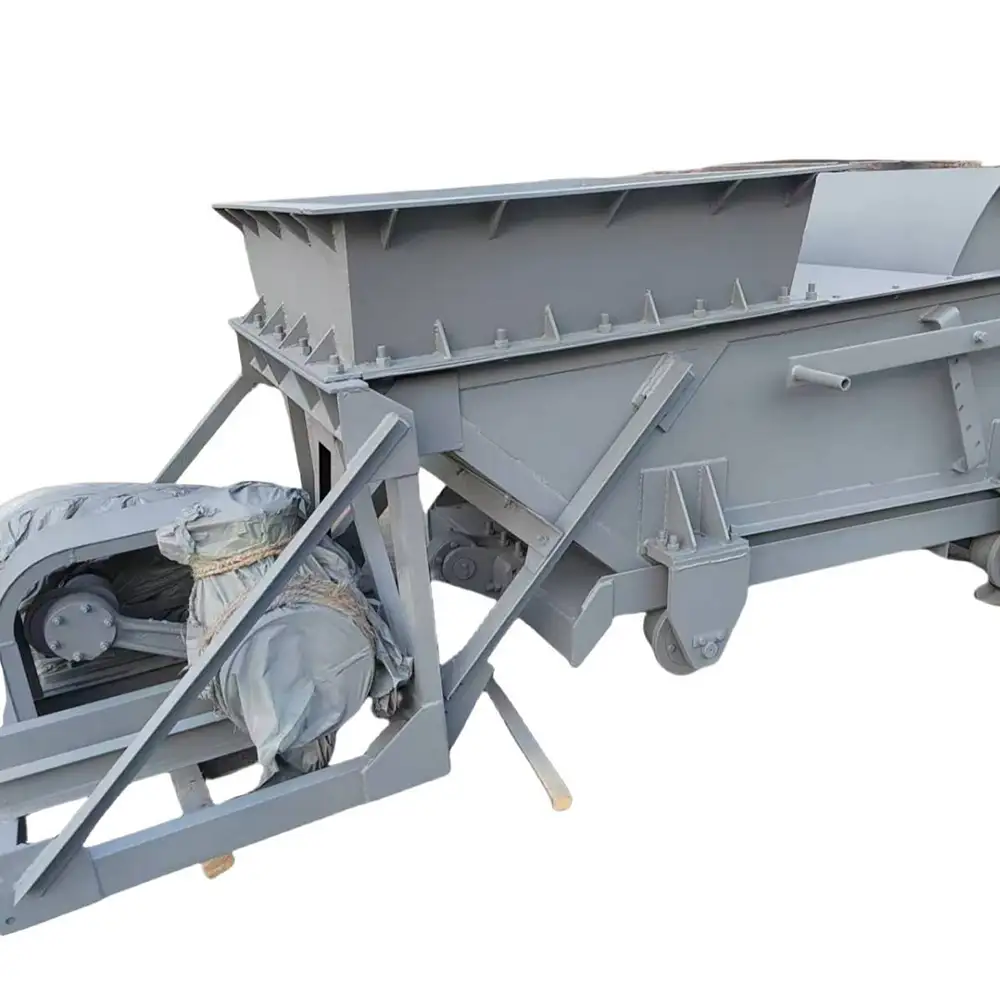
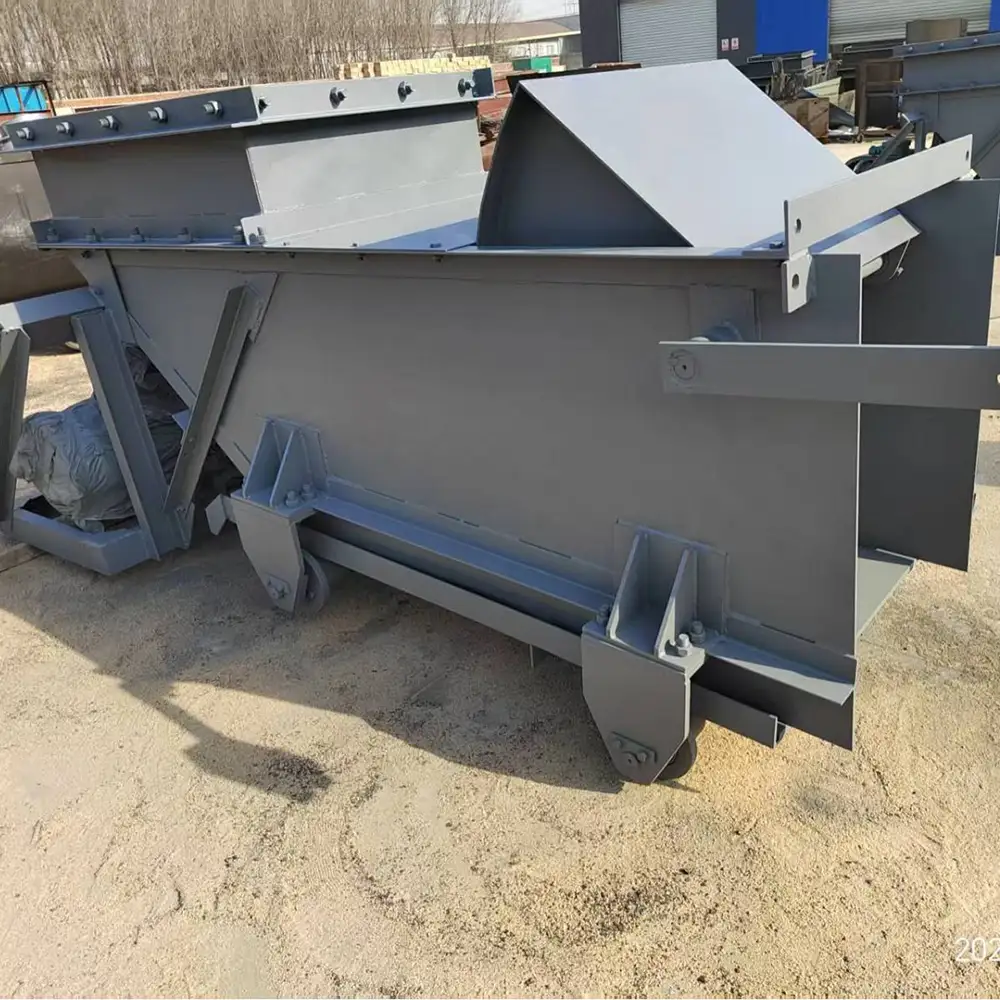
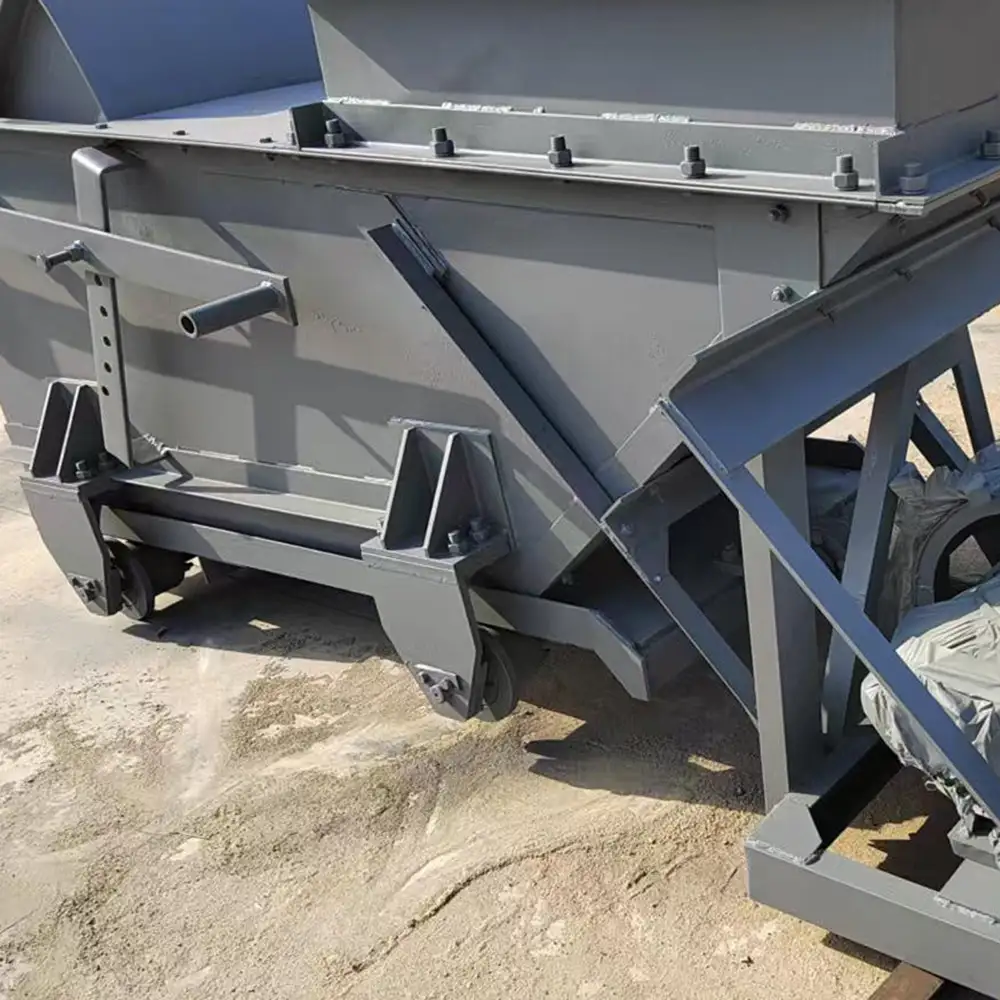
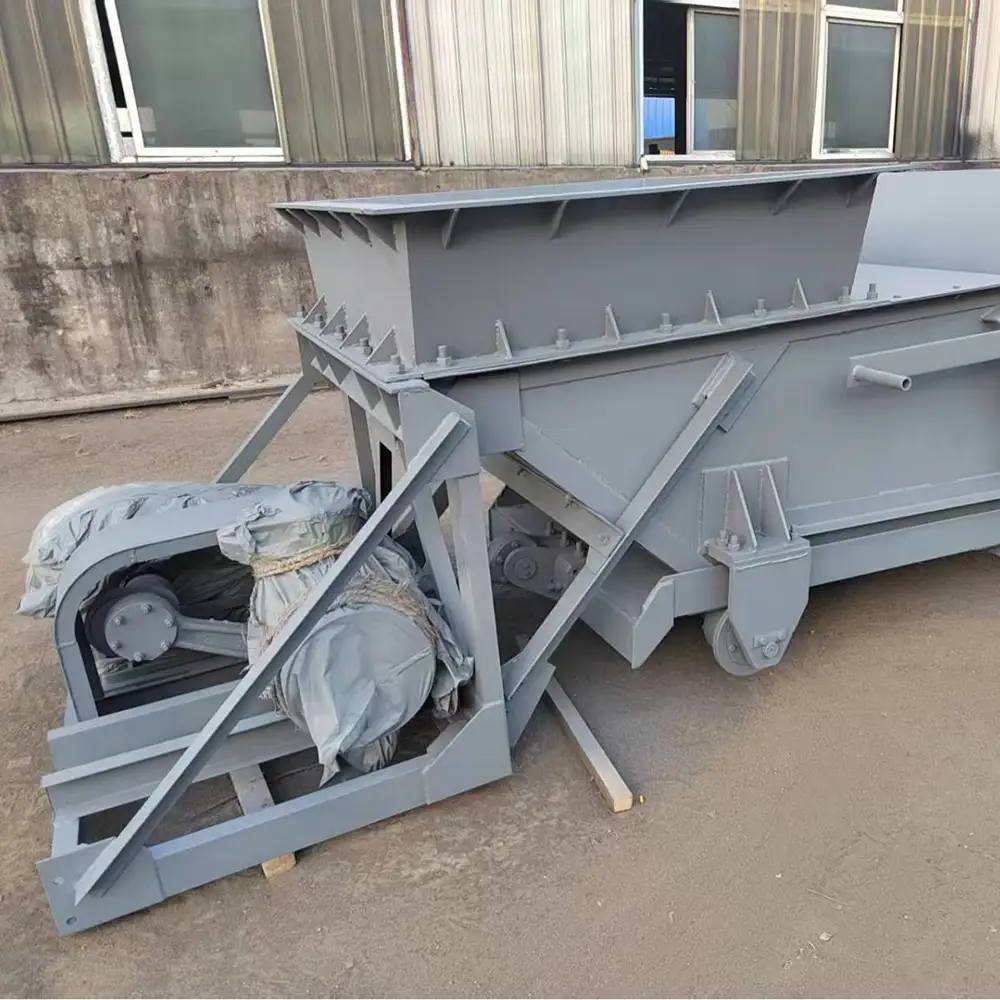
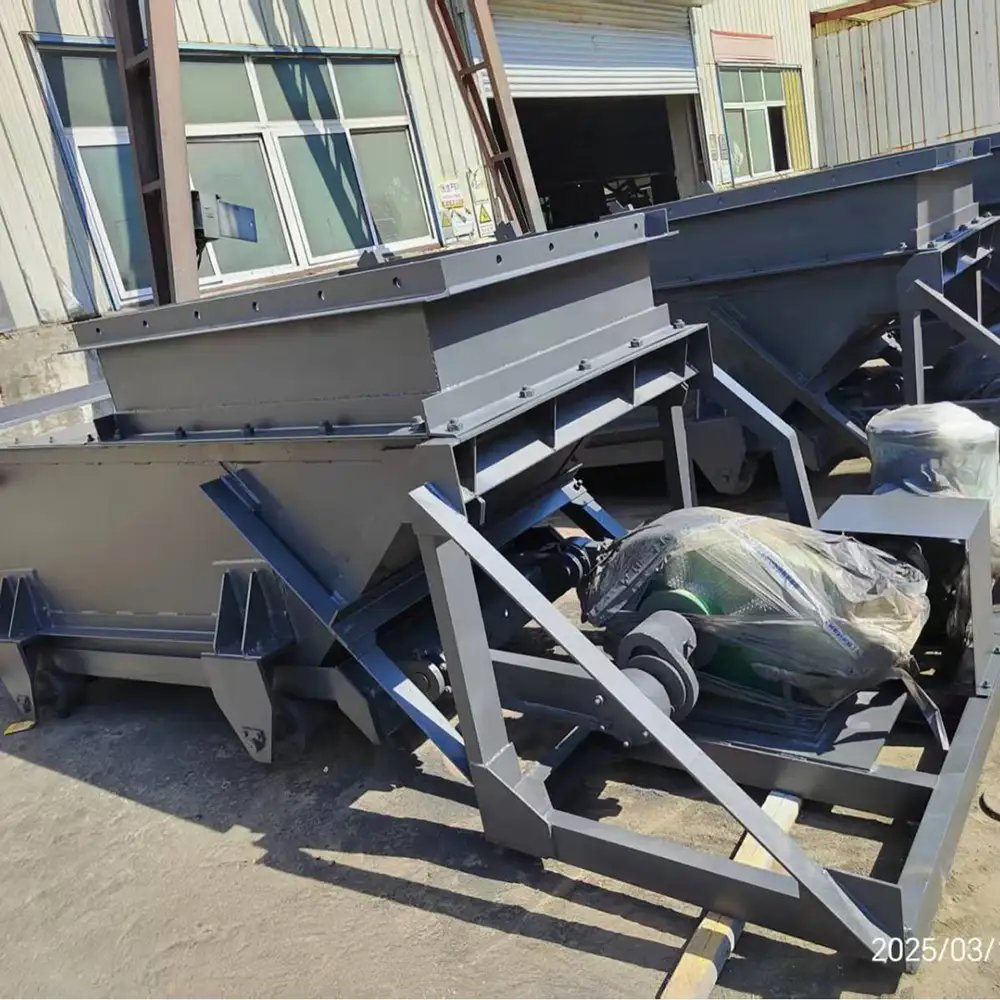
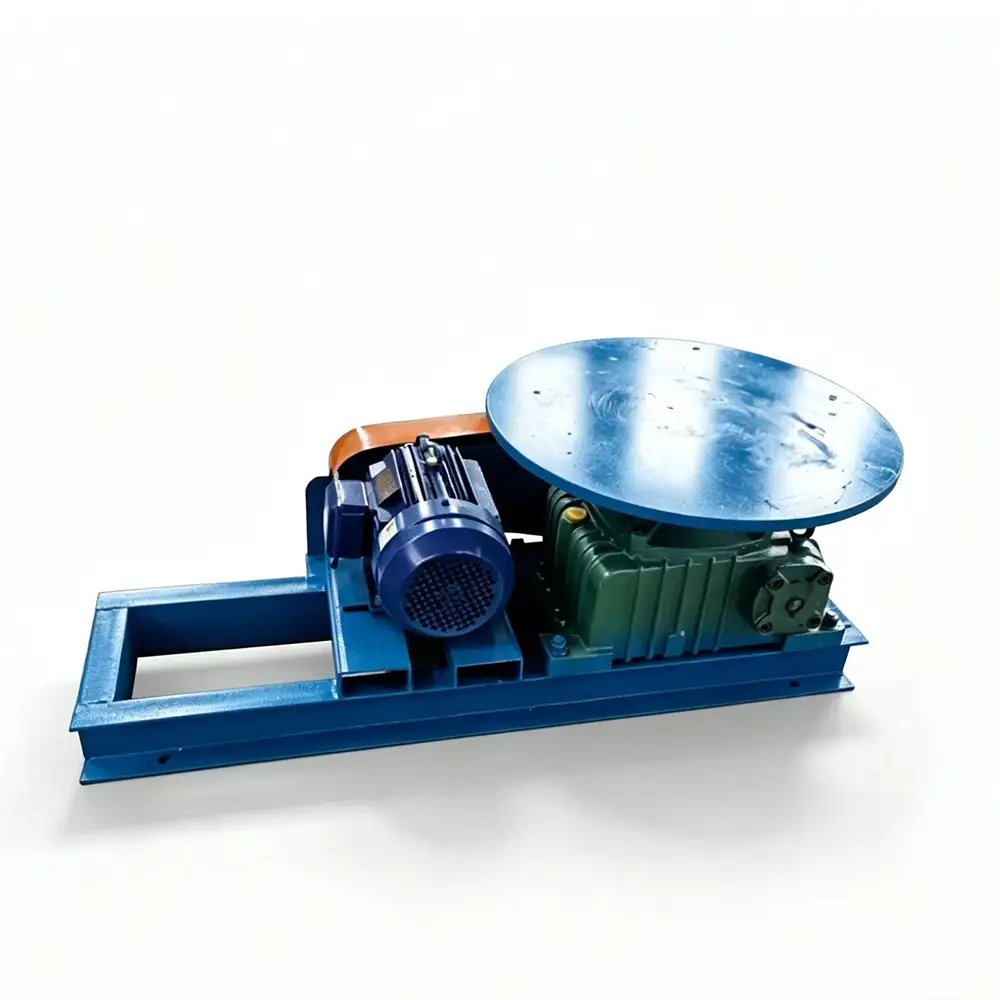
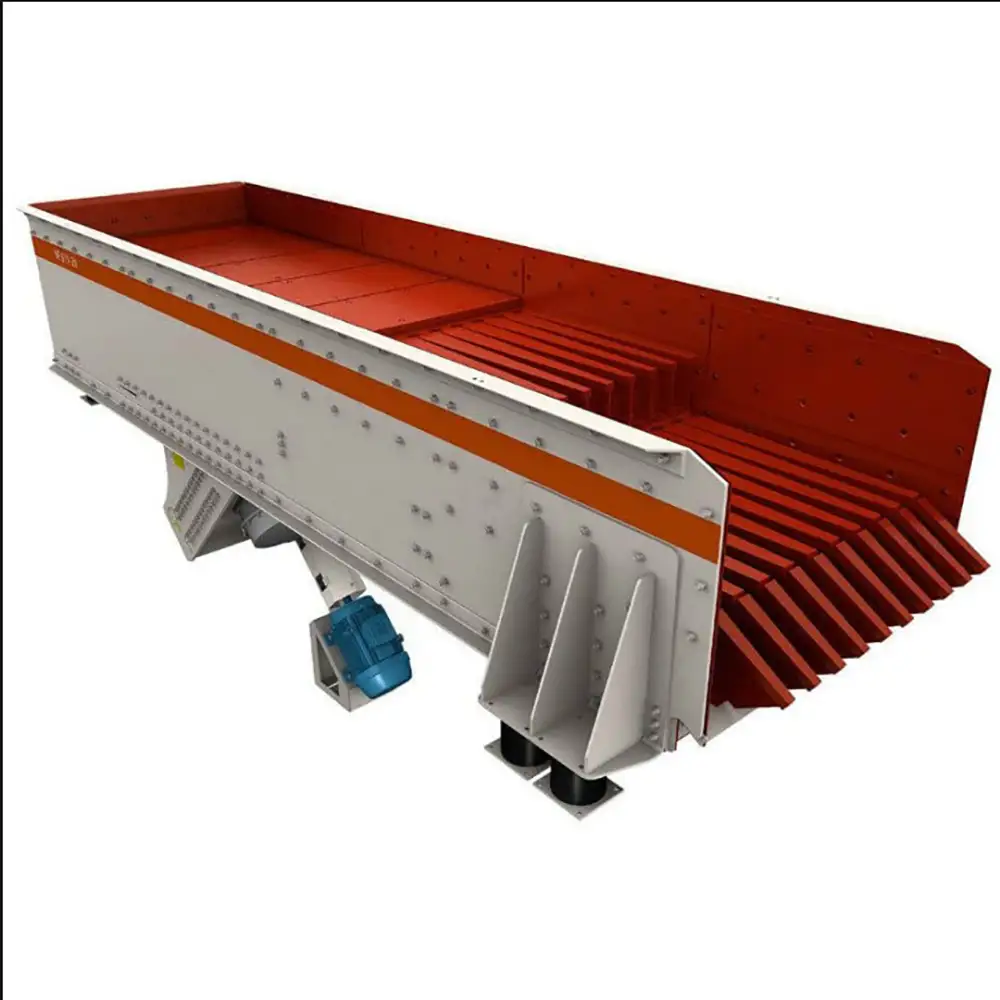
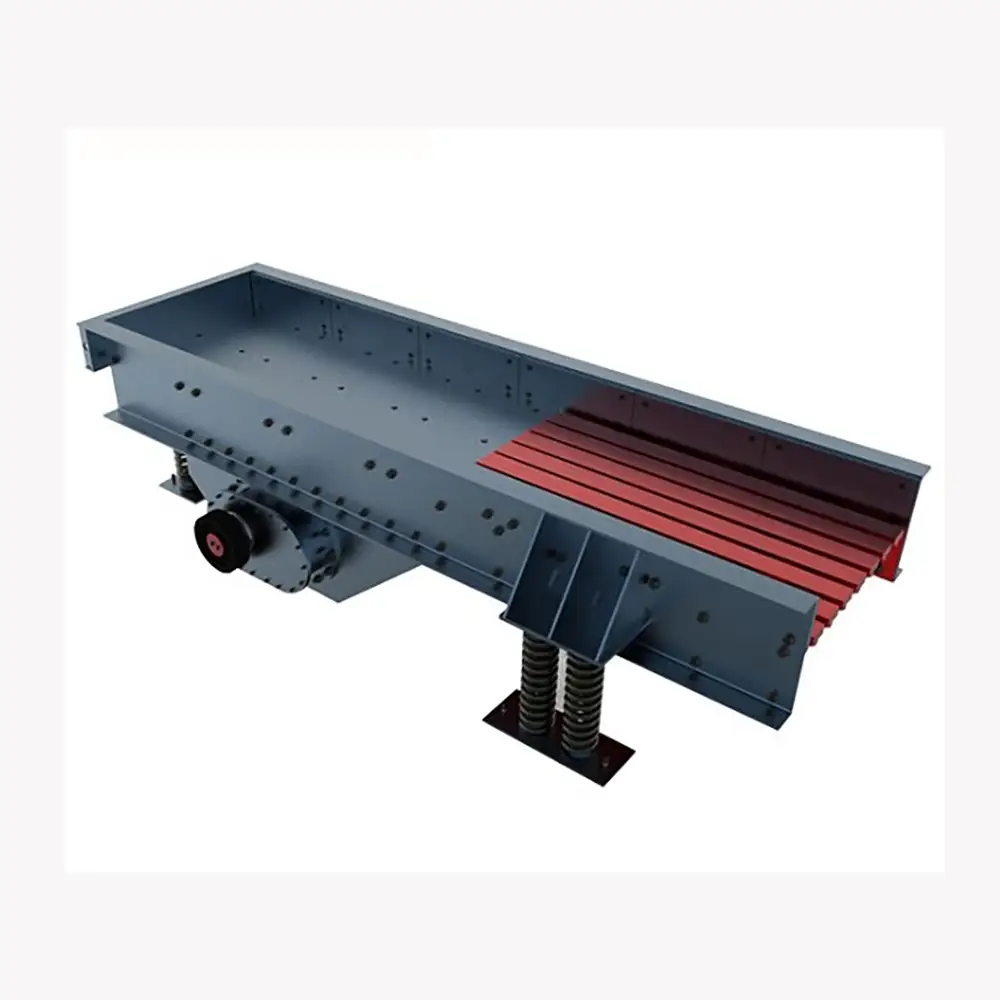
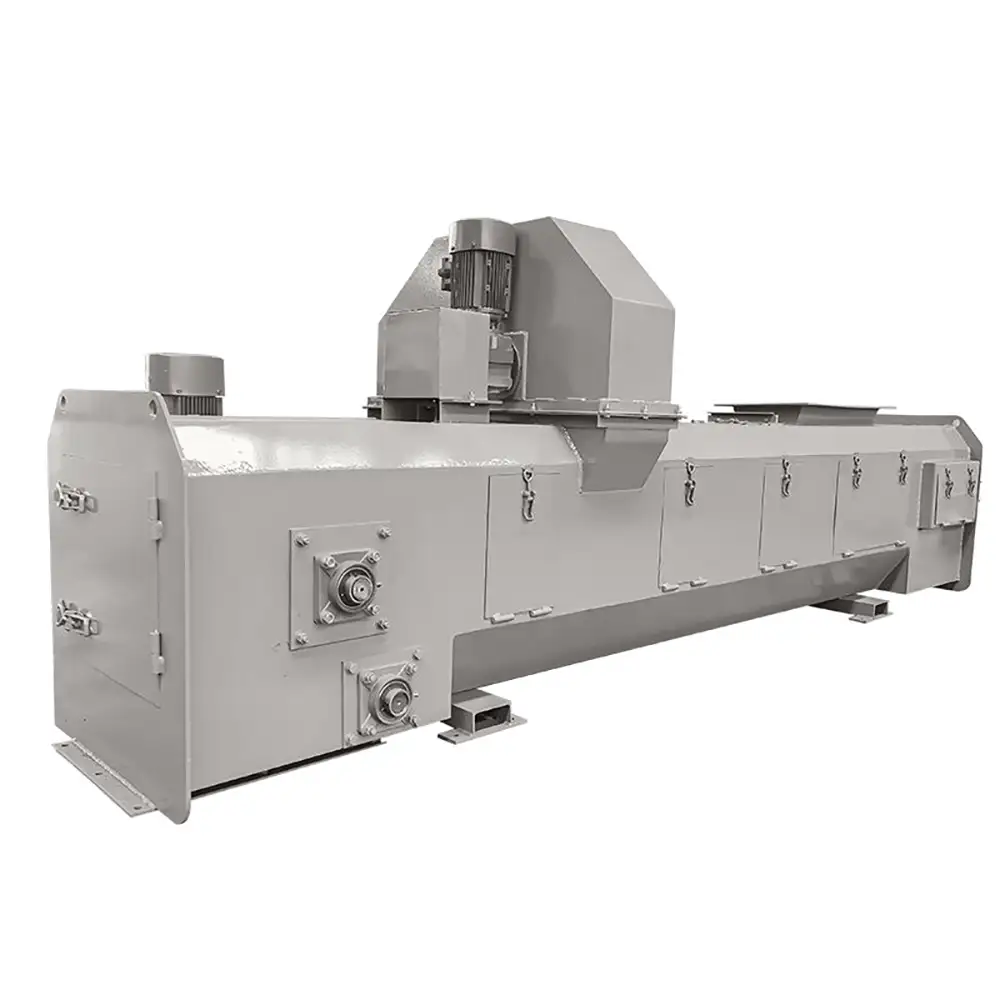
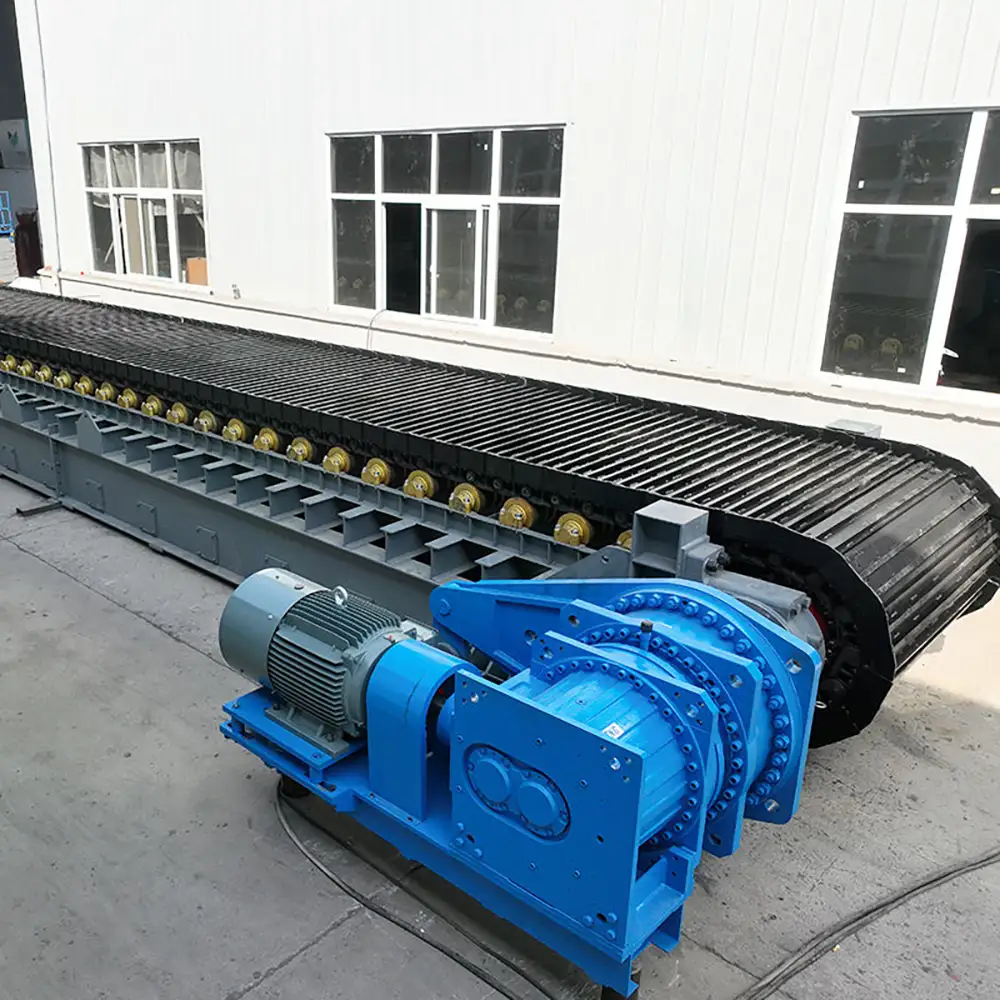
K-type feeder is composed of the rack, floor (to the trough), transmission platform, the number one drain, gate and roller. When the motor is activated by the flexible coupling, reducer and Crank, which will drag bottom floor tilted 5 degrees doing linear reciprocating motion and make materials unload other devices evently.The machine can be equipped with a funnel or without funnel forms according to the customer’s requirement
Technical features:
|
Item |
K0 |
K1 |
K2 |
K3 |
K4 |
|
Feeding capacity(t/h) |
22-100 |
34-150 |
50-225 |
75-330 |
132-590 |
|
Largest material size(mm) |
220 |
300 |
300 |
450 |
550 |
|
Motor No. |
Y160M1-8 |
Y160M1-8 |
Y160M1-8 |
Y160M1-6 |
Y200L1-1 |
|
Motor Power(kw) |
4 |
4 |
4 |
7.5 |
18.5 |
|
crank rotated speed(r/min) |
57 |
57 |
57 |
62 |
62 |
|
net weight(kg) |
1159 |
1253 |
1420 |
1978 |
2880 |
Shape and installing dimension:
|
Item |
A |
B |
C |
L |
H |
L1 |
L2 |
L3 |
L4 |
S1 |
S2 |
S3 |
S4 |
S5 |
e |
h |
|
K0 |
1360 |
3100 |
846 |
2450 |
1056 |
1000 |
800 |
912 |
750 |
750 |
550 |
662 |
500 |
1040 |
830 |
325 |
|
K1 |
1360 |
3100 |
1112 |
2450 |
1056 |
1000 |
800 |
912 |
750 |
1000 |
800 |
912 |
750 |
1040 |
1080 |
325 |
|
k2 |
1360 |
3540 |
1110 |
2850 |
1297 |
1250 |
1000 |
1162 |
1050 |
1000 |
800 |
912 |
750 |
940 |
1080 |
325 |
|
K3 |
1364 |
3950 |
1360 |
3270 |
1314 |
1500 |
1300 |
1412 |
1250 |
1250 |
1050 |
1162 |
1000 |
1257 |
1330 |
325 |
|
K4 |
1614 |
4740 |
1632 |
3850 |
1543 |
1750 |
1550 |
1662 |
1500 |
1500 |
1550 |
1412 |
1250 |
1435 |
1580 |
345 |
The K Reciprocating Coal Feeder is an industrial feeding machine designed to discharge coal and other suitable bulk materials from storage hoppers, bunkers, and material pits at a steady, adjustable rate. It uses a reciprocating bottom plate driven by a motor, reducer, and crank-linkage mechanism to move material toward a discharge point.
This type of feeder is used in mining, coal preparation plants, bulk material terminals, metallurgy, and building materials production. It can supply material to belt conveyors, screening equipment, crushers, and other processing machines. Its straightforward mechanical design and adjustable discharge arrangement make it useful in material handling systems that need controlled extraction from a storage point. <Cite refs={["turn474996search0","turn474996search2","turn474996search3"]}/>
What Is a K-Type Reciprocating Feeder?
A K-type Reciprocating Feeder, also called a reciprocating coal feeder or reciprocating plate feeder, is installed beneath a hopper or bunker. Its main working component is a bottom plate or feeding trough that moves back and forth in a straight line.
During the forward stroke, the plate pushes material toward the outlet. During the return stroke, the material above the plate is restrained by the hopper geometry or stationary components, allowing the plate to move back and refill. Repeated strokes create a continuous overall discharge, although the movement itself is cyclic.
Depending on the model, the feeder may be supplied with a hopper, an adjustable gate, or a simplified arrangement that connects to an existing storage structure.
Working Principle
The feeder uses a motor-driven mechanical transmission system to generate reciprocating motion.
Material Storage: Coal or other suitable bulk material is stored in a hopper, bunker, or pit above the feeder.
Power Transmission: The motor drives a reducer and crank-linkage mechanism, converting rotary motion into linear reciprocating movement.
Forward Stroke: The bottom plate moves toward the discharge end, carrying material forward.
Return Stroke: The plate moves back while the material is restrained, allowing the feeder to refill.
Repeated Discharge: Continuous cycling transfers material to a conveyor, screen, crusher, or receiving bin.
Feed Adjustment: Depending on the model, the feed rate can be regulated by changing the gate opening, plate stroke, or operating frequency.
The exact adjustment method depends on the feeder design and its drive configuration. <Cite refs={["turn474996search0","turn474996search1","turn474996search6"]}/>
Main Components
A typical K Reciprocating Coal Feeder consists of:
Frame: Supports the feeder assembly and connects it to the installation structure.
Bottom Plate or Feeding Trough: Moves back and forth to push material toward the discharge point.
Drive Motor: Supplies mechanical power to the transmission system.
Speed Reducer: Reduces motor speed and provides the required output torque.
Crank and Connecting Rod: Convert rotary motion into reciprocating movement.
Rollers or Supporting Components: Support the moving plate and help guide its travel.
Hopper or Funnel: Directs material from storage onto the feeder.
Adjustable Gate: Controls the material layer or outlet opening on equipped models.
Transmission Platform: Holds and positions the drive components.
Wear liners and other protective components may be specified according to the material's abrasiveness and operating conditions.
Applications of Mining Equipment Feeders
Coal Mines and Coal Preparation Plants
Discharge coal from bunkers and storage hoppers to belt conveyors, screening machines, crushers, and preparation equipment. A controlled feed can help reduce irregular loading and support stable plant operation.
Mining and Mineral Processing
Feed suitable ores, mineral materials, and granular products from storage points to conveying and processing equipment.
Bulk Material Terminals
Transfer coal and other suitable bulk materials from storage systems to conveyors or receiving equipment in material handling facilities.
Metallurgy and Industrial Plants
Provide controlled material discharge to downstream conveying, screening, and processing stages.
Building Materials and Cement
Handle compatible raw materials and granular products in production and transfer systems.
Sand, Gravel, and Aggregate Handling
Feed suitable bulk materials from bins or storage hoppers to conveyors and screening equipment, subject to model capacity and material-size limits.
Key Features and Benefits
1. Uniform Material Discharge
The repeated movement of the bottom plate helps maintain a steady overall material supply from a hopper or bunker to downstream equipment.
2. Adjustable Feeding Capacity
Models with a regulating gate can adjust the material layer or outlet opening. Some configurations also provide stroke or speed adjustment, depending on the drive design.
3. Simple Mechanical Principle
The motor, reducer, crank linkage, and moving plate form a relatively straightforward transmission arrangement that can be inspected and maintained through a planned service schedule.
4. Compact Under-Hopper Installation
The feeder is generally installed below the storage outlet, making it practical for extracting material from existing bunkers and bins when the dimensions and loads are compatible.
5. Broad Bulk Material Applications
K-type feeders are commonly used for coal and can also handle selected loose granular or powdered materials, provided the material is suitable for the plate, outlet, and drive.
6. Integration With Conveying Equipment
The feeder can discharge onto a belt conveyor or into a screening or crushing machine, helping connect storage and processing stages.
How to Select the Right Model
Choose the feeder according to the material, required capacity, and storage arrangement. Important selection factors include:
Material Type: Coal, ore, aggregate, or another suitable bulk material.
Required Capacity: Normal and peak discharge rate, typically expressed in tons per hour.
Particle Size: Typical and maximum lump size, including any risk of oversized pieces.
Bulk Density: Influences the mass discharged per stroke and the loading on the plate.
Moisture and Flowability: Wet, sticky, or cohesive materials may require special consideration.
Hopper Dimensions: Outlet size, storage depth, and the available installation space.
Discharge Height: Required elevation and connection to the receiving conveyor or machine.
Adjustment Needs: Whether a regulating gate or variable stroke/speed control is required.
Wear Conditions: Abrasiveness, impact, and the need for replaceable liners.
For an accurate recommendation, provide the supplier with a layout drawing, material data, target throughput, and details of the receiving equipment.
Installation and Maintenance
Install the K Reciprocating Feeder beneath the hopper according to the manufacturer's mounting and alignment instructions. Confirm that the frame is securely fastened and that the moving plate has adequate clearance throughout its stroke. Align the motor, reducer, and transmission components as specified.
Before startup, inspect the crank linkage, fasteners, rollers, plate, gate, and protective guards. During operation, monitor unusual noise, vibration, material leakage, and changes in discharge consistency.
Regular maintenance should include checking lubrication requirements, drive alignment, connecting components, plate wear, roller condition, and gate adjustment. Replace worn parts when necessary and keep the discharge area clear. Always isolate power and follow site lockout procedures before maintenance.
Customization and OEM Supply
K-type Reciprocating Coal Feeders can be specified according to project requirements. Depending on the manufacturer and model, options may include feeder size, hopper or funnel arrangement, adjustable gate, bottom-plate construction, wear liners, motor and reducer configuration, and installation supports.
For OEM or project inquiries, provide the material type, required throughput, maximum particle size, hopper outlet dimensions, discharge height, and downstream equipment details. This information helps determine a suitable configuration and supports integration with the existing material handling system.
Why Choose Us?
Application-Based Recommendations: We review material characteristics, capacity, and installation conditions to help identify an appropriate feeder.
Flexible Configuration: Discuss hopper arrangements, regulating gates, plate construction, and selected drive options.
Mining and Bulk Handling Focus: Equipment can be evaluated for coal handling, mining, and industrial material transfer applications.
System Integration Support: We consider how the feeder connects to conveyors, screens, crushers, and storage structures.
OEM and Export Support: We coordinate technical requirements, drawings, and project specifications for B2B purchasing.
Our goal is to help buyers select a reciprocating feeder that matches the required material flow, operating conditions, and plant layout.
Frequently Asked Questions
1. What is a K Reciprocating Coal Feeder used for?
It discharges coal and other suitable bulk materials from hoppers or bunkers to conveyors, screens, crushers, and other receiving equipment.
2. How does a reciprocating feeder work?
A motor and mechanical linkage move the bottom plate back and forth. The plate pushes material toward the outlet on its forward stroke and returns to refill for the next cycle.
3. Is a K-type feeder automatic?
It can be integrated into an automated material handling system, but the degree of automation depends on the drive, controls, and plant configuration.
4. Can the feed rate be adjusted?
Many models use an adjustable gate to regulate the material layer. Some designs also allow changes to stroke or operating frequency.
5. What materials can it handle?
Coal is a common application. Selected loose granular and powdered materials may also be suitable, depending on particle size, moisture, abrasiveness, and flow behavior.
6. Can it feed a belt conveyor?
Yes. It is commonly installed beneath a storage hopper and discharges material onto a belt conveyor or other receiving equipment.
7. Is a reciprocating feeder the same as a vibrating feeder?
No. A reciprocating feeder moves a plate or trough back and forth using a mechanical linkage. A vibrating feeder uses vibration to convey material. Both perform feeding duties, but their motion and operating characteristics differ.
8. What should I consider when selecting a model?
Review required capacity, material properties, particle size, hopper dimensions, discharge height, installation space, and adjustment requirements.
9. What maintenance does the feeder require?
Inspect the drive motor, reducer, crank linkage, rollers, bottom plate, gate, fasteners, and wear components. Follow the manufacturer's lubrication and service schedule.
10. Can the feeder be customized for a mining project?
Depending on the model, configuration options may include dimensions, hopper arrangement, gate, plate, wear liners, and drive components. Provide project details for confirmation.
Prev:
DK Feeder, DB Feeder, KR Feeder, BR Disc Feeder
Next:
GZD Vibrating Feeder, Conveyor Belt Feeder Crush Machine Vibrating Feeder
TAG:
Mining Feeding Equipment,
Industrial Feeder Equipment,
Aggregate Feeder,
Bulk Material Feeder,
Hopper Feeder,
Continuous Feeder,
Crusher Feeding Machine,
Industrial Material Feeder,
Under Hopper Feeder,
Ore Feeder,
Coal Feeder,
Limestone Feeder,
Mining Feeder,
Material Discharge Machine,
Automatic Feeding Equipment,
Reciprocating Feed Conveyor,
Reciprocating Plate Conveyor,
Industrial Trough Feeder,
Adjustable Gate Feeder,
Feeder With Hopper,
Feeder With Regulating Gate,
Feeder Drive System,
Mining Material Handling Equipment,
Powder Feeder,
Granular Material Feeder,
Cement Feeder,
Coal Feeding Conveyor,
Mining Conveyor Feeder,
Ore Reciprocating Feeder,
Mineral Feeder,
Related Category:
K Reciprocating Coal Feeder,Mining Equipment Feeders,Automatic Feeder China, suppliers, manufacturers, factory, customized, wholesale, quotation, made in China