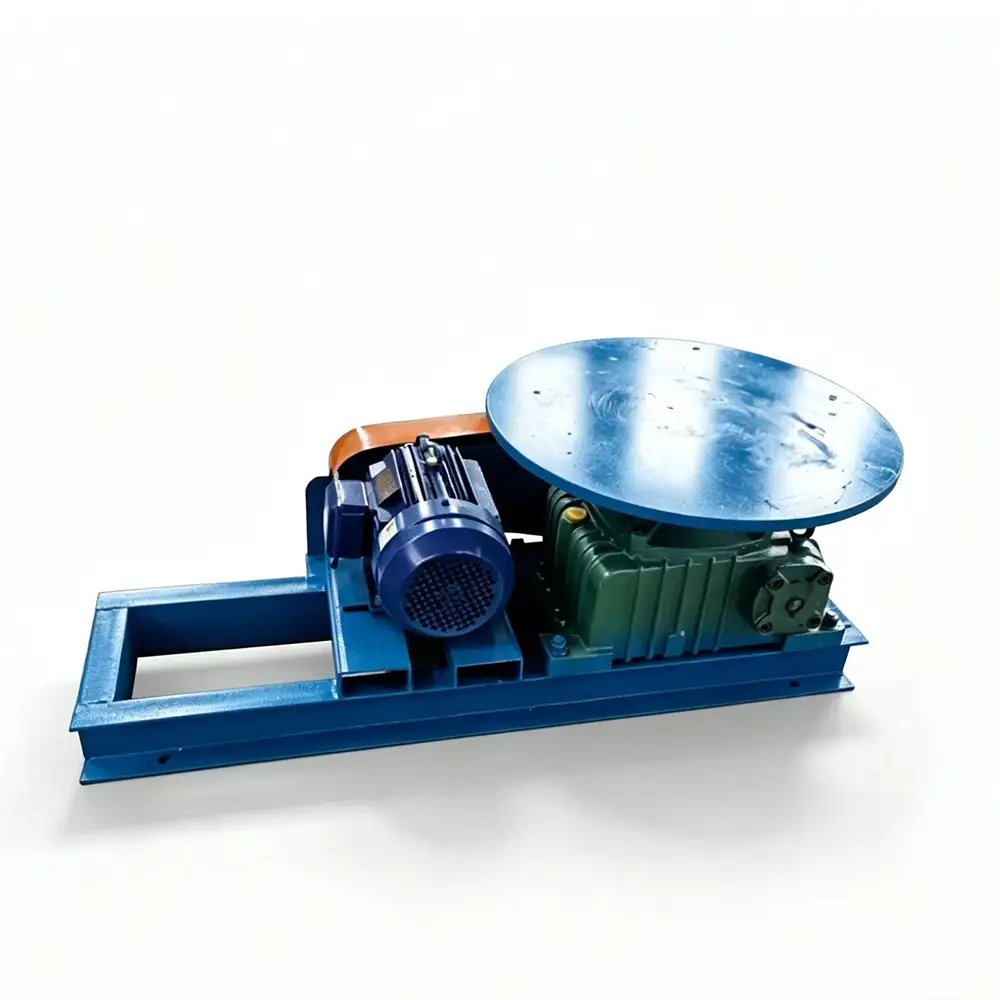
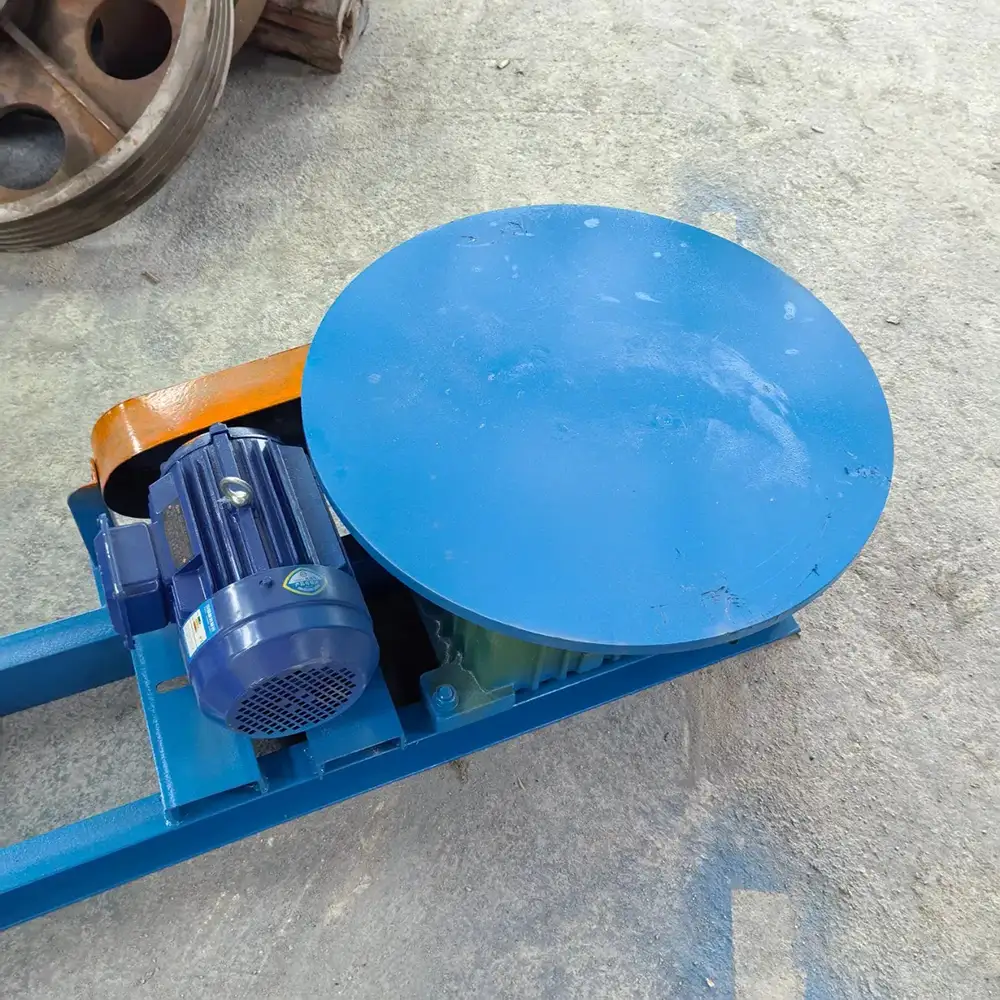
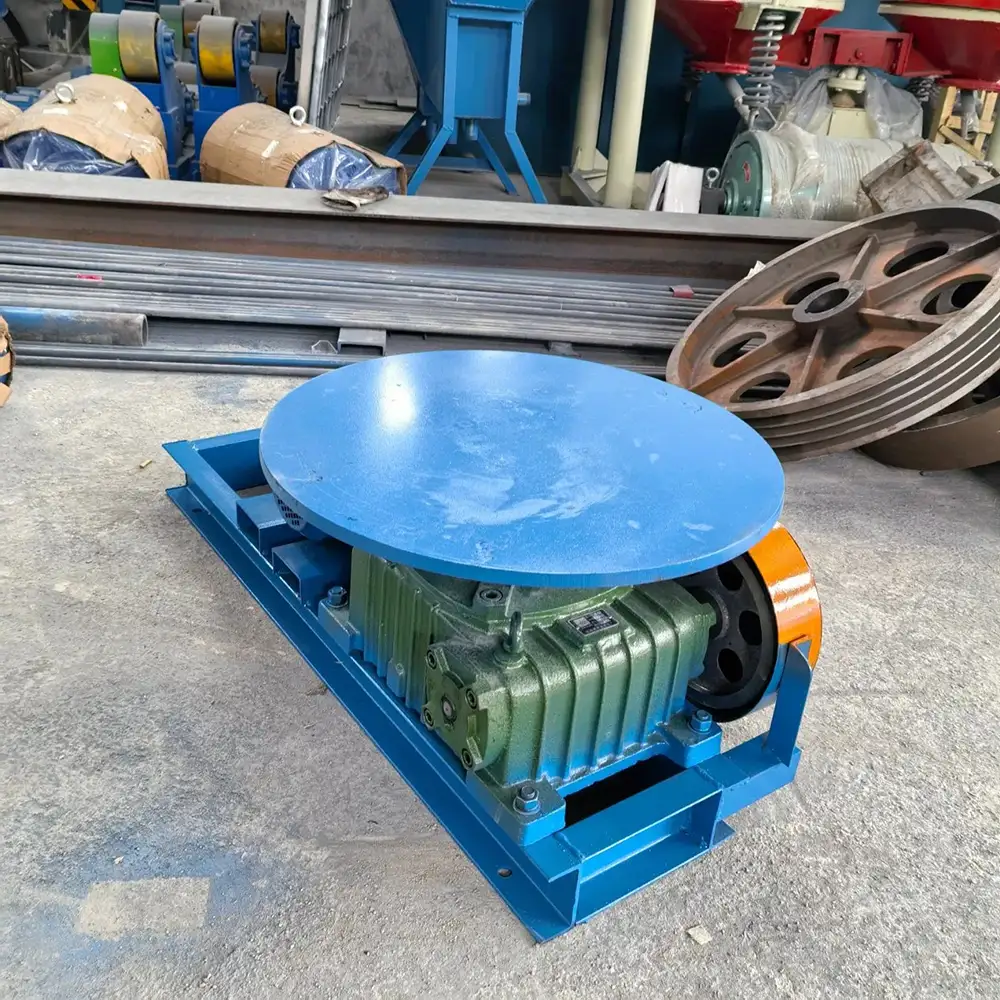
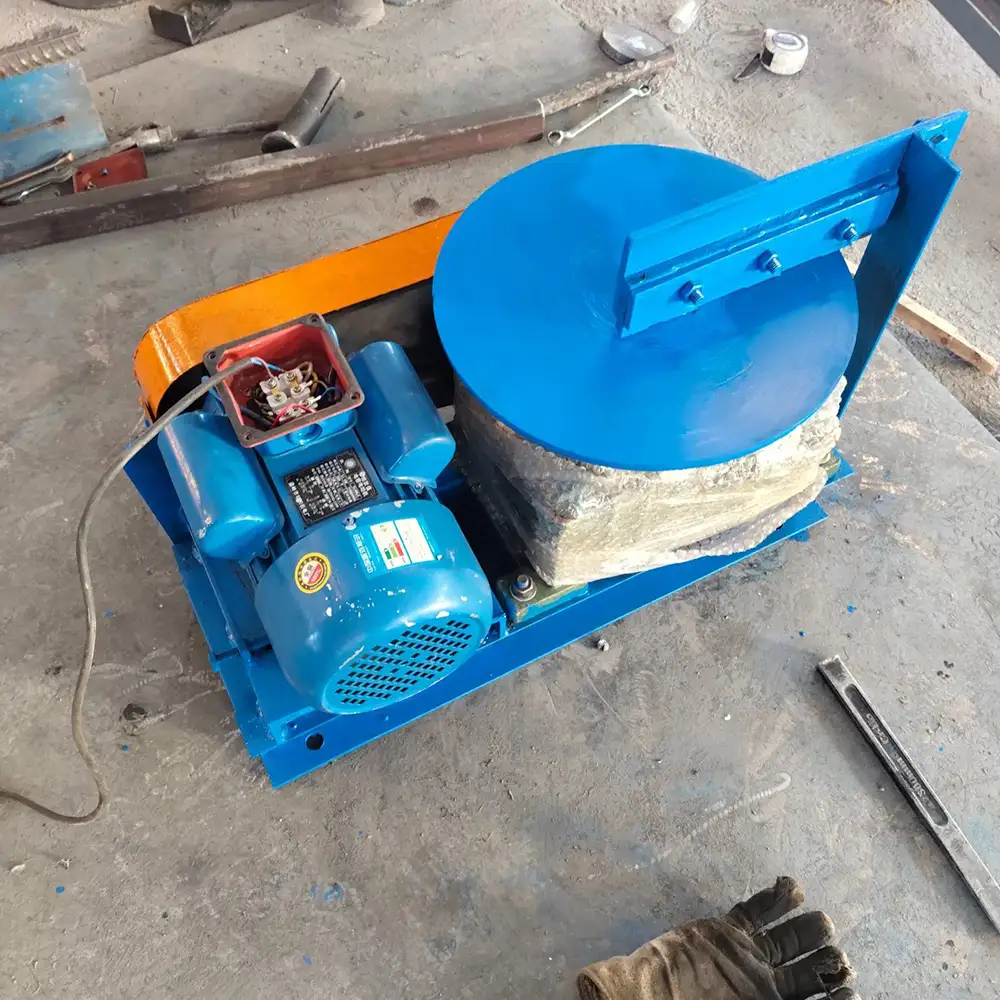
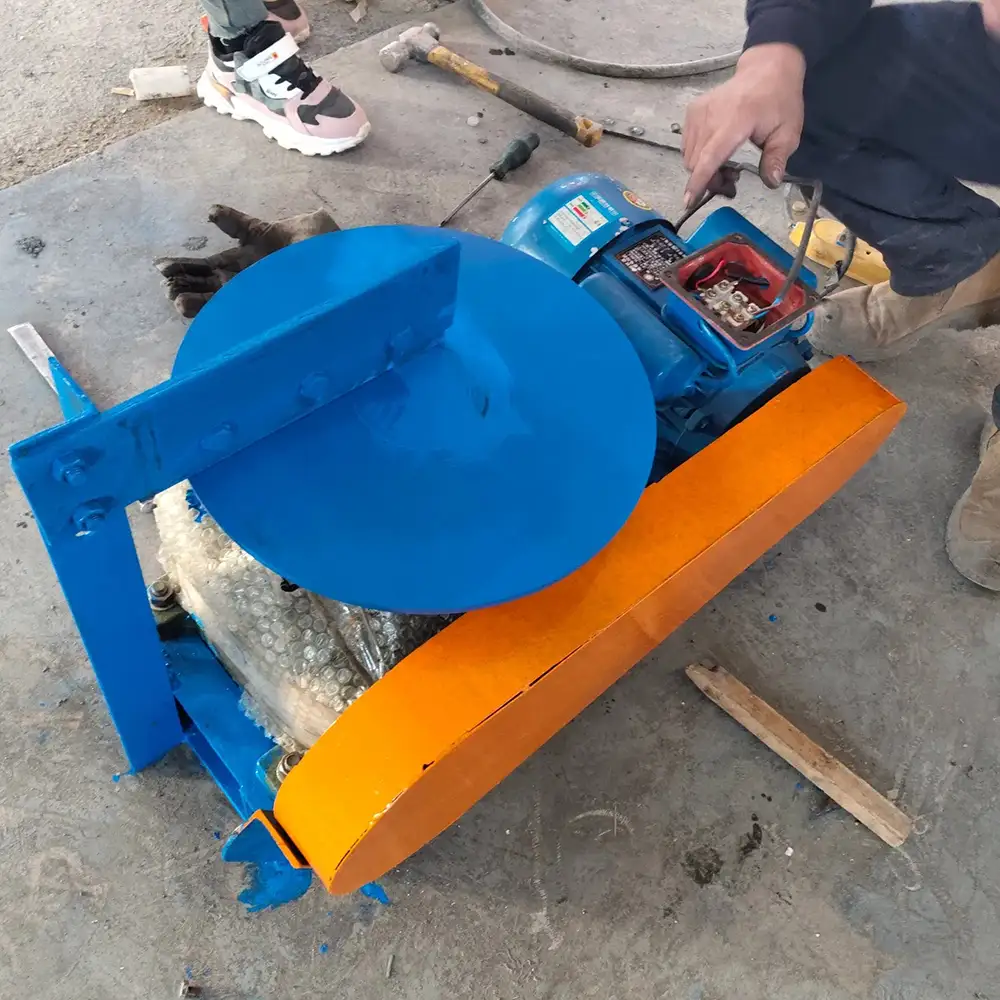
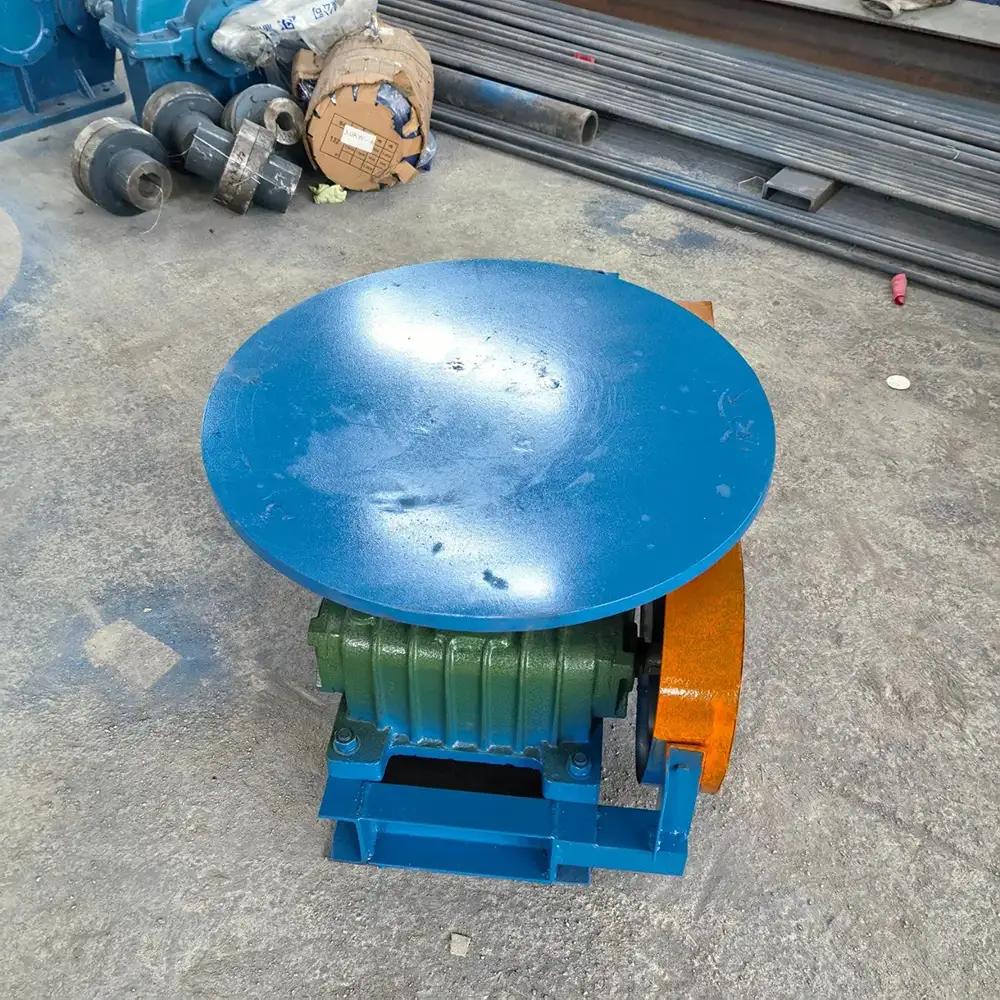
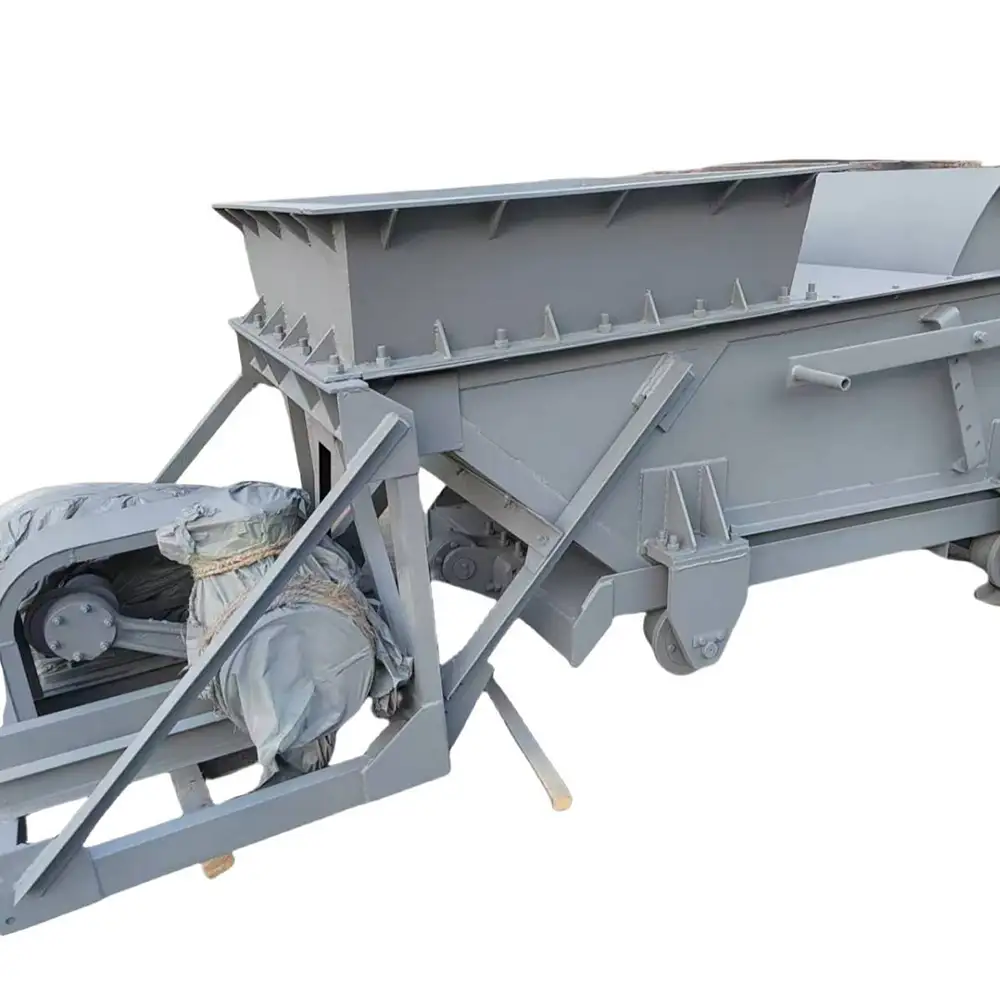
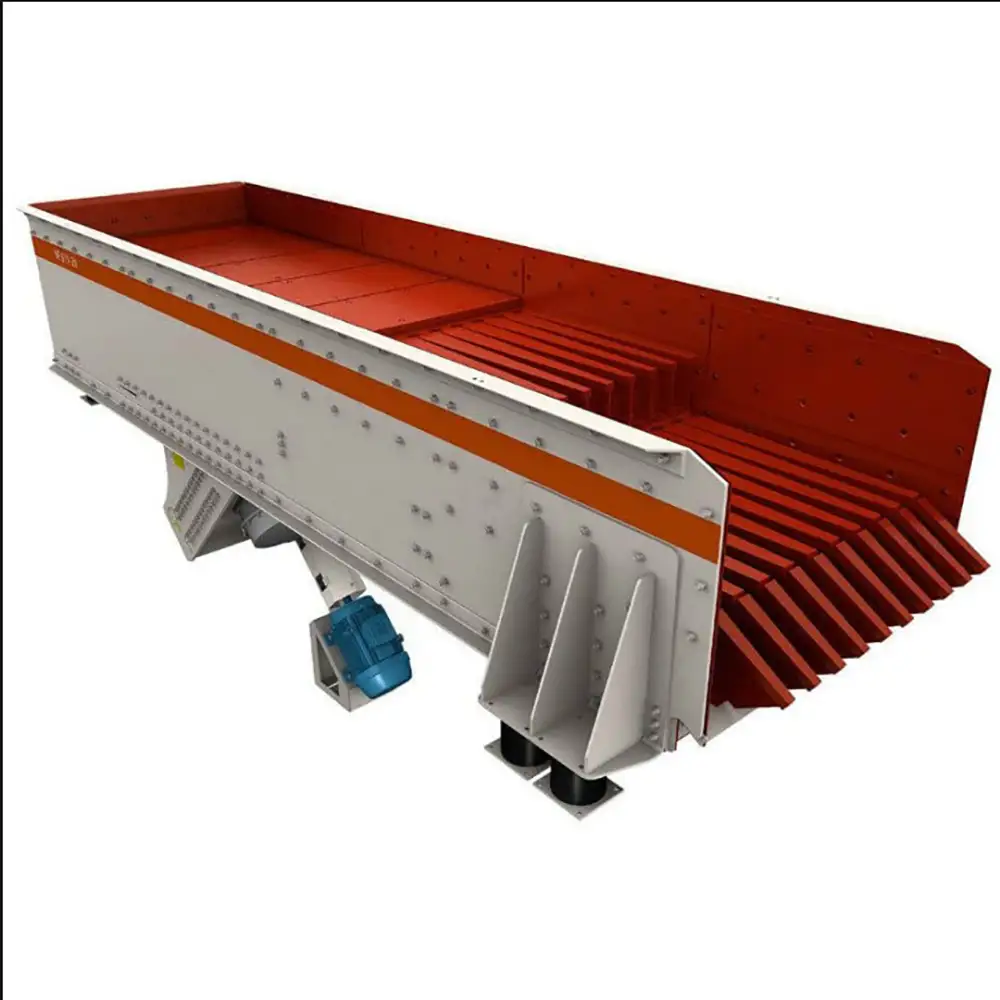
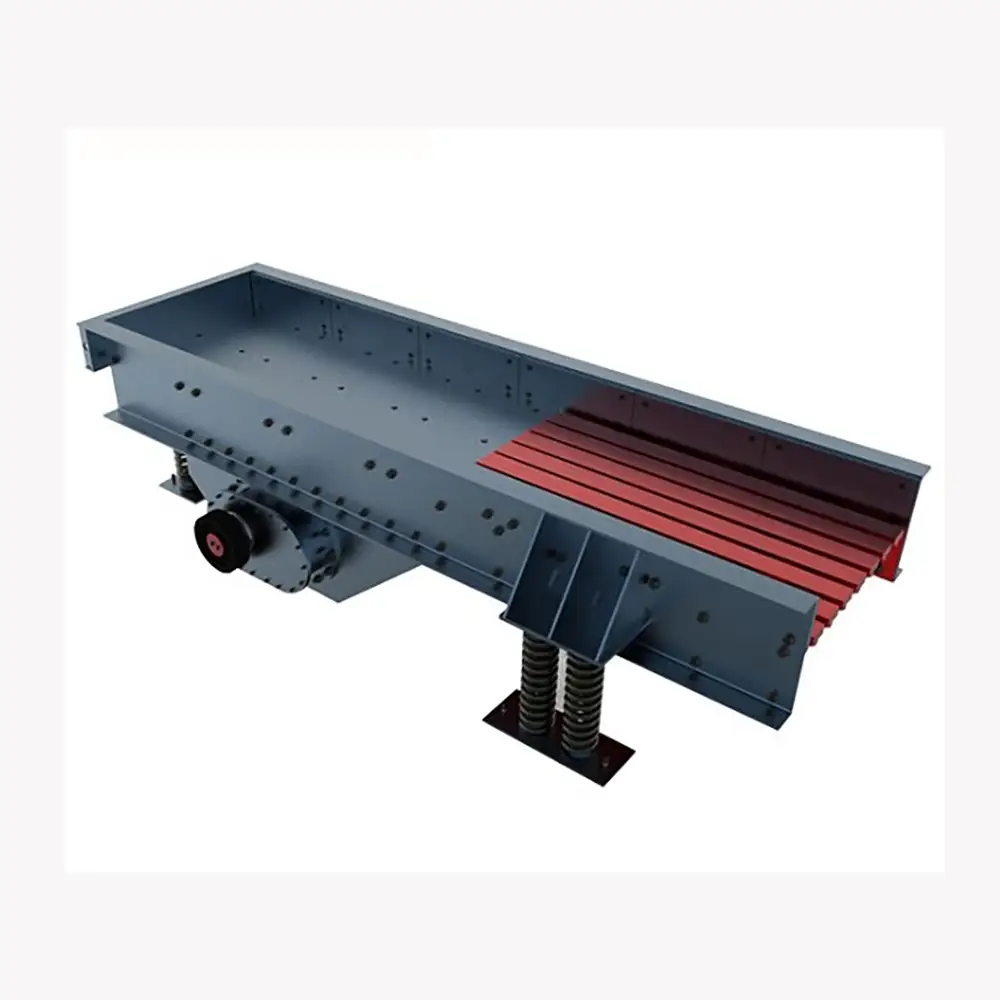
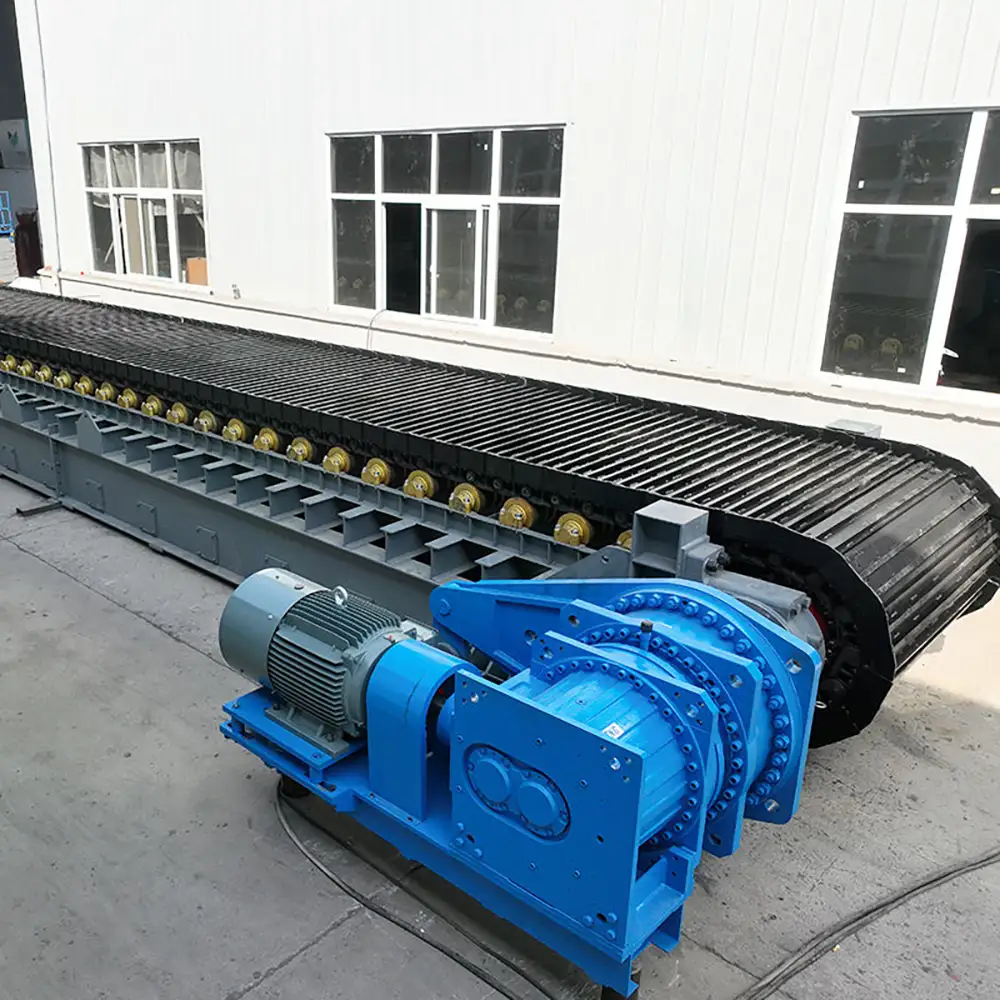
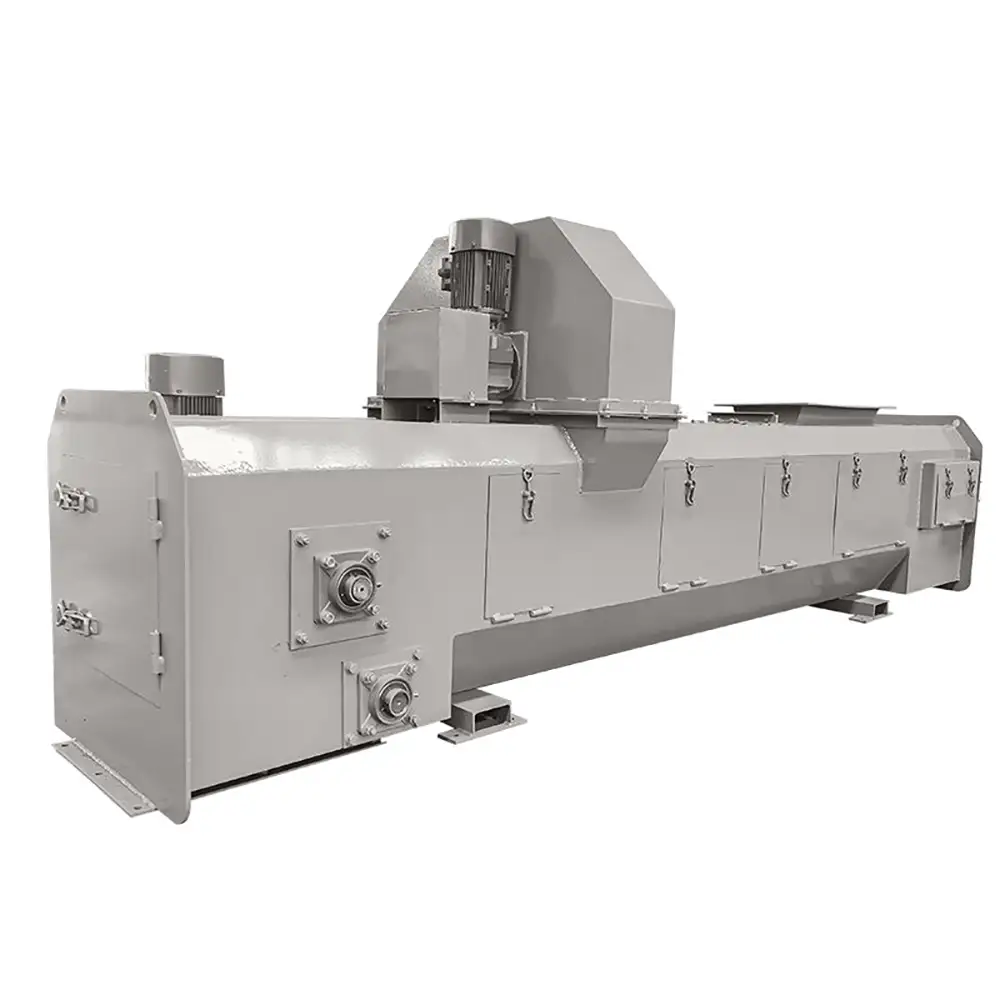
The disc feeder consists of drive device, feeding machine, measurement belt conveyor and measuring device. The feeding machine and belt conveyor is driven by a set of drive device. The electromagnetic clutch of this driver device can realize the open and stop, and also has the feature of function transformation.
Applications:
This disc feeder is a volumetric measuring feeding equipment, can send the materials to every feeding process continuously. And it is widely used in the industry of coal and ore, sinter, power, building material, etc.
Disc feeder is suitable for sending various of non-cohesive materials, and does not apply to powder materials of flow resistance. The materials which is applicable for the disc feeder sent consists of ore, coal, cement, clinker, limestone, clay and other powder, granular or small-block materials.
Technical Parameter
DK Type: Open & suspended
DB Type: Seal & suspended
KR Type: Open & sitting
BR Type: Seal & sitting
|
Type |
Diameter
mm |
Capacity
m3/h |
Speed
r/min |
Feed size
mm |
Speed reducer |
Motor |
Weight
Kg |
Dimension
L*W*H |
|
Type |
Speed ratio |
Type |
Power
Kw |
|
KR10 |
1000 |
0-14 |
7.5 |
40 |
TZQ350 |
31.5 |
Y112M-6 |
2.2 |
740 |
720*1430*650 |
|
KR15 |
1500 |
0-25 |
7.5 |
55 |
JZQ400 |
31.5 |
Y132M2-6 |
5.5 |
1280 |
920*1750*720 |
|
KR17 |
1700 |
0-50 |
7.5 |
60 |
JZQ400-III-1Y |
31.5 |
Y132M2-6 |
5.5 |
1320 |
920*1750*720 |
|
KR20 |
2000 |
0-100 |
7.5 |
80 |
JZQ500-III-1Y |
31.5 |
Y160L-6 |
11 |
1754 |
1030*1965*810 |
|
BR10 |
1000 |
0-13 |
6.3 |
50 |
ZS50-8-III |
63 |
Y132S-6 |
3 |
1223 |
1932*1520*895 |
|
BR15 |
1500 |
0-30 |
6.3 |
50 |
ZS75-3-III |
63 |
Y160M-6 |
7.5 |
2710 |
2841*1920*1122 |
|
BR20 |
2000 |
0-80 |
4.79 |
50 |
BR20-2 |
87 |
Y160L-6 |
11 |
5234 |
3374*2016*1122 |
|
JZTY61-4 |
15 |
|
BR25 |
2500 |
0-120 |
4.72 |
50 |
BR25-2 |
88.2 |
Y200L1-6 |
18.5 |
7747 |
3790*2500*1122 |
|
JZTY71-4 |
22 |
|
BR30 |
3000 |
180 |
3.1 |
20 |
BR30-2 |
128.87 |
Y200L2-6 |
22 |
1335 |
4600*2958*1420 |
DK, DB, KR, and BR Disc Feeders are industrial rotary feeding machines designed for continuous and controlled discharge of powder, granules, and suitable fine bulk materials from hoppers, bins, and storage vessels. Using a rotating disc and an adjustable scraper or discharge arrangement, these feeders move material toward receiving equipment at a steady rate.
Disc feeders are used in mining, mineral processing, cement production, metallurgy, chemical manufacturing, and other bulk material handling operations. Their open or enclosed construction and suspended or pedestal mounting options allow buyers to select a configuration based on dust-control needs, installation conditions, and process layout. <Cite refs={["turn756675search0","turn756675search1","turn756675search2"]}/>
What Are DK, DB, KR, and BR Disc Feeders?
These four designations commonly describe two construction features: whether the feeder is open or enclosed, and whether it is suspended or pedestal-mounted.
DK Disc Feeder: Open, suspended-type disc feeder. It is used where an open construction and suspended installation are suitable.
DB Disc Feeder: Enclosed, suspended-type disc feeder. Its enclosed structure is intended for applications requiring improved dust containment.
KR Disc Feeder: Open, pedestal-mounted disc feeder. It is installed on a supporting base and is used where an open arrangement is acceptable.
BR Disc Feeder: Enclosed, pedestal-mounted disc feeder. It combines a base-supported installation with an enclosed feeding structure.
The exact construction and available drive options can vary by manufacturer and model. Confirm the mounting style, sealing arrangement, and material compatibility in the technical specification before ordering. <Cite refs={["turn756675search0","turn756675search2","turn756675search7"]}/>
Working Principle
A disc feeder uses the rotation of a horizontal disc to withdraw material from a storage hopper and deliver it to the next process.
Material Storage: Powder or granular material is stored in a hopper or bin above the feeder.
Material Loading: Material falls onto the rotating disc through the outlet at the bottom of the storage vessel.
Rotary Movement: The drive system rotates the disc at a specified speed, carrying material around its surface.
Scraper Discharge: An adjustable scraper or discharge arrangement directs material off the disc toward the outlet.
Continuous Feeding: The disc continues rotating, providing a steady supply to a conveyor, mixer, crusher, or other receiving machine.
Feed Adjustment: Depending on the model, output can be adjusted through the scraper position, outlet opening, or drive speed.
Disc feeders are generally volumetric devices: their output depends on disc speed, material properties, loading conditions, and the adjustment arrangement. If precise mass-flow measurement is required, a separate weighing or metering system may be needed. <Cite refs={["turn756675search6","turn756675search9"]}/>
Main Components
A typical industrial disc feeder includes:
Rotating Disc: The main material-carrying surface, available in different diameters and wear-resistant configurations.
Drive Motor: Supplies power to rotate the disc.
Reducer or Gearbox: Provides the required speed and torque.
Feeder Body: Supports and encloses the rotating components as required by the design.
Scraper or Discharge Blade: Guides material toward the discharge point and helps regulate the material layer.
Hopper Connection: Directs material from the storage vessel onto the disc.
Support Structure: Suspended supports or a pedestal base, depending on the model.
Enclosure and Seals: Used on enclosed designs to help control dust and material leakage.
Adjustment Mechanism: Allows the operator to set the discharge opening or scraper position where provided.
Applications of Industrial Disc Feeders
Mining and Mineral Processing
Feed suitable fine ores, mineral powders, and granular materials from storage bins to conveyors, screens, mills, and processing equipment.
Cement Plants
Handle suitable cement raw materials, clinker fines, limestone, and other compatible materials in storage and transfer operations.
Metallurgy and Steel Production
Supply selected powders and fine materials to process equipment, blending systems, and material distribution points.
Chemical Manufacturing
Feed compatible powders and granules into mixers, dosing equipment, and production lines. Enclosed configurations may be considered where dust containment is needed.
Coal and Power Industries
Transfer suitable fine coal and other bulk materials from storage systems to downstream conveying or processing equipment.
Fertilizer and Building Materials
Support controlled discharge of compatible granular and powdered materials into blending, batching, and packaging operations.
Key Features and Benefits
1. Continuous Material Discharge
The rotating disc supports ongoing material extraction from storage, helping maintain a steady supply to downstream equipment.
2. Flexible Installation Types
DK and DB models are commonly suspended designs, while KR and BR models are pedestal-mounted. This gives buyers alternative installation arrangements.
3. Open or Enclosed Construction
Open models provide direct access and visibility around the feeding area. Enclosed models are intended for applications where reducing dust escape or air leakage is important.
4. Adjustable Material Output
The scraper or discharge arrangement can be adjusted on suitable models to change the amount of material removed from the disc.
5. Compact Feeding Arrangement
Disc feeders are installed directly beneath storage equipment and can provide a practical connection between a hopper and a receiving machine.
6. Industrial Material Handling
With a suitable configuration, the feeder can be integrated into mineral processing, cement, chemical, and other bulk material systems.
How to Choose the Right Disc Feeder
Selecting the appropriate DK, DB, KR, or BR model requires consideration of both the material and the installation.
Material Type: Identify the powder, granule, or fine bulk material and its flow characteristics.
Particle Size: Confirm the maximum particle size and whether the material contains oversized lumps.
Moisture and Cohesion: Wet or sticky materials may bridge, adhere to the disc, or discharge inconsistently.
Required Capacity: Define the normal and maximum feed rate and whether the process needs volumetric or gravimetric control.
Dust Requirements: Consider open DK/KR construction or enclosed DB/BR construction according to site needs.
Mounting Arrangement: Choose suspended or pedestal mounting based on the hopper structure and available support.
Disc Diameter and Speed: Match the feeder size and drive to the required throughput and material behavior.
Wear Conditions: Specify suitable disc and scraper materials for abrasive products.
Many conventional disc feeder designs are intended for non-sticky materials and relatively fine feed. Confirm the model's maximum feed size and capacity with the manufacturer. <Cite refs={["turn756675search2","turn756675search6","turn756675search10"]}/>
Installation and Maintenance
Install the feeder in accordance with the manufacturer's drawings and mounting requirements. Check that the hopper outlet is correctly aligned and that the support structure can carry the equipment and material loads. For suspended models, verify the suspension arrangement; for pedestal models, check the foundation and base alignment.
Before startup, inspect the disc, scraper, drive, reducer, fasteners, and any enclosure seals. During operation, monitor material discharge, abnormal noise, vibration, temperature, and buildup. Periodically inspect wear surfaces and the adjustment mechanism, and follow the manufacturer's lubrication and service schedule.
For enclosed feeders, inspect sealing components and access covers. Always isolate power and follow site lockout procedures before cleaning, inspection, or repair.
Customization and OEM Supply
DK, DB, KR, and BR Disc Feeders can be specified according to project requirements. Depending on the product range, options may include disc diameter, motor and reducer configuration, scraper arrangement, wear-resistant surfaces, enclosure, and mounting structure.
For an accurate quotation, provide the material name, bulk density if available, particle size, moisture, required capacity, hopper outlet dimensions, mounting preference, and dust-control requirements. Include a process layout or installation drawing where possible.
Why Choose Us?
Model Selection Support: We help compare open and enclosed designs and suspended versus pedestal installation.
Material-Based Configuration: Disc size, drive, scraper, and wear options can be reviewed against the material and throughput.
Industrial Application Experience: Solutions can be evaluated for mining, cement, metallurgy, chemical, and bulk material handling.
OEM and Custom Options: Discuss project-specific dimensions, mounting arrangements, and equipment interfaces.
B2B Project Coordination: We support technical communication, specification review, and export purchasing requirements.
Our goal is to help buyers select a disc feeder configuration that matches their process, installation, and material handling needs.
Frequently Asked Questions
1. What is a disc feeder used for?
A disc feeder continuously discharges suitable powders, granules, and fine bulk materials from a hopper or bin to downstream equipment.
2. What is the difference between DK and DB feeders?
DK is commonly an open suspended type, while DB is an enclosed suspended type designed for applications with greater dust-containment requirements.
3. What is the difference between KR and BR feeders?
KR is commonly an open pedestal-mounted type, while BR is an enclosed pedestal-mounted type.
4. Are disc feeders volumetric or gravimetric?
Conventional disc feeders are generally volumetric. A separate weighing system may be required when the process needs measured mass flow.
5. What materials can a disc feeder handle?
Depending on design, it can handle suitable fine ores, powders, granules, coal fines, cement materials, and other non-sticky bulk solids.
6. Can a disc feeder handle wet or sticky materials?
Some wet or cohesive materials may stick to the disc or discharge irregularly. Confirm suitability with the manufacturer before selecting a model.
7. Can the feeding rate be adjusted?
Many designs allow adjustment through the scraper or discharge opening. Variable-speed control may be available depending on the model.
8. Which type is suitable for dust-sensitive applications?
An enclosed model such as DB or BR is commonly considered when dust containment is important. The required sealing performance should be confirmed for the actual process.
9. Can a disc feeder connect to a belt conveyor?
Yes. It can discharge onto a belt conveyor or feed other receiving equipment, subject to the installation layout.
10. What information is needed to order a disc feeder?
Provide the material properties, target capacity, particle size, hopper dimensions, mounting requirements, dust-control needs, and electrical specifications.
Prev:
BWH Apron Feeder, Disk Feeder, Apron Feeder in Mining
Next:
K Reciprocating Coal Feeder, Mining Equipment Feeders, Automatic Feeder, Reciprocating Coal Feeder
TAG:
Rotary Disc Feeder,
Rotary Disk Feeder,
Mining Disc Feeder,
Mining Disk Feeder,
Ore Disc Feeder,
Industrial Disk Feeder,
Disc Feeder,
Disk Feeder,
Bulk Material Feeder,
Under Hopper Feeder,
Material Feeding Machine,
Material Discharge Machine,
Closed Pedestal Disc Feeder,
Disc Feeder With Scraper,
Rotary Scraper Feeder,
Adjustable Disc Feeder,
Adjustable Rotary Feeder,
Variable Speed Disc Feeder,
Continuous Material Discharge,
Material Metering Feeder,
Industrial Metering Feeder,
Quantitative Disc Feeder,
Disc Dosing Feeder,
Rotary Dosing Feeder,
Disc Feeder Conveyor,
Disc Feeder For Cement Plant,
Disc Feeder For Mining,
Disc Feeder For Chemical Plant,
Industrial Powder Feeder,
Silo Discharge Feeder,
Related Category:
DK Feeder, DB Feeder, KR Feeder, BR Disc Feeder China, suppliers, manufacturers, factory, customized, wholesale, quotation, made in China