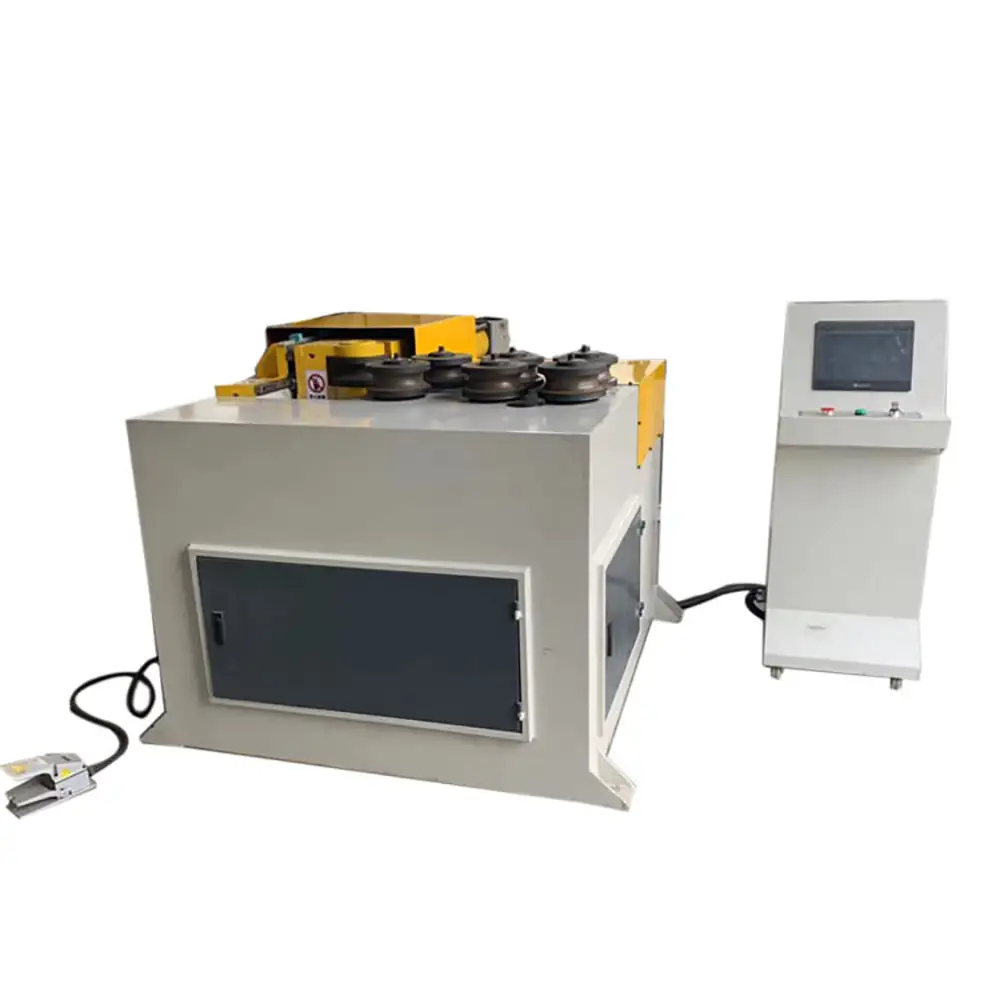
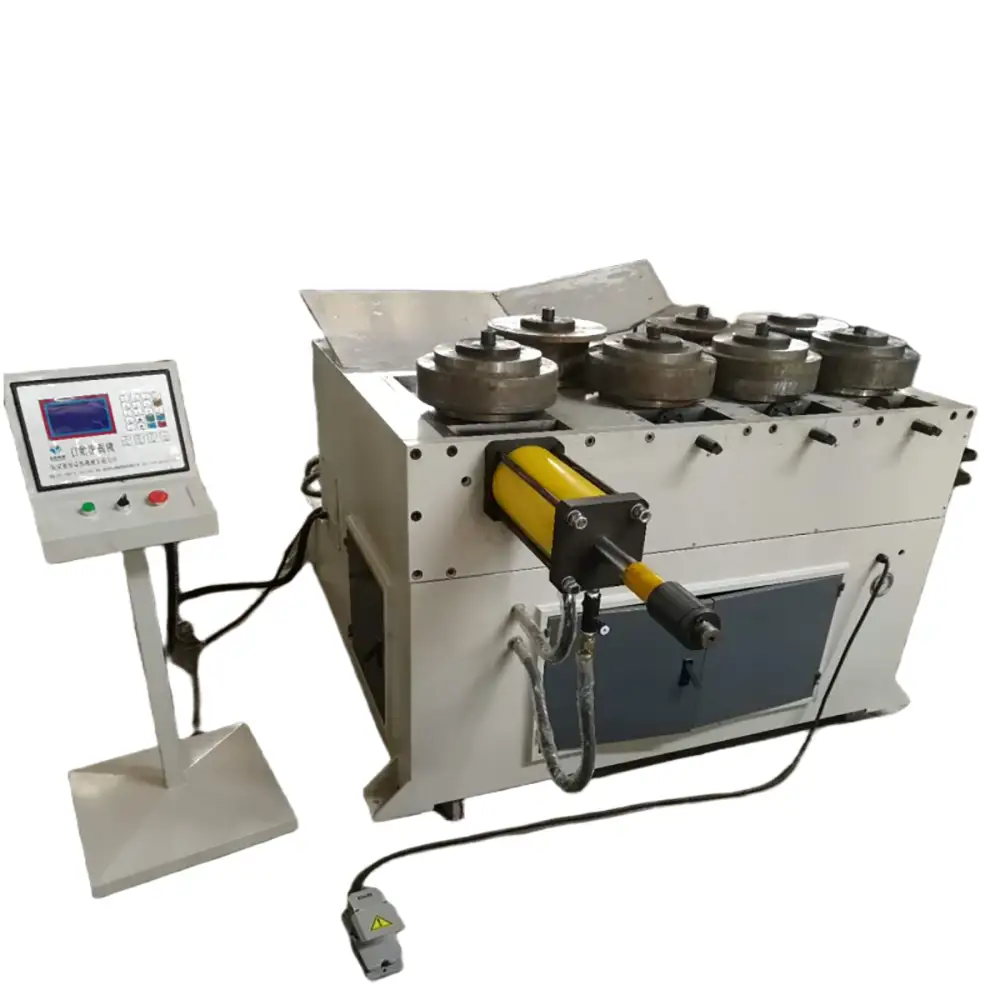
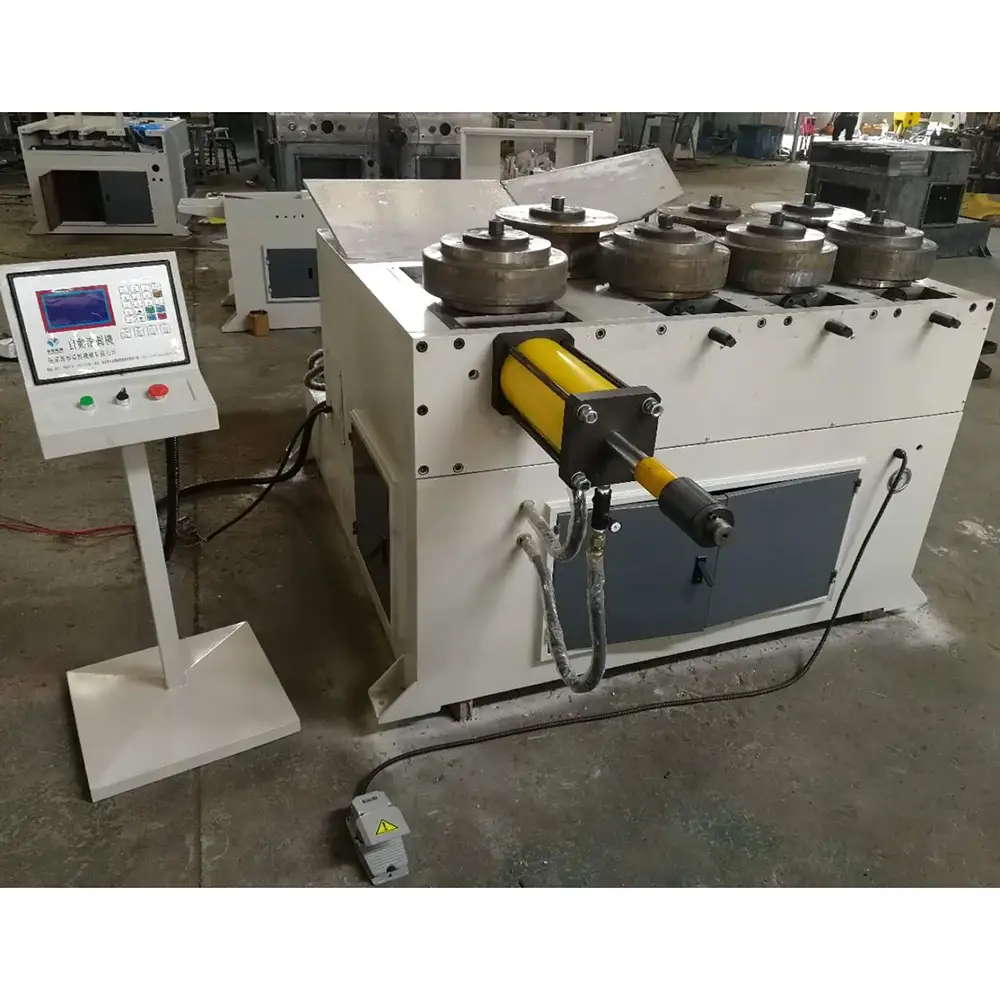
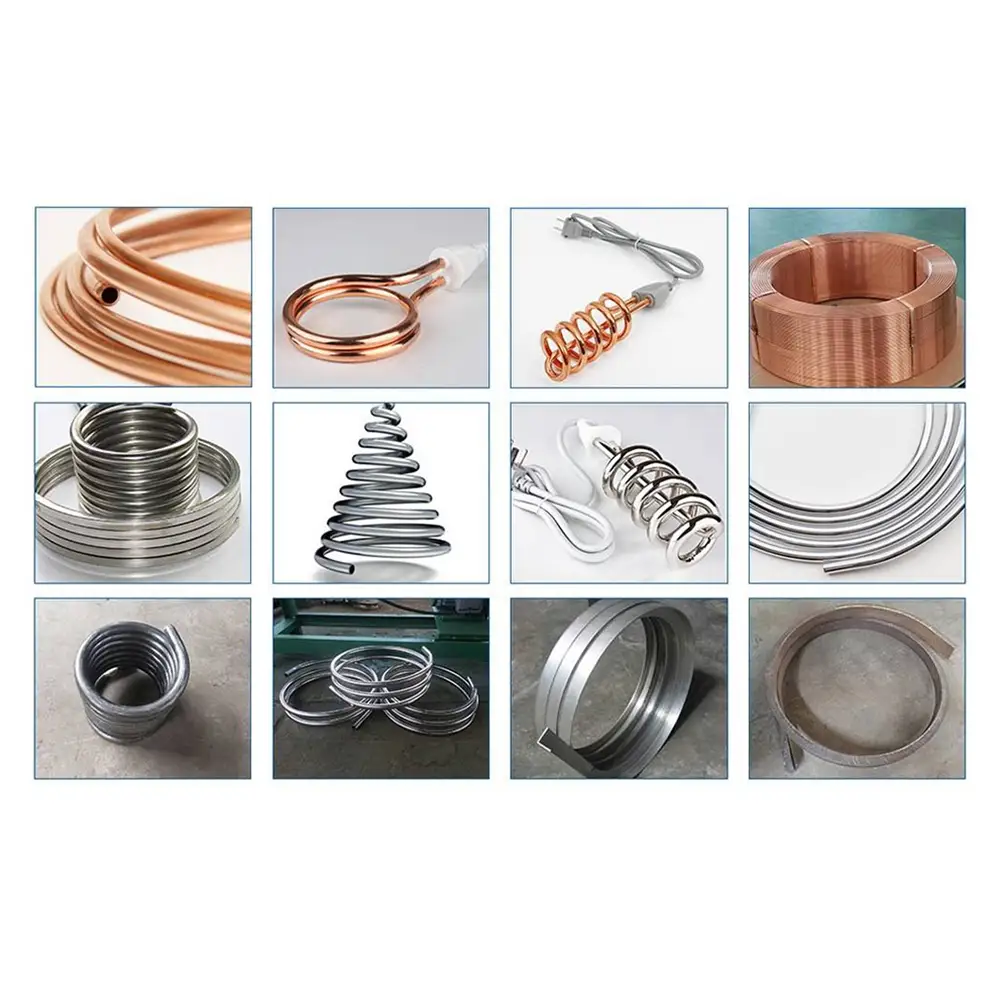
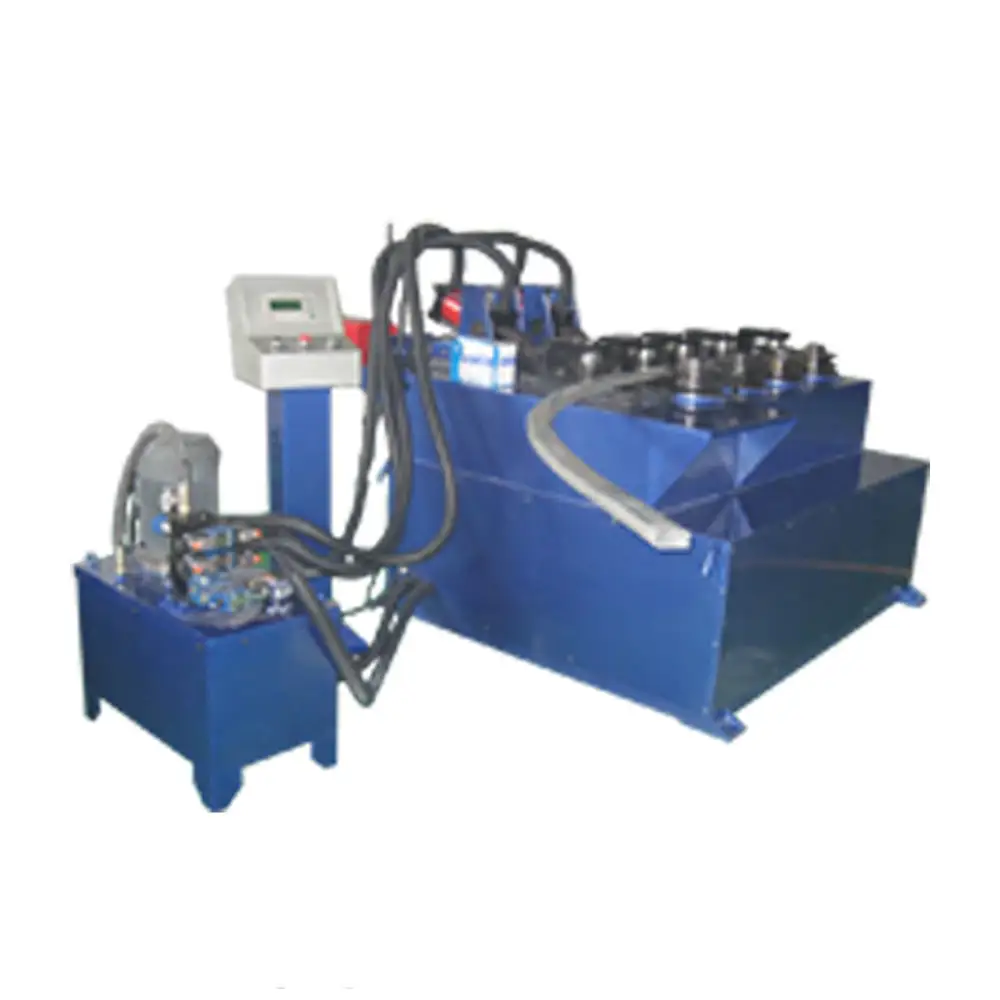
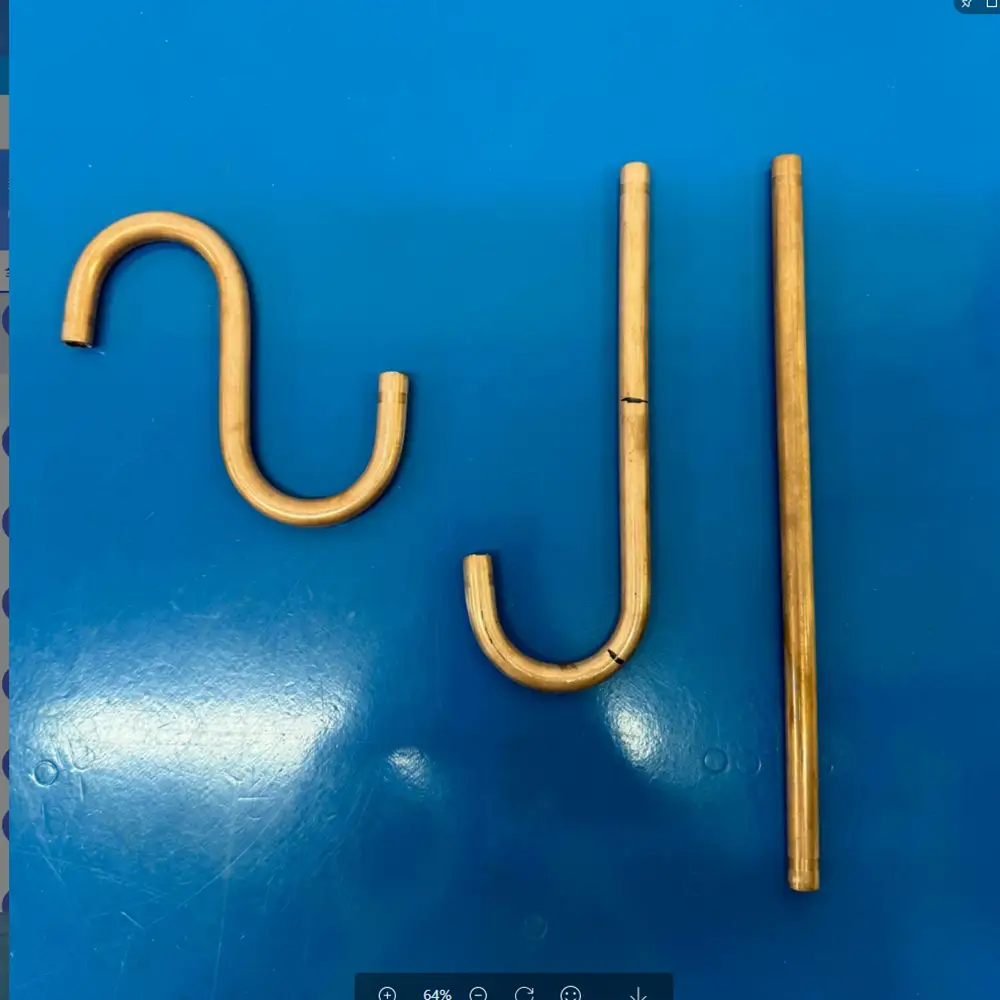
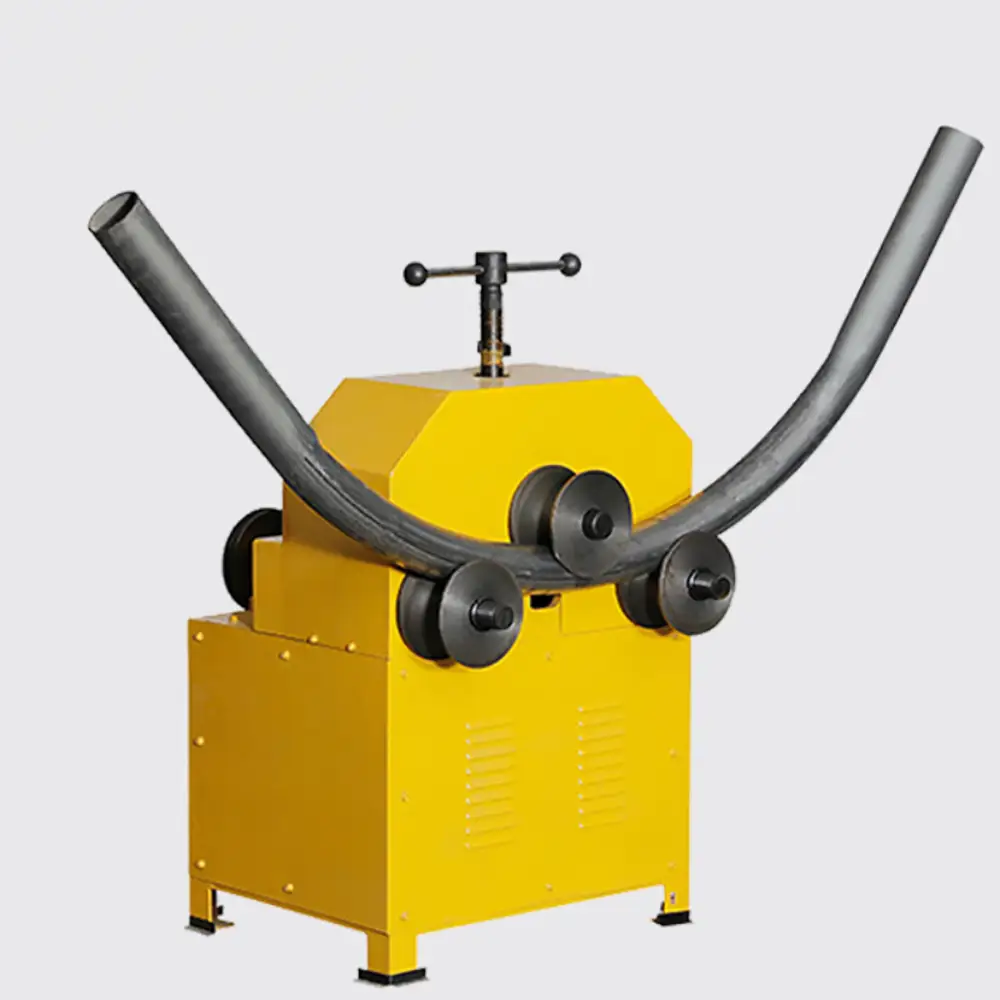
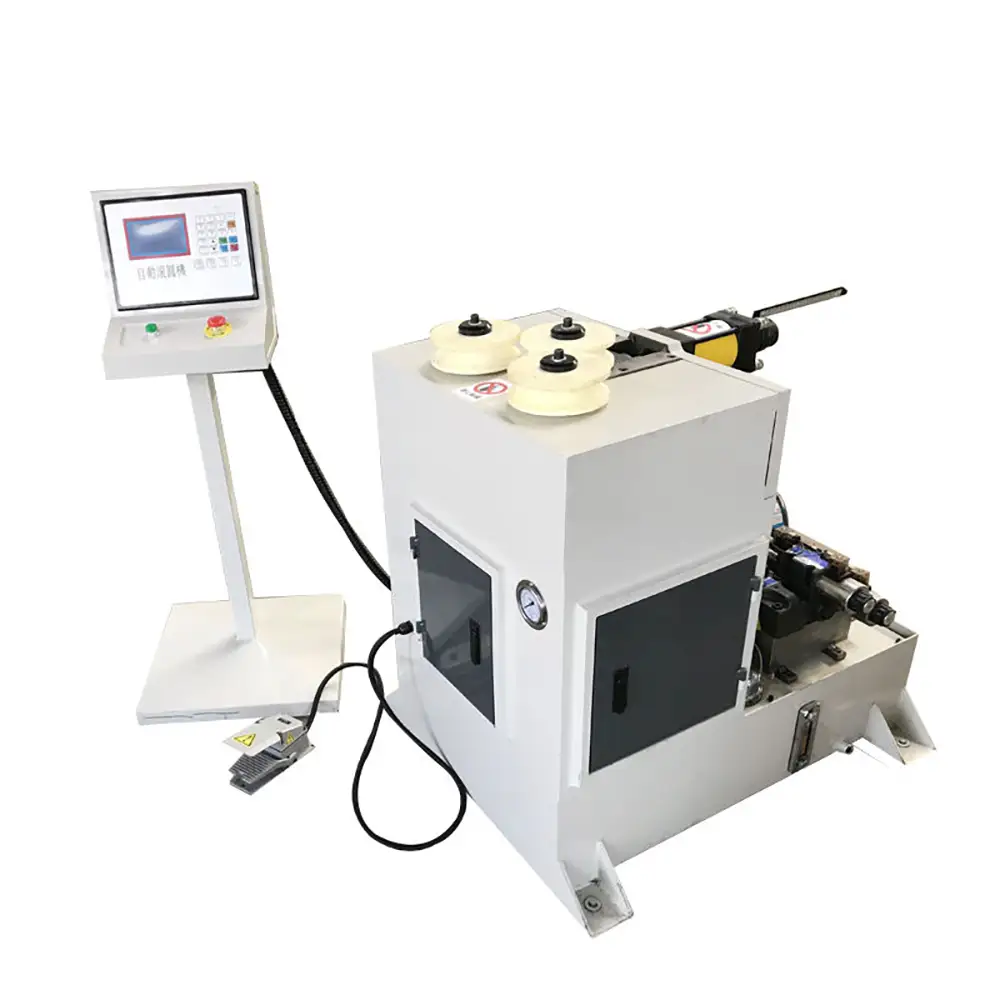
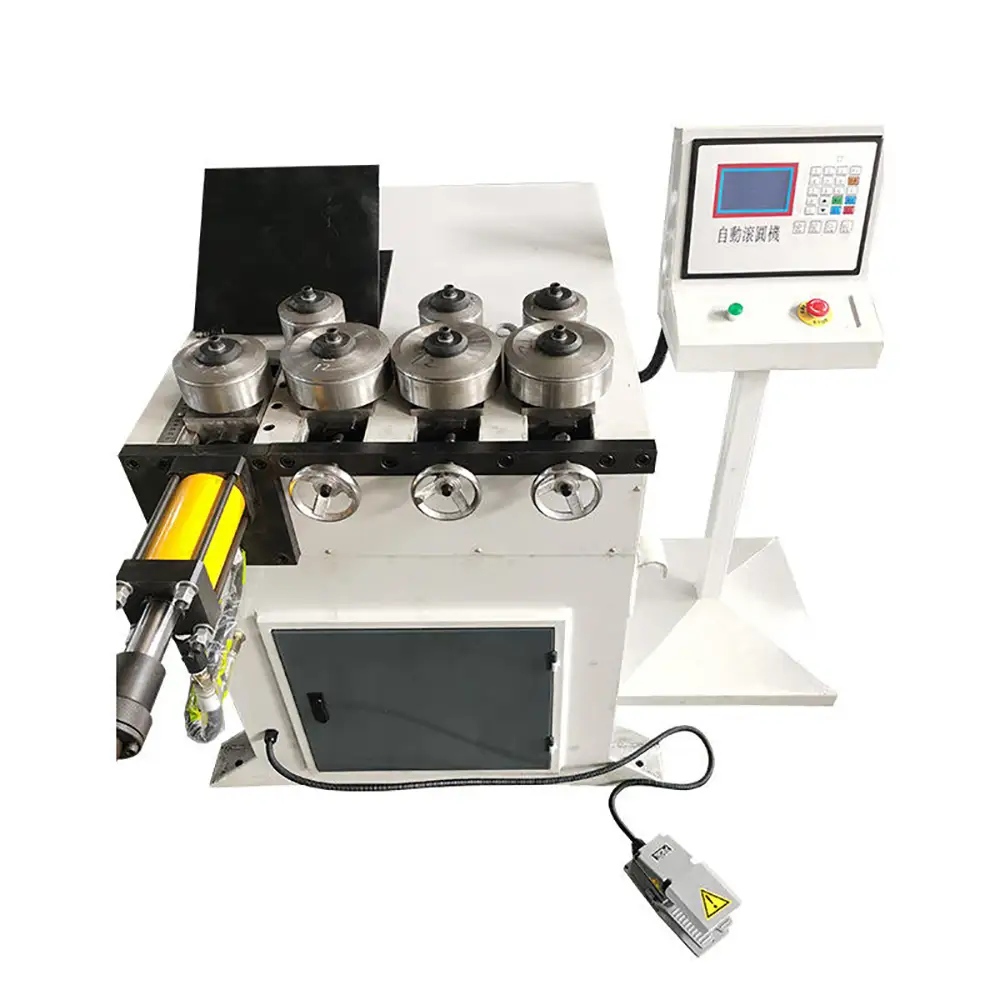
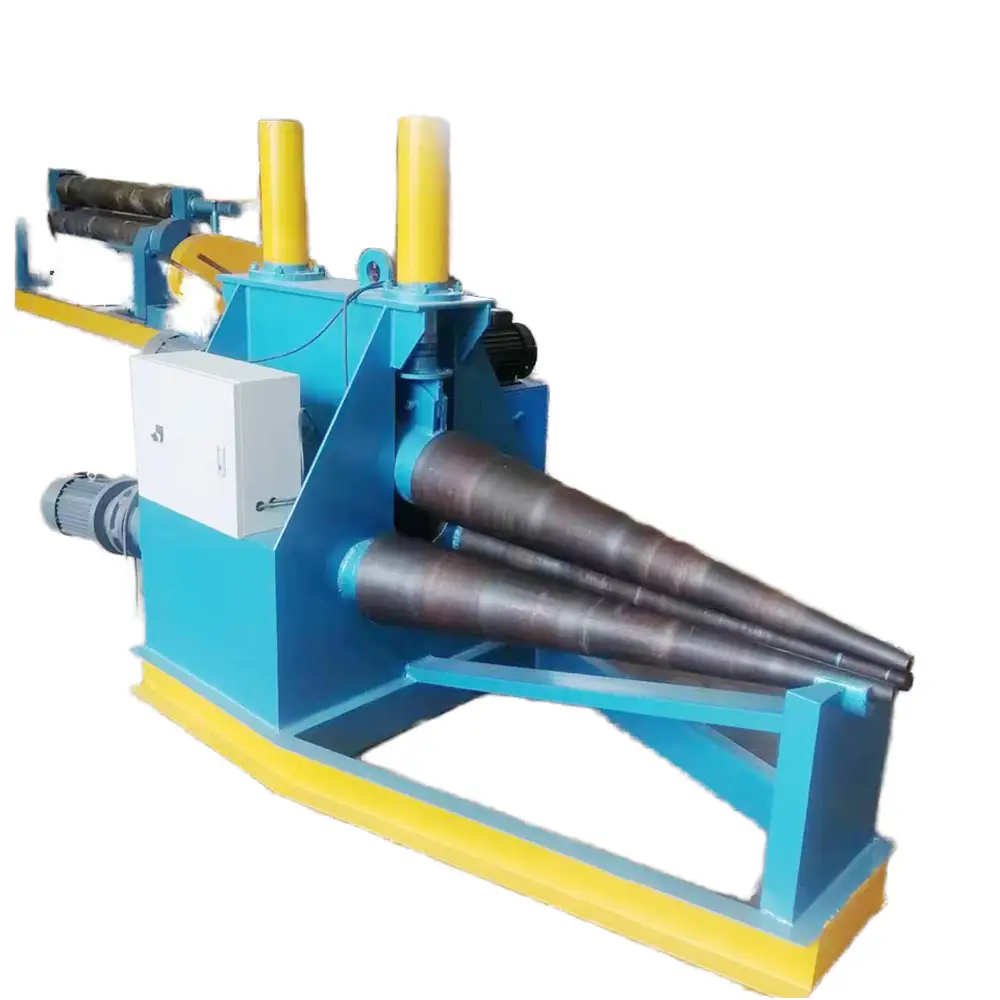
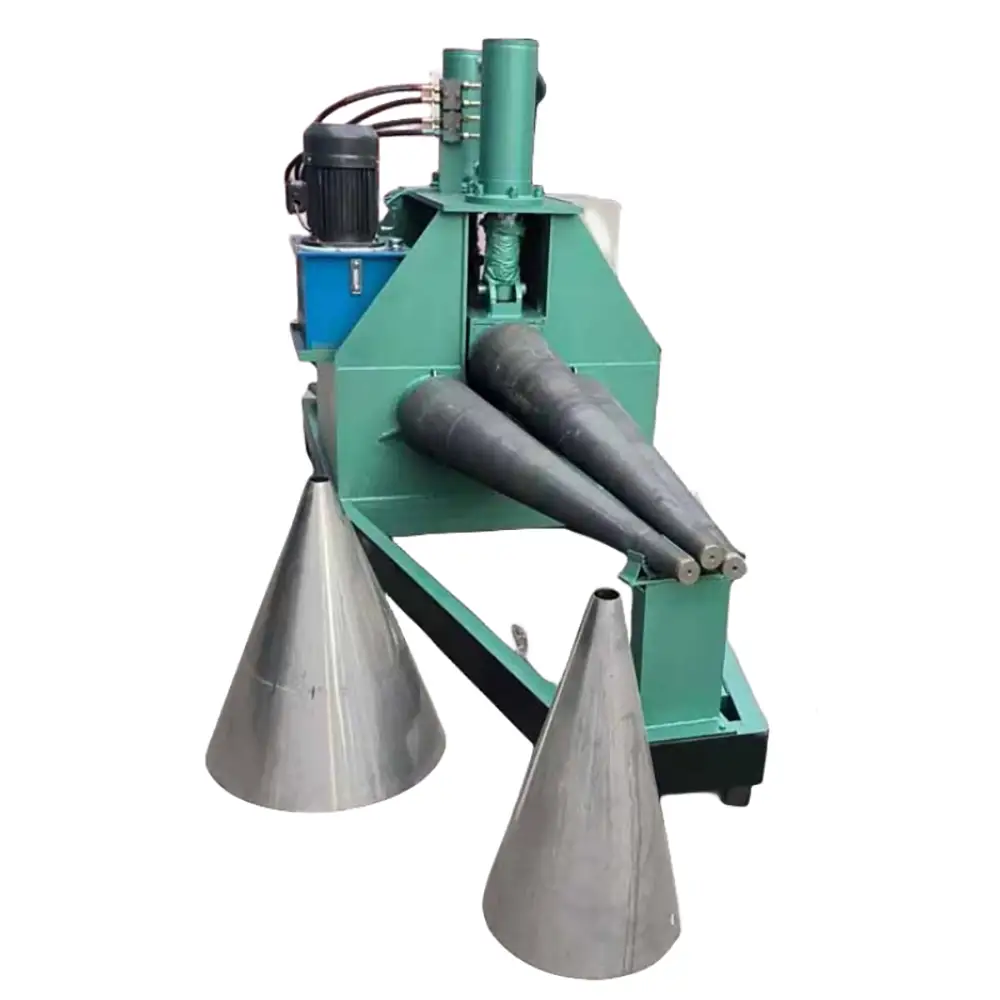
This machine is mainly used to bend large-radius angle steel, flat steel, round pipe and other special-shaped cross-section profiles. The machine uses servo drive, PLC control system, full gear transmission mechanism, and can realize circular arcs with different radii on the same material.
(1) Complete mechanical transmission with compact structure and high reliability.
(2) Seven-roller drive, not easy to slip, thin-walled materials can also be bent.
(3) The rollers are asymmetrically distributed on both sides, reducing the straight section, which can be bent and rolled.
(4) Controller setting program, foot switch control to open and stop.
(5) Machine transmission balance, just need to adjust the compaction, you can get different curvature of the circle, arc or spiral, you can change the radius to roll, you can also change the radius and then roll, adjust according to different needs.
|
Main specifications / models |
40CNC-2A |
60CNC-2A |
|
Pipe bending capacity |
Φ40mm x 2mm |
Φ60mm x 2mm |
|
Minimum bend radius |
8D |
8D |
|
Quantity of rollers |
7 |
7 |
|
Bending speed |
Adjustable |
Adjustable |
|
Mold diameter |
180mm |
180mm |
|
Spheronization servo |
2KW |
3KW |
|
Compact servo |
1.5KW |
2KW |
|
Machine size |
1100 x 1200 x920mm |
1400x 1300 x130mm |
|
weight |
850kg |
1200kg |
Hydraulic Tube Rollers for Round Pipe Rolling and Bending
The Hydraulic Tube Rollers are designed for forming,rolling,and bending suitable round metal tubes and pipes into curved or circular shapes. This type of hydraulic pipe rolling bending machine provides a practical solution for manufacturers and fabricators that need controlled forming of tubular materials for frames,arches,rings,structural components,and other fabricated products.
Round tubes are widely used in construction,metal furniture,automotive components,agricultural machinery,industrial equipment,handrails,guardrails,architectural structures,and custom metal fabrication. Many of these applications require pipes to be curved to a specified radius rather than remaining straight.
A hydraulic tube roller uses controlled mechanical force to progressively deform the workpiece through forming rollers. Depending on the machine configuration,the rollers can be adjusted to create different bending radii and curved profiles.
The actual tube diameter range,wall thickness,minimum bending radius,hydraulic capacity,and roller configuration depend on the specific machine model and should be confirmed according to the customer's material requirements.
Hydraulic Tube Rolling Technology
Tube rolling is a progressive forming process in which a round pipe or tube passes through multiple rollers while controlled pressure changes the shape and curvature of the workpiece.
Unlike simple single-point bending,the rolling process can gradually form the tube along its length. This can be useful when producing large-radius curves or continuous arcs.
Hydraulic adjustment provides controlled movement of the forming components. Depending on the machine design,it may be used to adjust roller position and forming pressure.
The forming result depends on tube material,outer diameter,wall thickness,roller geometry,roller position,and the desired bending radius.
For production applications,the correct combination of roller settings and forming passes should be established according to the workpiece.
Round Pipe Rolling Machine
A round pipe rolling machine is designed specifically around cylindrical workpieces.
Typical materials may include:
Carbon steel pipe
Mild steel tube
Stainless steel tube
Aluminum tube
Galvanized steel pipe
Alloy steel tube
Other suitable round metal profiles
Different materials have different yield strengths and forming characteristics.
Carbon steel tubes may require higher forming force than some aluminum tubes,while stainless steel can require careful control because of its material properties and springback.
The machine should therefore be selected according to the actual material grade,pipe diameter,and wall thickness.
Round Tube Bending Applications
Hydraulic tube rollers can be used to produce curved tubular components for many industries.
Common applications include:
Metal arches
Circular frames
Handrails
Guardrails
Greenhouse structures
Furniture frames
Fitness equipment
Automotive components
Agricultural machinery
Architectural structures
Steel structures
Custom tubular products
For example,metal furniture manufacturers may use curved tubes to produce chair frames,tables,and decorative structures. Architectural fabricators may require large-radius pipe curves for railings,arches,and decorative structures.
The appropriate machine configuration depends on the dimensions and geometry of the finished component.
Hydraulic Roller Adjustment
The hydraulic system provides controlled movement of the forming rollers or other machine components,depending on the design.
Hydraulic adjustment can make it easier to control the amount of deformation applied to the tube during forming.
In a typical rolling operation,the operator positions the workpiece between the rollers and gradually adjusts the forming position while the tube passes through the machine.
Several forming passes may be required depending on the tube material,diameter,wall thickness,and target radius.
The actual operating method should follow the machine manufacturer's instructions.
Large Radius Pipe Bending
Tube rollers are commonly associated with large-radius bending applications.
Instead of forcing the entire tube into a sharp angle at one location,the rolling process gradually creates a continuous curve.
This can help manufacturers produce smooth arcs for applications such as:
Circular frames
Pipe arches
Handrail sections
Structural curves
Greenhouse hoops
Decorative metalwork
Vehicle components
The minimum achievable radius depends on tube dimensions,material properties,roller diameter,roller arrangement,and machine capacity.
Customers should provide the desired radius together with tube specifications when requesting a machine recommendation.
Tube Diameter and Wall Thickness
Tube diameter and wall thickness are important factors when selecting a hydraulic pipe rolling machine.
A larger-diameter or thicker-wall tube generally requires greater forming force. Very thin-wall tubes may require careful roller adjustment to reduce the risk of excessive deformation or flattening.
The machine should therefore be selected according to the actual cross-sectional dimensions rather than simply the nominal pipe diameter.
Customers should provide:
Tube outside diameter
Tube wall thickness
Tube material
Tube length
Required bending radius
Finished shape
Production volume
These details help determine whether a particular roller configuration is suitable.
Controlling Springback
Metal tubes can experience springback after forming. The amount of springback depends on material strength,wall thickness,diameter,and bending radius.
Operators may need to compensate for springback by adjusting the roller position or using additional forming passes.
Hydraulic tube rollers can provide controlled forming adjustment,but the exact process parameters need to be established for each material and workpiece.
For production applications,testing a representative sample can help determine suitable roller settings.
Roller Tooling and Machine Configuration
The rollers are critical components because their geometry determines how the tube contacts the machine during forming.
Different tube diameters may require different roller grooves or tooling configurations.
Depending on the machine design,rollers may be interchangeable or adjustable to accommodate different workpiece sizes.
Custom roller tooling can also be considered for specialized profiles or unusual forming requirements.
Customers producing several tube sizes should discuss the required diameter range before purchasing so the appropriate roller configuration can be selected.
Tube Rolling for Metal Fabrication
Hydraulic pipe rollers are useful for fabrication shops that process different tubular components.
A single machine can potentially support a variety of forming applications within its rated range,allowing manufacturers to produce curved components without using separate equipment for every tube size.
Typical fabrication tasks include producing curved handrails,metal arches,structural frames,decorative tubes,and machinery components.
The actual production workflow depends on the workpiece and required finished shape.
Production Efficiency
Hydraulic tube rolling can improve production consistency by providing a controlled forming process.
For repeated production,the same roller settings can be used as a starting point for similar workpieces. Operators can record suitable parameters for different tube materials and diameters.
Actual productivity depends on tube dimensions,number of forming passes,desired radius,loading and unloading time,roller adjustment,and operator workflow.
For high-volume manufacturing,the tube roller can be integrated into a broader fabrication process that includes tube cutting,welding,drilling,notching,and finishing.
Tube Bending Quality
Finished bending quality depends on several factors.
Important variables include:
Tube material
Wall thickness
Outside diameter
Roller geometry
Roller alignment
Forming pressure
Feed speed
Number of passes
Springback
Workpiece condition
Proper roller alignment is especially important because misalignment can produce inconsistent curves or unwanted deformation.
For applications with strict dimensional requirements,finished parts should be inspected using appropriate measurement equipment.
Applications in Construction and Structural Fabrication
Hydraulic tube rollers can support construction and structural fabrication applications where curved pipes are required.
Potential products include handrails,guardrails,architectural arches,greenhouse frames,steel structures,and custom tubular supports.
The machine can also be useful for producing components for agricultural machinery,industrial equipment,and customized steel structures.
The required machine capacity should be determined from the largest and most demanding workpiece in the production range.
OEM and Custom Hydraulic Tube Roller Solutions
Different manufacturers may require different tube sizes,radii,and production methods.
Custom configurations can include:
Special roller tooling
Customized tube supports
Hydraulic adjustment systems
Different roller arrangements
Customized controls
Workpiece positioning systems
Additional forming stations
Production-line integration
For OEM and ODM projects,customers should provide drawings,samples,tube dimensions,and target bending radii.
This information allows the manufacturer to evaluate the appropriate machine structure and tooling.
B2B Supply and Industrial Applications
The hydraulic tube rolling bending machine is suitable for metal fabrication companies,steel structure manufacturers,pipe processors,automotive suppliers,furniture manufacturers,construction contractors,and machinery distributors.
For international B2B buyers,the machine should be evaluated according to tube capacity,hydraulic system configuration,roller tooling,power supply,control method,and available technical support.
Providing complete workpiece specifications before ordering can help ensure that the selected machine matches the intended production requirements.
Maintenance and Safe Operation
Regular maintenance should include checking hydraulic components,roller surfaces,drive systems,fixtures,and electrical connections.
Rollers should remain clean and properly aligned. Hydraulic hoses and connections should be inspected for leakage or damage according to the manufacturer's maintenance schedule.
Operators should keep hands away from the forming area and ensure that the workpiece is positioned securely before starting the machine.
Depending on the configuration,safety features may include guards,emergency-stop controls,hydraulic protection,and electrical safety systems. Operators should follow the manufacturer's instructions and applicable workplace safety requirements.
Why Choose Us
Hydraulic Tube Rolling
Controlled hydraulic adjustment supports progressive forming of suitable round metal tubes.
Round Pipe Bending Capability
Designed for producing curved pipes,tubes,arcs,and circular tubular components.
Flexible Material Applications
Suitable for selected carbon steel,stainless steel,aluminum,galvanized steel,and alloy tubes.
Large-Radius Forming
Progressive rolling is suitable for many applications requiring smooth tubular curves.
Adjustable Roller Configuration
Roller position and tooling can be selected according to tube dimensions and forming requirements.
Wide Industrial Applications
Suitable for construction,furniture,automotive,agricultural machinery,architectural,and general metal fabrication.
Custom Tooling Support
Roller grooves,fixtures,and work supports can be customized for specific tube sizes and production needs.
OEM & ODM B2B Support
Machine configuration can be developed according to tube dimensions,bending radius,material,and production volume.
FAQs
1. What is a hydraulic tube roller?
A hydraulic tube roller is a metal forming machine that uses rollers and controlled hydraulic adjustment to bend or curve suitable round tubes and pipes.
2. What is the difference between tube rolling and tube bending?
Tube rolling gradually forms a curve through multiple rollers,while conventional tube bending generally applies force at a specific bending location. Rolling is commonly useful for larger-radius curves.
3. What materials can be processed?
Depending on the machine configuration,it can process suitable carbon steel,stainless steel,aluminum,galvanized steel,and alloy tubes.
4. Can it bend round steel pipes?
Yes. Round steel pipe is a common application when its diameter,wall thickness,and material properties are within the machine's rated capacity.
5. Can stainless steel tubes be rolled?
Yes,provided the machine and roller tooling are suitable for the stainless steel tube dimensions and material properties.
6. Can aluminum tubes be processed?
Potentially yes. Aluminum tubes can be formed when the machine and tooling are appropriately configured for the alloy,diameter,and wall thickness.
7. What determines the bending radius?
The achievable radius depends on tube diameter,wall thickness,material strength,roller arrangement,roller dimensions,and machine configuration.
8. Can the machine produce circular rings?
Depending on the roller arrangement and machine configuration,it may be suitable for producing circular or near-circular tubular shapes. The required diameter and tube specifications should be confirmed first.
9. Does the tube need multiple forming passes?
Often,progressive forming passes can be used to achieve a controlled curve. The number of passes depends on the material,tube dimensions,and required radius.
10. How can tube deformation be reduced?
Proper roller selection,alignment,forming pressure,and gradual processing can help control deformation. Actual parameters should be established through suitable testing.
11. Can custom rollers be supplied?
Yes. Custom roller grooves and tooling can be considered for specific tube diameters,profiles,or forming applications.
12. What information is needed for a quotation?
Provide tube material,outside diameter,wall thickness,tube length,required bending radius,finished shape,production volume,and any drawings or samples. These details help determine the appropriate machine configuration.
Prev:
Automatic Pipe Rolling Machine for Greenhouse Steel Tube Roller Round Pipe Bender for Hoop Frame Making
Next:Sorry, no information
TAG:
Metal Pipe Forming Machine,
Metal Tube Forming Machine,
Hydraulic Tube Forming Machine,
Hydraulic Pipe Forming Machine,
Metal Tube Rolling Machine,
Stainless Steel Tube Bending Machine,
Aluminum Tube Bending Machine,
Steel Tube Bending Machine,
Tube Rolling Machine,
Pipe Bending Equipment,
Tube Bending Equipment,
Hydraulic Pipe Bending Machine,
Industrial Pipe Bending Machine,
Industrial Tube Bending Machine,
Hydraulic Tube Bending Machine,
Large Radius Pipe Bending Machine,
Large Radius Tube Bending Machine,
Metal Pipe Bending Machine,
Tube Bending Machine,
Metal Tube Bending Machine,
Pipe Rolling Machine,
Pipe Bending Machine,
Round Pipe Bending Machine,
Round Tube Bending Machine,
Industrial Pipe Roller,
Tube Rolling Equipment,
Pipe Rolling Equipment,
Steel Pipe Bending Machine,
Round Pipe Rolling Machine,
Round Tube Rolling Machine,
Related Category:
Hydraulic Tube Rollers,Hydraulic Tube Rolling Machine,Round Pipe Rolling Machine,Round Pipe Bending Machine,Pipe Rolling China, suppliers, manufacturers, factory, customized, wholesale, quotation, made in China