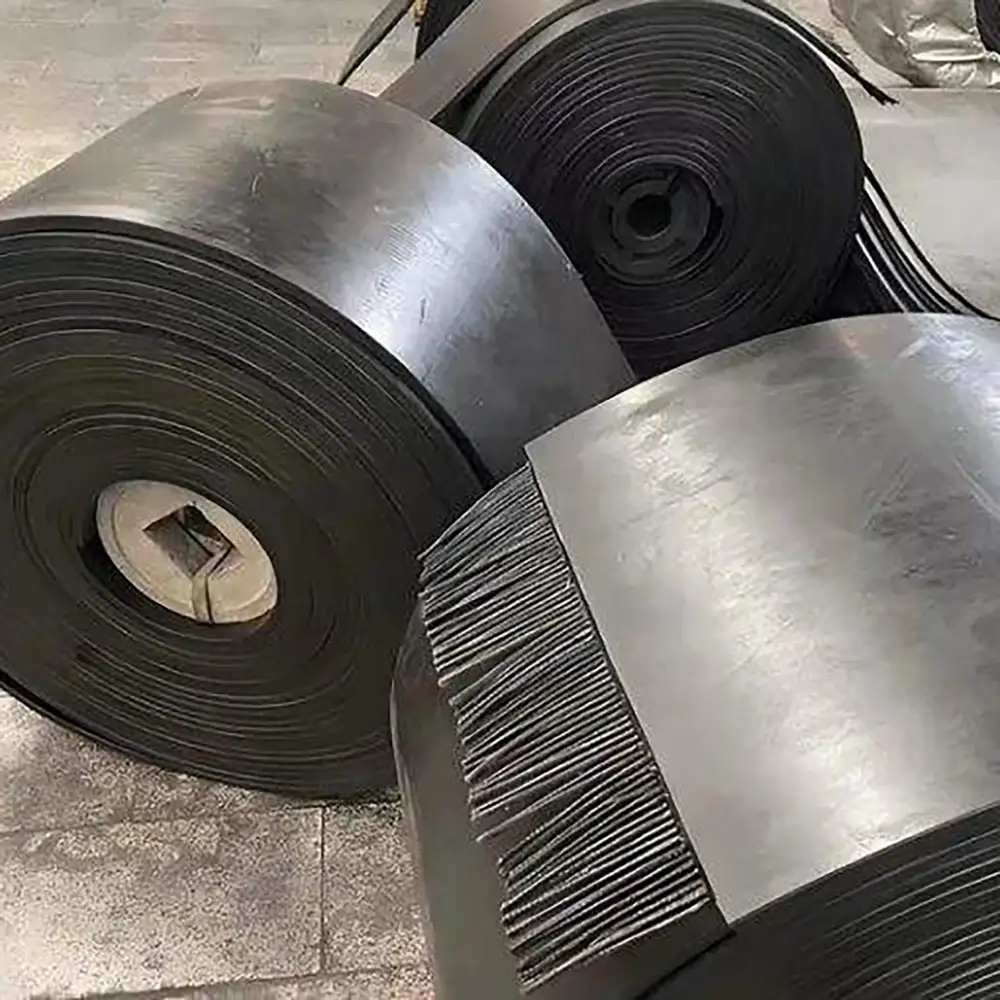
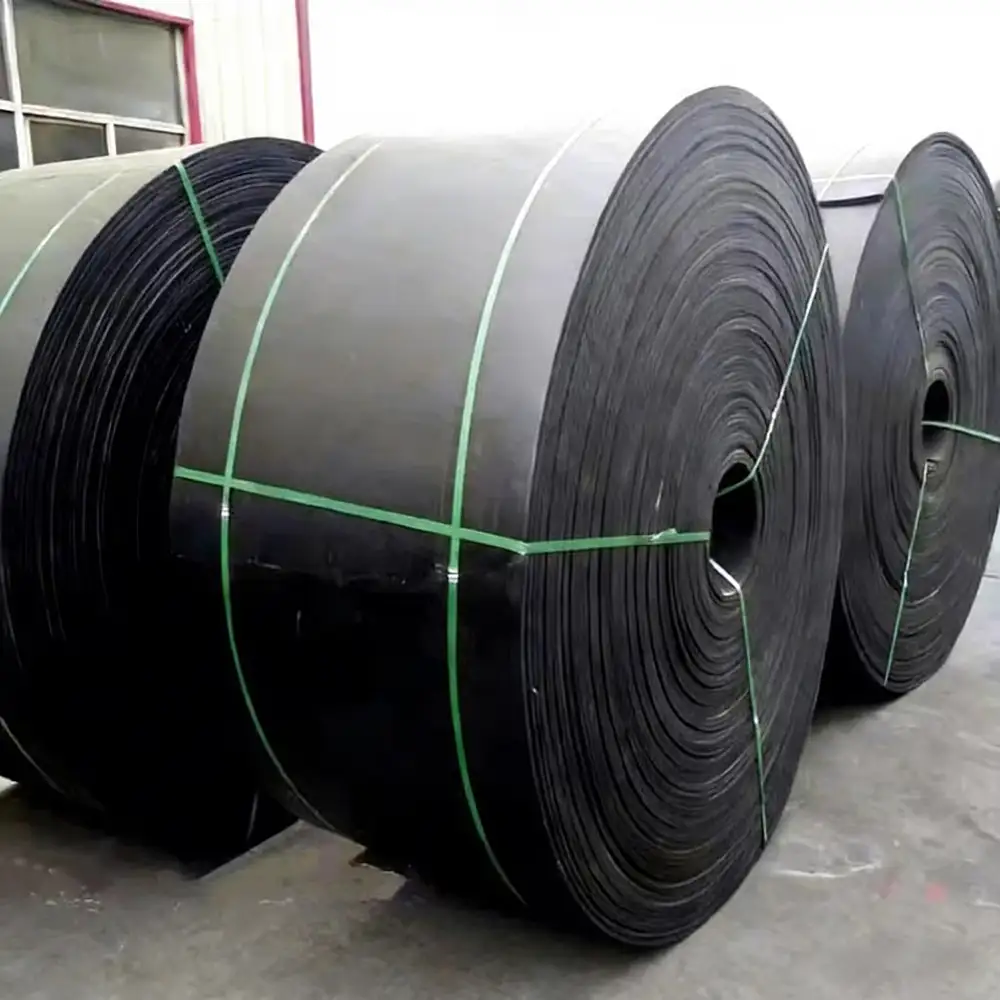
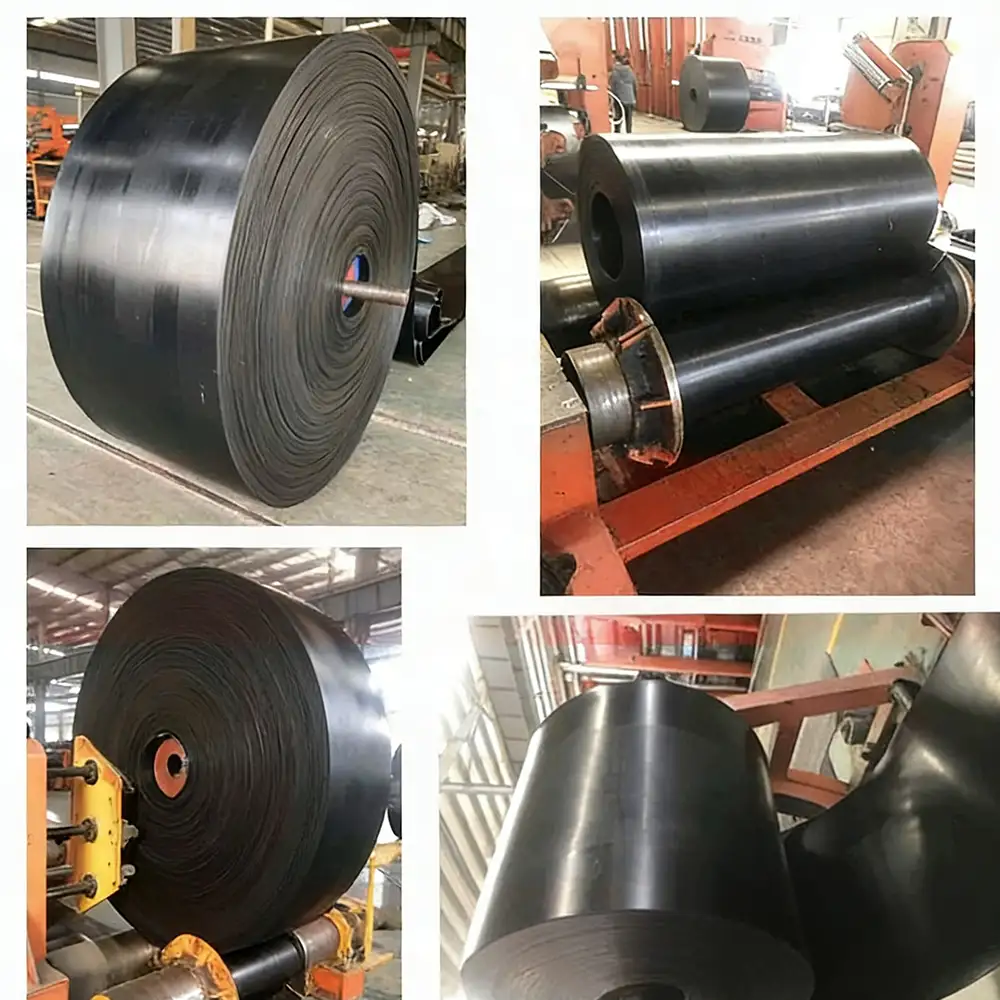
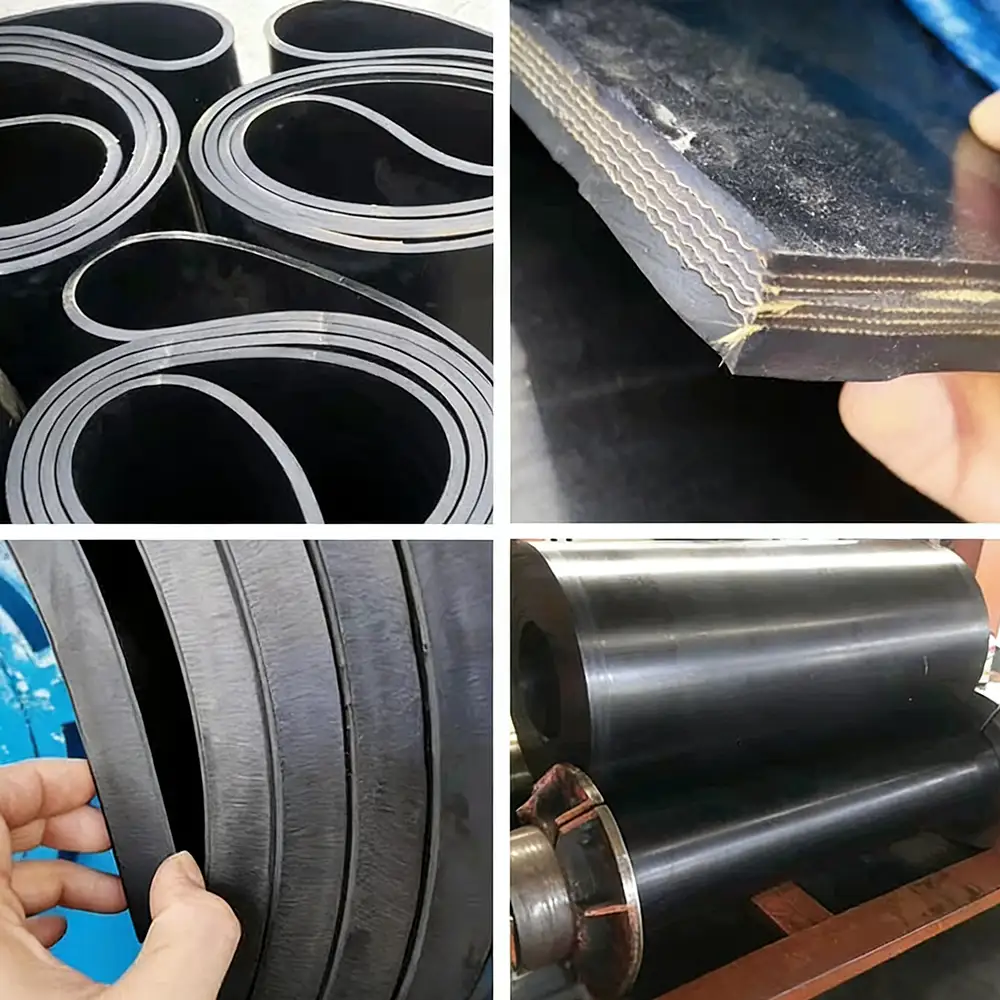
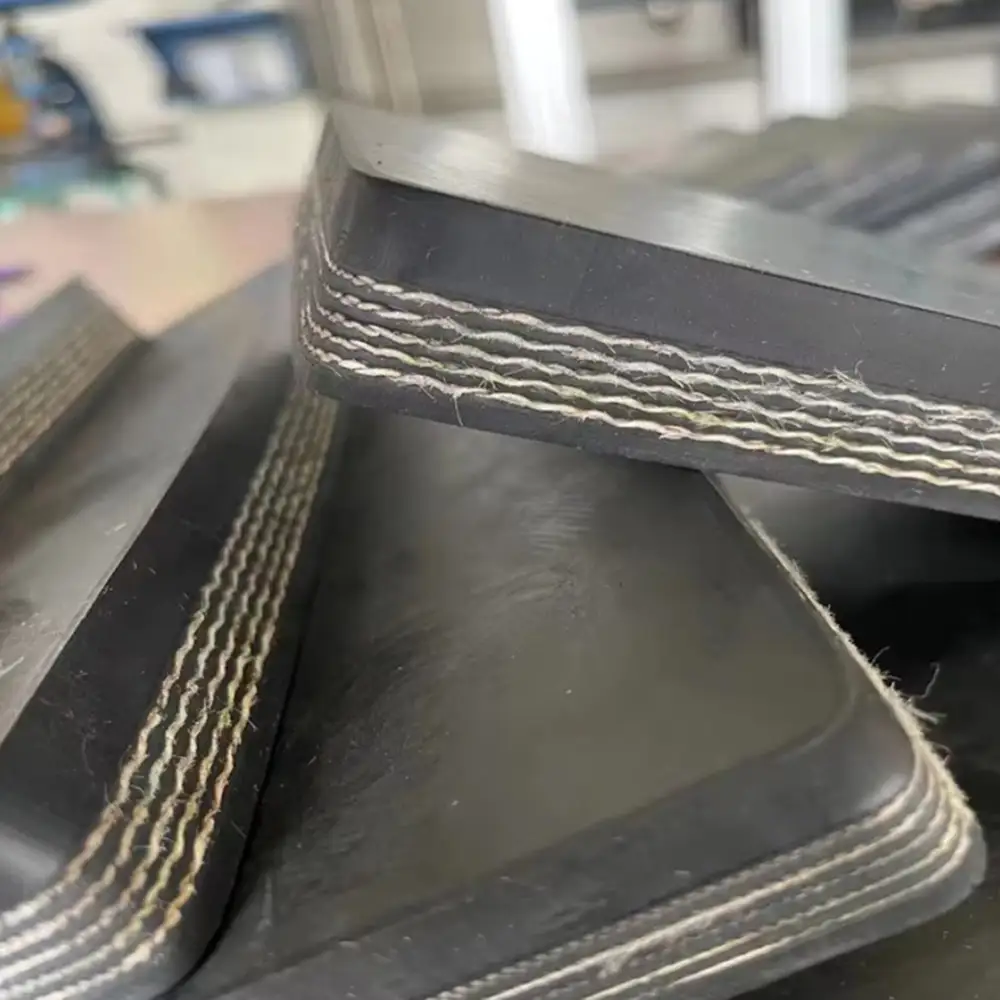
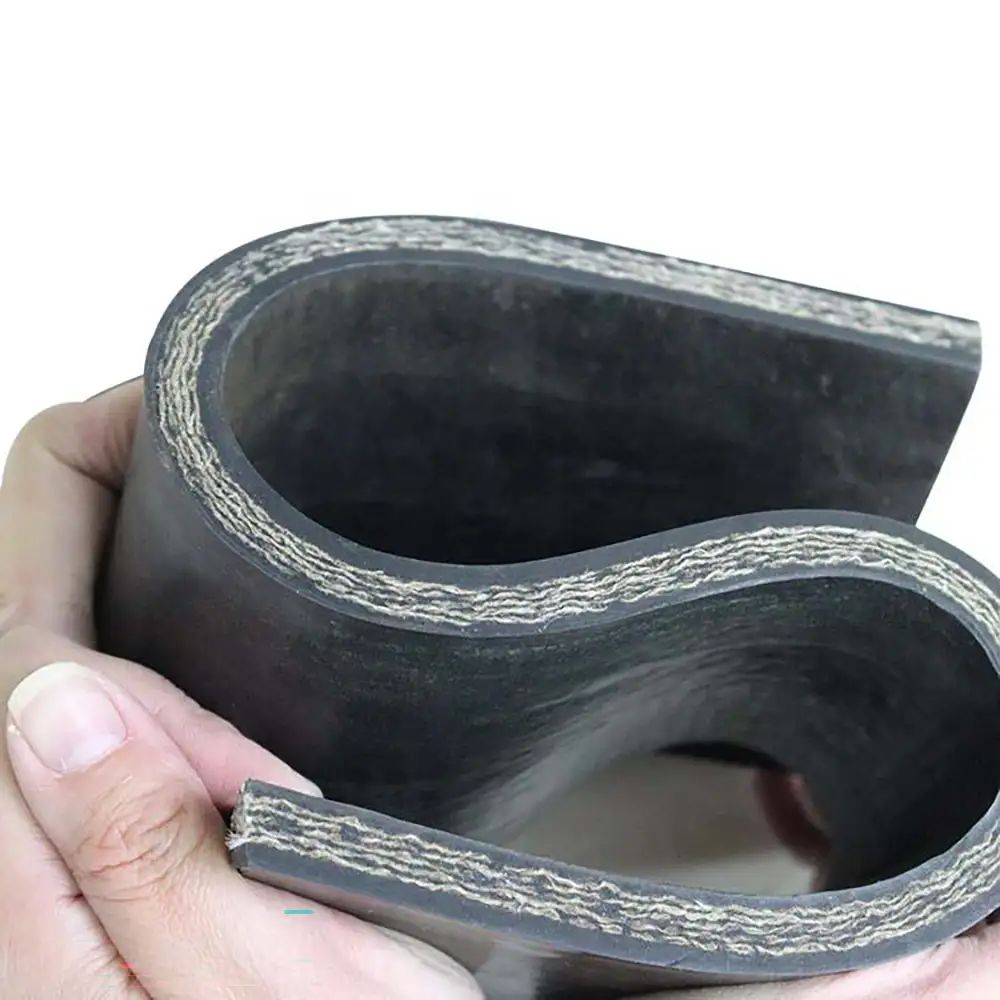
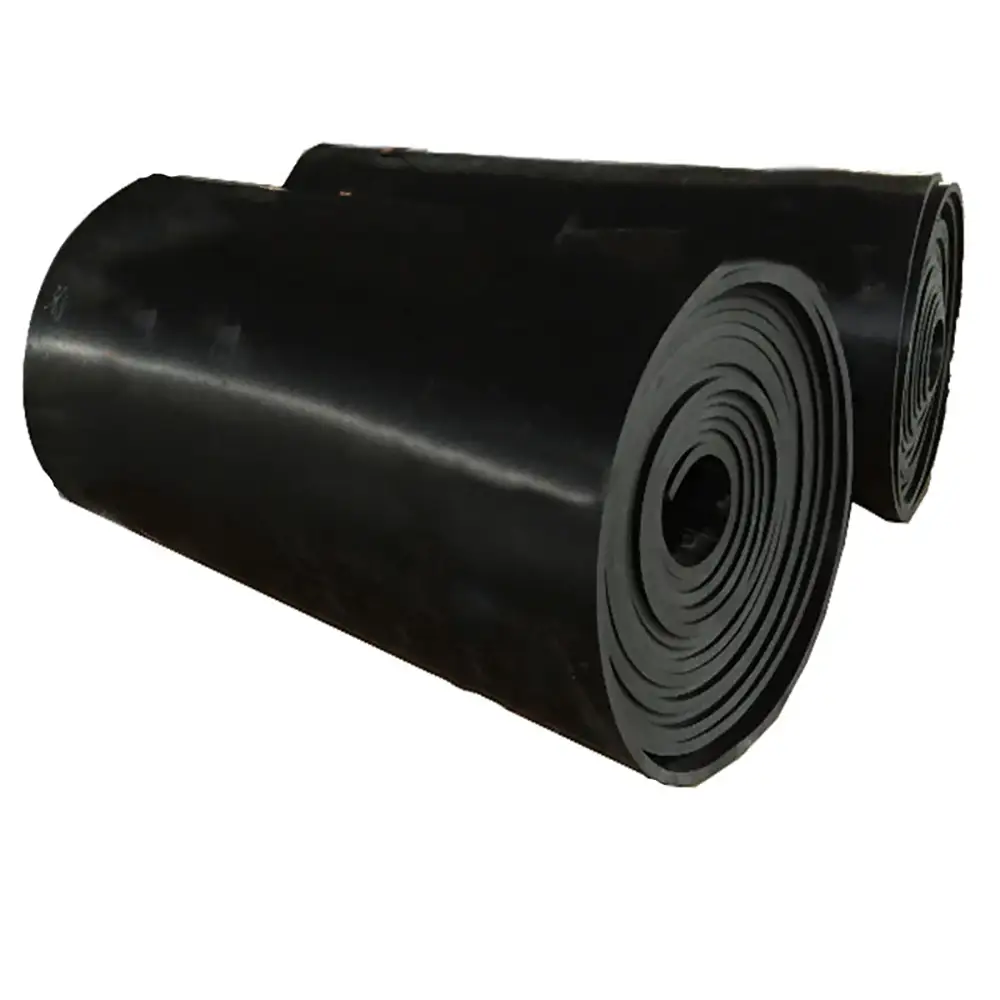
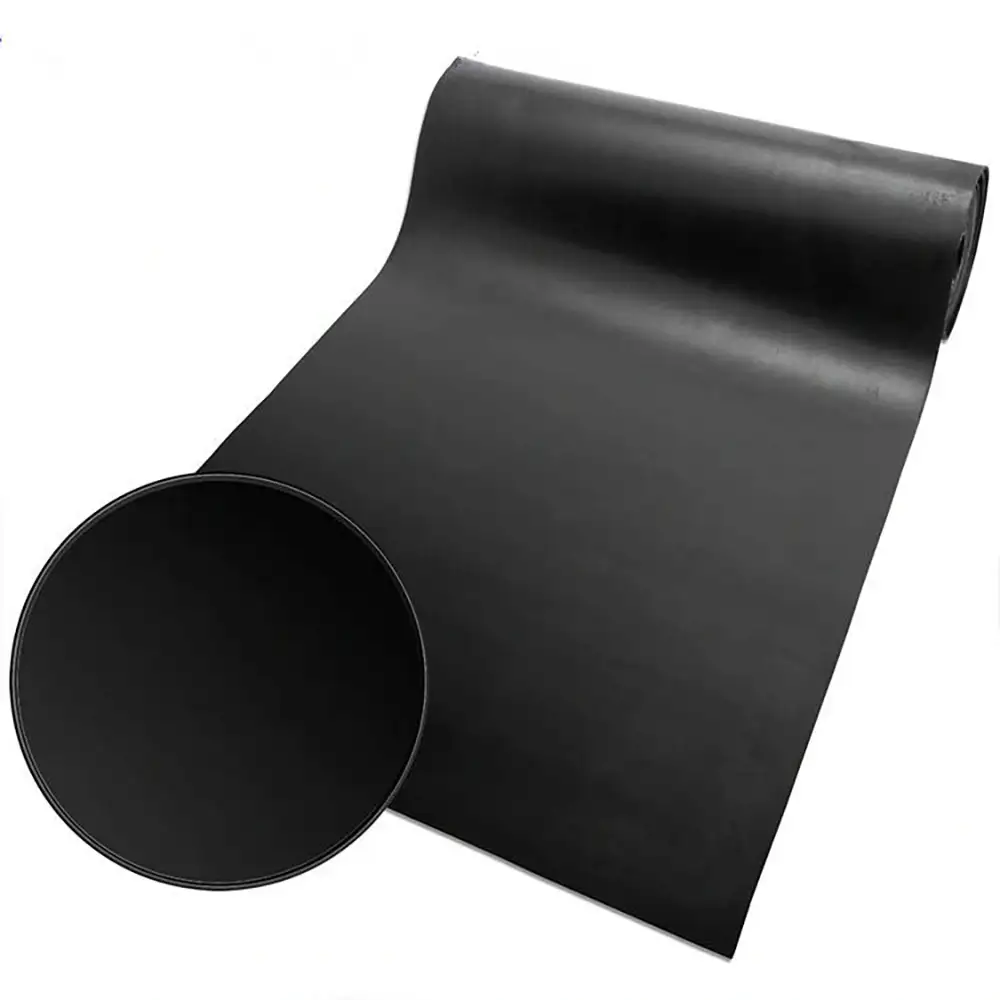
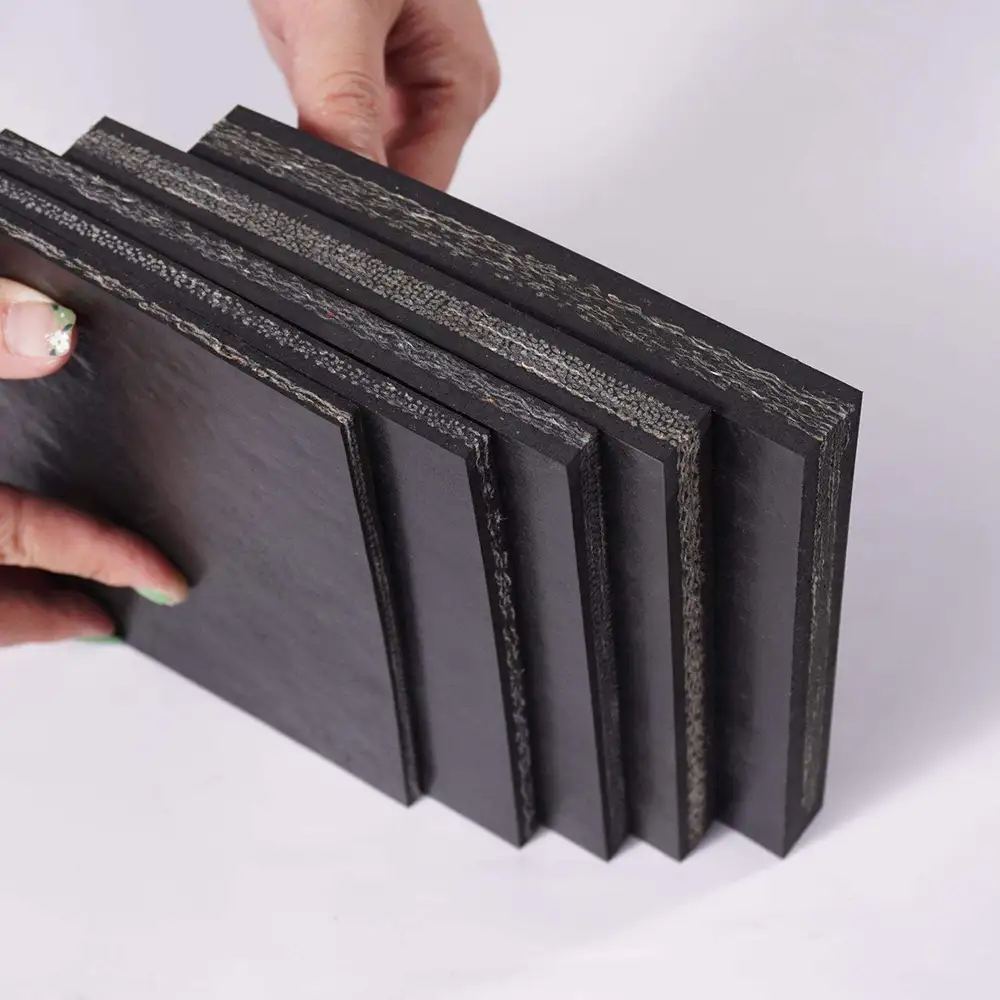
The product is made of cotton canvas ,nylon canvas or EP canvas and finished through the processes of calendering, assembling, vulcanizing and etc.It is suitable for conveying oily materials or working at oily site
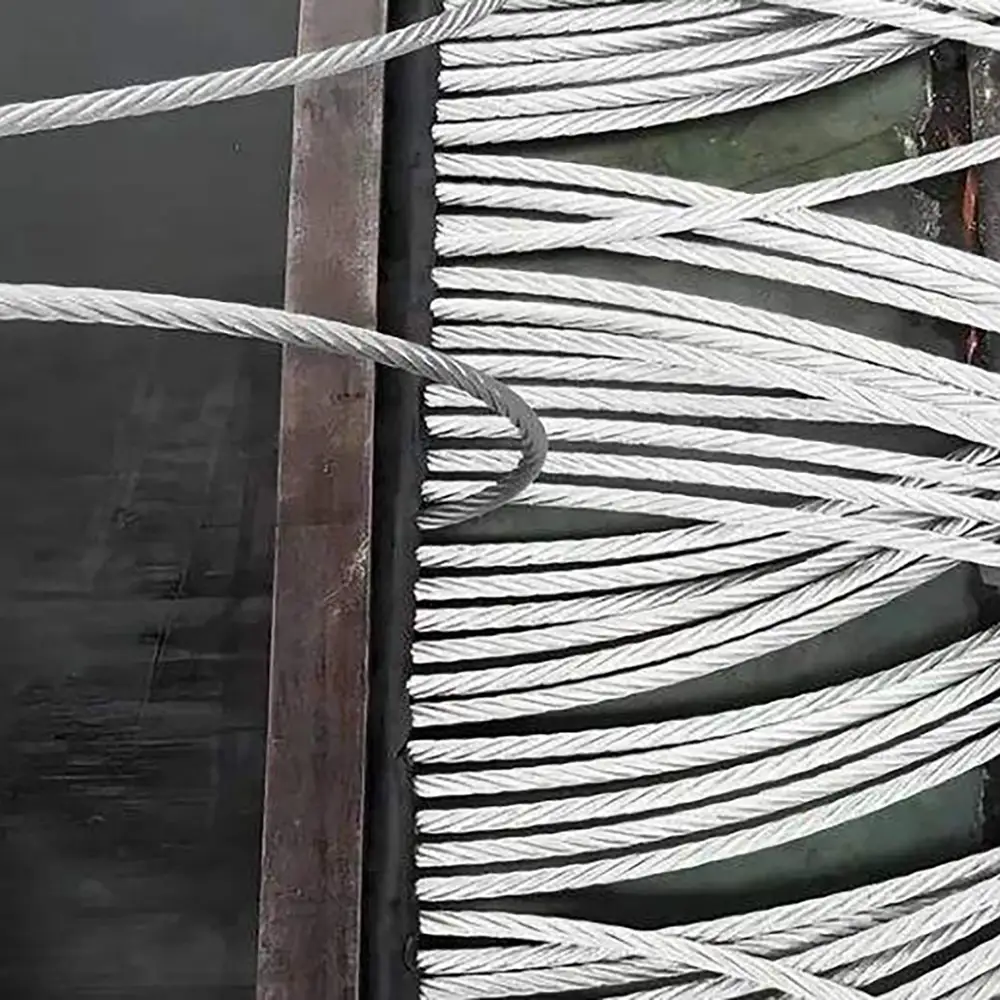
A heat resistant chevron rubber conveyor belt with steel cord is a heavy-duty conveying solution designed for demanding bulk material handling applications where elevated temperatures, steep conveying angles, high belt tension, or difficult materials are involved. Combining a steel cord reinforced carcass with a heat-resistant rubber cover and a raised chevron pattern, this conveyor belt is designed to provide strength, traction, and resistance to thermal exposure.
The steel cord construction is suitable for conveyor systems that require high longitudinal tensile strength, including long-distance and heavy-duty conveying applications. The chevron pattern provides additional grip between the belt surface and conveyed material, helping reduce material rollback on inclined conveyors.
The heat-resistant rubber compound is selected according to the operating environment and conveyed material. It can be considered for applications where hot materials may expose the belt to elevated temperatures. The actual temperature capability depends on the rubber formulation, material temperature, exposure duration, belt construction, and conveyor operating conditions.
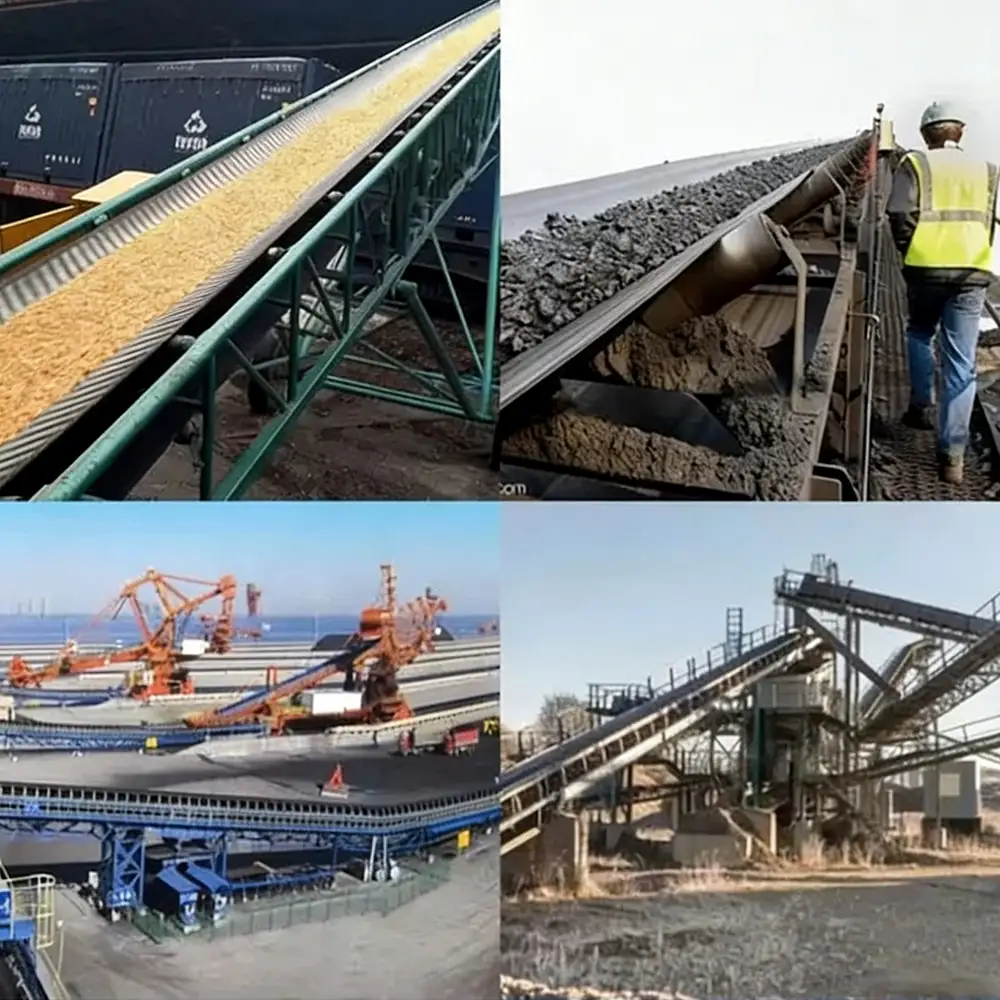
This type of conveyor belt can be used in coal mining, oil-related material handling, manufacturing plants, cement production, metallurgy, foundries, aggregate processing, and other industrial applications.
Technical indexes:
|
Grade |
Tensile Strength |
Elongation at Break |
Maximum Abrasion Loss |
Polymer / Rubber |
Working Temperature Range |
Application |
|
Oil Resistance |
Mpa |
% Minimum |
MM3 |
|
Degrees |
|
|
OR |
15 |
300% |
150 |
NBR Blend |
- 30 to + 60 |
For materials like grains, refuse, woodchips, fertilizers coated with oil, coated coal / coke, etc. |
|
MOR |
12 |
300% |
300 |
NBR Blend |
- 30 to + 50 |
For materials with moderate amount of oil like grain, refuse, recycling waste, wood pulp, pinewood etc. |
What Is a Steel Cord Chevron Conveyor Belt?
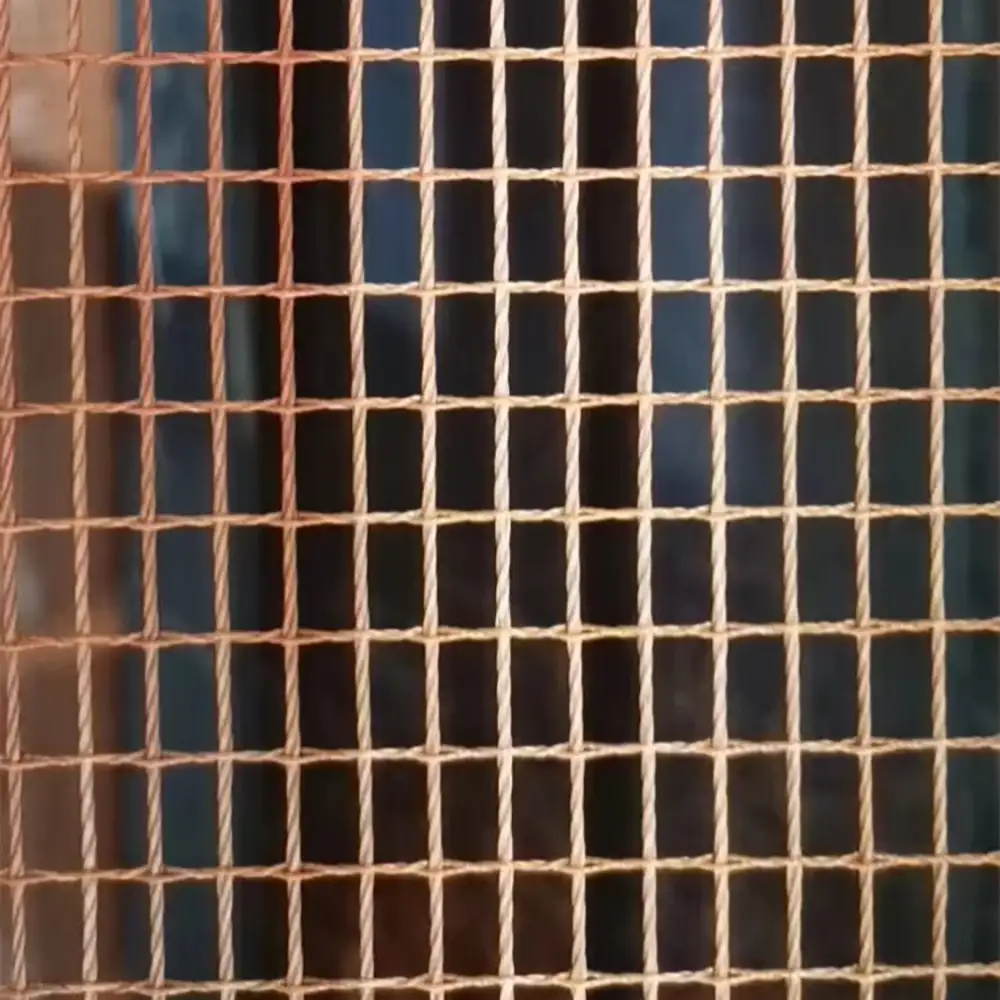
A steel cord conveyor belt uses longitudinal steel cords embedded within the rubber carcass. These steel cords provide high tensile strength and are particularly useful for long conveyors, high-capacity systems, and applications where significant belt tension is required.
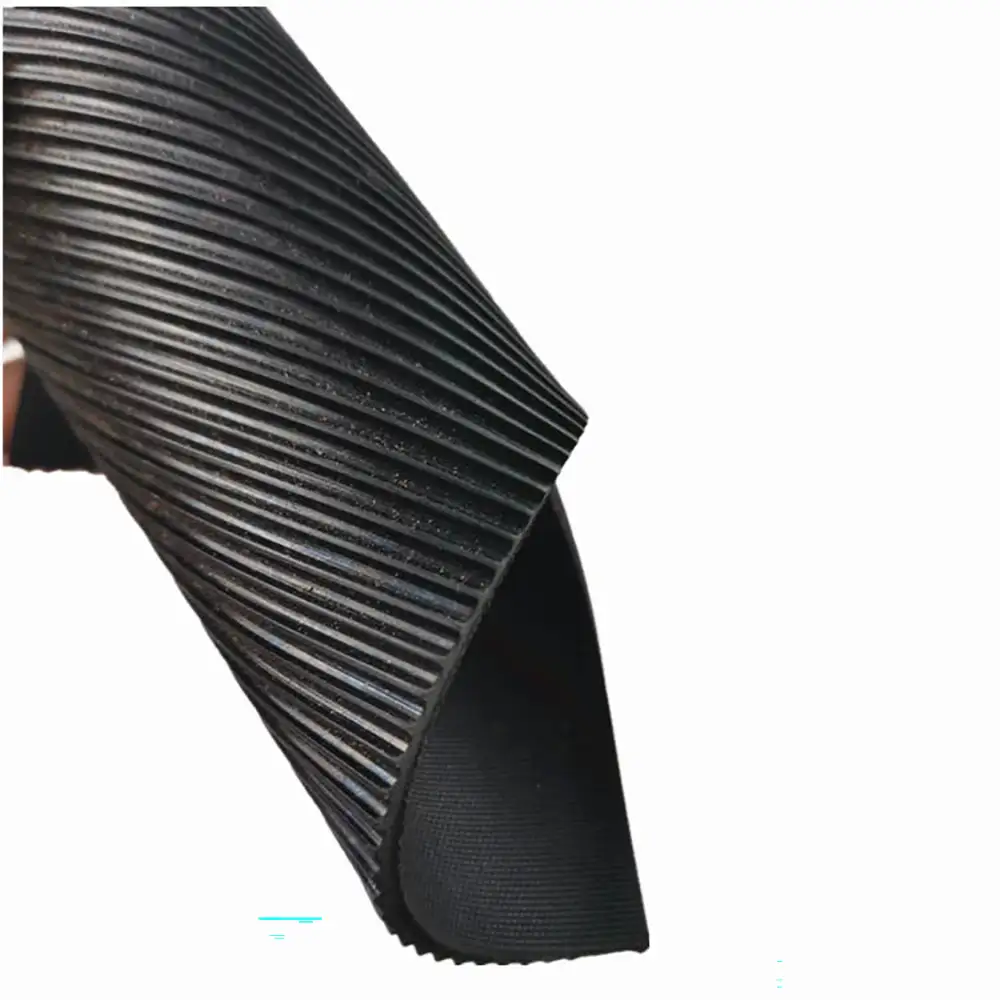
The top surface incorporates a chevron pattern, which consists of raised rubber profiles arranged in a directional or V-shaped configuration. Unlike a conventional flat conveyor belt, the patterned surface can provide additional traction for conveying bulk materials on inclined sections.
The belt's construction may include a heat-resistant rubber cover designed for elevated-temperature service. Depending on the application, additional properties such as abrasion resistance, oil resistance, weather resistance, flame resistance, or antistatic performance may also be considered.
Because these properties depend on the actual rubber compound and construction, the belt should be specified according to the complete application rather than selecting a belt based only on a general product name.
Key Features
Steel Cord Reinforcement
Steel cord reinforcement provides high longitudinal tensile strength and supports demanding conveyor systems. It can be particularly useful for long-distance conveyors and high-capacity bulk material handling systems.
Heat Resistant Rubber Cover
A specially formulated rubber compound can be selected for applications involving elevated-temperature materials. Heat resistance helps reduce thermal deterioration when the belt is exposed to suitable hot materials within its specified operating conditions.
Chevron Pattern
The raised chevron profile improves surface grip and helps stabilize bulk materials when conveying on inclined sections. Pattern height, spacing, and configuration should be selected according to the material and conveyor angle.
Heavy-Duty Construction
The combination of steel cord reinforcement and a robust rubber cover makes this belt suitable for demanding industrial conveying environments where strength, durability, and reliable material handling are important.
Multiple Performance Options
Depending on the application, the belt can be specified with different combinations of heat resistance, abrasion resistance, oil resistance, flame resistance, weather resistance, or antistatic properties.
Applications
Coal Mining
Coal handling systems can require durable conveyor belts capable of transporting large volumes of bulk material over long distances. A steel cord construction can be considered for high-tension mining conveyors, while heat-resistant properties may be useful where hot material or elevated environmental temperatures are present.
For underground mining, flame-resistant and antistatic requirements should be confirmed according to the applicable mine regulations and belt certification requirements.
Oil And Petroleum-Related Material Handling
Oil-related industrial applications may involve materials contaminated with oil, lubricants, or petroleum-based substances. If oil exposure is expected, the rubber compound should be selected for compatibility with the specific substance.
Heat and oil resistance are separate belt properties, so both should be evaluated when the application involves elevated temperatures and oily materials.
Manufacturing Plants
Manufacturing plants may use heavy-duty conveyor belts to move raw materials, production materials, components, or processed bulk products. The chevron profile can be useful when conveying materials on inclined production lines.
Cement And Building Materials
Cement plants and building-material facilities may transport limestone, clinker-related materials, aggregates, sand, and other products. Abrasion and heat exposure should be considered when selecting the rubber cover.
Metallurgy And Foundries
Metal processing facilities may handle hot materials, slag-related materials, mineral products, or other high-temperature bulk products. A suitable heat-resistant conveyor belt can be selected according to the actual material temperature and exposure conditions.
Aggregate And Quarry Plants
The belt can be used in aggregate processing and quarry applications where inclined conveying and high belt strength are required. An abrasion-resistant cover may be considered for crushed stone, rock, gravel, and other abrasive materials.
Advantages Of Chevron Steel Cord Conveyor Belting
A major advantage of this belt construction is the combination of high tensile strength and improved surface traction.
Steel cord reinforcement is designed to carry high longitudinal loads, while the chevron profile helps stabilize material on inclined conveyors. The heat-resistant rubber compound addresses a different requirement by improving resistance to thermal degradation.
This combination can make the belt suitable for demanding systems where a conventional flat textile belt may not provide the required combination of tensile strength, traction, and thermal resistance.
However, the complete conveyor system must also be properly engineered. Belt width, conveyor capacity, loading method, pulley diameter, take-up arrangement, idler configuration, belt speed, conveyor inclination, and splice design all affect operating performance.
How To Choose The Right Heat Resistant Chevron Belt
Before ordering a steel cord chevron conveyor belt, provide as much information about the conveyor system as possible.
Important factors include:
Belt Width
Belt Length
Steel Cord Tensile Grade
Belt Thickness
Cover Thickness
Chevron Pattern
Chevron Height
Chevron Pitch
Conveyed Material
Material Temperature
Conveyor Speed
Conveyor Capacity
Conveyor Inclination
Pulley Diameter
Loading Conditions
Environmental Temperature
Oil Or Chemical Exposure
Required Abrasion Resistance
Applicable Safety Requirements
The actual heat resistance requirement should be determined from the temperature of the material contacting the belt, not simply the surrounding air temperature. Continuous exposure and intermittent exposure can also create different thermal stresses.
Chevron Pattern Selection
Chevron patterns are available in different configurations depending on the material and conveyor application. The profile should provide sufficient traction while allowing the conveyed material to load and discharge effectively.
For relatively steep conveying applications, a more pronounced pattern may be considered. For lower-angle systems, a less aggressive surface pattern may be sufficient.
Material characteristics are also important. Fine powders, coal, gravel, rock, agricultural products, and packaged materials can behave differently on a patterned belt.
Installation And Maintenance
Proper installation is essential for steel cord conveyor belt performance. The conveyor structure should be correctly aligned, and pulleys and idlers should be properly installed and maintained.
Belt tracking should be monitored during operation. Persistent misalignment can damage belt edges and cause uneven wear. Loading points should also be designed to minimize excessive impact and material spillage.
Regularly inspect the chevron profiles for wear or damage and check the rubber cover for cracking, cuts, thermal deterioration, and abnormal abrasion.
For steel cord belts, special attention should also be given to splice condition and any signs of damage that could affect the internal reinforcement.
Why Choose Us?
We supply customized rubber conveyor belt solutions for mining, manufacturing, aggregate, cement, bulk material handling, and other industrial applications.
Steel Cord Belt Solutions: High-tensile steel cord constructions can be selected for demanding conveyor systems.
Heat Resistant Options: Rubber compounds can be matched to suitable elevated-temperature applications.
Chevron Surface Designs: Different surface patterns can be considered according to conveying angle and material characteristics.
Multiple Rubber Properties: Heat, abrasion, oil, weather, flame, and other properties can be evaluated according to application requirements.
Custom Manufacturing: Belt width, length, tensile grade, thickness, cover construction, and pattern can be customized.
Industrial B2B Supply: We support distributors, conveyor system integrators, contractors, and industrial end users.
OEM & Custom Service: Customized belt constructions can be developed around specific conveyor requirements.
Application-Based Selection: We focus on matching the belt construction with the complete conveyor system and operating environment.
Frequently Asked Questions
1. What Is A Heat Resistant Chevron Conveyor Belt?
It is a conveyor belt with a heat-resistant rubber cover and raised chevron surface pattern designed to provide improved traction while conveying suitable materials at elevated temperatures.
2. Why Use Steel Cord Reinforcement?
Steel cords provide high longitudinal tensile strength and are commonly considered for long-distance, high-capacity, and high-tension conveyor systems.
3. What Is The Purpose Of The Chevron Pattern?
The raised chevron profile increases surface traction and helps reduce material rollback on inclined conveyor sections.
4. Can This Belt Convey Coal?
Yes. Steel cord chevron belts can be used for coal handling when the belt construction and rubber compound are suitable for the conveyor system. Underground coal applications may also require specific flame-resistant and antistatic properties.
5. Is The Belt Suitable For Hot Materials?
A heat-resistant rubber compound can be selected for suitable hot-material applications. The maximum operating temperature must be confirmed according to the specific belt compound, material, exposure time, and operating conditions.
6. Can The Belt Handle Oily Materials?
An oil-resistant rubber compound can be considered where oil or grease exposure is expected. Heat resistance and oil resistance should be specified separately based on the actual material.
7. Is A Chevron Belt Suitable For Steep Conveying?
Chevron profiles can provide additional traction for inclined conveying. The suitable conveyor angle depends on the material, pattern design, belt speed, loading conditions, and complete conveyor system.
8. Can The Steel Cord Belt Be Customized?
Yes. Belt width, length, tensile grade, thickness, cover thickness, rubber compound, and chevron pattern can be customized according to project requirements.
9. Is A Steel Cord Belt Abrasion Resistant?
The steel cord provides tensile reinforcement, while abrasion resistance comes primarily from the rubber cover compound. An abrasion-resistant cover can be selected when conveying abrasive materials.
10. What Information Is Needed For A Quote?
Provide the belt width and length, conveyor capacity, belt speed, material type, material temperature, conveyor inclination, pulley diameter, required tensile strength, and any oil, abrasion, flame, or antistatic requirements.
Prev:
Cold Resistant Rubber Conveyor Belt
Next:
Nylon Conveyor Belt, Industry Nylon Conveyor Belt
TAG:
Steel Cord Conveyor Belt,
Industrial Rubber Conveyor Belt,
Heavy Duty Rubber Conveyor Belt,
Heat Resistant Mining Conveyor Belt,
Oil Resistant Rubber Conveyor Belt,
Heat Resistant Conveyor Belt,
Oil Resistant Conveyor Belt,
Heat Resistant Rubber Conveyor Belt,
Industrial Conveyor Belt,
Steel Cord Heat Resistant Conveyor Belt,
Heat Resistant Industrial Conveyor Belt,
Heat Resistant Chevron Conveyor Belt,
Oil Resistant Chevron Conveyor Belt,
Bulk Material Conveyor Belt,
Abrasion Resistant Chevron Conveyor Belt,
Coal Conveyor Belt,
Coal Handling Conveyor Belt,
Mining Rubber Conveyor Belt,
Coal Mining Conveyor Belt,
Heavy Duty Chevron Conveyor Belt,
Mining Chevron Conveyor Belt,
Steep Incline Conveyor Belt,
Industrial Chevron Conveyor Belt,
Incline Conveyor Belt,
Inclined Conveyor Belt,
Chevron Conveyor Belting,
Chevron Rubber Conveyor Belt,
Chevron Pattern Rubber Conveyor Belt,
Chevron Conveyor Belt,
Chevron Pattern Conveyor Belt,
Related Category:
Heat Resistant Chevron Rubber Conveyor Belt,Steel Cord Chevron Conveyor Belt,Heat Resistant Conveyor Belt China, suppliers, manufacturers, factory, customized, wholesale, quotation, made in China