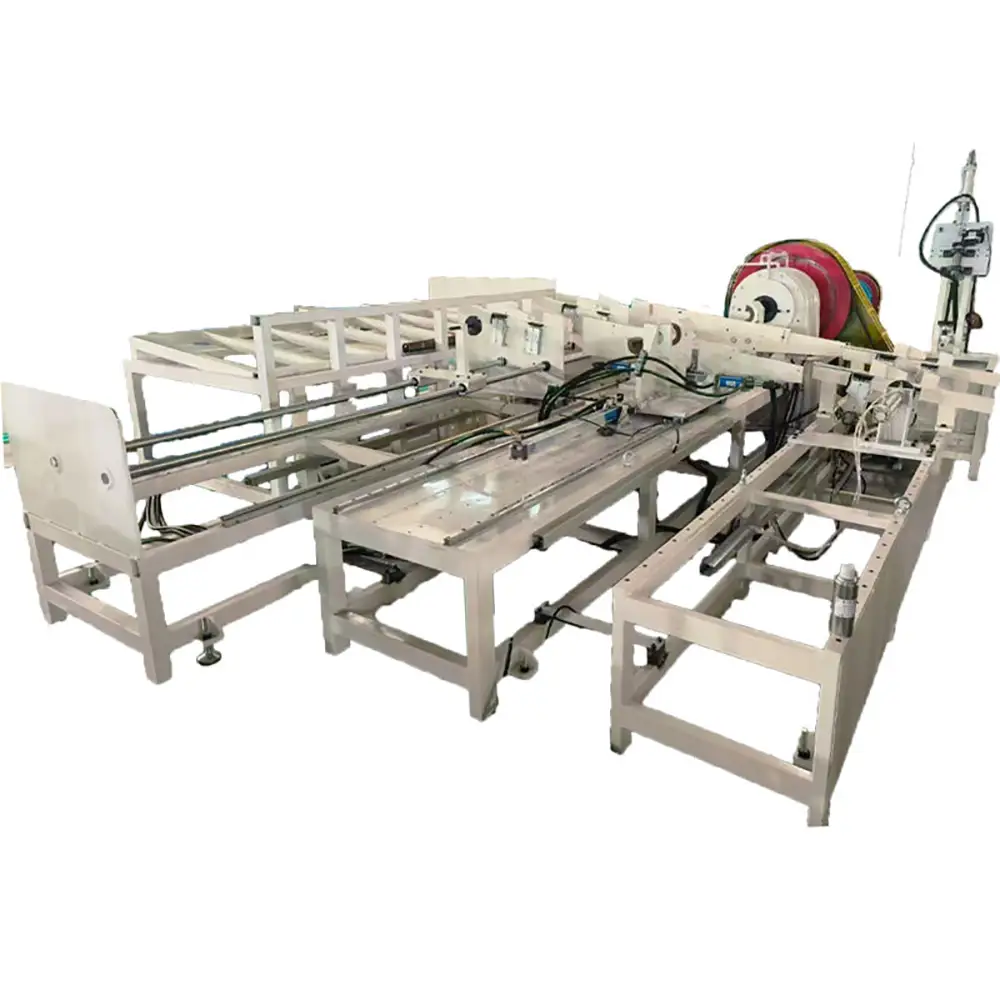
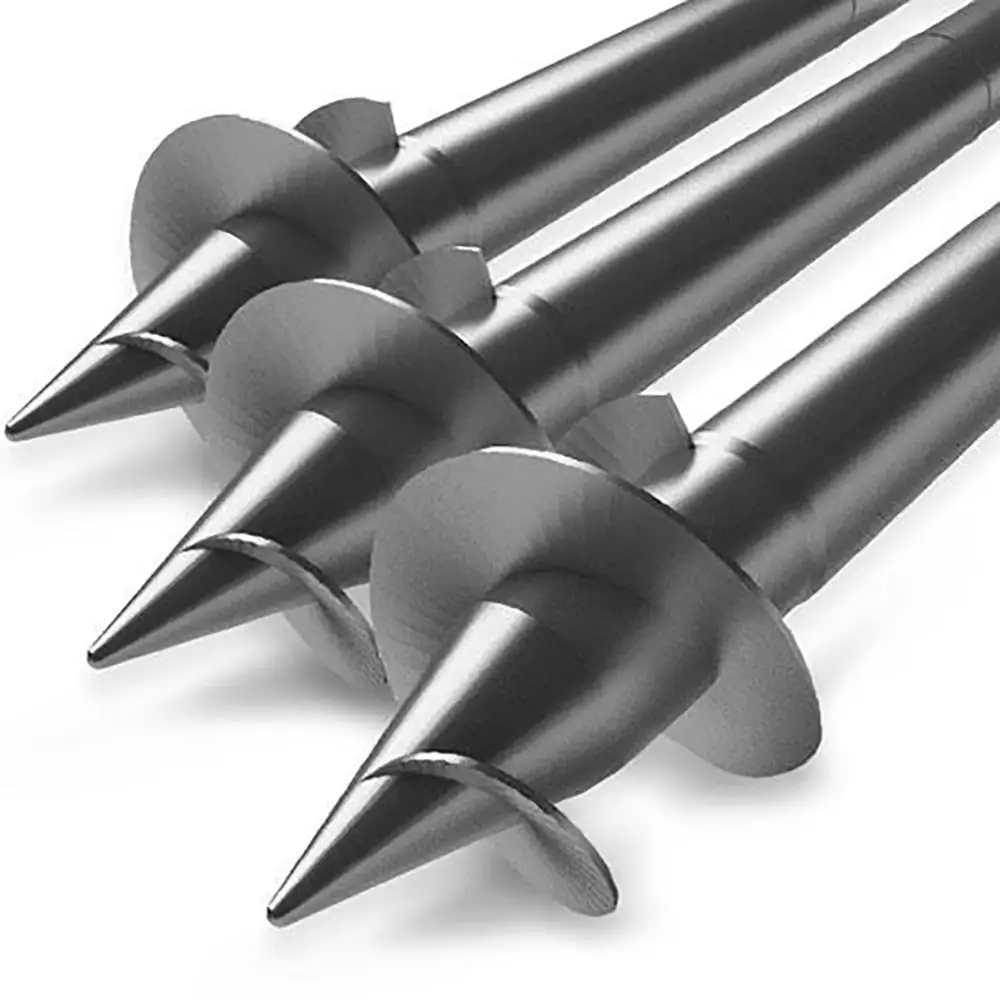
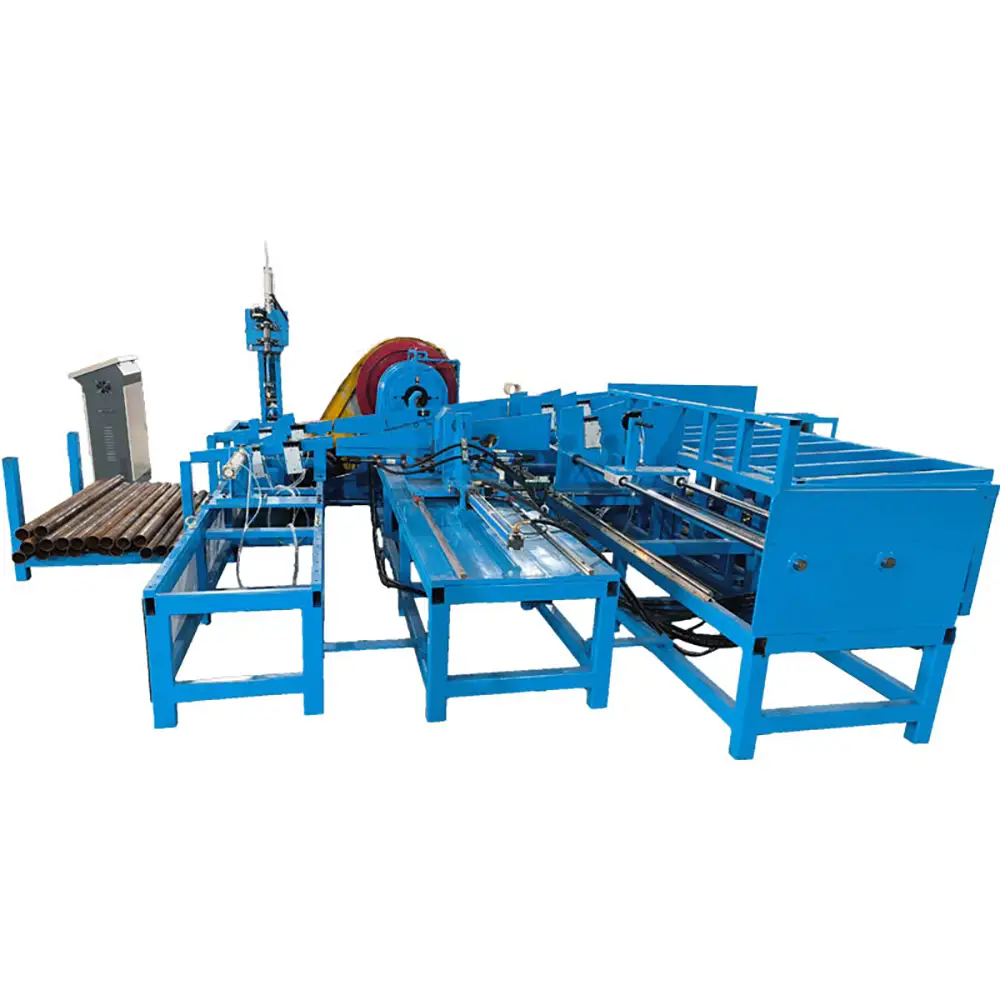
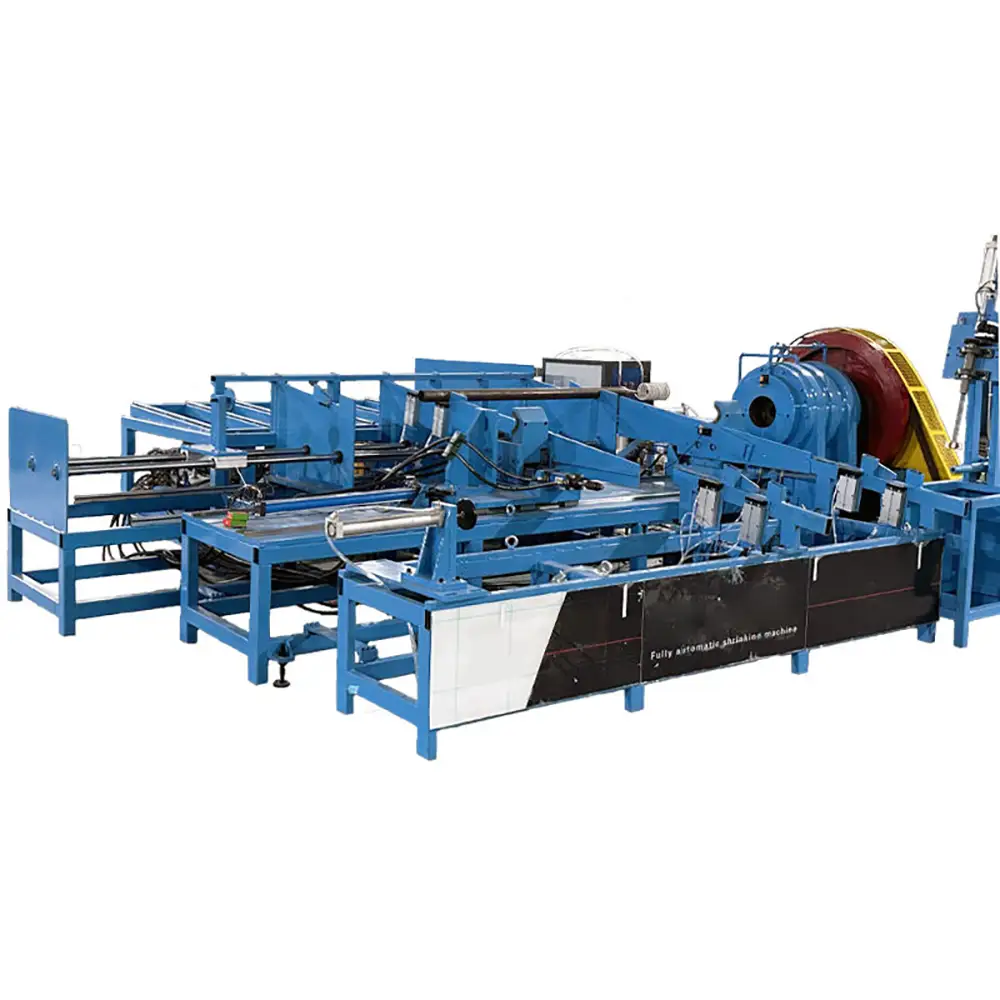
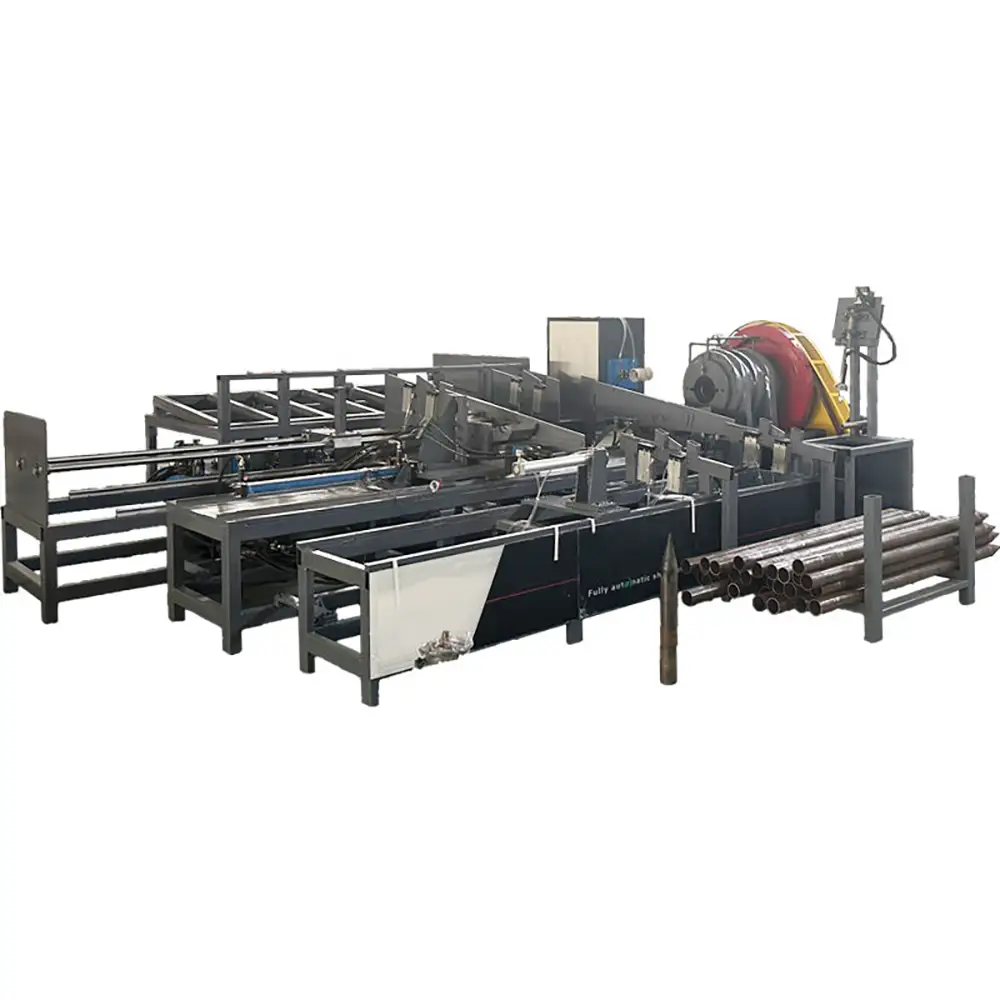
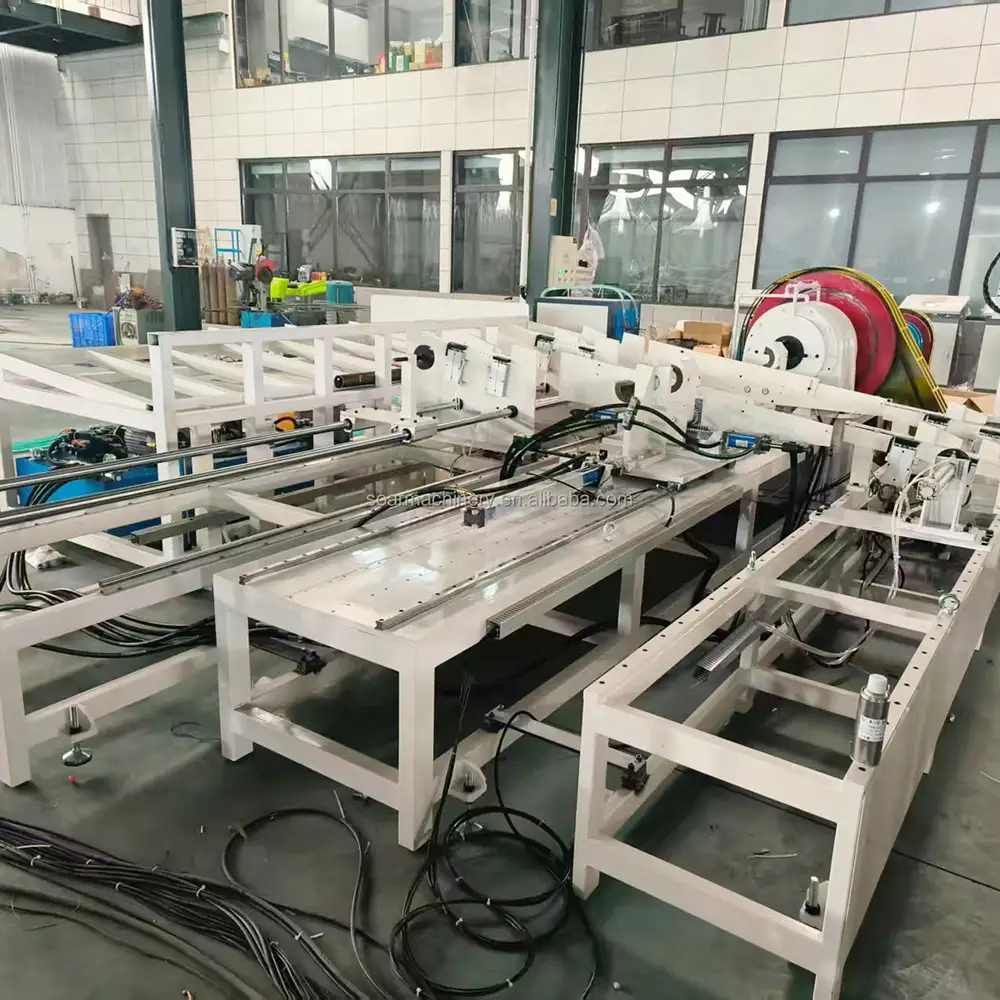
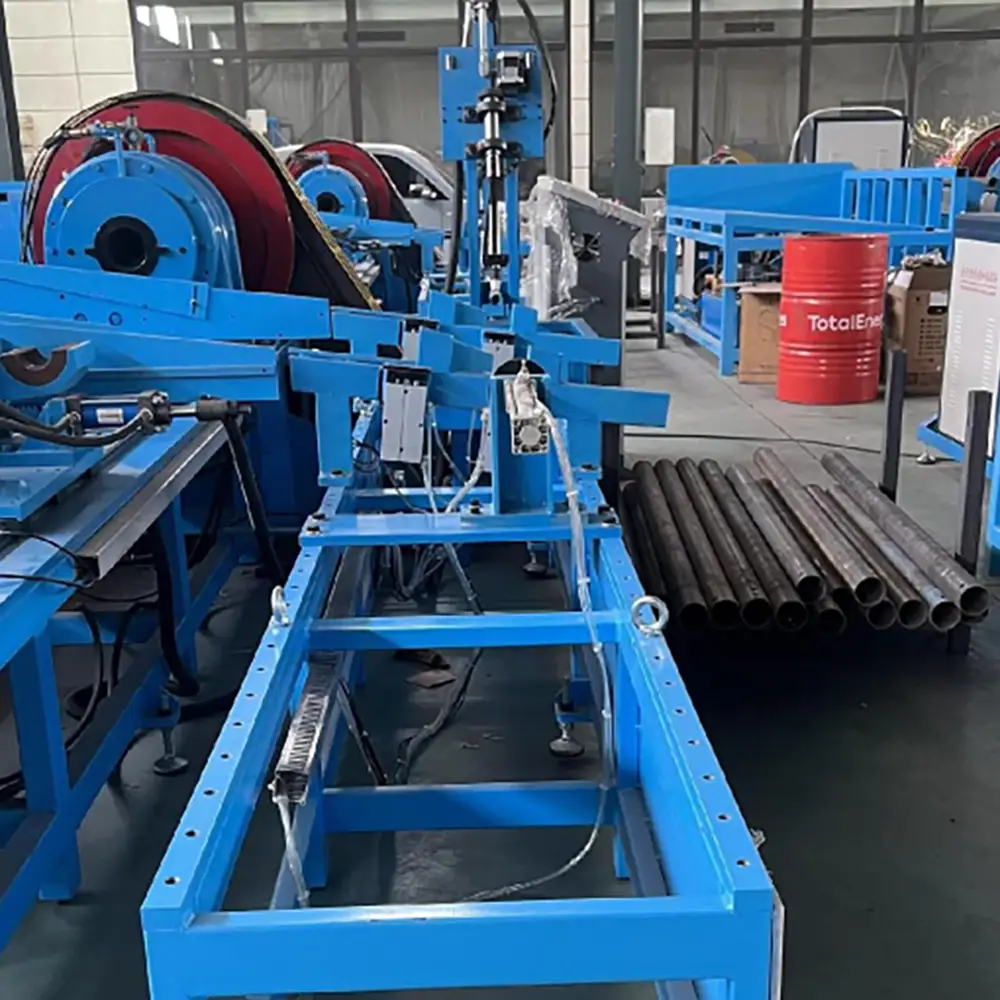
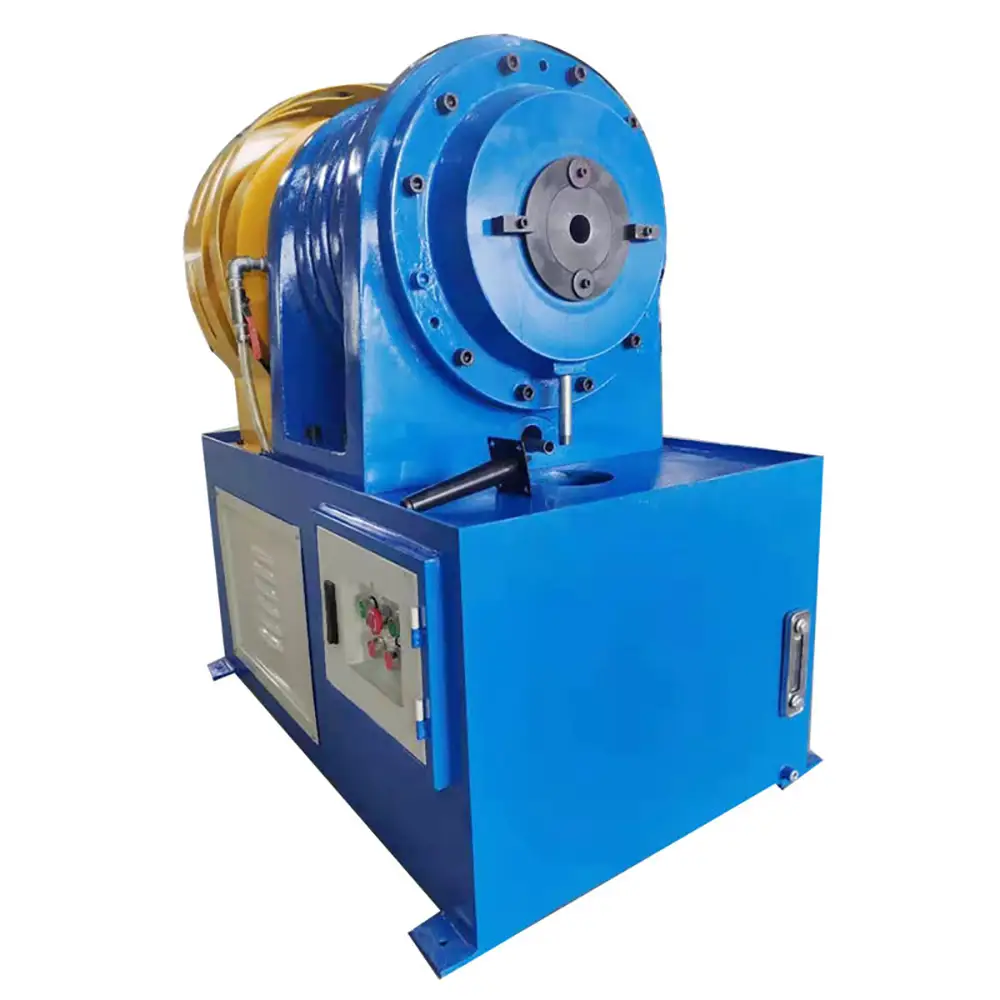
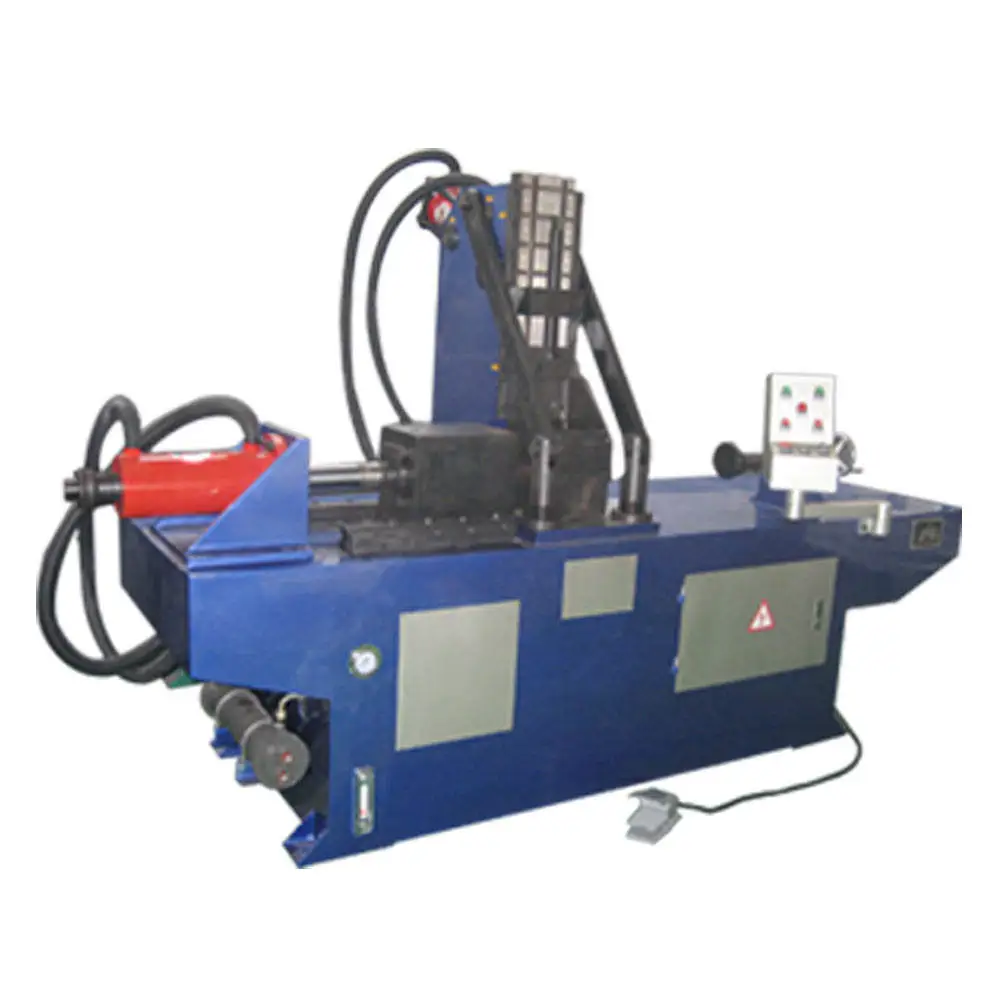
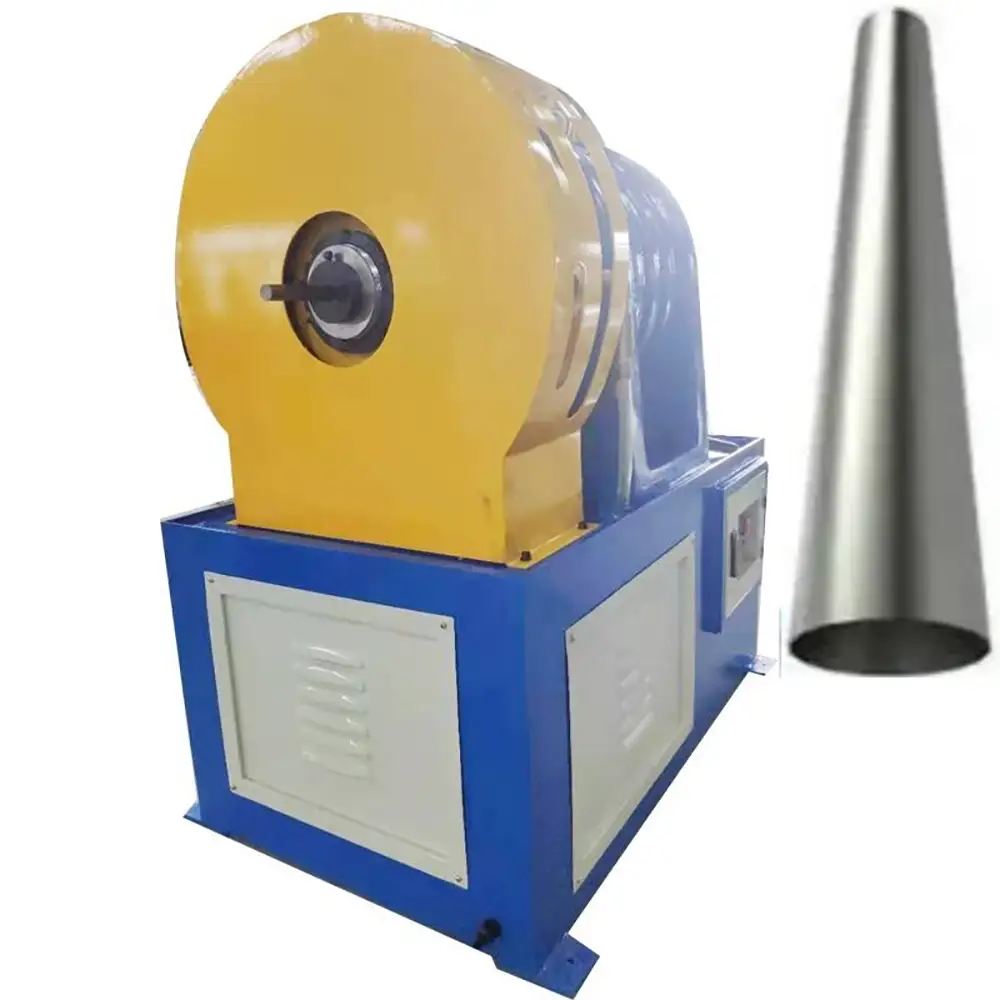
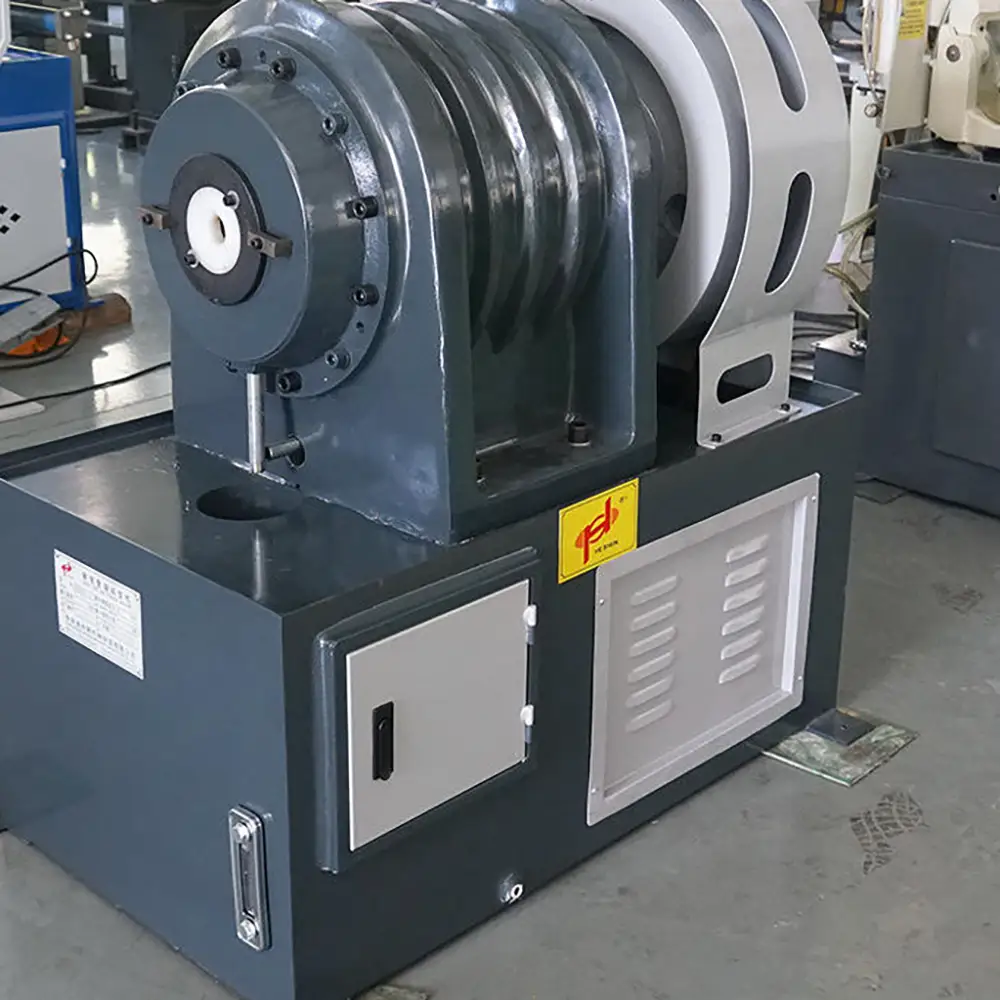
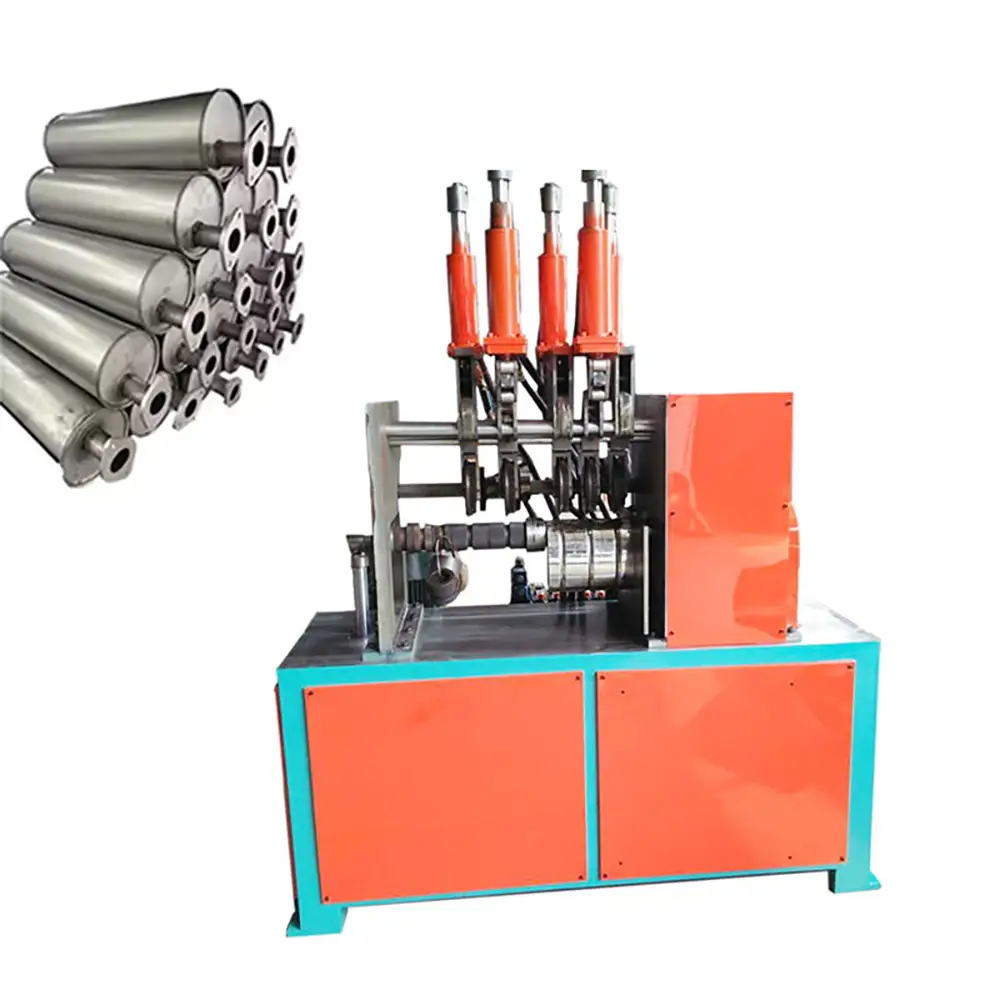
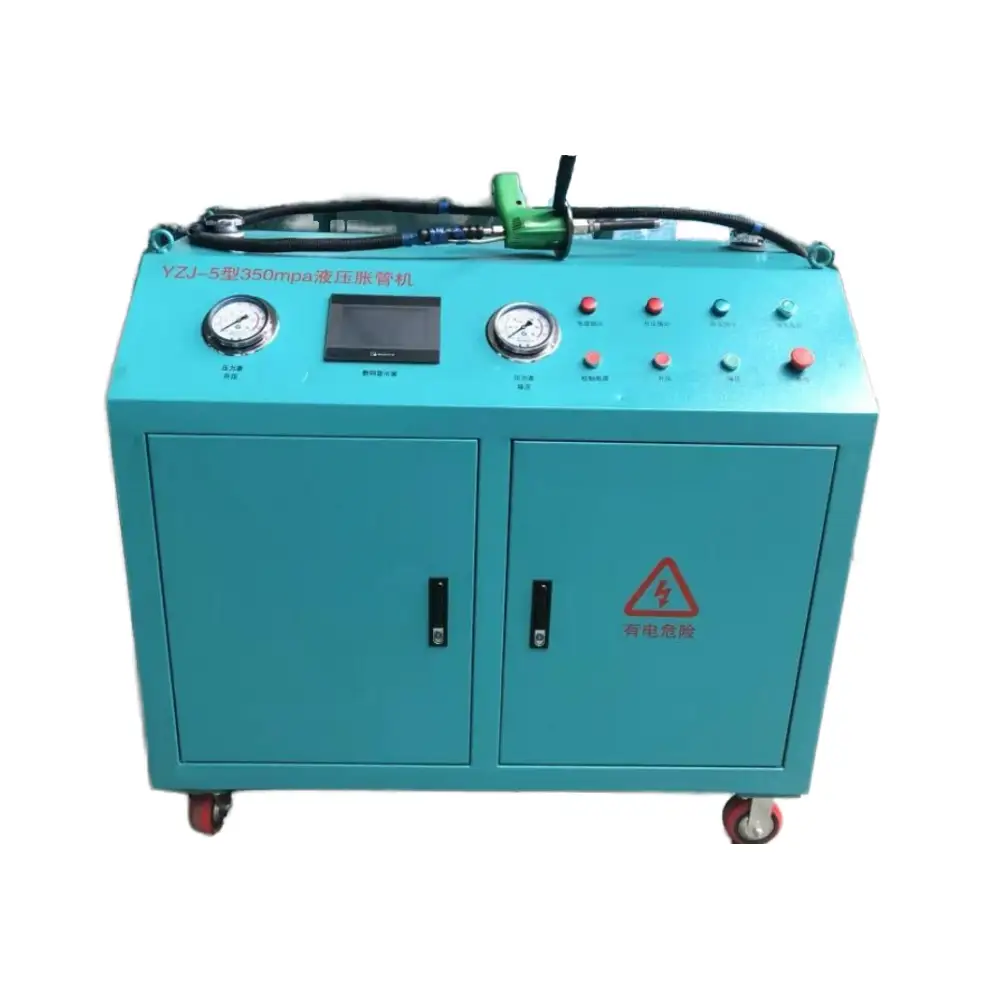
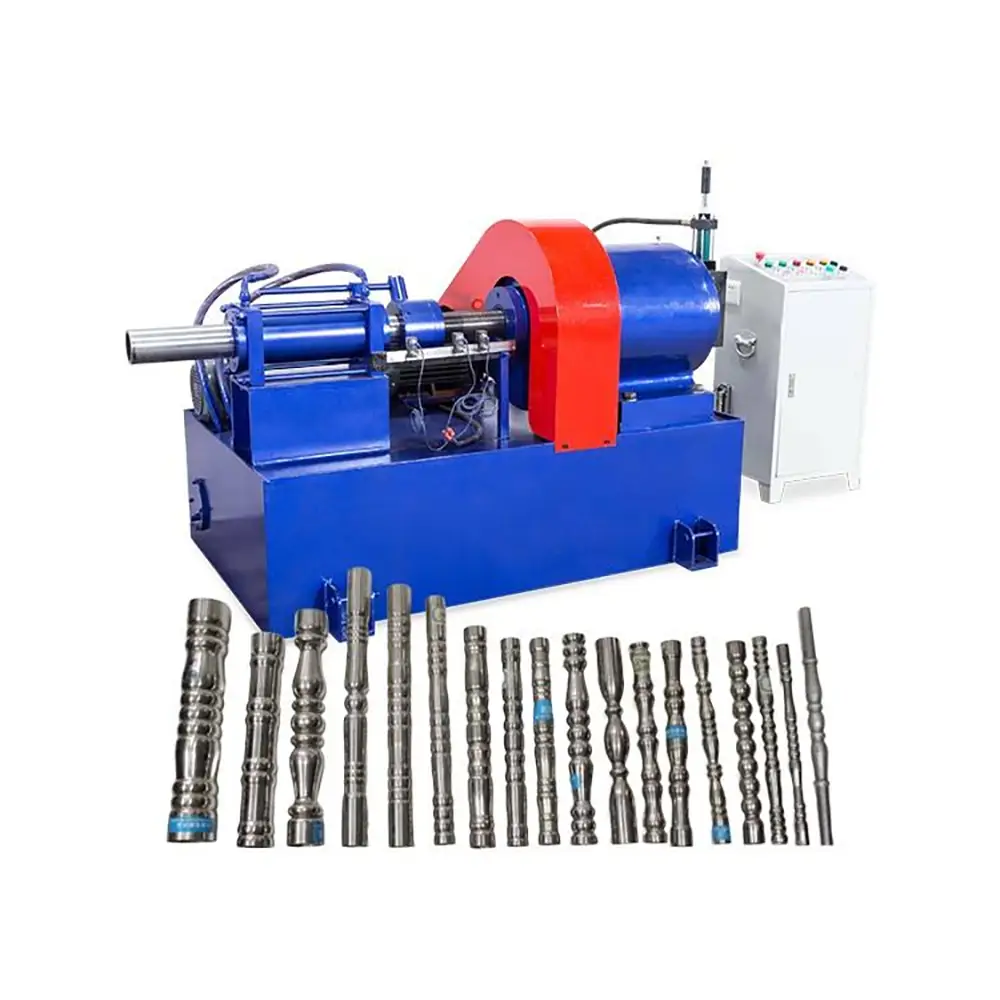
1. This equipment is used to process metal pipes into conical pipes
2. There are manual and automatic options. It is used with hydraulic feeding and has the characteristics of low noise, easy operation, high output and stable performance
3. The workpiece forming time is short, the efficiency is high, the processing surface is smooth, and the workpiece has no scars.
4. The machine mold is easy to replace. With the corresponding mold, metal pipes of different shapes can be processed to meet different needs.
5. It is suitable for the taper forming of automobiles, furniture, lighting, bicycles, and grouting small conduits.
PRODUCT SPECIFICATIONS
|
No. |
Item |
Parameter |
|
1 |
Maximum shrinking capacity |
Ф114 outer diameter |
|
2 |
Maximum shrinking thickness |
Ф 76*150mm long tip can be processed to a thickness of 6.0mm.
Ф 89*170mm long tip can be processed to a thickness of 6.0mm.
Ф 114*200mm long tip can be processed to a thickness of 6.0mm |
|
3 |
Mold length |
400mm |
|
4 |
Spindle motor power |
18.5kw |
|
5 |
Spindle speed |
248rpm |
|
6 |
Voltage |
380V 50hz |
|
7 |
Forming time |
20-30 seconds |
|
8 |
Weight |
7000kg |
|
9 |
Hydraulic feeding |
Multiple feeding is not allowed |
|
10 |
Maximum length of hopper discharge |
Within 3500mm |
|
11 |
Feeding accuracy |
±0.5mm |
|
12 |
Dimensions |
5000*5200*1700mm |
|
13 |
Product output |
150-160pcs/hour |
|
14 |
Longest shrink tube forming taper |
380mm |
|
15 |
High frequency heating |
Output power 90KW
Oscillation frequency 30-100KHZ
Cooling water pressure 0.3MPa
Water temperature requirement <40°
Main and auxiliary machine weight 40KG/30KG |
|
16 |
Plasma drilling |
120 model |
|
17 |
Cooling tower |
10T cooling tower |
Automatic Stainless Steel & Aluminum Pipe End Pointing Machine
The Automatic Stainless Steel & Aluminum Pipe End Pointing Machine is designed for efficient end processing of metal pipes and tubes used in tunnel engineering,foundation pit construction,civil engineering,and cement grouting applications. The machine is particularly suitable for preparing pipe ends that require controlled reduction,pointing,tapering,or other end-forming operations before installation or connection.
In tunnel and foundation pit projects,metal pipes may be used as grouting pipes,reinforcement components,drainage-related components,temporary construction parts,and other specialized tubular products. Consistent pipe-end preparation can help improve subsequent assembly,connection,installation,and grouting operations.
The machine can be configured for compatible stainless steel and aluminum pipes,as well as other suitable metal tubing. Actual processing capacity depends on pipe diameter,wall thickness,material grade,tooling design,machine configuration,and required end geometry.
Automatic Pipe End Pointing Technology
Pipe end pointing is a metal forming process used to reduce or reshape the end section of a tube or pipe. The operation can create a tapered or pointed end profile that may facilitate insertion,connection,positioning,or subsequent forming operations.
Compared with manual end preparation,an automatic pointing machine provides a controlled mechanical process. Depending on the machine configuration,the pipe can be loaded,positioned,clamped,and processed according to predefined operating parameters.
Automation can be particularly useful when a large number of similar grouting pipes or construction tubes need to be processed. Repeatable positioning and forming can help reduce variation between workpieces.
The exact pointing method may involve specialized dies,forming tools,rotary mechanisms,or other end-forming systems. Customers should provide drawings or samples when a specific pipe-end shape is required.
Stainless Steel Pipe End Pointing
Stainless steel pipes are widely used where corrosion resistance,durability,and reliable service performance are required. In tunnel engineering and foundation pit applications,stainless steel may be selected for particular environmental or application requirements.
Stainless steel has different forming characteristics from carbon steel and aluminum. Its strength,work-hardening behavior,wall thickness,and grade can affect the required forming force and tooling selection.
The machine can be configured with suitable tooling for compatible stainless steel pipe sizes. Proper clamping and forming parameters are important for maintaining dimensional consistency and reducing unwanted deformation.
For specialized stainless steel grouting pipes,customers should provide the pipe grade,outer diameter,wall thickness,and required end profile before selecting the machine.
Aluminum Pipe End Pointing
Aluminum tubing can also be processed when the machine is correctly configured for the material. Aluminum is relatively lightweight and has different forming characteristics from stainless steel.
When pointing aluminum pipes,the forming process should be controlled carefully to reduce excessive deformation,wrinkling,or surface damage. Suitable dies,clamping pressure,and forming parameters should be selected according to the tube dimensions and alloy.
For customers processing both stainless steel and aluminum pipes,the tooling and machine settings may need to be adjusted when changing materials.
Tunnel Engineering Applications
Tunnel construction involves numerous specialized pipe and tubular components. Depending on the engineering design,grouting pipes may be installed for cement grouting,ground reinforcement,water control,void filling,and other construction processes.
The pipe end pointing machine can be used to prepare suitable tubular components before installation.
Potential applications include:
Tunnel Cement Grouting Pipes
Foundation Pit Grouting Pipes
Ground Reinforcement Pipes
Construction Grouting Tubes
Soil Stabilization Pipe Components
Tunnel Support Pipe Components
Underground Engineering Tubes
Civil Engineering Metal Pipes
Specialized Injection Pipes
Construction Site Pipe Processing
The actual application should be determined according to the engineering design and pipe specifications.
Foundation Pit Cement Grouting Pipe Processing
Foundation pit construction may require grouting systems for ground stabilization,water control,or other engineering purposes. Pipes used in these systems may require consistent end dimensions for installation or connection.
An automatic pipe end pointing machine can provide repeatable end preparation for compatible grouting pipe products.
By standardizing the end-forming process,manufacturers can establish consistent production procedures for batches of similar pipes. This can be useful for pipe suppliers and construction component manufacturers serving large engineering projects.
The machine itself performs pipe-end processing; the final grouting method and pipe application depend on the engineering design,grouting material,and construction system.
Pipe End Forming and Tapering
Pointing is closely related to other pipe-end forming operations such as tapering,reducing,necking,swaging,and end sizing.
Depending on the tooling and machine configuration,the equipment may be adapted for selected end geometries. A tapered pipe end can make certain installation or connection procedures easier when the application requires a reduced or pointed section.
The forming sequence should be developed according to the pipe material and required dimensions. Excessive forming force can damage thin-wall tubing,while insufficient force may result in incomplete forming.
For production applications,testing representative samples before mass production is recommended.
Automatic Production Workflow
The automatic design can help simplify repetitive pipe-end processing.
A typical workflow may include loading the pipe,positioning it against the machine reference point,clamping the workpiece,activating the forming cycle,and removing the finished pipe.
Depending on the configuration,feeding and positioning functions may be automated or semi-automated. The actual operating sequence depends on the selected machine model.
Automatic processing can reduce repetitive manual handling and help maintain more consistent end dimensions when producing batches of similar pipes.
Production output depends on pipe size,material,wall thickness,forming depth,tooling,loading method,and cycle time.
Tooling and Custom End Profiles
Tooling is one of the most important factors in pipe end pointing. Different pipe diameters,wall thicknesses,materials,and end shapes may require different dies or forming tools.
For tunnel engineering and grouting applications,the required pipe-end profile should be clearly defined before tooling is designed.
Customers can provide:
Pipe drawings
Pipe diameter
Wall thickness
Material grade
Required pointing length
End diameter
Taper angle
Production quantity
Finished sample
Based on this information,the machine and tooling configuration can be evaluated for the intended application.
Production Efficiency and Repeatability
For manufacturers supplying grouting pipes or engineering components,repeatable end processing is important when large batches must be produced.
An automatic pipe pointing machine can help standardize the forming procedure and reduce dependence on manual hammering,pressing,or cutting methods.
Consistent workpiece positioning and dedicated tooling can also make it easier to maintain similar end dimensions across a production batch.
However,actual production efficiency depends on the complete workflow,including loading,unloading,tool changes,pipe dimensions,forming requirements,and operator procedures.
Quality Control
Quality inspection should focus on the dimensions and appearance of the formed pipe end.
Typical inspection points may include:
End diameter
Pointing length
Taper geometry
Wall deformation
Surface condition
Concentricity
Overall pipe length
Dimensional repeatability
For critical engineering components,first-piece inspection and periodic checks can help identify tooling wear or process deviations.
Measuring equipment should be selected according to the required production tolerance.
Maintenance and Safety
Regular maintenance helps maintain stable forming performance. Operators should inspect forming dies,clamping components,drive mechanisms,fasteners,and electrical or hydraulic systems according to the machine configuration.
The work area should be kept clean and free of unnecessary materials.
Pipe end forming involves mechanical force and moving components. Operators should keep hands away from the forming area and use appropriate machine guards,emergency-stop functions,and personal protective equipment where provided or required.
Before changing tooling or performing maintenance,the machine should be stopped and isolated according to the manufacturer's safety procedures.
Custom & OEM Pipe Processing Solutions
Different tunnel and foundation engineering projects may require specialized pipe dimensions and end profiles. The machine can therefore be evaluated for Custom & OEM applications.
Customization may include dedicated pointing dies,pipe clamps,feeding systems,positioning mechanisms,control functions,and other application-specific components.
For B2B buyers,manufacturers,distributors,and engineering suppliers,the machine can be developed around specific pipe-processing requirements.
Customers are encouraged to provide drawings,samples,and production targets so the appropriate machine configuration can be determined.
Why Choose Us
Automatic Pipe End Pointing — Designed for repeatable end-forming operations on compatible metal pipes and tubes.
Stainless Steel & Aluminum Processing — Can be configured for suitable stainless steel,aluminum,and other compatible metal tubing.
Tunnel Engineering Application — Suitable for pipe components used in tunnel construction and underground engineering.
Foundation Pit Grouting Support — Designed for processing compatible pipes used in cement grouting and ground engineering applications.
Dedicated Forming Tooling — Pointing dies and fixtures can be selected according to pipe dimensions and required end geometry.
Repeatable Production — Controlled forming can help maintain consistent pipe-end dimensions during batch processing.
Flexible Machine Configuration — Feeding,clamping,positioning,and control systems can be configured according to production requirements.
OEM & B2B Support — Suitable for manufacturers,pipe suppliers,engineering contractors,distributors,and international industrial equipment buyers.
FAQs
1. What is a pipe end pointing machine?
A pipe end pointing machine is equipment used to reduce,reshape,or taper the end section of a metal pipe or tube through a controlled forming process.
2. Can this machine process stainless steel pipes?
Yes,when the machine and tooling are properly configured for the stainless steel grade,pipe diameter,and wall thickness.
3. Can it process aluminum tubes?
Yes. Suitable aluminum tubing can be processed when the forming tools and machine parameters are matched to the material.
4. What is pipe end pointing used for?
Pipe end pointing can prepare a tube end for insertion,connection,installation,subsequent forming,or specialized engineering applications.
5. Is it suitable for tunnel engineering?
Yes. It can be used to process compatible metal pipes and tubes used in tunnel construction and underground engineering applications.
6. Can it process cement grouting pipes?
It can process suitable metal grouting pipes when their dimensions and material are within the machine's forming range.
7. Can it be used for foundation pit projects?
Yes. Compatible grouting and engineering pipes used in foundation pit construction can be processed according to their required end geometry.
8. Is the machine fully automatic?
The described machine is automatic,but the exact degree of automation depends on the feeding,clamping,positioning,and control configuration.
9. Can the pipe end shape be customized?
Yes. Dedicated dies and forming tools can be developed according to the required pipe-end dimensions and profile.
10. What affects the pointing result?
Material grade,pipe diameter,wall thickness,tooling design,forming force,clamping,and machine settings all affect the finished pipe end.
11. Can different pipe materials be processed on one machine?
Potentially. However,changing between stainless steel,aluminum,and other materials may require different tooling or process parameters.
12. What information is needed for a quotation?
Provide the pipe material,outer diameter,wall thickness,required end profile,pointing length,production quantity,and application. Drawings or samples are recommended for customized projects.
Prev:
AC Line Manual Pipe Flaring Machine with Bearing and End Forming
Next:
Industrial-Grade Multi-Functional Pipe End Forming Machine
TAG:
Pipe End Processing Machine,
Automatic Tube End Forming Machine,
Tube End Processing Machine,
Industrial Pipe End Forming Machine,
Stainless Steel Pipe End Forming Machine,
Tube End Forming Equipment,
Pipe Tapering Machine,
Pipe End Reducing Machine,
Tube Swaging Machine,
Pipe Swaging Machine,
Pipe Necking Machine,
Tube Necking Machine,
Tube End Tapering Machine,
Pipe End Tapering Machine,
Tube Tapering Machine,
Tube End Reducing Machine,
Pipe Reducing Machine,
Tube Reducing Machine,
Pipe End Forming Machine,
Metal Tube Processing Machine,
Pipe Fabrication Machine,
Stainless Steel Tube Processing Machine,
Metal Pipe End Forming Machine,
Pipe End Swaging Machine,
Pipe End Shaping Machine,
Tube End Shaping Machine,
Automatic Tube Processing Machine,
Automatic Pipe Processing Machine,
Tube Forming Equipment,
Pipe Forming Equipment,
Related Category:
Automatic Pipe End Pointing Machine,Stainless Steel Pipe End Pointing Machine,Aluminum Pipe End Pointing Machine,Pipe En China, suppliers, manufacturers, factory, customized, wholesale, quotation, made in China