|
Type |
Standard and Main Technical Data |
|
Normal/Conventional |
GB/T9770, DIN22131, JIS6369, AS1333 |
|
Fire Resistant |
MT668, HG2539, DIN22131 |
|
Conventional Fire Resistant |
HG2539II, DIN22103, DIN22131 |
|
Heat Resistant |
HG/T2297, ISO4195 |
|
Abrasion Resistant |
Shore Abrasion≤90mm³ DIN22131-W, Shore Abrasion≤70mm³AS1333-A |
|
Heat&Abrasion Resistant |
Heat Resistance ≤125 °C, Shore Abrasion ≤150mm³ |
|
Acid,Alkali&Oil Resistant |
HG4-846, HG/T3714, RMA ( MOR, OR ) |
|
Cold Resistant |
FragilityTemperature-50°C~-20°C, HG/T3647 |
|
Ozone Resistant |
(Ozone Density)50PPHM 40°C/72h ( No Crack ) |
Steel Cord Conveyor Belt, High Tensile Strength Steel Cord Conveyor Belting
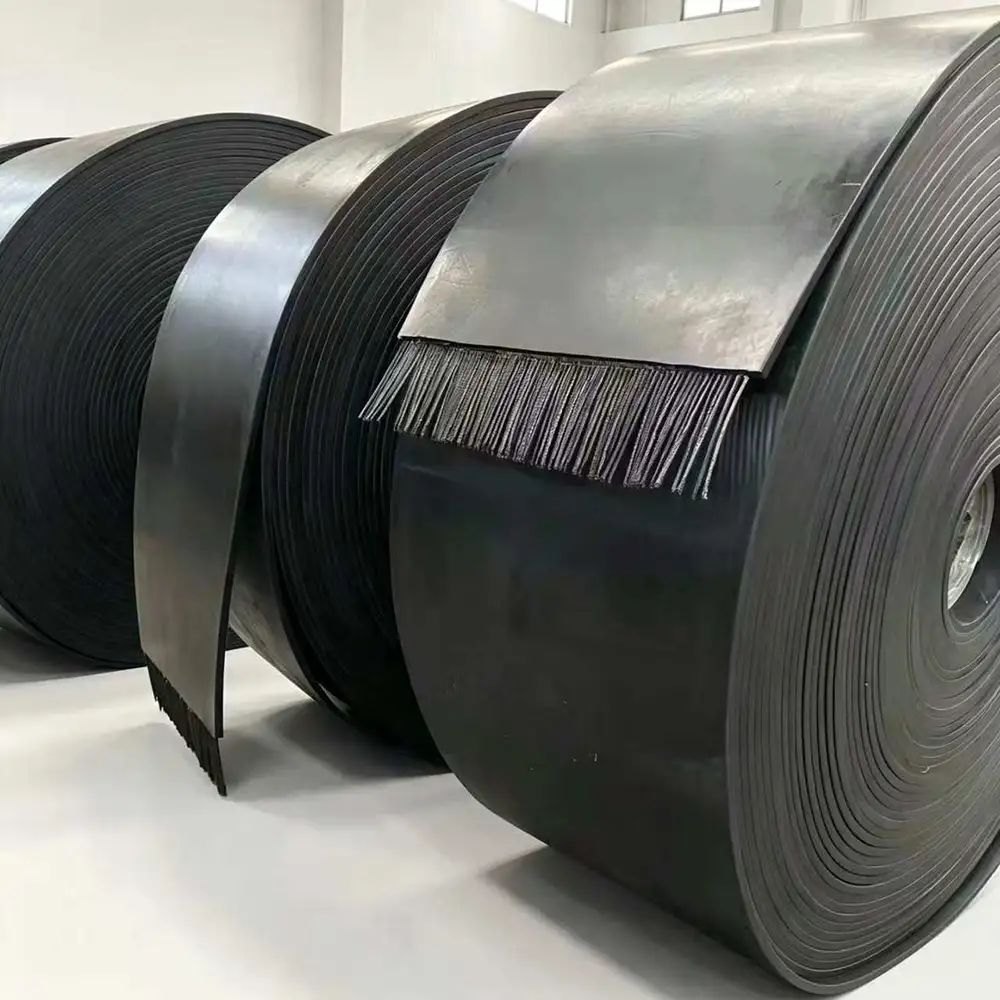
A Steel Cord Conveyor Belt is a high-strength conveyor belt designed for demanding bulk material handling applications where long conveying distances, high belt tensions, large material volumes, and heavy loads require a reinforced belt structure. Unlike conventional fabric conveyor belts, steel cord conveyor belting uses longitudinal steel cords embedded within the rubber core to provide high tensile strength and dimensional stability.
Steel cord belts are widely used in mining, coal handling, iron and steel plants, cement plants, ports, power plants, quarries, and other heavy industries. Their high tensile capacity makes them suitable for long-distance conveyor systems and demanding conveying conditions. ISO 15236 specifies construction and mechanical requirements for conveyor belts reinforced with longitudinal steel cords.
As a professional Steel Cord Conveyor Belt Manufacturer and Supplier, we can provide different strength grades, belt widths, cover specifications, rubber grades, and reinforcement configurations according to conveyor system requirements.
What Is a Steel Cord Conveyor Belt?
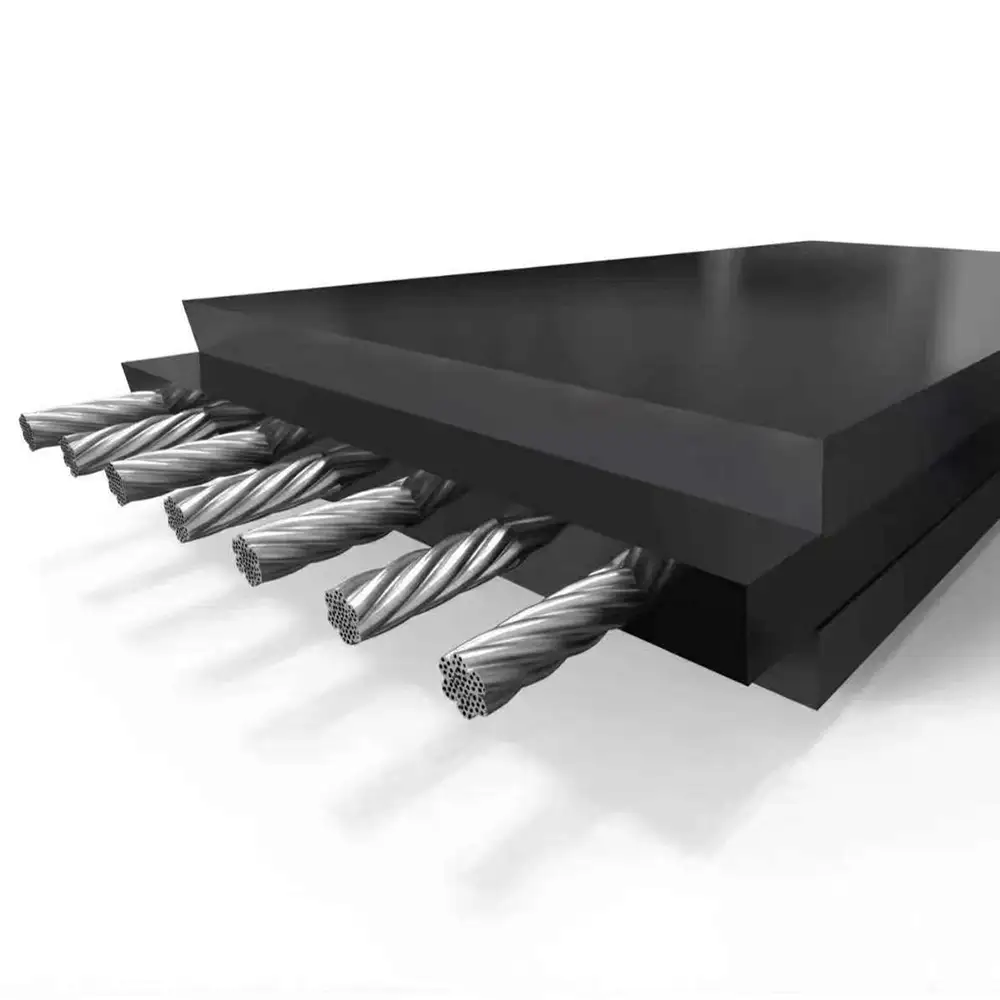
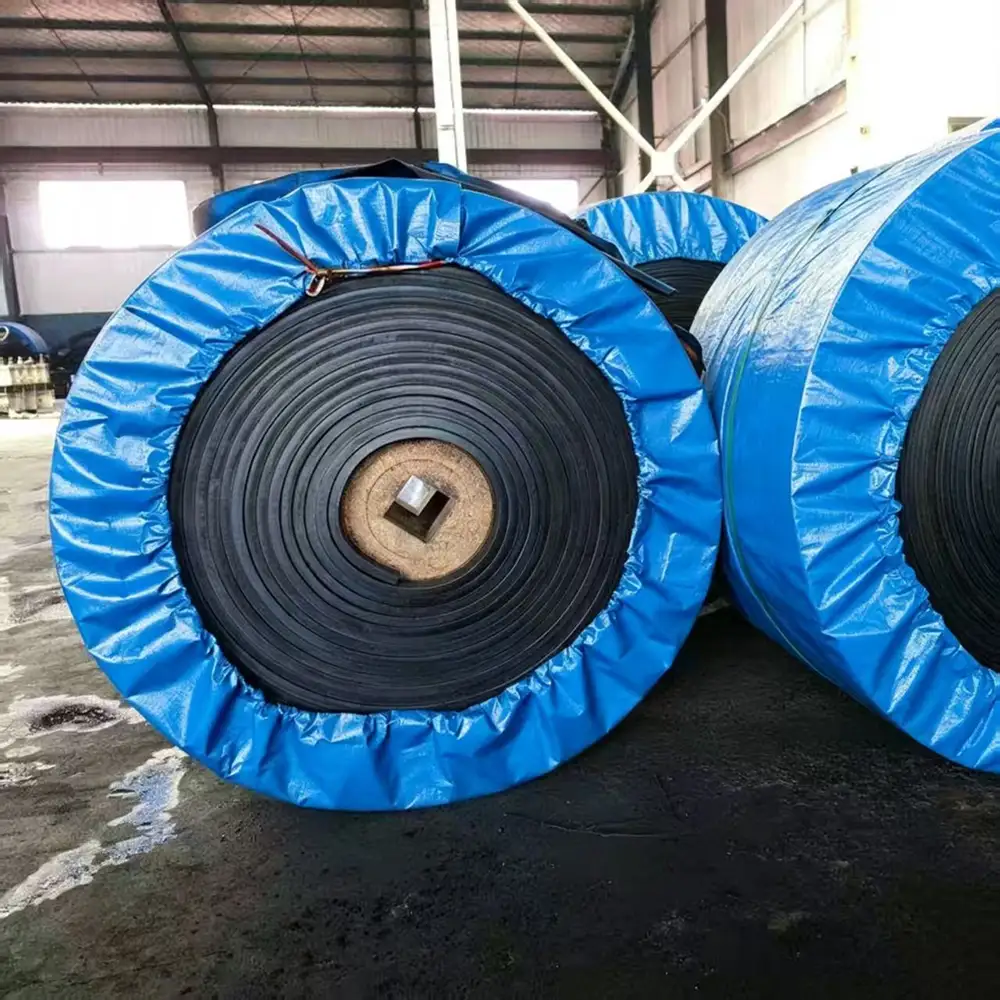
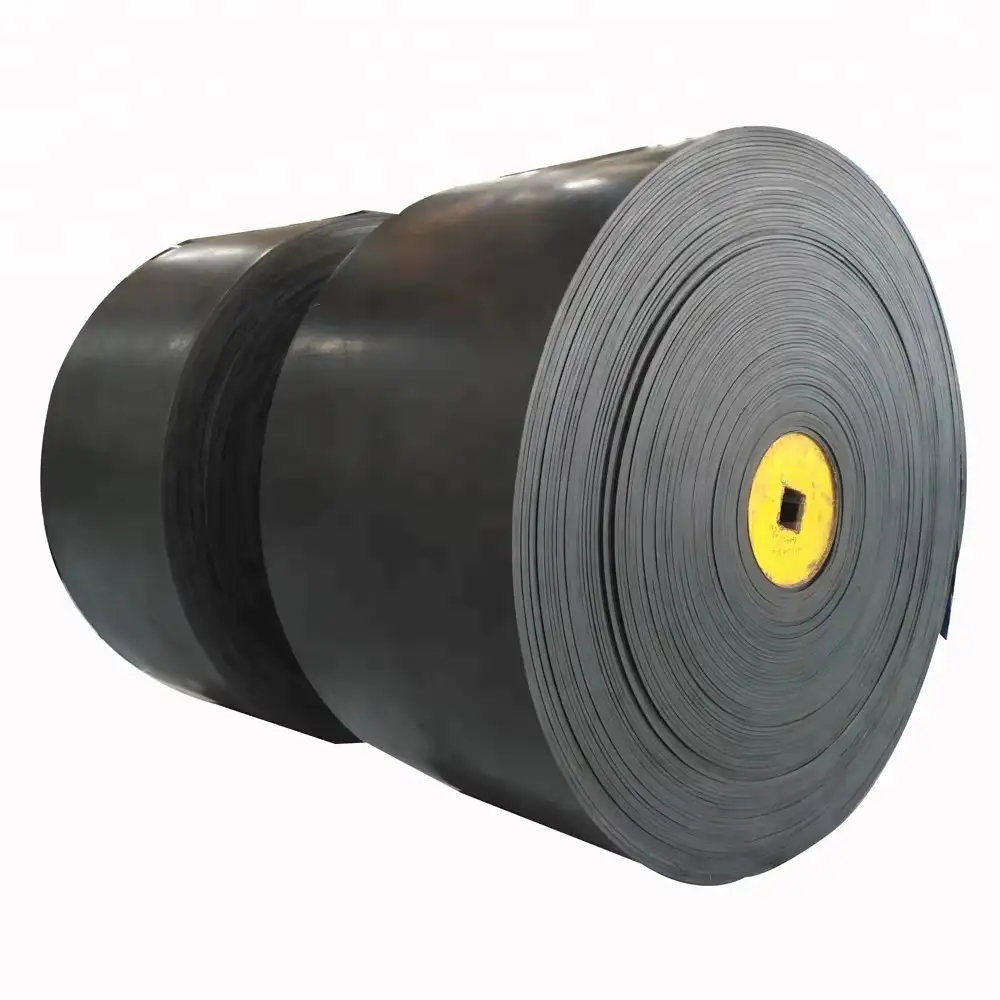
A steel cord conveyor belt is a rubber conveyor belt reinforced with longitudinal steel cords. The steel cords are positioned inside the belt's core rubber and are protected by top and bottom rubber covers.
The basic construction generally consists of a top cover, steel cord reinforcement, core rubber, and bottom cover. Depending on the application, transverse breakers or other reinforcement structures may also be incorporated into the belt design.
The steel cords provide the primary longitudinal tensile reinforcement, while the rubber layers protect the cords and provide resistance against abrasion, impact, environmental exposure, and operating conditions.
Steel cord belts are available in a wide range of tensile strength classes. ISO 15236-1 covers belt strengths from approximately 500 N/mm to 8,000 N/mm, with common ST classes including ST500, ST630, ST800, ST1000, ST1250, ST1600, ST2000, ST2500, ST3150, ST3500, ST4000, ST4500, ST5000, and ST5400. Actual available grades depend on the manufacturer and project requirements.
High Tensile Strength Steel Cord Construction
The major advantage of steel cord conveyor belting is its longitudinal reinforcement.
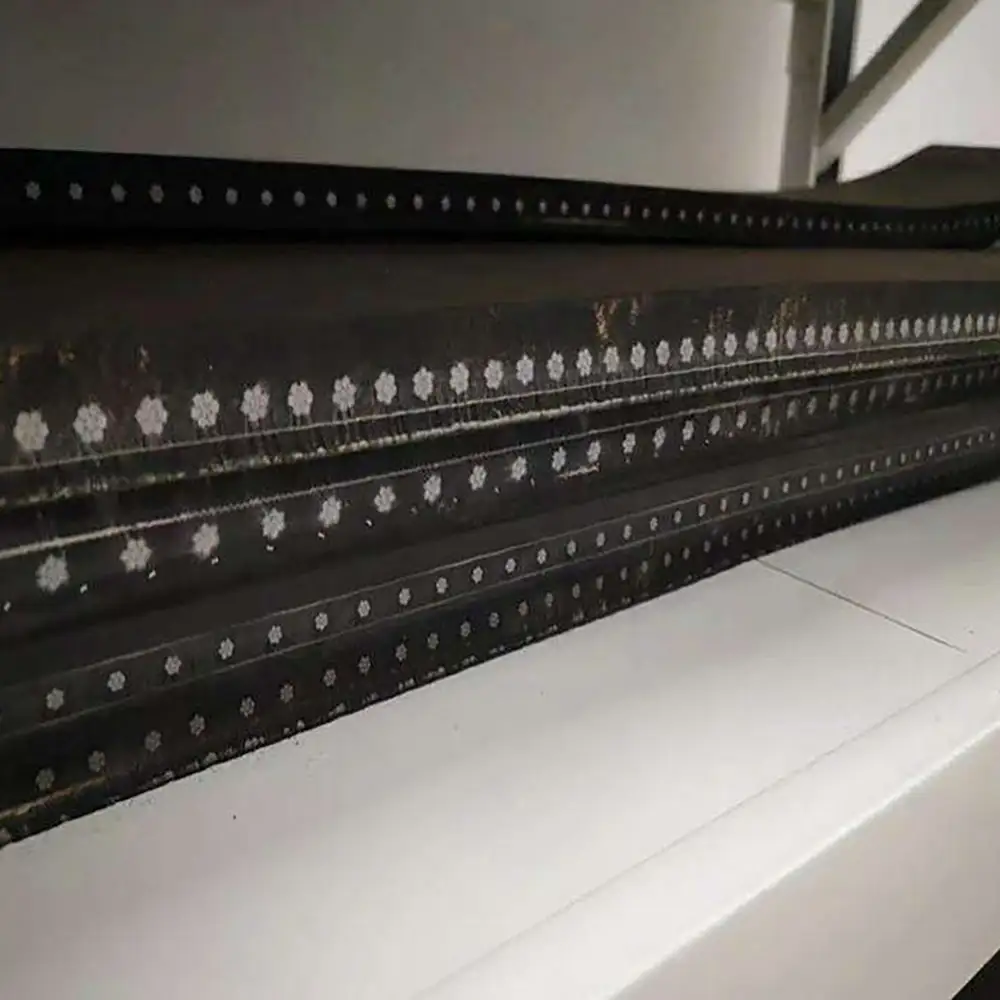
Steel cords are embedded in rubber to form a strong internal carcass. During manufacturing, proper rubber penetration and cord-to-rubber adhesion are important because the steel cords must remain securely integrated into the belt structure during repeated loading and flexing.
The belt design also considers cord diameter, cord spacing, number of cords, cover thickness, belt width, belt thickness, and mechanical strength. These parameters are addressed by international steel cord conveyor belt specifications.
For high-tension conveyor systems, selecting the correct tensile class is critical. The belt should be matched to conveyor length, material capacity, belt speed, drive arrangement, take-up system, incline, operating tension, and pulley configuration rather than selecting a belt solely by width.
Key Features of Steel Cord Conveyor Belting
1. High Tensile Strength
Steel cords provide high longitudinal tensile strength, allowing steel cord belts to handle demanding conveyor applications with substantial operating tension.
2. Long-Distance Conveying
Steel cord conveyor belts are commonly selected for long-distance conveyor systems because their high-strength reinforcement is suitable for high-tension conveying applications. Long overland conveyors, mining systems, and bulk material terminals are typical examples.
3. Heavy-Duty Material Handling
The reinforced construction is suitable for applications involving high material throughput and heavy bulk materials such as coal, ore, limestone, aggregates, and other minerals.
4. Stable Belt Structure
Steel cord reinforcement helps maintain longitudinal dimensional stability under high tensile loads. Correct belt selection and conveyor alignment are still essential for proper tracking and service performance.
5. Multiple Rubber Cover Grades
The cover rubber can be specified according to the working environment. Depending on the application, options can include abrasion-resistant, heat-resistant, flame-resistant, cold-resistant, acid-resistant, and other specialized rubber formulations.
6. Optional Transverse Reinforcement
For applications involving large impact loads or demanding material loading conditions, transverse reinforcement can be incorporated into the belt construction. Steel cord belts may use breakers or weft reinforcement depending on the required design.
Applications of Steel Cord Conveyor Belts
Mining
Steel cord conveyor belts are widely used for transporting coal, iron ore, copper ore, limestone, and other bulk minerals. Their high tensile strength makes them suitable for high-capacity and long-distance mining conveyor systems.
Coal Handling
Coal mines, power plants, ports, and coal terminals use heavy-duty conveyor systems for continuous bulk material transportation. Steel cord belting can be specified for systems requiring high belt strength.
Cement Plants
Steel cord conveyor belts can transport limestone, clinker, raw materials, and other bulk materials in cement production facilities.
Steel Industry
Iron ore, coal, coke, slag, and other raw materials require durable bulk handling equipment. Steel cord belts can be used on demanding conveying lines throughout steel production and raw material handling.
Ports and Terminals
High-capacity conveyor systems at ports and bulk terminals can use steel cord belting for long-distance transportation of coal, minerals, and other bulk cargo. Steel cord belts are specifically marketed for port and transshipment applications.
Power Plants
Coal and other bulk materials can be transported between storage, crushing, screening, and combustion areas using high-strength conveyor systems.
Quarries and Aggregates
Large quarry operations may use steel cord conveyor belts for long conveying distances and high-volume aggregate transportation.
How to Select a Steel Cord Conveyor Belt
Selecting a steel cord conveyor belt requires more than choosing a tensile strength grade.
Belt Width:
The belt width should match the required material capacity, loading characteristics, belt speed, and conveyor design.
Tensile Strength:
ST grade should be selected based on calculated conveyor tensions and the complete conveyor design. Common grades range from medium-strength to very high-strength steel cord belts.
Cover Grade:
Abrasion, heat, oil, chemicals, flame exposure, and low-temperature conditions should be considered when selecting the rubber cover.
Cord Construction:
Cord diameter, pitch, number of cords, and cord strength influence the belt's tensile characteristics and should correspond to the selected belt specification.
Pulley Diameter:
The minimum pulley diameter should be matched to the selected belt construction and tensile class. Published belt specifications show that higher-strength belt grades can require larger minimum pulley diameters.
Splice Requirements:
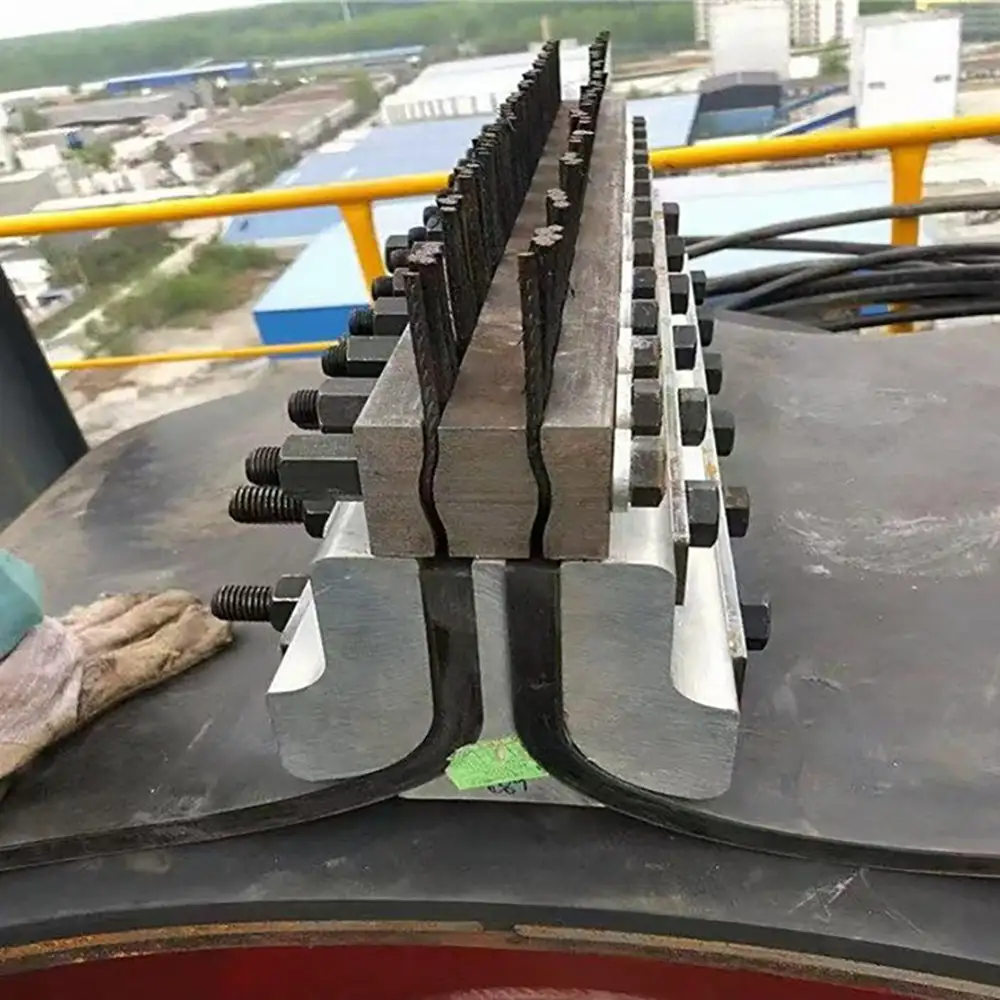
Steel cord belts require properly designed and executed vulcanized splices. ISO 15236 includes a dedicated part covering vulcanized belt joints.
Steel Cord Conveyor Belt vs Fabric Conveyor Belt
Fabric conveyor belts use textile reinforcement such as polyester, nylon, or other synthetic materials, while steel cord conveyor belts use longitudinal steel cords.
For shorter and moderate-duty conveyors, fabric belts may be suitable and can provide flexibility and economical operation. Steel cord belts are generally considered when the conveyor requires higher tensile strength, long-distance conveying, or heavy-duty operation.
The correct choice depends on conveyor length, belt tension, capacity, speed, material characteristics, pulley arrangement, installation conditions, and total operating requirements.
Maintenance of Steel Cord Conveyor Belting
Regular inspection can help identify problems before they develop into major conveyor downtime.
Operators should inspect belt covers for cuts, abrasion, gouging, and excessive wear. Belt tracking should also be monitored because persistent misalignment can damage belt edges.
Splices should receive particular attention because splice condition is critical to the integrity of a steel cord conveyor system. Conveyor pulleys, idlers, cleaners, loading points, and take-up systems should also be inspected as part of the complete conveyor maintenance program.
At loading points, appropriate impact protection and material loading control can help reduce unnecessary damage to the belt.
Why Choose Us?
High-Strength Steel Cord Belting:
We supply steel cord conveyor belts designed for high-tension and heavy-duty bulk material handling applications.
Multiple ST Strength Grades:
Different tensile strength classes can be supplied according to conveyor design requirements.
Custom Belt Specifications:
Belt width, length, cover thickness, rubber grade, reinforcement, tensile strength, and other specifications can be coordinated according to project requirements.
Heavy Industry Applications:
Our steel cord conveyor belts are suitable for demanding industries including mining, coal, cement, steel, power generation, ports, and bulk material handling.
OEM Manufacturing:
We support OEM requirements for conveyor belt distributors, engineering companies, conveyor system manufacturers, mining companies, and industrial buyers.
Export Supply:
We provide B2B export-oriented product supply and can coordinate specifications, production, packaging, and shipping requirements for international customers.
FAQs
1. What Is a Steel Cord Conveyor Belt?
A steel cord conveyor belt is a rubber conveyor belt reinforced with longitudinal steel cords. It is designed for high-tension and demanding bulk material conveying applications.
2. What Does ST Mean on a Conveyor Belt?
ST is commonly used to designate the tensile strength class of a steel cord conveyor belt, expressed in N/mm of belt width. For example, ST2000 indicates a nominal tensile strength class of 2,000 N/mm.
3. What Industries Use Steel Cord Conveyor Belts?
Common industries include mining, coal handling, cement, steel, power generation, ports, quarries, and other bulk material handling operations.
4. Are Steel Cord Belts Suitable for Long-Distance Conveyors?
Yes. Their high longitudinal tensile strength makes steel cord belts suitable for many long-distance and high-tension conveyor systems.
5. What Are Common Steel Cord Belt Strength Grades?
Common grades include ST630, ST800, ST1000, ST1250, ST1600, ST2000, ST2500, ST3150, ST3500, ST4000, ST4500, ST5000, and ST5400. Other grades may be available depending on the applicable standard and manufacturer.
6. Can Steel Cord Conveyor Belts Be Heat Resistant?
Yes. Specialized rubber cover compounds can be specified for elevated-temperature conveying applications. The actual temperature range should be evaluated according to the conveyed material and operating conditions.
7. Can Steel Cord Belts Be Used for Mining?
Yes. Mining is one of the major applications for steel cord conveyor belts, particularly where high capacity, long conveying distances, and high belt tensions are involved.
8. How Is a Steel Cord Conveyor Belt Spliced?
Steel cord conveyor belts are commonly joined using vulcanized splicing methods. Proper splice design, preparation, alignment, and curing are important for maintaining belt strength and service reliability.
9. How Do I Choose the Correct ST Grade?
The correct ST grade should be determined from the conveyor's calculated operating tension, belt width, conveyor length, capacity, speed, take-up arrangement, incline, and other design parameters. A higher ST number should not be selected simply because it is stronger.
10. Can You Manufacture Custom Steel Cord Conveyor Belts?
Yes. Custom specifications such as belt width, length, tensile strength, cover grade, cover thickness, reinforcement, and other construction requirements can be supplied according to the conveyor system and project requirements.
Steel Cord Conveyor Belt,High Tensile Strength Steel Cord Conveyor Belting,Steel Cord Belt,Steel Cord Conveyor Belting China, suppliers, manufacturers, factory, customized, wholesale, quotation, made in China