Application
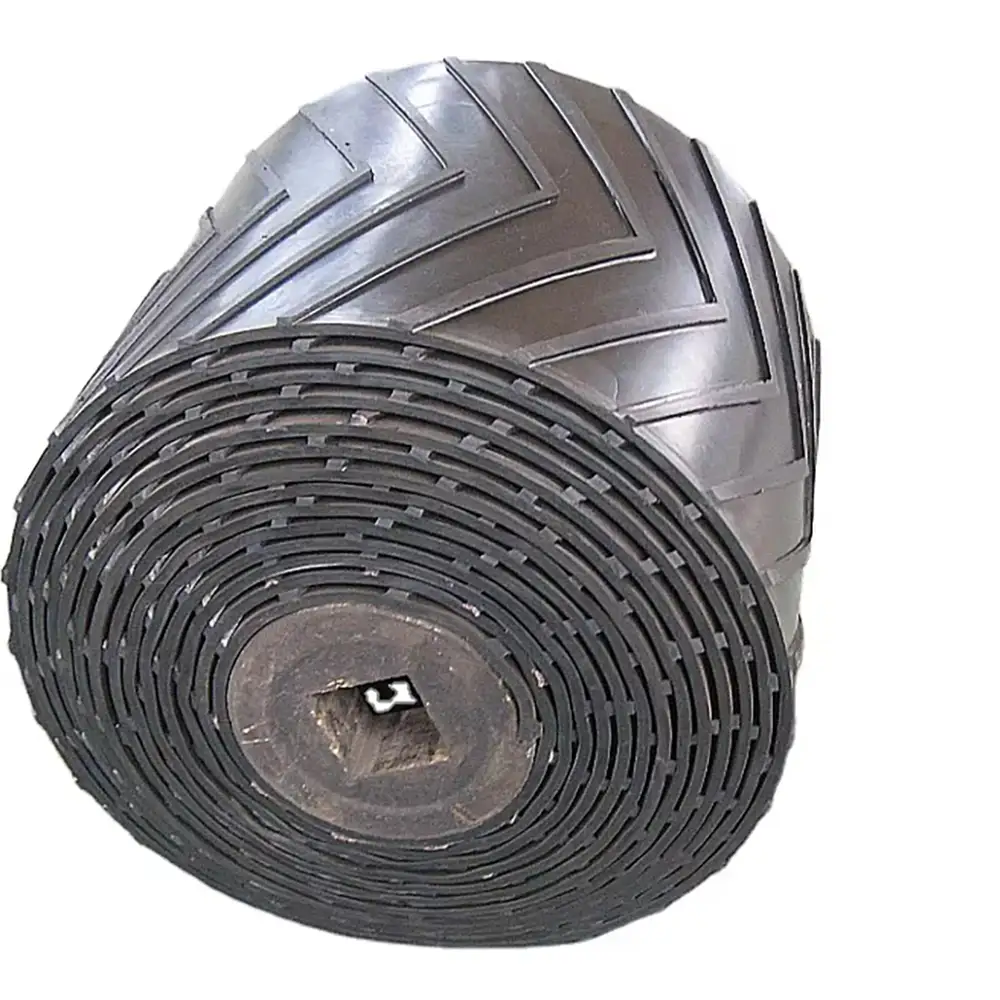
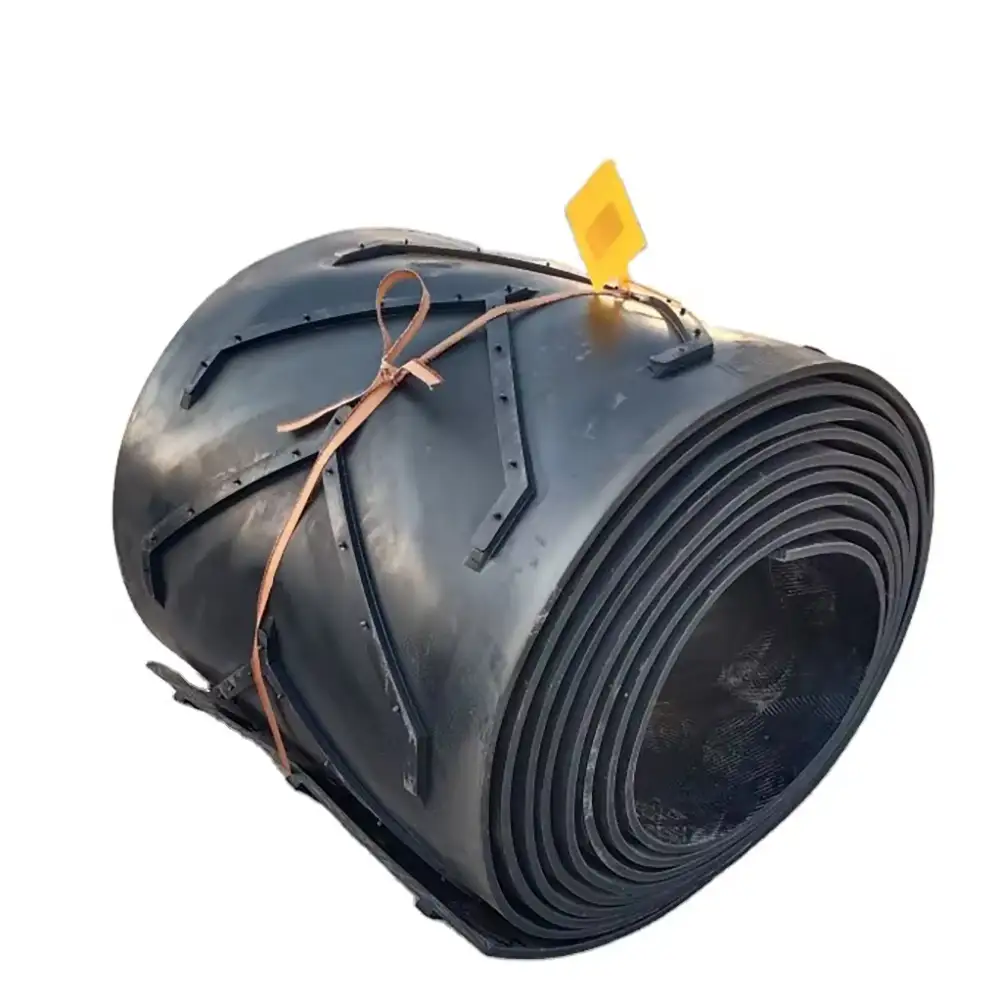
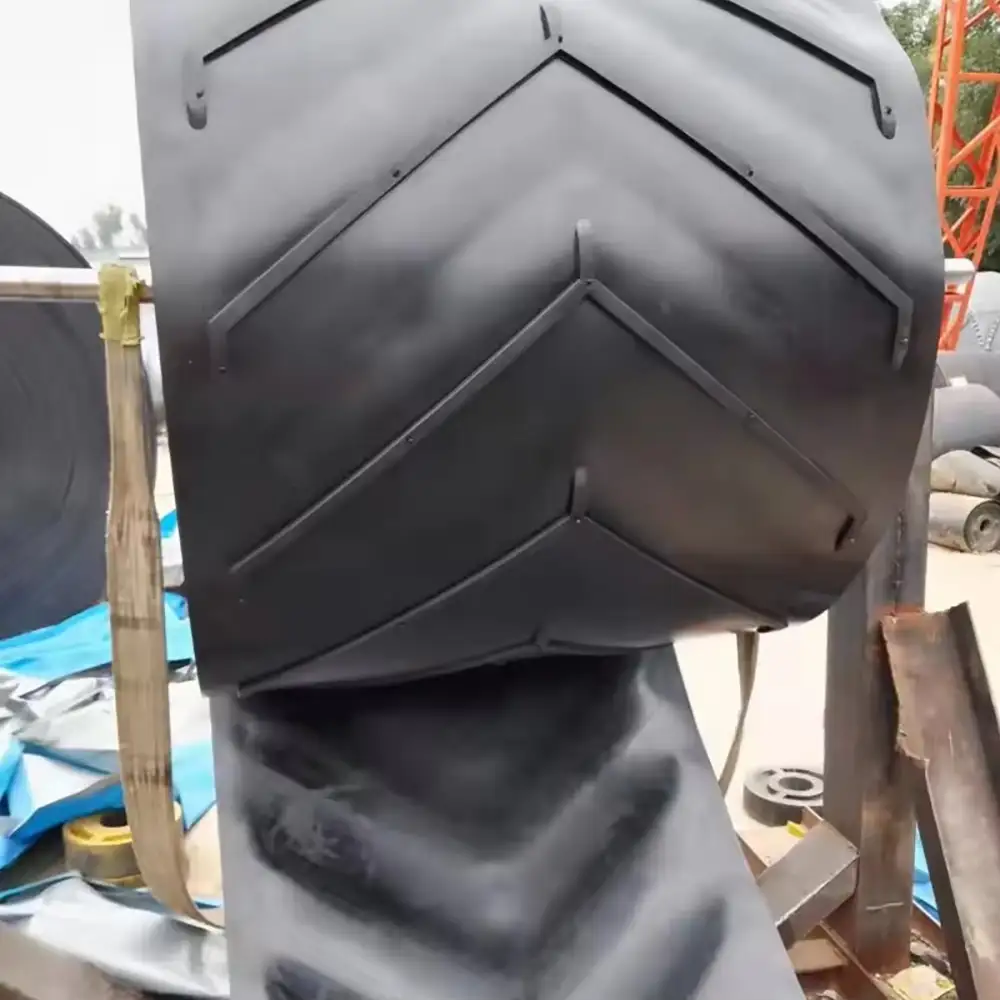
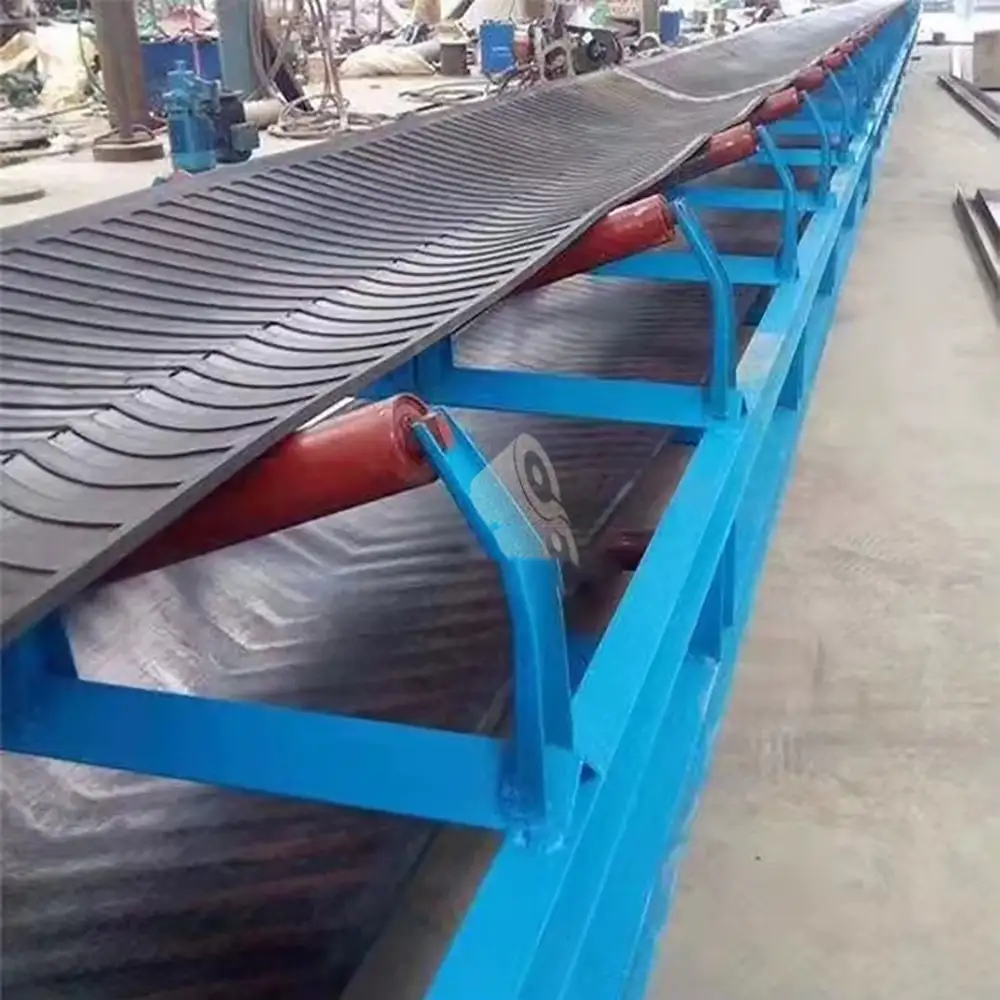
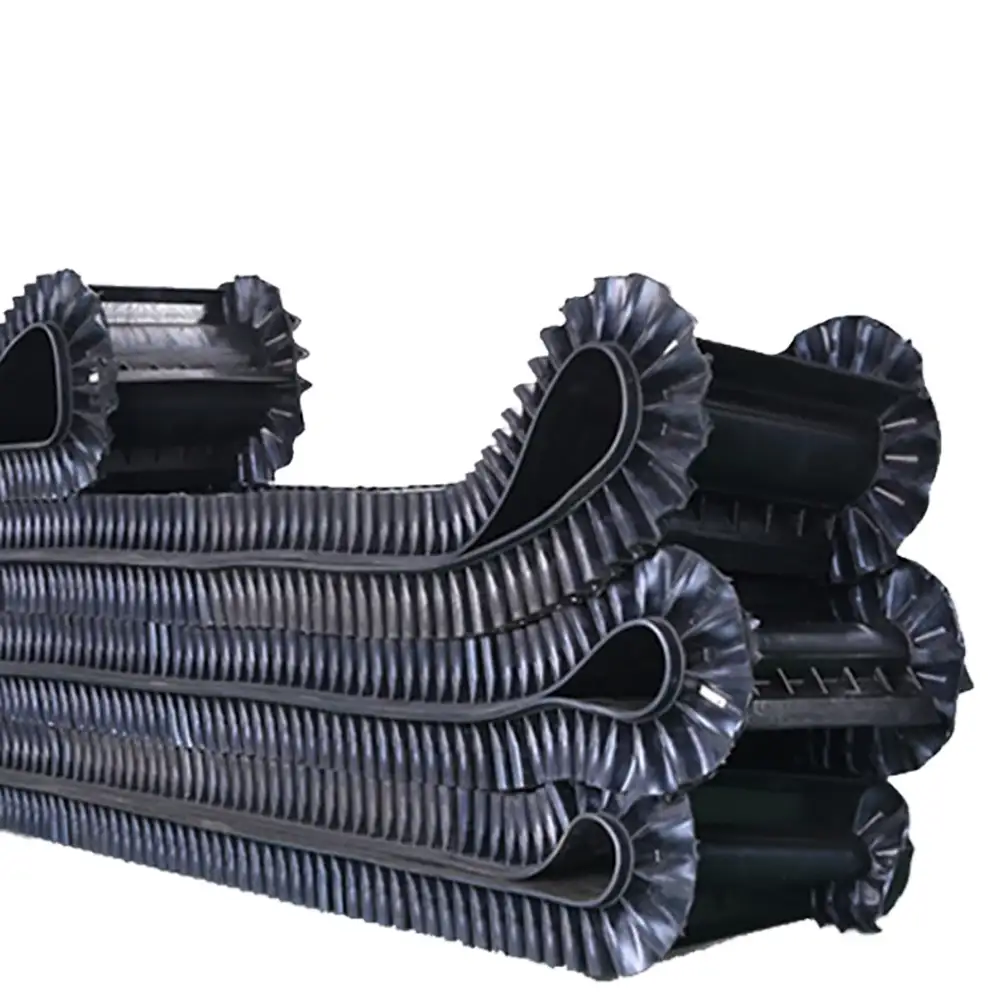
Chevron conveyor belt is composed of base belt and chevron. Our chevron profiles vulcanized on the base belts by one time, the advantages are ensuring belt’s long service life and good flexibility. It is suitable for handling materials or bags up to 40°and widely used for mobile crushers and screens, quarries, sandpits, coal and coke transport, fertilizers, grains and so on.
Features
1. Can prevent slipping of materials and improve conveying efficiency
2. Can carry bulk material at angles of 17~18 degrees and bagged material at angles of 30~50 degrees
3. Cleat angle and pitch are designed for smooth travel over return idlers.
Specification
Chevron profile includes open V type, closed V type, L type, F type, Y type, A type, H type, etc.
New patterns can be developed for customers accordingly.
Chevron Conveyor Belt, V, L, F, Y, A, H Type Industrial Chevron Conveyor Belting
A Chevron Conveyor Belt is a specialized rubber conveyor belt with raised patterns or cleats molded onto the carrying surface. These profiles increase the gripping effect between the belt and conveyed material, helping reduce backward sliding and material spillage when bulk products are transported on inclined conveyors.
Also called a Pattern Conveyor Belt,Profile Conveyor Belt,or Cleated Conveyor Belt, chevron belting is widely used for transporting coal, sand, gravel, crushed stone, grain, fertilizer, cement materials, wood chips, minerals, and other loose or packaged products. Chevron belts are particularly useful when a smooth conveyor belt cannot provide sufficient traction at the required inclination. Industrial suppliers commonly offer V,Y and other patterned profiles, with profile height and geometry selected according to the material and conveying angle.
As a professional Chevron Conveyor Belt Manufacturer and Supplier, we can provide different profile patterns, belt widths, cleat heights, rubber cover grades, carcass constructions, and customized configurations for industrial conveying systems.
What Is a Chevron Conveyor Belt?
A chevron conveyor belt is a rubber belt with a raised, patterned carrying surface. Instead of relying only on the friction of a smooth rubber cover, the molded profile creates additional mechanical engagement with the conveyed material.
The pattern can be designed in different geometries, including open V, closed V, L, F, Y, A, H, herringbone, and other customized configurations. Different patterns influence how material is retained, centered, drained, and released from the belt.
The carrying-side profile and base belt are commonly manufactured as an integrated vulcanized structure. This construction eliminates a separate mechanical attachment between the cleat and belt surface and is particularly useful for continuous industrial service and abrasive material handling.
V, L, F, Y, A, and H Chevron Profiles
V Type Chevron Belt
The V Type Chevron Conveyor Belt is one of the most commonly recognized profiles. The V-shaped ribs help retain loose material and guide the load toward the center of the belt. Open-V and closed-V designs are available for different conveying conditions.
L Type Chevron Belt
The L Type Profile provides a directional raised pattern designed to improve material grip and conveying stability. It can be selected for specific inclined conveying systems according to material characteristics and belt geometry.
F Type Chevron Belt
The F Type Chevron Conveyor Belt uses a specialized profile arrangement to increase carrying performance on inclined applications. The exact pattern geometry and dimensions should be confirmed with the belt drawing before production.
Y Type Chevron Belt
The Y Type Chevron Belt uses a branched or Y-shaped profile that can provide effective material retention and directional movement. Y profiles are commonly available in different heights and widths for bulk material conveying.
A Type Chevron Belt
The A Type Profile is another industrial patterned-belt configuration available for selected conveying applications. The pattern should be matched to belt width, material properties, inclination, and pulley arrangement.
H Type Chevron Belt
The H Type Chevron Belt is used where a specific profile geometry is required for material handling performance. Custom profile dimensions can be considered for specialized conveyor equipment.
Because profile names and dimensions can vary between manufacturers, buyers should confirm the actual profile drawing, cleat height, pitch, pattern width, and belt-width range rather than relying on the letter designation alone.
Key Features of Industrial Chevron Conveyor Belting
1. Improved Incline Conveying
The raised profile provides additional grip and helps prevent loose material from sliding backward. Depending on the material, profile design, cleat height, and conveyor configuration, chevron belts can operate at considerably steeper inclines than smooth belts. Commercial specifications commonly describe applications around 30–40 degrees, but the appropriate angle must be determined from the complete system and material characteristics.
2. Integral Vulcanized Profile
The chevron profile can be molded and vulcanized together with the base belt, creating an integrated structure suitable for continuous operation.
3. Multiple Pattern Designs
V, L, F, Y, A, H, open-V, closed-V, herringbone, and other patterns can be selected according to the application.
4. Different Cleat Heights
Profile heights can be selected according to material size, bulk density, moisture, required inclination, and conveyor configuration. Commercial products are available with different profile heights, including approximately 6,15,25 and 32 mm configurations.
5. Heavy-Duty Rubber Construction
For quarrying, mining, cement, aggregate, and recycling applications, abrasion-resistant rubber compounds can be specified to withstand continuous contact with abrasive bulk materials.
6. Various Carcass Options
Depending on belt design and required tensile strength, the base belt can use EP, NN, CC, or other fabric constructions. The carcass provides the main tensile strength; the raised chevron pattern primarily improves material retention and traction rather than replacing the belt's tensile reinforcement.
Applications of Chevron Conveyor Belts
Quarries and Aggregate Plants:
Chevron belting can transport crushed stone, gravel, sand, and aggregate materials on inclined conveyors.
Mining:
Patterned rubber belts can be used for transporting coal, ore, minerals, and other bulk materials where additional grip is required.
Cement Plants:
Chevron conveyor belts can transport limestone, clinker-related materials, raw materials, and other bulk products in selected conveying sections.
Coal Handling:
V-pattern and other profiled belts can provide improved retention when coal is conveyed on inclined routes.
Grain and Agriculture:
Chevron belting is commonly used for grain, corn, wheat, potatoes, fertilizer, and other agricultural products.
Recycling Plants:
Patterned belts can help move mixed recyclable materials and bulk waste on inclined conveyors.
Wood and Timber Processing:
Chevron belts can be used for wood chips and other loose timber-processing materials.
Mobile Crushers and Screens:
Compact inclined conveyors on crushing and screening equipment can use profiled belts where smooth belts have insufficient material retention.
How to Choose the Right Chevron Conveyor Belt
Selecting a chevron belt requires consideration of several factors.
Material Type:
Consider whether the material is powdery, granular, sticky, wet, abrasive, sharp-edged, or bulky.
Particle Size:
Large lumps may require a different profile geometry and cleat height than fine powders or grains.
Inclination Angle:
The required conveying angle directly influences the choice of profile height and pattern. Higher angles generally require greater material retention, but the actual maximum angle depends on material behavior and conveyor design.
Belt Width:
The profile should be compatible with the belt width and conveyor structure.
Cleat Height and Pitch:
Higher profiles can provide greater material retention but require sufficient clearance through the return path and around pulleys.
Pulley Diameter:
The profile geometry must be compatible with the head, tail, and return pulley arrangement. Incorrect geometry can cause excessive bending or interference.
Return Idlers:
Profile angle, pitch, and height should be selected to allow smooth belt travel through the return system. Some industrial chevron designs specifically use profile geometry intended to pass over return idlers smoothly.
Chevron Conveyor Belt vs Smooth Conveyor Belt
A smooth conveyor belt has a flat carrying surface and is often suitable for horizontal or relatively low-angle conveying. As the inclination increases, loose material may begin to slide backward or roll toward the lower end.
A chevron belt introduces raised rubber profiles that mechanically retain the load and increase traction. This makes it useful for inclined conveying where a conventional smooth belt may not provide sufficient material stability.
The appropriate belt should not be selected solely because it can operate at a higher angle. Material properties, profile geometry, belt speed, loading conditions, chute design, and conveyor structure all affect actual performance.
Custom Chevron Conveyor Belt Manufacturing
We support OEM and customized production for distributors, conveyor system manufacturers, engineering contractors, quarry operators, mining companies, and industrial buyers.
Customization can include:
V Profile
L Profile
F Profile
Y Profile
A Profile
H Profile
Open V
Closed V
Customized Pattern
Profile Height
Profile Pitch
Belt Width
Belt Thickness
Rubber Cover Grade
Carcass Construction
Belt Length
Packaging
Private Label
Customers can provide conveyor drawings, belt dimensions, existing belt samples, photographs, or application parameters for technical evaluation.
Why Choose Us?
Multiple Chevron Profiles:
We can supply V,L,F,Y,A,H and other patterned conveyor belt configurations for different industrial applications.
Custom Pattern Production:
Profile height, pitch, width, and geometry can be coordinated according to the conveyor system and material requirements.
Heavy-Duty Rubber Options:
Abrasion-resistant and other specialized rubber compounds can be selected for demanding industrial environments.
OEM Manufacturing:
We support customized belt widths, lengths, carcass specifications, cover grades, profile designs, and packaging.
Industrial Application Support:
Our chevron belting is suitable for mining, quarrying, cement, agriculture, coal, recycling, construction, and other bulk material handling applications.
Factory Direct B2B Supply:
We work with importers, wholesalers, distributors, conveyor manufacturers, engineering companies, and industrial project buyers.
FAQs
1. What Is a Chevron Conveyor Belt?
A chevron conveyor belt is a rubber conveyor belt with raised patterns molded onto the carrying surface. The profiles improve grip and help retain loose materials during inclined conveying.
2. What Are V, L, F, Y, A, and H Types?
They are different profile geometries used on patterned conveyor belts. Each profile has a particular shape and arrangement of raised rubber ribs, and the appropriate design depends on the material and conveyor requirements.
3. What Materials Can Chevron Belts Convey?
Common applications include coal, sand, gravel, crushed stone, minerals, grain, fertilizer, cement-related materials, wood chips, and recycled materials.
4. How Steep Can a Chevron Conveyor Belt Convey?
Many commercial chevron belts are designed for inclined conveying around 30–40 degrees, depending on profile and material. Some specialized patterns may be designed for different angles. The actual operating angle should be confirmed from the belt design and material characteristics.
5. What Determines Chevron Profile Height?
Profile height is selected according to material size, material behavior, conveying angle, belt width, belt speed, and conveyor geometry. Taller profiles can provide additional material retention but also require suitable return-path clearance.
6. Are Chevron Profiles Vulcanized to the Belt?
Yes. Many industrial chevron belts use an integral molded and vulcanized profile, creating a strong connection between the pattern and base belt.
7. Can Chevron Belts Be Used for Wet Materials?
Yes. Pattern selection should account for the material's moisture and stickiness. Open-V patterns can provide drainage paths in suitable applications, while other patterns may be selected for different material-release requirements.
8. What Is the Difference Between Chevron and Cleated Conveyor Belts?
Chevron belts are a type of profiled or cleated belt with specific patterned rubber profiles, often V-shaped or branched. The terms are sometimes used broadly, but the exact profile geometry and application should be confirmed when ordering.
9. Can You Manufacture Custom V, L, F, Y, A, and H Profiles?
Yes. We can manufacture different profile designs and customize belt width, profile height, pitch, rubber compound, carcass construction, and belt length according to project requirements.
10. How Do I Order the Correct Chevron Conveyor Belt?
Provide the material type, particle size, moisture condition, conveying angle, belt width, belt speed, conveyor length, pulley diameter, required belt tensile strength, and preferred profile. An existing belt sample or technical drawing is also helpful for replacement orders.
Prev:
Corrugated Sidewall Conveyor Belt, Corrugated Sidewall Conveyor Belting
Next:
Bucket Elevator Conveyor Belt, High Working Tensions Bucket Elevator Conveyor Belting
TAG:
Sand Conveyor Belt,
Gravel Conveyor Belt,
Coal Chevron Conveyor Belt,
Aggregate Conveyor Belt,
Heavy Duty Chevron Conveyor Belt,
Mining Chevron Conveyor Belt,
Patterned Conveyor Belt,
Incline Conveyor Belt,
Inclined Conveyor Belt,
Chevron Conveyor Belting,
Chevron Rubber Conveyor Belt,
Pattern Conveyor Belt,
Chevron Conveyor Belt,
Stone Conveyor Belt,
Cement Conveyor Belt,
Cleated Conveyor Belt,
Anti Slip Conveyor Belt,
Grip Conveyor Belt,
High Angle Conveyor Belt,
Profiled Conveyor Belt,
V Type Chevron Belt,
V Type Conveyor Belt,
L Type Chevron Belt,
L Type Conveyor Belt,
F Type Chevron Belt,
F Type Conveyor Belt,
Y Type Chevron Belt,
Y Type Conveyor Belt,
A Type Chevron Belt,
A Type Conveyor Belt,
Related Category:
Chevron Conveyor Belt,V Type Chevron Conveyor Belt,L Type Chevron Conveyor Belt,F Type Chevron Conveyor Belt China, suppliers, manufacturers, factory, customized, wholesale, quotation, made in China