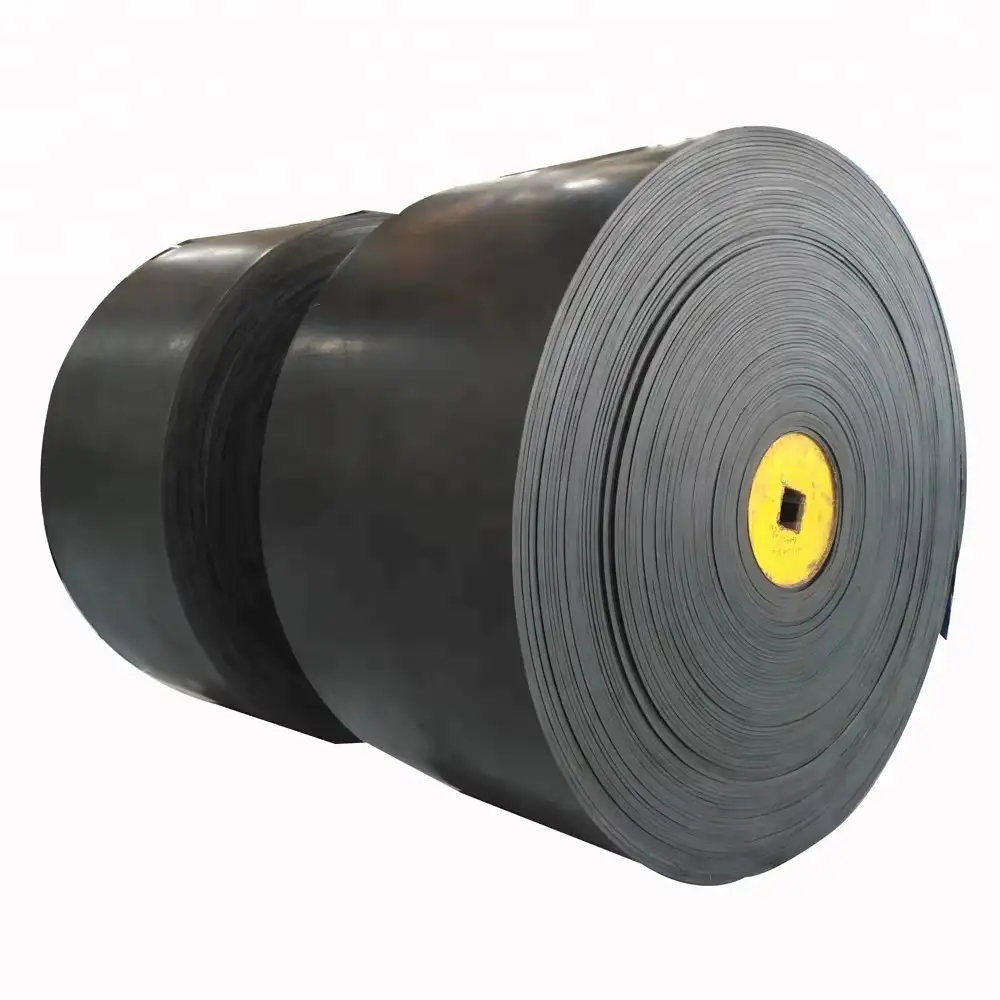
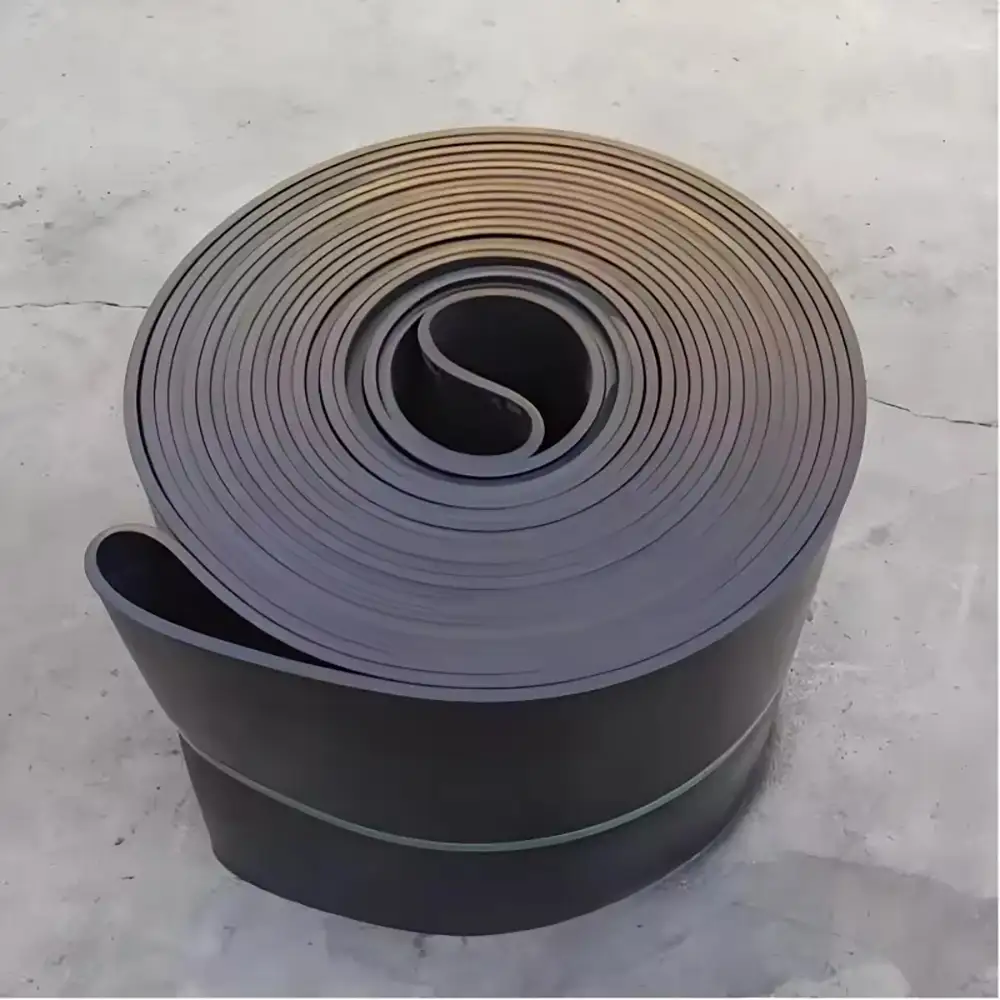
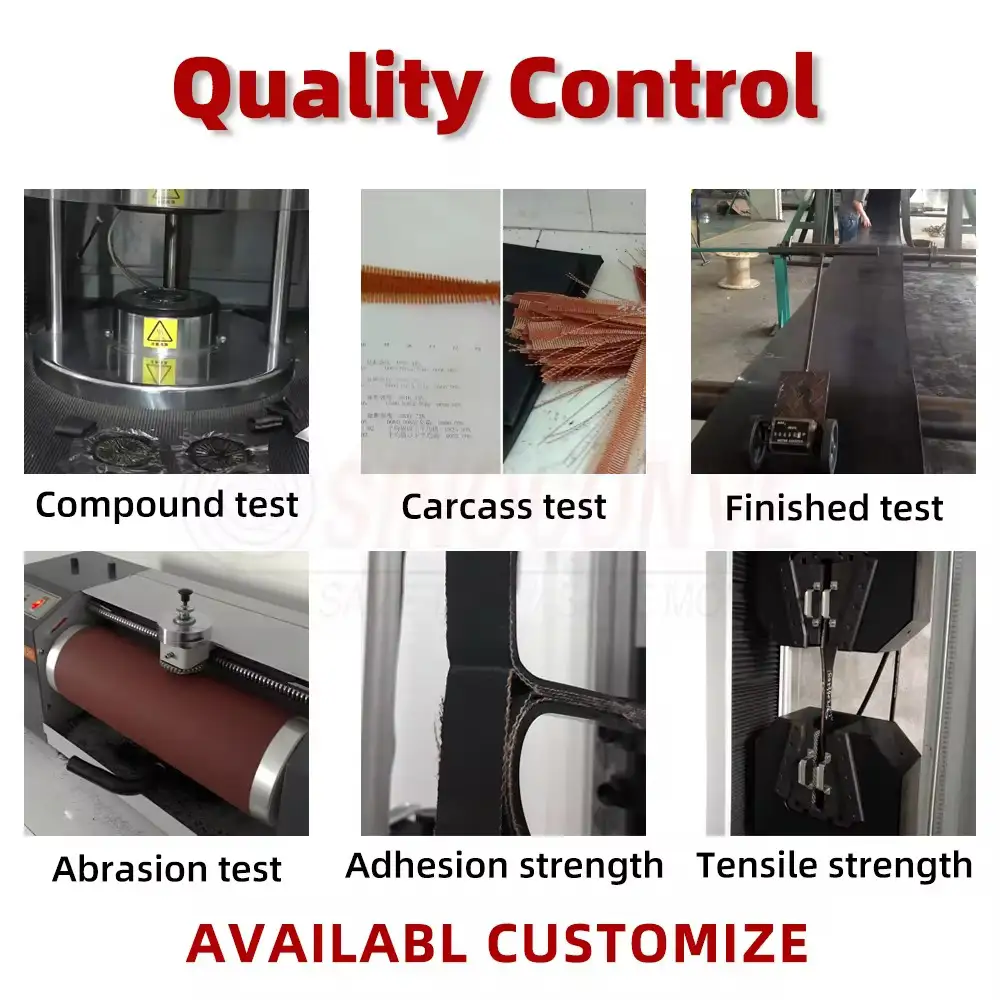
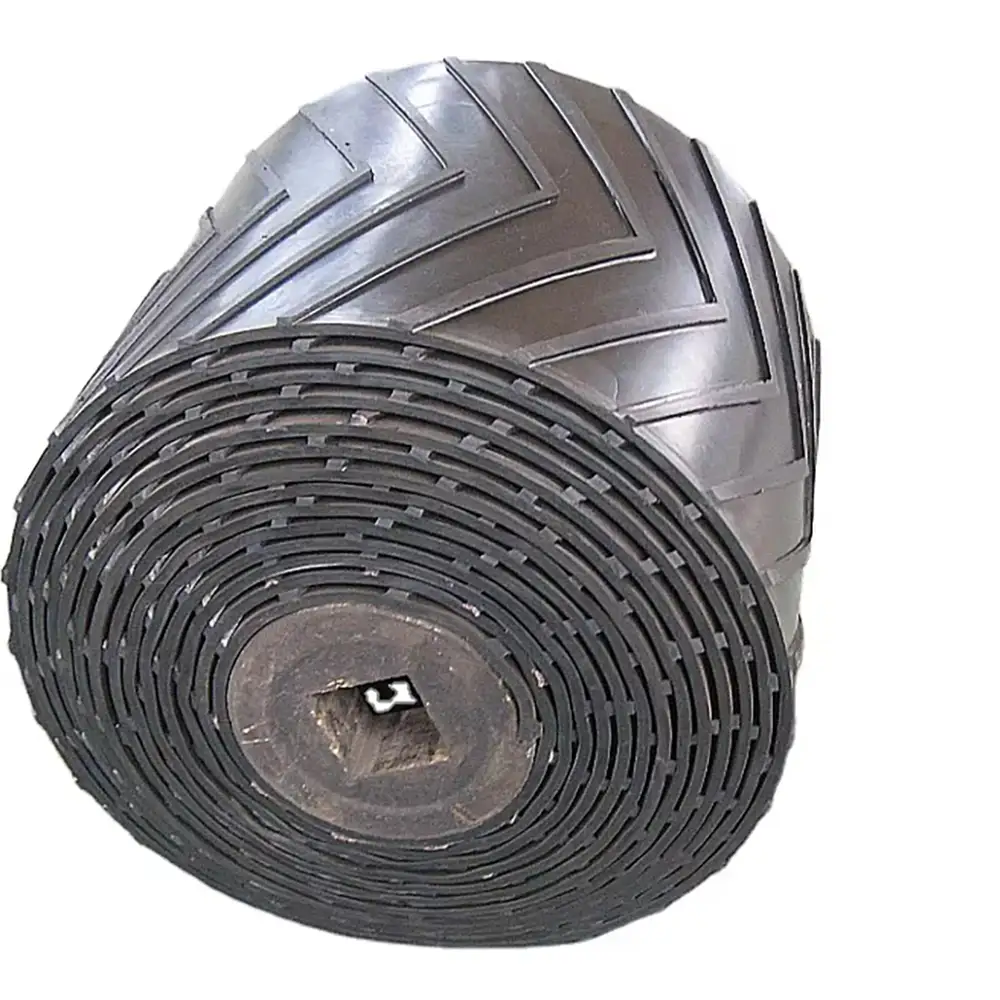
Multi-ply Fabric Conveyor Belt
Application
Fabric conveyor belt is a king of traditional rubber belt, which is constructed by fabrics (EP/NN/CC) and covered with top and bottom rubber. It is used by mining, seaport, cement and concrete plants, sand, gravel and stone industry, heating and power stations, etc.
Types:
Fabric Conveyor Belts are named according to different carcass: EP Conveyor belt , Nylon Conveyor belt and Cotton Conveyor belt.
1.EP Conveyor belt:Low elongation, impact resistant, excellent heat resistant, available for the materials handling of heavy duty, high speed and medium distance.
2.Nylon Conveyor belt:Flexible, high tension, impact resistant, available for conveying materials of medium distance.
3.Cotton Conveyor belt:available for the materials handling of medium distance.
Accordance with different applications, we can produce belt with different grades as following:
-
Heat Resistant Belt
According to the temperature of working environments, we can manufacture 4 different grades heating resistant belt, including up to 120℃ grade(HR120), up to 150℃ grade(HR150), up to 180℃ grade(HR180) and up to 200℃ grade(HR200) .Generally used by cements and steel works.
-
Abrasion Resistant Belt (≤90mm3)/ Super Abrasion Resistant Belt (≤60mm3)
Generally used for transport the hard or sharp materials, like iron ore, diamond, copper and other minerals.
-
Oil Resistant Belt
Generally used for wood, grain transportation.
Multi-ply Fabric Conveyor Belt | EP/NN/CC Multi-ply Fabric Conveyor Belting
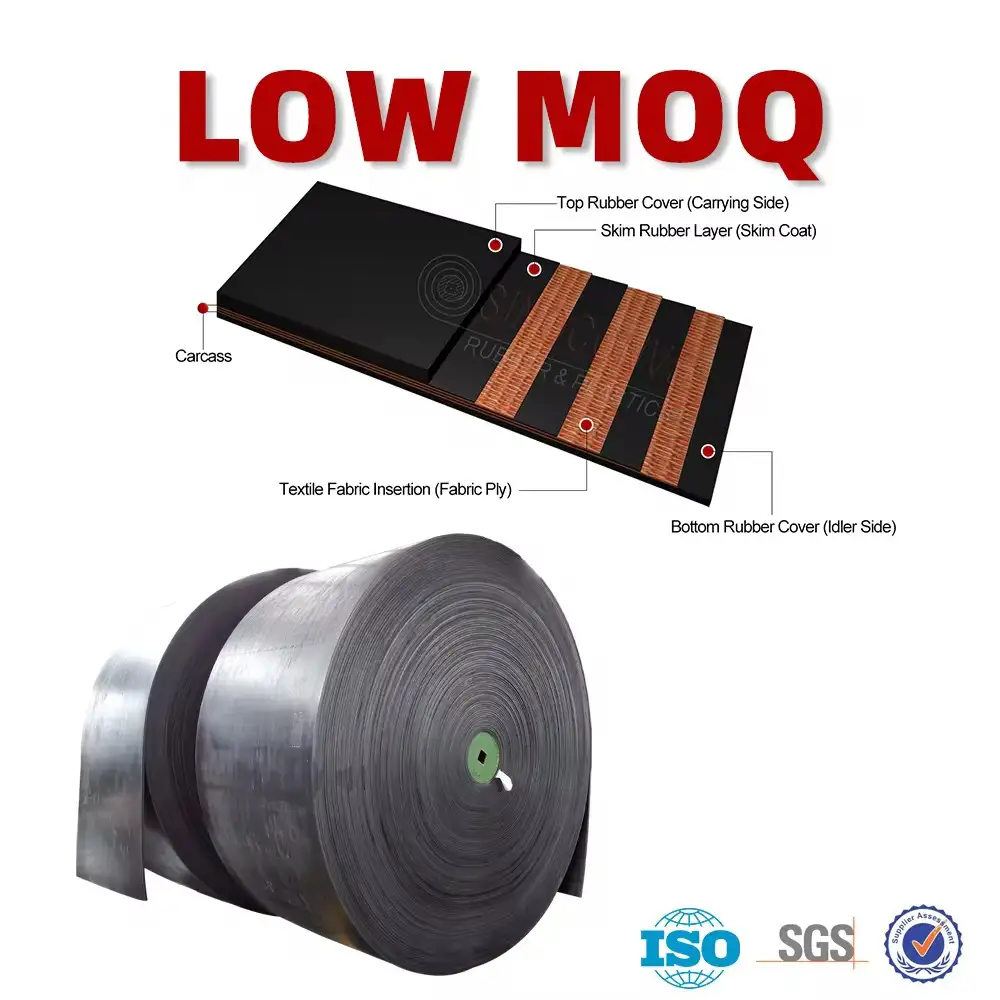
A Multi-ply Fabric Conveyor Belt is a reinforced rubber conveyor belt designed for reliable transportation of bulk and unit materials in demanding industrial environments. Its carcass consists of multiple textile fabric layers bonded together and protected by upper and lower rubber covers. Depending on the required tensile strength, flexibility, impact resistance, troughability, operating conditions, and conveying distance, the carcass can be manufactured with EP polyester-nylon fabric, NN nylon fabric, or CC cotton fabric.
EP/NN/CC multi-ply fabric conveyor belting is widely used in mining, quarrying, cement production, coal handling, aggregate processing, ports, power plants, metallurgy, construction materials, recycling, and general bulk material transportation. Fabric conveyor belts are available in different ply numbers, tensile strength classes, rubber cover grades, widths, and thicknesses to match different conveyor system requirements.
Multi-ply Fabric Conveyor Belt Construction
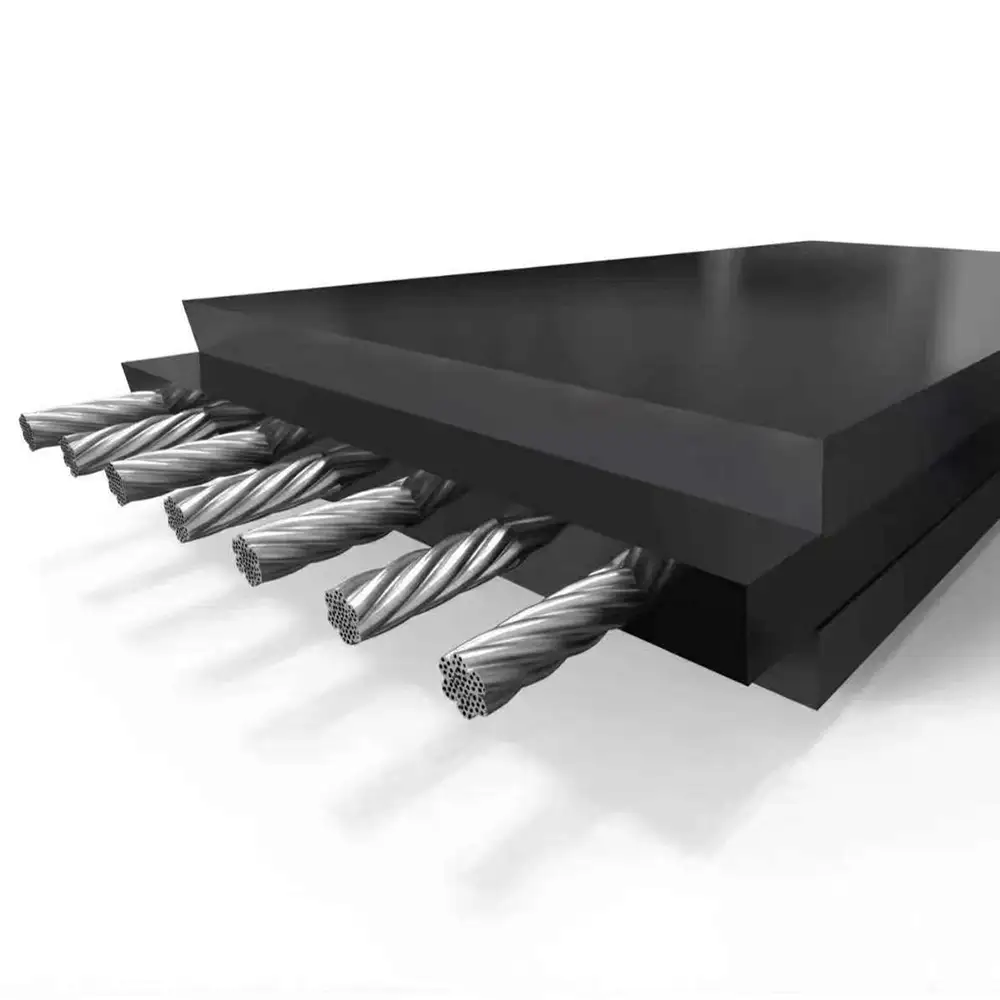
The basic construction includes a top rubber cover, multi-ply textile carcass, bonding or skim rubber, and bottom rubber cover. The carcass provides the primary structural reinforcement and carries most of the belt tension during operation, while the rubber covers protect the fabric layers from abrasion, impact, moisture, heat, oil, chemicals, and other operating conditions.
The number of fabric plies can be selected according to the required belt strength and conveyor design. Depending on the manufacturer and specification, multi-ply belts can be produced in various configurations ranging from several textile layers to higher-ply constructions for demanding applications.
EP Fabric Conveyor Belt
EP fabric uses polyester in the warp direction and polyamide or nylon in the weft direction. This construction provides high tensile strength with relatively low elongation and good dimensional stability.
EP conveyor belts are particularly suitable for medium- and long-distance conveying, higher conveying speeds, and heavy-duty bulk material handling. Their low elongation can help maintain stable belt movement and reduce the amount of take-up required compared with some more elastic textile constructions.
Typical EP strength grades include EP100, EP125, EP150, EP200, EP250, EP300, EP400, and EP500, although the available range varies by manufacturer.
NN Fabric Conveyor Belt
NN means nylon-nylon fabric, with nylon fibers used in both primary fabric directions. Nylon provides excellent flexibility, impact resistance, and troughability, making NN conveyor belts suitable for applications where the belt experiences repeated flexing, loading impact, or demanding trough formation.
NN multi-ply conveyor belting can be used for heavy-duty conveying of materials such as coal, aggregate, sand, gravel, cement, and other bulk products. Its elastic characteristics can help absorb impact at loading points and accommodate demanding conveying conditions.
CC Cotton Fabric Conveyor Belt
CC refers to cotton-cotton fabric construction. Cotton fabric conveyor belts represent a traditional textile carcass option and are generally used for short- to medium-distance conveying applications where their characteristics are appropriate.
CC belts can be considered for general material handling, cement plants, construction materials, mining-related applications, and other industrial conveying systems. Selection should take into account moisture, load, speed, temperature, belt tension, and the characteristics of the conveyed material.
Key Features of Multi-ply Fabric Conveyor Belting
High Tensile Strength: Multiple textile plies provide the reinforcement required for industrial conveyor systems.
Low Elongation: EP constructions in particular offer low elongation characteristics, helping maintain stable belt operation under load.
Good Flexibility: Textile carcasses allow the belt to flex around pulleys and conform to conveyor troughs.
Excellent Troughability: Properly selected fabric construction can form an effective trough for containing bulk material.
Impact Resistance: Multi-ply construction can absorb loading impact and protect the belt carcass during material transfer.
Abrasion Resistance: Rubber cover compounds can be selected according to the abrasiveness of the conveyed material.
Custom Cover Grades: Depending on the application, belts can be supplied with abrasion-resistant, heat-resistant, oil-resistant, flame-resistant, chemical-resistant, or other specialized rubber compounds.
Multiple Strength Options: Different fabric strength classes and ply combinations allow buyers to select a belt according to conveyor tension and load requirements.
Applications
Multi-ply fabric conveyor belts are suitable for a broad range of bulk material handling applications, including:
Coal Mining and Coal Handling
Iron Ore and Mineral Processing
Quarrying and Aggregate Plants
Cement and Concrete Plants
Sand and Gravel Processing
Steel and Metallurgy
Ports and Bulk Terminals
Power Generation
Fertilizer Production
Recycling Plants
Waste Processing
Construction Materials
General Industrial Conveying
For abrasive materials, an abrasion-resistant cover compound can be specified. For elevated-temperature materials, heat-resistant rubber should be selected. Oil, flame, chemical, and other specialized conditions likewise require an appropriate cover compound rather than a standard general-purpose belt.
How to Choose the Right Multi-ply Conveyor Belt
Selecting a fabric conveyor belt should begin with the complete conveyor operating conditions rather than belt width alone. Important parameters include conveying capacity, belt speed, conveyor length, horizontal and vertical lift, material density, maximum lump size, loading impact, trough angle, pulley diameters, take-up arrangement, operating temperature, and environmental conditions.
The carcass type is another important consideration. EP is commonly selected when low elongation and dimensional stability are important. NN can be advantageous where flexibility, impact resistance, and troughability are priorities. CC can be considered for suitable short- and medium-distance general conveying applications.
Buyers should also specify belt width, tensile strength, number of plies, top and bottom cover thickness, rubber grade, edge construction, splice method, and belt length. Available specifications vary by manufacturer, so technical drawings and operating data should be reviewed before production.
Installation and Maintenance
Proper installation is essential for achieving stable belt tracking and long service life. The conveyor structure should be aligned correctly, pulleys should be clean and properly positioned, and the belt should be tensioned according to the conveyor manufacturer's requirements.
Regular inspection should check for abnormal wear, longitudinal cuts, transverse cracks, edge damage, exposed fabric, splice deterioration, material buildup, and tracking problems. Idlers and pulleys should also be inspected because damaged or seized components can accelerate belt wear.
For many heavy-duty textile conveyor applications, properly designed vulcanized splices provide a durable connection. The splice design should be matched to the belt construction and conveyor operating conditions.
Custom EP/NN/CC Conveyor Belt Solutions
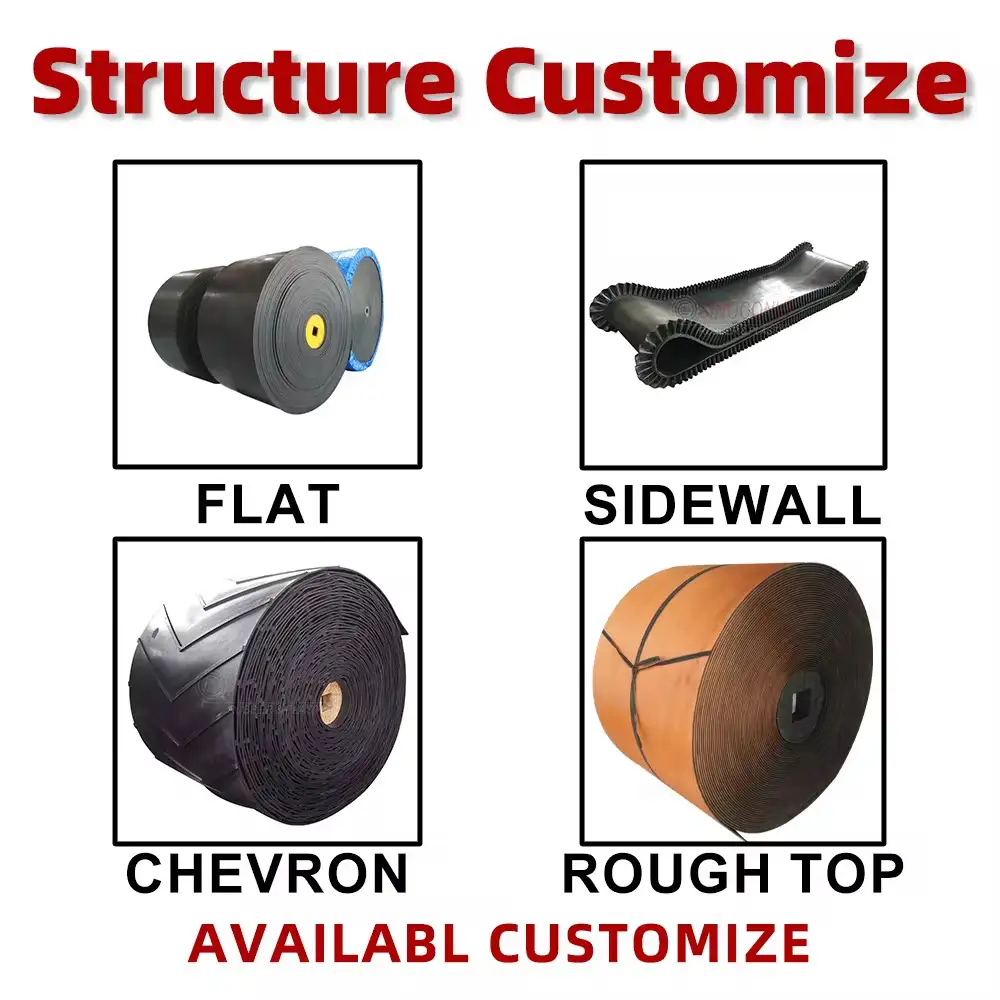
A professional conveyor belt manufacturer can customize carcass type, ply number, tensile strength, belt width, overall thickness, top and bottom cover thickness, rubber compound, edge style, surface properties, and packaging according to project requirements.
OEM and private-label supply can also be arranged for distributors, conveyor system integrators, mining equipment companies, engineering contractors, and industrial buyers. Specification-based manufacturing helps ensure that the finished belt is compatible with the conveyor system rather than simply selecting a belt based on nominal width.
Why Choose Us
Choosing the right Multi-ply Fabric Conveyor Belt requires more than selecting a standard EP, NN, or CC designation. We provide application-oriented belt solutions based on conveyor operating conditions, material characteristics, belt dimensions, tensile requirements, and environmental factors.
EP/NN/CC Carcass Options: Select the appropriate textile reinforcement for different conveying requirements.
Multiple Strength Classes: Support different conveyor tension and load requirements.
Customized Rubber Covers: Options for abrasion, heat, oil, flame, chemical, and general-purpose applications.
OEM & Custom Manufacturing: Belt width, ply construction, cover thickness, rubber grade, and other specifications can be customized.
Industrial Applications: Suitable solutions for mining, quarrying, cement, coal, ports, steel, power, recycling, and bulk handling.
Export-Oriented Supply: Professional packaging and specification-based production for international B2B customers.
Technical Support: Assistance with belt selection based on conveyor capacity, speed, tension, material, and operating environment.
FAQs
1. What is a multi-ply fabric conveyor belt?
A multi-ply fabric conveyor belt is a rubber conveyor belt reinforced with multiple layers of textile fabric. The fabric carcass provides tensile strength and structural support, while rubber covers protect the belt from operating conditions.
2. What does EP mean in conveyor belts?
EP generally refers to a polyester-nylon textile construction, with polyester providing the primary warp reinforcement and nylon used in the other fabric direction. EP belts are widely used for medium- and long-distance heavy-duty conveying.
3. What does NN mean in conveyor belts?
NN means nylon-nylon fabric. NN conveyor belts provide good flexibility, impact resistance, and troughability and are used for various bulk material handling applications.
4. What does CC mean in conveyor belts?
CC refers to cotton-cotton fabric construction. CC belts are a traditional textile conveyor belt option and can be suitable for selected short- and medium-distance conveying applications.
5. Is EP conveyor belt better than NN conveyor belt?
Neither is universally better. EP and NN have different characteristics. EP is commonly selected for low elongation and dimensional stability, while NN is known for flexibility, impact resistance, and good troughability. The correct choice depends on the conveyor design and operating conditions.
6. How many plies does a fabric conveyor belt have?
The number of plies depends on the required tensile strength, conveyor design, belt construction, and manufacturer specification. Common industrial products are available in different multi-ply configurations.
7. Can the belt be customized for abrasive materials?
Yes. Abrasion-resistant rubber cover compounds can be specified for applications involving abrasive materials such as crushed stone, ore, coal, aggregate, and other bulk solids.
8. Can multi-ply fabric belts handle hot materials?
They can be manufactured with heat-resistant rubber compounds for appropriate applications. The required temperature resistance should be specified according to the actual continuous and peak material temperature.
9. What information should I provide when ordering a conveyor belt?
Provide belt width, conveyor length, conveying capacity, belt speed, material type, material density, maximum lump size, conveyor inclination, pulley diameter, existing belt specification, tensile strength, cover thickness, operating temperature, and any special environmental requirements.
10. Do you provide OEM and custom conveyor belts?
Yes. OEM and custom manufacturing can be arranged according to required carcass type, tensile strength, number of plies, belt dimensions, rubber cover grade, edge construction, and application requirements.
-
Fire Resistant Belt
Always used in power station, underground coal mining, steel works and so on.
-
Cold Resistant Belt
The belt can work in some cold environment with temperature above -45℃,like Northeast of China, Russia and North European countries.
-
Acid/Alkali Resistant Belt
Always used in Chemical materials transportation.
-
Conventional Belt
Generally used for small powder, grain and block materials, etc.
Specification
|
Fabric Type |
Ply Strength (N/mm) |
Ply Thickness (mm) |
Cover Thickness (mm) |
No.s of Ply |
Width Range (mm) |
|
Top Rubber |
Bottom Rubber |
|
EP/NN 100 |
100 |
1.00 |
3.0
4.5
6.0 |
1.5
3.0
6.0 |
1-12 |
400-3200 |
|
EP/NN 125 |
125 |
1.10 |
|
EP/NN 150 |
150 |
1.15 |
|
EP/NN 200 |
200 |
1.25 |
|
EP/NN 250 |
250 |
1.50 |
|
EP/NN 300 |
300 |
1.75 |
|
EP/NN 350 |
350 |
2.20 |
|
EP/NN 400 |
400 |
2.40 |
Ply Thickness = A
No.s of Ply=B
Carcass thickness=A*B-0.4
Prev:Sorry, no information
Next:
Corrugated Sidewall Conveyor Belt, Corrugated Sidewall Conveyor Belting
TAG:
Heat Resistant Conveyor Belt,
Oil Resistant Conveyor Belt,
Mining Conveyor Belt,
Industrial Conveyor Belting,
Industrial Conveyor Belt,
Flame Resistant Conveyor Belt,
Bulk Material Conveyor Belt,
Quarry Conveyor Belt,
Abrasion Resistant Conveyor Belt,
Heavy Duty Conveyor Belt,
EP Fabric Conveyor Belt,
EP Conveyor Belt,
Fabric Conveyor Belt,
Textile Conveyor Belt,
Multi-ply Fabric Conveyor Belt,
Multi-ply Conveyor Belt,
Multi-ply Rubber Conveyor Belt,
Rubber Conveyor Belt,
NN Conveyor Belt,
EP Conveyor Belting,
NN Fabric Conveyor Belt,
NN Conveyor Belting,
Conveyor Belt Manufacturer,
Conveyor Belt Supplier,
CC Conveyor Belt,
CC Fabric Conveyor Belt,
Related Category:
Fabric Conveyor Belt, Multi-ply Fabric Conveyor Belt,EP Conveyor Belt,NN Conveyor Belt,CC Conveyor Belt,Fabric Conveyor China, suppliers, manufacturers, factory, customized, wholesale, quotation, made in China