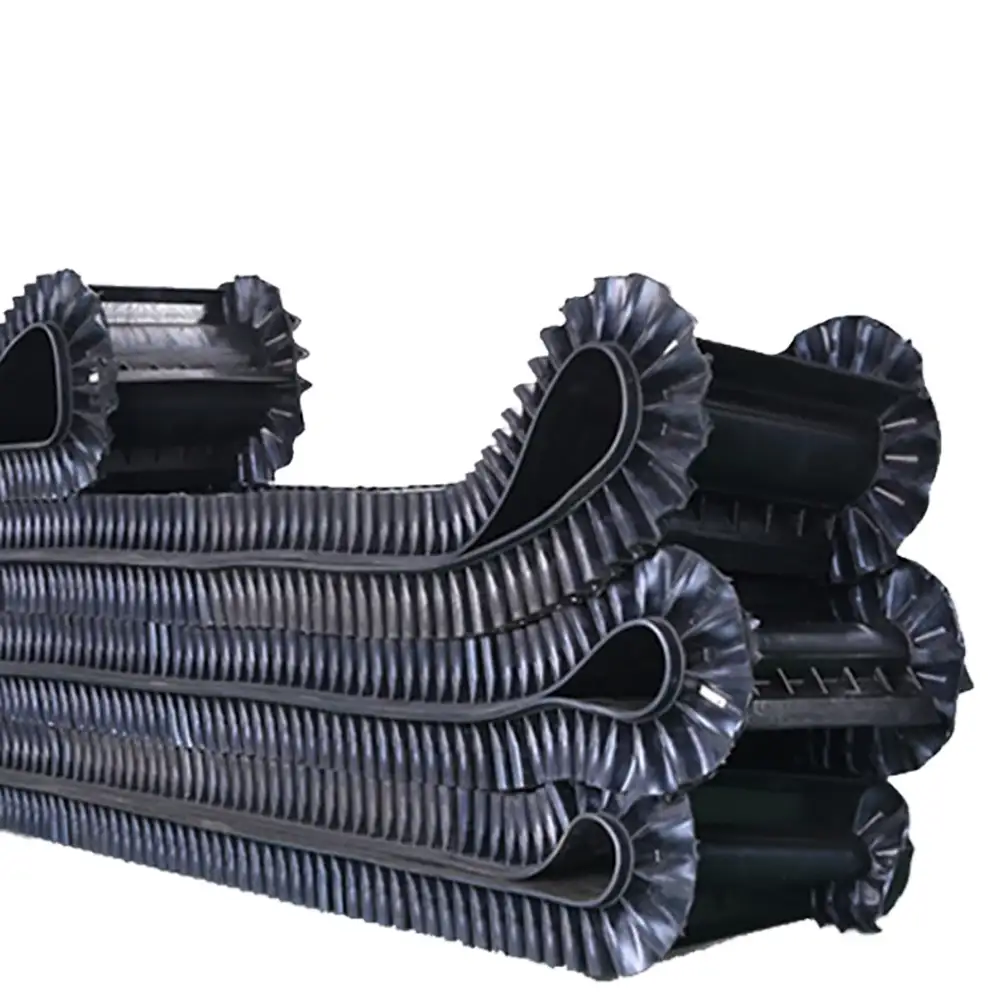
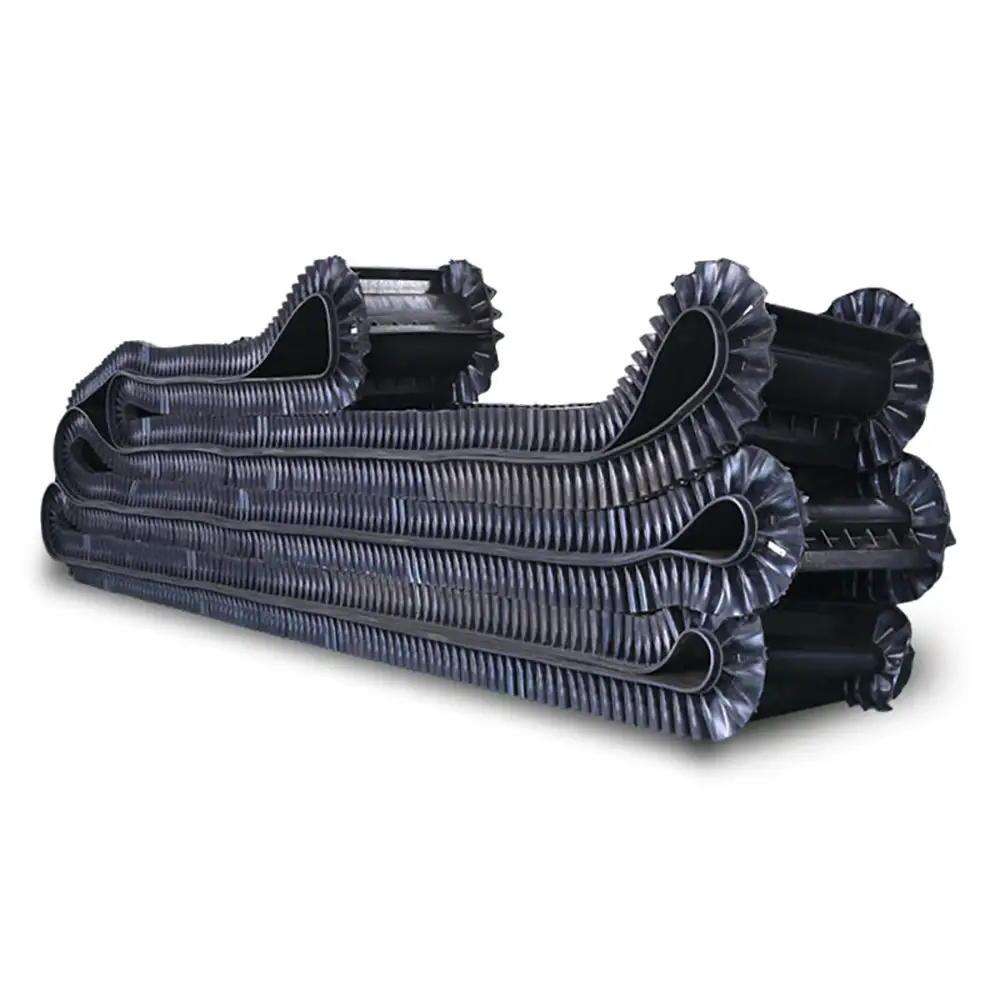
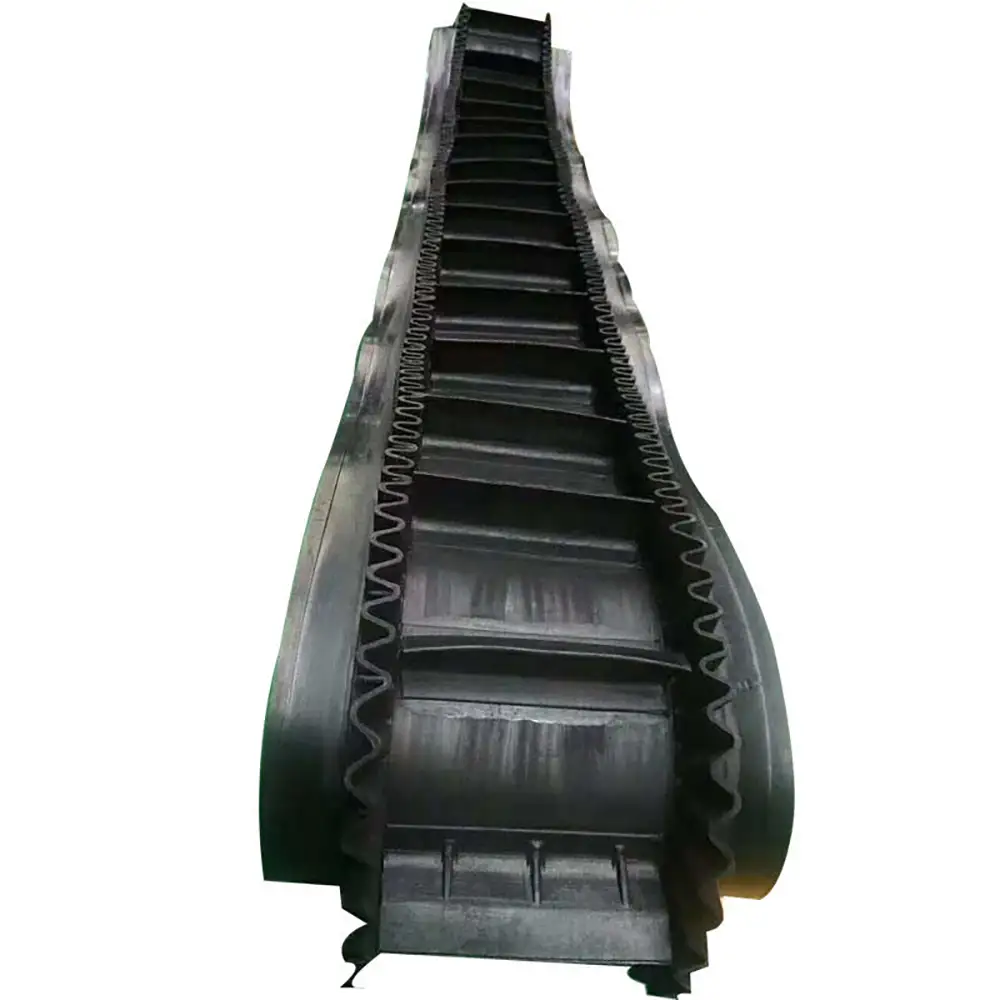
Application
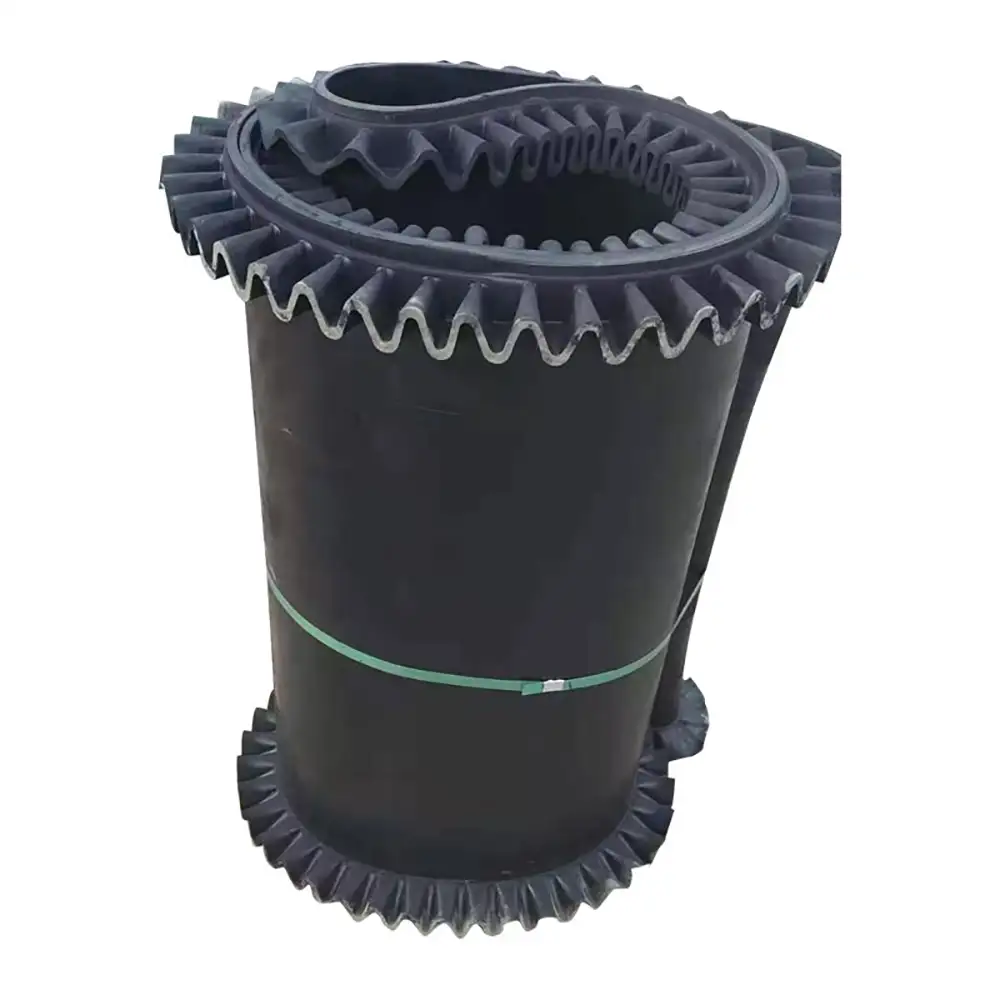
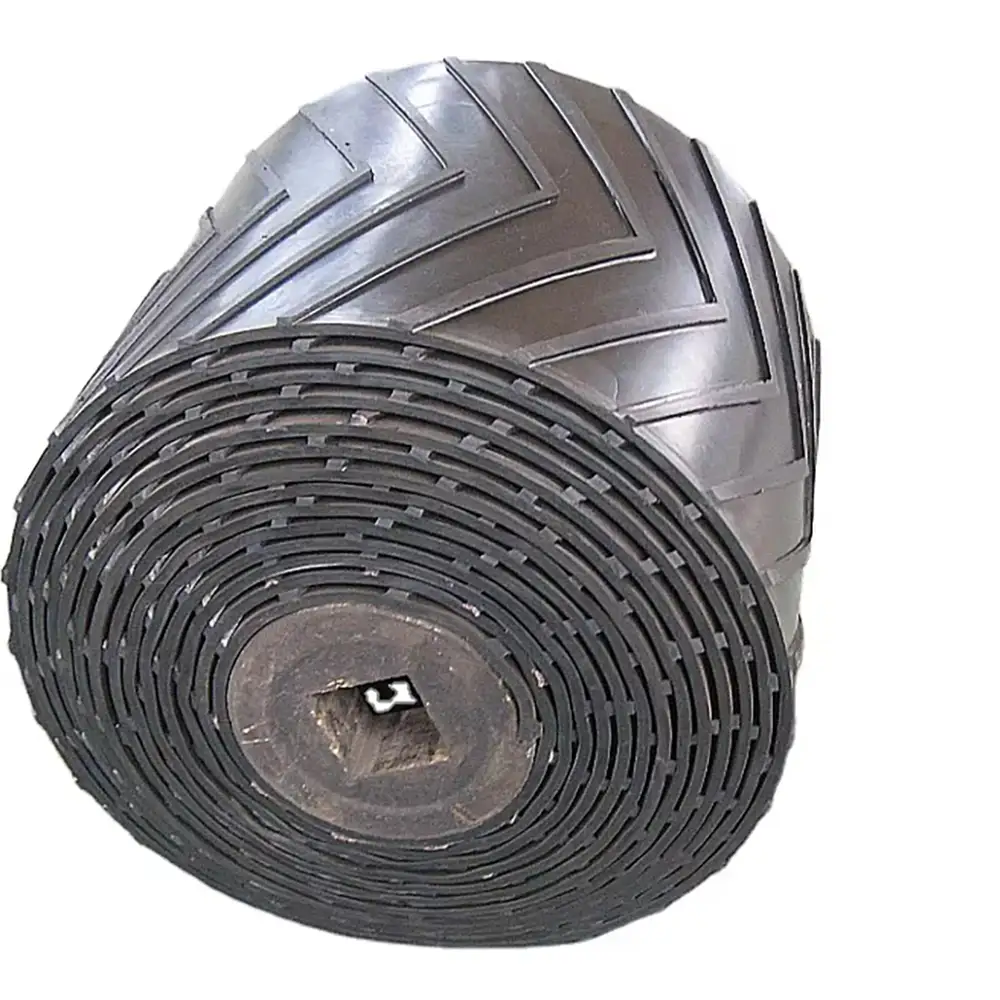
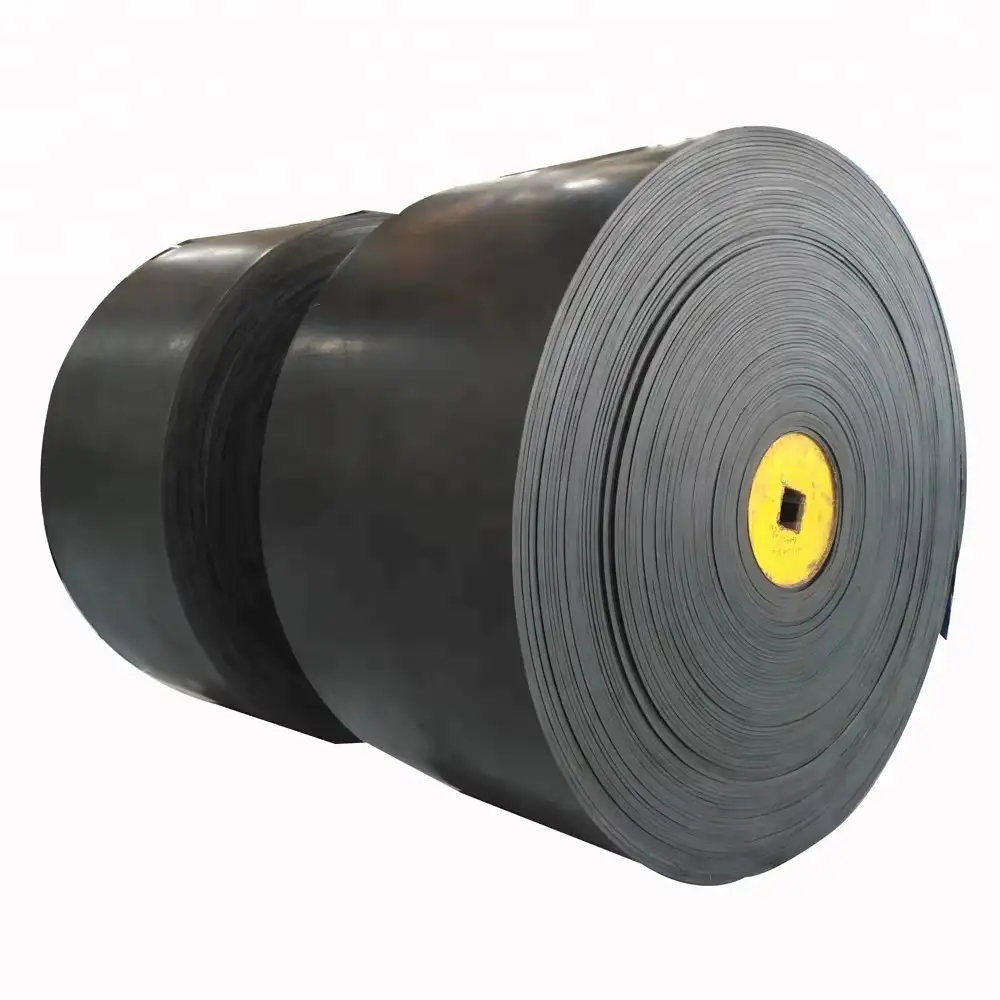
Corrugated Sidewall Conveyor Belt is one of the most effective ways of elevating materials. It is mainly used for materials handling at harbor terminal (rock/ ore/ coal), chemical industry (fertilizer), power plants (coal/ ash/ gypsum), crushing plants (rock, gravel/ sand), mining (ore/ limestone/ chemicals), steel plants (alloys/ scrap metal/ iron ore), etc.
Features
-
Low maintenance cost and long belt life
-
No spillage with steep angle conveying
-
Maximum utilisation of space
-
No spillage with steep angle conveying
-
Low power requirement
-
Allows material conveying at 0°- 90°
Construction
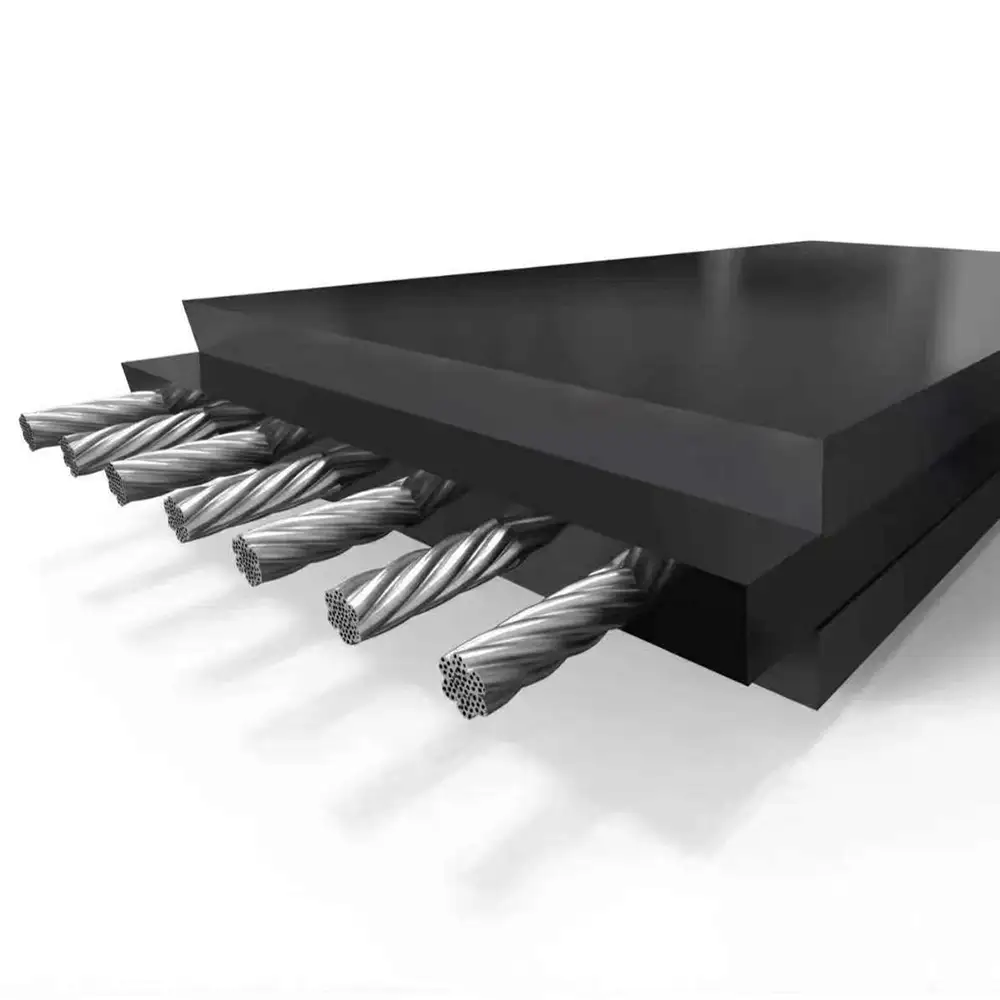
Base belt: Multi-ply (EP/NN/CC) fabric type or Steel Cord type
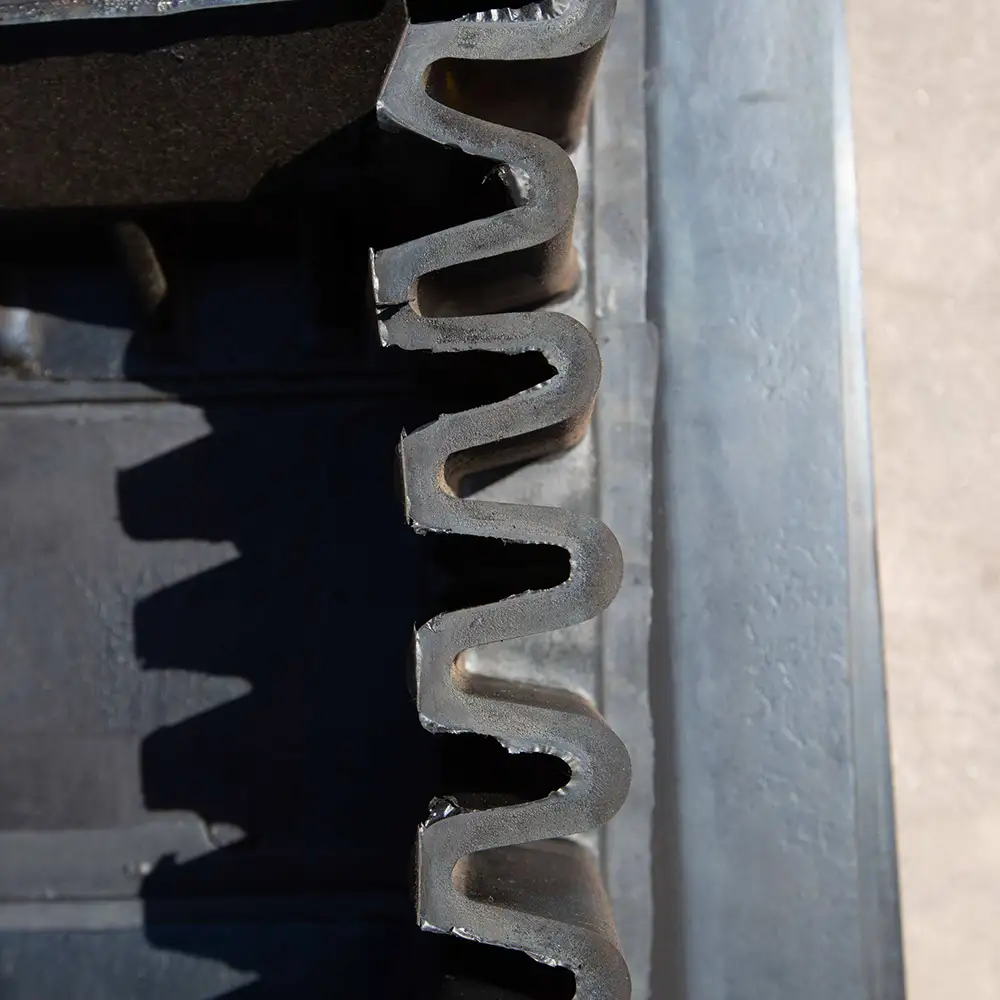
Sidewall: N, S, and ES type
Cleat: T, C, TC, TS and TCS type
Transverse reinforcement: According to clients’ requirement
Type of Sidewall and Cleat


Technical Data:
Base Belt Width
(mm) |
Sidewall Height
(mm) |
Cleat Height
(mm) |
Width
of Base Sidewall
(mm) |
Length of Cleat
(mm) |
Insert
(mm) |
|
Bw |
H |
Ch |
Sw |
Cw |
Fs |
|
300 |
40 |
35 |
25 |
180 |
35 |
|
60 |
55 |
50 |
120 |
40 |
|
80 |
75 |
|
400 |
60 |
55 |
50 |
180 |
60 |
|
80 |
75 |
|
100 |
90 |
|
500 |
80 |
75 |
50 |
250 |
75 |
|
100 |
90 |
|
120 |
110 |
|
650 |
100 |
90 |
50 |
350 |
100 |
|
120 |
110 |
|
160 |
140 |
75 |
300 |
|
800 |
120 |
110 |
50 |
460 |
120 |
|
160 |
140 |
75 |
410 |
|
200 |
180 |
|
1000 |
160 |
140 |
75 |
550 |
150 |
|
200 |
180 |
|
240 |
220 |
|
1200 |
160 |
140 |
75 |
690 |
180 |
|
200 |
180 |
|
240 |
220 |
|
300 |
280 |
105 |
630 |
|
1400 |
200 |
180 |
75 |
830 |
210 |
|
240 |
220 |
|
300 |
280 |
105 |
770 |
|
400 |
360 |
|
1600 |
200 |
180 |
75 |
970 |
240 |
|
240 |
220 |
|
300 |
280 |
105 |
910 |
|
400 |
360 |
|
1800 |
240 |
220 |
75 |
1110 |
270 |
|
300 |
280 |
105 |
1050 |
|
400 |
360 |
|
500 |
460 |
125 |
1010 |
Corrugated Sidewall Conveyor Belt, Corrugated Sidewall Conveyor Belting
A Corrugated Sidewall Conveyor Belt is a specialized bulk material handling belt designed for steep-angle, high-angle, and vertical conveying applications. Unlike a conventional flat conveyor belt, it combines a reinforced base belt with corrugated rubber sidewalls and transverse cleats to create enclosed carrying pockets. This design helps retain bulk materials when the conveyor operates at steep inclines where a standard belt may allow material to slide backward or spill over the edges.
Corrugated sidewall conveyor belting is widely used in mining, quarrying, cement plants, coal handling, power generation, fertilizer production, steel plants, ports, recycling, foundries, and other industries that require significant vertical elevation within limited floor space. Sidewall belt systems are specifically designed to transport bulk materials at steep angles and can, depending on the complete conveyor configuration, support conveying approaching 90 degrees.
As a professional Corrugated Sidewall Conveyor Belt Manufacturer and Supplier, we can provide customized base belts, sidewall heights, cleat designs, cleat pitches, belt widths, rubber compounds, and reinforcement structures for different material handling requirements.
What Is a Corrugated Sidewall Conveyor Belt?
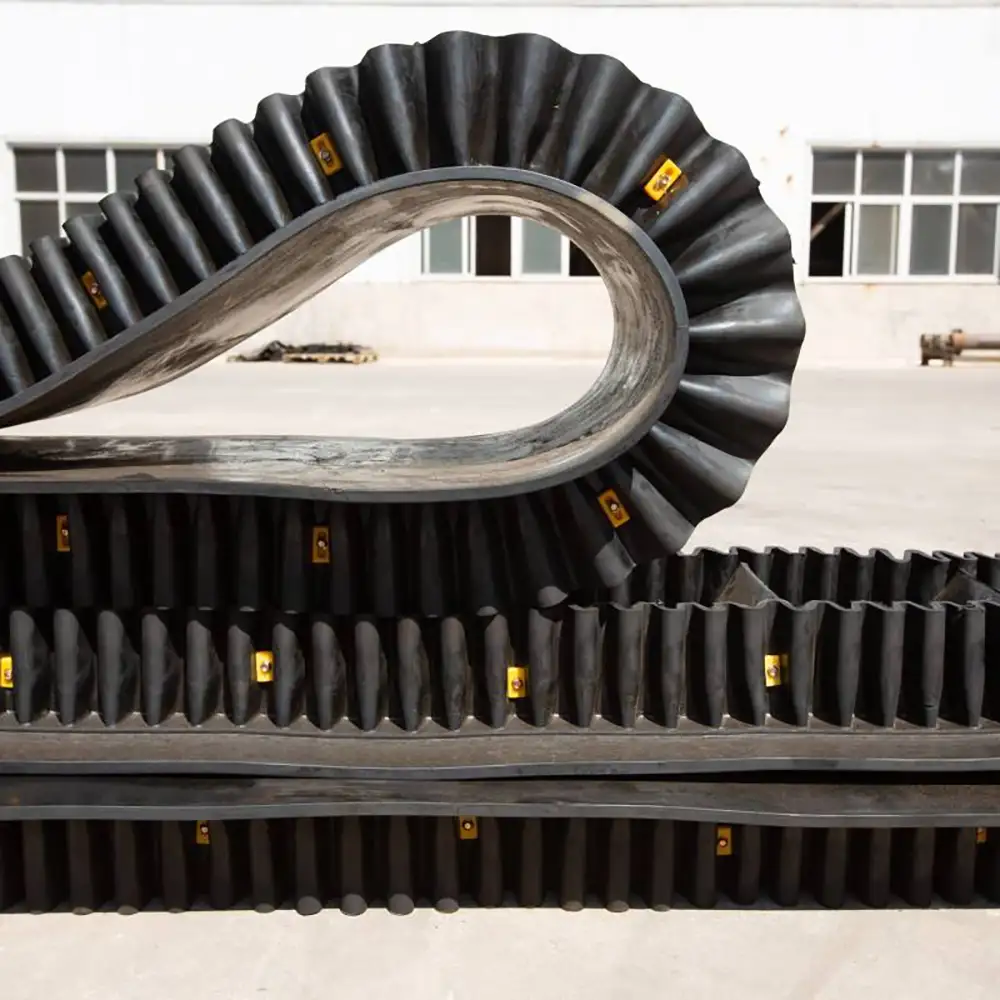
A corrugated sidewall conveyor belt consists of three primary elements: the base belt, corrugated sidewalls, and transverse cleats.
The base belt provides the main tensile strength and forms the foundation of the conveying system. Corrugated rubber sidewalls are attached along both edges of the belt, while transverse cleats or flights are installed across the carrying surface between the sidewalls.
Together, these components create individual material pockets. The sidewalls help prevent material from moving sideways, while the cleats help prevent material from sliding backward. This mechanical containment allows the belt to transport bulk materials at angles significantly steeper than conventional flat belts.
The base belt can be manufactured using fabric reinforcement such as EP or NN constructions, while steel cord or other reinforced configurations can be considered for applications requiring higher strength or specific rigidity characteristics.
How Corrugated Sidewall Conveyor Belting Works
When material enters the belt at the loading point, it is contained between the two corrugated sidewalls and one or more transverse cleats. As the belt travels upward, the cleats support the material while the sidewalls prevent lateral spillage.
This is fundamentally different from relying only on friction between the material and a smooth belt surface.
The pocket volume is determined by factors such as belt width, sidewall height, cleat height, cleat pitch, and material characteristics. Proper design therefore requires consideration of bulk density, particle size, moisture, stickiness, abrasiveness, required capacity, conveying angle, and elevation height.
Key Features of Corrugated Sidewall Conveyor Belts
1. Steep-Angle Conveying
The combination of sidewalls and cross cleats provides mechanical material containment for steep-incline conveying. Depending on the design, sidewall conveyor systems can be used for very steep or vertical elevation.
2. Space-Saving Conveyor Layout
A steep-angle conveyor can achieve substantial vertical elevation within a much shorter horizontal footprint than a conventional shallow-incline conveyor. This makes sidewall belting useful where factory floor space, plant height, or equipment layout is limited.
3. Reduced Material Spillage
The corrugated sidewalls contain material along both belt edges, while the transverse cleats divide the carrying surface into pockets. This helps reduce side spillage and rollback during steep conveying.
4. High Carrying Capacity
The pocket-style conveying surface can carry a substantial volume of bulk material within a relatively compact belt width. Actual capacity depends on pocket dimensions, belt speed, material bulk density, filling ratio, and conveyor configuration.
5. Flexible Cleat Designs
Different transverse cleat profiles and pitches can be selected according to the conveyed material, required capacity, inclination, and sidewall height.
6. Reinforced Base Belt
The base belt can be specified with different fabric or reinforced carcass constructions. Cross-stabilization is particularly important because the belt must maintain dimensional stability and avoid excessive deformation during operation.
7. Custom Sidewall Heights
Sidewall height can be selected according to the required material containment and pocket volume. Commercial designs are available with different sidewall heights, and custom dimensions can be considered for specific applications.
Applications of Corrugated Sidewall Conveyor Belting
Mining and Quarrying
Sidewall belts can transport coal, ores, crushed rock, sand, gravel, and other minerals where steep elevation or limited plant space is a major consideration.
Cement Plants
Cement plants can use sidewall conveyor systems for transporting limestone, clinker, raw materials, and other bulk products between different processing elevations.
Coal Handling
Coal and other bulk fuel materials can be elevated in compact conveyor layouts. The enclosed pocket structure helps control material movement on steep sections.
Power Plants
Sidewall conveyor belting can be used for coal, ash, limestone, and other bulk materials in power generation facilities.
Fertilizer Plants
Granular fertilizer and other bulk agricultural materials can be conveyed at steep angles. The rubber compound should be selected according to the chemical characteristics of the conveyed material.
Steel Plants and Foundries
Sidewall conveyors can transport bulk raw materials and process materials where vertical elevation and compact plant layouts are required.
Recycling and Waste Processing
Recyclable materials, aggregates, wood waste, and other bulk materials can be transported through steep sections using pocket-style sidewall belts.
Ports and Bulk Terminals
Sidewall conveyor systems can provide compact vertical or steep-angle transfers in bulk material handling facilities. Sidewall belts are used in industries including ports, mines, cement plants, power plants, and recycling.
Corrugated Sidewall Belt Components
Base Conveyor Belt
The base belt carries the primary tensile load and provides the foundation for the sidewalls and cleats. Fabric or reinforced constructions can be selected according to belt tension, flexibility, and system requirements.
Corrugated Sidewalls
The flexible corrugated sidewalls form the lateral containment walls. Their height influences the available material pocket volume and should be selected according to material size, capacity, and conveyor angle.
Transverse Cleats
Cross cleats divide the material into separate pockets and support the load during elevation. Cleat shape, height, and pitch are important design parameters.
Reinforcement Structure
Transverse reinforcement or other stabilizing structures can improve belt rigidity and help the belt maintain its intended shape. This is particularly important for systems with demanding loading and return conditions.
How to Select the Right Sidewall Conveyor Belt
Conveying Angle:
Determine the required conveying angle first. Steeper conveying generally requires more effective material containment.
Elevation Height:
The vertical lift affects belt length, tension, drive requirements, and overall system configuration.
Material Type:
Provide information about material density, particle size, moisture, temperature, abrasiveness, and whether the material is sticky or chemically aggressive.
Maximum Lump Size:
Large lumps require appropriate pocket dimensions and sufficient clearance between cleats and sidewalls.
Belt Width:
Belt width determines available carrying volume and must correspond to the required throughput and equipment structure.
Sidewall Height:
Higher sidewalls can increase pocket volume but also influence pulley diameter, belt flexibility, and overall system design.
Cleat Type and Pitch:
The correct cleat geometry should be selected according to material behavior, belt speed, inclination, and desired carrying capacity.
Pulley Diameter:
Sidewall belts require suitable pulley and deflection diameters to prevent excessive bending and stress on the sidewalls.
Corrugated Sidewall Conveyor Belt vs Conventional Conveyor Belt
A conventional smooth belt is generally suitable for horizontal or moderately inclined transportation. When the angle becomes too steep, bulk material may slide backward or spill over the sides.
A corrugated sidewall belt solves this problem through mechanical containment. The sidewalls contain the material laterally while the transverse cleats support the material against gravity.
This makes the sidewall belt especially useful when a plant needs to achieve a significant vertical lift without using a long conventional incline conveyor or multiple transfer points.
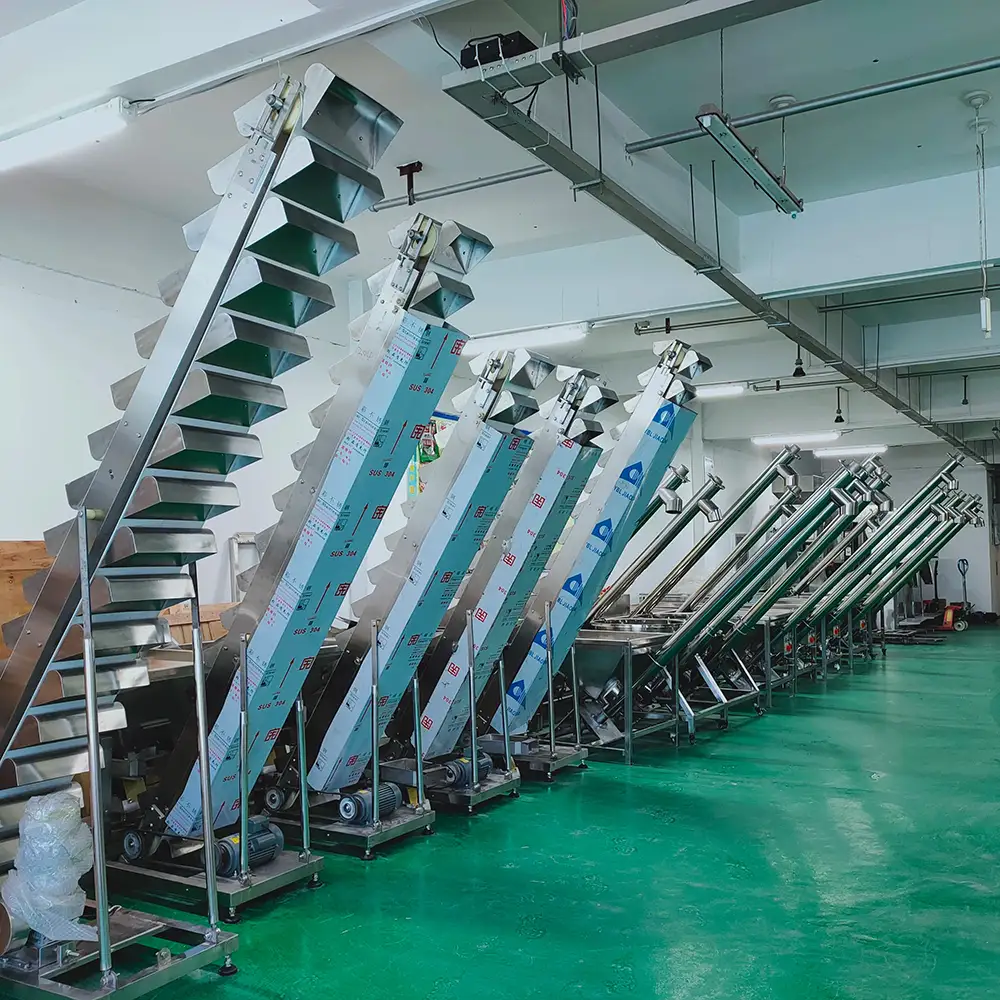
Compared with a bucket elevator, a sidewall conveyor can also provide a continuous conveying route with a different mechanical arrangement and layout. The appropriate choice depends on capacity, elevation, material characteristics, available space, maintenance requirements, and the overall plant design.
Custom Corrugated Sidewall Conveyor Belt Manufacturing
We provide OEM and custom manufacturing for industrial distributors, conveyor system manufacturers, engineering companies, mining operators, cement plants, aggregate producers, and bulk material handling projects.
Customization can include:
Belt Width
Sidewall Height
Sidewall Profile
Cleat Type
Cleat Height
Cleat Pitch
Base Belt Construction
EP Fabric
NN Fabric
Steel Cord Reinforcement
Rubber Compound
Heat Resistance
Abrasion Resistance
Oil Resistance
Flame Resistance
Acid And Alkali Resistance
Belt Length
Custom Splicing
Packaging
Customers can provide conveyor drawings, material information, belt dimensions, required capacity, conveying angle, and elevation height for technical evaluation.
Why Choose Us?
Steep-Angle Conveyor Expertise:
We supply corrugated sidewall conveyor belting designed specifically for steep, high-angle, and vertical bulk material transportation.
Complete Belt Structure:
We can provide the base belt, corrugated sidewalls, transverse cleats, and reinforcement structure as an integrated conveyor belt solution.
Custom Engineering:
Sidewall height, cleat type, pitch, belt width, carcass construction, and rubber compound can be customized according to project requirements.
Heavy-Duty Rubber Options:
Abrasion-resistant, heat-resistant, flame-resistant, oil-resistant, and chemically resistant rubber options can be considered for different industrial environments.
Multiple Industries:
Our sidewall conveyor belts are suitable for mining, cement, coal, power generation, aggregates, steel, fertilizer, recycling, ports, and other bulk material handling industries.
OEM Factory Supply:
We support overseas importers, wholesalers, conveyor manufacturers, engineering contractors, and industrial project buyers with OEM and bulk orders.
FAQs
1. What Is a Corrugated Sidewall Conveyor Belt?
It is a specialized conveyor belt consisting of a base belt, corrugated rubber sidewalls, and transverse cleats. The components form material-carrying pockets for steep-angle and vertical conveying.
2. What Is a Sidewall Conveyor Belt Used For?
It is used for transporting bulk materials at steep inclines where a conventional smooth or troughed conveyor belt cannot effectively retain the material.
3. Can a Sidewall Conveyor Belt Convey Material Vertically?
Yes. Properly designed sidewall systems can convey bulk materials at very steep angles and, in some configurations, up to 90 degrees. The actual angle depends on belt construction, material properties, cleat design, and the complete conveyor system.
4. What Materials Can Be Conveyed?
Applications include coal, ore, limestone, aggregates, sand, gravel, cement materials, fertilizer, grain, wood products, recycling materials, and other bulk solids.
5. What Are the Main Components of a Sidewall Belt?
The main components are the base belt, corrugated sidewalls, and transverse cleats. Cross-stabilizing reinforcement may also be incorporated according to the belt construction.
6. How Do I Choose the Sidewall Height?
Sidewall height should be determined from material characteristics, maximum lump size, required capacity, conveying angle, cleat height, and available conveyor space. It should not be selected based on belt width alone.
7. How Do I Choose the Cleat Pitch?
Cleat pitch depends on material size, bulk density, belt speed, conveying angle, pocket volume, and the required throughput. Large-lump materials generally require appropriate pocket geometry and sufficient clearance.
8. Can Sidewall Conveyor Belts Handle Abrasive Materials?
Yes. Rubber compounds and carcass constructions can be selected for abrasive materials such as stone, ore, coal, and aggregates. The actual rubber grade should match the material and operating conditions.
9. Can You Manufacture Custom Sidewall Conveyor Belts?
Yes. We can customize belt width, sidewall height, cleat type, cleat height, cleat pitch, base belt construction, rubber compound, reinforcement, belt length, and other specifications.
10. What Information Is Needed for a Sidewall Belt Quote?
Useful information includes material type, maximum lump size, bulk density, required capacity, belt speed, conveying angle, vertical lift, belt width, sidewall height, cleat type, and conveyor layout. A technical drawing or existing belt sample can further improve specification accuracy.
Prev:
Multi-ply Fabric Conveyor Belt, EP/NN/CC Multi-ply Fabric Conveyor Belting
Next:
Chevron Conveyor Belt, V, L, F, Y, A, H Type Industrial Chevron Conveyor Belting
TAG:
Bulk Material Conveyor Belt,
Steep Incline Conveyor Belt,
Incline Conveyor Belt,
Power Plant Conveyor Belt,
High Incline Conveyor Belt,
Mining Sidewall Conveyor Belt,
Cement Sidewall Conveyor Belt,
Coal Sidewall Conveyor Belt,
Aggregate Sidewall Conveyor Belt,
Vertical Bulk Material Conveyor,
Industrial Sidewall Conveyor,
Flexible Sidewall Conveyor Belt,
Sidewall Cleated Conveyor Belt,
Cleated Sidewall Conveyor Belt,
Sidewall Belt Conveyor,
Vertical Conveyor Belt,
High Angle Conveyor Belt,
Steep Angle Conveyor Belt,
Sidewall Conveyor Belt,
Corrugated Sidewall Conveyor Belt,
Heavy Duty Sidewall Conveyor,
Corrugated Sidewall Belt,
Space Saving Conveyor Belt,
Corrugated Rubber Belt,
Vertical Conveyor Belting,
High Lift Conveyor Belt,
Sidewall Conveyor Belt System,
Rubber Sidewall Belt,
Stone Sidewall Conveyor Belt,
Sand Sidewall Conveyor Belt,
Related Category:
Corrugated Sidewall Conveyor Belt,Corrugated Sidewall Conveyor Belting,Sidewall Conveyor Belt,Sidewall Conveyor Belting, China, suppliers, manufacturers, factory, customized, wholesale, quotation, made in China