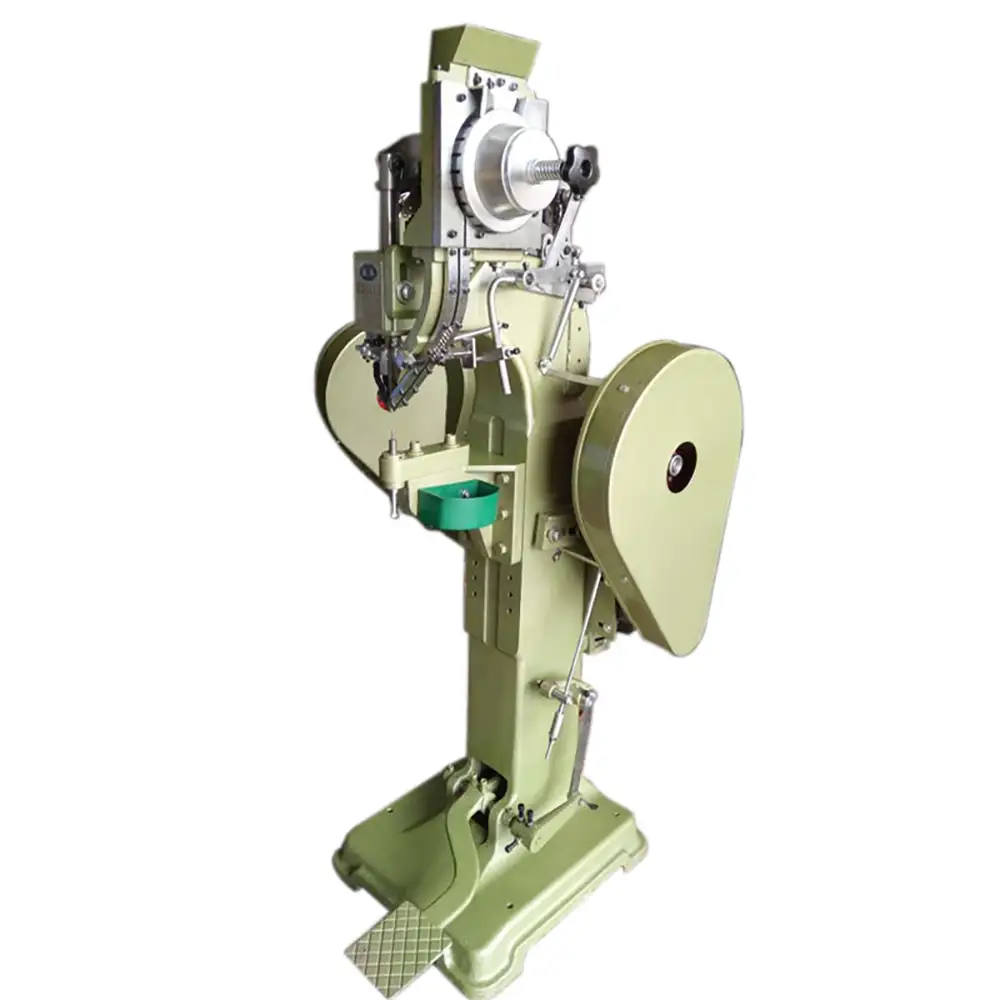
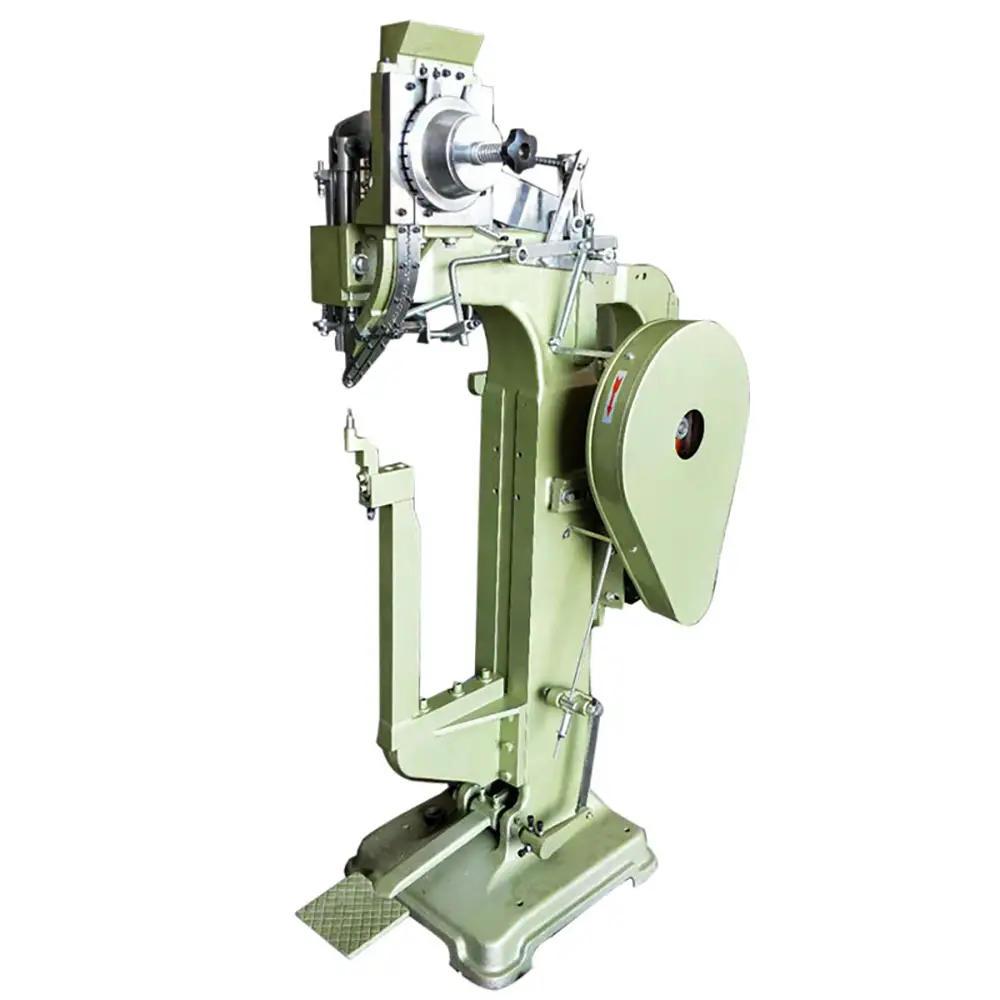
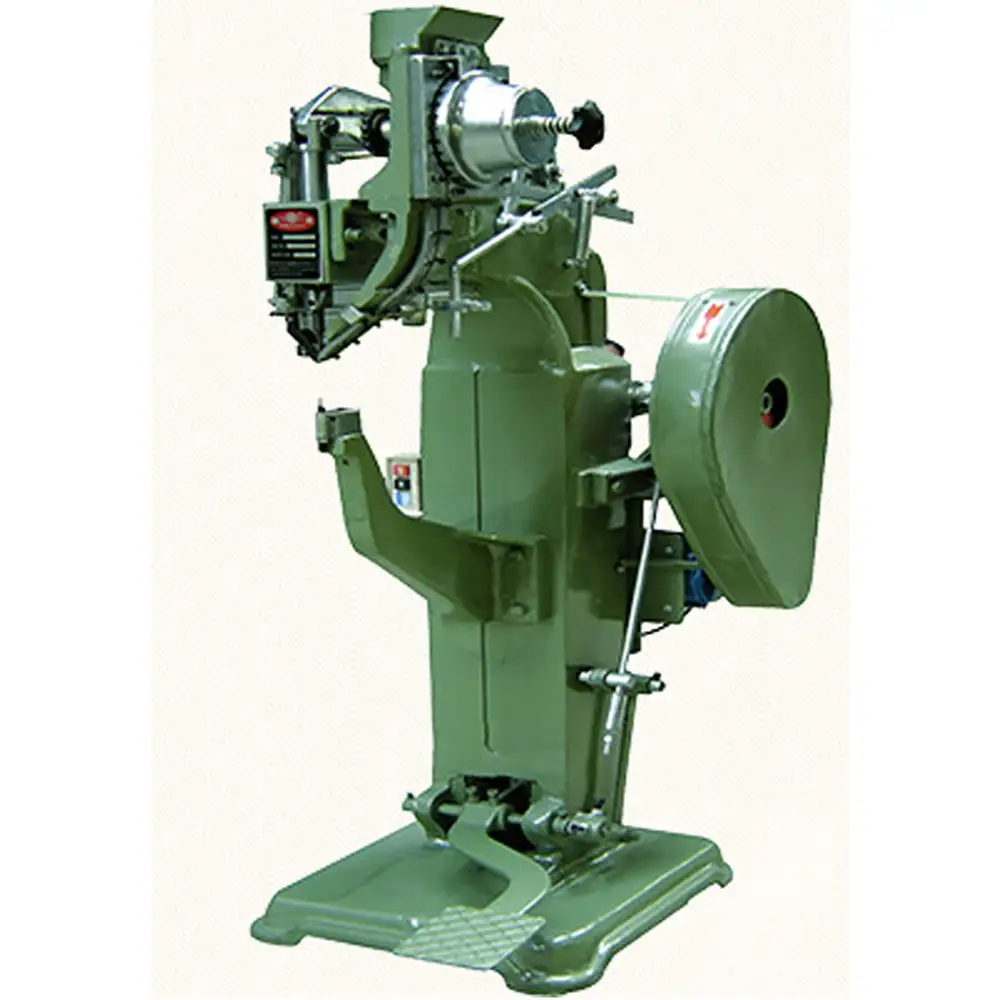
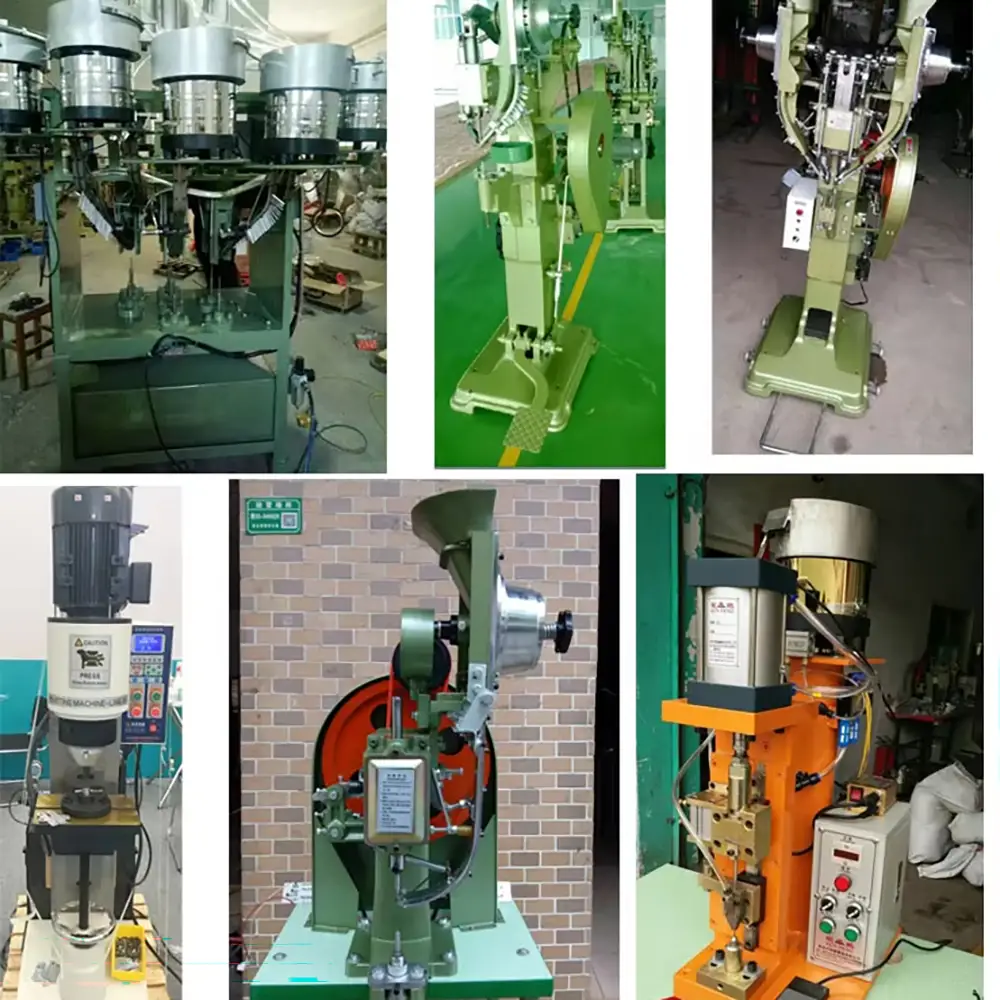
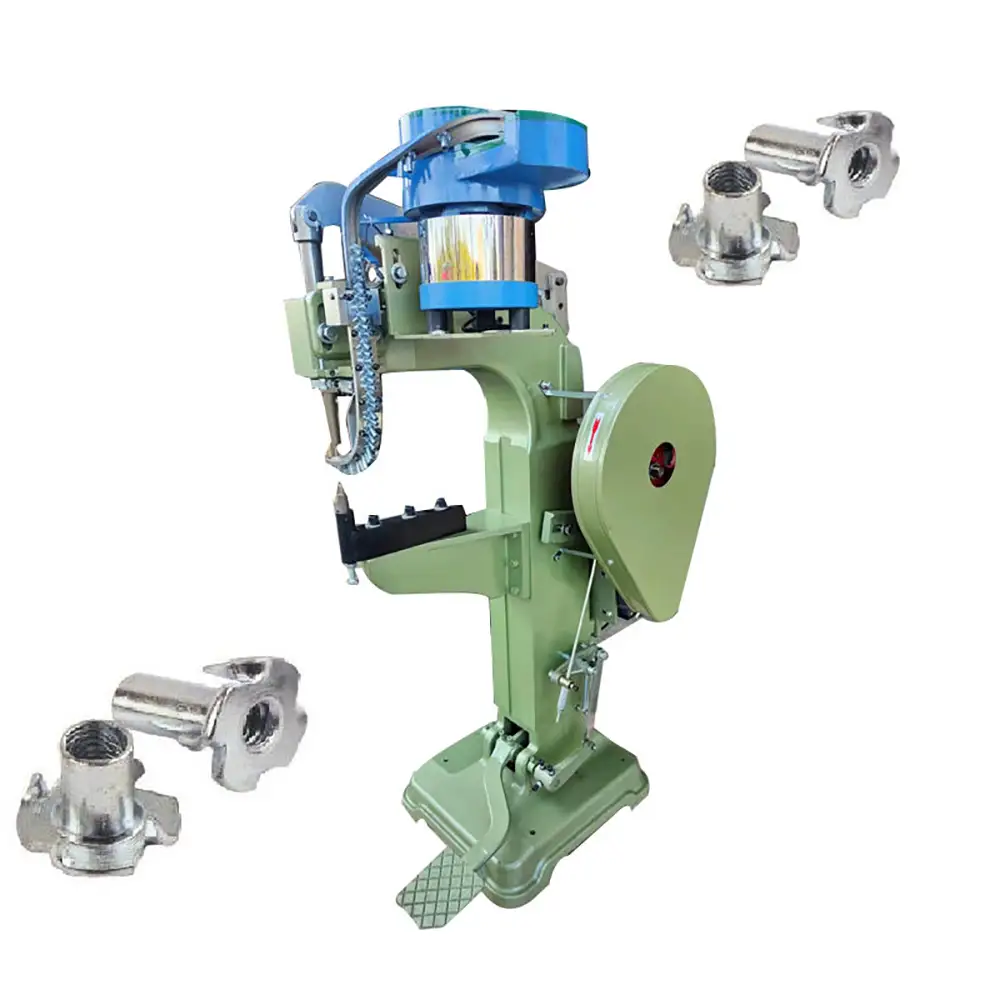
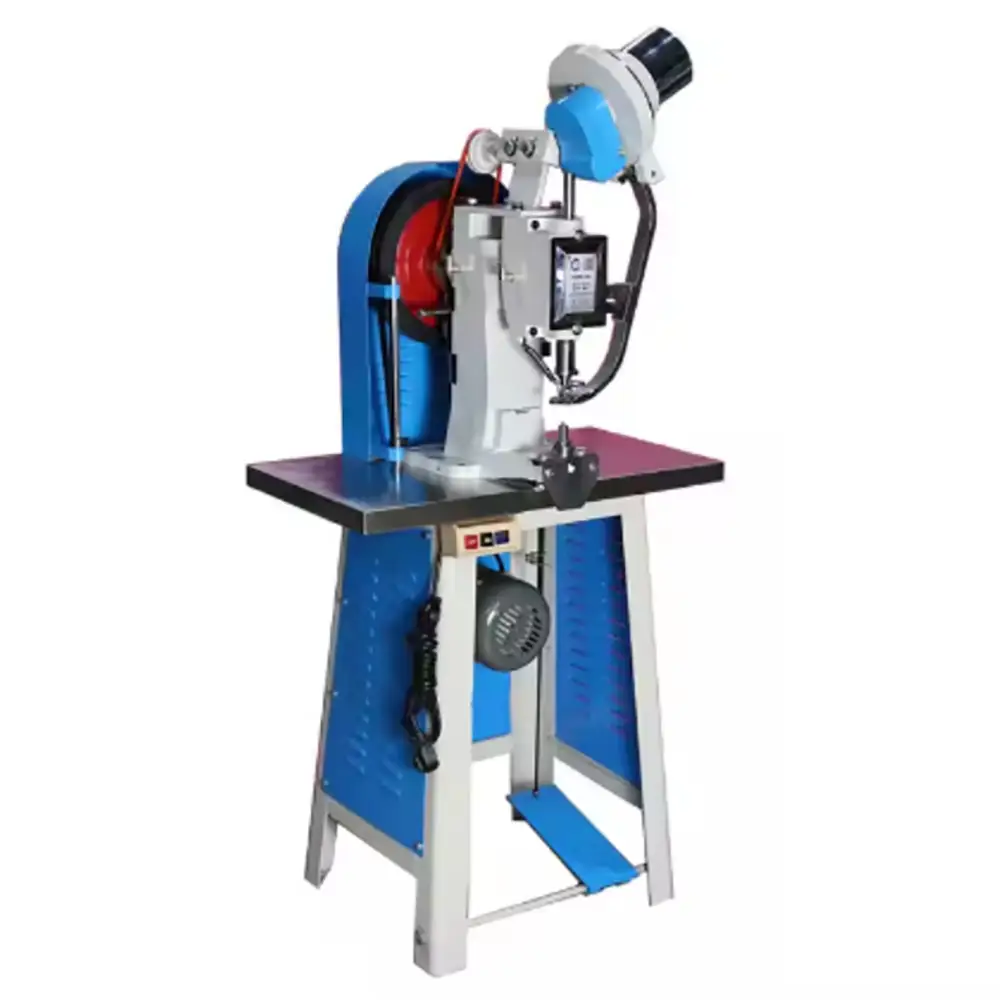
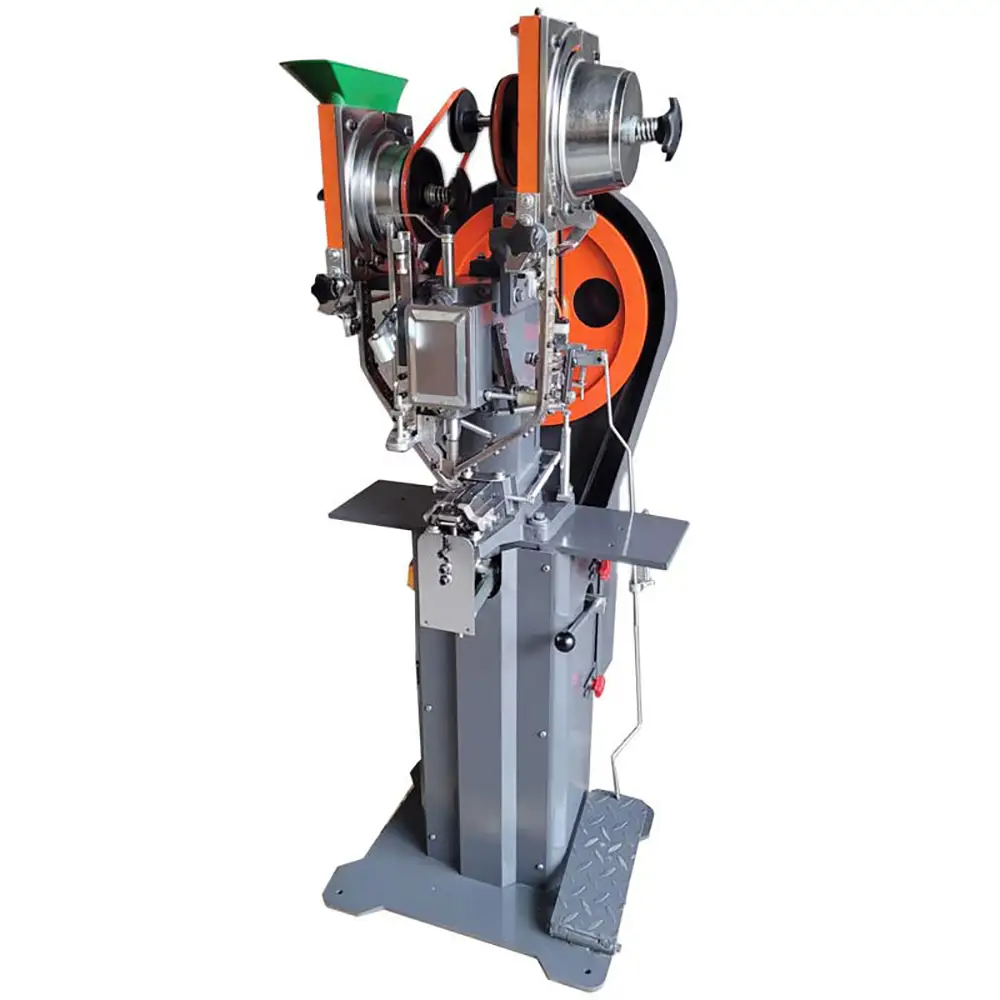
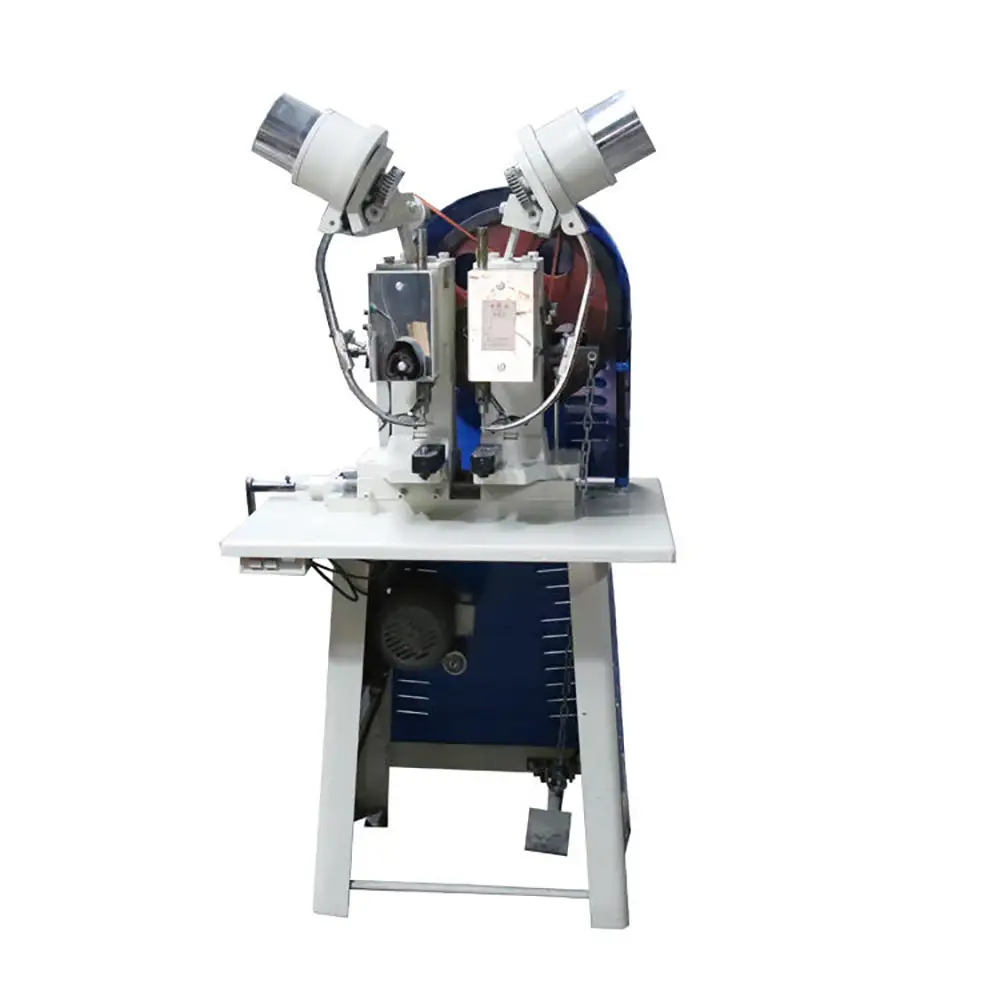
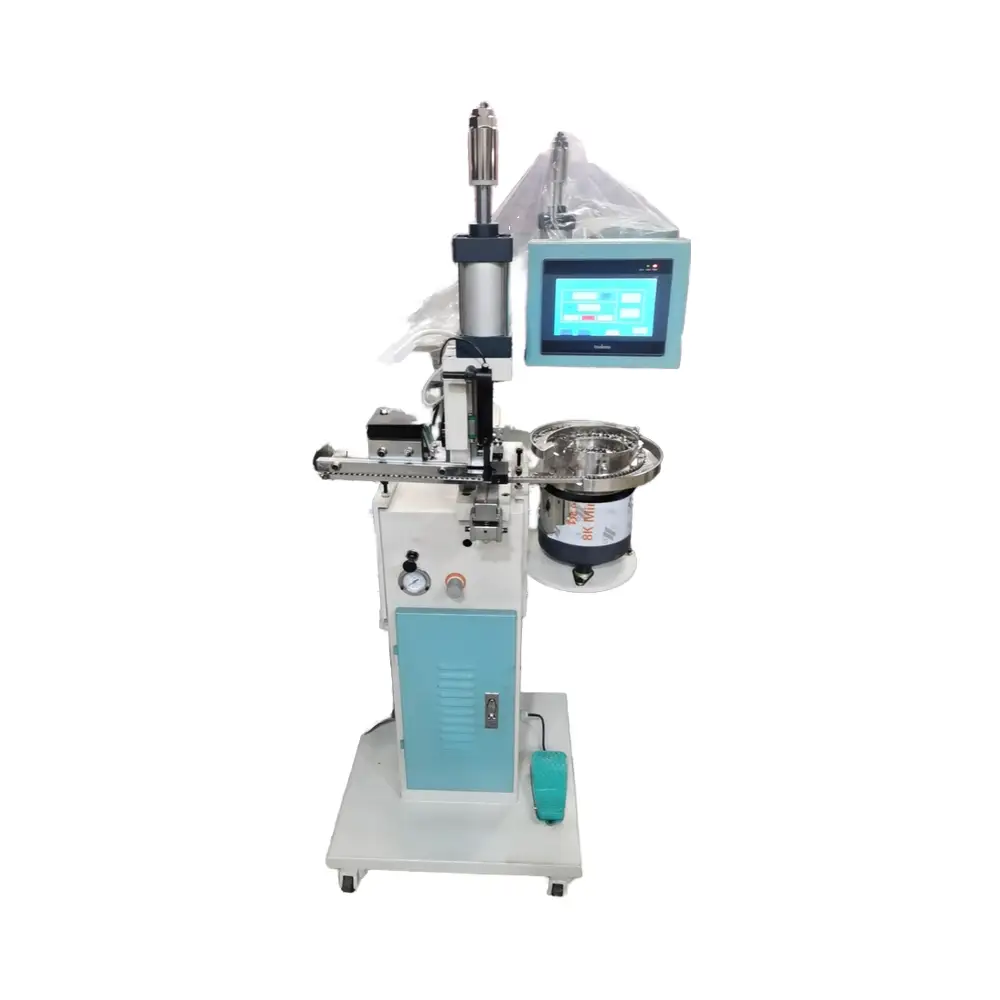
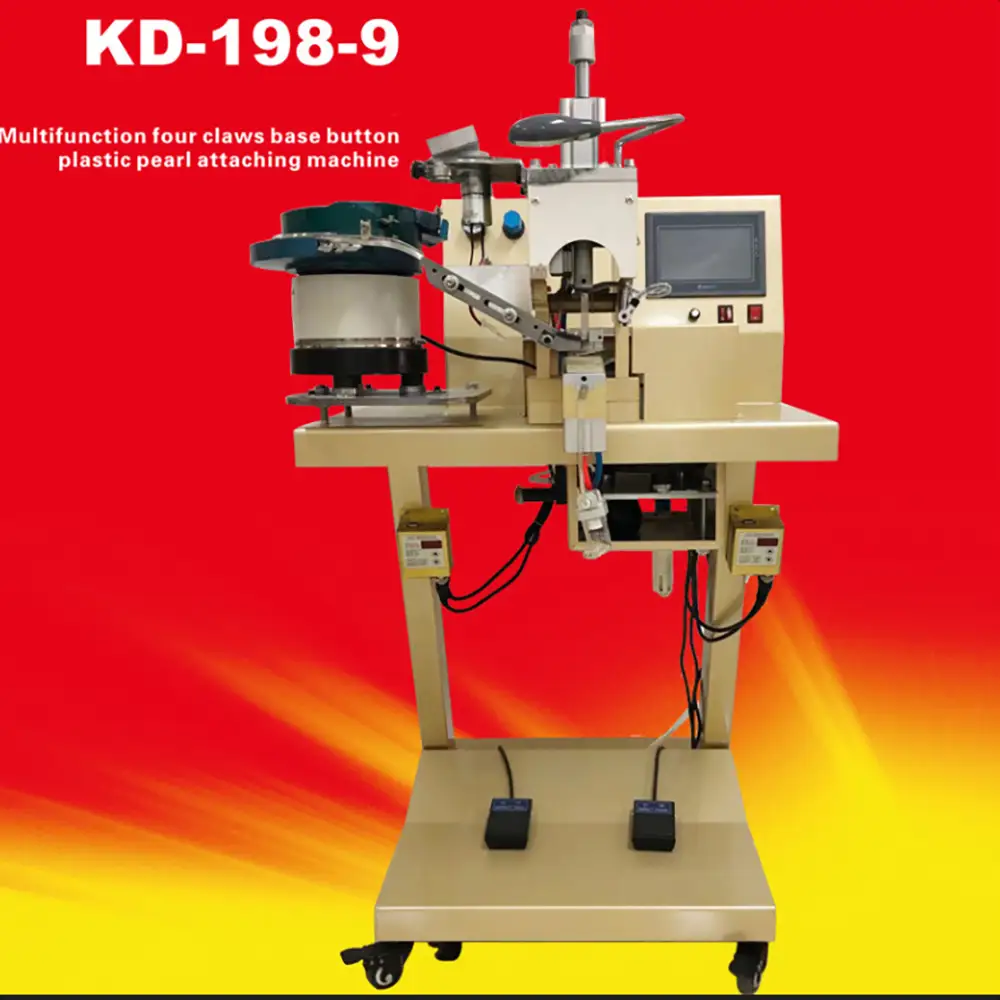
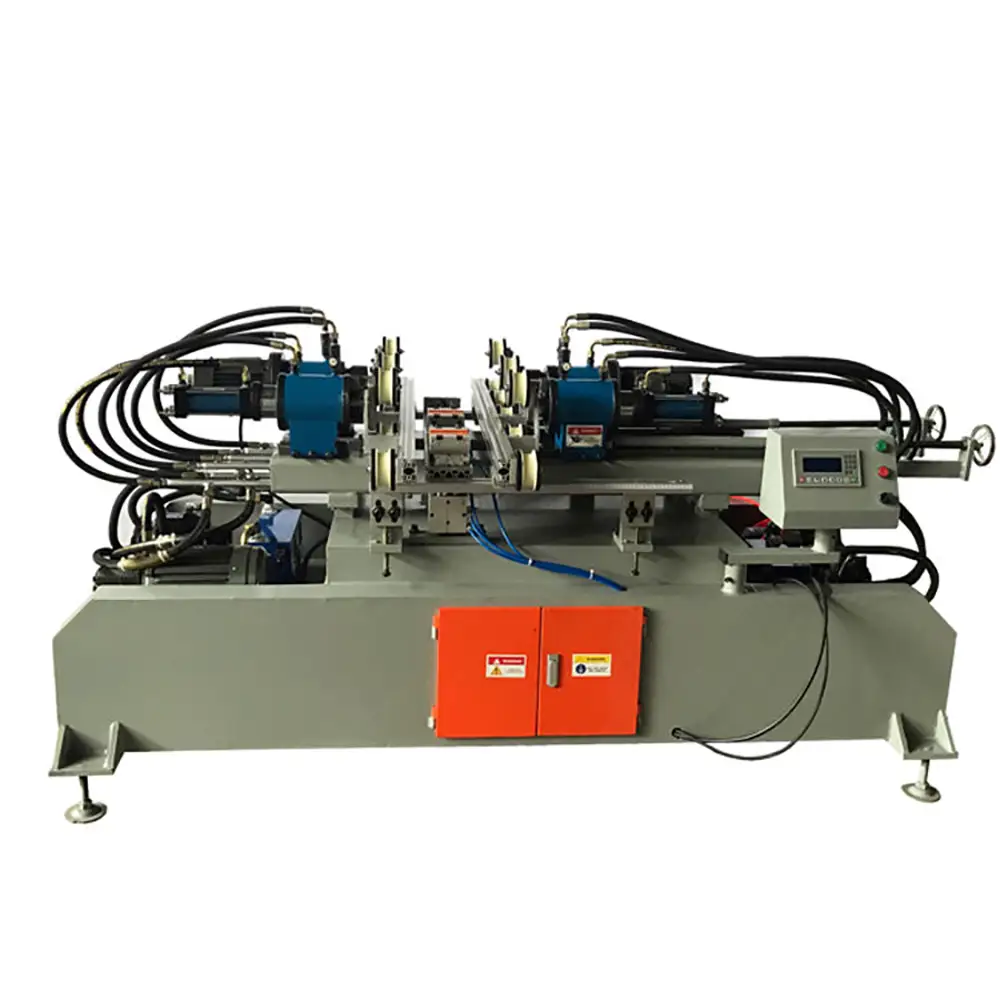
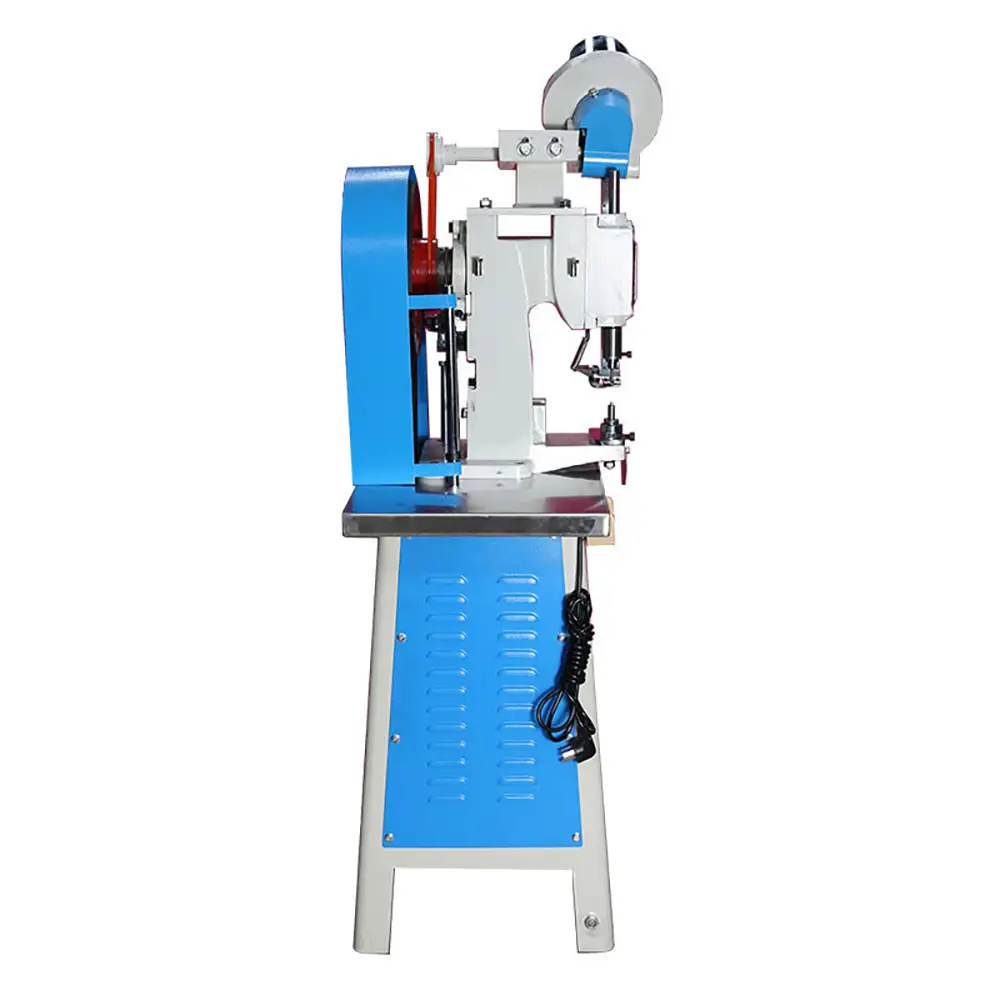
Function of riveting machine for cosmetic cases
1 Fit for riveting the spherical head, half-hollow rivets
2 With automatic feeding device, which can rivet continuously
3 The clamp and punch of high-performance is of a high riveting capability
4 Can rivet clinch of various specifications if the die is changed
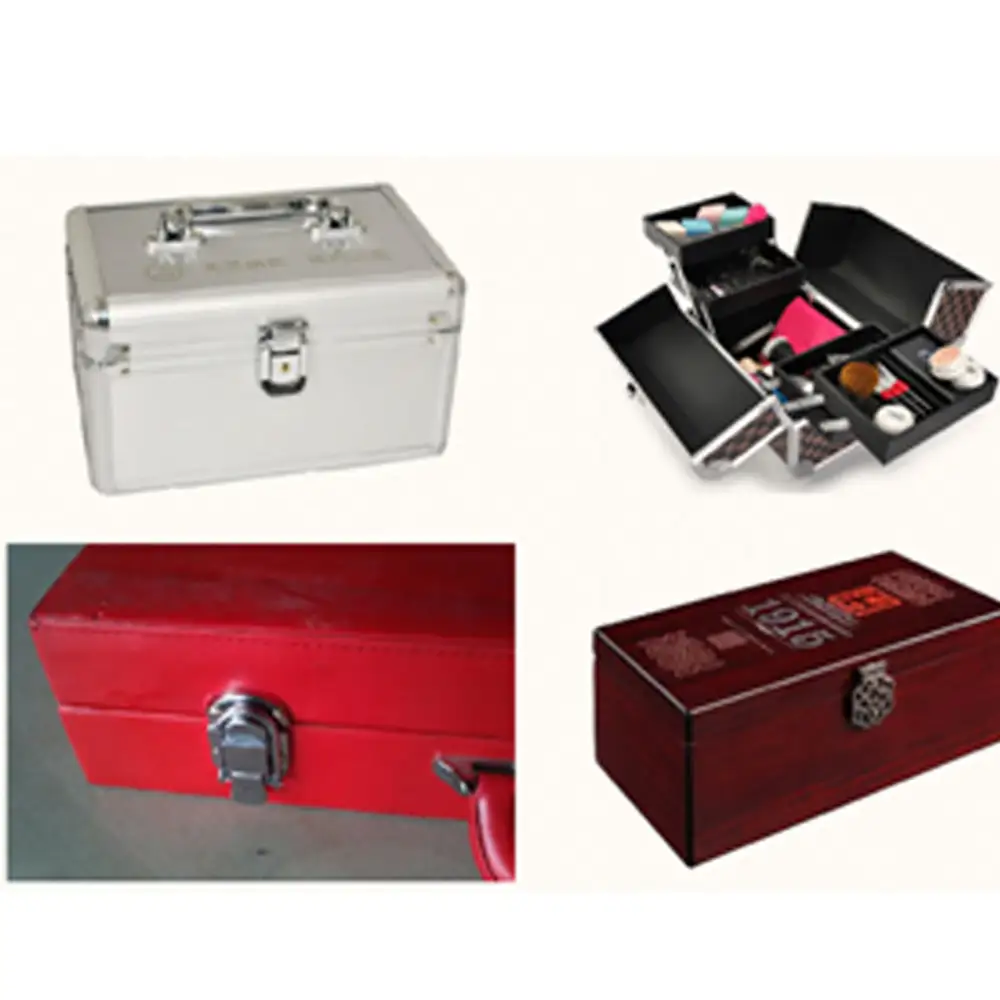
Application: This riveting machine is mainly used in the production of cosmetic cases and aluminum boxes. various planes, tube shapes and curved surfaces are available
Use: Suitable for hollow nails and semi-hollow nails. aluminum case, a cosmetic case, or a jewelry box. Belt joints, leather straps, etc. can be used
|
Model |
HSR-J10E(curved surfaces) |
|
Rivet nail top diameter |
Φ6-13mm |
|
Rivet nail diameter |
Φ3-4.5mm |
|
Rivet nail length |
3-20mm |
|
Throat depth |
370mm |
|
Power |
1/2, HP |
|
Machine dimensions(L×W×H) |
900×600×1650mm3 |
|
Net weight |
250kg |
|
Gross weight |
270kg |
|
Packing |
Wooden cases |
Usage: Suitable for brake block clutch , ladder and so on
Automatic feeding with above and below, once for all
Riveting Machine for Ladder, Luggage Wheel and Bracket
The Riveting Machine for Ladder, Wheel of Luggage and Bracket is a versatile industrial fastening solution designed for manufacturers that need reliable riveting of ladders, luggage wheel assemblies, metal brackets, and other hardware components. The machine is suitable for repetitive production operations where consistent rivet installation, accurate positioning, and dependable fastening quality are important.
Riveting is widely used in products that require permanent mechanical fastening without welding or threaded connections. Ladders, luggage, brackets, hardware accessories, and metal assemblies often contain multiple riveted joints. Using dedicated riveting equipment can help manufacturers improve production consistency while reducing the repetitive manual work associated with traditional hand riveting.
The machine can be configured with suitable riveting heads, dies, fixtures, and positioning systems according to different products and rivet specifications. This makes it suitable for both standard manufacturing applications and customized OEM production.
Ladder Riveting Machine
Aluminum and metal ladders commonly use rivets to connect steps, supports, hinges, brackets, and structural components. The riveting process must provide sufficient fastening force while maintaining accurate component positioning.
The machine can be configured for suitable ladder riveting applications, including:
Aluminum ladders
Folding ladders
Extension ladders
Step ladders
Industrial ladders
Household ladders
Ladder brackets
Ladder hinges
Ladder support components
A dedicated fixture can hold ladder components in the correct position during riveting. This can help maintain consistent rivet spacing and alignment throughout production.
For ladder applications, machine selection should consider the ladder material, rivet material, rivet diameter, component thickness, joint structure, and required fastening force.
Luggage Wheel Riveting Machine
Luggage wheels and wheel brackets require secure fastening because the components are exposed to repeated movement and mechanical loads during transportation.
The riveting machine can be used for suitable luggage wheel assemblies, wheel brackets, support plates, and related hardware components.
Potential applications include:
Suitcase wheels
Luggage wheel brackets
Spinner wheel assemblies
Travel luggage hardware
Wheel support brackets
Luggage frame components
Trolley case hardware
Bag hardware
A customized positioning fixture can help hold the luggage wheel or bracket assembly securely while the rivet is installed.
For different luggage designs, the riveting head and tooling can be customized according to the available installation space and rivet position.
Bracket Riveting Machine
Metal brackets are widely used in furniture, hardware, industrial equipment, luggage, ladders, automotive-related components, and general mechanical assemblies.
The machine can be configured for riveting different bracket shapes and sizes. Suitable fixtures can support flat brackets, L-shaped brackets, U-shaped components, mounting brackets, and other specialized hardware.
Bracket riveting applications may include:
Metal mounting brackets
L-shaped brackets
U-shaped brackets
Furniture brackets
Equipment brackets
Luggage brackets
Ladder brackets
Support brackets
Industrial hardware brackets
Sheet metal assemblies
The appropriate tooling depends on the bracket geometry and the location of the riveting point.
How the Riveting Machine Works
A typical riveting operation starts by positioning the components in a fixture. A compatible rivet is then inserted through the prepared holes.
The riveting head applies controlled mechanical force to form the rivet and secure the components together.
A typical process includes:
Prepare the ladder, luggage, bracket, or hardware component.
Position the workpiece in the fixture.
Insert the compatible rivet.
Align the riveting head with the rivet.
Start the riveting cycle.
Apply controlled riveting force.
Form the rivet head.
Remove the finished assembly.
Inspect the riveting quality.
The exact process varies depending on the machine configuration, rivet type, workpiece material, and tooling.
Accurate Rivet Positioning
Accurate positioning is particularly important for ladder and luggage applications because many components require rivets to be installed at predetermined locations.
A dedicated fixture can help prevent movement during the riveting cycle and maintain repeatable positioning.
For example, a luggage wheel bracket may require a specific rivet location to ensure proper wheel alignment. Similarly, ladder components may require accurate spacing between riveted joints.
Proper tooling can therefore improve:
Rivet alignment
Rivet spacing
Assembly consistency
Product appearance
Fastening repeatability
Production efficiency
Suitable for Aluminum and Metal Components
Many ladder and luggage products use aluminum, steel, stainless steel, or other metal components. The machine can be configured according to the characteristics of the material and rivet.
Aluminum ladder components may require different riveting parameters from steel brackets. Similarly, thin luggage hardware may require different tooling from heavy-duty industrial brackets.
The machine configuration should therefore be selected based on:
Rivet material
Rivet diameter
Rivet length
Material thickness
Material hardness
Product structure
Required fastening force
Desired rivet head shape
Sample testing is recommended for new products and special materials.
Production Efficiency
Using a dedicated riveting machine can help manufacturers standardize repetitive fastening operations. Instead of manually installing every rivet with handheld tools, operators can use a fixed machine and dedicated fixture.
This can reduce repetitive manual force and help establish a more consistent production workflow.
For suitable high-volume products, the machine can potentially be integrated with automatic or semi-automatic rivet feeding systems.
Production efficiency depends on the product design, riveting cycle, loading method, tooling, operator workflow, and level of automation.
Riveting for Luggage Manufacturing
Luggage production often involves many different hardware components, including wheels, brackets, handles, frames, hinges, and support components.
A riveting machine can be used at different stages of luggage assembly where compatible permanent fastening is required.
Applications may include:
Wheel mounting
Wheel bracket assembly
Handle components
Frame connections
Metal reinforcement
Bracket installation
Luggage hardware assembly
Customized fixtures can be developed for different luggage sizes and structures.
Riveting for Ladder Manufacturing
Ladder manufacturing requires reliable connections between steps, rails, brackets, hinges, and support structures.
The riveting machine can support repetitive ladder assembly operations when the selected rivets and materials are compatible with the machine configuration.
For production environments, fixtures can be designed to accommodate different ladder models or specific components.
This can help improve repeatability while reducing operator positioning time.
Custom Tooling and Fixtures
Different products require different workholding methods. A standard riveting head may not be sufficient for every ladder, luggage wheel, or bracket application.
Customized tooling can include:
Upper riveting dies
Lower riveting dies
Product fixtures
Positioning guides
Bracket supports
Wheel assembly fixtures
Ladder component fixtures
Special-shaped tooling
The tooling can be designed around product dimensions and the required riveting position.
Quality Control
Reliable riveting requires proper alignment, suitable riveting force, and correctly selected tooling.
Manufacturers should inspect finished products for:
Rivet head formation
Rivet alignment
Fastening strength
Component movement
Material deformation
Surface damage
Rivet spacing
Overall assembly quality
For OEM projects, sample testing with the actual ladder, luggage wheel, bracket, and rivet combination can help determine the appropriate machine configuration.
OEM and Customized Riveting Solutions
Different factories may have different production requirements. We can support customized riveting solutions based on product samples, technical drawings, rivet specifications, material information, and production volume.
Possible customization options include riveting heads, dies, fixtures, feeding systems, machine configuration, and automation features.
This makes the machine suitable for manufacturers producing standard products as well as OEM components for international markets.
Why Choose Our Riveting Machine?
1. Wide Application Range
Designed for suitable ladder, luggage wheel, bracket, hardware, and metal component riveting applications.
2. Consistent Riveting
Controlled mechanical riveting helps provide repeatable fastening results.
3. Customized Fixtures
Dedicated fixtures can be developed for ladders, luggage wheel assemblies, brackets, and specialized components.
4. Flexible Tooling
Different riveting dies and heads can be configured for different rivet sizes and product structures.
5. Improved Production Efficiency
The machine reduces repetitive manual riveting work and supports standardized production.
6. Suitable for Metal Components
It can be configured for compatible aluminum, steel, and other metal hardware applications.
7. B2B Manufacturing Solution
Suitable for factories, workshops, luggage manufacturers, ladder producers, hardware companies, and OEM suppliers.
8. OEM Customization
Machine configuration, tooling, fixtures, and automation options can be evaluated according to customer requirements.
FAQ
1. What products can this riveting machine be used for?
It can be configured for suitable ladders, luggage wheels, brackets, metal hardware, and other industrial components requiring riveted connections.
2. Can it be used for aluminum ladders?
Yes. With suitable tooling and riveting parameters, the machine can be used for compatible aluminum ladder components.
3. Can it rivet luggage wheels?
Yes. It can be configured for suitable luggage wheel brackets, wheel assemblies, and related hardware components.
4. Can it be used for metal brackets?
Yes. The machine is suitable for many bracket riveting applications when the rivet and bracket specifications match the machine configuration.
5. What materials can be riveted?
Depending on the configuration, compatible aluminum, steel, stainless steel, and other metal components may be processed.
6. Can the machine handle different rivet sizes?
Yes. Different tooling can be used for different compatible rivet sizes and shapes.
7. Can the fixtures be customized?
Yes. Customized fixtures can be designed according to ladder components, luggage wheels, brackets, or other product shapes.
8. Can automatic rivet feeding be added?
Depending on the rivet type and machine design, automatic or semi-automatic feeding systems may be available.
9. Is the machine suitable for mass production?
Yes. It is designed for repetitive industrial riveting applications and can be integrated into production workflows.
10. Can one machine be used for different products?
Depending on the machine design, interchangeable tooling and fixtures can allow different products to be processed.
11. How do I choose the correct riveting machine?
Selection depends on the rivet material, diameter, length, workpiece material, component thickness, riveting position, required force, and production volume.
12. Can you provide a customized riveting solution?
Yes. Product samples, drawings, rivet specifications, and production requirements can be used to develop an appropriate machine and tooling solution.
Prev:
Long Throat Depth Riveting Machine for Golf Bags and Large Turnover Boxes
Next:
Double Heads Riveting Machine
TAG:
Ladder Assembly Machine,
Industrial Riveting Machine,
Metal Riveting Machine,
Rivet Fastening Machine,
Rivet Setting Machine,
Automatic Riveting Machine,
Aluminum Ladder Riveting Machine,
Ladder Riveting Machine,
Rivet Installation Machine,
Custom Riveting Machine,
Automatic Rivet Machine,
Luggage Riveting Machine,
Metal Fastening Machine,
Rivet Press Machine,
Hardware Riveting Machine,
Metal Bracket Riveting Machine,
Aluminum Riveting Machine,
Industrial Fastening Equipment,
Luggage Hardware Machine,
Steel Riveting Machine,
Luggage Wheel Assembly Machine,
Bracket Assembly Machine,
Bracket Riveting Machine,
Hardware Fastening Machine,
Luggage Wheel Riveting Machine,
Riveting Machine For Ladder,
Riveting Machine For Luggage Wheels,
Riveting Machine For Brackets,
Wheel Riveting Machine,
Wheel Bracket Riveting Machine,
Related Category:
Riveting Machine for Ladder,Riveting Machine for Luggage Wheels,Riveting Machine for Brackets China, suppliers, manufacturers, factory, customized, wholesale, quotation, made in China