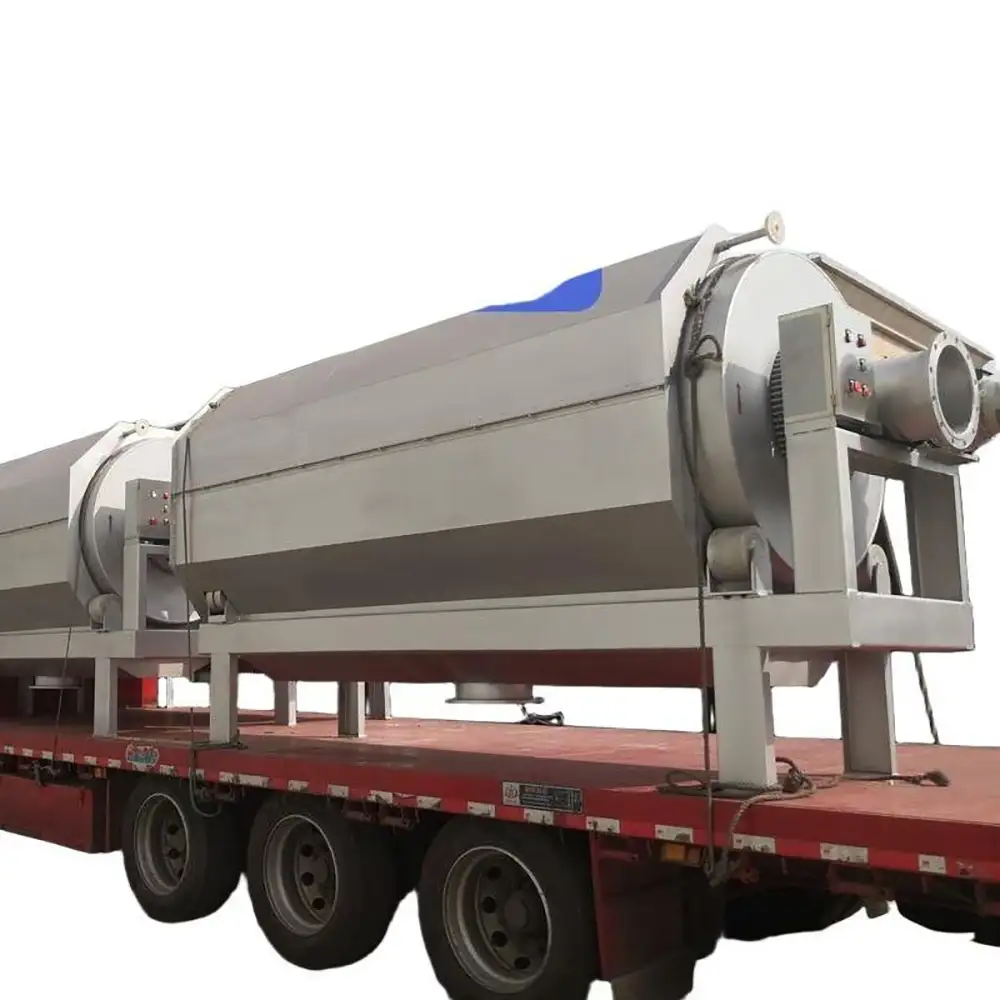
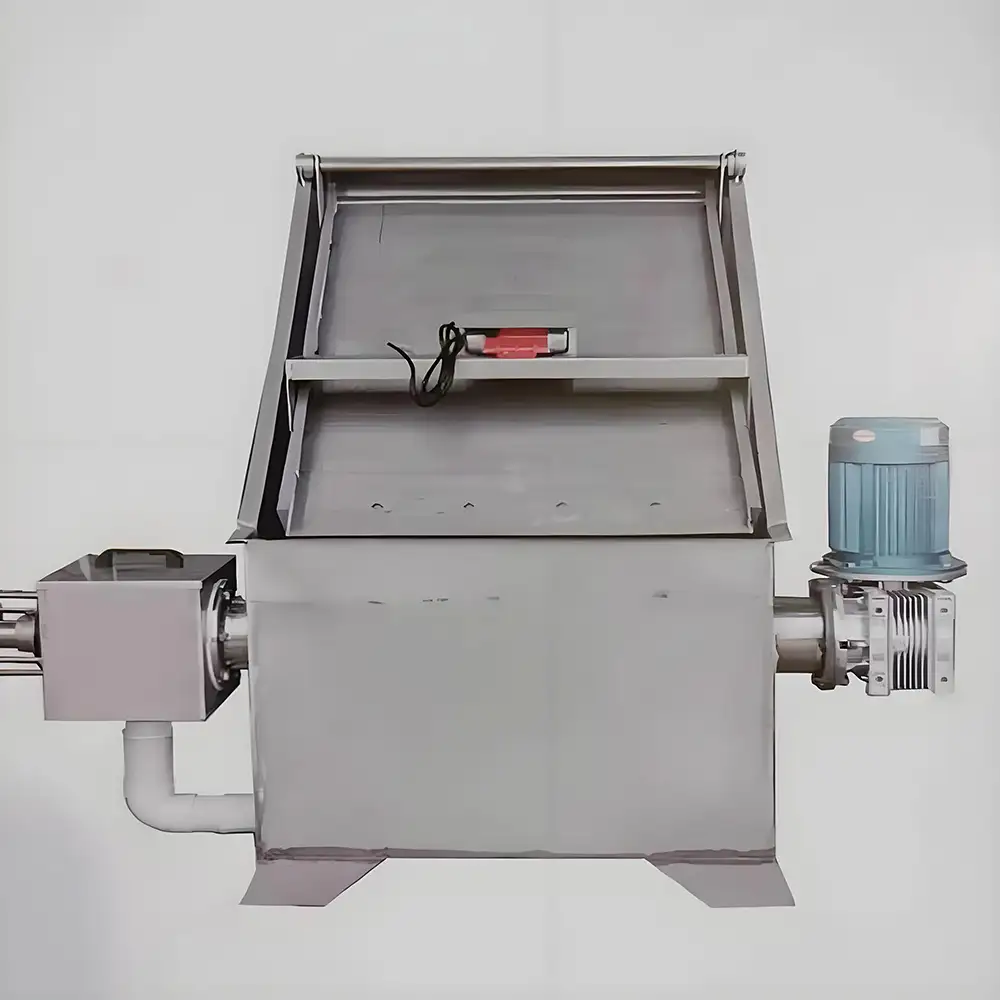
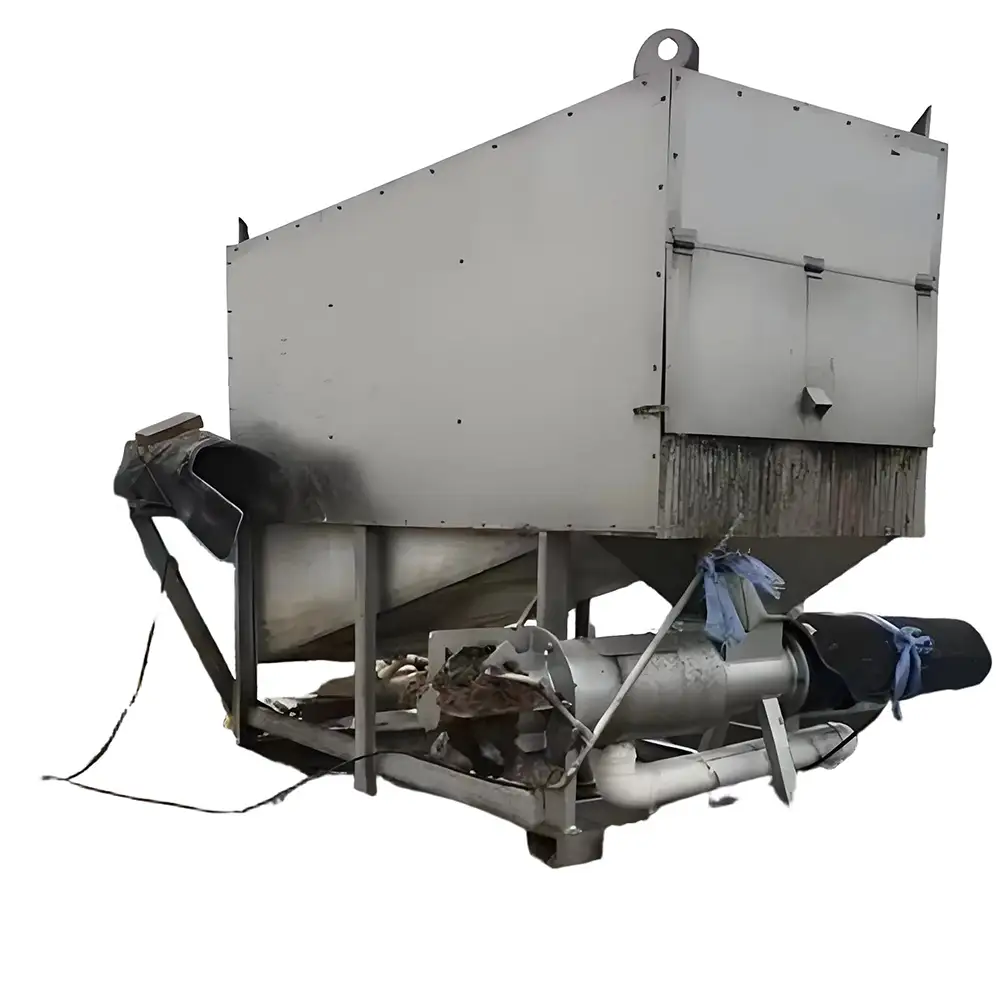
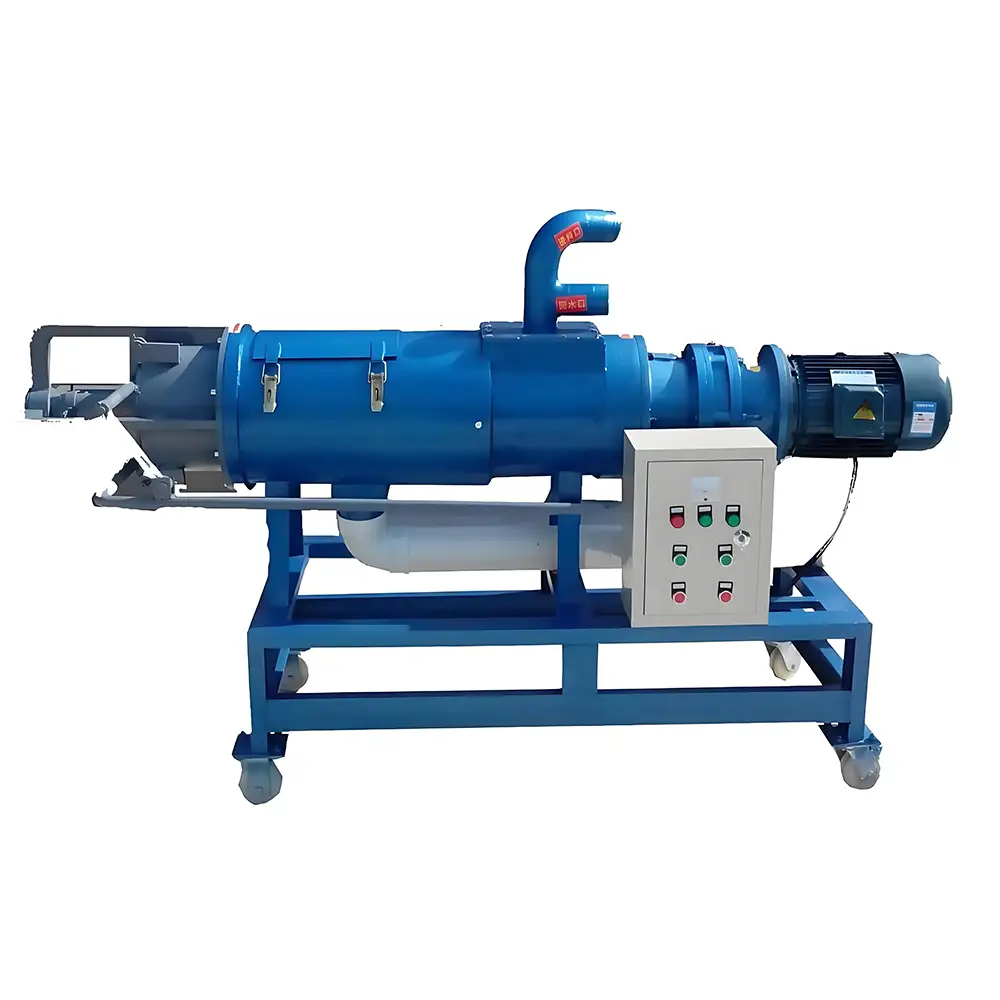
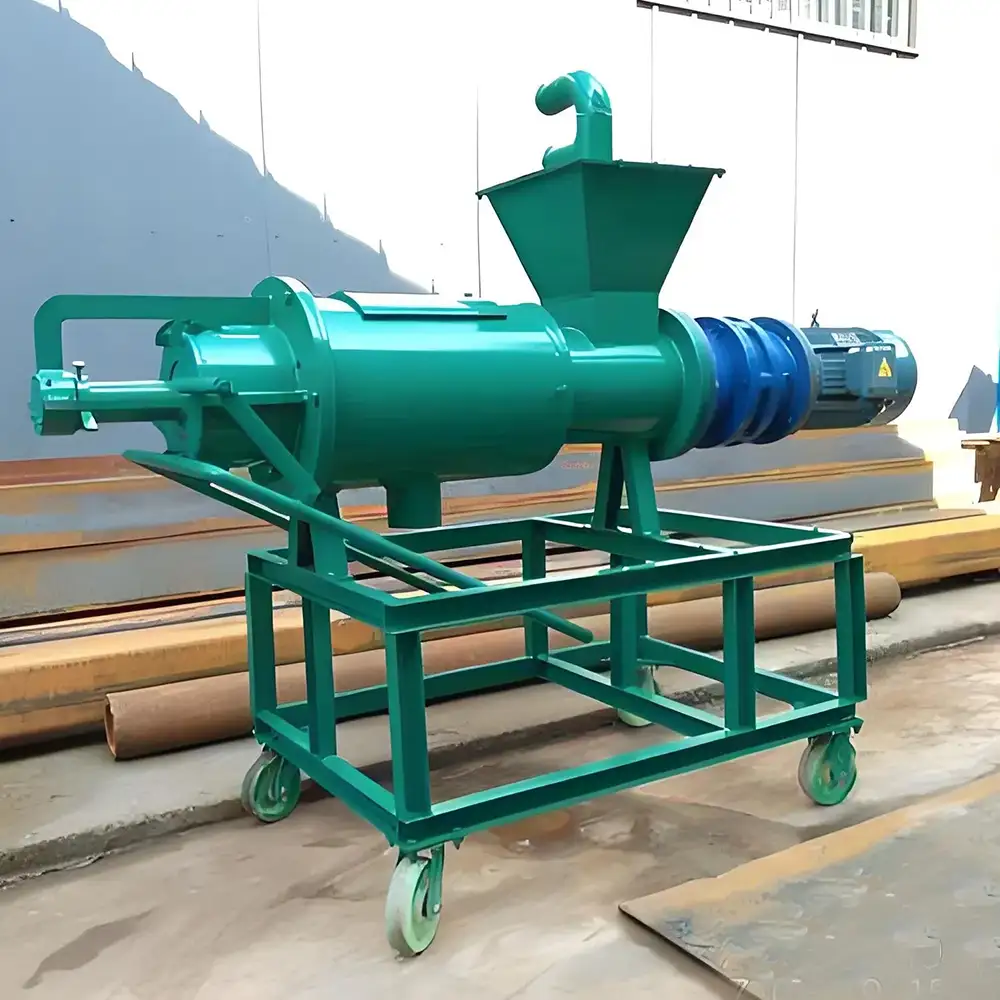
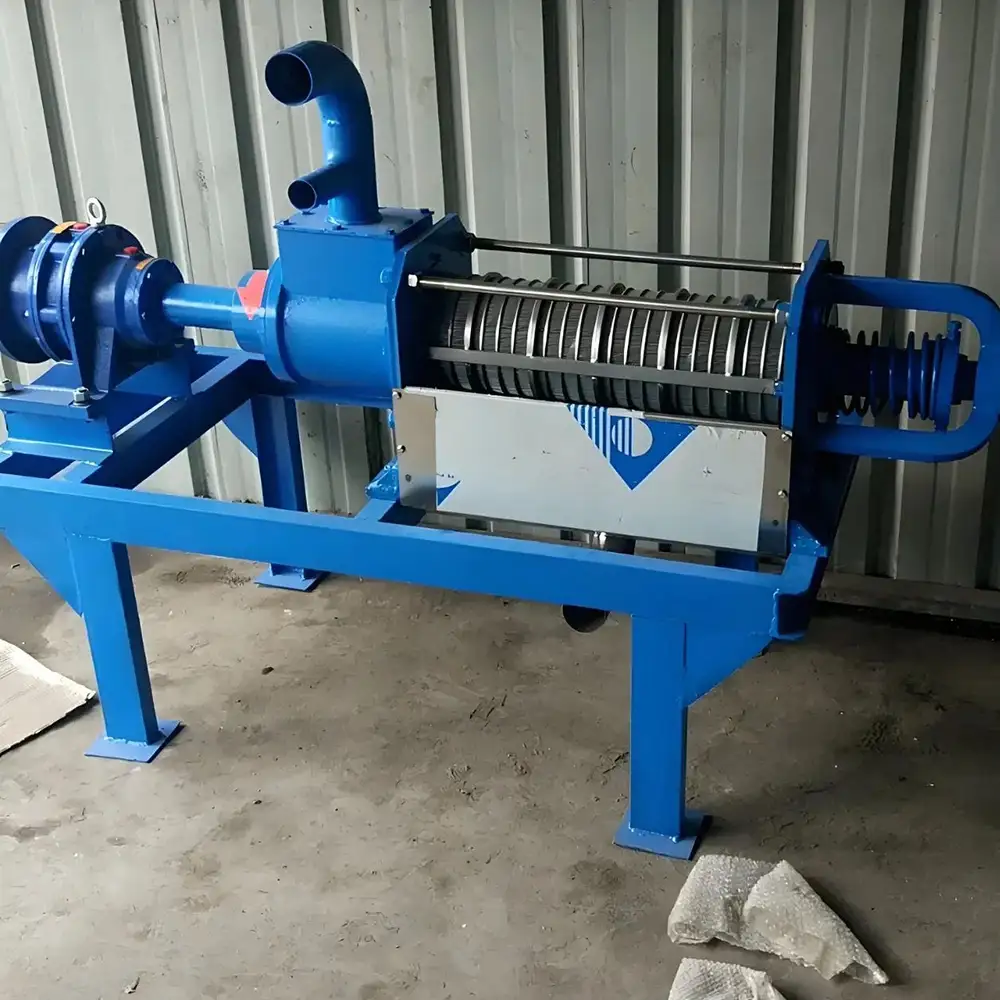
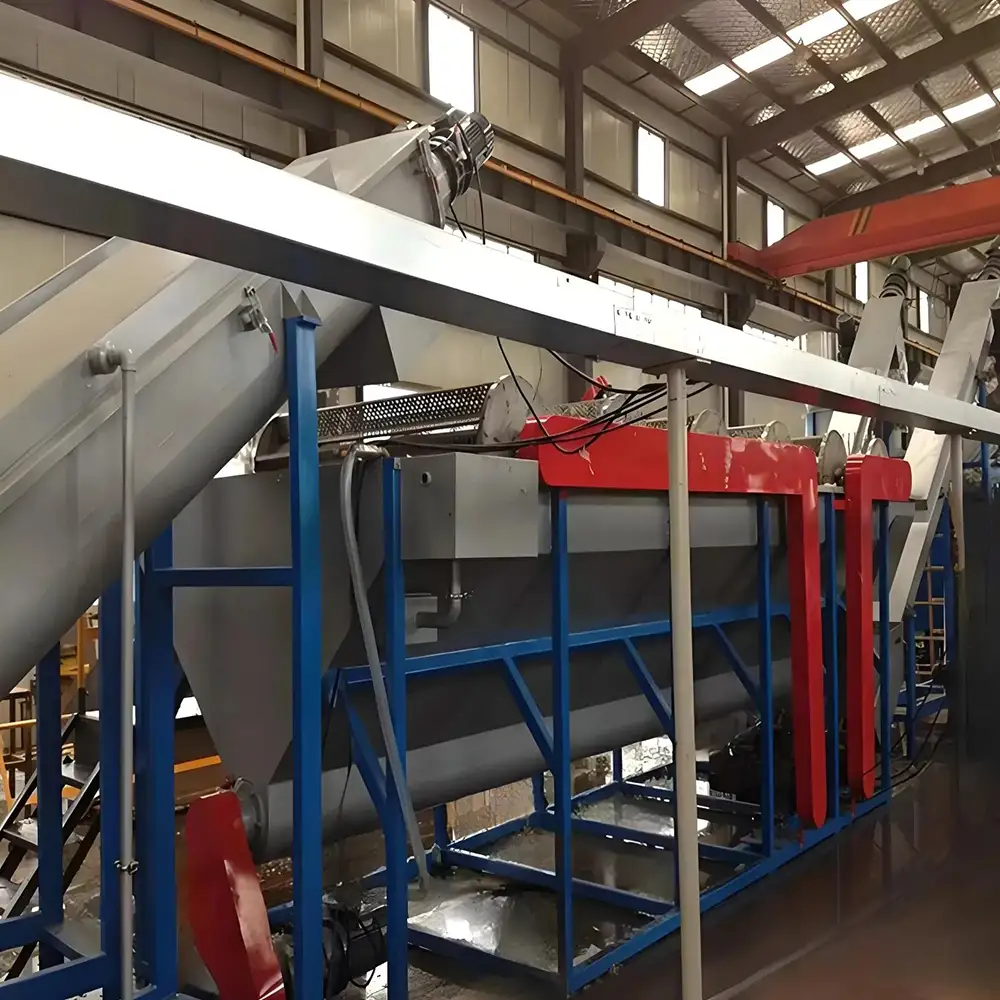
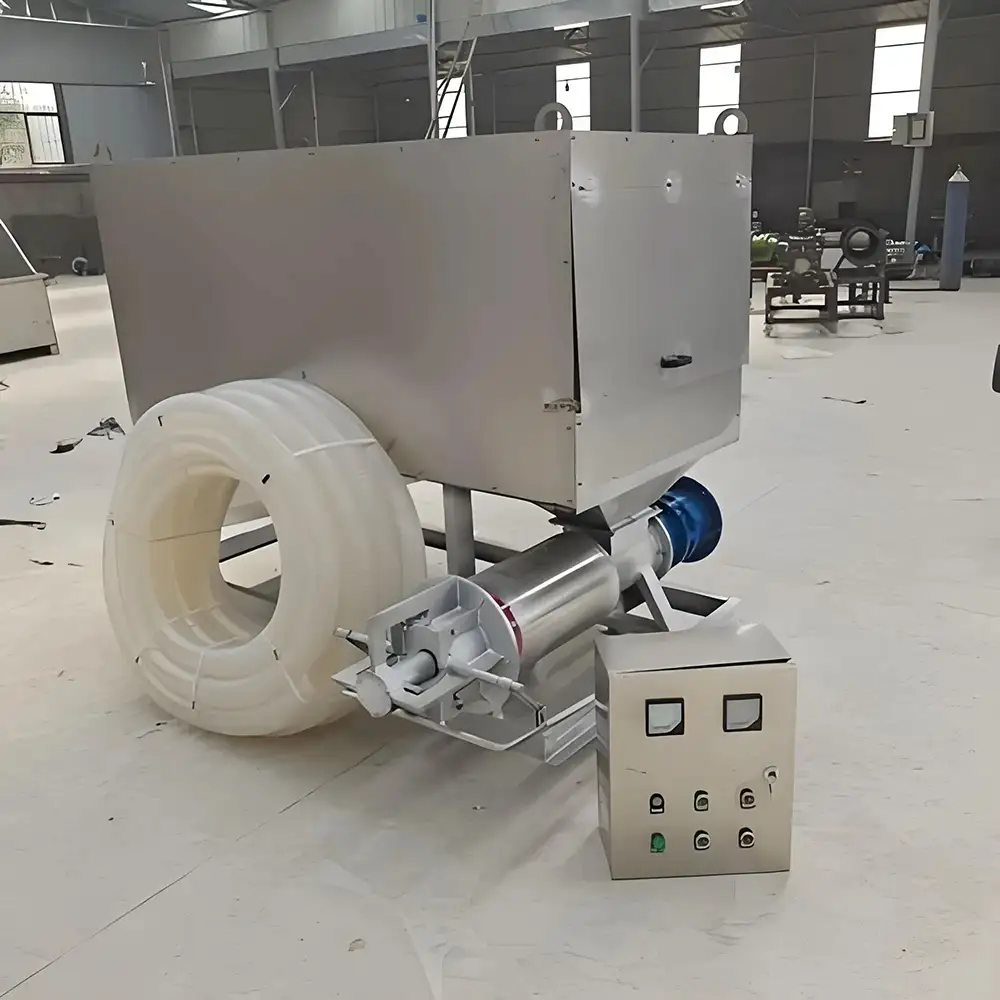
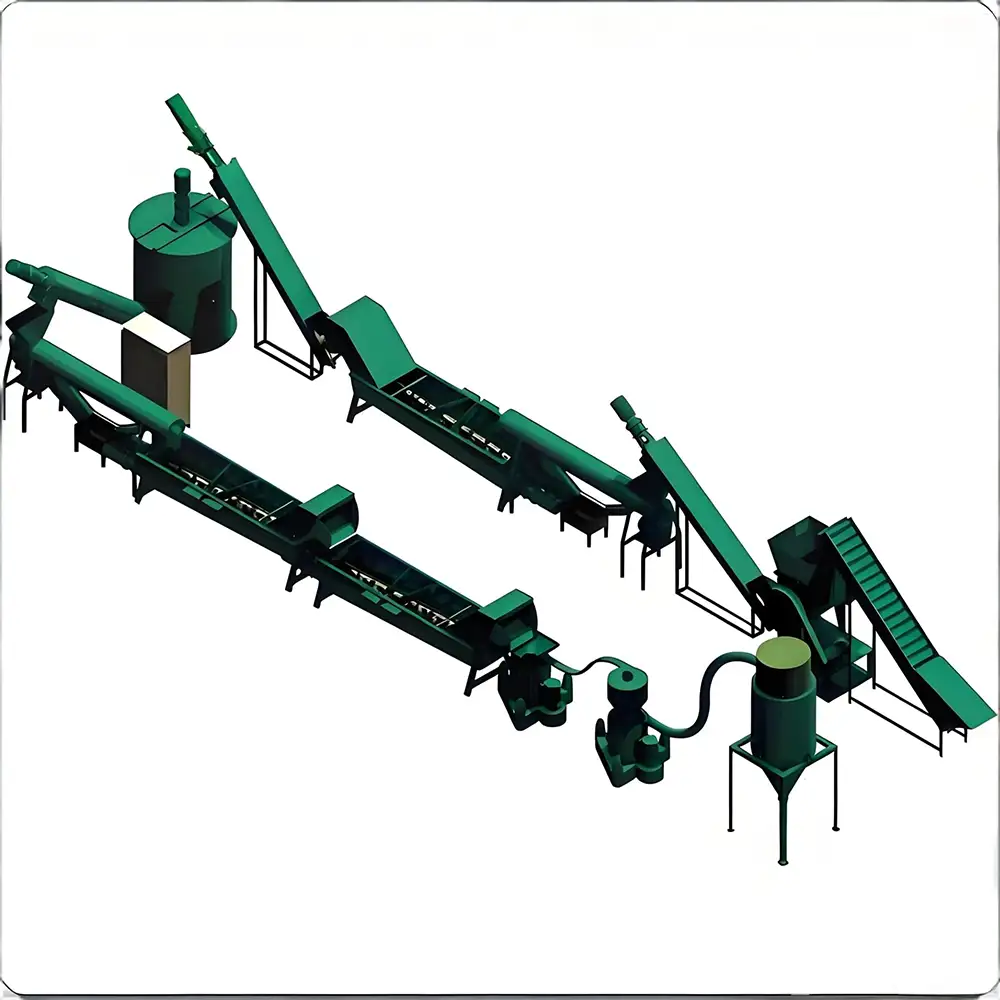
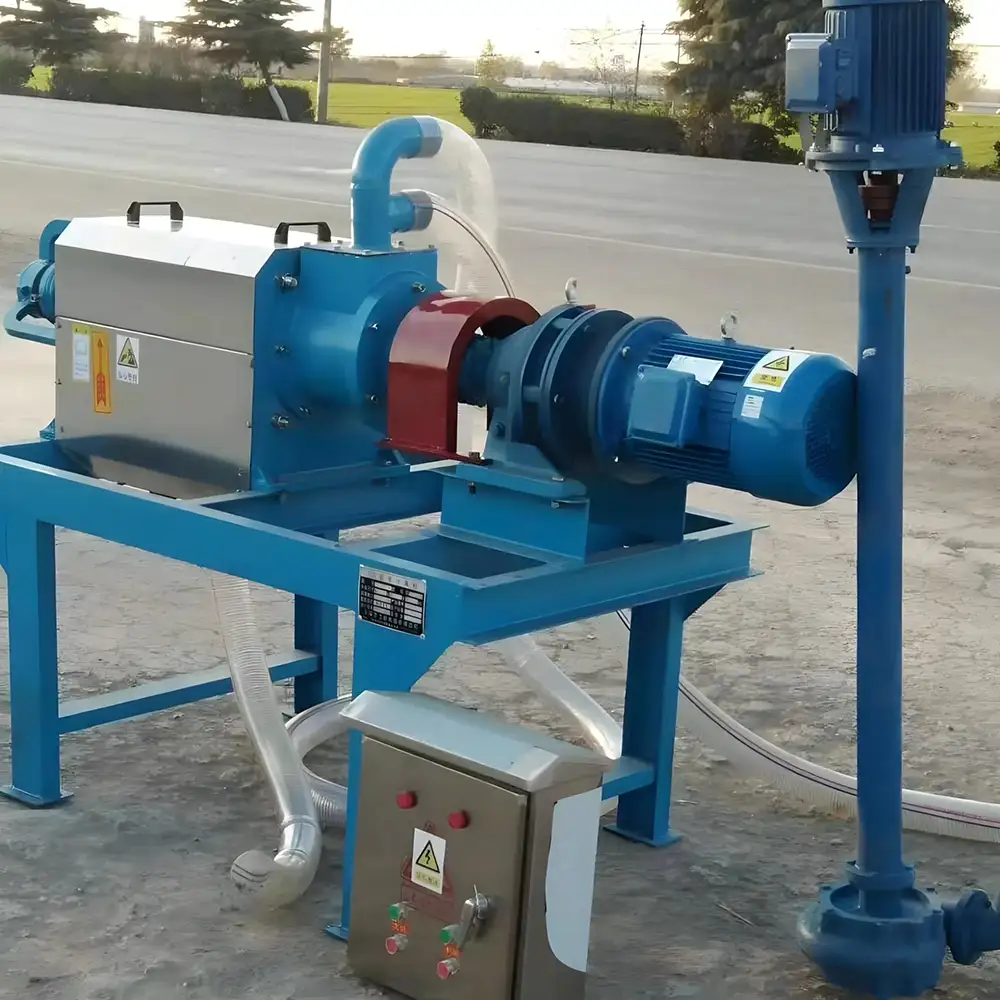
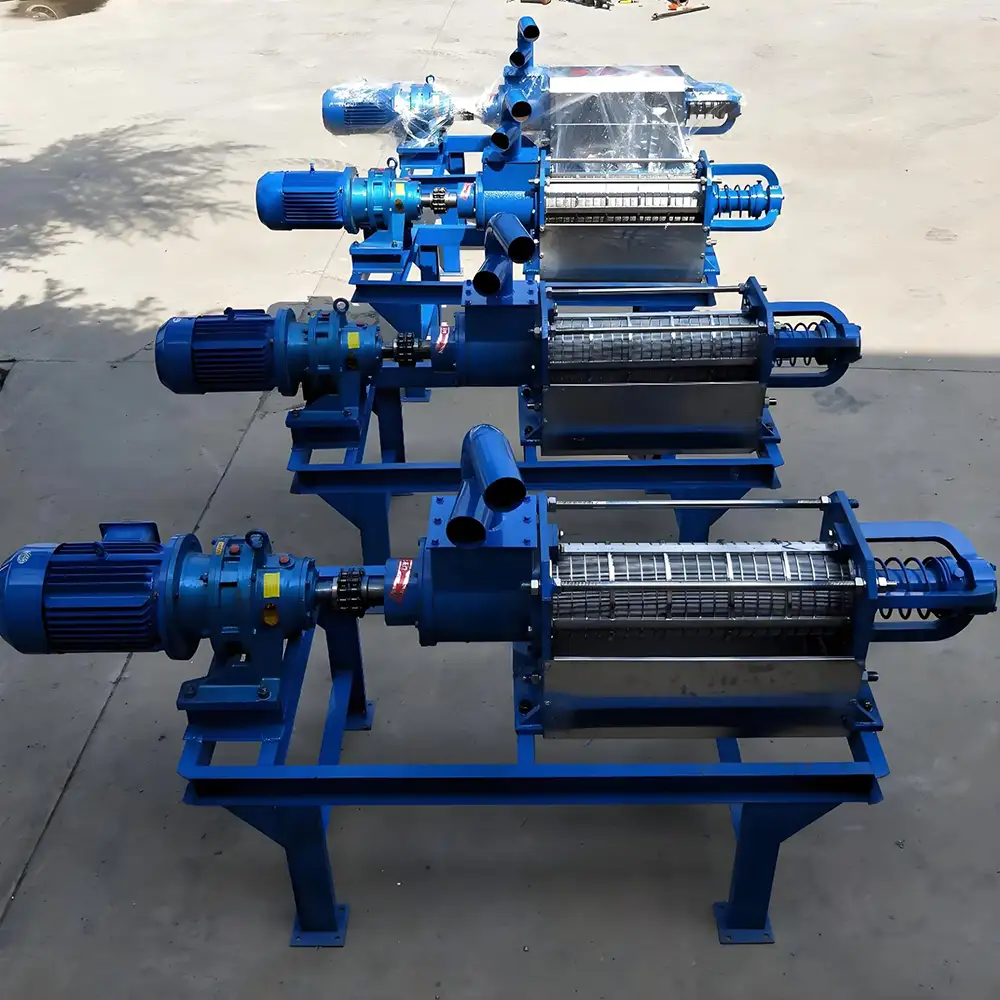
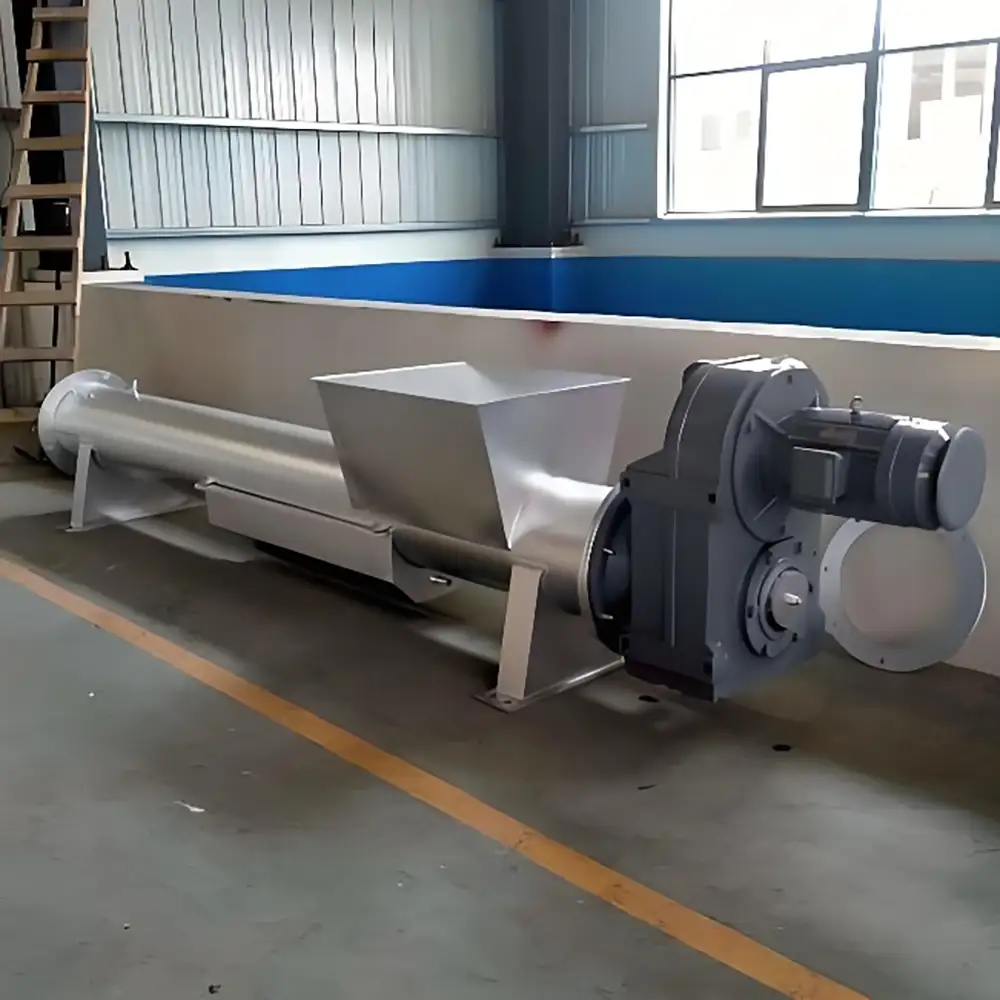
The inclined screen dry and wet separator has a high degree of automation, simple operation, convenient maintenance, large daily processing capacity, and low power consumption. The inclined screen dry and wet separator is suitable for continuous operation. The equipment weighs about half a ton and has a small appearance, which can greatly improve the processing efficiency of the inclined screen dry wet separator. This equipment mainly consists of the equipment host, non clogging cutting pump, water pipe, distribution water tank, etc. Dry wet separated pig manure is almost odorless and has low viscosity, making it suitable for direct use as fertilizer or feed.
For feed, dry feces separated by dehydration will be mixed with grasshoppers and thoroughly stirred. Fermentation and granulation can be used to make compound Manure and pellet feed. It is a good fish feed suitable for flowers/special economy. Fertilization of crops can change the organic matter of soil, and the sale of Manure can provide additional economic benefits.
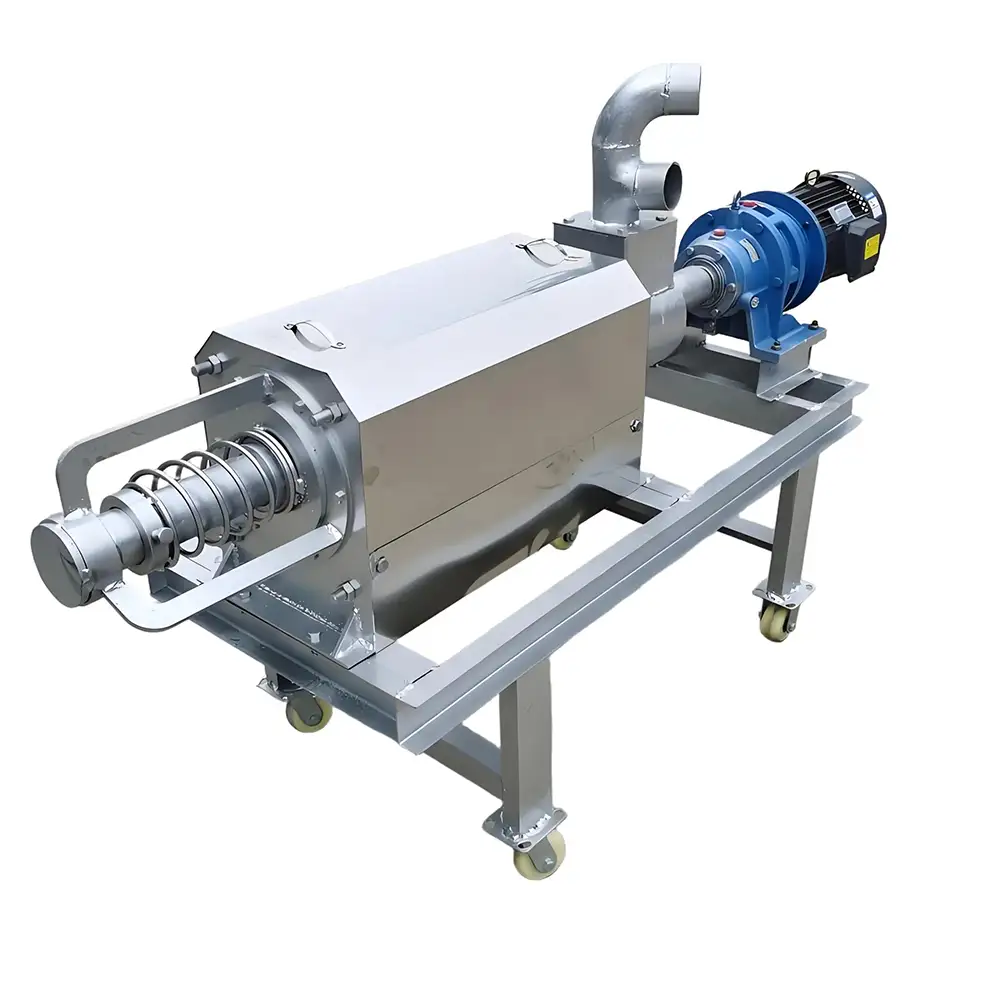
The Pig Farm / Cattle Farm / Manure Separation Equipment is an agricultural solid-liquid separation system designed to separate livestock manure into solid and liquid fractions. It provides a practical solution for pig farms, cattle farms, dairy farms, livestock operations, and agricultural waste treatment facilities that need to improve manure handling, reduce moisture content, and prepare animal waste for further processing.
Livestock manure commonly contains water, organic solids, fibers, undigested feed particles, bedding materials, and other suspended substances. Handling untreated manure can require significant storage space and transportation capacity. A suitable manure separator can reduce the water content of the solid fraction and produce separate material streams for subsequent treatment or utilization.
The actual separation performance depends on manure composition, moisture content, solids concentration, fiber content, particle size, feeding conditions, and machine configuration. Different farms may therefore require different separation and dewatering configurations.
Pig Farm Manure Separation
Pig farms can produce large quantities of manure and wastewater containing suspended solids and organic matter. A Pig Manure Separator can be installed to separate suitable manure slurry into a relatively concentrated solid fraction and a liquid fraction.
The separated solids may be directed toward composting, organic fertilizer production, storage, or other suitable agricultural applications. The liquid fraction can be collected for further wastewater treatment, storage, irrigation management where appropriate, or additional biological treatment according to local requirements.
Separating solids from liquid at an early stage can simplify subsequent manure management and reduce the volume of wet solids requiring handling.
Cattle Farm Manure Separation
Cattle and dairy farms generate manure with different characteristics depending on feeding methods, bedding, washing systems, and water usage. A Cattle Manure Separator can be configured to process suitable manure slurry and separate fibrous solids from liquid.
The solid fraction may contain useful organic matter and can be further processed into compost or soil amendment products when appropriate. Separated liquid can be directed to storage tanks, anaerobic digestion systems, wastewater treatment, or other farm-specific processes.
For dairy manure containing significant bedding fibers, the screen and screw configuration should be selected according to the actual material characteristics.
Manure Solid-Liquid Separation
The primary function of the equipment is to separate manure into solid and liquid components. Depending on the separator type, the manure slurry enters the machine and passes through a screening section while a mechanical conveying or pressing mechanism transports the solids toward the discharge end.
Liquid passes through the screening surface, while larger solid particles and fibers are retained and discharged separately.
This process can help reduce the moisture content and volume of the solid fraction. It can also make the separated materials easier to handle and transport.
Manure Dewatering
The Manure Dewatering Machine can be used when farms need to reduce the water content of manure solids before storage, transportation, composting, or further processing.
Mechanical dewatering applies pressure or controlled separation forces to the manure. The amount of water removed depends on the feed material and machine configuration.
Manure with high fiber content may respond differently from manure containing primarily fine particles. Testing representative manure samples can help determine the appropriate equipment and expected separation behavior.
Screw Press Manure Separator
A screw press separator is a common mechanical solution for livestock manure separation. The screw conveys manure through a screen while progressively compressing the solid material toward the discharge end.
As the manure moves through the dewatering section, liquid drains through the screen and the concentrated solids are discharged separately.
The screw press configuration can provide continuous processing and reduce the need for manual handling. Screen opening, screw design, motor configuration, and pressure adjustment can be selected according to the manure characteristics.
Continuous Farm Waste Processing
Livestock operations often generate manure continuously rather than in isolated batches. The manure separator can therefore be integrated with pumps, collection pits, storage tanks, mixing systems, and other farm waste handling equipment.
Continuous separation can help farms establish a more organized manure management process. It can also reduce the need to transport untreated liquid manure over long distances.
Automatic feeding and solids discharge can further reduce routine operator intervention.
Reduction Of Solid Waste Volume
Untreated manure contains a large amount of water, which increases its overall volume. Separating part of the liquid from the solid fraction can produce a more concentrated solid material.
A lower-volume solid fraction can be easier to store, transport, compost, or process. The separated liquid can be managed through a dedicated farm wastewater treatment or storage system.
The degree of volume reduction depends on the original manure characteristics and selected separation process.
Organic Fertilizer Production
Separated livestock manure solids can be suitable as a feedstock for composting or organic fertilizer processing when their composition and local regulations permit.
The separation process can produce a more concentrated solid fraction that is easier to mix with other organic materials. It may then be combined with agricultural residues, straw, bedding, or other carbon-rich materials for composting.
Additional treatment, stabilization, drying, or nutrient management may be required depending on the intended final product.
Biogas And Anaerobic Digestion Applications
Manure separation can also be incorporated into anaerobic digestion systems. Depending on the project design, separating solids and liquid before or after digestion can help manage feedstock characteristics and downstream solids handling.
The liquid and solid fractions can be directed to different stages of the biogas process. The appropriate process arrangement depends on manure composition, digester design, organic loading, and desired energy and nutrient management objectives.
Agricultural Wastewater Management
Livestock wastewater can contain suspended solids, organic matter, nutrients, and other contaminants. Removing larger solids before downstream treatment can reduce the solids loading of subsequent treatment units.
The manure separator can therefore serve as a pretreatment stage before biological treatment, anaerobic digestion, settling, lagoon systems, or other farm wastewater management processes.
It should be considered one component of a complete treatment strategy rather than a replacement for all wastewater treatment requirements.
Fiber And Bedding Separation
Cattle and dairy manure may contain straw, sawdust, bedding fibers, and other coarse organic materials. These materials can affect separation performance and may require suitable screen openings and screw configurations.
The separator can be configured to retain compatible fibers while allowing a portion of the liquid fraction to pass through the screening surface.
For farms using different bedding materials, testing is recommended before final equipment selection.
Corrosion-Resistant Construction
Farm manure and wastewater can create corrosive operating conditions due to moisture, organic matter, salts, and biological activity.
Depending on the application, stainless steel components, coated steel structures, or other corrosion-resistant materials can be selected for parts exposed to manure and liquid.
Material selection should consider manure composition, cleaning procedures, pH, operating environment, and expected service life.
Easy Operation And Maintenance
The manure separator is designed for practical farm operation. Routine maintenance may include checking the screw, screen, bearings, seals, motor, discharge section, and feeding system.
Regular cleaning can help prevent material buildup and maintain stable separation performance. Wear components should be inspected periodically, particularly when manure contains sand, stones, or other abrasive materials.
Automatic Feeding And Control
The equipment can be integrated with manure collection and pumping systems for automatic feeding. Depending on the farm layout, sensors, pumps, valves, control cabinets, and level controls can be incorporated.
Automation can help maintain stable feed conditions and reduce repetitive manual work. The complete system can be configured for individual farms or larger livestock waste treatment facilities.
Flexible Installation
Manure separators can be installed near livestock barns, manure storage areas, wastewater collection systems, or dedicated manure treatment facilities.
The installation arrangement depends on manure collection methods, available space, elevation differences, pumping requirements, and downstream processing.
The separator can operate as a standalone unit or as part of a larger manure management system.
Customized Manure Separation Solutions
Pig manure, cattle manure, dairy manure, and other livestock waste can have substantially different characteristics. Feed concentration, water content, fiber content, bedding, particle size, and collection methods all influence equipment selection.
Customers can provide manure samples, farm animal numbers, daily manure volume, solids concentration, feeding method, bedding type, and intended use of the separated material.
These details help determine the appropriate separator capacity, screen specification, screw configuration, motor, feeding system, and downstream equipment.
Complete Livestock Waste Management
The Pig Farm / Cattle Farm / Manure Separation Equipment can be integrated into a complete agricultural waste management system.
A typical system may include manure collection, pumping, solid-liquid separation, solid storage, composting or fertilizer processing, liquid treatment, anaerobic digestion, and final water or nutrient management.
By separating the manure stream into manageable fractions, farms can develop a more organized approach to livestock waste handling and resource recovery.
Key Features
Pig Farm Manure Separation
Cattle Farm Manure Separation
Livestock Manure Solid Liquid Separation
Manure Dewatering
Screw Press Separation
Continuous Manure Processing
Automatic Feeding Options
Continuous Solid Discharge
Fiber And Bedding Separation
Corrosion Resistant Construction Options
Easy Operation And Maintenance
Organic Fertilizer Applications
Biogas System Integration
Customized Farm Waste Solutions
Main Applications
Pig Farms
Cattle Farms
Dairy Farms
Livestock Farms
Swine Manure Treatment
Cattle Manure Treatment
Dairy Manure Separation
Animal Waste Treatment
Farm Wastewater Treatment
Manure Dewatering
Organic Fertilizer Production
Composting Systems
Anaerobic Digestion Systems
Agricultural Waste Management
FAQs
1. What Is Pig And Cattle Manure Separation Equipment?
It is a mechanical solid-liquid separation machine designed to separate suitable livestock manure into concentrated solid material and a liquid fraction for easier handling and further treatment.
2. Can It Be Used For Both Pig And Cattle Manure?
Yes. The equipment can be configured for suitable pig manure, cattle manure, dairy manure, and other livestock waste. However, different manure characteristics may require different screen and screw configurations.
3. How Does A Manure Separator Work?
Manure slurry enters the machine and passes through a screening and dewatering section. Liquid passes through the screen while solid particles and fibers are retained and conveyed toward the solid discharge outlet.
4. Can The Separated Solids Be Used As Fertilizer?
Separated manure solids may be suitable for composting or organic fertilizer production when properly treated and when permitted by applicable agricultural and environmental requirements.
5. Can The Machine Process Dairy Manure With Bedding?
Yes, suitable configurations can process manure containing compatible bedding fibers. The screen opening and screw design should be selected according to the type and amount of bedding material.
6. Does The Separator Remove All Water From Manure?
No. Mechanical separation reduces the liquid content but does not normally produce completely dry solids. The final moisture level depends on manure characteristics and machine configuration.
7. Can The Liquid Fraction Be Treated Separately?
Yes. The separated liquid can be directed to storage, anaerobic digestion, biological treatment, or other appropriate farm wastewater management systems.
8. Can The Separator Operate Continuously?
Yes. Screw press-type manure separators can provide continuous feeding, separation, and solid discharge when properly configured.
9. Can It Be Integrated With A Biogas System?
Yes. Manure separation equipment can be incorporated into suitable anaerobic digestion and biogas systems. The best process arrangement depends on feedstock characteristics and digester design.
10. How Do I Select The Right Manure Separator?
Provide animal type, manure volume, moisture content, solids concentration, fiber or bedding content, daily processing requirements, and intended use of the separated solids and liquid. These details help determine the suitable configuration.
Why Choose Us
Professional Livestock Waste Equipment
We provide manure separation and dewatering equipment for pig farms, cattle farms, dairy farms, livestock operations, and agricultural waste treatment projects.
Customized Manure Separation Configuration
Different manure streams require different separation conditions. We can evaluate screen openings, screw configurations, feeding systems, discharge arrangements, materials, and motor requirements according to the application.
Farm Application Support
Customers can provide manure samples, animal numbers, daily manure volume, solids concentration, bedding type, and intended treatment method for technical evaluation.
Complete Waste Management Integration
The manure separator can be integrated with manure collection, pumps, storage tanks, composting, organic fertilizer production, anaerobic digestion, and wastewater treatment equipment.
Factory Direct B2B Supply
We support international agricultural and livestock customers with equipment configuration, technical documentation, export packaging, shipping coordination, installation guidance, and after-sales support.
Practical Continuous Operation
Continuous mechanical separation helps reduce manual manure handling and provides a practical approach to separating wet manure into more manageable solid and liquid fractions.
Prev:
Filtration - Based Solid - Liquid Separation Machine Water Purifier
Next:
Agricultural Organic Fertilizer Separator/Various Solid Liquid Separator Dung Dehydrator
TAG:
Agricultural Wastewater Treatment,
Animal Waste Treatment Equipment,
Agricultural Waste Treatment,
Manure Composting Equipment,
Livestock Waste Treatment Equipment,
Pig Farm Wastewater Treatment,
Cattle Farm Wastewater Treatment,
Dairy Farm Wastewater Treatment,
Organic Waste Separator,
Animal Waste Separator,
Agricultural Waste Separation,
Animal Waste Dewatering,
Pig Manure Separator,
Dairy Manure Separator,
Dairy Manure Dewatering,
Manure Solid Liquid Separator,
Manure Dewatering Machine,
Manure Dewatering Equipment,
Manure Screw Press,
Manure Screw Separator,
Livestock Manure Separator,
Livestock Manure Dewatering,
Animal Manure Separator,
Animal Waste Separation Equipment,
Livestock Waste Separation Equipment,
Cattle Manure Separator,
Manure Separation Equipment,
Manure Separation Machine,
Manure Separator Machine,
Screw Press Manure Separator,
Related Category:
Pig Farm Manure Separation Equipment, Cattle Farm Manure Separation Equipment, Manure Separation Equipment, Livestock Ma China, suppliers, manufacturers, factory, customized, wholesale, quotation, made in China