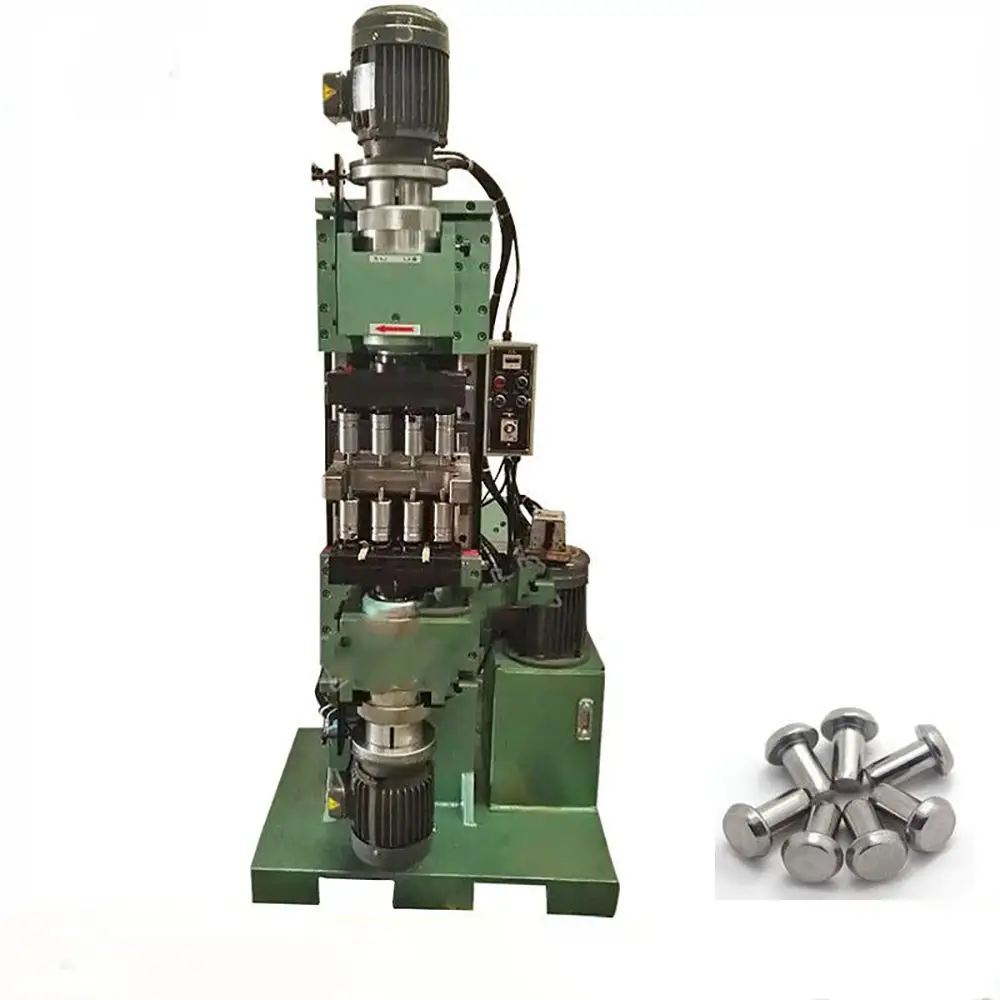
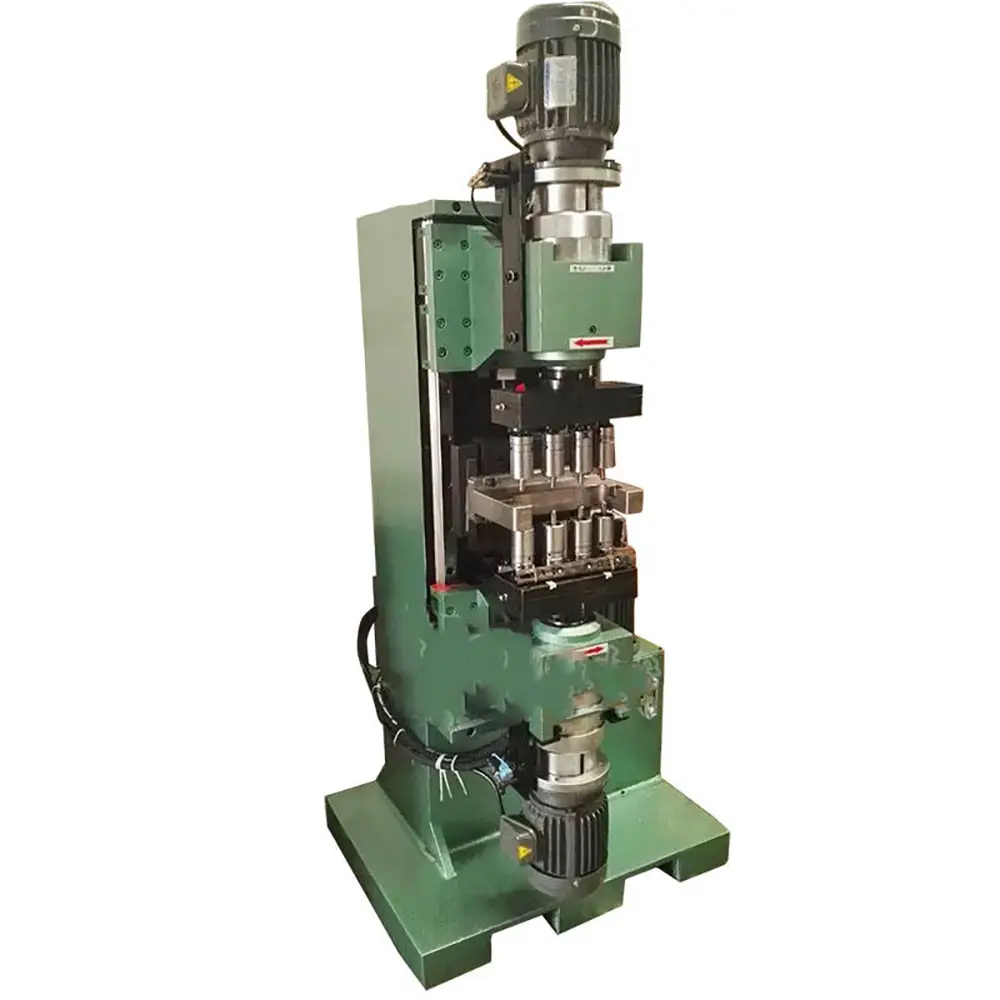
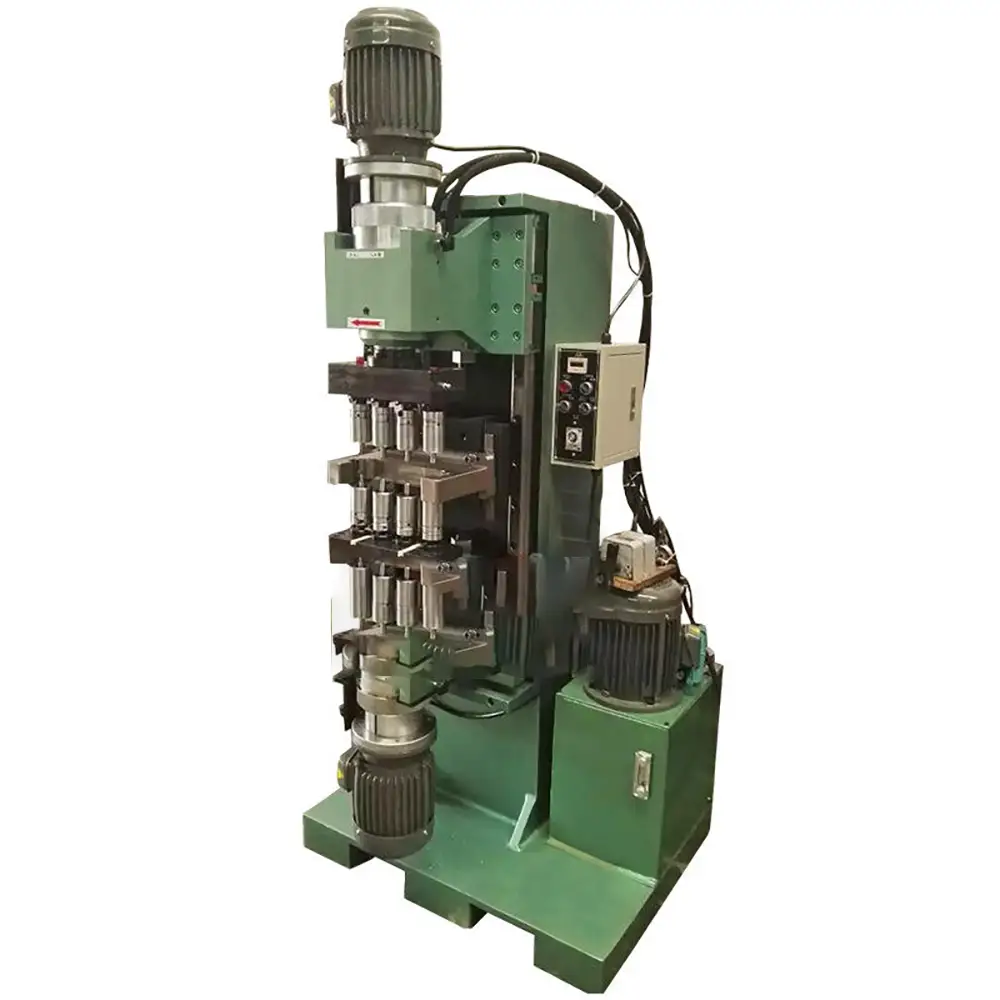
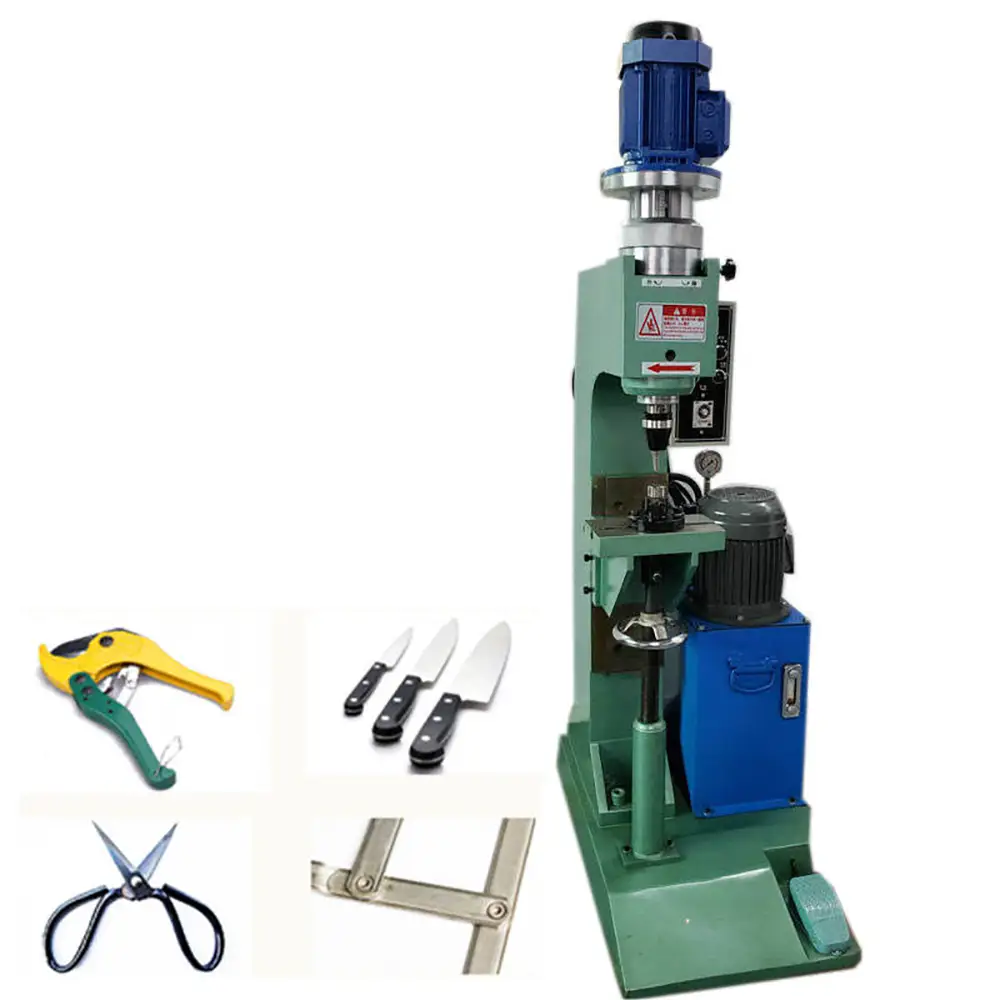
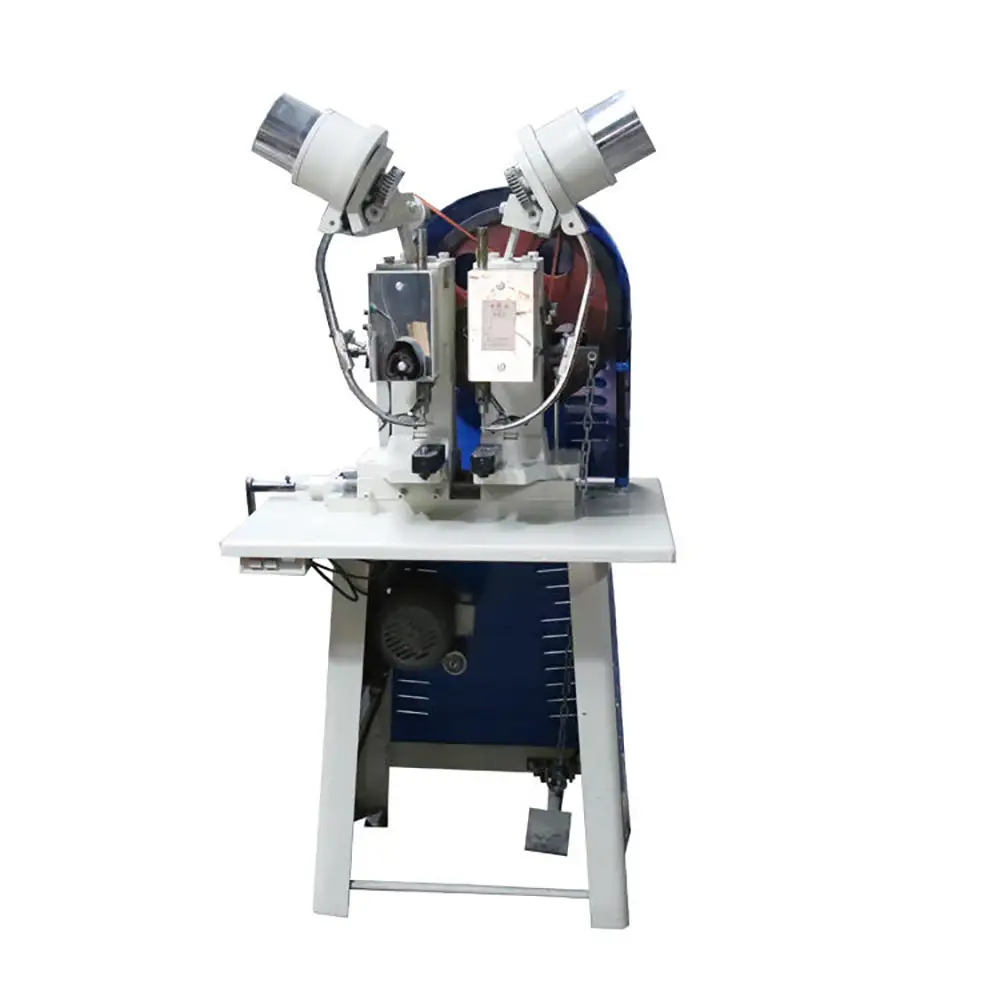
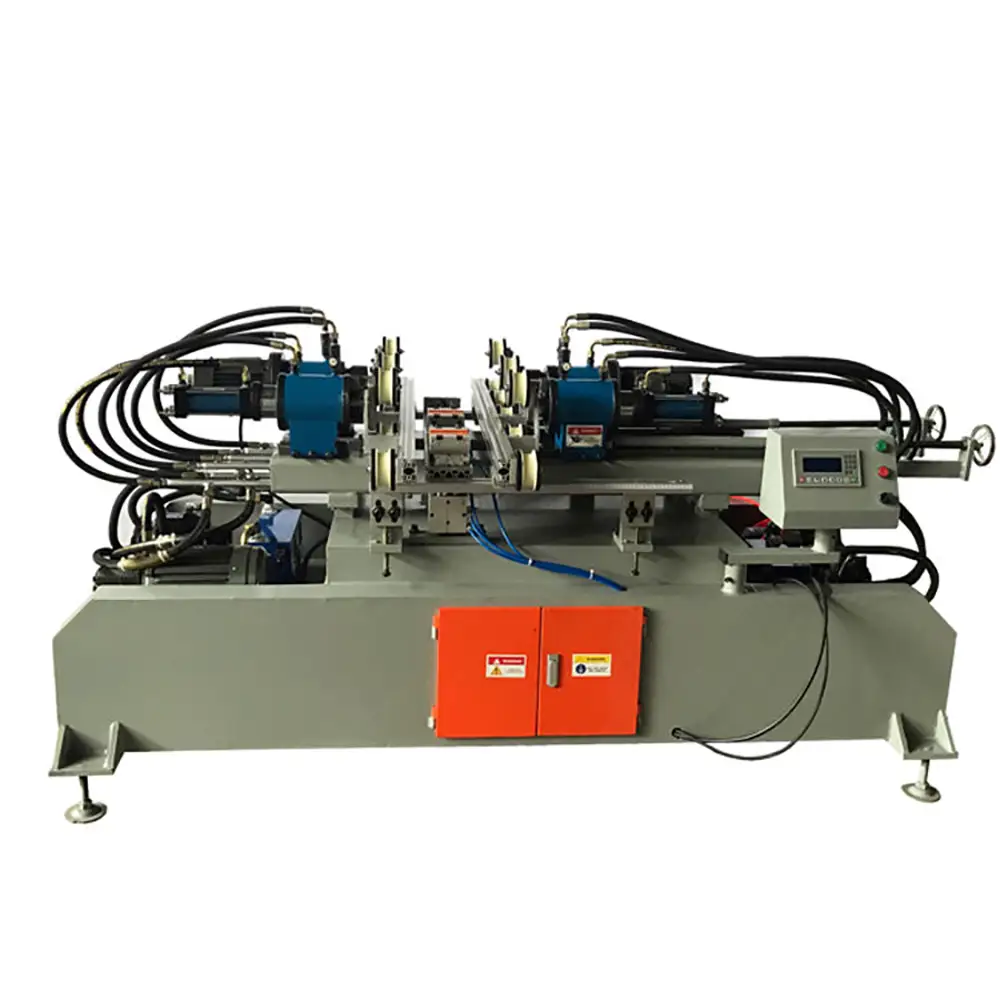
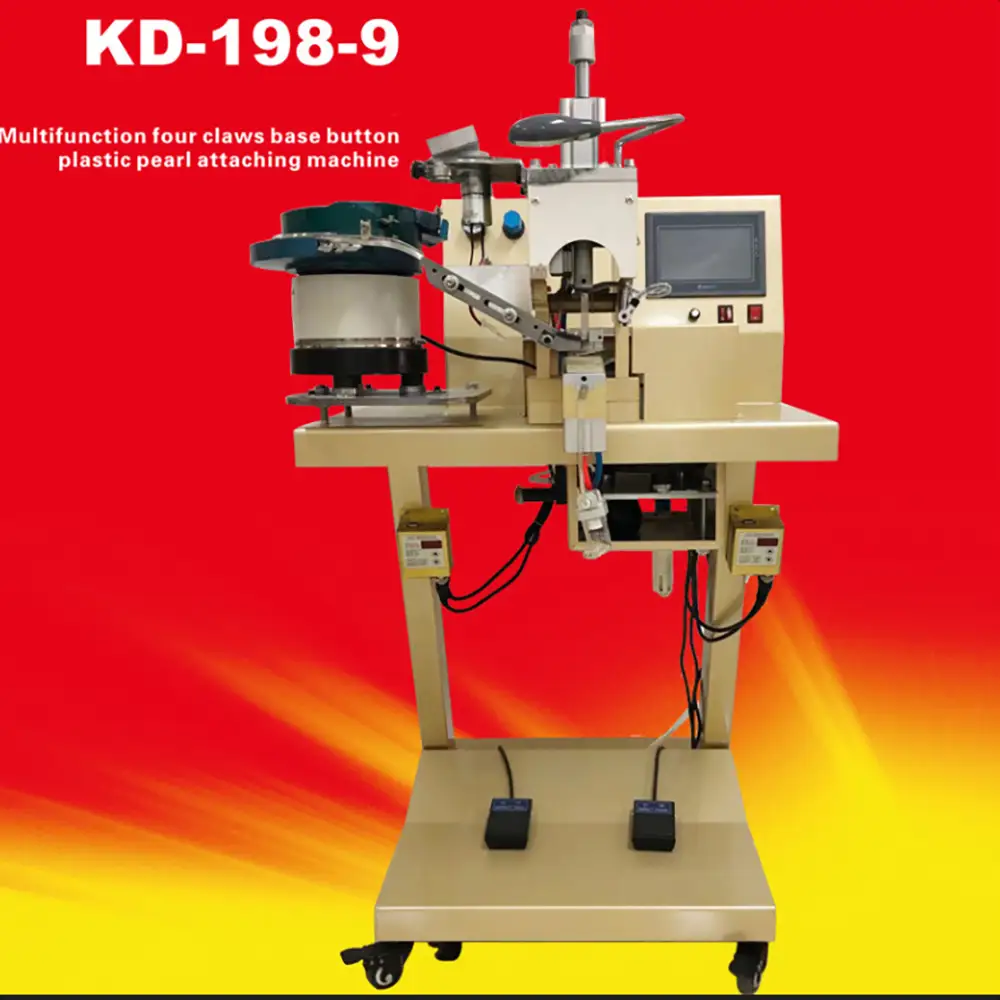
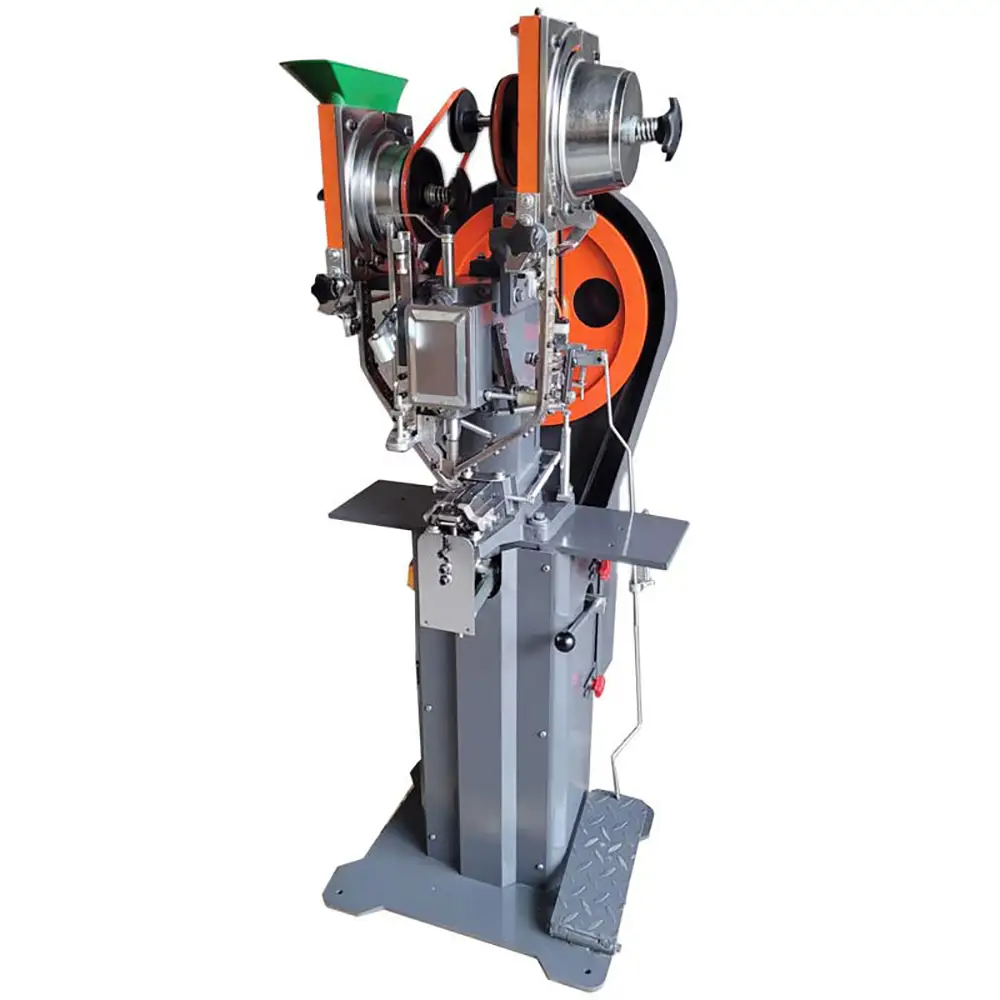
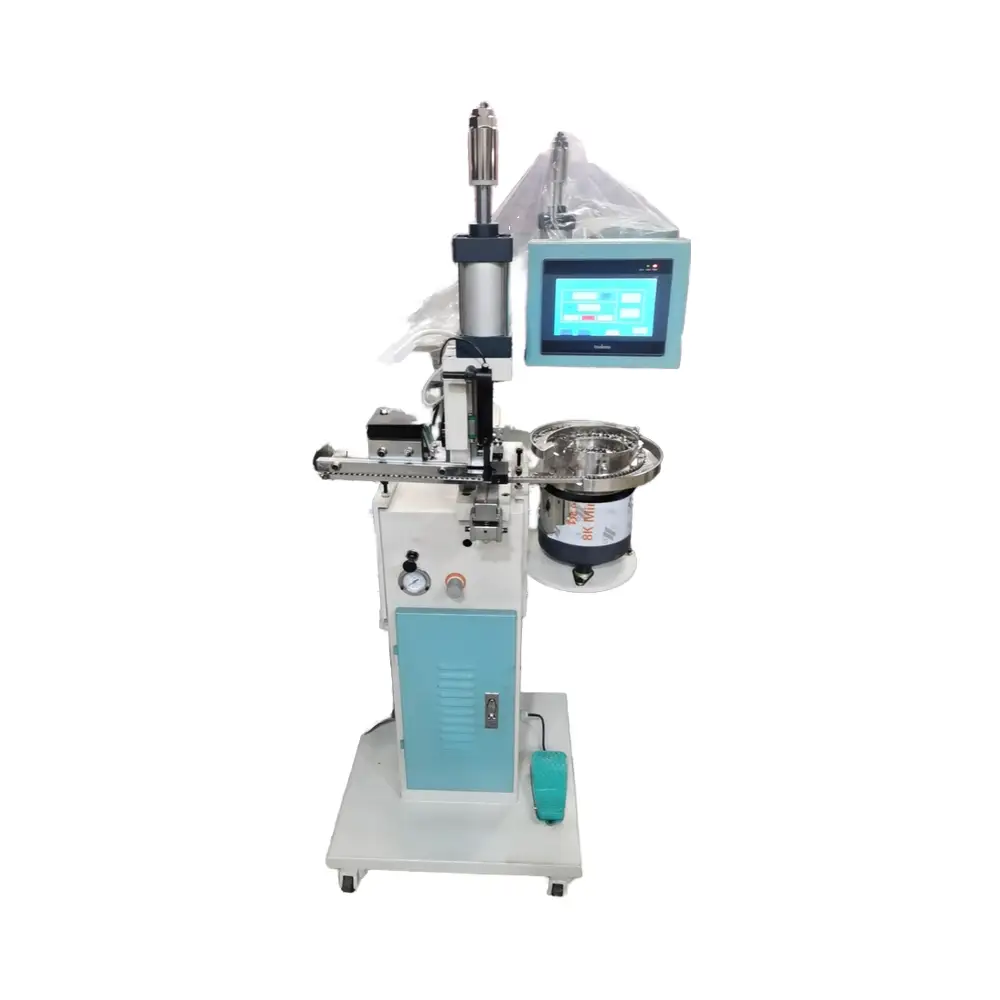
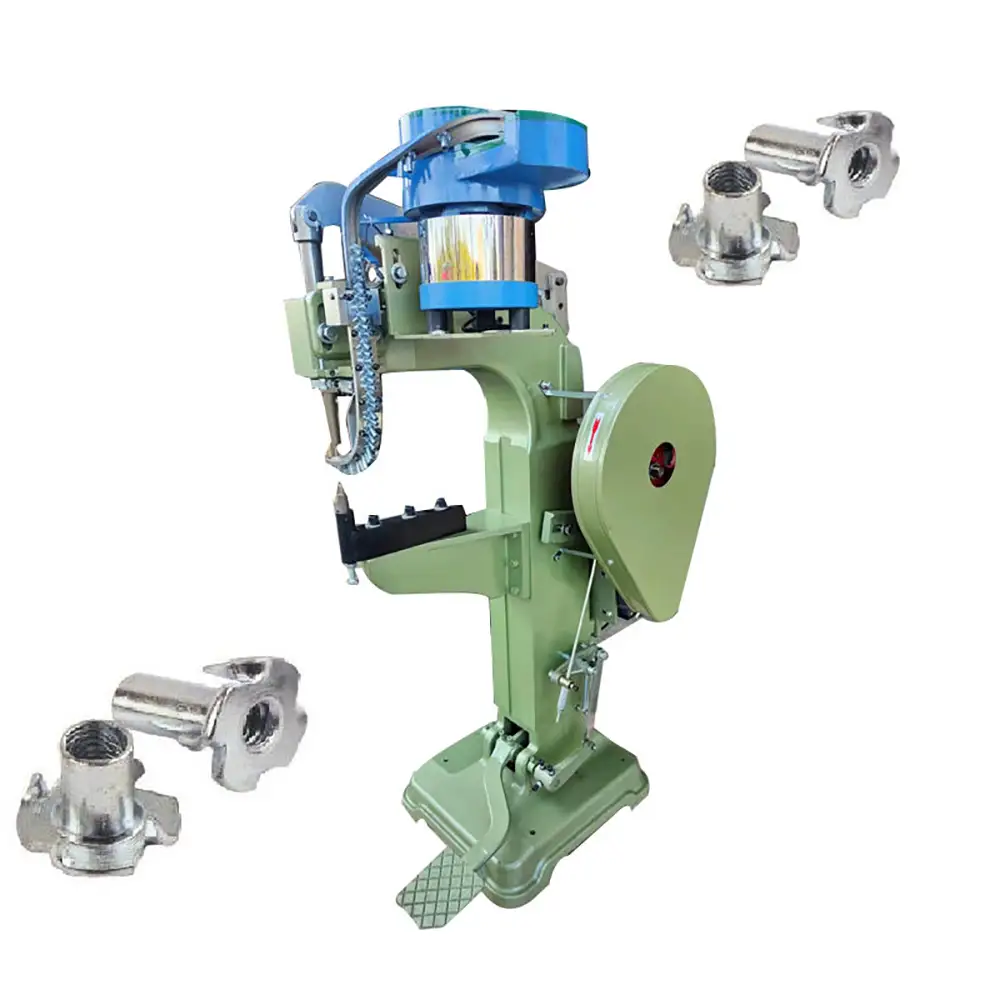
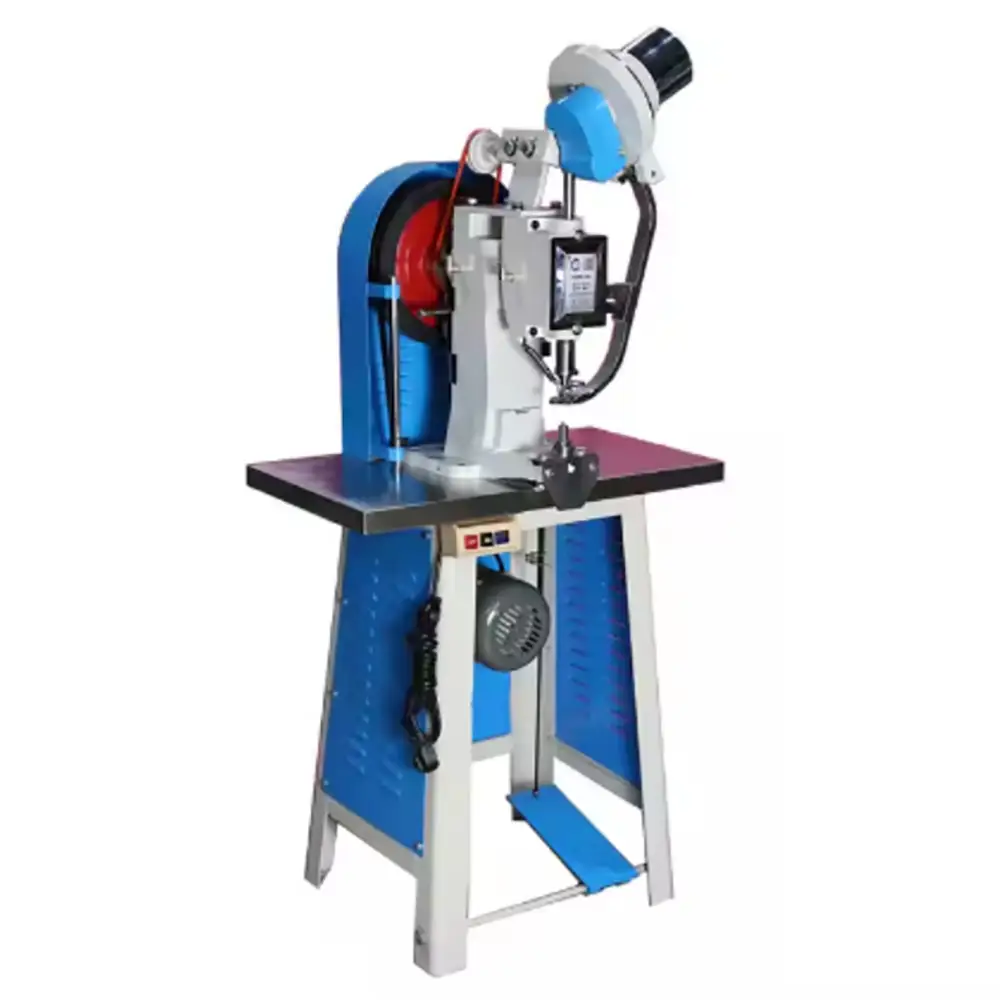
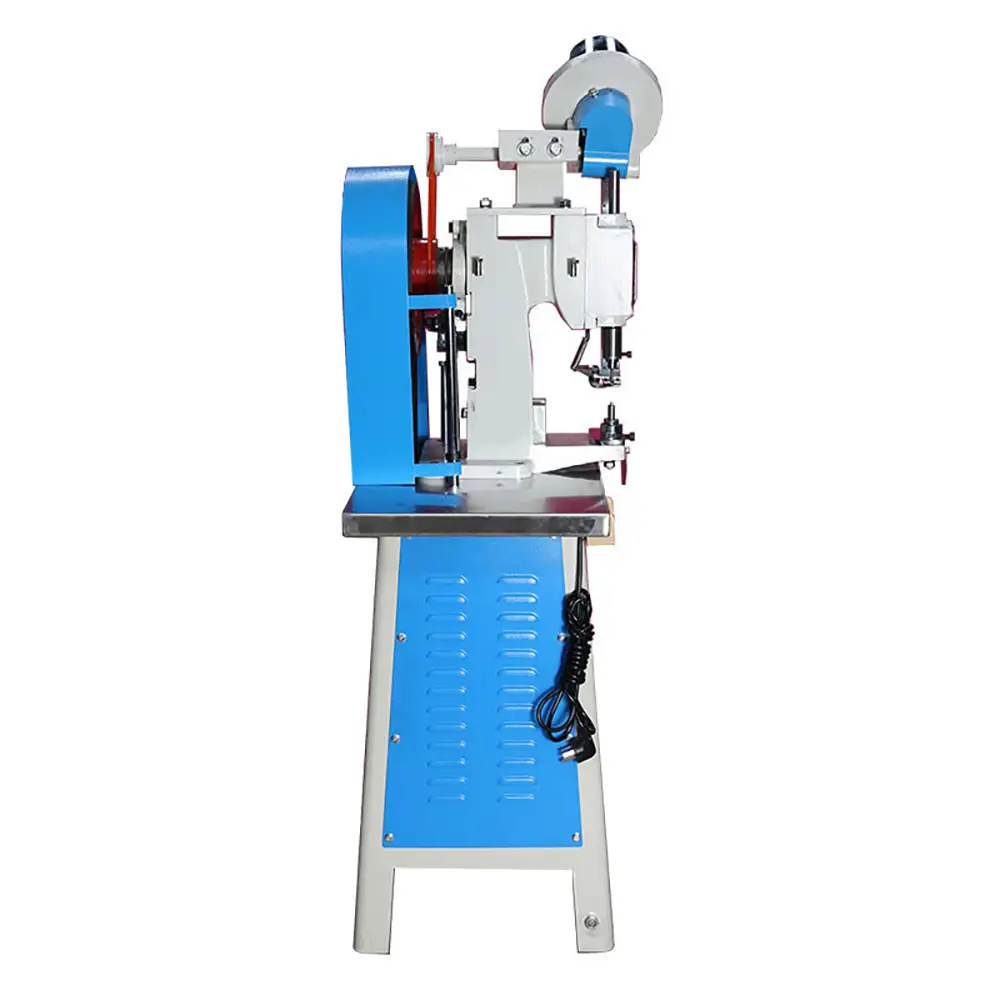
Multi-head Hydraulic Radial Solid Rivets Riveting Machine 4 Rivets Simultaneously Punching and Fastening Machinery
|
Model |
Spindle stroke |
motor |
(mild steel) Rivet capacity |
time adjustment (seconds) |
Use pressure |
Maximum pressure |
Rivet length |
Weight (KG) |
Rivet head speed |
|
1136 |
35mm |
1/2HP |
(Solid)5 (hollow)8 |
0-6 |
2-7 |
500 |
120 |
75 |
1400 |
|
1141 |
35mm |
1/2HP |
(Solid)7 (hollow)12 |
0-6 |
2-7 |
800 |
125 |
125 |
1400 |
|
1143 |
35mm |
1HP |
(Solid)8 (hollow)15 |
0-6 |
2-7 |
1100 |
125 |
150 |
1400 |
|
1145 |
35mm |
1HP |
(Solid)12 (hollow)20 |
0-6 |
2-7 |
2000 |
150 |
200 |
1400 |
|
1152 |
42MM |
1HP 2HP |
(Solid)12 (hollow)20 |
0-6 |
20-70 |
1500 |
230 |
350 |
1400 |
|
1155 |
42MM |
2HP 3HP |
(Solid)20 (hollow)35 |
0-6 |
20-700 |
5500 |
300 |
550 |
1400 |
Multi-Head Hydraulic Radial Solid Rivets Riveting Machine
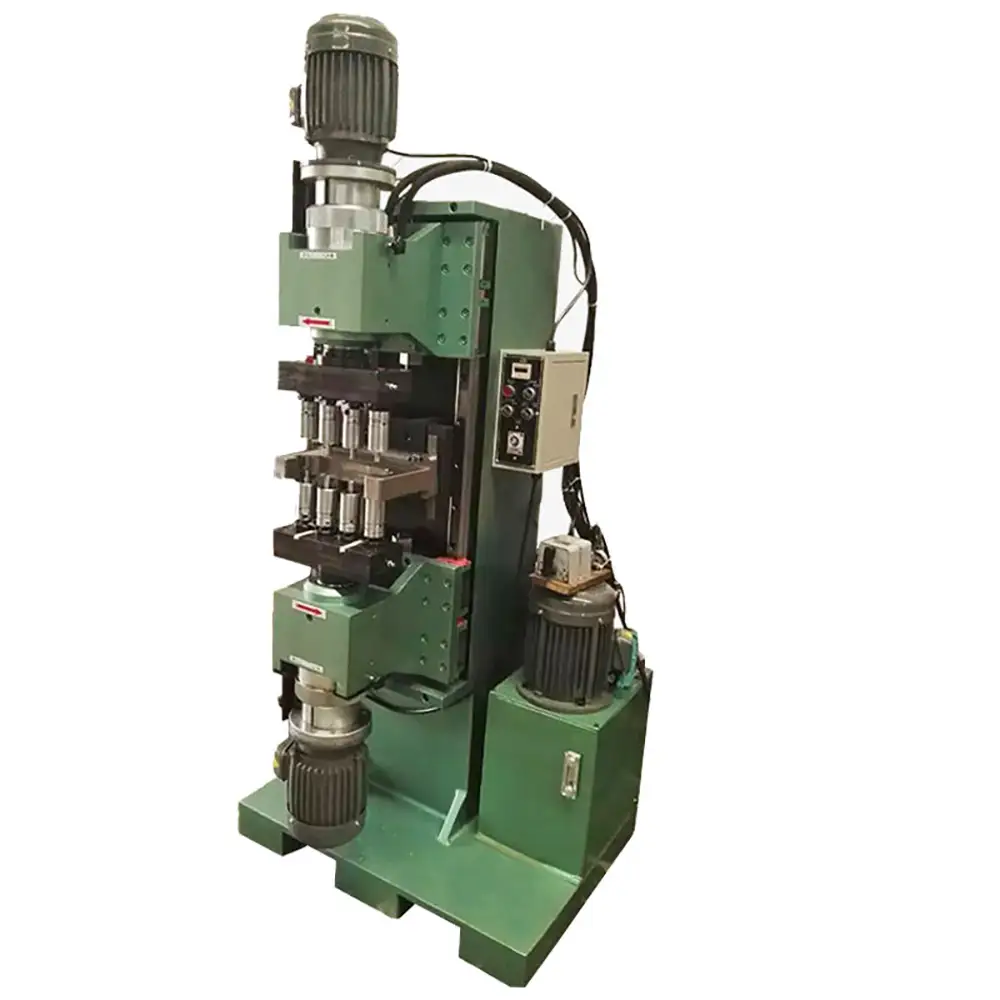
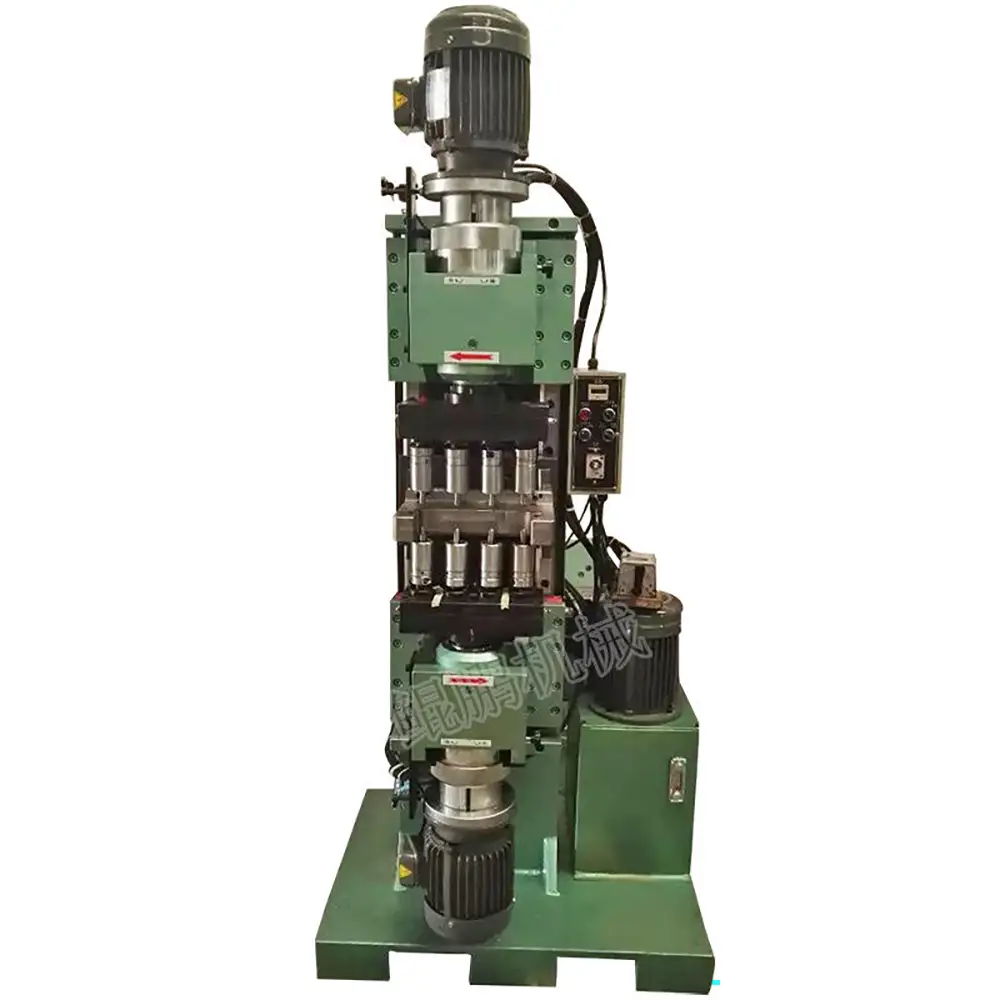
The Multi-Head Hydraulic Radial Solid Rivets Riveting Machine is an industrial fastening solution designed for applications that require multiple solid rivets to be installed and formed efficiently. Featuring a multi-head hydraulic configuration, the machine can be configured to process four rivets simultaneously, helping manufacturers improve production efficiency, fastening consistency, and assembly accuracy.
Compared with conventional single-point riveting equipment, a multi-head riveting machine allows several fastening positions to be processed during the same operating cycle. This makes it especially valuable for components where four rivets need to be installed in a consistent pattern or where multiple fastening points must be completed efficiently.
The machine combines hydraulic power with radial riveting technology to provide controlled and repeatable forming of compatible solid rivets. It is suitable for industrial manufacturers looking to reduce repetitive manual operations and establish a more standardized riveting process.
Multi-Head Riveting for Four Rivets Simultaneously
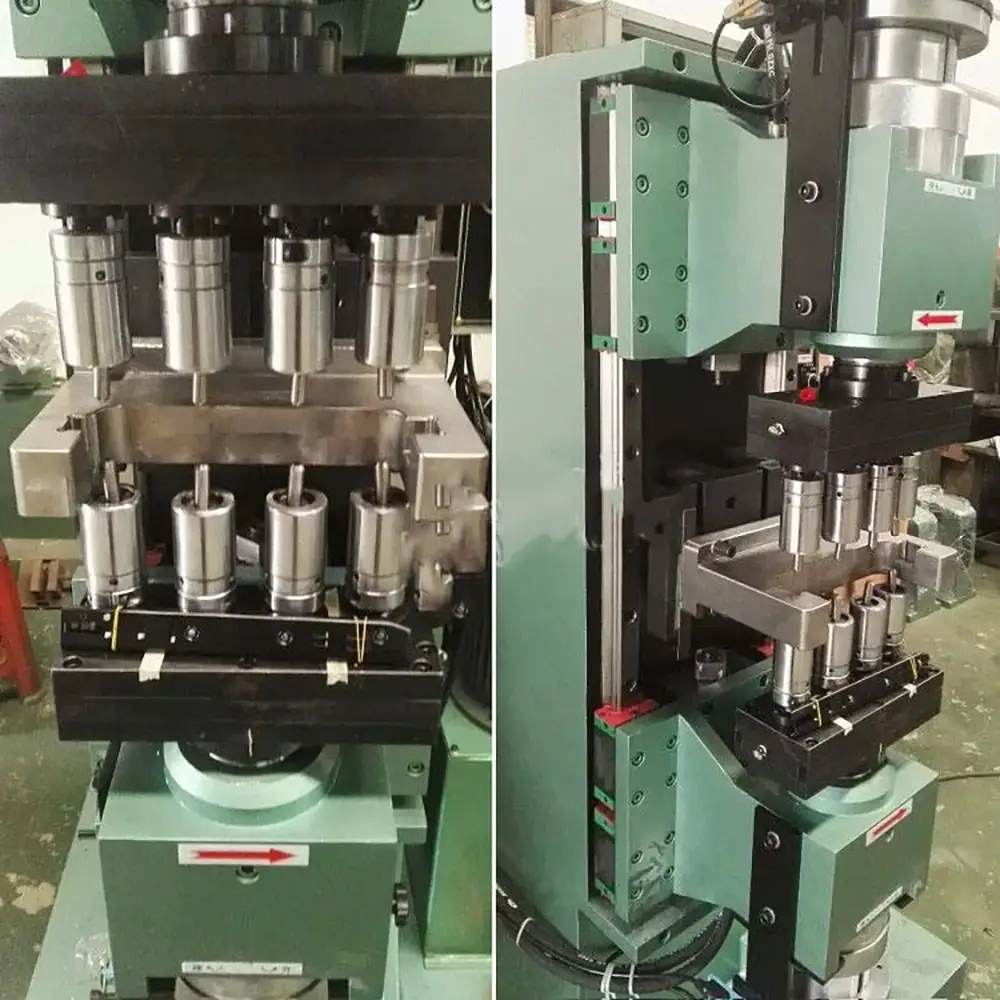
One of the key advantages of this machine is its multi-head configuration. With four riveting heads, compatible workpieces can be processed at multiple fastening points during one operation.
Four rivets can be riveted simultaneously when the workpiece, rivet dimensions, tooling, and machine configuration are suitable. This multi-point approach can significantly simplify production operations compared with installing each rivet individually.
It is particularly useful for components that require symmetrical or repeated rivet patterns. Instead of moving the workpiece between multiple individual riveting operations, the operator can position the component in the designated fixture and complete several fastening points in a coordinated cycle.
This can help reduce handling time, improve production consistency, and minimize variation between individual assemblies.
Hydraulic Radial Riveting Technology
The hydraulic system provides controlled power for the riveting operation, while radial riveting technology forms the rivet through a controlled forming motion.
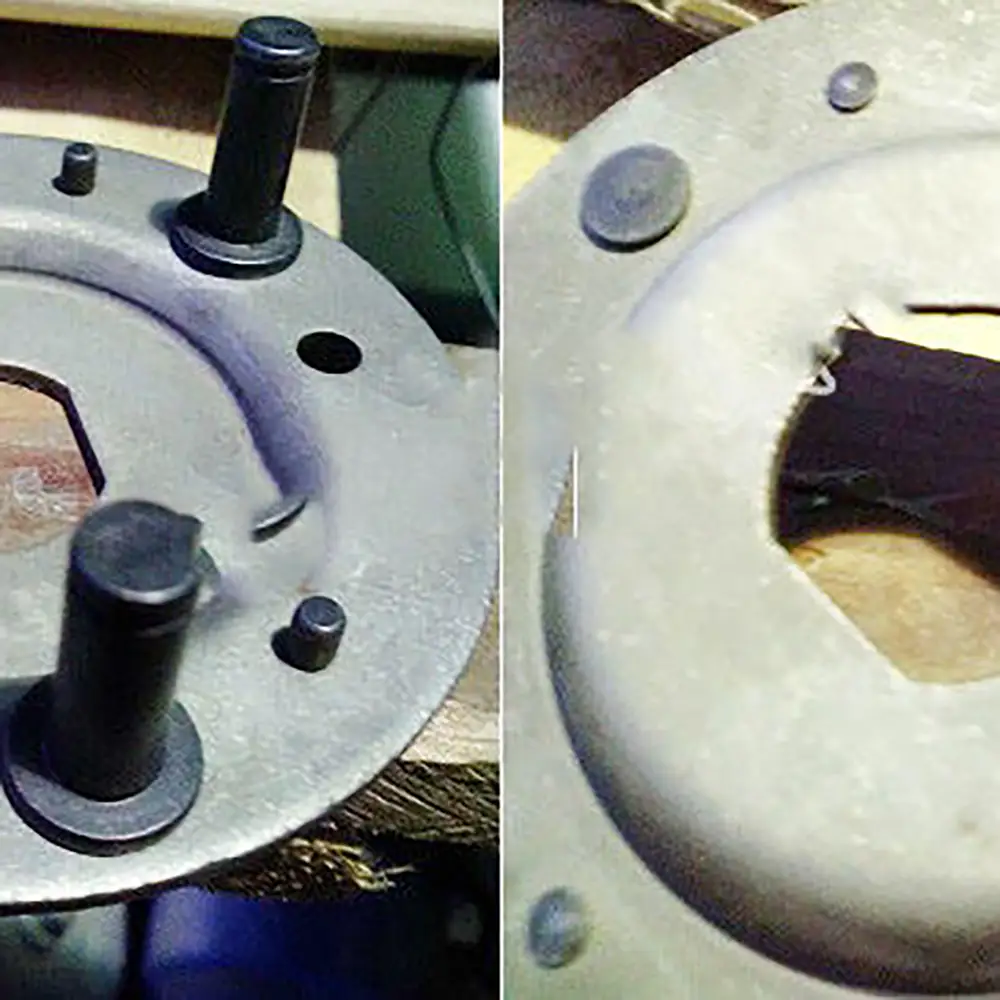
Radial riveting is widely used for applications where controlled deformation and a consistent finished rivet head are important. The process can produce a secure mechanical joint without requiring welding or additional joining processes.
For industrial production, controlled riveting can help manufacturers achieve repeatable results when the correct rivet material, workpiece design, tooling, and machine settings are selected.
The actual riveting process and achievable result depend on the application and should be verified through sample testing.
Solid Rivet Fastening
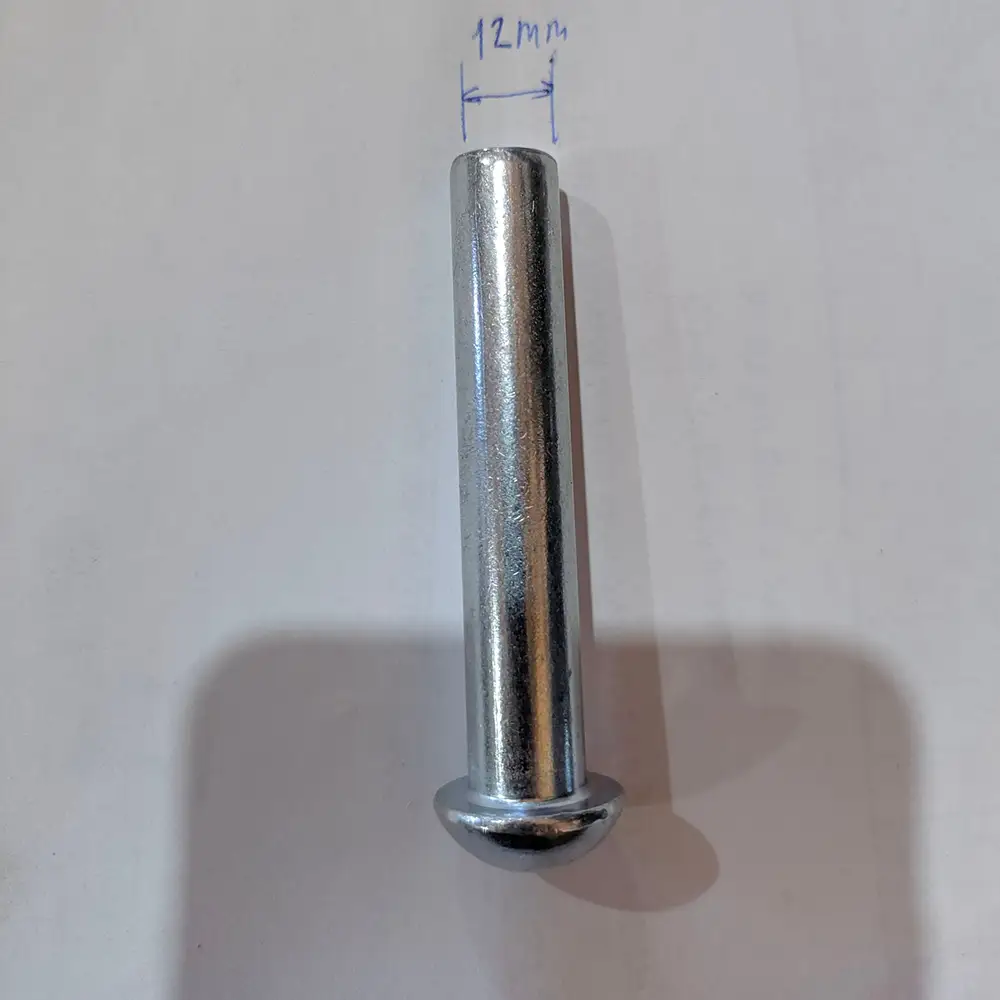
This machine is designed for compatible solid rivet applications. Solid rivets are commonly used where a permanent mechanical connection is required.
Typical applications may include metal components, brackets, hardware assemblies, structural parts, machinery components, and other products requiring reliable mechanical fastening.
The machine forms the rivet after it has been positioned through the workpiece. Proper rivet length, diameter, material, hole preparation, and tooling are important factors in achieving the required joint quality.
For new projects, manufacturers should provide detailed rivet and workpiece information so the appropriate tooling and configuration can be evaluated.
Punching and Fastening Machinery
In addition to riveting, the machine can be incorporated into production processes involving punching, positioning, and fastening operations, depending on the machine configuration and tooling.
For manufacturers producing components with repeated fastening patterns, integrating multiple operations into a standardized workstation can improve workflow efficiency.
The term “punching and fastening machinery” is particularly relevant to applications where holes must be prepared or components must be accurately positioned before solid rivets are installed. Actual punching capability depends on the specific machine configuration and tooling.
Consistent Multi-Point Assembly
When four rivets must be positioned according to a fixed pattern, consistency is critical. Differences in rivet location can affect both the appearance and mechanical performance of the finished assembly.
A multi-head configuration allows multiple riveting positions to be coordinated in one operation. This can help reduce errors caused by repeated manual repositioning.
For manufacturers producing large batches of the same component, this repeatability can be valuable for maintaining consistent assembly quality across production runs.
Suitable for Industrial Metal Components
The Multi-Head Hydraulic Radial Riveting Machine can be used for a broad range of compatible metal component assembly applications.
Potential applications include:
Metal brackets
Hardware components
Sheet metal assemblies
Machinery parts
Metal frames
Structural components
Industrial hardware
Automotive-related components
Electrical and mechanical assemblies
Metal fittings
Equipment components
Fabricated metal products
The actual application range depends on the material, rivet specifications, component geometry, and machine configuration.
Improved Production Efficiency
One of the primary reasons manufacturers choose multi-head riveting equipment is production efficiency.
With four riveting heads operating simultaneously, a single cycle can complete several fastening points that might otherwise require multiple operations. This can reduce repetitive workpiece handling and improve overall workflow.
For medium- and high-volume production, the ability to process multiple rivets at once can contribute to shorter cycle times and more consistent production output.
The actual production capacity depends on the machine configuration, workpiece dimensions, rivet specifications, operator workflow, and production process.
Accurate Workpiece Positioning
A suitable fixture or positioning system is essential for multi-head riveting. The workpiece must be correctly aligned with the riveting heads so that all fastening points are positioned accurately.
For OEM production, customized fixtures and tooling can be considered according to the shape and dimensions of the workpiece.
A well-designed fixture can also help reduce operator positioning errors and make repeated production easier.
Flexible Tooling and Customization
Different solid rivets and workpieces may require different riveting dies, fixtures, and tooling configurations.
The machine can be evaluated according to the required rivet diameter, rivet length, material, workpiece thickness, riveting pattern, and finished rivet-head appearance.
For specialized applications, manufacturers can discuss customized multi-head configurations, tooling, fixtures, and production layouts.
Sample testing is recommended before final equipment selection.
Why Choose Our Multi-Head Hydraulic Riveting Machine?
1. Four Rivets in One Operation
The four-head configuration can process four compatible riveting points simultaneously, improving multi-point assembly efficiency.
2. Hydraulic Power
Hydraulic operation provides controlled forming force for demanding industrial riveting applications.
3. Radial Riveting Process
Radial forming technology supports controlled and repeatable solid rivet fastening.
4. Improved Production Efficiency
Multiple riveting positions can be completed during one cycle, reducing repetitive workpiece handling.
5. Consistent Riveting Quality
A standardized machine process can help improve consistency in rivet positioning and forming.
6. Flexible Industrial Applications
Suitable for a variety of compatible metal components and mechanical assemblies.
7. OEM and Custom Support
Tooling, fixtures, and machine configurations can be evaluated according to specific production requirements.
Main Applications
The machine is suitable for compatible applications in:
Metal Component Manufacturing
Sheet Metal Assembly
Hardware Manufacturing
Machinery Manufacturing
Automotive Component Production
Mechanical Parts Assembly
Electrical Equipment Manufacturing
Industrial Equipment Production
Metal Frame Manufacturing
Structural Metal Components
Metal Fittings
OEM Manufacturing
How to Select the Right Multi-Head Riveting Machine?
Before purchasing a hydraulic radial riveting machine, buyers should confirm the solid rivet diameter, rivet length, rivet material, workpiece material, workpiece thickness, hole dimensions, riveting pattern, and required production volume.
For four-point simultaneous riveting, the exact distance and arrangement between the four riveting positions are also important. Workpiece dimensions and accessibility should be checked to ensure the riveting heads can reach all required positions.
Providing workpiece drawings, rivet specifications, photos, and samples can help determine the appropriate tooling and machine configuration.
FAQS
1. What is a Multi-Head Hydraulic Radial Riveting Machine?
It is an industrial riveting machine that uses multiple riveting heads and hydraulic power to form compatible solid rivets through a controlled radial riveting process.
2. Can it rivet four rivets simultaneously?
Yes. The machine can be configured with four riveting heads to process four compatible rivets simultaneously when the workpiece geometry and tooling are suitable.
3. What type of rivets does it use?
It is primarily designed for compatible solid rivets. The exact rivet specifications should be confirmed according to the workpiece and application.
4. What materials can be riveted?
Compatible applications may include steel, stainless steel, aluminum, and other metal components. Material compatibility should be verified through application testing.
5. What is radial riveting?
Radial riveting is a controlled riveting process in which the riveting tool forms the rivet through a radial forming motion, helping create a consistent finished rivet head.
6. Is this machine suitable for high-volume production?
Yes. Multi-head riveting is particularly useful for repetitive production because multiple fastening points can be completed during a single operating cycle.
7. Can the riveting heads be customized?
Machine configuration and tooling can be discussed according to the required rivet positions, workpiece geometry, rivet specifications, and production requirements.
8. Does the machine require a fixture?
A suitable fixture is generally important for multi-point riveting because accurate workpiece positioning is essential for aligning multiple riveting heads.
9. Can the machine perform punching as well as riveting?
Depending on the specific configuration, tooling, and production requirements, punching operations may be integrated or coordinated with the riveting process. The required function should be confirmed before ordering.
10. How can I confirm whether this machine is suitable for my product?
Provide the workpiece drawing or sample, rivet specifications, material information, riveting-point dimensions, and production requirements. These details can be used to evaluate the appropriate machine and tooling configuration.
11. What are the benefits of four-head riveting compared with single-head riveting?
Four-head riveting can reduce repeated positioning and handling because several fastening points can be completed in one operation. This can improve production efficiency and process consistency.
12. Can it be used for OEM production?
Yes. The machine is suitable for OEM manufacturing where repeated multi-point riveting is required, subject to the compatibility of the product and tooling.
Prev:
Helmet Metal Button Press Machine Steel Button Riveting Machine Clothing Decorative Rivets Buttoning Machinery
Next:
Automatic 4-Claw Rivet Beading Machine for Garment/Shoes/Accessories
TAG:
Industrial Riveting Machine,
Industrial Riveting Equipment,
Metal Riveting Machine,
Rivet Fastening Machine,
Rivet Setting Machine,
Hydraulic Rivet Machine,
Hydraulic Rivet Press,
Solid Rivet Press Machine,
Solid Riveting Machine,
Solid Rivet Fastening Machine,
Heavy Duty Riveting Machine,
Industrial Rivet Machine,
Radial Riveting Machine,
Radial Rivet Machine,
Automatic Riveting Machine,
Solid Rivet Machine,
Automatic Solid Rivet Machine,
Rivet Installation Machine,
Multi-Head Riveting Machine,
Automatic Rivet Machine,
Multi-Station Riveting Machine,
Metal Fastening Machine,
Rivet Press Machine,
Hydraulic Riveting Machine,
Industrial Fastening Equipment,
Solid Rivet Riveting Machine,
Sheet Metal Riveting Machine,
Hydraulic Riveter,
Industrial Riveter,
Multi-Point Riveting Machine,
Related Category:
Multi-Head Hydraulic Riveting Machine, Hydraulic Radial Riveting Machine, Solid Rivet Riveting Machine, 4-Head Riveting China, suppliers, manufacturers, factory, customized, wholesale, quotation, made in China