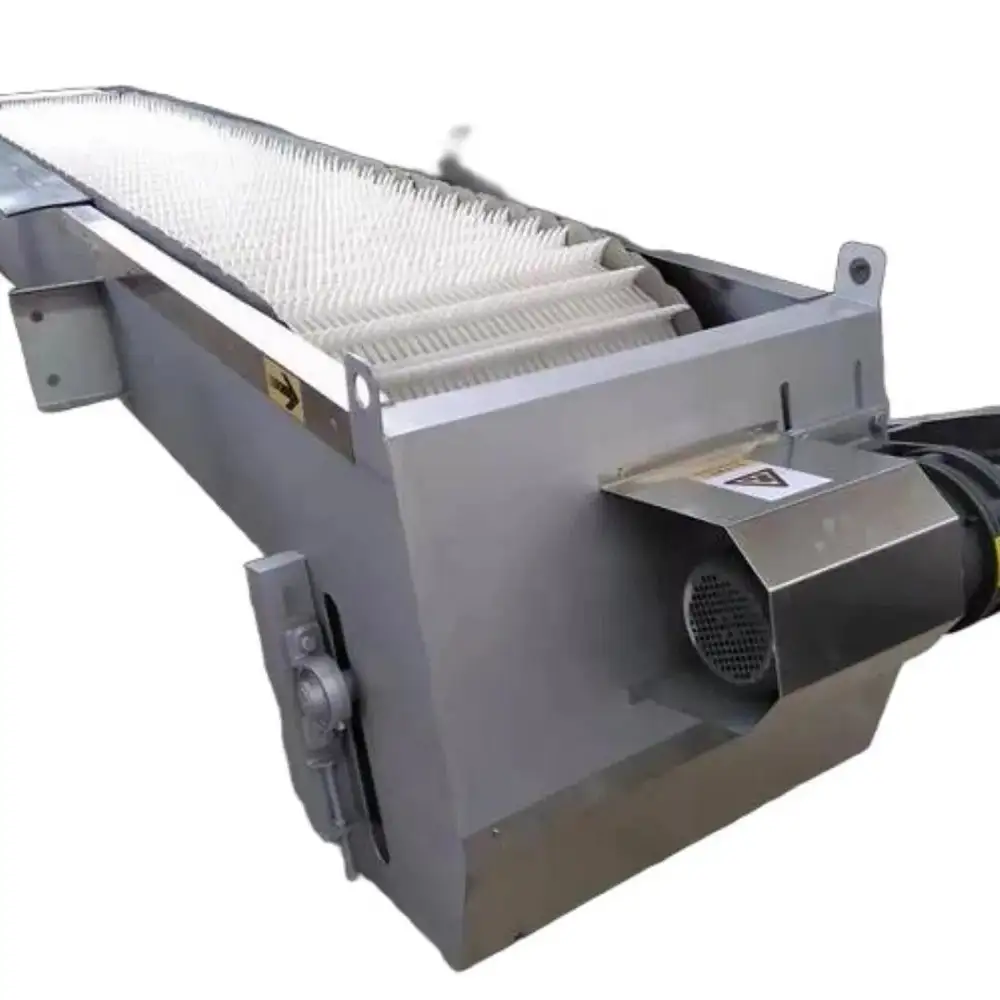
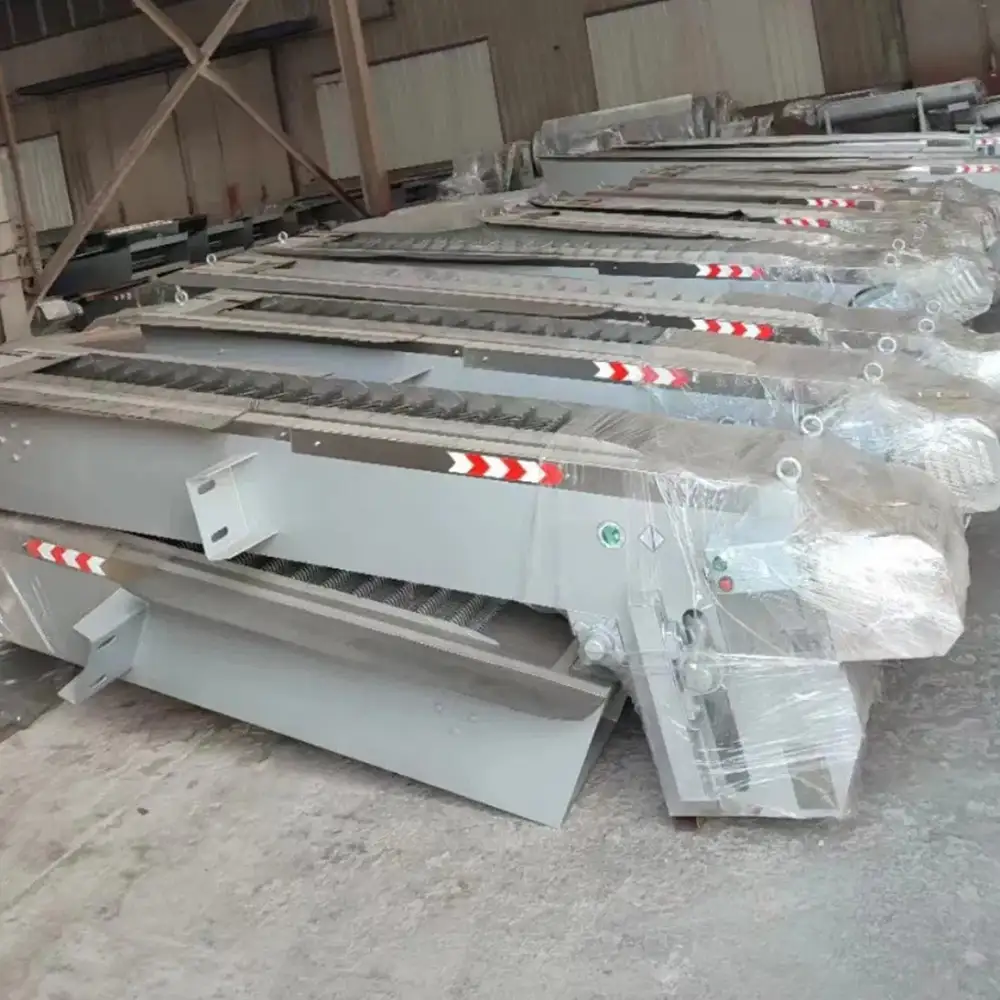
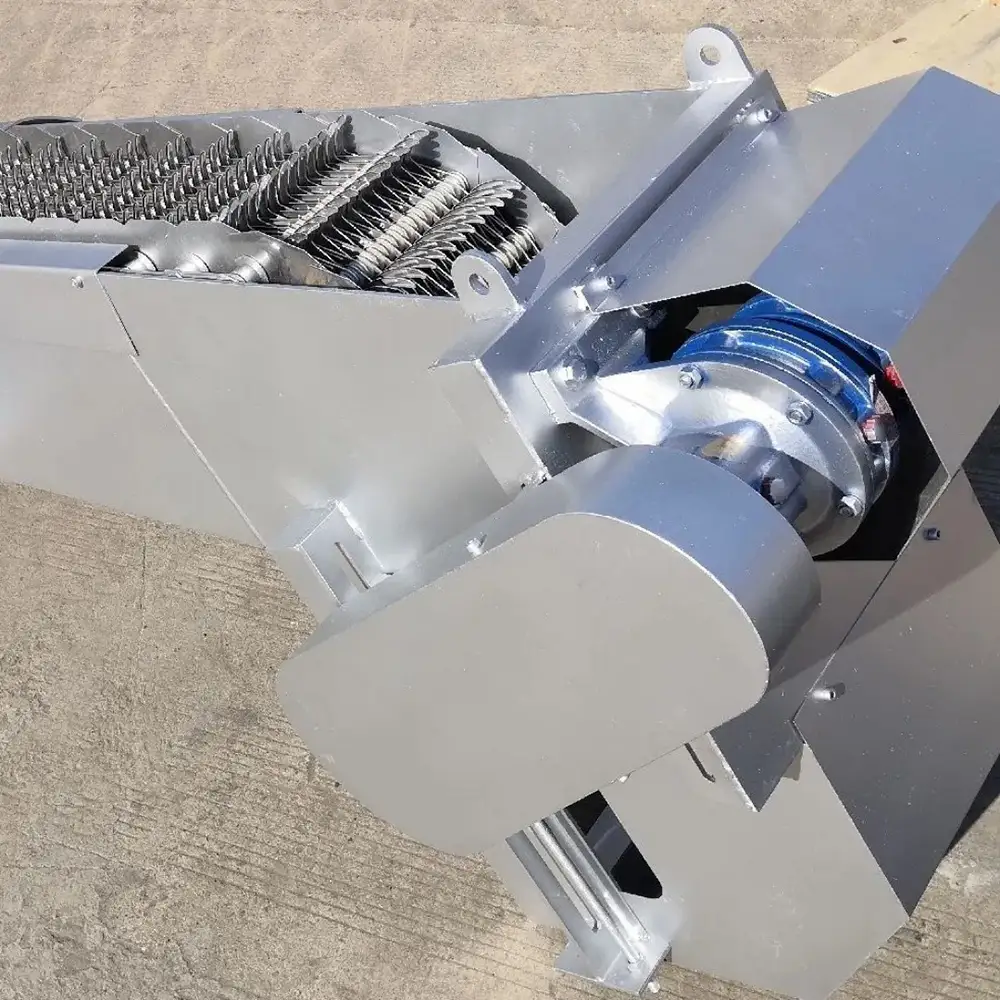
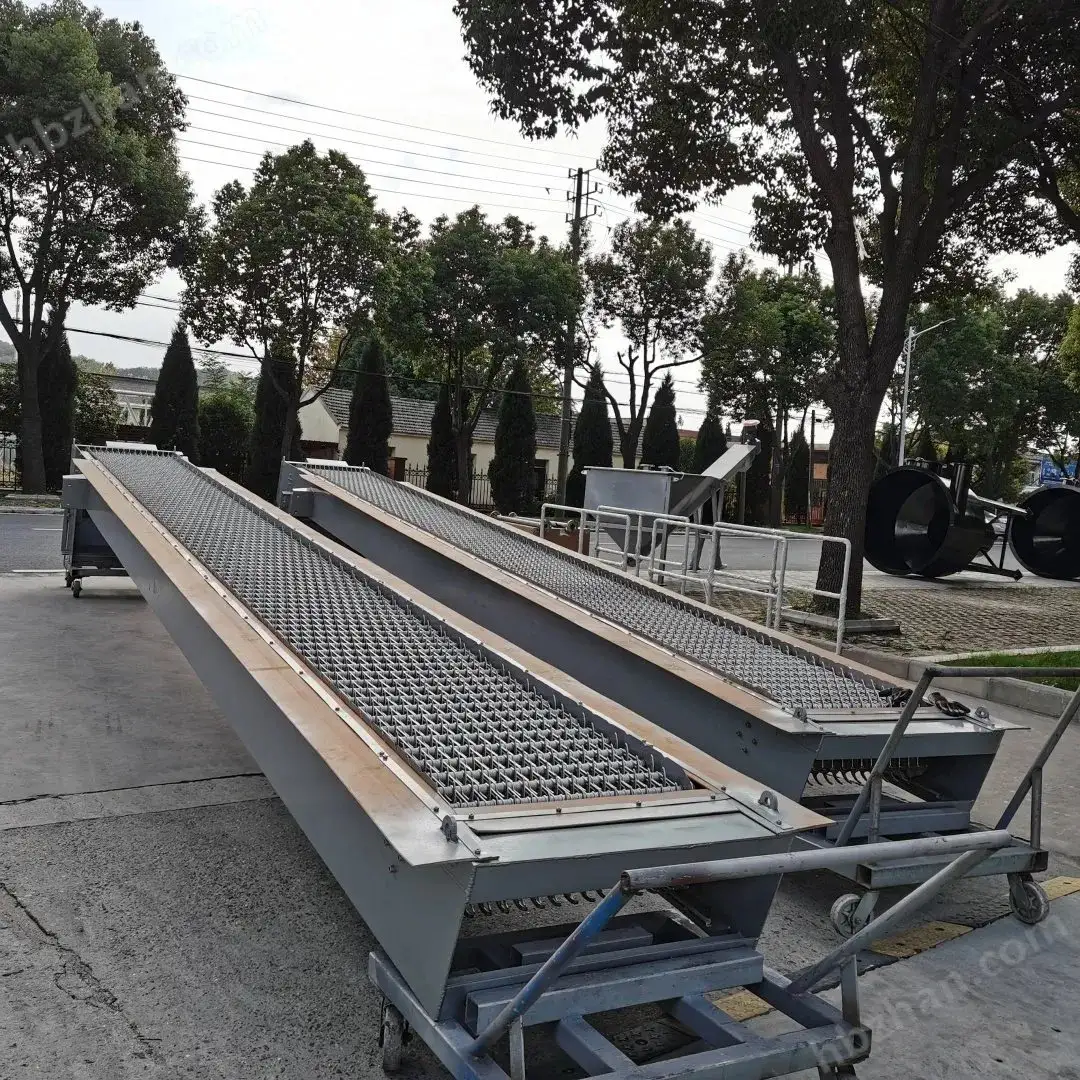
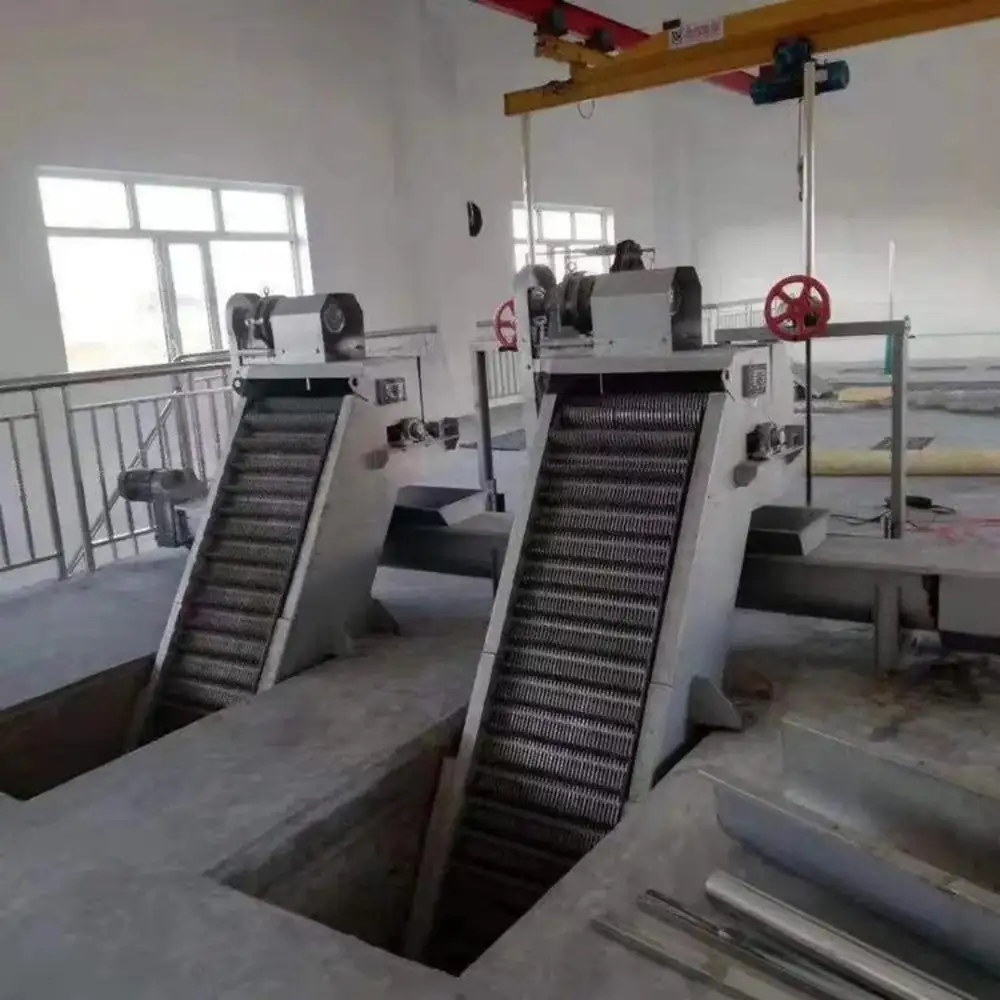
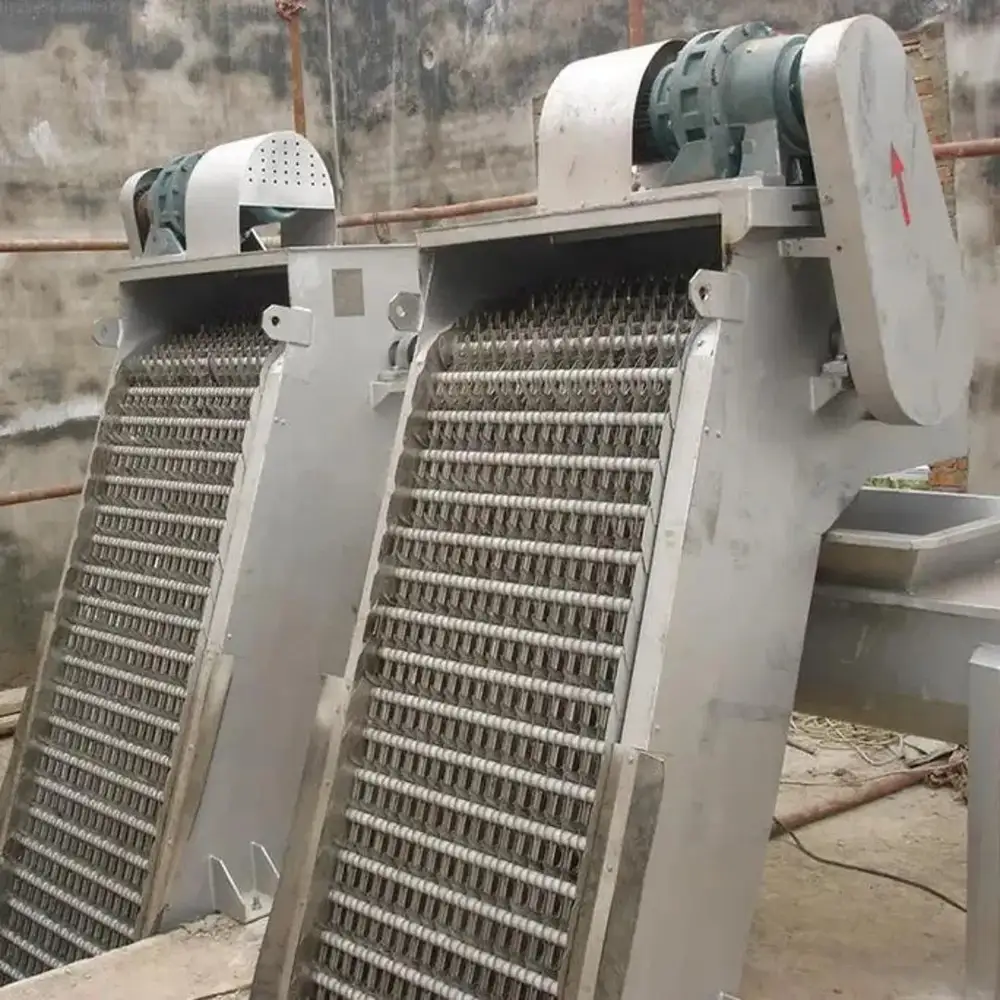
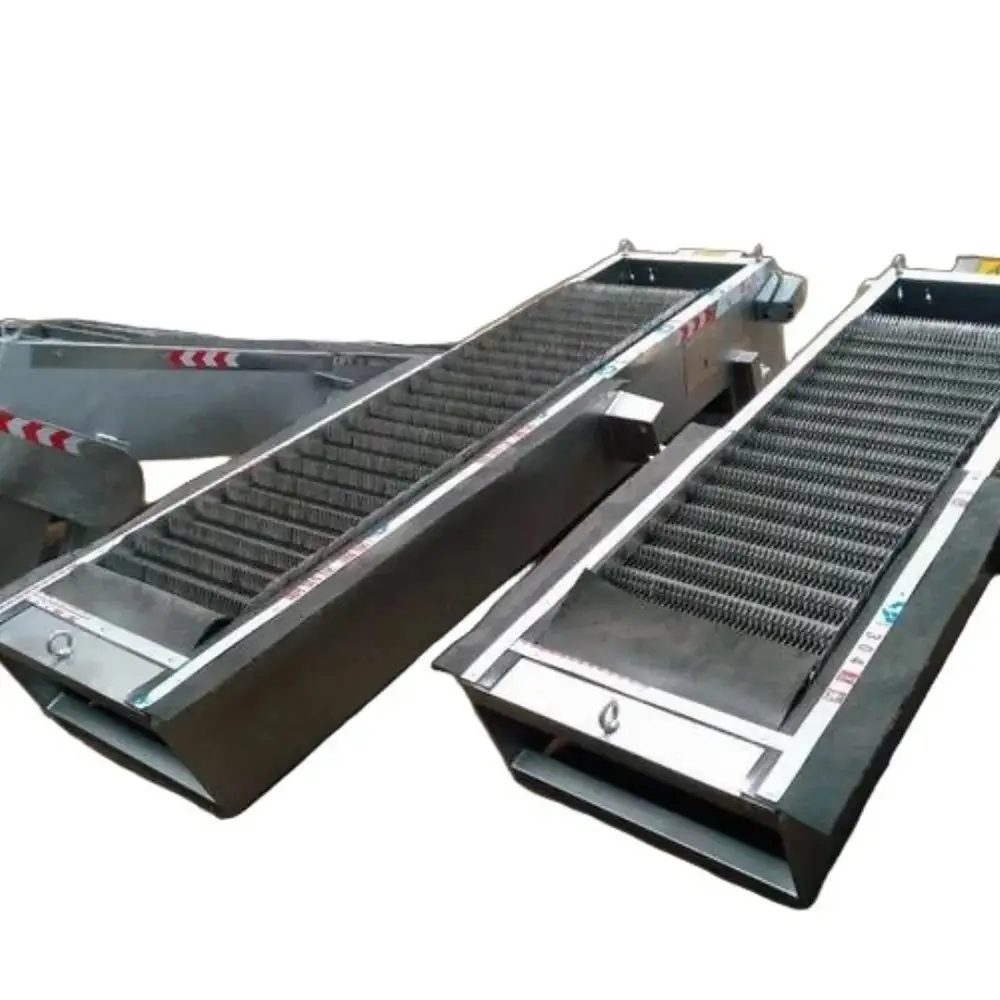
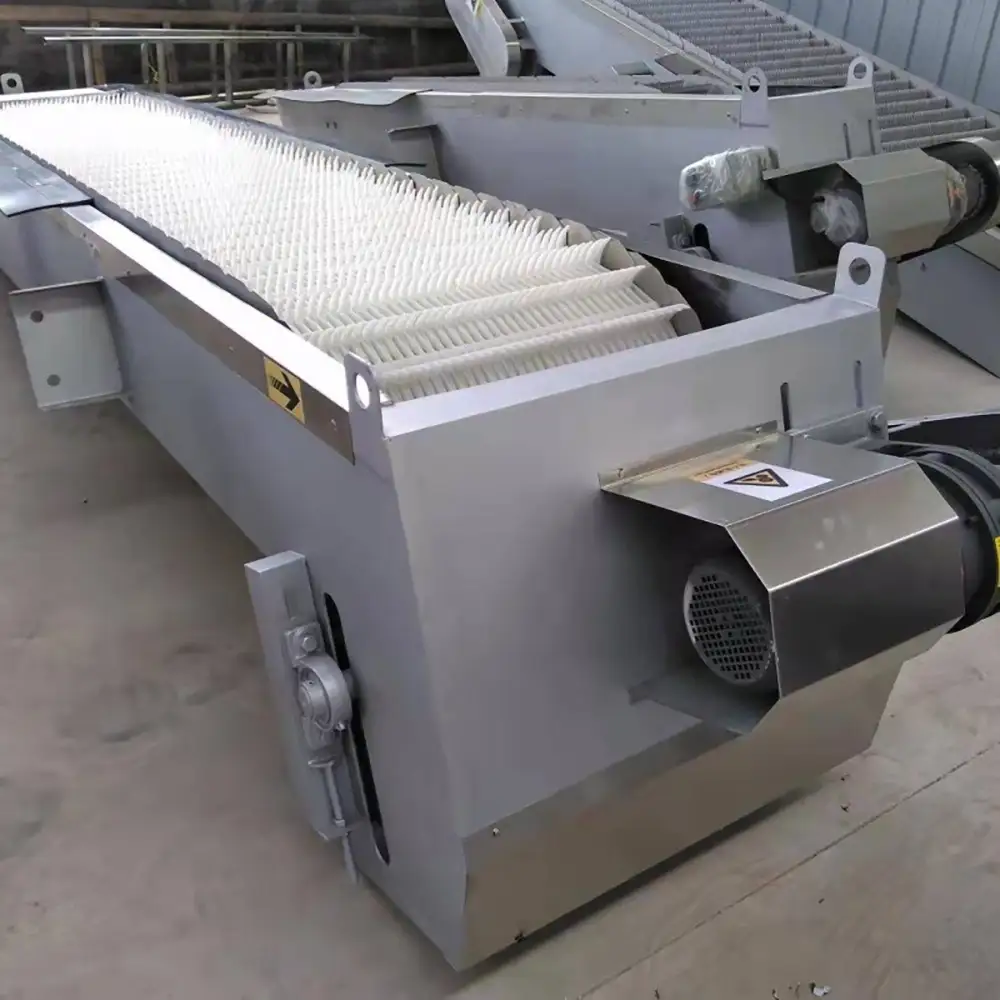
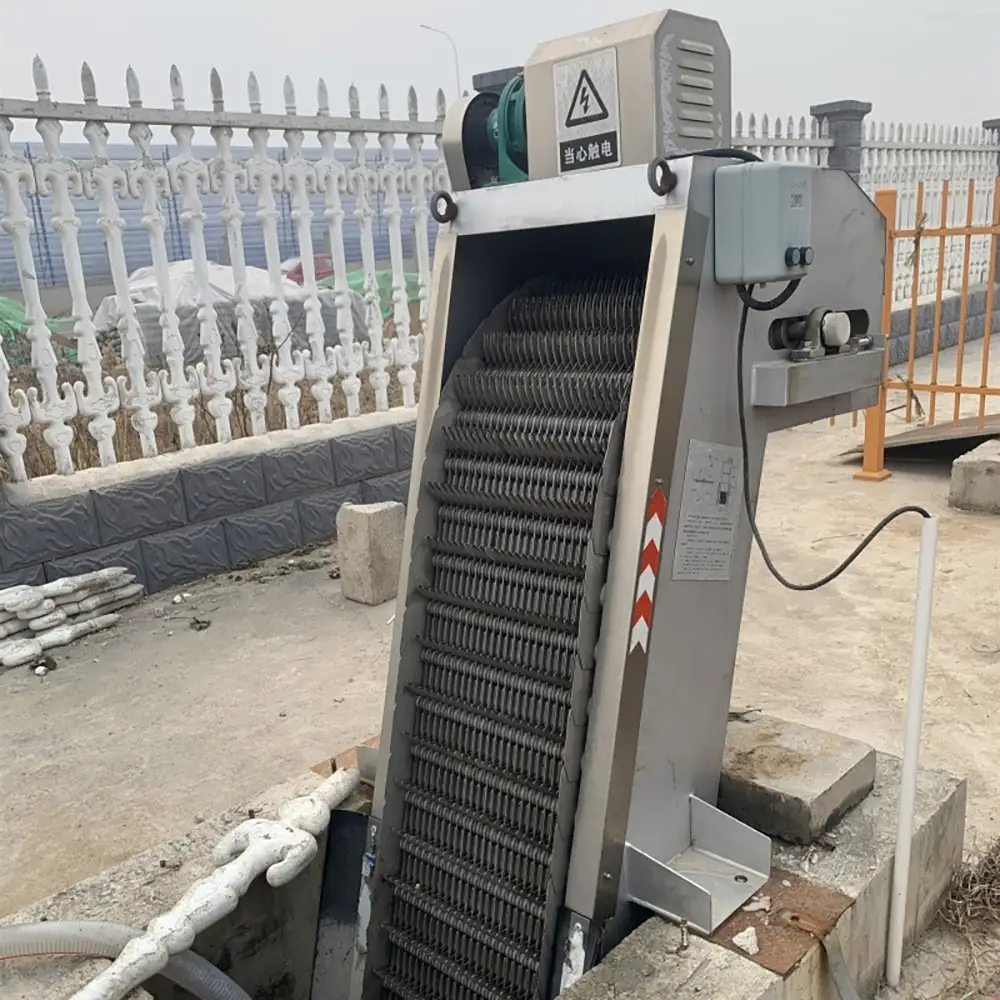
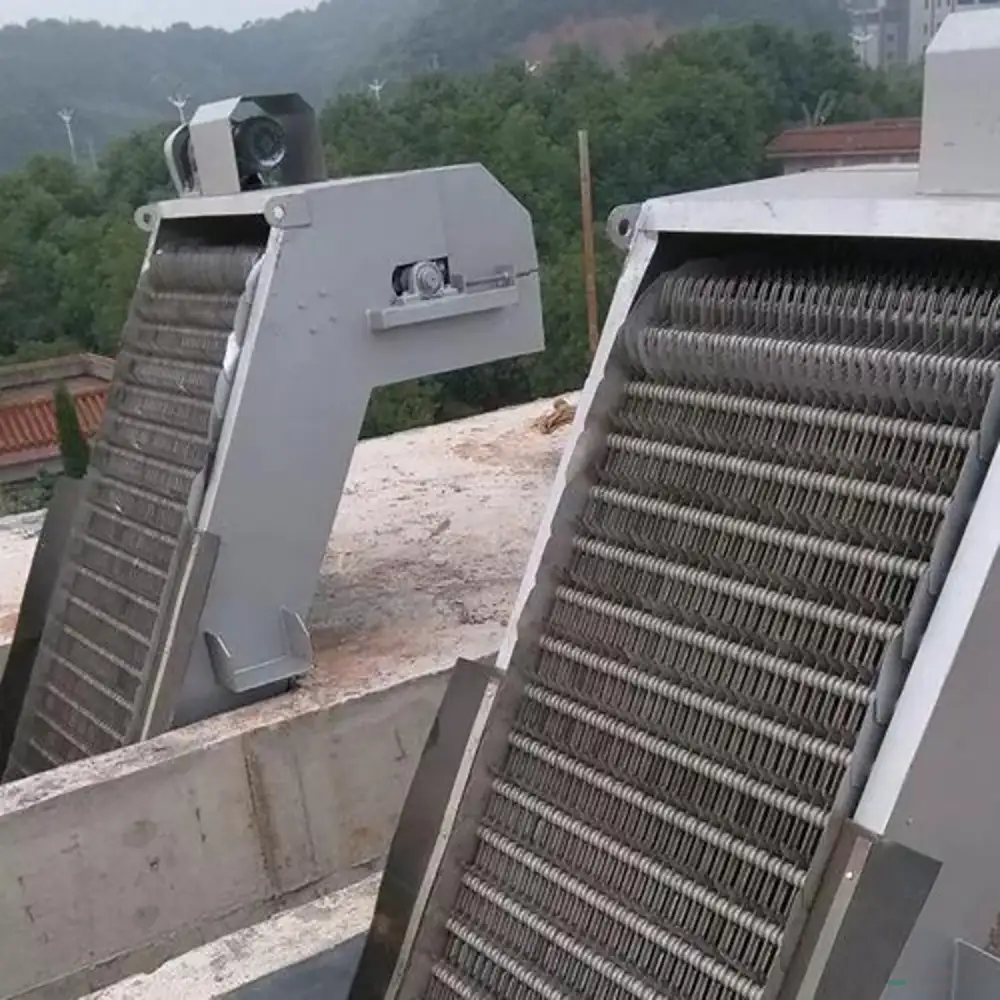
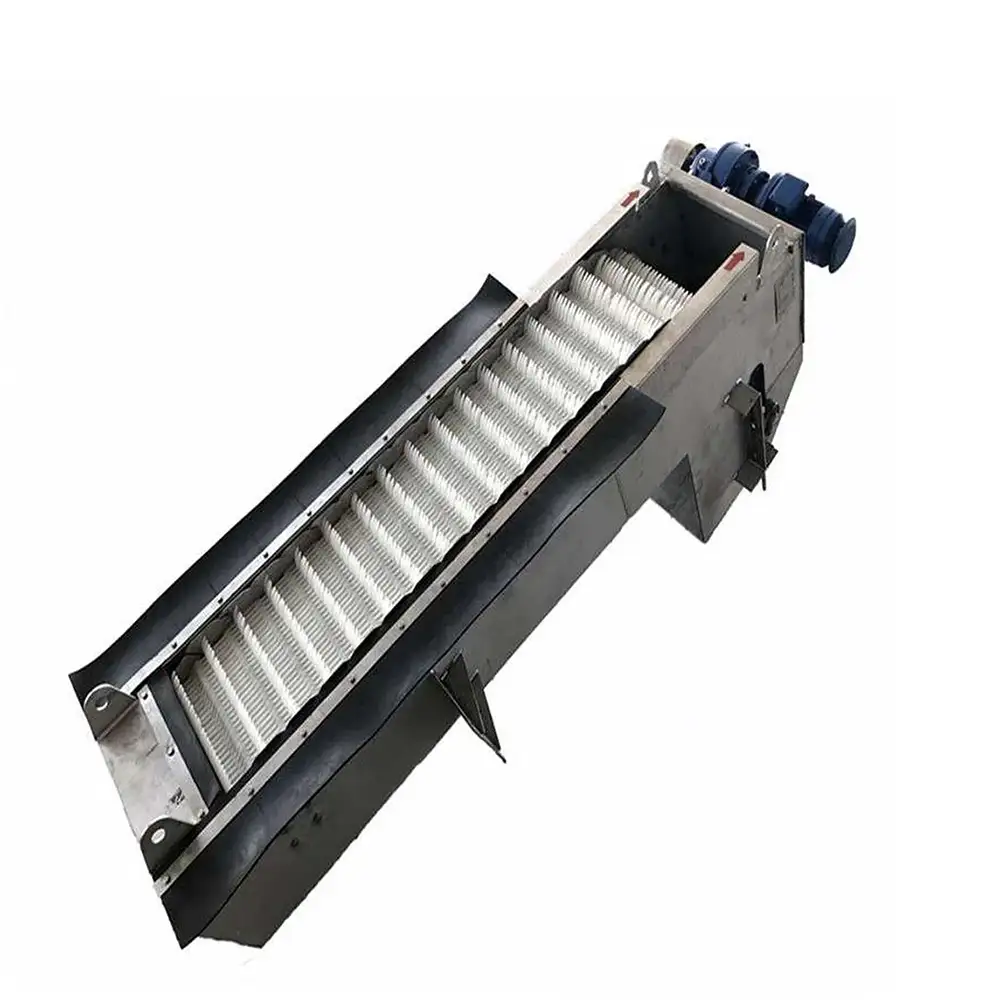
It consists of many identical rake teeth that are staggered and parallel assembled into a closed set of rake teeth chains. Driven by an electric motor and reducer, it continuously moves from top to bottom through a set of groove wheels and chains, achieving the goal of continuously clearing the grille. When the rake tooth chain is transported to the upper and back of the equipment, due to the guiding effect of the sprocket and curved rail, the parallel rake tooth rows can be misaligned, causing solid dirt to fall into the slag groove by its own weight. When it does not fall off cleanly, this type of grille is easy to carry dirt into the channel behind the grille.
Microfiltration Machine Screw Press for Suspended Solids Removal
The Microfiltration Machine Screw Press Suspended Solids Removal Grid is a combined solid-liquid separation solution designed for wastewater pretreatment, suspended solids removal, filtration, sludge concentration, and mechanical dewatering. By integrating a fine screening or microfiltration section with screw conveying and pressing technology, the equipment can continuously separate solids from water and reduce the moisture content of retained material.
Suspended solids are a major concern in municipal and industrial wastewater because excessive solids can interfere with pumps, pipes, biological treatment, membrane systems, filters, and other downstream processes. Screening equipment is commonly installed at the headworks of treatment facilities to remove solids and debris before subsequent treatment stages.
Microfiltration and Suspended Solids Removal
The filtration grid or screen provides the first separation barrier. Wastewater passes through the openings while suspended solids, fibers, organic residues, plastics, and other retained materials remain on the screening surface.
Depending on the selected configuration, the equipment can provide relatively fine screening for applications where smaller suspended particles need to be removed before downstream treatment.
The separated solids can then be transported by the screw mechanism toward a pressing or discharge section. This creates a continuous process that can combine:
Wastewater Inlet → Microfiltration/Screening → Suspended Solids Separation → Screw Conveying → Compression → Dewatered Solids Discharge
The actual screen opening should be selected according to the wastewater characteristics and the required degree of solids removal.
Screw Press Working Principle
The screw press section uses a slowly rotating screw inside a permeable screen or cylindrical basket. As the material enters the machine, the screw transports it toward the discharge end.
During transportation, free water drains through the screen. The internal volume gradually decreases toward the pressing section, increasing compression on the retained solids. More water is released while the solids become progressively concentrated.
This principle allows continuous dewatering without requiring a separate batch filtration cycle. Modern screw press systems are widely used for municipal and industrial sludge dewatering because they combine conveying, filtration, compression, and continuous cake discharge in one machine.
Suspended Solids Removal Grid
The grid or screening section is particularly important when wastewater contains fibers, organic particles, plastics, hair, food residues, or other suspended materials.
A properly selected grid can reduce the solids loading entering downstream pumps and treatment equipment. Mechanical screens are commonly used to protect pumps and valves from blockage or damage caused by large suspended solids and debris.
Fine screening can also help reduce the solids burden on biological treatment, filtration, membrane, and disinfection processes.
For example, screw screening systems can use perforated plates or wedge-wire screens to separate solids while a screw transports the retained material toward the discharge point.
Continuous Solid-Liquid Separation
One of the main advantages of a screw press system is continuous operation. Wastewater or concentrated sludge can be fed into the machine while separated liquid and dewatered solids are discharged continuously.
The filtrate is collected below the screening section and can normally be returned to the appropriate treatment stage. The dewatered solids are discharged through the outlet into a collection bin, conveyor, hopper, or other solids-handling system.
This reduces manual handling and can simplify the overall wastewater treatment process.
Sludge Dewatering Application
In addition to suspended solids removal, the machine can be used for sludge dewatering after processes such as sedimentation, biological treatment, dissolved air flotation, or other solid-liquid separation processes.
Flocculation can be added upstream when necessary. Polymer conditioning can improve the formation of larger sludge flocs, allowing water to separate more easily during the filtration and pressing stages.
The final cake solids concentration depends on sludge characteristics, feed concentration, polymer conditioning, screen configuration, screw speed, pressure, and other operating parameters. Screw press references emphasize that feed sludge quality has a direct influence on final cake performance.
Industrial Wastewater Applications
The Microfiltration Machine Screw Press can be applied to a wide variety of water and wastewater treatment projects, including:
Municipal Sewage Treatment
Industrial Wastewater Treatment
Food Processing Wastewater
Beverage Industry Wastewater
Dairy Wastewater
Slaughterhouse Wastewater
Pharmaceutical Wastewater
Chemical Wastewater
Textile and Dyeing Wastewater
Paper and Pulp Wastewater
Agricultural Wastewater
Livestock Wastewater
Aquaculture Wastewater
Mining and Mineral Processing
Water Reuse Pretreatment
The appropriate screen and screw configuration should be selected according to the type, concentration, size, and physical characteristics of the suspended solids.
Compact Equipment Design
Combining screening, conveying, filtration, and pressing functions can reduce the number of separate pieces of equipment required in a treatment line.
A complete system can include:
Screening Grid
Screw Conveyor
Screw Press Section
Sludge Feed Pump
Flocculation Tank
Polymer Dosing System
Filtrate Collection System
Automatic Washing System
Dewatered Solids Discharge
PLC Control Cabinet
The equipment can be installed as an independent machine or integrated into an existing wastewater treatment system.
Automatic Operation
The machine can be equipped with an automatic control system for screw operation, feeding, washing, polymer dosing, alarms, and shutdown protection.
Automatic washing helps maintain the filtration surface and reduce the accumulation of material on the screen. Some screw press designs use self-cleaning mechanisms or periodic spray washing to maintain filtration pathways.
Automatic control can reduce operator intervention while helping maintain stable treatment performance.
Low-Speed Screw Operation
The screw press typically operates at relatively low rotational speed. This provides gradual transportation and compression of the solids rather than aggressive high-speed mechanical processing.
Low-speed operation can help reduce mechanical wear, noise, and vibration while providing controlled dewatering. Certain screw press systems are specifically designed around low-speed screw movement and self-cleaning filtration surfaces.
The optimal operating speed should be determined according to the feed material, solids concentration, required throughput, and desired dewatering performance.
Maintenance and Service
Routine maintenance should include inspection of the screen or grid, screw assembly, drive motor, bearings, seals, spray nozzles, discharge mechanism, and control components.
The filtration surface should be kept clean to maintain proper hydraulic flow and separation performance. Operators should also monitor unusual vibration, noise, motor loading, or changes in filtrate quality.
A preventive maintenance schedule can help extend equipment service life and maintain consistent treatment performance.
Customized System Design
The equipment can be configured according to the requirements of each wastewater treatment project.
Important design parameters include:
Wastewater Flow Rate
Suspended Solids Concentration
Solids Particle Size
Required Screen Opening
Sludge Feed Concentration
Dry Solids Loading
Desired Dewatering Level
Screw Speed
Polymer Requirement
Installation Space
Automatic Control Requirements
Pilot testing can be useful for difficult wastewater or sludge applications because separation and dewatering performance varies with feed characteristics.
Why Choose Us
Integrated Separation: Combines screening, solid-liquid separation, conveying, and screw pressing.
Effective Suspended Solids Removal: Helps remove solids before downstream treatment processes.
Continuous Operation: Supports continuous wastewater or sludge feeding and solids discharge.
Compact Design: Multiple treatment functions can be integrated into one machine.
Automatic Cleaning: Washing systems can help maintain screen performance.
Flexible Configuration: Screen openings, screw design, capacity, controls, and auxiliary systems can be selected according to project requirements.
Wide Application Range: Suitable for municipal sewage and many industrial wastewater applications.
Easy System Integration: Can be connected with pumps, flocculation tanks, conveyors, filtration systems, and complete wastewater treatment plants.
FAQ
1. What is a microfiltration machine?
A microfiltration machine uses a fine filtration medium or screen to separate suspended particles from a liquid stream.
2. What is a screw press?
A screw press is a continuous mechanical dewatering machine that uses a rotating screw and screen to convey, compress, and dewater solids.
3. Can this machine remove suspended solids?
Yes. The screening or filtration grid is designed to retain suspended solids according to the selected screen opening.
4. Can it be used for wastewater treatment?
Yes. It can be used for municipal sewage, industrial wastewater, sludge treatment, and pretreatment applications.
5. What types of solids can it remove?
Depending on the screen configuration, it can separate fibers, organic residues, plastics, sludge particles, and other suspended or retained solids.
6. Can the equipment dewater sludge?
Yes. The screw press section can progressively compress concentrated sludge and release water through the screen.
7. Does the system require polymer?
Not necessarily. Some sludge can be processed without chemical conditioning, while other sludge types may benefit from polymer flocculation.
8. Can the machine operate continuously?
Yes. Screw press systems are designed for continuous conveying, filtration, compression, and solids discharge.
9. What determines the screen opening?
The screen opening depends on the desired solids removal, wastewater characteristics, downstream equipment requirements, and hydraulic conditions.
10. Can the machine be integrated into an existing treatment plant?
Yes. It can be installed as pretreatment or sludge dewatering equipment and connected to pumps, tanks, conveyors, and other treatment units.
11. How is the filtration grid cleaned?
Depending on the design, cleaning can be performed by mechanical self-cleaning elements, brushes, or periodic spray washing.
12. How do I select the right model?
The main factors are wastewater flow, suspended solids concentration, solids particle size, screen opening, dry solids loading, required throughput, and desired dewatering performance.
Prev:
Stainless Steel Rotary Rake Type Mechanical Screen/Grille Machine for Wastewater Treatment
Next:
220V/ 380V/ Customerized Microfiltration Machine Screw Press Filter
TAG:
Industrial Wastewater Treatment Equipment,
Suspended Solids Removal,
Dairy Wastewater Treatment,
Food Wastewater Treatment,
Wastewater Treatment Equipment,
Continuous Sludge Dewatering,
Sludge Filtration Equipment,
Mechanical Sludge Dewatering,
Sludge Dewatering Equipment,
Screw Press Dewatering Equipment,
Sludge Treatment Equipment,
Solid Liquid Separation Equipment,
Solid Liquid Separation Machine,
Sludge Dewatering Machine,
Screw Press Dewatering Machine,
Screw Press Sludge Dewatering,
Industrial Sludge Treatment,
Wastewater Filtration Equipment,
Chemical Wastewater Treatment,
Screw Press Machine,
Screw Press Filter,
Suspended Solids Removal Equipment,
Suspended Solids Separator,
Wastewater Pretreatment Equipment,
Wastewater Screening Equipment,
Microfiltration Equipment,
Wastewater Treatment Plant Equipment,
Pharmaceutical Wastewater Treatment,
Industrial Wastewater Filtration,
Sewage Treatment Equipment,
Related Category:
Microfiltration Machine,Screw Press,Suspended Solids Removal Machine,Suspended Solids Removal Equipment China, suppliers, manufacturers, factory, customized, wholesale, quotation, made in China