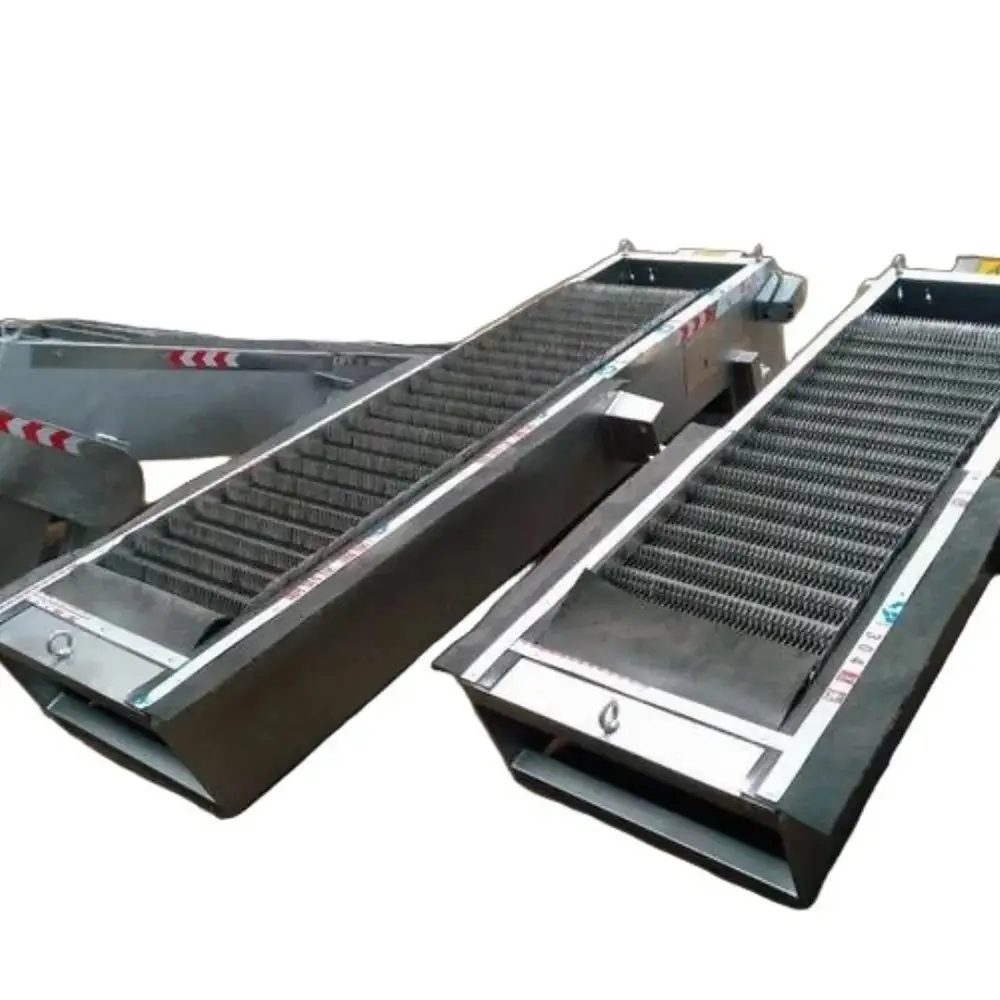
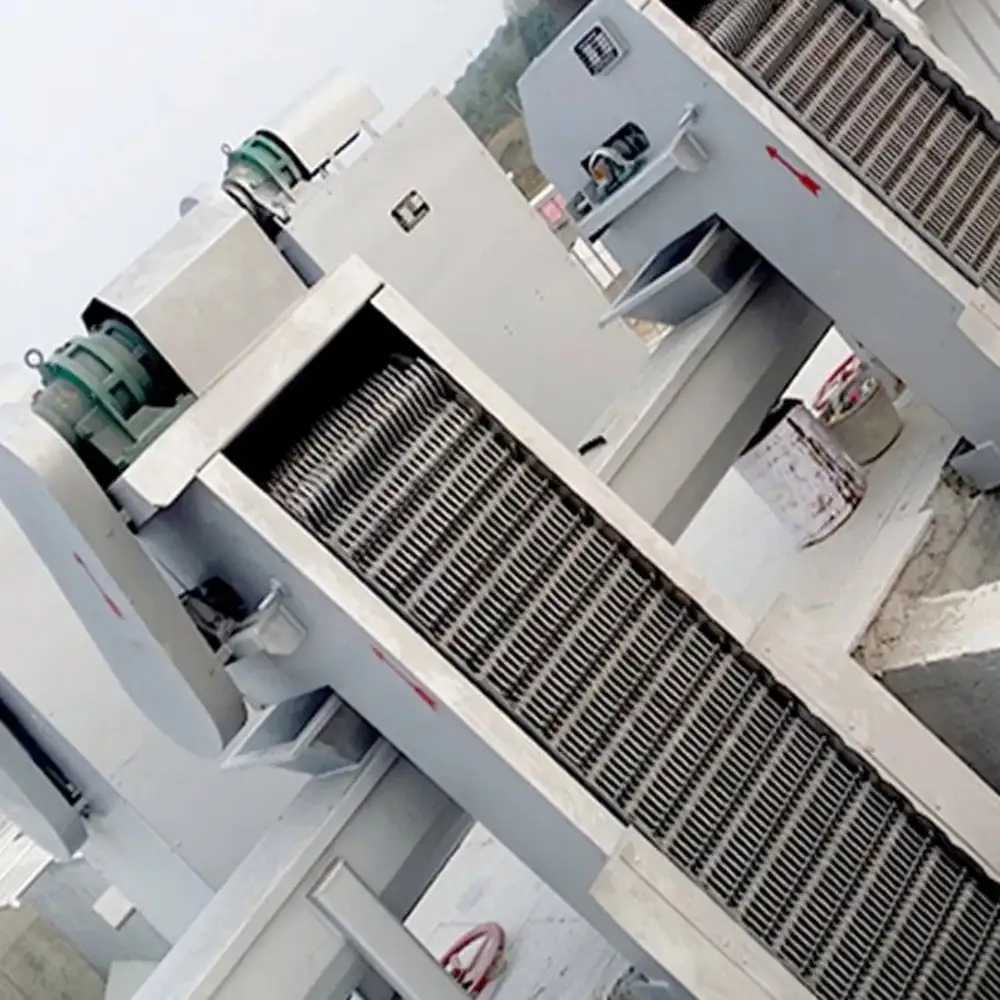
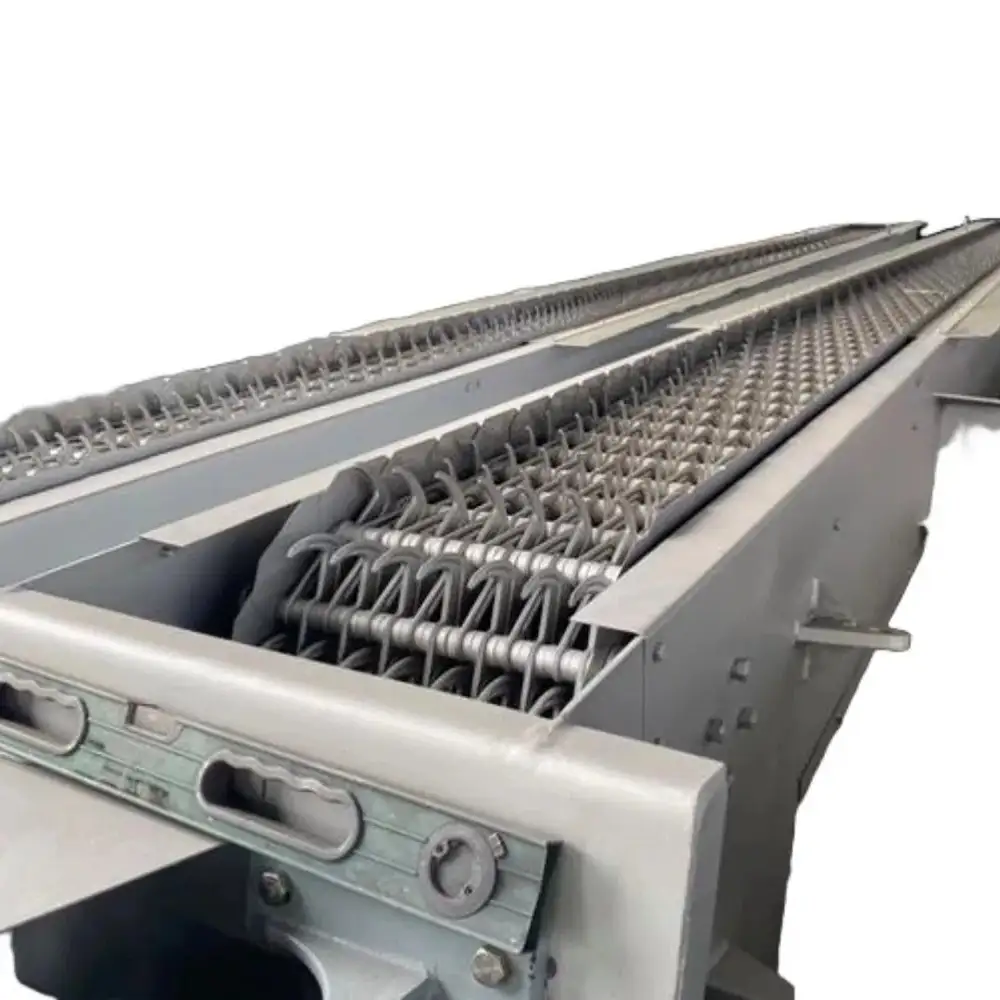
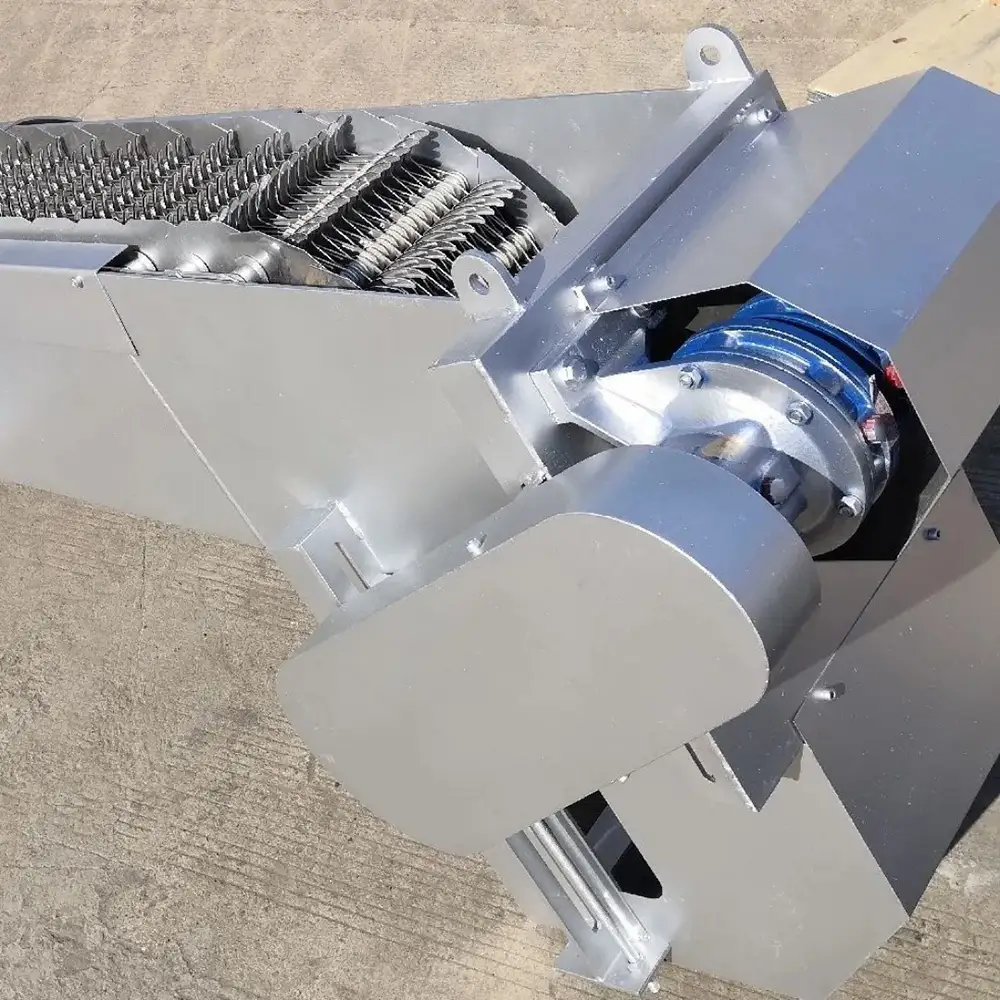
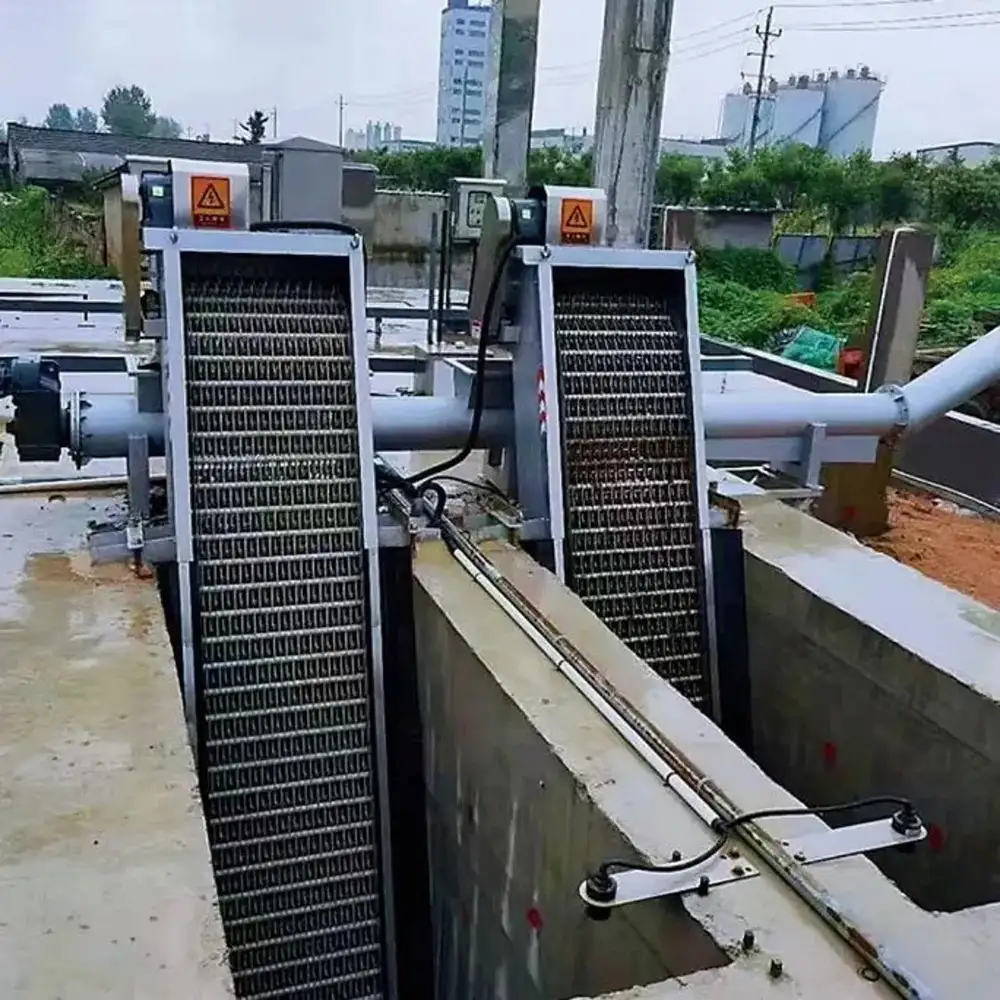
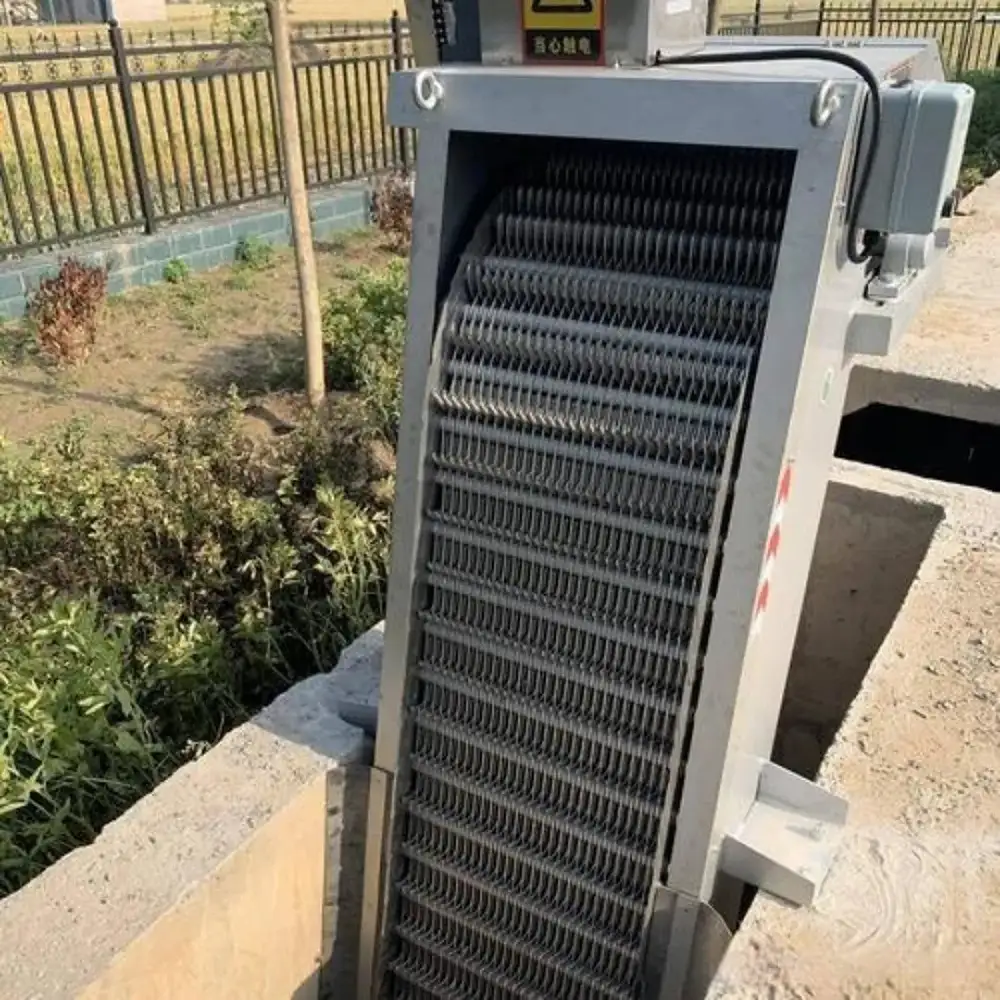
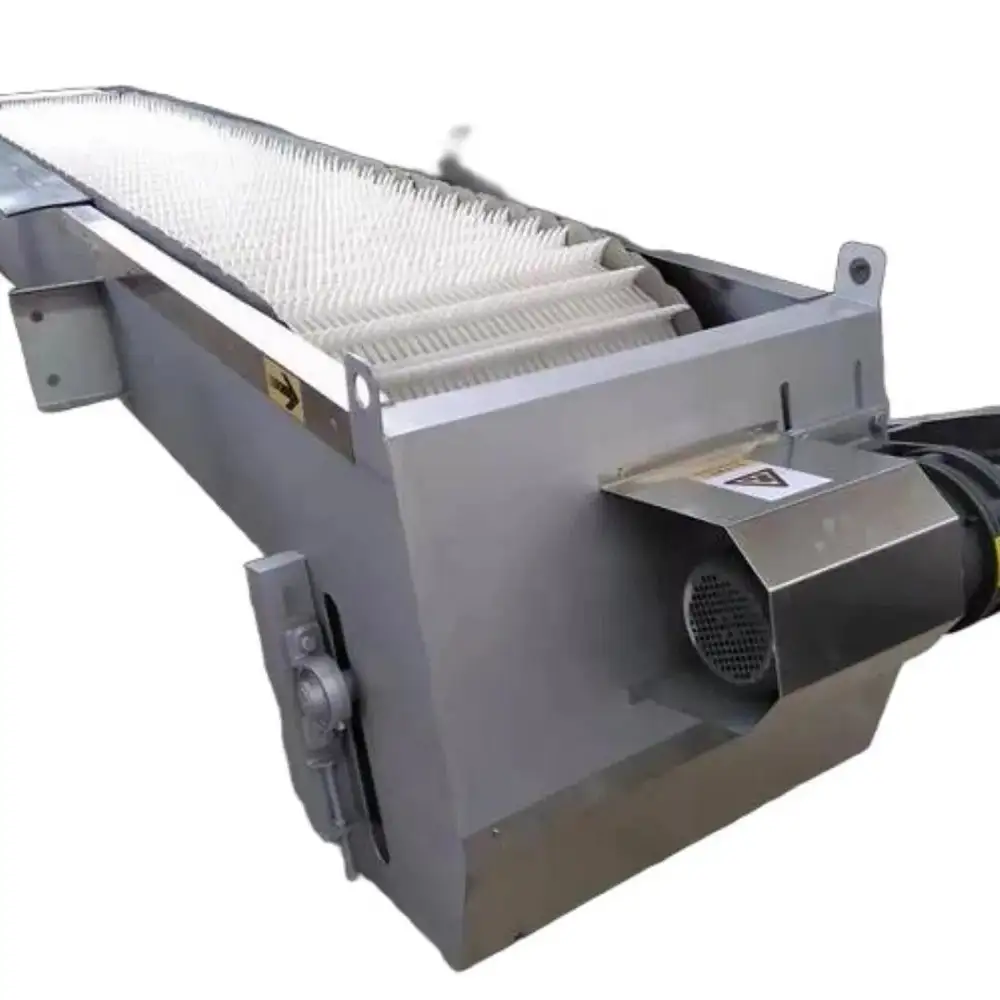
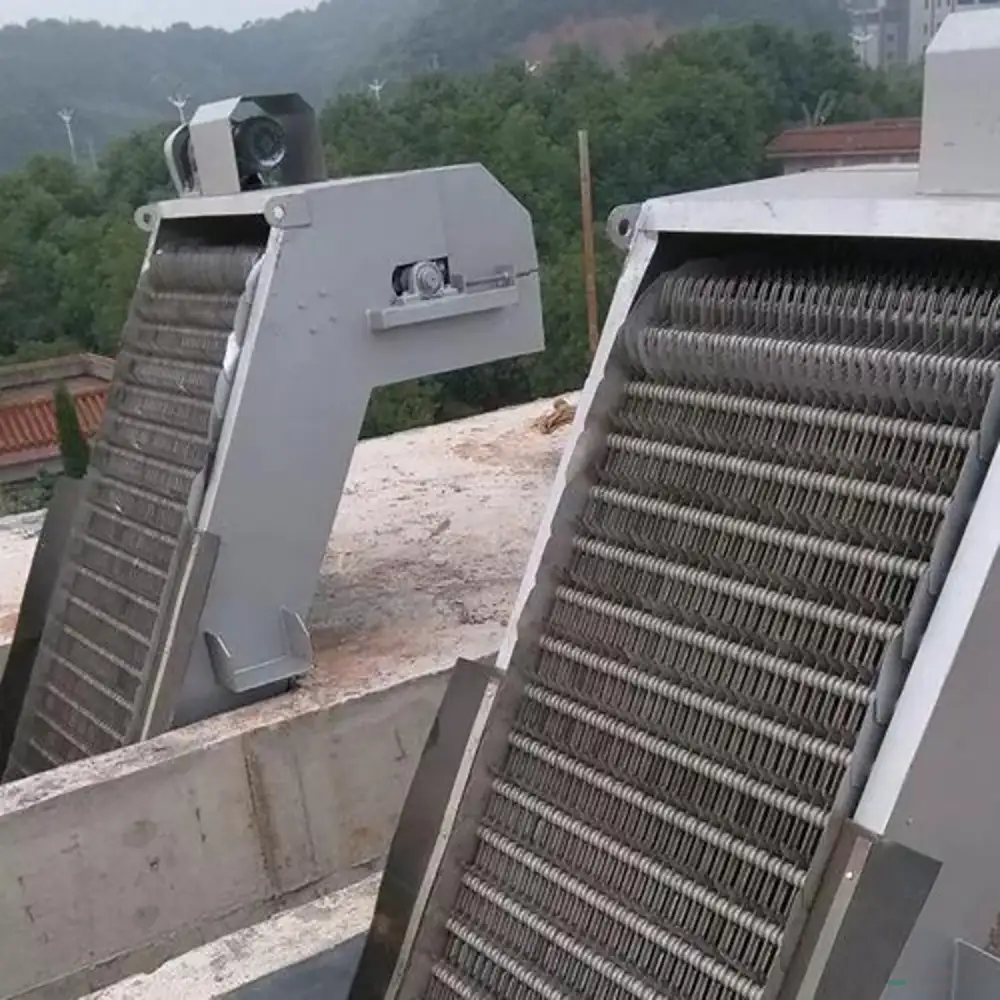
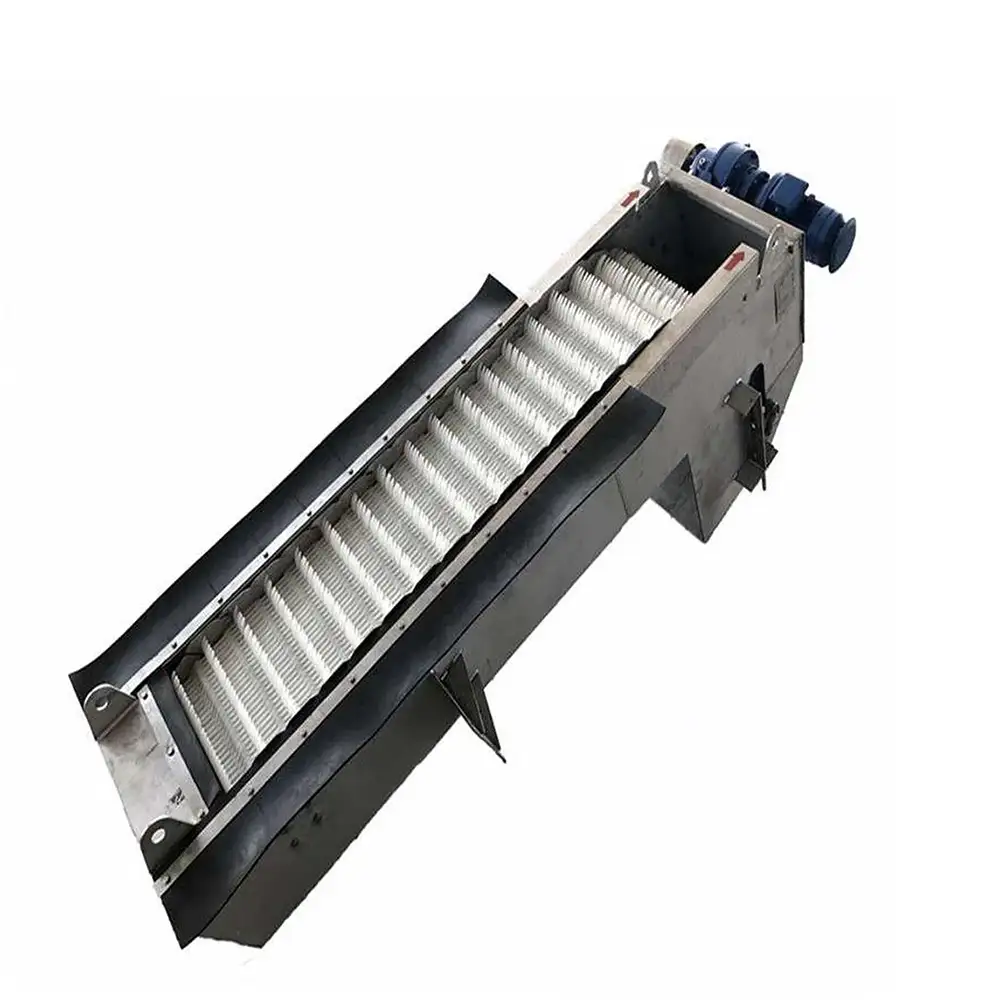
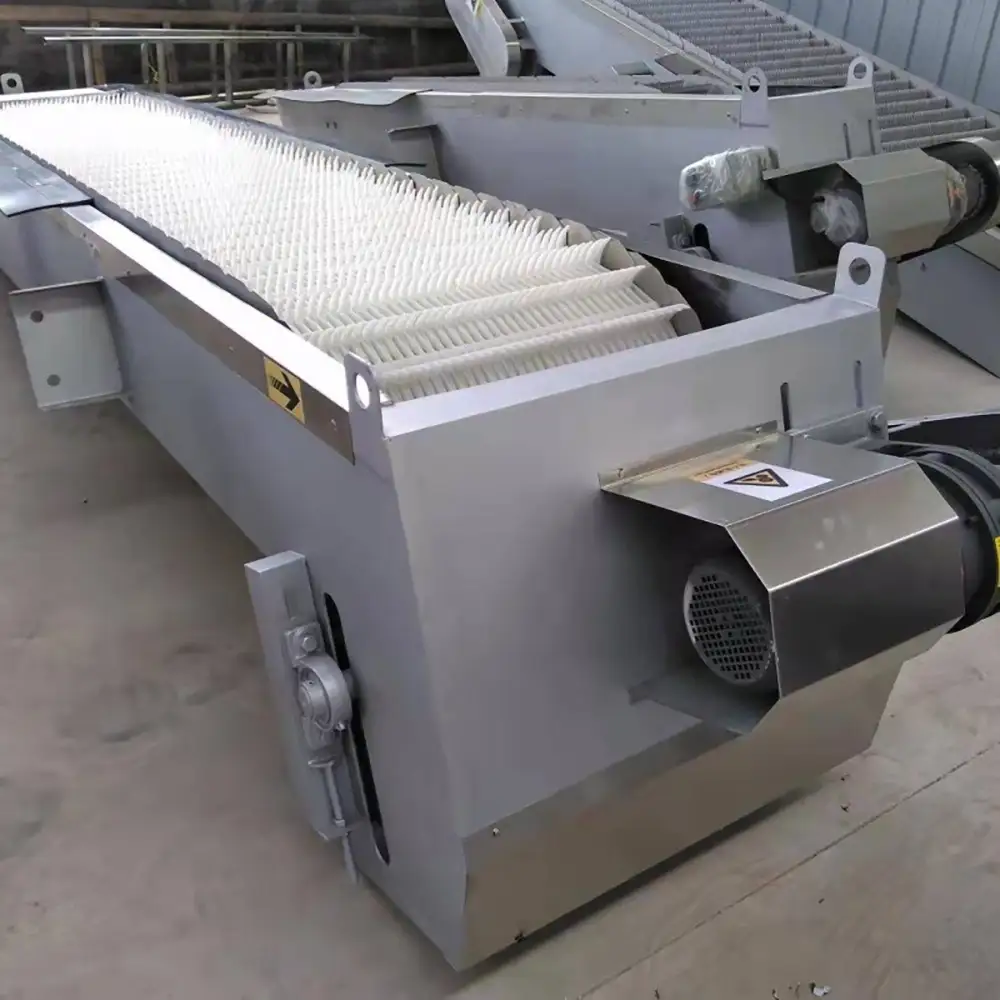
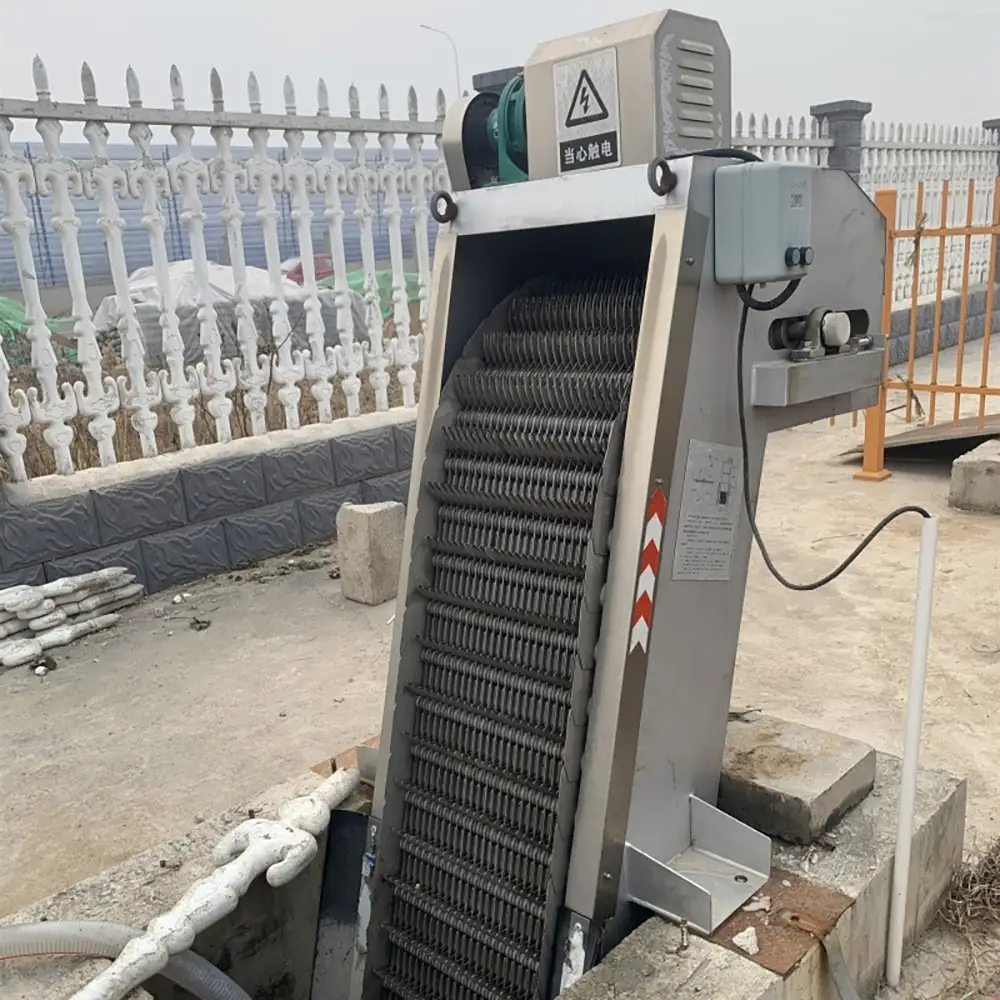
Mechanical grille is a type of grille equipment that can automatically remove garbage attached to the grille.
Mechanical grille is one of the early purification equipment in water supply and drainage treatment technology. It greatly reduces the labor intensity of workers, protects their physical health, reduces the head loss of water inflow, and improves the efficiency of pump stations
220V/380V Customized Microfiltration Machine Screw Press Filter
The 220V/380V Customized Microfiltration Machine Screw Press Filter is a compact solid-liquid separation and sludge dewatering solution designed for wastewater treatment plants, industrial processes, municipal sewage systems, and applications requiring continuous filtration and water removal from concentrated solids. By combining fine screening or microfiltration with screw press dewatering technology, the system can help separate suspended solids from liquid and reduce the water content of concentrated sludge before transportation, disposal, drying, or further processing.
Microfiltration is generally used to separate fine suspended particles from liquid, while screw press equipment mechanically conveys and compresses concentrated solids to release additional water. EPA technical documentation describes microfiltration as a process that produces a concentrated suspended-solids stream that can be directed to subsequent dewatering equipment.
Microfiltration and Screw Press Separation
The system can be configured according to the characteristics of the wastewater or sludge. A filtration stage can remove or concentrate fine suspended solids, while the screw press section provides mechanical dewatering.
During screw press operation, sludge enters the equipment and is gradually transported by a rotating screw through a screened cylindrical section. Water passes through the screen while solids remain inside and move toward the discharge end. As the available volume decreases, the solids are compressed and additional liquid is released.
A typical process can be arranged as:
Wastewater → Screening/Microfiltration → Sludge Concentration → Screw Press Dewatering → Filtrate Collection + Dewatered Cake
The exact process depends on the wastewater characteristics, solids concentration, required filtration level, and final treatment objectives.
Continuous Screw Press Dewatering
Unlike batch filter presses, a screw press can be designed for continuous sludge feeding and cake discharge. The rotating screw transports the sludge while the screen allows separated water to drain away.
EPA documentation on inclined screw presses describes a process in which conditioned sludge enters a rotating screw inside a wedge-wire screen, with filtrate passing through the screen as the sludge moves upward and becomes progressively dewatered.
The final dewatering performance depends on sludge properties, solids concentration, screen configuration, screw speed, pressure at the discharge, and chemical conditioning.
220V and 380V Power Options
The equipment can be configured for 220V or 380V electrical power, depending on the installation environment and customer requirements.
The electrical system can include the main drive motor, control cabinet, sludge feed pump, polymer dosing system, washing pump, sensors, and other auxiliary components.
For export projects, the electrical configuration can be adapted according to local voltage, frequency, control requirements, and plant conditions.
Sludge Filtration and Dewatering
The machine is suitable for treating concentrated sludge generated by different wastewater treatment processes. Depending on the application, the feed may come from biological treatment, dissolved air flotation, sedimentation, coagulation-flocculation, membrane filtration, or other solid-liquid separation processes.
Sludge conditioning may be required for certain difficult-to-dewater materials. EPA technical information notes that sludge conditioning can improve dewaterability and may involve chemical treatment or other conditioning methods.
Polymer dosing can be integrated into the system when necessary. The actual polymer type and dosage should be determined through testing because sludge characteristics vary significantly between applications.
Solid-Liquid Separation
The machine produces two main outputs: separated liquid and concentrated dewatered solids.
The liquid passing through the filtration screen is collected as filtrate and can normally be returned to an appropriate treatment stage. The solids are continuously conveyed toward the discharge outlet, where adjustable resistance can provide additional compression.
The resulting sludge cake is easier to collect and handle than untreated liquid sludge. Reducing water content can also reduce the volume and weight of material requiring transportation or disposal.
Wide Range of Applications
The 220V/380V Microfiltration Machine Screw Press Filter can be used in many industries, including:
Municipal Wastewater Treatment
Industrial Wastewater Treatment
Food Processing
Dairy Processing
Beverage Production
Slaughterhouse Wastewater
Pharmaceutical Manufacturing
Chemical Industry
Textile and Dyeing
Paper and Pulp Processing
Agricultural Wastewater
Livestock Wastewater
Aquaculture
Mining and Mineral Processing
Water Treatment Plants
It can also be used for sludge generated by DAF systems, biological treatment systems, sedimentation tanks, and other wastewater treatment processes.
Compact Equipment Configuration
The screw press design integrates conveying, screening, compression, and dewatering into a compact machine. This can be beneficial for wastewater treatment projects where available floor space is limited.
The equipment can be supplied as a standalone unit or integrated into a complete sludge treatment line. Auxiliary systems may include:
Sludge Feed Pump
Polymer Preparation System
Flocculation Tank
Static Mixer
Filtrate Collection Tank
Automatic Washing System
Control Cabinet
Sludge Conveyor
Cake Collection Hopper
The final configuration should be selected according to the required treatment capacity and the properties of the feed sludge.
Automatic Operation
A PLC-based control system can be used to coordinate feeding, screw rotation, washing, polymer dosing, alarms, and shutdown functions.
Sensors can be integrated to monitor equipment status and provide automatic protection against abnormal operating conditions. Automatic washing can help keep the screen surface clean and maintain stable filtration performance.
Regular inspection remains important. Screen condition, screw wear, bearings, seals, drive components, spray nozzles, and sludge discharge should be checked according to the operating environment and maintenance schedule.
Customized Design
The equipment can be customized according to the specific requirements of the wastewater treatment project.
Important design parameters include:
Wastewater or Sludge Flow Rate
Dry Solids Loading
Feed Solids Concentration
Sludge Type
Screen Opening
Required Dewatering Performance
Screw Speed
Polymer Dosage
Electrical Voltage
Installation Space
Automatic Control Requirements
Pilot or laboratory testing can be recommended for difficult sludge applications because dewatering performance depends heavily on the physical and chemical characteristics of the feed material. Research on sludge dewatering likewise emphasizes that sludge properties strongly influence filtration and compression behavior.
Why Choose Us
220V/380V Electrical Options: Suitable for different industrial and international installation environments.
Integrated Filtration and Dewatering: Combines solid-liquid separation with mechanical sludge dewatering.
Continuous Operation: Supports continuous feeding, filtration, compression, and cake discharge.
Compact Design: Helps save installation space in wastewater treatment facilities.
Automatic Control: PLC control can coordinate the major operating functions.
Flexible Configuration: Screen, motor, washing, feeding, and control systems can be selected according to project requirements.
Wide Industrial Applications: Suitable for municipal, food, chemical, pharmaceutical, agricultural, textile, and industrial wastewater.
Project-Based Engineering: Equipment selection can be based on actual sludge characteristics, capacity, and treatment objectives.
FAQ
1. What is a microfiltration machine?
A microfiltration machine uses a fine filtration medium or membrane to separate relatively small suspended particles from a liquid stream.
2. What is a screw press filter?
A screw press filter is a continuous mechanical dewatering machine that uses a rotating screw and screened cylinder to separate liquid from concentrated solids.
3. Are microfiltration and screw pressing the same process?
No. Microfiltration and screw pressing are different separation technologies. They can, however, be combined in a treatment system where fine solids are first concentrated and then mechanically dewatered.
4. Can the machine be used for wastewater sludge?
Yes. It can be configured for municipal and industrial wastewater sludge dewatering applications.
5. Is 220V available?
Yes. A 220V electrical configuration can be selected according to the project requirements.
6. Is 380V available?
Yes. The equipment can be configured for 380V industrial power systems.
7. Does the machine require polymer?
Some sludge types benefit from polymer conditioning, while others may not. Polymer requirements should be determined through sludge testing.
8. Can the screw press work continuously?
Yes. The screw press principle supports continuous sludge feeding, water separation, compression, and cake discharge.
9. What industries can use this equipment?
It can be used in municipal sewage, food processing, dairy, chemical, pharmaceutical, textile, paper, agricultural, livestock, and other industrial wastewater applications.
10. What determines the dewatering performance?
Important factors include sludge properties, solids concentration, screen opening, screw speed, discharge resistance, polymer conditioning, and feed rate.
11. Can the equipment be customized?
Yes. Capacity, electrical voltage, screen specifications, control system, washing system, feeding arrangement, and discharge configuration can be customized.
12. How should the correct machine size be selected?
Selection should be based on feed flow, dry solids loading, sludge concentration, sludge type, desired cake characteristics, operating hours, and installation conditions.
Prev:
Microfiltration Machine One Year Screw Press Suspended Solids Removal Grid
Next:
Rotating Mechanical Grid Cleaning Machine Equipment for Purified Water Plant
TAG:
Industrial Wastewater Treatment Equipment,
Agricultural Wastewater Treatment,
Wastewater Treatment Equipment,
Industrial Sludge Dewatering,
Continuous Sludge Dewatering,
Sludge Filtration Equipment,
Mechanical Sludge Dewatering,
Municipal Sludge Dewatering,
Sludge Dewatering Equipment,
Wastewater Sludge Dewatering,
Screw Press Dewatering Equipment,
Sludge Press Machine,
Food Wastewater Sludge Treatment,
Paper Mill Sludge Dewatering,
Sludge Treatment Equipment,
Sewage Sludge Dewatering,
Solid Liquid Separation Equipment,
Solid Liquid Separation Machine,
Sludge Dewatering Machine,
Wastewater Sludge Treatment,
Screw Press Dewatering Machine,
Screw Press Sludge Dewatering,
Industrial Sludge Treatment,
Wastewater Filtration Equipment,
Chemical Wastewater Treatment,
Sludge Thickening Equipment,
Screw Press Filter,
Microfiltration Equipment,
Wastewater Treatment Plant Equipment,
Pharmaceutical Wastewater Treatment,
Related Category:
Microfiltration Machine,Screw Press Filter,Microfiltration Screw Press Filter,Screw Press Dewatering Machine China, suppliers, manufacturers, factory, customized, wholesale, quotation, made in China