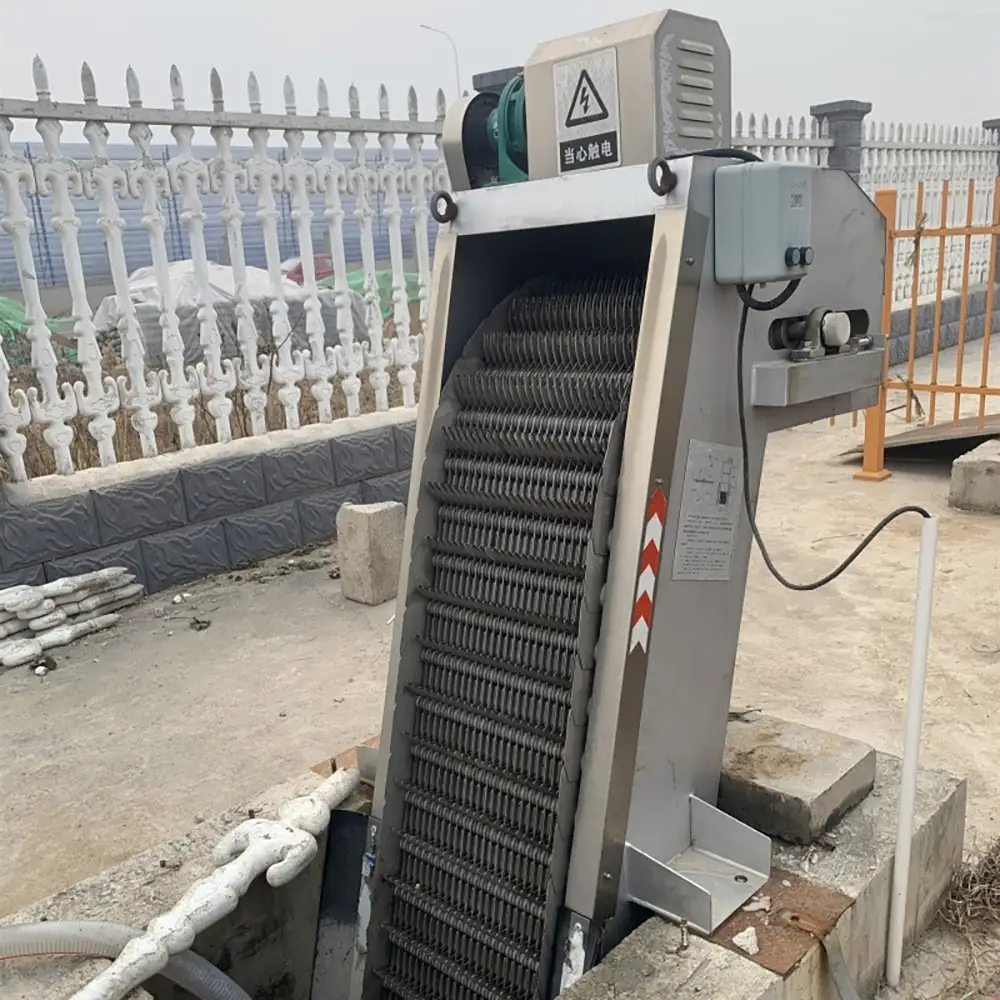
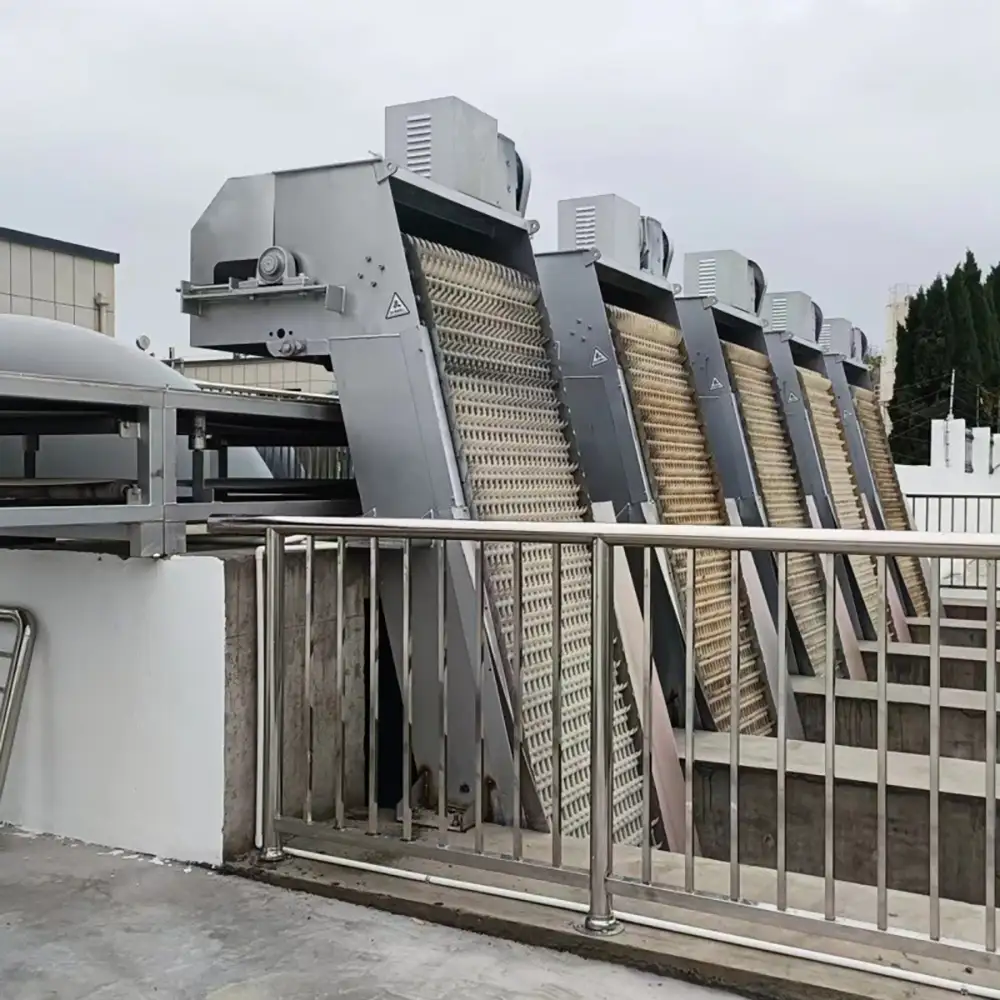
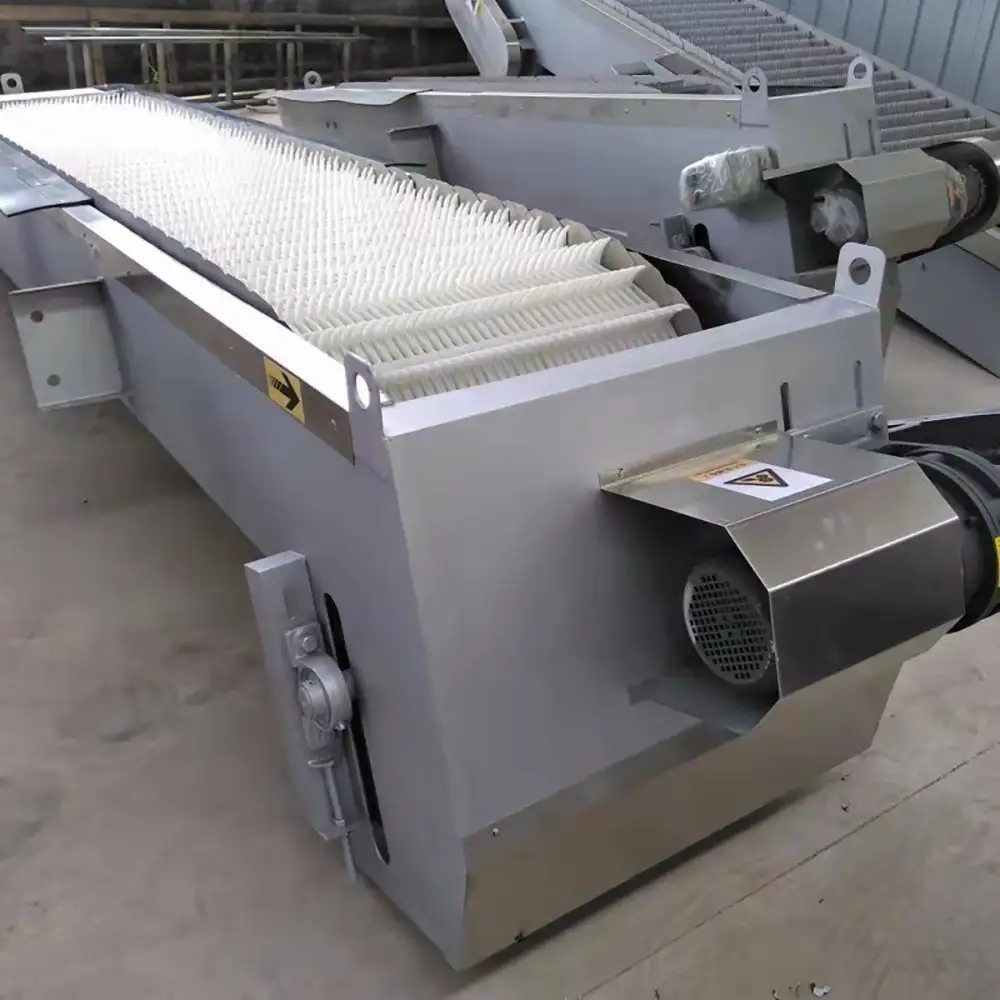
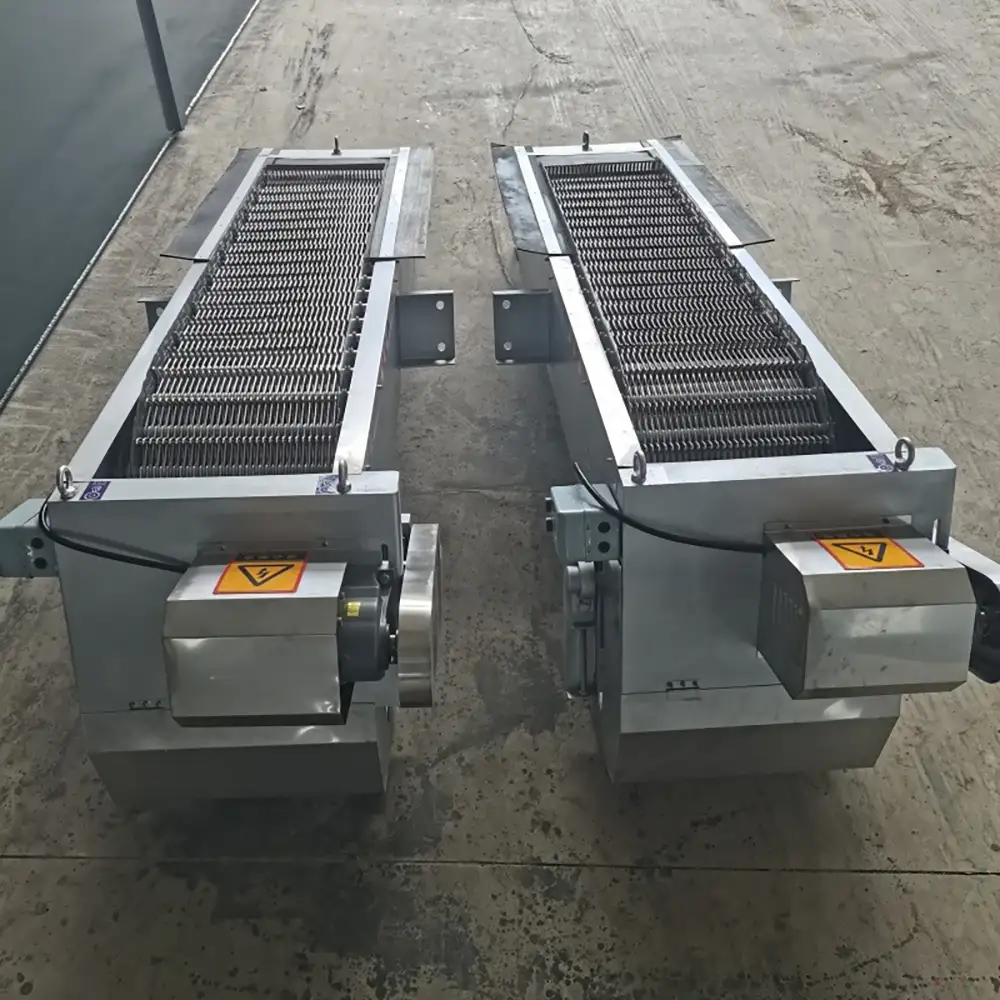
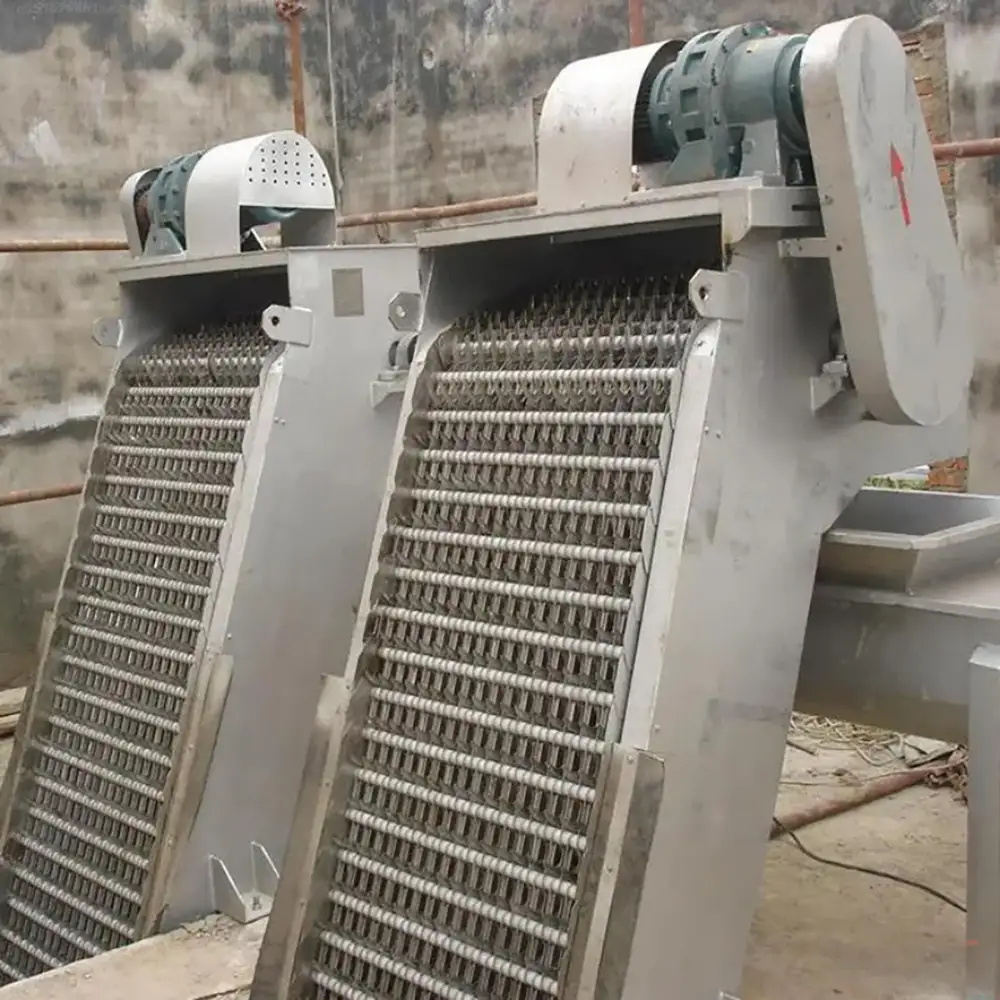
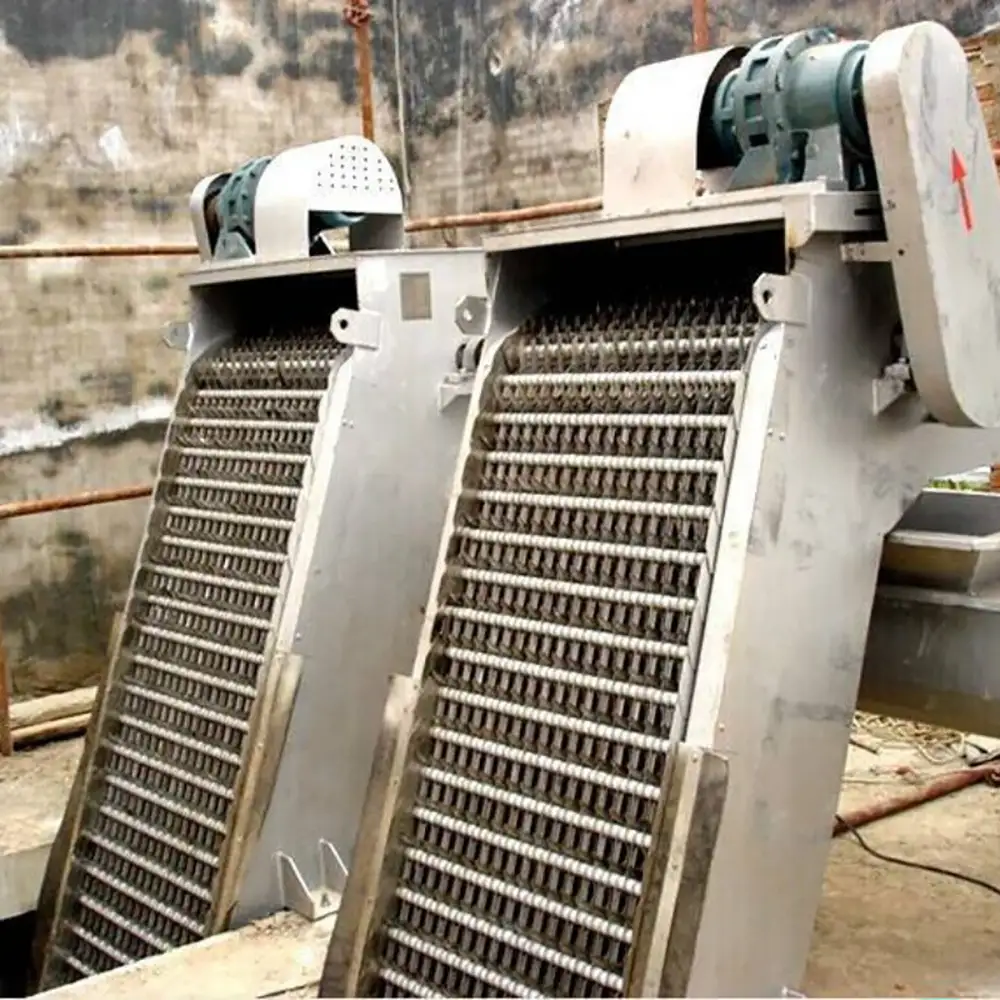
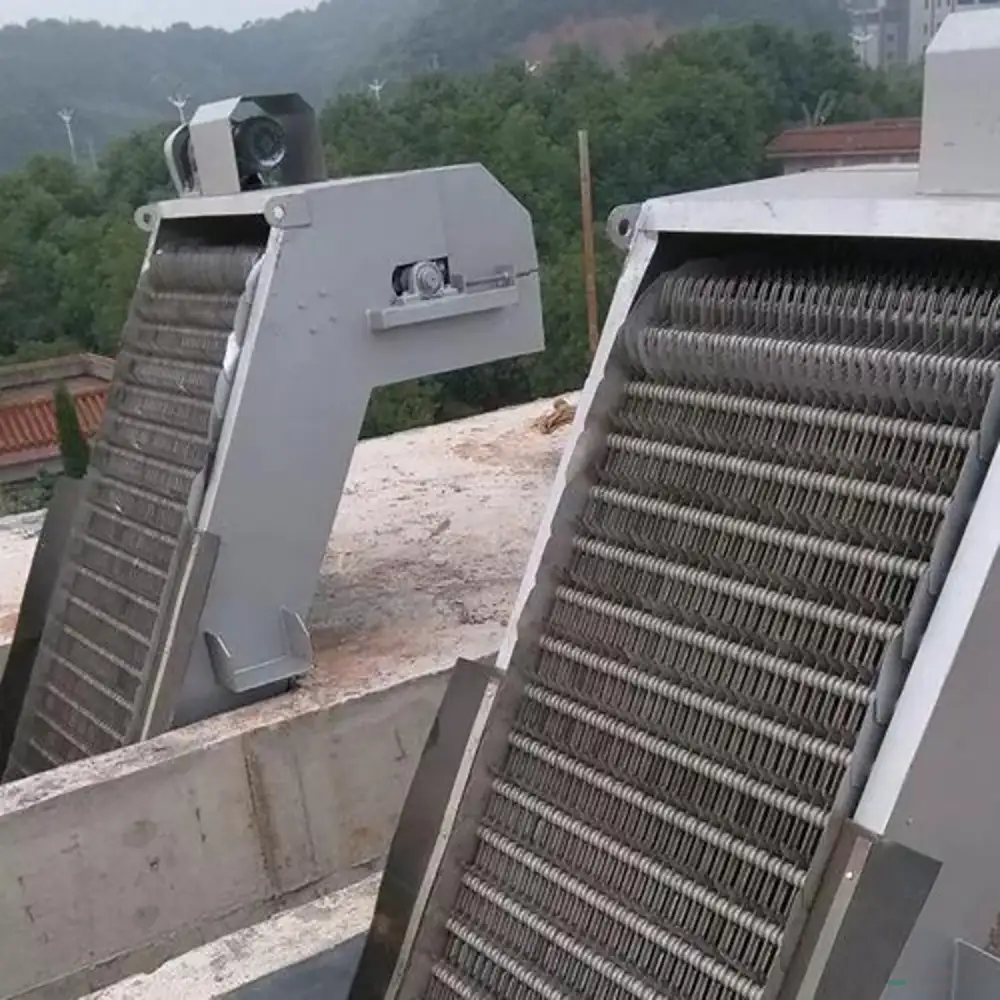
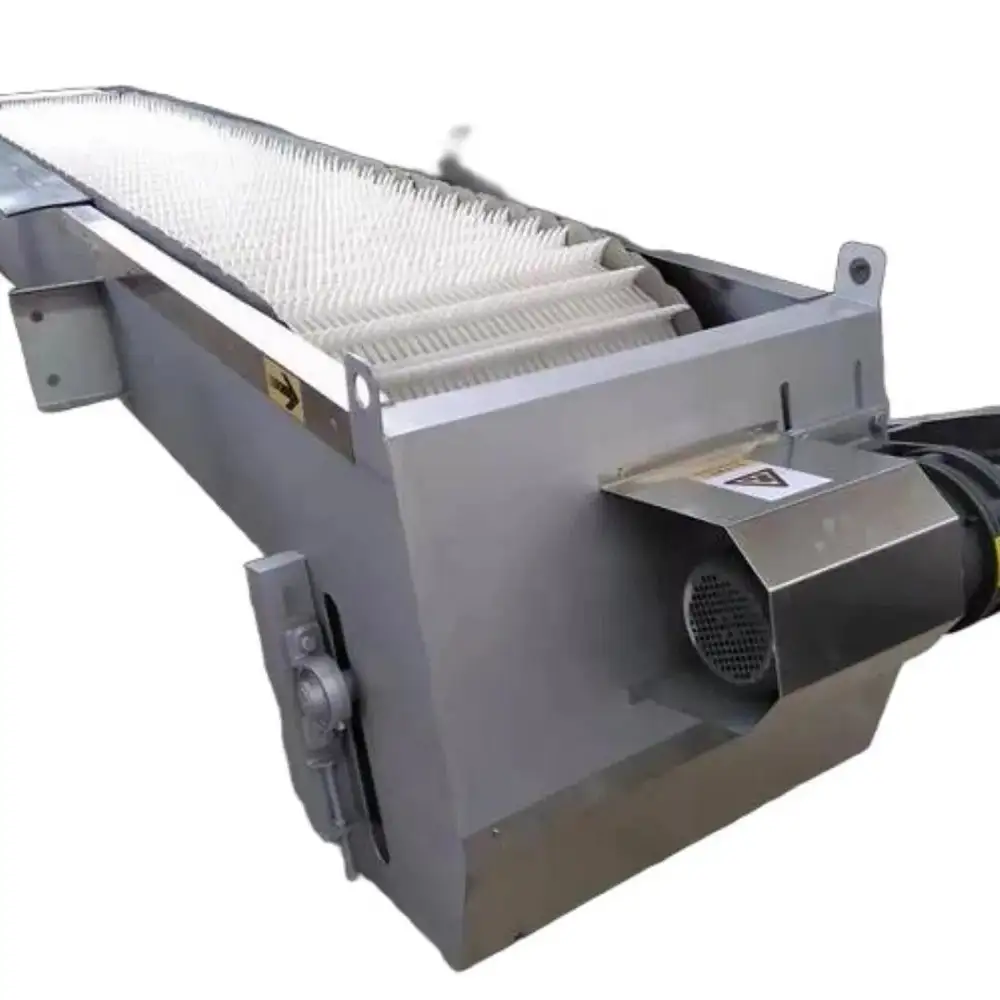
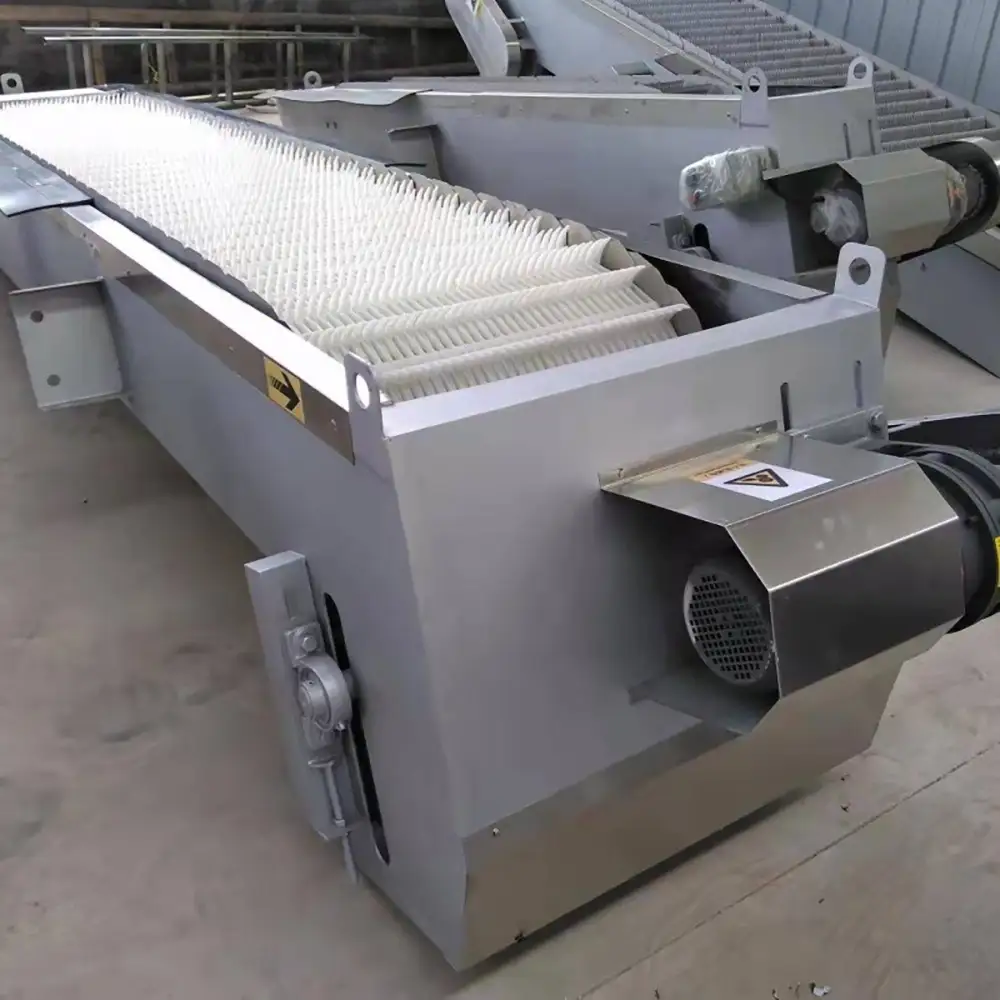
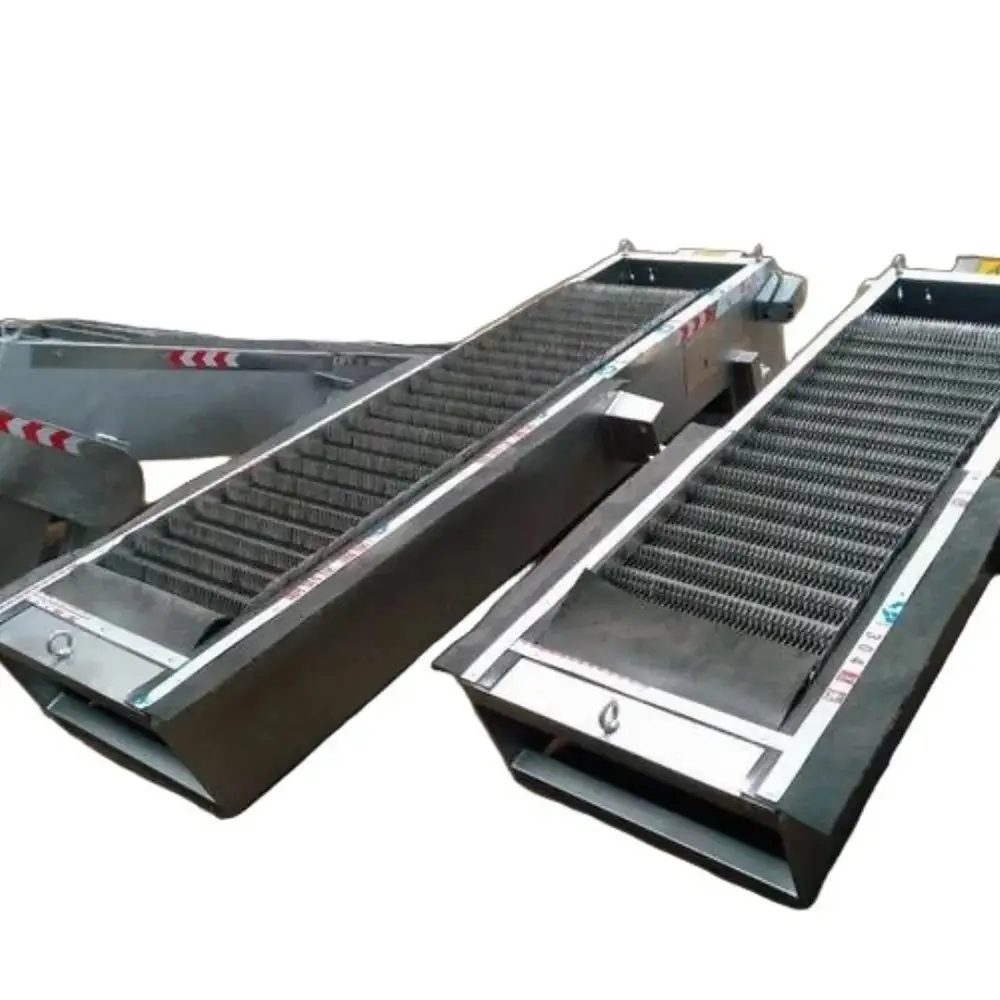
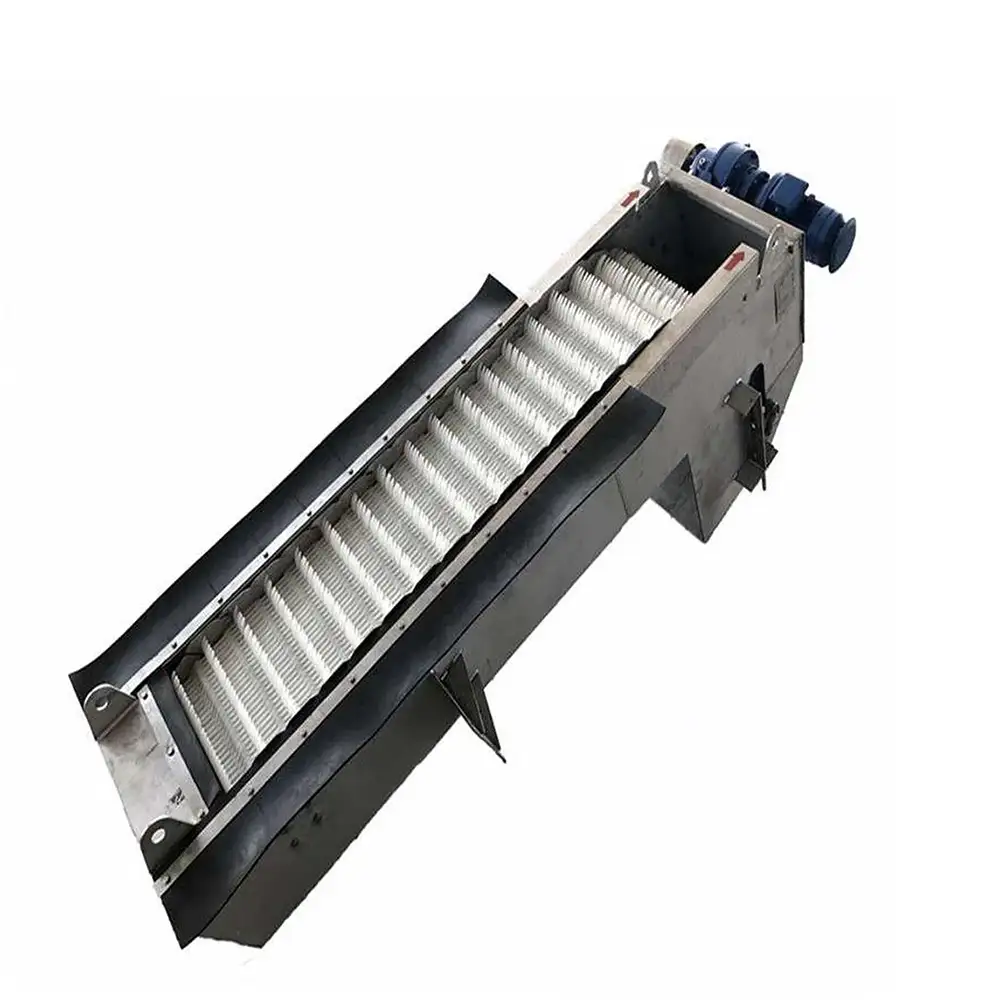
Mechanical grille is a type of grille equipment that can automatically remove garbage attached to the grille.
Mechanical grille is one of the early purification equipment in water supply and drainage treatment technology. It greatly reduces the labor intensity of workers, protects their physical health, reduces the head loss of water inflow, and improves the efficiency of pump stations
When the mechanical grille of the steel wire rope traction drum is working, the steel wire rope drive device releases the rope, and the rake bucket descends along the guide rail from the highest position (at the end of the previous cycle of skimming). The skimming plate descends with the rake bucket under its own weight. After the skimming plate is reset, the scraper is opened and continued to descend under the traction of the middle steel rope under the push of the opening and closing scraper device (electric push rod) until it reaches the lower limit of the channel. After the rake teeth are inserted into the gap between the grids, the steel rope drive device retracts the rope, and further forces the scraper to fully close. After the scraper and the bucket car move up along the guide rail, the scraper and bucket are cleared until they reach the skimming plate. Under the relative motion of the two, the scraper is skimmed out and falls into the slag groove through the slag guide plate, Complete a work cycle
Automatic Rake-Type Mechanical Screens for Wastewater and Waste Treatment
The Automatic Rake-Type Mechanical Screen is a continuous screening machine designed for wastewater treatment, sewage treatment, industrial waste treatment, pumping stations, and other applications requiring reliable removal of coarse solids. By combining a fixed screen or grille with an automatic rake mechanism, the equipment continuously captures and removes unwanted materials from the wastewater flow.
Screening is generally used as a preliminary treatment process. Wastewater can contain rags, plastics, paper, fibers, wood fragments, packaging materials, and other large solids that may interfere with downstream processes or cause clogging and mechanical wear. Mechanical screening helps remove these materials before they reach pumps, pipelines, biological treatment units, clarifiers, and other equipment.
Automatic Rake-Type Screening Principle
The machine consists of a screen frame, fixed bars or grille, automatic rake assembly, drive mechanism, guide system, motor, control system, and screenings discharge section.
During operation, wastewater flows through the screen while solids larger than the selected opening are retained on the bar surface. The automatic rake moves along the screen, engages the retained material, lifts it upward, and transfers the collected screenings to the discharge area.
Depending on the equipment configuration, the rake can operate continuously or periodically according to a timer, water-level difference, or other control signal. EPA guidance notes that automated mechanical screens/rakes can be activated by timed intervals or differential basin height, with captured debris subsequently transferred for collection or compaction.
This automated cleaning process minimizes the need for frequent manual raking and helps maintain an open screening surface during continuous wastewater flow.
Efficient Coarse Solids Removal
The automatic rake-type screen can remove a wide range of coarse materials, including:
Rags and textiles
Plastic bags and packaging
Paper and cardboard
Fibrous materials
Leaves and organic debris
Hair and string-like materials
Food processing residues
Wood fragments
Floating waste
Large suspended solids
The appropriate screen opening depends on the wastewater characteristics, required solids removal efficiency, hydraulic loading, and downstream treatment process.
Mechanically cleaned bar screens are commonly used to remove large solids, rags, and debris, while different screen opening sizes can be selected for coarse or finer preliminary treatment.
Protect Downstream Treatment Equipment
One of the most important functions of an automatic mechanical screen is protecting downstream equipment.
Large solids can block pumps, valves, pipes, flow channels, and treatment units. Fibrous materials can also wrap around rotating components, while plastics and other debris may interfere with biological or filtration processes.
By capturing these materials at the front end of the treatment line, the rake-type screen helps reduce the risk of blockage, unplanned shutdowns, and excessive maintenance.
The equipment can be installed upstream of:
Wastewater pumps
Grit removal systems
Primary clarifiers
DAF systems
MBBR systems
MBR systems
Biological treatment tanks
Sludge treatment equipment
Filtration systems
EPA documentation describes screening as a preliminary treatment operation intended to remove materials that can damage or clog downstream equipment and piping.
Automatic Operation and Reduced Manual Labor
Compared with manually cleaned bar screens, an automatic rake-type screen significantly reduces the amount of routine manual screening work.
The rake mechanism automatically travels through the screening area, collects retained solids, and transports them to the discharge position. This allows the equipment to operate with less direct operator intervention.
Depending on the control configuration, automatic operation can be based on:
Timer control
Water-level difference
Differential level sensor
Programmable control
Automatic start/stop sequence
Plant central control system
Modern wastewater plants may use automated screening systems with timed or level-based activation to maintain reliable screening performance.
Suitable for Wastewater and Waste Treatment
The machine is suitable for a wide variety of wastewater and waste-treatment applications.
Municipal Wastewater Treatment
At municipal sewage treatment plants, the screen can be installed at the headworks to remove coarse solids from incoming sewage before primary and secondary treatment.
Industrial Wastewater
Industrial wastewater from food processing, slaughterhouses, textile production, paper manufacturing, chemical plants, printing facilities, and other industries can contain substantial amounts of fibrous and coarse solids. Automatic screening can provide effective preliminary separation before further treatment.
Pumping Stations
Installing a mechanical rake screen before wastewater pumps can help prevent large debris from entering pump chambers and causing blockage or mechanical problems.
Waste Treatment Facilities
The equipment can also be adapted for certain waste-handling and solid-liquid separation applications where coarse materials need to be automatically removed from a flowing liquid stream.
Rake Mechanism Design
The rake is one of the key components of the equipment. Its teeth are designed to fit between the screen bars and collect material retained on the screen.
Different mechanical screening systems use different rake arrangements, including chain-driven, reciprocating, climber-type, and other automatic configurations. EPA technical documentation identifies several mechanically cleaned screen designs and describes how traveling rakes remove retained materials and discharge them at the top of the screen.
The rake design can be selected according to screen dimensions, debris characteristics, hydraulic conditions, installation configuration, and required screening capacity.
Flexible Installation and Configuration
Automatic rake-type mechanical screens can be configured for different channels and treatment capacities.
Important design parameters include:
Channel width
Channel depth
Flow rate
Screen opening
Installation angle
Screen bar dimensions
Rake configuration
Motor power
Cleaning cycle
Discharge height
Material specification
Control method
This flexibility makes the equipment suitable for both new wastewater treatment plants and upgrading projects.
Screenings Discharge and Handling
After the rake lifts solids from the screen, the collected material can be discharged into a receiving hopper, container, chute, screw conveyor, belt conveyor, or screenings compactor.
For larger treatment facilities, the mechanical screen can be integrated with automatic screenings washing and compacting systems. This creates a more complete solids-handling process and can reduce manual contact with collected wastewater debris.
Durable Construction for Continuous Operation
Wastewater screening equipment must operate in a wet and potentially corrosive environment. The screen frame and wetted components can therefore be manufactured from suitable carbon steel, coated steel, stainless steel, or other project-specified materials.
Stainless steel construction is particularly suitable where enhanced corrosion resistance is required.
Regular inspection of the rake, drive system, guides, fasteners, screen bars, motor, and discharge area is recommended. Proper lubrication, adjustment, and preventive maintenance can help maintain stable operation and extend equipment service life. EPA training materials also emphasize maintaining and adjusting mechanically cleaned screens according to equipment requirements.
Why Choose Us
Automatic rake mechanism for continuous mechanical screening
Efficient removal of coarse wastewater solids and debris
Helps protect pumps, pipes, valves, and downstream treatment equipment
Suitable for municipal and industrial wastewater applications
Multiple screen openings and configurations available
Flexible channel width, depth, angle, and discharge options
Automatic timer or level-based control available
Compatible with conveyors, compactors, and screenings collection systems
Durable construction for demanding wastewater environments
Suitable for integration into complete wastewater treatment plants
FAQ
1. What is an automatic rake-type mechanical screen?
It is an automatic wastewater screening machine that uses a moving rake mechanism to collect and remove solids retained on a fixed bar screen or grille.
2. What materials can the screen remove?
It can remove rags, plastics, paper, fibers, leaves, hair, food residues, packaging materials, floating debris, and other coarse solids.
3. Why is mechanical screening used in wastewater treatment?
Screening removes larger solids before downstream treatment to help reduce clogging, mechanical wear, and operational problems in pumps, pipes, and treatment equipment.
4. How does the automatic rake work?
The rake moves through the screen bars, collects retained solids, lifts them upward, and discharges them at the top or designated discharge section.
5. Can the rake operate continuously?
Yes. Depending on the control system, the rake can operate continuously or intermittently according to a preset timer or wastewater level condition.
6. Can the screen opening be customized?
Yes. Screen opening and other dimensions can be selected according to wastewater characteristics, flow rate, solids loading, and downstream treatment requirements.
7. Is it suitable for industrial wastewater?
Yes. It can be used for industrial wastewater from food processing, slaughterhouses, paper mills, textile plants, chemical production, printing, and other industries.
8. Can the machine protect wastewater pumps?
Yes. Installing the screen upstream of pumps can help intercept large debris and fibrous materials before they enter the pumping system.
9. Can the screenings be automatically discharged?
Yes. The screen can discharge collected solids into a hopper, chute, screw conveyor, belt conveyor, or screenings compactor.
10. What materials are available?
Depending on the wastewater environment and project requirements, the machine can be manufactured using stainless steel, coated carbon steel, or other suitable materials.
11. Does the mechanical screen require maintenance?
Yes. Operators should periodically inspect the rake teeth, screen bars, guides, drive system, motor, fasteners, and discharge area and perform maintenance according to the equipment requirements.
12. Can it be integrated into a complete wastewater treatment system?
Yes. The automatic rake screen can be installed as preliminary treatment before grit removal, DAF, sedimentation, biological treatment, MBBR, MBR, filtration, and other wastewater treatment processes.
Prev:
Rotary Rake Type Mechanical Screen Grille
Next:
Stainless Steel Rotary Rake Type Mechanical Screen/Grille Machine for Wastewater Treatment
TAG:
Wastewater Treatment Equipment,
Suspended Solids Removal Equipment,
Wastewater Pretreatment Equipment,
Wastewater Screening Equipment,
Wastewater Treatment Plant Equipment,
Sewage Treatment Equipment,
Rag Removal Screen,
Suspended Solids Screening,
Sewage Pretreatment Equipment,
Coarse Bar Screen,
Fine Mechanical Screen,
Industrial Wastewater Screening,
Municipal Wastewater Screening,
Wastewater Screening Machine,
Sewage Screening Equipment,
Sewage Screening Machine,
Mechanical Rake Screen,
Mechanical Bar Screen,
Automatic Bar Screen,
Screening Equipment For Water Treatment,
Waste Treatment Screening,
Waste Screening Machine,
Industrial Waste Screening,
Screening Machine For Wastewater,
Screening Equipment For Sewage,
Wastewater Solids Removal,
Preliminary Wastewater Treatment,
Plastic Waste Screening,
Fibrous Waste Screening,
Fine Wastewater Screen,
Related Category:
Automatic Rake-Type Mechanical Screen,Automatic Mechanical Screen,Wastewater Mechanical Screen China, suppliers, manufacturers, factory, customized, wholesale, quotation, made in China