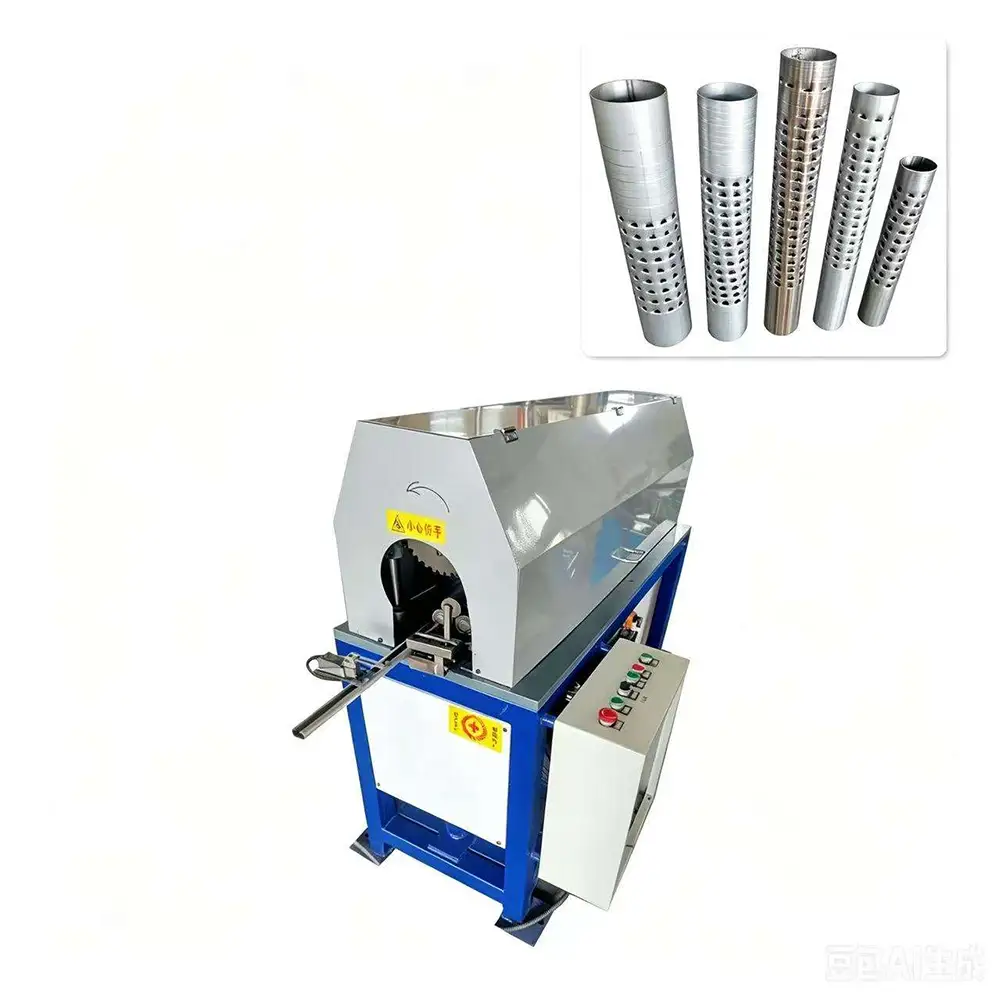
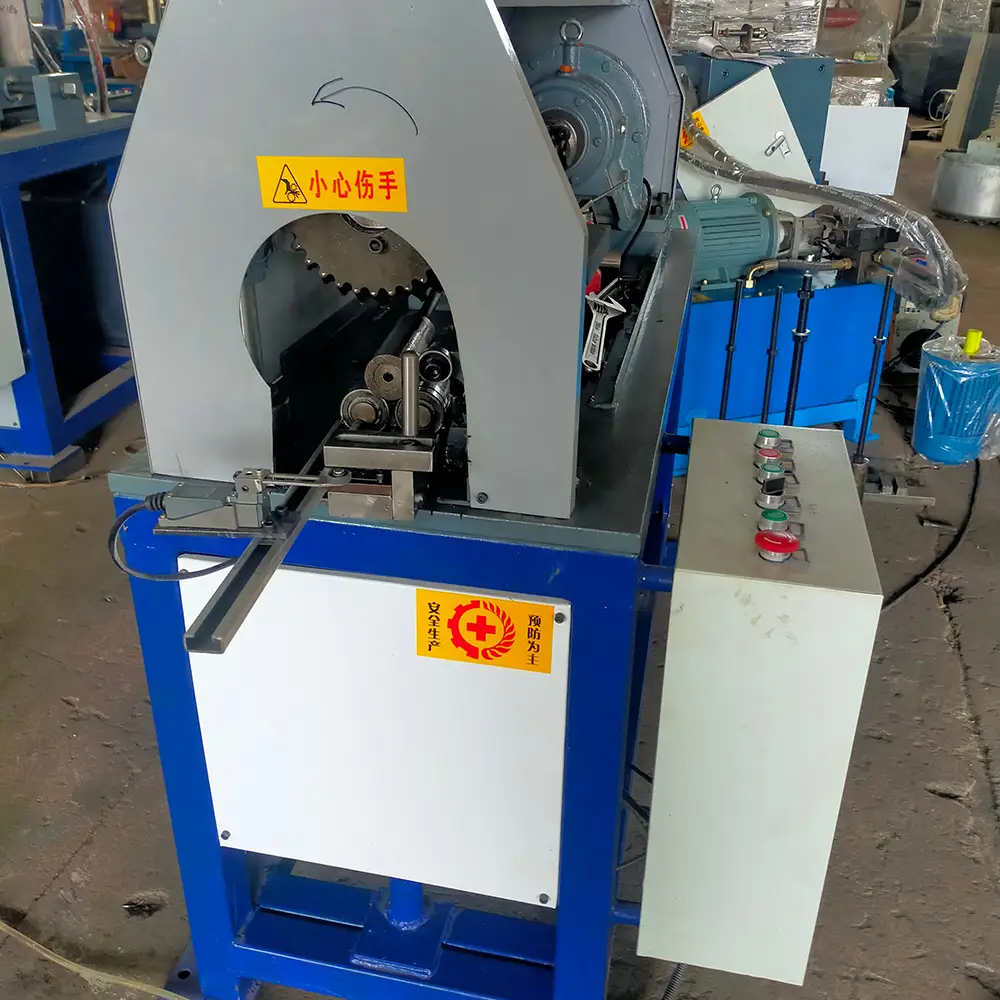
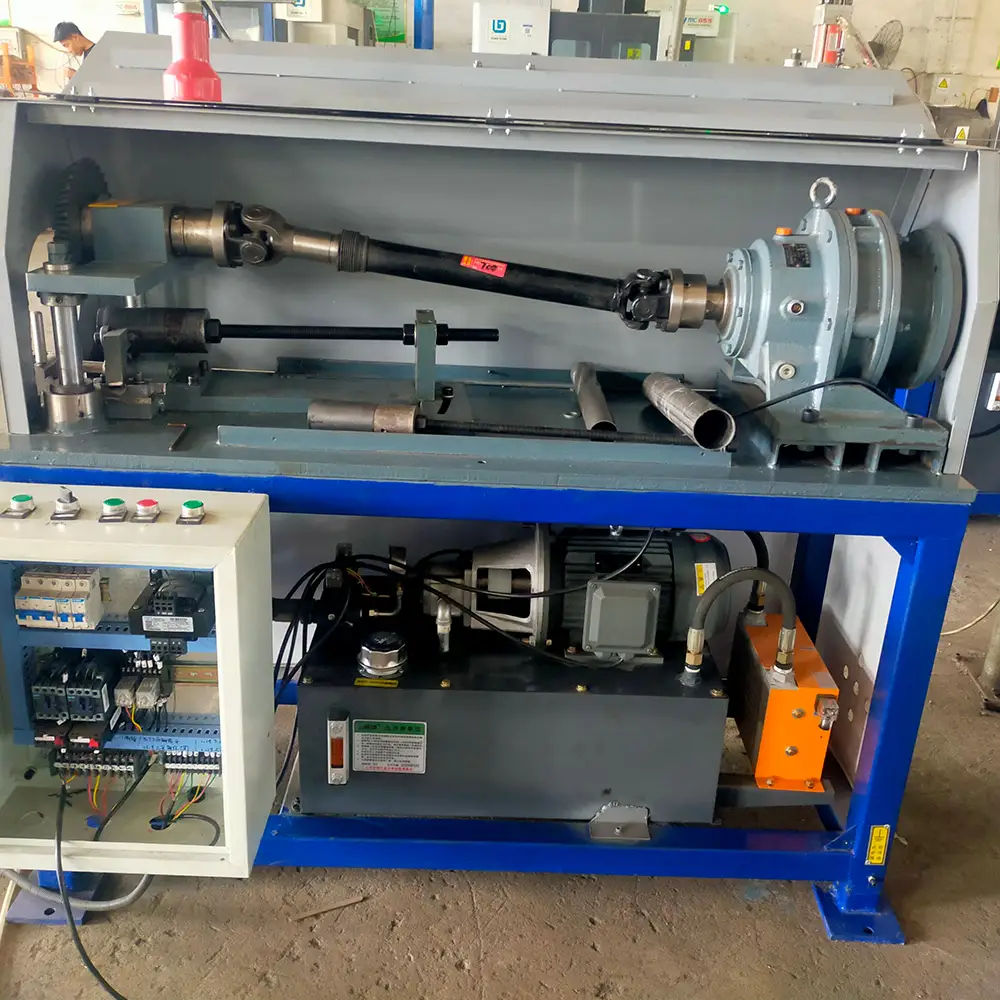
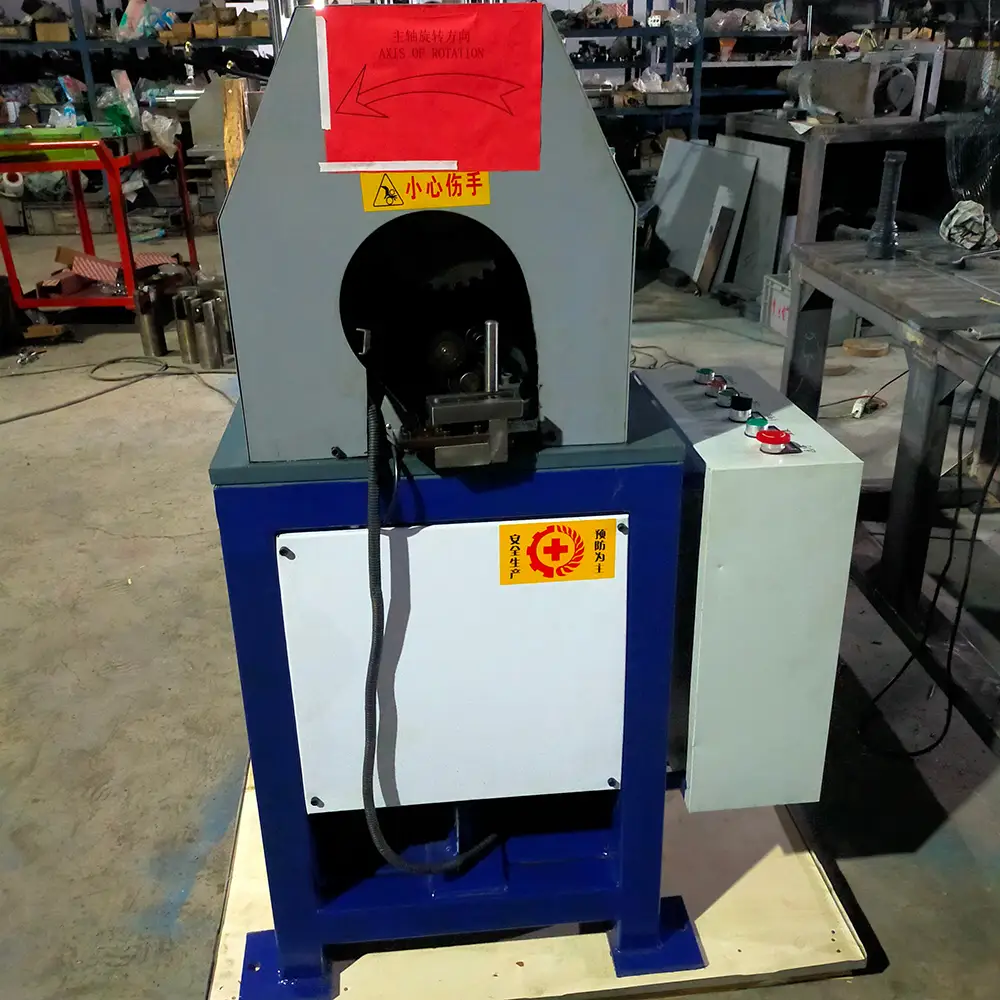
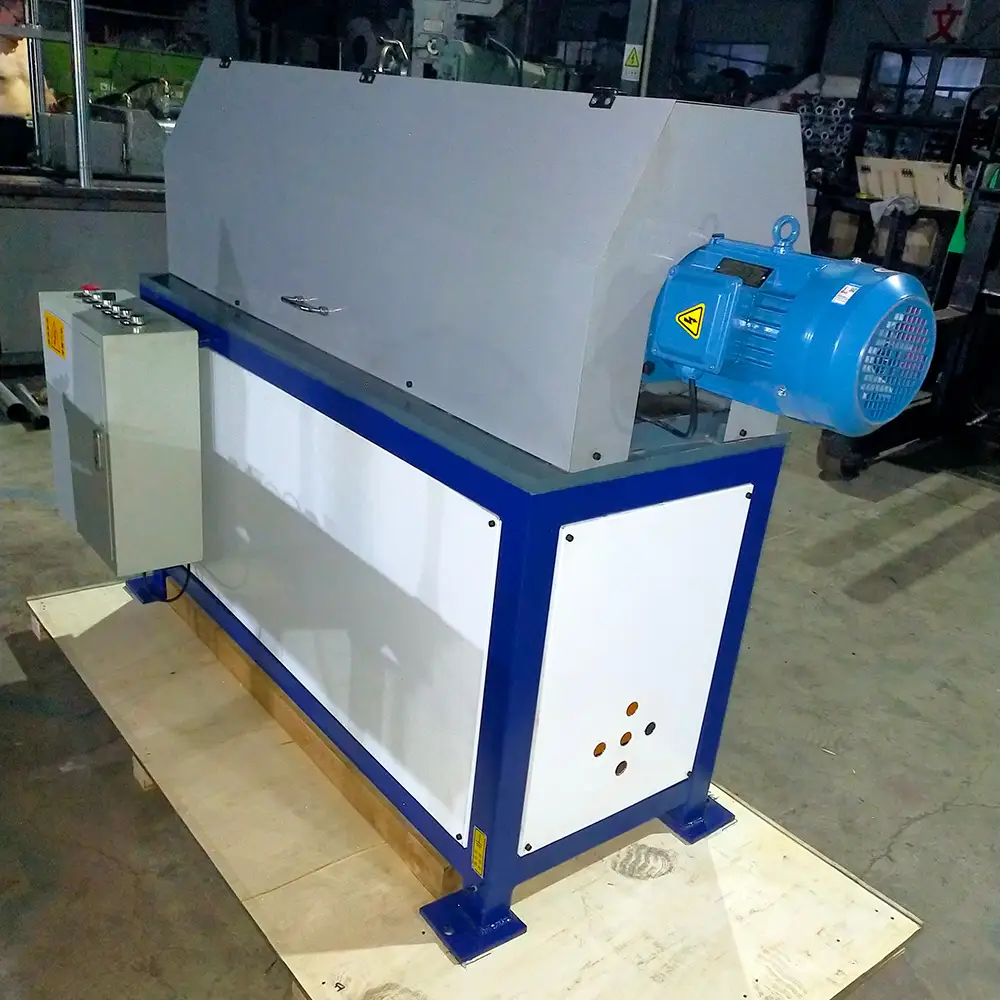
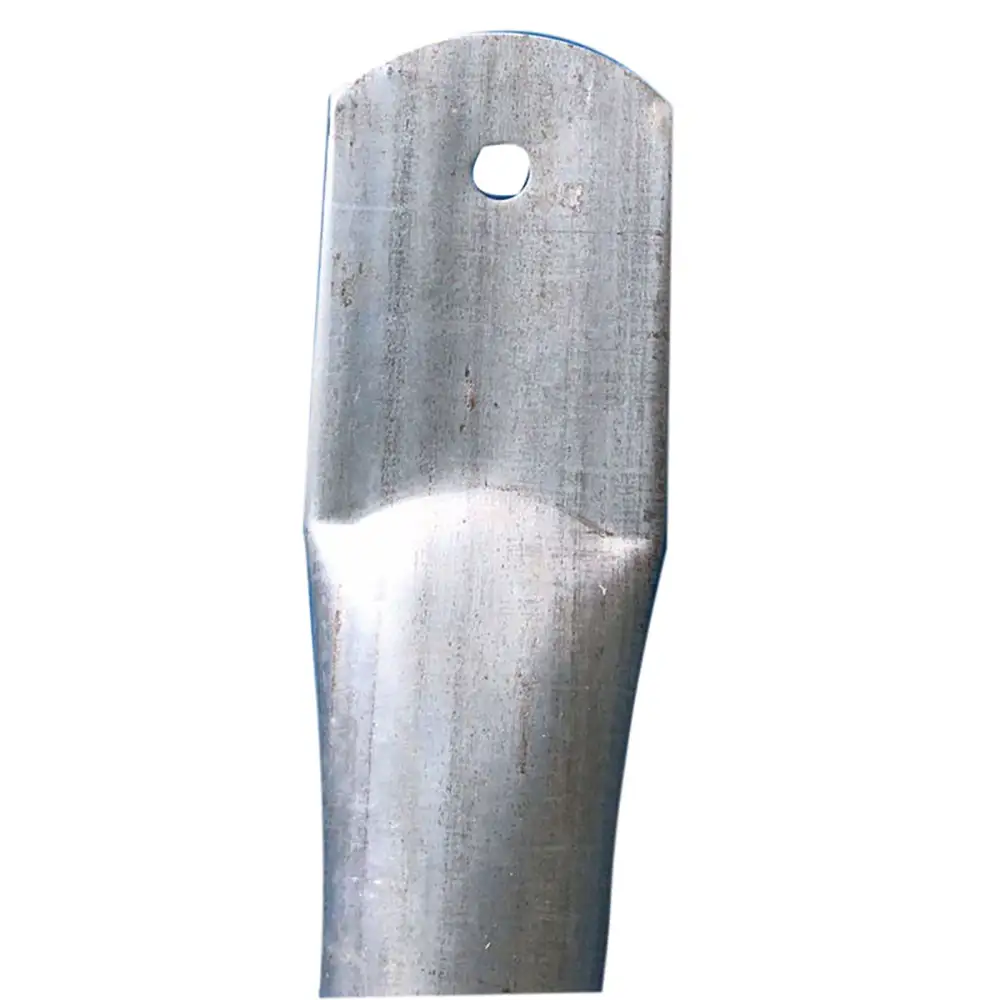
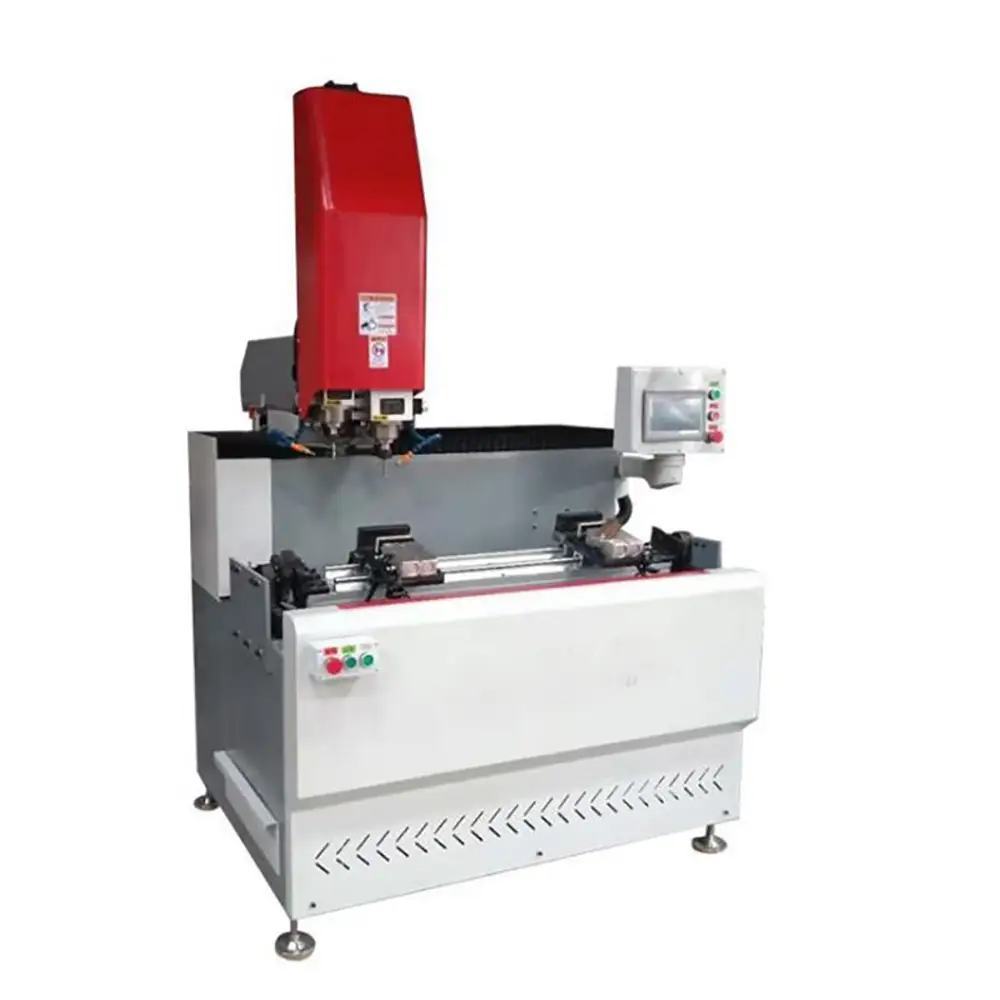
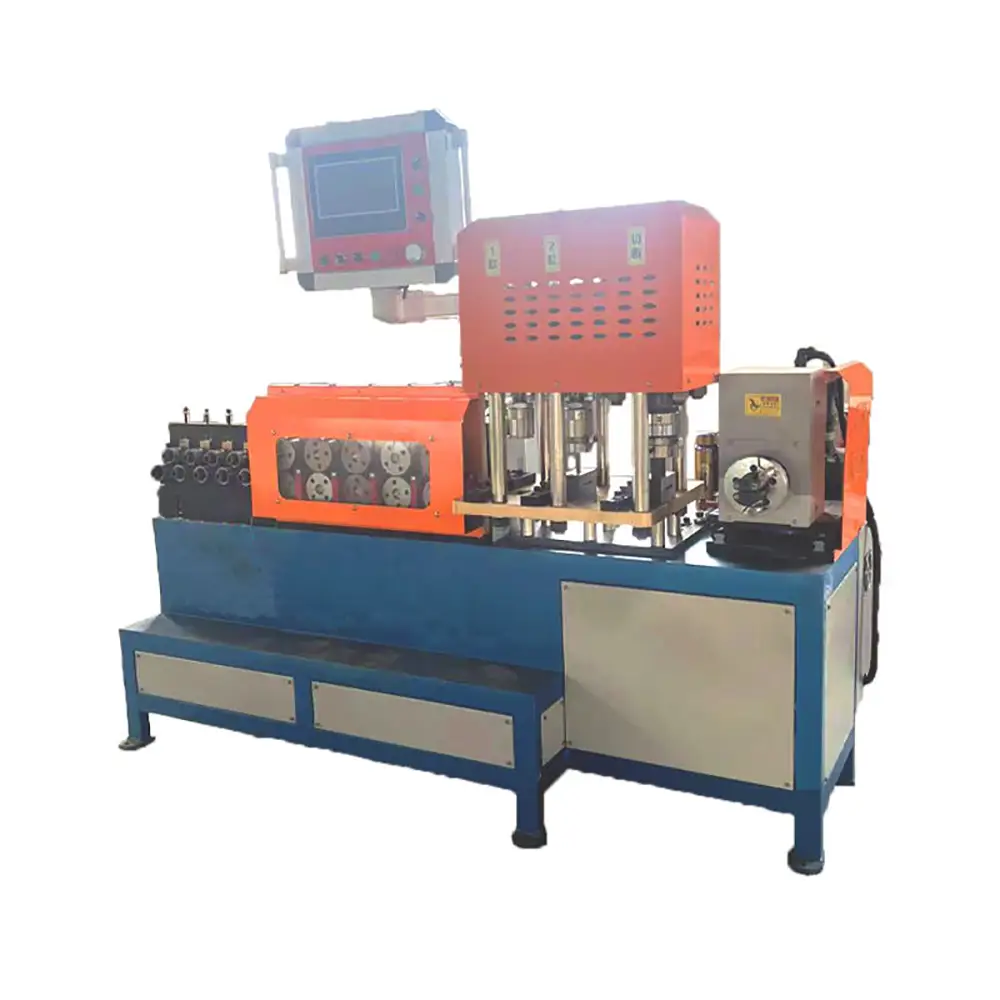
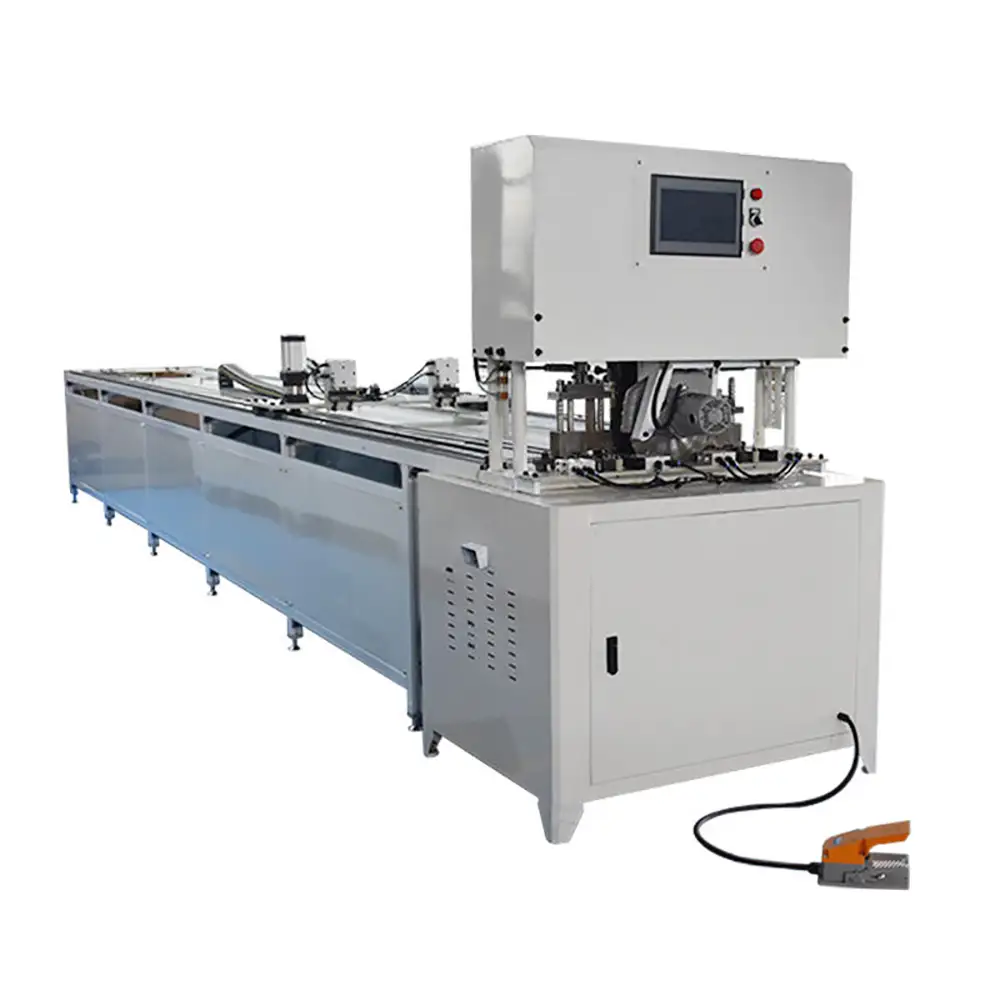
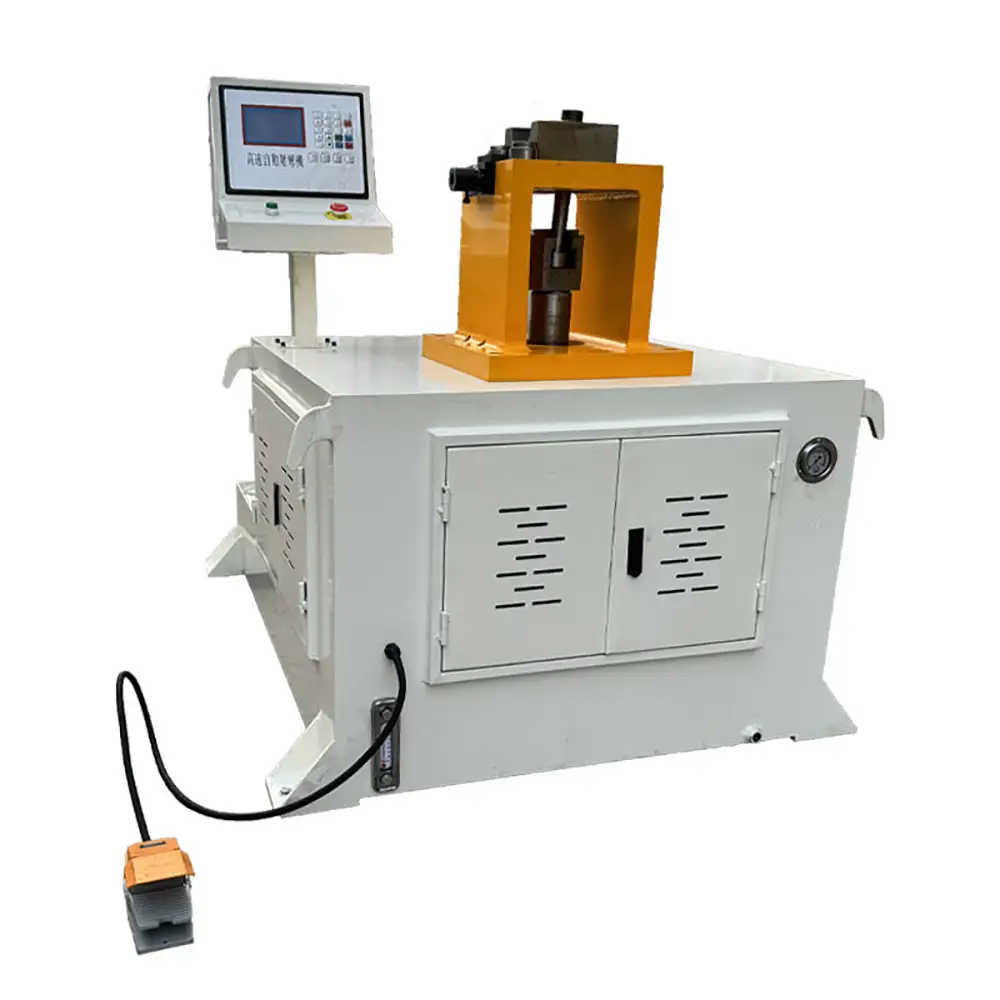
Suitable for diverse industries including automotive, motorcycle, and industrial equipment manufacturing. It can handle exhaust pipes of various diameters, making it a flexible choice for different production needs. Secure Clamping: A unique positioning structure ensures accurate clamping, preventing displacement during drilling and enhancing precision, especially for bent pipes. Multi - drilling Efficiency: Equipped with multiple drilling units, it can handle multiple holes on various pipe surfaces simultaneously, significantly speeding up production. Intuitive Operation: The user - friendly control interface allows for easy operation. Customize drilling speed, depth, etc., to fit different materials and pipe sizes.
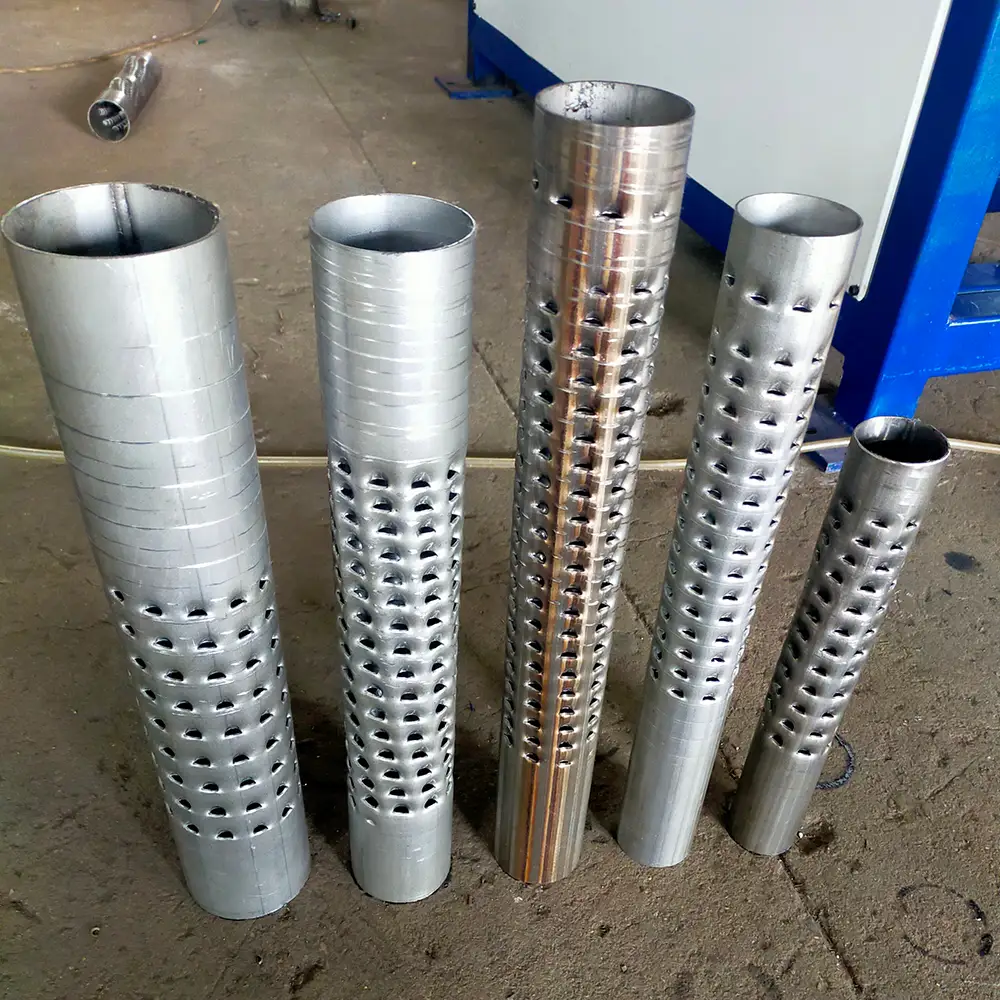
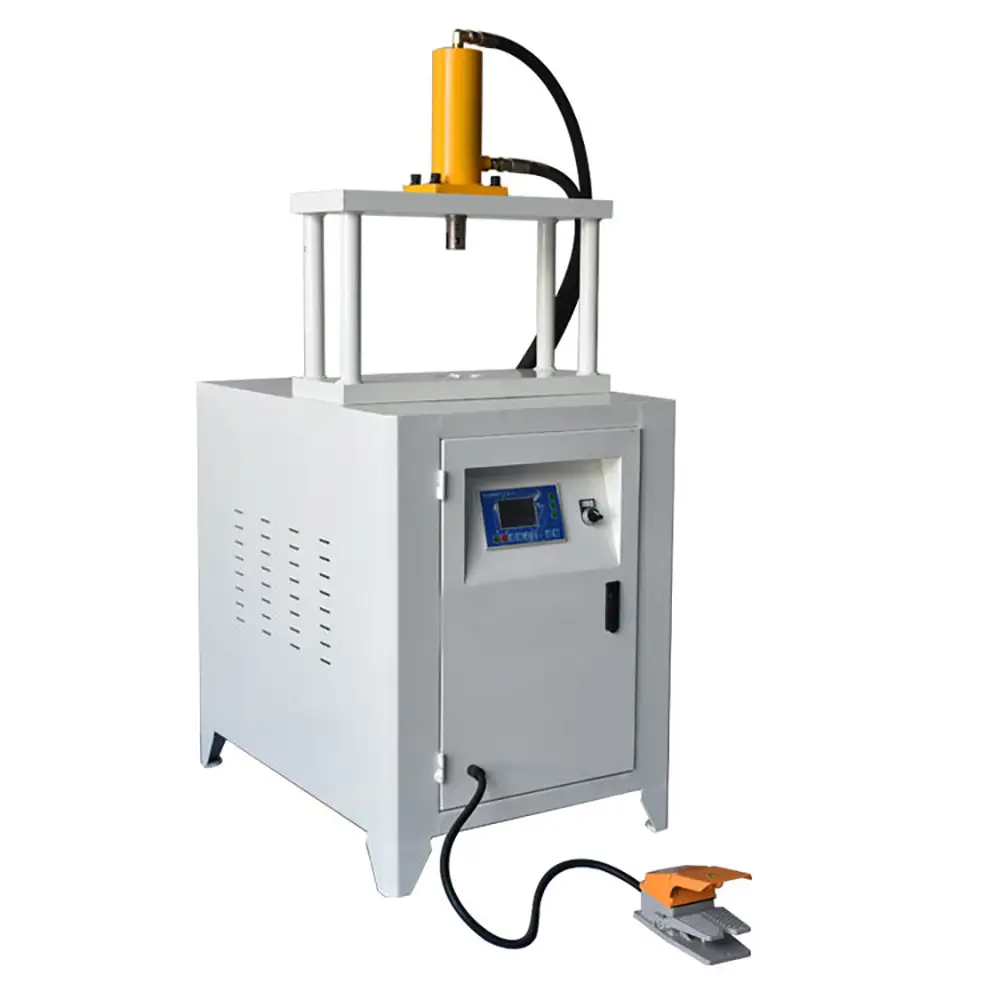
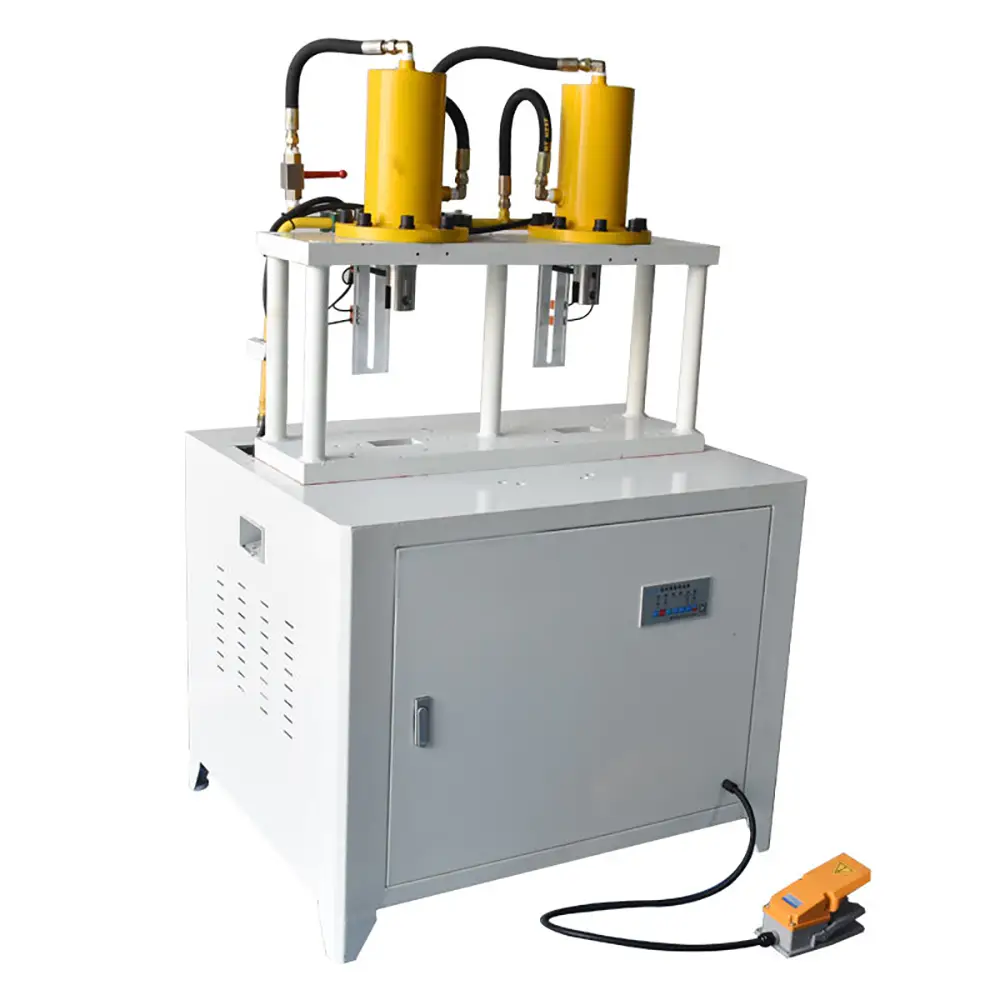
The Exhaust Muffler Tube Round Hole Stainless Steel Hydraulic Pipe Punching Machine is designed for efficient hole punching in exhaust tubes, muffler components, stainless steel pipes, and other compatible metal tubular products. Using hydraulic punching force, the machine provides a practical production solution for manufacturers that need repeatable round holes in tubular components.
Exhaust and muffler manufacturing often requires accurately positioned holes for gas flow, assembly, mounting, connection, and internal component integration. Traditional drilling or manual cutting can require repeated marking and positioning, especially when large quantities of similar tubes need to be processed. A dedicated hydraulic tube punching machine can streamline this operation and provide a more standardized production workflow.
The machine can be configured according to the tube material, diameter, wall thickness, hole diameter, hole position, and production requirements. Actual punching capacity depends on hydraulic force, tooling, material strength, tube dimensions, and machine configuration, so specific workpiece samples or drawings should be provided before final machine selection.
Hydraulic Tube Punching System
The hydraulic system provides controlled punching force for processing suitable metal tubes and pipes. Hydraulic punching is widely used in metal fabrication because it can provide substantial forming force while maintaining a relatively straightforward machine structure.
For exhaust muffler applications, the hydraulic system can be paired with dedicated punches, dies, tube supports, and positioning fixtures. This allows the machine to be adapted to the geometry of the specific exhaust tube or muffler component.
The punching cycle can be standardized for repetitive production, helping operators process similar workpieces using the same positioning and tooling procedure.
Round Hole Punching for Exhaust Tubes
Round holes are common in exhaust and muffler components. Depending on the product design, holes may be required along the tube wall, near the tube end, or at other specified positions.
A dedicated punch and die set can produce a repeatable round opening when the workpiece is properly positioned. Compared with manual drilling, punching can be advantageous for repetitive production where the same hole diameter and location are required across a large number of parts.
The actual hole quality depends on the tube material, wall thickness, punch geometry, die clearance, machine force, tube support, and tooling condition.
Stainless Steel Pipe Processing
Stainless steel is commonly used in exhaust systems because of its corrosion resistance, temperature resistance, appearance, and durability characteristics. However, stainless steel can also present different punching characteristics from mild steel.
Appropriate punch and die materials, clearance, alignment, and processing parameters should therefore be selected according to the stainless steel grade and tube wall thickness.
The machine can be considered for suitable stainless steel exhaust tubes and muffler components, subject to the machine's actual working capacity.
Exhaust Muffler Manufacturing Applications
The machine can support various exhaust and muffler manufacturing processes where tubular components require punched openings.
Potential applications include:
Automotive exhaust tubes
Motorcycle exhaust pipes
Muffler components
Stainless steel exhaust systems
Small-engine exhaust components
Agricultural machinery exhaust parts
Construction equipment exhaust components
Industrial exhaust assemblies
Custom exhaust fabrication
Metal tube components
The exact application depends on the workpiece dimensions, material, hole pattern, and machine tooling.
Tube Positioning and Fixtures
Accurate tube positioning is essential for consistent hole location. A suitable fixture can hold the exhaust tube securely during the punching operation while maintaining the required relationship between the punch and the workpiece.
For repetitive production, dedicated fixtures can reduce setup time and improve operator consistency. Adjustable supports may be useful when processing multiple tube sizes, while dedicated tooling can be developed for high-volume production of a specific component.
For curved exhaust tubes or specially shaped muffler components, fixture design becomes particularly important. Customers should provide drawings or samples so that the appropriate workholding solution can be evaluated.
Hole Diameter and Tooling
The punch and die determine the basic geometry of the hole. Round holes are commonly produced using cylindrical punching tools, while specialized tooling can be considered for non-standard openings.
Hole diameter should be selected according to the application and material thickness. The relationship between hole diameter, wall thickness, material strength, and punching force must be considered when evaluating machine suitability.
Tooling can also influence burr formation, hole edge quality, tool life, and production consistency. Regular inspection and maintenance of punches and dies are important for stable production.
Production Efficiency
A hydraulic pipe punching machine can help manufacturers reduce repetitive drilling, marking, and manual cutting operations. Once the workpiece fixture and tooling are correctly established, operators can follow a standardized loading, positioning, punching, and unloading workflow.
This can be especially useful for exhaust manufacturers producing repeated tube components. Consistent positioning can reduce variations between individual workpieces and simplify downstream assembly.
Actual production output depends on the number of holes, tube dimensions, punching force, loading method, operator workflow, machine cycle, and tooling configuration.
Quality Control
Quality control should focus on hole diameter, hole location, hole shape, edge condition, tube deformation, and overall workpiece dimensions.
For exhaust components, hole location may affect subsequent assembly and product performance, so inspection procedures should be established according to the customer's product specifications.
The first pieces after tooling changes should be carefully inspected. Periodic inspection during production can help identify tool wear, positioning errors, or material-related changes before they affect a larger batch.
Suitable Materials
Depending on machine configuration and tooling, potential materials may include stainless steel, carbon steel, mild steel, galvanized steel, and other compatible metal tubes.
Stainless steel exhaust tubes should be evaluated according to their specific grade and wall thickness. Different grades can have different strength and work-hardening characteristics.
When requesting a quotation, customers should provide the material grade, tube outside diameter, wall thickness, required hole diameter, hole position, and expected production quantity.
Custom & OEM Exhaust Tube Punching
The machine can be developed or configured for Custom & OEM exhaust and muffler tube processing requirements. Automotive and industrial exhaust components often have product-specific dimensions and hole patterns, making customized tooling valuable.
Customization may include punches, dies, tube fixtures, clamps, positioning stops, adjustable supports, and other workholding components.
Customers can provide CAD drawings, product samples, tube dimensions, material specifications, hole drawings, and production requirements. Based on these details, the manufacturer can evaluate an appropriate machine and tooling solution.
Operation and Maintenance
Regular maintenance is important for maintaining reliable hydraulic punching performance. Operators should inspect punches and dies, keep the working area clean, check fixture alignment, monitor hydraulic components, and follow the manufacturer's lubrication and maintenance recommendations.
Punches and dies are wear components. Their service life depends on material hardness, wall thickness, hole size, production volume, tooling quality, and operating conditions.
Operators should follow the machine manual and use appropriate guards, emergency-stop systems, eye protection, and other safety equipment required by the machine configuration and local workplace regulations.
Why Choose Us
Exhaust Tube Processing Focus – The machine is suitable for specialized punching applications involving exhaust and muffler tubes.
Hydraulic Punching Force – Hydraulic operation provides a practical method for punching compatible metal tubes.
Round Hole Processing – Dedicated tooling can be configured for repetitive round-hole applications.
Stainless Steel Compatibility – Suitable configurations can be evaluated for stainless steel exhaust and tubular components.
Custom Fixtures – Tube supports, clamps, positioning fixtures, and tooling can be designed around specific products.
Production Efficiency – Dedicated punching can reduce repetitive manual drilling and marking operations.
OEM & Custom Capability – Customized machine and tooling solutions can be considered for specialized exhaust components.
B2B Manufacturing Support – We work with manufacturers, fabricators, distributors, and overseas industrial buyers.
FAQs
1. What is this hydraulic pipe punching machine used for?
It is designed for punching holes in suitable exhaust tubes, muffler components, stainless steel pipes, and other compatible metal tubular products.
2. Can it punch round holes in exhaust tubes?
Yes. With suitable punch and die tooling, the machine can be configured for repetitive round-hole punching applications.
3. Can it process stainless steel exhaust pipes?
Yes, suitable stainless steel tubes can be considered, subject to the material grade, tube dimensions, wall thickness, tooling, and machine capacity.
4. What materials can the machine punch?
Potential materials include stainless steel, carbon steel, mild steel, galvanized steel, and other compatible metal tubes.
5. Can the hole diameter be customized?
Yes. Suitable punches and dies can be selected according to the required hole diameter and material thickness.
6. Can the machine punch holes at different positions?
Yes. Suitable fixtures, stops, guides, or positioning systems can be used to establish different hole locations depending on the machine configuration.
7. Is it suitable for motorcycle exhaust pipes?
It can be considered for suitable motorcycle exhaust tube applications, provided the tube dimensions and material are within the machine's processing capability.
8. Can curved exhaust tubes be processed?
Potentially, but curved tubes require appropriate fixtures and workholding. Customers should provide drawings or samples for evaluation.
9. Is the machine fully automatic?
The automation level depends on the supplied configuration. A hydraulic punching machine can be operated with manual loading and positioning or configured with additional automation where appropriate.
10. What determines punching capacity?
Punching capacity depends on hydraulic force, material strength, tube wall thickness, hole diameter, tooling, and workpiece geometry.
11. Can OEM tooling be supplied?
Yes. Custom punches, dies, clamps, fixtures, and positioning systems can be considered for specific exhaust and muffler products.
12. What information is needed for a quotation?
Provide tube material, outside diameter, wall thickness, tube length, hole diameter, hole positions, hole quantity, product drawings or samples, and expected production volume.
Prev:
Hydraulic Automatic Punching and Flattening Machine for Metal Pipes Tube Hole Making Equipment
Next:Sorry, no information
TAG:
Metal Tube Processing Machine,
Tube Punching Equipment,
Stainless Steel Tube Processing Machine,
Metal Tube Punching Machine,
Pipe Hole Punching Machine,
Tube Hole Punching Machine,
Stainless Steel Tube Punching Machine,
Stainless Steel Pipe Punching Machine,
Steel Pipe Punching Machine,
Steel Tube Punching Machine,
Tube Hole Punching Equipment,
Metal Pipe Hole Punching Machine,
Hydraulic Pipe Punching Machine,
Hydraulic Tube Punching Machine,
Exhaust System Manufacturing Machine,
Muffler Manufacturing Machine,
Muffler Fabrication Machine,
Exhaust Pipe Processing Machine,
Exhaust Tube Processing Machine,
Pipe Hole Punching Equipment,
Metal Pipe Punching Machine,
Exhaust Manufacturing Machine,
Exhaust Fabrication Machine,
Pipe Punching Equipment,
Metal Tube Hole Punching Machine,
Hydraulic Metal Pipe Punching Machine,
Exhaust Tube Punching Machine,
Exhaust Pipe Punching Machine,
Exhaust Pipe Hole Punching Machine,
Muffler Tube Punching Machine,
Related Category:
Exhaust Muffler Tube Punching Machine,Stainless Steel Pipe Punching Machine,Hydraulic Pipe Punching Machine,Round Hole T China, suppliers, manufacturers, factory, customized, wholesale, quotation, made in China