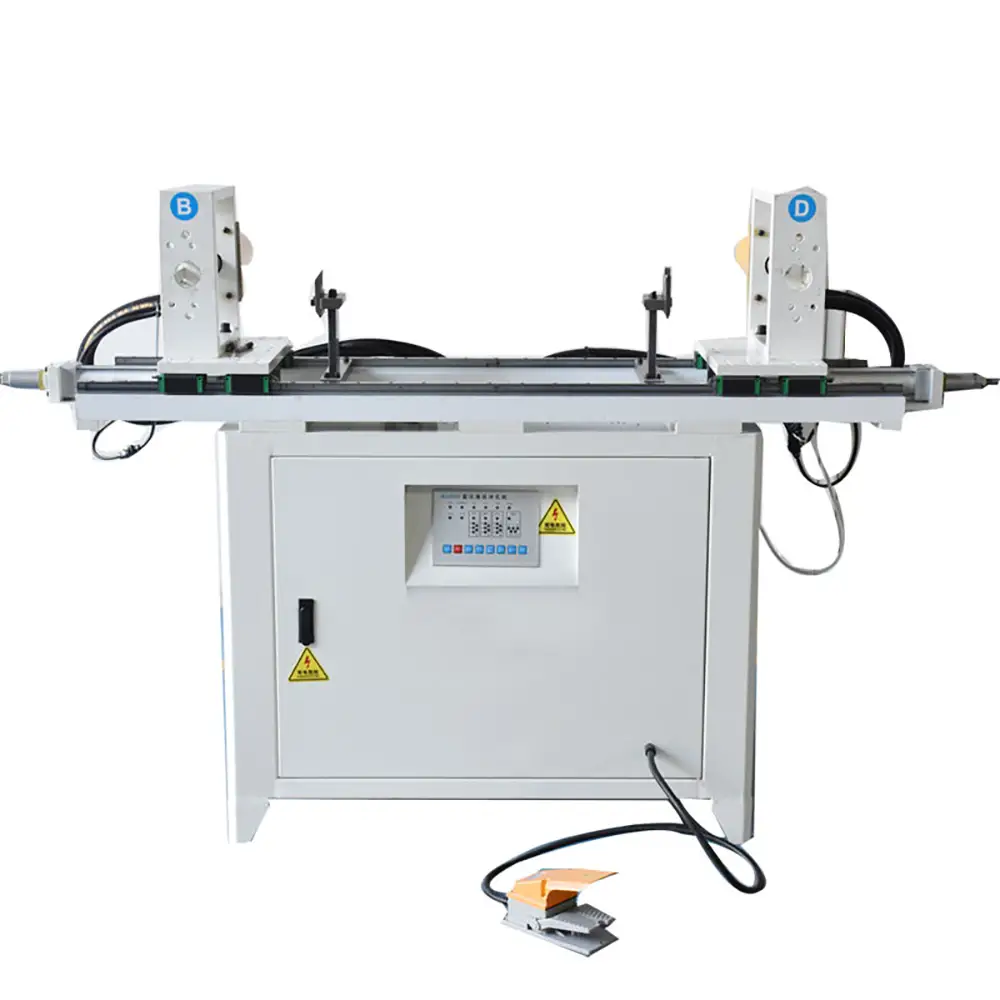
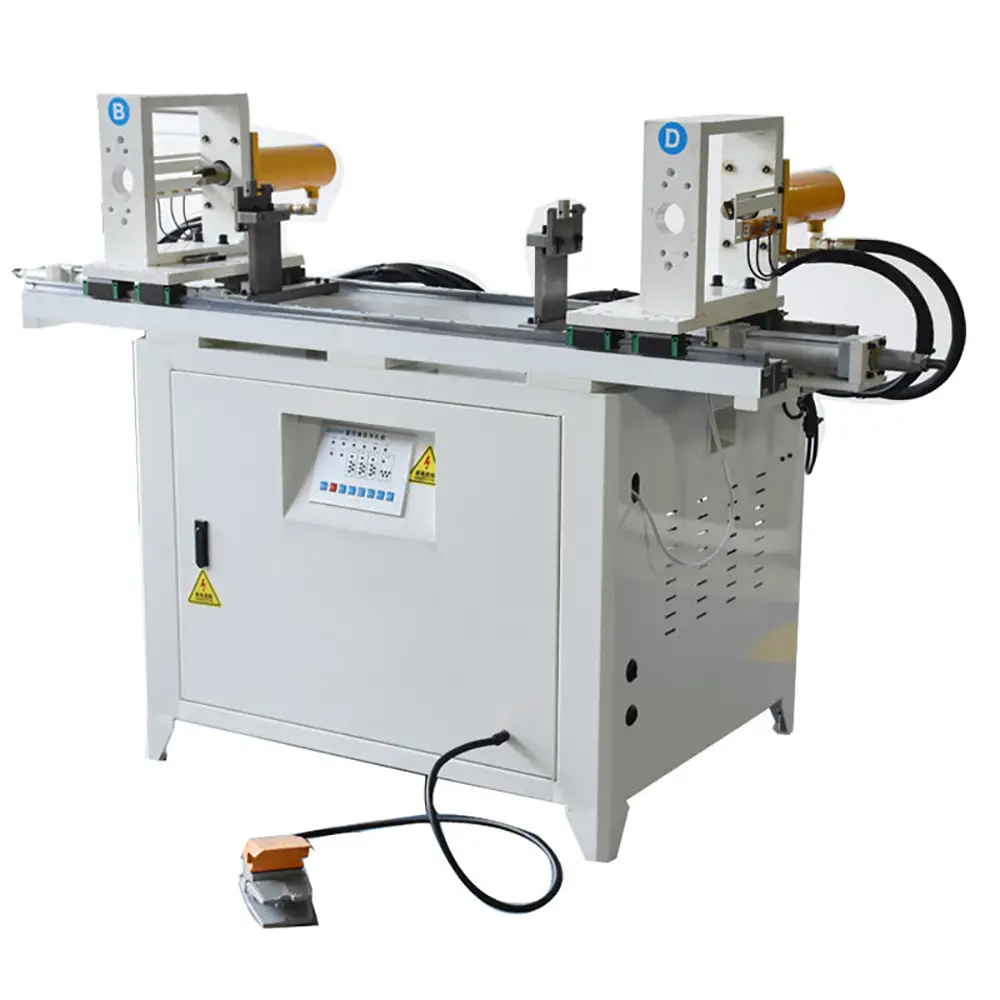
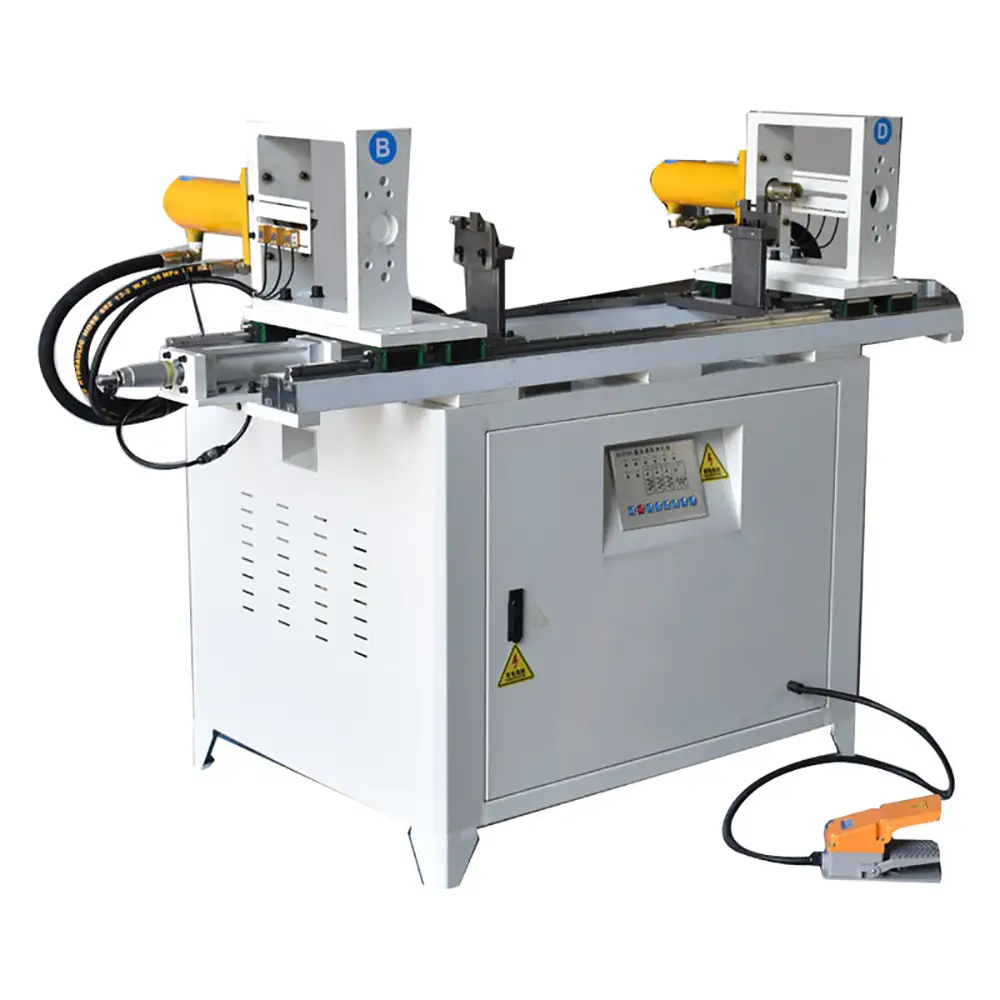
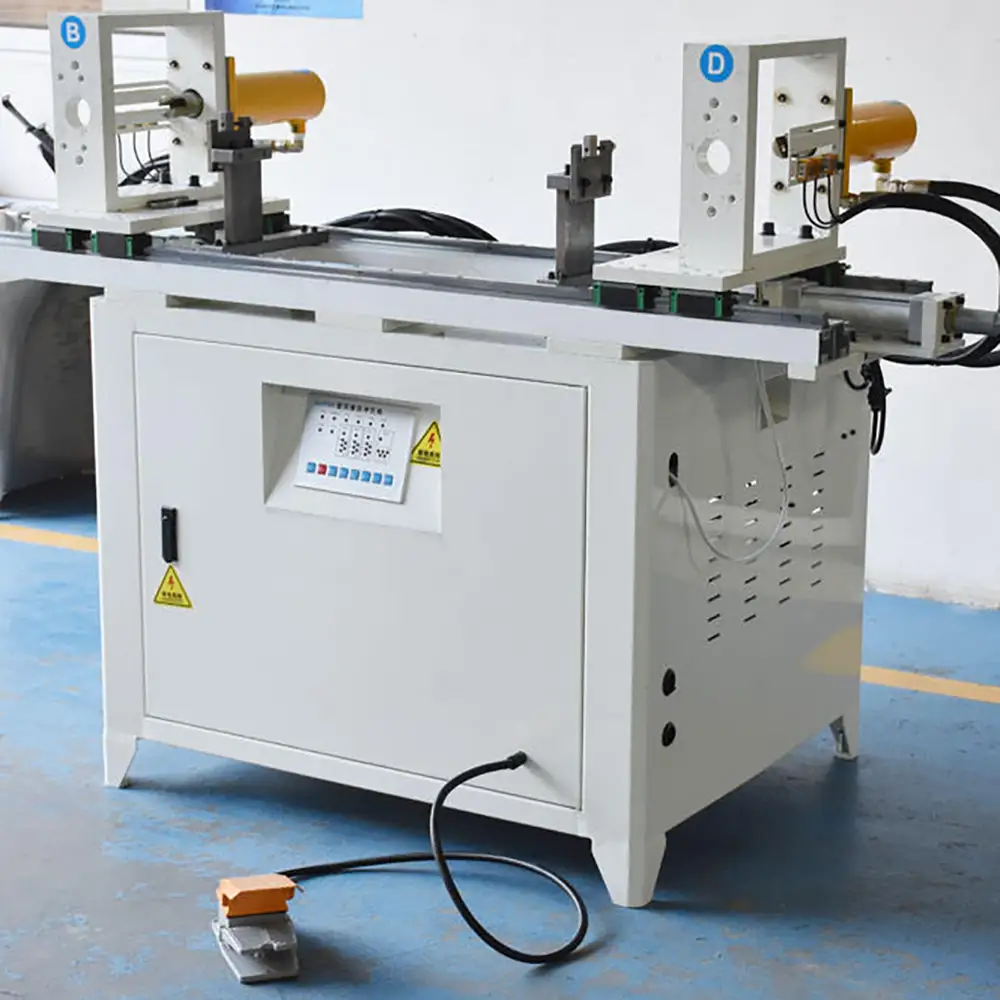
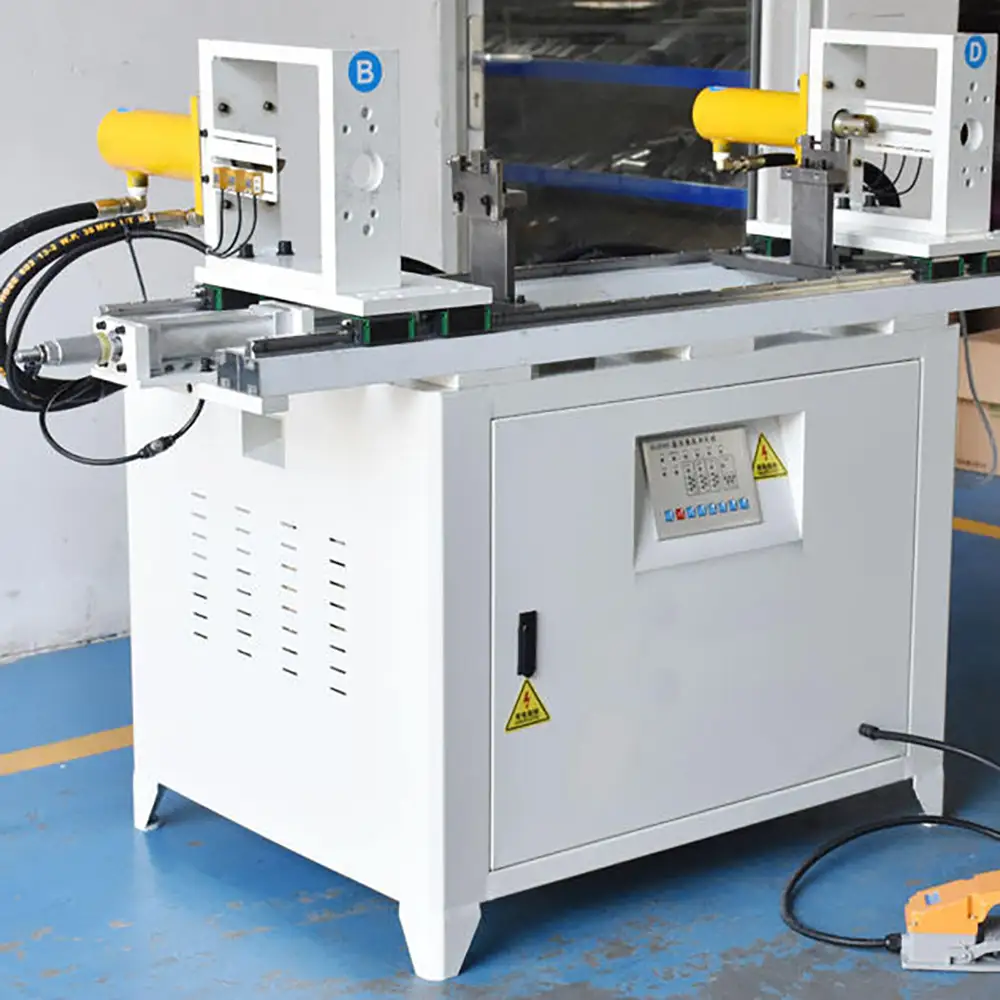
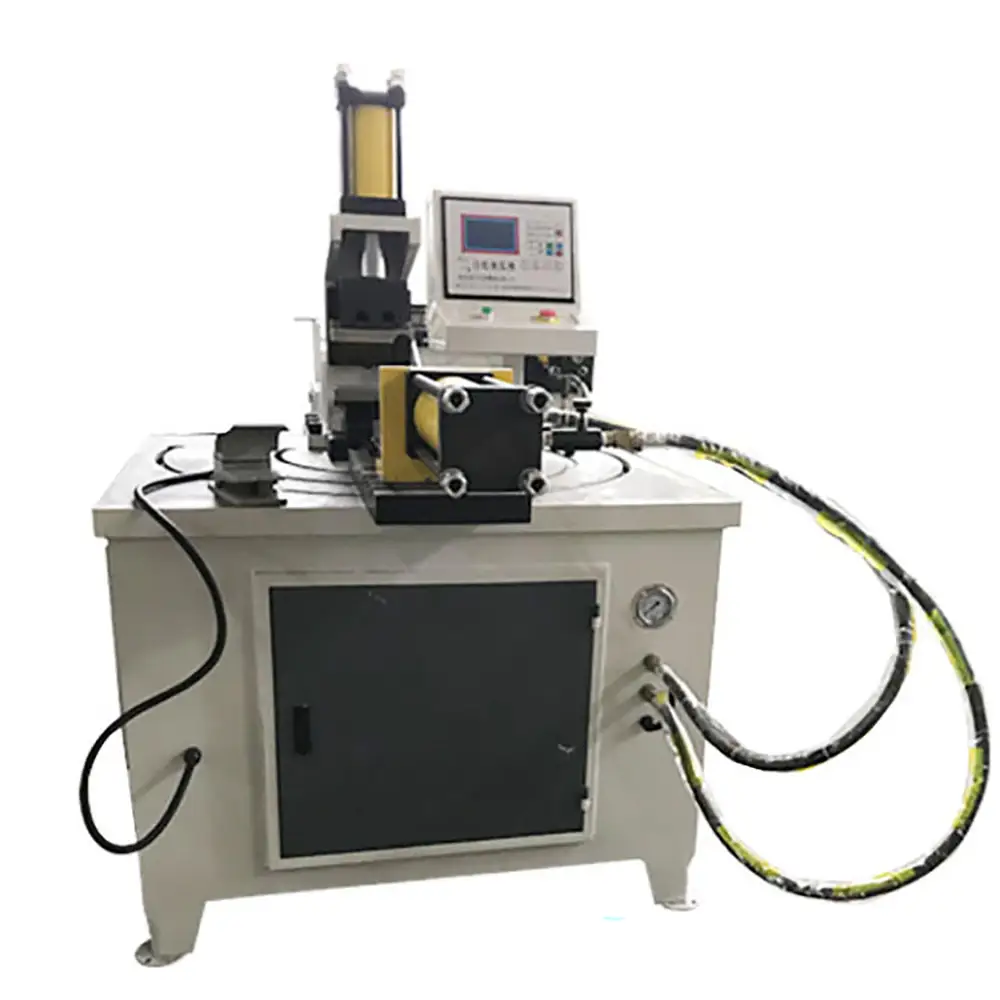
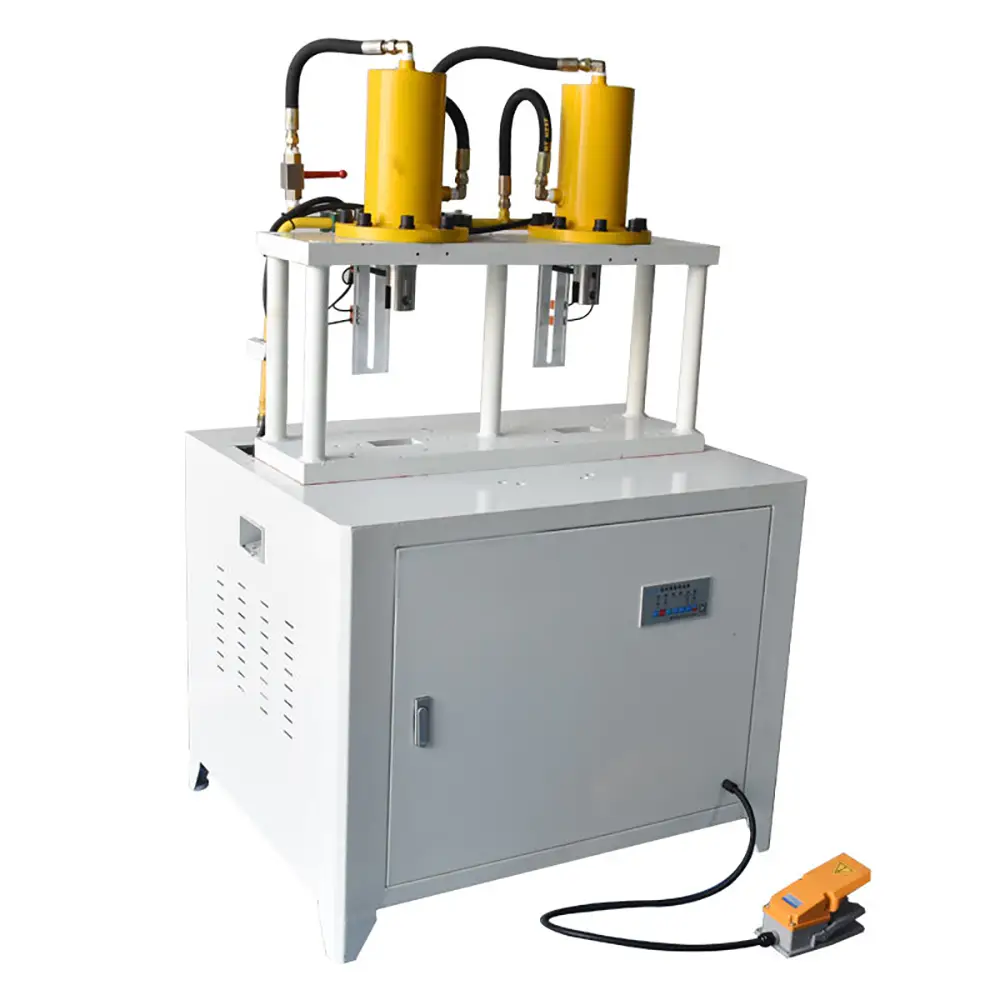
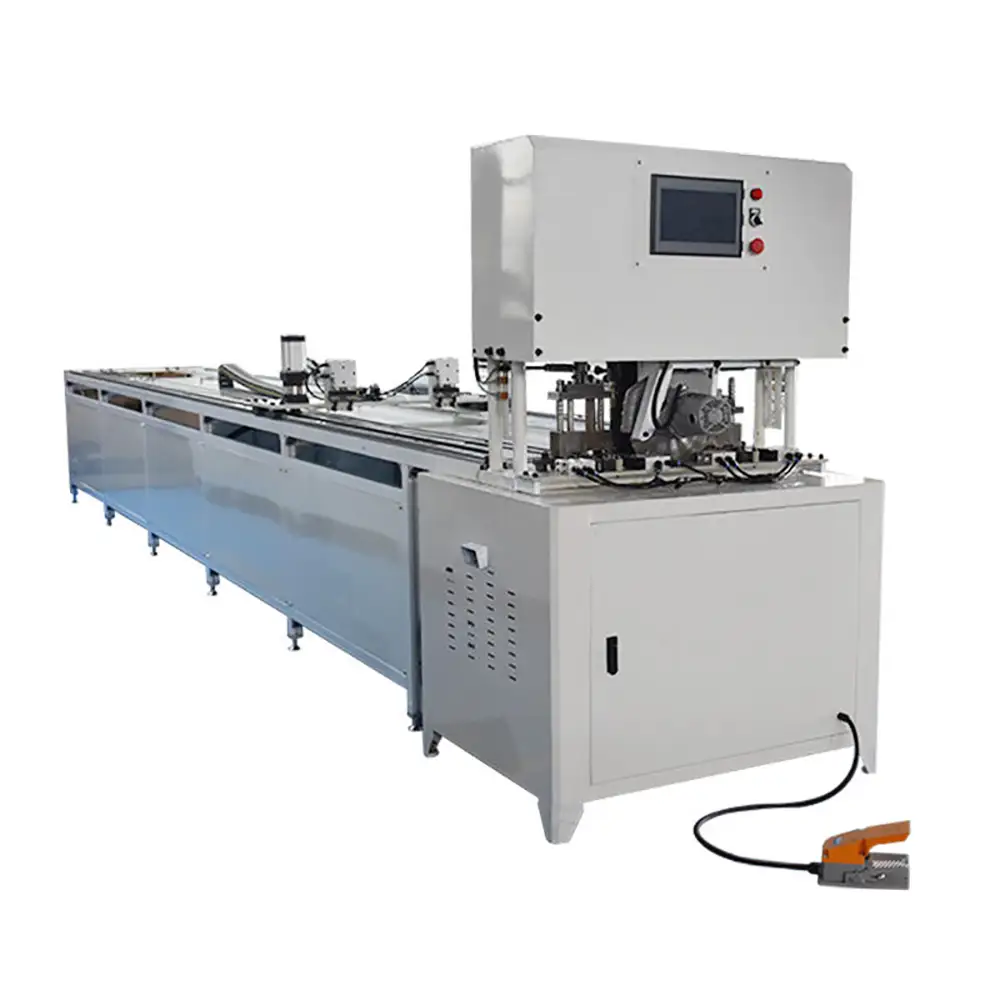
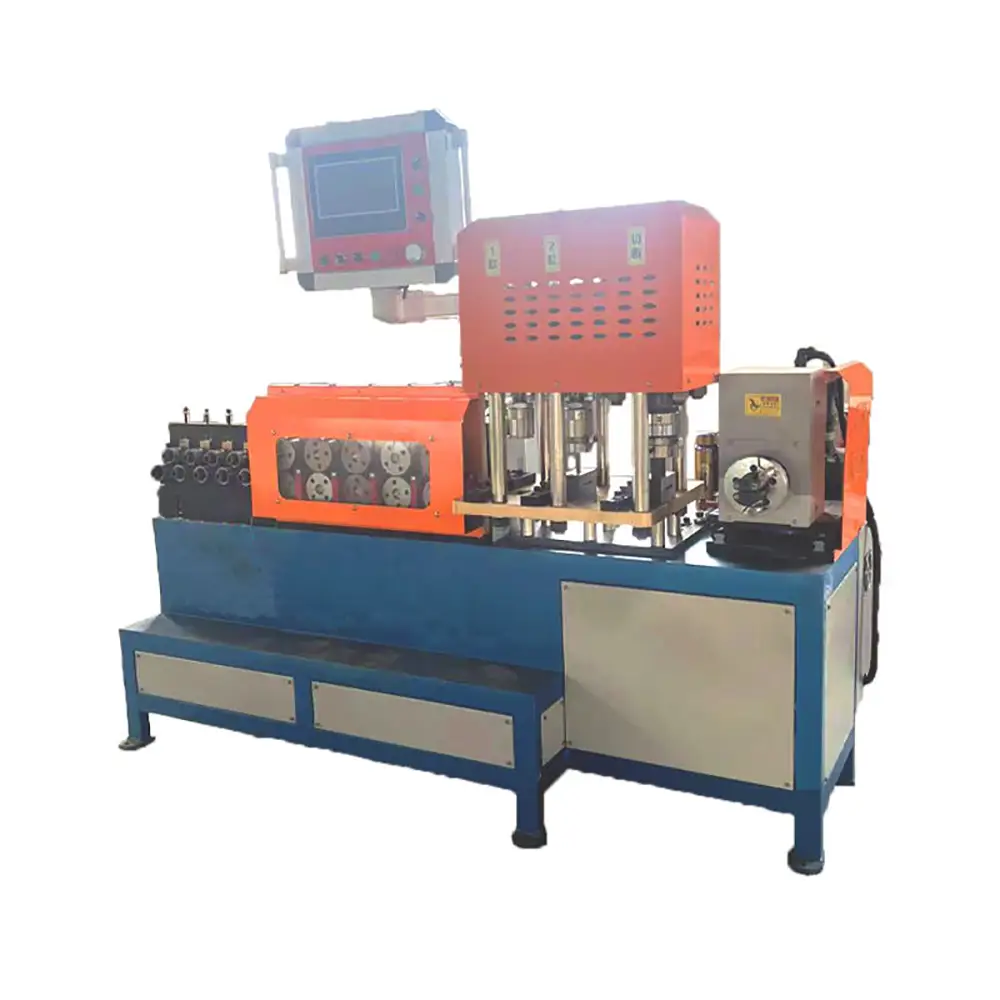
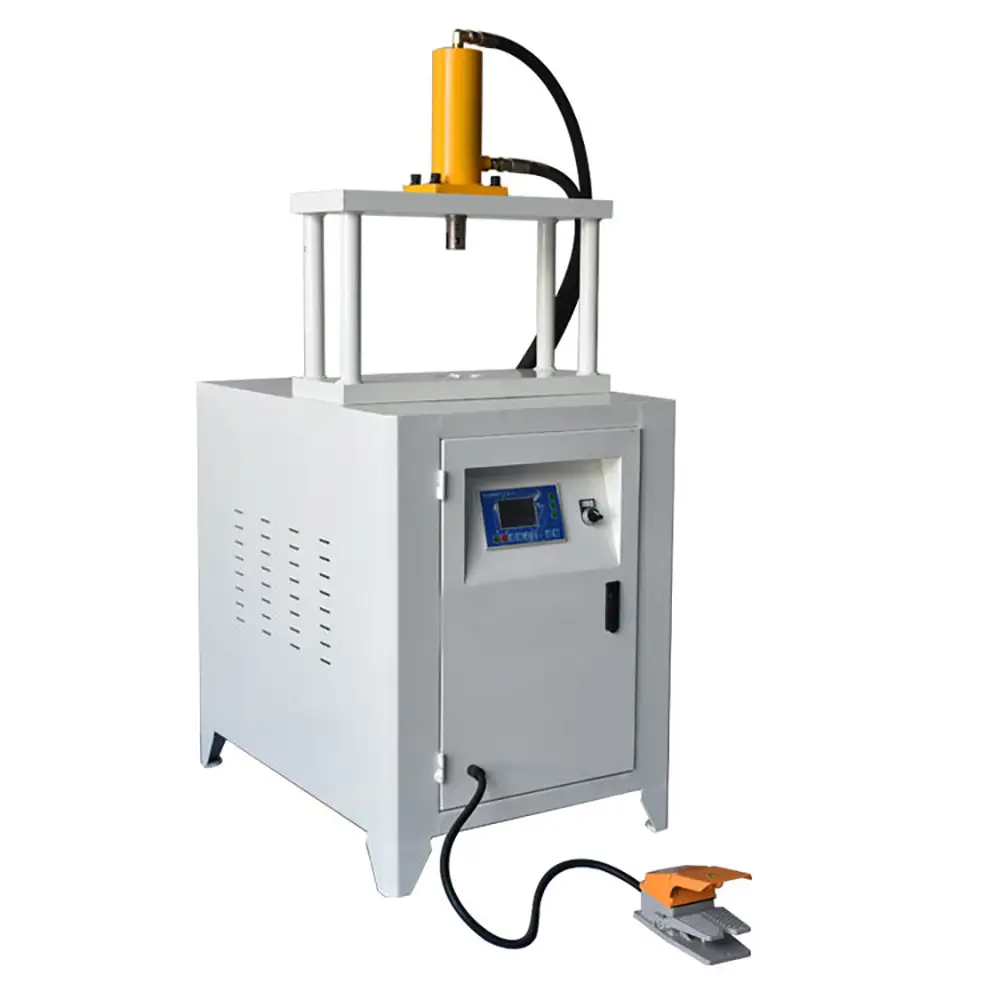
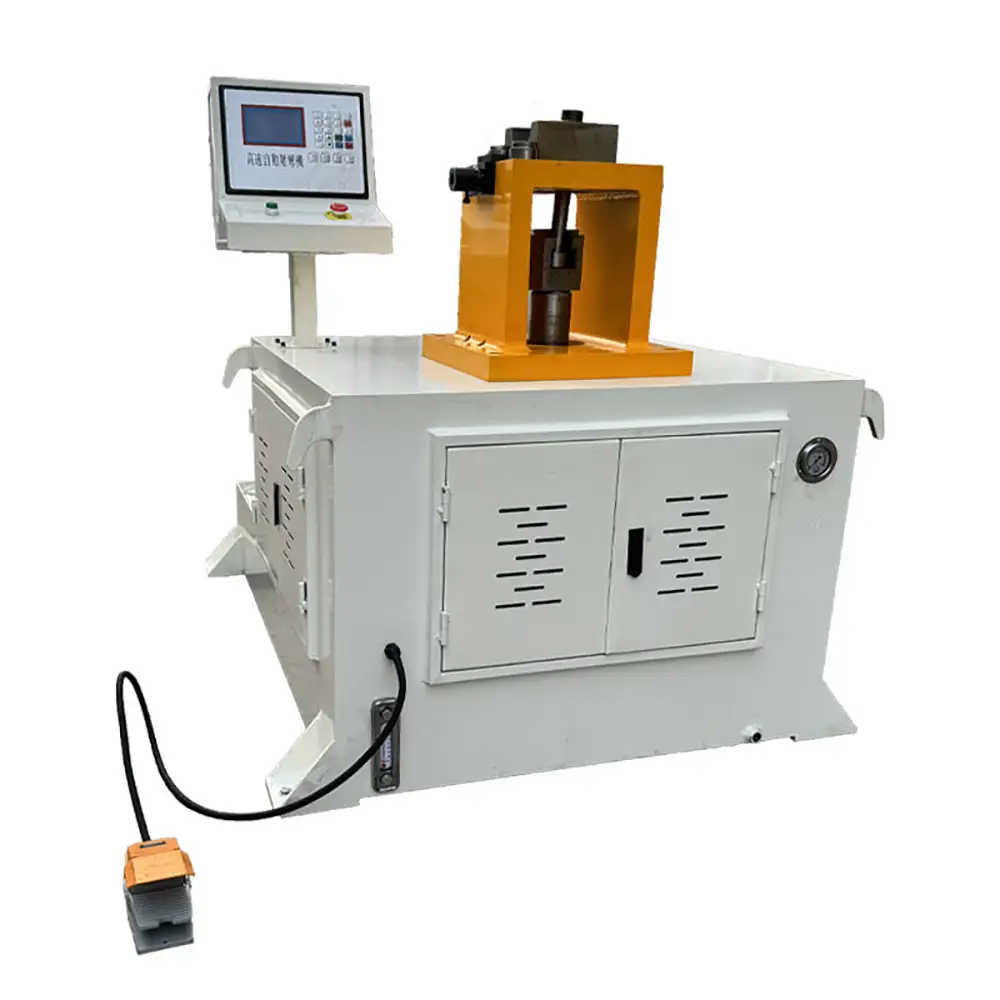
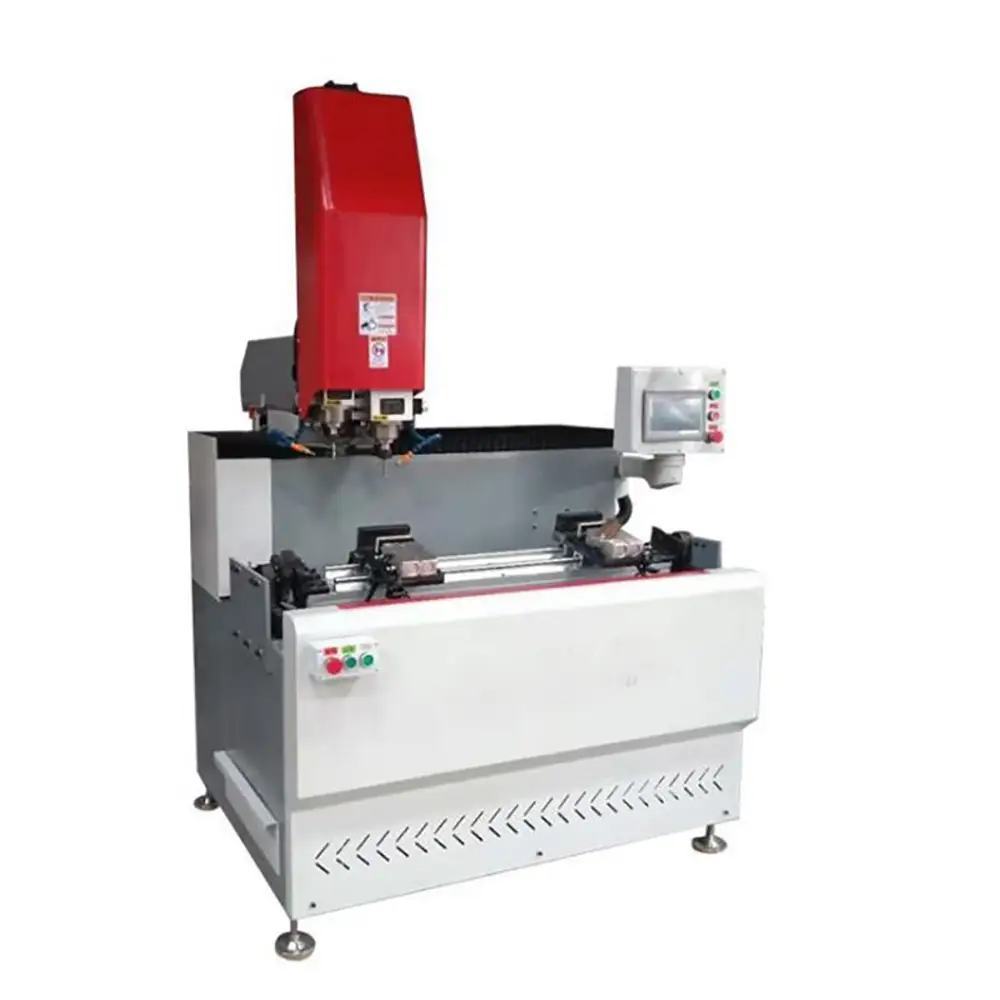
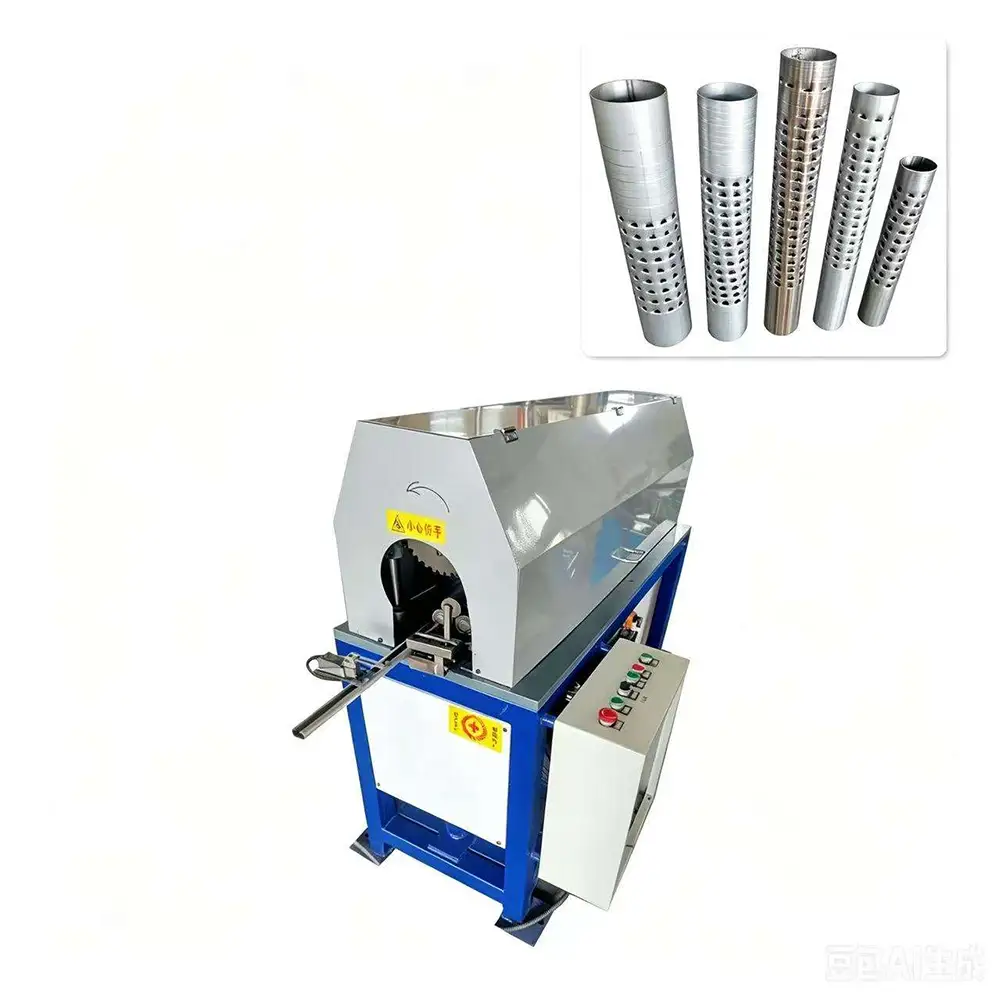
Pipe End Double-Head Arc Punching Machine
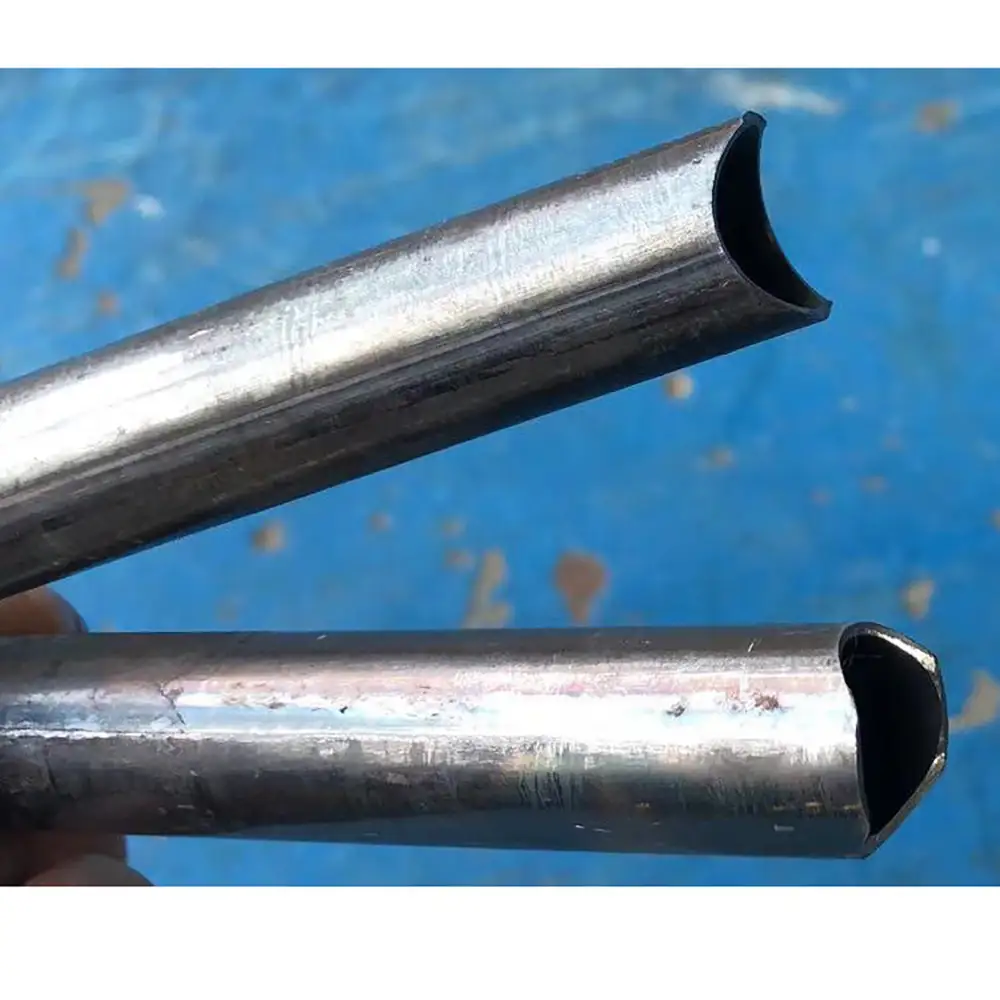
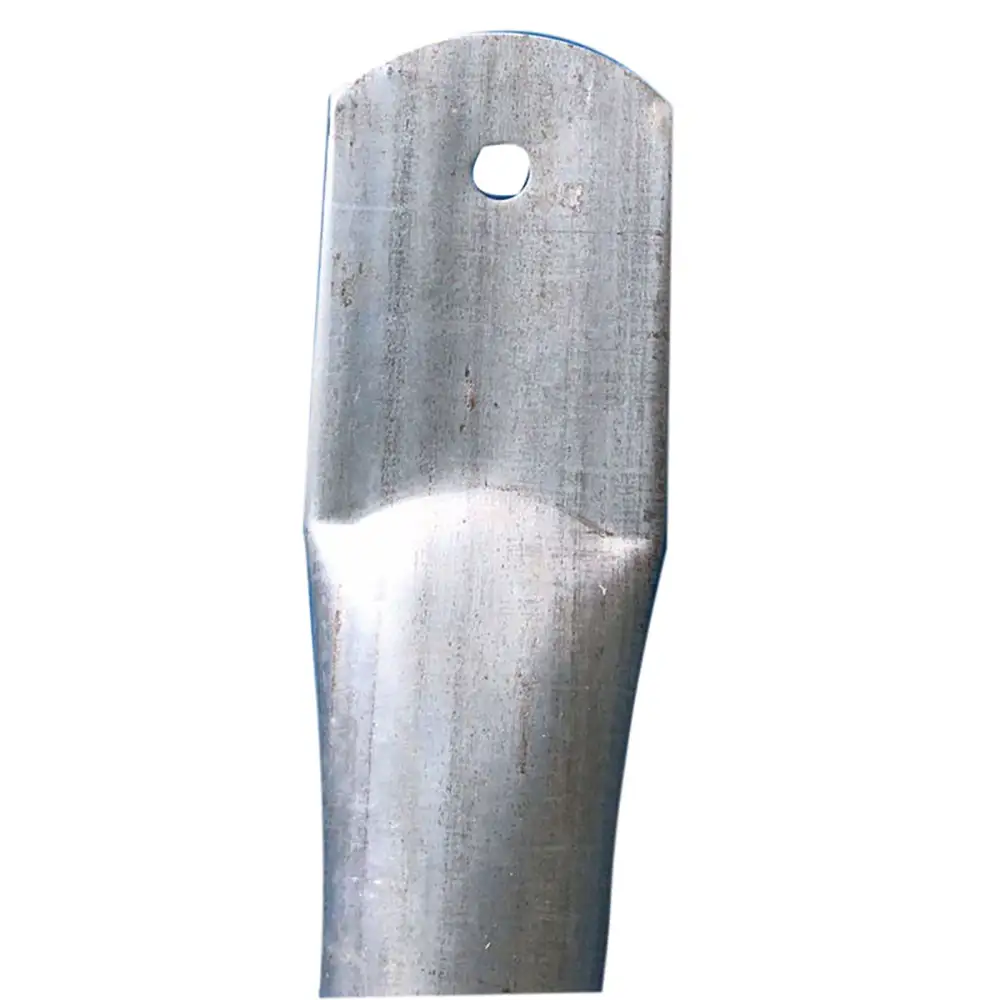
The Pipe End Double-Head Arc Punching Machine is a professional industrial equipment designed for arc forming processing at both ends of metal pipes. It integrates high precision, efficiency and stability, specifically engineered to create smooth, uniform arc notches on pipe ends—enabling tight, seamless butt welding or cross connection between pipes. Widely applicable to carbon steel,stainless steel, aluminum and other metal pipes, it is an essential processing tool for industries such as construction, furniture manufacturing, mechanical engineering, and pipeline installation.
|
No |
Item |
Data |
|
1 |
Punching Force |
150KN,200KN,OPTIONAL |
|
2 |
Processing Pipe Diameter |
0.5" - 3" (customizable) |
|
3 |
Maximum Pipe Thickness |
3mm |
|
4 |
Arc Precision |
±0.1mm |
|
5 |
Power Supply |
380V/50Hz (customizable for different regions) |
Double Head Tube End Notching Machine for Efficient Tube End Processing
The Double Head Tube End Notching Machine is designed for efficient and repeatable processing of metal tube and pipe ends. It is particularly suitable for manufacturers that need to create notches, cutouts, or specially shaped end profiles before welding, assembly, or further fabrication.
Compared with single-end processing, a double-head configuration can support processing at two tube ends according to the specific machine design and tooling arrangement. This can help reduce handling between operations and simplify production workflows for repetitive tube components.
The machine can be configured for different tube shapes, dimensions, materials, notch profiles, and production requirements. Depending on the selected tooling and machine configuration, it can be used for round tubes, square tubes, rectangular tubes, and other suitable metal profiles.
Actual processing capability depends on tube dimensions, material properties, wall thickness, tooling geometry, machine power, and the required notch shape.
Double Head Tube Notching Design
The double-head structure is one of the main features of this tube end notching machine. It provides a production-oriented configuration for processing tube ends with dedicated tooling.
For applications requiring similar processing at both ends of a tube, a double-head system can reduce the need to reposition the workpiece between separate operations. This may improve workflow efficiency and help maintain consistent positioning.
The actual relationship between the two processing heads depends on the machine design. Some configurations may support processing both ends in a coordinated sequence, while others may use independently controlled or positioned working stations.
For OEM projects, the head arrangement can be evaluated according to tube length, notch location, production cycle, and required end geometry.
Tube End Notching and End Cutting
Tube end notching is commonly used when a tube must connect with another tube or component. A properly formed notch can provide a better joint interface and help prepare the tube for welding or assembly.
The machine can be equipped with dedicated cutting or notching tooling according to the required profile. Tool geometry should be selected based on tube material, outside dimensions, wall thickness, and the desired notch shape.
Applications may include saddle notches, end cutouts, angled notches, connection notches, and other customized tube-end profiles, depending on the tooling and processing method.
The final result should be verified using production samples, especially when the tube notch has a complex geometry or tight dimensional requirements.
Suitable Tube Materials
The Double Head Tube End Notching Machine can be configured for processing a range of common metal tubes and pipes.
Potential materials include carbon steel, stainless steel, aluminum, galvanized steel, and other suitable metals. Material hardness and mechanical properties should be considered when selecting the cutting tools and processing configuration.
For stainless steel and other harder materials, appropriate tooling and cutting parameters are particularly important for maintaining edge quality and extending tool life.
For customized applications, buyers should provide the tube material, outside diameter or profile size, wall thickness, notch shape, and required production volume when requesting machine recommendations.
Round, Square, and Rectangular Tubes
Tube fabrication requirements vary widely between industries. A flexible notching machine can be configured with suitable fixtures and tooling for different tube profiles.
Round tube notching is commonly used for frame structures, handrails, furniture, exhaust components, and tubular assemblies. Square and rectangular tube notching is frequently required for structural frames, agricultural machinery, equipment supports, racks, and fabricated steel products.
The fixture must hold the tube securely and position the workpiece accurately during the notching operation. Custom workholding solutions can be developed for unusual tube profiles or special production requirements.
Tube End Preparation for Welding
One important application of tube end notching is welding preparation. When two tubular components need to intersect, a properly shaped notch can help create a suitable joint interface.
This is particularly useful in the production of frames, tubular structures, railings, equipment supports, agricultural machinery, fitness equipment, and other welded assemblies.
Consistent end preparation can help reduce excessive manual fitting and grinding. However, the final weld preparation requirements depend on the joint design, welding process, material, and engineering specifications.
Production Efficiency and Repeatability
For manufacturers processing large quantities of similar tube components, a dedicated tube end notching machine can provide a more repeatable alternative to manual cutting and grinding.
Once the correct fixture and tooling have been established, operators can position tubes using a defined production process. This can reduce repetitive measuring and manual marking and help maintain consistency between batches.
The double-head design can also help reduce workpiece handling for suitable applications. Actual cycle time depends on tube dimensions, notch geometry, machine configuration, loading method, and operator workflow.
Custom Tooling and Notching Dies
Custom tooling is important when the required tube notch does not match a standard profile.
Tooling may include notching cutters, forming dies, cutting blades, clamping fixtures, positioning stops, and other application-specific components. Custom tools can be designed according to production drawings or physical samples.
When requesting customized tooling, customers should provide detailed tube dimensions and notch drawings whenever possible. Sample testing can help confirm the required processing method and finished profile before mass production.
Applications
The Double Head Tube End Notching Machine can be used in many metal fabrication industries, including:
Steel tube frame manufacturing
Stainless steel furniture production
Automotive component fabrication
Exhaust and pipe component manufacturing
Agricultural machinery
Construction equipment
Fitness equipment
Bicycle and motorcycle components
Guardrails and handrails
Storage racks and shelving
Industrial equipment frames
Custom welded structures
The exact application range depends on the machine configuration and selected tooling.
Quality Control
Consistent tube positioning is essential for accurate notching. Proper clamping, fixture design, tooling alignment, and cutting parameters all contribute to finished-part quality.
Manufacturers should inspect notch dimensions, position, edge condition, tube deformation, and overall fit during production.
For OEM applications, sample inspection can be performed before finalizing the production process. This is particularly useful when the finished tube must match a specific assembly or welding fixture.
Operation and Maintenance
Regular maintenance helps maintain stable machine performance. Operators should inspect cutting tools, fixtures, clamps, mechanical components, electrical systems, and other wear parts according to the manufacturer's recommendations.
Cutting tools should be checked for wear and replaced or sharpened when required. Workholding fixtures should remain clean and properly aligned to ensure repeatable tube positioning.
Lubrication and cleaning requirements depend on the specific machine design. Operators should follow the supplied operating and maintenance instructions rather than applying a generic maintenance schedule.
Appropriate guarding, emergency-stop systems, electrical protection, and other safety features should be verified according to the actual machine configuration and applicable local requirements.
Custom & OEM Tube Notching Solutions
For manufacturers with specialized tube-end requirements, Custom & OEM services can include dedicated notching tooling, fixtures, double-head configurations, positioning systems, and customized processing solutions.
Customers can provide product drawings, tube samples, notch profiles, dimensions, material information, and expected production volumes. These details help determine the appropriate machine configuration and tooling concept.
This makes the Double Head Tube End Notching Machine suitable for manufacturers, distributors, wholesalers, purchasing agents, and international B2B buyers seeking customized tube processing equipment.
Why Choose Us
Double Head Processing Design — Provides a production-oriented configuration for efficient tube-end processing according to the machine setup.
Dedicated Notching Tooling — Notching cutters, dies, fixtures, and positioning components can be matched to specific tube applications.
Wide Tube Compatibility — Suitable configurations can be developed for round, square, rectangular, and other compatible metal tube profiles.
Welding Preparation — Helps prepare tube ends for intersecting joints, welding, and downstream assembly operations.
Custom & OEM Support — Customized machine configurations and tooling can be developed from drawings, samples, and production requirements.
Repeatable Processing — Dedicated fixtures and defined processing procedures can help improve consistency between workpieces.
B2B Manufacturing Solution — Suitable for factories, wholesalers, distributors, purchasing agents, and industrial equipment buyers.
Application-Focused Support — Machine configuration, tooling selection, sample testing, and production requirements can be evaluated as part of a complete solution.
FAQs
1. What is a Double Head Tube End Notching Machine?
It is a specialized machine designed to create notches or shaped cutouts at tube ends using dedicated cutting or forming tooling.
2. What is the advantage of a double-head design?
A double-head configuration can support processing at two tube ends and may reduce workpiece repositioning for suitable applications.
3. What tubes can this machine process?
Depending on the configuration, it can process round, square, rectangular, and other compatible metal tube profiles.
4. Can it process stainless steel tubes?
Yes. Stainless steel can be processed when suitable tooling, machine capacity, and cutting parameters are selected for the specific material.
5. Can it notch square tubes?
Yes. Suitable fixtures and notching tooling can be configured for square tube applications.
6. Can it notch rectangular tubes?
Yes. Rectangular tubes can be processed when the machine is equipped with compatible fixtures and tooling.
7. What industries use tube end notching machines?
Common applications include furniture, automotive, agricultural machinery, construction, fitness equipment, steel structures, exhaust components, and general metal fabrication.
8. Can the machine make custom notch shapes?
Yes. Custom tooling can be developed for specialized notch profiles based on production drawings or tube samples.
9. Can it be used for welding preparation?
Yes. Tube end notching is commonly used to prepare tubular components for intersecting joints and welding.
10. Does the machine require custom fixtures?
Fixture requirements depend on the tube shape, dimensions, processing position, and production process. Custom fixtures are available for specialized applications.
11. How do I select the correct machine?
Provide the tube material, tube diameter or profile dimensions, wall thickness, notch shape, notch location, tube length, and required production volume.
12. Can you provide OEM tube notching solutions?
Yes. OEM solutions can include machine configuration, custom tooling, fixtures, positioning systems, and application-specific tube processing requirements.
Prev:
Steel Punching Machine Square Tube Punching Machine Pipe Tube Hole Punching Machine Single Multi-station
Next:
Hydraulic Multi-Functional Pipe Processing Machine with Custom Molds: Punching Holes, Arc Cutting, Bending & Flattening
TAG:
Pipe End Processing Machine,
Tube End Processing Machine,
Tube End Forming Machine,
Pipe End Forming Machine,
Metal Tube Processing Machine,
Pipe Fabrication Machine,
Tube Fabrication Machine,
Pipe Processing Equipment,
Tube Processing Equipment,
Tube Notching Machine,
Pipe Welding Preparation Machine,
Tube Welding Preparation Machine,
Pipe Notching Machine,
Tube End Cutting Machine,
Pipe End Notcher,
Stainless Steel Pipe Notching Machine,
Metal Tube End Notcher,
Tube End Notching Machine,
Pipe End Cutting Machine,
Pipe End Notching Machine,
Metal Tube Notching Machine,
Hydraulic Tube Notching Machine,
Hydraulic Pipe Notching Machine,
Pipe Cutting And Notching Machine,
Tube Joint Notching Machine,
Tube Cutting And Notching Machine,
Tube Saddle Cutter,
Pipe Saddle Cutter,
Square Tube Notching Machine,
Round Tube Notching Machine,
Related Category:
Double Head Tube End Notching Machine,Tube End Notching Machine,Double Head Tube Notching Machine,Automatic Tube End Not China, suppliers, manufacturers, factory, customized, wholesale, quotation, made in China