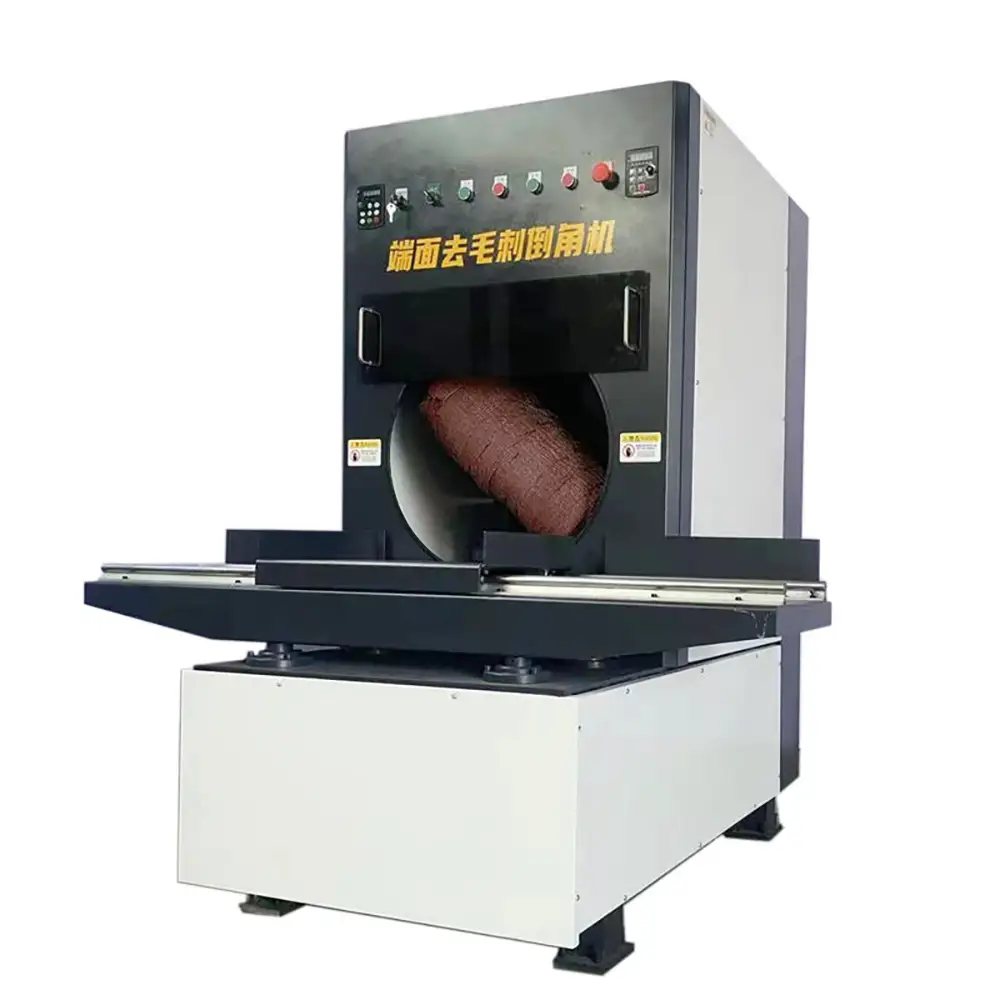
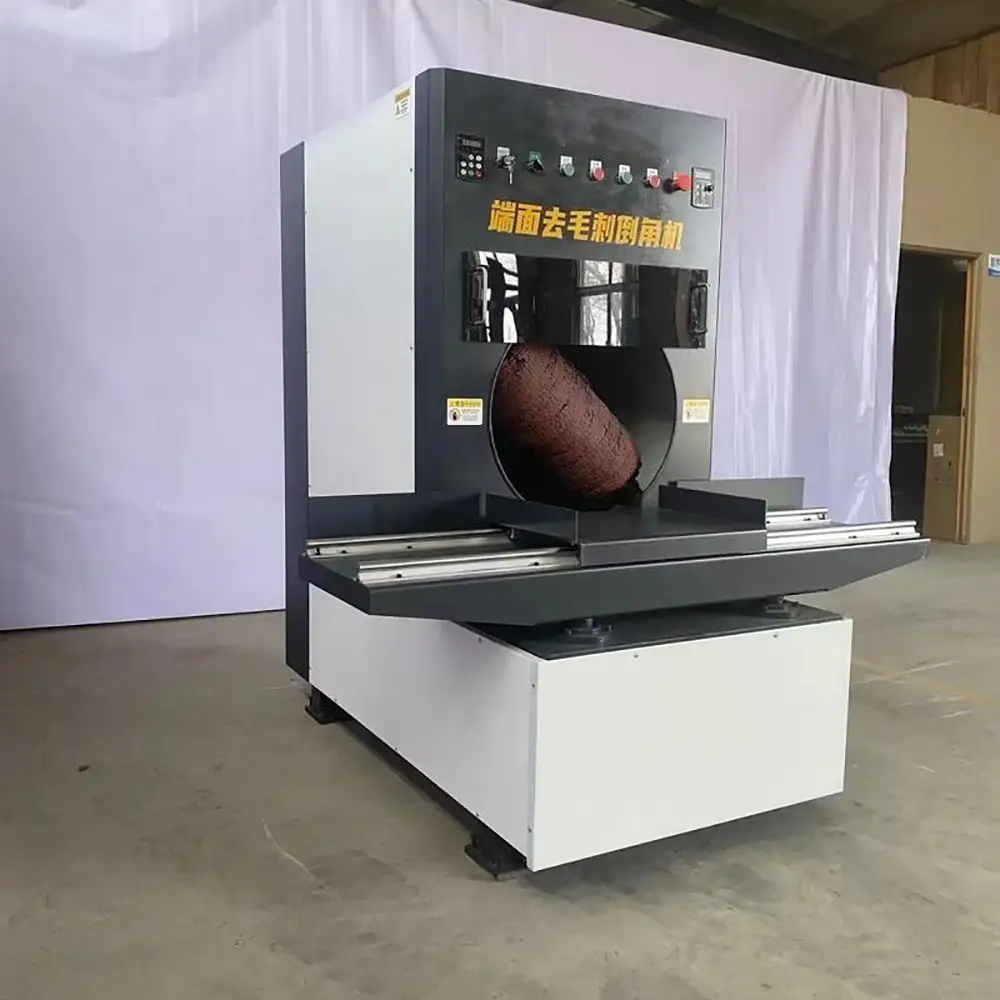
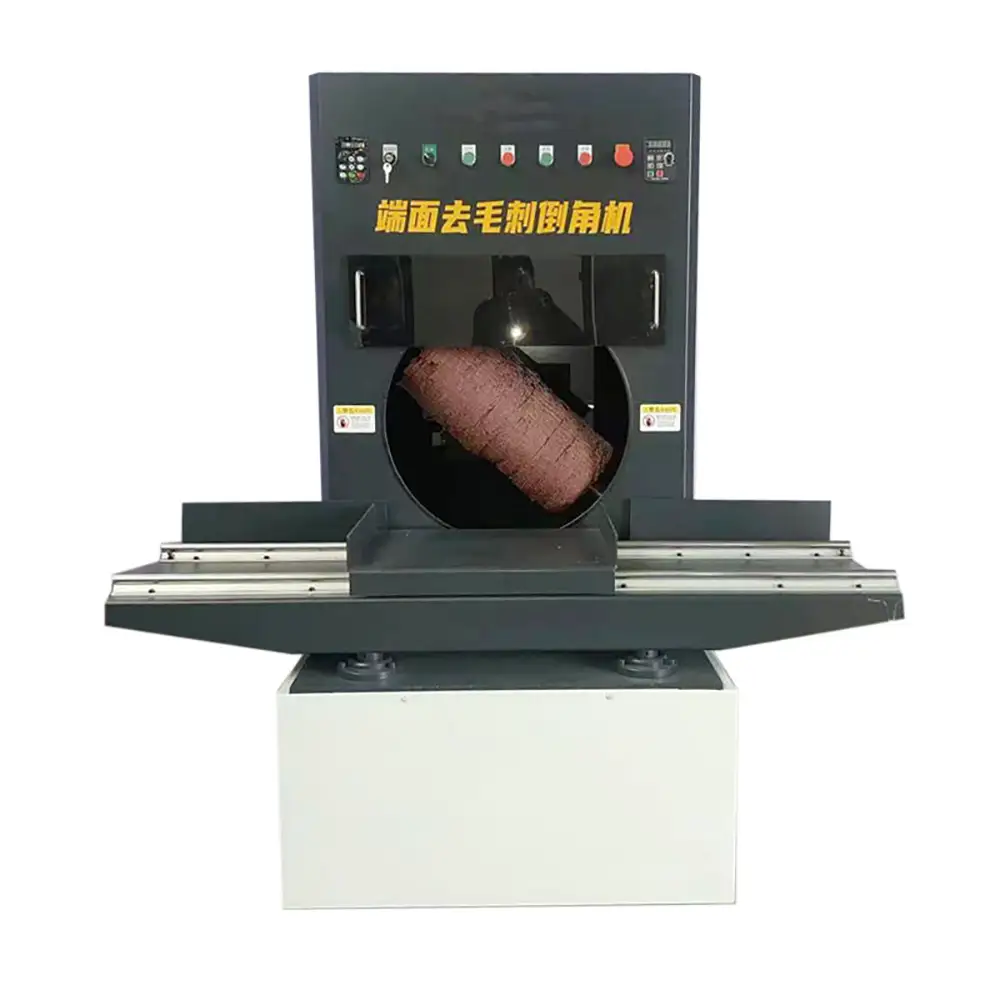
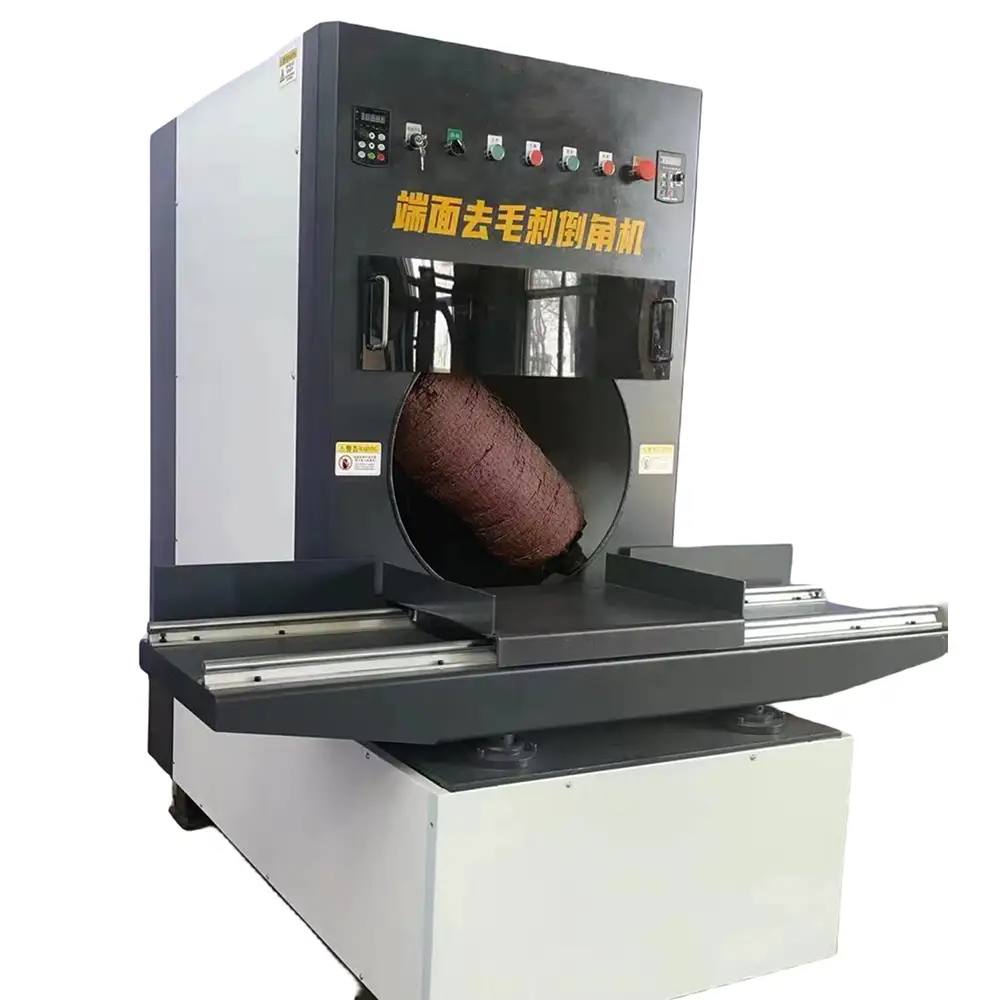
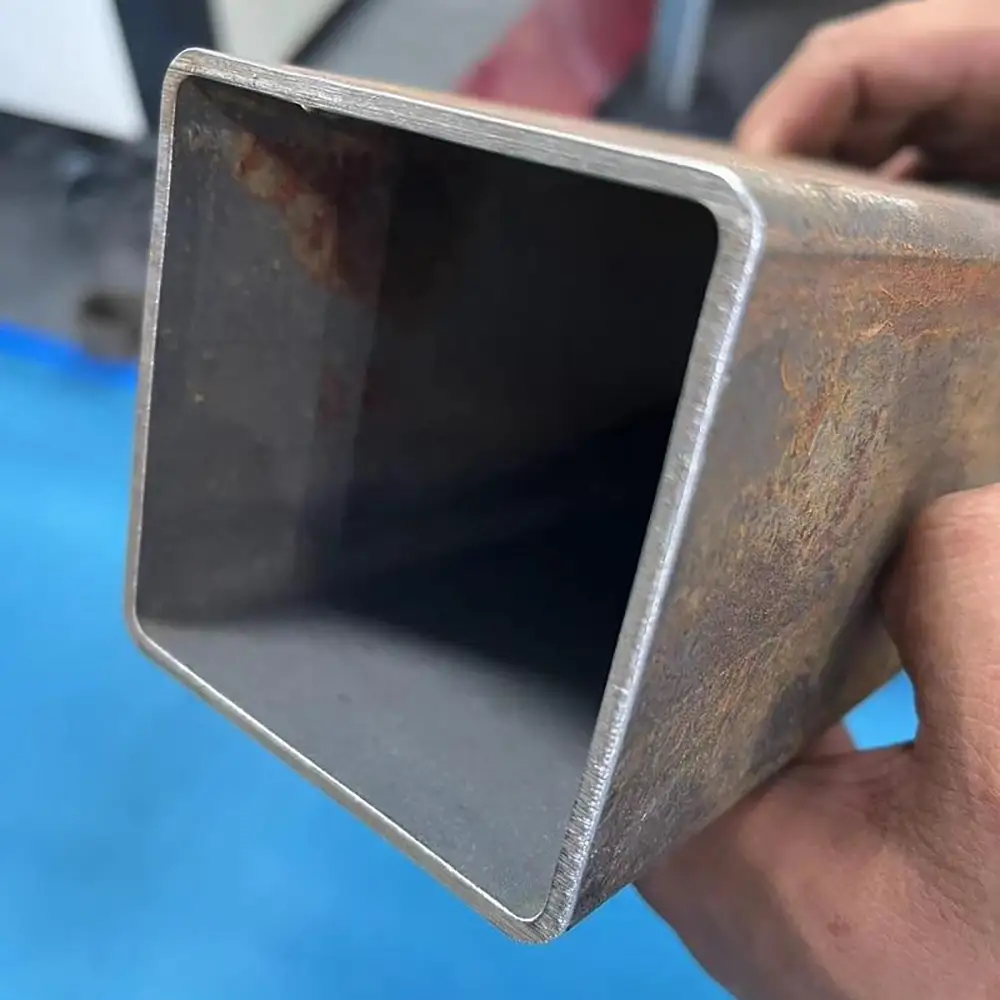
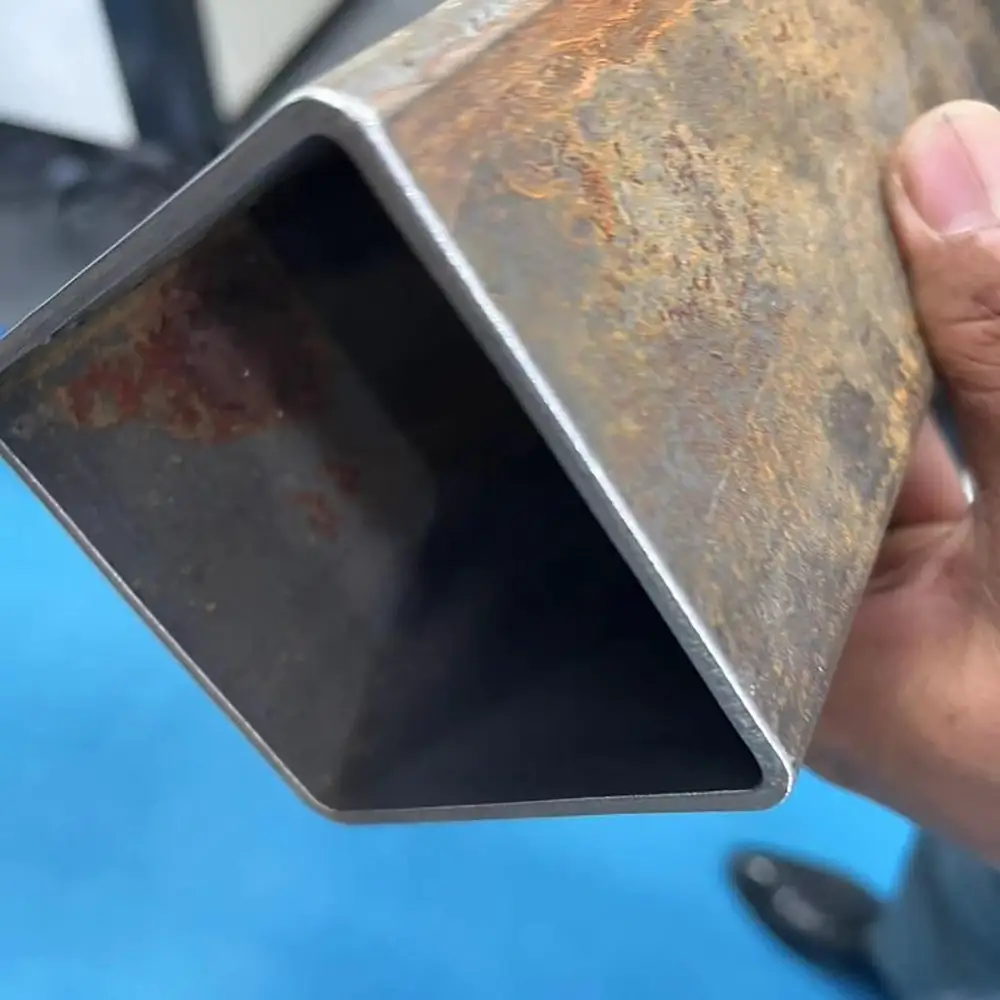
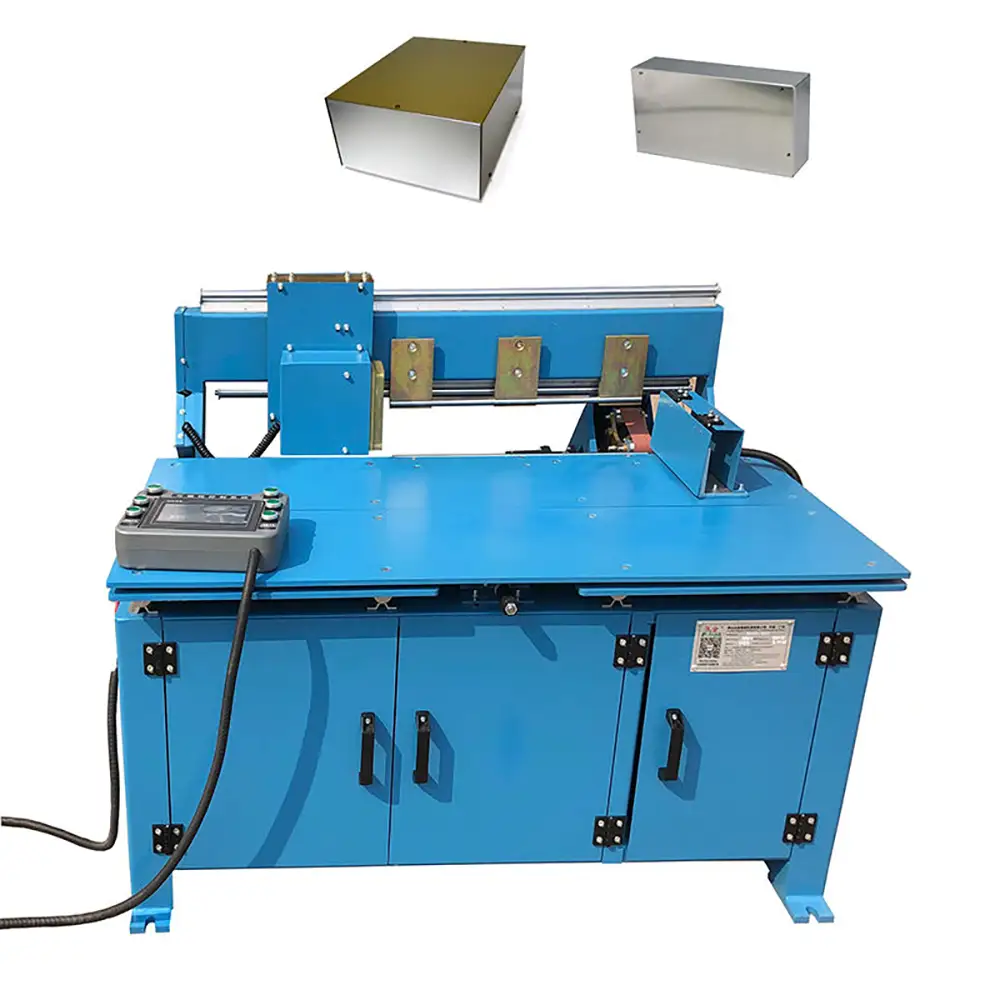
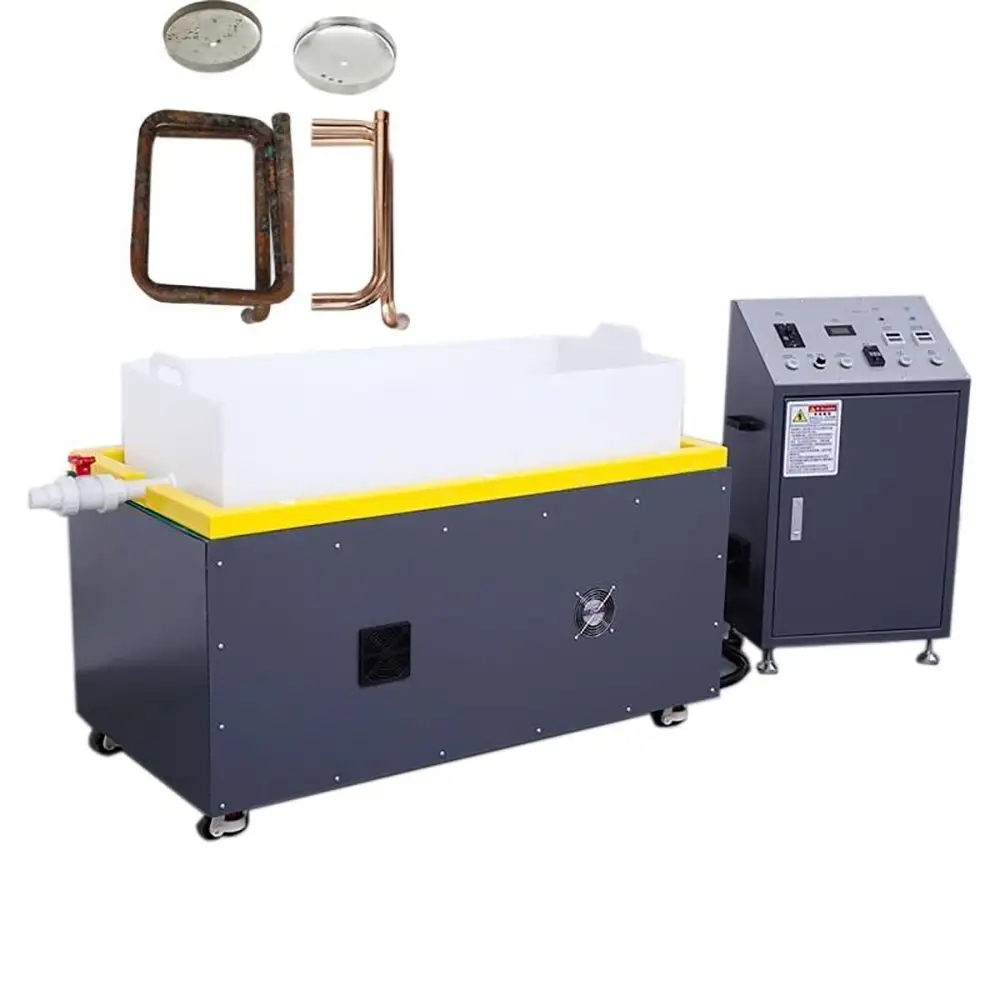
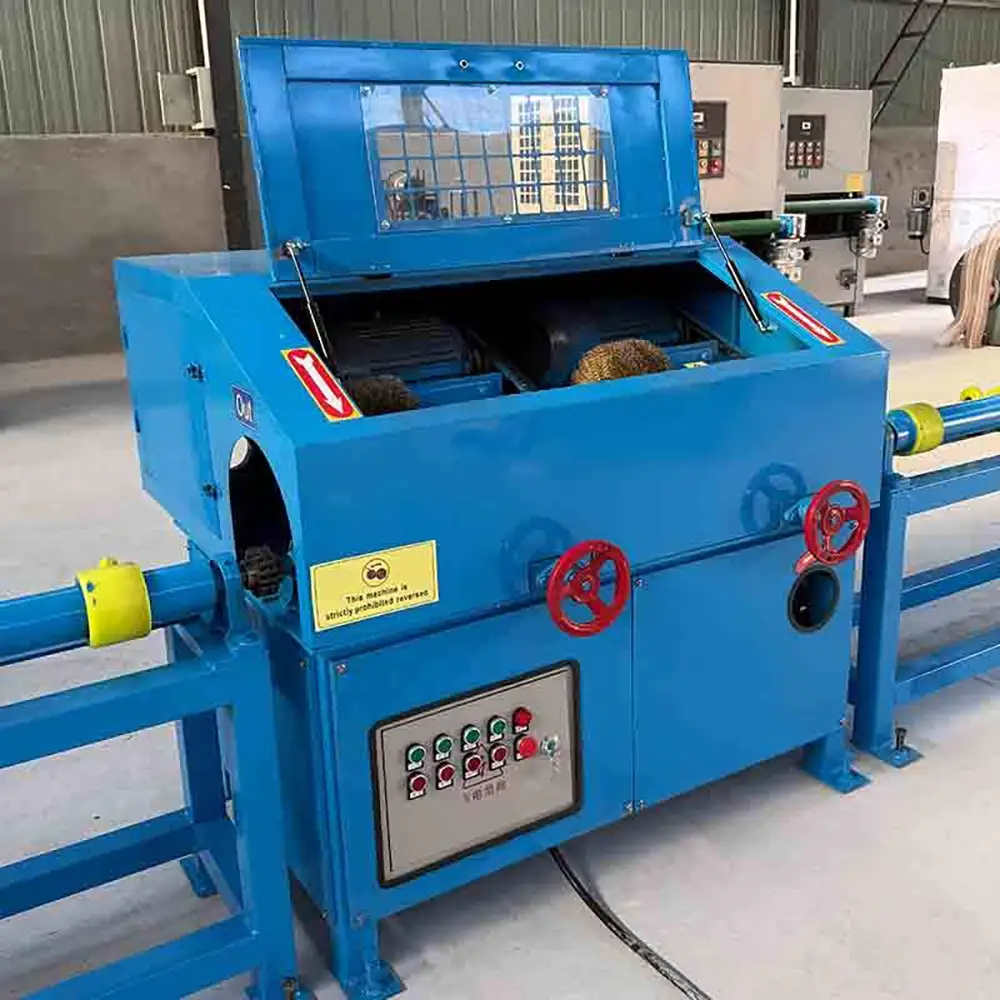
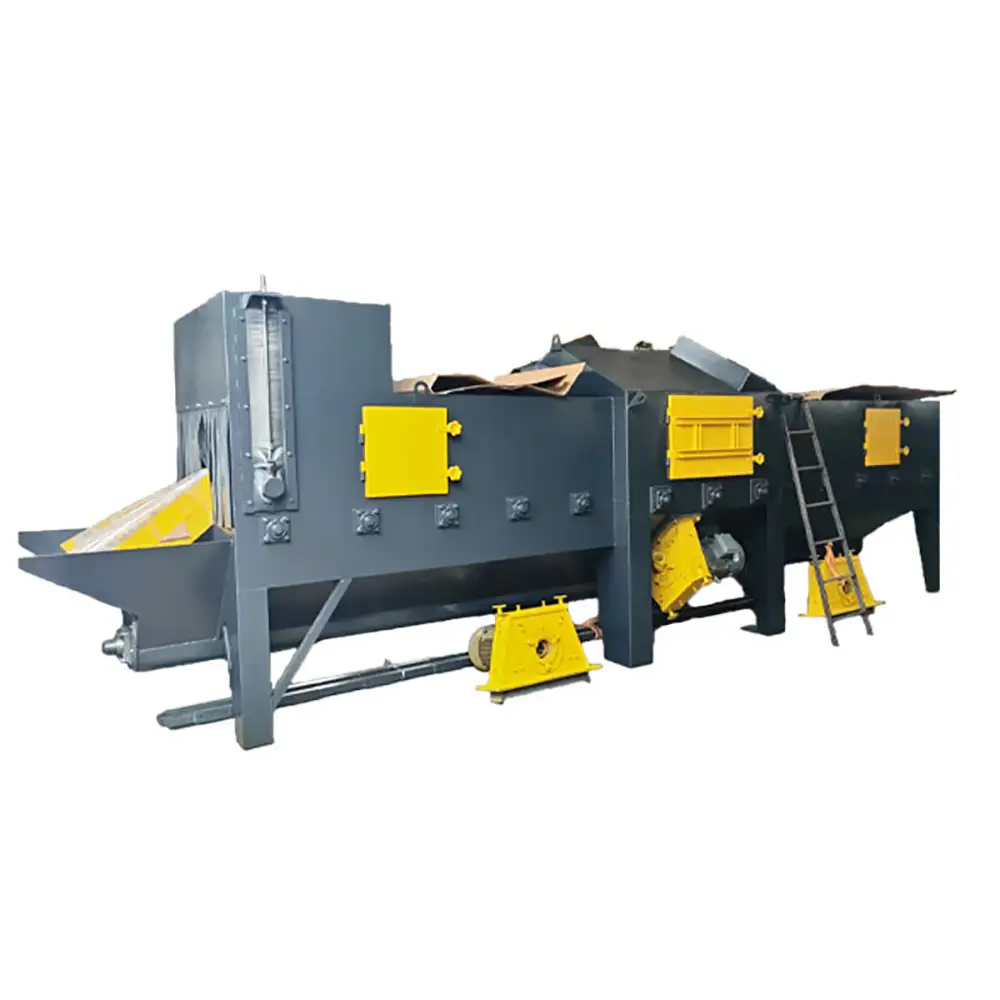
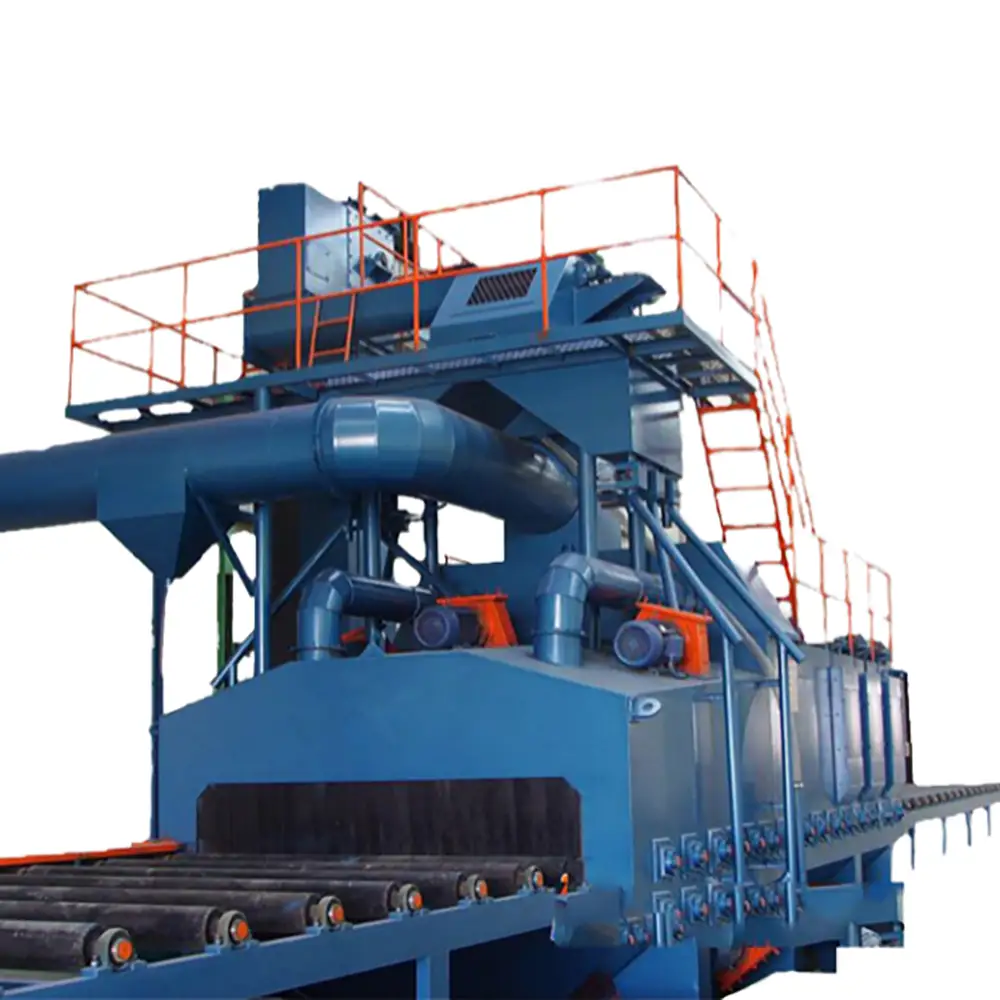
Removal of burrs from cut surfaces of copper, iron, aluminium and plastic profiles.
Uniformly rounded internal and external profiles
|
Processing size |
500x500mm |
|
Up and down stroke |
200mm |
|
Left and right stroke |
1000mm |
|
Spindle stroke |
150mm |
|
Roller brush size |
300x500mm |
|
Roller brush speed |
0-1000r/min |
|
Alternate speed |
0-80r/min |
|
Voltage |
380V 50H |
|
Total power |
3.5KW |
|
Overall Dimension |
1730x1560x1510mm |
Aluminum Profile Cut Face Deburring, Chamfering, Grinding and Polishing Machine
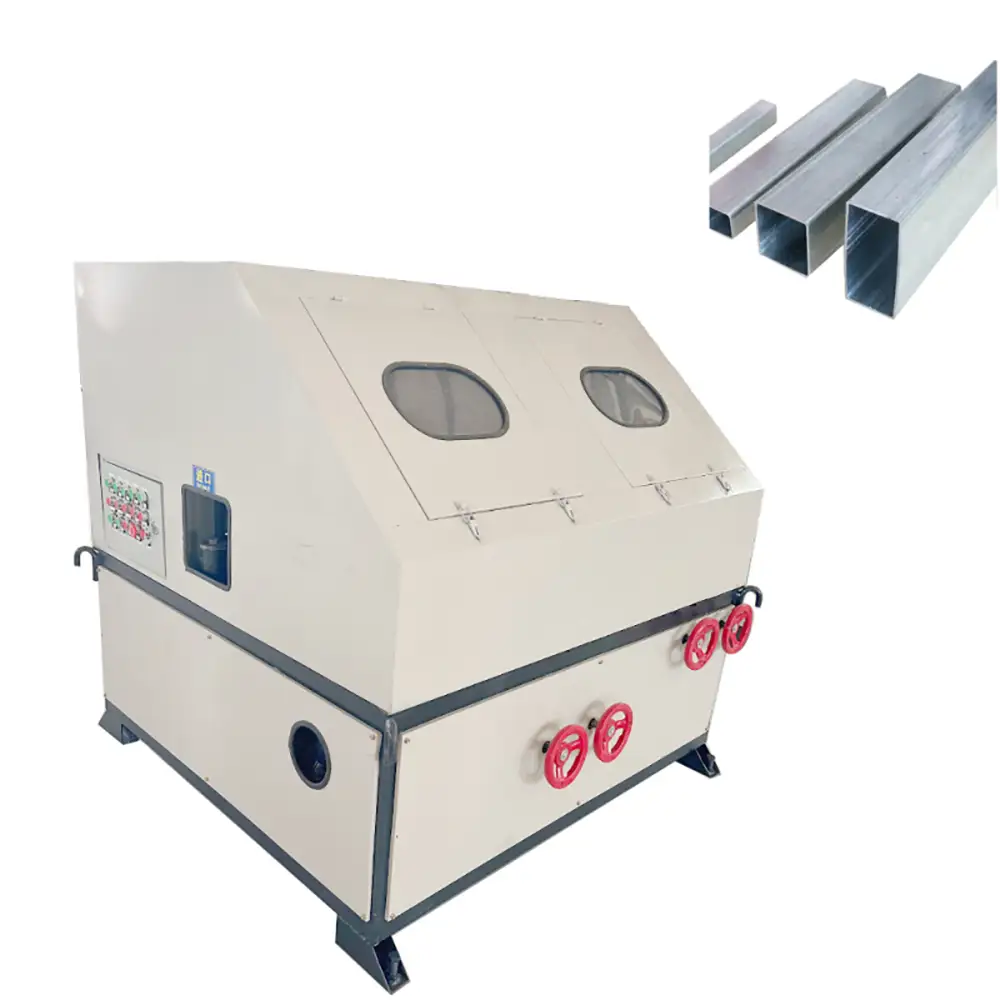
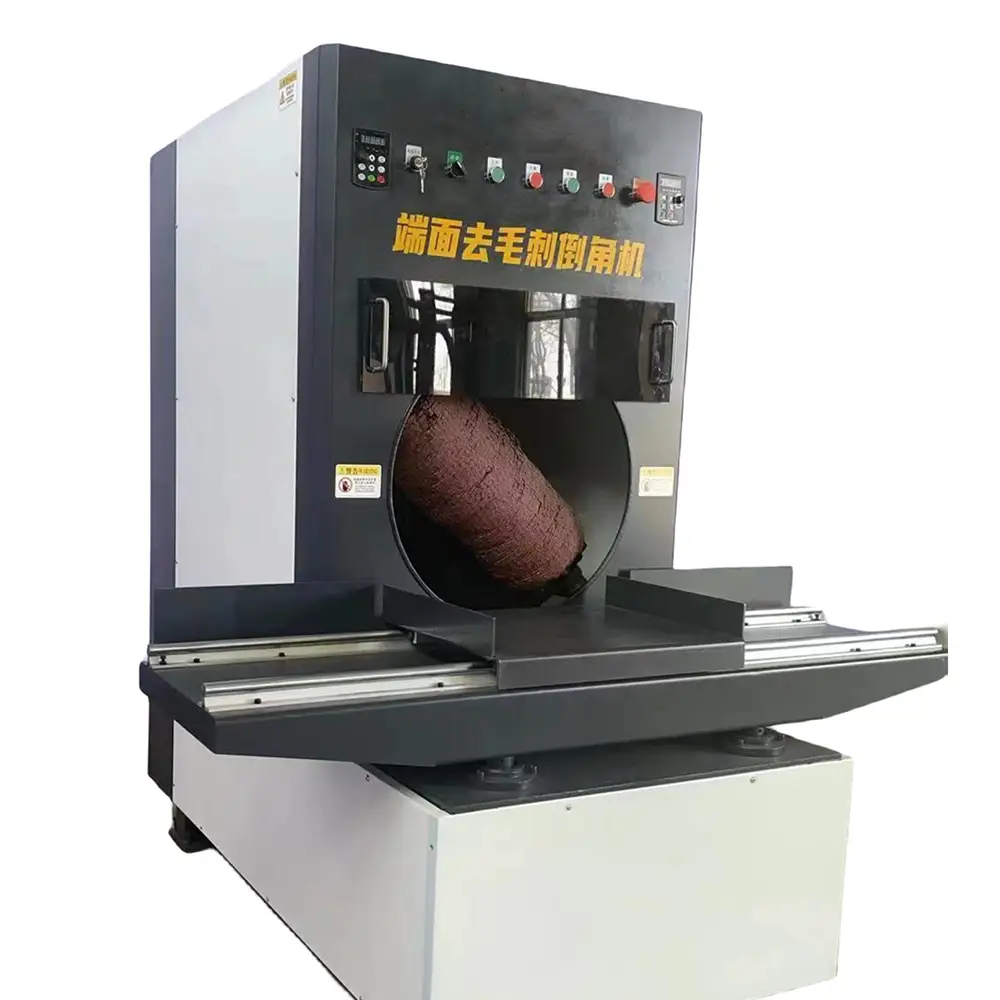
The Aluminum Profiles Metal Cut Face Processing Deburring Chamfer Grinding Polishing Deburring Machine is an industrial finishing solution designed for processing the cut faces, edges, corners, and surfaces of aluminum profiles and other compatible metal extrusions. It combines functions such as deburring, chamfering, grinding, edge smoothing, and polishing to help manufacturers improve the quality and appearance of aluminum profiles after cutting.
Aluminum extrusion profiles are widely used in construction, windows and doors, curtain walls, solar mounting systems, industrial equipment, transportation, furniture, electronics, and general manufacturing. After extrusion and cutting, the profile ends may contain sharp edges, burrs, rough cut marks, machining residue, or other imperfections.
These cut-face defects can affect assembly, handling, coating, anodizing, welding, and final product appearance. Manual deburring can be labor-intensive, especially when large quantities of profiles need to be processed. A dedicated aluminum profile deburring and polishing machine provides a more consistent and efficient approach to post-cutting surface preparation.
Designed for Aluminum Profile Cut Face Processing
The primary purpose of this machine is to process the cut ends and edges of aluminum profiles after sawing or machining.
When an aluminum extrusion is cut, the saw blade can leave sharp edges and small burrs around the cut face. Depending on the cutting method and blade condition, the end may also have rough machining marks.
The machine uses suitable grinding, deburring, chamfering, and polishing tools to process these areas. This can help create smoother and cleaner profile ends that are easier to handle and prepare for subsequent assembly or finishing operations.
The exact profile dimensions and shapes supported depend on the machine configuration and tooling.
Efficient Aluminum Profile Deburring
Deburring is an important step in aluminum extrusion processing. Sharp burrs can create handling hazards and may interfere with the assembly of components.
The deburring function removes unwanted material left after cutting and machining. Mechanical processing provides a more standardized method compared with manually filing or sanding every profile.
For high-volume extrusion production, this can help reduce repetitive manual labor and improve overall workflow efficiency.
The deburring process can be adjusted according to the profile material, wall thickness, cut condition, burr size, and required surface quality.
Chamfering Aluminum Profile Edges
Chamfering creates a small angled transition along an edge. For aluminum profiles, controlled chamfering can help eliminate sharp corners and improve the fit or handling characteristics of the finished component.
The machine can be configured with appropriate tools for edge chamfering and cut-face processing. The required chamfer size depends on the application and should be established according to the product specification.
Chamfering can be particularly useful for profiles used in furniture, construction, industrial frames, machinery, and other applications where smooth edges are required.
Grinding Cut Faces and Edges
Grinding is commonly used to remove rough areas, saw marks, burrs, and minor surface imperfections from aluminum profiles.
The machine can use suitable abrasive tools to perform initial material removal. Depending on the required finish, different grinding grades can be used to achieve a smoother surface before polishing.
For profiles that require additional surface treatment, grinding can serve as a preparation stage before anodizing, coating, painting, assembly, or other finishing processes.
Aluminum Profile Polishing
Polishing can improve the visual quality of compatible aluminum profile surfaces and cut ends.
After rough grinding and deburring, finer abrasive or polishing materials can be used to create a smoother surface. The final appearance depends on the aluminum alloy, starting surface, abrasive sequence, processing parameters, and desired finish.
For decorative aluminum products, a consistent finishing process can help improve the appearance of repeated components.
Suitable for Aluminum Extrusions
Aluminum extrusion profiles are produced in many different cross-sectional shapes. Common examples include:
Square aluminum profiles
Rectangular aluminum profiles
T-slot aluminum profiles
Industrial aluminum extrusions
Window and door profiles
Solar mounting profiles
Structural aluminum profiles
Furniture aluminum profiles
Heat sink profiles
Custom aluminum extrusions
The suitability of a specific profile depends on its dimensions, shape, wall thickness, cut geometry, and machine configuration.
Improve Cut-End Quality
The cut end of an aluminum profile is often an important part of the manufacturing process. A clean and smooth cut face can make subsequent assembly easier and improve the appearance of the final product.
The machine helps process the cut surface after sawing by removing burrs and smoothing rough areas.
For manufacturers producing standardized profile lengths, an automated finishing process can provide a repeatable method for preparing large quantities of components.
Reduce Manual Finishing Work
Manual deburring typically requires operators to use files, abrasive pads, grinders, or other hand tools. While manual processing can work for small quantities, it becomes increasingly inefficient as production volume increases.
An automatic or semi-automatic aluminum profile finishing machine can perform repetitive processing with less dependence on continuous manual grinding.
Operators can load the workpiece, establish the appropriate processing parameters, and inspect the finished profile according to the production requirements.
This can help reduce operator fatigue and improve production organization.
Consistent Edge Finishing
Consistency is especially important when manufacturers produce thousands of similar aluminum profiles.
Manual processing can result in variations in edge radius, chamfer size, grinding marks, and surface appearance. Mechanical processing provides a more controlled finishing method.
Once the machine is properly adjusted for a specific profile and finishing requirement, repeated workpieces can be processed using the same basic procedure.
This can be useful for OEM production, extrusion manufacturers, fabrication companies, and component suppliers.
Applications in Window and Door Manufacturing
Aluminum profiles are extensively used for windows, doors, frames, partitions, and curtain wall systems.
After cutting profiles to the required length, manufacturers may need to remove sharp edges and burrs before assembly. A dedicated profile deburring machine can help prepare these components for subsequent fabrication.
Smooth cut faces can also help improve operator handling during assembly.
Applications in Solar Profile Production
Solar mounting systems commonly use aluminum extrusion profiles because of aluminum's lightweight characteristics and corrosion resistance.
Profiles are frequently cut to standardized lengths and may require edge and cut-face finishing before assembly.
The machine can support post-cutting deburring, chamfering, and grinding operations for compatible solar aluminum profiles.
Industrial Aluminum Profiles
Industrial automation equipment, machine frames, workbenches, conveyors, guards, and modular structures frequently use T-slot and other aluminum extrusion profiles.
These profiles are often cut and assembled in large quantities. Removing burrs and sharp edges can make the components easier to handle and prepare for assembly.
The machine can therefore be integrated into industrial aluminum profile processing lines.
Flexible Tooling and Abrasives
Different aluminum alloys and profile geometries may require different finishing tools. Abrasive selection is important because aluminum can behave differently from steel during grinding and polishing.
Suitable grinding wheels, abrasive belts, brushes, or polishing tools can be selected according to the application and machine design.
For production environments, tooling should be tested with the actual aluminum profile to determine the most appropriate processing parameters.
Integration With Aluminum Profile Production
The machine can be placed after profile cutting and before assembly or final surface treatment.
A typical workflow may include:
Extrude the aluminum profile.
Cut the profile to the required length.
Transfer the profile to the finishing machine.
Position and secure the workpiece.
Perform cut-face deburring.
Chamfer sharp edges if required.
Grind rough areas and saw marks.
Perform polishing or brushing if required.
Inspect the finished profile.
Transfer the component to assembly or subsequent surface treatment.
This production sequence can help create a more standardized post-cutting finishing process.
Suitable for B2B Manufacturing
The machine is designed for industrial customers that require repeatable finishing of aluminum profiles and metal extrusions.
Typical users may include aluminum extrusion manufacturers, window and door factories, solar mounting system manufacturers, industrial profile suppliers, furniture manufacturers, architectural metal companies, and general metal fabrication businesses.
Production capacity depends on profile size, material, finishing requirements, operator workflow, machine configuration, and processing parameters.
Why Choose Us
1. Specialized Aluminum Profile Processing
We provide machinery solutions specifically designed for aluminum profile cut-face processing and edge finishing.
2. Multiple Finishing Functions
The equipment can support deburring, chamfering, grinding, sanding, and polishing according to the selected configuration.
3. Efficient Cut-End Processing
It provides a dedicated solution for removing burrs and improving the quality of aluminum profile cut faces.
4. Suitable for Aluminum Extrusions
The machine can be configured for various aluminum extrusion applications, including industrial and architectural profiles.
5. Reduced Manual Labor
Mechanical processing can reduce repetitive manual filing, sanding, and grinding operations.
6. Improved Consistency
Controlled machine processing helps maintain more consistent edge and cut-face quality across production batches.
7. Flexible Tool Selection
Grinding, deburring, brushing, and polishing tools can be selected according to profile material and finishing requirements.
8. Wide Industrial Applications
Suitable applications include windows and doors, solar profiles, industrial frames, furniture, machinery, and architectural aluminum products.
9. Custom Machine Configuration
Machine specifications can be matched to profile dimensions, shapes, materials, production volume, and required finishing results.
10. International B2B Support
We provide product information, technical communication, configuration assistance, and export support for industrial customers.
Frequently Asked Questions
1. What is an aluminum profile deburring machine?
It is a machine designed to remove burrs, sharp edges, and rough areas from aluminum profiles after cutting, sawing, or machining.
2. Can this machine process aluminum extrusion profiles?
Yes. It is designed for suitable aluminum extrusion profiles, including industrial profiles, structural profiles, window profiles, solar profiles, and other compatible shapes.
3. Can it process the cut face of an aluminum profile?
Yes. Cut-face processing is one of the primary applications. The machine can remove burrs and improve the smoothness of the cut end.
4. Can it chamfer aluminum profile edges?
Yes. With suitable tooling and configuration, it can perform edge chamfering on compatible aluminum profiles.
5. Can it polish aluminum profiles?
Yes. Suitable polishing tools can be used for compatible aluminum profile finishing applications.
6. Can it remove saw marks?
Yes. Grinding and sanding operations can help reduce saw marks and other minor surface imperfections left after cutting.
7. What types of aluminum profiles can be processed?
Potential applications include square, rectangular, T-slot, industrial, architectural, window, door, solar, and custom extrusion profiles.
8. Can the machine process different profile sizes?
The applicable profile dimensions depend on the specific machine model and tooling. Profile width, height, length, and shape should be confirmed before selection.
9. Is it suitable for mass production?
Yes. Automated or semi-automated profile finishing is suitable for repetitive production and large batches of aluminum components.
10. Does deburring damage the aluminum profile?
Properly selected tooling and processing parameters are designed to remove burrs without unnecessarily damaging the workpiece. Testing is recommended for precision applications.
11. Can the machine be used before anodizing?
Yes. Grinding, deburring, and surface preparation can be used as part of a production process before anodizing or other surface treatments when appropriate.
12. How do I choose the correct machine?
Important factors include aluminum alloy, profile cross-section, profile dimensions, cut condition, burr size, required chamfer, desired finish, and production volume.
13. Can the machine be customized?
Depending on the application, machine configuration and tooling can be adapted to specific aluminum profile dimensions and finishing requirements.
Prev:
Multifunction Small Steel Flat Sheet Polishing Sanding Machine / Steel Sheet Sander Polishing Grinding Buffing Machine
Next:
Multi Functional Vibrating Tumbling Machine Deburring Machine Chamfering Vibrartory Finishing Machine
TAG:
Metal Edge Chamfering Machine,
Metal Edge Deburring Machine,
Aluminum Tube Deburring Machine,
Aluminum Bar Deburring Machine,
Aluminum Profile Processing Machine,
Aluminum Extrusion Processing Machine,
Aluminum Extrusion Cut Face Finishing Machine,
Aluminum Extrusion Edge Grinding Machine,
Aluminum Extrusion Edge Polishing Machine,
Aluminum Profile Sanding Machine,
Aluminum Extrusion Sanding Machine,
Aluminum Profile Brushing Machine,
Aluminum Profile Surface Treatment Machine,
Aluminum Profile Surface Processing Machine,
Aluminum Profile Burr Removal Machine,
Aluminum Extrusion Burr Removal Machine,
Aluminum Burr Removal Machine,
Aluminum Deburring Equipment,
Aluminum Profile Deburring Equipment,
Aluminum Extrusion Finishing Equipment,
Aluminum Profile Grinding Equipment,
Aluminum Profile Polishing Equipment,
Aluminum Profile Chamfering Equipment,
Aluminum Profile Cutting Finishing Machine,
Aluminum Profile Automatic Finishing Machine,
Aluminum Profile Edge Finishing Machine,
Aluminum Profile End Grinding Machine,
Aluminum Profile End Polishing Machine,
Aluminum Profile End Chamfering Machine,
Aluminum Profile End Deburring Equipment,
Related Category:
Aluminum Profile Deburring Machine, Aluminum Profile Chamfering Machine, Aluminum Profile Grinding Machine China, suppliers, manufacturers, factory, customized, wholesale, quotation, made in China