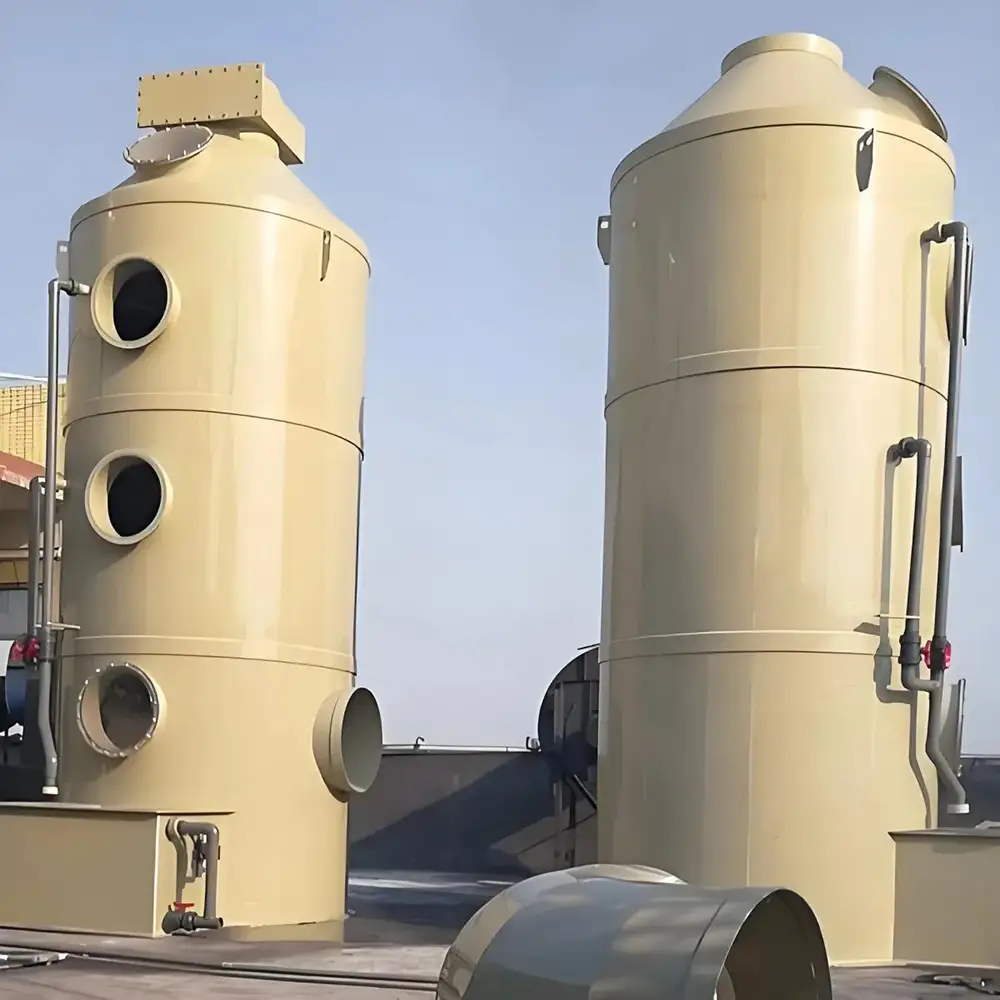
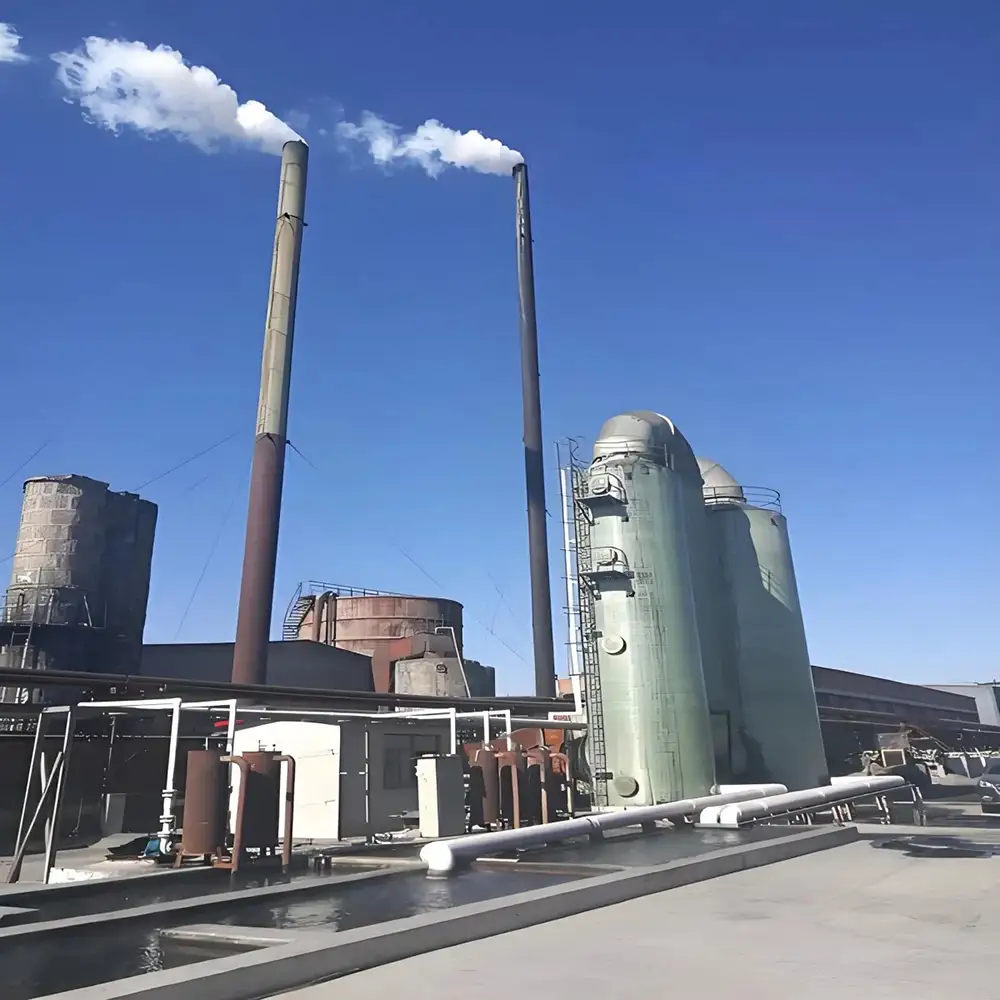
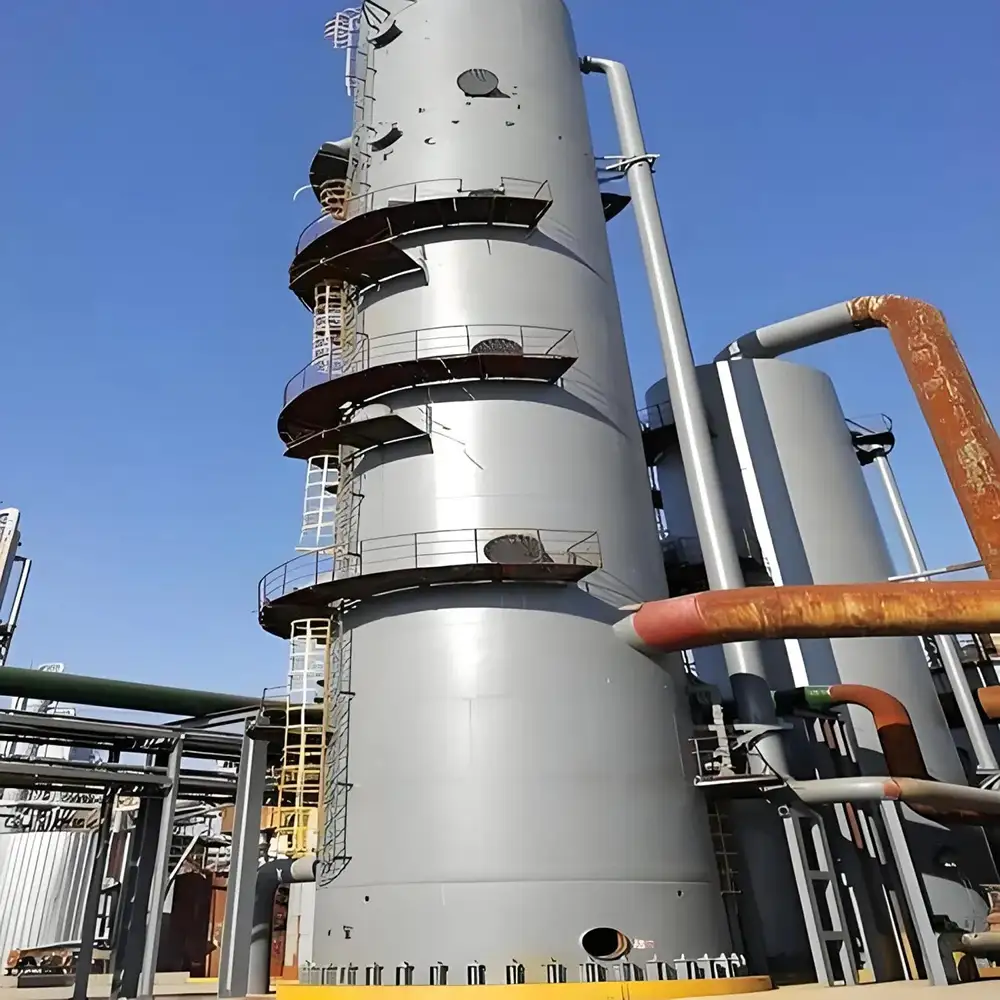
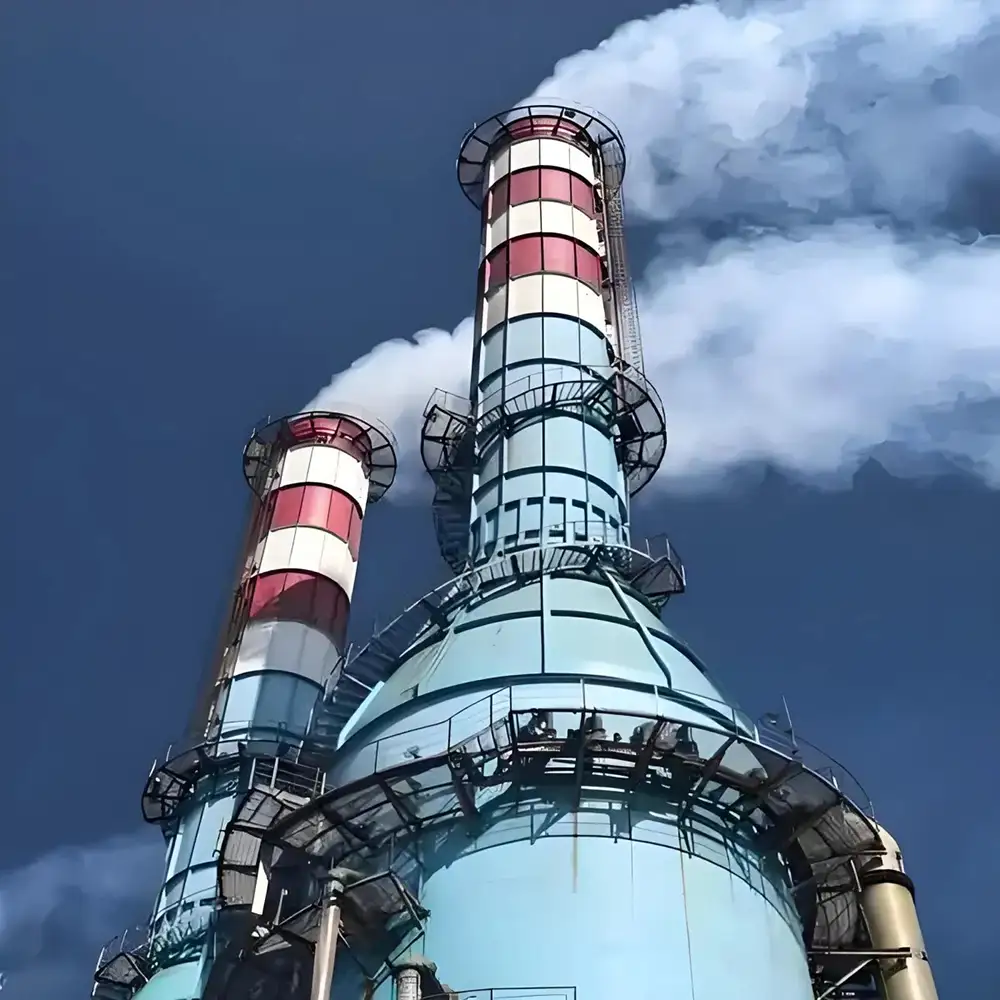
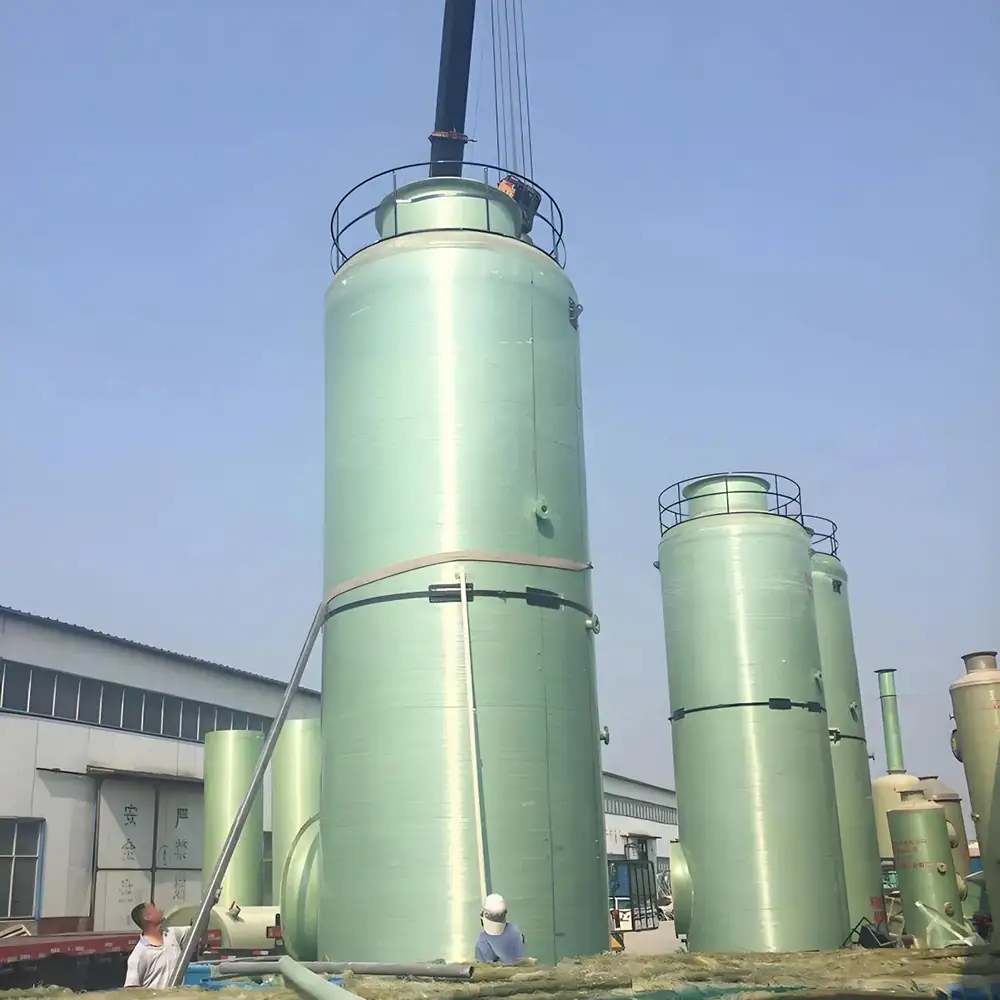
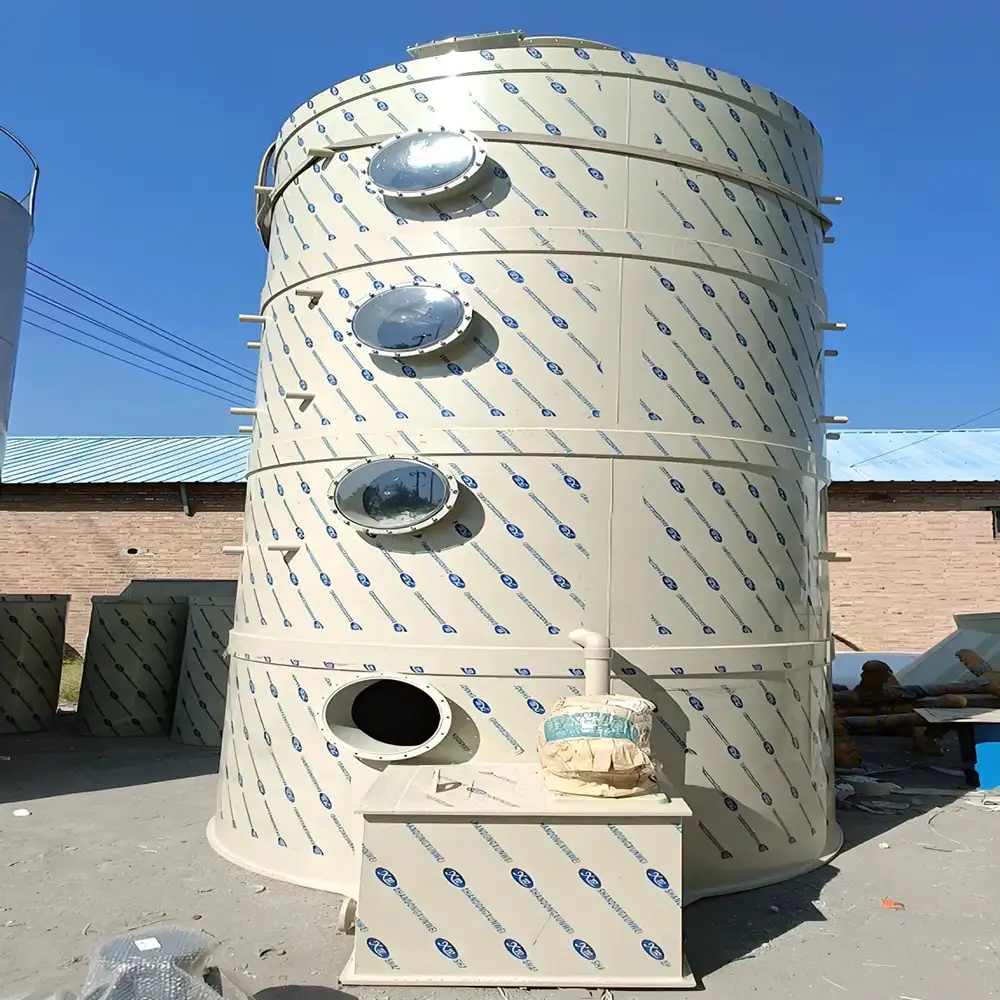
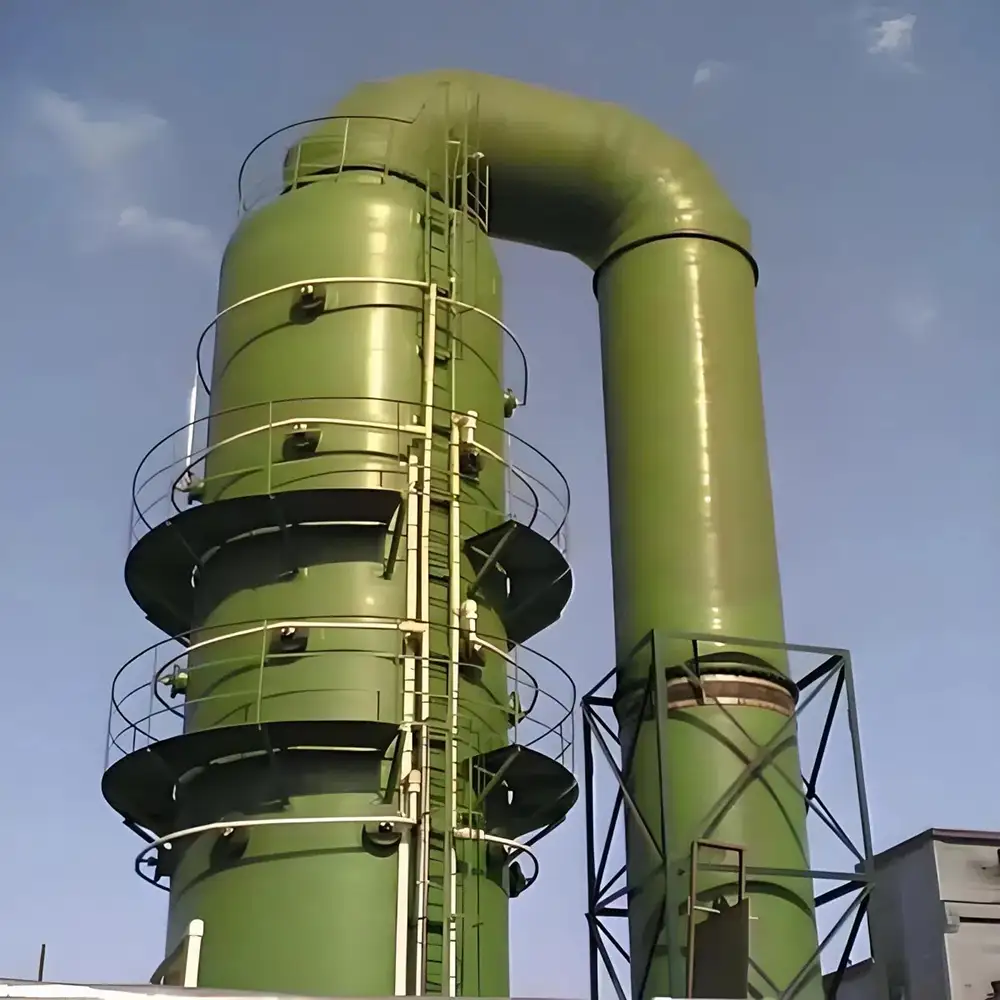
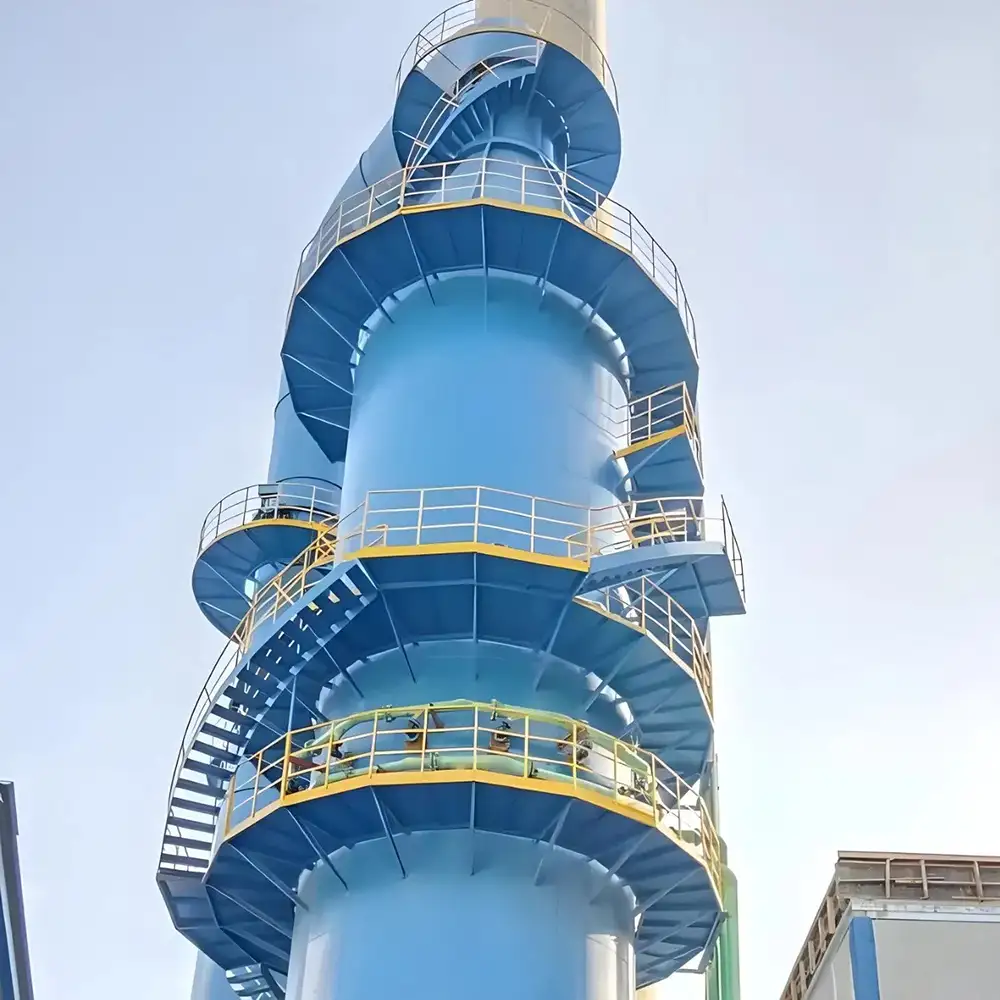
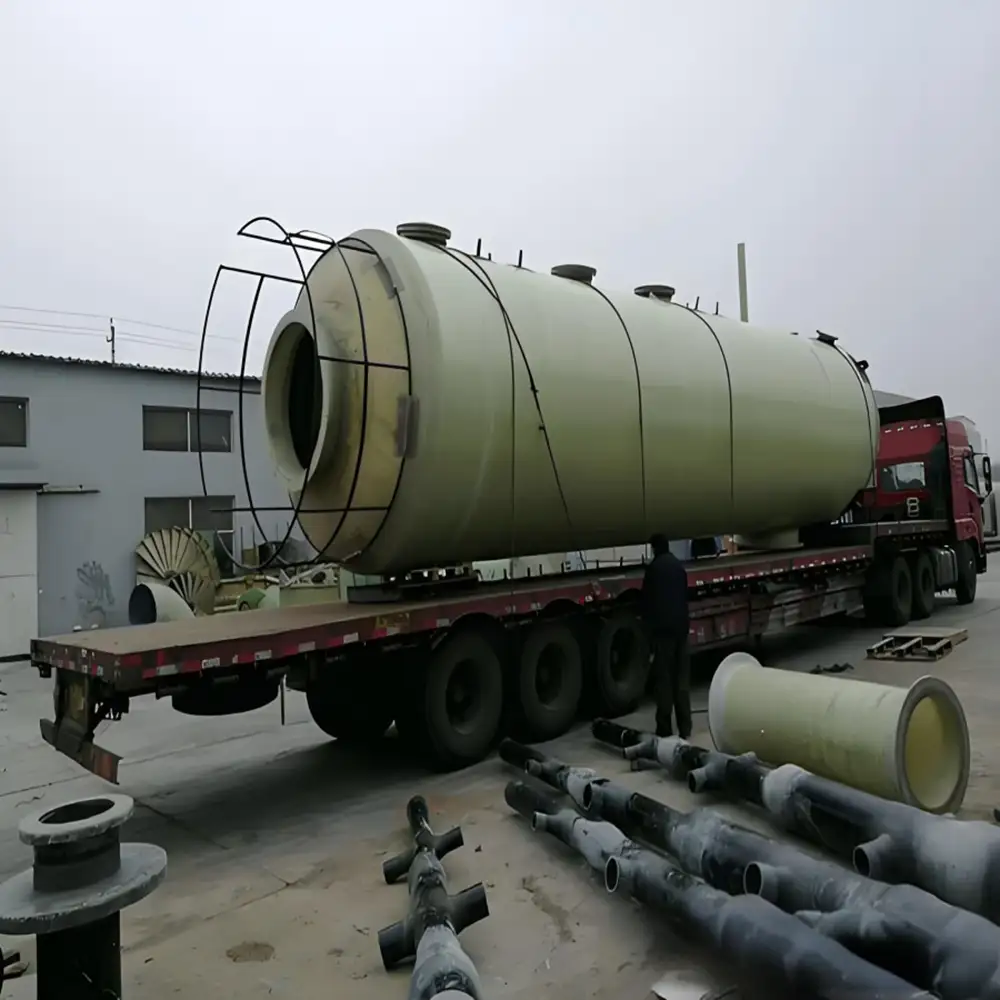
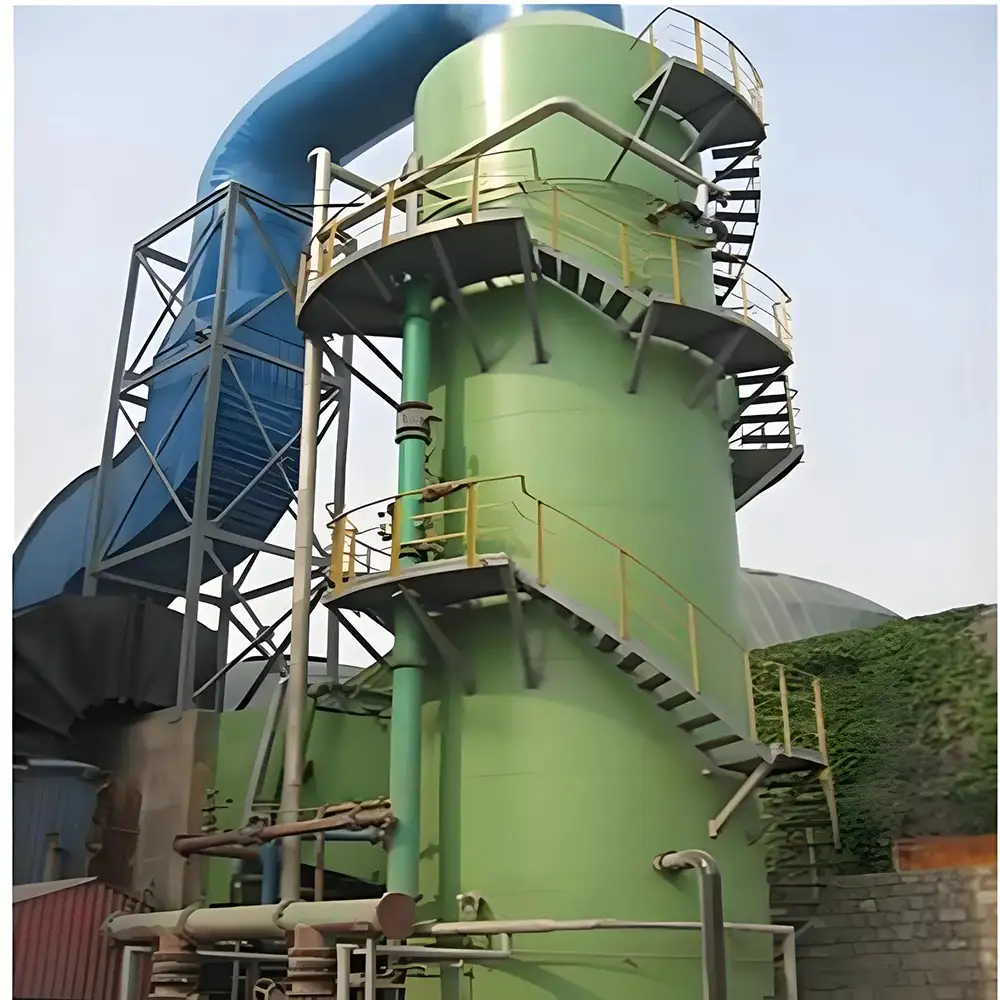
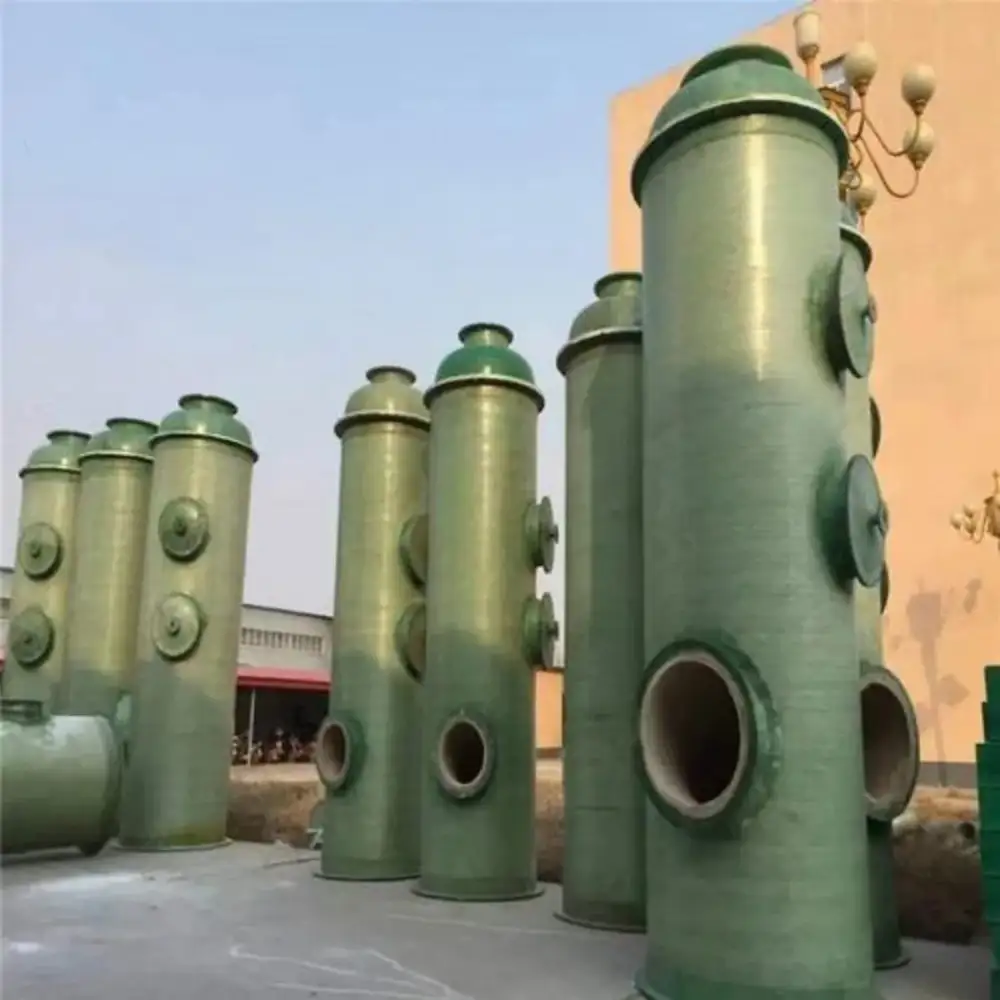
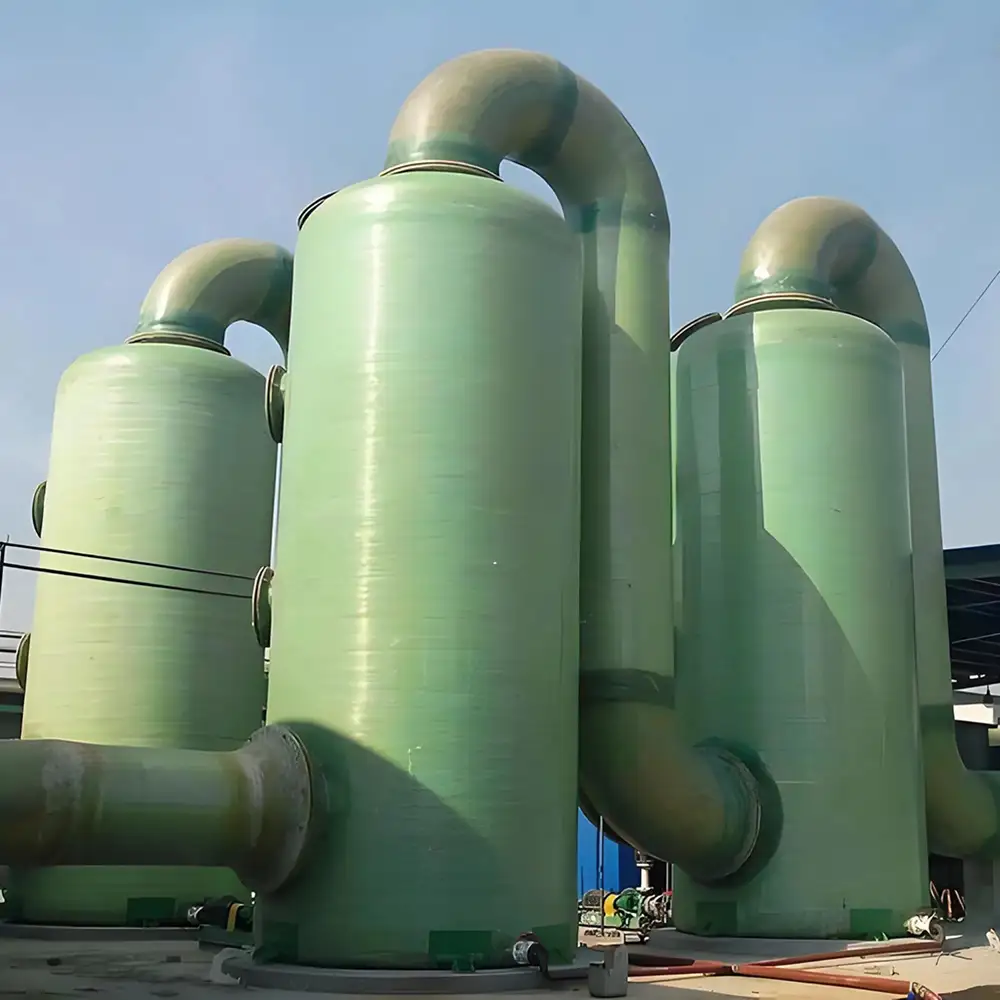
Desulfurization tower is a device used for industrial waste gas treatment. Its main function is to remove acidic gases such as sulfur dioxide from flue gas and reduce environmental pollution. The desulfurization tower absorbs and neutralizes acidic gases such as sulfur dioxide in the waste gas by spraying sodium hydroxide solution (desulfurizer). After the waste gas enters the desulfurization tower, it flows upward through the cyclone plate, contacts and reacts with the neutralizing liquid sprayed by the spray device. After multi-stage filtration and spraying, the acidic gases in the waste gas are effectively removed, and the purified gas is discharged into the atmosphere through the hood and outlet.
Waste Gas Treatment, Desulfurization and Denitrification Desulfurization Tower for Industrial Equipment
The Waste Gas Treatment, Desulfurization and Denitrification Desulfurization Tower is an industrial air pollution control solution designed to reduce sulfur dioxide, nitrogen oxides, dust, and other pollutants from industrial exhaust gas. The system combines waste gas purification with desulfurization and denitrification technologies to provide comprehensive treatment for boilers, furnaces, kilns, power generation facilities, cement plants, chemical factories, metallurgy operations, and other industrial applications.
Industrial combustion and production processes can generate complex exhaust gases containing SO₂, NOx, particulate matter, acidic gases, and other pollutants. An appropriately designed purification system can remove these contaminants before the treated gas is discharged into the atmosphere.
The desulfurization tower can be configured with gas-liquid contact systems, spray nozzles, packing structures, demisters, circulating pumps, dosing systems, monitoring instruments, and other auxiliary components according to the specific process requirements.
Industrial Waste Gas Treatment
Waste gas treatment begins with effective collection and conditioning of exhaust gas from the production source. Ductwork, ventilation equipment, induced draft fans, and gas collection hoods can be used to transport contaminated gas into the purification system.
Once inside the treatment line, the gas passes through one or more purification stages selected according to the pollutant composition.
Dust can be removed through mechanical separation or filtration, while soluble acidic pollutants can be treated through wet scrubbing. Sulfur dioxide can be reduced through desulfurization, and nitrogen oxides can be treated through suitable denitrification technologies.
A multi-stage configuration allows different pollutants to be addressed in a coordinated treatment process.
Desulfurization Tower
The desulfurization tower is the core component for sulfur dioxide removal. It creates a controlled gas-liquid contact environment where contaminated flue gas interacts with a suitable absorbent solution.
Depending on the application, the tower may use spray absorption, packed-bed scrubbing, swirl plate technology, or another gas-liquid contact structure.
As the gas passes through the treatment zone, sulfur dioxide is absorbed by the liquid and converted into soluble or less harmful compounds. A demister can then remove entrained liquid droplets before the treated gas leaves the tower.
The tower dimensions and internal configuration should be selected according to gas flow rate, inlet temperature, SO₂ concentration, required removal efficiency, and installation conditions.
Flue Gas Desulfurization
Desulfurization is particularly important for industrial facilities using coal, oil, biomass, or other sulfur-containing fuels.
Wet flue gas desulfurization provides intensive gas-liquid contact and can achieve effective SO₂ absorption when the appropriate absorbent, liquid circulation, and operating conditions are maintained.
The absorbent may be selected according to the specific process, gas composition, chemical requirements, and operating cost considerations.
Continuous monitoring of liquid pH, circulation rate, temperature, and other parameters can help maintain stable desulfurization performance.
Denitrification and NOx Removal
Nitrogen oxides are generated primarily during high-temperature combustion. NOx emissions are common in industrial boilers, furnaces, kilns, and power generation equipment.
The denitrification section can use technologies such as Selective Catalytic Reduction (SCR) or Selective Non-Catalytic Reduction (SNCR) depending on the gas temperature, NOx concentration, required removal efficiency, and plant configuration.
SCR uses a catalyst to promote the reaction between NOx and a reducing agent, while SNCR performs the reaction at an appropriate temperature range without a catalyst.
The denitrification process can be integrated with the overall waste gas treatment system to provide coordinated NOx control.
Dust Removal and Particulate Control
Industrial waste gas frequently contains dust, ash, soot, mineral particles, or other particulate matter. High dust concentrations can affect downstream equipment and increase operating costs.
The treatment system can be integrated with cyclone separators, bag filters, electrostatic precipitators, wet dust collectors, or other suitable particulate-control equipment.
Dust removal technology should be selected based on particle size, dust concentration, gas temperature, moisture content, and required emission performance.
Effective particulate control can also improve the operating conditions of downstream desulfurization and denitrification equipment.
Integrated Multi-Pollutant Treatment
Combining desulfurization, denitrification, and dust removal into one coordinated industrial emission-control system provides advantages for facilities with multiple pollutant sources.
Each treatment stage can be positioned according to the temperature and composition of the gas. This helps maintain suitable conditions for each purification technology.
A complete system may include gas ducts, fans, dust collectors, denitrification reactors, desulfurization towers, circulation tanks, pumps, dosing equipment, demisters, valves, monitoring sensors, and automatic control cabinets.
This integrated configuration can simplify system management and provide more consistent overall treatment performance.
Automatic Operation and Control
Industrial waste gas treatment equipment can be equipped with automatic control systems to monitor and regulate critical operating parameters.
Typical monitoring points include gas temperature, pressure, flow rate, differential pressure, SO₂ concentration, NOx concentration, liquid pH, circulation flow, reagent dosing, and pump status.
Automatic controls can coordinate fans, pumps, valves, dosing systems, dampers, and other components.
For continuous industrial applications, automatic operation reduces manual intervention and helps maintain stable treatment conditions.
Energy-Efficient Operation
Energy efficiency is an important factor for industrial emission-control systems. Proper equipment sizing and process optimization can reduce unnecessary fan power, pump energy, pressure loss, and chemical consumption.
The tower can be designed with appropriate gas velocity and liquid circulation to achieve effective gas-liquid contact without excessive resistance.
Where high-temperature flue gas is present, heat recovery or gas conditioning equipment may also be considered to improve overall energy utilization.
Industrial Applications
Waste gas treatment and desulfurization-denitrification equipment can be applied in a wide range of industries, including:
Industrial Boiler Systems
Coal-Fired Power Plants
Biomass Combustion Systems
Cement Production
Lime And Mineral Processing
Steel And Metallurgical Plants
Chemical Manufacturing
Industrial Furnaces
Kiln Exhaust Treatment
Waste Incineration
Thermal Processing Facilities
Industrial Heating Systems
The system can be engineered according to the actual exhaust gas characteristics and required emission-control performance.
Maintenance and Long-Term Operation
Regular inspection is important for maintaining stable operation. Spray nozzles, packing, demisters, circulation pumps, pipelines, fans, valves, filters, catalysts, and dosing systems should be checked periodically.
The circulating liquid should be monitored for pH, solids, concentration, and other relevant parameters. Cleaning helps prevent scaling and blockage that could reduce gas-liquid contact efficiency.
A preventive maintenance program can reduce unexpected downtime and help extend the service life of the complete treatment system.
Why Choose Us
Our industrial waste gas treatment solutions are designed to address multiple pollutants through coordinated process design and flexible equipment configuration.
Key advantages include:
Integrated Waste Gas Treatment
Effective Desulfurization And Denitrification
Efficient SO₂ And NOx Removal
Flexible Desulfurization Tower Configuration
Dust Removal Integration Options
Advanced Gas-Liquid Contact Technology
SCR And SNCR Denitrification Options
Automatic Monitoring And Control
Energy-Efficient System Design
Corrosion-Resistant Construction Options
Easy Maintenance And Inspection
Suitable For Continuous Industrial Operation
FAQs
1. What is industrial waste gas treatment equipment?
It is equipment designed to collect and purify industrial exhaust gas by removing pollutants such as dust, sulfur dioxide, nitrogen oxides, acidic gases, and other contaminants.
2. What does a desulfurization tower remove?
The primary target is sulfur dioxide. Depending on the process, the tower can also assist in removing other soluble acidic pollutants and particulate matter.
3. Can desulfurization and denitrification be combined?
Yes. Desulfurization and denitrification can be integrated into a complete industrial flue gas purification system, with each process positioned according to the gas conditions.
4. What technology is used for NOx removal?
SCR and SNCR are commonly used denitrification technologies. The appropriate option depends on temperature, NOx concentration, required removal efficiency, and installation conditions.
5. Can the system remove dust?
Yes. Cyclones, bag filters, electrostatic precipitators, wet scrubbers, and other dust removal technologies can be integrated according to the characteristics of the exhaust gas.
6. What determines the size of a desulfurization tower?
The main factors include gas flow rate, temperature, SO₂ concentration, dust concentration, gas velocity, required removal efficiency, and available installation space.
7. What absorbent is used for desulfurization?
The absorbent depends on the selected process. Suitable alkaline or chemical absorption solutions can be selected according to gas composition and operating requirements.
8. Can the equipment operate automatically?
Yes. Sensors, pumps, valves, dosing equipment, fans, and monitoring instruments can be integrated into an automatic control system.
9. Does the system require regular maintenance?
Yes. Regular inspection and cleaning of spray nozzles, pumps, demisters, pipelines, filters, catalysts, and other components helps maintain stable performance.
10. Can this system be installed in an existing industrial plant?
Yes. The equipment can be designed for new facilities or integrated into existing exhaust treatment systems after evaluating gas flow, temperature, pollutant concentration, ductwork, fan capacity, and available space.
Prev:
Desulfurization System / Industrial Equipment / Boiler Flue Gas / Chemical Plant
Next:
FRP Purification Tower/ Boiler Flue Gas Treatment/ Desulfurization and Denitrification Equipment
TAG:
Dust Collection Equipment,
Flue Gas Cleaning System,
Flue Gas Treatment Equipment,
Integrated Flue Gas Treatment,
Industrial Environmental Protection Equipment,
Integrated Flue Gas Purification,
Dust Removal Equipment,
Dust Removal System,
Industrial Dust Removal,
Flue Gas Dust Removal,
Waste Gas Purification Equipment,
Waste Gas Purification System,
Industrial Exhaust Gas Treatment,
Industrial Waste Gas Treatment,
Waste Gas Treatment Equipment,
Industrial Exhaust Gas Purification,
Waste Gas Treatment System,
Boiler Desulphurization,
Boiler Desulfurization,
Boiler Flue Gas Purification,
Boiler Emission Control,
Air Pollution Control Equipment,
Air Pollution Control System,
Industrial Emission Control,
Industrial Emission Treatment,
Boiler Flue Gas Treatment,
Industrial Emission Treatment System,
Industrial Air Pollution Control,
Acid Gas Scrubber,
Gas Absorption Tower,
Related Category:
Waste Gas Treatment Equipment, Desulfurization and Denitrification Equipment, Desulfurization Tower, Industrial Waste Ga China, suppliers, manufacturers, factory, customized, wholesale, quotation, made in China