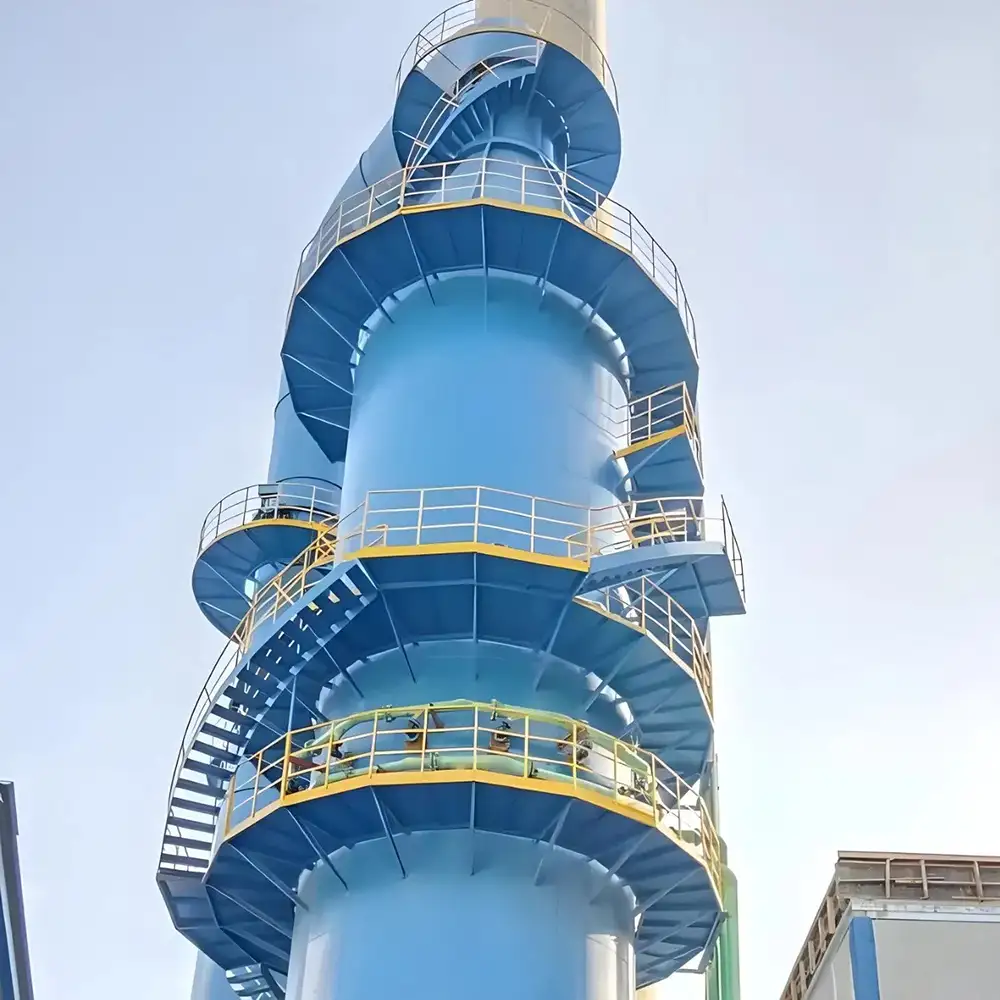
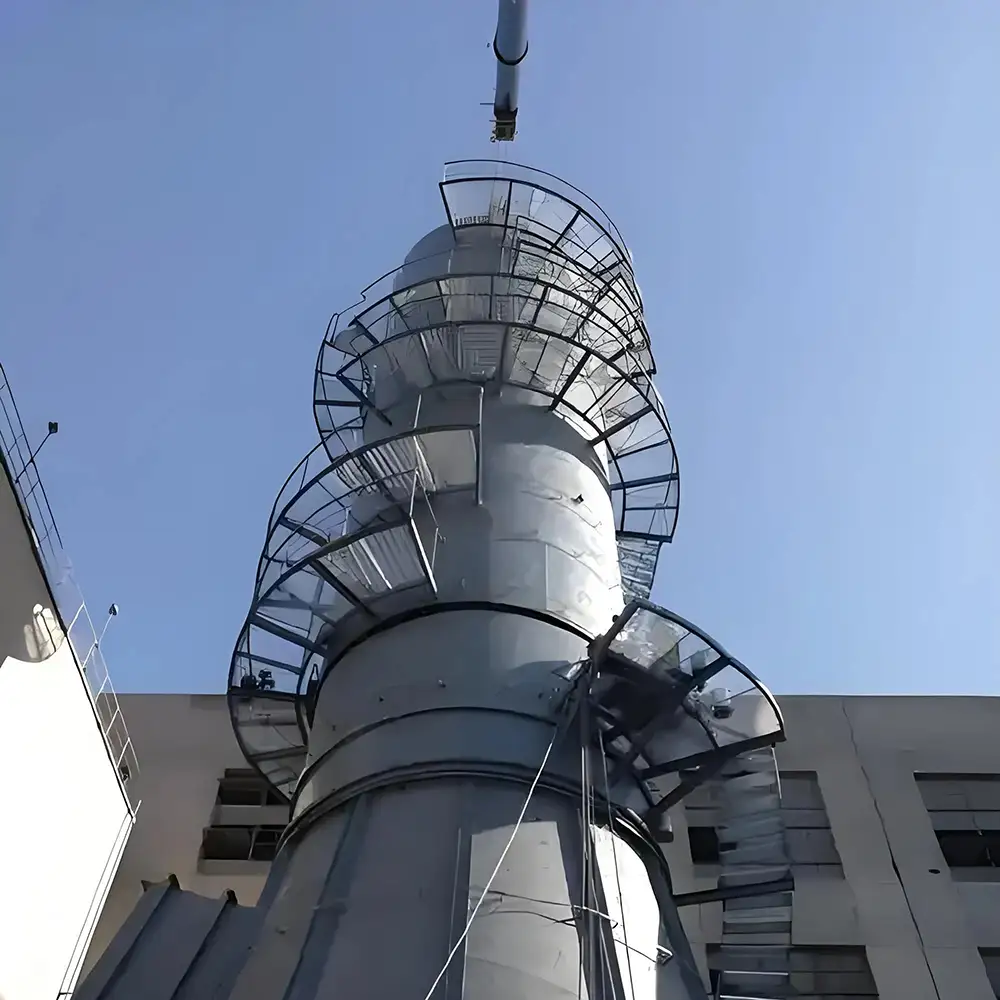
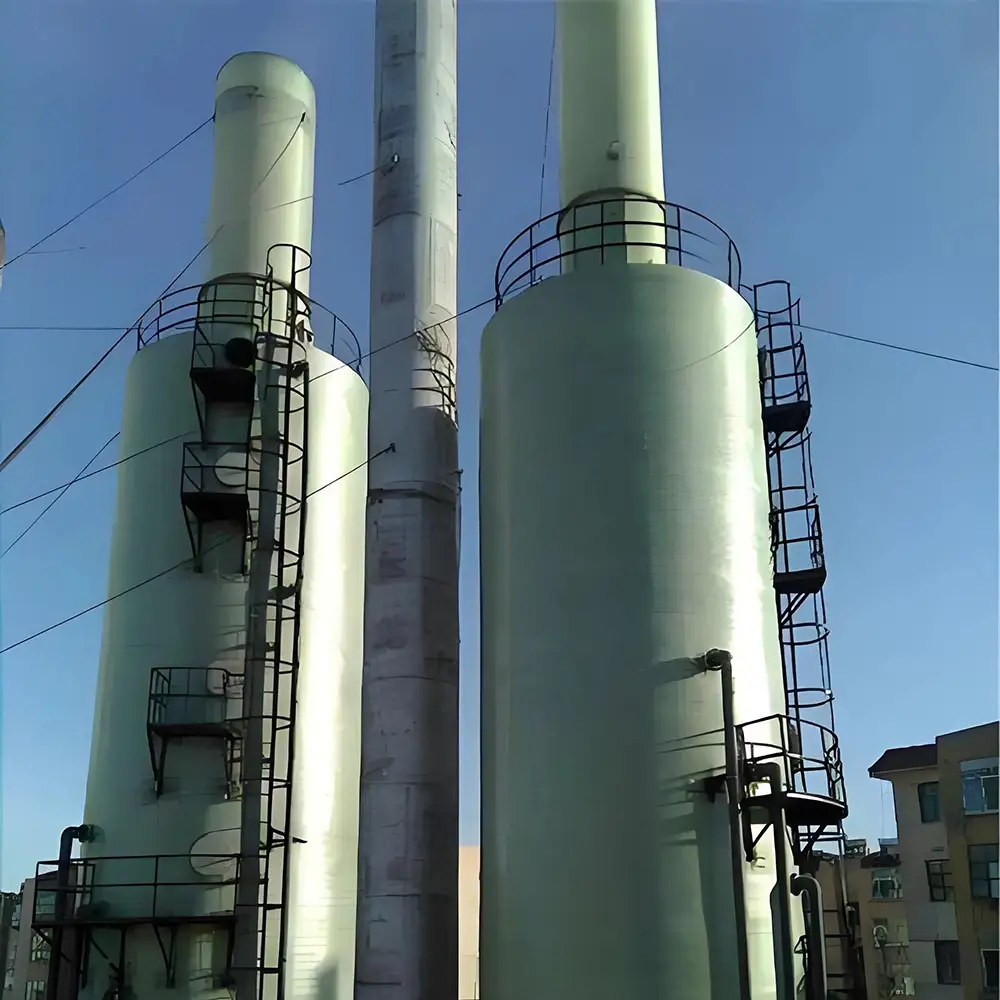
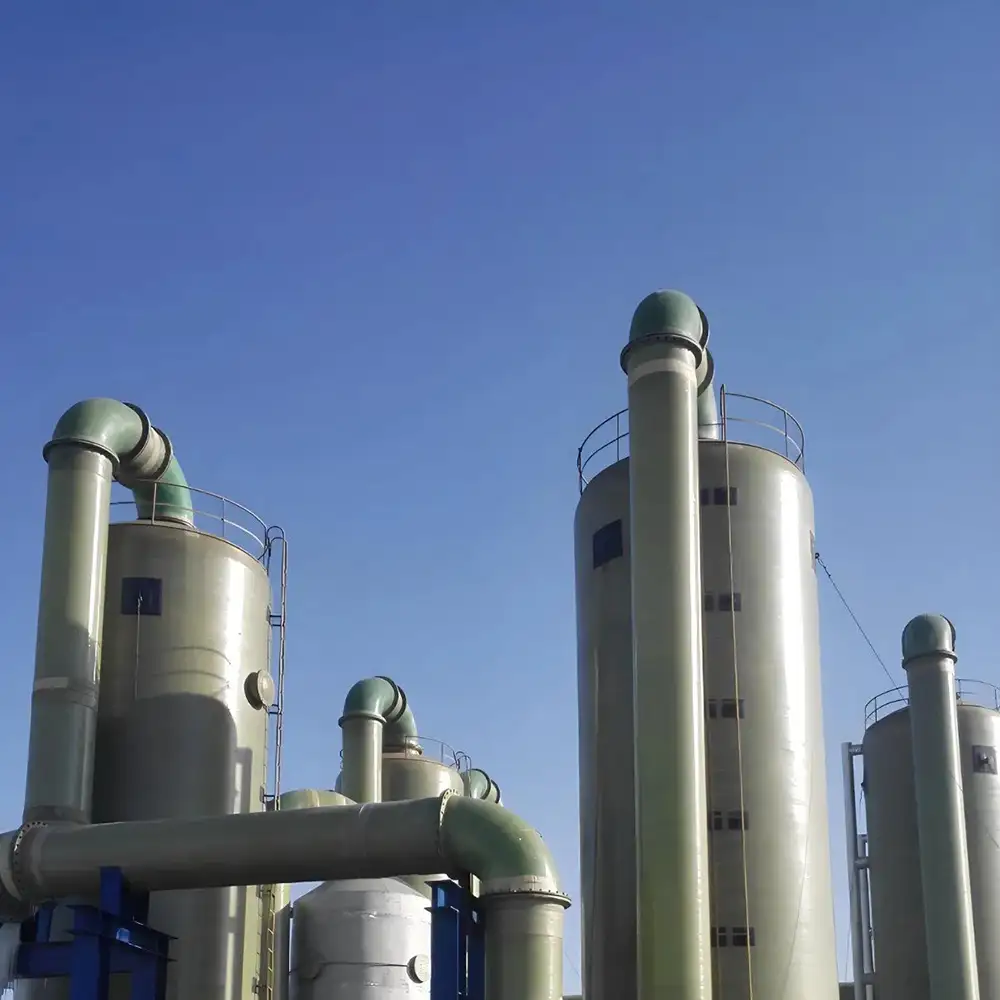
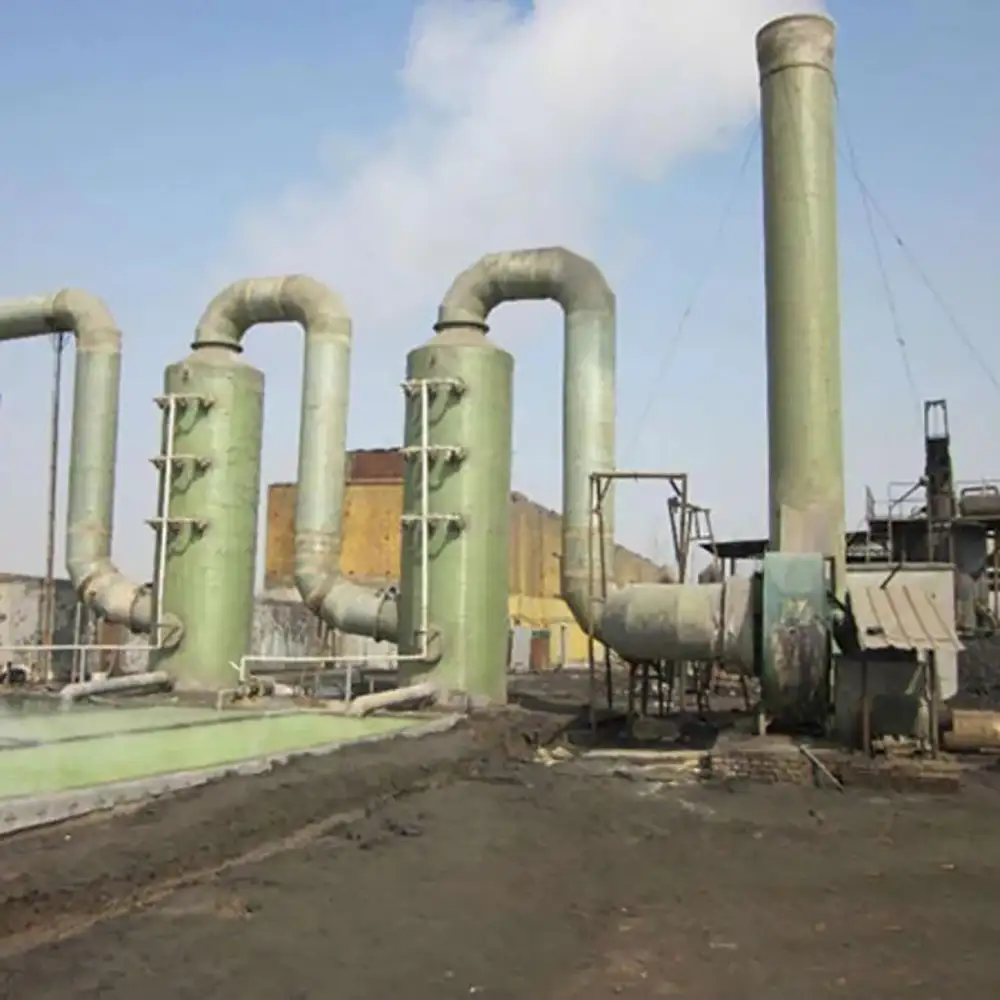
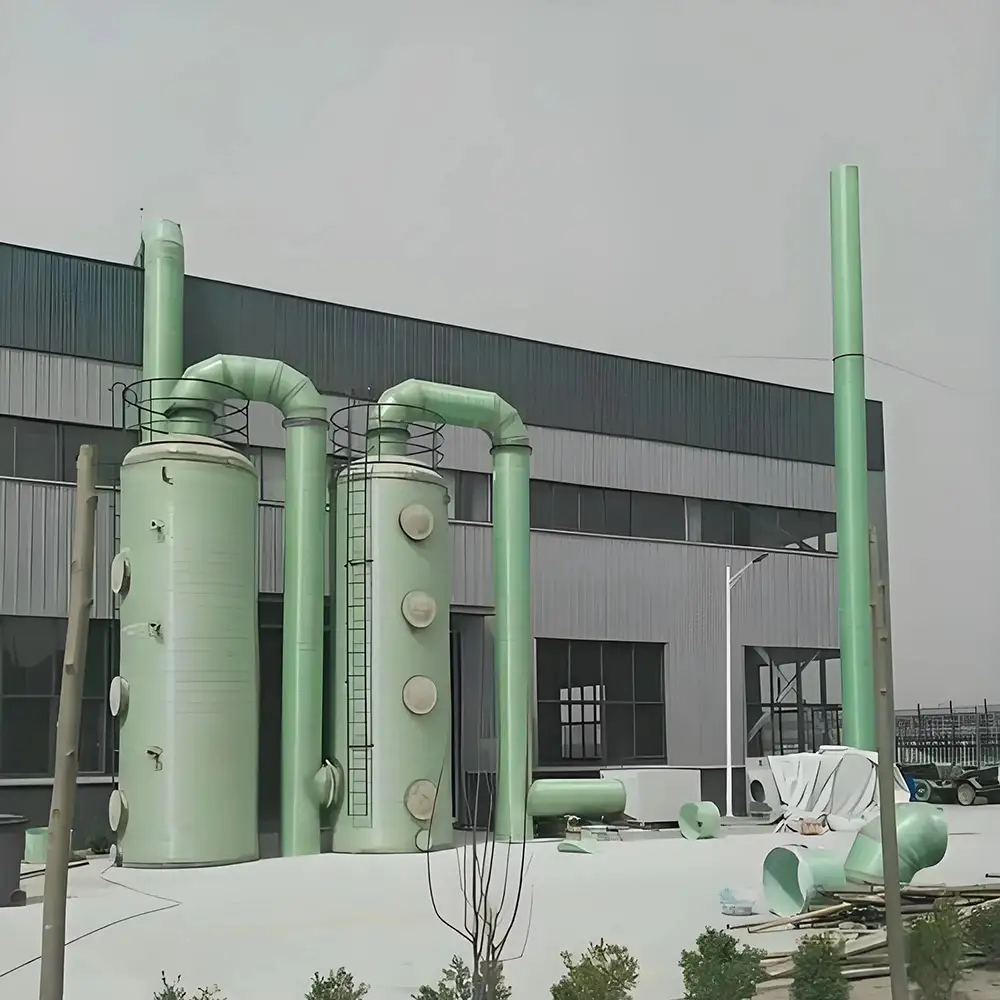
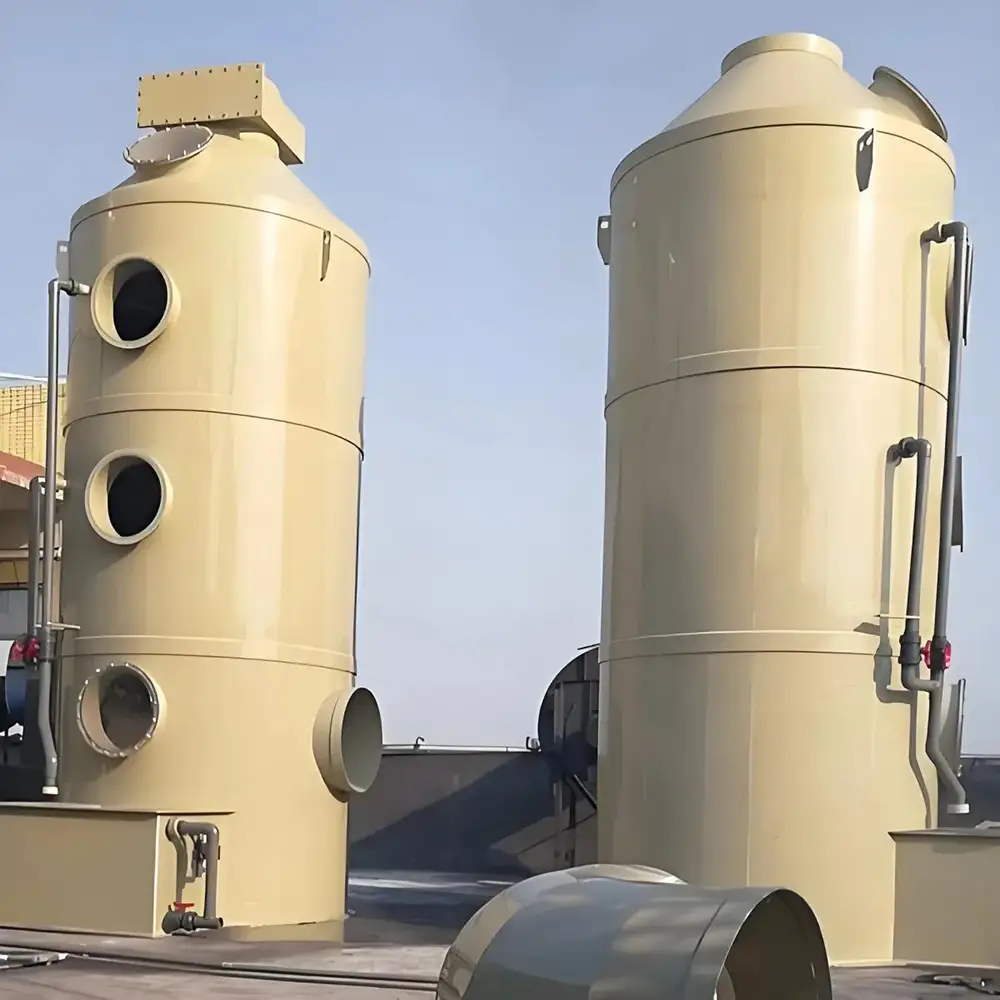
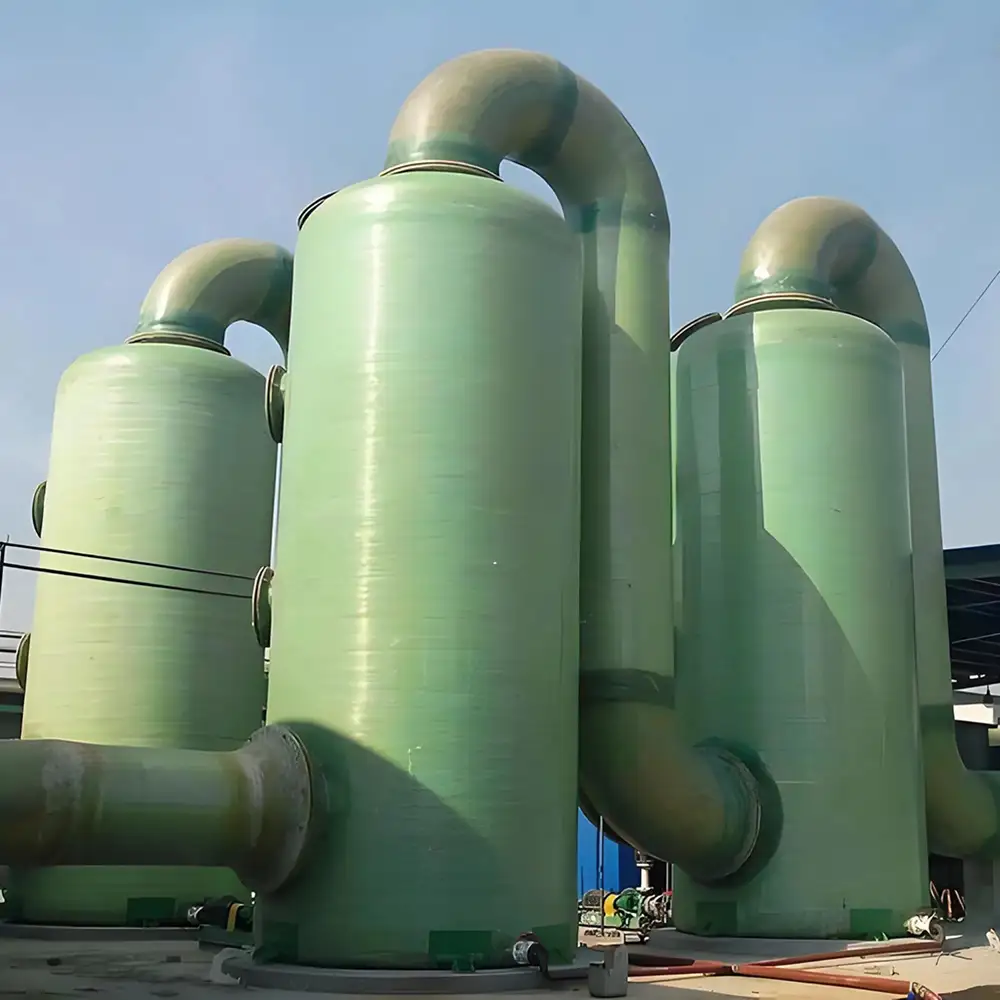
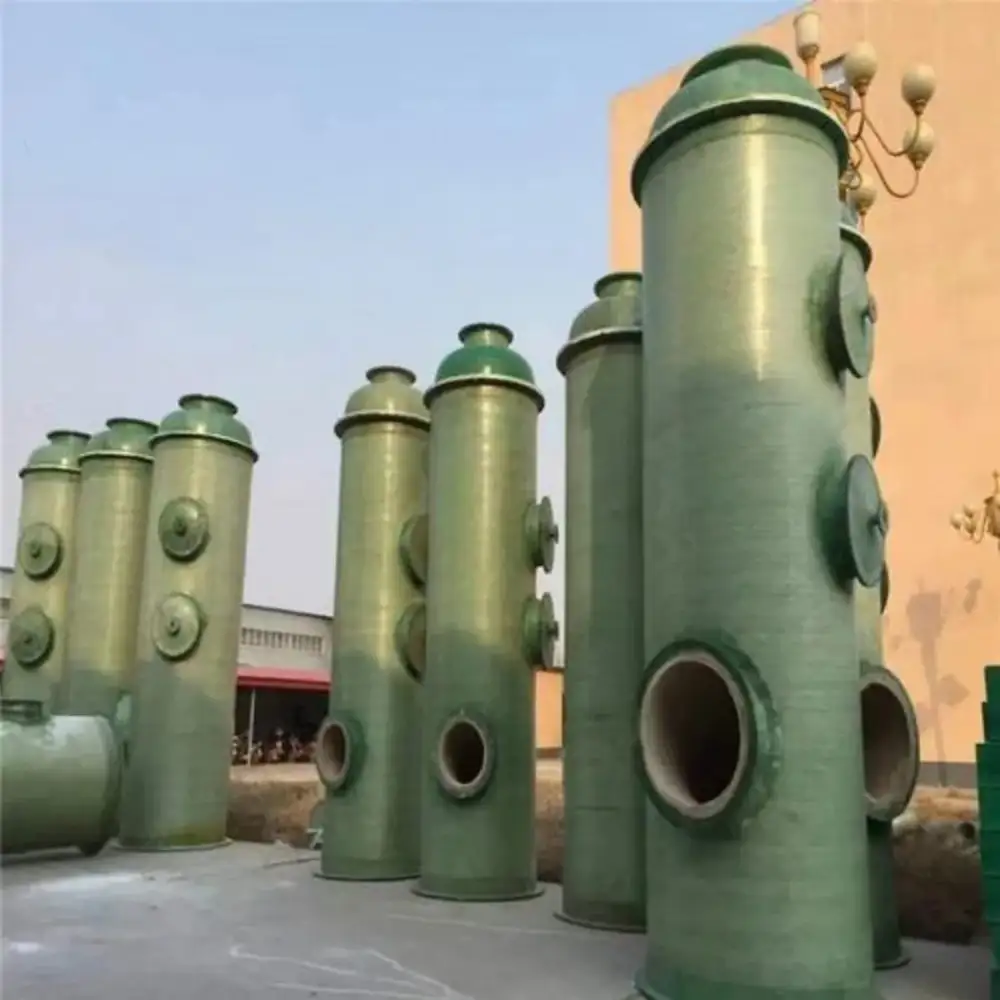
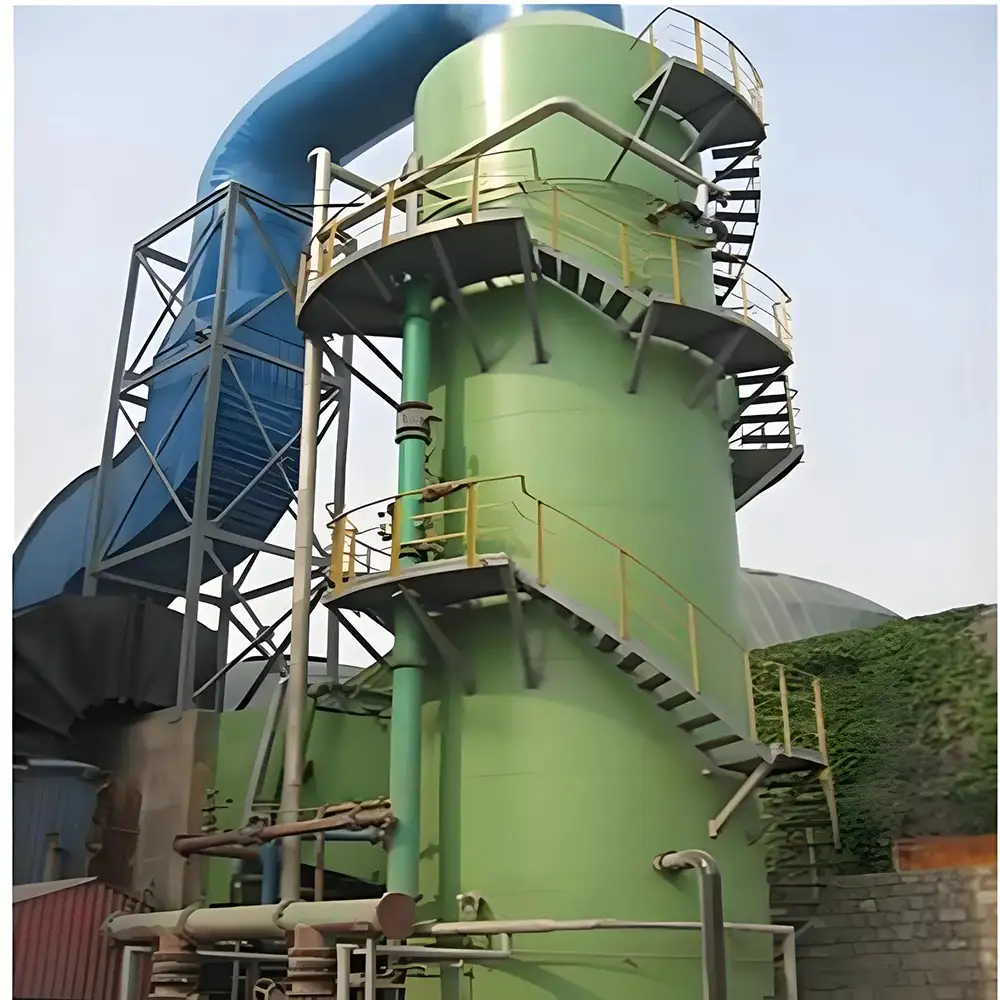
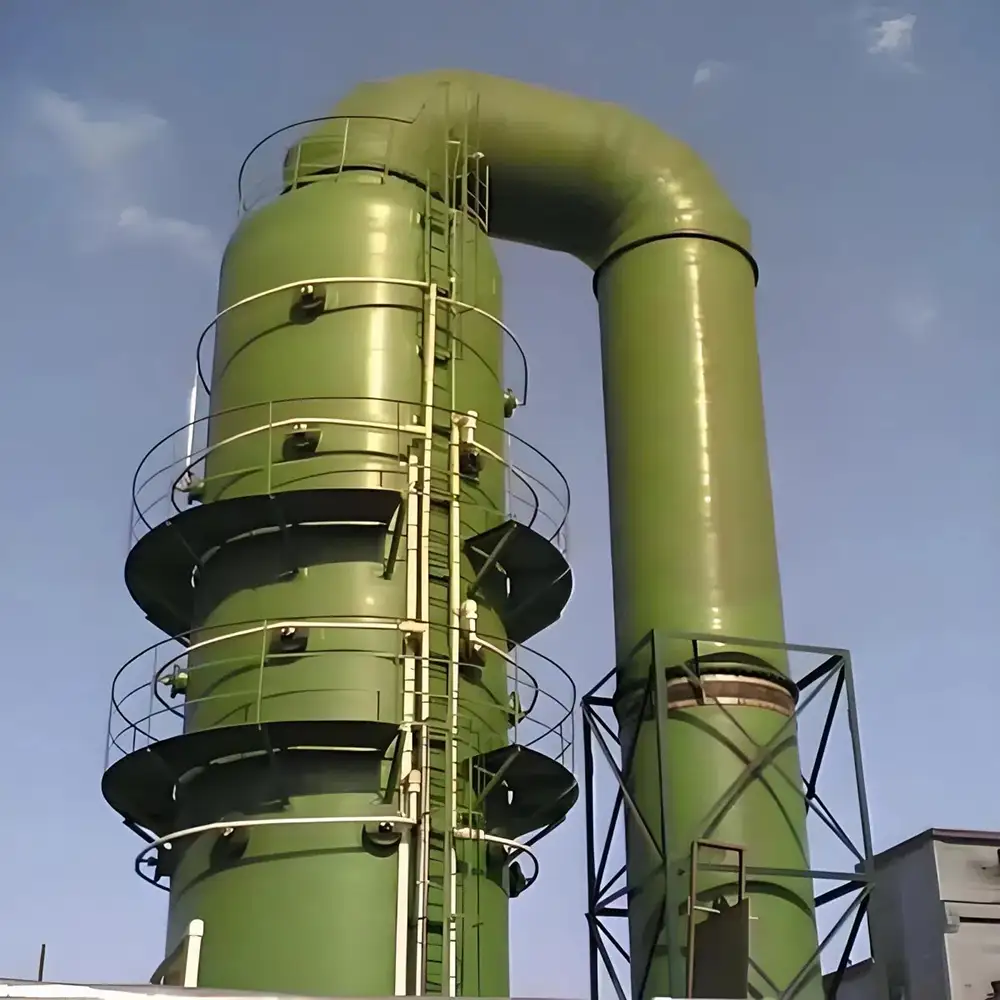
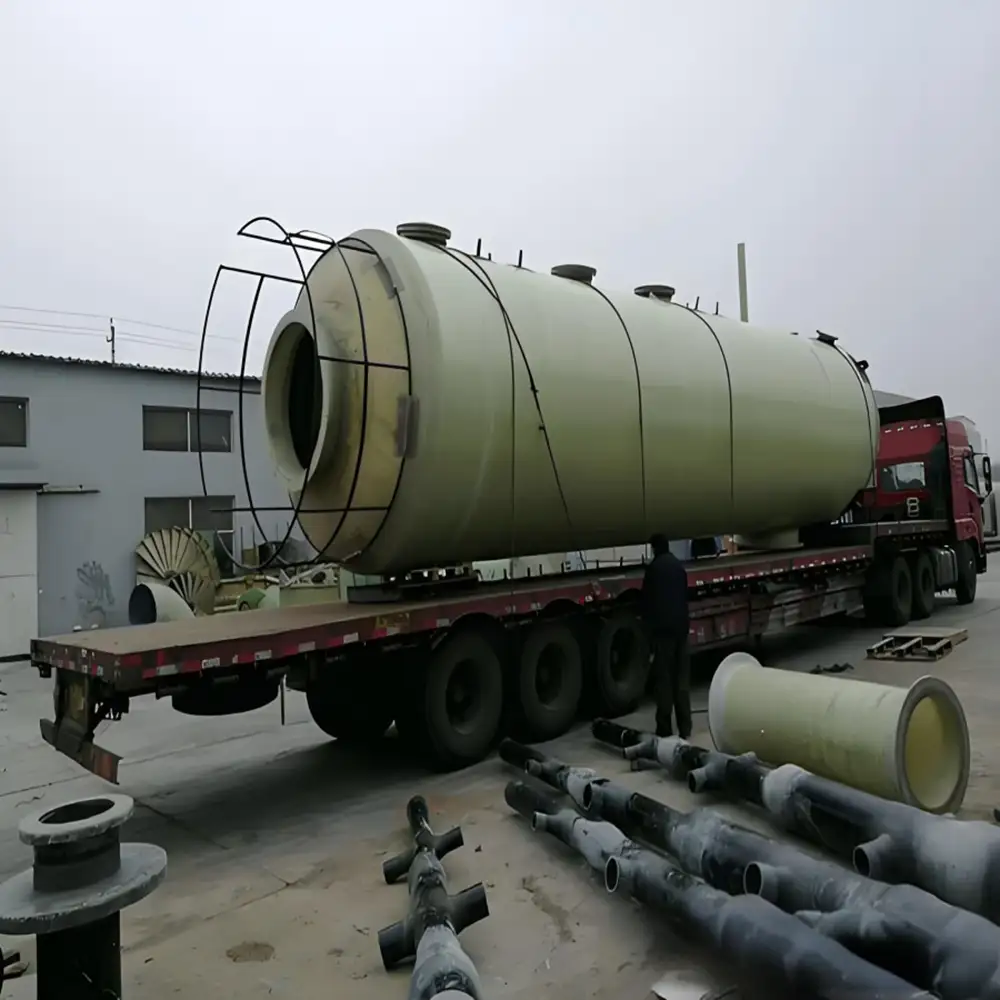
Desulfurization tower is a device used for industrial waste gas treatment. Its main function is to remove acidic gases such as sulfur dioxide from flue gas and reduce environmental pollution. The desulfurization tower absorbs and neutralizes acidic gases such as sulfur dioxide in the waste gas by spraying sodium hydroxide solution (desulfurizer). After the waste gas enters the desulfurization tower, it flows upward through the cyclone plate, contacts and reacts with the neutralizing liquid sprayed by the spray device. After multi-stage filtration and spraying, the acidic gases in the waste gas are effectively removed, and the purified gas is discharged into the atmosphere through the hood and outlet.
Industrial Waste Gas Purification Optimization with Desulfurization Tower
The Industrial Waste Gas Purification Optimization Desulfurization Tower is an advanced air pollution control solution designed to improve the treatment of industrial exhaust gas and sulfur-containing flue gas. By combining efficient gas-liquid contact, sulfur dioxide absorption, particulate control, and optimized purification processes, the desulfurization tower helps industrial facilities improve emission treatment performance while maintaining stable and reliable operation.
Industrial production processes can generate waste gases containing sulfur dioxide, acidic gases, dust, particulate matter, and other pollutants. Without effective treatment, these emissions can negatively affect air quality, equipment, and the surrounding environment. A properly designed desulfurization tower provides an efficient treatment stage for reducing pollutants before treated gas is discharged.
The system can be engineered according to the specific characteristics of the industrial waste gas, including gas flow rate, temperature, pollutant concentration, dust loading, humidity, and required emission performance.
Industrial Waste Gas Purification Optimization
Waste gas purification optimization involves more than simply increasing treatment capacity. The entire gas purification process should be designed to achieve sufficient gas-liquid contact, stable absorption, reasonable pressure drop, efficient circulation, and convenient maintenance.
The desulfurization tower creates an optimized treatment environment in which contaminated gas comes into contact with an absorbent liquid. Sulfur dioxide and other soluble acidic components are absorbed into the liquid phase, while suitable internal structures can improve mass transfer and treatment efficiency.
By selecting the appropriate tower diameter, gas velocity, spray configuration, circulation rate, absorbent concentration, and demisting system, the treatment process can be adapted to different industrial applications.
Efficient Desulfurization Tower Technology
The desulfurization tower is the core component of the waste gas purification system. Depending on the process requirements, it can use spray absorption, packed-bed contact, swirl plate technology, or other gas-liquid contact structures.
During operation, industrial waste gas enters the tower and moves through the treatment zone. The circulating absorbent solution is distributed through nozzles or other liquid-distribution components. The resulting gas-liquid contact promotes the absorption of sulfur dioxide.
A demister section can be installed at the outlet to reduce the carryover of liquid droplets and improve the quality of treated gas.
The overall design can be optimized according to the required removal efficiency, operating conditions, and available installation space.
Sulfur Dioxide Removal
Sulfur dioxide is a common pollutant generated by the combustion of coal, oil, biomass, and sulfur-containing fuels. It can also be produced by industrial processes involving minerals, chemicals, metals, and other raw materials.
The desulfurization tower provides a controlled absorption environment for SO₂ removal. An alkaline absorbent reacts with sulfur dioxide, allowing the pollutant to be transferred from the gas phase into the liquid phase.
The selection of absorbent depends on the gas composition, treatment capacity, operating conditions, and process requirements. Proper pH control and liquid circulation are important for maintaining stable desulfurization performance.
Advanced Flue Gas Purification
In addition to sulfur dioxide, industrial exhaust gas may contain dust and particulate matter. The purification system can therefore be configured with additional dust removal and gas treatment stages.
Depending on the project, the desulfurization tower may be integrated with dust collectors, spray systems, demisters, circulation tanks, pumps, fans, dosing equipment, and monitoring instruments.
This integrated approach helps create a complete industrial flue gas purification system while reducing unnecessary process complexity.
Support for Different Industrial Applications
The desulfurization tower can be applied to various industrial processes where sulfur-containing waste gas needs to be treated.
Typical applications include:
Industrial boiler exhaust treatment
Coal-fired boiler flue gas desulfurization
Biomass boiler gas treatment
Cement plant flue gas purification
Industrial furnace exhaust treatment
Mineral processing facilities
Chemical production plants
Metallurgical industries
Waste thermal treatment systems
Power generation facilities
Kiln exhaust purification
Industrial heating systems
The equipment can be designed according to the actual gas conditions and required treatment performance.
Customized Waste Gas Treatment Configuration
Different industries produce different types of exhaust gas. For this reason, a standardized tower configuration may not always provide the best treatment solution.
The desulfurization system can be configured according to flue gas flow rate, inlet temperature, SO₂ concentration, dust concentration, moisture content, gas composition, required outlet concentration, and installation conditions.
Tower diameter, height, internal components, liquid circulation system, spray system, pump capacity, demister configuration, and control instruments can be selected based on the project requirements.
This approach allows the equipment to be integrated into both new environmental protection projects and existing industrial emission treatment systems.
Automatic Operation and Monitoring
Modern industrial waste gas purification systems can incorporate automatic monitoring and control equipment. Sensors can monitor important operating parameters such as gas temperature, pressure, flow rate, liquid level, pH value, pump status, and differential pressure.
Automatic control can regulate circulation pumps, dosing equipment, valves, and other components according to operating conditions.
This reduces manual intervention and helps maintain stable treatment performance. For large-scale facilities, centralized control can also simplify operation and provide useful information for system management and maintenance.
Energy-Efficient Operation
Waste gas treatment systems should provide effective pollutant removal while keeping operating costs under control. Optimizing gas velocity, circulation flow, spray pressure, pump selection, and system pressure drop can help reduce unnecessary energy consumption.
An appropriately designed tower can balance purification performance with operating efficiency. Efficient liquid distribution and gas-liquid contact can also help improve absorbent utilization.
For continuous industrial operation, these optimization measures can contribute to lower operating costs and more stable long-term performance.
Easy Maintenance and Reliable Operation
Reliable operation depends on regular inspection and maintenance of the entire system. Key components such as spray nozzles, circulation pumps, pipelines, demisters, dosing equipment, valves, and internal tower structures should be inspected periodically.
Cleaning helps prevent scaling, blockage, and accumulation of solids. Monitoring the absorbent solution and maintaining appropriate pH or chemical concentration also helps maintain desulfurization efficiency.
The tower can be designed with suitable inspection openings and maintenance access to simplify routine servicing.
Why Choose Us
A reliable waste gas treatment system must be designed around the actual characteristics of the emission source. Our desulfurization tower solutions focus on practical process optimization, stable pollutant removal, and flexible system configuration.
Key advantages include:
Efficient industrial waste gas purification
Effective sulfur dioxide removal
Optimized gas-liquid contact
Flexible desulfurization process configuration
Suitable for different industrial exhaust gases
Support for integrated dust and gas treatment
Automatic operation and monitoring options
Energy-efficient circulation system
Corrosion-resistant construction options
Easy maintenance and inspection
Suitable for new and existing environmental projects
Flexible configuration for different installation conditions
FAQs
1. What is an industrial waste gas desulfurization tower?
It is a gas treatment device designed to remove sulfur dioxide and other soluble pollutants from industrial exhaust gas through controlled gas-liquid absorption.
2. What pollutants can the tower remove?
The primary target is sulfur dioxide, while the overall system can also be configured to assist with particulate matter, acidic gases, and other soluble pollutants.
3. How does the desulfurization tower work?
Industrial waste gas enters the tower and contacts a circulating absorbent solution. Pollutants such as SO₂ are absorbed by the liquid, while treated gas passes through the demisting section before discharge.
4. Can the system be customized?
Yes. The tower configuration can be selected according to gas flow rate, SO₂ concentration, temperature, dust concentration, required removal efficiency, and site conditions.
5. What industries use desulfurization towers?
They are widely used in boilers, power plants, cement plants, chemical facilities, industrial furnaces, mineral processing, metallurgy, kilns, and other industrial applications.
6. Can dust removal be integrated with desulfurization?
Yes. Additional dust removal components or integrated wet scrubbing structures can be incorporated according to the characteristics of the flue gas.
7. What determines the size of a desulfurization tower?
Major factors include gas flow rate, inlet temperature, pollutant concentration, gas velocity, required removal efficiency, absorbent circulation rate, and available installation space.
8. Does the tower require automatic control?
Automatic control is not mandatory for every installation, but it is highly beneficial for larger systems because it can regulate pumps, dosing, valves, and other operating parameters.
9. How can desulfurization efficiency be maintained?
Stable liquid circulation, suitable absorbent concentration, appropriate pH control, proper gas-liquid contact, and regular equipment maintenance are important for consistent performance.
10. Can the tower be installed in an existing factory?
Yes. The system can be engineered for integration into existing exhaust treatment lines, subject to evaluation of the existing gas flow, ductwork, fan capacity, installation space, and treatment requirements.
Prev:
High Temperature Flue Gas Desulfurization Denitrification/Dust Removal Treatment Equipment
Next:
Swirl Plate Desulphurization Tower Integrates Dust Removal and Desulphurization Equipment
TAG:
Flue Gas Cleaning System,
Flue Gas Treatment Equipment,
Environmental Protection Equipment,
Integrated Flue Gas Treatment,
Integrated Desulphurization System,
Integrated Desulfurization System,
Dust Removal Equipment,
Dust Removal System,
Industrial Dust Removal,
Waste Gas Purification Equipment,
Waste Gas Purification System,
Industrial Exhaust Gas Treatment,
Industrial Waste Gas Treatment,
Waste Gas Treatment Equipment,
Industrial Exhaust Gas Purification,
Boiler Desulphurization,
Boiler Desulfurization,
Boiler Exhaust Gas Treatment,
Air Pollution Control Equipment,
Industrial Emission Control,
Industrial Emission Treatment,
Industrial Emission Treatment System,
Industrial Air Pollution Control,
Acid Gas Scrubber,
Gas Absorption Tower,
Gas Purification Tower,
Flue Gas Treatment System,
Industrial Gas Scrubber,
Industrial Gas Purification,
Flue Gas Purification System,
Related Category:
Industrial Waste Gas Purification Optimization, Desulfurization Tower, Industrial Waste Gas Purification Equipment, Flue China, suppliers, manufacturers, factory, customized, wholesale, quotation, made in China