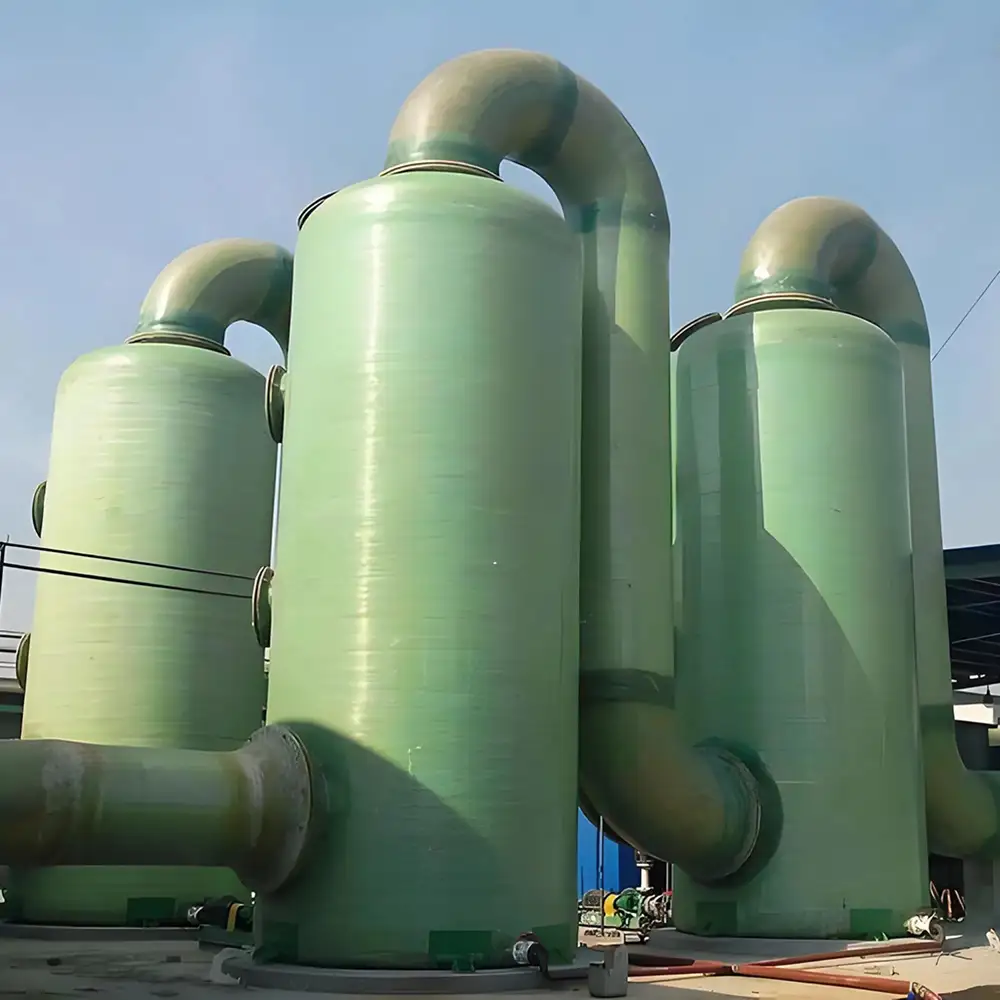
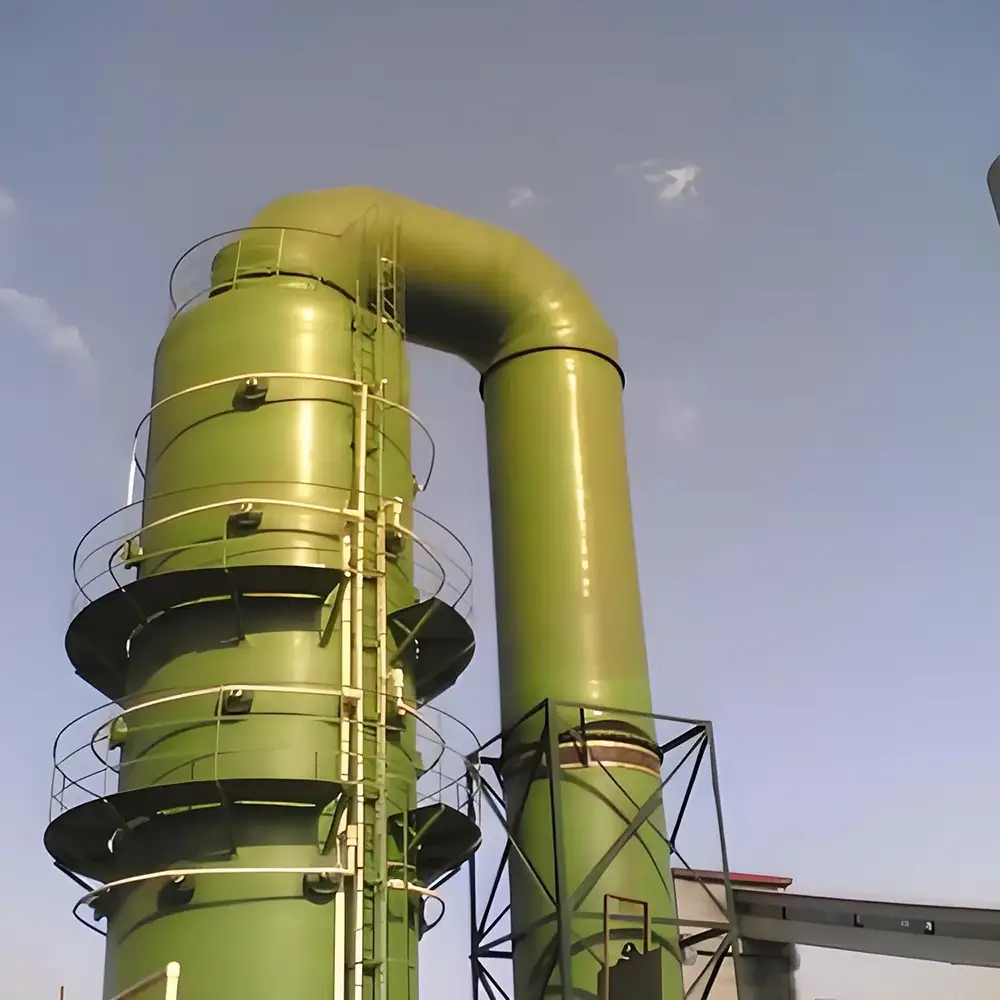
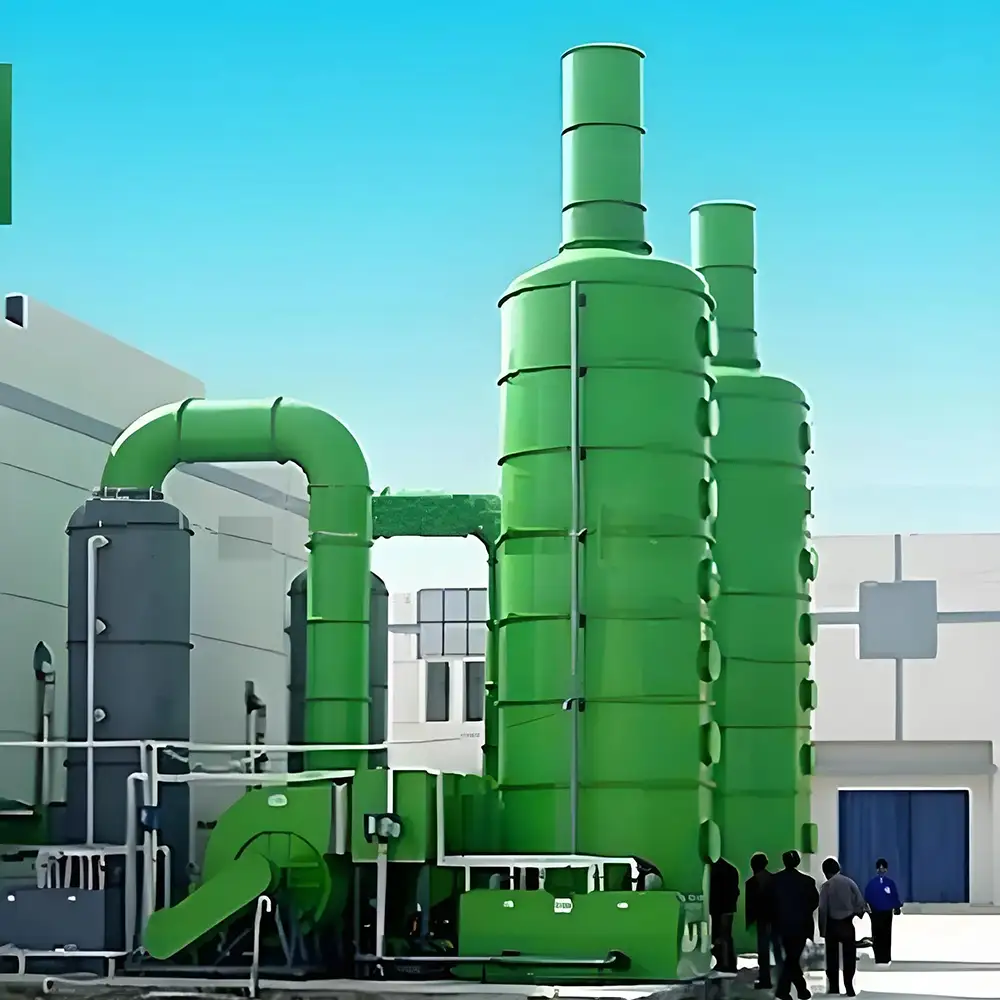
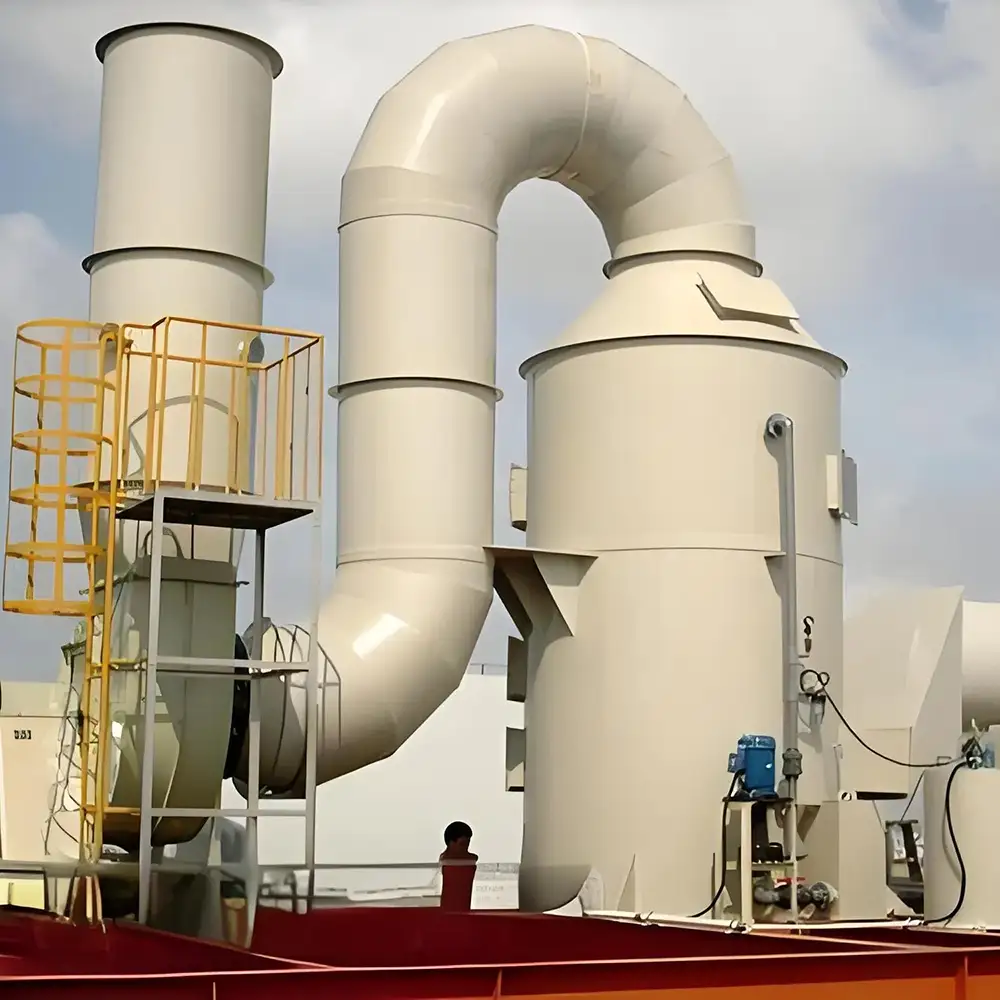
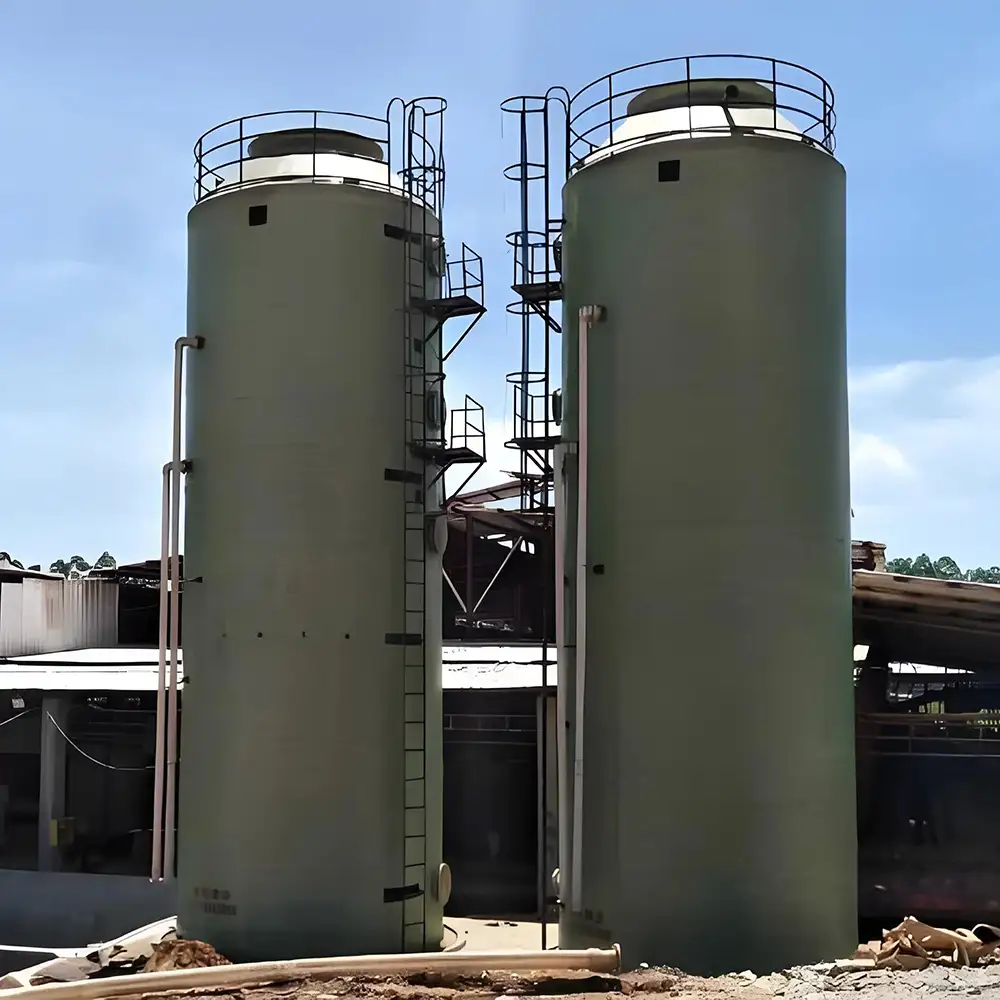
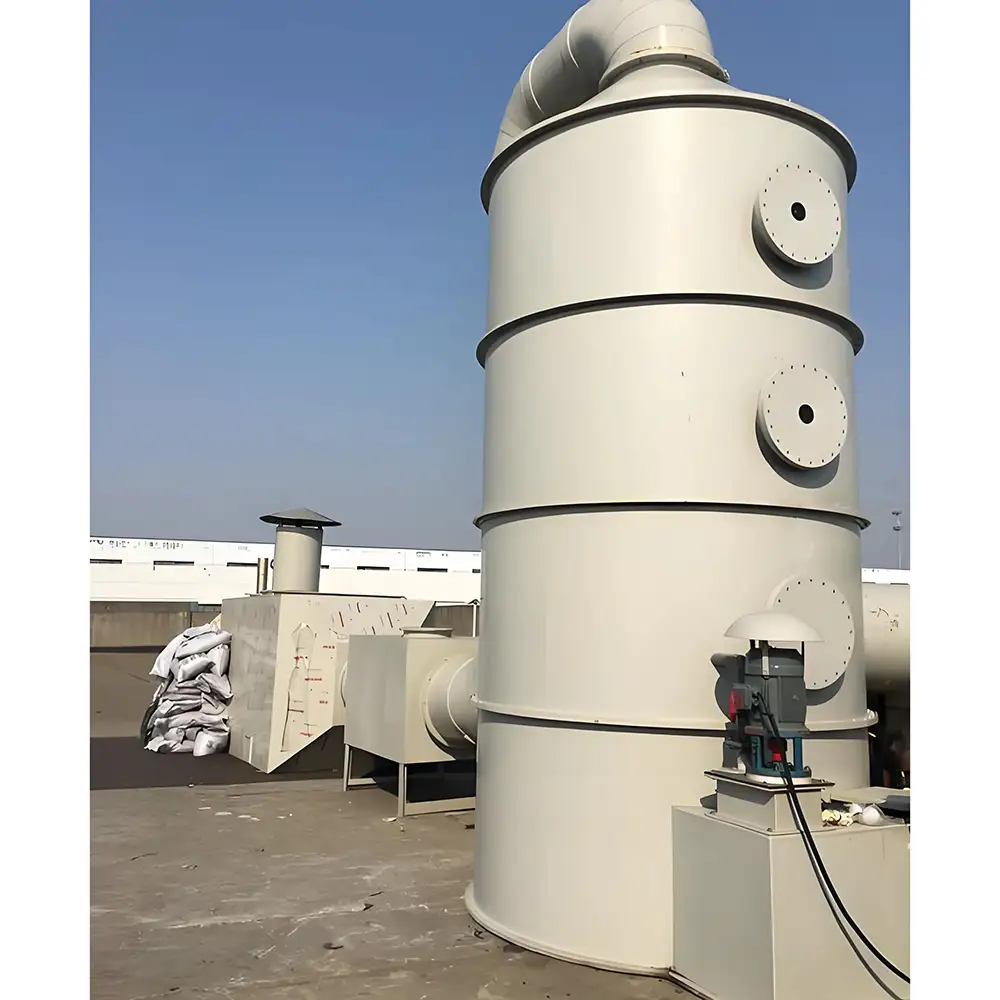
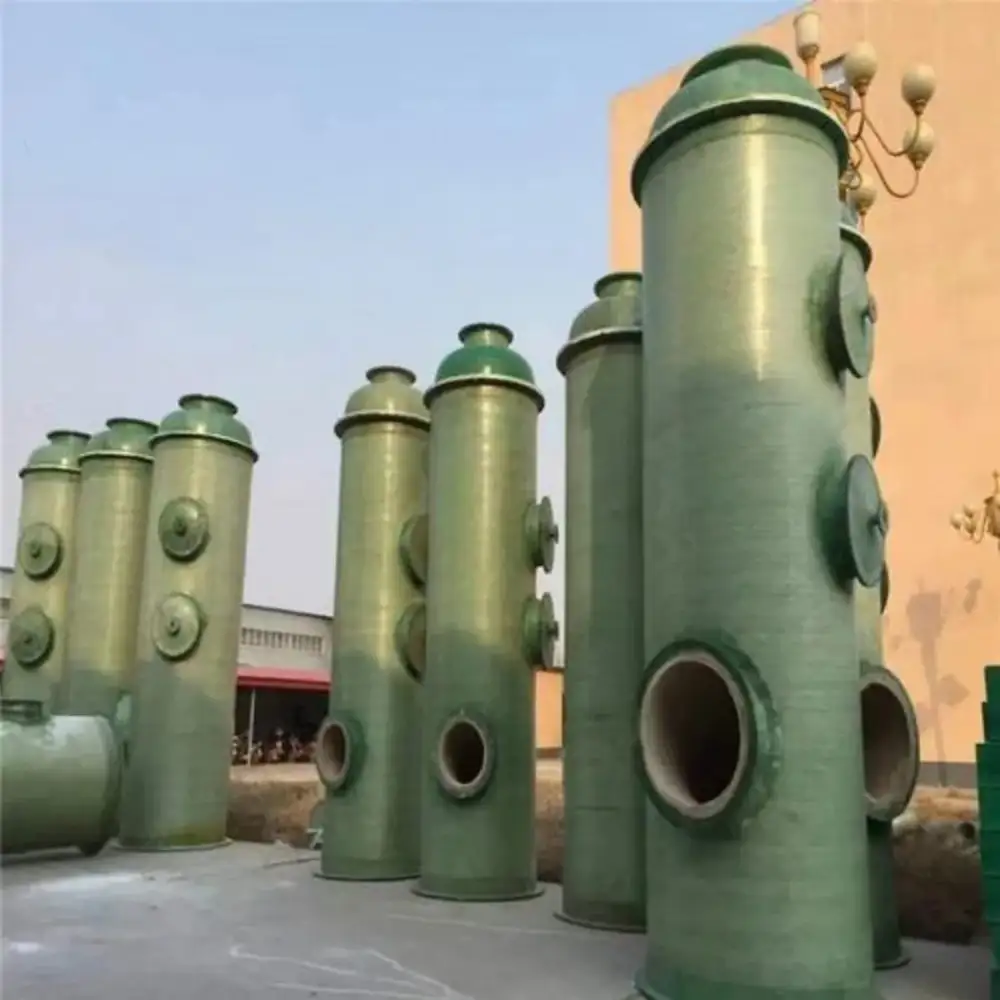
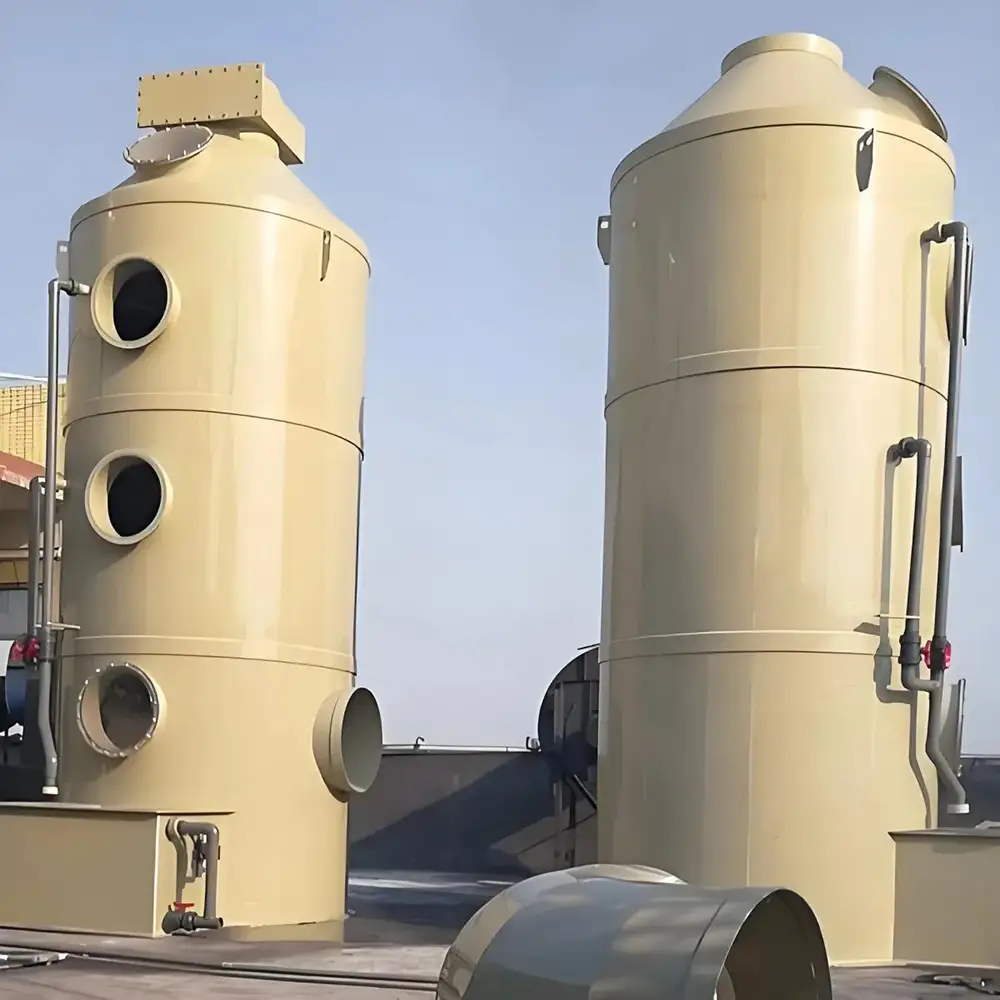
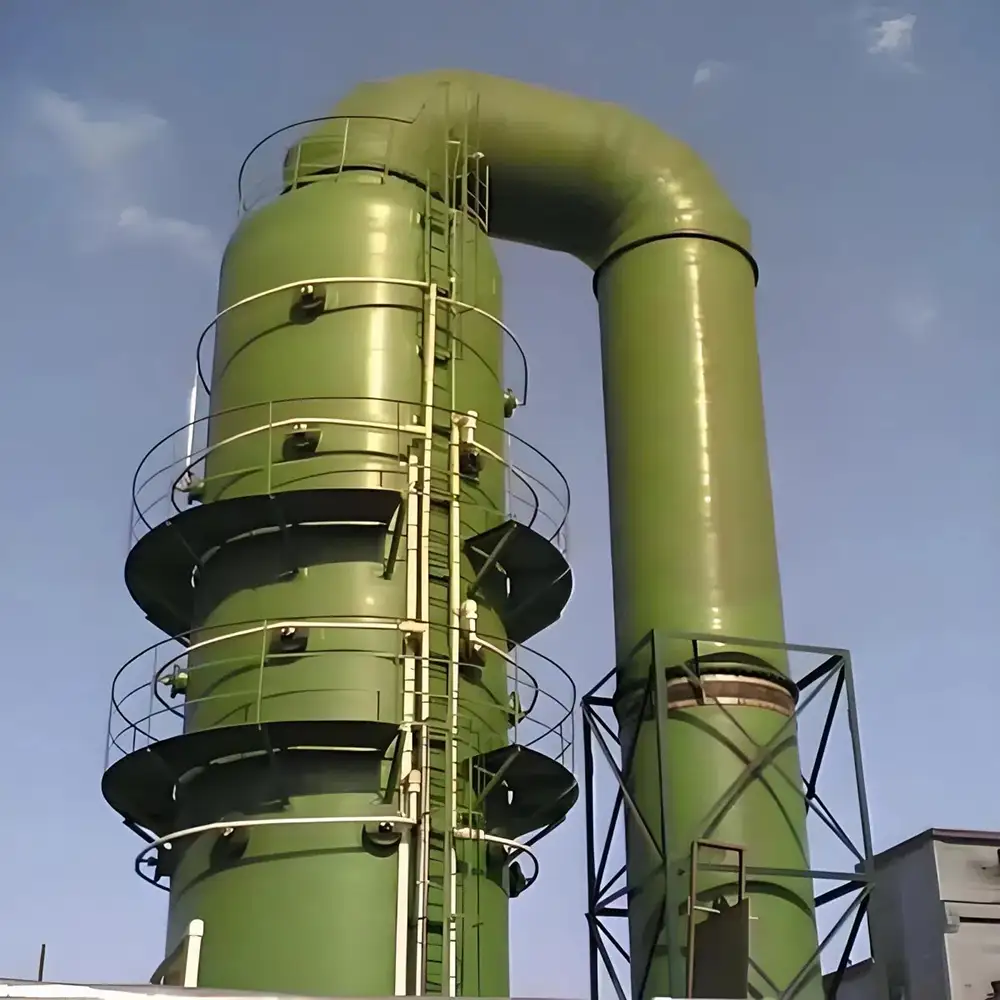
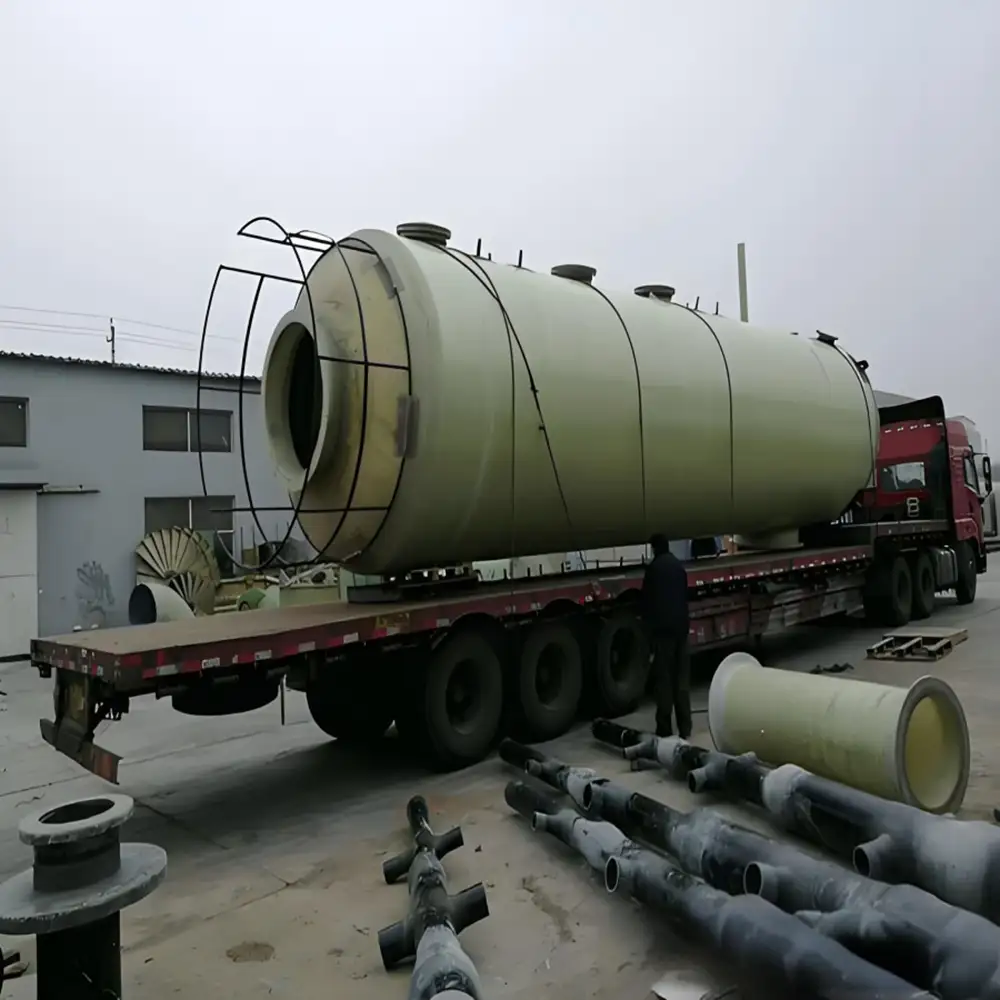
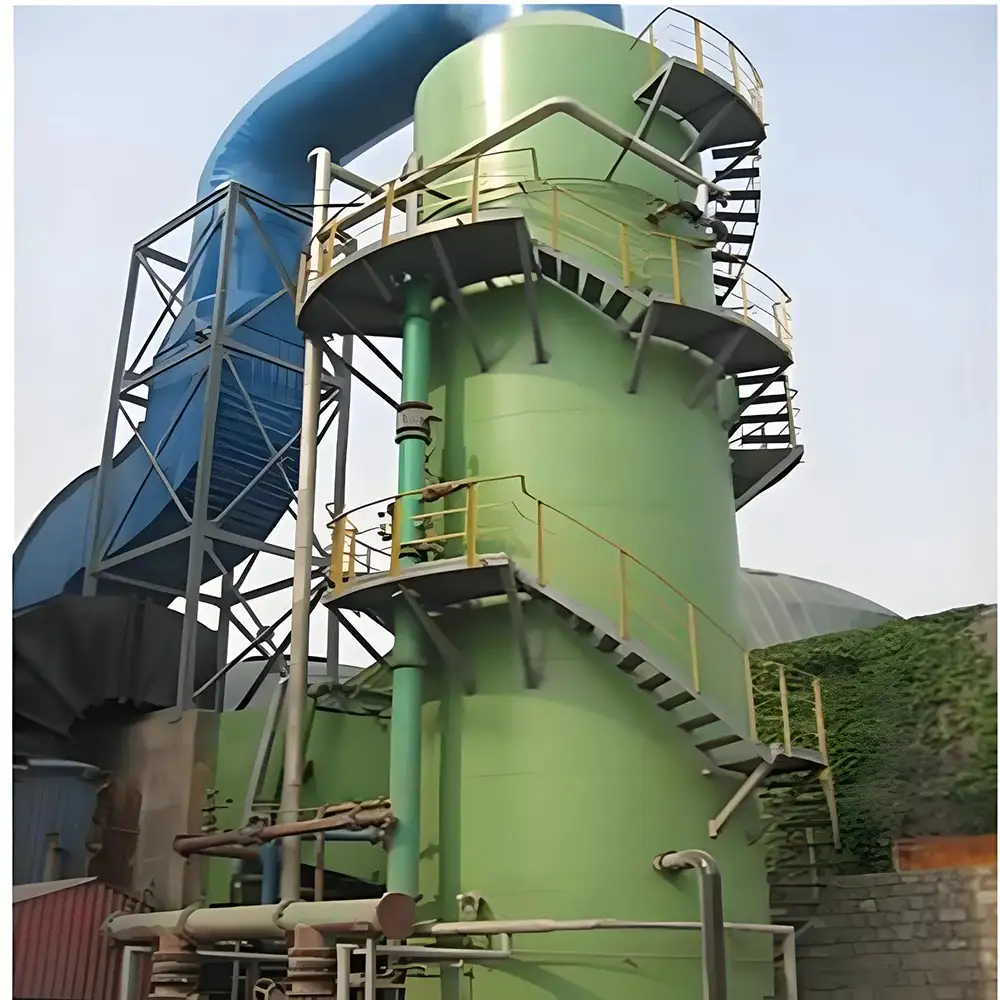
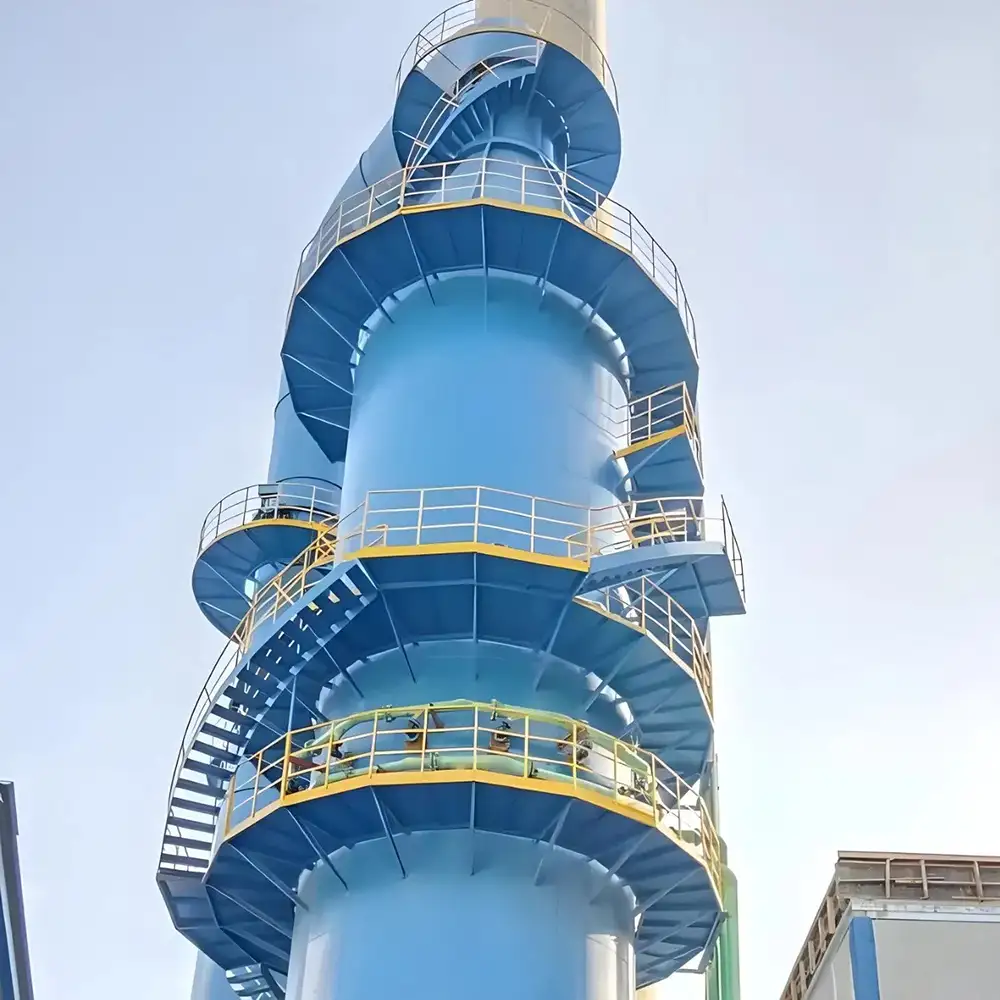
Desulfurization tower is a device used for industrial waste gas treatment. Its main function is to remove acidic gases such as sulfur dioxide from flue gas and reduce environmental pollution. The desulfurization tower absorbs and neutralizes acidic gases such as sulfur dioxide in the waste gas by spraying sodium hydroxide solution (desulfurizer). After the waste gas enters the desulfurization tower, it flows upward through the cyclone plate, contacts and reacts with the neutralizing liquid sprayed by the spray device. After multi-stage filtration and spraying, the acidic gases in the waste gas are effectively removed, and the purified gas is discharged into the atmosphere through the hood and outlet.
Structural features
The desulfurization tower is mainly composed of the tower body, spray device, demister, packing layer and other parts. The tower body is made of fiberglass/titanium/stainless steel and has the characteristics of corrosion resistance, aging resistance, light weight and high strength. The spray device is used to spray the desulfurizer evenly on the packing to increase the gas-liquid contact area and improve the desulfurization efficiency. The demister is used to remove water droplets in the purified gas to avoid corrosion to subsequent equipment.
Application fields
Desulfurization towers are widely used in many industries such as electricity, chemical industry, metallurgy, pharmaceuticals, building materials, papermaking, cement, etc. In the power industry, desulfurization towers are important equipment for flue gas desulfurization in coal-fired power plants, which can significantly reduce the emission concentration of sulfur dioxide and protect the atmospheric environment. In other industries, desulfurization towers also play an important role in treating sulfur-containing waste gas generated during the production process and reducing environmental pollution.
Multifunction Exhaust Gas Treatment and Purification Equipment System Water Treatment Plant
Advantages:
Strong corrosion resistance: Strong corrosion resistance, able to adapt to harsh working environment
Low maintenance: The daily maintenance cost of FRP material is low and the service life is long.
Lightweight and easy to hoist: The FRP desulfurization tower is light in weight and easy to carry and install.
High desulfurization efficiency: The use of efficient desulfurizer and reasonable structural design can effectively remove harmful substances such as sulfur dioxide in flue gas
Multifunction Exhaust Gas Treatment and Purification Equipment System Water Treatment Plant
The Multifunction Exhaust Gas Treatment and Purification Equipment System Water Treatment Plant is an integrated environmental protection solution designed to support industrial facilities with comprehensive exhaust gas purification and water treatment requirements. Modern industrial production can generate multiple environmental pollutants, including dust, sulfur-containing gases, nitrogen oxides, volatile compounds, acidic gases, suspended solids, organic pollutants, and industrial wastewater. Treating these pollutants effectively requires properly configured equipment and coordinated environmental management systems.
This multifunctional treatment concept combines industrial exhaust gas treatment and water treatment processes into an integrated environmental solution. Depending on the application, the system can include waste gas collection, dust removal, gas scrubbing, desulfurization, denitrification, adsorption, filtration, wastewater treatment, sludge separation, disinfection, and water reuse technologies.
The equipment can be configured according to the characteristics of the industrial process, pollutant concentration, exhaust gas volume, wastewater flow rate, treatment requirements, and applicable environmental standards.
Multifunction Exhaust Gas Treatment System
Industrial exhaust gas varies significantly from one production process to another. Some facilities primarily generate dust and particulate matter, while others produce sulfur dioxide, nitrogen oxides, acidic gases, VOCs, odors, or mixed pollutants.
The multifunction exhaust gas treatment system can be configured with different purification technologies according to the actual gas composition.
Possible treatment stages include cyclone separation, bag filtration, electrostatic precipitation, wet scrubbing, spray absorption, activated carbon adsorption, catalytic oxidation, desulfurization, denitrification, and other suitable purification technologies.
The process can be designed as a single-stage treatment unit or as a multi-stage purification line for applications requiring higher removal performance.
Industrial Waste Gas Purification
Effective exhaust gas purification begins with proper gas collection and conditioning. Exhaust gas generated by production equipment can be collected through hoods, ducts, pipelines, fans, and other ventilation components before entering the purification system.
The treatment equipment then removes pollutants through physical, chemical, or adsorption-based processes.
Dust particles can be separated through filtration or centrifugal separation, while soluble acidic gases can be treated through wet scrubbing. VOCs and odor compounds may be treated using adsorption or oxidation technologies depending on their chemical properties.
Combining multiple treatment methods allows the system to address complex industrial exhaust gas conditions.
Desulfurization and Acid Gas Removal
For industrial processes that generate sulfur dioxide or acidic gases, wet or dry desulfurization processes can be integrated into the purification system.
Wet scrubbers provide intensive gas-liquid contact, allowing soluble acidic pollutants to be absorbed by an appropriate treatment solution. Depending on the gas composition, suitable alkaline or chemical absorbents can be selected.
The desulfurization section can be combined with dust removal and demisting components to create a complete flue gas purification process.
Dust and Particulate Removal
Industrial exhaust can contain dust, ash, fibers, metal particles, mineral particles, and other suspended solids. High particulate loading can reduce the efficiency of downstream treatment equipment and increase maintenance requirements.
The system can incorporate suitable dust collection technologies such as cyclone collectors, bag filters, electrostatic precipitators, wet dust collectors, or other particulate separation equipment.
The appropriate dust removal method depends on particle size, concentration, gas temperature, moisture, and the required outlet emission level.
Water Treatment Plant Integration
In addition to exhaust gas purification, the system can be integrated with an industrial water treatment plant for managing process wastewater, washing water, cooling water, or other industrial effluents.
Depending on wastewater characteristics, treatment stages may include screening, equalization, coagulation, flocculation, sedimentation, filtration, biological treatment, membrane filtration, disinfection, sludge treatment, and water reuse.
The water treatment process should be selected according to parameters such as COD, BOD, suspended solids, pH, oil, ammonia nitrogen, heavy metals, salinity, and other specific contaminants.
Industrial Wastewater Treatment
Industrial wastewater often requires customized treatment because pollutant composition varies between industries.
The water treatment plant can be designed to provide preliminary treatment for large solids and suspended matter, followed by chemical or biological processes for dissolved pollutants.
Advanced treatment technologies such as ultrafiltration, reverse osmosis, activated carbon filtration, or other membrane processes can also be incorporated when high-quality treated water or water reuse is required.
This allows industrial facilities to reduce freshwater consumption and improve overall water resource utilization.
Integrated Environmental Protection System
A major benefit of a multifunction environmental treatment system is coordinated management of different pollution sources.
The exhaust gas purification equipment and water treatment plant can be operated as separate process units while being integrated into a centralized environmental management system.
This approach can simplify equipment management, monitoring, maintenance, and process optimization.
Depending on project requirements, the system may include pumps, fans, pipelines, tanks, dosing equipment, filters, scrubbers, membrane systems, control cabinets, sensors, and online monitoring instruments.
Automatic Control and Monitoring
Automatic control can significantly improve the reliability of industrial environmental treatment systems.
The control system can monitor parameters such as exhaust gas temperature, pressure, flow rate, differential pressure, pH, liquid level, water flow, pump status, dosing rate, and other important operating conditions.
Automatic control can coordinate fans, circulation pumps, dosing equipment, valves, filtration systems, and other components.
For larger industrial facilities, centralized monitoring can help operators identify abnormal operating conditions quickly and maintain stable treatment performance.
Water Reuse and Resource Recovery
Advanced water treatment can support industrial water recycling and reuse. After appropriate treatment, a portion of wastewater may be reused for cooling, washing, process water, equipment cleaning, or other suitable applications.
Reverse osmosis, ultrafiltration, activated carbon, advanced oxidation, and other technologies can be incorporated when higher water quality is required.
Water reuse can reduce freshwater demand and wastewater discharge while improving the overall efficiency of industrial water management.
Flexible Industrial Applications
The multifunction treatment system can be used in many industries, including:
Chemical Manufacturing
Pharmaceutical Production
Food Processing
Textile And Dyeing
Metal Processing
Steel And Metallurgy
Cement And Mineral Processing
Power Generation
Industrial Boiler Systems
Waste Treatment
Electronics Manufacturing
Industrial Machinery Production
Surface Treatment Facilities
The final equipment configuration should be based on the actual pollution characteristics and treatment objectives of each facility.
Easy Maintenance and Long-Term Operation
Regular maintenance is essential for reliable operation. Exhaust gas equipment should be inspected for filter loading, nozzle blockage, fan operation, duct leakage, absorber performance, and pressure drop.
Water treatment equipment requires regular inspection of pumps, filters, membranes, dosing systems, tanks, pipelines, and sludge-handling components.
Preventive maintenance can help reduce unexpected downtime and maintain stable treatment performance.
Why Choose Us
A multifunction environmental treatment system should be designed according to the actual production process rather than relying on a single standard configuration.
Our integrated solutions provide flexible options for industrial exhaust gas purification and water treatment, helping facilities address multiple environmental requirements through coordinated process design.
Key advantages include:
Integrated Exhaust Gas And Water Treatment Solutions
Multifunction Waste Gas Purification
Efficient Dust And Particulate Removal
Desulfurization And Acid Gas Treatment Options
Flexible VOC And Odor Treatment Technologies
Industrial Wastewater Treatment Integration
Advanced Filtration And Membrane Treatment
Water Recycling And Reuse Options
Automatic Monitoring And Process Control
Flexible Equipment Configuration
Suitable For Different Industrial Applications
Designed For Continuous Industrial Operation
FAQs
1. What is a multifunction exhaust gas treatment system?
It is an integrated environmental protection system that combines different technologies to remove dust, acidic gases, sulfur dioxide, VOCs, odors, and other industrial air pollutants.
2. Can the system include a water treatment plant?
Yes. The exhaust gas purification system can be integrated with an industrial water treatment plant as part of a comprehensive environmental management project.
3. What exhaust gas pollutants can be treated?
Depending on the configuration, the system can treat particulate matter, dust, SO₂, acidic gases, VOCs, odors, and other pollutants.
4. What wastewater can the water treatment plant handle?
It can be designed for different industrial wastewater sources, including process wastewater, washing water, cooling water, production wastewater, and other industrial effluents.
5. Can wastewater be reused after treatment?
Yes. Advanced treatment processes such as ultrafiltration and reverse osmosis can be added when treated water needs to meet suitable reuse requirements.
6. Can the exhaust gas treatment system remove dust?
Yes. Cyclone collectors, bag filters, electrostatic precipitators, wet scrubbers, or other dust removal technologies can be selected according to the gas characteristics.
7. Can sulfur dioxide be removed?
Yes. Desulfurization equipment such as wet scrubbers or other suitable SO₂ removal technologies can be incorporated into the flue gas treatment process.
8. Is automatic operation available?
Yes. Pumps, fans, dosing equipment, valves, filters, and other process components can be integrated with automatic monitoring and control systems.
9. How is the equipment configuration determined?
The configuration depends on exhaust gas flow rate, pollutant concentration, gas temperature, wastewater volume, wastewater composition, required treatment efficiency, and site conditions.
10. Can the system be used for existing industrial plants?
Yes. The system can be designed as a new environmental treatment line or integrated into an existing industrial pollution-control system after evaluating the current process and treatment requirements.
Prev:
FRP Purification Tower/ Boiler Flue Gas Treatment/ Desulfurization and Denitrification Equipment
Next:
High Temperature Flue Gas Desulfurization Denitrification/Dust Removal Treatment Equipment
TAG:
Industrial Water Treatment System,
Industrial Wastewater Treatment,
Industrial Sewage Treatment,
Industrial Wastewater Treatment Plant,
Water Purification Equipment,
Wastewater Treatment Equipment,
Integrated Water Treatment System,
Reverse Osmosis Water Treatment,
Dust Collection Equipment,
Flue Gas Treatment Equipment,
Environmental Treatment Equipment,
Industrial Water Treatment Plant,
Wastewater Treatment System,
Industrial Water Treatment Equipment,
Industrial Water Recycling,
Water Filtration Equipment,
Water Treatment Plant,
Water Treatment Equipment,
Membrane Water Treatment,
Ultrafiltration Water Treatment,
Industrial Water Purification,
Water Reuse System,
Water Recovery System,
Industrial RO System,
Industrial Water Reuse,
Industrial Environmental Protection Equipment,
Dust Removal Equipment,
Dust Removal System,
Industrial Dust Removal,
Waste Gas Purification Equipment,
Related Category:
Multifunction Exhaust Gas Treatment Equipment, Exhaust Gas Purification System, Industrial Waste Gas Treatment, Water Tr China, suppliers, manufacturers, factory, customized, wholesale, quotation, made in China