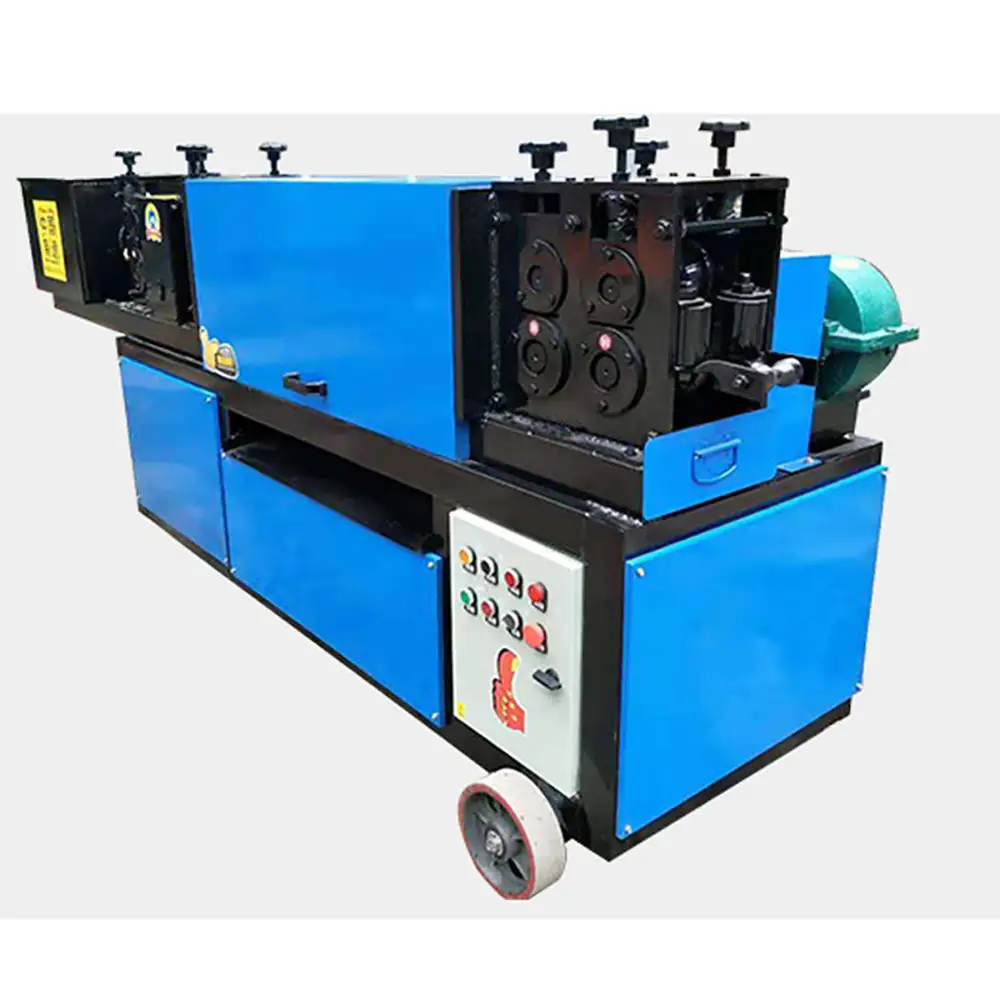
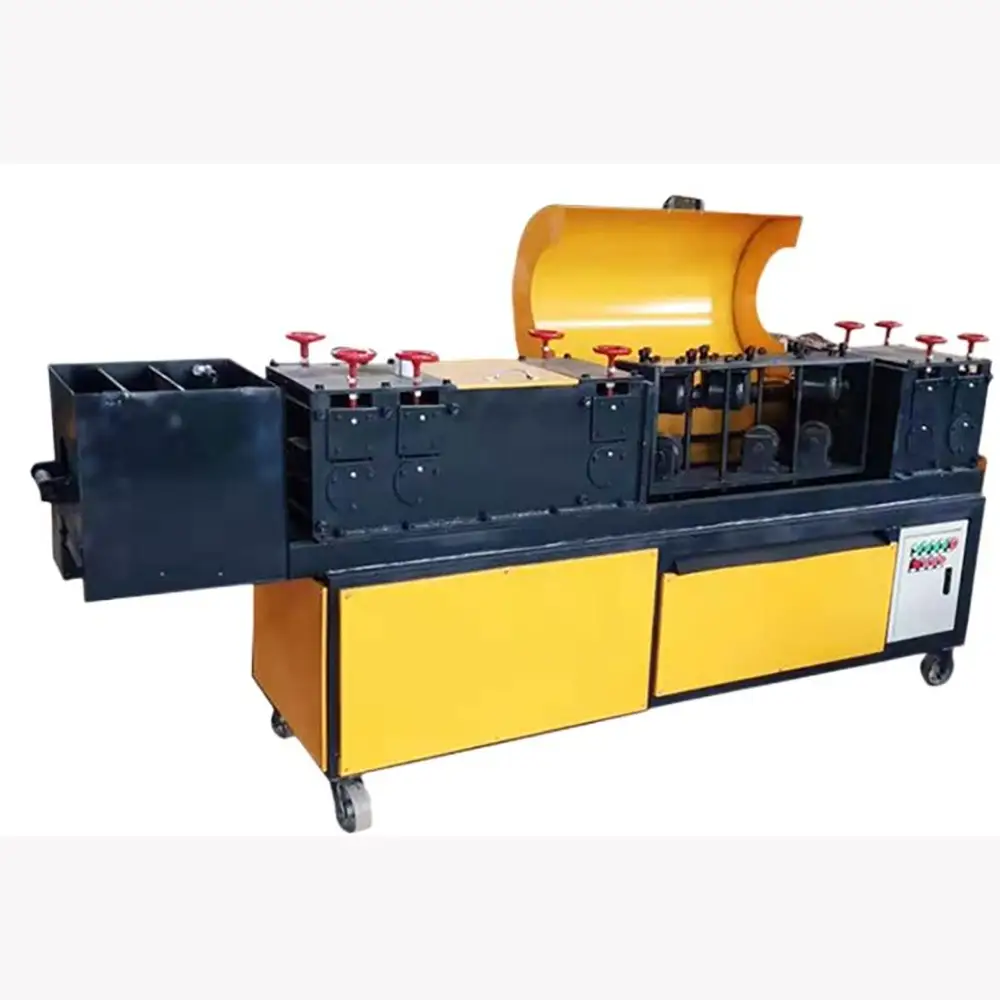
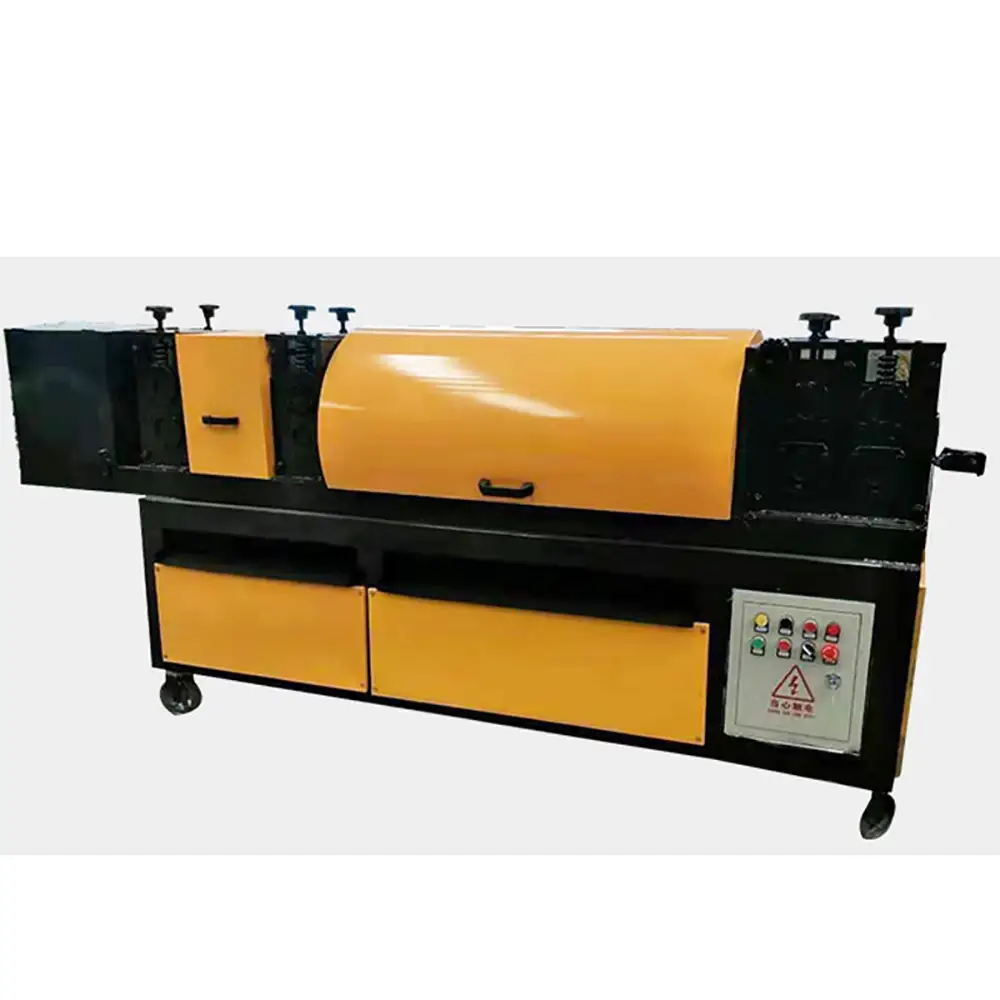
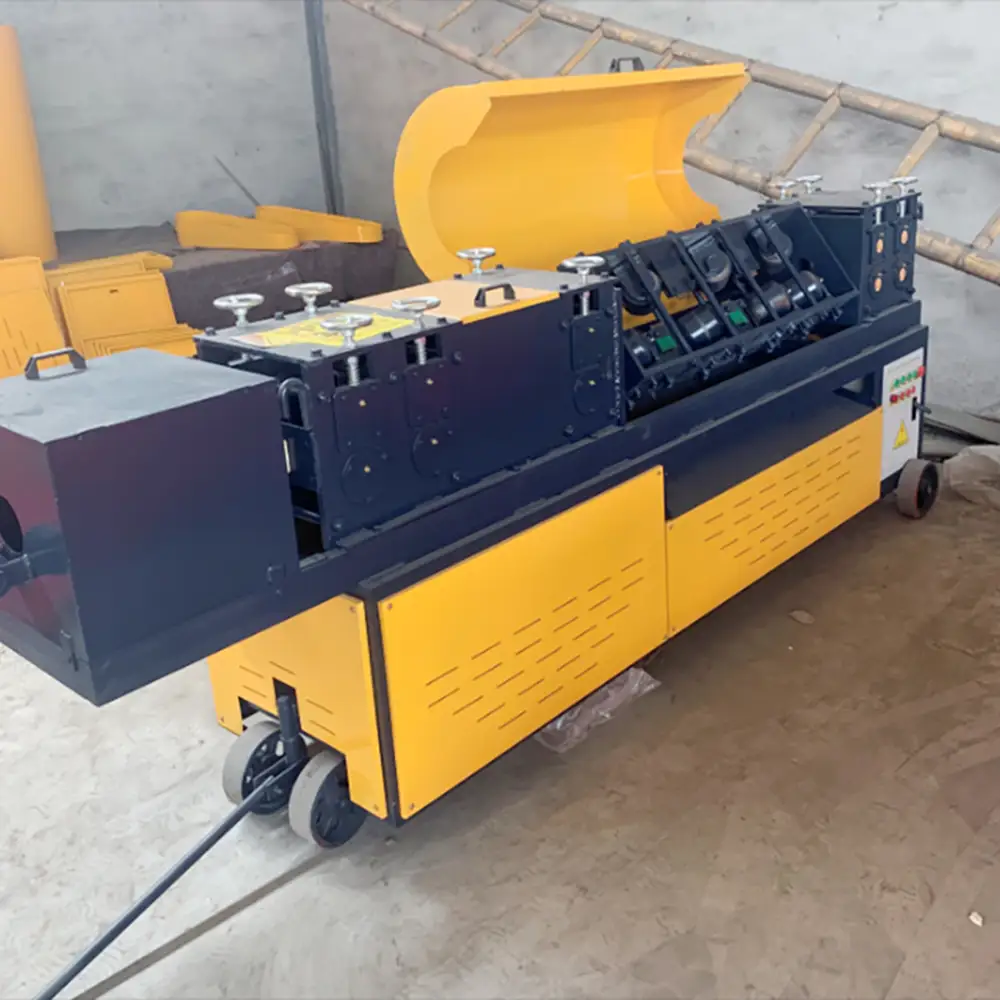
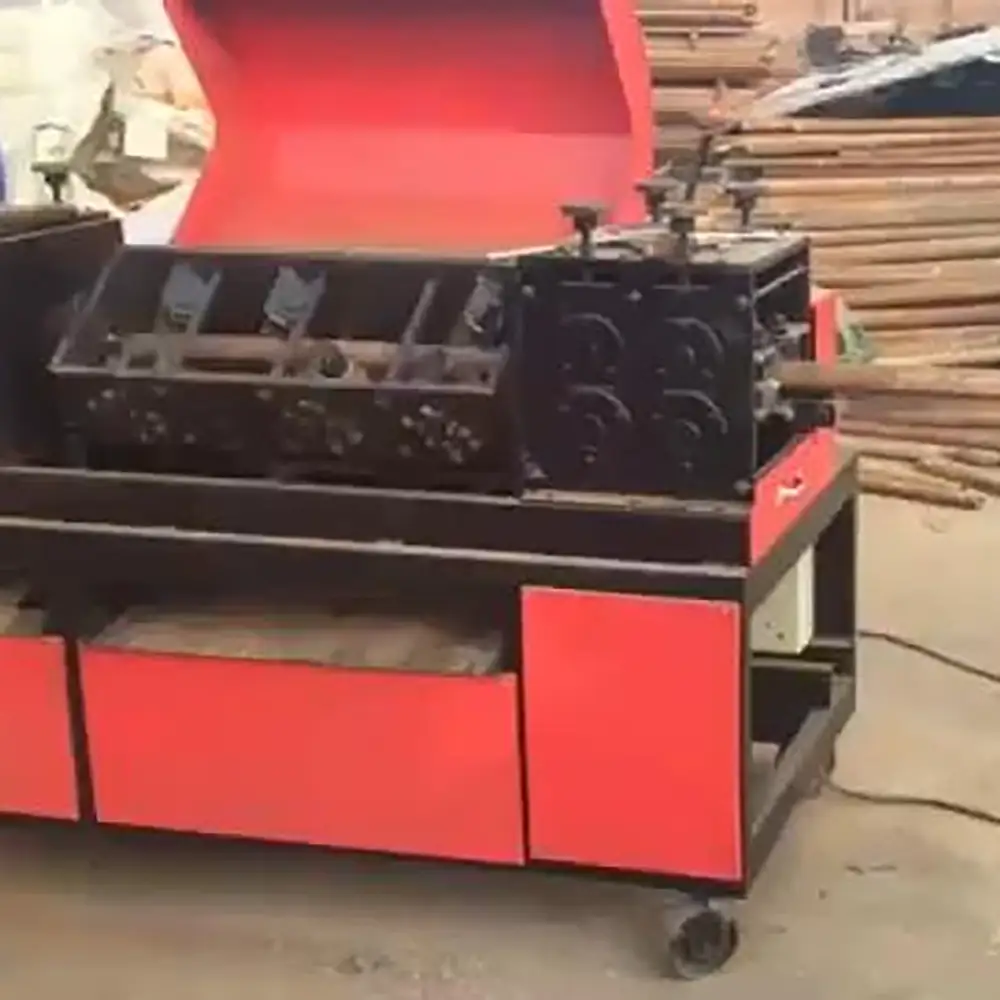
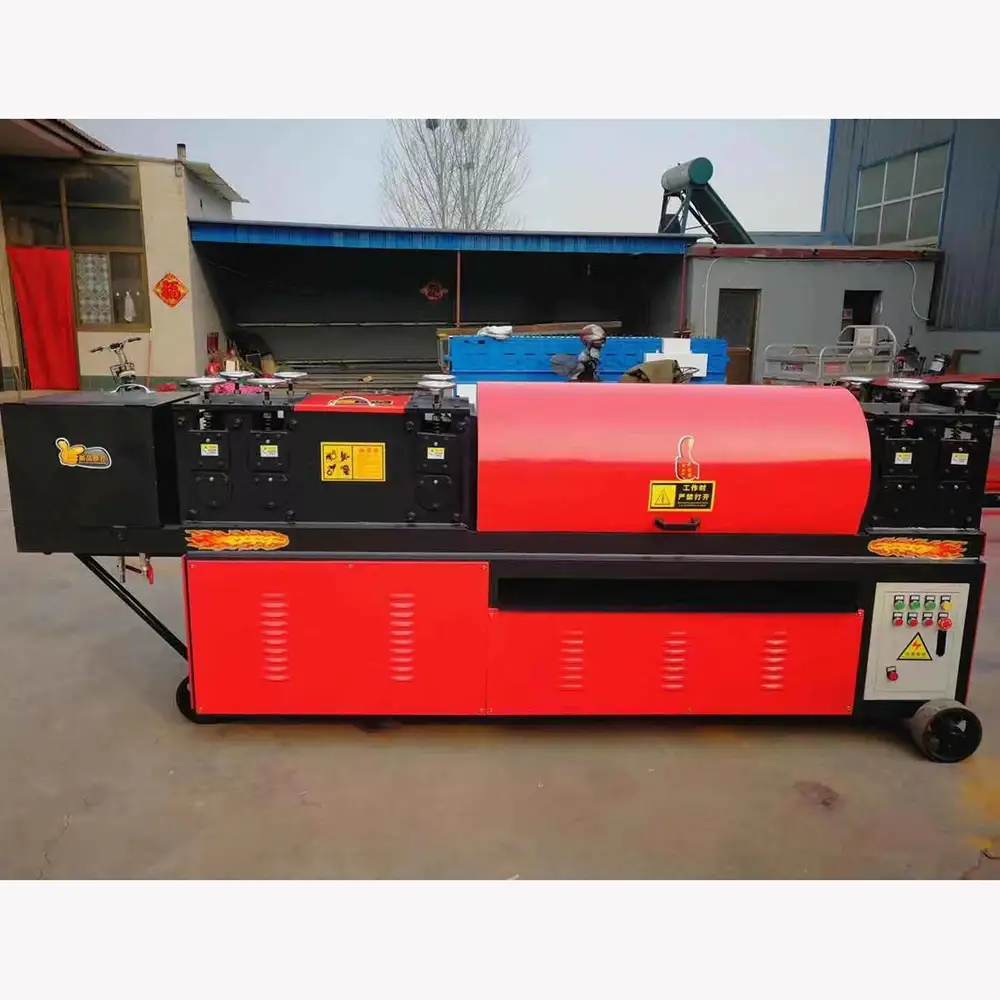
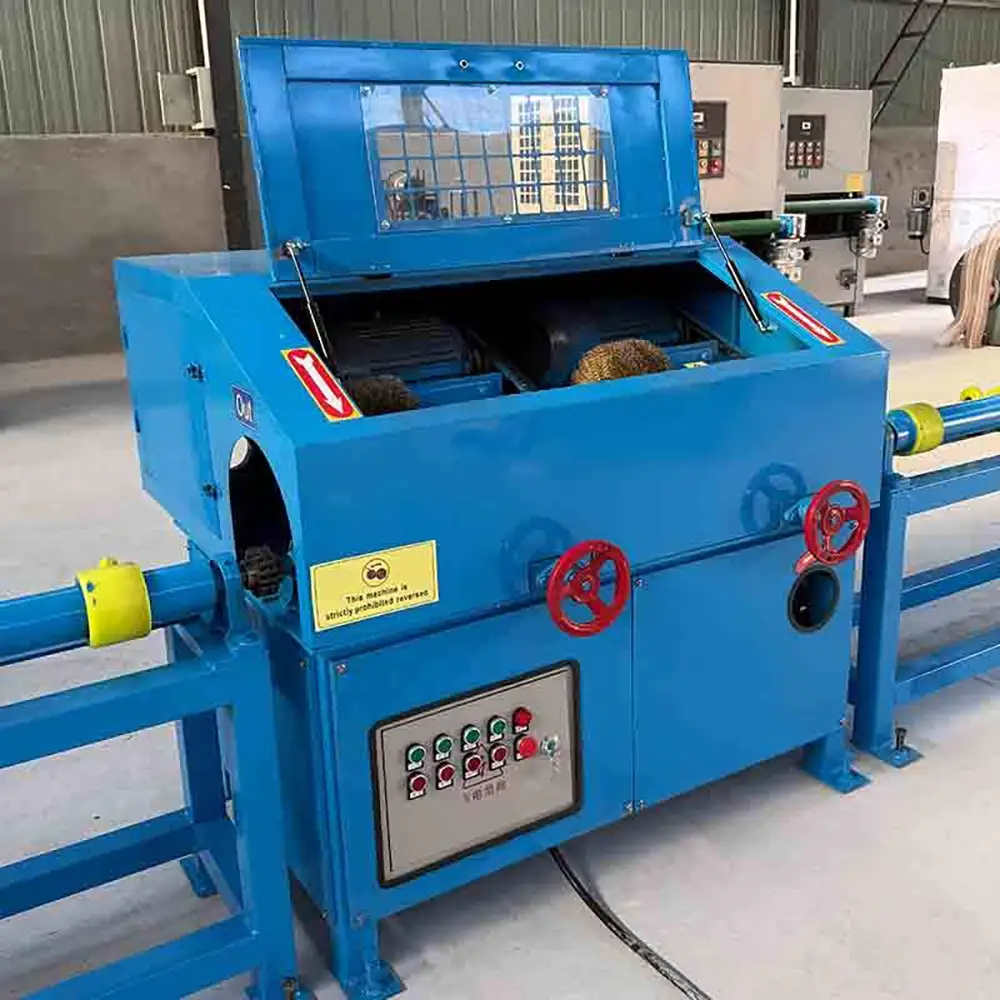
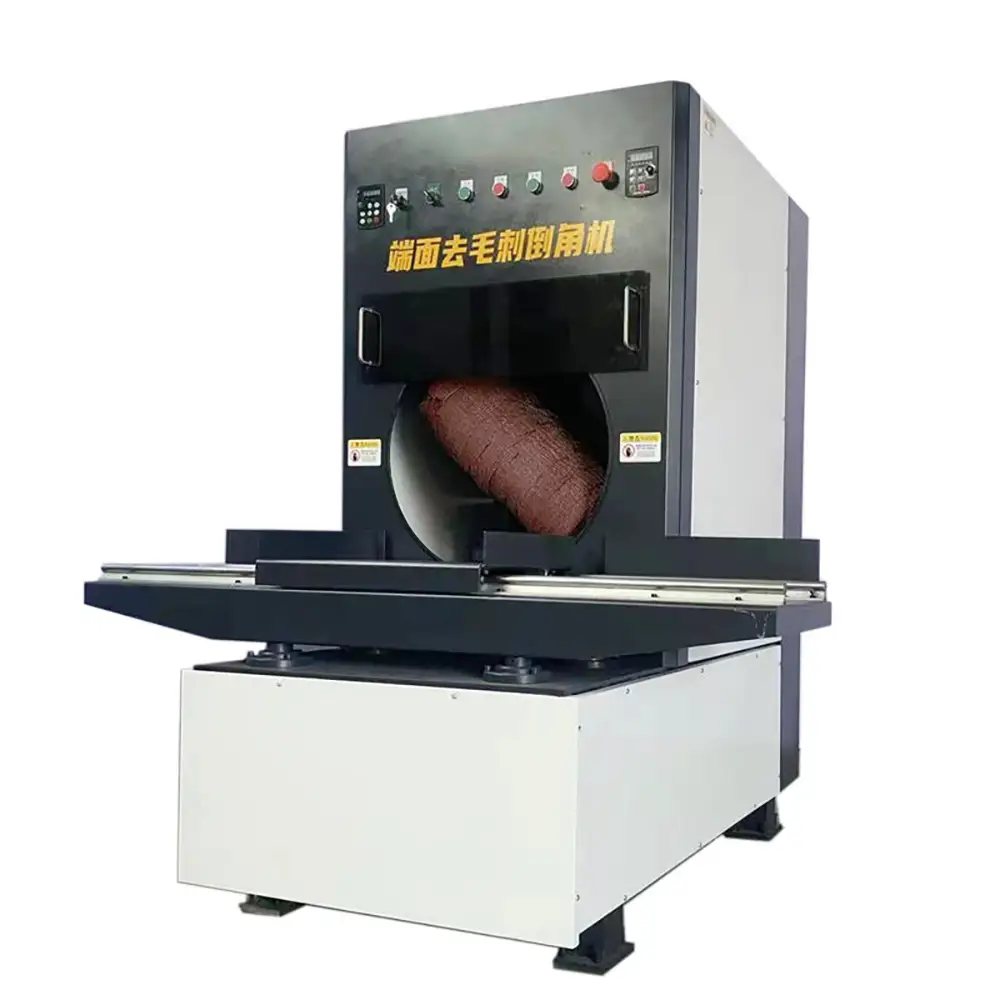
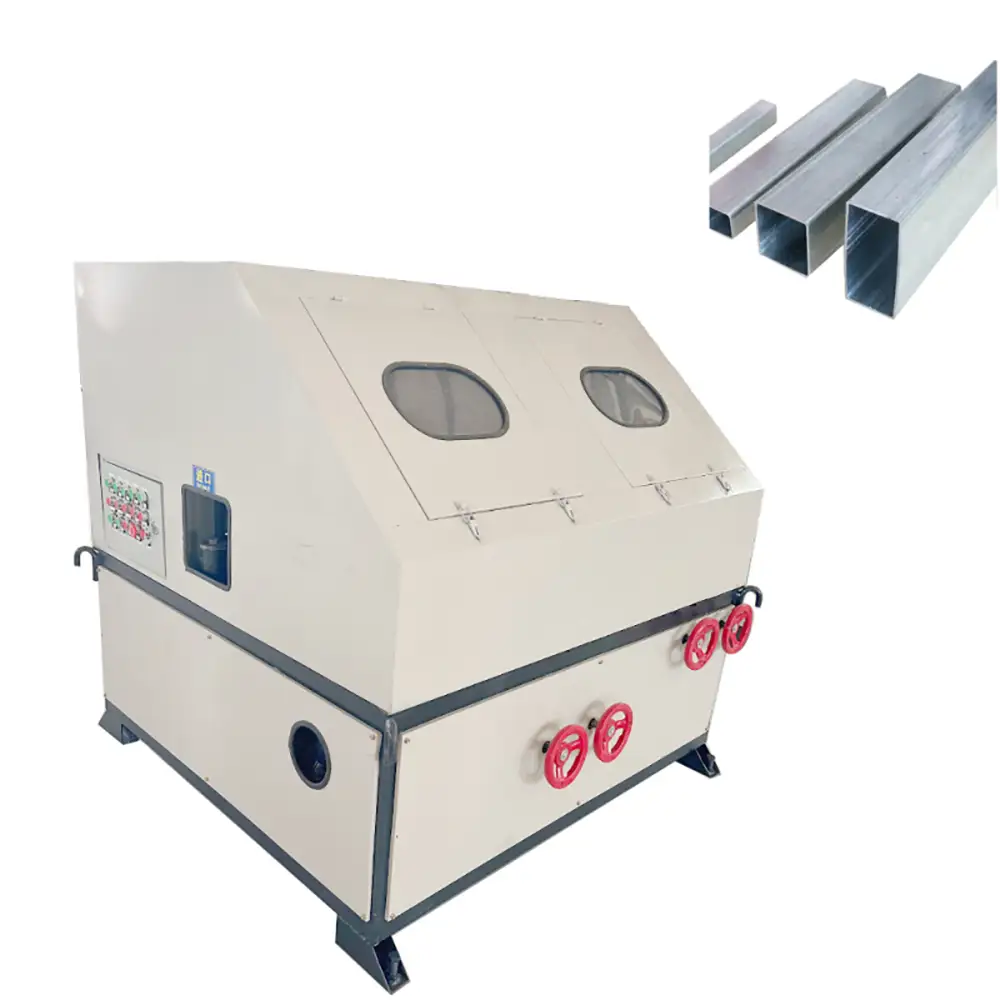
Product feature: 1 Adopt mechanical transmission, reasonable structure, stable performance and easy operation
2 Straightening, rust removal, painting, multifunctional combination,
3 The processing speed can be adjusted
4 Can be moved, suitable for different construction sites pipe polishing machine Products Description
|
Name |
Steel pipe straightening dedusting and brush painting machine |
|
Model |
50 |
|
Function |
Straightening, dedusting and brush painting |
|
Max processing pipe diameter |
46-51mm |
|
Allows to straighten the angle |
0°-85° |
|
Straightening effect |
less than or equal to 3° |
|
Speed |
15-18m/minute |
|
Quantity of wheels |
10piece and hyperbola |
|
Rust removal way |
Double wire brush 360°forward and reverse direction high-speed rotary |
|
Reducer |
200&250 model |
|
Power |
13kw |
|
Size |
3200x1000x1200mm |
|
Weight |
1000kg |
|
Move |
Mobile with universal wheels |
Metal Bar Straightening Machine for Rectangle, Hexagon and Irregular Steel Bars
The Metal Bar Straightening Machine is an industrial solution designed to correct bending, deflection, and dimensional irregularities in a wide range of metal bars. It can be configured for processing rectangle steel bars, hexagon bars, irregular metal bars, and other suitable profiles, helping manufacturers improve straightness and prepare components for subsequent machining, fabrication, or assembly.
Straightness is an important quality requirement for many metal products. During rolling, forging, heat treatment, cutting, transportation, or other manufacturing processes, steel and other metal bars may develop bending or deformation. Manual straightening can be slow and difficult to control, particularly when processing large production volumes.
A dedicated bar straightening machine provides a more controlled mechanical process. By applying carefully controlled pressure through straightening rollers, dies, or tooling, the machine can correct deformation and bring suitable metal bars closer to the required straightness specification.
Stable Structure for Industrial Production
A stable machine structure is important for maintaining consistent straightening performance. During operation, the machine generates significant mechanical forces as the workpiece passes through the straightening system.
A rigid frame and properly supported working components help maintain alignment during production. This can contribute to more consistent results and reduce unnecessary vibration or movement.
For industrial applications, machine stability is particularly important when processing longer bars or harder metal materials. The machine configuration should be selected according to bar dimensions, material grade, hardness, cross-sectional shape, and required straightness tolerance.
Straightening Rectangle Steel Bars
Rectangle steel bars have a flat-sided cross-section and can develop bending or twisting during production and handling. Straightening these profiles requires appropriate tooling and controlled force distribution.
A rectangle steel straightening machine can be configured to accommodate suitable rectangular profiles. The straightening process applies corrective force to the workpiece while it is supported and guided through the machine.
Proper tooling selection is important because the contact position and force direction need to correspond to the profile geometry. For applications with tight tolerances, sample testing and process adjustment are recommended.
Hexagon Bar Straightening
Hexagonal steel bars are commonly used for machined components, fasteners, shafts, automotive parts, and general engineering applications.
Because a hexagon bar has six flat sides, conventional round-bar straightening equipment may not always be suitable without appropriate tooling.
A hexagon bar straightening machine can use profile-specific guides, rollers, dies, or fixtures to provide controlled contact with the workpiece.
The objective is to correct bending while maintaining the basic cross-sectional geometry and minimizing unnecessary surface damage.
Irregular Metal Bar Straightening
Some industrial components use non-standard or irregular cross-sectional profiles. These may include specially shaped bars, custom steel sections, forged profiles, and other engineered metal products.
Straightening irregular profiles requires greater attention to tooling design and force distribution.
A properly configured irregular metal bar straightening machine can use customized contact surfaces or tooling to match the workpiece profile. This allows manufacturers to address specific deformation problems while reducing the risk of unwanted distortion.
For non-standard profiles, it is recommended to provide detailed drawings or samples when selecting equipment.
Precision Straightening Process
The straightening process generally involves feeding the metal bar into a controlled working area where mechanical force is applied at selected points.
The machine gradually corrects the workpiece rather than relying on uncontrolled manual impact. This can improve repeatability and make the production process easier to standardize.
Straightening parameters may include:
Straightening Force
Roller Position
Tooling Configuration
Feeding Speed
Workpiece Support
Number Of Passes
Material Hardness
Bar Dimensions
The appropriate settings depend on the specific workpiece and required result.
Suitable Metal Materials
Depending on the machine configuration and tooling, metal bar straightening equipment can be used for various materials, including:
Carbon Steel
Alloy Steel
Stainless Steel
Spring Steel
Aluminum Alloys
Copper Alloys
Brass
Other Suitable Metal Profiles
Different materials have different yield strengths and deformation characteristics. Harder materials generally require higher straightening forces and carefully selected tooling.
The actual material range should always be confirmed according to the machine's rated capacity.
Applications of Metal Bar Straightening Machines
A metal bar straightening machine can be used across many industrial sectors.
Automotive Manufacturing
Straightening suitable steel bars and profiles used for automotive components and manufacturing processes.
Machinery Manufacturing
Correcting bent bars and profiles before machining, welding, or assembly.
Steel Processing
Improving straightness of suitable steel bars after production, transportation, or other processing stages.
Fastener Manufacturing
Processing hexagonal and other profiles used for bolts, nuts, and machined fastener components.
CNC Machining
Straightening raw bar stock before precision machining can help improve material preparation for certain applications.
Construction Hardware
Processing metal bars and profiles used for structural and hardware applications.
General Metal Fabrication
Providing controlled straightening for various industrial metal products.
Why Straightness Matters
Straight metal stock can provide important advantages during downstream manufacturing.
A bent bar may create difficulties during CNC machining, cutting, drilling, welding, assembly, or automated feeding. Excessive deformation can also affect dimensional consistency and product appearance.
By correcting suitable bars before subsequent operations, manufacturers can improve material preparation and reduce problems associated with excessive bending.
For precision manufacturing, however, the required straightness tolerance should be clearly defined. A straightening machine can correct deformation, but the achievable tolerance depends on the material, profile, initial deformation, machine configuration, tooling, and process control.
Straightening vs. Bending Correction
Straightening is essentially a controlled deformation process used to correct unwanted bending.
Instead of simply applying force at one point, industrial straightening systems distribute corrective force according to the shape and deformation of the workpiece.
For some applications, the process may involve several controlled correction points or multiple passes. The objective is to achieve the required straightness while minimizing residual stress and avoiding excessive deformation.
The correct process depends on whether the workpiece has simple bending, multiple bends, twisting, or more complicated deformation.
Custom Tooling for Different Profiles
One of the most important considerations when straightening non-round bars is tooling.
Round bars, rectangular bars, hexagonal bars, and irregular profiles have different contact geometries. Using unsuitable tooling can lead to inconsistent force distribution or surface marks.
For this reason, profile-specific rollers, guides, dies, or fixtures may be required.
For custom or irregular bars, manufacturers should provide:
Bar Cross-Section Drawing
Bar Dimensions
Material Grade
Bar Length
Initial Straightness Condition
Required Straightness
Production Quantity
Surface Requirements
This information can help determine an appropriate machine and tooling configuration.
Production Efficiency
Compared with manual straightening, mechanical bar straightening can provide a more repeatable production workflow.
Operators can feed workpieces through a dedicated straightening system and inspect the output according to established quality requirements.
For higher-volume applications, an automated feeding and discharge system may also be considered. This can reduce manual handling and improve production flow.
Actual production speed depends on bar size, material, initial deformation, straightening requirements, machine configuration, and operator or automation setup.
Surface Protection
When straightening finished or semi-finished metal bars, surface quality can be an important consideration.
Properly designed contact surfaces and tooling can help minimize unnecessary scratches, dents, or marks. The appropriate tooling material and contact geometry should be selected according to the workpiece requirements.
If the bar will undergo further machining, minor tooling marks may be less critical. For decorative or finished surfaces, additional attention to contact protection may be required.
How to Choose the Right Machine
When selecting a metal bar straightening machine, buyers should consider the maximum and minimum bar dimensions, cross-sectional shape, material, hardness, bar length, initial deformation, required straightness, and production volume.
The bar profile is particularly important for rectangle, hexagon, and irregular bars.
The material strength determines the required straightening force.
The bar dimensions determine the working range and tooling requirements.
The straightness tolerance influences machine configuration and process control.
The production volume determines whether manual feeding or an automated feeding system is more appropriate.
For non-standard applications, sample testing is recommended before purchasing production equipment.
Why Choose Us
Stable Industrial Machine Structure
Our straightening solutions are designed around stable mechanical structures suitable for industrial metal processing applications.
Multiple Bar Profiles
The equipment can be configured for suitable round, rectangular, hexagonal, and irregular metal profiles depending on tooling requirements.
Profile-Specific Tooling
Different rollers, guides, dies, or fixtures can be considered for different cross-sectional shapes and straightening requirements.
Precision-Oriented Processing
Controlled mechanical force helps manufacturers establish a more repeatable straightening process compared with manual correction.
Flexible Configuration
Machine capacity and tooling can be selected according to bar dimensions, material grade, hardness, length, and required straightness.
B2B Manufacturing Support
We support steel processors, machinery manufacturers, distributors, importers, and industrial buyers looking for bar straightening equipment.
OEM and Custom Solutions
For irregular profiles or special production requirements, customized tooling and machine configurations can be discussed based on drawings or samples.
FAQ
What is a metal bar straightening machine?
A metal bar straightening machine is industrial equipment designed to correct bending and deformation in suitable metal bars and profiles using controlled mechanical force.
Can it straighten rectangular steel bars?
Yes. With appropriate tooling and machine configuration, rectangular steel bars can be processed for straightness correction.
Can it straighten hexagonal bars?
Yes. Hexagonal bars can be straightened using suitable profile-specific rollers, guides, or tooling.
Can irregular metal bars be straightened?
Yes, depending on the profile and material. Irregular bars may require customized tooling to provide proper support and force distribution.
What materials can be straightened?
Depending on machine capacity, suitable materials may include carbon steel, alloy steel, stainless steel, spring steel, aluminum alloys, copper alloys, and brass.
Can it straighten hardened steel?
Some hardened steel applications may be possible, but the required force and tooling depend on the material hardness, dimensions, and amount of deformation. The material specifications should be provided for evaluation.
Does straightening change the dimensions of the bar?
The purpose of straightening is primarily to correct deformation. However, excessive force can potentially affect the workpiece, so process parameters should be carefully controlled.
Can the machine handle different bar sizes?
Many machines can accommodate a defined range of bar dimensions. The required working range should be selected according to the customer's actual bar sizes.
Can customized tooling be provided?
Yes. Rectangle, hexagon, and irregular profiles may require dedicated tooling. Custom tooling can be considered based on workpiece drawings and samples.
How accurate can the straightening process be?
The achievable straightness depends on the material, bar dimensions, initial deformation, tooling, machine configuration, and process parameters. The required tolerance should be specified before selecting the machine.
Is the machine suitable for mass production?
Yes. Mechanical straightening can be integrated into production lines and may be combined with feeding and discharge systems for higher-volume applications.
What information should I provide when requesting a machine?
Provide the material grade, cross-sectional shape, dimensions, bar length, hardness, initial bending condition, required straightness tolerance, production volume, and surface requirements.
Prev:
Multifunction Automatic Round Pipe Square Tube and Rectangle Bar Chamfering Machine
Next:
Metal Parts Tumbler Vibratory Finishing Machines Ceramic Polishing Machine
TAG:
Metal Section Straightening Machine,
Steel Section Straightening Machine,
Bar Stock Straightening Machine,
Steel Bar Straightening Equipment,
Metal Straightening Equipment,
Industrial Metal Straightening Equipment,
Precision Metal Straightening Machine,
Automatic Steel Bar Straightener,
Hydraulic Bar Straightening Machine,
Mechanical Bar Straightening Machine,
CNC Bar Straightening Machine,
Steel Rod Straightening Machine,
Metal Rod Straightening Machine,
Round Bar Straightening Machine,
Flat Bar Straightening Machine,
Square Bar Straightening Machine,
Cold Bar Straightening Machine,
Steel Straightening Equipment,
Bar Correction Machine,
Metal Bending Correction Machine,
Steel Bar Correction Machine,
Metal Bar Straightening Machine,
Steel Bar Straightening Machine,
Metal Straightening Machine,
Bar Straightening Machine,
Bar Straightening Equipment,
Bar Straightening Machine For Sale,
Steel Straightening Machine,
Steel Bar Straightener,
Metal Bar Straightener,
Related Category:
Metal Bar Straightening Machine, Steel Bar Straightening Machine, Rectangle Steel Straightening Machine China, suppliers, manufacturers, factory, customized, wholesale, quotation, made in China