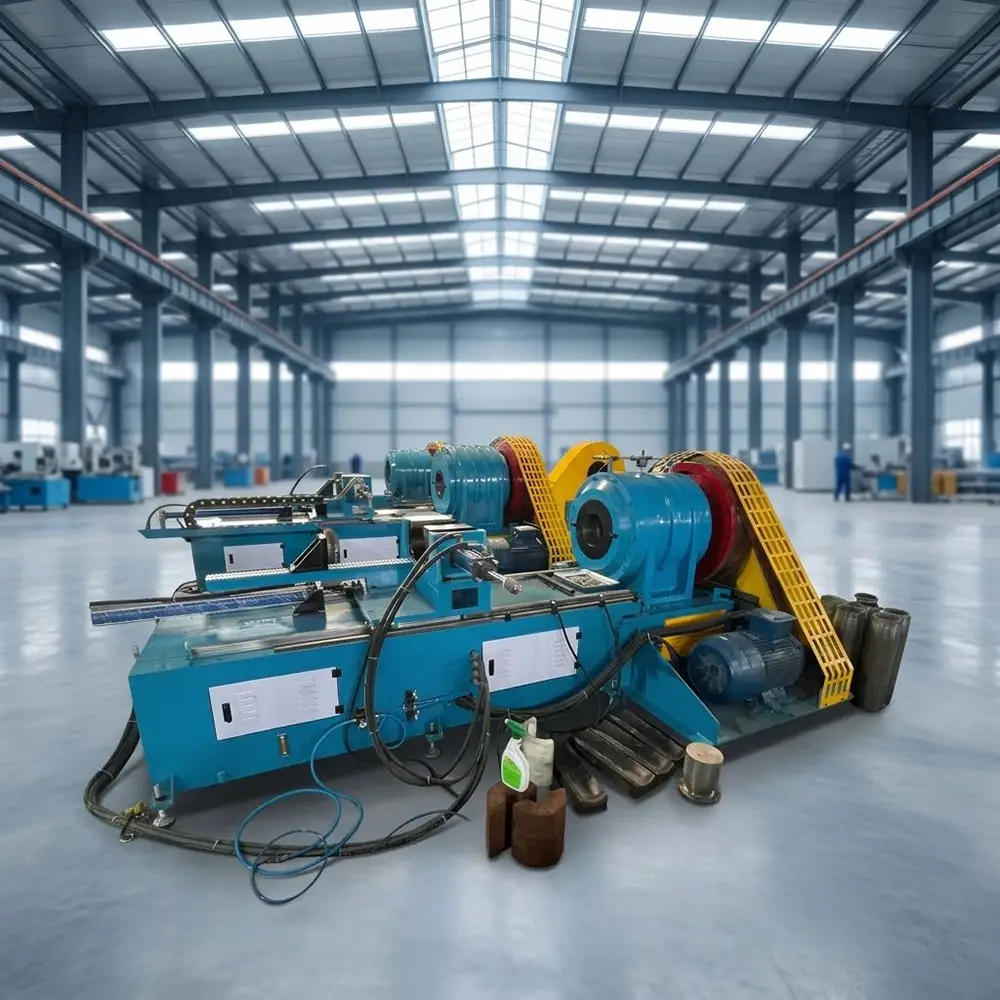
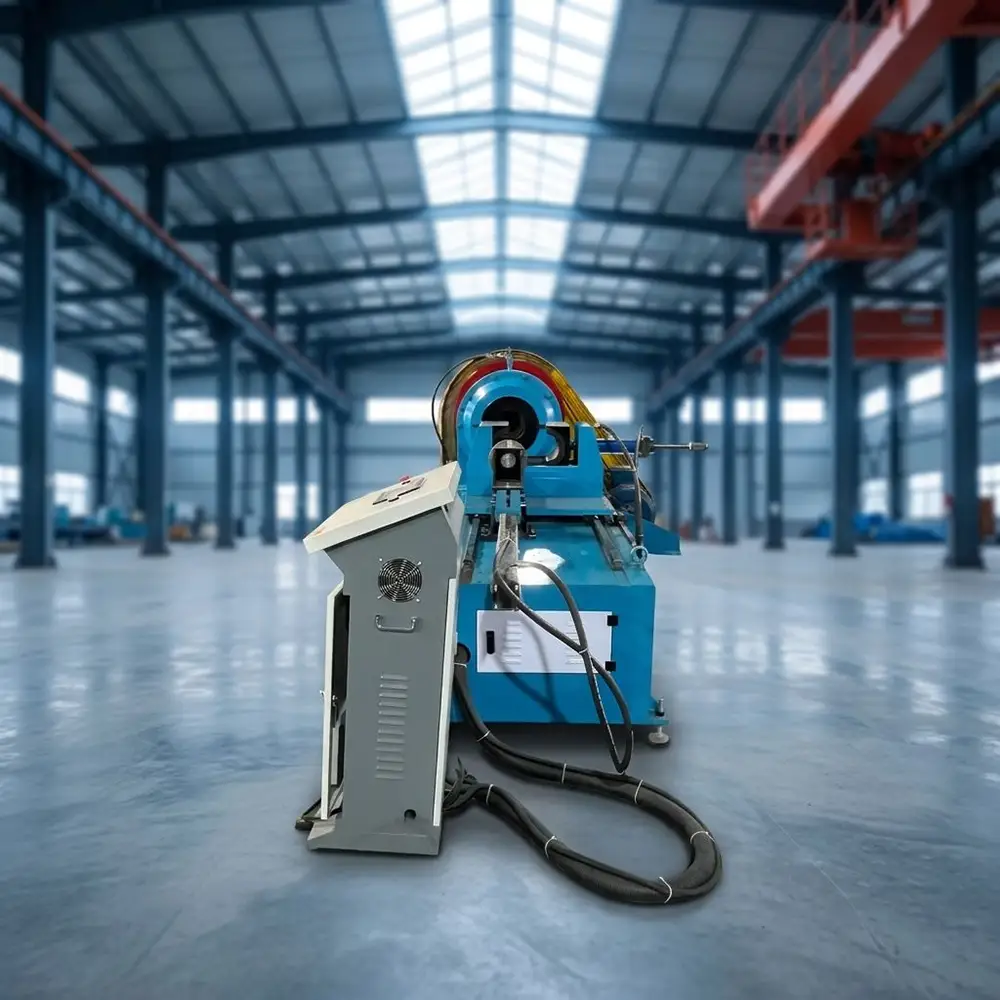
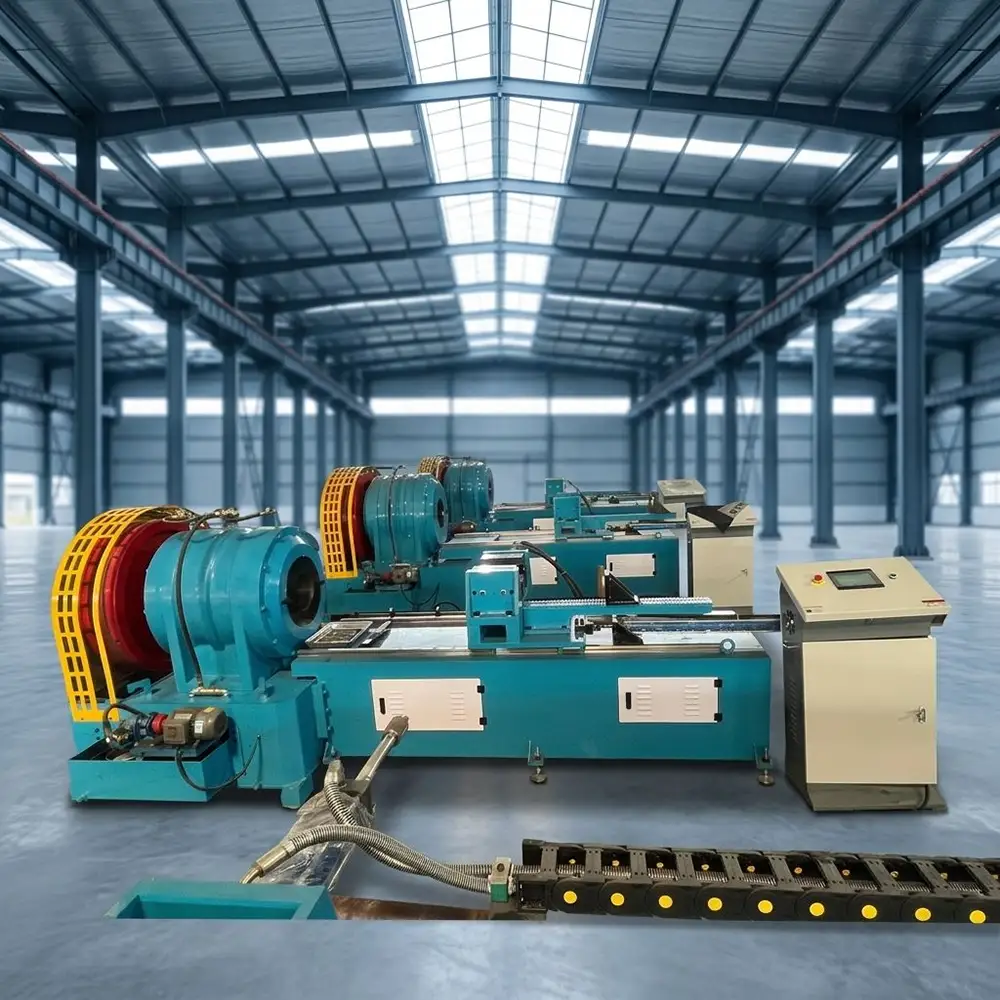
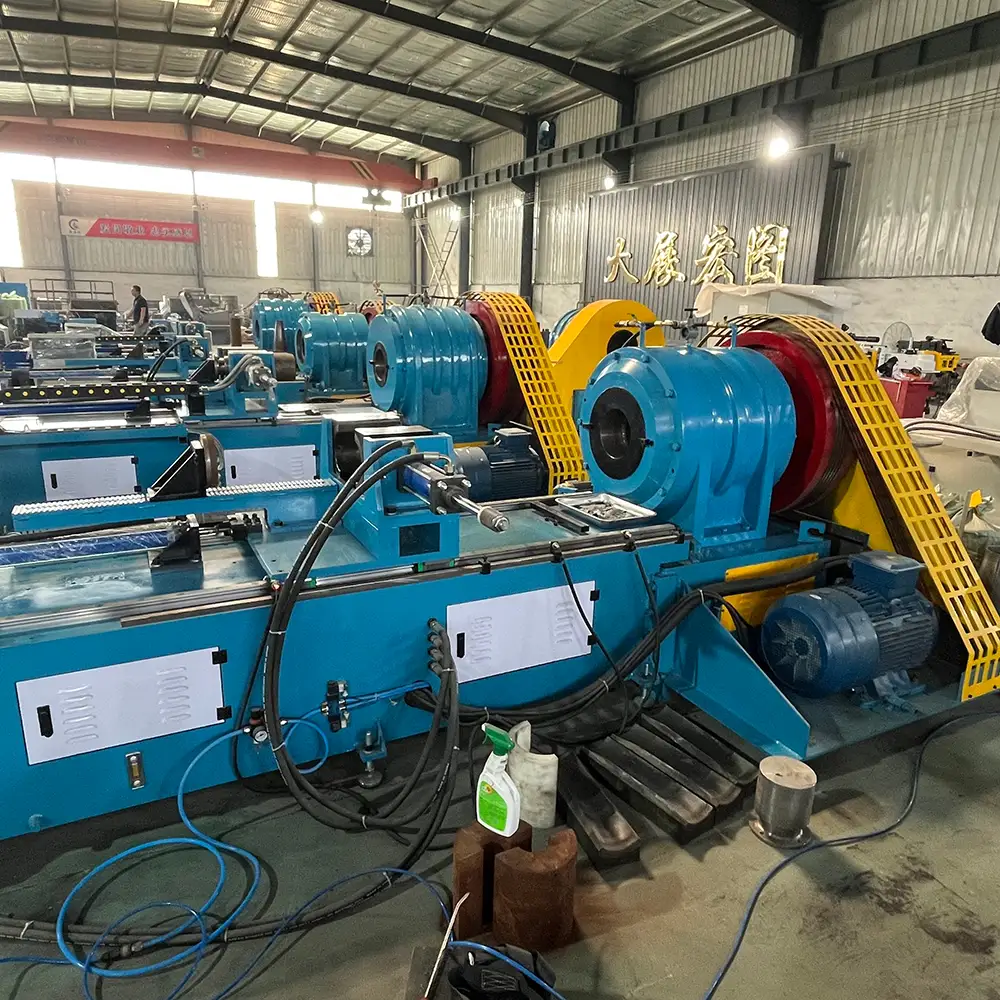
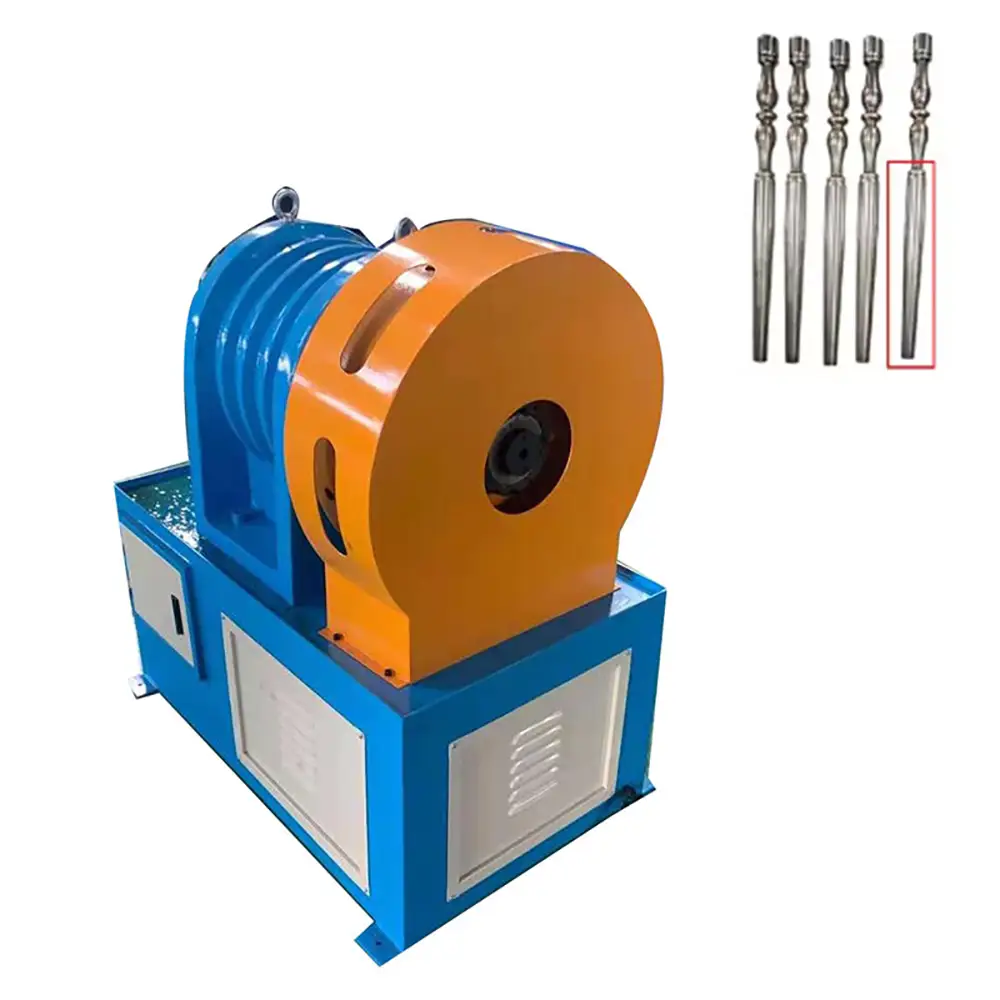
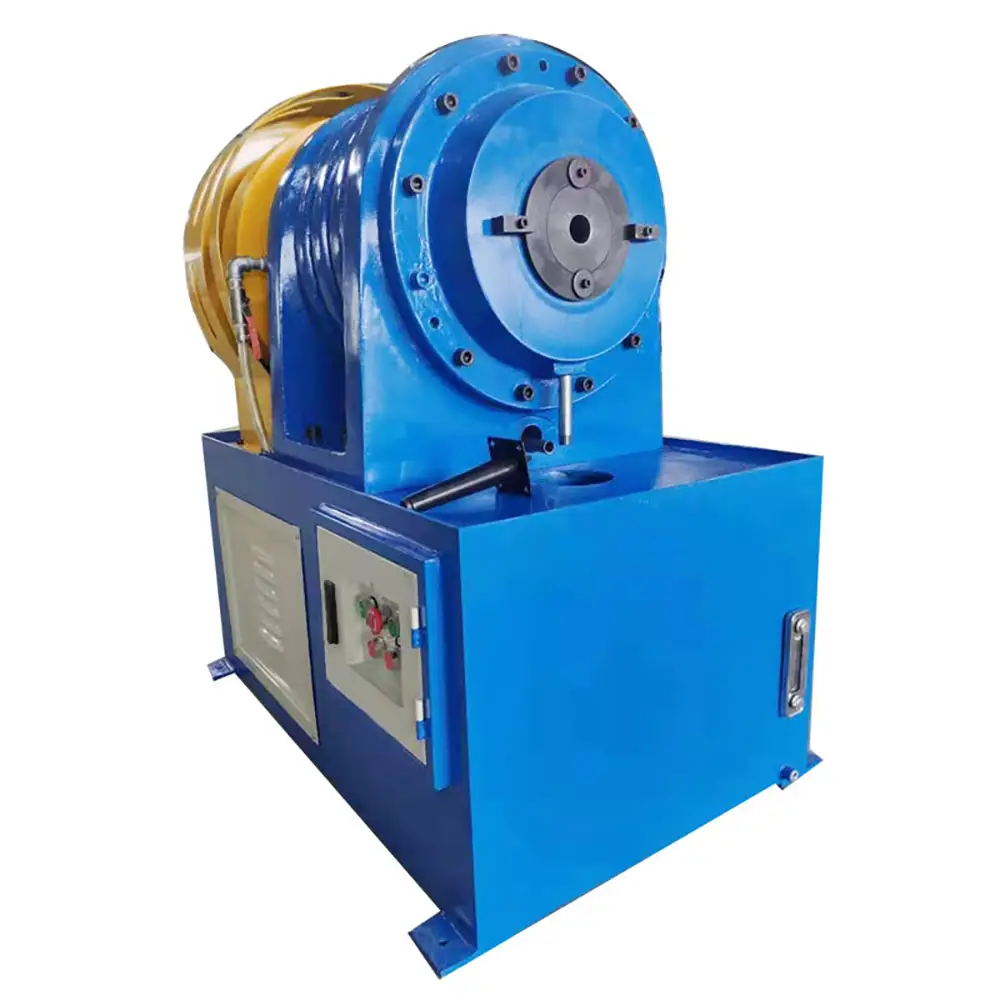
Semi-automatic feeding design, single-person operation, easy to learn for new workers
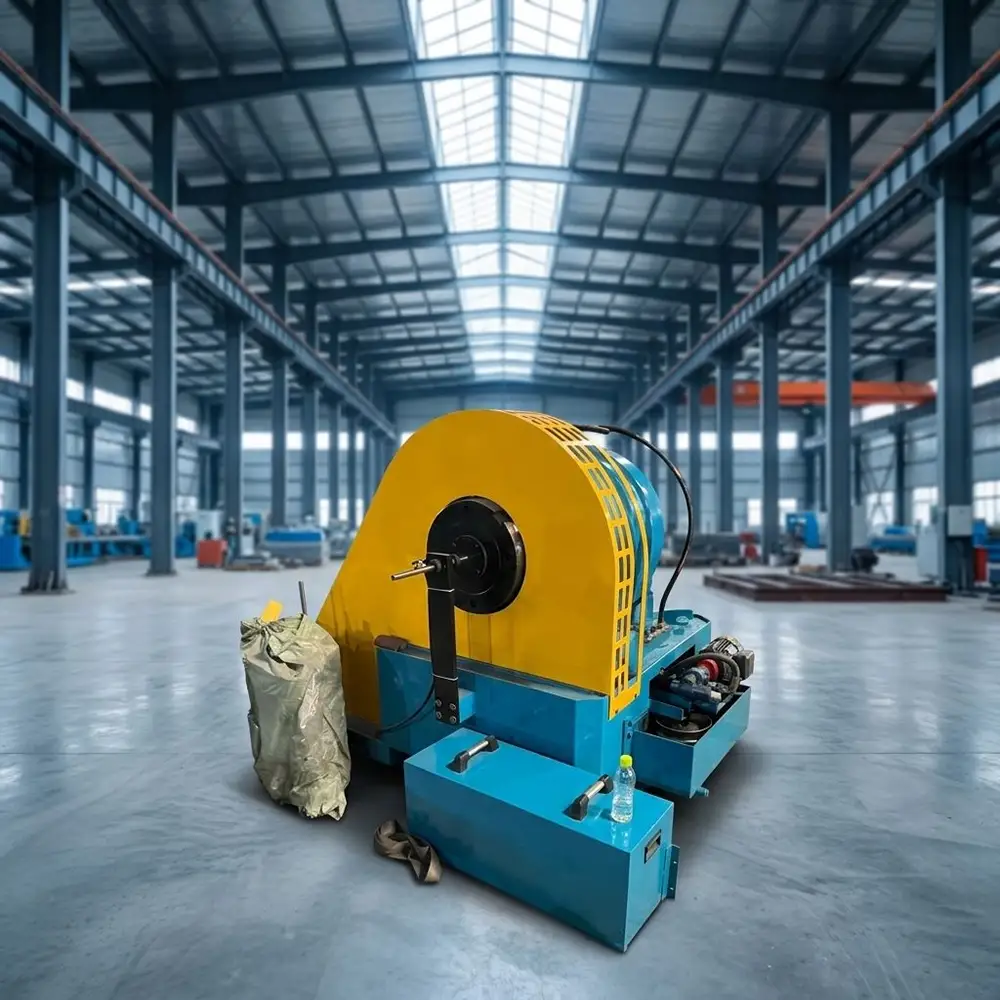
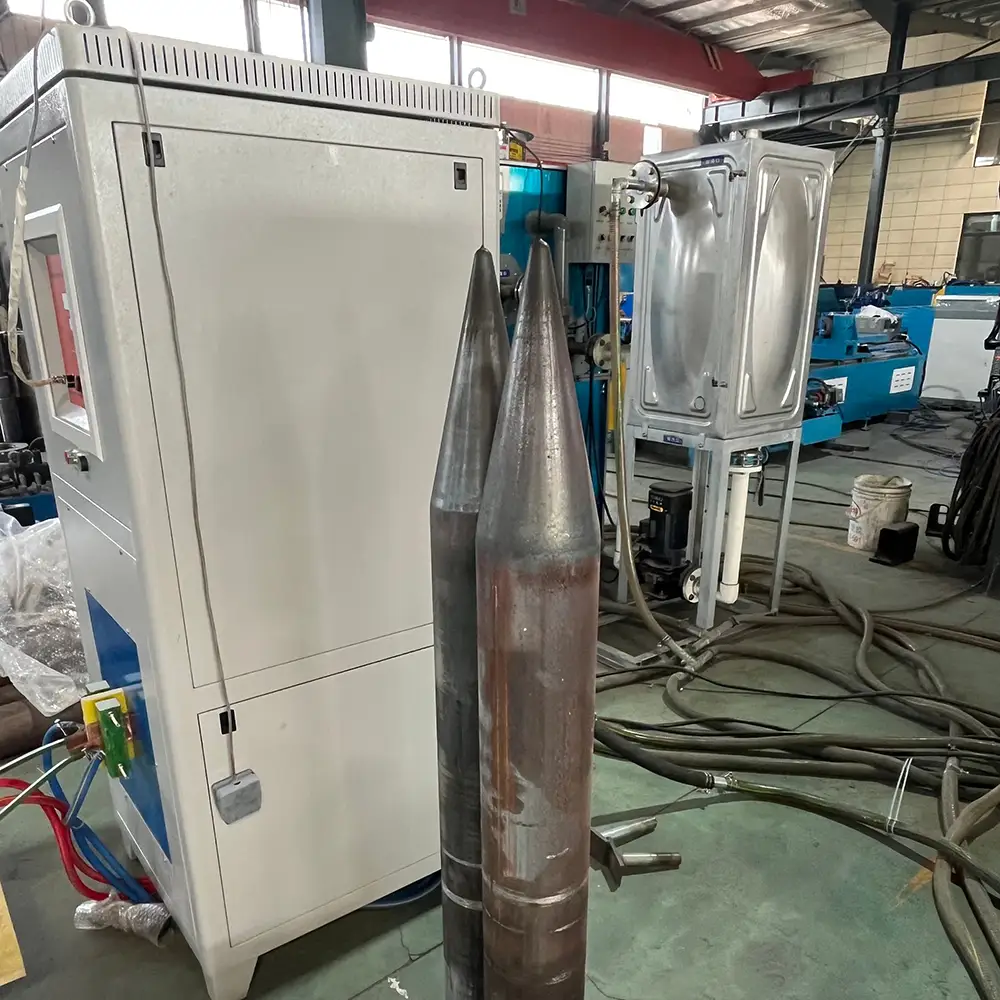
Rotary extrusion forming, uniform smooth taper surface, less burrs, no secondary polishing required
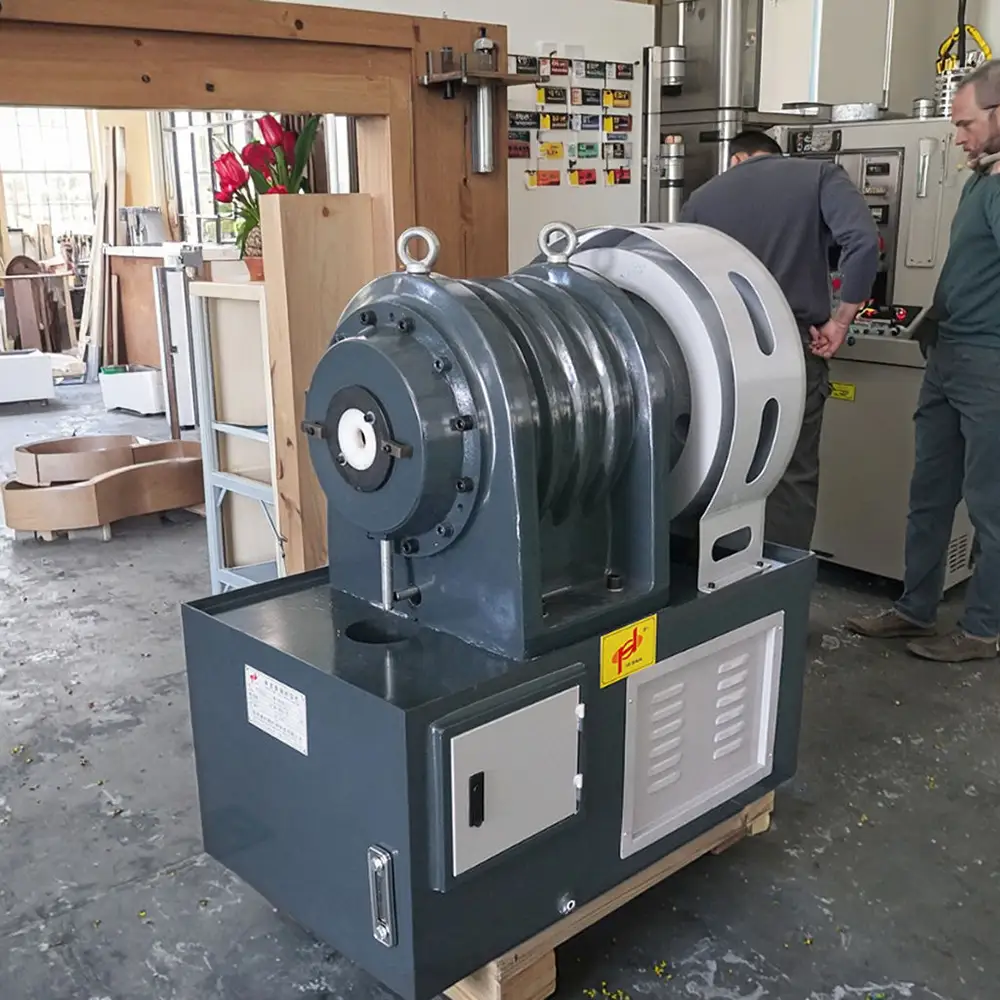
Quick mold change, supports round tubes of different diameters & wall thickness for ground screw
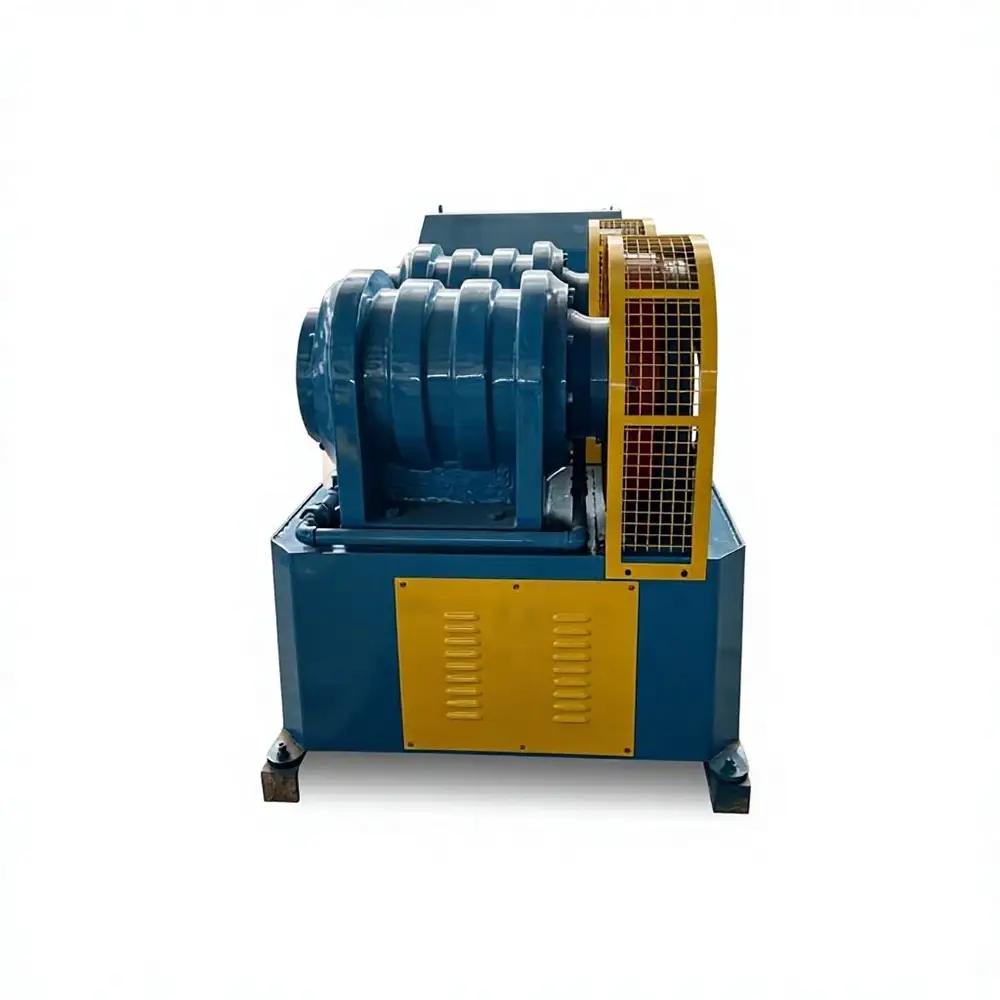
Hydraulic driving system, powerful extrusion force, stable running, low failure rate
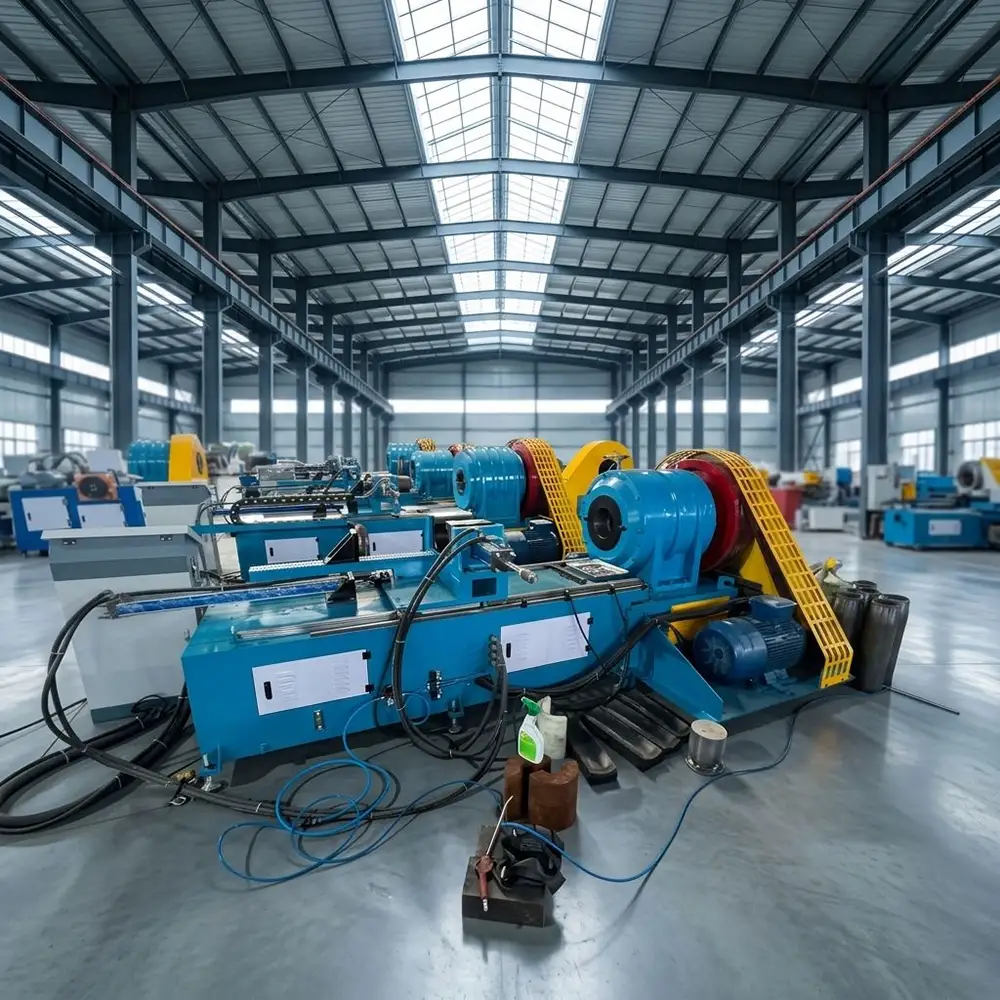
Fast forming speed, suitable for mass production, improve overall production capacity
Thickened heavy-duty frame, robust transmission structure, anti-deformation for long-time continuous work
Specially for tube pointing of solar ground screw, meets the demand for underground installation
Semi-Automatic Round Tube End Pointing Tapering Machine for Solar Ground Screw and Helical Pile Processing
The Semi-Automatic Round Tube End Pointing Tapering Machine is a specialized metal tube processing solution designed for manufacturers producing solar ground screws,helical piles,ground anchors,and other tubular foundation components. The machine is designed to perform controlled tube-end pointing,tapering,and forming operations on suitable round metal tubes.
Solar ground screws and helical piles often require specially formed tube ends so that the finished product can be installed into soil more effectively. A tapered or pointed tube end can provide a suitable transition for subsequent forming,welding,or assembly with helical plates and other foundation components.
The semi-automatic design provides a practical balance between mechanical forming and operator-controlled workpiece handling. Depending on the machine configuration,the operator can load the round tube,position it in the fixture,and initiate the forming cycle while the machine performs the programmed end-processing operation.
The actual tube diameter range,wall thickness,pointing geometry,and tapering capacity depend on the machine model,tooling,and material specifications.
Tube End Pointing Process
Tube end pointing is an important forming operation for ground screw and helical pile production. Instead of simply cutting the end of a tube,the pointing process reshapes the end section to create a tapered or pointed profile.
This can be useful for foundation products that need a reduced leading section before installation or additional fabrication.
The finished point can be created through suitable forming tooling and controlled mechanical force. Depending on the design,the process may involve progressive forming,reduction,pressing,or other tube-end shaping methods.
The exact shape should be determined according to the finished solar ground screw or helical pile drawing. Different installation conditions may require different point lengths,angles,and end diameters.
Tube End Tapering
Tube end tapering creates a gradual reduction in the diameter of the tube end. For ground screw manufacturing,this can provide a transition between the main tubular body and the leading section of the pile.
Tapered tube ends may be used for:
Solar Ground Screws
Helical Piles
Ground Anchors
Earth Anchors
Foundation Piles
Steel Screw Piles
Agricultural Ground Anchors
Fence Foundation Systems
Temporary Foundation Systems
Tubular Soil Anchors
The taper geometry depends on the forming die and machine configuration. Customers should provide the required taper angle,final end diameter,and taper length when requesting a machine quotation.
Solar Ground Screw Manufacturing
Solar ground screws are commonly used as foundation components for ground-mounted solar photovoltaic structures and other outdoor installations. Their tubular bodies and helical plates are designed to provide support in suitable soil conditions.
Tube-end processing is one stage within the broader ground screw manufacturing process. Depending on the product design,the tube may first be cut to length,followed by end pointing,tapering,helical plate welding,and other fabrication operations.
The tube pointing machine can therefore be integrated into a larger production workflow.
A typical production sequence may include:
Round Tube Cutting
Tube End Preparation
Tube End Pointing
Tube Tapering
Helical Plate Welding
Bracket Or Component Welding
Surface Treatment
Inspection And Packaging
The exact production sequence depends on the ground screw design and manufacturer's process.
Helical Pile Tube Processing
Helical piles use a tubular or shaft structure combined with helical plates to transfer loads into suitable ground conditions. Depending on the product design,the tubular shaft may require a specially formed leading end.
The semi-automatic tube end pointing machine can be used to prepare suitable round tubes before additional pile components are welded or assembled.
For manufacturers producing different helical pile models,the forming tooling can potentially be changed according to tube size and finished-end geometry.
The machine should be selected based on the actual pipe material,diameter,wall thickness,and required finished profile rather than relying only on a general product name.
Round Tube Processing
The machine is designed around round metal tubes. Common tube materials may include carbon steel and other suitable structural metals.
Potential workpieces include:
Carbon Steel Tubes
Mild Steel Pipes
Structural Steel Tubes
Round Steel Pipes
Thick-Wall Tubes
Foundation Tubes
Ground Screw Shafts
Helical Pile Shafts
The material grade and mechanical properties should be considered when selecting the forming process. Higher-strength steel may require different forming forces or tooling from standard mild steel.
Semi-Automatic Operation
The semi-automatic configuration can reduce repetitive manual forming work while retaining operator control over loading and unloading.
A typical cycle may involve placing the tube into a dedicated fixture,aligning the tube end,activating the machine cycle,and removing the formed component after processing.
The actual sequence depends on the machine's control system and mechanical design.
Semi-automatic operation can be particularly practical for manufacturers with medium production volumes or multiple ground screw models that require frequent product changes.
For higher-volume production,the machine may also be combined with tube feeding,automatic loading,and unloading systems if supported by the machine design.
Forming Tooling
Tooling is a key factor in tube pointing and tapering. The forming die determines the final geometry of the tube end and must be matched to the tube dimensions and material.
Different tooling can be developed for:
Pointed Tube Ends
Tapered Tube Ends
Conical Tube Ends
Reduced Tube Ends
Ground Screw Leading Ends
Helical Pile Tube Ends
Custom Foundation Tube Profiles
When requesting a quotation,customers should provide tube outside diameter,wall thickness,material grade,finished point length,final diameter,and taper angle.
Finished product drawings or samples are strongly recommended for tooling evaluation.
Production Consistency
A dedicated tube pointing machine can help improve consistency compared with completely manual tube-end forming. Controlled positioning and repeatable machine cycles can help produce more uniform end profiles.
For ground screw and helical pile production,consistent tube-end geometry can be important because the formed end becomes part of the overall foundation component.
However,actual dimensional accuracy depends on material consistency,tooling quality,machine rigidity,workpiece alignment,and forming parameters.
Manufacturers should establish inspection procedures appropriate for the finished product.
Integration With Ground Screw Production
The machine can be integrated into a broader solar ground screw or helical pile production line.
It may be used alongside:
Tube Cutting Machines
Pipe Straightening Equipment
Tube Welding Machines
Helical Plate Welding Machines
Pipe Drilling Machines
Surface Treatment Equipment
Powder Coating Systems
Galvanizing Processes
Inspection Equipment
This allows manufacturers to organize tube preparation and forming into a more structured production workflow.
Maintenance And Safety
Tube-end forming involves significant mechanical force and moving components. Operators should follow the manufacturer's instructions and applicable workplace safety requirements.
Routine maintenance may include checking forming dies,fixtures,hydraulic or mechanical components,fasteners,and lubrication points. Forming tooling should be inspected regularly for wear or damage.
The tube should be positioned securely before the forming cycle begins. Operators should keep hands away from moving tooling and use appropriate personal protective equipment.
Any guards,emergency-stop systems,and electrical safety features should be maintained according to the machine configuration and local requirements.
OEM And Custom Ground Screw Processing Solutions
Solar ground screw and helical pile manufacturers may use different tube sizes,pointing shapes,and foundation designs. The machine can therefore be customized around specific production requirements.
OEM and ODM options may include custom forming dies,fixtures,control systems,workpiece supports,automatic feeding,and other application-specific features.
Customers should provide the complete tube specifications and finished ground screw drawing when requesting a quotation. This allows the manufacturer to evaluate the appropriate forming method and tooling.
For machinery distributors and industrial buyers,the machine can also be supplied as part of a customized ground screw or helical pile production solution.
Why Choose Us
Tube End Pointing
Designed for controlled pointing and shaping of suitable round metal tube ends.
Tube End Tapering
Supports tapered and conical tube-end profiles for solar ground screws and helical piles.
Solar Ground Screw Applications
Suitable for tube preparation within ground screw manufacturing workflows.
Helical Pile Processing
Designed for suitable tubular pile shafts requiring formed or tapered leading ends.
Semi-Automatic Operation
Provides a practical combination of machine-controlled forming and operator-managed workpiece handling.
Custom Forming Tooling
Dies and fixtures can be developed according to tube dimensions and finished-end geometry.
Production Flexibility
Suitable for manufacturers processing different ground screw and pile specifications.
OEM And ODM Support
Machine configuration can be adapted for solar foundation manufacturers,metal fabricators,distributors,and industrial buyers.
FAQs
1. What is a tube end pointing machine?
A tube end pointing machine is designed to reshape the end of a round metal tube into a pointed,tapered,or reduced profile using dedicated forming tooling.
2. What is this machine used for?
It is designed for suitable round tube applications,including solar ground screws,helical piles,ground anchors,and other tubular foundation components.
3. Can it make solar ground screw tube ends?
Yes. The machine can be configured with suitable tooling to form tube ends used in solar ground screw production.
4. Can it process helical pile tubes?
Yes. Suitable tubular pile shafts can be processed when their material,diameter,wall thickness,and end geometry match the machine configuration.
5. What is the difference between pointing and tapering?
Pointing generally creates a pointed or strongly reduced tube end,while tapering creates a gradual reduction in diameter over a defined section.
6. Is the machine fully automatic?
This model is described as semi-automatic. The exact loading,forming,and unloading sequence depends on the machine configuration.
7. What materials can be processed?
Suitable carbon steel,mild steel,and other compatible structural metal tubes can be processed depending on the forming force and tooling.
8. Can different tube sizes be processed?
Yes,provided the tube dimensions are within the machine's operating range. Different tube sizes may require different forming dies.
9. Can custom pointing dies be made?
Yes. Custom dies can be developed according to the required point shape,taper angle,final diameter,and tube specifications.
10. Can the machine be integrated into a solar ground screw production line?
Yes. It can potentially be integrated with tube cutting,welding,helical plate welding,surface treatment,and other production equipment.
11. What affects pointing quality?
Tube material,diameter,wall thickness,forming force,die geometry,workpiece alignment,and machine configuration all affect the finished tube-end shape.
12. What information is needed for a quotation?
Provide tube material and grade,outside diameter,wall thickness,tube length,point length,final end diameter,taper angle,production volume,and finished product drawings or samples.
Prev:
Semi-Automatic End Pointing Machine for Ground Screw Pile Processing
Next:
Rotary Pipe Shrinking Machine Tube End Tapering Swaging Machine for Furniture Decorative Metal Tube Table Chair Leg Form
TAG:
Pipe End Processing Machine,
Automatic Tube End Forming Machine,
Tube End Processing Machine,
Industrial Tube End Forming Machine,
Tube End Forming Equipment,
Pipe End Reducing Machine,
Pipe Necking Machine,
Tube Necking Machine,
Tube End Tapering Machine,
Pipe End Tapering Machine,
Tube Tapering Machine,
Tube End Reducing Machine,
Tube End Shrinking Machine,
Pipe End Shrinking Machine,
Tube End Forming Machine,
Pipe End Forming Machine,
Hydraulic Tube End Forming Machine,
Steel Tube Tapering Machine,
Pipe End Shaping Machine,
Tube End Shaping Machine,
Metal Tube Tapering Machine,
Steel Tube Forming Machine,
Metal Tube End Forming Machine,
Metal Tube Forming Equipment,
Mild Steel Tube Forming Machine,
Semi-Automatic Tube Forming Machine,
Tube Tapering Equipment,
Round Tube Tapering Machine,
Round Tube Forming Machine,
Tube Pointing Machine,
Related Category:
Semi-Automatic Tube End Pointing Machine,Round Tube End Pointing Machine,Tube End Tapering Machine,Solar Ground Screw Ma China, suppliers, manufacturers, factory, customized, wholesale, quotation, made in China