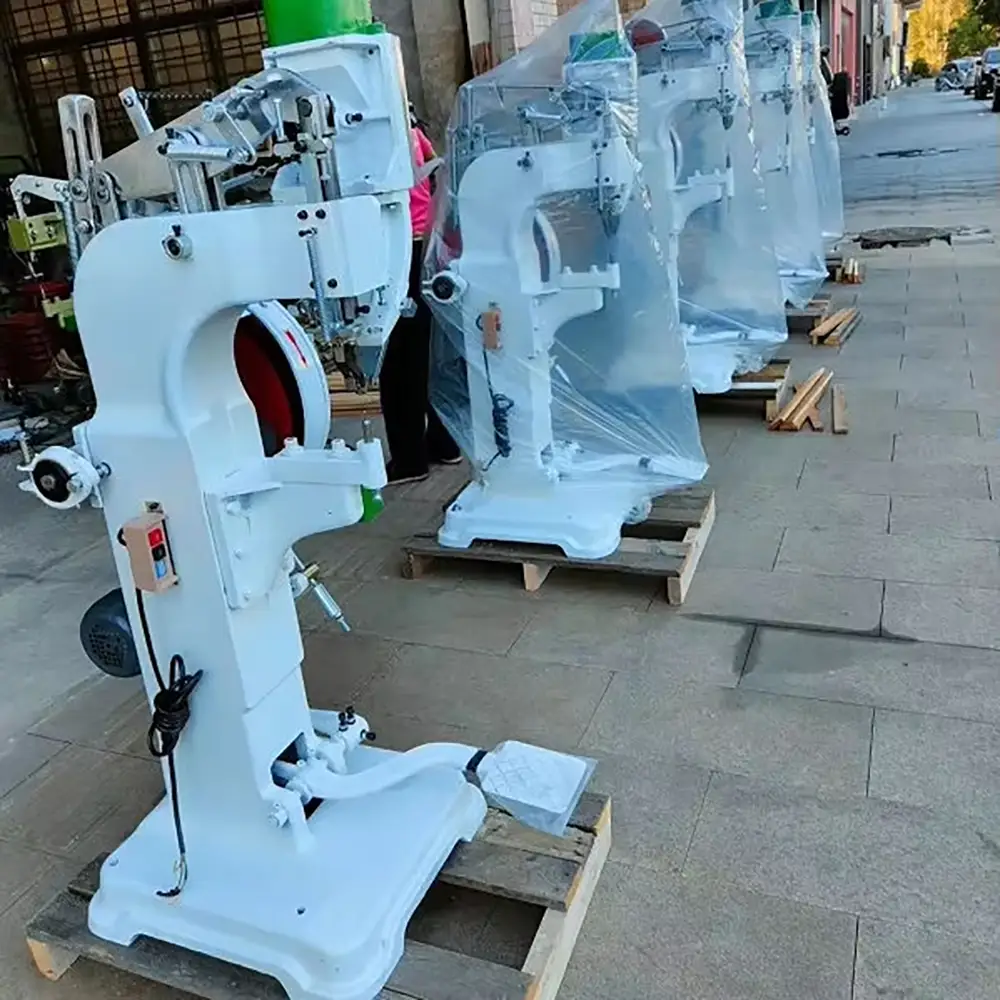
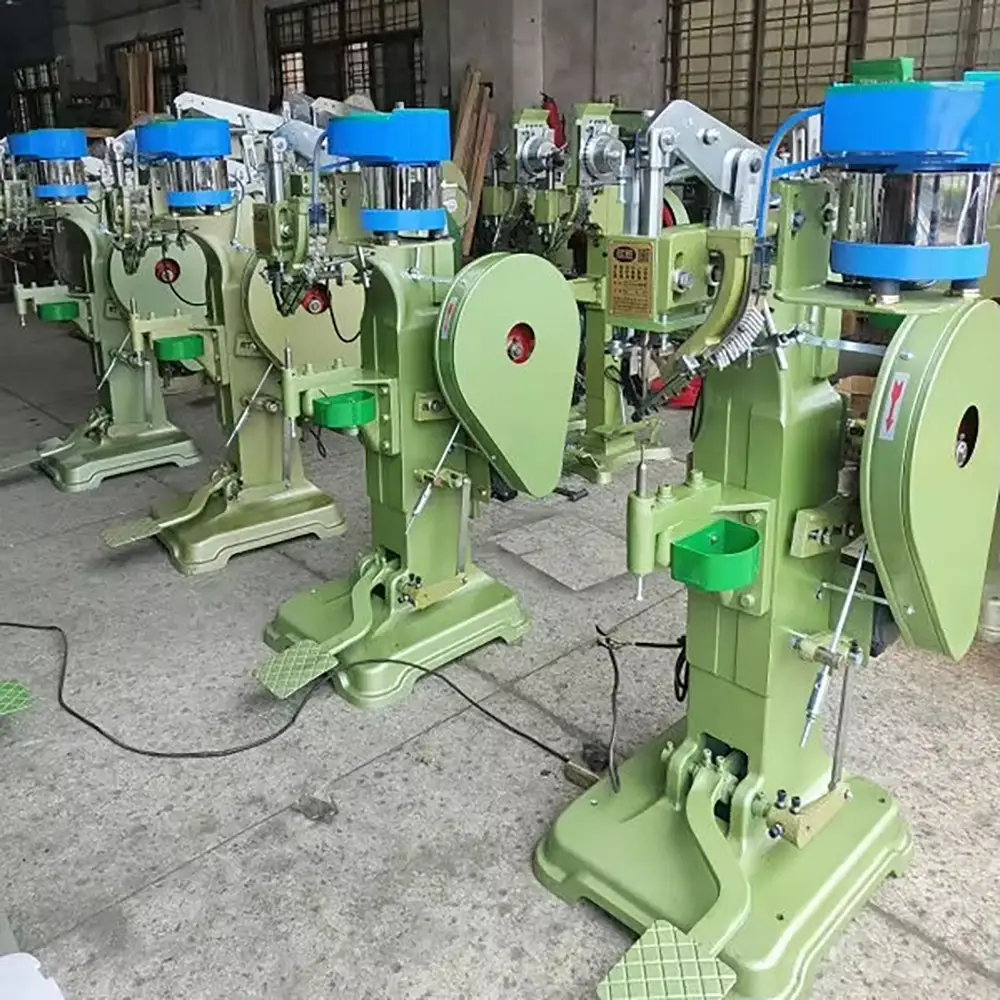
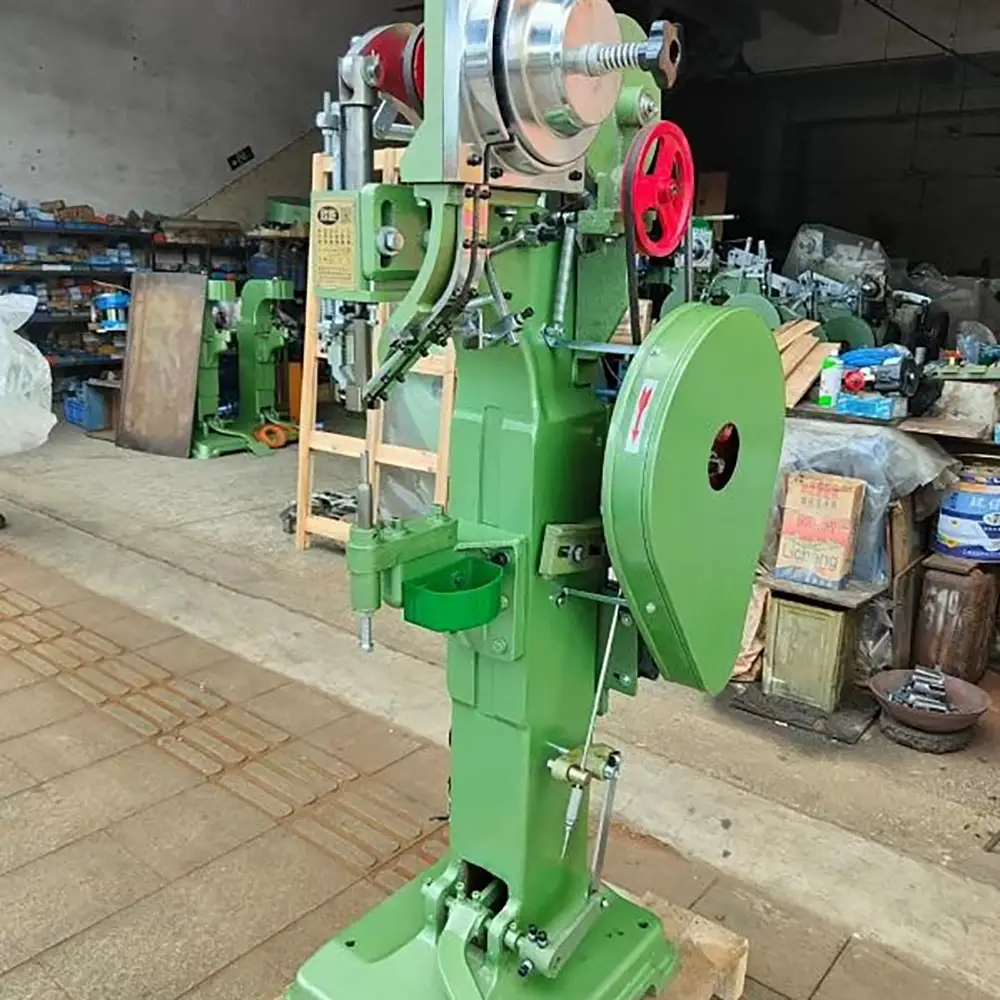
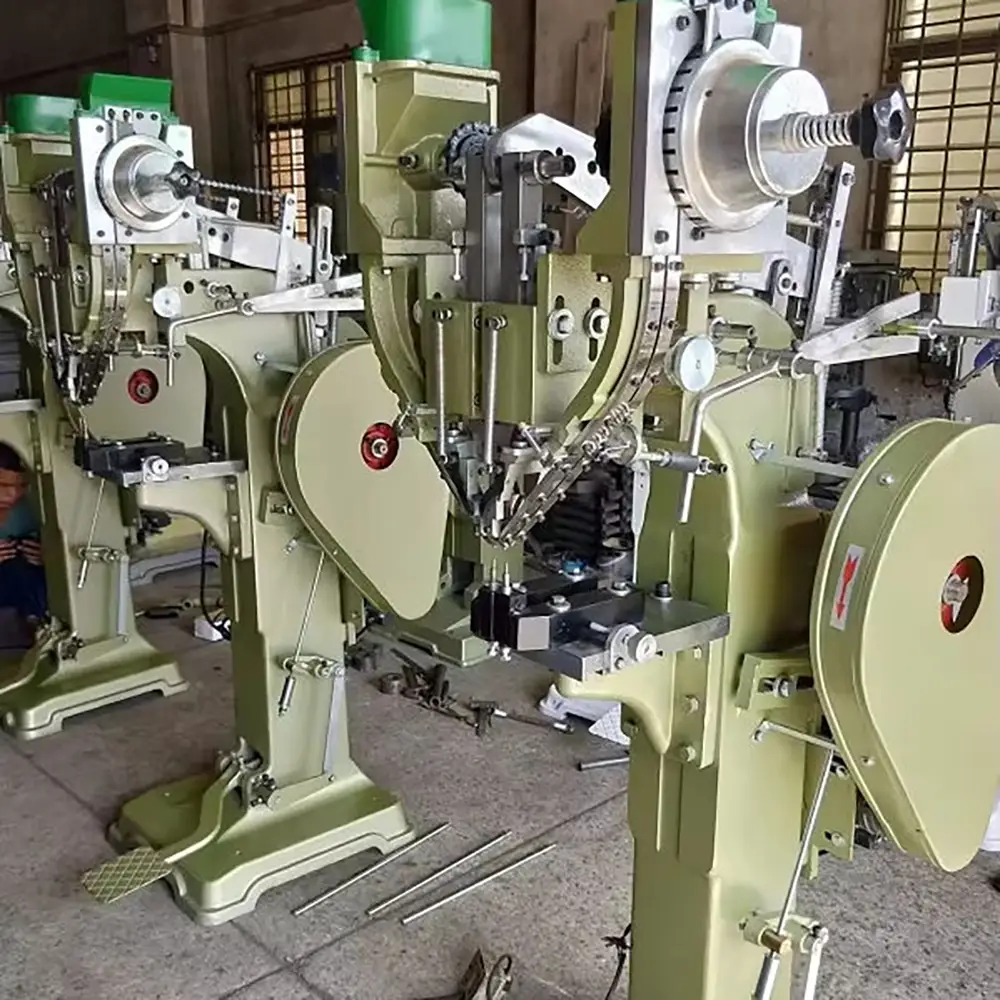
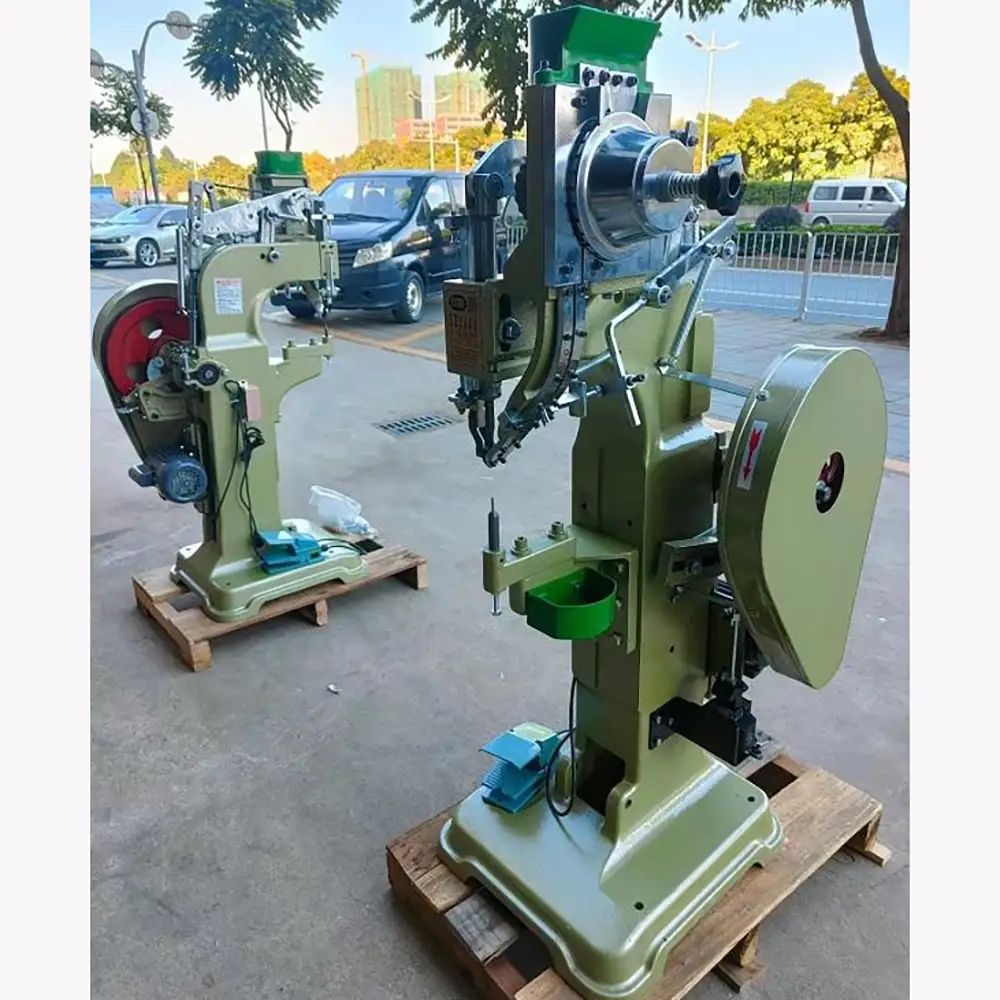
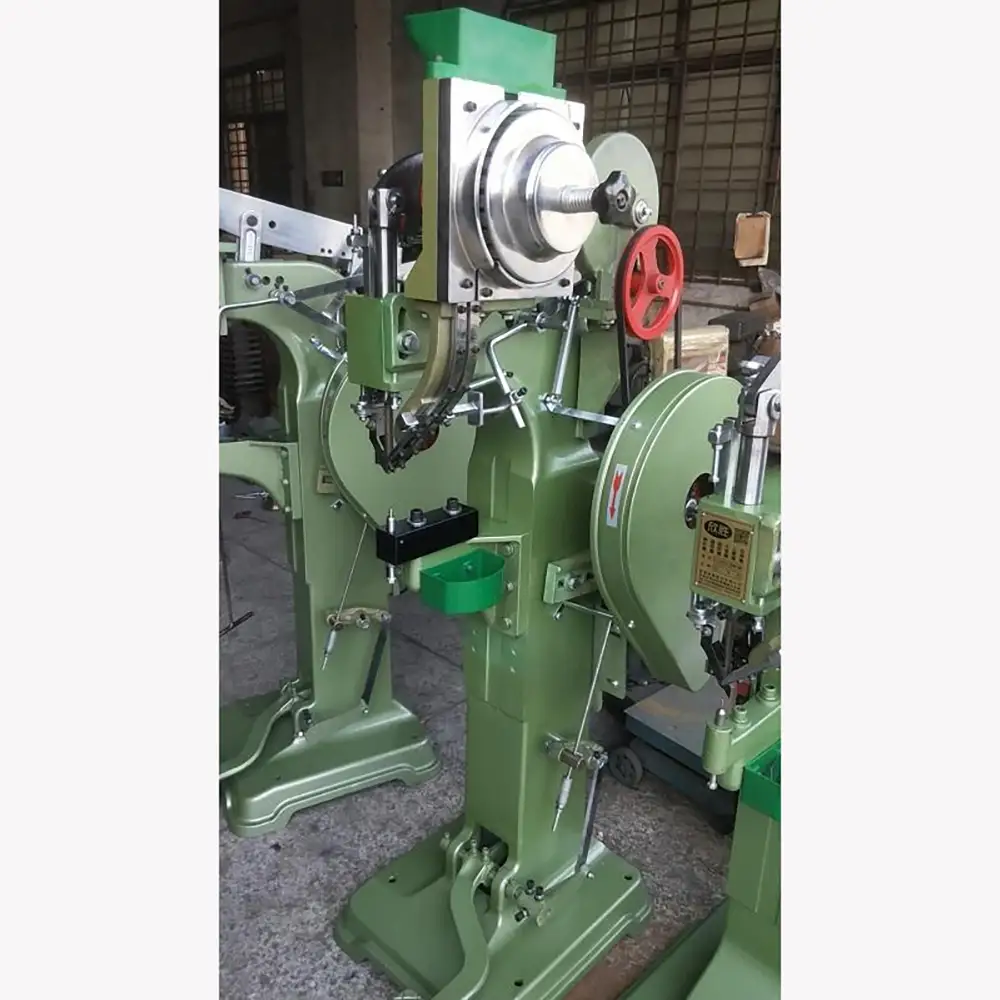
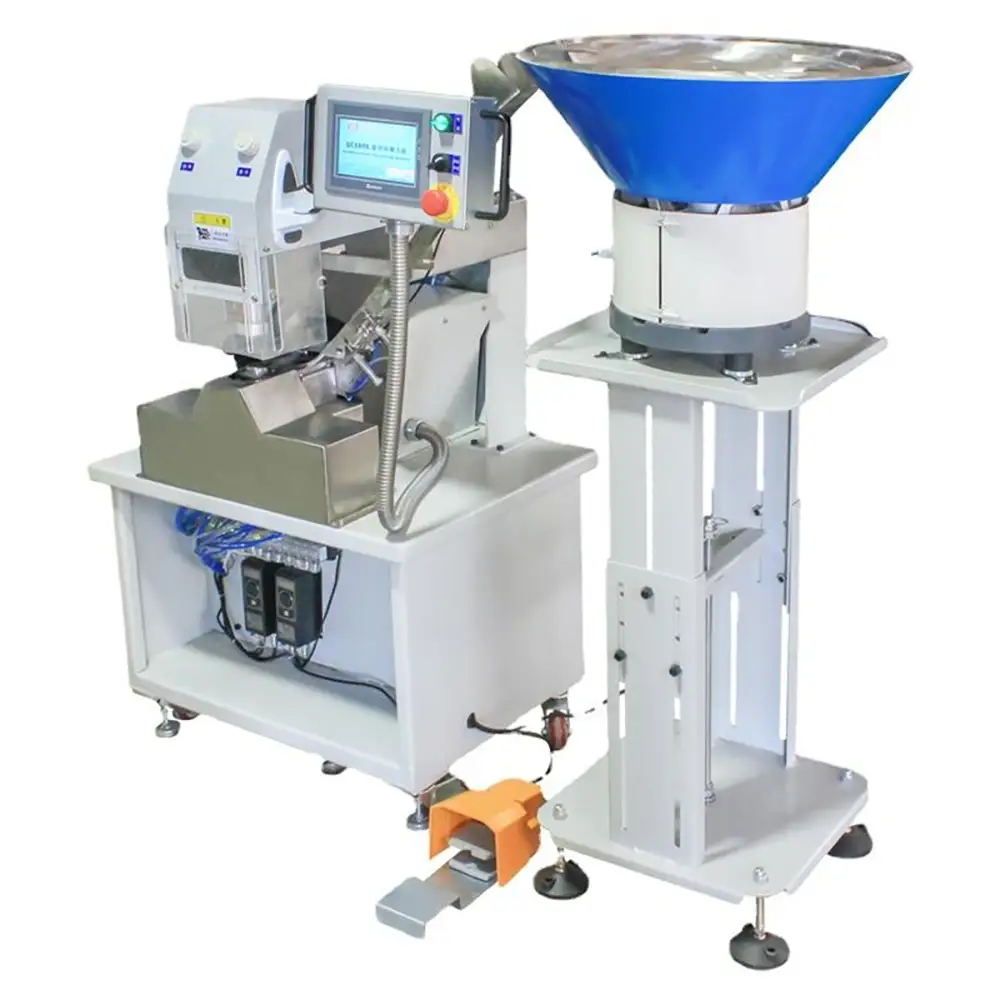
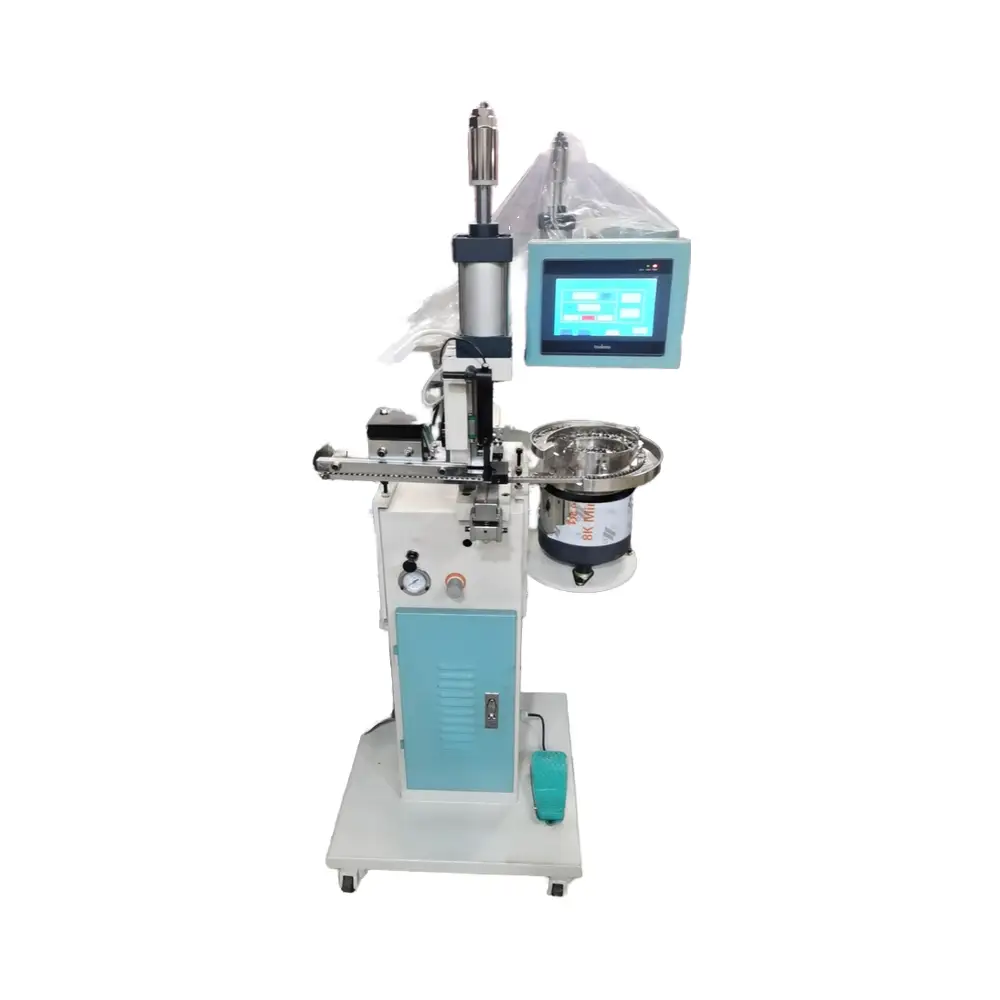
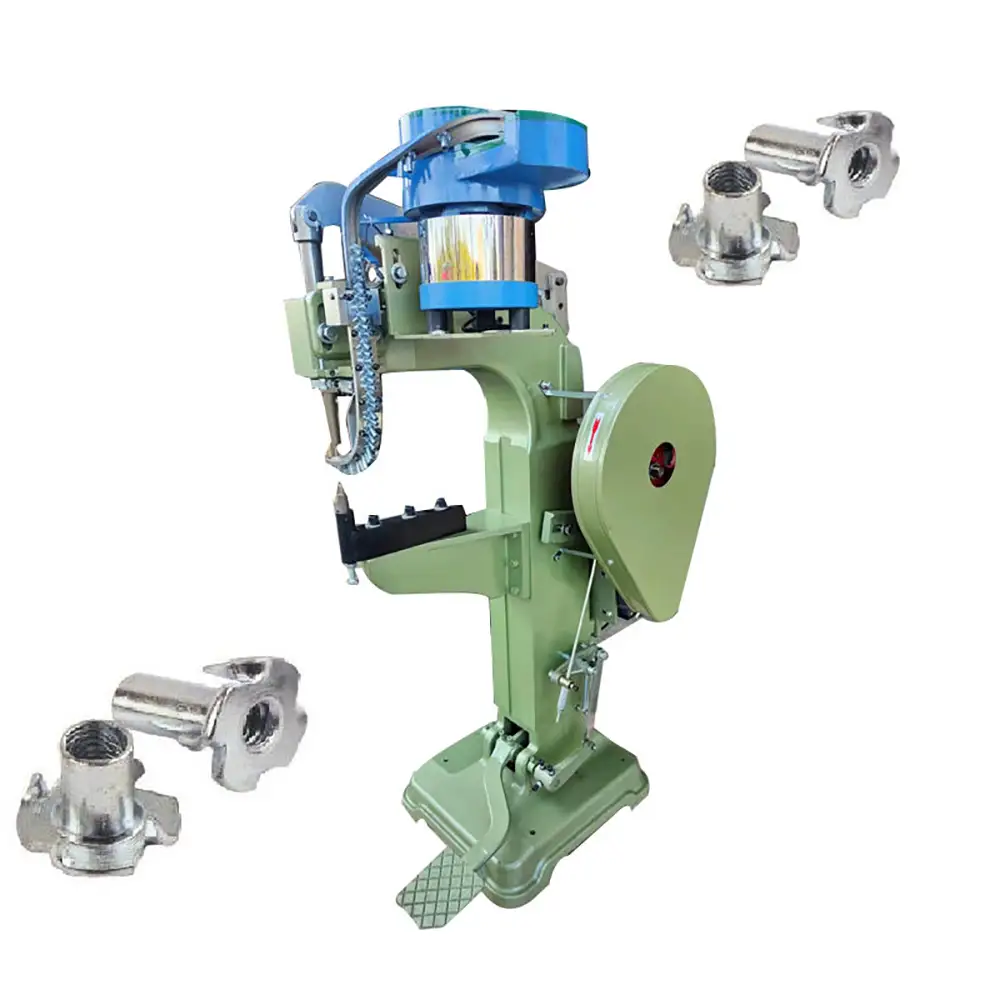
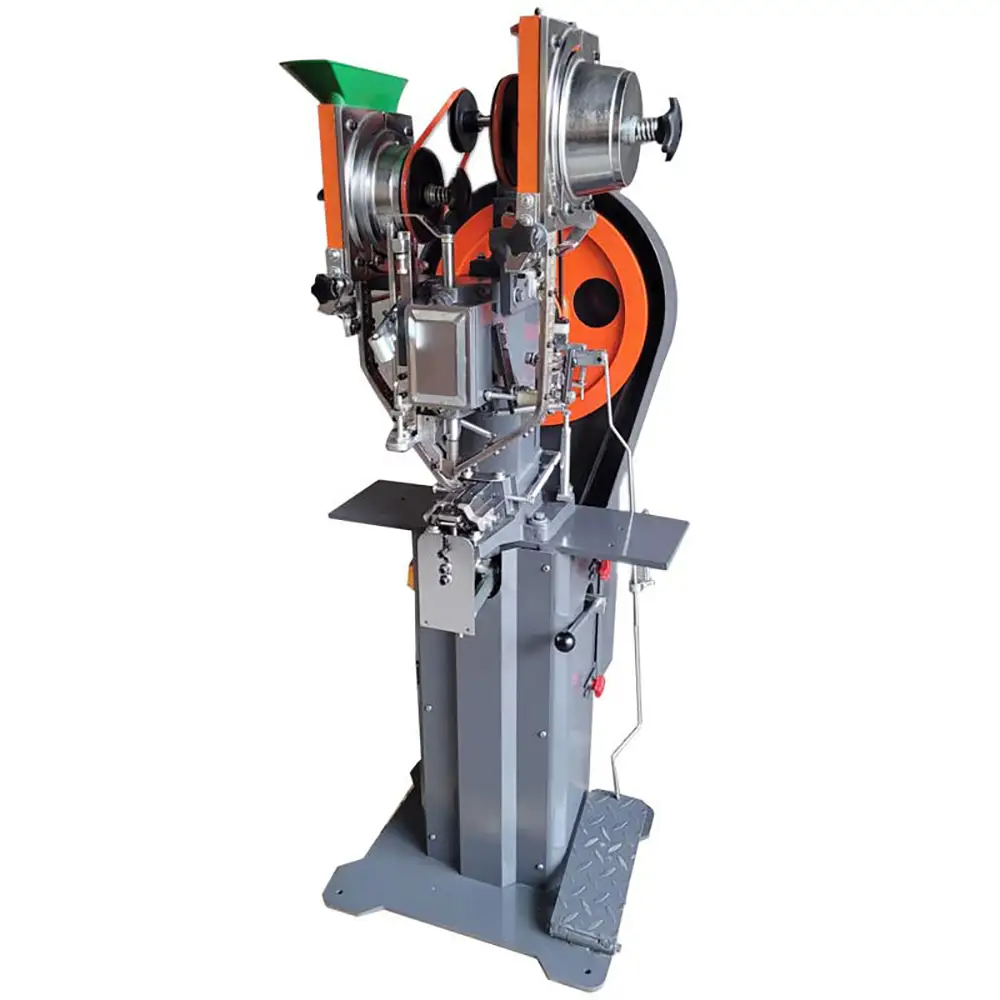
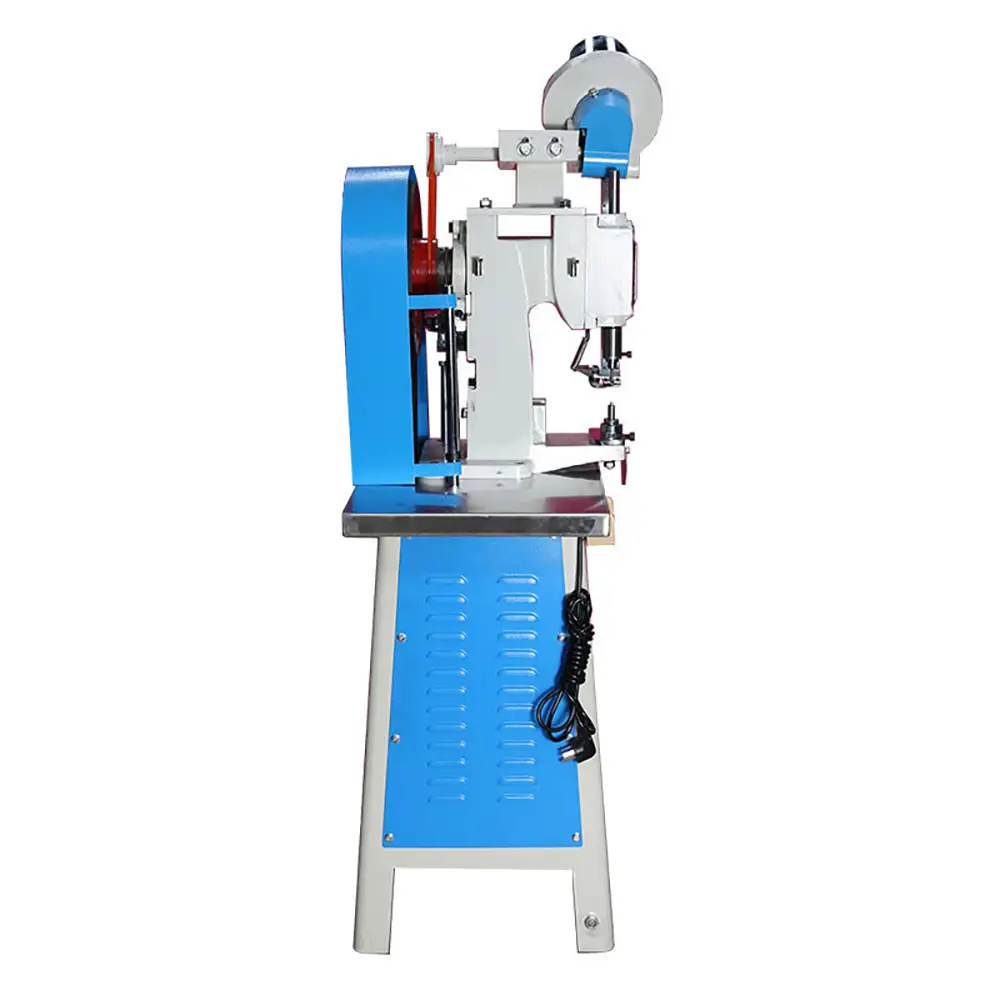
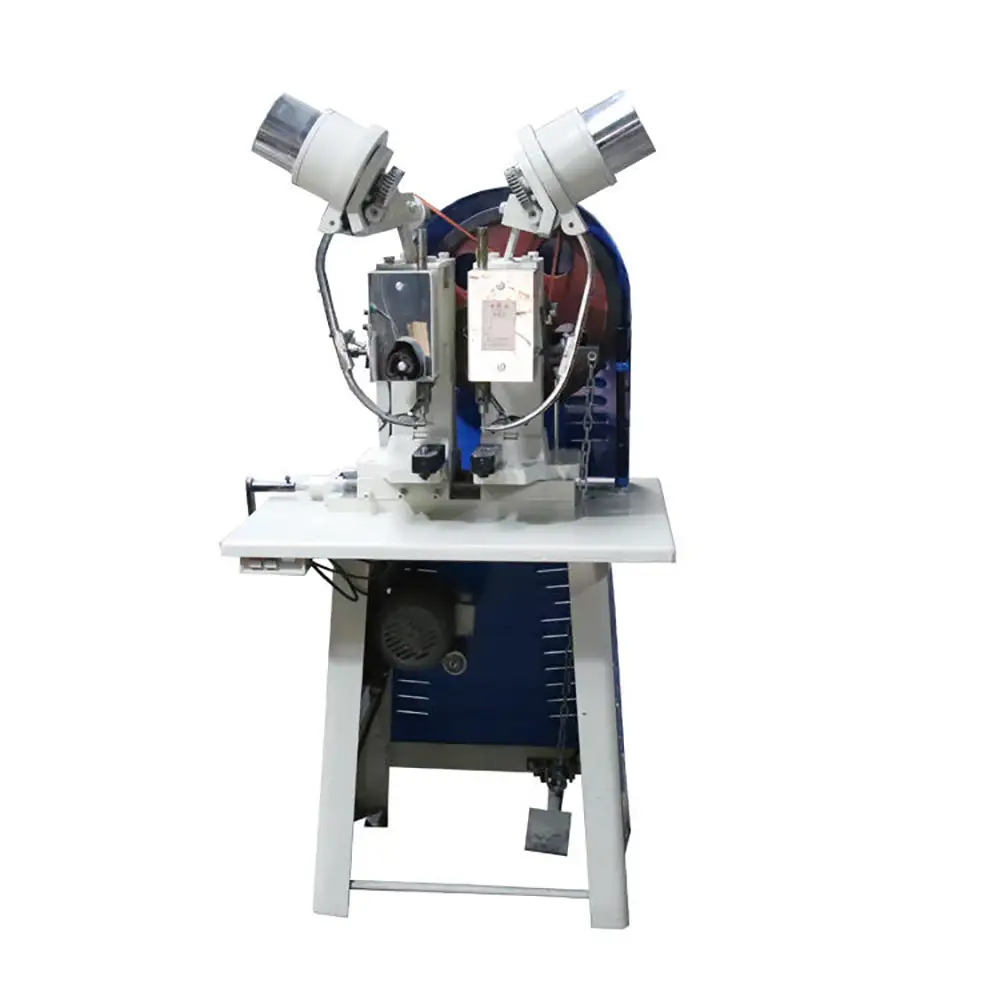
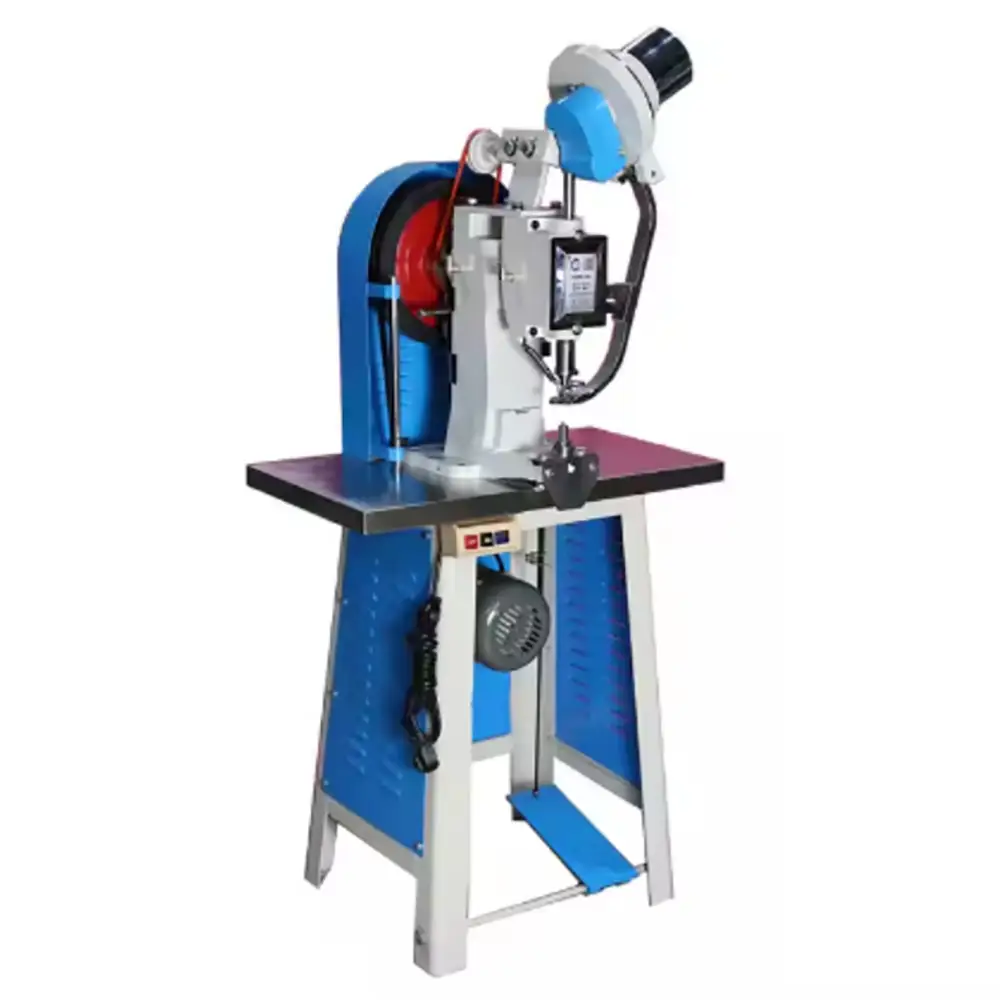
Automatic Electric Riveting Machine
1 Structure characteristics:
Suitable for nailing and riveting the nail eye of midsole, paper box, leather, paper bag, gift box, label, punched belt, leather
parts, etc. Simple operation, reliable performance. High efficiency.
Widely used in handbag, carton lifting ring production, file bag, document bag pressure ring production, confidential document,
ordinary document binding, card anti-counterfeiting binding, hangtag hole ring production, anti-counterfeiting packaging box
sealing bag, clothing shoes and hats, leather products, luggage mattress air hole eyelet buckle production, etc.;
2 Features:
(1): Automatically feed rivets;
(2) Accurate positioning of perforation and good nailing effect;
(3): Distance between two ends can be adjusted, rivet at the same time, which greatly improves the work efficiency;
(4): Operation is simple and convenient, which greatly improves the production efficiency;ni Excavator delivers power and performance in a compact size to help you work in the tightest applications. Its ability to fit through a narrow doorway makes it an excellent machine for indoor demolition work.
|
Throat depth |
255mm |
|
|
Riveting length |
5-45mm |
|
Power |
550w |
|
Rivet diameter |
1-8mm |
|
voltage |
380v |
|
|
|
|
Rivet length |
3.0-8mm |
|
|
|
|
Motor |
1450RPM |
|
|
|
|
weight |
280 KG |
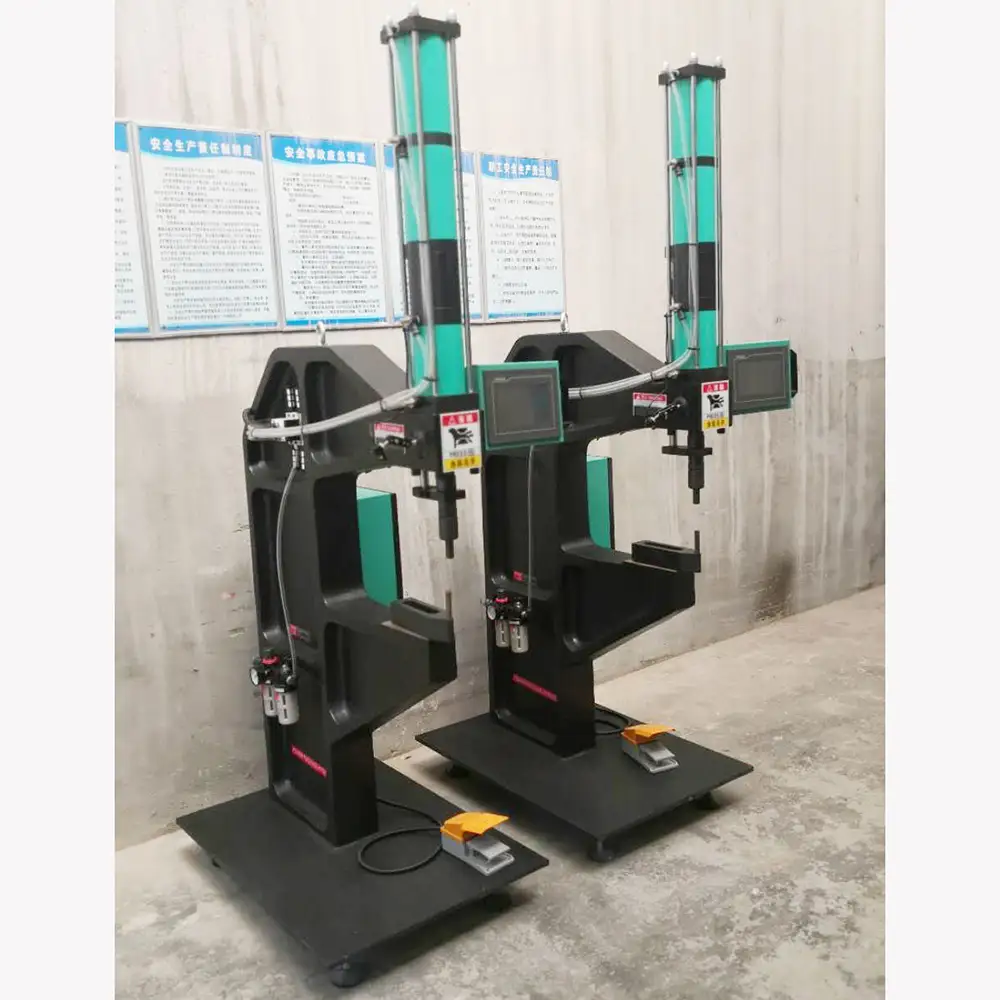
Semi-Automatic Riveting and Eyelet Punching Machine
The Semi-Automatic Riveting Machine 1 MM 2 MM 3 MM 4 MM 5 MM 6 MM 7 MM 8 MM Diameter Rivets Eyelet Punching Machine is a versatile industrial fastening solution designed for punching holes and installing compatible rivets, eyelets, and other metal fasteners. With a semi-automatic operating concept, the machine is suitable for manufacturers looking to improve production efficiency while maintaining operator control over workpiece positioning.
The machine can be configured for compatible rivets and eyelets ranging from approximately 1 mm to 8 mm in diameter, depending on the selected tooling, die, punch, rivet structure, and machine configuration. The actual usable diameter range should be confirmed according to the specific fastener and application.
Riveting and eyelet installation are common processes in leather goods, footwear, garments, bags, belts, luggage, textile products, packaging, stationery, and general hardware manufacturing. A dedicated machine can provide more consistent fastening results compared with manual hand tools.
Semi-Automatic Riveting System
The semi-automatic design provides a balance between manual flexibility and machine-assisted production. The operator can position the workpiece and fastener while the machine performs the controlled punching or riveting operation.
This working method is useful for manufacturers producing different products or small and medium batches where fully automatic feeding may not always be necessary.
A typical operating process includes:
Position the workpiece.
Align the required fastening location.
Place the rivet or eyelet.
Activate the machine cycle.
Punch, form, or set the fastener.
Remove the finished workpiece.
The actual operating sequence depends on the machine configuration and tooling.
1 mm to 8 mm Rivet Applications
The machine can be configured for different compatible rivet diameters within the 1 mm to 8 mm range.
Smaller rivets may be used for lightweight products, decorative applications, electronics-related components, garment accessories, and small leather goods. Medium-size rivets are widely used in bags, belts, footwear, luggage, and general hardware.
Larger rivets may be suitable for thicker leather, heavy-duty textile products, industrial components, and other applications requiring stronger mechanical fastening.
Because rivet geometry varies considerably, the diameter alone does not determine machine compatibility. Rivet length, head design, material, shank structure, workpiece thickness, and finished forming requirements must also be considered.
Eyelet Punching Machine
The Eyelet Punching Machine is designed for applications where a hole needs to be created before an eyelet is installed.
Eyelets are widely used for:
Shoes
Boots
Bags
Backpacks
Leather goods
Garments
Canvas products
Tarpaulins
Textile products
Fashion accessories
The punching tool creates an opening that corresponds to the eyelet dimensions. The eyelet is then positioned and mechanically formed to secure it to the workpiece.
Correct punch and die selection is essential for achieving a clean hole and reliable eyelet installation.
Eyelet Riveting and Setting
Eyelet setting requires controlled forming of the eyelet so that it securely grips the surrounding material.
The final result can depend on:
Eyelet diameter
Eyelet length
Eyelet material
Flange shape
Workpiece thickness
Hole diameter
Punch design
Setting die
Machine force
Workpiece positioning
The semi-automatic riveting machine provides a controlled mechanical process for repetitive eyelet installation.
For delicate materials such as thin leather, coated fabric, or lightweight textiles, sample testing is recommended to determine the appropriate tooling and operating parameters.
Rivet Setting for Leather and Synthetic Leather
Leather goods frequently use rivets as both structural and decorative hardware. Belts, handbags, wallets, luggage, straps, shoes, and accessories may require repeated rivet installation.
The machine can be configured with suitable punches and dies for compatible leather and synthetic leather applications.
Compared with manual riveting tools, a dedicated machine can help provide more consistent positioning and forming quality during batch production.
Different leather thicknesses may require different tooling and machine settings. Manufacturers should test the actual leather and rivet combination before production.
Garment and Textile Riveting
Rivets and eyelets are widely used in apparel and textile products. Denim jeans, jackets, workwear, uniforms, bags, outdoor products, and fashion accessories may all require metal hardware.
The machine can be used for compatible garment and textile applications where the required rivet or eyelet falls within the supported tooling range.
For fabric products, maintaining the correct hole size and position is particularly important. Excessive punching force or incorrect tooling can damage the material.
A suitable fixture can help stabilize the product during repetitive operations.
Shoe and Footwear Eyelet Installation
Footwear manufacturers commonly use eyelets for shoelaces, decorative elements, and reinforcement points.
The semi-automatic machine can support compatible shoe eyelet punching and setting applications.
For shoes and boots, workpiece geometry can vary significantly. Customized fixtures may therefore be useful for maintaining consistent positioning on different shoe models.
Potential applications include:
Sneakers
Work boots
Casual shoes
Dress shoes
Safety footwear
Outdoor footwear
Sports shoes
Canvas shoes
The correct tooling should match the footwear material and eyelet specifications.
Bag, Belt and Luggage Applications
Bags, belts, backpacks, luggage, and straps often contain numerous fastening points. Rivets and eyelets may be used to secure handles, straps, buckles, decorative components, and reinforcement areas.
The semi-automatic machine allows the operator to control the workpiece position while using machine-assisted riveting or punching.
This is particularly useful for products with varying shapes or designs where a fully automatic production line may not be necessary.
Flexible Tooling and Dies
Different rivet and eyelet sizes require corresponding tooling.
The machine can be configured with application-specific:
Rivet Punches
Eyelet Punches
Rivet Setting Dies
Eyelet Setting Dies
Forming Heads
Positioning Fixtures
Workpiece Guides
Interchangeable Tooling
For manufacturers processing multiple fastener sizes, interchangeable tooling can provide greater production flexibility.
The exact tooling configuration should be determined according to the customer's rivet or eyelet samples.
Consistent Riveting Quality
Consistency is one of the most important factors in industrial fastening.
A properly configured machine can help maintain consistent:
Hole Position
Rivet Position
Eyelet Position
Forming Shape
Fastener Alignment
Finished Appearance
Consistent positioning is especially important for products where multiple rivets or eyelets must follow a defined pattern.
The machine can also reduce variation caused by repetitive manual hand pressing.
Improve Production Efficiency
For manufacturers processing large numbers of rivets and eyelets, manual installation can become repetitive and time-consuming.
A semi-automatic riveting machine can reduce operator effort while maintaining flexibility.
Potential production benefits include:
Faster repetitive fastening
Reduced manual pressing
Consistent rivet installation
Improved hole positioning
Reduced operator fatigue
Flexible fastener applications
Easier batch production
Better production workflow
Actual production speed depends on the fastener type, workpiece, tooling, operator workflow, and machine configuration.
OEM and Custom Riveting Solutions
The machine can be customized or configured for specific production requirements.
Customization can involve:
Rivet Diameter
Eyelet Diameter
Workpiece Dimensions
Product Fixtures
Punch Design
Die Design
Forming Head
Fastener Position
Material Thickness
Automation Level
Customers can provide product samples, fastener samples, drawings, photographs, and production requirements for machine evaluation.
Why Choose Our Semi-Automatic Riveting Machine?
1. Wide Rivet Diameter Range
Can be configured for compatible rivets and eyelets from approximately 1 mm to 8 mm, depending on tooling and machine configuration.
2. Semi-Automatic Operation
Provides machine-assisted riveting while allowing flexible manual workpiece positioning.
3. Punching and Riveting Applications
Suitable for compatible hole punching, rivet setting, and eyelet installation processes.
4. Wide Product Compatibility
Can be considered for leather, shoes, bags, belts, garments, textiles, luggage, and industrial hardware.
5. Flexible Tooling
Punches, dies, forming heads, and fixtures can be selected according to different fastener specifications.
6. Consistent Production
Controlled machine operation helps improve repeatability during repetitive fastening processes.
7. OEM Customization
Machine tooling and fixtures can be customized according to product samples and production requirements.
8. Suitable for Industrial Production
Designed for manufacturers that need a practical solution for repetitive riveting and eyelet setting.
Main Applications
The machine can be used for:
Leather Riveting
Shoe Riveting
Shoe Eyelet Setting
Bag Riveting
Bag Eyelet Installation
Belt Riveting
Belt Eyelet Punching
Garment Riveting
Denim Riveting
Textile Eyelet Setting
Luggage Hardware Installation
Backpack Riveting
Canvas Eyelet Installation
Fashion Accessory Riveting
Industrial Fastener Installation
How to Choose the Right Riveting Machine?
When selecting a semi-automatic riveting machine, the first step is to identify the exact fastener.
Provide the rivet or eyelet diameter, length, head design, material, and overall structure. Although this machine can be configured for approximately 1 mm to 8 mm diameter applications, different fastener shapes may require different tooling.
Next, confirm the workpiece material and thickness. Leather, synthetic leather, fabric, canvas, plastic, thin metal, and other materials may require different punches and dies.
The product shape and fastening location should also be considered. Flat products are generally easier to position, while curved shoes, bags, belts, and collars may benefit from customized fixtures.
For manufacturers with multiple fastener sizes, interchangeable tooling should be considered.
Finally, determine the required production volume. Semi-automatic equipment is often a practical choice when operators need flexibility while still requiring machine-assisted repetitive fastening.
For an accurate machine recommendation, customers should provide product samples, fastener samples, dimensions, material specifications, and production requirements.
FAQS
Q1: What rivet diameters can this machine process?
The machine can be configured for compatible rivets in approximately 1 mm, 2 mm, 3 mm, 4 mm, 5 mm, 6 mm, 7 mm, and 8 mm diameter ranges, depending on tooling and machine configuration.
Q2: Can it install eyelets?
Yes. Suitable eyelet punches and setting dies can be configured for compatible eyelet applications.
Q3: Can it punch holes before riveting?
Yes. The machine can be configured for punching applications where a hole needs to be prepared before the rivet or eyelet is installed.
Q4: Can it be used for leather?
Yes. It can be considered for compatible genuine leather and synthetic leather products, including belts, bags, shoes, wallets, and accessories.
Q5: Can it be used for shoes?
Yes. Compatible shoe and footwear riveting and eyelet installation are potential applications.
Q6: Can it process denim and garments?
Yes. The machine can be configured for compatible denim, garment, textile, and apparel hardware applications.
Q7: What is the difference between semi-automatic and fully automatic riveting?
A semi-automatic machine generally allows the operator to position the workpiece and/or fastener while the machine performs the riveting cycle. Fully automatic systems may include automated feeding and positioning.
Q8: Can different rivet sizes use the same machine?
Different rivet sizes may be possible with interchangeable tooling, but the exact range depends on the machine configuration and fastener design.
Q9: Can the machine be customized?
Yes. Tooling, punches, dies, fixtures, forming heads, and other components can be customized or selected according to the customer's application.
Q10: What materials can be processed?
Potential materials include leather, synthetic leather, canvas, textile, denim, webbing, plastic, and other compatible materials. Sample testing is recommended.
Q11: Is it suitable for high-volume production?
Yes. It can be used for repetitive industrial production. For very high-volume applications, an automatic feeding configuration may provide additional efficiency.
Q12: What information is needed for a quotation?
Please provide the rivet or eyelet sample, diameter and length, material, workpiece material and thickness, product dimensions, fastening position, and expected production volume.
Q13: Can you test our rivets and eyelets?
Yes. Sample testing can be considered to verify tooling compatibility, punching quality, forming performance, and the appropriate machine configuration.
Prev:
Turnover Box Luggage Golf Bag Clutch Brake Shoes Riveting Machine with CE
Next:
Double Headed Belt Eyelet Punching Machine Choker Rivets Nailing Riveter Dog Collar Button Integrated Puncher
TAG:
Industrial Riveting Machine,
Metal Riveting Machine,
Rivet Fastening Machine,
Rivet Setting Machine,
Industrial Rivet Press,
Automatic Riveting Machine,
Industrial Fastening Machine,
Rivet Installation Machine,
Automatic Rivet Machine,
Belt Riveting Machine,
Garment Riveting Machine,
Luggage Riveting Machine,
Leather Riveting Machine,
Shoe Riveting Machine,
Bag Riveting Machine,
Rivet Press Machine,
Textile Riveting Machine,
Hardware Riveting Machine,
Denim Riveting Machine,
Eyelet Installation Machine,
Leather Eyelet Machine,
Eyelet Punching Machine,
Bag Eyelet Machine,
Belt Eyelet Machine,
Eyelet Riveting Machine,
Eyelet Press Machine,
Eyelet Setting Machine,
Leather Rivet Machine,
Rivet Punching Machine,
Industrial Riveter,
Related Category:
Semi-Automatic Riveting Machine, Semi-Automatic Rivet Machine, Rivet Punching Machine, Eyelet Punching Machine, Eyelet R China, suppliers, manufacturers, factory, customized, wholesale, quotation, made in China