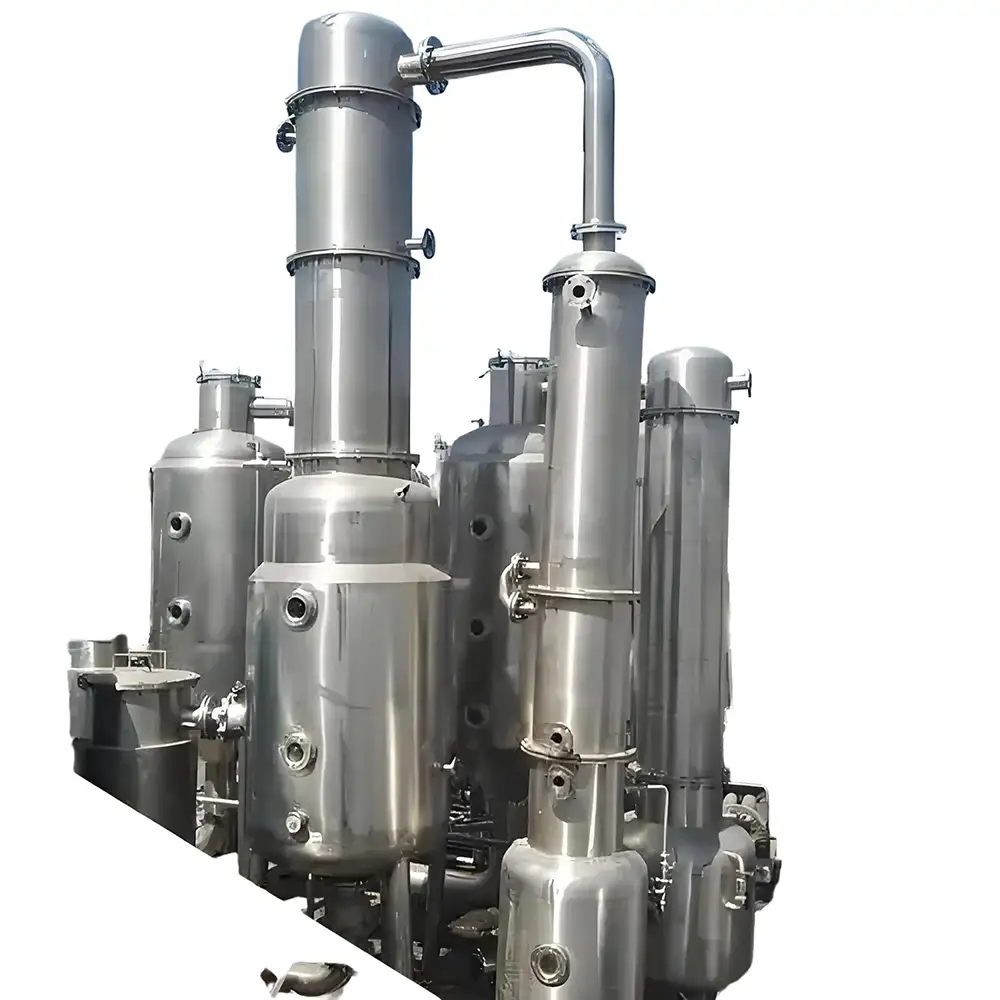
RO Reverse Osmosis Equipment for Industrial Water Purification and Automated Water Softening
RO Reverse Osmosis Equipment is an advanced water treatment solution designed for industrial water purification, dissolved solids reduction, and automated water softening. By combining reverse osmosis membrane filtration with effective pretreatment and automatic water softening technology, the system can help industries produce consistent-quality process water for manufacturing, food processing, pharmaceuticals, chemicals, electronics, hotels, commercial facilities, and other demanding applications.
Industrial water sources may contain suspended solids, hardness minerals, dissolved salts, microorganisms, organic matter, and other contaminants that can affect production equipment and finished products. A properly configured RO water treatment system provides multiple treatment stages to reduce these impurities before water enters the reverse osmosis membranes. Automated softening equipment can further reduce calcium and magnesium hardness, helping protect downstream components from scale buildup.
Advanced RO Reverse Osmosis Equipment
Reverse osmosis is a pressure-driven membrane separation technology that allows water molecules to pass through a semipermeable membrane while rejecting a significant portion of dissolved salts and other unwanted substances. The result is purified water with improved consistency and quality.
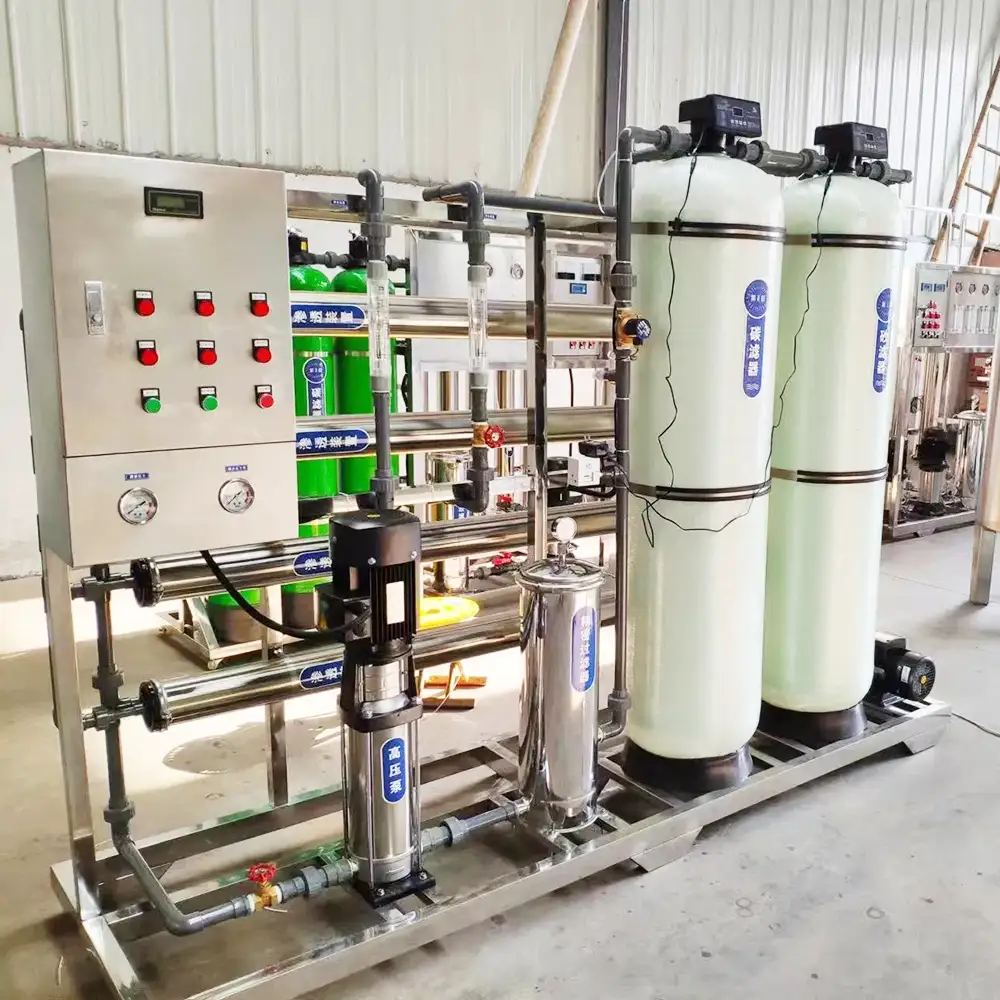
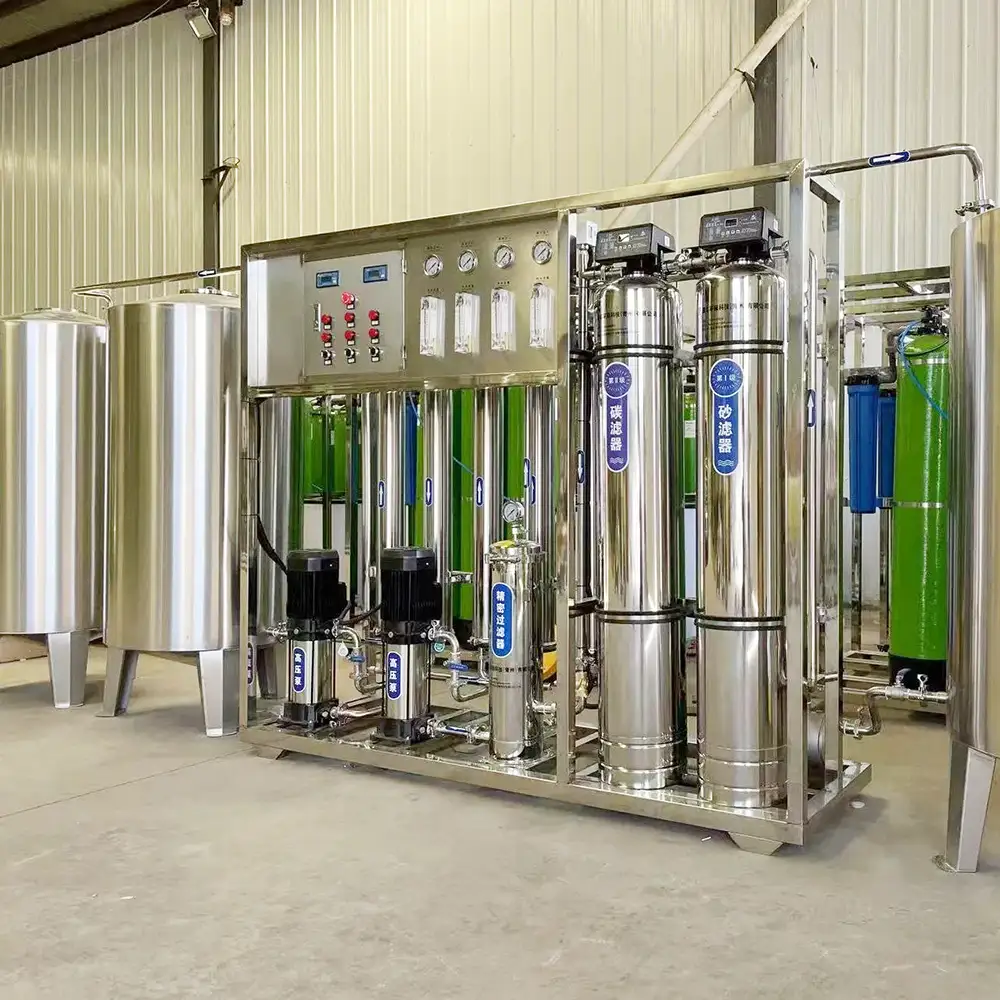
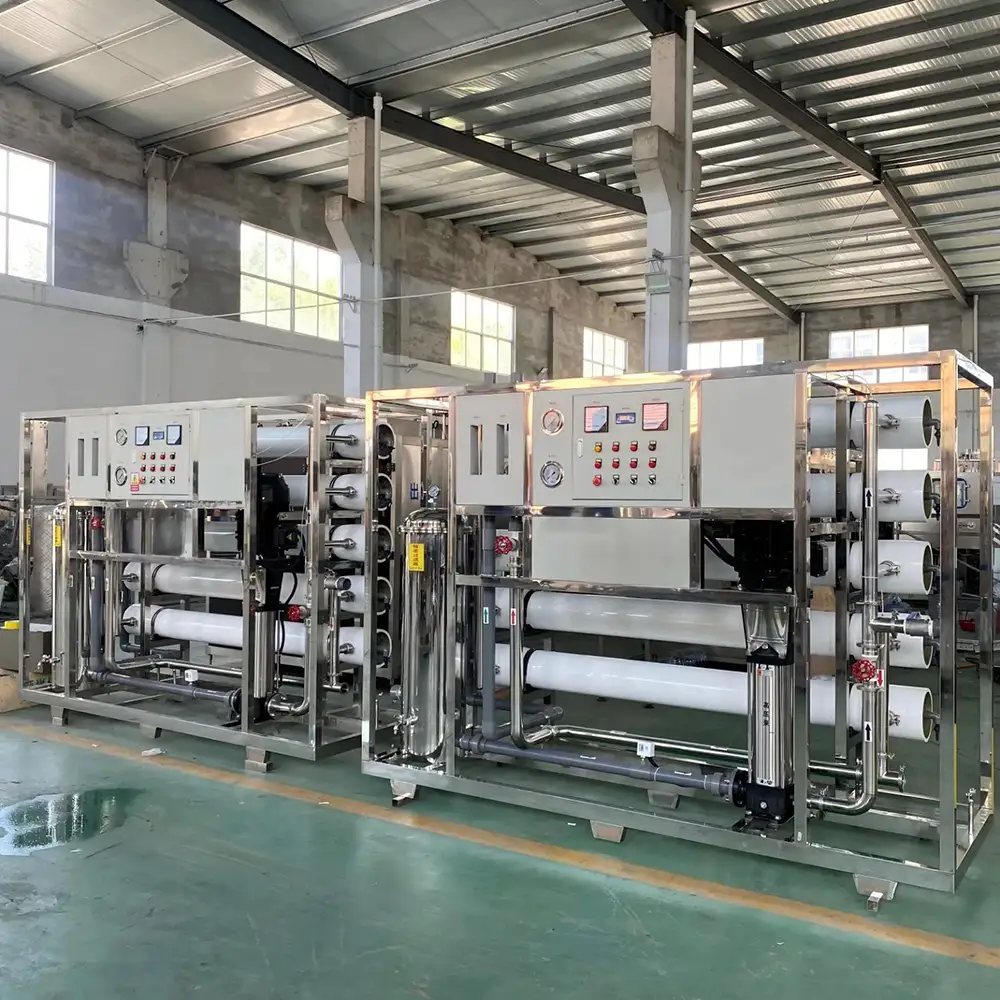
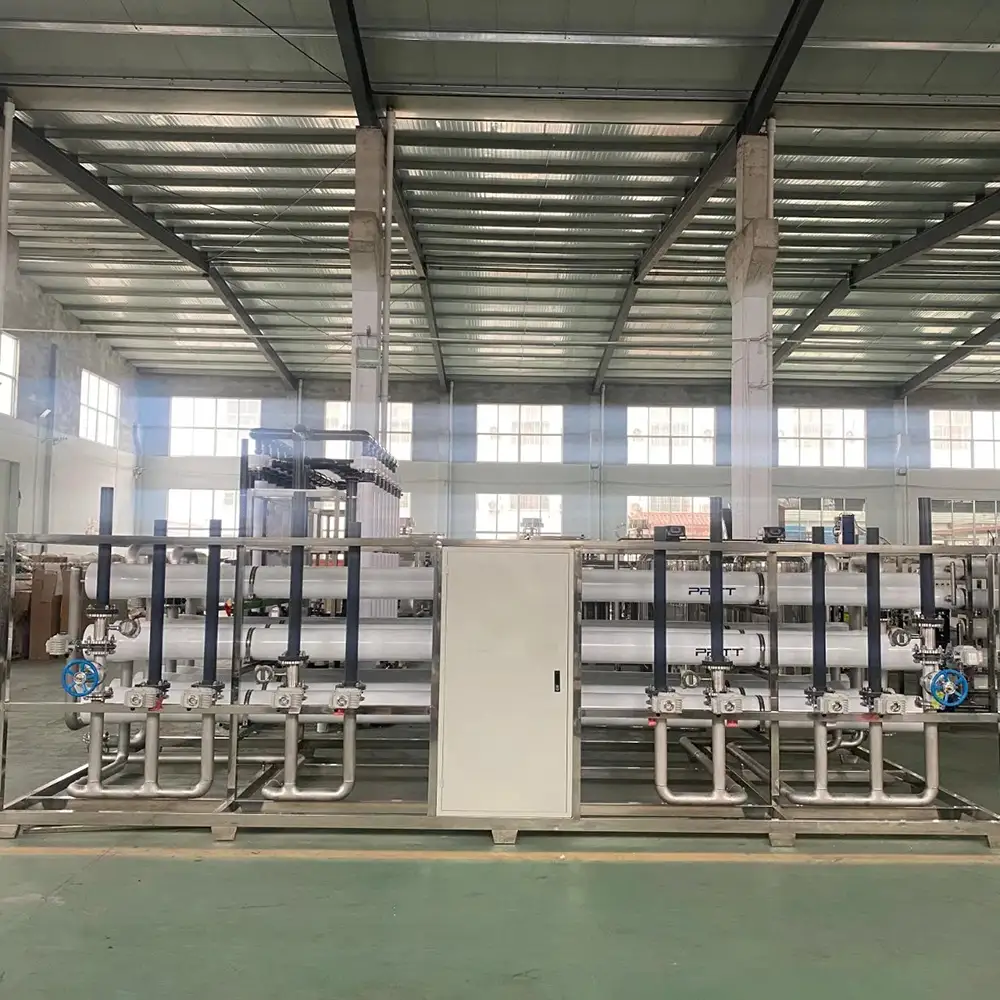
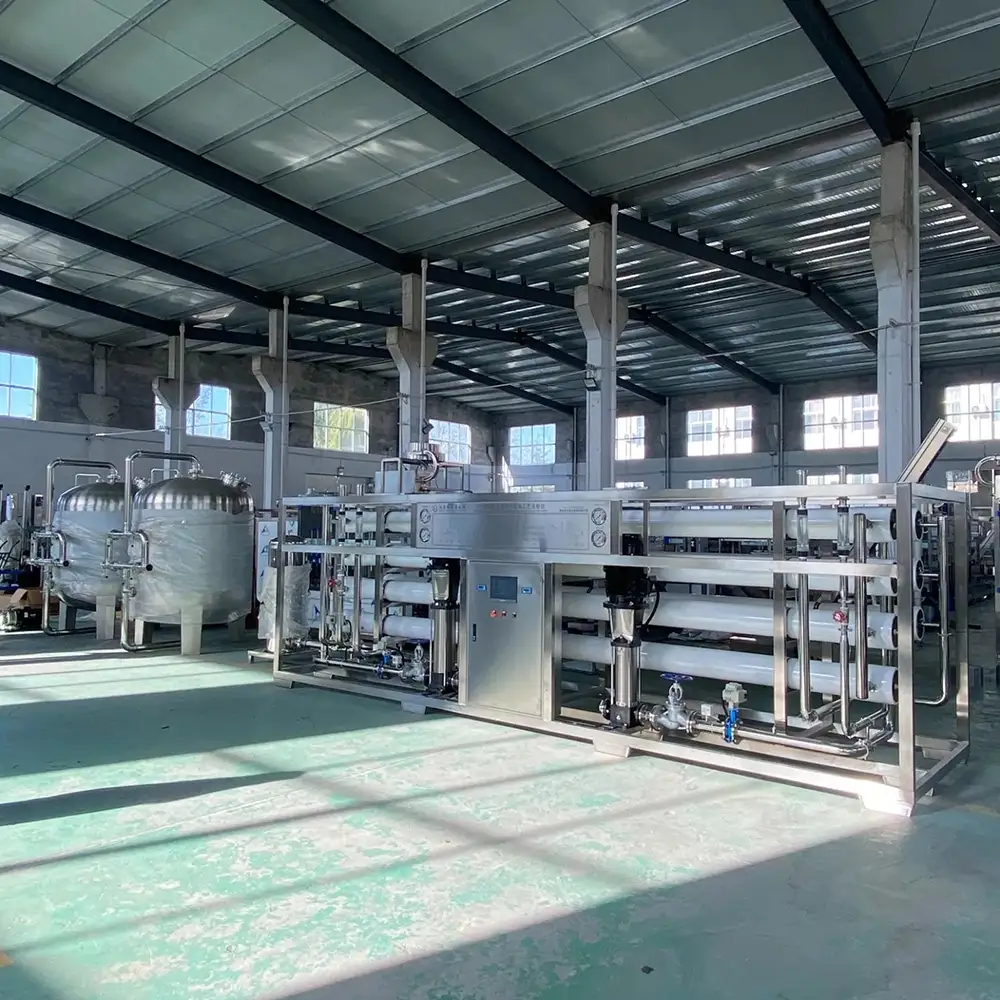
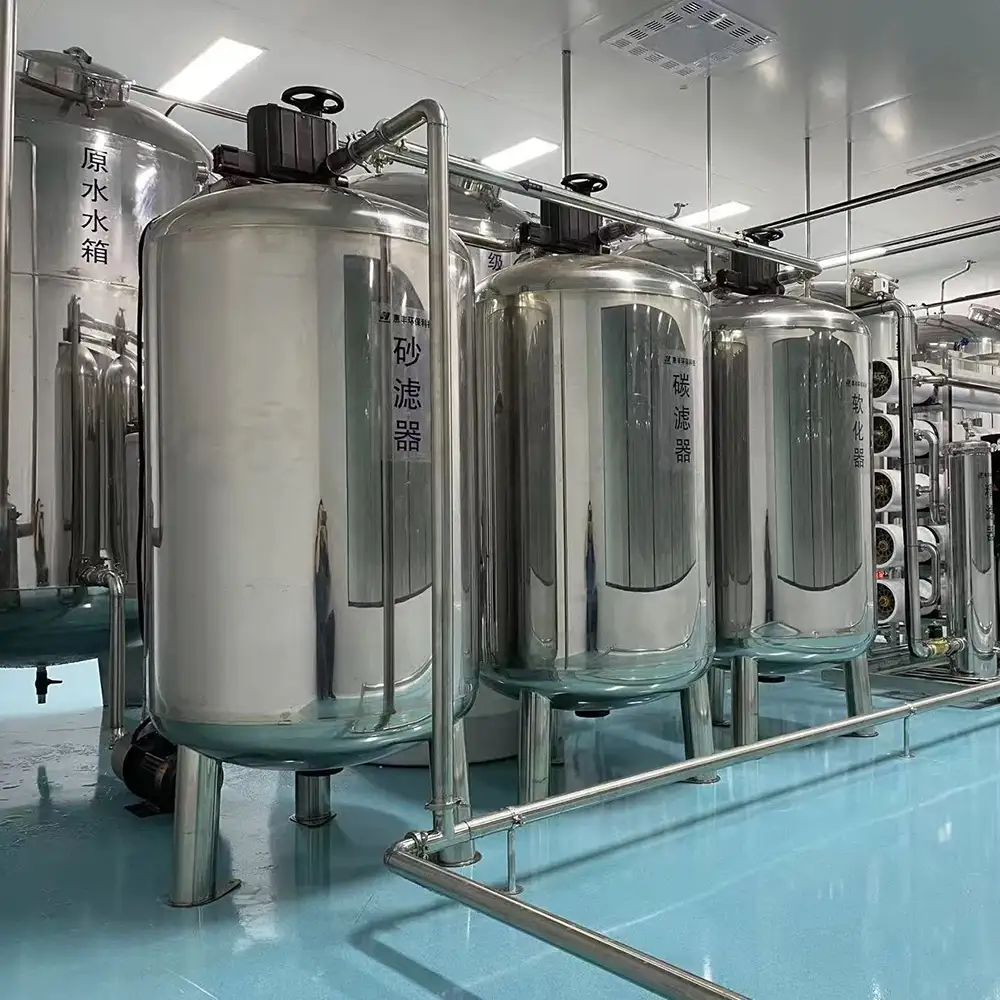
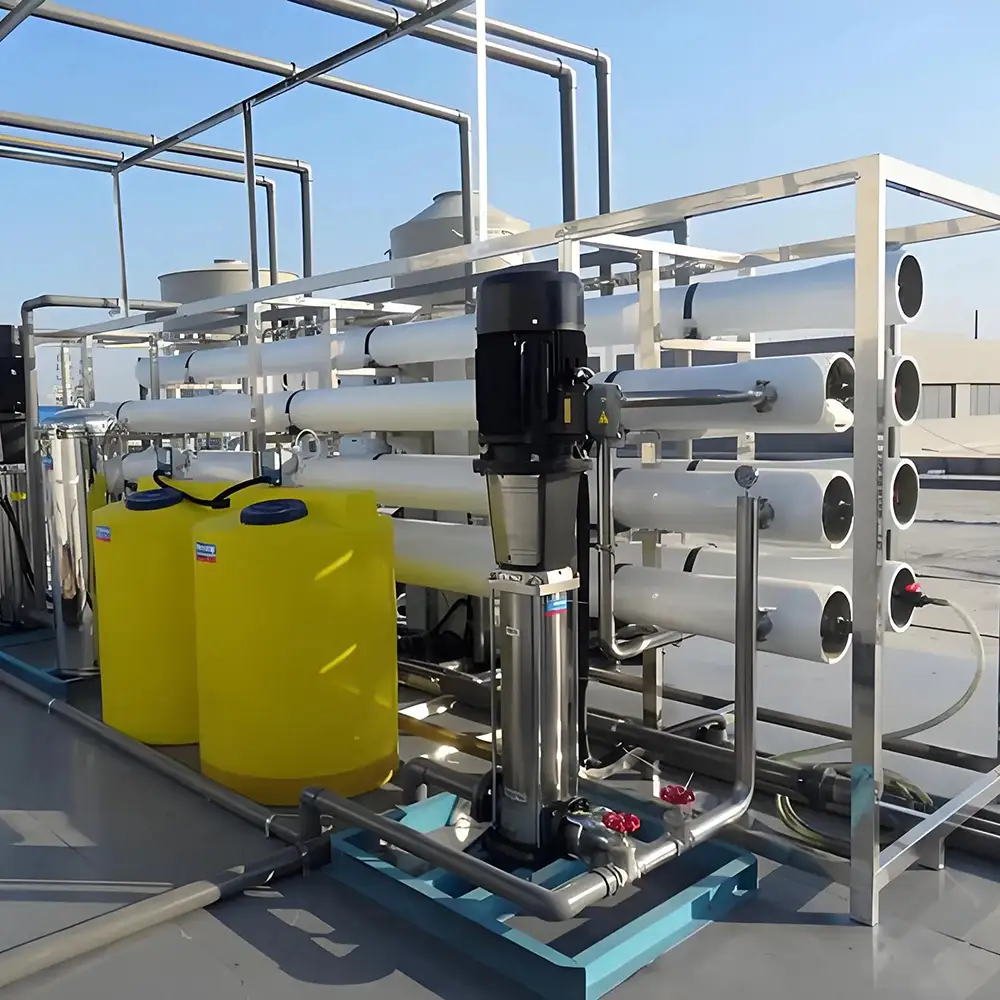
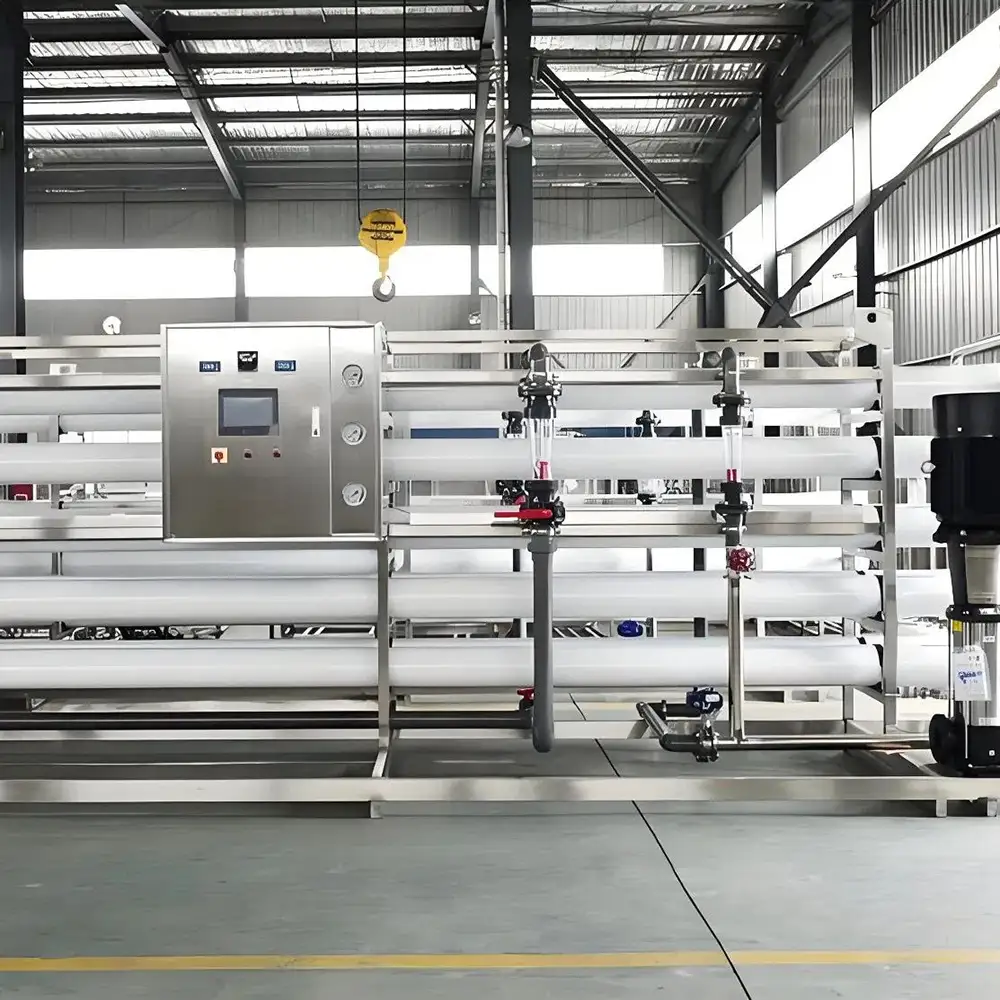
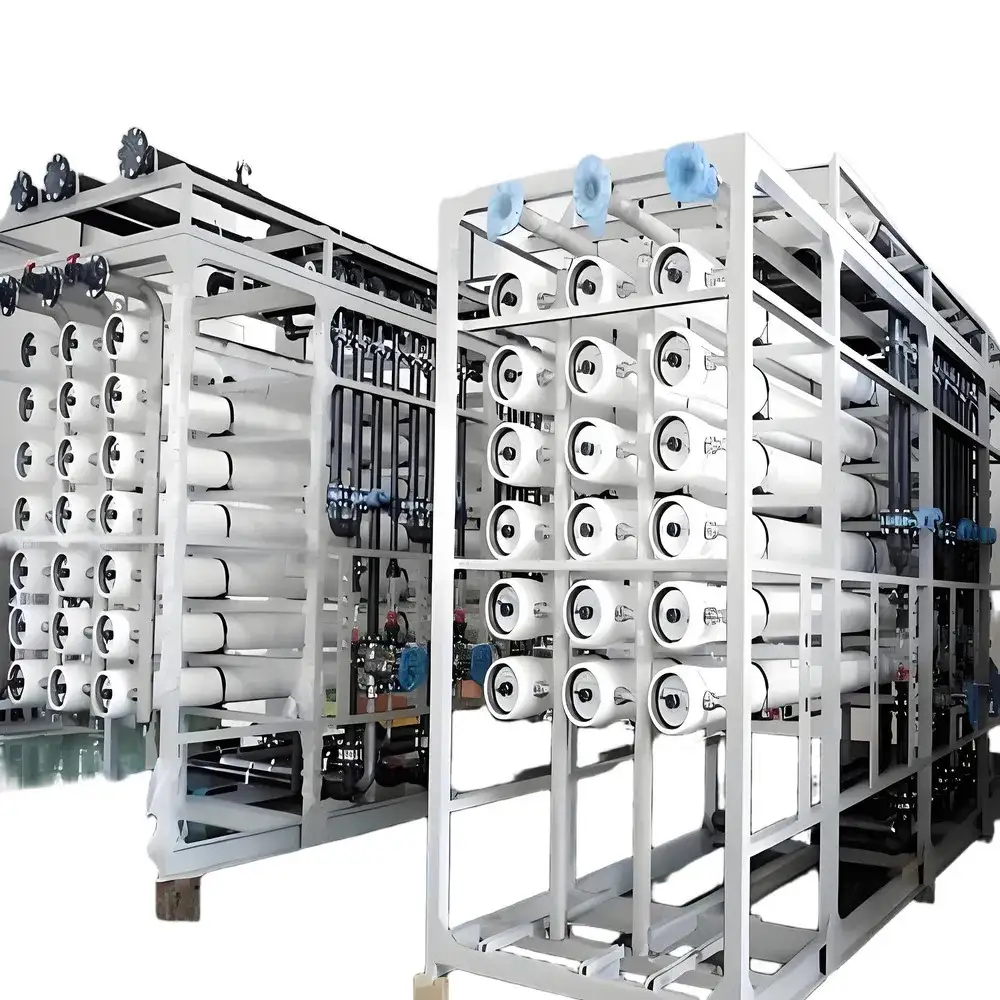
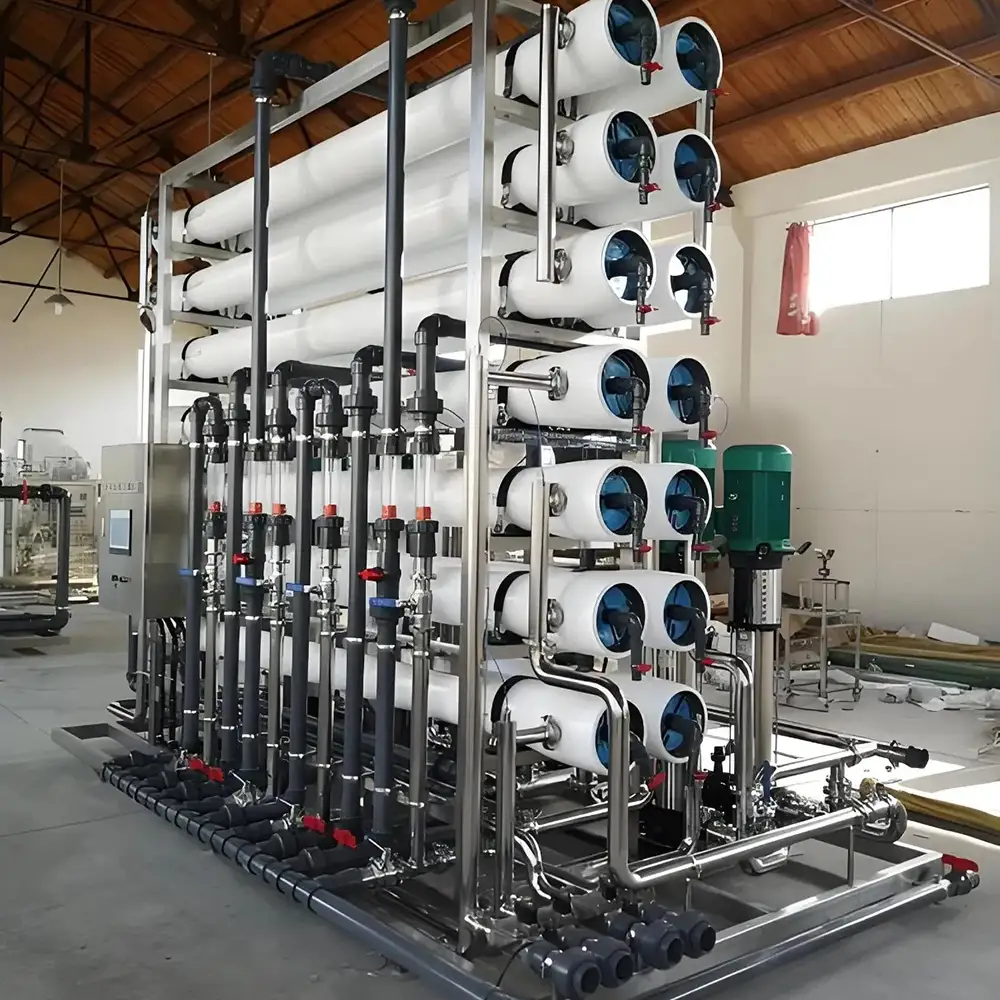
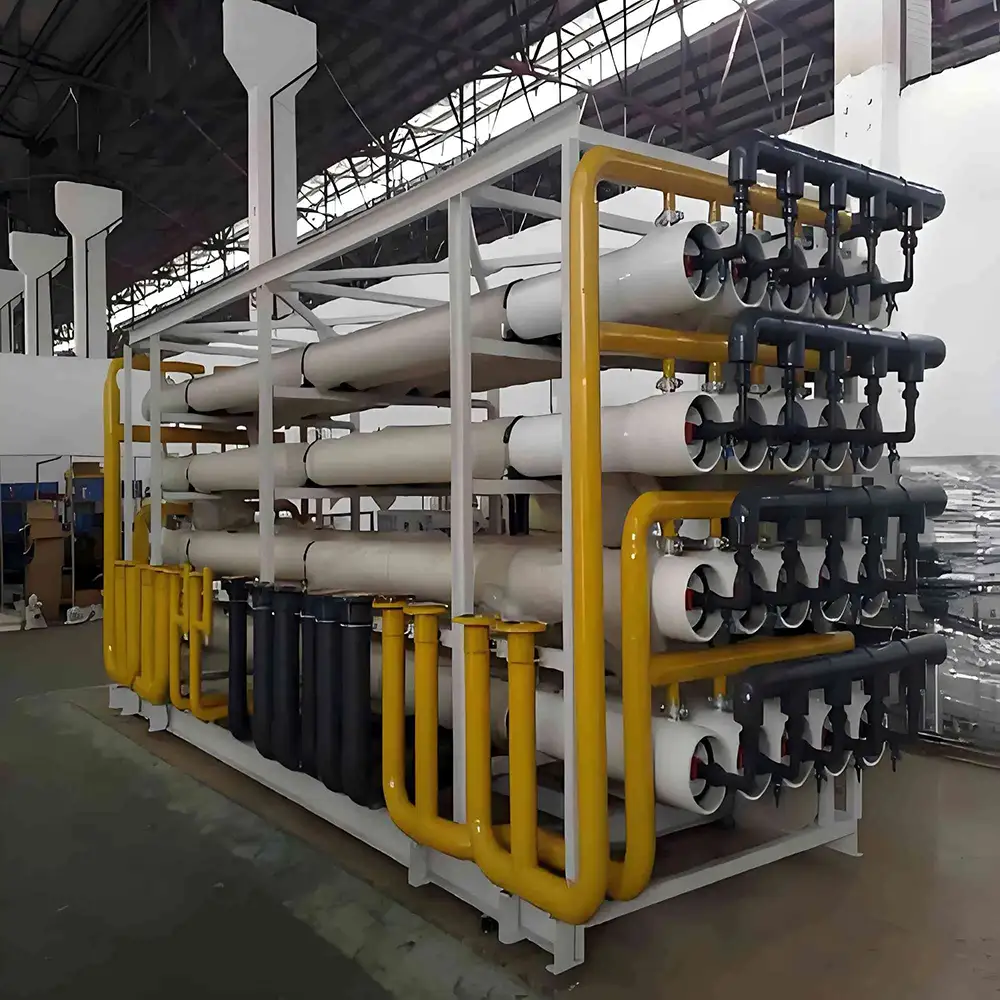
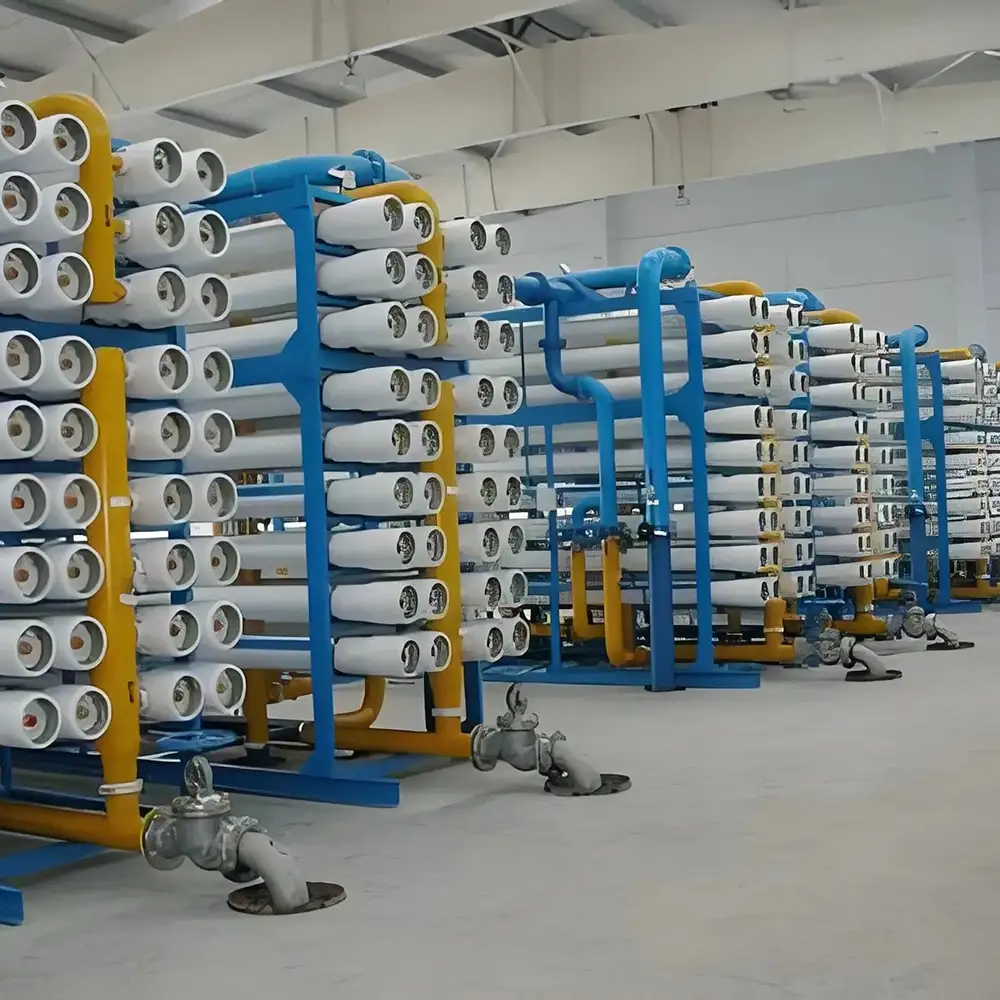
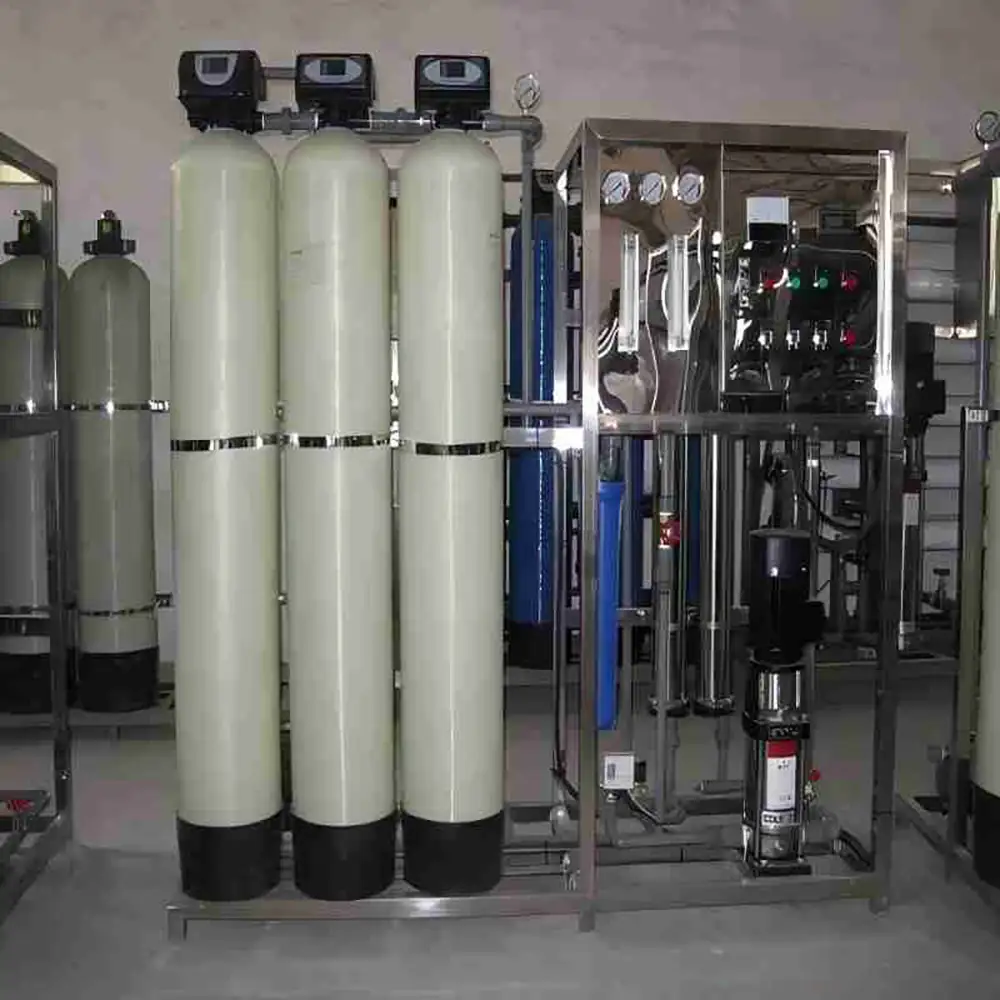
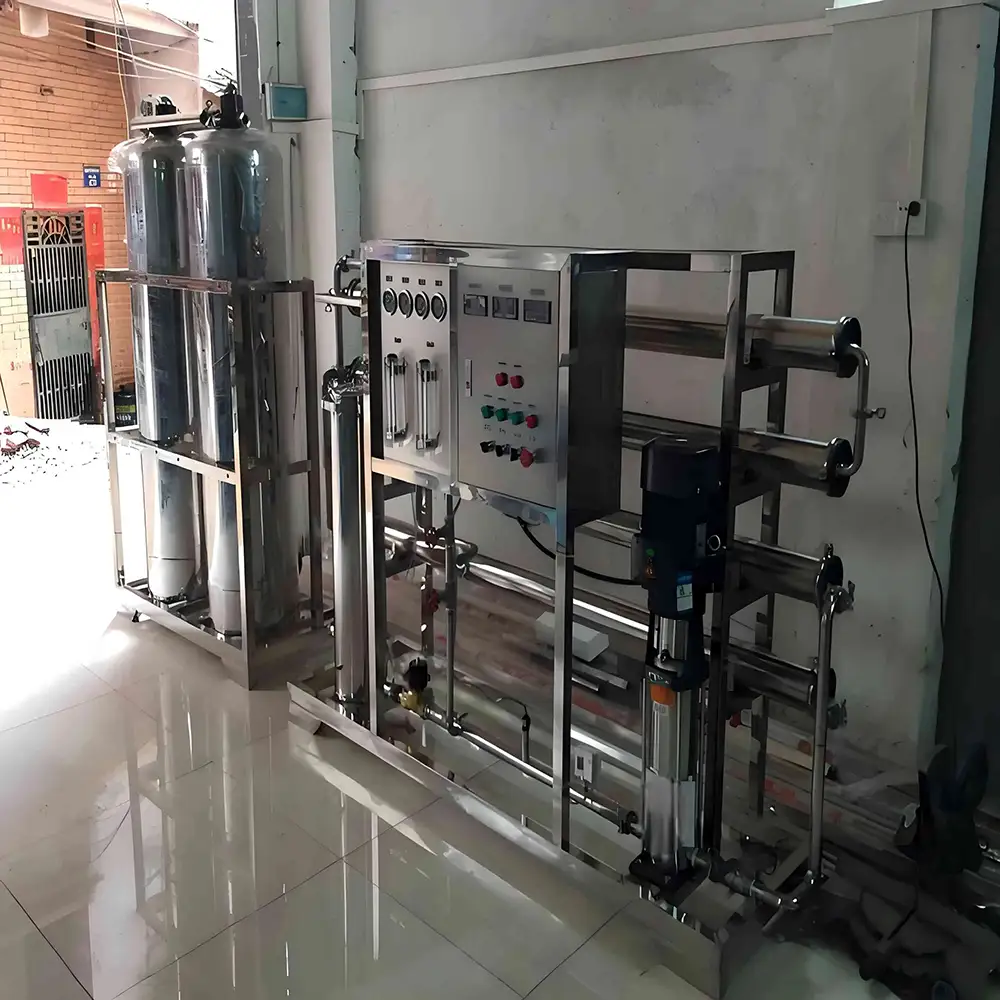
Industrial RO systems normally include raw water pumps, pretreatment filters, water softeners, cartridge filters, high-pressure pumps, RO membrane housings, control valves, pressure instruments, flow meters, electrical controls, and purified-water storage or distribution components.
The system can be configured according to the raw water quality, required production capacity, desired water quality, and specific industrial process requirements.
The reverse osmosis equipment passes the raw water through fine filters, granular activated carbon filters, compressed activated carbon filters, etc., and then pressurizes it through a pump, utilizing a pore size of 1/10000 μ The reverse osmosis membrane (RO membrane) of m (equivalent to 1/6000 of the size of Escherichia coli and 1/300 of the size of the virus) separates high concentration water into extremely low concentration water (i.e. pure water) and higher concentration water. Low concentration water is used, and high concentration water is discharged or reused as resources
Industrial Water Purification Process
Industrial Water Purification generally begins with pretreatment. Depending on the source water, multimedia filtration can remove suspended particles and turbidity, while activated carbon filtration can reduce chlorine, organic compounds, odors, and certain impurities.
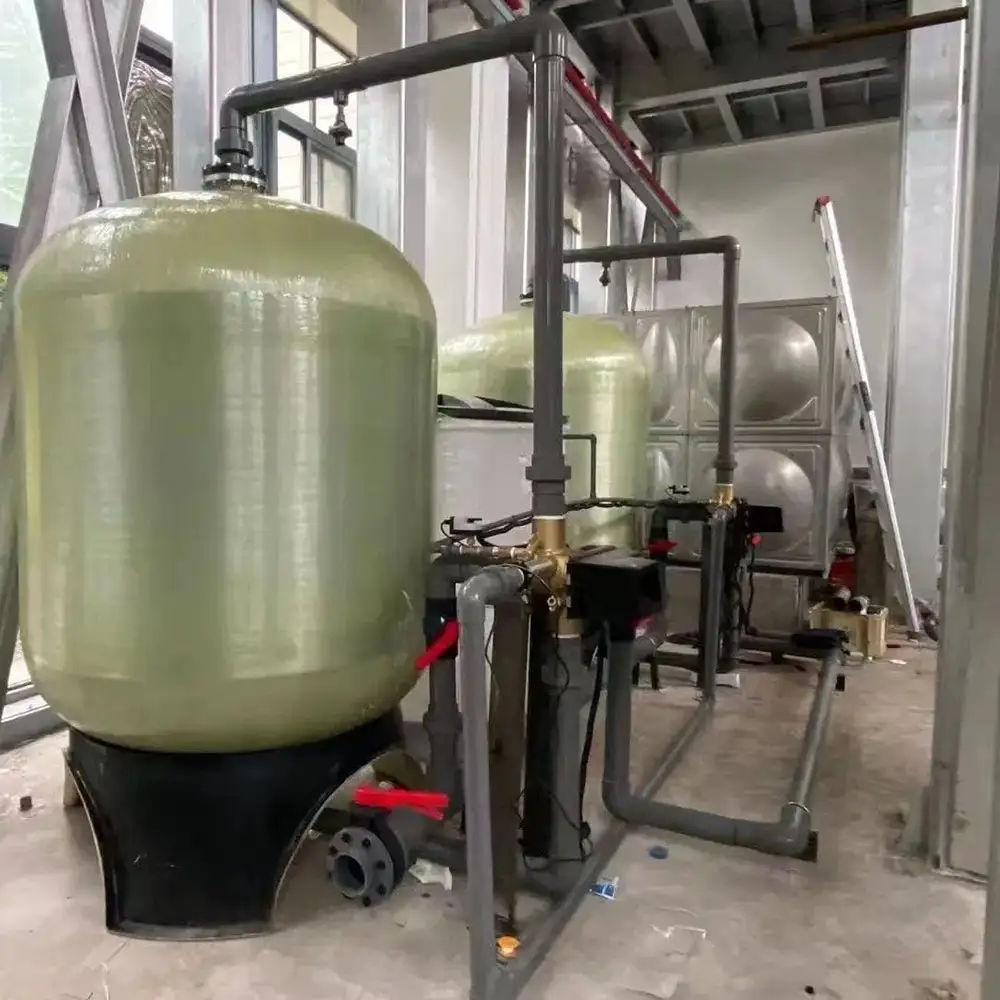
Automated water softening is particularly useful when the feed water has elevated hardness. The softener uses ion exchange media to reduce calcium and magnesium ions that can contribute to scaling. Automatic regeneration allows the softening unit to operate with minimal manual intervention.
After pretreatment, the water enters the RO stage. A high-pressure pump provides the pressure required for membrane separation. The RO membranes then reduce dissolved salts, minerals, and other contaminants to produce purified water suitable for industrial use.
Automated Water Softening Technology
Automated Water Softening improves the reliability of an industrial water treatment system by continuously managing hardness reduction and regeneration cycles. Automatic valves and programmable controls can regulate service, backwash, regeneration, and rinse processes according to system settings.
This reduces operator workload and helps maintain stable pretreatment performance. Proper softening is especially important for RO systems because excessive hardness can accelerate membrane scaling, reduce water production, increase operating pressure, and shorten membrane service life.
By integrating an automatic water softener with RO Reverse Osmosis Equipment, users can create a more complete and coordinated water purification solution.
Efficient RO Water Filtration
The RO membrane is the core purification component of the system. Membrane selection can be based on feed water conditions, operating pressure, recovery requirements, temperature, and desired permeate quality.
A properly designed RO Water Filtration System can significantly reduce total dissolved solids and many other dissolved contaminants. Depending on the application, single-pass or double-pass RO configurations may be used.
For applications requiring higher-purity water, the RO system can also be integrated with additional technologies such as UV sterilization, ozone treatment, ultrafiltration, electrodeionization, or polishing filtration.
Automatic Operation and Intelligent Control
Modern Industrial RO Systems can use automatic control panels, sensors, pressure switches, flow meters, conductivity monitoring, automatic valves, and programmable controllers. These components allow the system to monitor important operating conditions and control different treatment stages.
Automatic shutdown functions can help protect pumps and membranes when abnormal conditions occur. Conductivity monitoring can provide an indication of purified water quality, while pressure and flow monitoring can help operators identify potential membrane fouling or pretreatment problems.
Automated operation makes the equipment suitable for facilities that require continuous and stable water purification with reduced manual intervention.
Energy-Efficient Industrial Water Treatment
Energy efficiency is an important consideration for industrial water purification. The overall energy consumption of an RO system depends on feed water pressure, salinity, temperature, recovery rate, pump efficiency, membrane condition, and system configuration.
High-efficiency pumps, optimized membrane arrangements, proper pretreatment, and regular maintenance can help reduce unnecessary energy consumption. Effective water softening also helps control scaling, allowing the RO membranes to operate under more stable conditions.
For larger installations, energy-saving components and optimized water recovery designs can be incorporated according to project requirements.
Flexible Industrial Applications
RO Reverse Osmosis Equipment can be used with municipal water, groundwater, surface water, brackish water, and other suitable feed-water sources after appropriate pretreatment.
Typical applications include:
Industrial process water purification
Factory production water treatment
Food and beverage processing
Pharmaceutical and chemical industries
Electronics and semiconductor manufacturing
Boiler feed water treatment
Cooling tower makeup water
Commercial drinking water production
Hotel and hospitality water treatment
Laboratory and institutional water purification
High-quality cleaning water production
Industrial water reuse and recycling
The equipment can be designed as a compact skid-mounted system, integrated treatment line, containerized plant, or customized industrial water treatment station.
RO Membrane Protection and Maintenance
Reliable pretreatment is essential for maintaining RO membrane performance. Cartridge filters, multimedia filters, activated carbon filters, and automated water softeners can reduce the contaminant load entering the membrane stage.
Regular monitoring of pressure, flow rate, conductivity, recovery, and differential pressure helps identify changes in system performance. Membrane cleaning should be performed when operating conditions indicate fouling or scaling.
Proper maintenance can help extend membrane service life, maintain stable purified-water output, and reduce unexpected downtime.
Why Choose Us?
Choosing the right RO Reverse Osmosis Equipment requires more than selecting a standard filtration unit. A complete industrial water treatment solution should be designed around actual water conditions and application requirements.
Our solutions focus on:
Complete RO water purification system design
Industrial water treatment applications
Automated water softening and regeneration
Efficient pretreatment and membrane protection
Automatic control and monitoring
Flexible treatment capacity and configuration
Stable purified-water production
Easy operation and maintenance
Integration with additional filtration technologies
Long-term industrial operating reliability
We can help configure the RO system according to feed-water quality, required capacity, water-quality targets, installation conditions, and application requirements.
FAQs
1. What is RO Reverse Osmosis Equipment?
RO Reverse Osmosis Equipment is a water purification system that uses pressure and semipermeable membranes to reduce dissolved salts, minerals, and various contaminants from water.
2. Why is water softening used before RO?
Water softening reduces calcium and magnesium hardness, helping minimize scale formation on RO membranes and improve membrane operating performance.
3. Is the water softener fully automatic?
An automated water softener can control service, regeneration, backwashing, and rinsing cycles through automatic valves and programmable controls.
4. What types of water can an industrial RO system treat?
Depending on the design and pretreatment, RO systems can treat municipal water, groundwater, surface water, and brackish water.
5. Can the RO system be customized for different capacities?
Yes. Industrial RO equipment can be configured for different feed-water capacities, recovery rates, membrane arrangements, and purified-water requirements.
6. Does RO remove dissolved salts?
Yes. Reverse osmosis is highly effective at reducing many dissolved salts and total dissolved solids.
7. Can RO equipment be used for boiler feed water?
Yes. RO water treatment systems are commonly used as part of boiler feed-water treatment, with additional treatment selected according to boiler requirements.
8. How often do RO membranes need cleaning?
Cleaning frequency depends on feed-water quality, pretreatment effectiveness, operating conditions, and membrane fouling or scaling.
9. Can RO equipment operate automatically?
Yes. Automatic pumps, valves, sensors, conductivity monitoring, and control panels can be integrated for automatic operation.
10. Can the RO system be integrated with other water treatment equipment?
Yes. RO systems can be combined with multimedia filtration, activated carbon, softeners, cartridge filters, UV, ozone, ultrafiltration, EDI, and other treatment technologies when required.
Prev:
Water Purification RO Reverse Osmosis Equipmentsmosis Equipment
Next:
304 Stainless Steel RO Water Treatment Equipment Reverse Osmosis
TAG:
Industrial Water Purification System,
Industrial Water Treatment System,
Water Purification Equipment,
Reverse Osmosis Water Treatment,
Industrial Water Treatment,
Process Water Purification,
Water Filtration Equipment,
Industrial Water Purifier,
Industrial Water Filter,
Water Treatment Plant,
Water Treatment Equipment,
Industrial Water Purification,
Industrial RO Water Treatment,
Brackish Water RO System,
Brackish Water Treatment,
Water Recovery System,
Industrial Reverse Osmosis System,
Industrial RO System,
Industrial Water Reuse,
Process Water Treatment,
Industrial Water Filtration,
Commercial RO System,
RO Membrane System,
RO Membrane Filtration,
RO Filtration System,
Reverse Osmosis Water Purification,
Reverse Osmosis Filtration,
RO Water Purification,
RO Water Treatment,
Reverse Osmosis System,
Related Category:
RO Reverse Osmosis Equipment,Industrial Water Purification,Automated Water Softening,Reverse Osmosis Water Treatment China, suppliers, manufacturers, factory, customized, wholesale, quotation, made in China