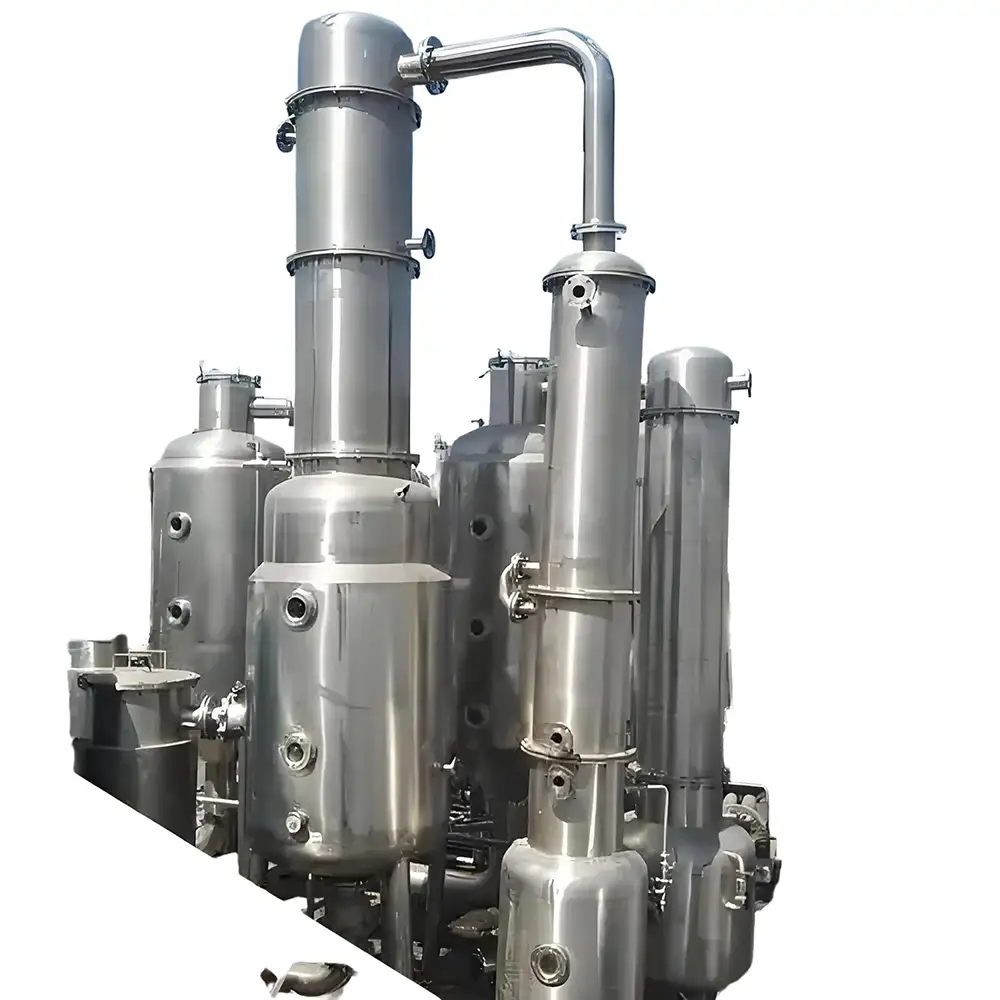
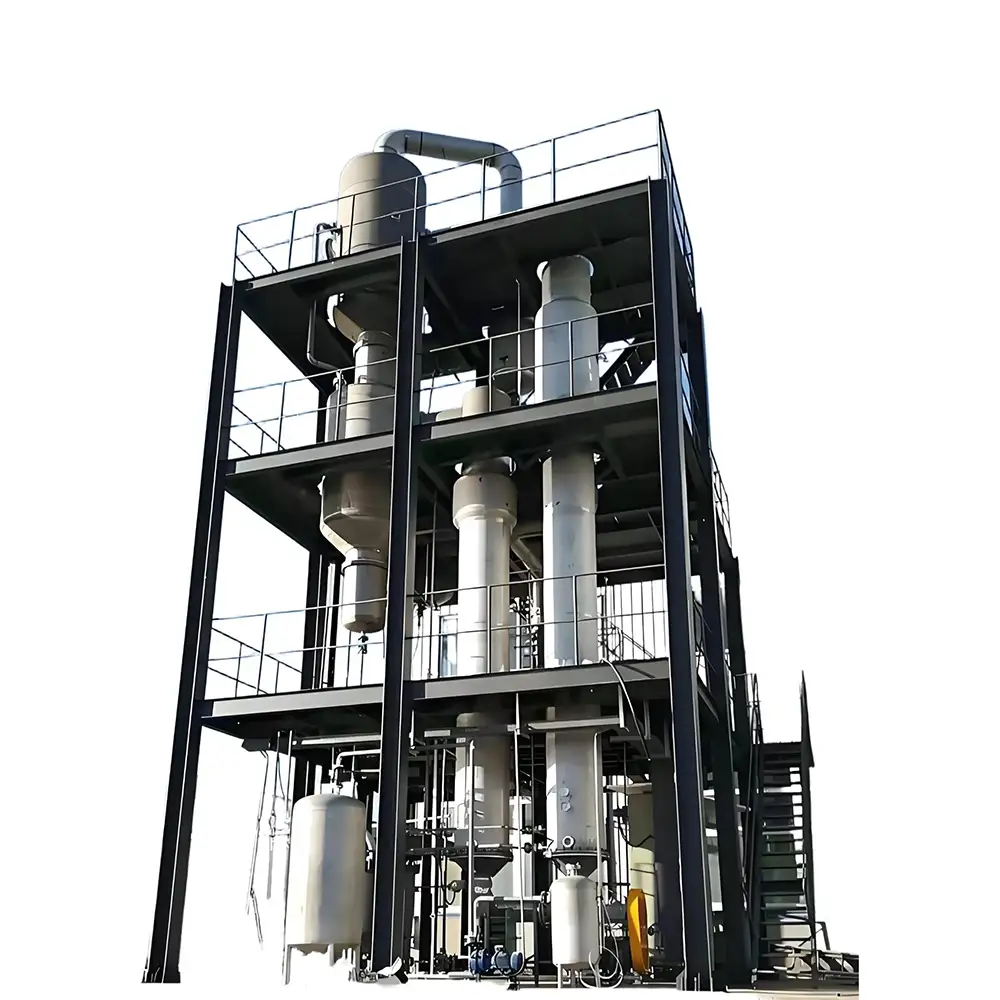
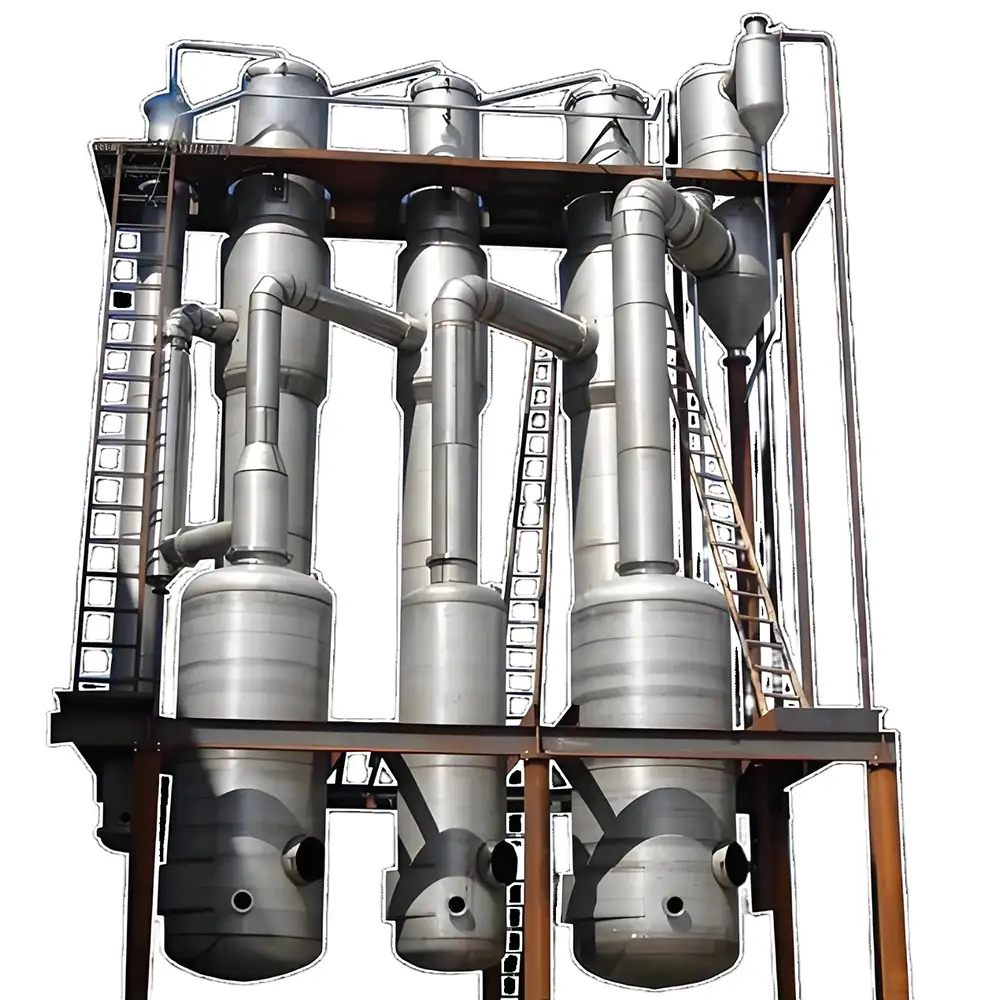
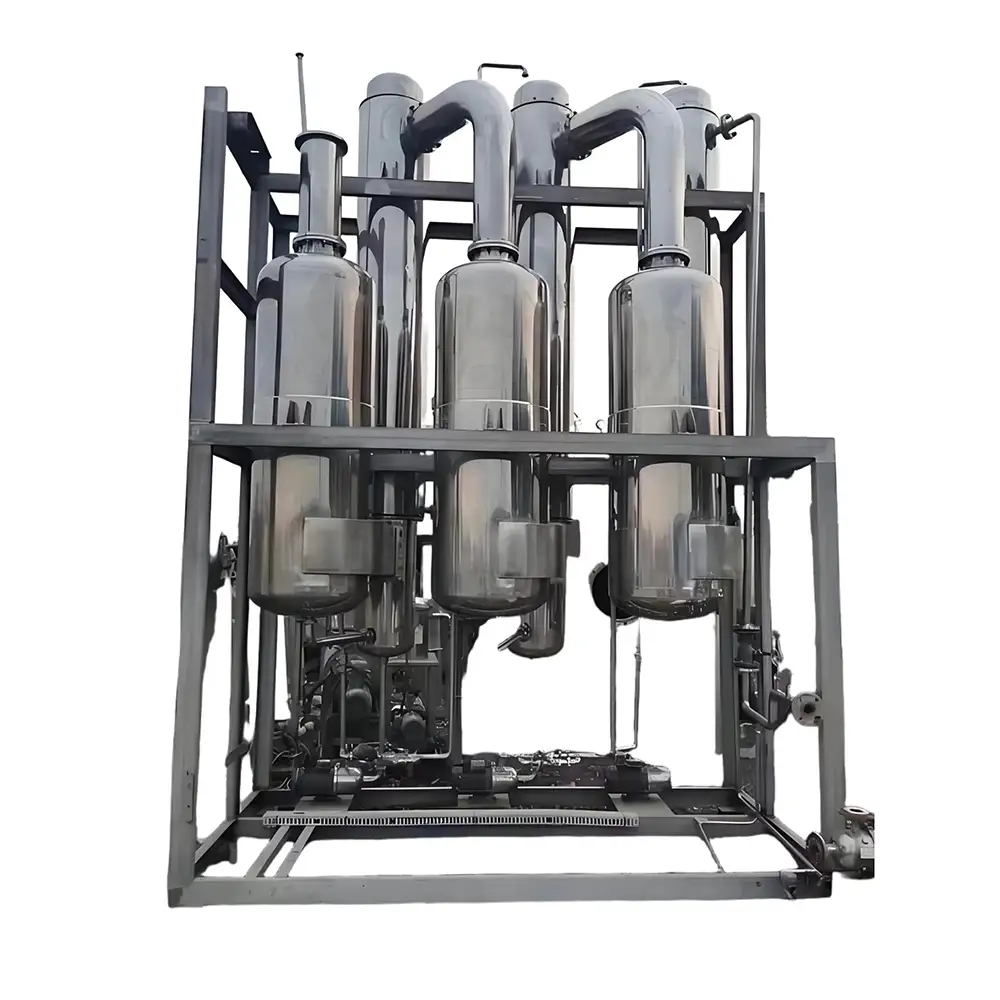
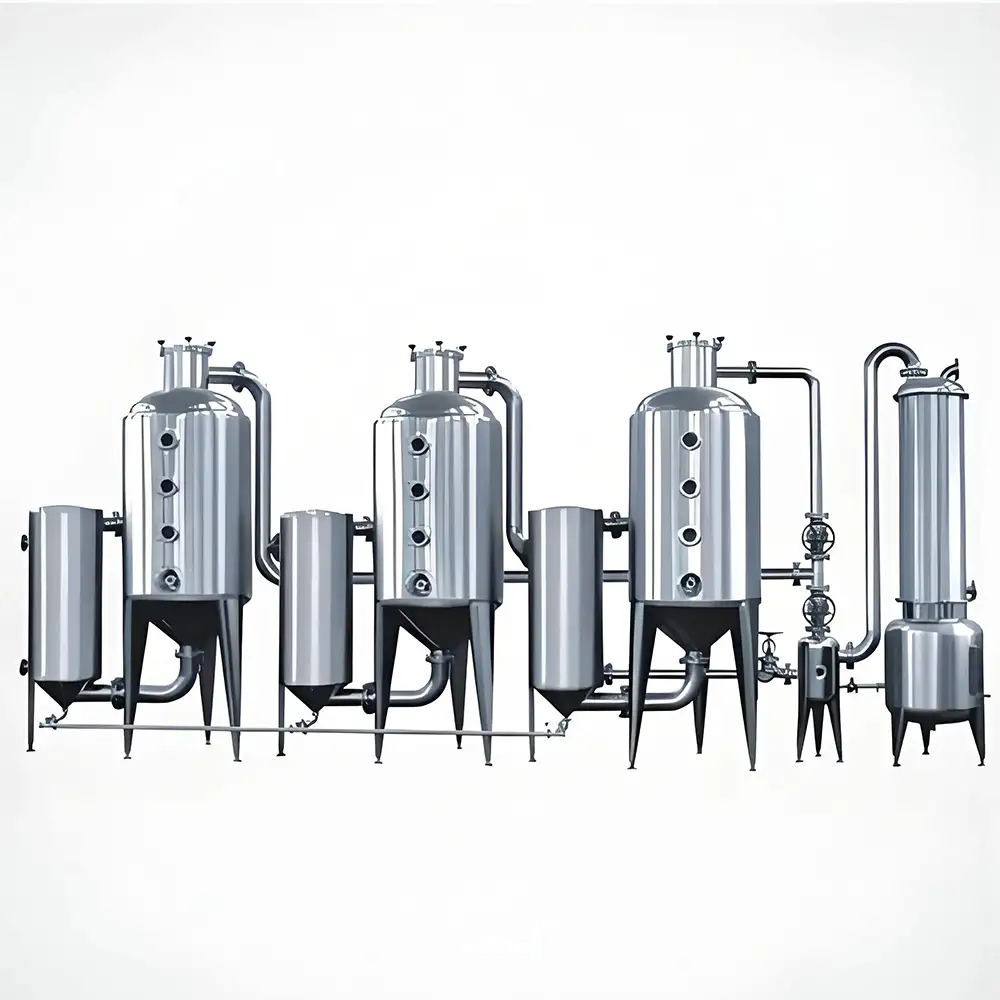
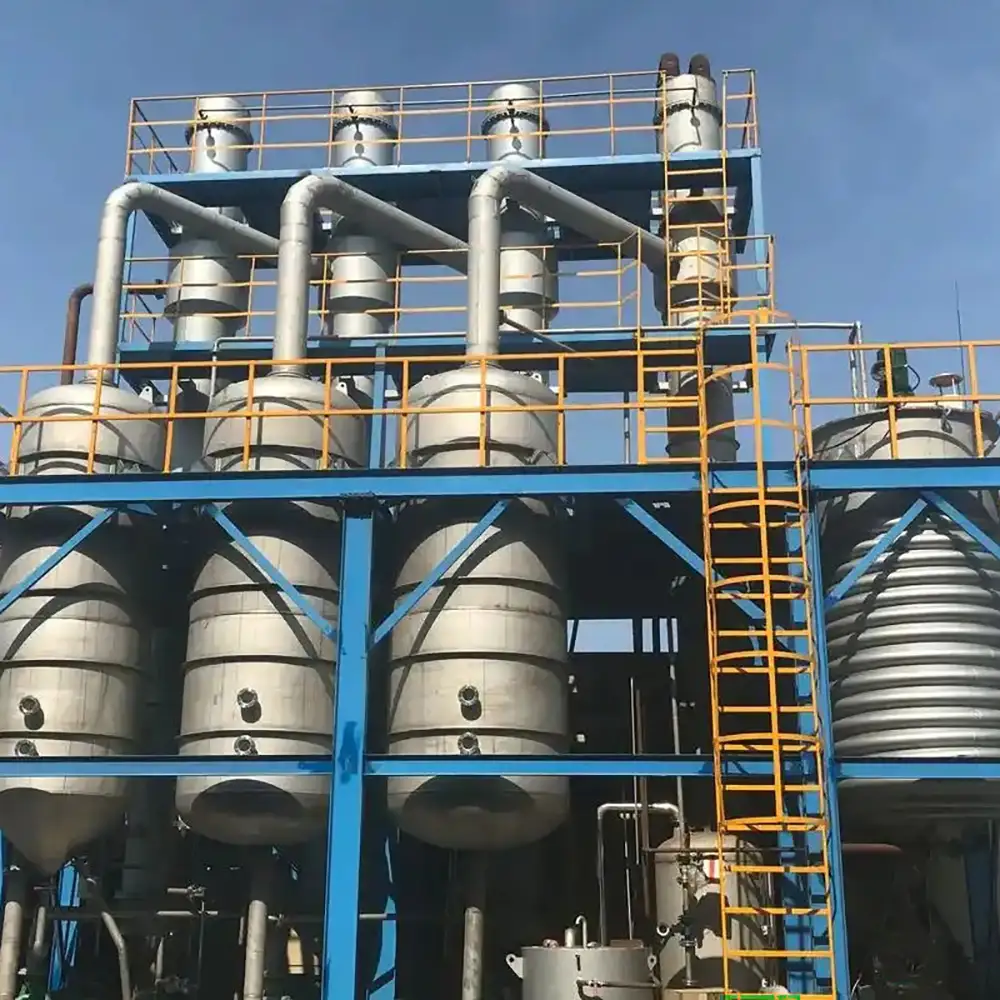
Seawater Desalination Mechanical Vapor Recompression Evaporator Water Purifier
Seawater Desalination Mechanical Vapor Recompression Evaporator Water Purifier is an advanced thermal water treatment solution designed for seawater desalination, high-salinity water concentration, industrial wastewater treatment, zero liquid discharge processes, and other applications requiring efficient evaporation and water recovery.
Unlike conventional filtration systems that primarily separate contaminants through membranes, an MVR evaporator uses thermal evaporation and mechanical vapor recompression to separate water from dissolved salts and concentrated substances. This makes the technology particularly suitable for high-TDS water, concentrated brine, difficult-to-treat wastewater, and applications where conventional reverse osmosis may reach its practical operating limits.
The system combines evaporation, vapor recompression, condensation, and water recovery into an integrated treatment process. Depending on the feed water composition and required final water quality, additional pretreatment, crystallization, polishing, or post-treatment processes can be incorporated.
Mechanical Vapor Recompression Technology
Mechanical Vapor Recompression, commonly known as MVR, is an energy-efficient evaporation technology. During operation, water in the feed solution is heated and evaporated. The generated secondary vapor is then compressed mechanically by a vapor compressor.
When vapor is compressed, its pressure and saturation temperature increase. The recompressed vapor can then be reused as the heating source for continued evaporation.
By recycling the generated vapor instead of continuously producing new steam, the MVR process can significantly reduce the requirement for external heating energy compared with conventional single-effect evaporation systems.
This closed-loop vapor reuse is one of the major advantages of MVR technology for industrial water treatment and high-salinity applications.
Seawater Desalination and Concentration
Seawater contains high concentrations of dissolved salts and minerals, making desalination technically demanding. While reverse osmosis is widely used for seawater desalination, thermal evaporation can provide an additional treatment option for applications requiring very high salt concentration or further brine reduction.
The Seawater Desalination MVR Evaporator can concentrate seawater or RO reject streams and recover water from high-salinity solutions.
In integrated treatment systems, RO may be used as the initial desalination stage, while MVR evaporation is used for further concentration of the resulting brine. This combination can improve overall water recovery and reduce the volume of concentrated waste requiring final disposal.
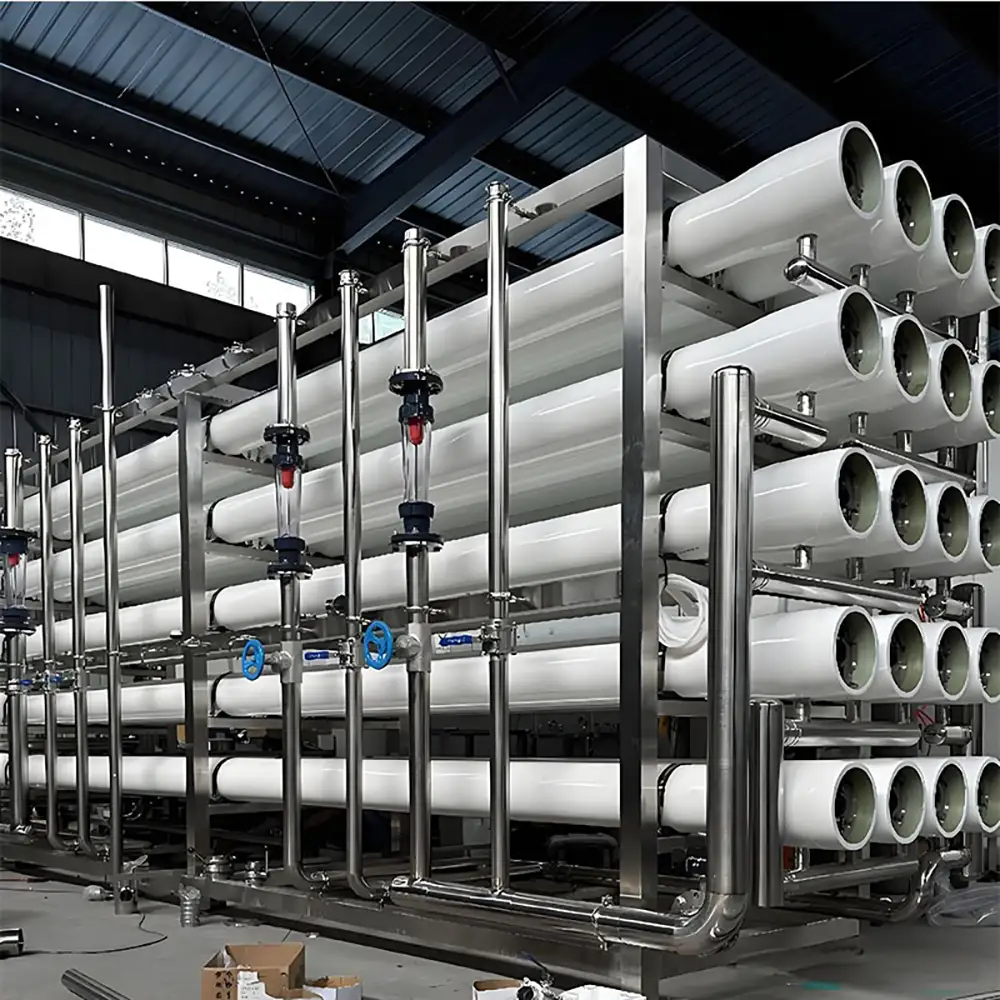
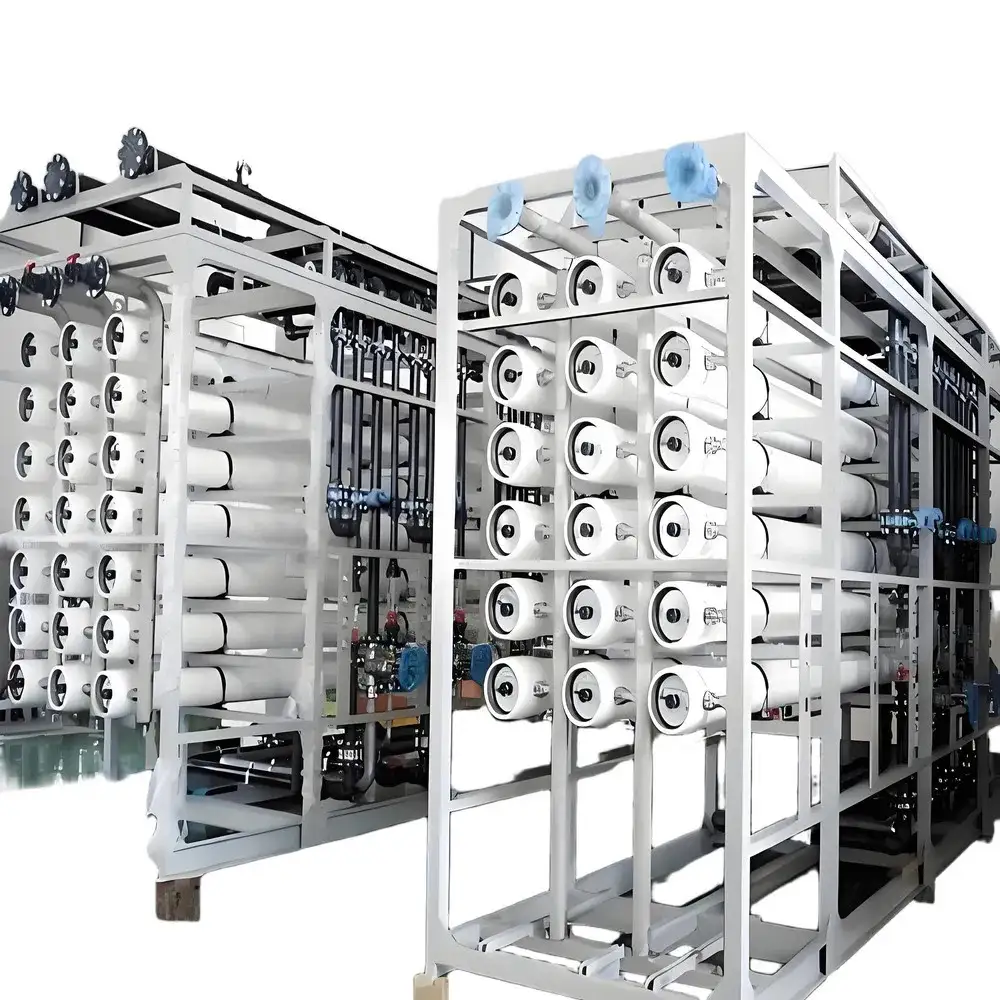
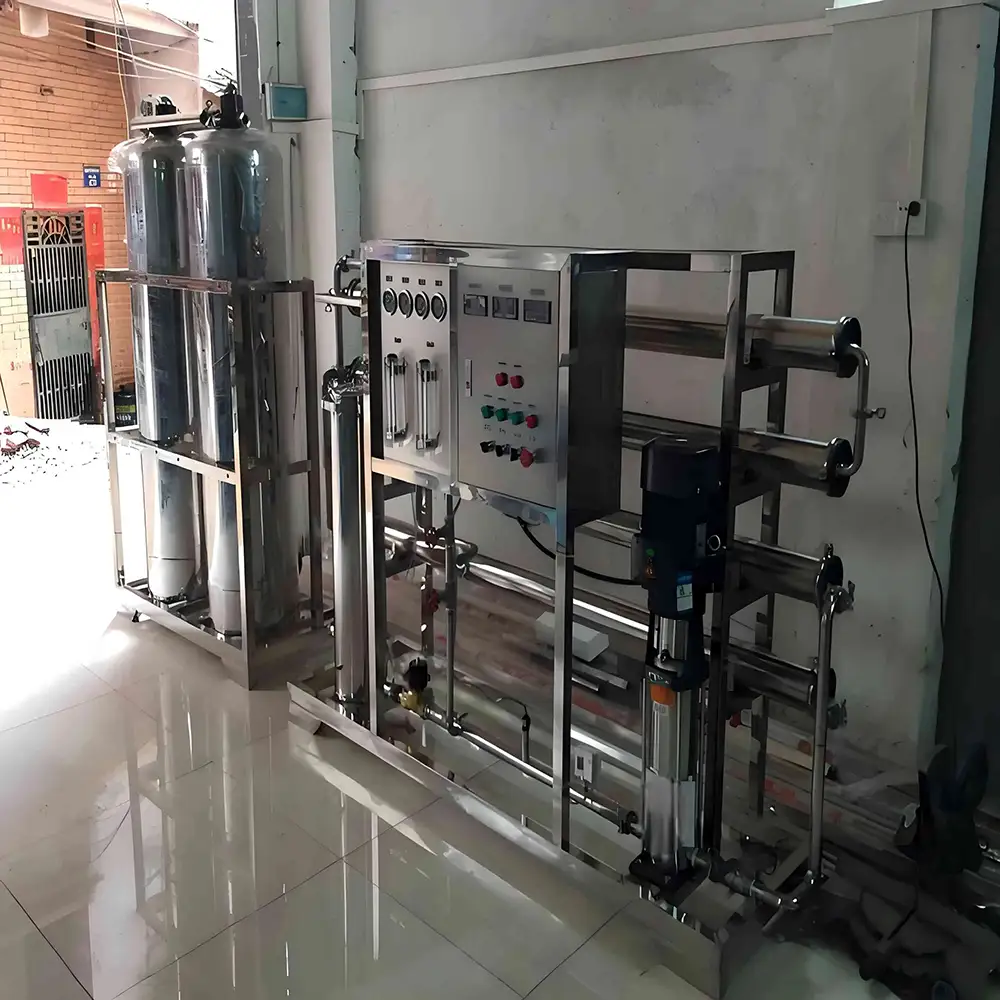
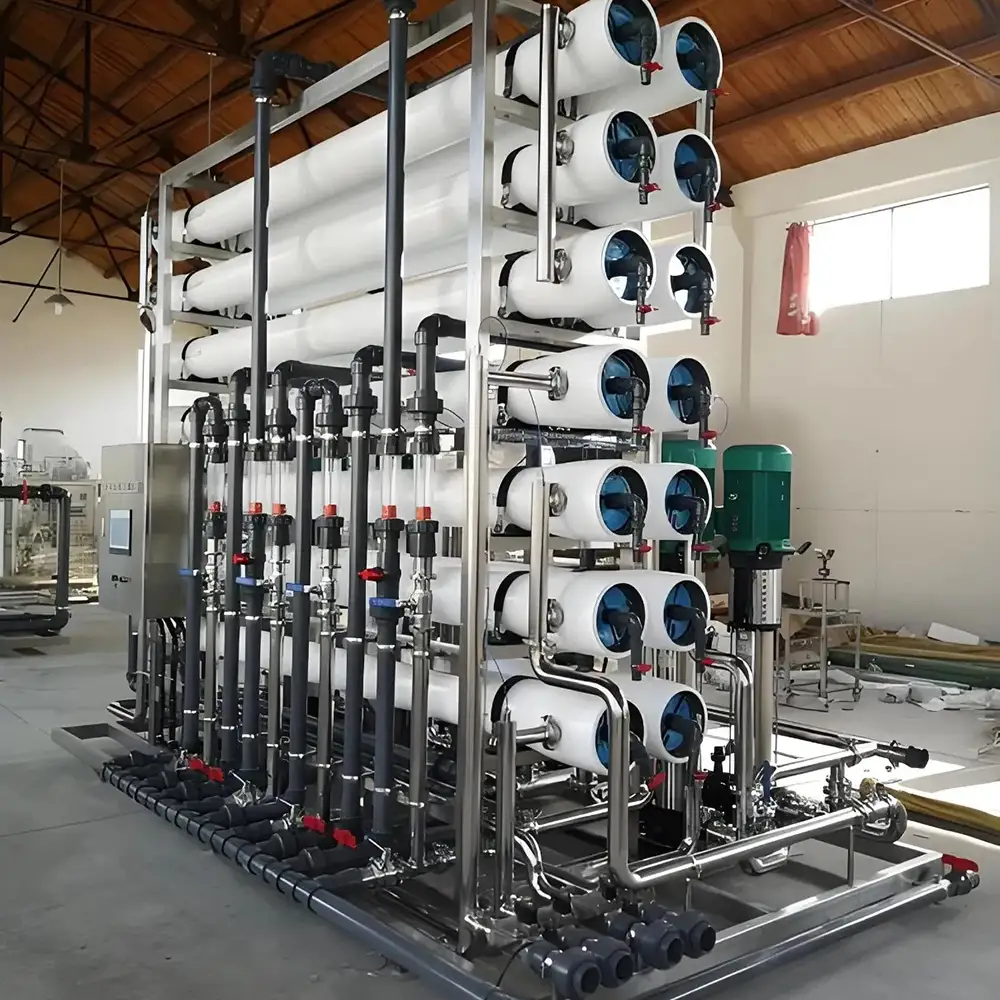
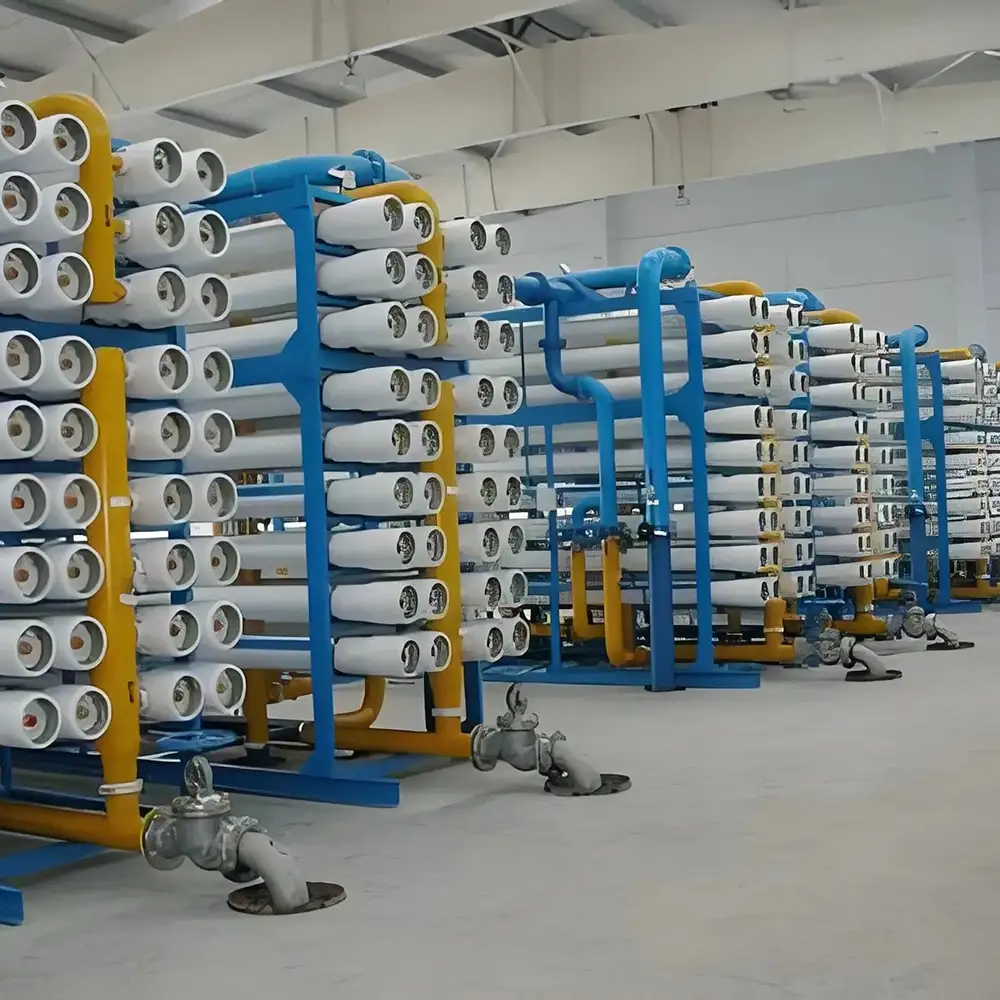
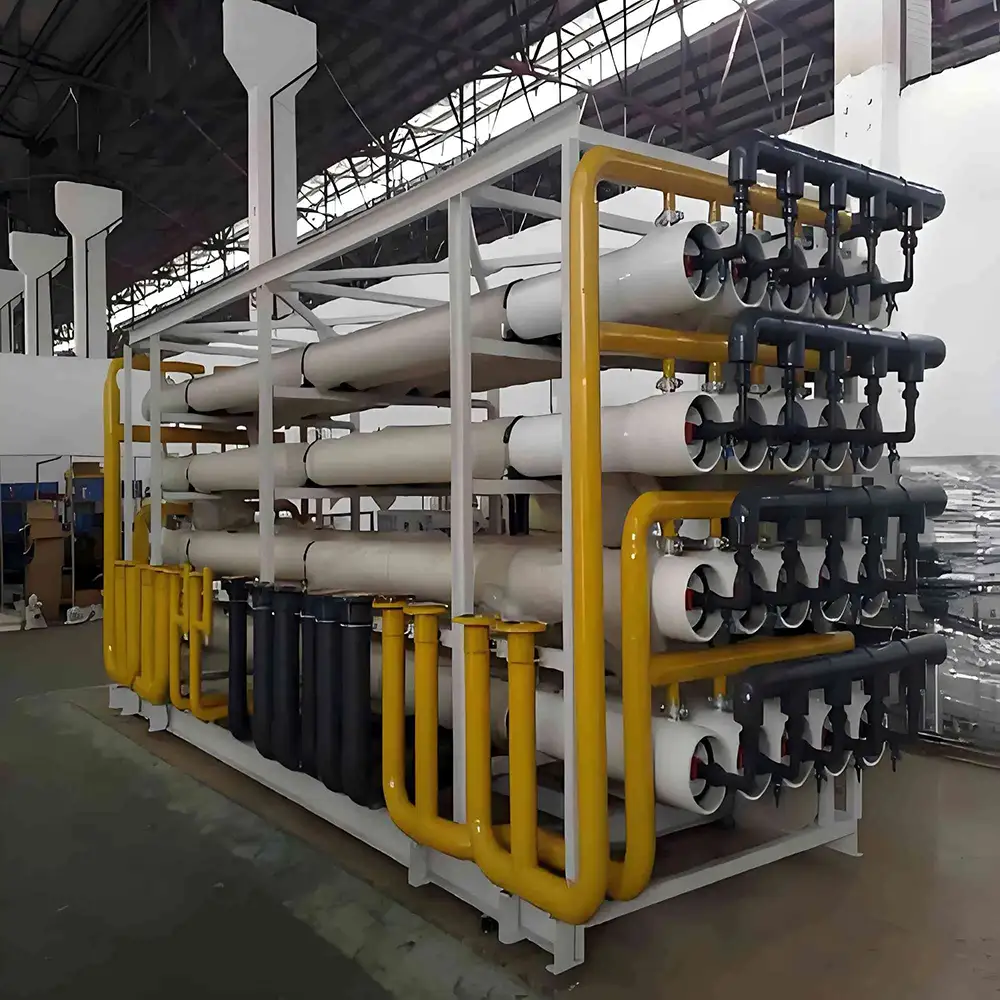
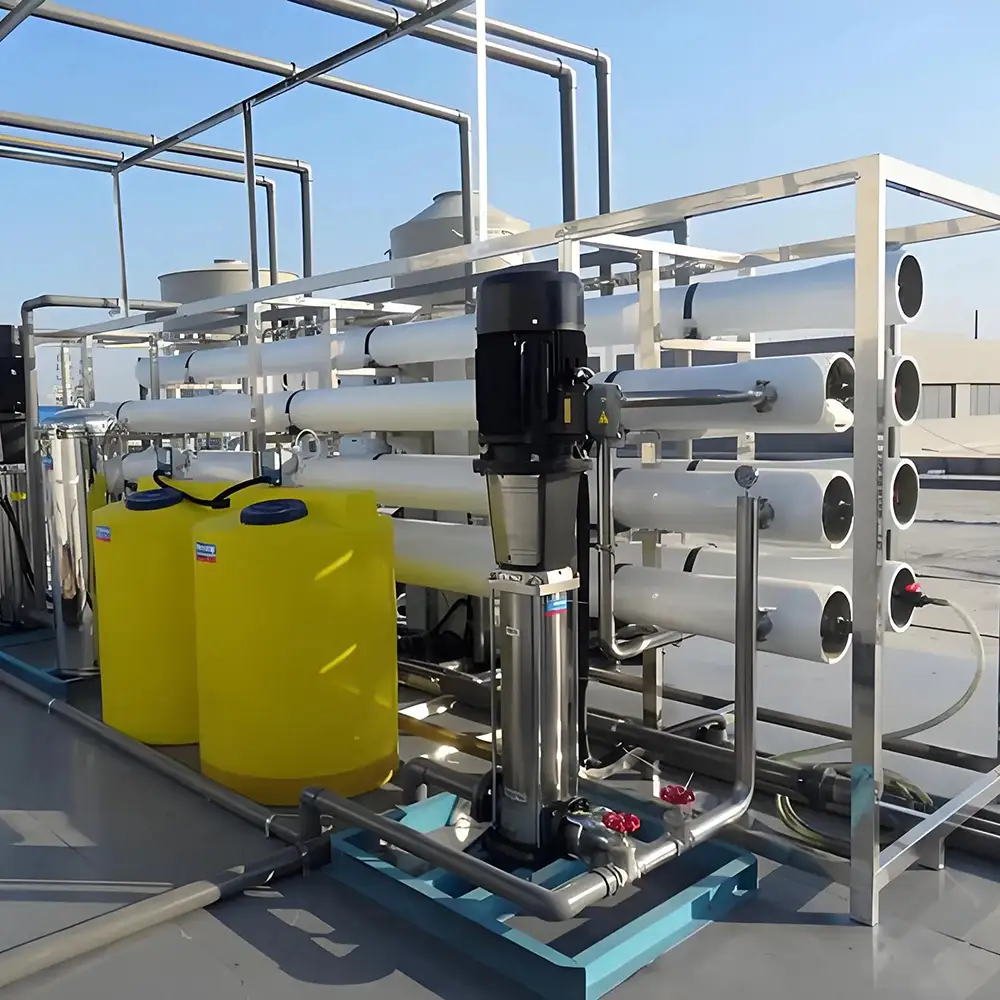
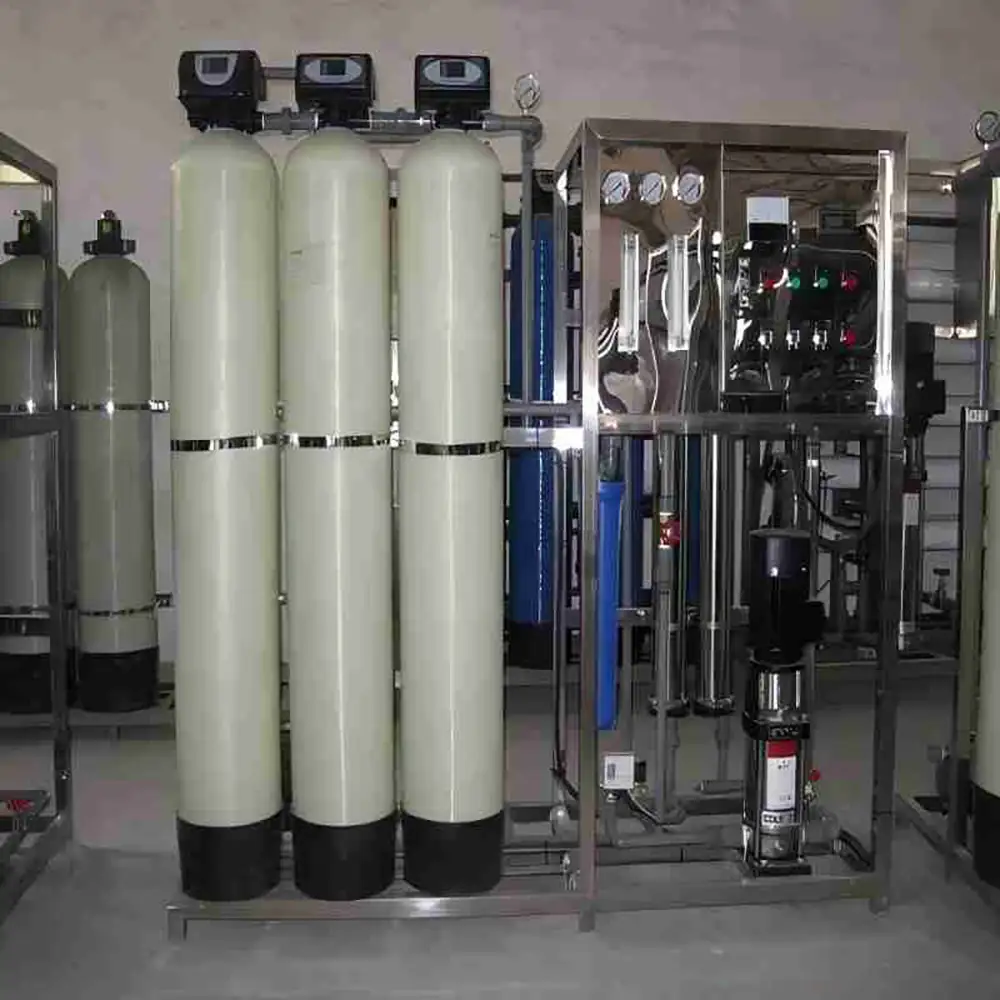
The reverse osmosis equipment passes the raw water through fine filters, granular activated carbon filters, compressed activated carbon filters, etc., and then pressurizes it through a pump, utilizing a pore size of 1/10000 μ The reverse osmosis membrane (RO membrane) of m (equivalent to 1/6000 of the size of Escherichia coli and 1/300 of the size of the virus) separates high concentration water into extremely low concentration water (i.e. pure water) and higher concentration water. Low concentration water is used, and high concentration water is discharged or reused as resources
High-TDS Water Treatment
MVR evaporation is particularly suitable for water streams with high total dissolved solids that are difficult to process using conventional membrane systems.
As dissolved salts and other nonvolatile substances remain in the concentrated liquid while water is converted into vapor, the evaporation process can achieve very high concentration levels.
The recovered condensate can be collected for further treatment or reuse depending on its quality and the requirements of the application.
Potential applications include seawater concentrate, industrial brine, chemical wastewater, process wastewater, and other high-salinity streams.
Energy-Saving Evaporation Process
Energy efficiency is an important consideration in industrial evaporation. Traditional evaporation systems may require continuous external steam or thermal energy.
The MVR process recycles secondary vapor through mechanical compression, allowing the vapor to be reused as a heating source.
As a result, the system can reduce external steam consumption and improve overall thermal efficiency. Actual energy performance depends on feed water characteristics, evaporation temperature, concentration ratio, system capacity, vapor compressor efficiency, and operating conditions.
The system can be designed to match the specific requirements of the water treatment project.
Integrated Water Purification Process
A complete MVR water treatment project may include feedwater storage, pretreatment, heating, evaporation, vapor separation, mechanical vapor compression, condensation, concentrate discharge, and purified water collection.
Pretreatment may be required to remove suspended solids, oil, hardness-forming compounds, or other substances that could cause scaling or fouling inside the evaporator.
Depending on the feed water, pretreatment can include filtration, softening, chemical dosing, pH adjustment, degassing, or other suitable processes.
The recovered condensate can also receive additional polishing or disinfection when the final water is intended for reuse.
Applications in Industrial Water Treatment
The MVR Evaporator Water Purifier can be used across a wide range of industries.
Potential applications include seawater desalination, chemical manufacturing, pharmaceutical production, food and beverage processing, power generation, mining, metal processing, textile production, electronics manufacturing, and industrial wastewater treatment.
MVR technology is especially useful where wastewater contains high concentrations of dissolved solids or where reducing liquid discharge volume is a major treatment objective.
The system can also form part of a Zero Liquid Discharge solution, working together with RO, crystallizers, dryers, or other concentration equipment.
Automatic Operation and Process Control
Modern MVR Evaporator Systems can be equipped with automatic control systems for monitoring and regulating the evaporation process.
The control system may monitor temperature, pressure, liquid level, feed flow, concentrate concentration, vapor conditions, compressor operation, and other important parameters.
Automatic valves, sensors, pumps, and protection functions can help maintain stable operating conditions.
PLC-based controls and touchscreen interfaces can provide operators with real-time information about system status and simplify daily operation.
Automatic control is particularly valuable for industrial installations that operate continuously or require consistent evaporation performance.
Scaling and Maintenance Considerations
Scaling is an important consideration when concentrating seawater and high-TDS solutions. As water evaporates, dissolved salts become increasingly concentrated and may precipitate on heat-transfer surfaces.
Proper feedwater analysis, pretreatment, temperature control, circulation design, and cleaning procedures are important for maintaining system performance.
The MVR system should be operated within the recommended concentration and temperature ranges. Regular inspection of heat-transfer surfaces, pumps, valves, compressors, and instrumentation can help maintain reliable operation.
The specific maintenance schedule depends on feedwater composition, operating hours, concentration ratio, and system design.
Flexible System Configuration
The Seawater Desalination MVR Evaporator can be configured for different treatment capacities and project requirements.
Compact systems can be used for smaller industrial applications, while larger installations can employ multiple evaporation stages or parallel equipment.
The system can also be integrated with existing seawater RO systems, wastewater treatment plants, storage tanks, condensate polishing units, crystallizers, and other process equipment.
This modular approach makes it possible to develop a complete water recovery and concentration process according to the project's water balance and discharge requirements.
Why Choose Us?
We focus on practical thermal evaporation and water treatment solutions for seawater, high-TDS water, industrial wastewater, and concentrated brine applications.
The MVR system can be designed according to feedwater characteristics, required evaporation capacity, target concentration, water recovery requirements, available utilities, installation conditions, and final discharge or reuse requirements.
For seawater desalination projects, MVR can complement conventional RO treatment by further concentrating RO reject water and recovering additional water.
For industrial wastewater applications, the equipment can be integrated into a broader treatment process to reduce wastewater volume and support water reuse or Zero Liquid Discharge objectives.
Our approach emphasizes energy-efficient vapor recycling, stable operation, practical maintenance, flexible integration, and long-term process reliability.
Frequently Asked Questions
1. What is an MVR evaporator?
MVR stands for Mechanical Vapor Recompression. It is an evaporation technology that compresses and reuses secondary vapor as the heating source, reducing the need for continuous external steam.
2. Can an MVR evaporator desalinate seawater?
Yes. MVR evaporation can remove water from seawater and concentrate dissolved salts. It can also be used to further concentrate seawater RO reject or other high-salinity streams.
3. What is the difference between RO and MVR?
RO uses pressure and semipermeable membranes to separate water from many dissolved contaminants. MVR uses thermal evaporation and vapor recompression, making it particularly suitable for very high-TDS and concentrated streams.
4. Can MVR treat RO brine?
Yes. MVR evaporators can be used to further concentrate RO reject water and recover additional water, depending on the brine composition and system design.
5. Is MVR energy efficient?
MVR can significantly reduce external steam requirements by recycling and compressing secondary vapor. Actual energy consumption depends on feedwater properties, evaporation conditions, capacity, and system design.
6. Can the recovered water be reused?
The recovered condensate can potentially be reused after appropriate quality evaluation and additional polishing or disinfection when required.
7. Does MVR require pretreatment?
Pretreatment requirements depend on feedwater composition. Filtration, pH adjustment, hardness control, or other treatment may be needed to reduce scaling and fouling.
8. Can MVR be used for Zero Liquid Discharge?
Yes. MVR evaporation can be an important stage in ZLD systems, especially when used with RO, crystallization, or other concentration technologies.
9. What causes scaling in an MVR evaporator?
Scaling can occur when dissolved salts become highly concentrated and precipitate on heat-transfer surfaces. Proper water analysis, process control, pretreatment, and cleaning are important for managing scaling.
10. What information is needed to design an MVR system?
Important information includes feedwater analysis, flow rate, TDS, major dissolved salts, temperature, required evaporation capacity, desired recovery rate, concentrate target, operating hours, and final condensate requirements.
Prev:
School Factory Reverse Osmosis Filtration Equipment Purifies Water Quality
Next:
Chemical Pharmaceuticals Mechanical Vapor Recompression Evaporator Water Purifier
TAG:
Industrial Wastewater Treatment,
ZLD Evaporator,
Industrial Water Recovery,
Zero Liquid Discharge,
Vacuum Evaporator,
MVR Evaporation System,
Mechanical Vapor Recompression System,
MVR Evaporator,
Industrial Wastewater Evaporator,
Industrial Water Purification,
High TDS Water Treatment,
Water Recovery System,
Water Desalination System,
Seawater Desalination Equipment,
Seawater Desalination,
Industrial Evaporator,
MVR Water Treatment,
Mechanical Vapor Recompression,
RO Concentrate Treatment,
RO Brine Treatment,
Brine Concentration System,
Industrial MVR System,
Energy Saving Evaporator,
Seawater Water Treatment,
ZLD Water Treatment,
Brine Evaporation,
Industrial Water Evaporation,
High TDS Evaporator,
MVR Water Purification,
Concentrated Brine Treatment,
Related Category:
Seawater Desalination MVR Evaporator,Mechanical Vapor Recompression Evaporator,Seawater Desalination Equipment,MVR Evapo China, suppliers, manufacturers, factory, customized, wholesale, quotation, made in China