Key Advantages:
Core Working Principles
Continuous automated operation: No manual intervention is required, allowing for 24-hour continuous processing and saving labor costs.
High processing capacity: A single unit can process tens to hundreds of tons of sludge per day, suitable for large-scale projects.
Low energy consumption and simple maintenance: Compared to plate and frame filter presses, it does not require a high-pressure pump, resulting in lower operating energy consumption; the filter belt has a long service life, making maintenance costs manageable.
Small footprint: Compact structure and modular design make it suitable for small and medium-sized wastewater treatment plants or mobile dewatering projects.
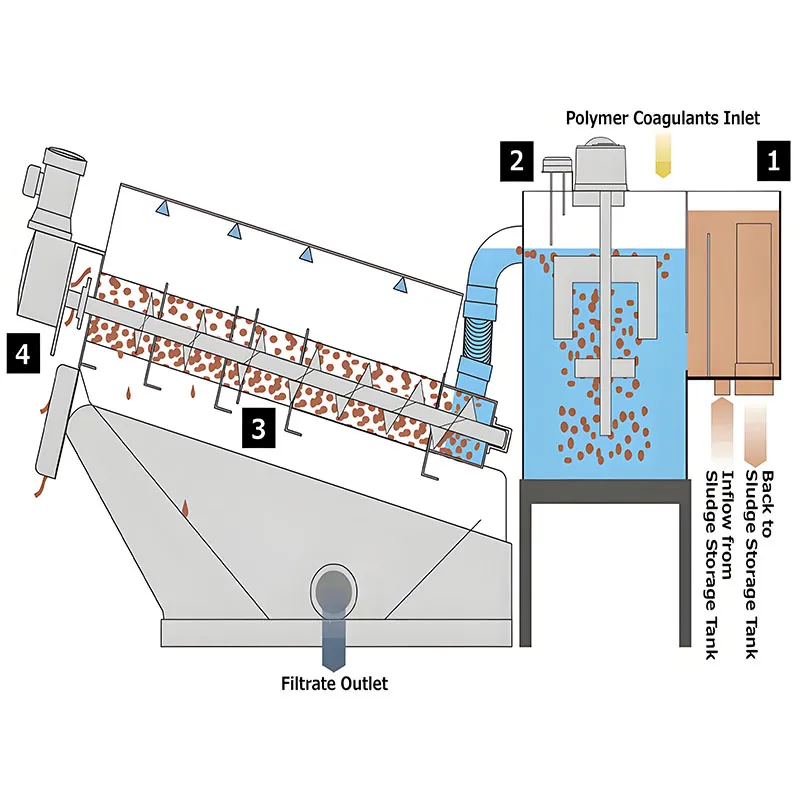
The three-stage process of gravity dewatering, wedge-zone pre-compression dewatering, and high-pressure roller dewatering effectively squeezes and separates water from sludge and slurry materials, achieving volume reduction and harmless treatment of solid materials.
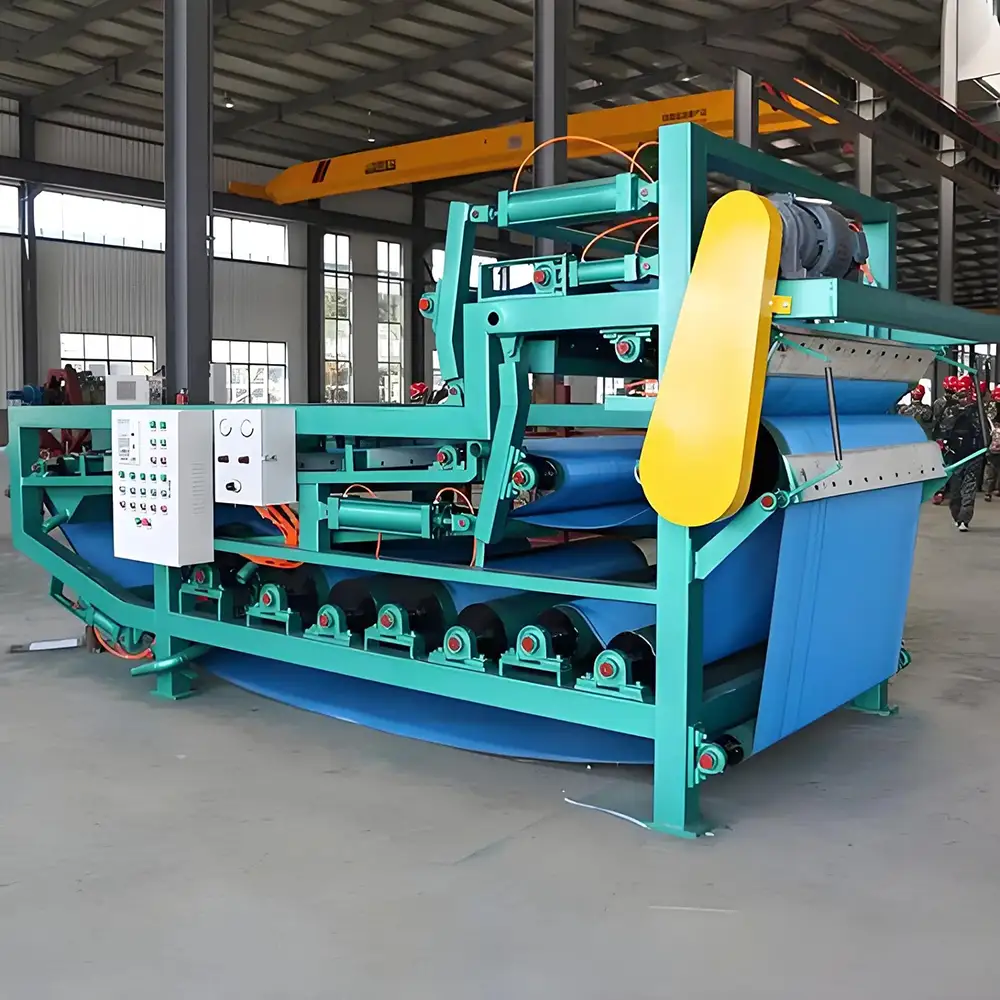
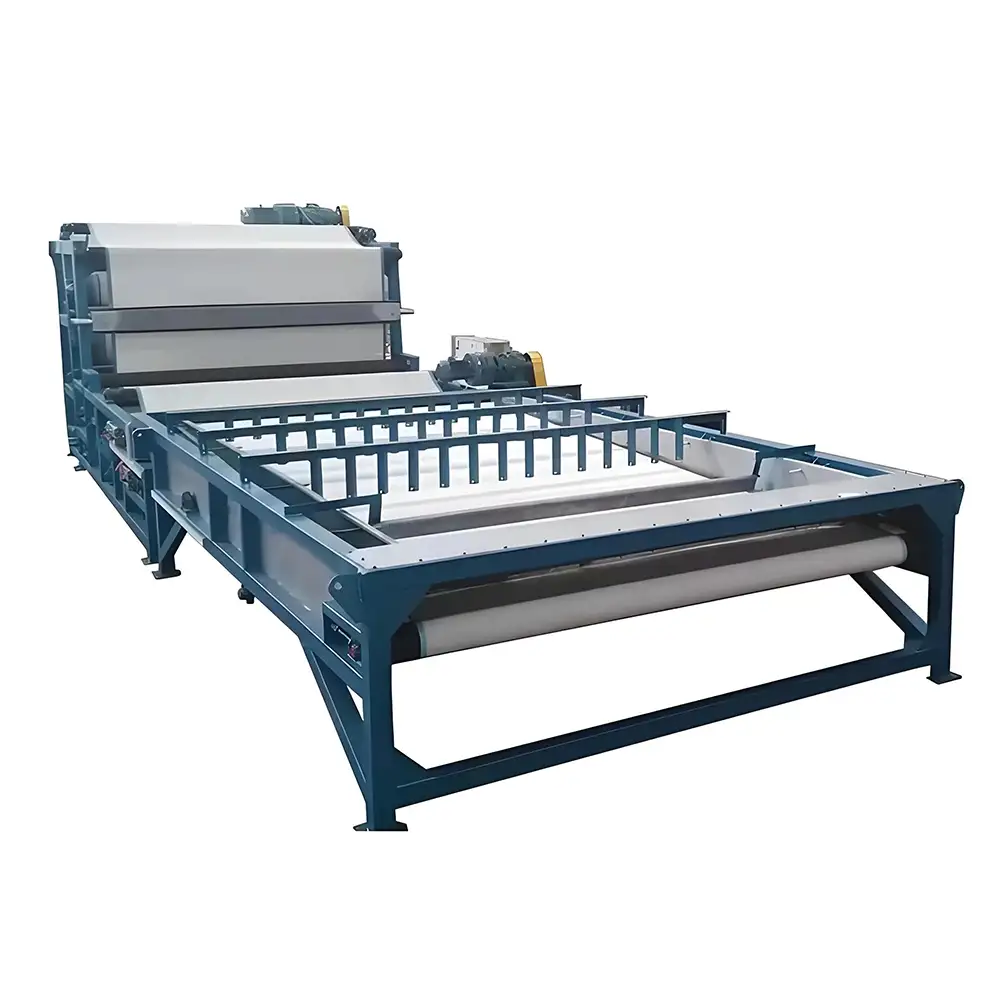
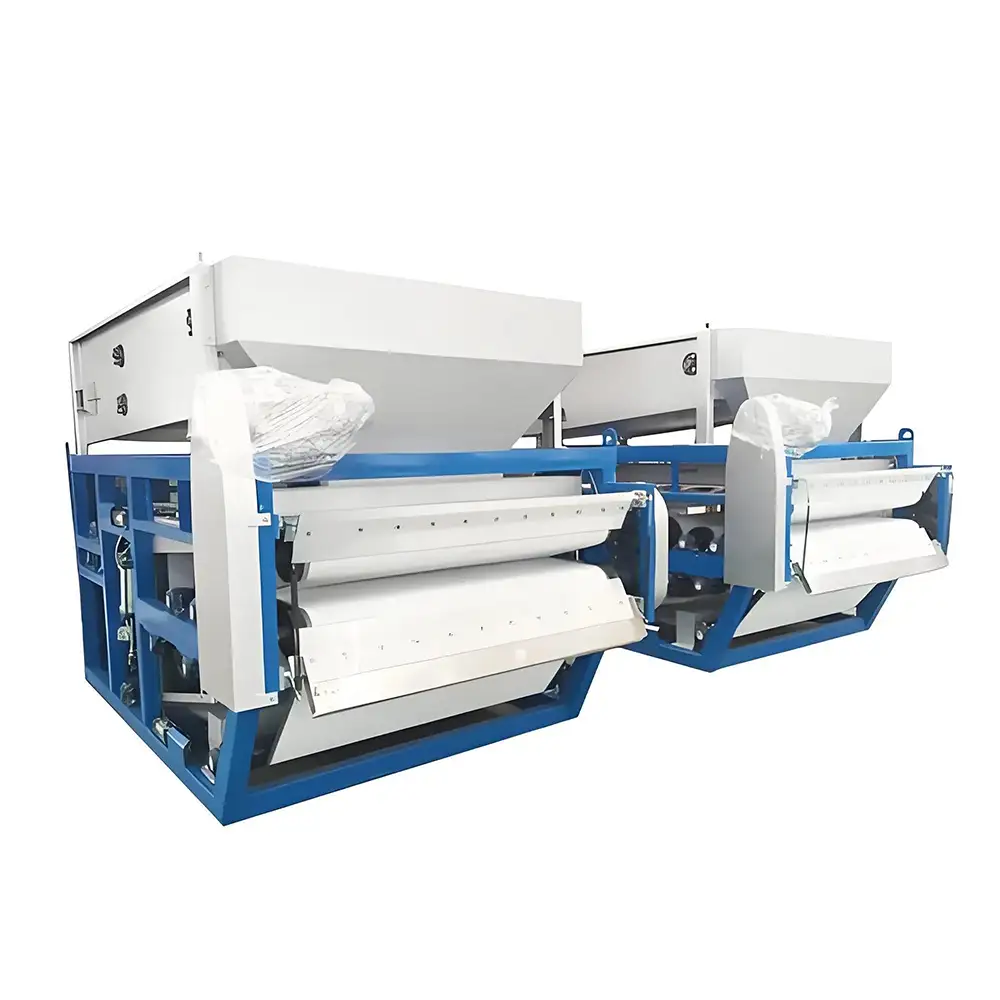
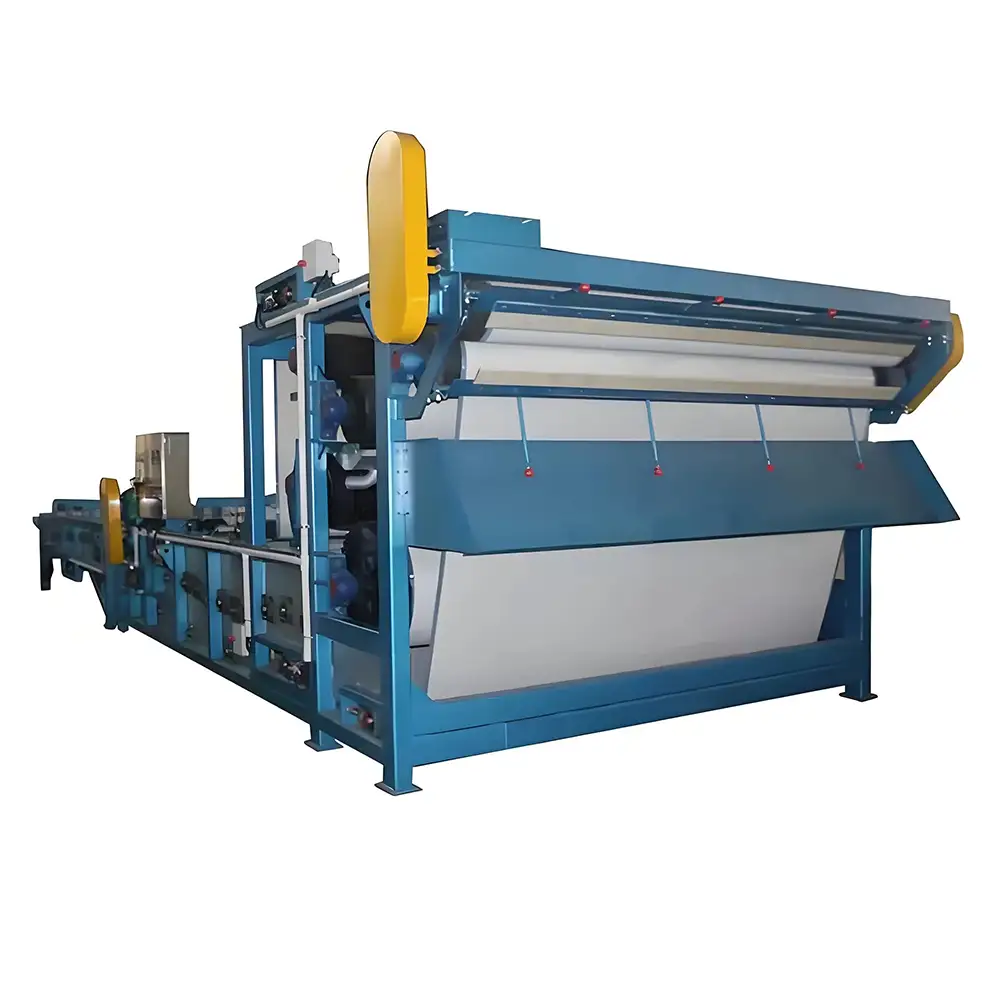
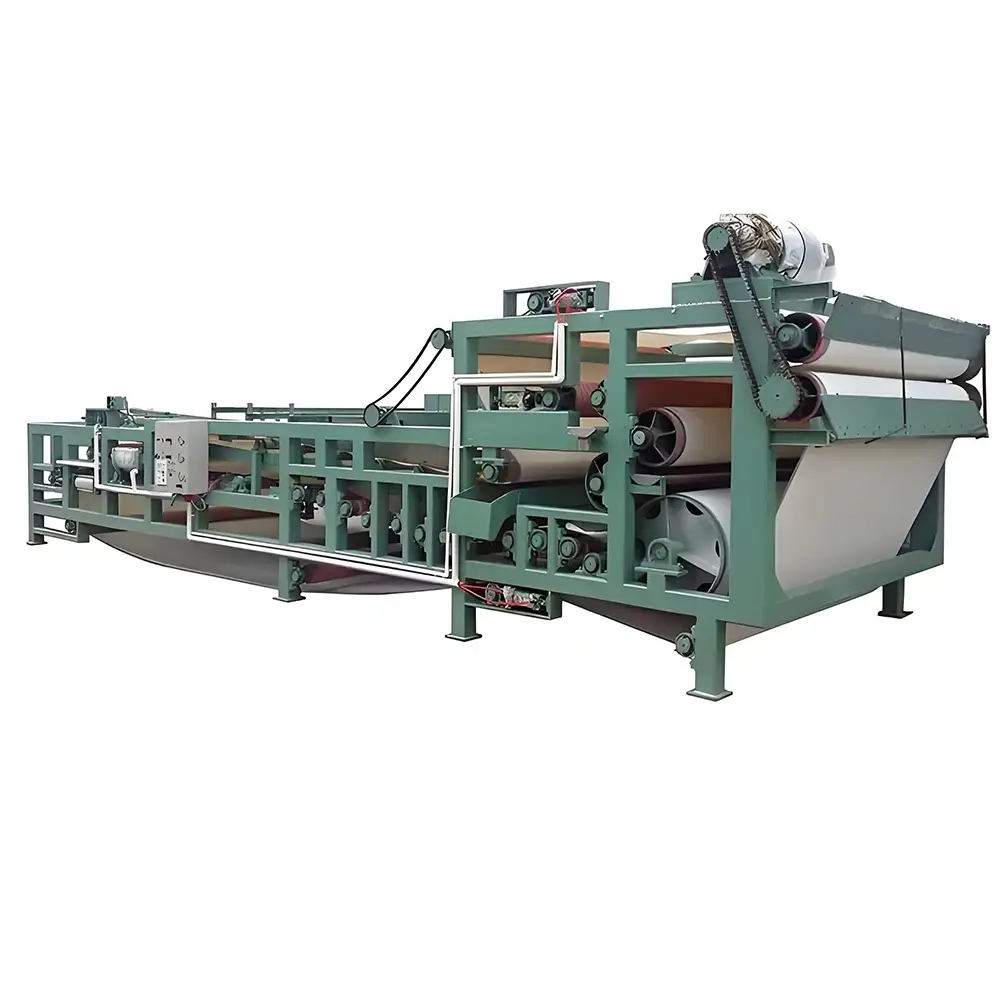
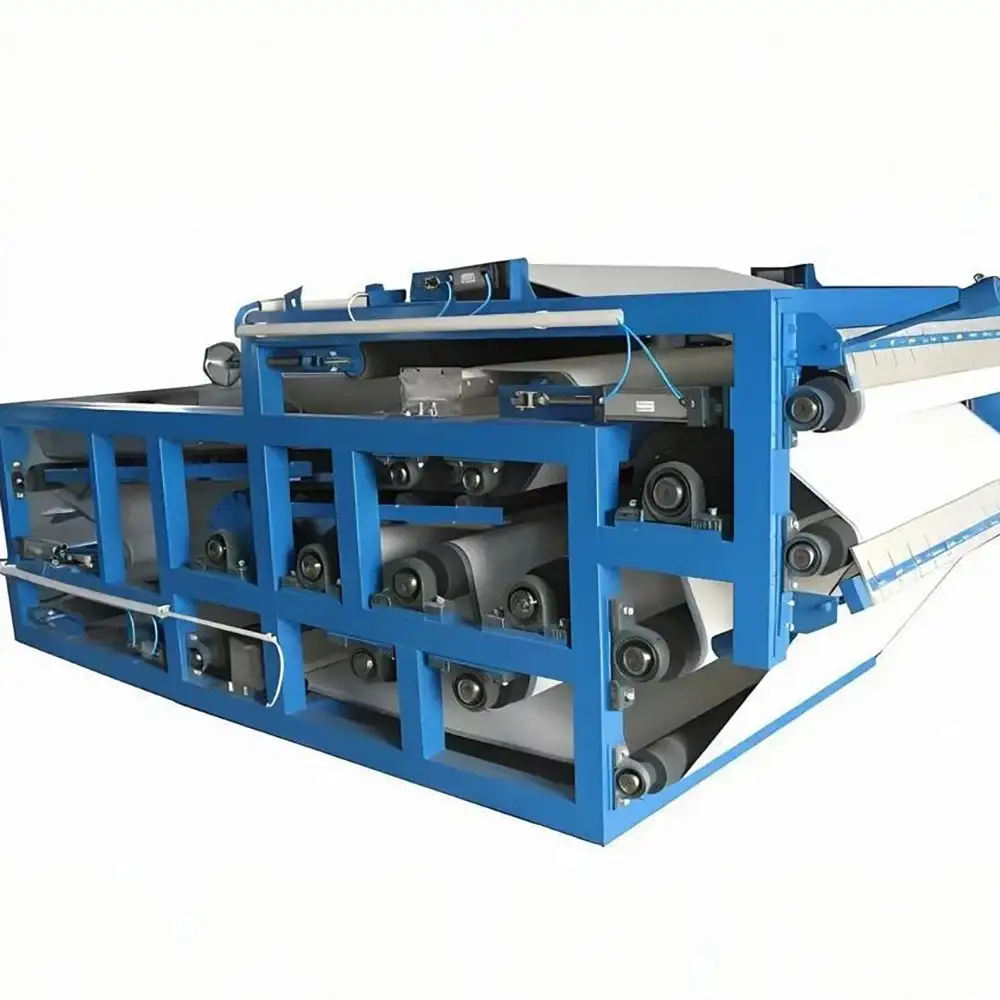
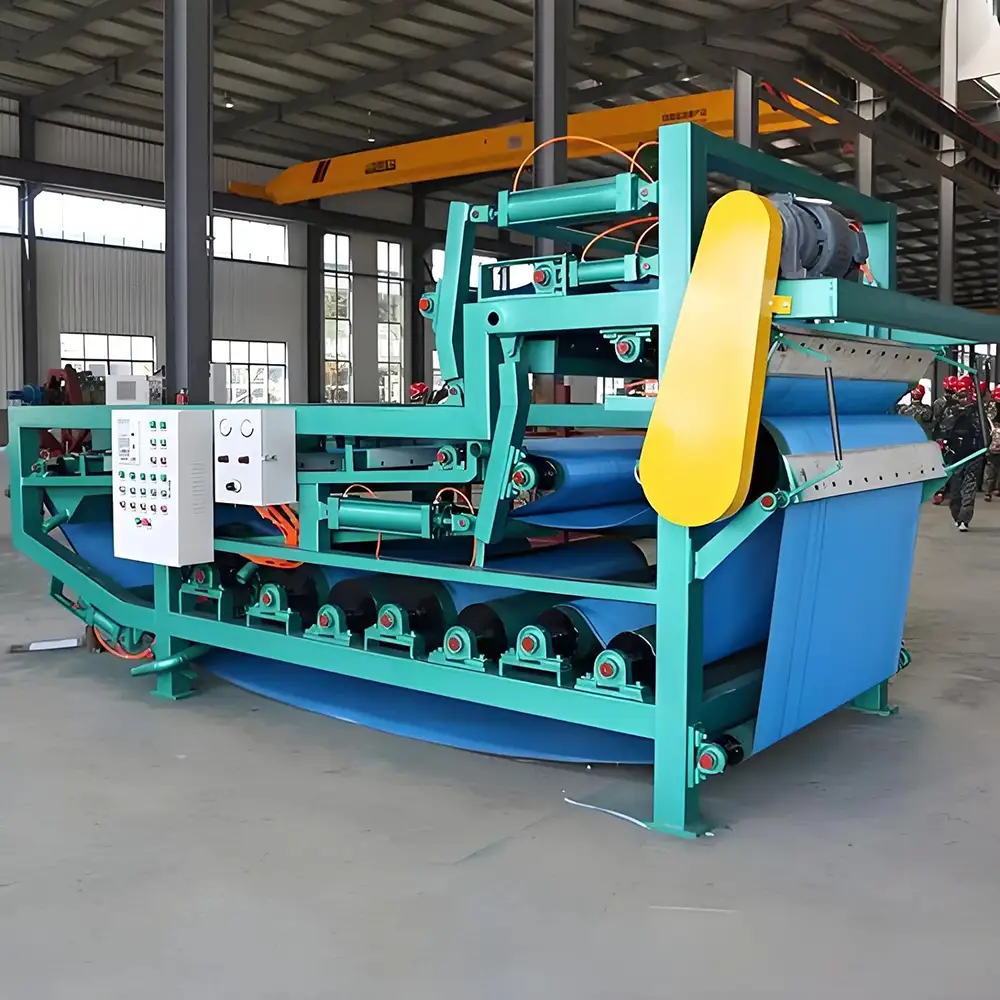
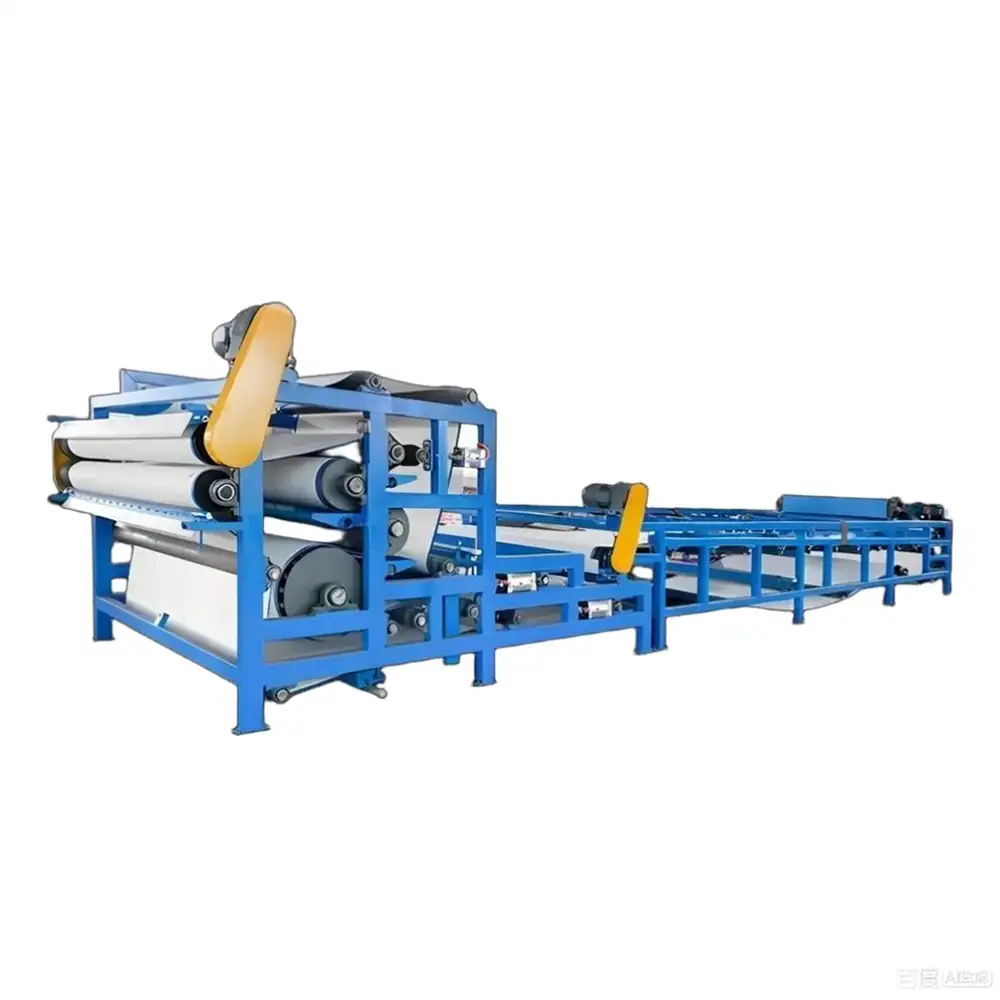
The Industrial Continuous Operation Belt Filter Press for Wastewater Treatment is a mechanical sludge dewatering machine designed for continuous solid-liquid separation in municipal wastewater treatment plants, industrial wastewater facilities, food processing plants, chemical industries, paper mills, textile factories, and other applications that generate compatible sludge.
The belt filter press combines gravity drainage, filtration, mechanical compression, and continuous sludge discharge in one integrated process. Sludge enters the machine through a controlled feeding system and is distributed across a moving filter belt. Free water is first removed through gravity drainage, after which the partially dewatered sludge passes through a series of rollers that progressively compress the material and release additional liquid.
This continuous operation makes the belt filter press suitable for wastewater treatment facilities that require regular and stable sludge dewatering without relying on batch filtration processes.
Industrial Continuous Operation
The machine is designed for continuous industrial operation. Sludge can be continuously introduced into the dewatering system while filtrate is collected and concentrated sludge is discharged from the outlet.
Continuous operation can simplify sludge management in wastewater treatment plants where sludge is generated throughout the day.
The equipment can be integrated with sludge collection tanks, thickening systems, pumps, polymer dosing equipment, conveyors, sludge storage systems, and other wastewater treatment components.
The appropriate operating schedule and machine capacity should be selected according to sludge production and the overall treatment process.
Belt Filter Press Working Principle
The belt filter press uses several stages of mechanical dewatering.
First, sludge enters the gravity drainage zone, where free water passes through the filter belt. The partially dewatered sludge then enters the pressing section.
In the pressing zone, two moving belts transport the sludge through a series of rollers. The gradual reduction in the space between the belts and the mechanical pressure applied by the rollers release additional water.
Finally, the concentrated sludge is separated from the belt and discharged from the machine.
This combination of gravity drainage and progressive mechanical compression provides continuous sludge dewatering for many suitable wastewater treatment applications.
Wastewater Sludge Dewatering
Wastewater treatment generates different types of sludge depending on the source and treatment process. These may include primary sludge, biological sludge, activated sludge, mixed sludge, and certain industrial wastewater residues.
A belt filter press can be configured to process suitable sludge types based on their solids concentration, particle characteristics, viscosity, and conditioning requirements.
The dewatering process reduces the amount of free water carried with the sludge, making the concentrated material easier to handle, transport, store, or send to further treatment.
Actual dewatering performance depends on sludge characteristics, polymer conditioning, belt specifications, roller configuration, feed rate, and operating parameters.
Gravity Drainage Zone
Gravity drainage is an important first stage of belt press dewatering.
After sludge is distributed evenly across the moving belt, free water drains through the filter media. This initial drainage reduces the liquid content before the sludge reaches the mechanical compression section.
Effective gravity drainage depends on proper sludge distribution, floc formation, belt permeability, feed concentration, and sludge characteristics.
A suitable polymer conditioning system can improve floc formation for sludge types containing fine suspended particles.
Progressive Mechanical Compression
After gravity drainage, the sludge enters the mechanical pressing section.
The filter belts guide the sludge through a sequence of rollers. As the pressure increases progressively, water is squeezed from the sludge and passes through the filtration belt.
The gradual compression principle helps prevent excessive loading at a single point and allows the machine to continuously remove liquid while transporting the sludge toward the discharge section.
The actual compression conditions depend on machine configuration and sludge properties.
Polymer Conditioning System
Many wastewater sludges benefit from chemical conditioning before belt press dewatering. Polymer is commonly used to encourage fine suspended particles to form larger flocs.
Better floc formation can improve gravity drainage and help retain solids on the filter belt during mechanical compression.
The machine can be integrated with a polymer preparation and dosing system when required.
Polymer selection and dosage should be determined through laboratory or field testing because different municipal and industrial sludges can respond differently to conditioning chemicals.
Continuous Filter Belt
The filter belt provides the filtration surface for separating liquid from sludge.
As the sludge travels through the machine, water passes through the belt while solid particles remain between the belts and continue toward the compression and discharge stages.
Different sludge applications may require different belt materials, permeability, mesh structures, and cleaning arrangements.
Proper belt selection is important for balancing filtration performance, solids retention, cleaning requirements, and service life.
Automatic Belt Washing
A belt washing system helps clean the filtration belt after the dewatering cycle.
Pressurized water is directed through cleaning nozzles to remove accumulated sludge particles from the belt surface and filtration openings.
Regular belt cleaning helps maintain water drainage and stable filtration performance.
Water pressure, nozzle arrangement, washing frequency, and water consumption depend on the equipment design and sludge characteristics.
Efficient Solid-Liquid Separation
The belt filter press separates wastewater sludge into a liquid fraction and a concentrated solid fraction.
The separated liquid, or filtrate, is collected beneath the filtration zones and can be returned to an appropriate stage of the wastewater treatment process according to the plant design.
The dewatered sludge exits through the discharge section and can be transported to storage, drying, composting, digestion, thermal treatment, or other suitable downstream processes.
The final sludge characteristics depend on the original feed and machine operating conditions.
Municipal Wastewater Treatment Applications
Municipal wastewater treatment plants generate sludge from different treatment stages. Continuous belt filter presses can be used for suitable primary and biological sludge dewatering.
The machine can be installed downstream of sludge thickening and conditioning systems.
For municipal applications, equipment capacity should be selected according to daily sludge production, operating hours, feed solids concentration, and required dewatering performance.
A properly configured system can provide continuous sludge processing while integrating with existing plant infrastructure.
Industrial Wastewater Treatment
Industrial wastewater can generate sludge with significantly different physical and chemical characteristics.
Suitable applications may include food processing, beverage production, paper manufacturing, textile processing, chemical production, agricultural processing, and other industrial operations.
Some industrial sludges may contain fibers, oils, inorganic particles, or chemicals that affect filtration and belt performance.
Material compatibility, belt selection, conditioning requirements, and equipment construction should therefore be evaluated according to the specific industrial application.
Food Processing Wastewater
Food factories and beverage plants can generate organic and biological sludge during wastewater treatment.
A continuous belt filter press can provide mechanical dewatering for suitable food industry sludge.
Applications may include meat processing wastewater, vegetable processing wastewater, fruit processing, beverage production, dairy-related wastewater, starch processing, and other food industry operations.
Depending on the application, equipment construction and cleaning arrangements can be selected according to the operating environment.
Paper And Fiber Sludge
Paper manufacturing and related industries can generate sludge containing fibers and suspended solids.
A belt filter press can be considered for suitable fiber-containing sludge applications.
Because fiber characteristics can influence filtration and belt permeability, the filter belt and washing system should be selected according to the material properties.
Application testing can help determine suitable operating parameters and belt specifications.
Continuous Sludge Handling
The continuous operating design allows the machine to become part of an automated sludge handling system.
Upstream equipment can include sludge pumps, collection tanks, mixers, sludge thickeners, and polymer preparation units.
Downstream systems can include conveyors, screw presses, sludge storage containers, dryers, composting systems, or other appropriate treatment equipment.
This allows the belt filter press to be adapted to different wastewater treatment workflows.
Reduced Sludge Transportation Volume
Mechanical dewatering removes a portion of the water contained in sludge. Reducing excess water can decrease the volume and weight of material requiring storage or transportation.
For large wastewater treatment plants, this can simplify sludge handling and improve the efficiency of downstream processing.
The actual reduction in volume depends on feed concentration, sludge characteristics, polymer conditioning, belt performance, and operating conditions.
Energy-Efficient Mechanical Processing
The belt filter press uses relatively low-speed belt movement and mechanical roller compression.
Unlike processes that rely primarily on high-speed centrifugal separation, the belt press combines gravity drainage with progressive mechanical pressing.
Actual energy consumption depends on motor power, belt width, sludge flow, polymer dosing, operating hours, water washing requirements, and system configuration.
Proper equipment sizing and process optimization can help establish an efficient dewatering system.
Easy Operation And Maintenance
The machine can be equipped with automatic controls for sludge feeding, belt movement, belt washing, polymer dosing, and other operating functions.
Operators can monitor sludge distribution, belt condition, filtrate flow, and dewatered sludge discharge during operation.
Routine maintenance includes cleaning and inspection of the filter belts, rollers, bearings, scrapers, water nozzles, pumps, seals, and transmission components.
Regular maintenance helps maintain stable filtration and extend the service life of consumable components.
Compact Integrated Design
The belt filter press combines several dewatering functions in one continuous machine.
Its integrated structure can reduce the need for separate gravity drainage and mechanical pressing equipment.
The overall footprint depends on belt width, machine model, feeding equipment, polymer system, washing system, and installation requirements.
It can be designed for both new wastewater treatment plants and upgrades to existing sludge dewatering systems.
Customized Wastewater Treatment Configuration
Different wastewater treatment plants have different sludge production rates and process conditions.
Important selection factors include:
Sludge Type
Feed Flow Rate
Solids Concentration
Sludge Temperature
Particle Characteristics
Operating Hours
Polymer Requirements
Required Dewatering Performance
Belt Width
Available Installation Space
Downstream Sludge Treatment
Based on these parameters, an appropriate belt filter press configuration can be evaluated.
B2B Industrial Sludge Dewatering Solution
The Industrial Continuous Operation Belt Filter Press for Wastewater Treatment is suitable for wastewater treatment contractors, municipal treatment plants, industrial manufacturers, environmental engineering companies, food processing facilities, and international equipment distributors.
The equipment can be supplied as a standalone sludge dewatering machine or integrated into a complete treatment system.
For project evaluation, customers can provide wastewater analysis, sludge flow, solids concentration, operating hours, required capacity, and installation conditions. These details help determine an appropriate machine and auxiliary equipment configuration.
Key Features
Continuous Industrial Belt Filter Press Operation
Efficient Wastewater Sludge Dewatering
Gravity Drainage And Mechanical Compression
Progressive Roller Pressing
Continuous Filtrate Separation
Automatic Belt Washing System
Optional Polymer Preparation And Dosing
Continuous Dewatered Sludge Discharge
Suitable For Municipal And Industrial Sludge
Energy-Efficient Mechanical Dewatering Principle
Easy Integration With Wastewater Treatment Systems
Automatic Control Options Available
Main Applications
Municipal Wastewater Treatment
Industrial Wastewater Treatment
Food Processing Wastewater
Beverage Industry Wastewater
Paper Mill Sludge
Textile Wastewater Sludge
Chemical Industry Sludge
Agricultural Processing Wastewater
Biological Sludge Dewatering
Primary Sludge Dewatering
Industrial Sludge Treatment
Wastewater Treatment Plants
FAQs
1. What Is An Industrial Belt Filter Press?
An industrial belt filter press is a continuous mechanical sludge dewatering machine that uses gravity drainage, filtration belts, and roller compression to separate water from sludge.
2. Can It Operate Continuously?
Yes. The machine is designed for continuous sludge feeding, filtration, mechanical pressing, belt washing, and dewatered sludge discharge.
3. What Types Of Sludge Can It Process?
It can be configured for many compatible municipal and industrial sludges, including biological sludge, primary sludge, food processing sludge, paper sludge, and other wastewater treatment residues.
4. Does The Belt Press Require Polymer?
Many sludge types benefit from polymer conditioning, but the requirement depends on sludge properties. Polymer selection and dosage should be determined through testing.
5. How Does A Belt Filter Press Remove Water?
Sludge first passes through a gravity drainage zone and then enters a mechanical compression section where rollers progressively squeeze water through the filter belts.
6. What Is The Purpose Of Belt Washing?
Belt washing removes accumulated sludge particles from the filter media and helps maintain filtration and drainage performance.
7. Can It Be Used For Municipal Wastewater?
Yes. The belt filter press can be configured for suitable municipal primary and biological sludge dewatering applications.
8. Can It Process Industrial Wastewater Sludge?
Yes. It can be used for many compatible industrial sludges, although material characteristics and chemical compatibility should be evaluated before equipment selection.
9. Is A Belt Filter Press Energy Efficient?
The machine uses relatively low-speed belt movement, gravity drainage, and mechanical roller compression. Actual energy consumption depends on the complete system configuration and operating conditions.
10. How Do I Select The Right Belt Filter Press?
Provide sludge type, flow rate, feed solids concentration, operating hours, polymer requirements, desired capacity, and installation space. Sludge testing can also help determine the appropriate configuration.
Why Choose Us
Professional Belt Filter Press Technology
We provide continuous belt filter press equipment for municipal wastewater, industrial wastewater, food processing, paper, and other compatible sludge dewatering applications.
Continuous Industrial Operation
The equipment is designed for continuous sludge feeding, gravity drainage, mechanical compression, belt washing, and solids discharge.
Application-Based Configuration
We evaluate sludge properties, flow rate, solids concentration, polymer requirements, operating hours, and downstream treatment needs before recommending equipment.
Complete Wastewater System Integration
The belt press can be integrated with sludge pumps, thickening systems, polymer dosing units, filtrate collection, conveyors, and downstream sludge treatment equipment.
Factory-Direct B2B Support
We support international customers with technical consultation, application evaluation, equipment configuration, production coordination, export packaging, installation guidance, and after-sales service.
Customized Sludge Dewatering Solutions
Different wastewater treatment processes produce different sludge characteristics. We provide application-based belt specifications, machine configurations, washing systems, and auxiliary equipment according to project requirements.
Prev:
Energy-Saving Belt Filter Press for Sludge Dewatering
Next:
Easy Maintenance Belt Filter Press for Printing and Dyeing Wastewater Sludge
TAG:
Wastewater Treatment Equipment,
Industrial Wastewater Sludge Treatment,
Sludge Solid Liquid Separation,
Continuous Sludge Dewatering,
Sludge Dewatering Belt Press,
Automatic Belt Filter Press,
Sludge Filtration Equipment,
Mechanical Sludge Dewatering,
Industrial Sludge Treatment Equipment,
Municipal Sludge Dewatering,
Industrial Sludge Filter Press,
Belt Press Filter Machine,
Continuous Sludge Dewatering Equipment,
Industrial Belt Press Dewatering,
Wastewater Sludge Dewatering Machine,
Industrial Sludge Dewatering Machine,
Belt Filter Press Sludge Dewatering,
Industrial Continuous Belt Filter Press,
Continuous Belt Filter Press,
Wastewater Treatment Belt Filter Press,
Related Category:
Industrial Continuous Operation Belt Filter Press for Wastewater Treatment, Industrial Belt Filter Press, Continuous Bel China, suppliers, manufacturers, factory, customized, wholesale, quotation, made in China