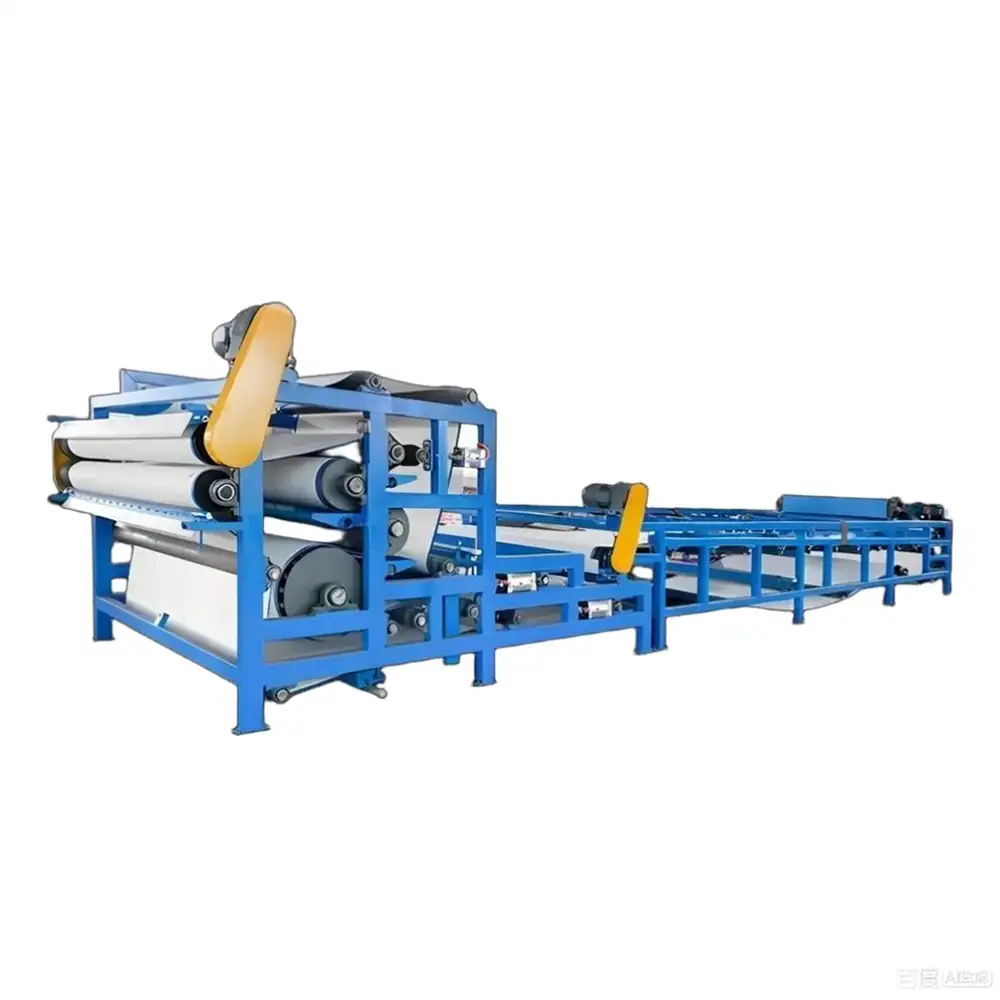
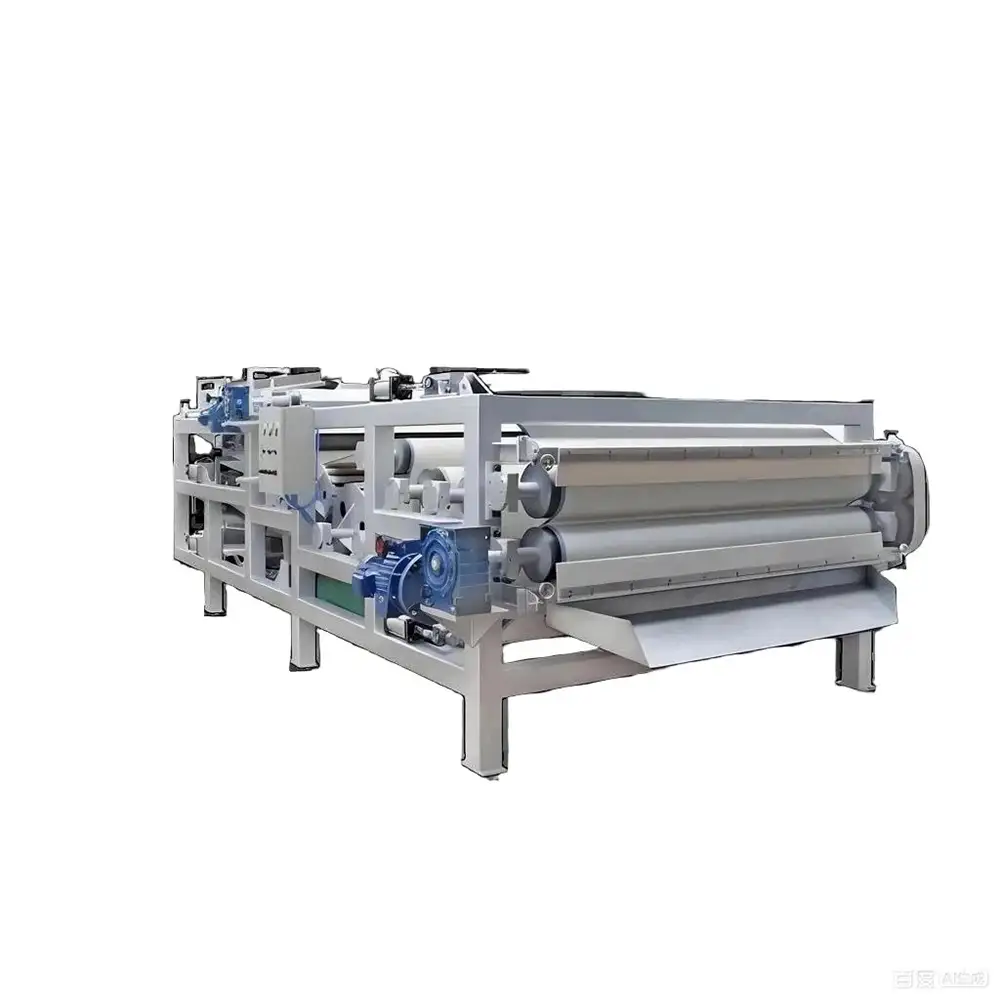
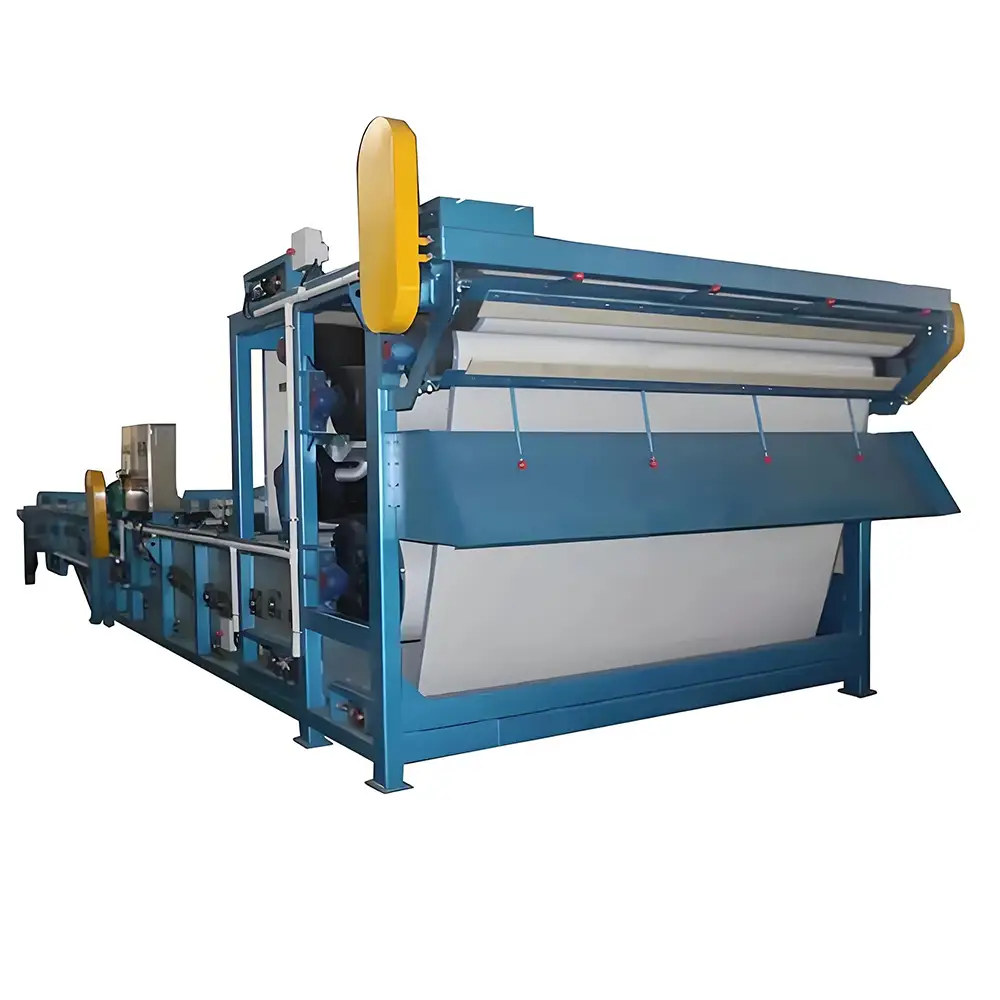
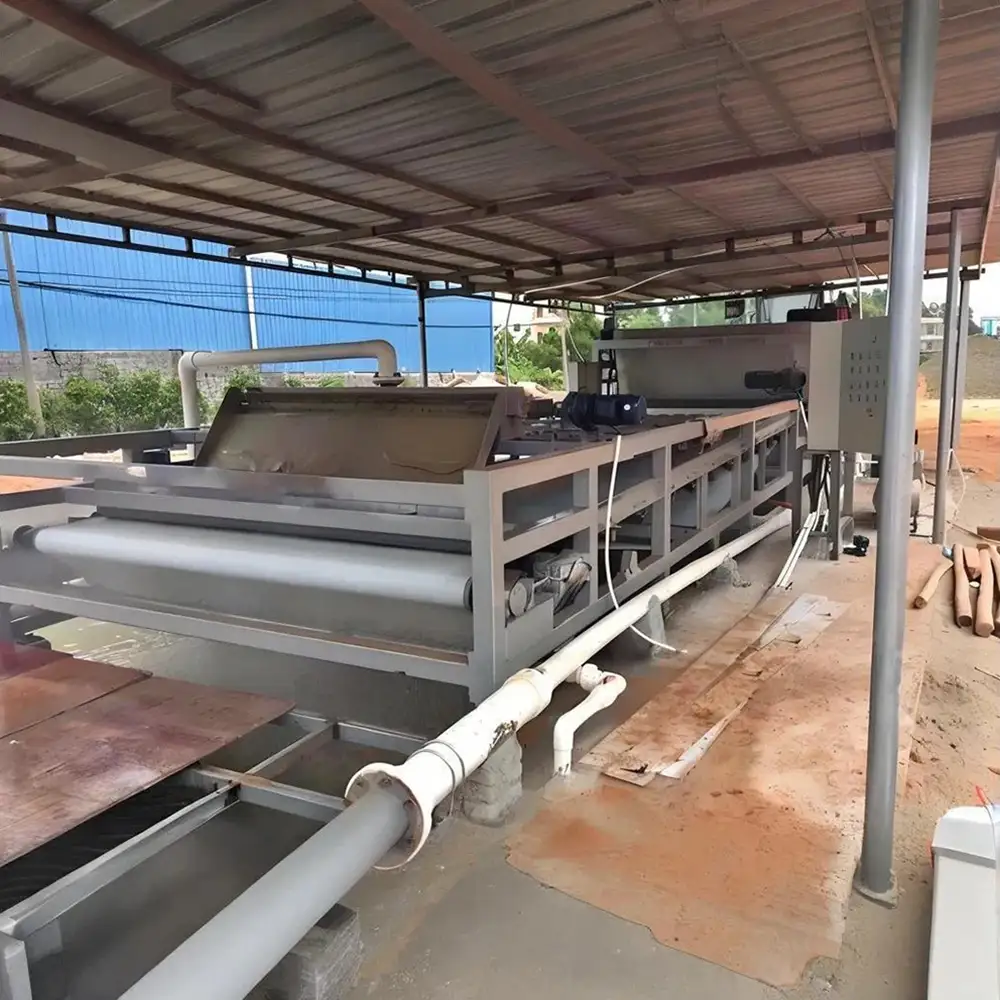
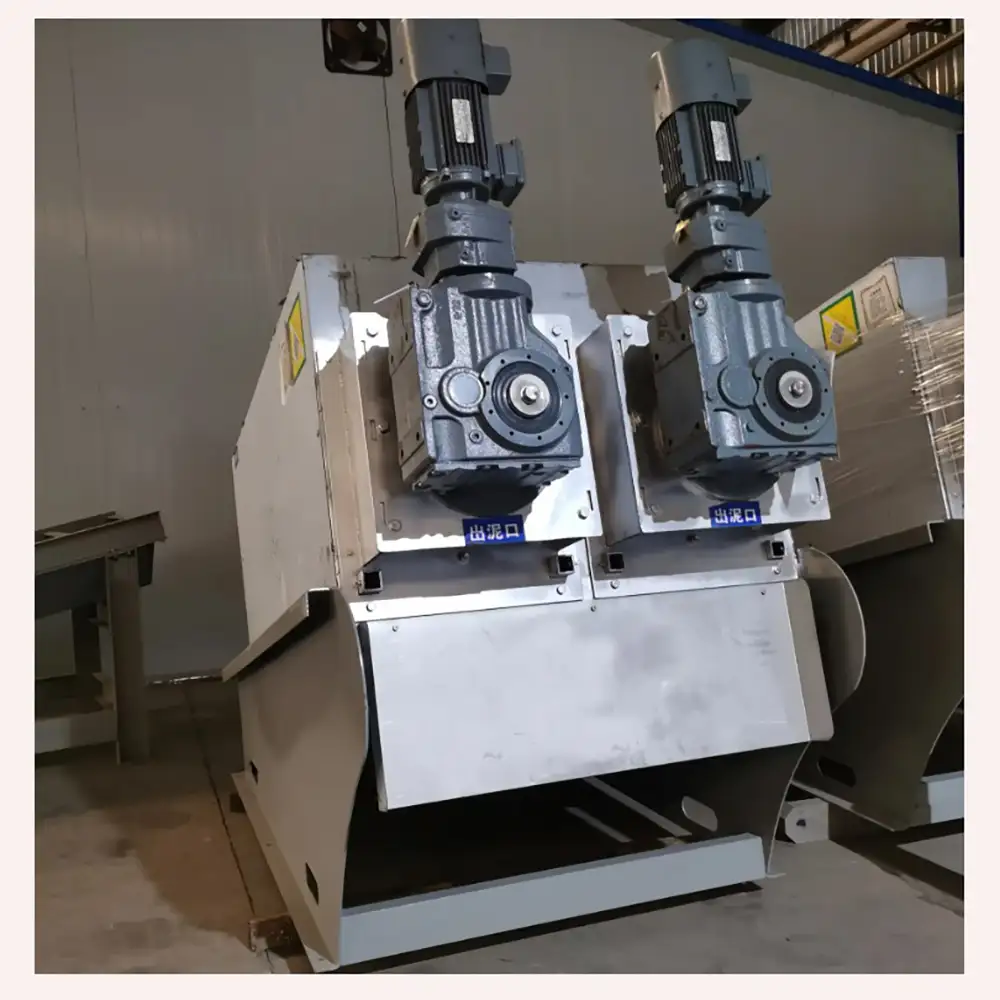
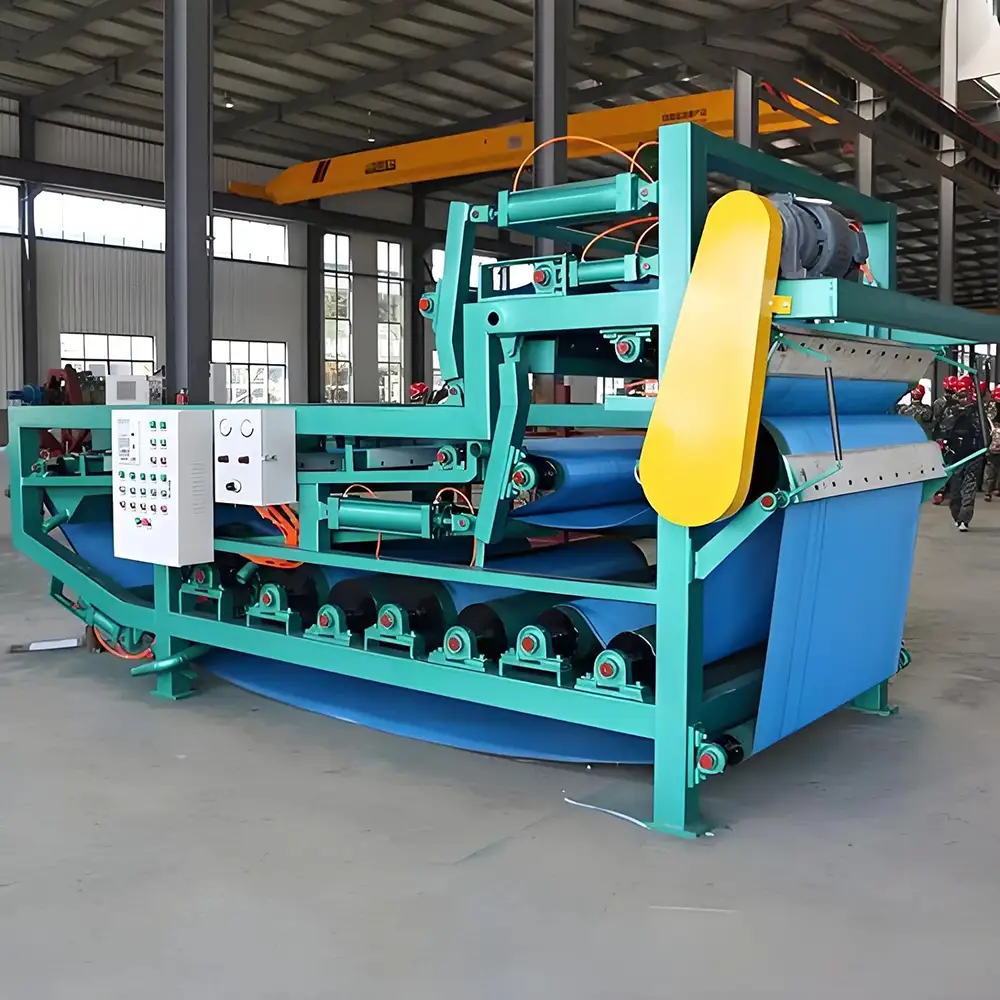
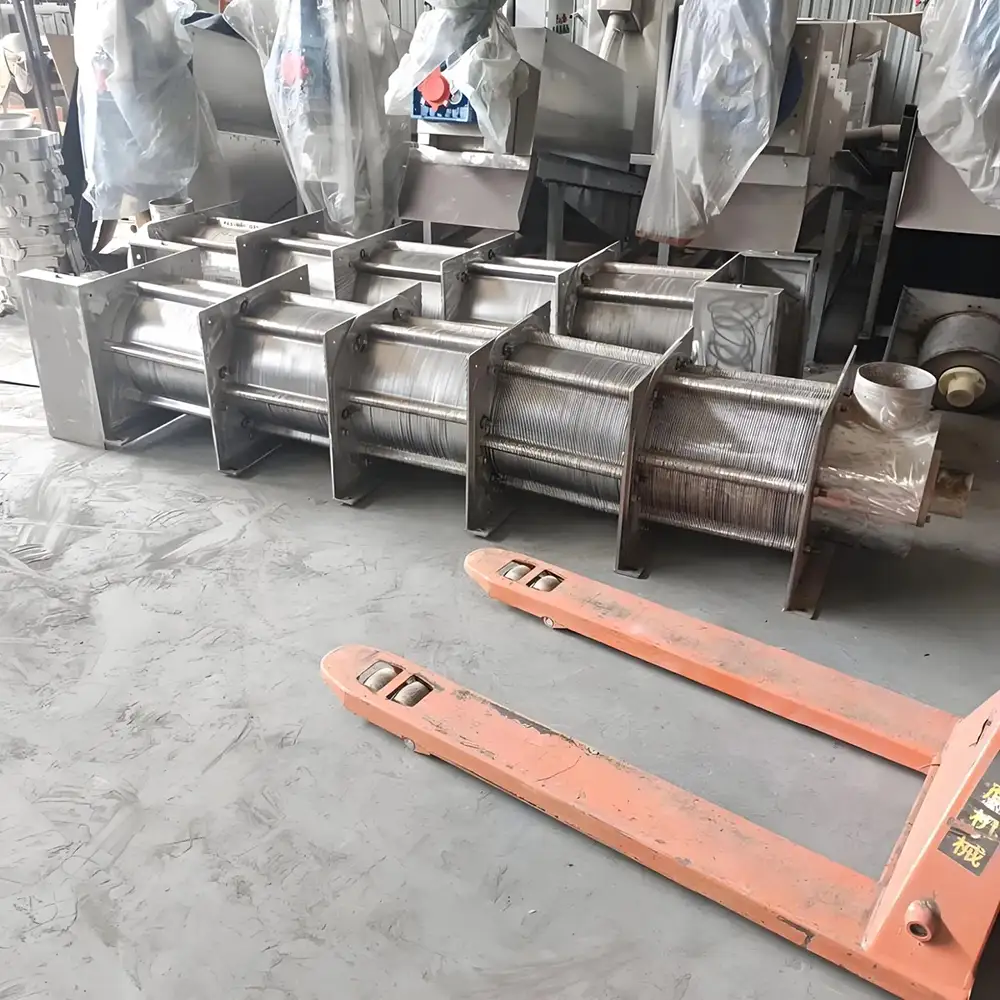
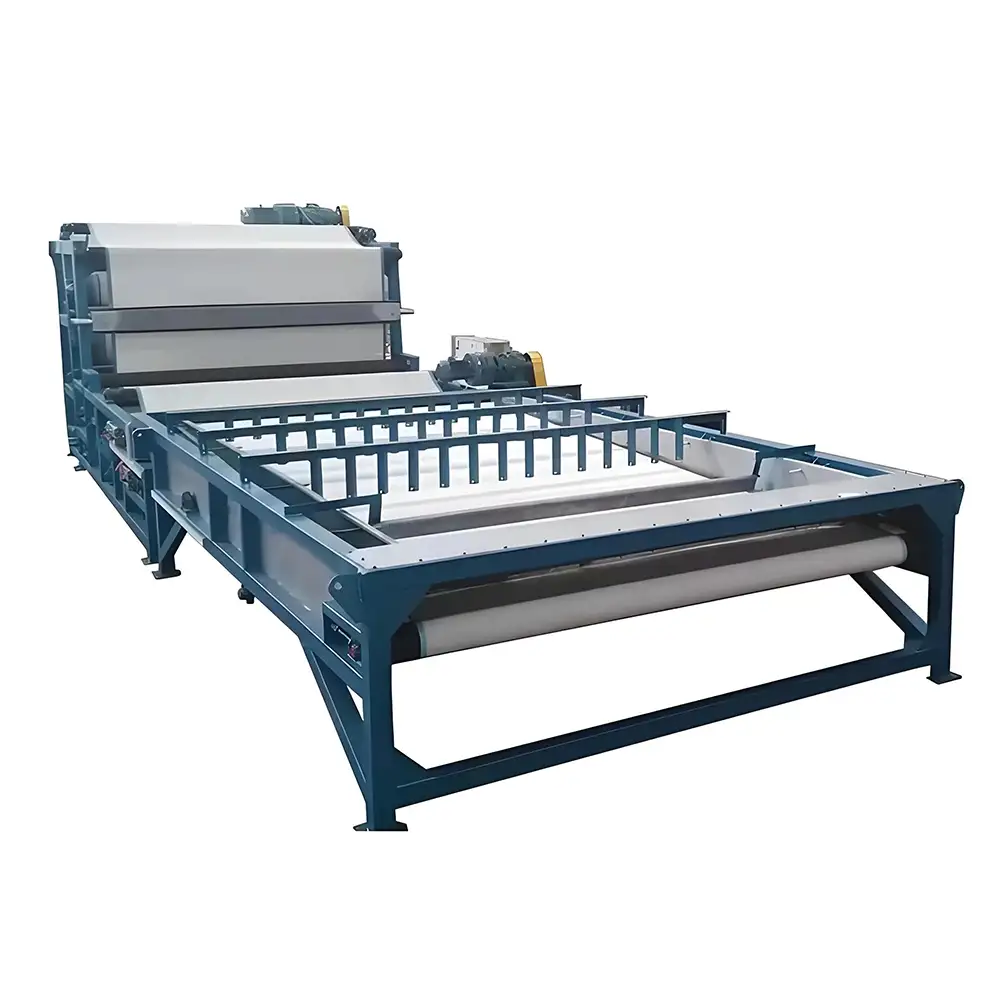
The Easy Maintenance Belt Filter Press for Printing and Dyeing Wastewater Sludge is a continuous mechanical dewatering machine designed for suitable sludge generated by textile manufacturing, fabric processing, printing, dyeing, and industrial wastewater treatment processes. It combines gravity drainage, belt filtration, mechanical compression, continuous belt washing, and sludge discharge in one integrated system.
Printing and dyeing factories can generate wastewater containing suspended solids, dyes, fibers, sizing materials, organic matter, inorganic particles, and other process-related substances. After wastewater treatment, the resulting sludge typically contains a significant amount of water and requires further dewatering before storage, transportation, disposal, or downstream treatment.
The belt filter press provides a practical continuous solution for reducing free water in compatible textile and dyeing wastewater sludge. Its accessible structure, continuous operation, and routine belt washing system can simplify daily operation and maintenance for industrial wastewater treatment facilities.
|
Module |
core components |
Specifications/Material/Function |
Common configuration |
|
Basic support |
frame |
Carbon steel with powder coating/stainless steel; load-bearing and fixing all components. |
1 set (including main beam, end beam, and support frame) |
|
Feeding system |
Feed hopper + mixer |
Stainless steel/PP; uniform fabric + flocculation mixing |
1 set (including static mixer + mud spreader) |
|
Dehydration system |
Upper/lower filter belt |
Polyester (PET)/Polypropylene (PP); abrasion resistant, corrosion resistant, breathable |
2 strips (width 1m/1.5m/2m/3m) |
|
|
Gravity dehydration section |
Bracket + feed trough; pre-dehydration, reducing moisture content to 80%-90%. |
Group 1 |
|
|
wedge-shaped preloading section |
Filter belt with angled structure; slight compression reduces moisture content to 70%-80%. |
Group 1 |
|
|
S-shaped pressing section |
Multiple sets of pressure-reducing press rolls with varying diameters; high-pressure shearing reduces moisture content to 60%-70%. |
1 set (including large/small diameter rollers) |
|
Drive control |
Transmission device |
Variable frequency motor + reducer; drives the filter belt at a speed of 0.8-8m/min |
1 set (power 3-11kW) |
|
|
tensioning device |
Cylinder/airbag + tension roller; tension 50-88 N/cm, stabilizing the filter belt. |
2 sets (independent control of upper and lower filter belts) |
|
|
Pivot adjustment device |
Adjusting roller + cylinder + sensor; to prevent filter belt from running off-center. |
4-6 groups (bilateral arrangement) |
|
Accessibility |
Cleaning System |
High-pressure nozzle + liquid receiving box; flushes away filter belt residue and prevents clogging. |
1 set (with cleaning pump) |
|
|
unloading device |
Scraper + discharge roller; peeling off mud cake |
1 set |
|
|
Pneumatic/Electrical Control System |
PLC + cylinder + solenoid valve; automatic tensioning, alignment, and speed control. |
1 set (including control cabinet + pneumatic components) |
Easy Maintenance Belt Filter Press
Maintenance is an important consideration for industrial wastewater treatment equipment. The belt filter press uses an accessible mechanical structure that allows operators to inspect and maintain major components such as filter belts, rollers, scrapers, bearings, washing nozzles, pumps, and drive components.
Regular cleaning of the filter belt is particularly important because printing and dyeing sludge may contain fine particles, fibers, pigments, and other materials that can accumulate on the filtration surface.
The machine can be configured with automatic belt washing to help remove accumulated solids during continuous operation. Easy access to wear components can also simplify inspection and replacement procedures.
Printing And Dyeing Wastewater Sludge
Printing and dyeing wastewater characteristics vary according to fabric type, dyes, chemicals, production processes, and wastewater treatment methods.
Sludge generated from textile wastewater treatment may contain fine suspended solids, fibers, pigments, organic matter, and inorganic substances. These characteristics can affect filtration behavior and dewatering performance.
The belt filter press can be configured for suitable printing and dyeing wastewater sludge after the material has been evaluated.
For equipment selection, important parameters include sludge concentration, particle characteristics, pH, temperature, chemical composition, flow rate, and polymer conditioning requirements.
Continuous Sludge Dewatering
The belt filter press operates continuously. Sludge is fed into the machine, distributed onto the filter belt, mechanically dewatered, and discharged as a concentrated sludge stream.
Continuous operation is suitable for textile factories and wastewater treatment plants that generate sludge on a regular basis.
The machine can be integrated with sludge collection tanks, sludge thickening systems, pumps, polymer preparation equipment, conveyors, and sludge storage systems.
This continuous workflow can reduce manual handling and provide a more consistent sludge dewatering process.
Gravity Drainage Process
The first stage of belt press operation is gravity drainage.
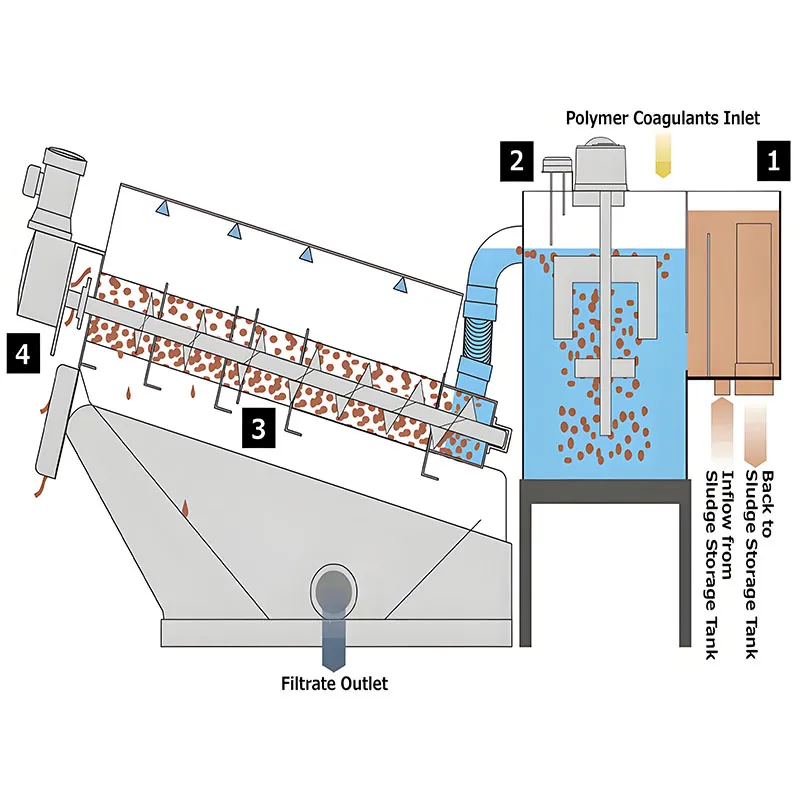
Conditioned sludge is distributed evenly across the moving filter belt. Free water passes through the porous belt while the solid particles are retained.
Removing free water before mechanical pressing helps prepare the sludge for the subsequent compression stages.
For printing and dyeing sludge, effective floc formation can be particularly important because fine particles may otherwise pass through the belt or remain difficult to dewater.
The appropriate polymer type and dosage should be determined through sludge testing.
Mechanical Compression And Filtration
After gravity drainage, the sludge enters the mechanical pressing zone.
Two filter belts transport the sludge through a series of rollers. The rollers gradually apply mechanical pressure, causing additional water to pass through the filter media.
The progressive compression process continues until the concentrated sludge reaches the discharge section.
The actual dewatering performance depends on sludge characteristics, polymer conditioning, belt permeability, belt speed, roller configuration, feed rate, and machine settings.
Polymer Conditioning For Textile Sludge
Printing and dyeing wastewater sludge can contain fine particles that may be difficult to dewater directly.
Polymer conditioning can help form larger flocs, improving the separation of water from suspended solids.
The belt filter press can be integrated with an automatic polymer preparation and dosing system when required.
Because different textile wastewater sludges have different chemical characteristics, polymer selection should be based on laboratory or field testing rather than assuming one chemical formulation will work for every application.
Filter Belt Performance
The filter belt provides the filtration surface that separates liquid from concentrated sludge.
For textile and dyeing applications, belt material, permeability, mesh characteristics, and chemical compatibility should be considered carefully.
Fine particles and fibers can affect filtration performance. Regular belt washing helps prevent clogging and maintain drainage.
The appropriate belt should be selected according to sludge characteristics and the desired operating conditions.
Automatic Belt Washing
Continuous belt washing is an important feature for maintaining filtration performance.
As the belt completes a dewatering cycle, washing nozzles use pressurized water to remove residual sludge and fine particles from the belt.
For printing and dyeing wastewater applications, regular washing can help reduce the accumulation of fibers, pigments, and fine suspended solids.
The washing pressure, nozzle arrangement, cleaning frequency, and water consumption depend on the machine configuration and sludge properties.
Chemical Compatibility
Printing and dyeing wastewater may contain chemicals that influence equipment material selection.
Depending on the wastewater composition, components exposed to the sludge or filtrate may require appropriate corrosion-resistant materials or protective treatment.
The actual material selection should be based on pH, chemical concentration, temperature, and other wastewater characteristics.
For B2B projects, customers can provide wastewater analysis so that suitable machine construction materials can be evaluated.
Industrial Textile Applications
The machine can be used for suitable sludge generated by various textile and fabric processing operations.
Potential applications include:
Textile Manufacturing
Fabric Dyeing
Textile Printing
Fabric Finishing
Fiber Processing
Garment-Related Wastewater Treatment
Textile Chemical Processing
Industrial Textile Wastewater Plants
Different production processes can generate different sludge characteristics, so the equipment should be selected according to the actual wastewater treatment process.
Reduced Sludge Handling Volume
Mechanical dewatering removes a portion of the water from sludge, reducing the amount of liquid that remains with the solid fraction.
This can make the concentrated sludge easier to collect, convey, store, transport, or send to subsequent treatment.
For textile factories with continuous sludge generation, reducing excess water can help simplify downstream sludge handling.
Actual sludge volume reduction depends on feed solids concentration, sludge characteristics, polymer conditioning, belt performance, and operating conditions.
Low-Speed Mechanical Operation
The belt filter press uses relatively low-speed belt movement and roller compression rather than high-speed centrifugal separation.
This provides a continuous mechanical dewatering process based on gravity drainage and progressive pressing.
The energy requirements of the machine depend on belt width, drive configuration, operating hours, sludge flow, polymer dosing, belt washing, and other system parameters.
Proper equipment sizing can help achieve efficient operation for the intended wastewater treatment process.
Easy Cleaning And Daily Maintenance
The machine is designed for routine industrial operation and can be maintained through regular inspection and cleaning.
Important maintenance tasks may include:
Filter Belt Cleaning
Roller Inspection
Scraper Inspection
Bearing Lubrication
Washing Nozzle Cleaning
Belt Alignment Inspection
Pump Inspection
Drive System Inspection
Regular maintenance can help prevent belt clogging, alignment problems, excessive wear, and unstable operation.
Integration With Wastewater Treatment Systems
The belt filter press can be installed as part of a complete printing and dyeing wastewater treatment system.
Upstream equipment may include screening, equalization tanks, chemical treatment, biological treatment, sludge thickening, sludge storage, and polymer dosing systems.
Downstream equipment can include sludge conveyors, storage containers, drying systems, or other suitable sludge treatment equipment.
The belt press can therefore be adapted to both new wastewater treatment projects and existing plant upgrades.
Customized Printing And Dyeing Sludge Solutions
Every textile wastewater treatment system has different sludge characteristics.
Important design information can include:
Wastewater Flow Rate
Sludge Production
Feed Solids Concentration
pH
Temperature
Sludge Particle Size
Fiber Content
Chemical Composition
Polymer Requirements
Operating Hours
Required Dewatering Capacity
Based on these factors, belt width, filter belt specifications, roller configuration, washing system, feeding system, and control options can be evaluated.
B2B Industrial Wastewater Equipment
The Easy Maintenance Belt Filter Press for Printing and Dyeing Wastewater Sludge is suitable for textile manufacturers, dyeing factories, printing plants, wastewater treatment contractors, environmental engineering companies, and industrial equipment distributors.
The machine provides continuous mechanical dewatering for suitable textile wastewater sludge while allowing flexible integration with upstream treatment and downstream sludge handling systems.
For international B2B projects, customers can provide sludge analysis, production capacity, wastewater flow, operating schedule, and installation conditions for equipment evaluation.
Key Features
Easy Maintenance Belt Filter Press Design
Continuous Printing And Dyeing Sludge Dewatering
Gravity Drainage And Mechanical Compression
Automatic Belt Washing System
Suitable For Textile Wastewater Sludge
Progressive Roller Pressing
Optional Polymer Dosing Integration
Continuous Dewatered Sludge Discharge
Accessible Maintenance Components
Chemical Compatibility Options
Flexible Wastewater Treatment Integration
Automatic Control Configuration Available
Main Applications
Textile Wastewater Treatment
Printing Wastewater Treatment
Dyeing Wastewater Treatment
Fabric Processing Sludge
Textile Manufacturing Sludge
Fiber Processing Wastewater
Fabric Finishing Wastewater
Industrial Wastewater Treatment
Chemical Textile Wastewater
Industrial Sludge Dewatering
Municipal And Industrial Sludge Treatment
Textile Wastewater Sludge Dewatering
FAQs
1. What Is A Belt Filter Press For Printing And Dyeing Wastewater?
It is a continuous mechanical dewatering machine designed to separate water from suitable sludge generated during textile printing, dyeing, fabric processing, and related wastewater treatment processes.
2. Can It Process Textile Wastewater Sludge?
Yes. It can be configured for suitable textile and dyeing wastewater sludge. Actual performance depends on sludge concentration, particle characteristics, chemical composition, and conditioning requirements.
3. Why Is Easy Maintenance Important?
Printing and dyeing sludge can contain fine particles, fibers, pigments, and other materials that may accumulate on the filter belt. Easy access and regular belt washing help simplify cleaning and maintenance.
4. Does The Machine Require Polymer?
Some textile wastewater sludges benefit from polymer conditioning, especially when they contain fine suspended particles. The appropriate polymer and dosage should be determined through testing.
5. How Does The Belt Press Remove Water?
Sludge first undergoes gravity drainage and then passes through mechanical rollers that progressively compress the sludge and release additional water through the filter belts.
6. Can It Handle Sludge With Fine Particles?
Yes, suitable fine-particle sludge can be processed when the machine, filter belt, and conditioning system are properly configured.
7. Can The Machine Handle Different Textile Wastewater Types?
Potentially, yes. However, wastewater from different textile processes can have significantly different chemical and physical characteristics. Application testing is recommended.
8. Is Automatic Belt Washing Included?
The machine can be configured with an automatic belt washing system. The washing method and operating parameters depend on the selected equipment configuration.
9. Can It Be Integrated Into An Existing Treatment Plant?
Yes. The belt press can be connected to sludge tanks, pumps, polymer dosing systems, thickening equipment, conveyors, and other wastewater treatment equipment.
10. How Do I Select The Right Belt Filter Press?
Provide sludge type, flow rate, solids concentration, pH, temperature, chemical characteristics, operating hours, polymer requirements, and desired processing capacity. These details help determine the appropriate machine configuration.
Why Choose Us
Specialized Textile Wastewater Solutions
We provide belt filter press equipment for suitable printing, dyeing, textile, fabric processing, and industrial wastewater sludge applications.
Easy Maintenance Design
Accessible components, continuous belt washing, and practical inspection points help simplify routine maintenance for industrial wastewater treatment facilities.
Application-Based Configuration
We evaluate sludge concentration, particle characteristics, fiber content, pH, temperature, chemical composition, and polymer requirements before recommending equipment.
Chemical Compatibility Options
For printing and dyeing wastewater, equipment materials can be evaluated according to the actual chemical and operating conditions.
Factory-Direct B2B Support
We provide technical consultation, sludge application evaluation, machine configuration, production coordination, export packaging, installation guidance, and after-sales support.
Complete Wastewater Treatment Integration
The belt filter press can be integrated with sludge thickening, polymer dosing, sludge pumping, filtrate collection, conveyors, storage, and downstream sludge treatment systems.
Prev:
Industrial Continuous Operation Belt Filter Press for Wastewater Treatment
Next:Sorry, no information
TAG:
Industrial Wastewater Sludge Treatment,
Sludge Solid Liquid Separation,
Belt Press Dewatering Machine,
Textile Sludge Filter Press,
Printing And Dyeing Sludge Treatment,
Textile Wastewater Dewatering,
Textile Wastewater Treatment Equipment,
Industrial Sludge Dewatering,
Continuous Sludge Dewatering,
Sludge Dewatering Belt Press,
Industrial Belt Filter Press,
Automatic Belt Filter Press,
Wastewater Sludge Belt Filter Press,
Printing And Dyeing Wastewater Treatment,
Easy Maintenance Belt Filter Press,
Textile Wastewater Sludge Dewatering,
Dyeing Wastewater Sludge Dewatering,
Printing Wastewater Sludge Treatment,
Textile Sludge Dewatering Machine,
Dyeing Sludge Dewatering Equipment,
Related Category:
Easy Maintenance Belt Filter Press for Printing and Dyeing Wastewater Sludge, Printing Dyeing Wastewater Sludge Dewateri China, suppliers, manufacturers, factory, customized, wholesale, quotation, made in China