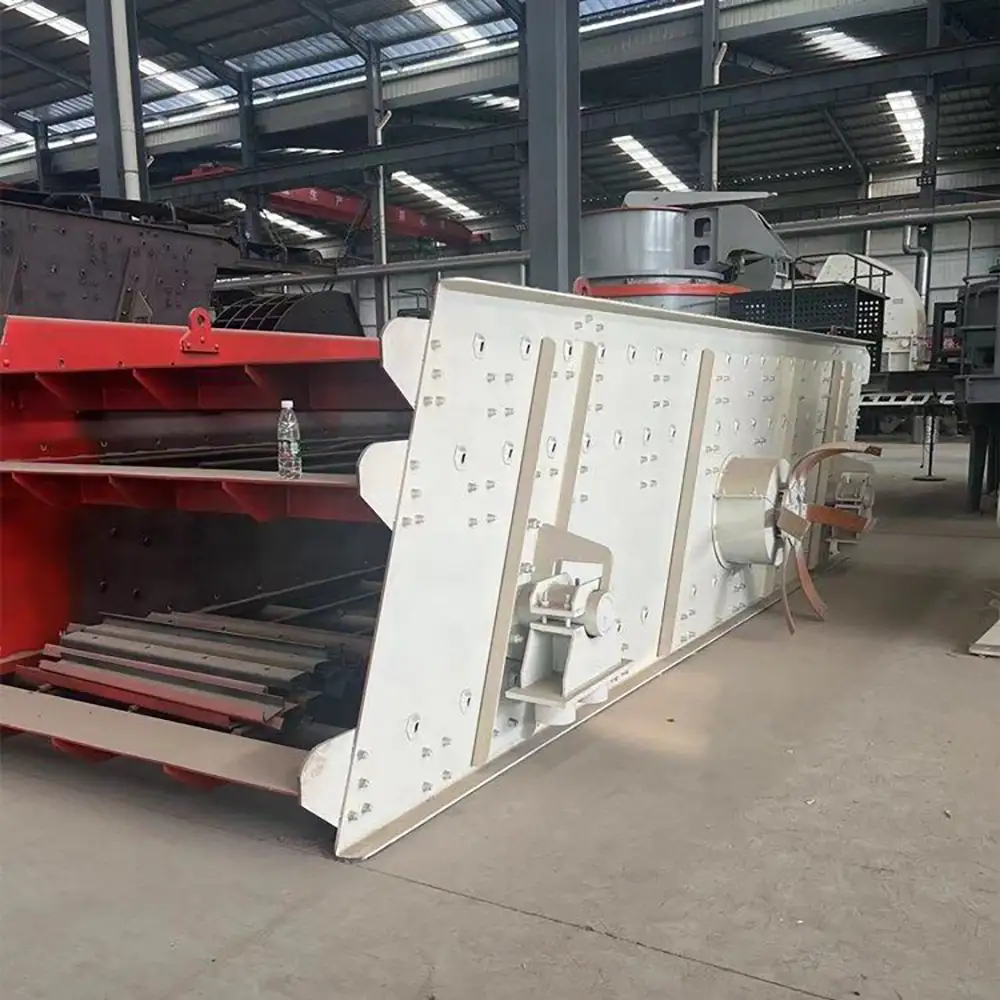
1.High frequency vibration screen introduction:
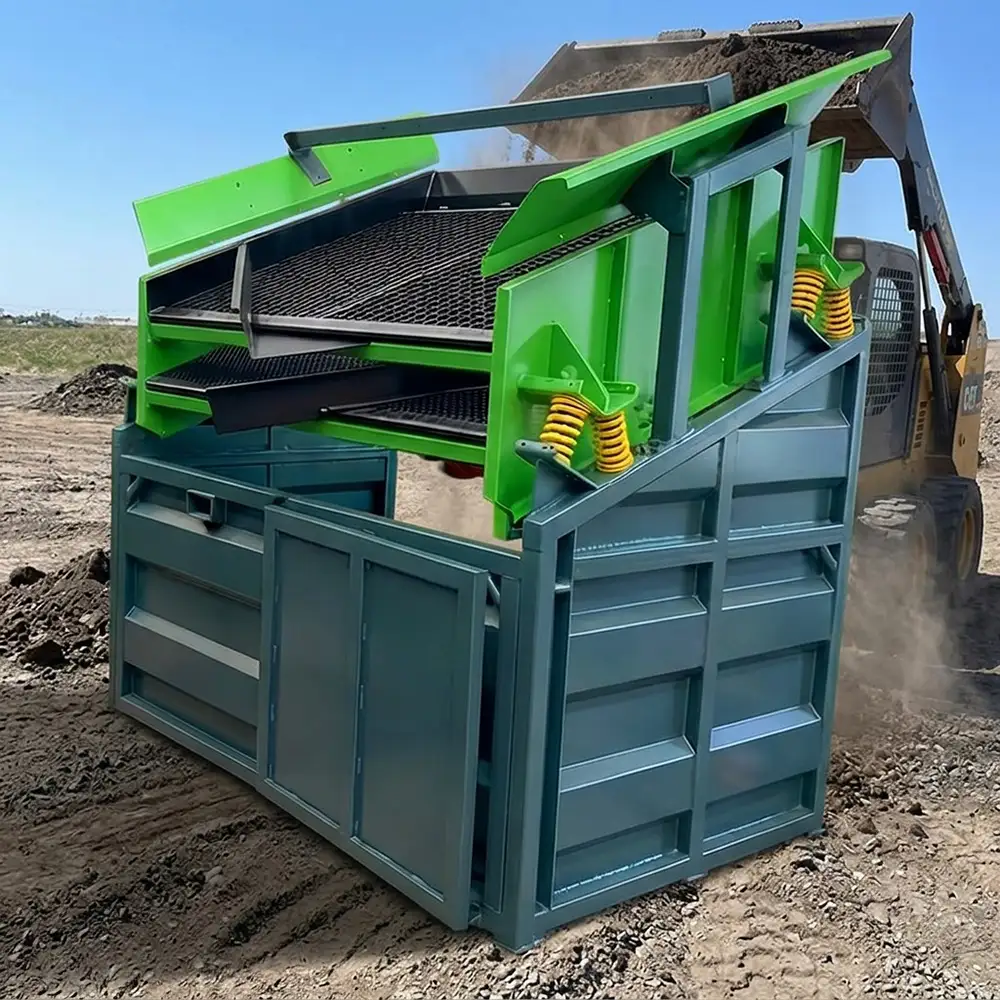
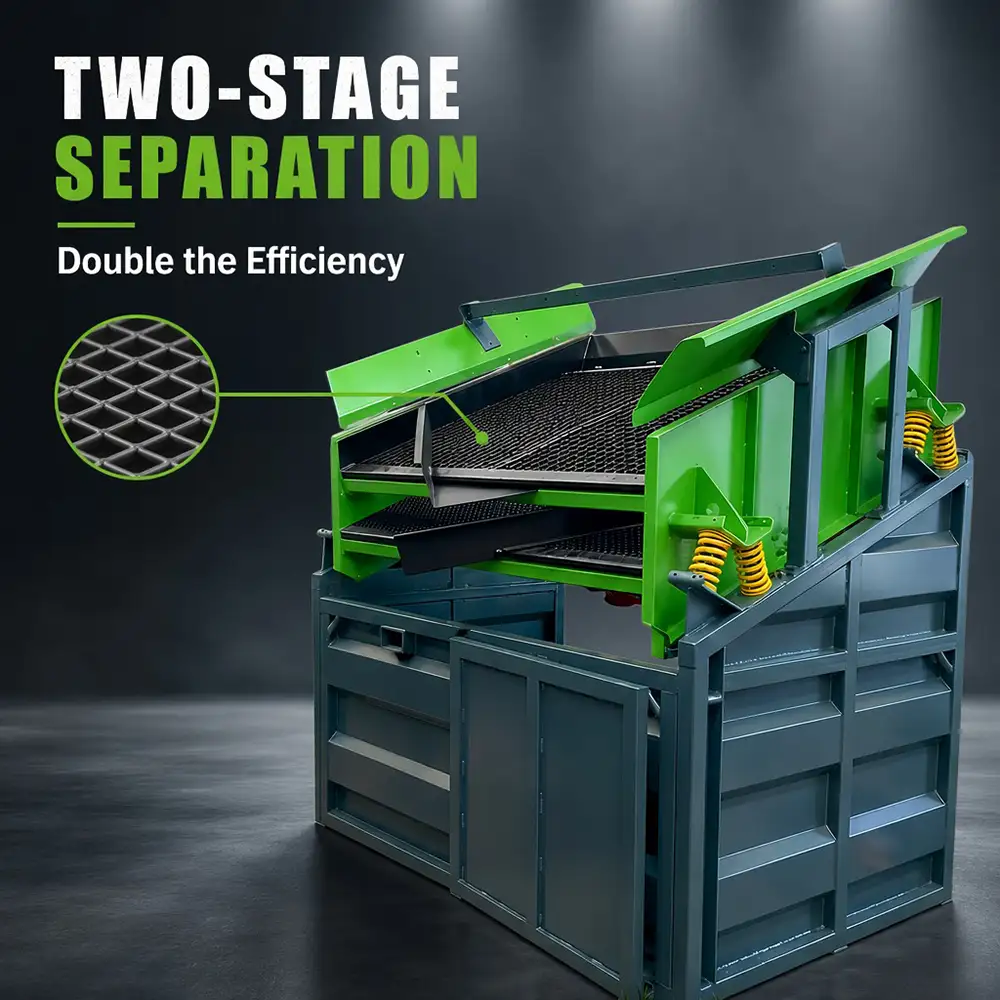
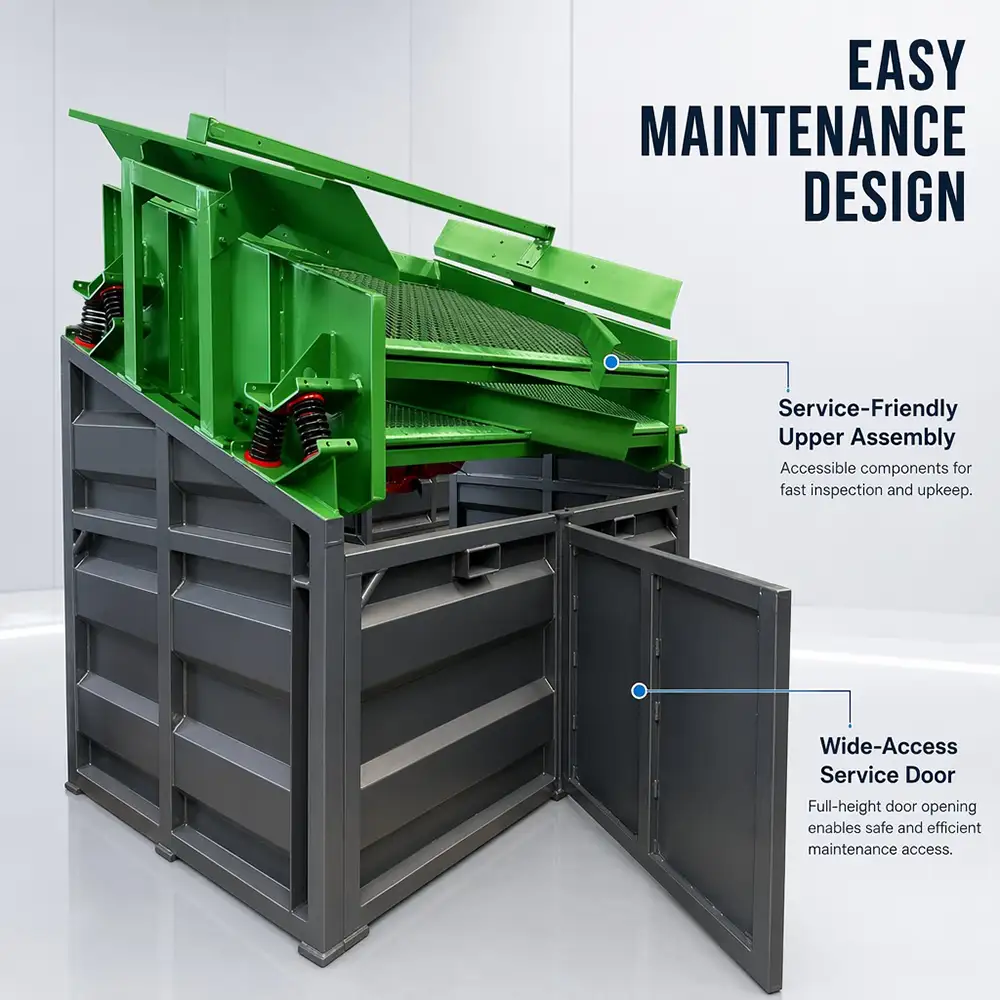
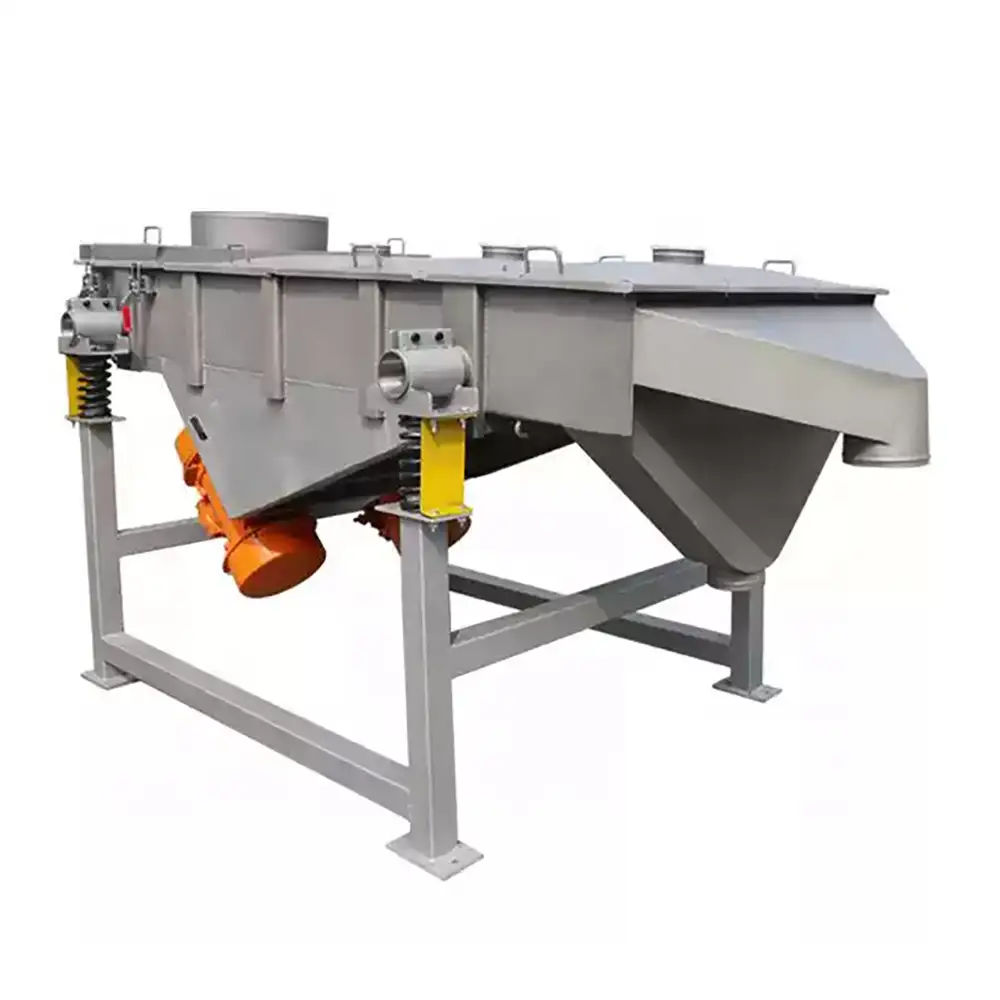
High-Frequency Screen consists of vibration exciter, ore pulp distributor, screen frame, machine frame, suspension springs and sieve, etc.
3.High frequency vibration screen application:
This series screens are always used in processing minerals such as ferrous metals including hematite&magnetic and nonferrous metals including lead,zinc,gold and silver etc.This machine works in a recirculating network with ball mill,which can upgrade the fineness of ferrous and nonferrous metals.Its efficiency is twice as that of spiral classifier.
4.Working Principle of high frequency vibration screen:
The eccentric vibrator high-speedly rotates by the motor through V-belts,the rotating eccentric block produces large centrifugal force to bring sieve boxes circle moving with certain amplitude. Under the impluse of the sieve box, the materials on the leaning screens produce a continuous throwing motion; In the contacting process of the materials and screen surface, particles smaller than sieve pass through the screen and classification is realized.
5.Technical parameters of high frequency vibration screen:
|
Model |
Screen
square(m2) |
Thickness of input
material(%) |
Capacity(t/h) |
Power(kw) |
|
GPS-4 |
4.5 |
30%-40% |
15-25 |
0.72 |
|
GPS-5 |
5.2 |
30%-40% |
20-30 |
1.1 |
|
GPS-6 |
6 |
30%-40% |
24-36 |
1.5 |
|
GPS-8 |
8.1 |
30%-40% |
32-48 |
High Frequency Vibration Screen for Industrial Screening
The High Frequency Vibration Screen is a high-performance industrial screening machine designed for efficient separation and classification of fine and medium-sized bulk materials. With a higher vibration frequency than conventional screening equipment, this vibrating screen promotes rapid material stratification and increases the contact between particles and the screening surface.
The machine is widely used for cement, sand, mineral powder, aggregates, limestone, coal, chemical materials, construction materials, and other industrial products requiring continuous particle-size classification.
The High Performance Industrial Cement Vibrating Screen is particularly suitable for cement and mineral processing applications where stable screening efficiency, controlled particle size, and reliable continuous operation are important. Depending on the material characteristics and process requirements, the screen can be configured with different screen openings, deck arrangements, vibration parameters, and feeding systems.
What Is a High Frequency Vibrating Screen?
A high frequency vibrating screen is a mechanical screening machine that uses rapid vibration to separate materials according to particle size. Material is introduced onto the screen surface, where high-frequency vibration causes the feed to spread, stratify, and move across the screening deck.
Fine particles that are smaller than the screen openings pass through the screening media, while oversized particles remain on the surface and move toward the discharge outlet.
The higher-frequency operating principle is especially useful for fine screening applications because it can improve particle stratification and screening efficiency when the machine is correctly matched to the material and process conditions.
High frequency screening technology can be used as an individual screening machine or integrated into a larger crushing, grinding, classification, or material-handling system.
How Does the High Frequency Vibration Screen Work?
The working principle is based on controlled high-frequency vibration.
Bulk material enters the feed section and is evenly distributed across the screen deck. The vibration mechanism generates rapid vibration, causing particles to move along the screening surface.
During operation:
Material enters through the feed inlet.
High-frequency vibration distributes the material across the screen.
Fine particles move toward and through the screen openings.
Oversized particles remain above the screening surface.
The material is continuously transported toward the discharge end.
Separated fractions are collected for further processing.
The screening result depends on vibration frequency, amplitude, screen inclination, screen opening, material feed rate, particle size distribution, moisture content, and material characteristics.
High Performance Industrial Cement Vibrating Screen
Cement production and processing often require controlled particle-size separation and stable material flow. The High Performance Industrial Cement Vibrating Screen can be incorporated into cement-related material processing systems for screening cementitious materials, limestone, gypsum, clinker-related materials, sand, and other mineral-based products.
The screen can help separate oversized particles, classify materials, and prepare bulk products for subsequent processing stages.
For cement plants and building-material manufacturers, equipment selection should consider the material's particle-size distribution, moisture, temperature, density, abrasiveness, and required throughput.
For applications involving extremely fine powders, additional classification technology may be required depending on the target particle size.
Main Components
A typical High Frequency Vibration Screen consists of several major components:
Screen Box
The reinforced screen box supports the screening media and transfers vibration to the material.
Screen Deck
The screen deck is the working surface where material separation takes place. Different mesh sizes and screen materials can be selected for different applications.
Vibration Excitation System
The vibration mechanism generates the required high-frequency excitation force.
Drive Motor
The motor provides mechanical power for the vibration system. Motor configuration can be selected according to machine size and process requirements.
Supporting Springs
Spring assemblies support the vibrating body and help maintain controlled vibration.
Feed Inlet
The feed inlet distributes incoming material onto the screening surface.
Discharge Outlets
Separate outlets can be used for undersized and oversized material.
Support Structure
The support frame provides a stable installation platform and can be adapted to different plant layouts.
Applications of High Frequency Vibration Screen
Cement and Building Materials
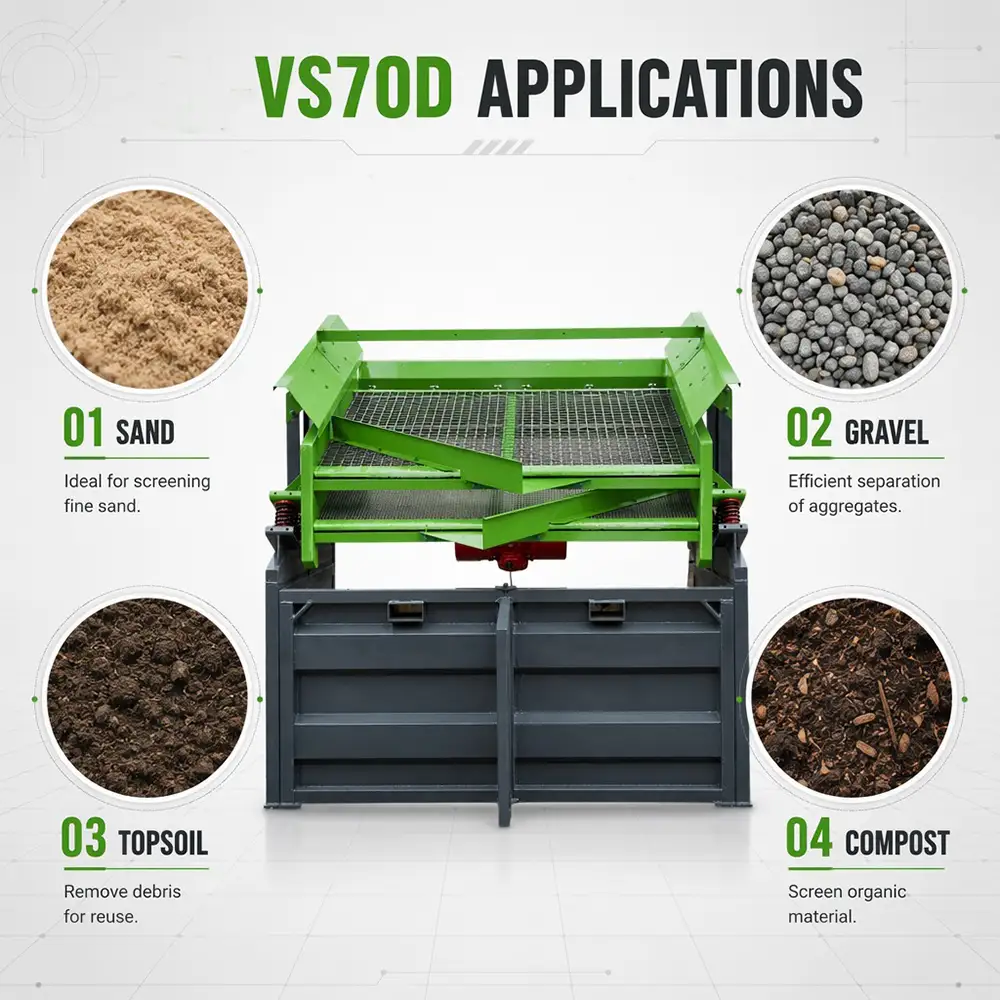
The machine can be used for screening cement-related materials, limestone, gypsum, sand, and other construction materials.
Mineral Processing
Mining operations can use high-frequency screening equipment to classify mineral products and processed ore according to particle size.
Sand and Aggregate
The screen can separate sand, crushed stone, gravel, and aggregate into controlled size fractions.
Quarrying
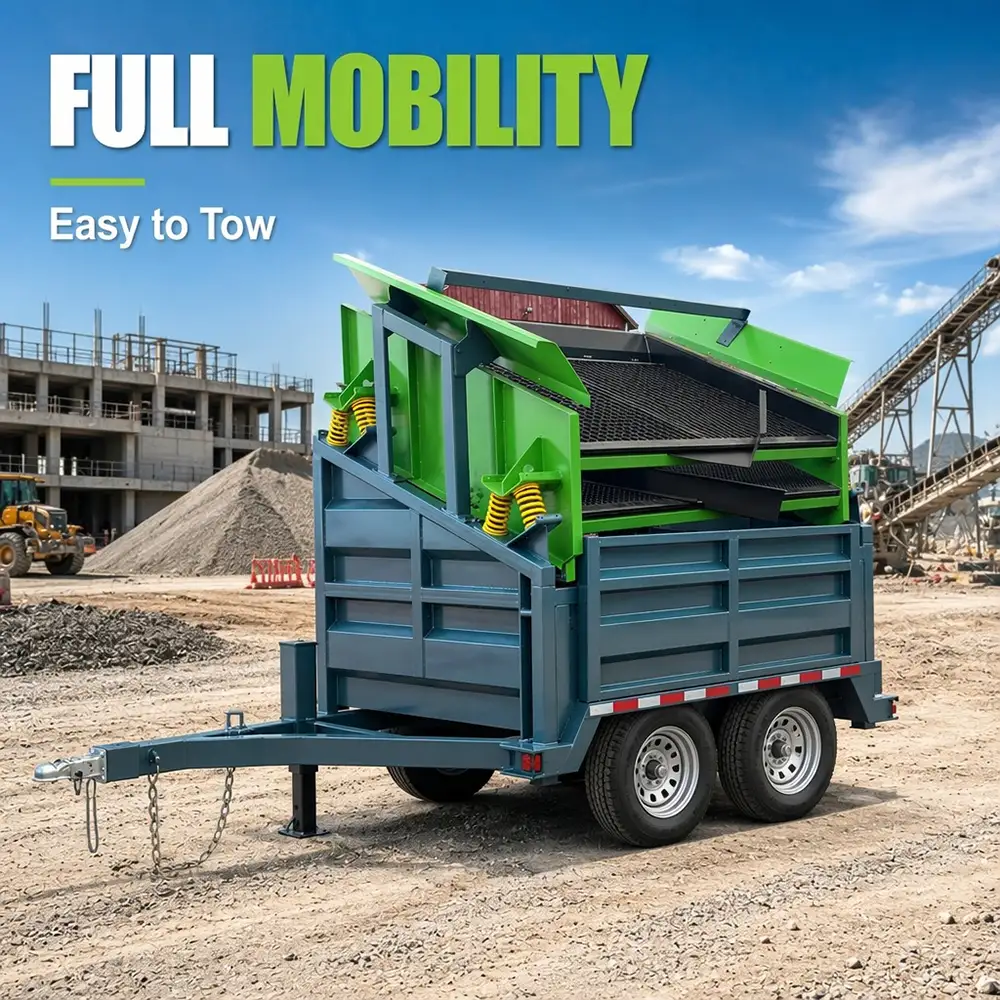
Quarries can integrate vibrating screens with crushers and conveyors to classify limestone, granite, basalt, and other rocks.
Coal Processing
The equipment can be applied to coal and other bulk materials where particle-size separation is required.
Chemical Industry
Certain granular and powdery chemical materials can be screened when the screen construction and materials are compatible with the product.
Fertilizer Processing
Granular fertilizer products can be screened to remove oversized particles and improve product-size consistency.
Recycling
High-frequency vibrating screens can also be integrated into recycling systems for classification of crushed construction materials and other recyclable bulk products.
Key Advantages of High Frequency Vibration Screening
High Screening Efficiency
Rapid vibration can improve material stratification and increase the opportunity for fine particles to pass through the screening surface.
Efficient Fine Material Separation
The high-frequency operating principle makes this type of screen suitable for many fine and medium particle-size screening applications.
Continuous Processing
The machine can operate continuously as part of an automated production line, supporting stable material throughput.
Flexible Screen Configuration
Different screen openings and deck arrangements can be selected according to the required separation size.
Compact Industrial Design
High-frequency screening systems can provide substantial screening performance within a relatively compact equipment footprint, depending on the specific design.
Reduced Material Accumulation
Rapid vibration helps maintain material movement across the screen surface and can reduce excessive buildup under suitable operating conditions.
Wide Application Range
The machine can be adapted for cement, minerals, sand, aggregate, coal, chemicals, fertilizer, and other bulk materials.
Easy Integration
The vibrating screen can be connected with feeders, crushers, conveyors, hoppers, dust collection systems, and other process equipment.
High Frequency Screen vs. Conventional Vibrating Screen
High-frequency screens and conventional vibrating screens both separate material according to particle size, but their operating parameters and typical applications can differ.
A high-frequency screen generally uses a higher vibration frequency and relatively controlled amplitude to promote rapid stratification and fine screening. Conventional vibrating screens may use lower-frequency vibration with larger movement and are commonly used for coarse and medium material classification.
The appropriate machine depends on the feed material, required particle-size cut, capacity, moisture, abrasiveness, and desired screening efficiency.
For coarse rock screening, a heavy-duty conventional vibrating screen may be suitable. For fine classification of selected industrial materials, a high-frequency screen can provide advantages.
How to Choose the Right High Frequency Vibrating Screen
Before purchasing a high-frequency vibration screen, evaluate the following factors:
Material Type: Identify whether the feed is cement, limestone, sand, mineral, coal, aggregate, fertilizer, chemical material, or another product.
Feed Particle Size: Determine the maximum feed size and particle-size distribution.
Required Separation Size: The target screening size determines the appropriate screen opening.
Processing Capacity: Required tons per hour should be considered together with material density and moisture.
Moisture Content: Wet or sticky material may require special screening configurations.
Number of Products: Multiple decks may be required when several size fractions need to be produced.
Screen Media: Screen mesh or panels should be selected according to particle size and wear characteristics.
Installation Conditions: Available space, feeding height, discharge direction, support structure, and conveyor connections should be considered.
Installation and Maintenance
Correct installation is important for stable high-frequency vibration and long equipment life.
The support structure should be strong and properly aligned. Bolts and fasteners should be tightened according to the equipment requirements. Before startup, inspect the vibration mechanism, motor, springs, screen media, and discharge system.
Routine maintenance should include:
Inspecting screen mesh and panels
Checking motor operation
Inspecting vibration components
Checking bearings where applicable
Tightening loose bolts
Inspecting springs
Removing material buildup
Checking abnormal vibration or noise
Replacing worn screening media
Operators should avoid feeding material beyond the machine's designed capacity because excessive loading can reduce screening efficiency and accelerate component wear.
OEM and Custom Vibrating Screen Solutions
As an industrial vibrating screen manufacturer and supplier, we can provide customized high-frequency screening equipment for different industrial applications.
Customization may include:
Screen size
Screening area
Screen opening
Number of decks
Screen media
Vibration frequency
Motor configuration
Feed hopper
Discharge arrangement
Support structure
Dust cover
Wear-resistant components
Electrical configuration
OEM solutions are available for cement plants, mining companies, aggregate producers, quarry operators, material-processing companies, distributors, and engineering contractors.
Why Choose Us?
We provide industrial screening equipment designed around practical material-processing requirements. Our High Frequency Vibration Screen can be configured according to feed material, particle-size requirements, production capacity, installation conditions, and downstream equipment.
Our technical team can assist with equipment selection, screening configuration, process integration, and customized manufacturing. We focus on durable construction, stable operation, practical maintenance, and compatibility with complete material-processing systems.
Whether you need a Cement Vibrating Screen, Fine Screening Machine, Mineral Screening Equipment, Sand Vibrating Screen, or High Frequency Industrial Screening Machine, we can develop a suitable solution for your production requirements.
FAQs
1. What is a high frequency vibration screen?
A high frequency vibration screen is an industrial screening machine that uses rapid vibration to separate materials according to particle size.
2. What materials can this vibrating screen process?
It can be configured for cement, limestone, sand, aggregates, minerals, coal, fertilizer, chemical materials, and other suitable bulk products.
3. Is it suitable for cement screening?
Yes. The machine can be used in cement and building-material processing systems for appropriate cement-related materials and mineral products.
4. Is a high frequency screen suitable for fine screening?
Yes. Its rapid vibration is particularly useful for many fine and medium particle-size screening applications.
5. Can the screen mesh size be customized?
Yes. The screen opening can be selected according to the required separation size and material characteristics.
6. Can multiple screening decks be used?
Yes. Multi-deck configurations can be provided when several particle-size fractions are required.
7. What determines vibrating screen capacity?
Capacity depends on screen area, feed rate, particle-size distribution, material density, moisture, screen opening, vibration parameters, and other operating conditions.
8. Can the screen be integrated into a cement plant?
Yes. It can be connected with feeders, conveyors, crushers, hoppers, and other equipment within a suitable cement or mineral processing system.
9. How often does the vibrating screen require maintenance?
Inspection should be performed regularly. The frequency depends on operating hours, material abrasiveness, loading conditions, and equipment configuration.
10. Can you manufacture a customized high frequency vibrating screen?
Yes. Screen dimensions, decks, mesh size, vibration parameters, motor configuration, feeding, discharge, and support structures can be customized according to project requirements.
Prev:Sorry, no information
Next:
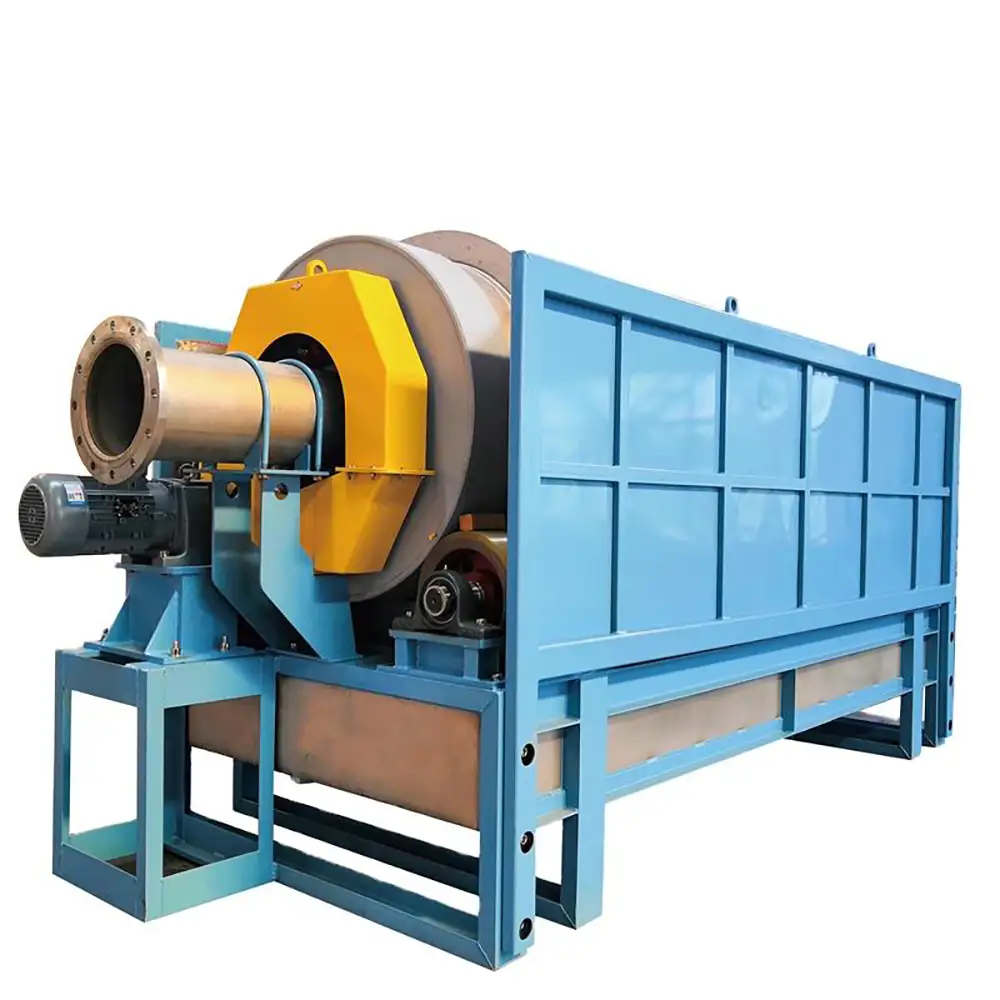
SH Drum Revolving Screen
TAG:
Industrial Screening Machine,
Industrial Screening Equipment,
Fine Screening Equipment,
Aggregate Vibrating Screen,
Quarry Vibrating Screen,
High Capacity Vibrating Screen,
High Efficiency Vibrating Screen,
Material Classification Machine,
Circular Vibrating Screen,
Linear Vibrating Screen,
Multi Deck Vibrating Screen,
Double Deck Vibrating Screen,
Triple Deck Vibrating Screen,
Mining Vibrating Screen,
Mining Screening Machine,
Mining Screening Equipment,
Quarry Screening Equipment,
Quarry Screening Machine,
Sand Screening Machine,
Sand Screening Equipment,
Aggregate Screening Machine,
Aggregate Screening Equipment,
Vibrating Screening Equipment,
Vibratory Screening Machine,
Industrial Vibrating Screen,
Industrial Vibratory Screen,
Vibrating Screen Machine,
Aggregate Separator,
Sand Separator,
Coal Screening Equipment,
Related Category:
High Frequency Vibration Screen,High Frequency Vibrating Screen,High Performance Industrial Cement Vibrating Screen,Indu China, suppliers, manufacturers, factory, customized, wholesale, quotation, made in China