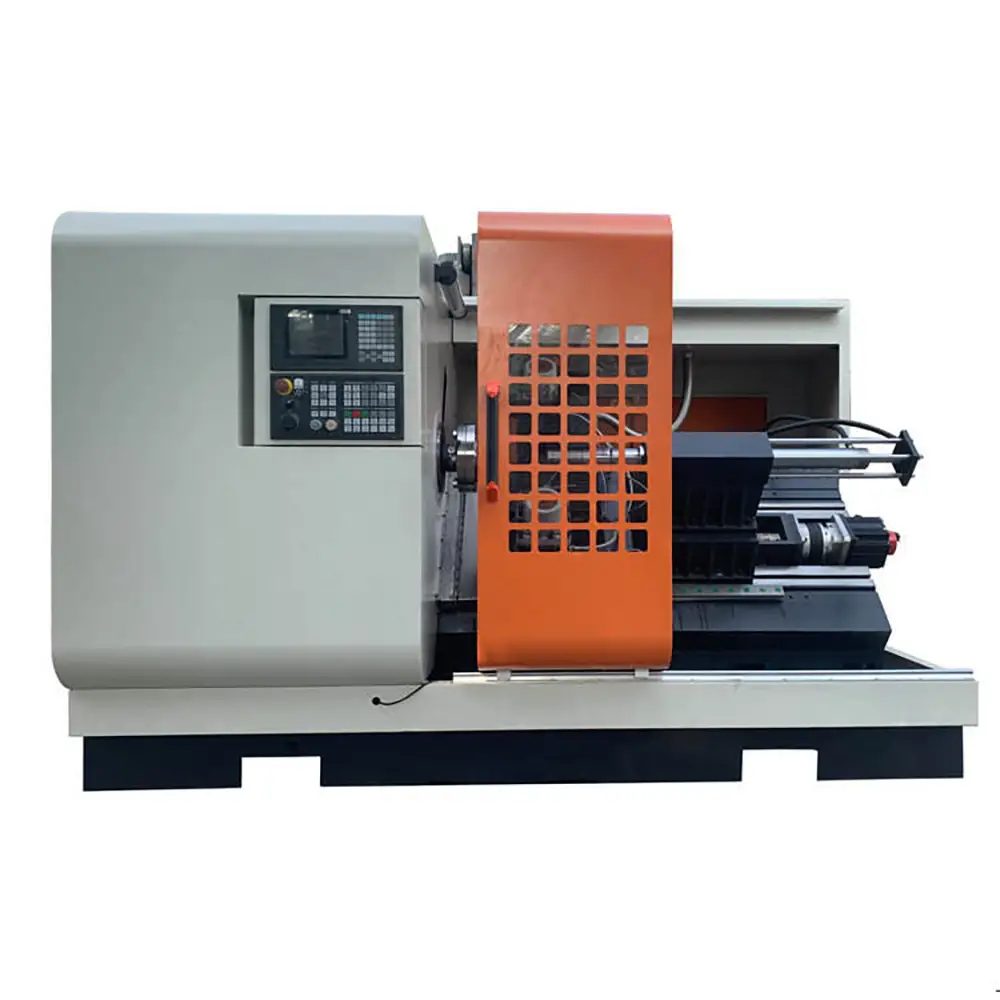
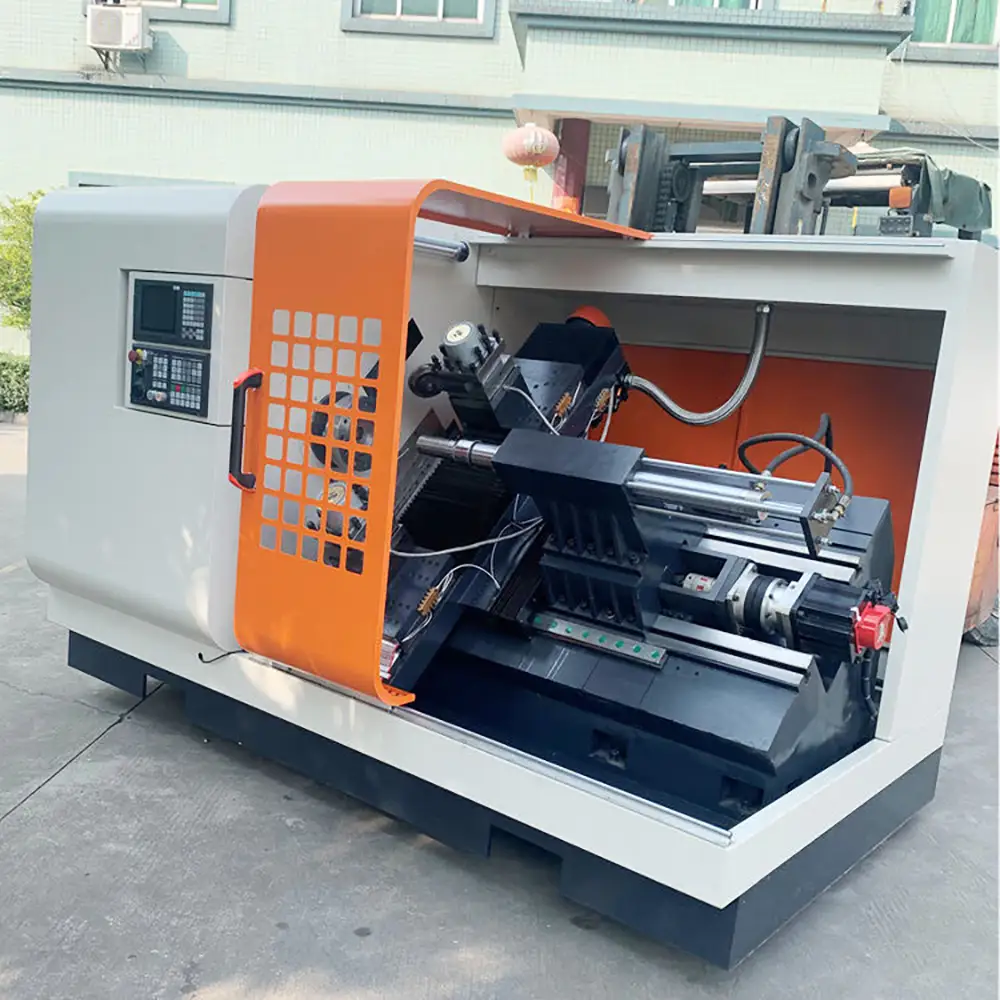
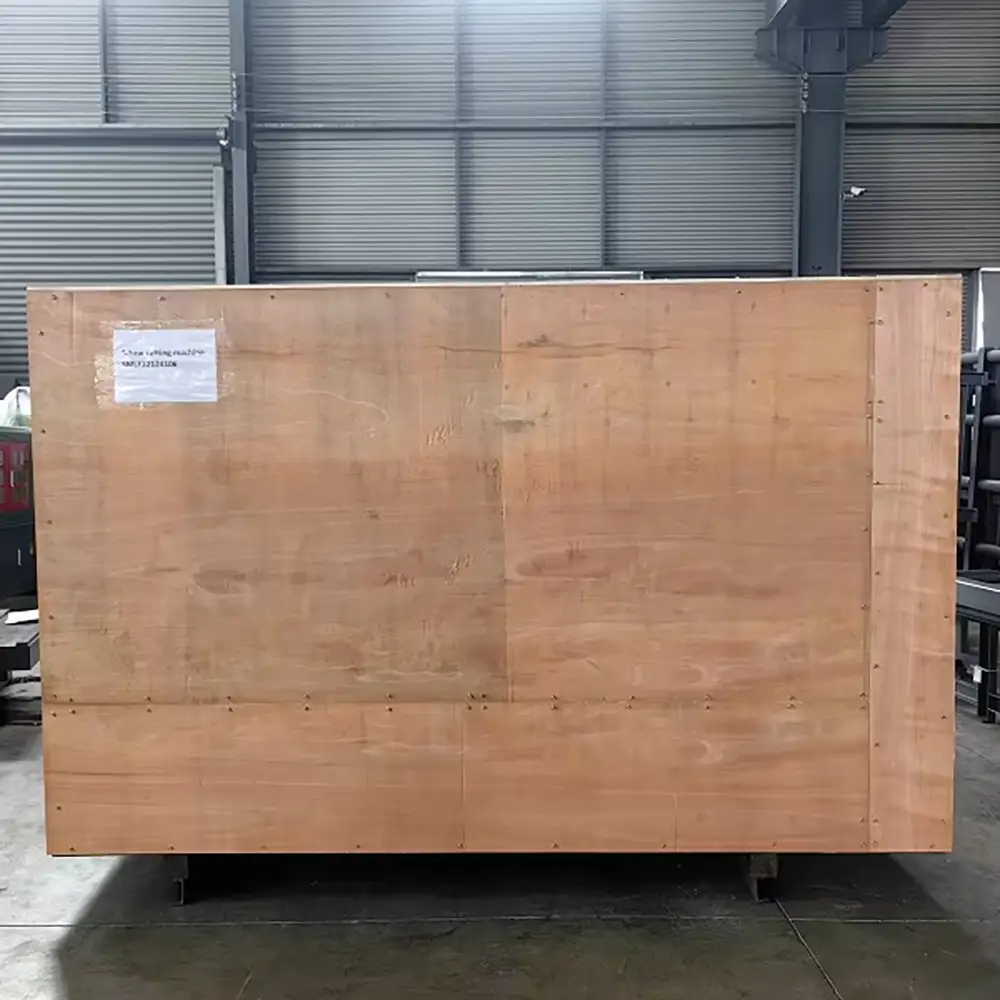
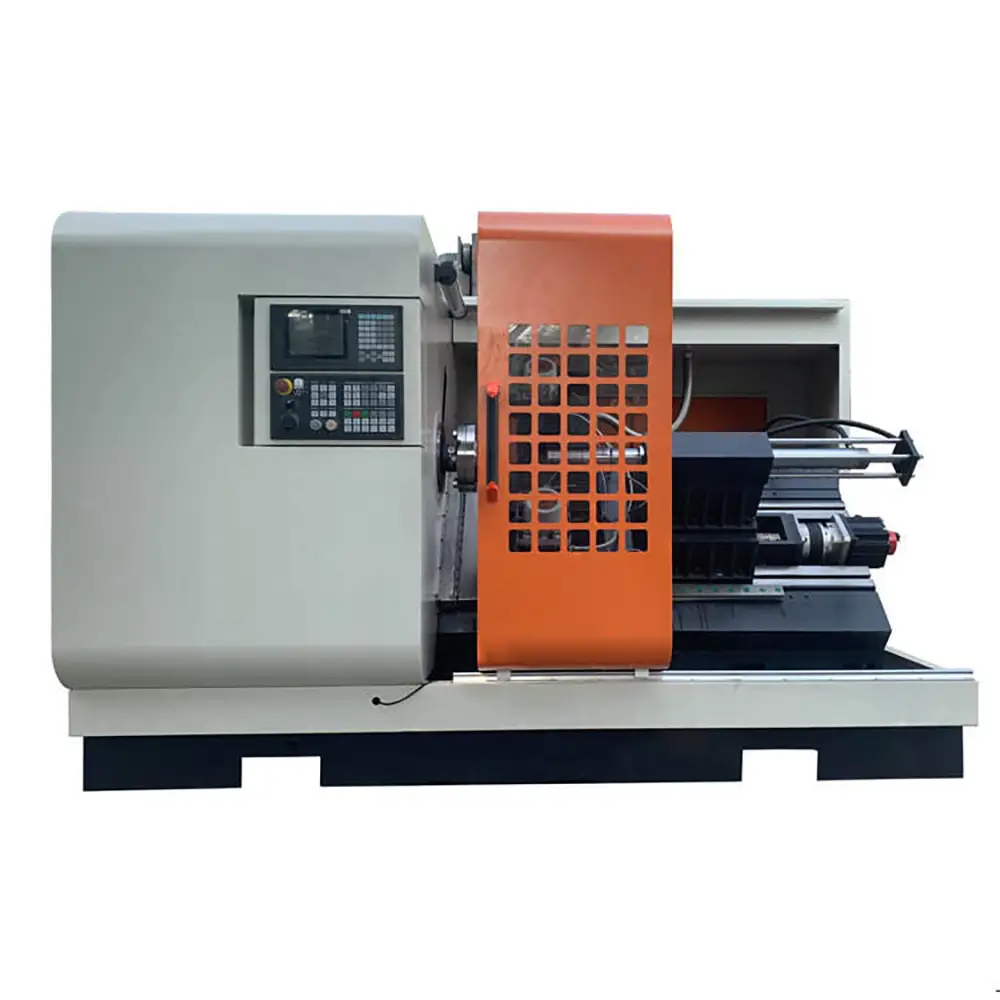
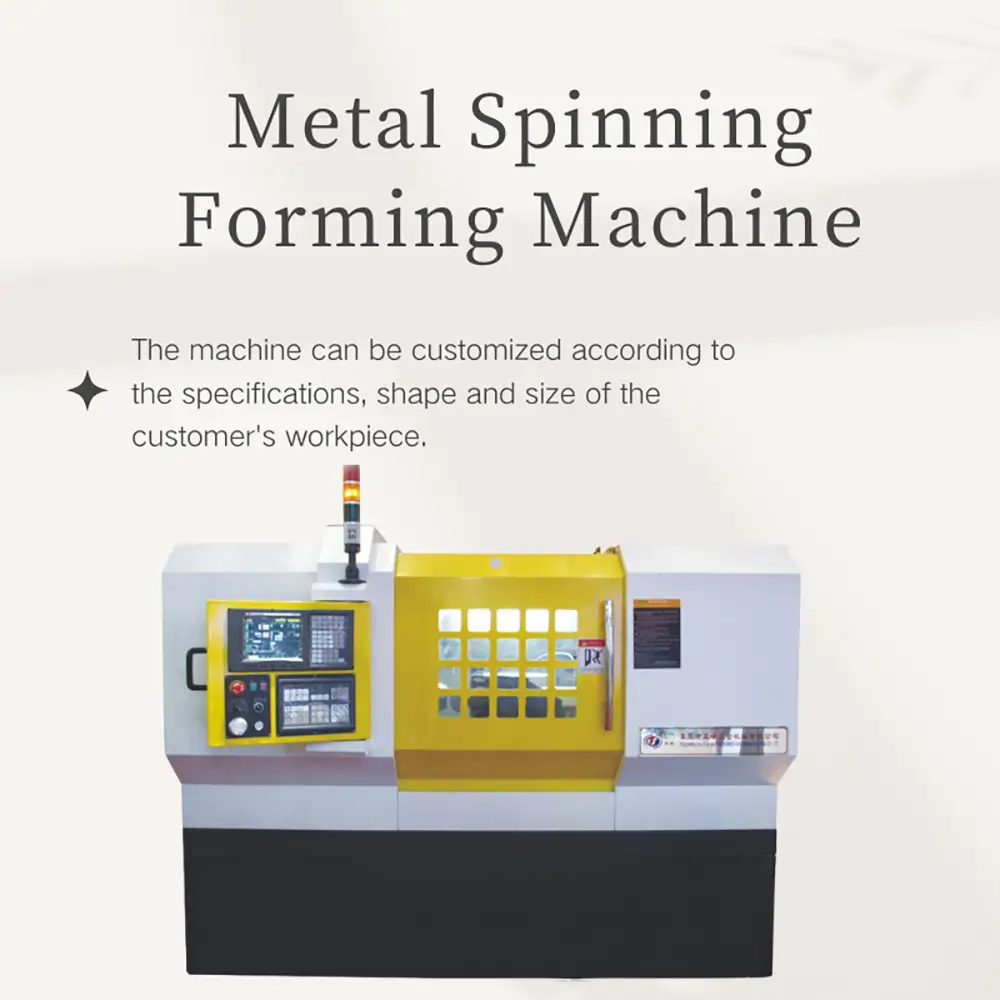
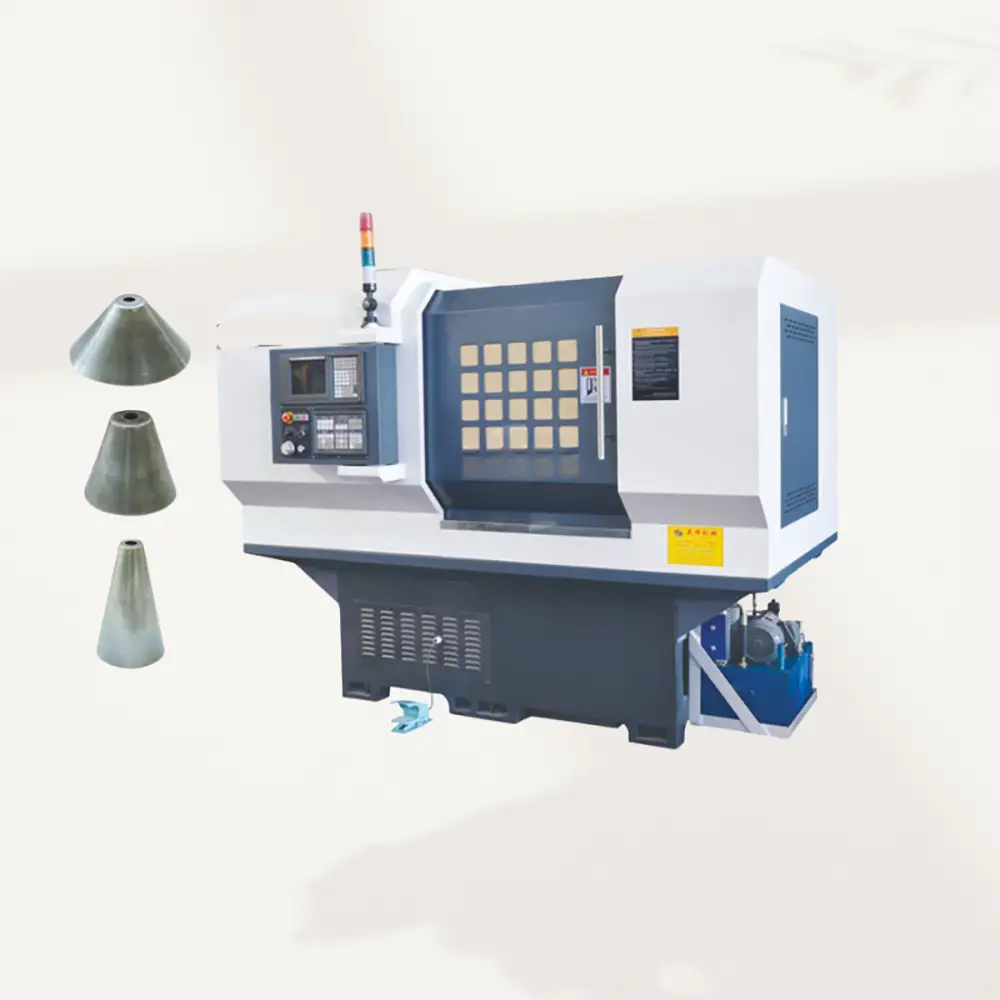
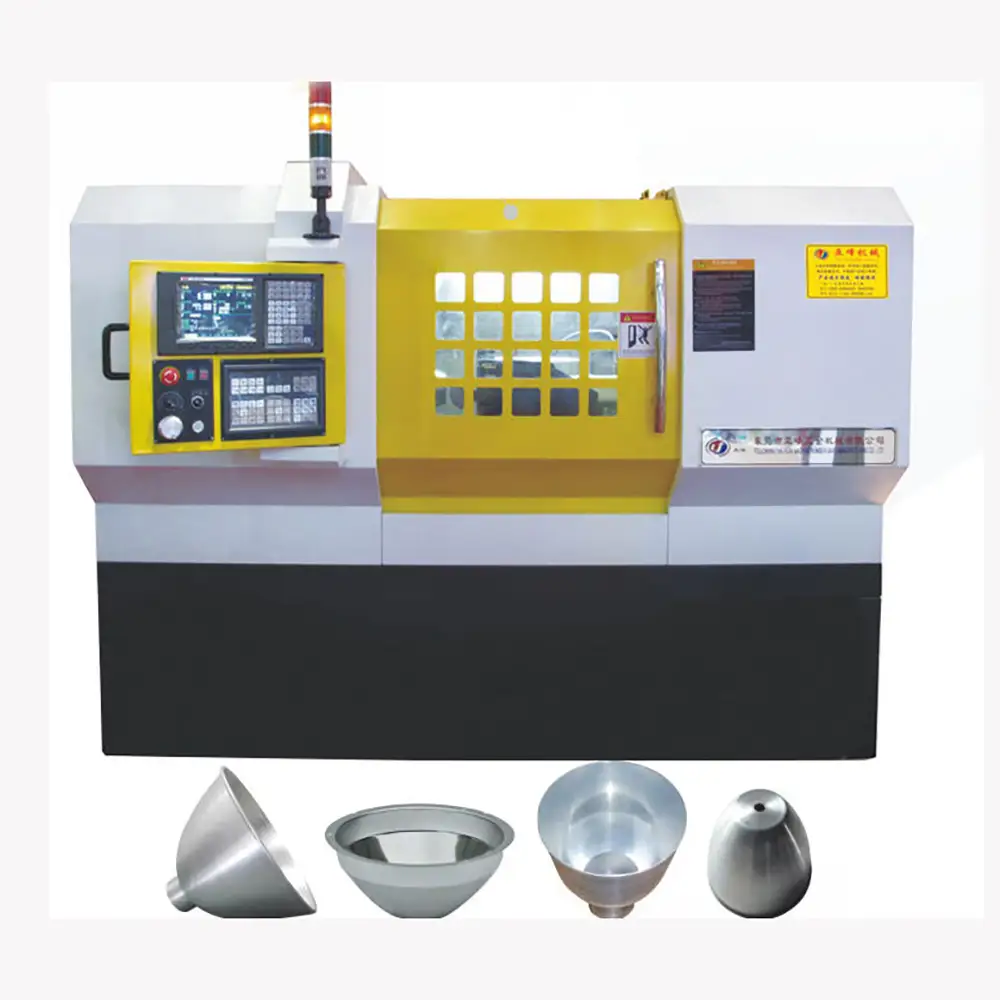
CNC Metal Forming Flow Forming Spinning Machine
The CNC Metal Forming Flow Forming Spinning Machine is an advanced manufacturing solution designed for precision forming of rotational metal components. Combining CNC control with metal spinning and flow forming technology, the machine is suitable for producing cylindrical, conical, tubular, and other axisymmetric components with consistent dimensions and repeatable forming quality.
Unlike conventional machining processes that remove a large amount of material, metal spinning and flow forming reshape a metal blank through controlled forming forces. This makes the process attractive for manufacturers looking to reduce material waste, improve structural integrity, and produce lightweight components with efficient material utilization.
The CNC system allows forming movements, spindle operation, feed rates, and other machining parameters to be controlled according to the production requirements. Depending on the machine configuration, customized tooling, mandrels, rollers, hydraulic systems, and automatic functions can be integrated to meet different component sizes and production volumes.
CNC Metal Forming for Precision Production
CNC metal forming provides a high level of control over the forming process. Once the forming program and tooling parameters have been established, the machine can repeat the same forming sequence across multiple workpieces.
This repeatability is particularly valuable for B2B manufacturers producing components for automotive, aerospace, lighting, industrial equipment, pressure-related applications, energy equipment, and other industries.
The CNC-controlled process can help maintain consistent profiles while reducing dependence on manual forming operations. For manufacturers producing medium- to high-volume components, this can improve production efficiency and simplify process standardization.
Flow Forming Technology
Flow forming is a precision metalworking process in which a metal blank is progressively formed over a mandrel using one or more forming rollers. Material is displaced and elongated while maintaining the basic integrity of the workpiece.
This process is especially suitable for rotational components that require controlled wall thickness, extended cylindrical sections, or precise geometric profiles.
Depending on the material and component design, flow forming can be used for applications involving steel, stainless steel, aluminum alloys, copper alloys, and other formable metals. Actual material compatibility should be evaluated according to the material grade, thickness, component geometry, and required forming ratio.
Flow forming can provide an effective alternative to manufacturing certain components through extensive machining because the material is formed rather than primarily removed.
CNC Metal Spinning
Metal spinning is another important capability of this type of equipment. A flat or preformed metal blank is positioned against a mandrel and progressively formed into the required shape by controlled roller movement.
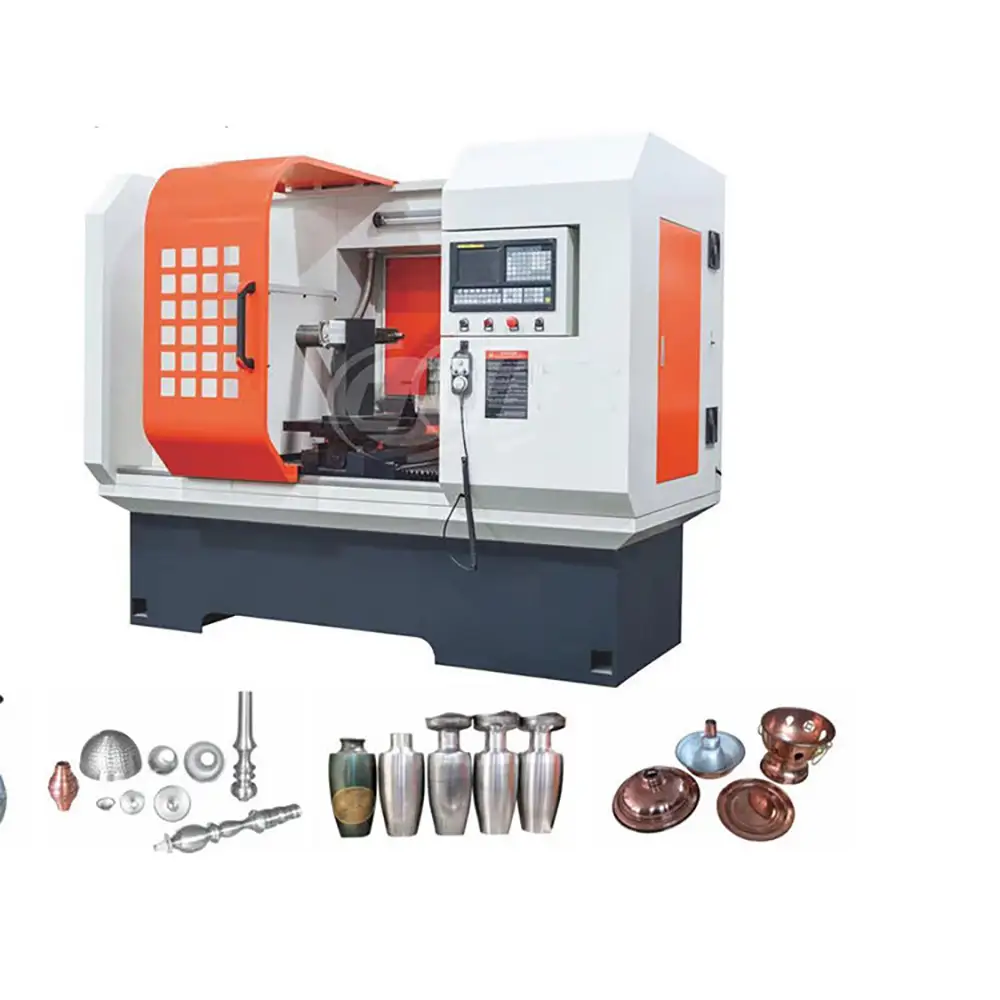
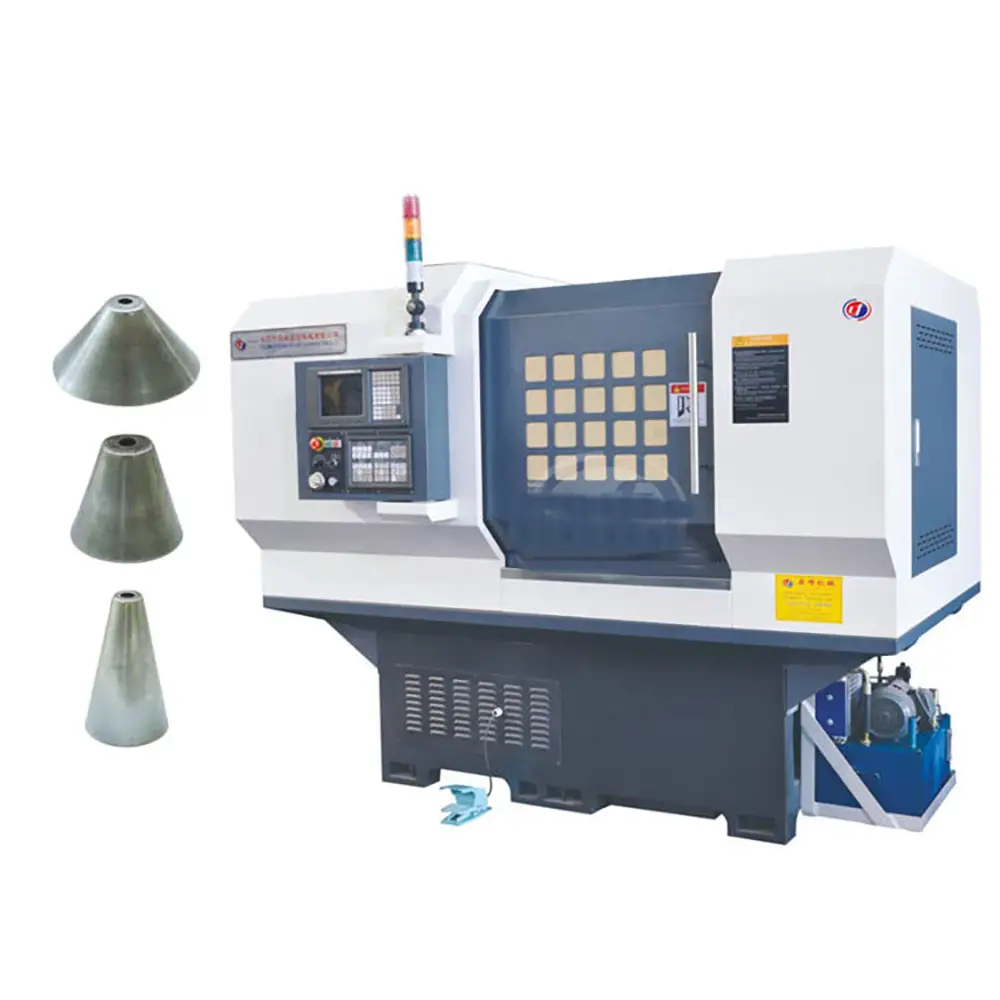
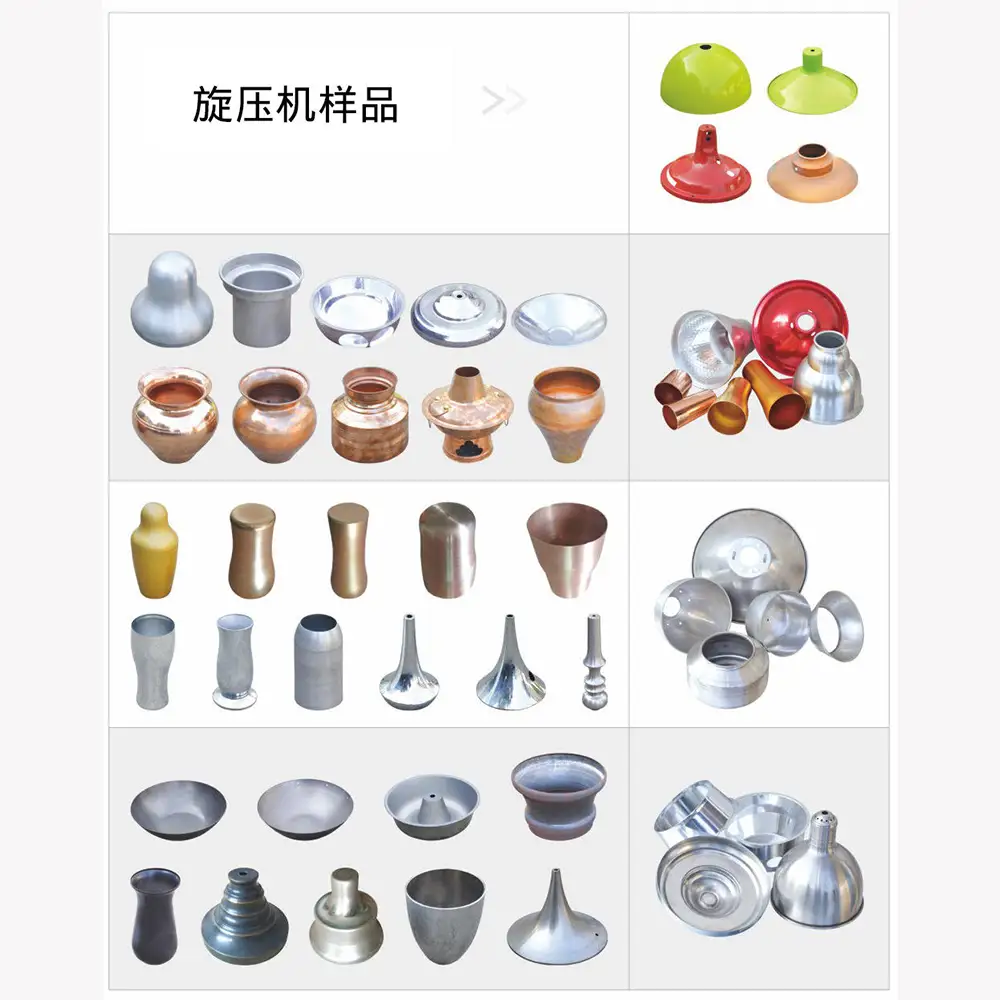
CNC metal spinning is commonly used to manufacture round and axisymmetric products such as cones, cylinders, hemispherical components, reflectors, covers, housings, tubes, and other rotational parts.
Compared with manually operated spinning equipment, CNC control can provide more consistent roller movement and forming sequences. This makes the technology suitable for both customized production and repeat manufacturing.
The machine can be configured according to different workpiece dimensions, forming forces, spindle requirements, tooling arrangements, and automation levels.
Flexible Metal Forming Capability
One major advantage of CNC metal forming equipment is its flexibility. A properly configured machine can support different forming processes and component geometries without requiring an entirely different production line for every product.
Manufacturers can select suitable mandrels, forming rollers, fixtures, tooling systems, and CNC programs according to their specific parts.
For companies producing several types of rotational components, this flexibility can help reduce equipment investment and improve overall manufacturing utilization.
Suitable for Complex Rotational Components
The machine is designed for components where rotational symmetry is an important part of the product geometry. Depending on machine configuration and tooling, it can be used for cylindrical, tapered, curved, flared, stepped, and other rotational profiles.
Typical products may include metal tubes, wheel components, industrial housings, lighting reflectors, pressure-related components, aerospace parts, automotive components, and specialized fabricated metal products.
For custom components, manufacturers can provide drawings, CAD files, samples, or production requirements so that the appropriate machine configuration and tooling solution can be evaluated.
Material Efficiency
Flow forming and metal spinning can offer significant material-efficiency advantages compared with manufacturing methods that rely heavily on cutting and machining.
Because the forming process reshapes the metal blank, manufacturers may reduce material removal and machining operations for suitable component designs. This can be especially valuable when working with higher-cost materials or when component weight needs to be controlled.
Material savings depend on the original blank design, component geometry, forming process, tolerance requirements, and downstream machining requirements.
CNC Control and Production Repeatability
The CNC control system is an important part of the machine's production capability. It allows programmed forming movements to be repeated according to established production parameters.
Depending on the selected configuration, the machine can be supplied with an appropriate CNC control system, drive system, spindle arrangement, and operator interface.
For production environments, programmable processing can help manufacturers standardize operations and reduce variations between individual workpieces.
The machine can also be integrated into a broader manufacturing workflow when automatic loading, unloading, inspection, or other auxiliary equipment is required.
Applications
The CNC Metal Forming Flow Forming Spinning Machine can be used across a wide range of industrial applications, including:
Automotive and vehicle components
Aerospace rotational components
Industrial tubes and sleeves
Metal housings and covers
Lighting reflectors
Wheel and rim components
Pressure-related metal components
Hydraulic and pneumatic components
Energy equipment components
Industrial machinery parts
Stainless steel rotational products
Aluminum formed components
Custom OEM metal parts
The most suitable process depends on the component geometry, material, thickness, diameter, length, tolerance, production volume, and required surface finish.
Custom CNC Metal Forming Solutions
Different products require different machine configurations. For this reason, CNC metal forming machines can be customized around the customer's production requirements.
Customization may involve machine capacity, spindle configuration, forming rollers, mandrel design, hydraulic or mechanical forming systems, CNC controls, tooling, automation, safety systems, and auxiliary equipment.
For OEM manufacturers, customized tooling and forming programs can be developed around specific components. This makes the equipment suitable for both standard production and specialized metal forming projects.
Before selecting a machine, it is recommended to evaluate the complete production process rather than focusing only on machine size. Workpiece dimensions, material properties, forming depth, wall thickness, production cycle, accuracy, tooling requirements, and automation requirements should all be considered.
Why Choose Us
1. CNC-Controlled Metal Forming
CNC technology provides programmable forming movements and repeatable production performance for demanding industrial applications.
2. Flow Forming and Spinning Expertise
The machine is designed around advanced metal forming processes, providing manufacturers with an efficient solution for rotational components.
3. Custom Machine Configuration
Machine specifications, tooling, mandrels, rollers, controls, and automation can be configured according to customer requirements.
4. Suitable for OEM Production
We support customized production solutions for manufacturers requiring dedicated metal forming equipment for their own products.
5. Focus on Production Efficiency
Forming metal rather than removing large amounts of material can help improve material utilization and reduce unnecessary machining operations for suitable parts.
6. Industrial B2B Applications
The equipment is suitable for factories, metalworking companies, component manufacturers, OEM suppliers, and industrial production lines.
7. Technical Support
We can work with customer drawings, samples, material information, and production requirements to help determine an appropriate machine and tooling configuration.
Frequently Asked Questions
1. What is a CNC metal forming machine?
A CNC metal forming machine uses computer-controlled movements to shape metal components according to programmed forming operations. It is suitable for repeatable production of precision metal parts.
2. What is flow forming?
Flow forming is a metalworking process that progressively forms and elongates a metal blank over a mandrel using controlled forming rollers.
3. What is the difference between metal spinning and flow forming?
Metal spinning generally forms a blank over a mandrel into rotational shapes, while flow forming typically involves controlled material displacement and elongation to produce longer or more precisely controlled rotational sections.
4. What materials can be processed?
Depending on machine configuration and tooling, suitable materials may include aluminum alloys, stainless steel, carbon steel, copper alloys, and other formable metals. Material testing may be recommended for specialized applications.
5. Can the machine produce custom shapes?
Yes. CNC programs and customized tooling can be developed for suitable rotational geometries, including cylindrical, conical, curved, stepped, and other axisymmetric profiles.
6. Is customized tooling available?
Yes. Mandrels, forming rollers, fixtures, and other tooling can be designed or configured according to the customer's component requirements.
7. Is this machine suitable for mass production?
Yes. CNC programming and repeatable forming cycles make the machine suitable for batch and continuous production, depending on the component and machine configuration.
8. Can I provide a drawing for evaluation?
Yes. Customers can provide CAD drawings, technical drawings, samples, material specifications, and production requirements for machine and tooling evaluation.
9. Can the machine be used for OEM manufacturing?
Yes. The machine can be configured for OEM production and customized around specific components, tooling requirements, and production processes.
10. How do I choose the right CNC flow forming machine?
Important factors include maximum workpiece diameter, forming length, material, wall thickness, forming force, spindle capacity, component geometry, required accuracy, tooling, and expected production volume.
Prev:
CNC Spinning Forming Machine for Metal Cup Aluminum Kitchenware and Cookware
Next:
Rotational Molding Machines, Metal Forming: Flanging / Crimping / Closing / Sealing
TAG:
Sheet Metal Forming Machine,
Industrial Metal Forming Machine,
Metal Forming Equipment,
Metal Forming Machine,
Metal Spinning Equipment,
Metal Spinning Machine,
CNC Metal Forming Machine,
CNC Metalworking Machine,
CNC Metal Spinning Lathe,
Metal Spinning Lathe,
Industrial Metal Spinning Machine,
Metal Spinning Machinery,
CNC Metal Forming Equipment,
Precision Metal Spinning Machine,
Automatic Metal Spinning Machine,
Rotational Metal Forming Machine,
Metal Forming Machinery,
Precision Metal Forming Machine,
CNC Metal Spinning Machine,
CNC Spinning Machine,
Metal Spinning Lathe Machine,
Flow Forming Machinery,
Metalworking Forming Machine,
Metal Forming Lathe,
Metal Forming Production Machine,
Precision Flow Forming Machine,
Industrial Flow Forming Machine,
Metal Flow Forming Machine,
Industrial CNC Spinning Machine,
Metal Flow Forming Equipment,
Related Category:
CNC Metal Forming Machine, CNC Flow Forming Machine, CNC Metal Spinning Machine, Metal Flow Forming Machine China, suppliers, manufacturers, factory, customized, wholesale, quotation, made in China