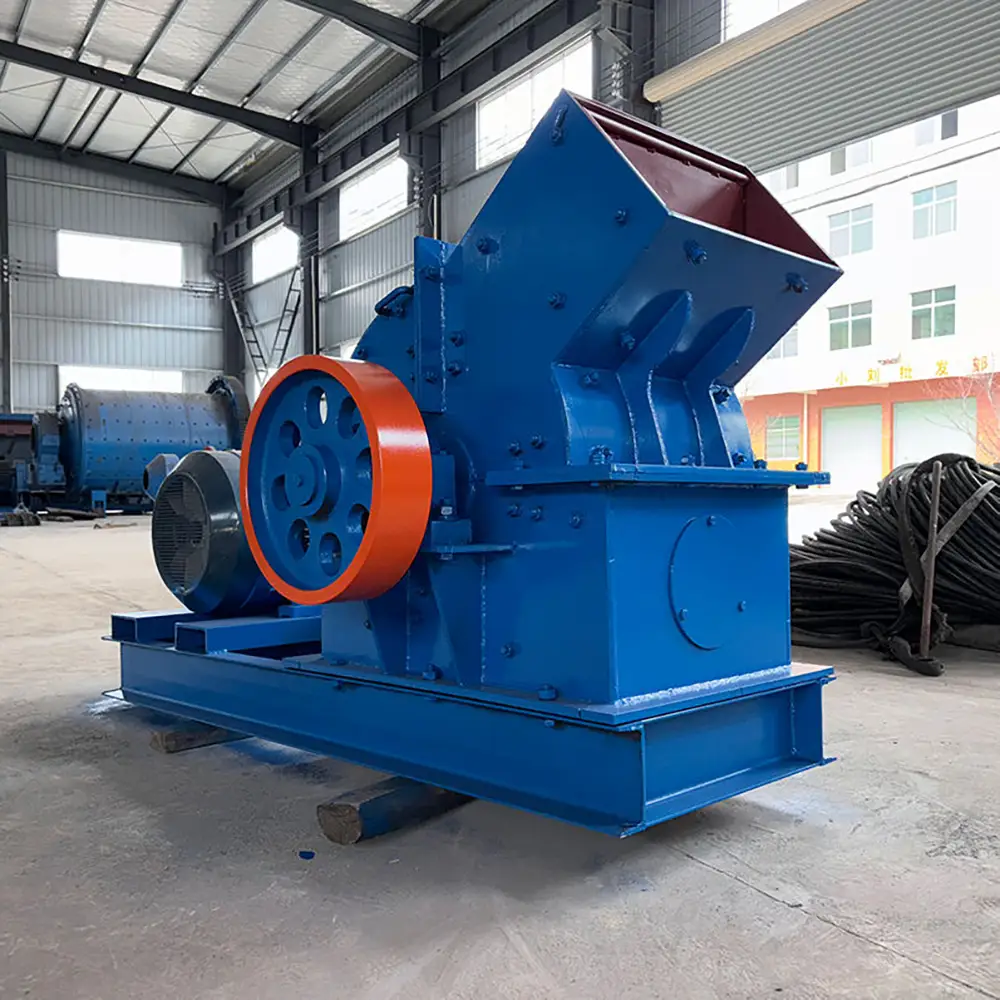
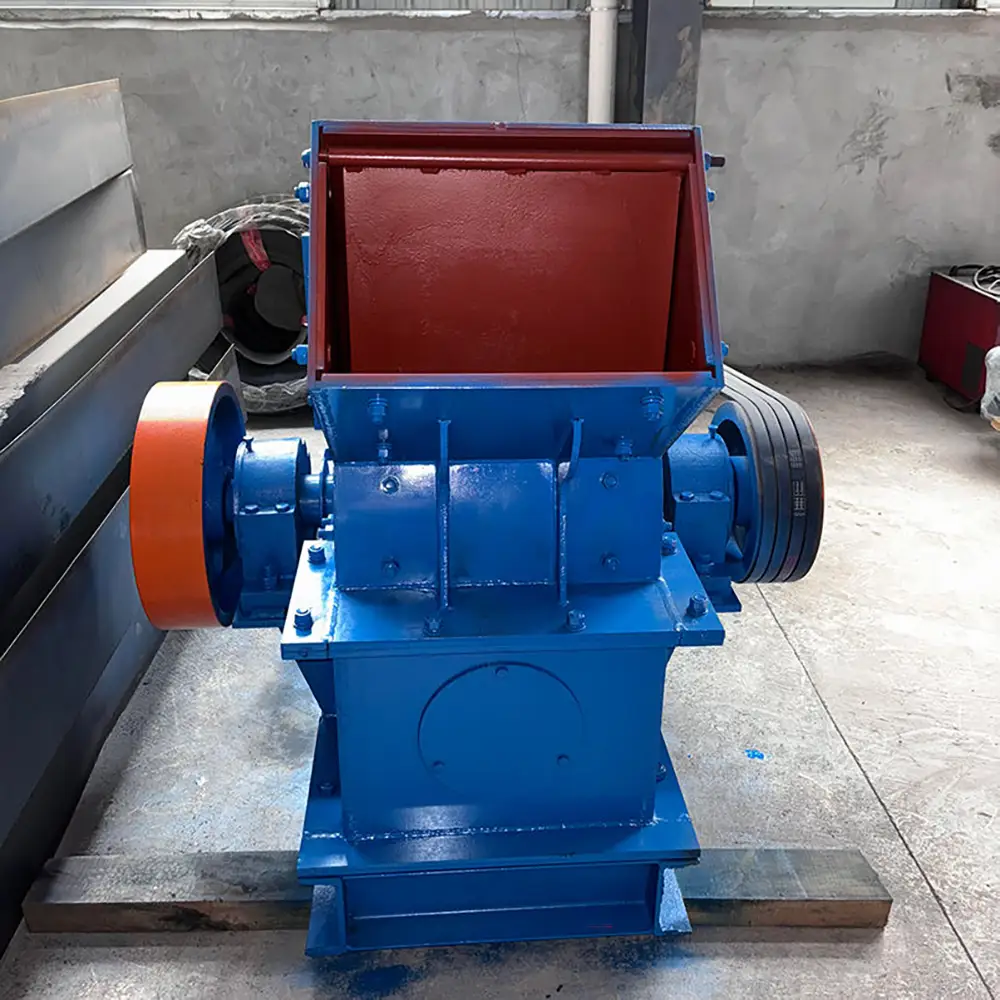
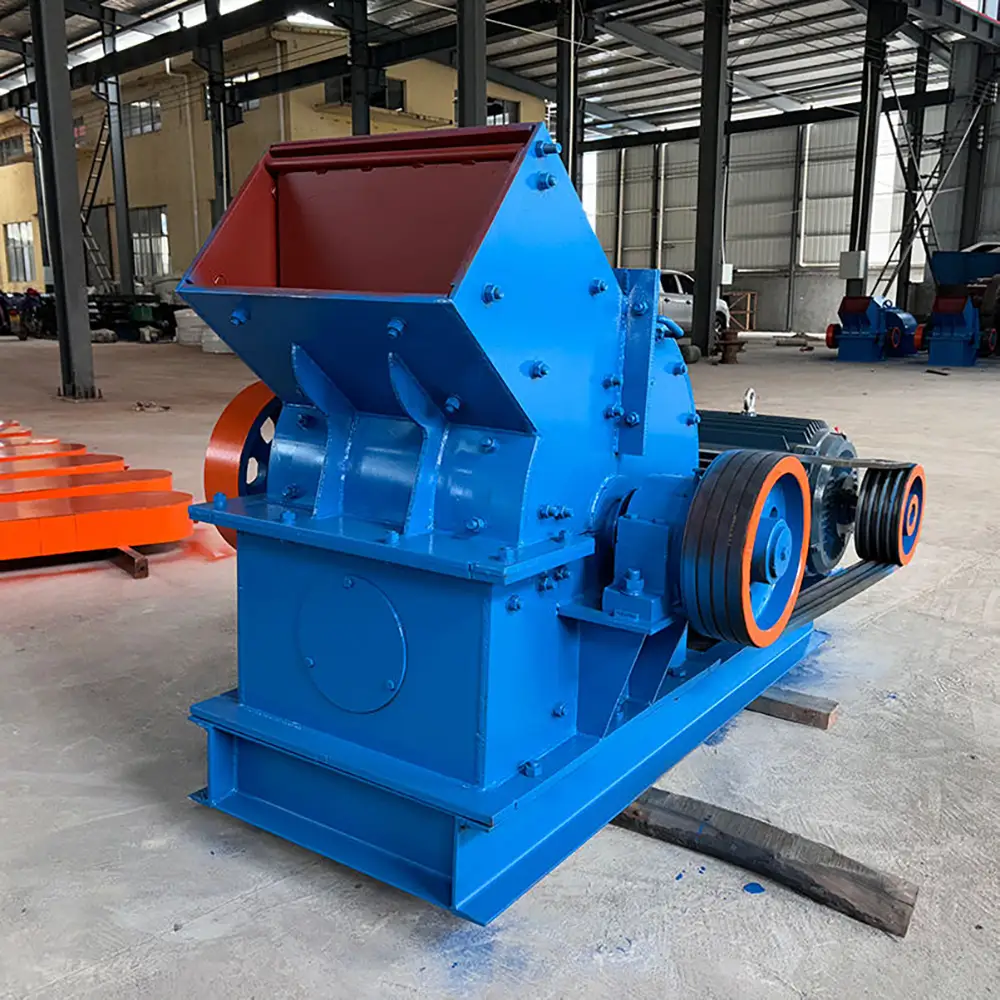
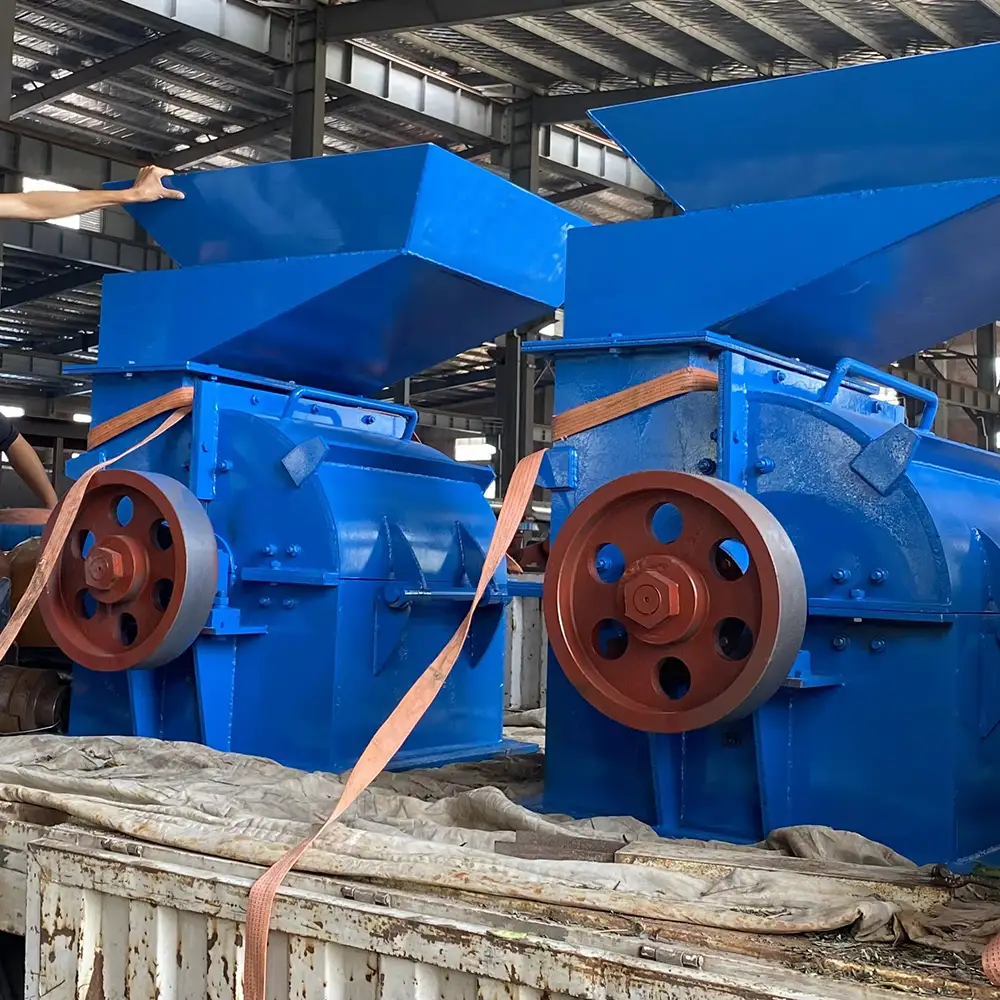
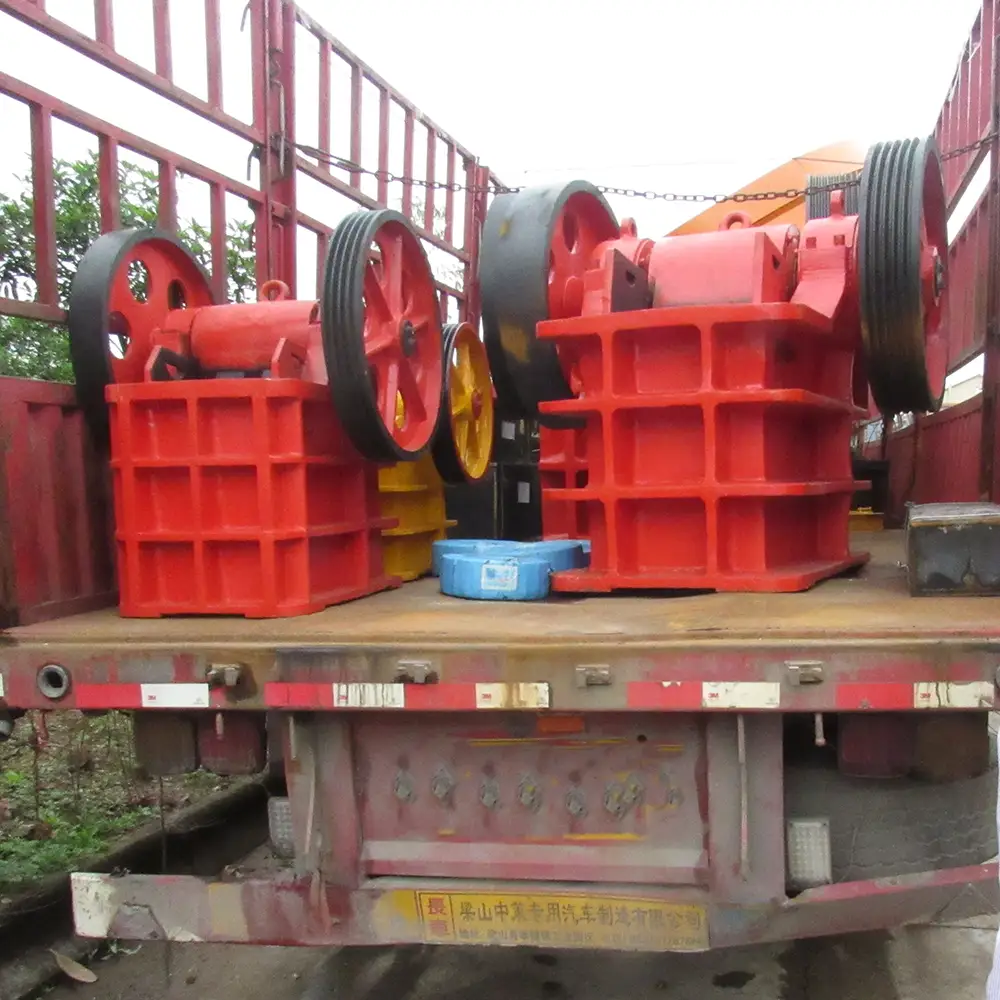
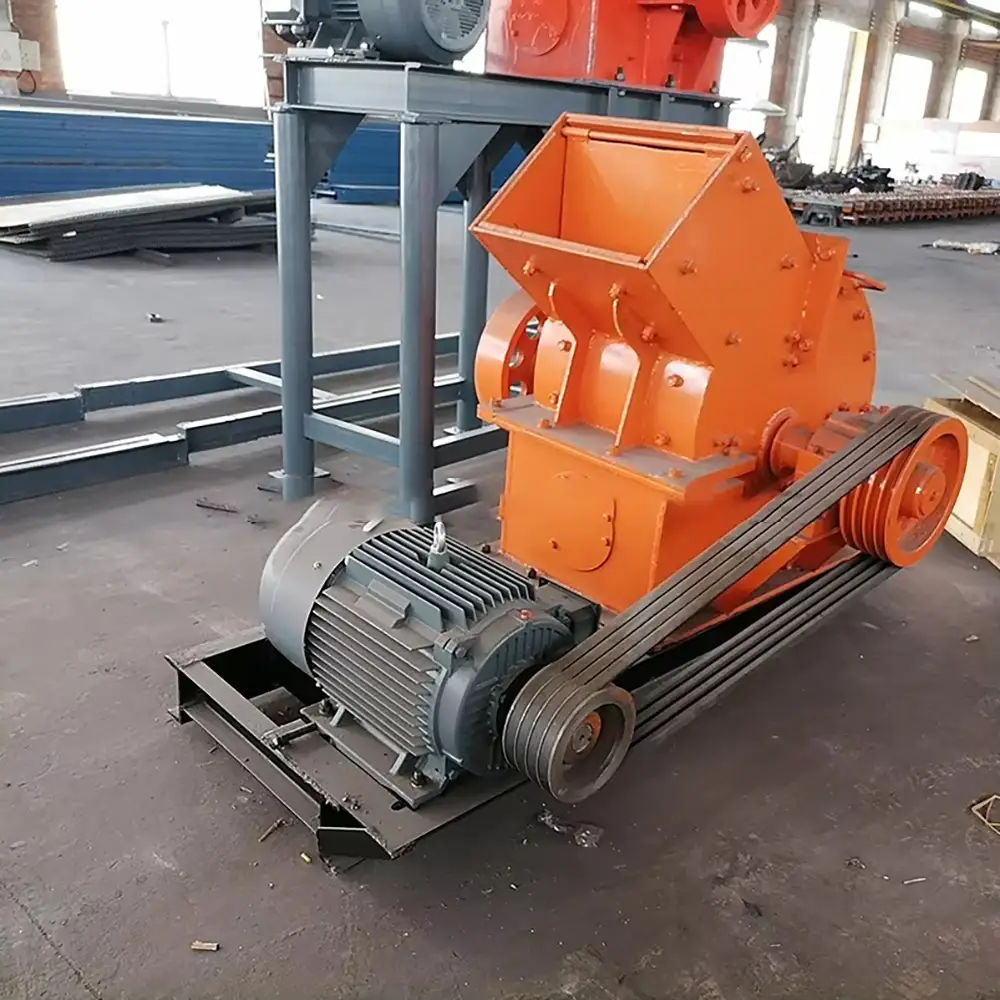
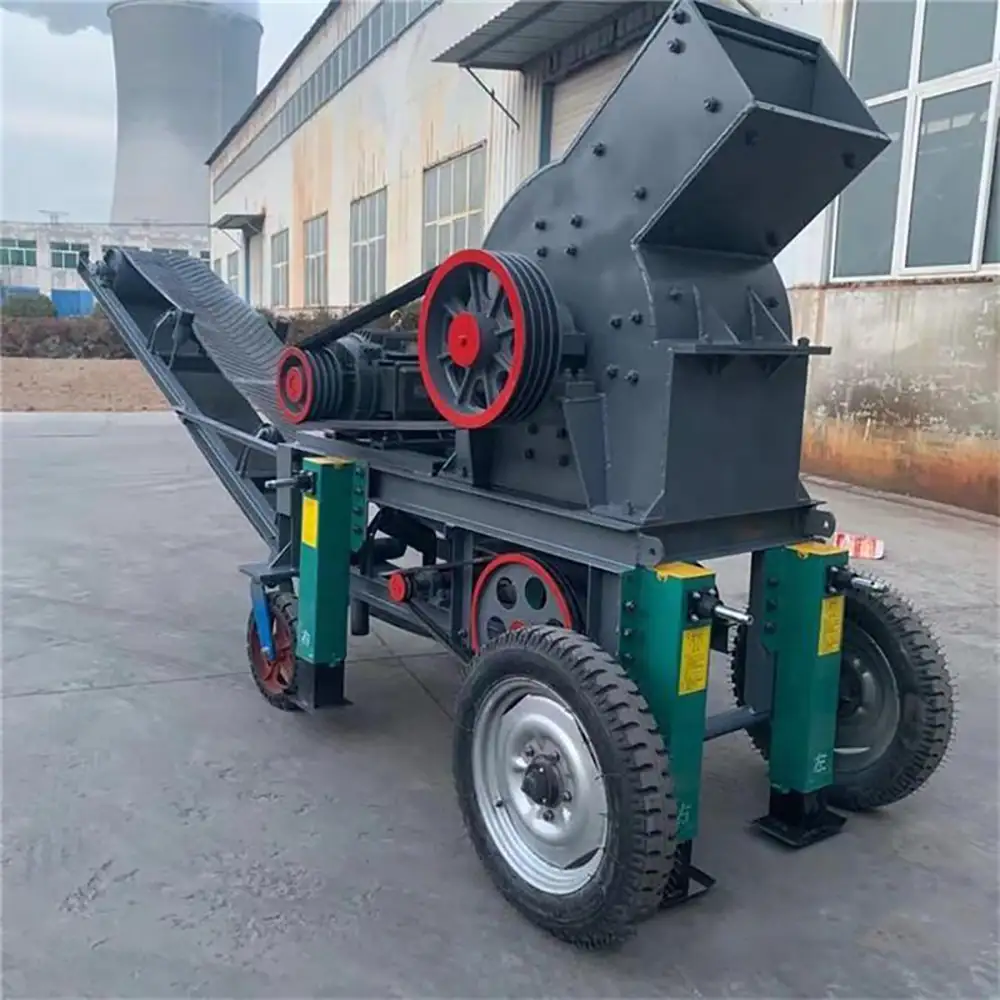
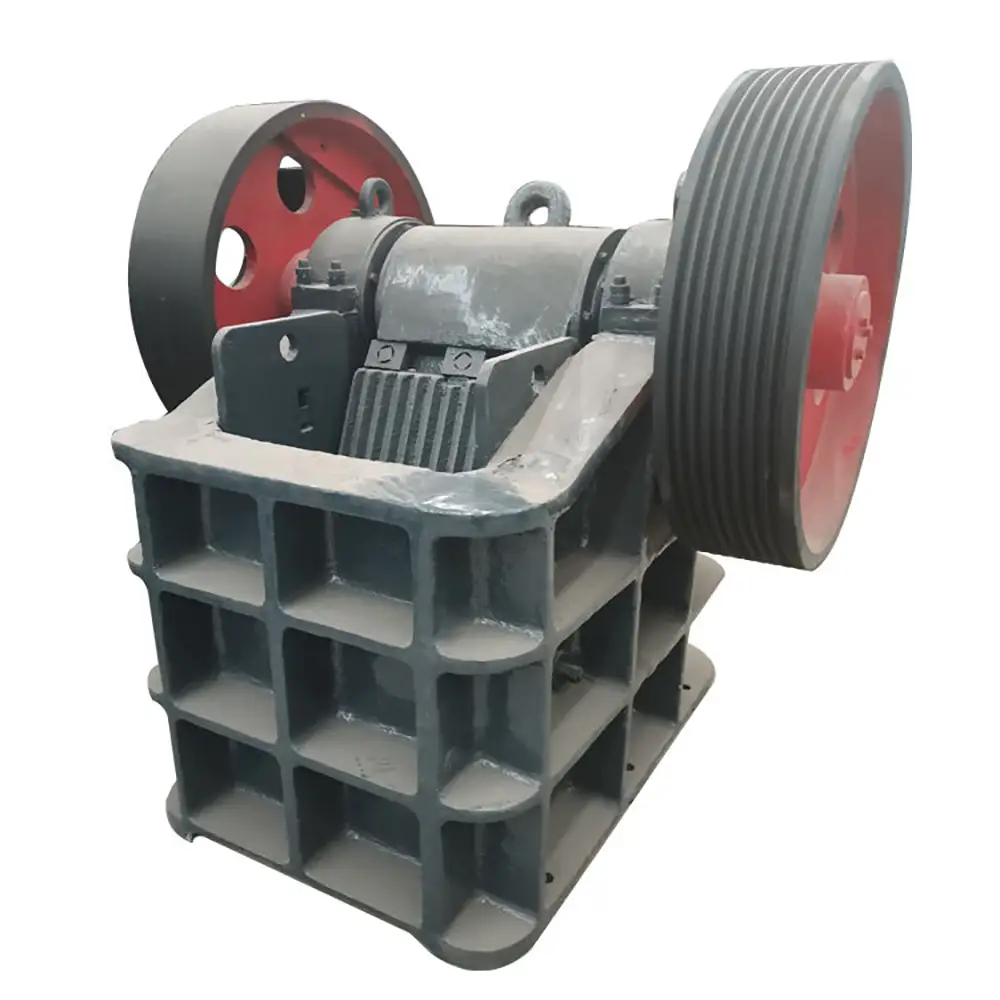
Hammer crusher is used to break many kinds of materials with medium hardness and weak abrasion.The compressive strength of materials is no more than 15%. The crushed materials include coal, salt, gypsum, tile, limestone etc. Also used to crush the fiber structure, elstic and stong toughness of asbestos cement fertilizer,and recover asbestos fiber.
|
Model No. |
Max. Feeding Size
(mm) |
Output Size
(mm) |
Capacity
(t/h) |
Motor Power
(kw) |
Weight
(t) |
Overall Diemension
L*W*H(mm) |
|
PC400*300 |
100 |
≤10 |
5-10 |
11 |
0.8 |
850*950* 880 |
|
PC600*400 |
120 |
≤15 |
10-25 |
18.5 |
1.5 |
1000*1000*1300 |
|
PC800*600 |
120 |
≤15 |
20-35 |
55 |
3.1 |
1515*2590*1040 |
|
PC1000*800 |
120 |
≤15 |
20-40 |
110 |
7.9 |
3200*2210*1515 |
|
PC1000*1000 |
120 |
≤15 |
30-80 |
132 |
8.65 |
3515*2230* 1515 |
Stone Hammer Machinery, Hammer Crusher For Limestone, Coal, Salt, Gypsum, Tile
Stone Hammer Machinery is designed for efficient size reduction of brittle and medium-hard bulk materials in mining, cement, building materials, coal processing, chemical, and other industrial applications. A hammer crusher uses a high-speed rotating rotor fitted with hammer heads to impact incoming material and reduce it into smaller particles.
The hammer crusher is particularly suitable for materials such as limestone, coal, salt, gypsum, brick, and tile. These materials are commonly listed among the typical applications for hammer crushing because of their relatively favorable crushing characteristics.
Also known as a stone hammer crusher, hammer mill crusher, hammer crushing machine, or stone crushing machine, this equipment can be configured for different production capacities, feed sizes, and final product requirements. It can be used as a primary or secondary crushing machine depending on the process design.
What Is Stone Hammer Machinery?
Stone Hammer Machinery is a mechanical impact crushing system that reduces material through repeated blows from rapidly rotating hammers.
When material enters the crushing chamber, the rotor rotates at high speed and the hammer heads strike the feed. The material is broken by impact and may also be forced against breaker plates or grate sections. Particles that are still too large remain in the crushing chamber until they reach a size suitable for discharge.
This working principle provides a relatively simple crushing process and can achieve a substantial reduction in particle size in a single crushing stage for suitable materials.
Hammer Crusher For Limestone
Limestone is one of the most common materials processed by hammer crushers. It is widely used in cement production, aggregate preparation, lime manufacturing, and building material production.
A limestone hammer crusher can reduce quarried limestone into a suitable size for subsequent grinding, screening, calcination, or other processing operations.
For cement plants, the crusher can be incorporated into a complete limestone preparation system together with feeders, conveyors, screens, and storage equipment.
The appropriate crusher configuration depends on the limestone's hardness, moisture, feed size, required capacity, and target product size.
Hammer Crusher For Coal
Coal hammer crushers are used to reduce coal lumps into smaller particles for further handling, combustion, screening, or processing.
The high-speed hammer rotor provides impact force while the grate or discharge arrangement helps control the product size. Coal crushing systems can be used in coal preparation, power generation, cement plants, and other industrial applications.
Because coal properties vary significantly, equipment selection should consider coal type, moisture, feed size, required output, and desired particle distribution.
Hammer Crusher For Salt
Salt is another material that can be processed with suitable hammer crushing equipment. A salt hammer crusher can reduce large salt lumps into smaller particles for subsequent screening, packaging, processing, or industrial use.
For salt applications, corrosion considerations, moisture, feed characteristics, and hygiene or material-contact requirements may influence the equipment configuration.
The crushing chamber, hammer material, screen design, and discharge system can be selected according to the specific salt-processing application.
Hammer Crusher For Gypsum
Gypsum is relatively soft and brittle compared with many hard rock materials, making it suitable for hammer-type impact crushing in many applications.
A gypsum hammer crusher can be installed in gypsum processing lines to reduce raw gypsum before grinding, calcination, board production, or other downstream processes.
The final product requirements determine the appropriate crusher size and discharge configuration. For projects requiring a controlled particle size distribution, engineers should evaluate feed size and target grading before selecting the machine.
Hammer Crusher For Brick and Tile
Hammer crushers can also process selected brick, tile, and other brittle building materials.
A tile hammer crusher can reduce ceramic or clay-based tile waste into smaller fragments for recycling or further processing. Brick and tile crushing applications may be used in construction material recycling, aggregate production, and waste reduction.
However, the feed should be checked for reinforcing steel, large metal contaminants, or highly abrasive components before introducing construction waste into the crusher.
Working Principle
The hammer crusher consists primarily of a frame, rotor, hammer heads, breaker plates or impact surfaces, grate or screen components, bearings, drive system, and feeding and discharge openings.
The working process is straightforward:
Raw material enters the feed opening.
The rotating rotor accelerates the hammer heads.
Hammer heads strike and break the incoming material.
Broken particles move through the crushing chamber.
Oversized particles receive additional impact.
Material meeting the required discharge conditions exits the crusher.
The final particle size can be influenced by factors such as grate opening, rotor speed, hammer configuration, feed characteristics, and crusher design.
Main Features of Stone Hammer Machinery
High-impact crushing principle
Suitable for brittle and medium-hard materials
Compact mechanical structure
Replaceable hammer and wear components
Suitable for limestone, coal, salt, gypsum, brick, and tile
Flexible primary or secondary crushing applications
Multiple rotor and crusher configurations
Adjustable discharge arrangements according to model
Easy integration into crushing and screening plants
Customizable according to material and production requirements
Applications
Stone Hammer Machinery can be used across multiple industries.
Mining
Suitable materials can include limestone, selected ores, coal, and other relatively brittle minerals.
Cement Production
Hammer crushers are commonly used for limestone, gypsum, coal, and other cement raw materials. Large industrial crushing systems may use hammer crushers as part of integrated cement raw material preparation.
Coal Processing
The machine can reduce coal lumps for preparation, handling, screening, and fuel applications.
Building Materials
Brick, tile, gypsum, limestone, and other construction materials can be processed into smaller particles.
Chemical Industry
Selected brittle chemical raw materials and industrial minerals can be crushed when their properties are compatible with hammer crushing.
Recycling
Suitable brick, tile, and selected construction materials can be reduced for recycling and reuse.
Advantages of Hammer Crushing
One major advantage is the direct impact crushing method. For suitable feed materials, hammer crushers can achieve significant size reduction without requiring a complicated multi-stage arrangement.
The relatively simple mechanical structure can also simplify routine inspection and maintenance. Replaceable hammers, grate components, and wear plates allow worn components to be serviced as needed.
Hammer crushers can also provide a relatively uniform product when correctly configured for the material and required output. Manufacturers commonly offer different grate, rotor, hammer, and crusher configurations for different applications.
Material Selection and Limitations
Although hammer crushers are versatile, they are not suitable for every type of rock.
They are generally better suited to brittle, low- to medium-hardness materials with relatively low abrasiveness. Highly abrasive and very hard materials can result in rapid hammer and wear-part consumption and may be better handled by other crushing technologies.
Material moisture is also important. Excessively wet or sticky feed can interfere with material flow and discharge depending on the crusher configuration.
For this reason, the correct equipment should be selected according to actual material properties rather than simply by the material name.
How to Choose the Right Hammer Crusher
Before purchasing Stone Hammer Machinery, provide the following information:
Material type
Maximum feed size
Material hardness
Material moisture
Abrasiveness
Required production capacity
Desired discharge size
Required particle distribution
Working hours per day
Installation conditions
Available motor power
For example, a limestone crusher for a cement plant may require a substantially different configuration from a small tile recycling crusher. Capacity and product size can vary considerably between models and materials, so actual process data should be used for equipment selection.
Maintenance
Routine maintenance is important for stable hammer crusher performance.
Operators should regularly inspect the hammer heads, rotor, bearings, grate bars, breaker plates, drive belts or coupling, lubrication system, and fastening components.
Hammer wear should be monitored because excessive wear can affect crushing efficiency and product size. Grate openings should also be kept clear to maintain proper material discharge.
Before maintenance, the machine should be completely stopped and isolated from its power source. Replacement hammers and wear parts should match the recommended specifications for the specific crusher model.
Custom Stone Hammer Machinery
We provide customized Stone Hammer Machinery for mining, cement, coal, building materials, aggregate, and recycling applications.
Customization can include rotor dimensions, hammer configuration, crushing chamber size, motor power, feed opening, grate arrangement, discharge size, dust-control connection, support frame, and complete crushing-line integration.
Whether you need a limestone hammer crusher, coal hammer crusher, salt crusher, gypsum crusher, or tile crushing machine, the equipment can be selected according to your actual material and production requirements.
Why Choose Us?
Professional Crushing Equipment Manufacturer: We provide hammer crushers and related bulk material processing equipment for international customers.
Application-Based Engineering: Equipment is selected according to feed material, particle size, capacity, moisture, and abrasiveness.
Wide Material Compatibility: Solutions are available for suitable limestone, coal, salt, gypsum, brick, tile, and other brittle materials.
Custom OEM Manufacturing: Crusher dimensions, power, rotor design, wear components, and discharge configuration can be customized.
Complete Plant Support: Hammer crushers can be integrated with feeders, conveyors, screens, hoppers, and other crushing equipment.
Wear Part Support: Replacement hammers, screens, grate bars, and other components can be supplied according to the equipment model.
International B2B Service: Technical documentation, equipment configuration, spare parts, and after-sales support are available for overseas projects.
Frequently Asked Questions
1. What materials can a hammer crusher process?
Typical applications include limestone, coal, salt, gypsum, brick, tile, and other suitable brittle or medium-hard materials.
2. Is a hammer crusher suitable for limestone?
Yes. Limestone is one of the common materials processed by hammer crushers, especially in cement and building material applications.
3. Can a hammer crusher crush coal?
Yes. Coal hammer crushers are used for reducing coal lumps in coal preparation and industrial fuel-handling applications.
4. Can it crush salt?
Yes. Suitable salt feed can be processed with a hammer crusher, although moisture, corrosion, and material-contact requirements should be considered.
5. Can gypsum be crushed by a hammer crusher?
Yes. Gypsum is a common hammer-crushing material because it is relatively soft and brittle.
6. Can the machine crush tile?
Yes. Suitable ceramic, clay, and tile materials can be crushed for size reduction and recycling applications.
7. How does a hammer crusher work?
A high-speed rotor carries hammer heads that strike incoming material. The material is repeatedly impacted until it reaches a suitable size for discharge.
8. Can the output size be adjusted?
Depending on the crusher design, the output can be influenced by grate openings, hammer configuration, rotor speed, and other operating parameters.
9. Is a hammer crusher suitable for granite?
Hammer crushers are generally better suited to brittle, low- to medium-hardness materials. Highly hard and abrasive granite can result in excessive wear, so another crushing technology may be more appropriate.
10. What information is required for a quotation?
Please provide the material name, maximum feed size, moisture, hardness, required capacity, target output size, working conditions, and available power supply. This information allows us to recommend a suitable hammer crusher configuration.
Prev:
Jaw Crusher for Stone, Ceramics, Cement, Chalk Animal Bone, Mining
Next:
Portable Stone Hammer Crusher, Mobile Stone Hammer Crusher Mill with Wheels
TAG:
Limestone Crusher,
Quarry Crushing Machine,
Ceramic Crusher,
Ceramic Crushing Machine,
Cement Crusher,
Quarry Stone Crusher,
Stone Crushing Equipment,
Mining Crushing Equipment,
Stone Crushing Machine,
Brittle Material Crusher,
Medium Hard Material Crusher,
Material Size Reduction Machine,
Industrial Crushing Machine,
Heavy Duty Stone Crusher,
Hammer Crusher For Limestone,
Hammer Crusher For Coal,
Hammer Crusher For Salt,
Hammer Crusher For Gypsum,
Hammer Crusher For Tile,
Hammer Crusher For Brick,
Primary Hammer Crusher,
Secondary Hammer Crusher,
Impact Hammer Crusher,
High Reduction Hammer Crusher,
Single Stage Hammer Crusher,
Single Rotor Hammer Crusher,
Double Rotor Hammer Crusher,
Cement Plant Hammer Crusher,
Limestone Crusher For Cement Plant,
Coal Crusher For Cement Plant,
Related Category:
Stone Hammer Machinery,Hammer Crusher,Limestone Hammer Crusher,Coal Hammer Crusher,Salt Hammer Crusher China, suppliers, manufacturers, factory, customized, wholesale, quotation, made in China