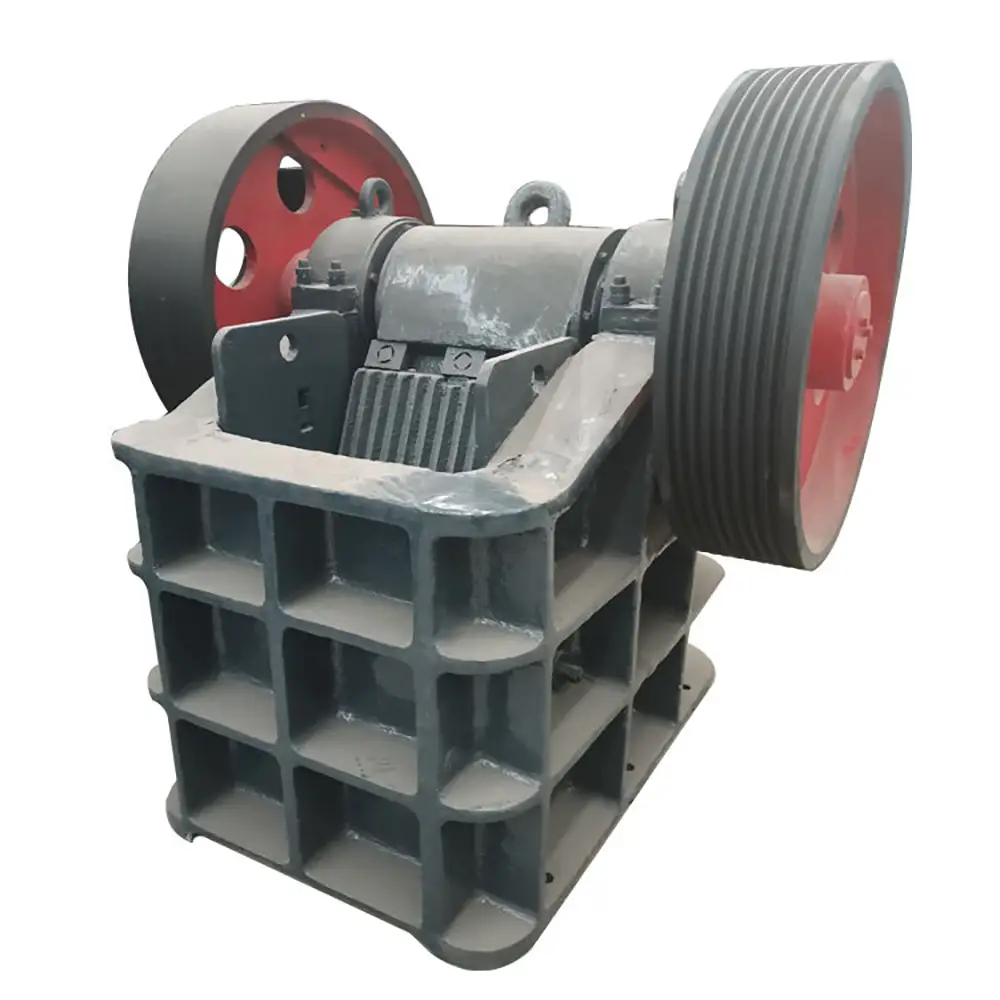
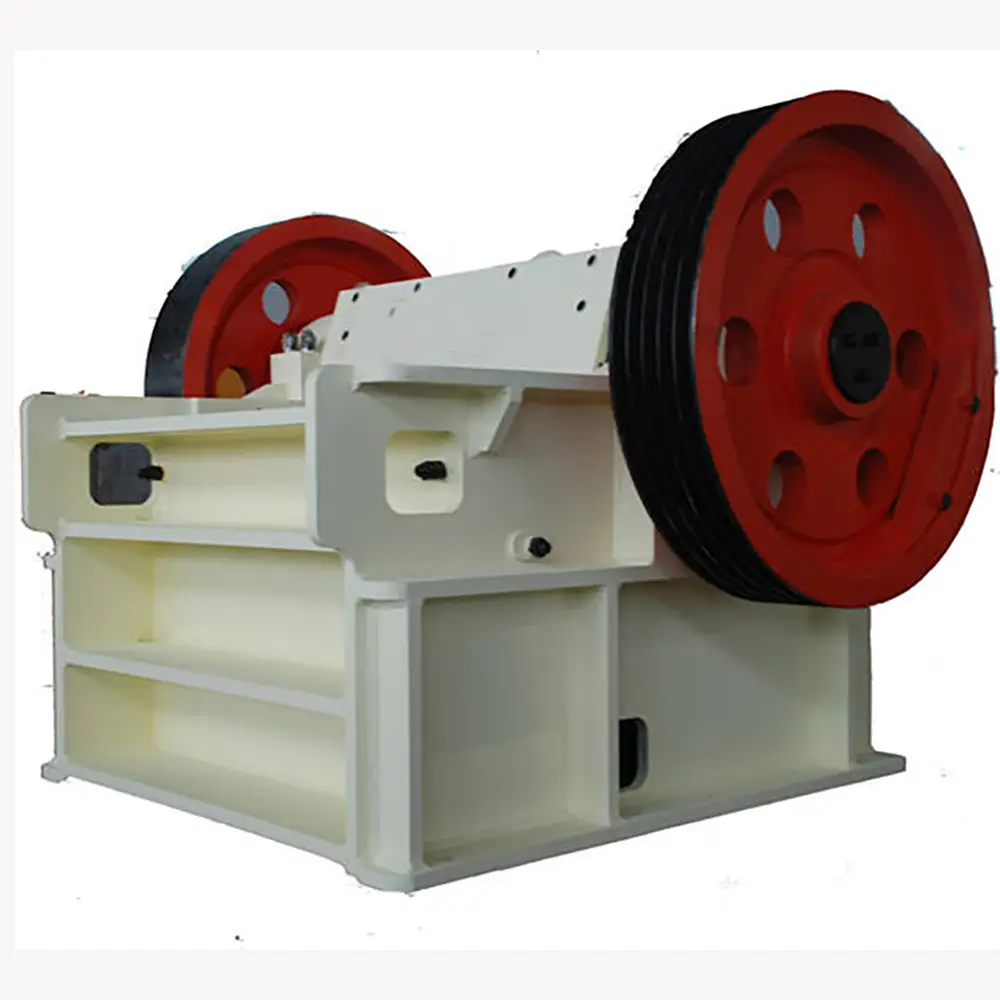
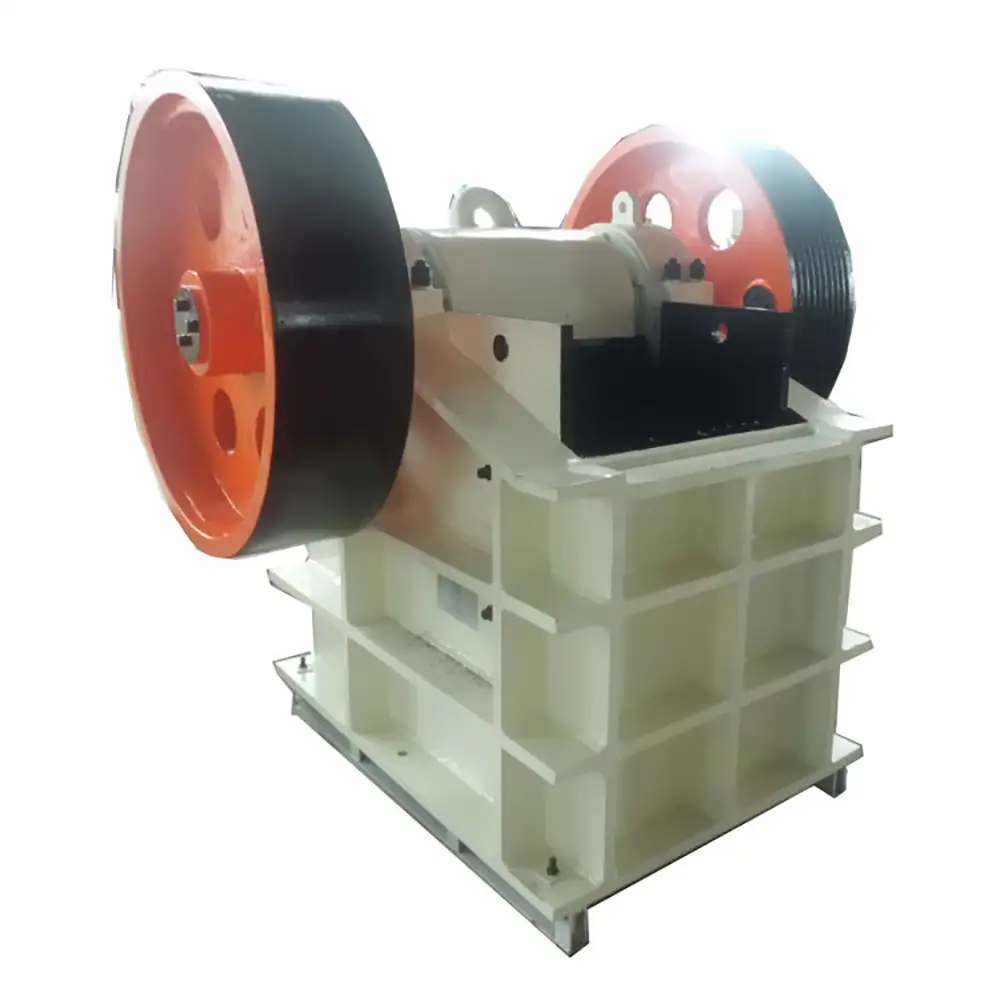
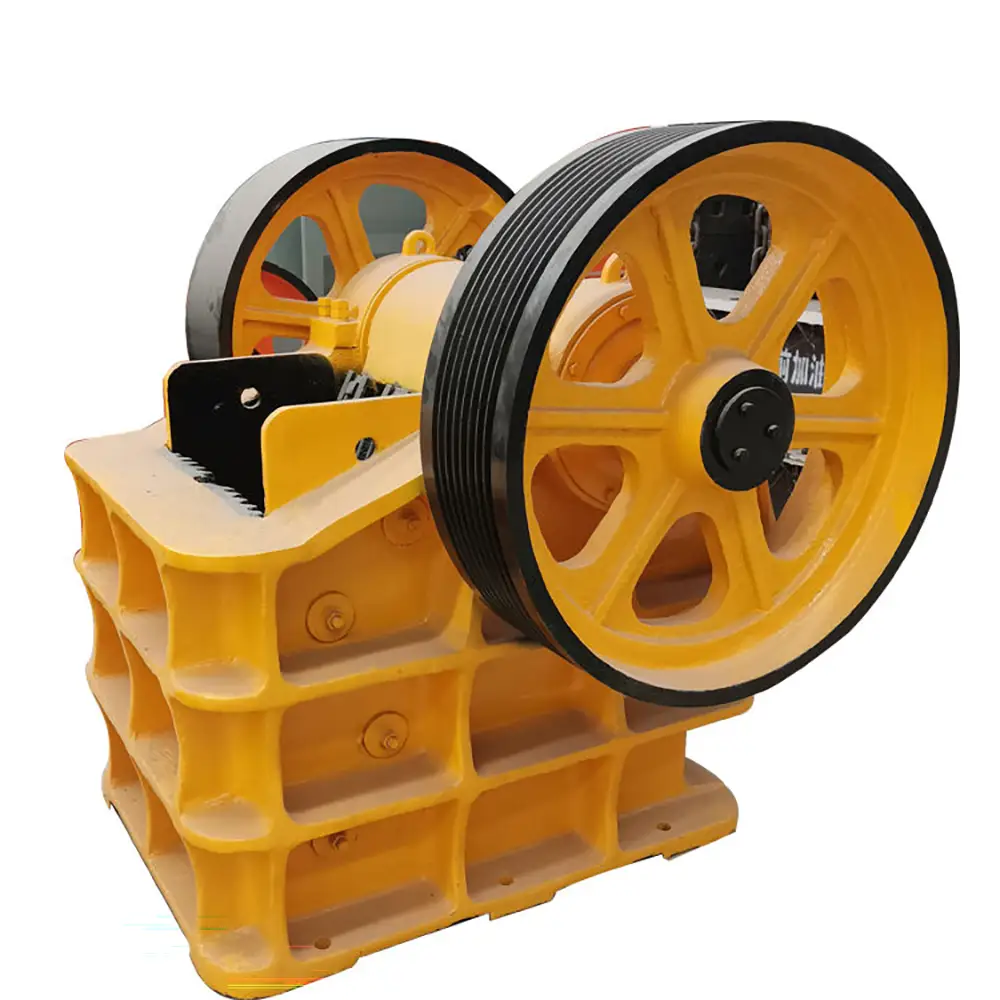
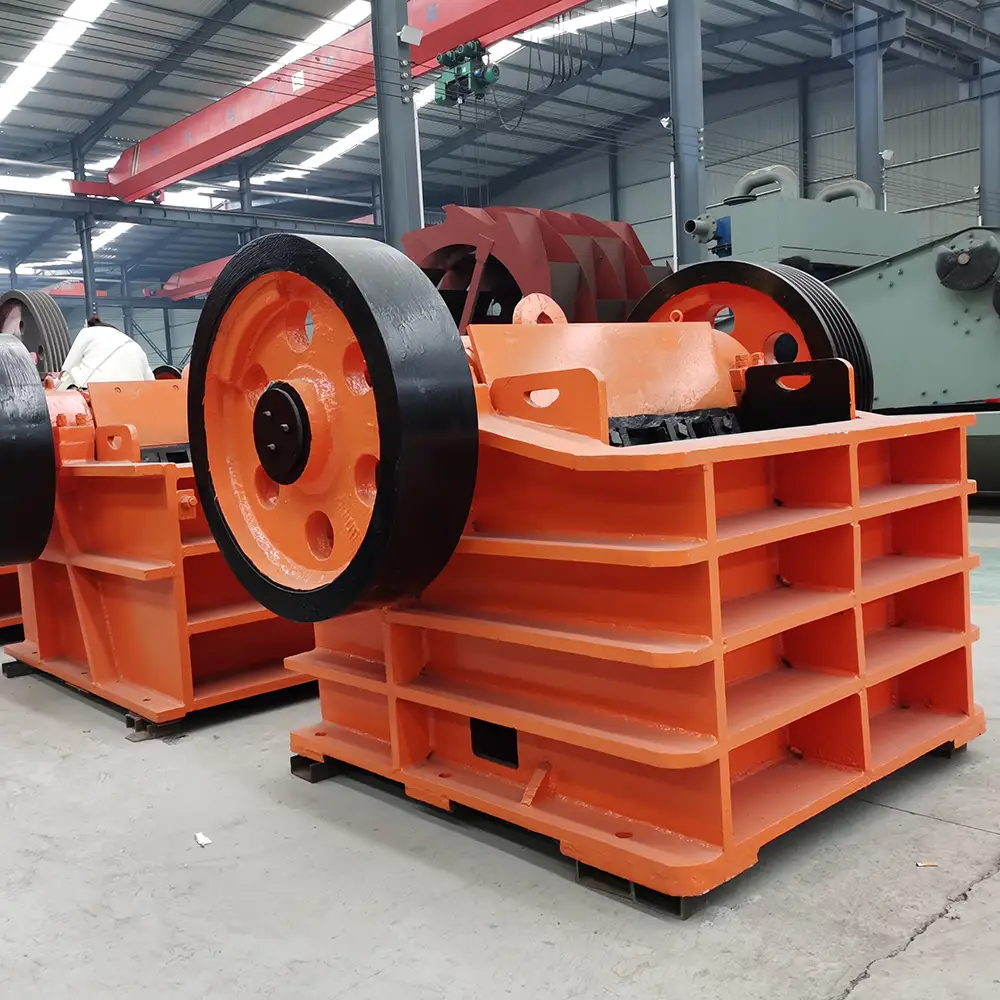
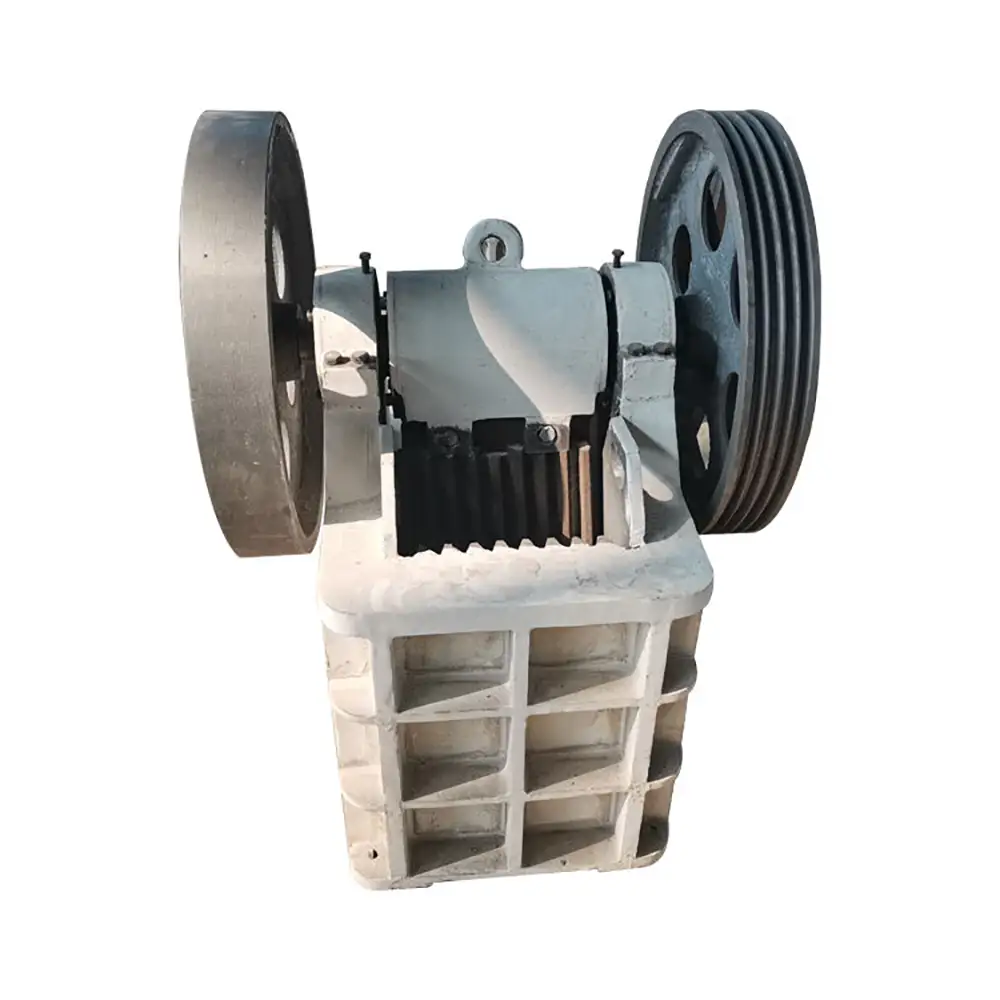
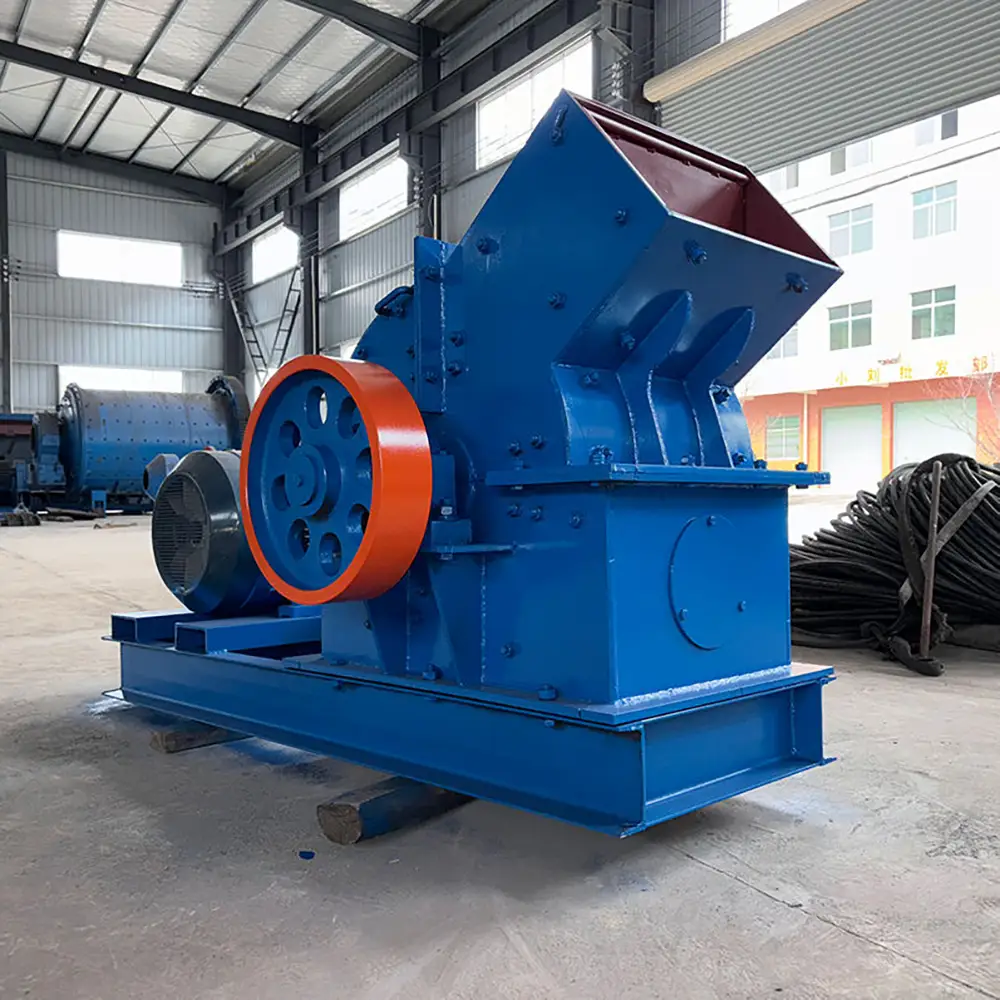
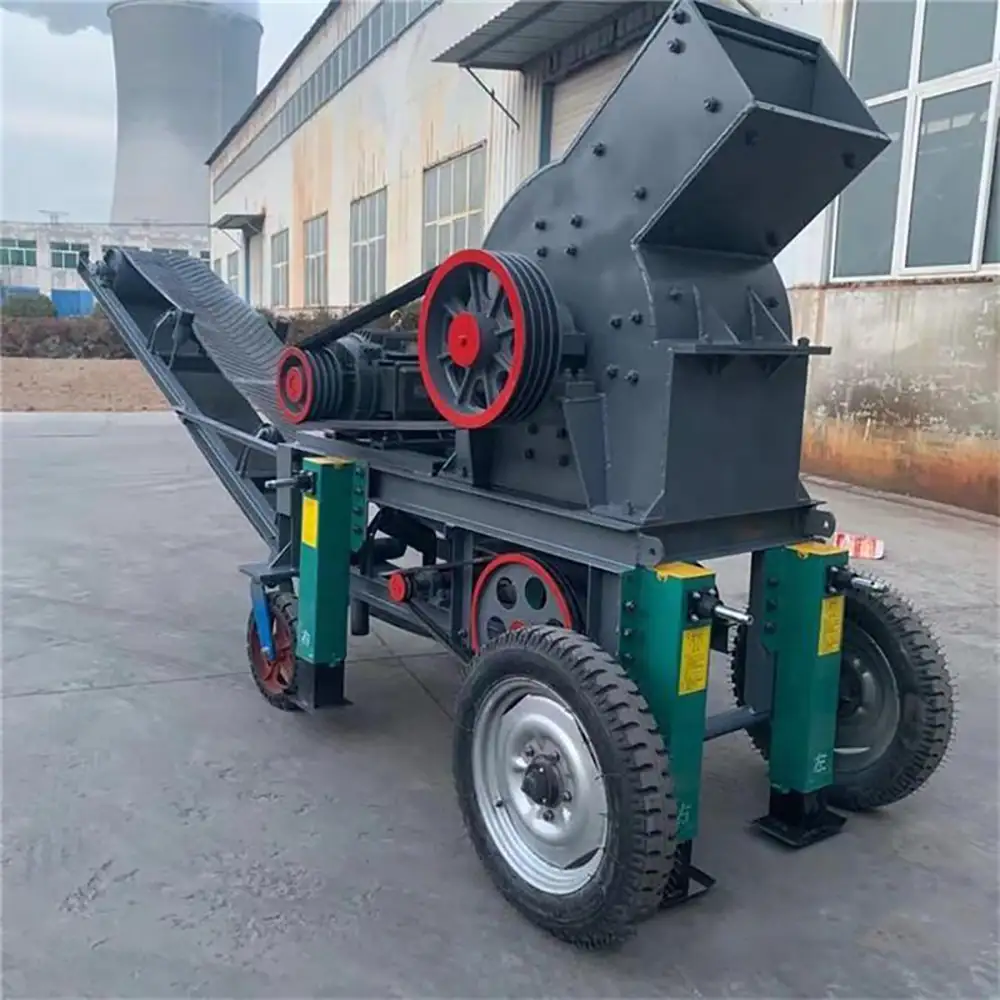
High efficiency mining equipment granite crusher of jaw crusher
Description
PE series jaw crusher is developed and applied widely in mines, quarries, road construction, building material, highway, railway, water conservancy and other industrial. The product specification is complete, the feed size from 150-1500 mm, PE/PEX-type jaw crusher crushing materials of compressive strength of up to 300Mpa, it is a complete set of broken lines in the first choice of primary crushing equipment.
Features
1. High ratio of crushing;
2. Homogeneous final grain size
3. Simple structure
4. Reliable working condition
5. Easy maintenance
6. Low operating cost
Application
1. Small stone powder jaw crusher is widely applied to crush high hardness, mid hardness and soft rocks and ores such as ore,quartz, granite,limestone,slags, construction materials, marble, etc...
2.The maximum compression strength of materials to be crushed is 320MPA.
3.PE series is used for primary crushing, and PEX series is used for secondary crushing and fine crushing.
Working Principle
The motor transmits power through belt, drives the moving jaw do periodic motion to the fixed jaw surround the eccentric shaft. The angle between toggle plate and moving jaw increases when moving jaw moves up. So the moving jaw closes to the fixed jaw, and the stuff will be crushed in multiple ways. The angle of Jaw Crusher between toggle plate and moving jaw decreases when moving jaw moves down, the moving jaw of jaw crusher moves away from fixed jaw by the pulling force of rod and spring, the products after crushing will be discharged from the outlet of Jaw crusher.
Technical Parameters of Jaw Crusher
|
Model |
Feed opening |
Max.Feed size |
Discharge opening range |
Capacity |
Power |
Weight |
|
(MM) |
(MM) |
(MM) |
(T/H) |
(KW) |
(T) |
|
PE-400x600 |
400x600 |
340 |
40-100 |
16-64 |
30 |
6.5 |
|
PE-500x750 |
500x750 |
425 |
50-100 |
45-100 |
55 |
10.3 |
|
PE-600x900 |
600x900 |
500 |
65-160 |
48-120 |
55/75 |
15.5 |
|
PE-750x1060 |
750x1060 |
630 |
80-140 |
51-208 |
110 |
28 |
|
PE-900x1200 |
900x1200 |
750 |
100-200 |
144-304 |
132 |
50 |
|
PE-1000x1200 |
1000x1200 |
850 |
195-265 |
315-342 |
132 |
51 |
|
PE-1200x1500 |
1200x1500 |
1000 |
150-350 |
300-800 |
220 |
83 |
|
PE-1500x1800 |
1500x1800 |
1200 |
220-350 |
450-1000 |
355 |
122 |
|
PEX-150x750 |
150x750 |
120 |
18-48 |
8-25 |
15 |
3.5 |
|
PEX-250x750 |
250x750 |
210 |
25-60 |
12-35 |
22 |
4.9 |
|
PEX-250x1000 |
250x100 |
210 |
25-60 |
16-52 |
30/37 |
6.5 |
|
PEX-250x1200 |
250x1200 |
210 |
25-60 |
20-60 |
37 |
7.7 |
|
PEX-300x1300 |
300x1300 |
250 |
20-90 |
16-104 |
75 |
11 |
Jaw Crusher for Stone, Ceramics, Cement, Chalk, Animal Bone & Mining
The Jaw Crusher is a versatile crushing machine designed for reducing hard, brittle, and tough materials into smaller, manageable sizes. It is widely used in mining, quarrying, cement production, ceramics, construction materials, laboratories, and industrial material processing.
A conventional jaw crusher uses a fixed jaw plate and a movable jaw plate arranged in a V-shaped crushing chamber. As the movable jaw moves toward the fixed jaw, the feed material is compressed and fractured. When the movable jaw moves away, the crushed material moves downward toward the discharge opening. This compression-based principle makes jaw crushers particularly suitable for primary crushing of large rocks and ores.
Depending on the machine configuration and application, jaw crushers can process stone, granite, limestone, ores, cement clinker, ceramics, coal, quartz, construction materials, and other suitable materials. Laboratory jaw crushers are also available for sample preparation involving ceramics, cement, rocks, minerals, and similar materials.
What Is a Jaw Crusher?
A Jaw Crusher is a mechanical compression crusher that reduces material between two jaw plates.
The main components normally include a heavy-duty frame, fixed jaw plate, movable jaw plate, eccentric shaft, toggle or toggle mechanism, flywheel, bearings, tension components, cheek plates, and discharge adjustment system.
Raw material enters through the top feed opening. The eccentric shaft drives the movable jaw through a reciprocating or elliptical motion. Material caught between the jaw plates is compressed until it fractures. The smaller particles then move toward the bottom of the crushing chamber and leave through the discharge opening.
This relatively straightforward crushing mechanism is one reason jaw crushers are commonly used as primary crushing equipment in mining, quarrying, aggregate production, and cement plants.
Jaw Crusher for Stone
Stone and rock are among the most common applications for jaw crushers.
A stone jaw crusher can reduce large quarry rocks, river stone, granite, limestone, basalt, and other suitable materials into smaller sizes for secondary crushing, screening, grinding, or aggregate production.
In a typical stone crushing plant, raw material may first pass through a vibrating feeder before entering the jaw crusher. The crushed material can then be transferred to a cone crusher, impact crusher, vibrating screen, or conveyor depending on the required final product.
The correct jaw crusher should be selected according to the maximum feed size, rock hardness, abrasiveness, required capacity, and desired discharge size.
Jaw Crusher for Mining
Mining jaw crushers are commonly used as primary crushers for run-of-mine material.
They can be used for suitable iron ore, copper ore, gold-bearing ore, limestone, granite, basalt, and other mineral materials. The large feed opening and compression crushing action allow a jaw crusher to reduce relatively large material before it enters secondary and tertiary processing stages.
A mining jaw crusher can therefore serve as the first crushing stage in a complete mineral processing line. Downstream equipment may include cone crushers, impact crushers, screens, conveyors, mills, and beneficiation equipment.
Jaw Crusher for Ceramics
Ceramic materials can also be processed with appropriately designed jaw crushers.
Laboratory and industrial jaw crushers are used for crushing ceramics, oxide ceramics, sintered materials, chamotte, and related hard or brittle materials.
For ceramic production or recycling applications, the crusher can be used to reduce larger ceramic pieces into smaller particles before grinding, screening, or further processing.
The machine configuration should be selected according to ceramic hardness, feed dimensions, desired output size, and production requirements.
Jaw Crusher for Cement and Cement Clinker
Jaw crushers can be used for cement-related raw material preparation and for crushing suitable cement clinker or other cement plant materials.
In cement production, jaw crushers are often used in the initial size-reduction stage for quarried limestone and other raw materials. The reduced material can then be processed by additional crushing, grinding, blending, and calcination equipment.
For cement clinker or laboratory sample preparation, smaller jaw crushers can provide controlled preliminary crushing before milling or analysis.
Jaw Crusher for Chalk
Chalk is a relatively soft and brittle calcium carbonate material. Depending on moisture, feed size, and desired particle size, appropriately configured crushing equipment can be used for chalk size reduction.
For chalk processing, equipment selection should consider the material's moisture and tendency to generate fine dust. A suitable feed system and dust-control arrangement can be incorporated into the overall crushing line when required.
Jaw Crusher for Animal Bone
Animal bone requires more specialized consideration than conventional stone or mining applications.
For dry, clean, and suitable bone material, specially designed small jaw crushers or laboratory crushers may be used for size reduction. However, a standard mining jaw crusher should not automatically be considered suitable for food, pharmaceutical, rendering, or sanitary bone-processing applications.
Animal bone processing requires consideration of hygiene, contamination control, moisture, fat content, cleaning requirements, corrosion resistance, and the intended end use. If the equipment will be used for food, feed, fertilizer, pharmaceutical, or other regulated applications, the machine configuration should be specified accordingly.
Jaw Crusher Working Principle
The jaw crusher operates through compression.
Material enters through the feed opening.
The movable jaw approaches the fixed jaw.
Material is compressed and fractured between the jaw plates.
The movable jaw retracts.
Crushed particles move downward.
Material exits through the discharge opening when it reaches the required size.
The discharge opening can generally be adjusted according to the crusher design. Changing the jaw gap changes the size range of the discharged material, although actual product grading also depends on material characteristics and operating conditions.
Main Features
Strong compression crushing action
Heavy-duty structural frame
Large feed opening options
Replaceable jaw plates
Adjustable discharge opening
Suitable for primary crushing
Suitable for hard and brittle materials
Simple and robust mechanical structure
Easy integration with feeders and conveyors
Stationary and mobile configurations available
Industrial and laboratory models available
Industrial Applications
Mining
Primary crushing of suitable ores and rocks before secondary crushing, screening, grinding, or beneficiation.
Quarrying
Processing granite, limestone, basalt, river stone, and other suitable quarry materials.
Cement Plants
Initial crushing of limestone and other raw materials, as well as selected cement clinker applications.
Ceramics
Pre-crushing of ceramic materials, sintered products, chamotte, and similar materials.
Construction Materials
Size reduction of selected concrete, bricks, stones, and other suitable construction materials.
Laboratories
Small jaw crushers can be used for controlled sample preparation in mineralogy, geology, metallurgy, ceramics, cement, and material research.
Jaw Crusher Selection Guide
Selecting the correct jaw crusher requires more than knowing the material name. Important technical information includes:
Material type
Maximum feed size
Material hardness
Compressive strength
Abrasiveness
Moisture content
Required capacity
Desired discharge size
Operating hours
Installation conditions
Power supply
Primary or secondary crushing requirements
For example, a large mining jaw crusher and a laboratory ceramic jaw crusher may both use the same basic compression principle but have completely different dimensions, capacity, drive systems, and structural designs.
For this reason, equipment should be selected based on the complete application rather than simply the keyword or material name. Current industry references likewise emphasize matching crusher selection to feed size, material characteristics, capacity, product size, and site conditions.
Jaw Plate and Wear Parts
Jaw plates are critical wear components because they directly contact the material during crushing.
Common replacement components may include fixed jaw plates, movable jaw plates, cheek plates, toggle components, bearings, tension parts, and other machine-specific wear components.
The service life of wear parts depends on material hardness, abrasiveness, feed size, operating conditions, crusher settings, and maintenance practices. Regular inspection helps identify excessive wear before it affects crushing performance.
Maintenance
Routine inspection should include the jaw plates, eccentric shaft, bearings, toggle mechanism, flywheel, belts or coupling, lubrication system, frame, fasteners, and discharge opening.
Operators should monitor unusual vibration, abnormal noise, excessive temperature, loose components, uneven wear, and changes in product size.
Before maintenance or replacement of wear parts, the crusher must be stopped and isolated from its power source. Maintenance intervals should follow the manufacturer's operating instructions and actual site conditions.
Custom Jaw Crusher Solutions
We provide jaw crusher solutions for mining, quarrying, cement, ceramics, construction materials, laboratory applications, and other suitable material-processing projects.
Customization can include crusher size, feed opening, jaw plate material, motor power, discharge adjustment, frame structure, mobile chassis, feeding hopper, dust-control arrangements, and complete crushing-line integration.
For international B2B projects, we can also provide technical specifications, spare parts, equipment configuration, OEM manufacturing, and application-based engineering support.
Why Choose Us?
Professional Crusher Manufacturer: Industrial jaw crusher solutions for mining, quarrying, cement, aggregate, ceramics, and material processing.
Application-Based Design: Equipment is selected according to material properties, feed size, capacity, and output requirements.
Heavy-Duty Construction: Robust frames and replaceable wear components are available for demanding crushing environments.
Wide Application Range: Solutions are available for stone, ores, limestone, cement clinker, ceramics, and other suitable materials.
OEM & Custom Manufacturing: Jaw dimensions, power, jaw plates, discharge settings, and supporting equipment can be customized.
Complete Crushing Solutions: Jaw crushers can be integrated with feeders, conveyors, screens, secondary crushers, and other processing equipment.
Spare Parts Support: Jaw plates and other replacement components can be supplied for long-term equipment maintenance.
International B2B Service: Technical documentation, equipment configuration, spare parts, and after-sales support are available for overseas customers.
Frequently Asked Questions
1. What is a jaw crusher?
A jaw crusher is a compression crushing machine that reduces material between a fixed jaw plate and a movable jaw plate.
2. What materials can a jaw crusher crush?
Depending on the model, jaw crushers can process stone, granite, limestone, ores, cement clinker, ceramics, coal, quartz, construction materials, and other suitable hard or brittle materials.
3. Is a jaw crusher suitable for mining?
Yes. Mining jaw crushers are commonly used as primary crushers for ores and hard rock before secondary crushing and further mineral processing.
4. Can a jaw crusher crush ceramics?
Yes. Suitable ceramic and oxide ceramic materials can be processed with appropriately configured jaw crushers.
5. Can a jaw crusher crush cement?
It can crush suitable cement-related materials, including limestone used as a cement raw material and selected cement clinker applications.
6. Can a jaw crusher crush chalk?
Yes, suitable chalk can be reduced using appropriate crushing equipment. Moisture, feed size, dust generation, and desired output should be considered when selecting the machine.
7. Can a jaw crusher crush animal bone?
Specialized jaw crushers may be used for suitable dry bone size reduction, but food, feed, pharmaceutical, rendering, and sanitary applications require purpose-specific equipment design and material-contact considerations.
8. Can the jaw crusher output size be adjusted?
Yes. Most jaw crusher designs provide an adjustable discharge opening. The actual product size distribution also depends on feed characteristics and operating conditions.
9. Is a jaw crusher a primary crusher?
Yes. Jaw crushers are widely used as primary crushers because they can accept relatively large feed material and reduce it to a size suitable for downstream equipment.
10. What information is needed to select a jaw crusher?
Provide the material type, maximum feed size, hardness, abrasiveness, moisture, required capacity, target discharge size, operating conditions, and available power supply. These details allow the appropriate jaw crusher configuration to be determined.
Prev:Sorry, no information
Next:
Stone Hammer Machinery, Hammer Crusher For Limestone Coal, Salt, Gypsum, Tile
TAG:
Primary Rock Crushing Machine,
Secondary Jaw Crusher,
Jaw Crusher For Construction Materials,
Construction Waste Jaw Crusher,
Jaw Crusher For Mineral Processing,
Mineral Processing Crusher,
Mining Stone Crushing Machine,
Heavy Duty Rock Crusher,
Limestone Crusher,
Quarry Crushing Machine,
Ceramic Crusher,
Ceramic Crushing Machine,
Cement Crusher,
Limestone Jaw Crusher,
Granite Jaw Crusher,
Granite Crusher,
Basalt Jaw Crusher,
Basalt Crusher,
Concrete Jaw Crusher,
Concrete Crusher,
Cement Clinker Crusher,
Chalk Crusher Machine,
Bone Crusher Machine,
Industrial Bone Crusher,
Material Crushing Machine,
Compression Crusher,
Jaw Type Crusher,
Single Toggle Jaw Crusher,
Double Toggle Jaw Crusher,
PE Jaw Crusher,
Related Category:
Jaw Crusher For Stone,Jaw Crusher For Ceramics,Jaw Crusher For Cement,Jaw Crusher For Chalk China, suppliers, manufacturers, factory, customized, wholesale, quotation, made in China