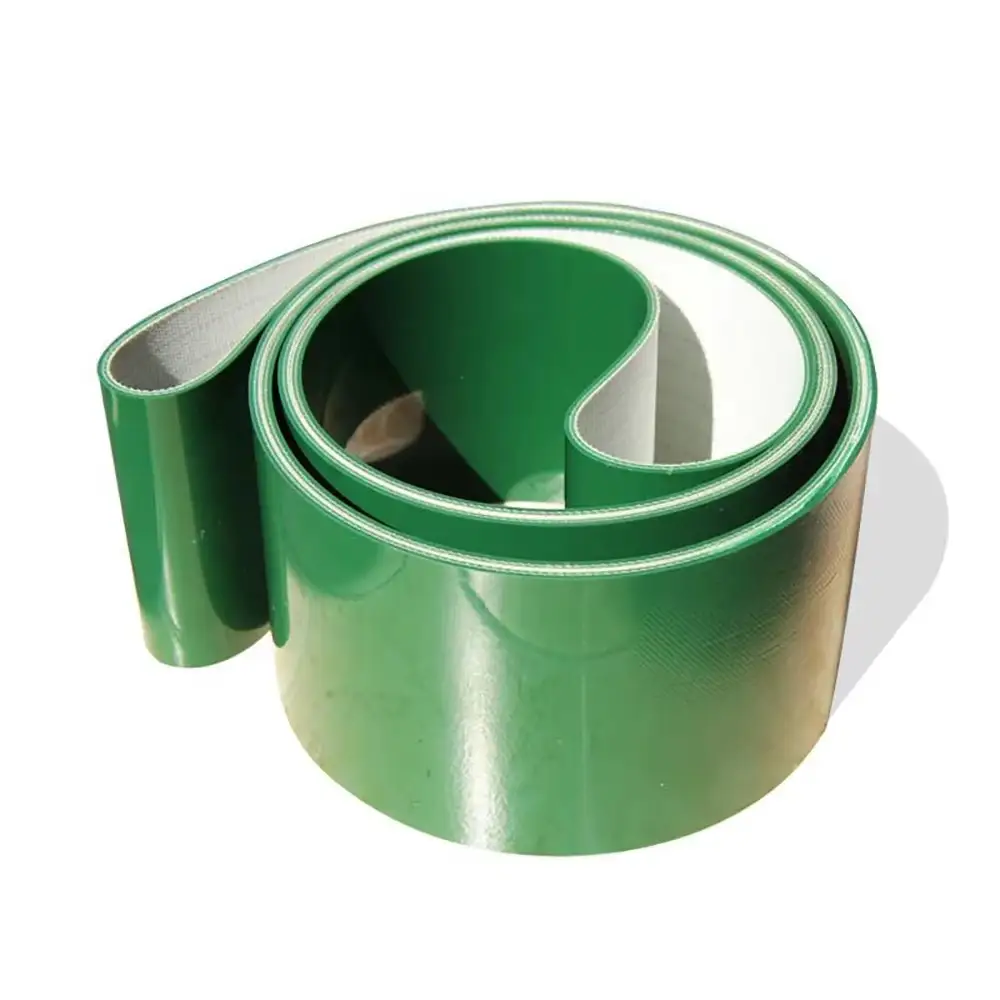
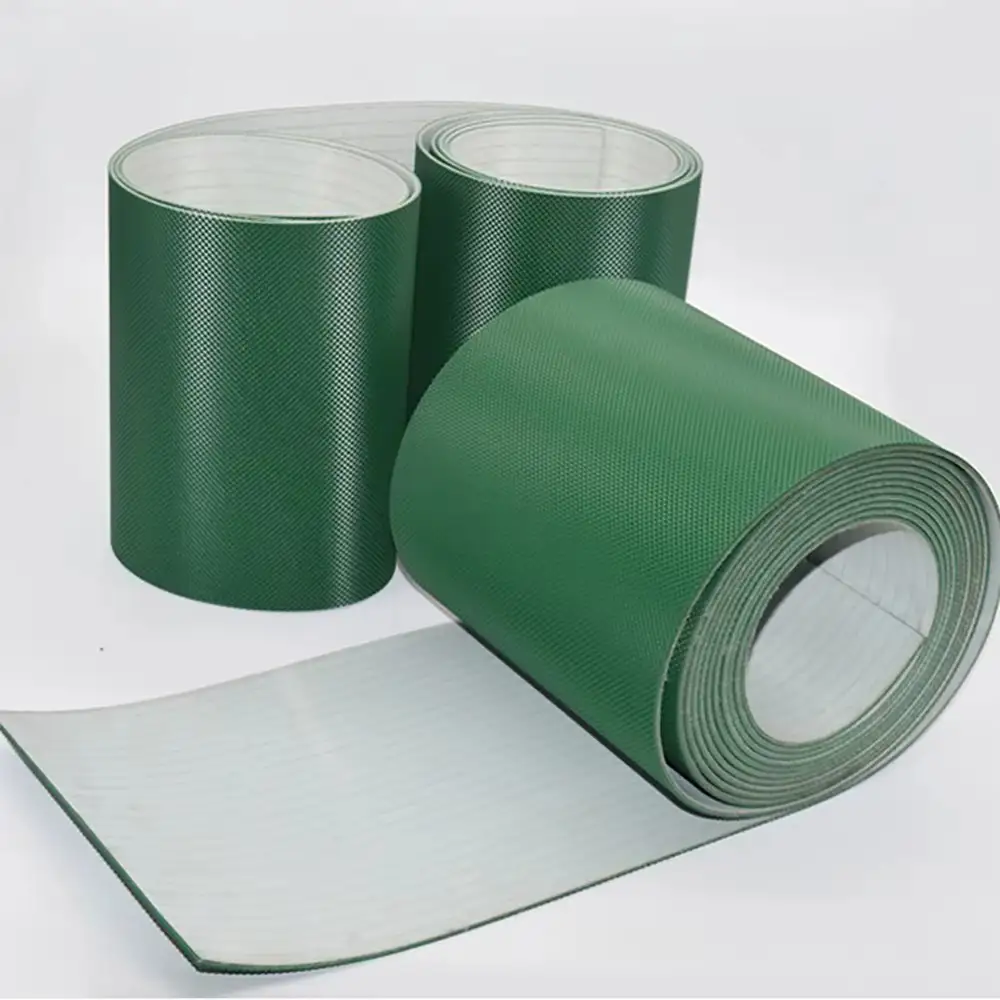
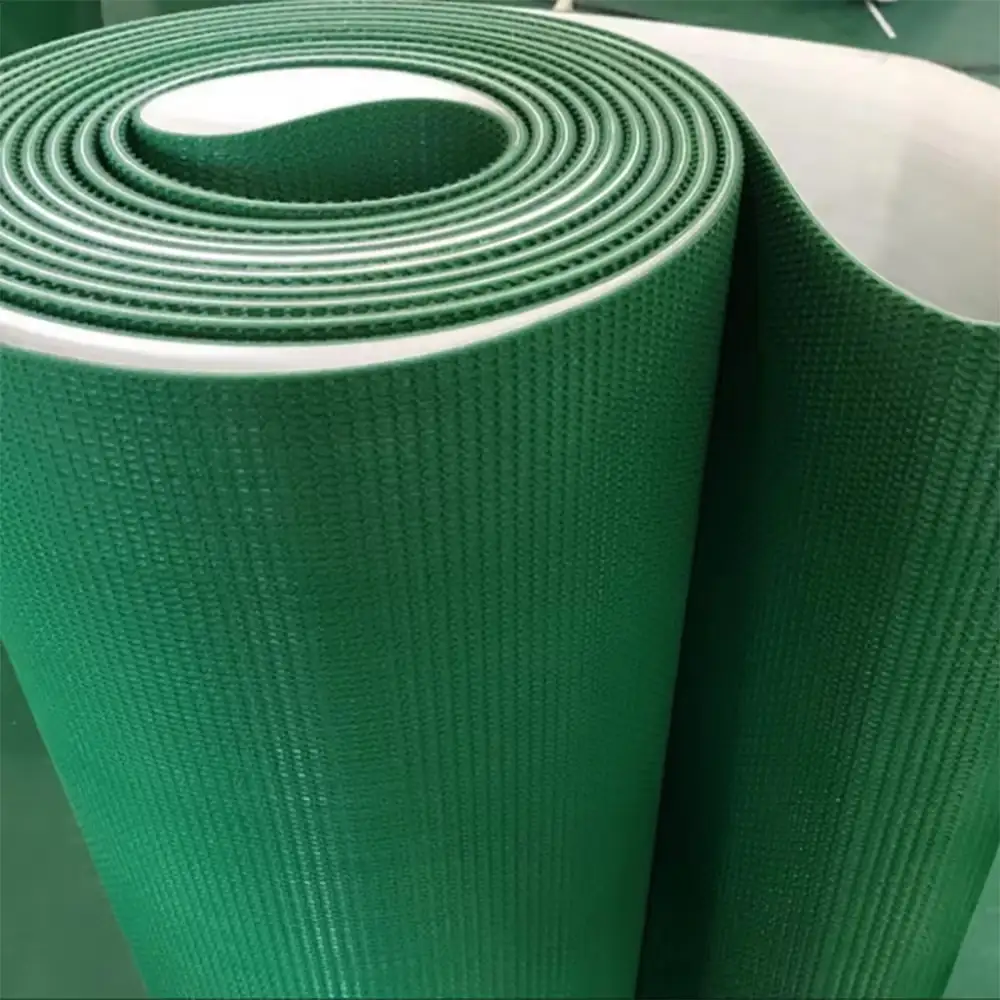
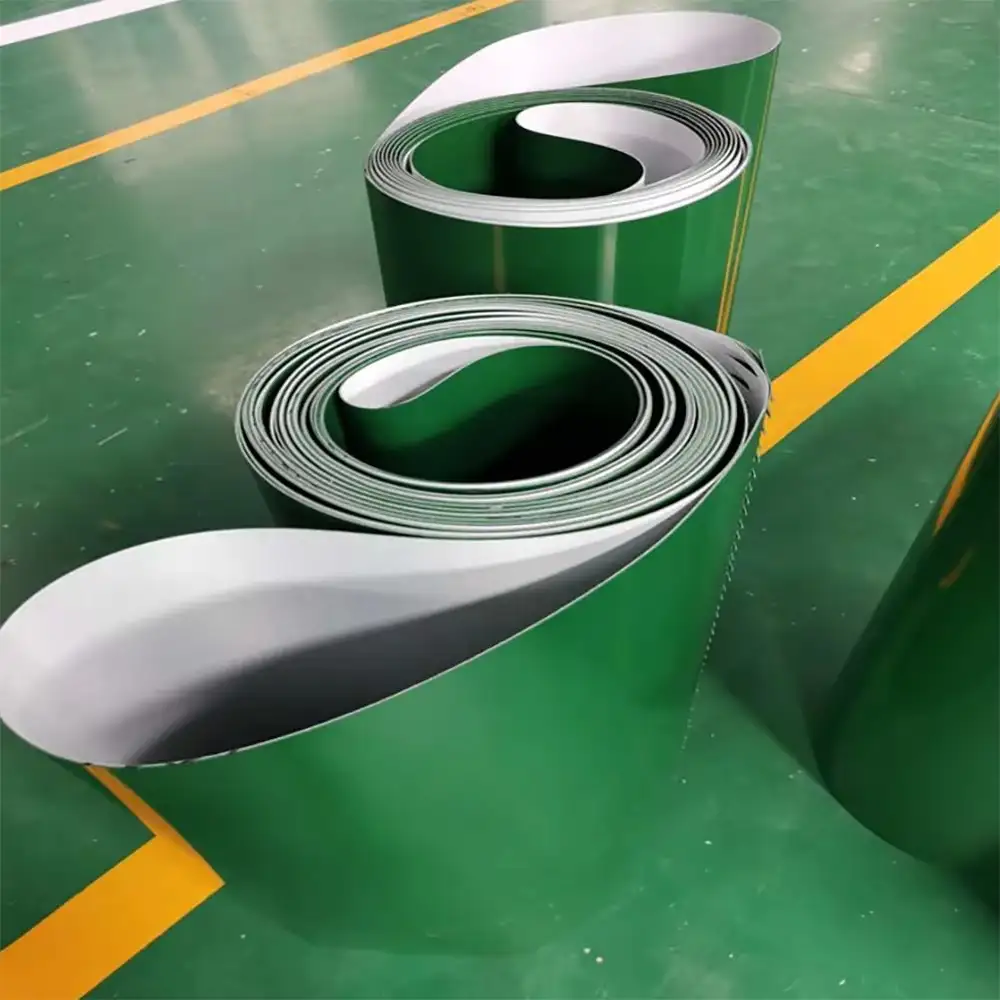
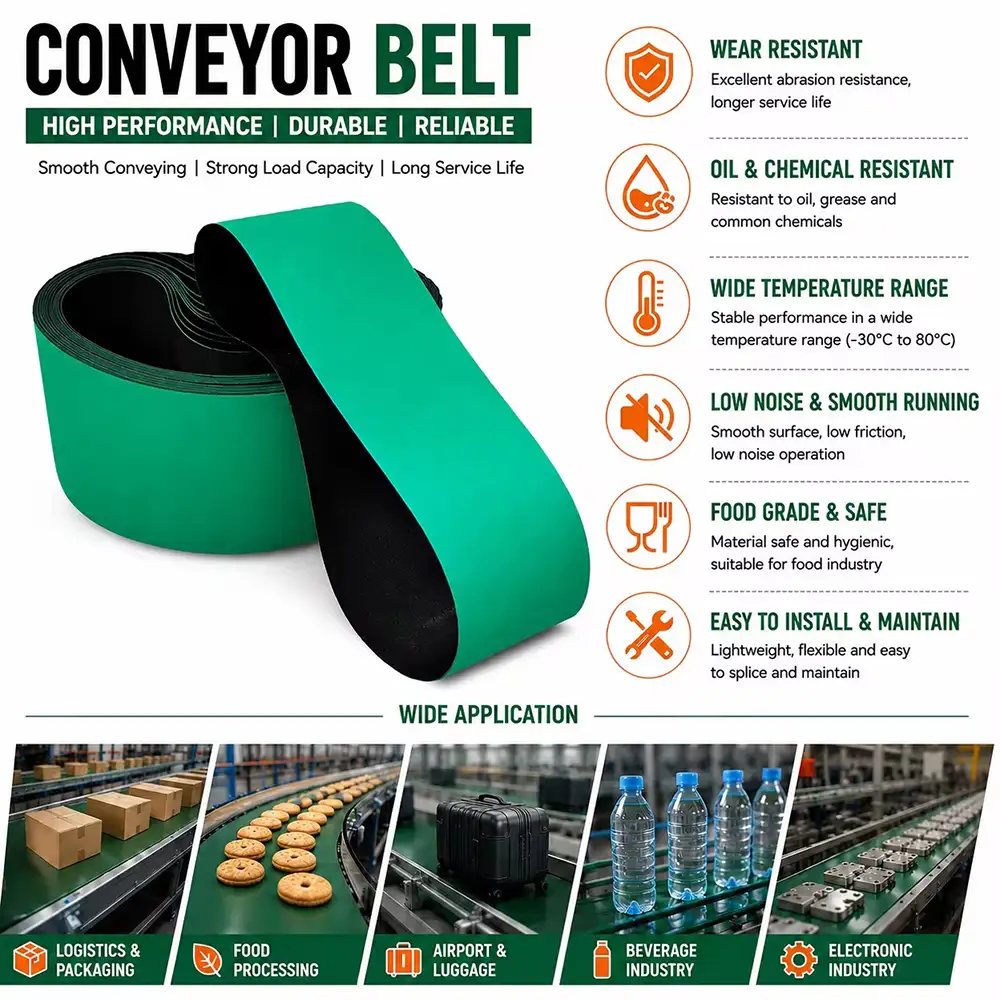
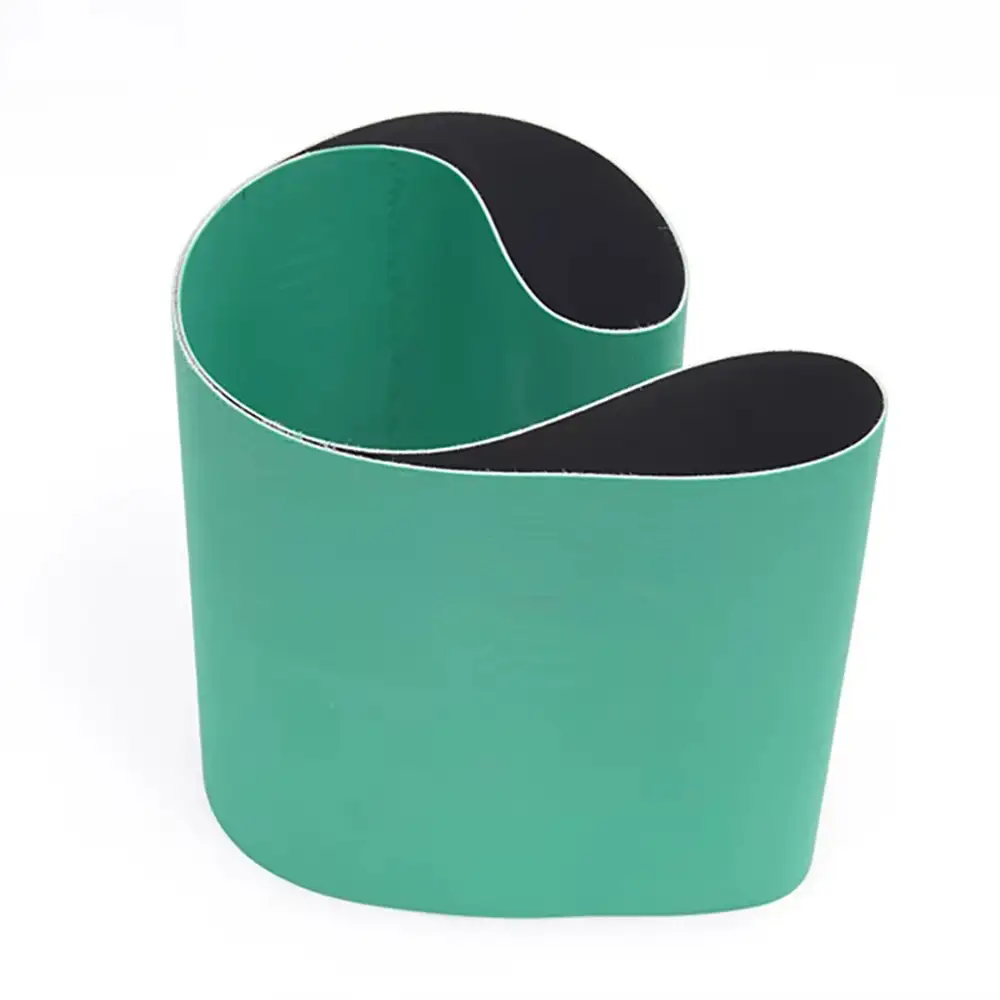
The PVC conveyor belts are manufactured using high quality material and componts. The belts are bets suited for varied applications like light weight conveyors systems, such as food processing industry, tobacco industry, textial, marble, wood, etc.
PVC Conveyor Belt
1. Good physical performance and wide range application
2. Anti-static and resistant to cutting
3. Hardness: 35~85shore A
4. Working temperature:-10C-80C
PVC Conveyor Belt | Polyvinyl Chloride Conveyor Belting & Patterns
A PVC Conveyor Belt, also known as Polyvinyl Chloride Conveyor Belting, is a versatile industrial belt designed for the efficient transportation of packaged products, food products, cartons, bags, bulk materials, components, and other lightweight to medium-duty loads. PVC conveyor belts commonly combine a polyvinyl chloride conveying surface with polyester fabric reinforcement, providing a practical balance of tensile strength, flexibility, dimensional stability, wear resistance, and surface grip.
One of the major advantages of PVC belting is the wide range of available PVC Conveyor Belt Patterns. Depending on the application, the conveying surface can be smooth, matte, rough top, diamond, micro-rib, chevron, cleated, grooved, or otherwise textured. These patterns allow the belt to be matched to horizontal conveying, inclined conveying, product positioning, package handling, drainage, or higher-grip requirements.
What Is a PVC Conveyor Belt?
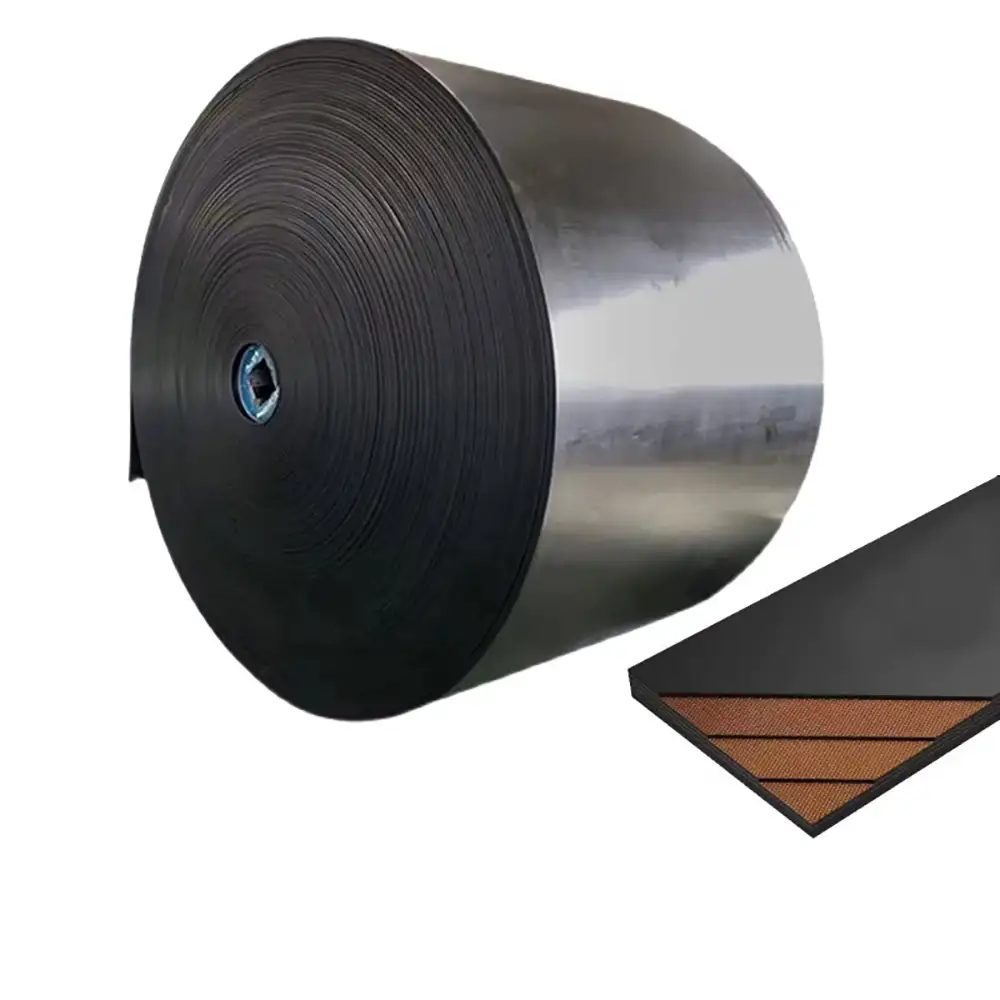
A PVC conveyor belt is generally constructed from a PVC top or bottom coating combined with one or more layers of synthetic fabric reinforcement. Polyester fabric is commonly used as the tension member because it provides tensile strength and dimensional stability while maintaining suitable flexibility.
A typical PVC conveyor belt may contain:
PVC Top Cover
Polyester Fabric Reinforcement
Intermediate Bonding Layers
PVC or Fabric Bottom Surface
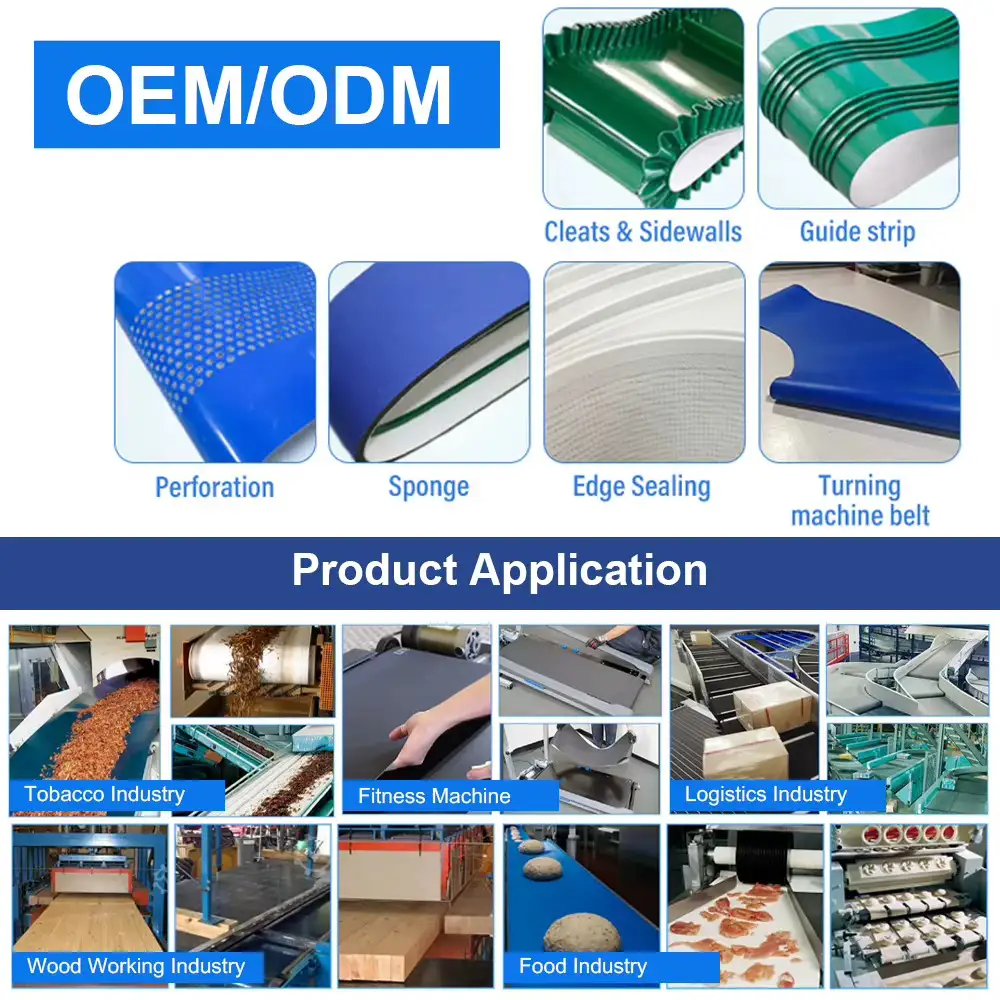
Optional Cleats
Optional Sidewalls
Optional V-Guides
Optional Perforations or Special Profiles
The number of fabric layers, belt thickness, cover formulation, hardness, surface pattern, and reinforcement structure can vary according to the belt's intended application. One-ply through multi-ply constructions are available in different product ranges.
PVC Conveyor Belt Patterns
The surface pattern is one of the most important factors when selecting PVC conveyor belting. A smooth belt and a high-grip belt may use the same basic PVC material but provide very different conveying performance.
Smooth PVC Conveyor Belt
Smooth PVC belts have a flat, even conveying surface and are widely used for horizontal transportation. They are suitable for cartons, packages, bags, boxes, food products, electronic components, and general manufactured products.
The smooth surface is also useful where easy cleaning, consistent product contact, or low-friction transfer is required.
Matte PVC Conveyor Belt
A matte surface provides a less glossy finish and can offer different friction characteristics from a smooth glossy surface. Matte PVC belts can be useful in packaging, inspection, food handling, and general conveying applications where controlled product contact is required.
Rough Top PVC Conveyor Belt
Rough-top PVC conveyor belts have a textured surface designed to increase grip between the belt and conveyed product. They are commonly used for inclined or declined transportation of cartons, packages, bags, boxes, and other products that could slide on a smooth surface.
Diamond Pattern PVC Conveyor Belt
Diamond-pattern PVC belts feature raised diamond or similar textured patterns across the conveying surface. The pattern increases surface friction and can help reduce product slippage during conveying.
Diamond PVC belts can be used for industrial material handling, packaging, agriculture, food conveying, and inclined applications depending on the specific belt construction.
Chevron PVC Conveyor Belt
Chevron PVC belts feature a V-shaped or herringbone surface profile. The raised pattern provides additional traction and helps retain bulk or packaged products during inclined transportation.
Chevron patterns are commonly used for grain, agricultural products, feed, fertilizers, and other bulk materials where a conventional flat belt may not provide sufficient grip.
Ribbed and Grooved PVC Conveyor Belt
Longitudinal or transverse ribs and grooves can provide controlled product movement, additional grip, or liquid drainage depending on the pattern design.
The correct profile should be selected according to the product characteristics, conveyor direction, belt speed, cleaning requirements, and desired friction.
Cleated PVC Conveyor Belt
Cleated PVC belts use transverse raised cleats to divide the conveying surface into sections. The cleats help prevent products from sliding backward on inclined conveyors and can also maintain product spacing.
Cleat height and spacing can be customized according to the product dimensions and conveyor layout.
Key Features of PVC Conveyor Belting
Flexible Construction:
PVC belts can be manufactured in flexible constructions suitable for different conveyor layouts and transfer points.
Polyester Reinforcement:
Synthetic fabric reinforcement provides tensile strength and dimensional stability while limiting excessive longitudinal stretch.
Multiple Surface Patterns:
Smooth, rough, diamond, chevron, ribbed, grooved, and cleated options allow the belt to be matched to different conveying conditions.
Good Wear Resistance:
Appropriate PVC formulations can provide reliable wear performance in light- and medium-duty conveying applications.
Easy Product Handling:
Different surface textures can provide controlled friction for packages, food products, cartons, bags, and bulk materials.
Customizable Construction:
Belt thickness, width, fabric layers, surface pattern, color, cleat configuration, guides, and other features can be customized.
Food-Grade Options:
Specific PVC belt constructions are available for food-contact applications, subject to the applicable material formulation and compliance documentation. Not every PVC conveyor belt should automatically be considered food grade.
PVC Conveyor Belt Applications
PVC conveyor belting is widely used in industries requiring reliable light- to medium-duty product transportation.
Food Processing
Food-grade PVC belts can be used for bakery products, packaged food, fruits and vegetables, confectionery, meat and poultry processing, food sorting, and packaging lines when the specific belt construction meets the required food-contact standards.
Packaging
Smooth and textured PVC belts are commonly used for cartons, boxes, bags, bottles, packages, and other products in automated packaging systems.
Logistics and Warehousing
PVC conveyor belts can be used in parcel handling, sorting, distribution centers, baggage handling, and warehouse transportation systems.
Agriculture
Chevron and textured PVC belts can be used for grain, seeds, feed, agricultural products, and other materials where increased grip is needed.
Manufacturing
PVC belting is also suitable for electronics assembly, plastics, printing, paper handling, textile processing, general manufacturing, and light industrial production.
Food Grade PVC Conveyor Belt
Food-grade PVC conveyor belting is designed for applications where the belt may contact food products. Depending on the exact formulation and construction, these belts can offer a smooth, easy-to-clean conveying surface and resistance to moisture and certain oils or fats.
Common food applications include bakery lines, confectionery, fruit and vegetable handling, food packaging, and meat or poultry processing.
When purchasing a food-grade PVC belt, buyers should request documentation for the exact belt model and material construction. FDA or EU compliance should not be assumed simply because a belt is white, blue, or marketed as “food grade.”
How to Choose the Right PVC Conveyor Belt Pattern
Selecting the correct PVC belt pattern depends on the conveying conditions.
For horizontal conveying, smooth or matte PVC is often suitable.
For inclined package handling, rough-top, diamond, or high-grip surfaces can provide additional traction.
For steeper bulk material conveying, chevron or cleated patterns may help prevent material rollback.
For product separation, cleats can create individual conveying compartments.
For water or air movement, specially grooved or perforated designs may be appropriate.
The selection should also consider belt width, thickness, tensile strength, conveyor speed, product weight, product dimensions, incline angle, pulley diameter, temperature, humidity, oil exposure, cleaning chemicals, and the required joining method.
Custom PVC Conveyor Belting
PVC conveyor belts can be customized for OEM equipment and replacement applications. Custom options may include:
Belt Width
Belt Thickness
Number of Fabric Plies
PVC Surface Pattern
Belt Color
Cleat Height
Cleat Spacing
Sidewall Height
V-Guide Configuration
Perforation Pattern
Edge Construction
Endless Splicing
For complex conveyor systems, supplying the conveyor drawing or existing belt specification can help the manufacturer determine the correct belt construction.
Installation and Maintenance
Proper belt installation is essential for stable tracking and long service life. Conveyor pulleys should be correctly aligned, the belt should be tensioned according to the equipment requirements, and the tracking system should be adjusted before full-load operation.
Regular inspections should check for cuts, edge damage, surface wear, delamination, tracking problems, and cleat or profile damage.
For food-processing applications, cleaning agents and sanitation procedures should be compatible with the exact PVC formulation. Excessive temperature, aggressive chemicals, or unsuitable cleaning methods can shorten belt life.
The belt should also be inspected around pulleys and transfer points because excessive bending, inadequate pulley diameter, or product accumulation can increase mechanical stress.
Why Choose Us
We provide customized PVC Conveyor Belt and Polyvinyl Chloride Conveyor Belting solutions for industrial, food, packaging, agricultural, logistics, and OEM applications.
Wide Pattern Selection: Smooth, matte, rough top, diamond, chevron, ribbed, grooved, and cleated PVC belt surfaces.
Polyester Reinforced Construction: Fabric reinforcement options provide the strength and dimensional stability required for industrial conveying.
Food-Grade Options: Specific constructions can be supplied for food-processing applications with applicable compliance documentation.
Custom Manufacturing: Belt width, thickness, color, pattern, cleats, sidewalls, guides, and other specifications can be customized.
OEM Support: Suitable for conveyor manufacturers, machinery builders, system integrators, distributors, and replacement-belt buyers.
Application-Based Selection: Belt construction and pattern can be matched to product type, load, conveyor angle, speed, and operating environment.
Global B2B Supply: Professional production, inspection, packaging, and export support for international customers.
FAQs
1. What is a PVC conveyor belt?
A PVC conveyor belt is a flexible conveyor belt made using polyvinyl chloride with fabric reinforcement, commonly polyester. It is widely used for packaging, food, logistics, agriculture, and general industrial conveying.
2. What does PVC stand for?
PVC stands for Polyvinyl Chloride, a thermoplastic polymer widely used in industrial conveyor belting and other manufacturing applications.
3. What are the common PVC conveyor belt patterns?
Common patterns include smooth, matte, rough top, diamond, micro-rib, chevron, longitudinal groove, transverse groove, and cleated surfaces.
4. What is the purpose of a PVC conveyor belt pattern?
The surface pattern changes the belt's friction and product-contact characteristics. Textured and raised patterns can improve grip, assist inclined conveying, provide product separation, or support specific handling requirements.
5. What is a rough-top PVC conveyor belt used for?
Rough-top PVC belts are commonly used where additional traction is needed, especially for inclined or declined conveying of packages, cartons, bags, and similar products.
6. What is a diamond pattern PVC conveyor belt?
A diamond pattern PVC belt has raised diamond-shaped surface texture designed to increase friction and help reduce product slippage during conveying.
7. Are PVC conveyor belts suitable for food processing?
Yes, specific food-grade PVC conveyor belt constructions are designed for food applications. The exact belt should be verified against the required food-contact regulations and application conditions.
8. Can PVC conveyor belts be used on inclined conveyors?
Yes. Rough-top, diamond, chevron, and cleated PVC belts can be used for inclined applications depending on the product, conveyor angle, belt pattern, and system design.
9. Can PVC conveyor belts be customized?
Yes. PVC belting can be customized by width, thickness, fabric reinforcement, color, surface pattern, cleat height and spacing, sidewalls, V-guides, perforations, and endless joining configuration.
10. What information is needed to select a PVC conveyor belt?
Important information includes belt width, thickness, length, conveyor speed, product weight, product dimensions, conveying angle, pulley diameter, operating temperature, product characteristics, cleaning conditions, and required surface pattern.
Prev:
EP Rubber Conveyor Belt, EP Industrial Rubber Conveyor Belting
Next:
PU Conveyor Belt, Polyurethane Conveyor Belting, Polyester Conveyor Belting
TAG:
Material Handling Conveyor Belt,
Incline Conveyor Belt,
PVC Conveyor Belt,
Food Conveyor Belt,
Packaging Conveyor Belt,
Chevron PVC Conveyor Belt,
Cleated PVC Conveyor Belt,
Ribbed PVC Conveyor Belt,
Textured PVC Conveyor Belt,
High Grip PVC Conveyor Belt,
Food Grade PVC Conveyor Belt,
Polyester Reinforced PVC Belt,
Industrial PVC Conveyor Belt,
Light Duty Conveyor Belt,
Warehouse Conveyor Belt,
Agricultural Conveyor Belt,
Anti Slip PVC Conveyor Belt,
PVC Conveyor Belting,
Polyvinyl Chloride Conveyor Belt,
PVC Belt,
PVC Belt Conveyor,
PVC Conveyor Belt Patterns,
PVC Belt Patterns,
Smooth PVC Conveyor Belt,
Matte PVC Conveyor Belt,
Rough Top PVC Conveyor Belt,
Diamond Pattern PVC Conveyor Belt,
Related Category:
PVC Conveyor Belting, Polyvinyl Chloride Conveyor Belt Pattern, PVC Conveyor Belts China, suppliers, manufacturers, factory, customized, wholesale, quotation, made in China