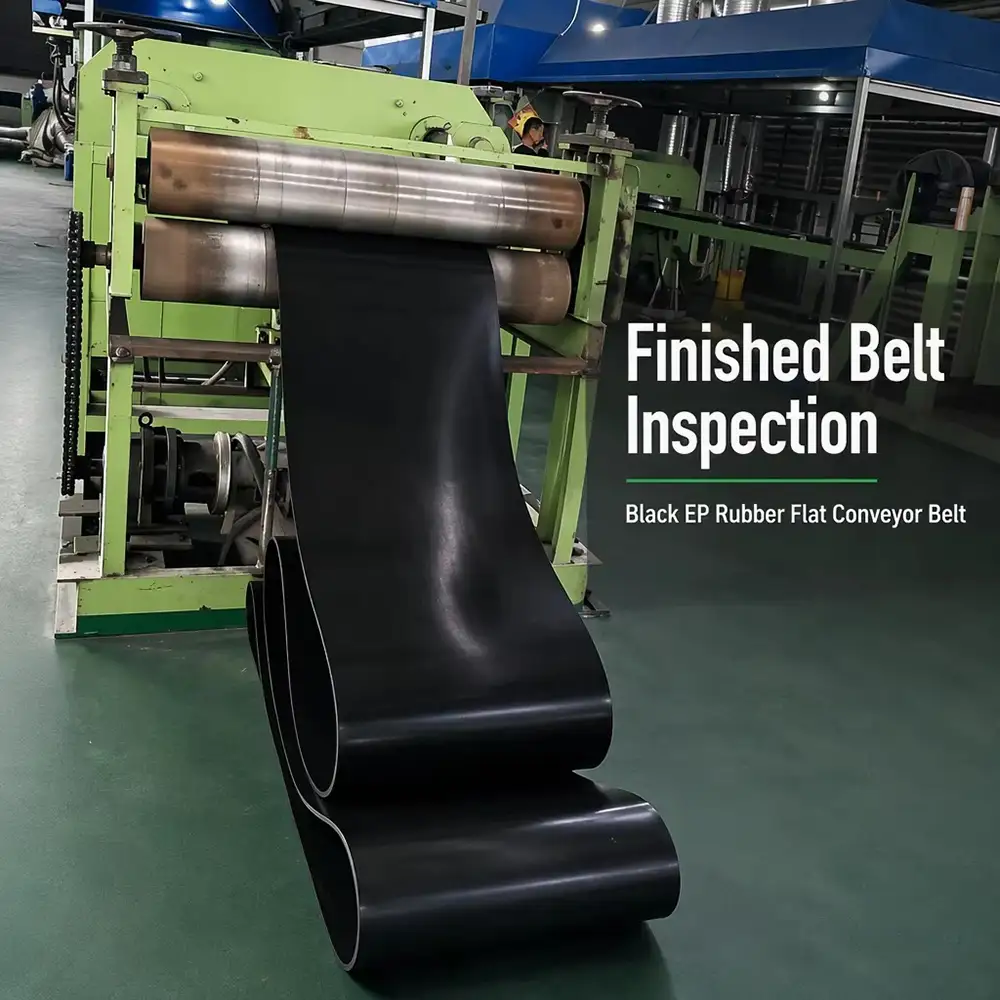
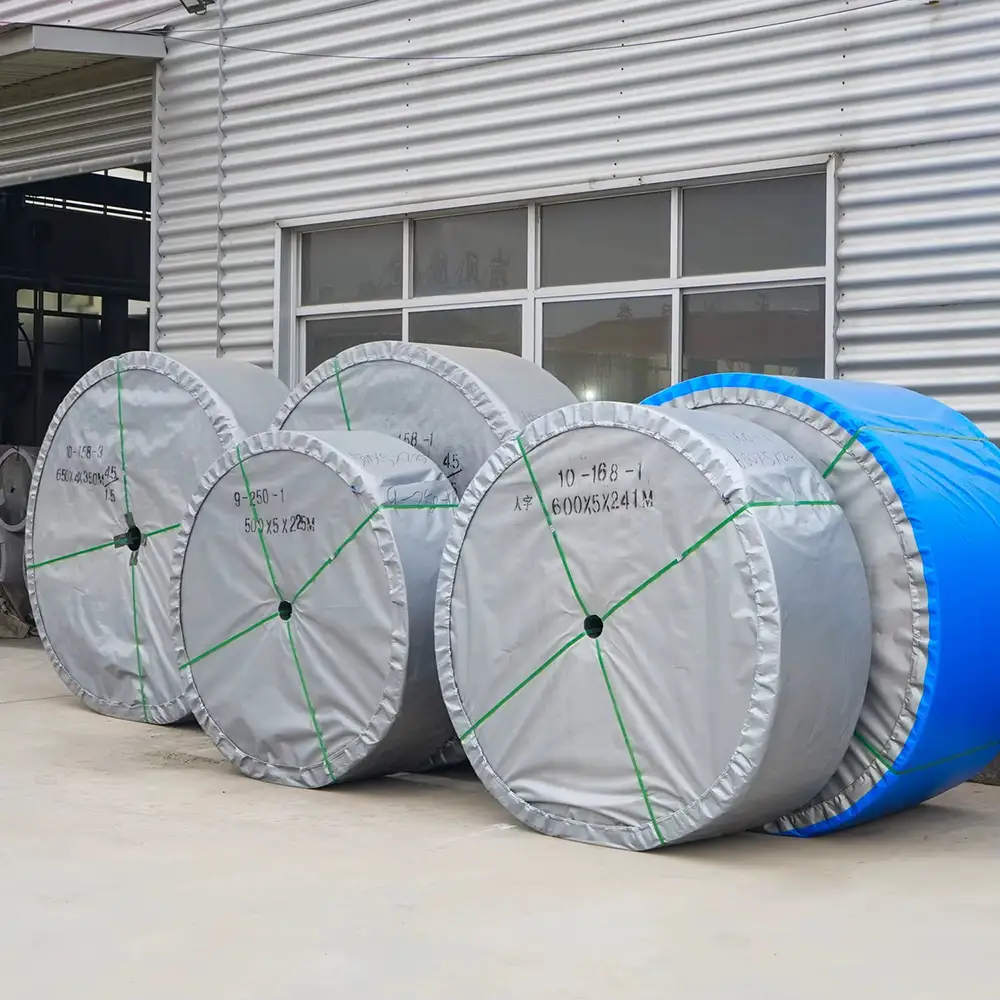
EP Rubber Conveyor Belt | EP Industrial Rubber Conveyor Belting
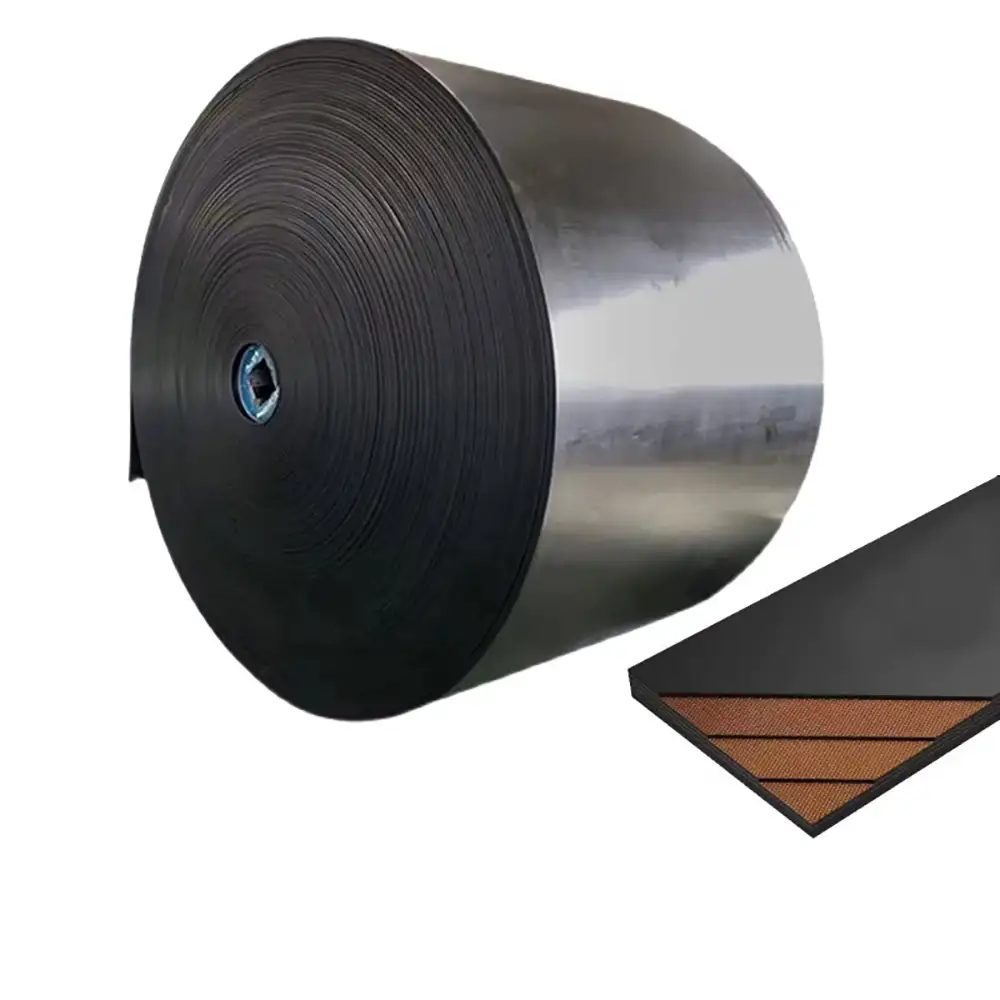
An EP Rubber Conveyor Belt is a heavy-duty fabric-reinforced conveyor belt designed for reliable transportation of bulk materials in mining, quarrying, cement, coal, power generation, steel, ports, agriculture, recycling, and general industrial applications. EP conveyor belts use a synthetic textile carcass made with polyester in the longitudinal warp direction and polyamide/nylon in the transverse weft direction. This construction provides a practical combination of high tensile strength, low longitudinal elongation, flexibility, impact resistance, and good troughability.
The EP carcass is protected by upper and lower rubber covers selected according to the conveyed material and operating environment. Cover compounds can be specified for general service, abrasion, heat, oil, flame, chemicals, and other application-specific requirements.
|
Name: |
EP100 Industrial Rubber Conveyor Belt |
|
Rubber materials: |
Nature rubber |
|
Rubber grade: |
10Mpa, 12Mpa,15Mpa,18Mpa,20Mpa,24Mpa, Heat resistant, fire resistant, Oil resitant, cold resistant ,etc. |
|
Standard: |
DIN |
|
Certificate: |
ISO9001:2008; |
|
Application: |
Suitable for long distance conveying with high load, speed and impact. |
|
Characteristics: |
1.Good elasticity, anti-impact; 2. High adhesion, good flexibility and trough ability. |
|
|
3.Better satility of size and heat- resistance; 4. Good water-prooof ability, little change in strength under dry or wet conditions. |
|
Name: |
EP100 Industrial Rubber Conveyor Belt |
|
Fabric thickness for per ply |
1.1mm |
|
Fabric Tensile strength(Kn/m) for per ply |
150 |
|
Fabric Adhesion (N/mm) |
≥4.5 |
|
Longitudinal elongation |
≤4% |
|
Width (mm) |
400~1600 |
|
Rubber thickness : top cover (mm) |
1.5~12 |
|
bottom cover (mm) |
0~4.5 |
What Does EP Mean in a Conveyor Belt?
The term EP describes the fabric reinforcement rather than the rubber cover.
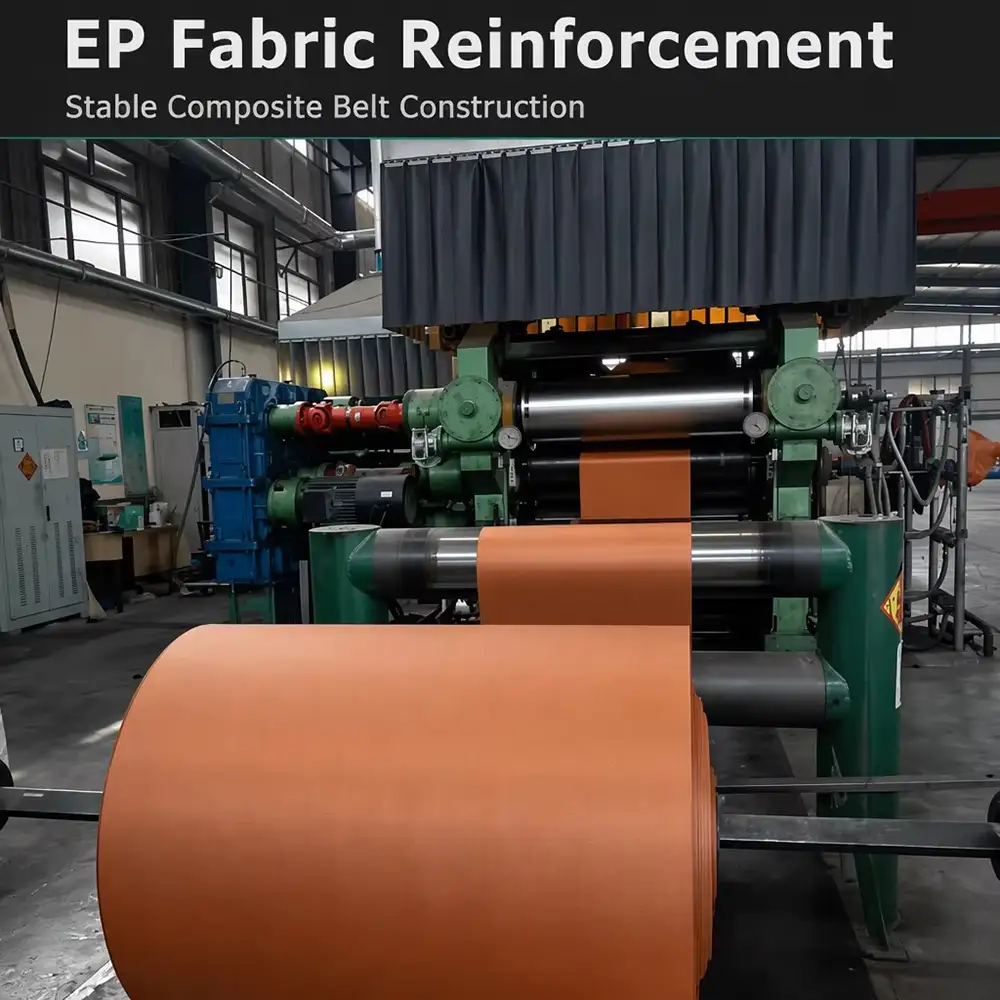
E = Polyester: Polyester yarns are used in the warp direction, running longitudinally along the belt. They provide high tensile strength, dimensional stability, and relatively low elongation under working tension.
P = Polyamide: Polyamide, commonly called nylon, is used in the weft direction across the belt. It contributes flexibility, impact resistance, and transverse strength.
The combination creates a polyester-nylon carcass that is suitable for a wide range of medium- and heavy-duty conveying systems. Compared with all-nylon NN construction, EP belts generally offer lower longitudinal elongation and good dimensional stability, while retaining useful flexibility across the belt width.
EP Rubber Conveyor Belt Construction
A typical EP industrial rubber conveyor belt consists of several functional layers:
Top Rubber Cover
EP Polyester-Nylon Fabric Carcass
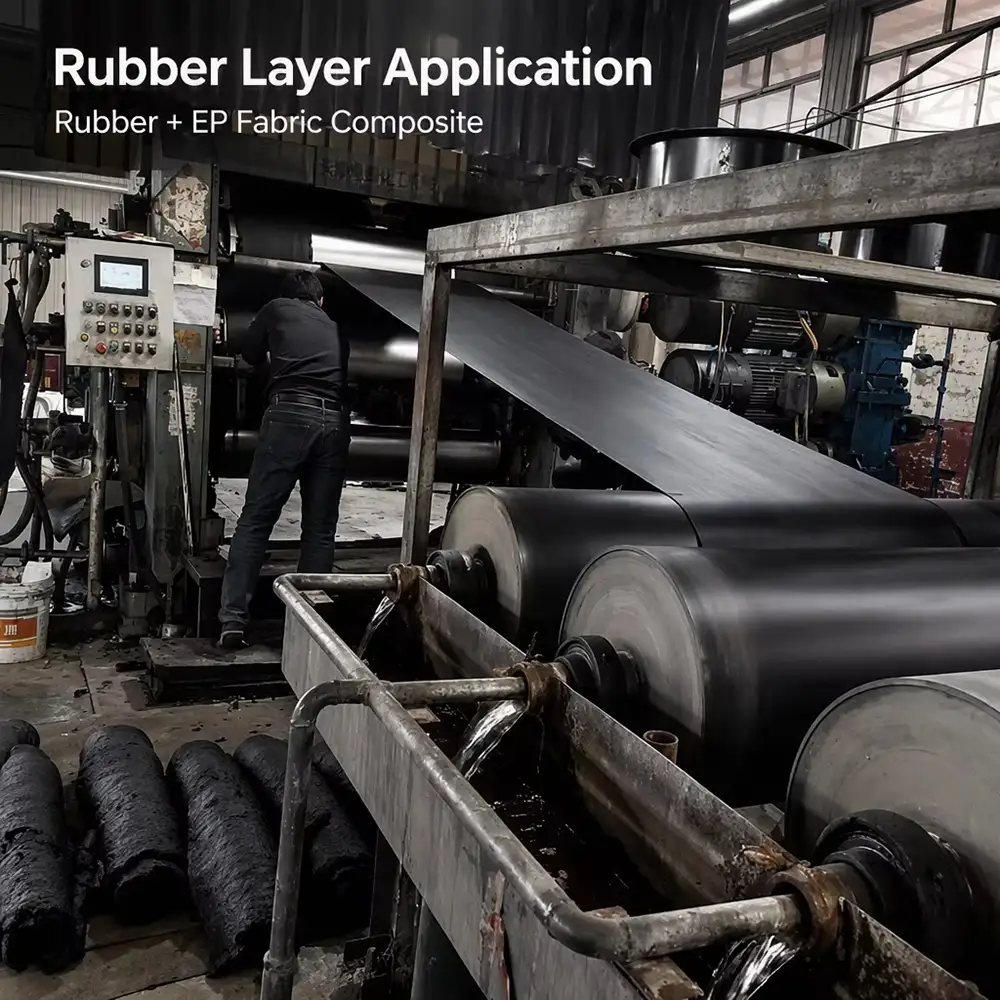
Inter-ply Skim Rubber
Bottom Rubber Cover
Optional Edge Protection or Special Components
The top cover protects the belt from impact and abrasion caused by the conveyed material. The bottom cover protects the carcass against contact with idlers, pulleys, and other conveyor components.
Between the fabric layers, skim rubber provides adhesion and helps maintain the integrity of the carcass. The number of fabric plies depends on the required belt strength, conveyor design, and operating conditions.
Multi-ply EP construction is commonly used for demanding bulk material handling because it combines reinforcement strength with flexibility and troughability.
Key Features of EP Industrial Rubber Conveyor Belting
High Tensile Strength
EP fabric provides strong longitudinal reinforcement for industrial conveyors. Different EP strength classes and ply configurations can be selected according to required belt tension and conveyor design.
Low Longitudinal Elongation
One of the main advantages of polyester warp reinforcement is relatively low elongation under working tension. This can reduce the amount of take-up travel required and help maintain stable belt geometry during operation.
Good Troughability
The nylon weft provides transverse flexibility, allowing the belt to form a stable trough over suitable idler arrangements. Good troughability helps contain bulk material and reduce material spillage.
Impact Resistance
The polyamide component contributes toughness and impact resistance, making EP belts suitable for many loading and transfer applications involving bulk materials.
Moisture Resistance
Polyester is less affected by moisture than some traditional textile reinforcement materials. EP constructions are therefore widely used in outdoor, humid, wet, mining, cement, and port environments.
Multiple Rubber Cover Options
The rubber cover can be selected according to the conveyed material and operating environment. Depending on the belt construction, available options may include abrasion-resistant, heat-resistant, oil-resistant, flame-resistant, chemical-resistant, and general-purpose compounds.
EP Conveyor Belt Grades and Ply Construction
EP belts are available in different tensile strength classes and fabric configurations. Common commercial designations may include EP100, EP150, EP200, EP250, EP300, EP400, EP500, EP630, and other grades depending on the manufacturer.
The designation should be understood together with the number of plies and complete belt construction. For example, an EP belt specification can include a tensile class, ply count, top and bottom cover thickness, rubber grade, belt width, and length.
The required specification should not be selected from the EP grade alone. Conveyor effective tension, belt speed, conveyor length, loading conditions, pulley diameters, material characteristics, incline, take-up system, and splice requirements should all be considered before final selection.
EP Conveyor Belt Rubber Cover Grades
The rubber cover is critical because it is the part of the belt directly exposed to the conveyed material and operating environment.
Abrasion Resistant EP Belt
Abrasion-resistant covers are suitable for materials such as crushed stone, aggregate, ore, coal, sand, gravel, cement raw materials, and other abrasive products.
Heat Resistant EP Belt
Heat-resistant compounds can be specified when the belt transports hot materials. The appropriate grade depends on the actual continuous and peak temperatures, material characteristics, and conveyor design.
Oil Resistant EP Belt
Oil-resistant rubber compounds can be used for applications involving oily or greasy materials. The specific compound should be selected according to the type and concentration of oil.
Flame Resistant EP Belt
Flame-resistant constructions are available for applications where specific fire-resistance requirements apply. The required standard and regulatory requirements should be confirmed for the installation location.
General Purpose EP Belt
General-purpose rubber covers are suitable for many conventional bulk material handling systems where severe heat, oil, flame, or chemical exposure is not present.
EP Rubber Conveyor Belt Applications
EP industrial rubber conveyor belts are widely used in:
Coal Mining
Iron Ore Mining
Quarrying
Aggregate Processing
Cement Plants
Steel Mills
Power Plants
Ports and Terminals
Grain Handling
Fertilizer Plants
Recycling Facilities
Waste Processing
Construction Materials
Chemical Industries
General Bulk Material Handling
Their combination of low elongation, flexibility, and good dimensional stability makes EP fabric belts suitable for many horizontal, inclined, and long-distance conveying systems.
EP vs NN Conveyor Belt
EP and NN are both synthetic fabric conveyor belt constructions, but their fabric arrangements differ.
EP: Polyester warp + polyamide/nylon weft.
NN: Nylon warp + nylon weft.
EP generally provides lower longitudinal elongation because of the polyester warp, while NN provides a highly flexible nylon carcass with different elongation and impact characteristics. Neither construction is universally suitable for every application. Conveyor length, loading impact, pulley diameter, tension, troughing requirements, environment, and belt specifications should determine the selection.
How to Choose an EP Rubber Conveyor Belt
When requesting an EP conveyor belt quotation, buyers should provide the following information:
Belt Width
Belt Length
Required EP Strength
Number of Plies
Top Cover Thickness
Bottom Cover Thickness
Rubber Cover Grade
Material Type
Bulk Density
Maximum Lump Size
Conveyor Speed
Conveyor Length
Inclination Angle
Pulley Diameter
Operating Temperature
Environmental Conditions
Providing complete conveyor data allows the manufacturer to select the appropriate carcass, cover compound, thickness, and belt construction rather than relying only on a nominal EP grade.
Installation and Maintenance
Correct installation is important for achieving stable tracking and long service life. Pulleys and idlers should be correctly aligned, and the belt should be tensioned according to the conveyor system requirements.
During operation, regular inspections should check for:
Edge Damage
Longitudinal Cuts
Transverse Cracks
Excessive Cover Wear
Ply Separation
Splice Damage
Belt Tracking Problems
Material Buildup
Idler or Pulley Damage
The transition area near terminal pulleys also deserves attention because an incorrectly designed transition can create additional edge tension and contribute to premature belt or splice problems.
EP Conveyor Belt Splicing
EP fabric conveyor belts can be joined using appropriate mechanical or vulcanized splicing methods depending on the belt construction and conveyor requirements.
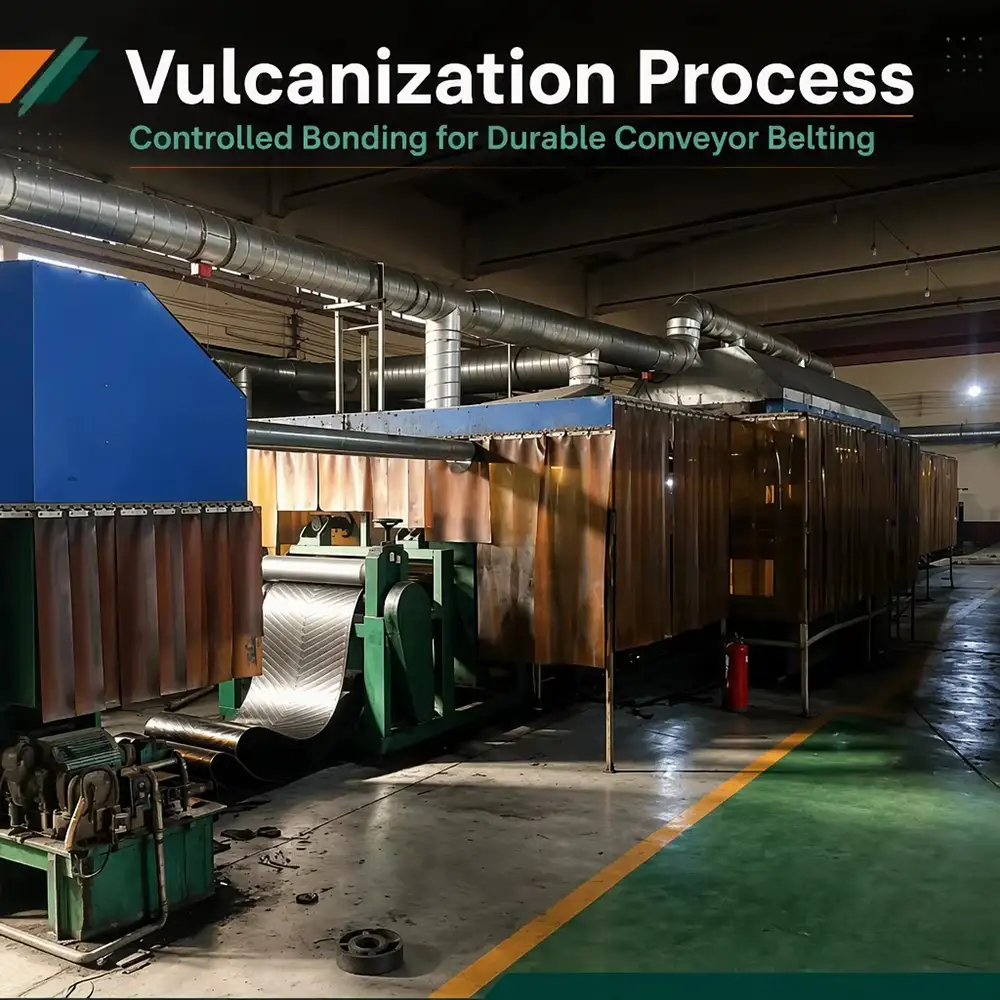
For many heavy-duty installations, hot vulcanized splicing is used to create a continuous belt connection. The splice design should match the belt's carcass, strength class, ply construction, pulley arrangement, and operating tension.
A correctly designed and installed splice is essential because the splice area experiences significant mechanical stress during conveyor startup and continuous operation.
Custom EP Industrial Rubber Conveyor Belting
EP conveyor belts can be customized for OEM equipment manufacturers, mining companies, conveyor system integrators, distributors, and industrial replacement applications.
Customization may include:
EP Strength Grade
Number of Fabric Plies
Belt Width
Belt Length
Top Cover Thickness
Bottom Cover Thickness
Rubber Compound
Surface Construction
Edge Type
Splice Configuration
Packaging and Roll Length
Custom production is especially useful when replacing an existing belt because the new belt can be matched to the original conveyor dimensions and operating requirements.
Why Choose Us
We provide EP Rubber Conveyor Belt and EP Industrial Rubber Conveyor Belting solutions for demanding bulk material handling applications.
EP Polyester-Nylon Carcass: Combines polyester longitudinal reinforcement with nylon transverse reinforcement.
Multiple Strength Options: Different EP grades and ply constructions can be selected according to conveyor requirements.
Specialized Rubber Covers: Abrasion, heat, oil, flame, chemical, and general-purpose cover options are available depending on the product specification.
Heavy-Duty Applications: Suitable for mining, quarrying, cement, coal, steel, power, ports, agriculture, and recycling.
OEM & Custom Manufacturing: Belt width, strength, ply count, cover thickness, rubber grade, and other specifications can be customized.
Application-Based Selection: Technical recommendations can be based on conveyor tension, material characteristics, speed, pulley diameter, and environmental conditions.
International B2B Supply: Professional production, quality inspection, packaging, and export support for global customers.
FAQs
1. What is an EP rubber conveyor belt?
An EP rubber conveyor belt is a fabric-reinforced rubber conveyor belt using polyester in the warp direction and polyamide/nylon in the weft direction. It is widely used for industrial bulk material handling.
2. What does EP stand for in conveyor belts?
EP refers to the polyester-polyamide fabric construction. “E” represents polyester in the longitudinal warp direction, while “P” represents polyamide or nylon in the transverse weft direction.
3. What are the main advantages of EP conveyor belts?
EP belts offer a useful combination of high tensile strength, low longitudinal elongation, good troughability, flexibility, impact resistance, and dimensional stability.
4. What materials can EP conveyor belts transport?
EP belts can transport coal, ore, stone, gravel, sand, cement materials, grain, fertilizer, aggregates, and many other bulk materials. The rubber cover should be selected according to material abrasiveness, temperature, oil exposure, and other conditions.
5. What is the difference between EP and NN conveyor belts?
EP uses polyester warp and nylon weft, while NN uses nylon in both directions. EP generally provides lower longitudinal elongation, while NN provides different flexibility and impact characteristics.
6. What does EP500 mean?
EP500 generally refers to an EP fabric tensile-strength class, commonly expressed as approximately 500 N/mm of belt width per carcass specification, depending on the applicable standard and manufacturer. The complete belt specification should also include ply count and cover construction.
7. How many plies does an EP conveyor belt have?
EP conveyor belts are available in different ply configurations. The required number depends on the required belt strength, conveyor tension, belt width, loading conditions, and overall conveyor design.
8. Can EP belts be used for abrasive materials?
Yes. EP carcasses can be combined with suitable abrasion-resistant rubber covers for abrasive materials such as rock, aggregate, ore, coal, and gravel.
9. Can EP conveyor belts handle hot materials?
Yes, EP belts can be manufactured with heat-resistant rubber covers for suitable high-temperature applications. The correct grade must be selected based on the actual material and operating temperature.
10. What information is needed for an EP conveyor belt quotation?
Provide belt width, length, EP grade, ply count, top and bottom cover thickness, material type, conveyor speed, conveyor length, inclination, maximum lump size, pulley diameter, operating temperature, and special environmental requirements.
Prev:Sorry, no information
Next:
PVC Conveyor Belt, PVC Conveyor Belting, Polyvinyl Chloride Conveyor Belt Patterns
TAG:
Industrial Rubber Conveyor Belt,
Mining Conveyor Belt,
Heat Resistant EP Conveyor Belt,
Bulk Material Conveyor Belt,
Coal Conveyor Belt,
Quarry Conveyor Belt,
Aggregate Conveyor Belt,
EP Fabric Conveyor Belt,
EP Rubber Conveyor Belt,
EP Conveyor Belt,
Textile Conveyor Belt,
Oil Resistant EP Conveyor Belt,
EP Polyester Conveyor Belt,
Abrasion Resistant EP Conveyor Belt,
Cement Conveyor Belt,
EP Nylon Conveyor Belt,
EP Polyester Nylon Conveyor Belt,
Polyester Nylon Conveyor Belt,
EP Multi-ply Conveyor Belt,
Multi-ply EP Conveyor Belt,
Heavy Duty EP Conveyor Belt,
Fabric Rubber Conveyor Belt,
EP100 Conveyor Belt,
EP150 Conveyor Belt,
EP200 Conveyor Belt,
EP250 Conveyor Belt,
EP300 Conveyor Belt,
EP400 Conveyor Belt,
EP500 Conveyor Belt,
EP630 Conveyor Belt,
Related Category:
EP Rubber Conveyor Belt,EP Industrial Rubber Conveyor Belting,EP Conveyor Belt,EP Fabric Conveyor Belt China, suppliers, manufacturers, factory, customized, wholesale, quotation, made in China