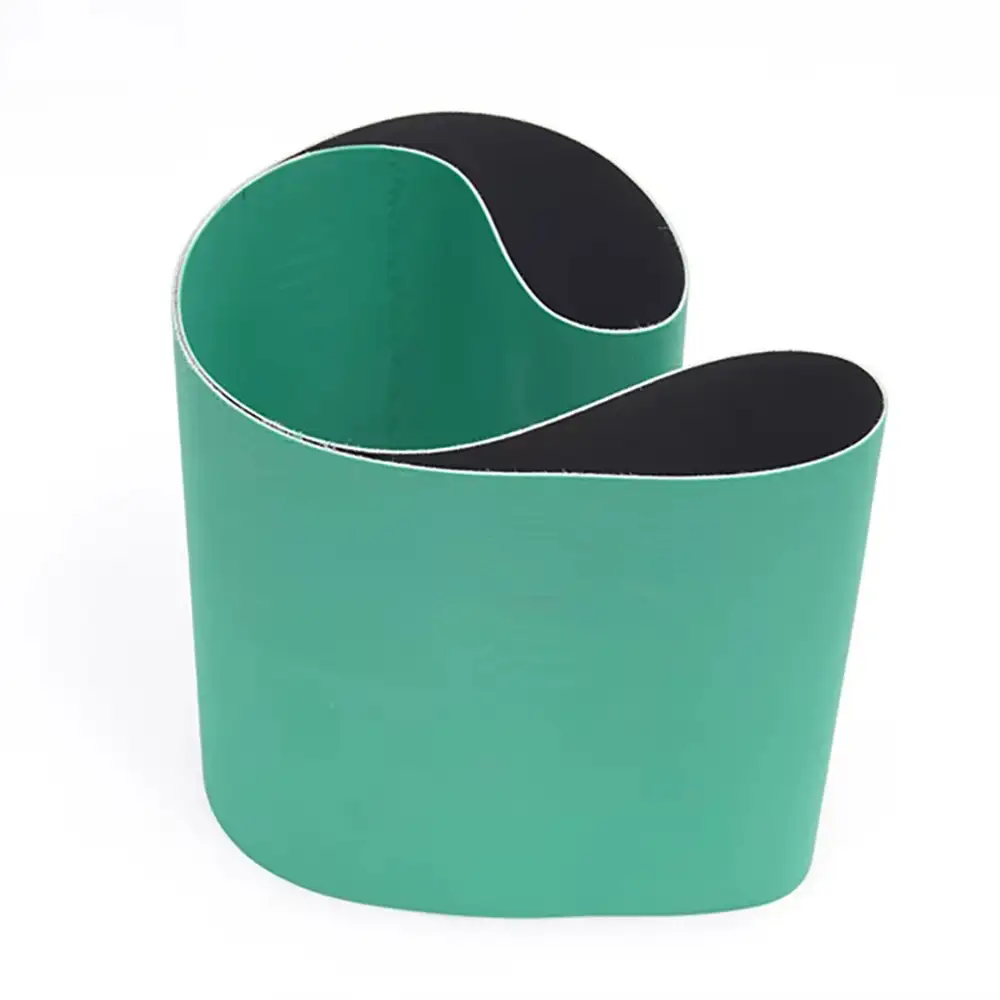
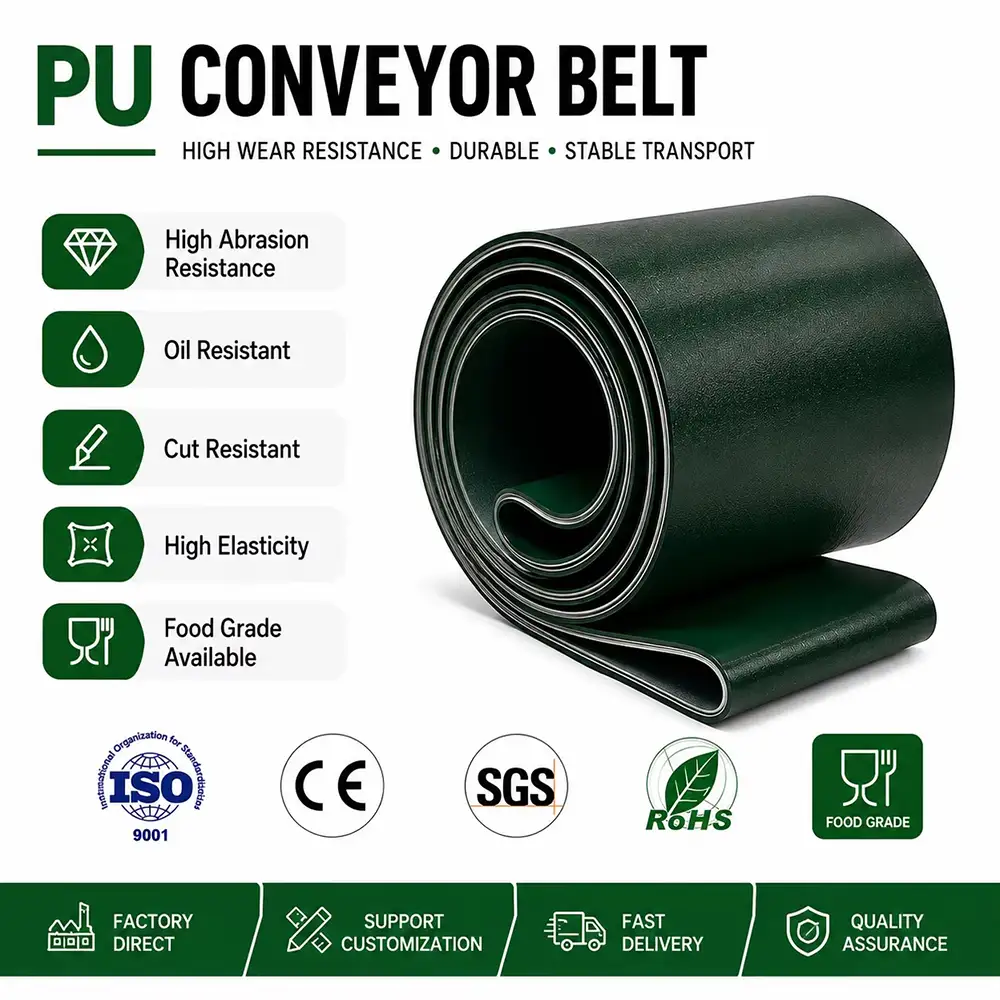
The manufacturing technique of PU material is different from PVC, it is more complicated than PVC in manufacturing, although they are belong plastics. The physical performance of PU cover is better than PVC, it have excellent flexing endurance, good softness, high wear and abrasion resistant, good breathable.
All belts with PU top cover are FDA food grade, non toxic, odorless and resistant to animal, vegetal, mineral oils and greases. A wide range of belts to be applied mainly in the food conveyance industries, transport material grain, candy, vegetables, fruits, fowl,meat of bulk, canning, packaging. But also recommendable for other applications such tobaccon, electronic, textile, printing, automible and tyre, stone, wood processing and etc. Most of them are white coloured, although they are also available in blue and natural colours. Most of them are rigid weft. To meet the high requirements of conveyoring and processing,decorative patterns and high strength fabric to increase stability and strength.
PU Conveyor Belt | Polyurethane Conveyor Belting
A PU Conveyor Belt, also known as a Polyurethane Conveyor Belt, is a flexible industrial conveyor belt designed for clean, reliable, and precise material transportation. Many PU conveyor belts combine a durable polyurethane top layer with a high-strength polyester fabric reinforcement, creating a belt structure that balances flexibility, tensile strength, abrasion resistance, and dimensional stability.
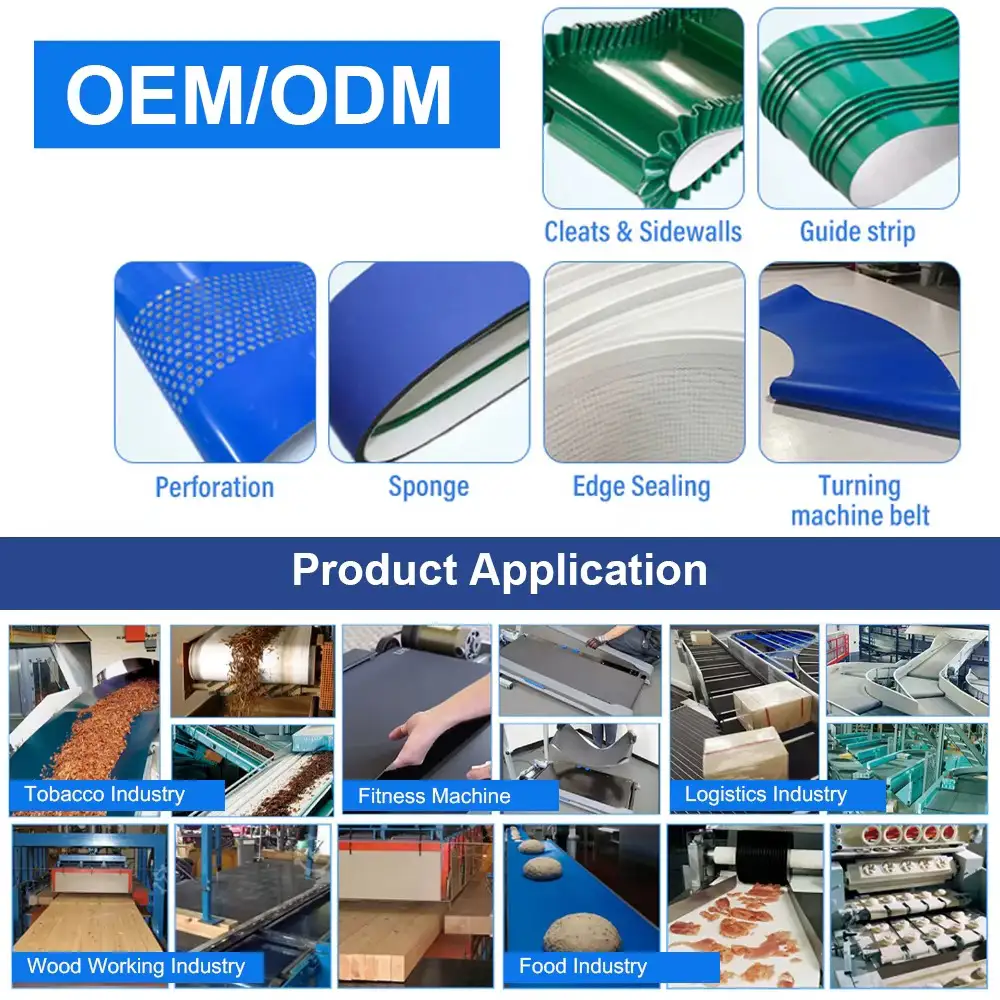
PU conveyor belting is widely used in food processing, bakery and confectionery production, meat and poultry processing, pharmaceutical manufacturing, packaging, logistics, electronics, agriculture, and general industrial material handling. Depending on the application, PU belts can be supplied with smooth, matte, embossed, textured, high-grip, cleated, or specially profiled surfaces.
What Is a PU Conveyor Belt?
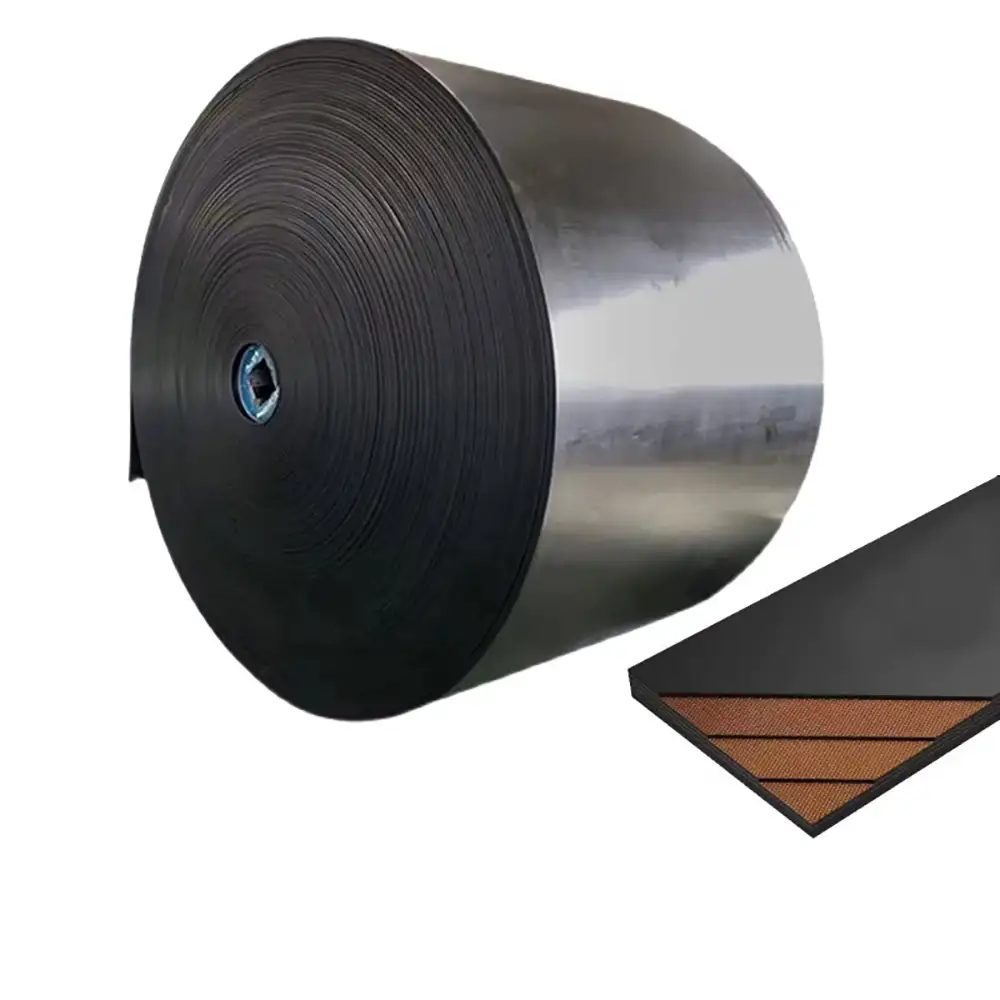
A PU conveyor belt generally consists of a polyurethane cover or coating combined with a fabric reinforcement. Polyester is commonly used as the internal tension member because it provides good tensile strength and dimensional stability while maintaining the flexibility required for conveyor operation.
The polyurethane surface provides a smooth, wear-resistant conveying surface. Depending on the formulation, PU can offer good resistance to oils, grease, abrasion, cuts, and many chemicals. For suitable food-processing applications, PU belts can also be manufactured in food-contact-compliant constructions.
It is important to distinguish a polyurethane-coated polyester conveyor belt from a homogeneous PU conveyor belt. The former contains a textile reinforcement, while a homogeneous belt is made primarily from polyurethane/TPU without a conventional fabric carcass. The appropriate structure depends on load, flexibility, hygiene, pulley diameter, tracking, and machine design.
Polyester Reinforced PU Conveyor Belt Construction
Polyester reinforcement is an important part of many PU conveyor belt designs. The fabric provides the belt with mechanical strength while the polyurethane cover provides the conveying surface.
A typical construction may include:
Polyurethane top cover
Polyester fabric reinforcement
PU or thermoplastic bonding layer
Fabric or low-friction bottom surface
Optional V-guides
Optional cleats
Optional sidewalls
Smooth or profiled conveying surface
The number of fabric plies can vary depending on belt thickness, tensile requirements, flexibility, and application. One-ply, two-ply, and multi-ply polyester constructions are available in different product ranges.
Key Features of PU Conveyor Belting
Excellent Oil and Grease Resistance
Polyurethane is widely selected for applications exposed to vegetable oils, animal fats, grease, and certain industrial lubricants. This makes PU belting particularly useful in food processing and other oily-material conveying environments.
Good Abrasion and Wear Resistance
PU surfaces can provide strong resistance to mechanical wear, making them suitable for continuous conveying and applications where products repeatedly contact the belt surface.
Easy-Clean Surface
Smooth PU surfaces can be easier to clean than rough or porous conveying surfaces. This characteristic is especially valuable in food-processing environments where frequent sanitation is required.
High Flexibility
PU belts can be designed for flexible conveyor layouts and small transfer points. Some specialized constructions are suitable for knife-edge or nosebar applications, although the minimum pulley or nosebar diameter must always be checked against the specific belt design.
Stable Polyester Reinforcement
The polyester fabric reinforcement provides the structural support needed for continuous operation and helps control longitudinal stretch. The exact tensile performance depends on fabric construction and belt specification.
Clean and Professional Appearance
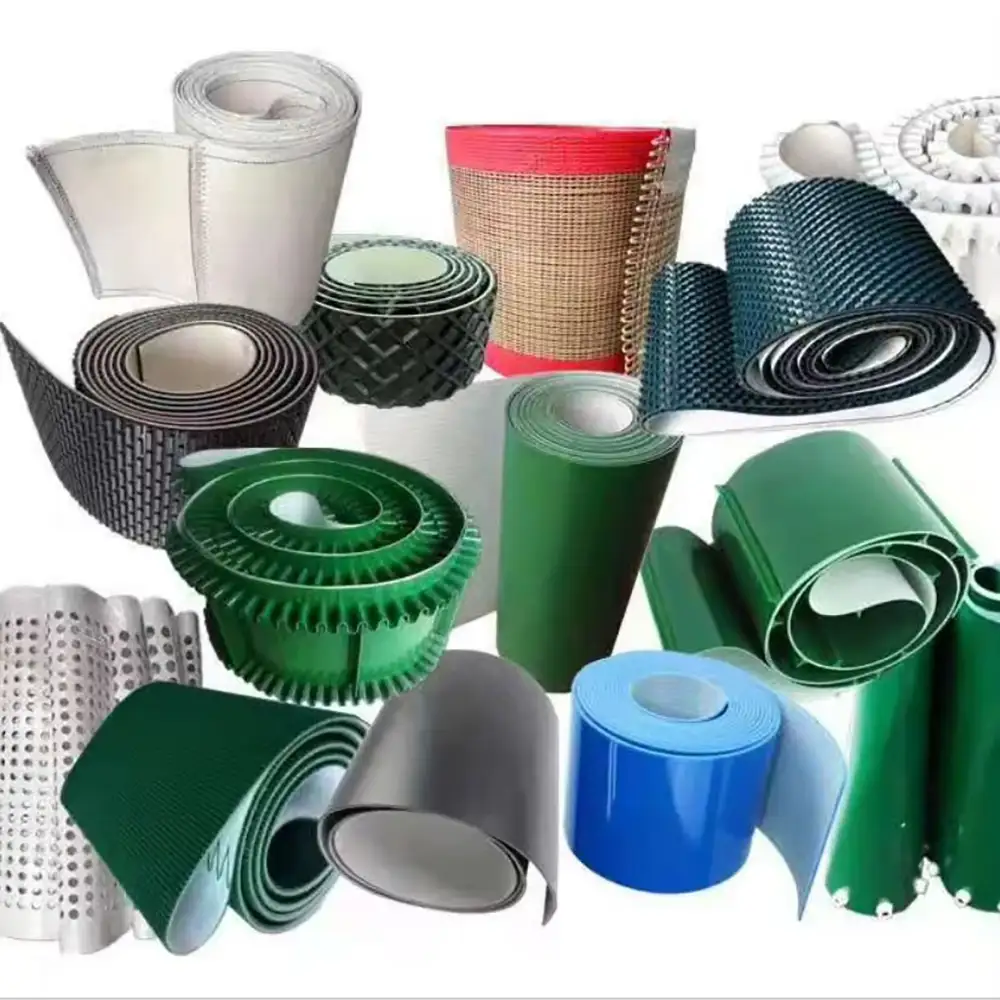
PU conveyor belts are commonly available in white, blue, green, black, and other colors. Color selection can be useful for product identification, inspection systems, hygiene management, and production-line organization.
PU Conveyor Belt Surface Options
Different products require different friction and release characteristics. Therefore, PU conveyor belting can be supplied with multiple surface designs.
Smooth Surface: Suitable for general conveying, food transfer, packaging, and applications requiring easy product release.
Matte Surface: Provides a different friction characteristic and can be used for controlled product handling.
Embossed Surface: Provides additional texture for specific conveying applications.
High-Grip Surface: Designed for improved traction when transporting products on inclined conveyors.
Cleated Surface: Transverse cleats can help prevent products from sliding backward during inclined conveying.
Sidewall Construction: Corrugated sidewalls can be combined with suitable PU belts when higher-angle or enclosed conveying is required.
Surface profile, hardness, friction, and cleat design should be selected according to the product, conveyor inclination, speed, loading conditions, and cleaning requirements.
Food Grade PU Conveyor Belt
Food processing is one of the most important application areas for polyurethane conveyor belting. PU belts can be manufactured in constructions designed for direct food contact when the specific material and finished belt meet the applicable regulatory requirements.
Typical applications include:
Bakery and Dough Processing
Meat and Poultry Processing
Seafood Processing
Fruit and Vegetable Sorting
Candy and Confectionery
Cheese Processing
Frozen Food Handling
Food Packaging
Pharmaceutical Material Handling
For food-contact applications, buyers should request the applicable compliance documentation for the exact belt construction rather than assuming that every PU belt is automatically food grade. FDA, EU, or other regulatory compliance depends on the actual material formulation and product configuration.
Industrial Applications
Although PU belts are strongly associated with food processing, their applications extend well beyond the food industry.
PU conveyor belts can be used for:
Packaging Machines
Carton Conveying
Parcel Sorting
Logistics Systems
Electronic Component Assembly
Pharmaceutical Processing
Agricultural Product Handling
Glass Processing
Wood Processing
Cardboard and Paper Handling
Metal Part Conveying
General Manufacturing
Polyurethane belts are particularly useful when the application requires a combination of flexibility, cleanliness, wear resistance, and resistance to oils or grease.
PU vs PVC Conveyor Belt
PU and PVC conveyor belts can both be used in industrial conveying, but they have different material characteristics.
PU belts are often selected when resistance to oil, grease, abrasion, flexibility, and hygienic cleaning are important. PVC belts can provide economical solutions for many general conveying applications.
The correct material depends on the product being transported, temperature, cleaning chemicals, conveyor geometry, required friction, belt speed, load, and applicable food-contact requirements.
Therefore, PU should not simply be considered a universal replacement for PVC. Instead, the belt material should be matched to the actual operating environment.
How to Choose the Right PU Conveyor Belt
Before purchasing a polyurethane conveyor belt, provide the supplier with as much conveyor information as possible.
Important parameters include:
Belt Width
Overall Belt Thickness
Belt Length
Number of Fabric Plies
Polyester Fabric Structure
Conveyor Speed
Maximum Product Weight
Conveyor Inclination
Pulley or Nosebar Diameter
Operating Temperature
Product Characteristics
Cleaning Chemicals
Required Surface Pattern
Food Contact Requirements
Cleat, Sidewall, or V-Guide Requirements
For example, a bakery conveyor may require a flexible smooth PU belt with good release characteristics, while an inclined packaging conveyor may require a textured or cleated surface for improved grip.
Installation and Maintenance
Correct installation helps maximize belt life. Conveyor pulleys should be properly aligned, belt tension should follow the equipment manufacturer's requirements, and the belt should run centrally without excessive edge contact.
During operation, regularly inspect the belt for cuts, abrasion, surface damage, edge wear, tracking problems, and splice deterioration. Remove accumulated material and use cleaning methods compatible with the belt's polyurethane formulation.
For food-processing systems, sanitation procedures should follow the requirements of the production facility and the belt manufacturer's cleaning recommendations. Excessively aggressive chemicals, temperatures, or mechanical cleaning methods can damage even a chemically resistant belt.
PU belts can use different joining methods depending on their structure. Thermoplastic PU constructions may support heat-welded or finger-spliced configurations, while the correct joining method depends on belt design and manufacturer recommendations.
Custom PU Conveyor Belting
Custom manufacturing is available for many PU conveyor belt requirements. Options can include belt width, thickness, fabric construction, color, surface pattern, hardness, cleat arrangement, sidewalls, V-guides, perforations, edge treatment, and endless joining.
For OEM machinery manufacturers, conveyor system integrators, distributors, food-processing equipment manufacturers, and industrial users, customized PU belting can be manufactured according to machine drawings and application requirements.
Why Choose Us
We provide application-focused PU Conveyor Belt and Polyurethane Conveyor Belting solutions for industrial and commercial conveyor systems.
Polyurethane & Polyester Construction: PU conveying surfaces can be combined with polyester reinforcement for strength and flexibility.
Multiple Surface Options: Smooth, matte, embossed, textured, and high-grip surfaces are available according to application.
Food-Grade Options: Suitable constructions can be supplied for food-processing applications with applicable compliance documentation.
Custom Fabrication: Belt width, thickness, color, profiles, cleats, sidewalls, and guides can be customized.
OEM Support: Suitable for machinery manufacturers, conveyor integrators, distributors, and replacement-belt buyers.
Application-Based Selection: Recommendations can be based on product type, conveyor speed, load, pulley diameter, temperature, and operating environment.
International B2B Supply: Professional production, inspection, packaging, and export support for global customers.
FAQs
1. What is a PU conveyor belt?
A PU conveyor belt is a conveyor belt that uses polyurethane as its conveying surface or primary belt material. Many designs combine a PU cover with polyester fabric reinforcement.
2. Is PU the same as polyurethane?
Yes. PU is the common abbreviation for polyurethane. TPU, or thermoplastic polyurethane, is a particular class of polyurethane commonly used in conveyor belting.
3. Why is polyester used in PU conveyor belts?
Polyester fabric provides tensile reinforcement and dimensional stability while allowing the belt to remain flexible enough for conveyor operation.
4. Are PU conveyor belts suitable for food processing?
Yes, suitable PU conveyor belts can be manufactured for food-processing applications. However, food-contact compliance must be verified for the exact belt construction and material formulation.
5. Are PU belts resistant to oil and grease?
Polyurethane generally provides good resistance to many oils and greases, which is one reason PU belts are commonly used in food processing and oily-material handling applications.
6. Can PU conveyor belts be used on inclined conveyors?
Yes. PU belts can be supplied with textured surfaces, cleats, or other profiles to improve product grip on inclined conveyors.
7. Can PU conveyor belts be customized?
Yes. Depending on the product design, customization can include width, thickness, fabric reinforcement, color, surface pattern, cleats, sidewalls, V-guides, perforations, and joining configuration.
8. What is the difference between PU and PVC conveyor belts?
PU belts are often selected for applications requiring stronger oil and grease resistance, flexibility, abrasion resistance, or hygienic surfaces. PVC belts can be suitable for many general-purpose conveying applications. The correct choice depends on the working conditions.
9. Can PU belts handle small pulley diameters?
Some flexible PU belt constructions are designed for small pulleys or knife-edge transfers. The minimum pulley diameter must be checked against the exact belt model and construction before installation.
10. What information is needed for a PU conveyor belt quotation?
Provide belt width, length, thickness, conveyor speed, product weight, pulley diameter, operating temperature, application, surface requirement, belt color, food-contact requirements, and any cleat, sidewall, or guide specifications.
Prev:
PVC Conveyor Belt, PVC Conveyor Belting, Polyvinyl Chloride Conveyor Belt Patterns
Next:Sorry, no information
TAG:
Oil Resistant Conveyor Belt,
Inclined Conveyor Belt,
Abrasion Resistant Conveyor Belt,
Polyester Reinforced Conveyor Belt,
Polyester Conveyor Belt,
Polyester Conveyor Belting,
High Grip Conveyor Belt,
Food Conveyor Belt,
Packaging Conveyor Belt,
Cleated PU Conveyor Belt,
Food Processing Conveyor Belt,
Bakery Conveyor Belt,
Meat Processing Conveyor Belt,
Pharmaceutical Conveyor Belt,
Logistics Conveyor Belt,
Flexible Conveyor Belt,
PU Conveyor Belt,
Polyurethane Conveyor Belt,
Polyurethane Conveyor Belting,
PU Belting,
Polyurethane Belting,
TPU Conveyor Belt,
Food Grade PU Conveyor Belt,
Industrial PU Conveyor Belt,
PU Rubber Conveyor Belt,
Related Category:
PU Conveyor Belt, Polyurethane Conveyor Belting, Polyester Conveyor Belting China, suppliers, manufacturers, factory, customized, wholesale, quotation, made in China