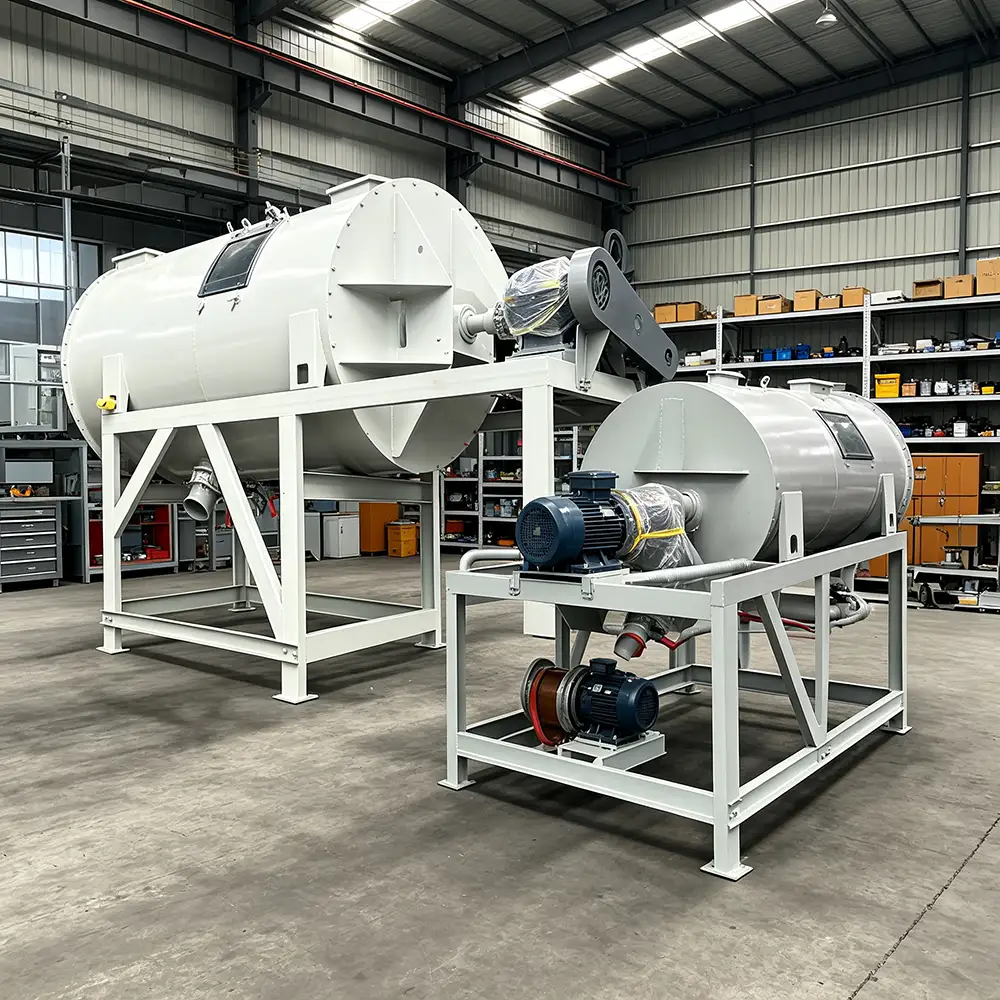
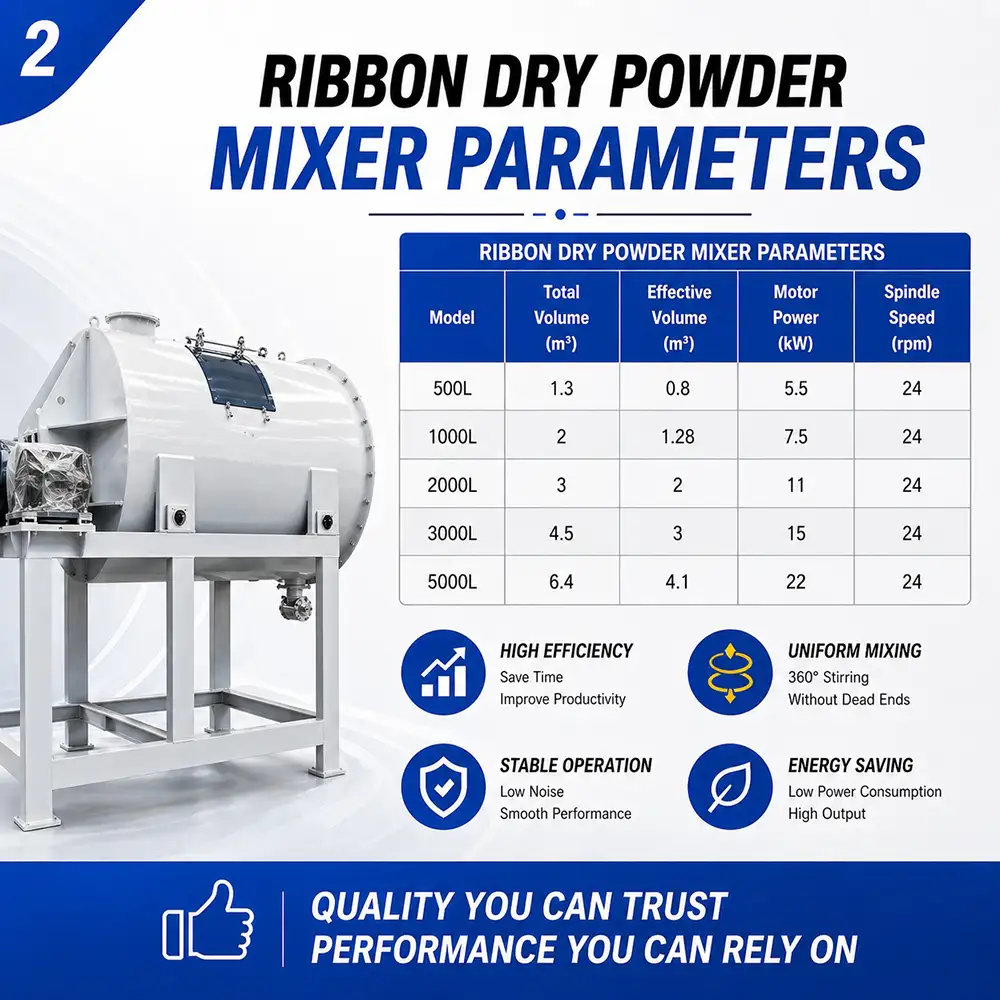
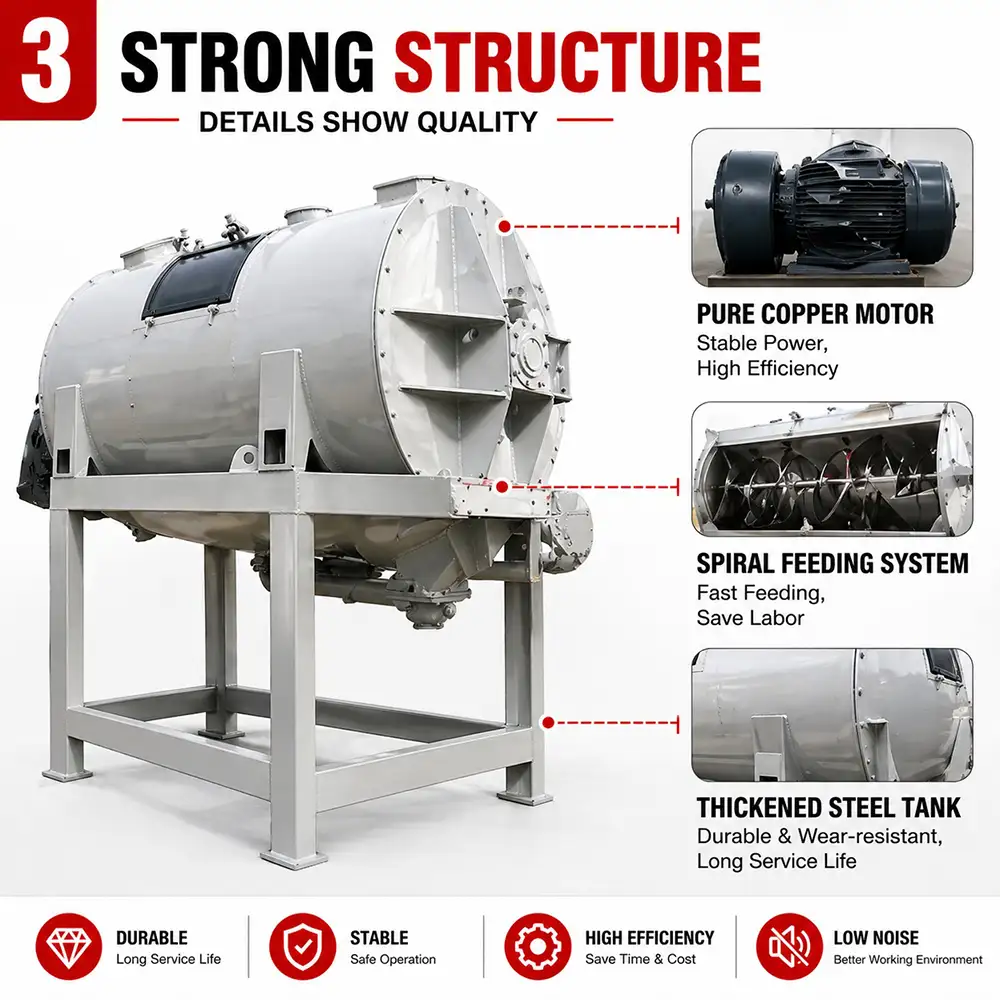
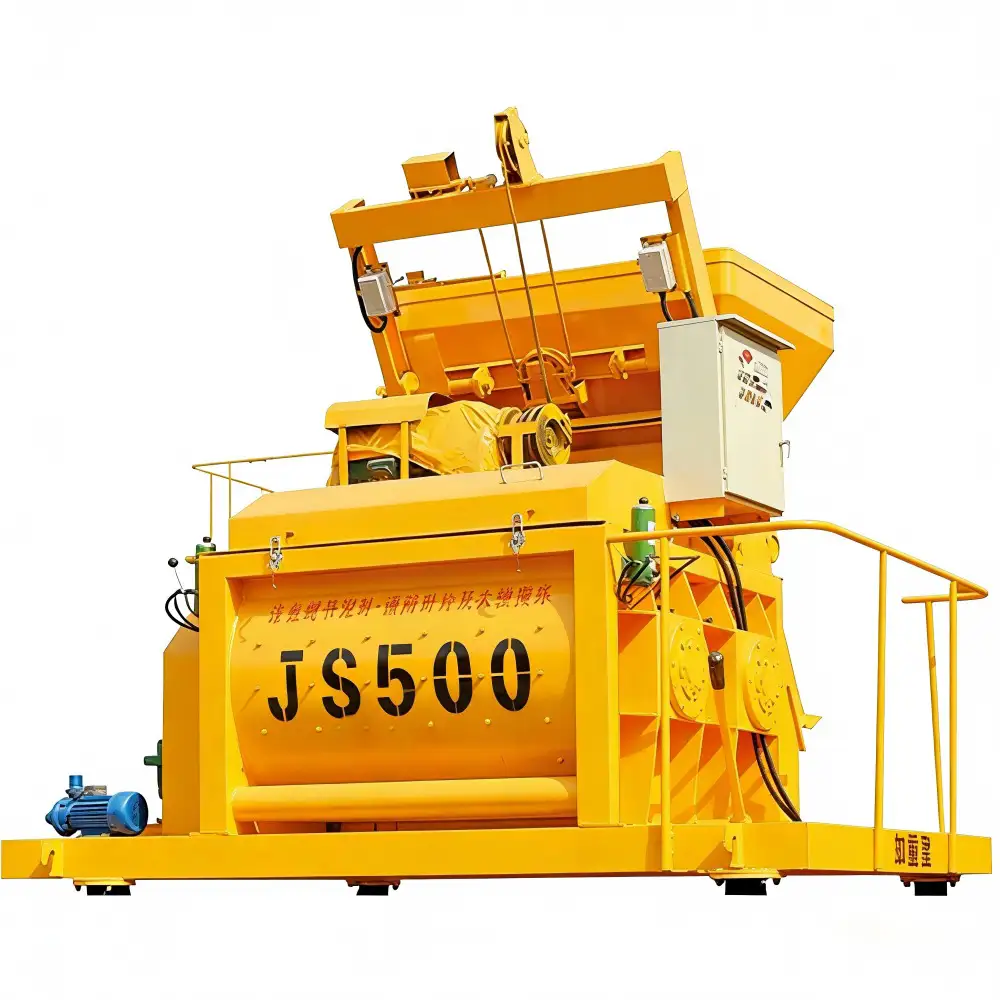
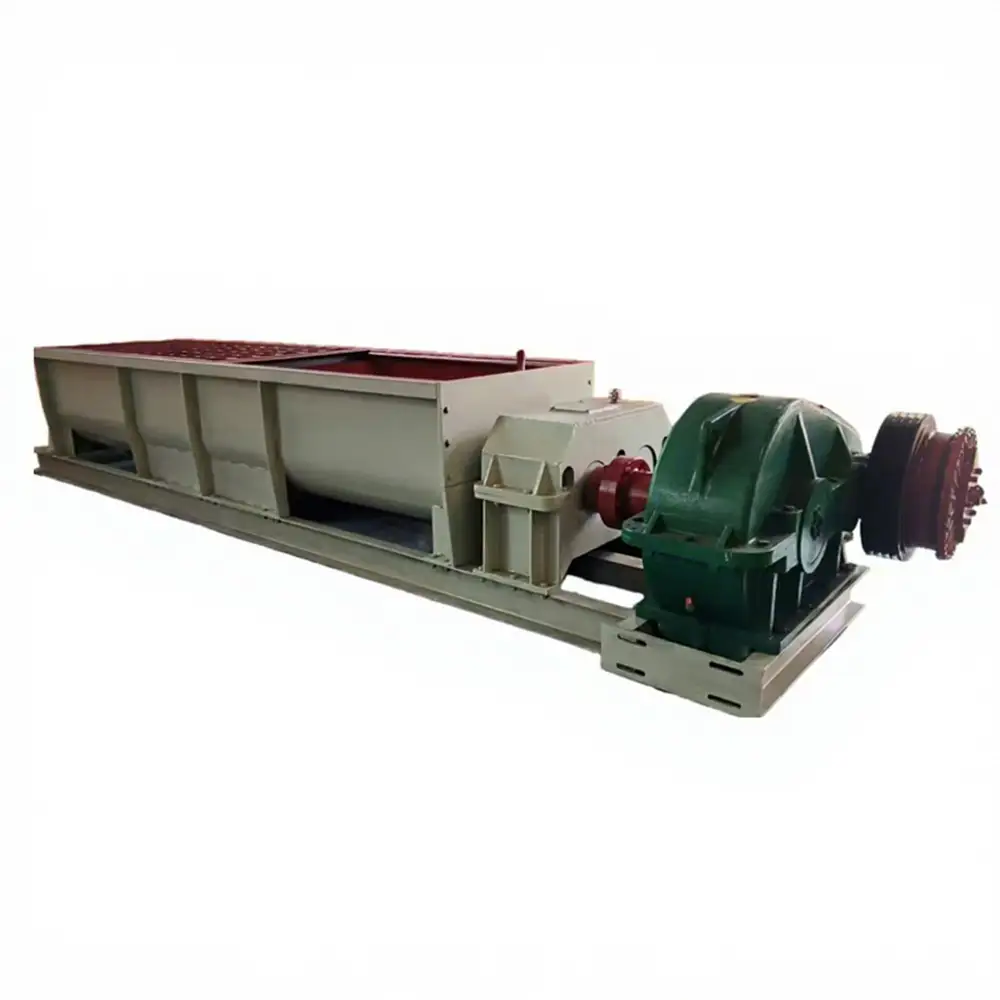
This machine belongs to double axle forcing type concrete mixer, suitable for cement products precasting factory of medium and small-scale and for mixing the concrete and mortar used in the construction departments
Mixing plastic and half-dry hard concrete, fluid concrete and light aggregate concrete.
1. Working condition: Road, Bridge & Precast product for factory, work independently or be used with correspond batching machine as a mini-type concrete plant.
2. Discharge system: Hydraulic & manual mode, drive reposefully and low noise.
3. Inside Mixer: Liner and mixer blade adopts high rigidity wear resistant steel (long service life).
4. The height of discharge: 1.5m, 3m or 3.8m (adjustable)
Gratis professional technology consultant service and most suitable product recommendation
-
Gratis professional technology training and gratis direction on installment and debugging
-
Qualified operator training
-
Spare parts supply
Parameter Model
|
JS500
|
JS750
|
JS1000
|
JS1500
|
Item
|
Discharge volume
|
500L
|
750L
|
1000L
|
1500L
|
Charging volume
|
800L
|
1200L
|
1600L
|
2400L
|
Theoretical capacity
|
25 m 3
|
35 m 3
|
50 m 3
|
75m 3
|
Aggregate sizes
|
60/ 80mm
|
60/ 80m
|
60/ 80mm
|
60/ 80mm
|
Working circle
|
60s
|
60s
|
60s
|
60s
|
Discharge Height
|
2.7m
|
3.8m
|
3.8m
|
3.8m
|
Mixing blade
|
Speed
|
35r/min
|
30.5r/min
|
25.5r/min
|
23r/min
|
Quantity
|
2 × 7
|
2 × 8
|
2 × 8
|
2 × 9
|
Mixing motor
|
Model
|
Y 180M -4
|
Y 200L -4
|
Y225S-4
|
Y 225M -4
|
Power
|
18.5 kw
|
30 kw
|
37 kw
|
45 kw
|
Lifting motor
|
Model
|
YEZ132S-4
|
YEZ 132M -4
|
YEZ 160L -4
|
YZE 180M -4
|
Power
|
5.5 kw
|
7.5 kw
|
11 kw
|
18.5 kw
|
Pump motor
|
Model
|
50DWB20 -8A
|
65DWB35-5
|
KQW65-100
|
KQW65-100
|
Power
|
0.75 kw
|
1.1 kw
|
3 kw
|
3 kw
|
Weight
|
3700kg
|
6150kg
|
9880kg
|
10960kg
|
Dimensions (L x W x H)
|
3030x2300x 2680 mm
|
4550x2250x 2450 mm
|
4640x2250x 2250 mm
|
5058x2250x 2440 mm |
Industrial Mixing Machine for Powder and Bulk Material Blending
The Mixing Machine is industrial processing equipment designed to combine two or more materials into a uniform mixture. A Powder Mixing Machine is specifically designed for dry powders, fine particles, granules, and other bulk materials that require consistent blending before packaging or further processing.
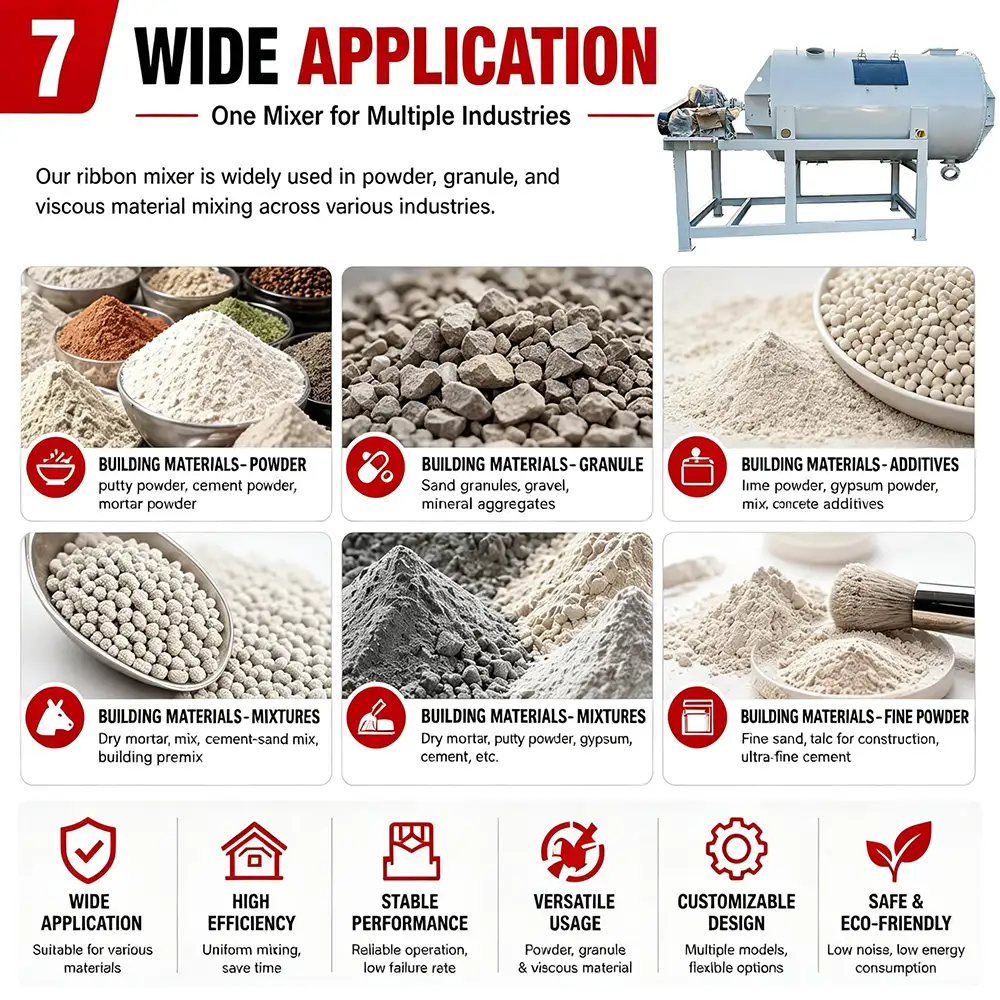
Industrial mixing and blending equipment is widely used in chemical processing, pharmaceuticals, food production, plastics, fertilizers, minerals, construction materials, ceramics, feed manufacturing, and other industries.
Depending on the material and production requirements, different mixer designs can be used to achieve the desired blending performance. Common industrial mixer configurations include ribbon mixers, paddle mixers, horizontal mixers, vertical mixers, double-cone mixers, V-type mixers, screw mixers, and other specialized designs.
The right mixing machine can help improve product uniformity, reduce manual handling, increase production efficiency, and provide repeatable mixing results.
What Is a Powder Mixing Machine?
A Powder Mixing Machine is equipment used to blend dry powders, granular materials, and other bulk solids into a homogeneous mixture.
During operation, materials are introduced into the mixing chamber. Internal mixing elements move the material through different regions of the chamber, continuously redistributing particles and reducing concentration differences between ingredients.
Depending on the machine design, the mixing action may involve convection, diffusion, shear, or a combination of these mechanisms.
A properly selected powder mixer can handle a wide range of materials, including:
Chemical powders
Mineral powders
Fertilizer
Food ingredients
Pharmaceutical excipients
Plastic additives
Pigments
Ceramic powders
Cementitious materials
Animal feed ingredients
Industrial additives
The final mixing performance depends on material properties, batch size, mixing time, mixer design, filling ratio, particle size, density, moisture, and ingredient characteristics.
How Does Industrial Mixing and Blending Equipment Work?
The basic working principle is to create controlled movement inside a mixing chamber so that individual materials are repeatedly redistributed.
For a typical batch mixing process:
Raw materials are loaded into the mixing chamber.
The mixer starts and the internal mixing elements begin rotating.
Materials move through different areas of the chamber.
Particles are repeatedly lifted, folded, dispersed, and redistributed.
Mixing continues until the desired uniformity is achieved.
The finished mixture is discharged through the outlet.
Different mixer designs create different flow patterns.
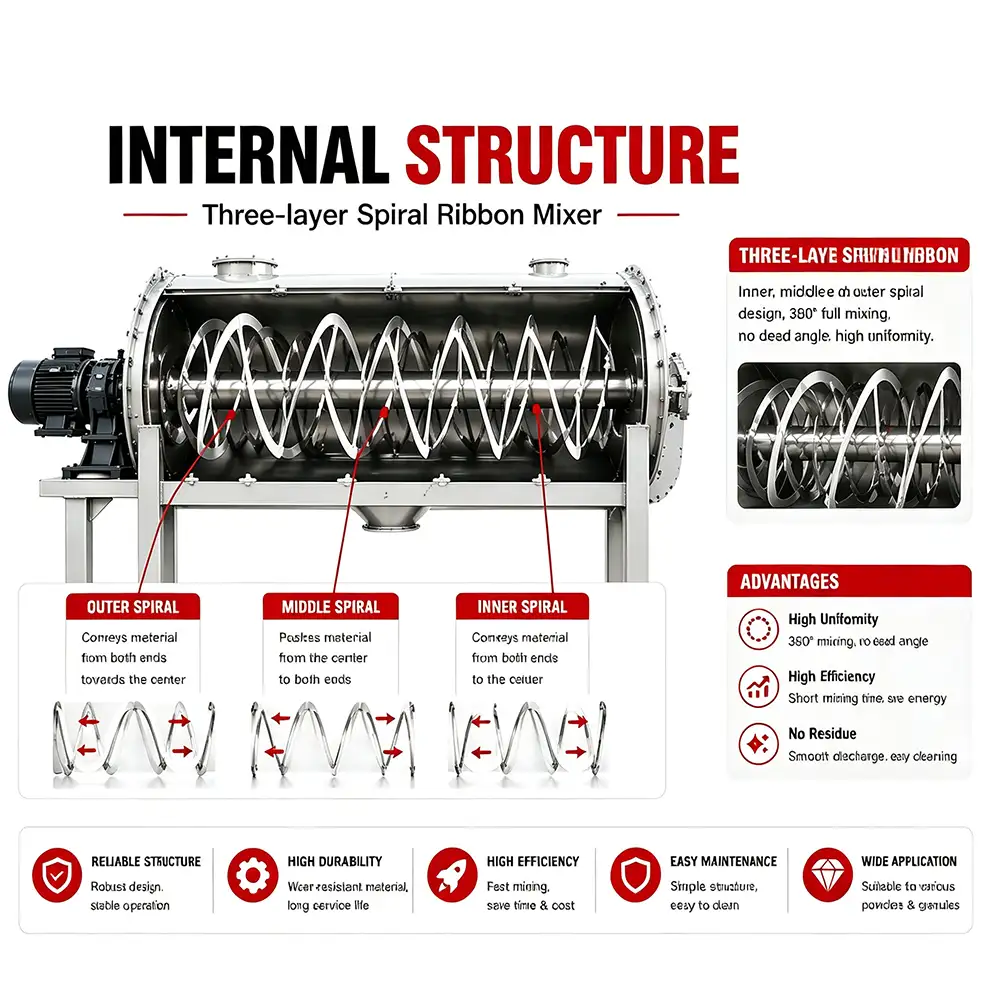
Ribbon mixers use helical ribbons to move material in multiple directions. Paddle mixers use paddles to provide intensive material movement. Vertical mixers use rotating components to circulate materials vertically. Specialized high-shear mixers can create more intensive mechanical action when required.
Main Components of a Mixing Machine
The exact construction varies according to the mixer type, but industrial mixing equipment commonly includes several major components.
Mixing Chamber
The chamber contains the raw materials during the blending process. It can be designed according to batch capacity and material characteristics.
Mixing Agitator
The agitator is the main working component. Ribbon, paddle, screw, blade, or other configurations can be selected according to the application.
Drive Motor
The motor provides the mechanical power needed to rotate the mixing system.
Gearbox or Transmission
A gearbox may be used to provide the appropriate rotational speed and torque.
Feeding Inlet
The inlet allows powders, granules, or other ingredients to enter the mixing chamber.
Discharge Outlet
The discharge system allows the finished mixture to be removed efficiently after processing.
Frame and Support
A reinforced frame supports the mixing chamber, motor, transmission, and associated components.
Types of Industrial Mixing Machines
Different materials and production processes require different mixer designs.
Ribbon Mixing Machine
Ribbon mixers are widely used for dry powders, granules, fertilizers, food ingredients, chemicals, and other bulk solids. Their horizontal mixing chamber provides efficient material circulation.
Paddle Mixer
Paddle mixers use paddle-shaped mixing elements to move material through the chamber. They are suitable for many powder and granular materials.
Horizontal Powder Mixer
Horizontal mixers are commonly used for batch production where efficient material circulation and easy discharge are required.
Vertical Powder Mixer
Vertical mixers use an upward and downward circulation pattern and can be suitable for applications with different batch-size or space requirements.
High-Shear Mixer
High-shear mixers generate stronger mechanical forces and can be used when intensive dispersion or rapid mixing is required.
V-Type and Double-Cone Mixer
These mixers are often used for relatively free-flowing powders where gentle blending and controlled material movement are required.
Applications of Mixing and Blending Equipment
Chemical Industry
Industrial mixers can blend chemical powders, additives, pigments, catalysts, mineral products, and other dry ingredients.
Food Processing
Food manufacturers use powder mixing equipment for flour, spices, seasonings, nutritional ingredients, baking ingredients, powdered beverages, and other dry food products.
Pharmaceutical Manufacturing
Suitable industrial powder mixers can blend pharmaceutical ingredients and excipients where consistent distribution and controlled processing are required.
Equipment selection for pharmaceutical production may involve additional requirements for cleanability, material compatibility, validation, and sanitary construction.
Fertilizer Production
Mixing equipment can combine fertilizer ingredients and additives to produce consistent blends.
Plastic and Polymer Processing
Powders, pellets, fillers, pigments, and additives can be mixed before extrusion, molding, or other downstream processes.
Construction Materials
Mixers can be used for cement-based powders, dry mortar components, mineral additives, gypsum products, and other construction materials.
Animal Feed
Feed manufacturers can blend grains, minerals, vitamins, additives, and other dry ingredients into uniform formulations.
Mineral and Ceramic Processing
Powder mixing equipment can blend mineral powders, ceramic materials, refractory ingredients, and other inorganic products.
Key Advantages of Industrial Mixing Machines
Uniform Material Blending
A properly selected mixer can provide consistent distribution of multiple ingredients throughout the batch.
Improved Production Efficiency
Automated mixing reduces manual material handling and supports repeatable production cycles.
Flexible Material Compatibility
Different mixer configurations can be selected for powders, granules, fibers, additives, and other bulk solids.
Controlled Mixing Time
Mixing parameters can be established according to the formulation and material properties.
Easy Integration
The mixer can be integrated with conveyors, feeders, storage hoppers, weighing systems, packaging machines, dust collectors, and other process equipment.
Batch or Continuous Production
Depending on the mixer design, customers can choose batch mixing or continuous mixing solutions.
Customizable Construction
Contact materials, agitator design, motor configuration, discharge method, and other components can be customized.
How to Choose the Right Powder Mixing Machine
Selecting the correct mixer requires more than simply comparing machine capacity.
Material Characteristics: Consider particle size, bulk density, moisture, flowability, abrasiveness, temperature, and whether the material is cohesive or free-flowing.
Mixing Objective: Determine whether the application requires simple blending, intensive dispersion, coating, homogenization, or another mixing process.
Batch Capacity: Select equipment according to the required working volume rather than only the total chamber volume.
Mixing Time: The desired production cycle helps determine mixer size and configuration.
Discharge Requirements: Consider whether rapid, complete, gravity, pneumatic, or controlled discharge is required.
Material Compatibility: The mixing chamber and internal components should be compatible with the processed material.
Cleaning Requirements: Food, pharmaceutical, and other sensitive applications may require specialized hygienic or easy-clean designs.
Installation and Maintenance
Proper installation helps ensure reliable operation and consistent mixing performance.
The machine should be installed on a suitable foundation or support structure. Electrical connections should match the motor requirements, and rotating components should be checked before initial startup.
Routine maintenance should include:
Inspecting the motor
Checking gearbox oil where applicable
Inspecting bearings
Checking agitator components
Tightening fasteners
Inspecting seals
Cleaning the mixing chamber
Checking discharge components
Inspecting wear on internal parts
For abrasive materials, wear components should be inspected regularly. Food and pharmaceutical applications should follow appropriate cleaning and sanitation procedures.
OEM and Custom Mixing Machine Solutions
As an industrial mixing machine manufacturer and supplier, we can provide customized mixing and blending equipment for different production requirements.
Customization options may include:
Mixing capacity
Working volume
Mixer type
Ribbon or paddle configuration
Motor power
Mixing speed
Stainless steel or carbon steel construction
Wear-resistant lining
Heating or cooling jacket
Spray or liquid addition system
Vacuum or sealed mixing chamber
Special discharge valve
Dust-tight construction
Weighing and feeding integration
Automated control system
OEM solutions are available for chemical manufacturers, food processors, pharmaceutical companies, fertilizer producers, plastic manufacturers, construction-material suppliers, feed mills, distributors, and engineering contractors.
Why Choose Us?
We provide industrial mixing and blending solutions designed around the actual characteristics of the material and production process. Rather than using a single mixer configuration for every application, we consider material properties, required capacity, mixing uniformity, cycle time, discharge requirements, and downstream equipment.
Our engineering team can assist with mixer selection, configuration, customization, process integration, and equipment manufacturing.
Whether you need a Powder Mixing Machine for chemical materials, a Ribbon Mixer for dry powders, an Industrial Blender for granular products, or a Custom Mixing Machine for a specialized production line, we can develop a suitable solution for your application.
FAQs
1. What is a Mixing Machine?
A Mixing Machine is industrial equipment designed to combine two or more materials into a uniform mixture.
2. What materials can a Powder Mixing Machine handle?
Depending on the mixer design, it can process powders, granules, pellets, additives, minerals, chemicals, food ingredients, fertilizers, and other bulk solids.
3. What is the difference between mixing and blending?
Mixing generally refers to combining materials through mechanical movement, while blending commonly emphasizes achieving a uniform distribution of different ingredients. In industrial equipment terminology, the two terms are often used interchangeably.
4. Which mixer is best for powder materials?
The appropriate mixer depends on particle size, density, flowability, moisture, required uniformity, capacity, and mixing time. Ribbon, paddle, screw, and other mixer designs can be selected according to the application.
5. Can the mixing machine handle granular materials?
Yes. Many industrial mixers are designed for both powders and granular materials, although the internal mixing configuration should be selected according to the material properties.
6. Can liquid be added during powder mixing?
Yes. Some mixing systems can incorporate spray nozzles or liquid addition systems for controlled liquid dosing, coating, or agglomeration processes.
7. Can the mixing machine be customized?
Yes. Capacity, agitator design, motor power, material of construction, discharge system, heating or cooling, control system, and other features can be customized.
8. Is stainless steel available?
Yes. Stainless steel construction can be provided for applications requiring improved corrosion resistance, cleanability, or sanitary processing conditions.
9. Can the mixer be integrated with an automatic production line?
Yes. Mixing equipment can be connected with weighing systems, feeders, conveyors, hoppers, dust collectors, packaging equipment, and automatic control systems.
10. How do I choose the right industrial mixer?
Provide the material type, particle size, bulk density, moisture content, required capacity, desired mixing time, number of ingredients, and mixing objective. These details help determine the appropriate mixer type and configuration.
Prev:
SJ Double-Axle Mixer, Double-Axle Platform Mixer
Next:Sorry, no information
TAG:
Twin Shaft Mixer,
Industrial Batch Mixer,
Automatic Powder Mixer,
Heavy Duty Industrial Mixer,
Industrial Powder Blender,
Continuous Mixing Machine,
Continuous Mixer,
Automatic Mixing Machine,
High Capacity Mixer,
High Efficiency Mixer,
Powder Homogenizer,
Dry Powder Mixer,
Dry Material Mixer,
Batch Mixing Machine,
Batch Mixer,
Plastic Powder Mixer,
Ceramic Powder Mixer,
Feed Mixing Machine,
Chemical Powder Mixer,
Chemical Mixing Machine,
Food Powder Mixer,
Food Mixing Machine,
Fertilizer Mixing Machine,
Mineral Powder Mixer,
Dry Mortar Mixer,
Animal Feed Mixer,
Material Mixing Machine,
Bulk Material Blending Equipment,
Horizontal Powder Mixer,
Cement Powder Mixer,
Related Category:
Mixing Machine,Powder Mixing Machine,Mixing And Blending Equipment,Industrial Mixing Machine China, suppliers, manufacturers, factory, customized, wholesale, quotation, made in China