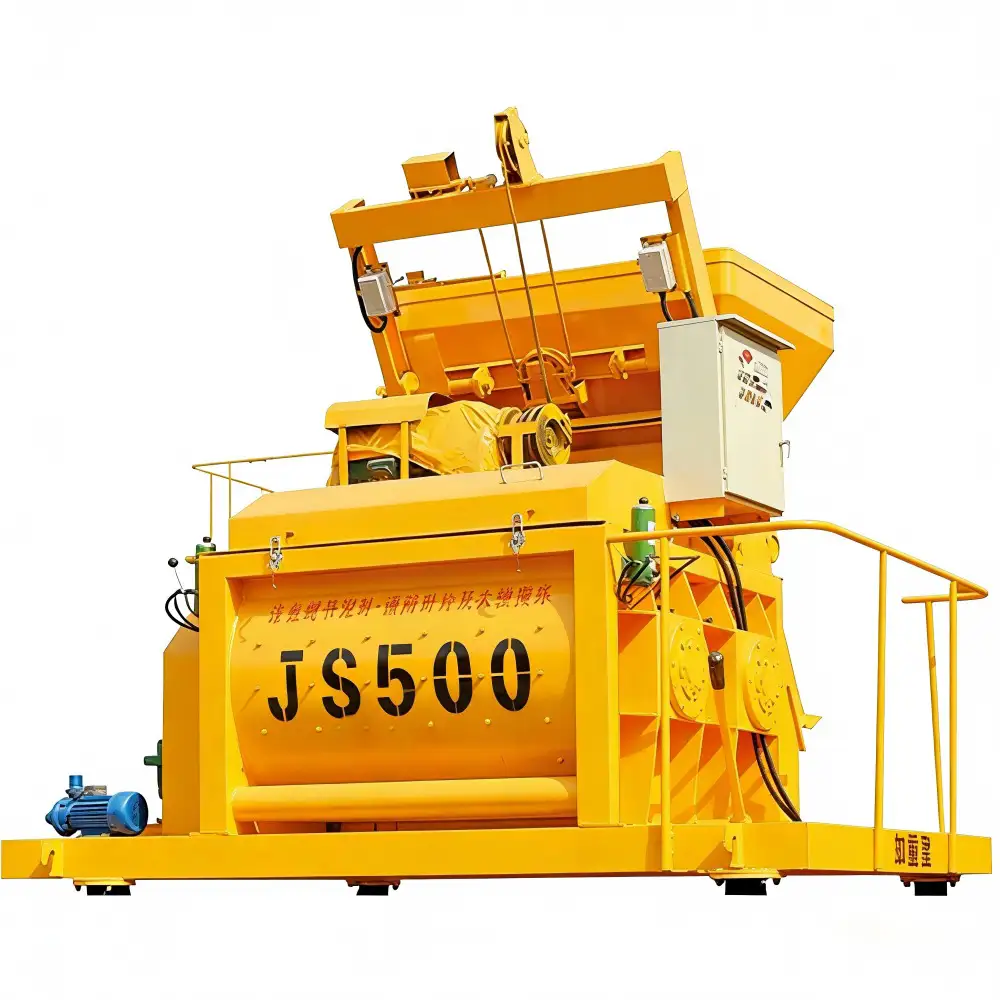
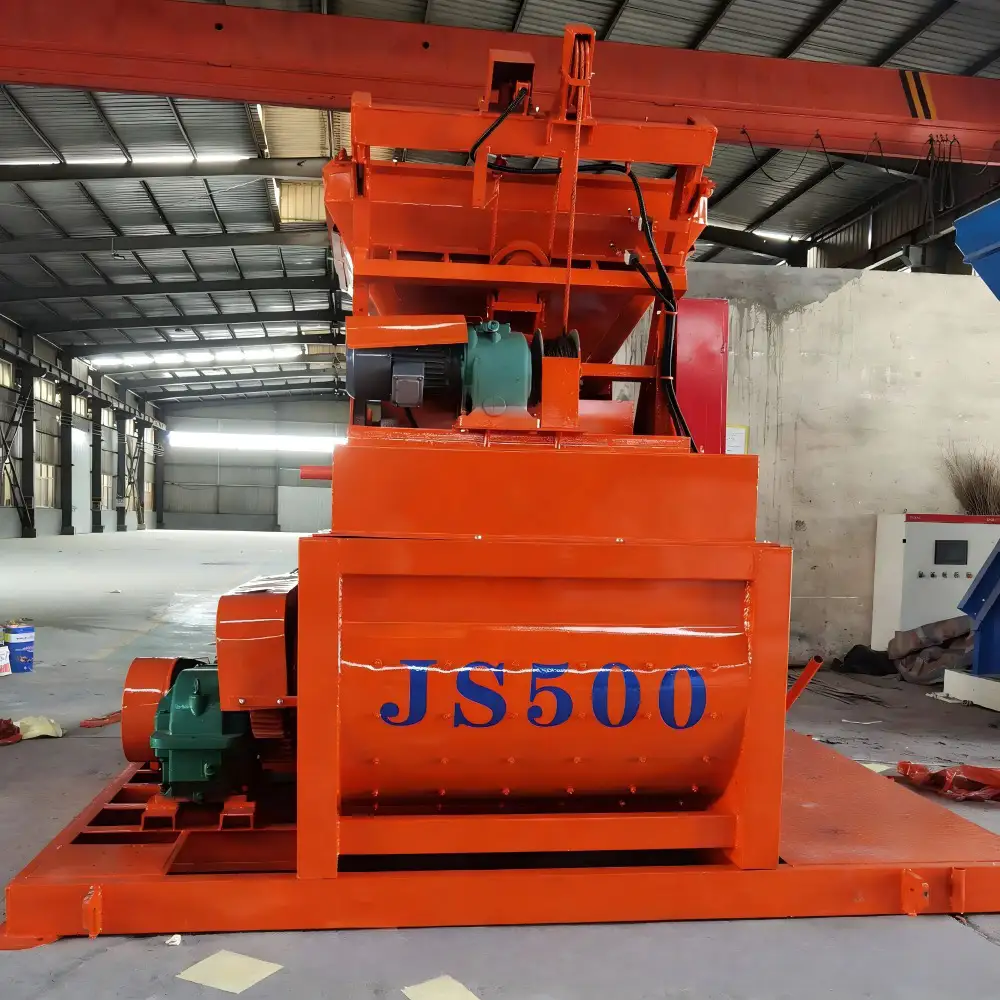
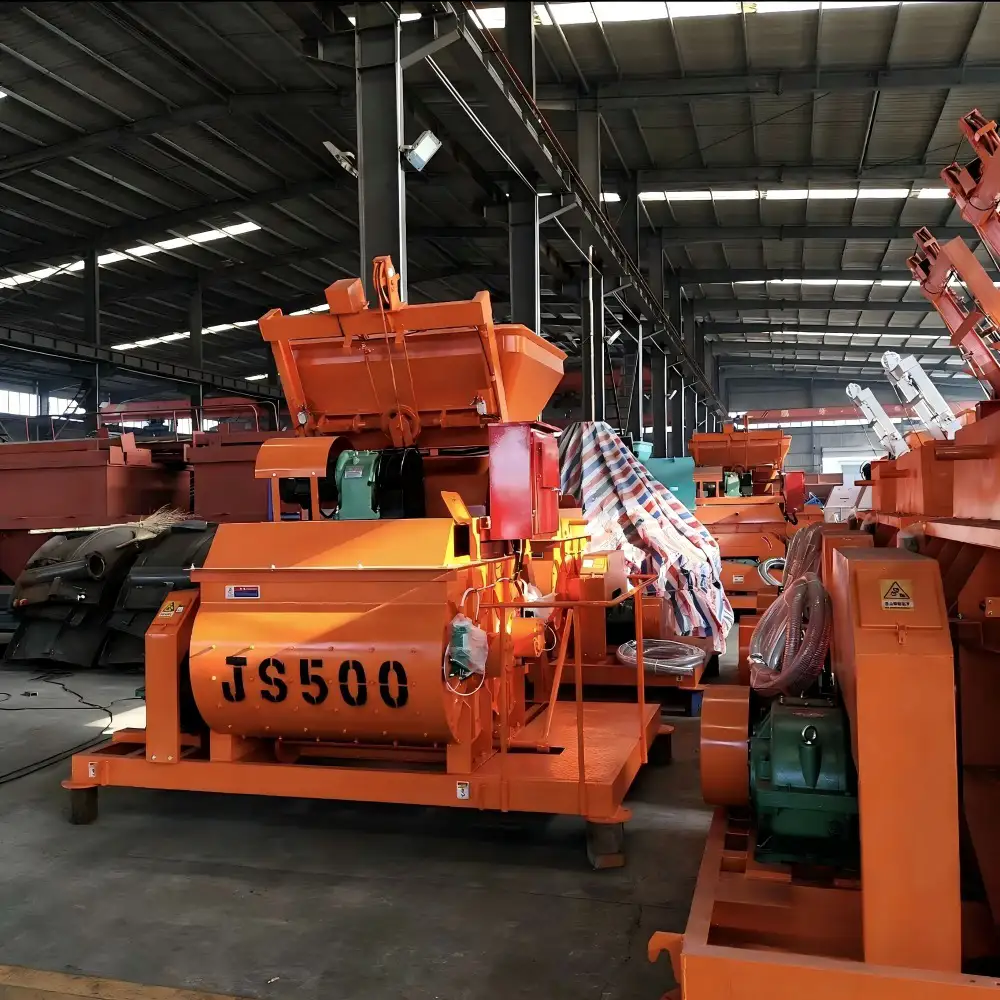
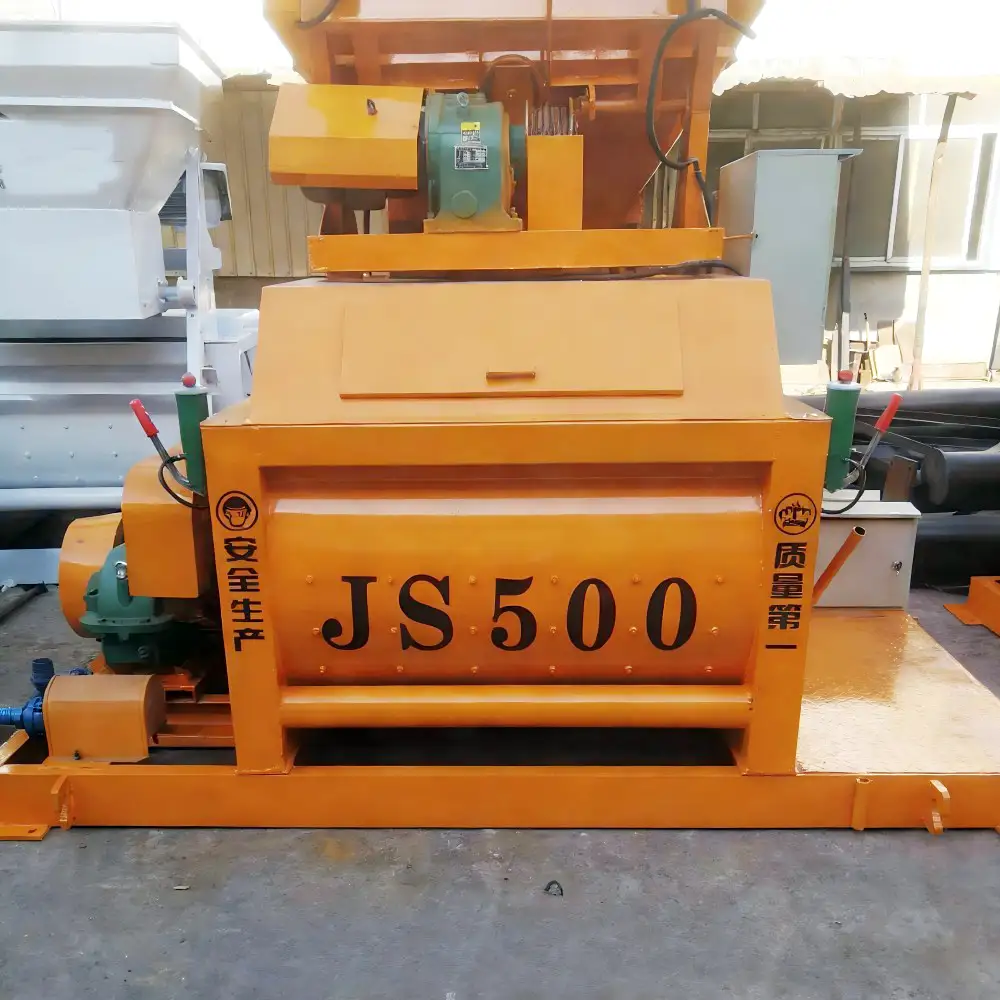
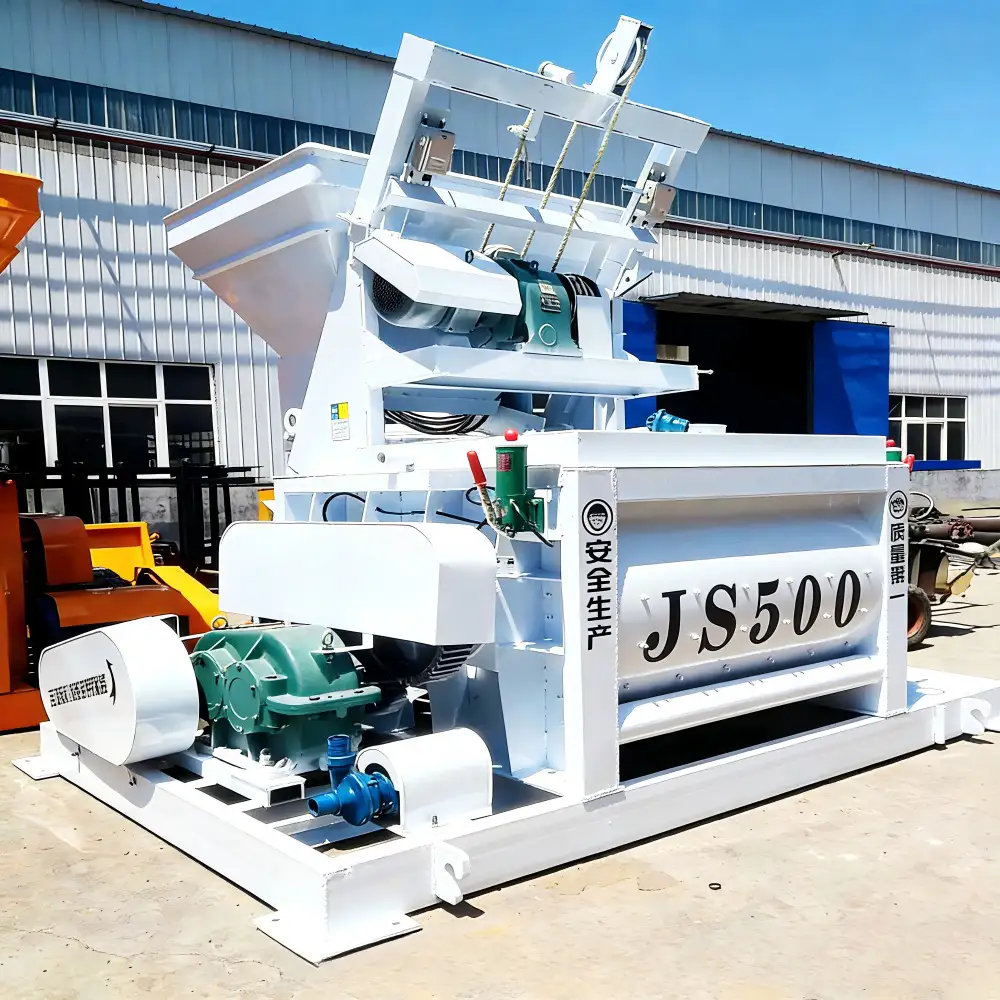
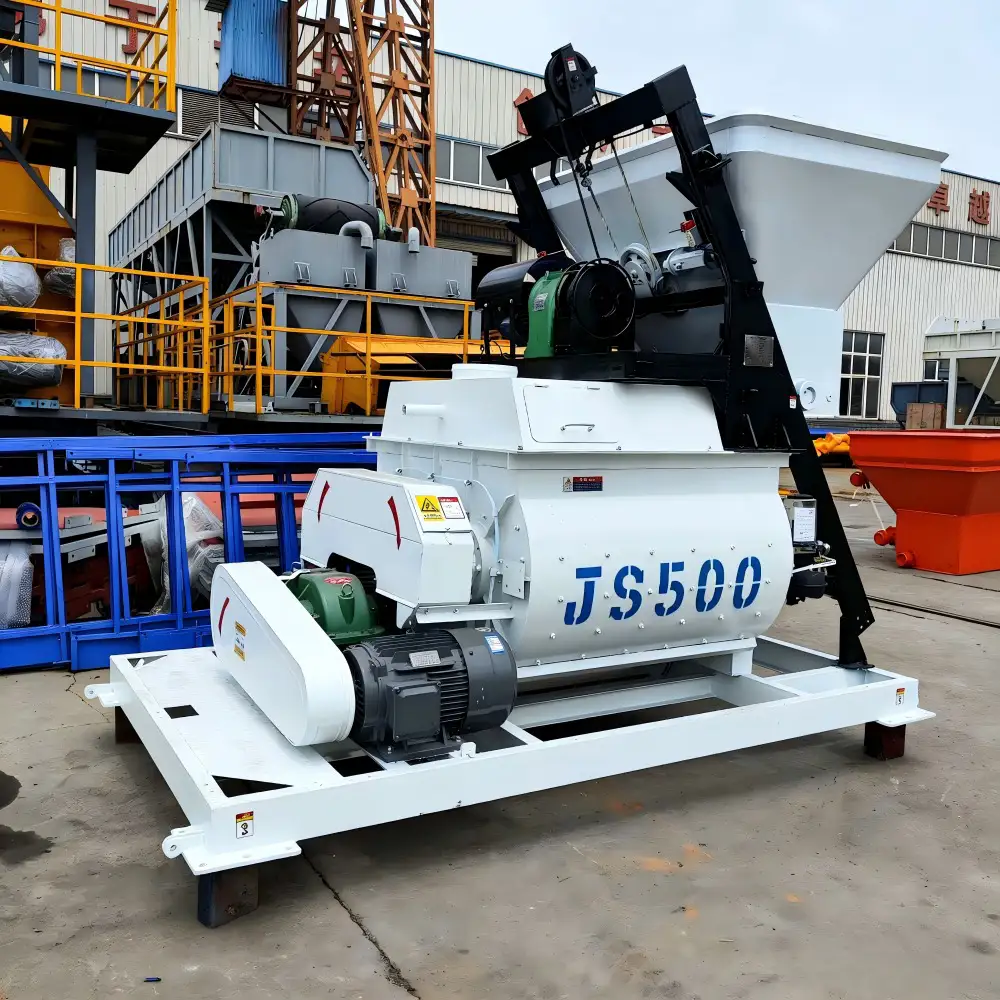
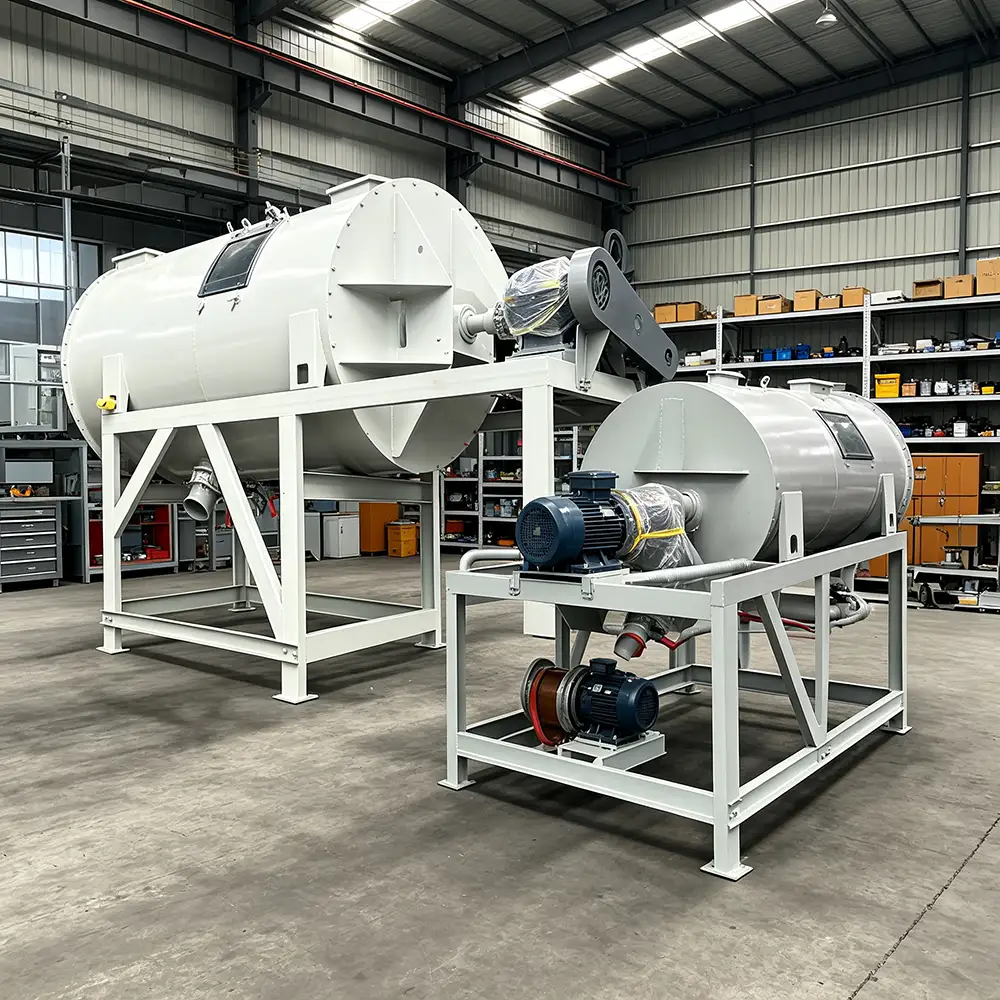
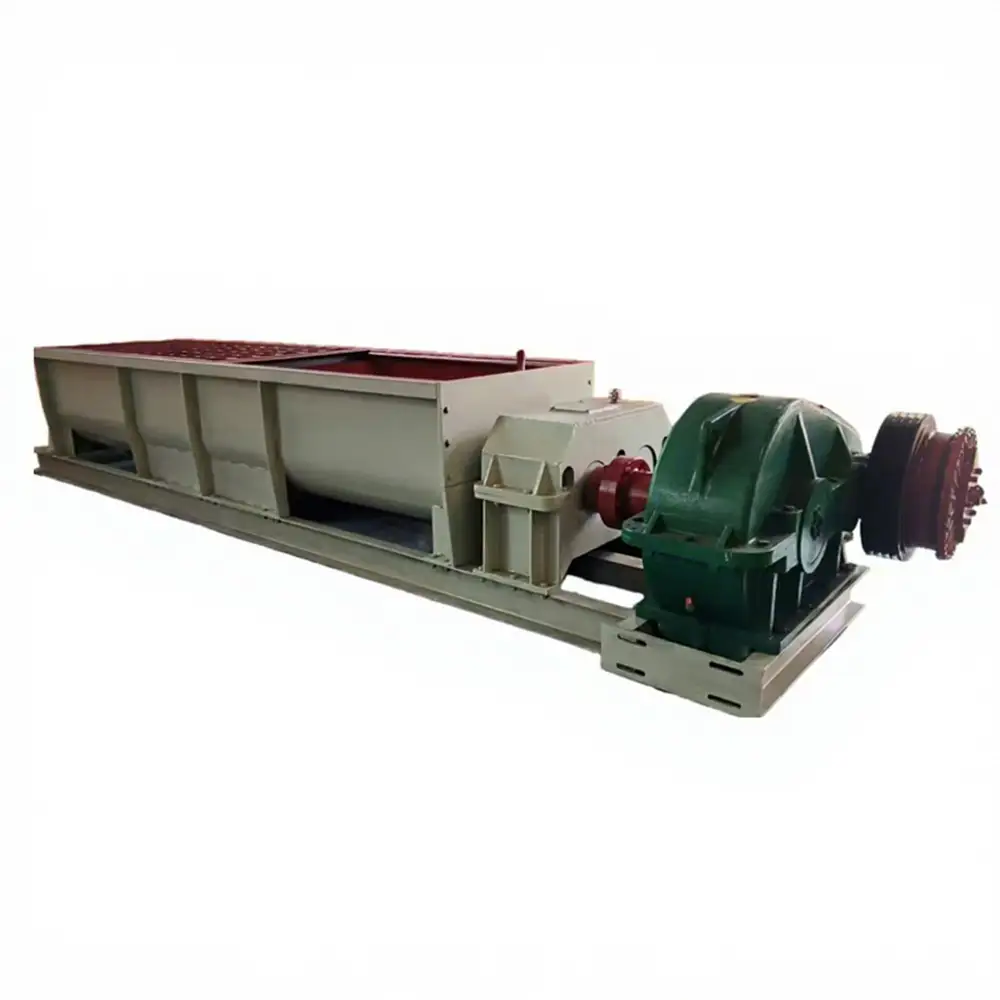
JS Series twin-shaft mandatory concrete mixer, the machine is equipped with a dual superiority standalone operation and the simple concrete mixing station with PLD series batching machine supporting host, but also as a mixer, suitable for all kinds of large, medium and small precast factories, highway, bridge, , water conservancy, wharf and other industrial and civil projects. It can mix dry hard concrete, plastic concrete, flowing concrete and lightweight aggregate concrete and various mortar, which is high-efficiency model widely used.
JS Series Concrete Mixer Machine
|
Double horizontal shafts forced concrete mixer JS 500/750/1000/1500 |
|
Model |
JS 500 |
JS 750 |
JS 1000 |
JS 1500 |
|
Discharge capacity |
500 L |
750 L |
1000 L |
1500 L |
|
Charge capacity |
800 L |
1200 L |
1600 L |
2400 L |
|
Mixing time |
35-45 S |
35-45 S |
35-45 S |
35-45 S |
|
Rated output |
25-30m3/h |
37-45m3/h |
over 50m3/h |
65-75m3/h |
|
Main motor power |
18.5KW |
30KW |
2x18.5/37KW |
2x30KW |
|
Hoisting |
5.5KW |
7.5KW |
18.5KW |
22KW |
|
Water pump power |
1.1KW |
1.1KW |
3KW |
3KW |
|
Maximum size of aggregate |
60/80mm |
60/80mm |
60/80mm |
60/80mm |
|
Overall dimension (mm) ( L x W x H ) |
(T) 2786x3003x2151 |
3636 x 2805 x 2630 |
4500 x 2400 x 2165 |
5200 x 2480 x 3150 |
|
(W)4448x3003x5634 |
4950 x 3636 x 6260 |
9500 x 3800 x 8605 |
11700 x3880 x 9010 |
|
Total weight |
4100 Kg |
6400 Kg |
11000 Kg |
12000 Kg |
JS Concrete Mixer Machine for High-Efficiency Concrete Mixing
The JS Concrete Mixer Machine is a heavy-duty twin-shaft forced concrete mixer designed for efficient and uniform mixing of cement, sand, aggregates, water, and other concrete ingredients. Also known as a JS Twin Shaft Concrete Mixer, Double Shaft Concrete Mixer, or Twin Spiral Concrete Mixer, the machine uses two horizontal mixing shafts to create intensive material circulation and forced mixing inside the mixing chamber.
Unlike simple gravity drum mixers, the JS series uses a forced mixing principle in which the rotating mixing blades actively move and shear the concrete ingredients. This design helps produce a more homogeneous mixture and is suitable for different concrete formulations, including dry-hard concrete, plastic concrete, flowing concrete, lightweight aggregate concrete, and various mortar mixes.
The JS mixer can be used as a standalone concrete mixer or integrated with aggregate batching machines and other equipment to form a complete concrete mixing plant. It is widely used in construction projects, precast concrete production, highways, bridges, water conservancy projects, ports, and industrial and civil engineering applications.
What Is a JS Twin Shaft Concrete Mixer?
The JS Twin Shaft Concrete Mixer is a horizontal forced mixer equipped with two parallel mixing shafts. Each shaft carries multiple mixing blades that rotate through the concrete material.
As the two shafts rotate, the blades create overlapping mixing zones. Cement, sand, aggregate, water, and additives are repeatedly lifted, pushed, folded, and redistributed throughout the mixing chamber.
This twin-shaft arrangement provides strong mixing action and is suitable for concrete formulations where uniform distribution of all ingredients is important.
Typical JS series models include JS500, JS750, JS1000, JS1500, JS2000, and JS3000. Published specifications for these models commonly range from approximately 25 m³/h to 150 m³/h of theoretical productivity, depending on model and configuration. Actual production depends on material, mix design, loading, cycle time, and operating conditions.
How Does the JS Twin Spiral Concrete Mixer Work?
The JS mixer works through forced mechanical mixing.
First, measured aggregates, cement, water, and other ingredients are loaded into the mixing chamber. The two horizontal shafts then rotate in opposite or coordinated directions according to the specific transmission design.
During operation:
Aggregates and cement enter the mixing chamber.
Water and other additives are introduced according to the mix formula.
Twin mixing shafts begin rotating.
Spiral or paddle-shaped mixing blades move the material through the chamber.
The two mixing zones create intensive circulation and material exchange.
Cement paste is distributed around the aggregate particles.
Continued forced mixing produces a more uniform concrete mixture.
The discharge gate opens and the finished concrete leaves the mixer.
The actual mixing time should be determined according to the concrete formulation, aggregate characteristics, moisture content, required uniformity, and mixer configuration.
Twin Spiral Mixing System
The twin spiral mixing system is one of the important characteristics associated with the CDS / JS Twin Spiral Concrete Mixer.
The two shafts and their mixing elements create continuous longitudinal and transverse movement within the chamber. Material from different regions of the mixer is repeatedly redistributed, reducing localized concentration of cement, sand, aggregate, and water.
This forced mixing action can be particularly useful for concrete containing coarse aggregate or relatively stiff formulations.
The mixing blades are wear components because they are continuously exposed to cement, aggregate, and other abrasive materials. Wear-resistant liners and replaceable mixing components can be used to help maintain the designed mixing geometry during extended operation.
Main Components of JS Concrete Mixer Machine
Twin Horizontal Mixing Shafts
Two parallel shafts provide the primary mechanical mixing action. Their arrangement creates overlapping material movement zones.
Mixing Blades
Multiple blades mounted on the shafts push and circulate the concrete ingredients. Blade geometry and arrangement influence the mixing pattern.
Mixing Chamber
The heavy-duty chamber contains the concrete ingredients during the mixing cycle and is normally protected by replaceable wear-resistant liners.
Drive Motor
The electric motor supplies the power required to rotate the mixing shafts.
Gearbox and Transmission
The transmission system transfers motor power to the mixing shafts while providing the required torque and rotational speed.
Discharge Gate
The bottom discharge gate allows the finished concrete to leave the mixer after the mixing cycle.
Water Spray System
A controlled water addition system can distribute water into the mixing chamber to support consistent concrete production.
Lubrication System
A suitable lubrication system helps maintain bearings and other moving components according to the equipment design.
Applications of JS Concrete Mixer
Concrete Batching Plants
The JS mixer can serve as the main mixing unit in stationary or compact concrete batching systems. It can be combined with aggregate bins, weighing systems, cement silos, conveyors, and control systems.
Construction Sites
The machine can provide concrete for building construction, foundations, industrial structures, roads, bridges, and other engineering projects.
Precast Concrete Production
Precast factories can use twin-shaft forced mixers for concrete components and products where consistent mixing is required.
Highway and Road Construction
The mixer can support production of concrete used in roads, pavement, bridges, drainage structures, and related infrastructure.
Bridge Projects
The forced mixing system can be incorporated into concrete production systems for bridge construction and associated structural work.
Water Conservancy Projects
The machine can be used for concrete production in dams, channels, reservoirs, and other water-related engineering projects.
Port and Infrastructure Projects
Ports, docks, tunnels, airports, and other large infrastructure projects can use JS mixers as part of concrete production systems.
Concrete Types Suitable for JS Mixer
The JS series is designed for a wide range of concrete and mortar formulations.
Dry-Hard Concrete: Suitable for relatively stiff mixtures used in certain precast and construction applications.
Plastic Concrete: The forced mixing system can distribute cement paste and aggregates throughout plastic concrete mixtures.
Flowing Concrete: The mixer can process more fluid formulations when configured appropriately.
Lightweight Aggregate Concrete: Lightweight aggregate mixtures can be processed according to the mixer capacity and formulation.
Mortar: The machine can also be used for various mortar mixtures.
Material selection, aggregate size, water content, and mix design should always be considered when determining the appropriate mixer model.
Key Advantages of JS Twin Shaft Concrete Mixer
Uniform Forced Mixing
Twin horizontal shafts create intensive material circulation, helping distribute cement, aggregate, water, and additives throughout the mixture.
High Mixing Efficiency
The forced mixing principle can provide efficient blending within relatively short production cycles when the mixer is correctly loaded and operated.
Wide Application Range
The machine can process different concrete formulations and mortar mixes, making it suitable for many construction and industrial applications.
Heavy-Duty Construction
The mixer is designed for demanding concrete production environments where aggregate and cement can cause substantial wear.
Replaceable Wear Components
Mixing blades and internal liners can be designed as replaceable components, helping simplify maintenance.
Standalone Operation
The JS mixer can operate independently when the required material feeding and weighing systems are available.
Concrete Plant Integration
It can also function as the main mixer in a complete batching plant together with aggregate batching, cement weighing, water dosing, conveying, and control equipment.
JS Concrete Mixer Model Selection
JS concrete mixers are available in different capacities. Common configurations include JS500, JS750, JS1000, JS1500, JS2000, and JS3000.
For example, published specifications list JS500 at approximately 500 L discharge capacity and 25 m³/h or more theoretical productivity, while JS1000 is commonly listed around 1,000 L discharge capacity and 50 m³/h or more. Larger JS1500, JS2000, and JS3000 configurations provide progressively greater batch and production capacities.
Model selection should be based on:
Required concrete production
Batch size
Aggregate size
Concrete formulation
Mixing cycle
Feeding method
Discharge height
Plant layout
Available electrical power
Required automation level
Theoretical capacity should not be treated as guaranteed production because actual output depends on the complete batching and mixing process.
Installation and Maintenance
Correct installation is important for reliable operation. The mixer should be installed on a suitable foundation with sufficient structural strength and adequate access for maintenance.
Before starting production, operators should inspect the mixing shafts, blades, liners, discharge gate, gearbox, motor, lubrication system, and electrical connections.
Regular maintenance should include:
Checking mixing blades for wear
Inspecting chamber liners
Checking shaft-end seals
Inspecting gearbox lubrication
Checking bearings
Inspecting the discharge gate
Checking water spray components
Tightening loose fasteners
Removing hardened concrete buildup
Inspecting electrical components
Because concrete is abrasive and can harden rapidly when left inside the mixer, cleaning the mixing chamber after operation is an important part of routine maintenance.
OEM and Custom Concrete Mixer Solutions
As a concrete mixing equipment manufacturer and supplier, we can provide customized JS series twin-shaft mixers according to production requirements.
Customization may include:
Mixer capacity
Mixing chamber configuration
Motor power
Gearbox configuration
Mixing blade material
Wear-resistant liner
Discharge height
Hydraulic or pneumatic discharge
Water spray system
Lubrication system
Aggregate feeding arrangement
Electrical control system
Concrete batching plant integration
OEM solutions can be supplied for concrete producers, precast factories, construction contractors, batching plant manufacturers, infrastructure projects, distributors, and engineering companies.
Why Choose Us?
We provide JS Twin Shaft Concrete Mixer solutions for customers who need reliable forced mixing for concrete and mortar production. Our equipment can be configured according to required capacity, aggregate characteristics, concrete formulation, plant layout, and automation requirements.
Our engineering team can assist with mixer model selection, plant integration, material feeding, discharge configuration, electrical requirements, and customized equipment design.
Whether you need a JS500 Concrete Mixer for a compact production system, JS750 or JS1000 for medium-capacity concrete production, or a larger JS1500/JS2000/JS3000 mixer for high-volume applications, we can provide equipment configurations based on your production requirements.
FAQs
1. What is a JS Concrete Mixer Machine?
A JS Concrete Mixer Machine is a twin-horizontal-shaft forced concrete mixer designed to mix cement, sand, aggregate, water, additives, and mortar materials.
2. What does JS mean in a concrete mixer?
JS is commonly used to identify this series of double-horizontal-shaft forced concrete mixers. The exact model, such as JS500 or JS1000, indicates a particular mixer capacity configuration.
3. What is a twin shaft concrete mixer?
A twin shaft concrete mixer uses two parallel horizontal mixing shafts equipped with blades to create intensive forced mixing of concrete ingredients.
4. What concrete can the JS mixer produce?
It can be configured for dry-hard concrete, plastic concrete, flowing concrete, lightweight aggregate concrete, and various mortar mixtures.
5. Can the JS mixer be used in a concrete batching plant?
Yes. JS mixers can operate as the main mixing unit in concrete batching plants and can be combined with aggregate batching, weighing, conveying, water dosing, and control systems.
6. What is the difference between a JS mixer and a drum mixer?
A JS mixer uses forced twin-shaft mixing, while a conventional drum mixer primarily relies on the rotation of the drum to lift and tumble materials. The JS design provides active mechanical mixing through the twin shafts.
7. What are common JS mixer models?
Common models include JS500, JS750, JS1000, JS1500, JS2000, and JS3000. Their capacities and production rates vary by configuration.
8. Can the JS Concrete Mixer handle coarse aggregate?
Yes, provided the aggregate size is within the selected model's specified operating range. Aggregate size limits vary by model and configuration.
9. How often should the mixing blades be replaced?
Replacement frequency depends on aggregate abrasiveness, operating hours, concrete formulation, liner condition, and maintenance practices. Blades should be inspected regularly and replaced when wear affects mixing performance.
10. Can you provide a customized CDS / JS Twin Spiral Concrete Mixer?
Yes. Mixer capacity, motor configuration, discharge height, wear components, water system, control system, and integration with a complete concrete batching plant can be customized according to project requirements.
Prev:Sorry, no information
Next:
SJ Double-Axle Mixer, Double-Axle Platform Mixer
TAG:
Automatic Concrete Mixer,
Electric Concrete Mixer,
Twin Shaft Forced Mixer,
Twin Shaft Forced Mixing Machine,
Spiral Concrete Mixer,
Twin Spiral Mixer,
Spiral Shaft Concrete Mixer,
Horizontal Concrete Mixer,
Horizontal Shaft Concrete Mixer,
Planetary Concrete Mixer,
Concrete Mixer For Batching Plant,
Concrete Mixer For Construction,
Concrete Mixer For Precast Factory,
Concrete Mixer For Road Construction,
Concrete Mixer For Bridge Construction,
Concrete Mixer For Infrastructure,
JS500 Concrete Mixer,
JS750 Concrete Mixer,
JS1000 Concrete Mixer,
JS1500 Concrete Mixer,
JS2000 Concrete Mixer,
JS3000 Concrete Mixer,
JS500 Twin Shaft Mixer,
JS750 Twin Shaft Mixer,
JS1000 Twin Shaft Mixer,
JS1500 Twin Shaft Mixer,
JS2000 Twin Shaft Mixer,
JS3000 Twin Shaft Mixer,
Automatic Twin Shaft Mixer,
Hydraulic Discharge Concrete Mixer,
Related Category:
JS Concrete Mixer Machine,CDS JS Twin Spiral Concrete Mixer Machine,JS Twin Shaft Concrete Mixer China, suppliers, manufacturers, factory, customized, wholesale, quotation, made in China