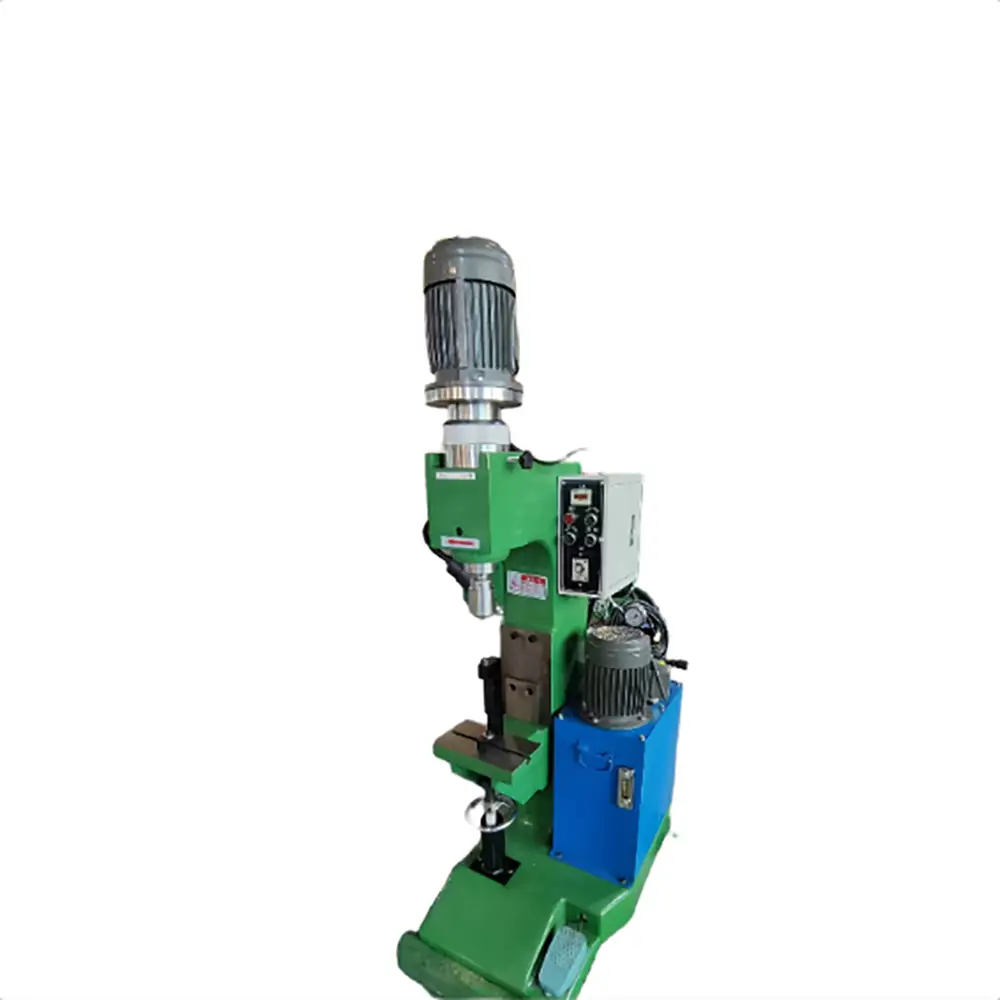
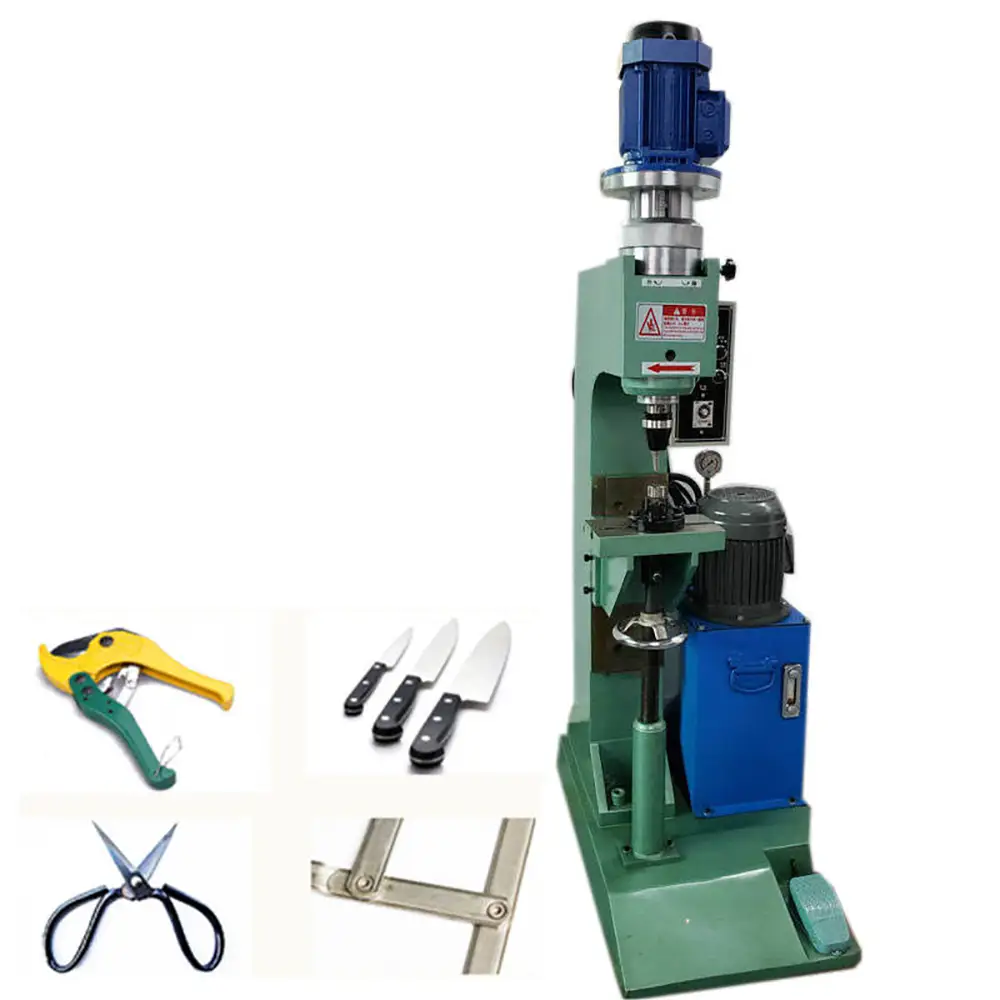
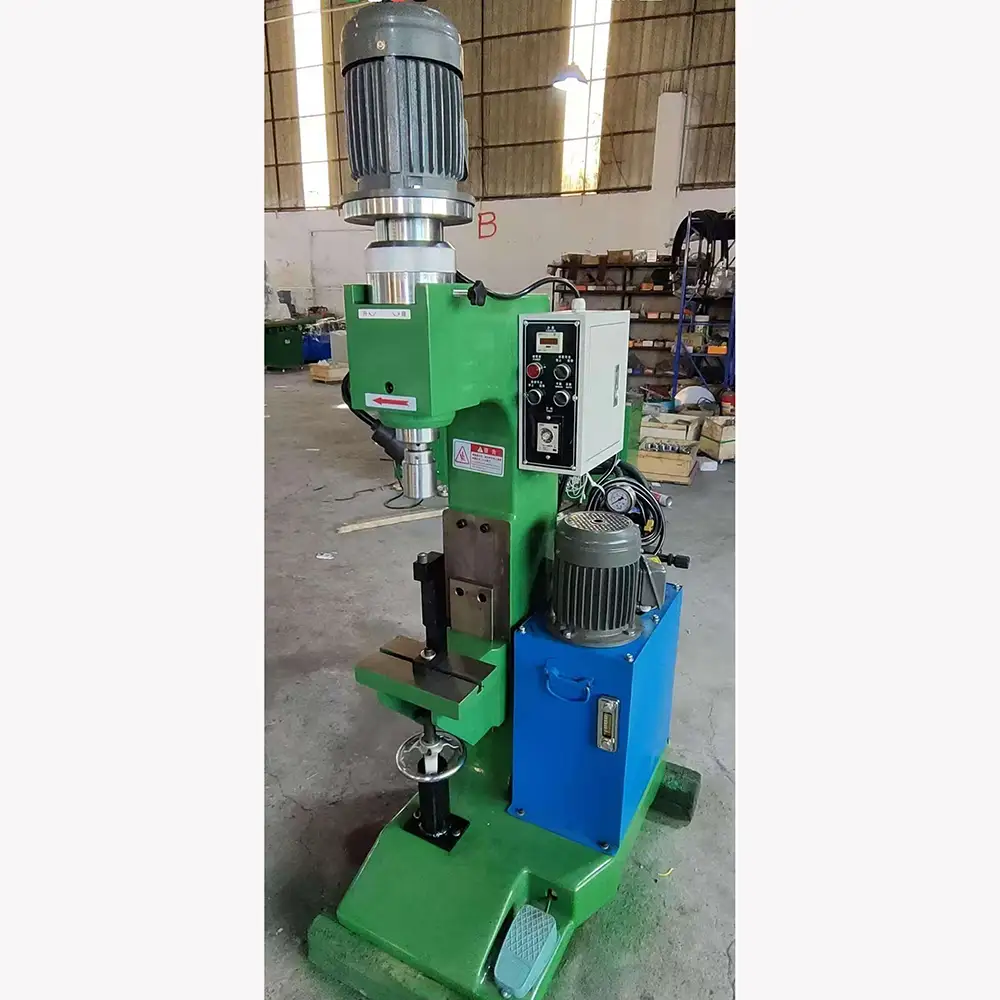
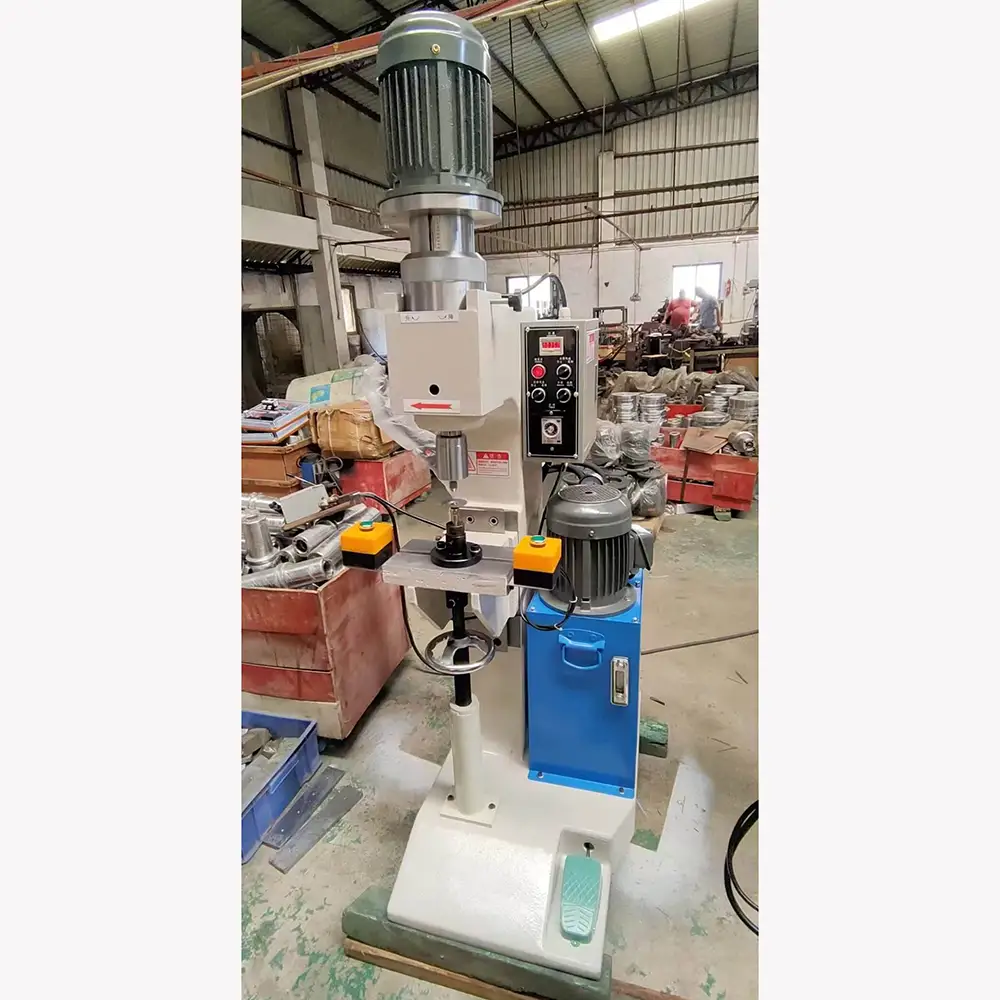
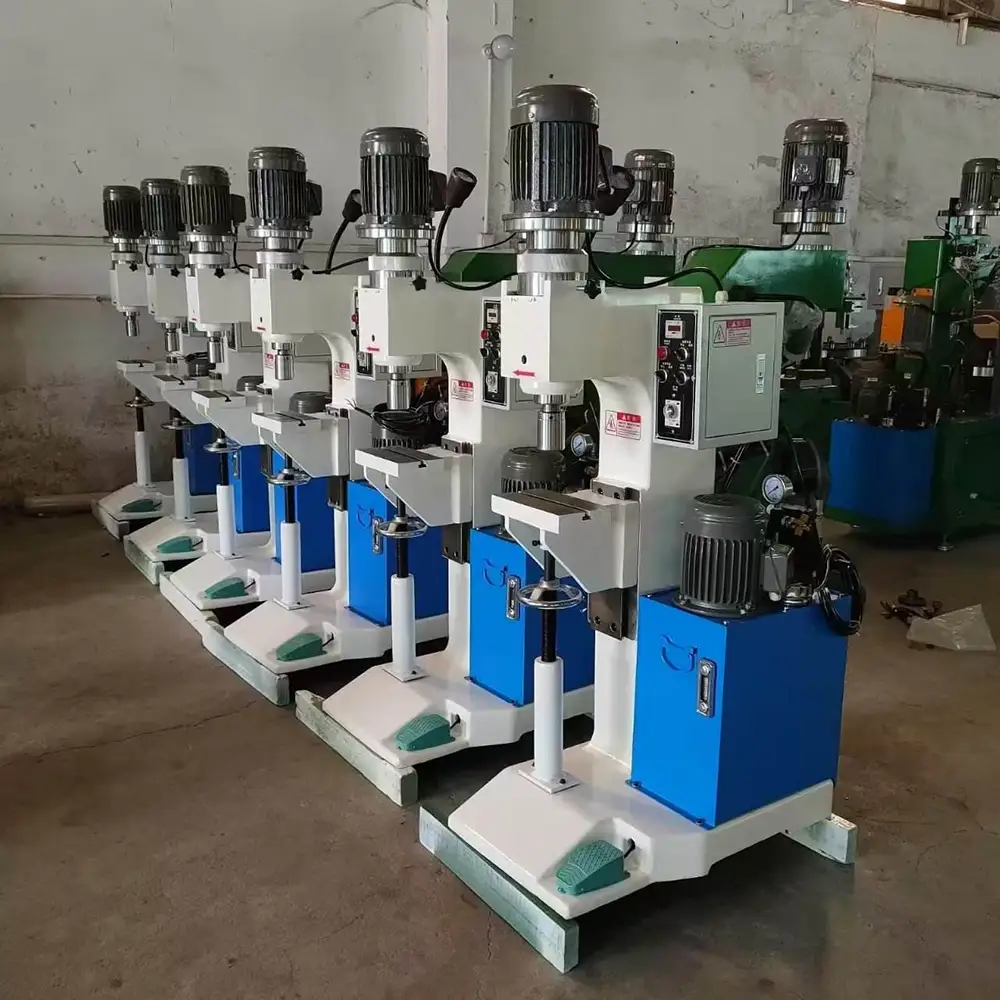
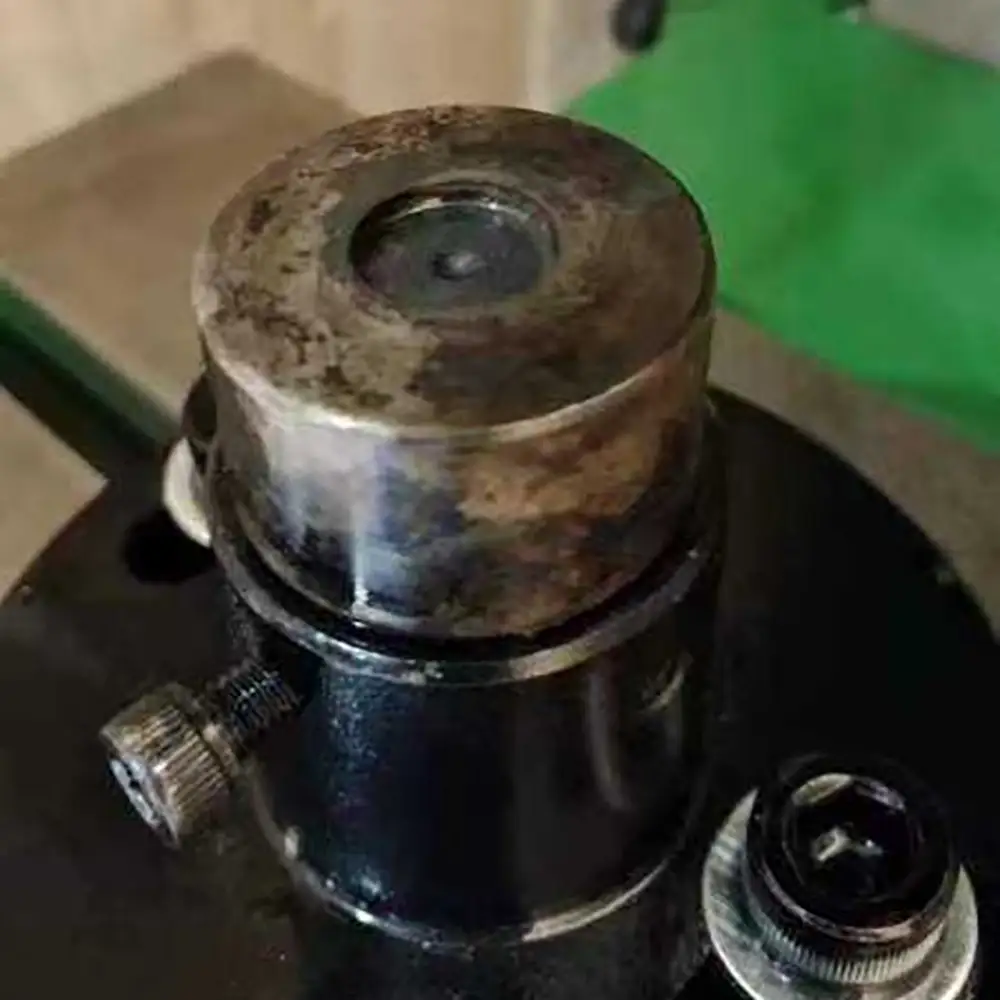
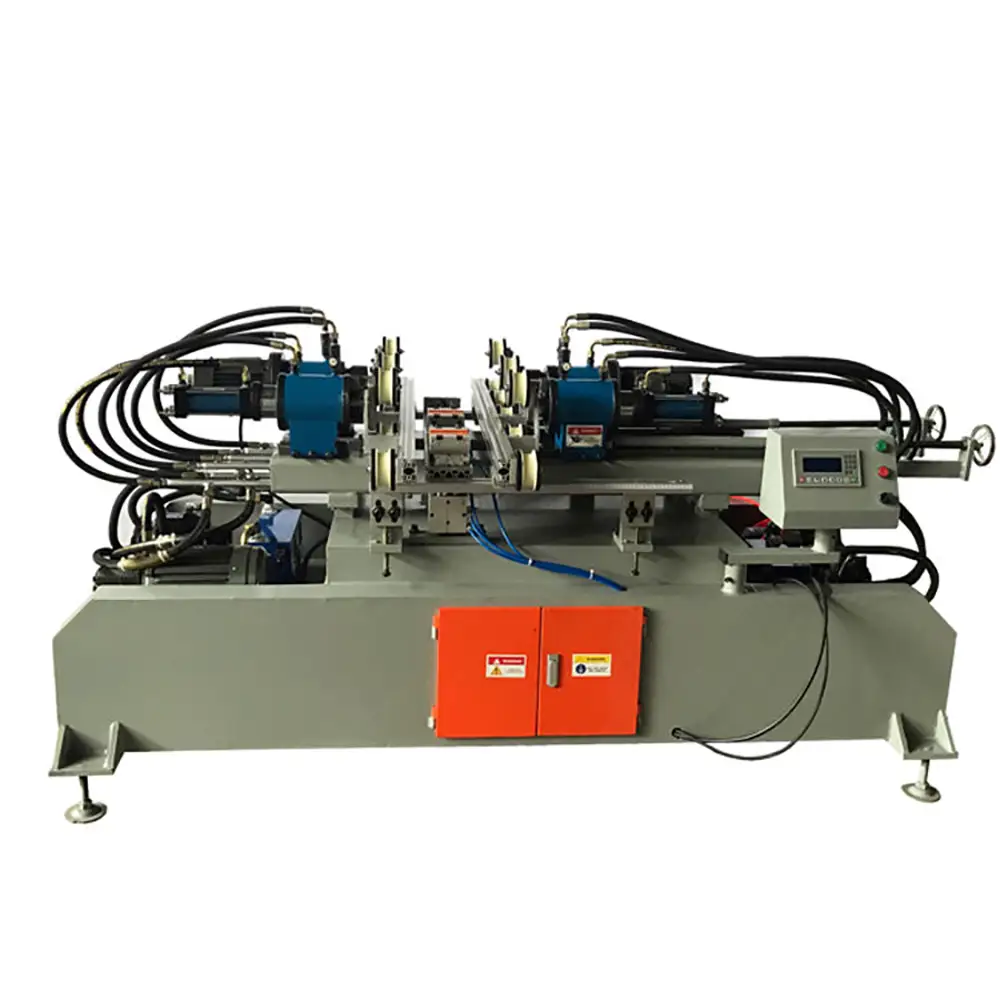
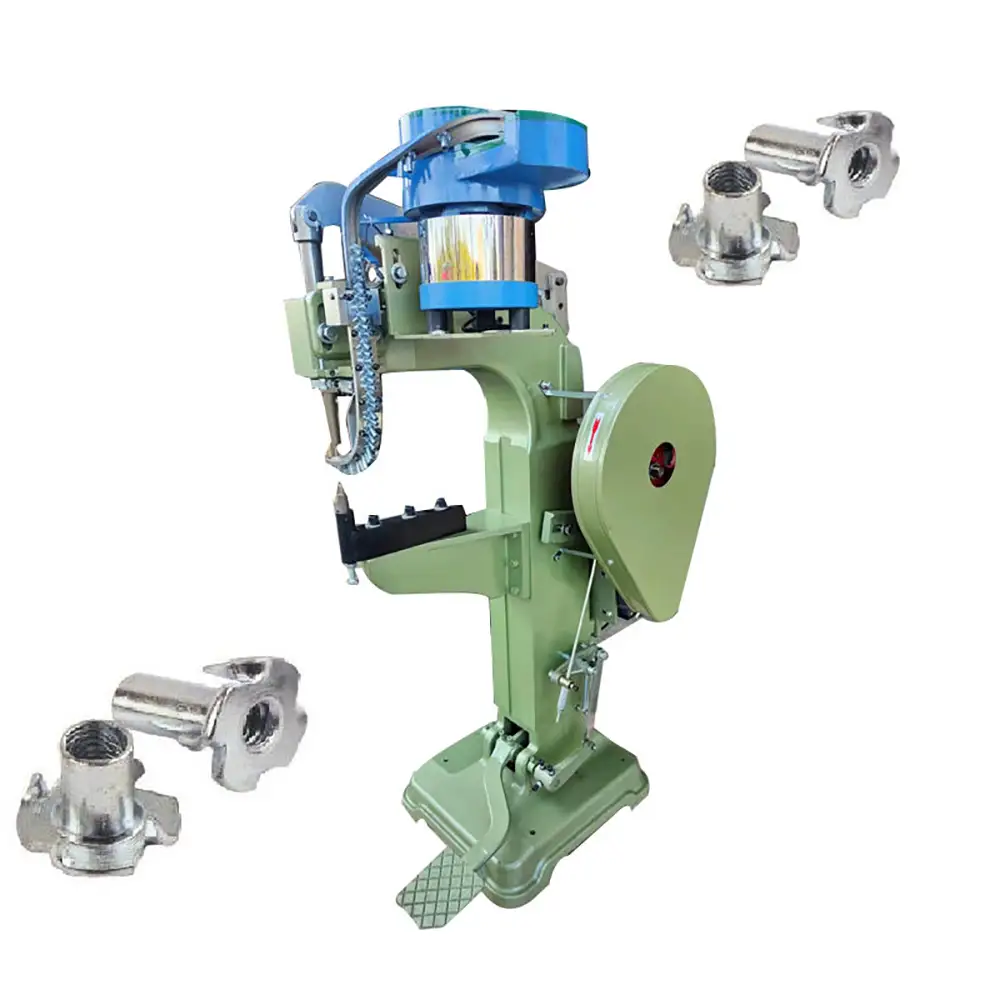
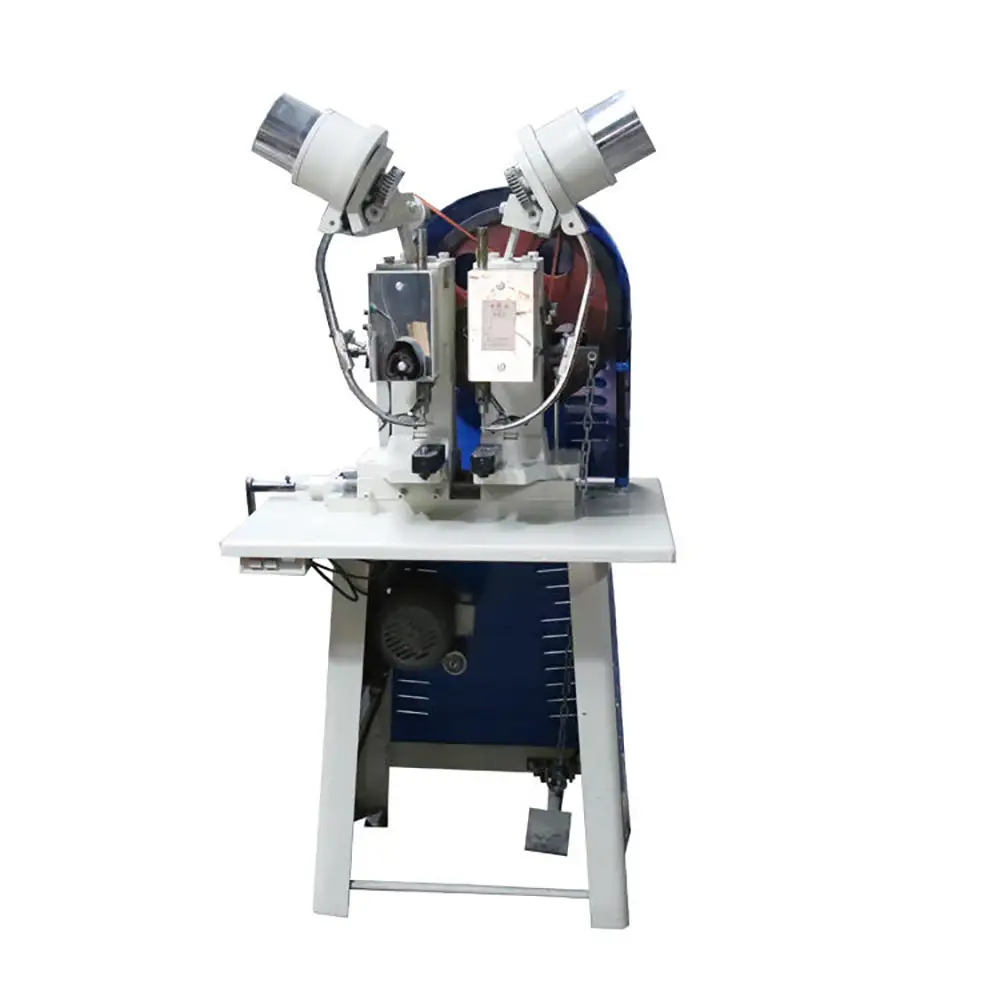
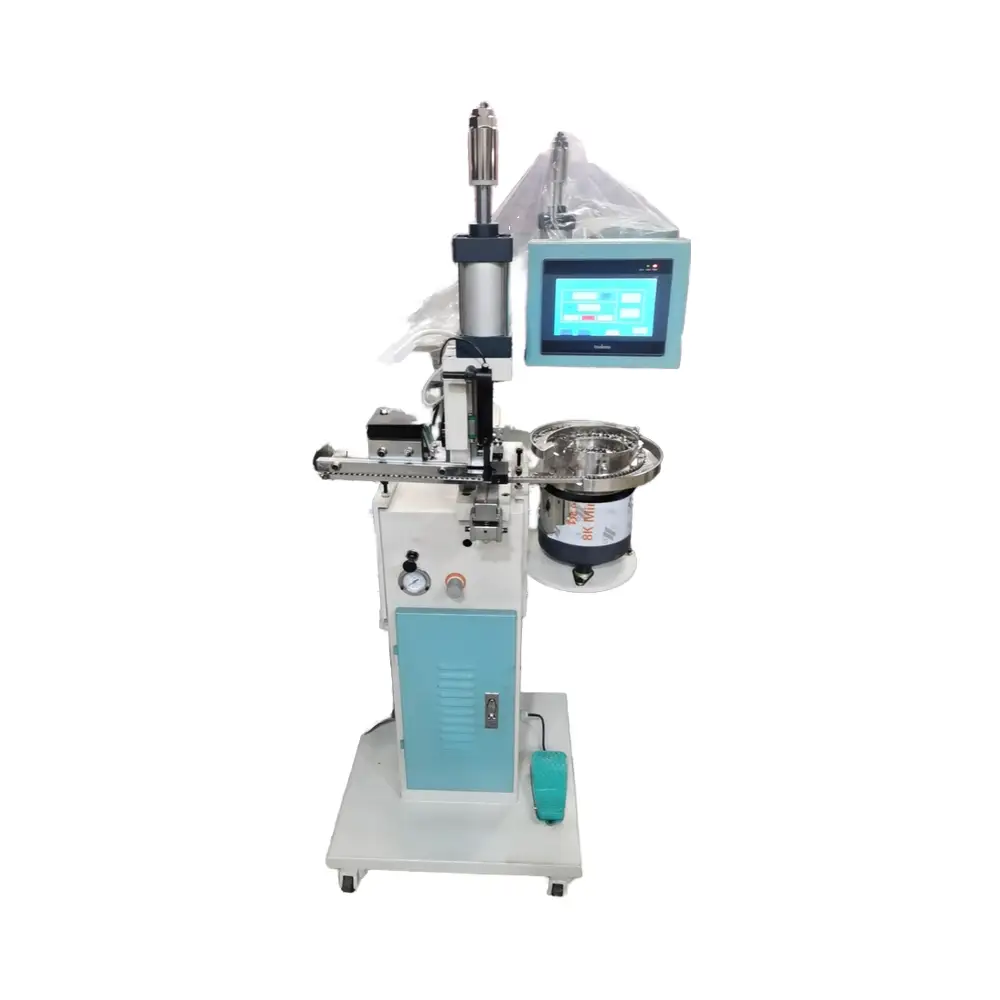
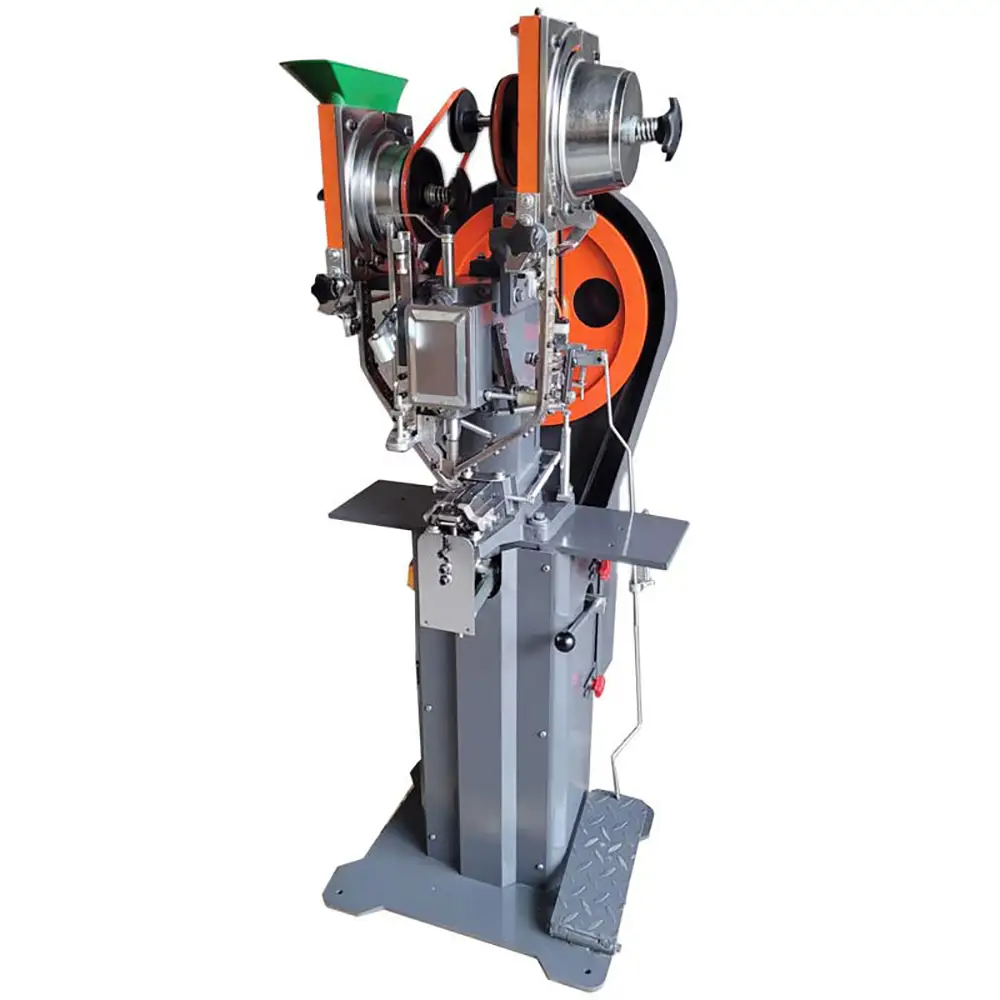
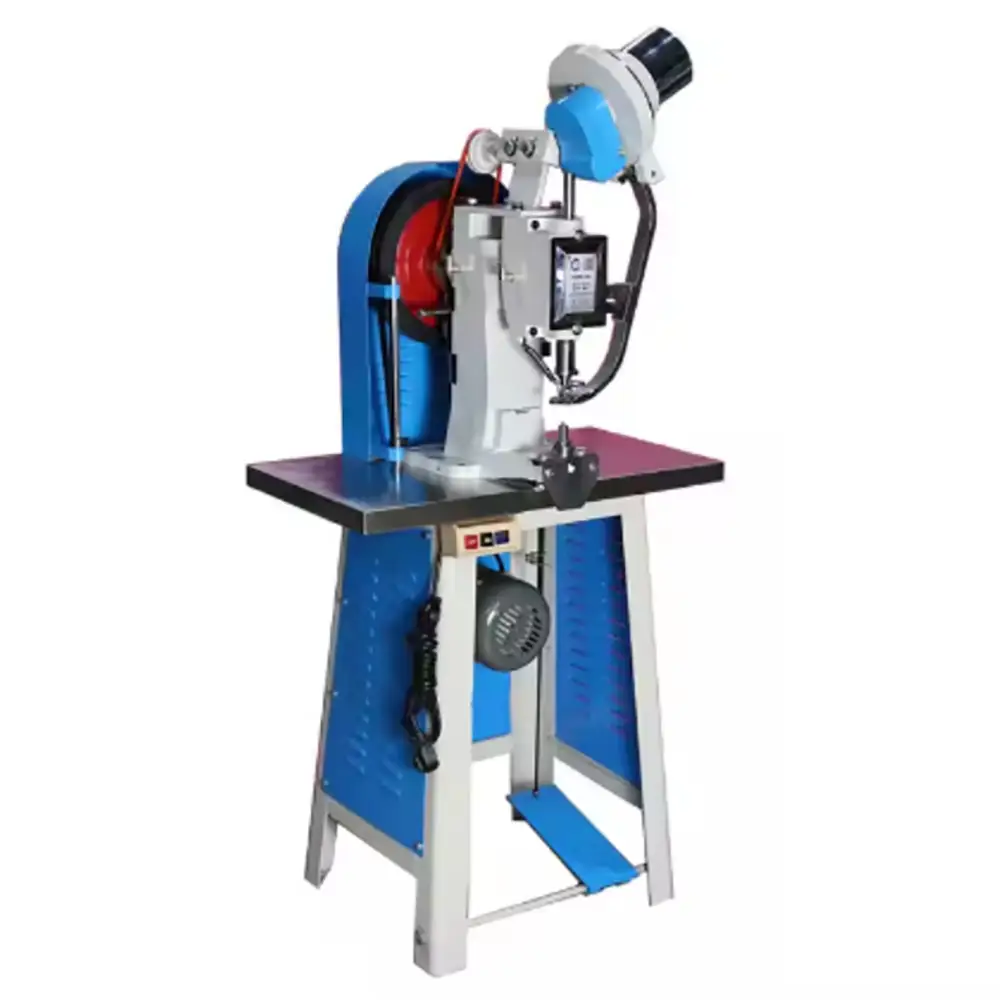
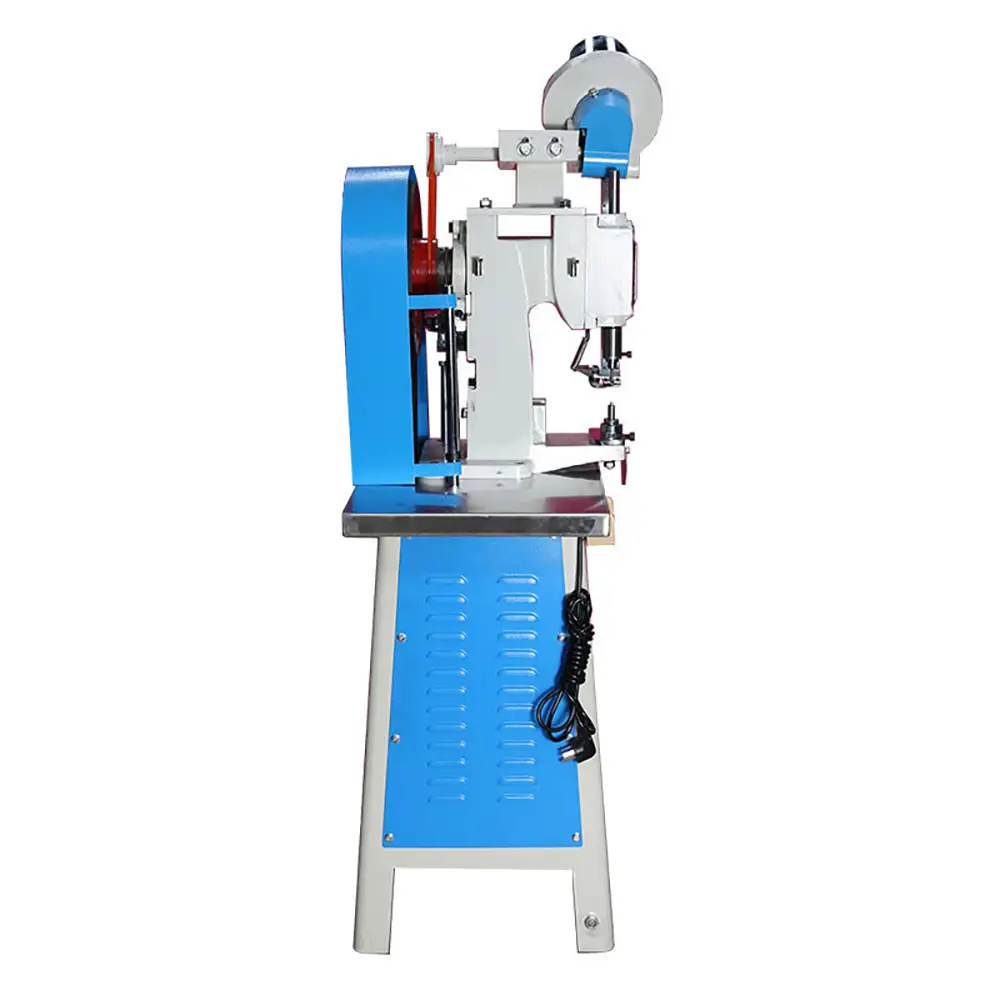
Our Hydraulic Spin Riveter is a high-precision riveting solution engineered for industrial manufacturing, integrating advanced hydraulic transmission and spin-riveting technology. It delivers stable, efficient, and consistent riveting performance, making it an ideal choice for sectors requiring rigorous fastening standards. Stable Hydraulic Pressure & High Precision Low Noise & Long Service Life Wide Adaptability
|
Riveting Capacity |
Φ3 - 12mm |
Style |
150mm |
|
Throat Depth |
160mm |
Working Pressure |
430 - 1650kg |
|
Machine Height |
1600mm |
Operation Time |
0.5 - 6sec |
|
Power Supply |
AC 380V 50/60Hz |
Net Weight |
r"> 350KG |
Cost-Effective Hydraulic Spin Riveter
The Cost-Effective Hydraulic Spin Riveter is an industrial riveting solution designed for manufacturers that need reliable fastening performance, controlled riveting force, low-noise operation, and flexible processing for different workpieces. By combining hydraulic power with spin riveting technology, this machine provides a practical alternative to conventional impact riveting equipment for a wide range of metal assembly applications.
For manufacturers, choosing a riveting machine is not only about initial purchase price. Production efficiency, joint consistency, operator comfort, maintenance requirements, tooling flexibility, and suitability for different workpieces all affect the total cost of ownership. A cost-effective hydraulic spin riveter can provide a balanced solution for factories that need dependable riveting performance without unnecessary complexity.
Hydraulic Spin Riveting Technology
Spin riveting, also known as orbital riveting in some applications, forms a rivet through controlled rotary movement of the riveting tool. Instead of relying on a high-impact hammering action, the tool gradually forms the rivet head through a controlled forming process.
The hydraulic system provides the working force required for the riveting operation. When correctly matched with the rivet material, workpiece, tooling, and process parameters, hydraulic spin riveting can produce consistent and secure mechanical joints.
This process is suitable for applications where controlled rivet forming, repeatability, and reduced operating noise are important considerations.
Low-Noise Operation
One of the key advantages of this hydraulic spin riveter is its focus on low-noise riveting. Compared with traditional impact-based riveting processes, rotary forming can provide a smoother operating cycle with less sudden impact.
Lower operating noise can contribute to a more comfortable production environment, particularly in workshops where riveting machines operate for extended periods. Reduced impact can also be beneficial when processing components that require controlled forming rather than aggressive hammering.
Actual noise levels depend on the machine configuration, tooling, material, rivet size, workpiece structure, and operating conditions.
Suitable for Various Workpieces
The machine is designed for flexibility and can be used with a variety of workpieces when appropriate tooling is selected. This makes it suitable for manufacturers producing different components on the same production floor.
Potential workpieces include:
Metal brackets
Hinges
Mechanical components
Sheet metal assemblies
Metal frames
Hardware components
Automotive parts
Electrical components
Industrial equipment parts
Machinery components
Metal housings
Fabricated metal assemblies
Different workpiece shapes may require different fixtures or riveting tools. Proper positioning is important to ensure that the rivet and workpiece remain correctly aligned throughout the forming cycle.
Cost-Effective Industrial Riveting
A cost-effective riveting machine should deliver more than a low purchase price. It should help manufacturers control production costs over the entire operating life of the equipment.
Hydraulic spin riveting can reduce repetitive manual riveting operations and provide a more standardized fastening process. Consistent riveting can also reduce rework associated with uneven rivet forming or inconsistent operator force.
For small and medium-sized manufacturers, a flexible riveting machine can be particularly valuable because it may support multiple workpiece types without requiring a completely separate machine for every product.
Consistent Rivet Forming
Rivet quality depends on several factors, including rivet dimensions, material, workpiece thickness, tooling geometry, machine force, and process settings.
A hydraulic spin riveter provides controlled forming force that can be matched to the application. The riveting head and tooling should be selected according to the required finished rivet shape and joint design.
When the machine is properly configured, the controlled rotary forming process can help produce repeatable rivet heads across production batches.
Flexible Tooling
Tooling is essential when a machine needs to process different workpieces. The correct riveting head, forming die, fixture, and support structure help maintain proper alignment during operation.
For manufacturers with multiple products, tooling can be designed or changed according to different component geometries. This provides greater production flexibility and makes the machine suitable for both standardized products and customized components.
OEM customers can provide drawings, samples, rivet specifications, and production requirements to determine an appropriate tooling configuration.
Applications Across Multiple Industries
Hydraulic spin riveting machines are used in many industrial assembly applications.
In automotive manufacturing, riveting may be used for selected brackets, hinges, supports, mechanisms, and other components.
In electrical equipment manufacturing, the machine can be suitable for metal housings, brackets, panels, and component assemblies.
In machinery manufacturing, hydraulic riveting can provide a permanent mechanical fastening method for selected structural and functional components.
Other potential applications include HVAC equipment, agricultural machinery, metal furniture, hardware products, transportation equipment, industrial enclosures, and general sheet metal fabrication.
Suitable for Production and Assembly Lines
The hydraulic spin riveter can be used as a standalone machine or incorporated into a larger assembly process, depending on the required production configuration.
For repetitive manufacturing, operators can establish a standardized loading, positioning, riveting, and unloading workflow. Fixtures can help maintain consistent workpiece positioning and improve cycle-to-cycle repeatability.
Where higher automation is required, additional feeding, positioning, sensing, or material-handling functions may be considered according to the production process.
Choosing the Right Hydraulic Spin Riveter
Before purchasing a hydraulic spin riveter, manufacturers should evaluate the complete riveting application.
Important considerations include:
Rivet size: Determine the rivet diameter, length, material, and required finished head shape.
Workpiece material: Consider carbon steel, stainless steel, aluminum, or other materials used in the assembly.
Workpiece geometry: The machine must provide adequate working space and access to the riveting location.
Production volume: High-volume production may benefit from automatic loading, fixtures, or additional automation.
Tooling: Select the appropriate riveting head and die for the joint design.
Noise requirements: For workshops where noise control is important, low-noise rotary forming may offer advantages over impact riveting.
Future flexibility: If several products will be processed, consider a configuration that supports interchangeable tooling.
Why Choose Our Hydraulic Spin Riveter?
Cost-Effective Design: Provides a practical balance between machine investment, production efficiency, and long-term usability.
Low-Noise Operation: Spin riveting provides a smoother forming process than conventional impact-based riveting methods in suitable applications.
Hydraulic Power: Provides controlled forming force for consistent industrial riveting.
Flexible Applications: Suitable for various workpieces, metal components, brackets, hinges, housings, and assemblies.
Precision Riveting: Controlled rotary forming can help achieve consistent finished rivet shapes.
Flexible Tooling: Different riveting dies, heads, and fixtures can be considered for different products.
Production Efficiency: Reduces repetitive manual riveting operations and supports standardized assembly workflows.
OEM & Custom Solutions: Machine configuration and tooling can be evaluated according to customer workpieces and production requirements.
Main Applications
Automotive Component Riveting
Metal Bracket Assembly
Hinge Riveting
Sheet Metal Assembly
Electrical Enclosure Assembly
Machinery Component Riveting
Hardware Manufacturing
Metal Frame Assembly
HVAC Component Assembly
Agricultural Equipment Components
Industrial Equipment Assembly
General Metal Fabrication
FAQS
1. What is a hydraulic spin riveter?
A hydraulic spin riveter is a machine that uses hydraulic force and controlled rotary movement to form and secure rivets between components.
2. Is a spin riveter the same as an impact riveter?
No. A spin riveter forms the rivet through controlled rotary movement, while an impact riveter typically uses repeated impact force.
3. Is this machine low noise?
The machine is designed for low-noise operation compared with many impact riveting processes. Actual noise depends on the machine, tooling, rivet, workpiece, and operating conditions.
4. What workpieces can it process?
It can be suitable for various metal brackets, hinges, frames, housings, hardware, machinery components, and other assemblies when properly configured.
5. What materials can be riveted?
Suitable materials depend on the machine configuration and rivet specifications. Common applications include aluminum, carbon steel, stainless steel, and other compatible metals.
6. Can different rivet sizes be used?
Yes, different rivet sizes may be processed when the machine capacity and corresponding tooling are suitable for the application.
7. Can the riveting tooling be customized?
Yes. Riveting heads, forming dies, fixtures, and workholding systems can be customized or selected according to the workpiece and rivet design.
8. Is hydraulic riveting suitable for high-volume production?
Yes. Hydraulic spin riveting can be used for repetitive production, particularly when consistent riveting cycles and suitable fixtures are implemented.
9. Can the machine be used for different products?
Yes. With appropriate tooling and fixtures, one machine can potentially process different workpieces and product models.
10. Does spin riveting damage the workpiece?
When the correct machine parameters, tooling, and fixtures are used, the forming process is designed to create the riveted joint while controlling the deformation of the workpiece.
11. How do I choose the right machine?
Consider rivet diameter and material, workpiece material and thickness, joint geometry, production volume, tooling requirements, and desired automation.
12. Can it be integrated into an automated production line?
Depending on the configuration, the machine can be integrated with workpiece positioning, feeding, assembly, inspection, and material-handling systems.
13. Can you provide OEM hydraulic spin riveting solutions?
Yes. Customized machine configurations and tooling can be evaluated according to workpiece drawings, samples, rivet specifications, production volume, and assembly requirements.
Prev:
Fully Automatic New Grommet Riveting Machine with Bearing & Motor Efficient Belt Riveting Solution
Next:
High-Performance 152 Auto-Precision Hydraulic Rotary Rivet Machine
TAG:
Rivet Forming Machine,
Industrial Riveting Machine,
Industrial Riveting Equipment,
Metal Riveting Machine,
Rivet Fastening Machine,
Precision Riveting Machine,
Hydraulic Rivet Machine,
Hydraulic Fastening Machine,
Hydraulic Riveting Press,
Hydraulic Rivet Press,
Hydraulic Riveting Equipment,
Rivet Assembly Machine,
Automatic Riveting Machine,
Rotary Rivet Machine,
Rotary Riveting Equipment,
Automatic Riveting Equipment,
Automatic Rivet Machine,
Automatic Hydraulic Riveting Machine,
Hydraulic Rotary Riveting Machine,
Automatic Fastening Machine,
Metal Fastening Machine,
Hydraulic Riveting Machine,
Hardware Riveting Machine,
Metal Bracket Riveting Machine,
Industrial Fastening Equipment,
Sheet Metal Riveting Machine,
Hinge Assembly Machine,
Hinge Riveting Machine,
Hardware Assembly Machine,
Multi-Purpose Riveting Machine,
Related Category:
Cost-Effective Hydraulic Spin Riveter, Hydraulic Spin Riveter, Low Noise Riveting Machine, Hydraulic Riveting Machine China, suppliers, manufacturers, factory, customized, wholesale, quotation, made in China